Explore Wayground's comprehensive collection of Year 6 Six Kingdoms biology worksheets, featuring free printables and practice problems with answer keys to help students master organism classification and biological diversity concepts.
Explore printable Six Kingdoms worksheets for Year 6
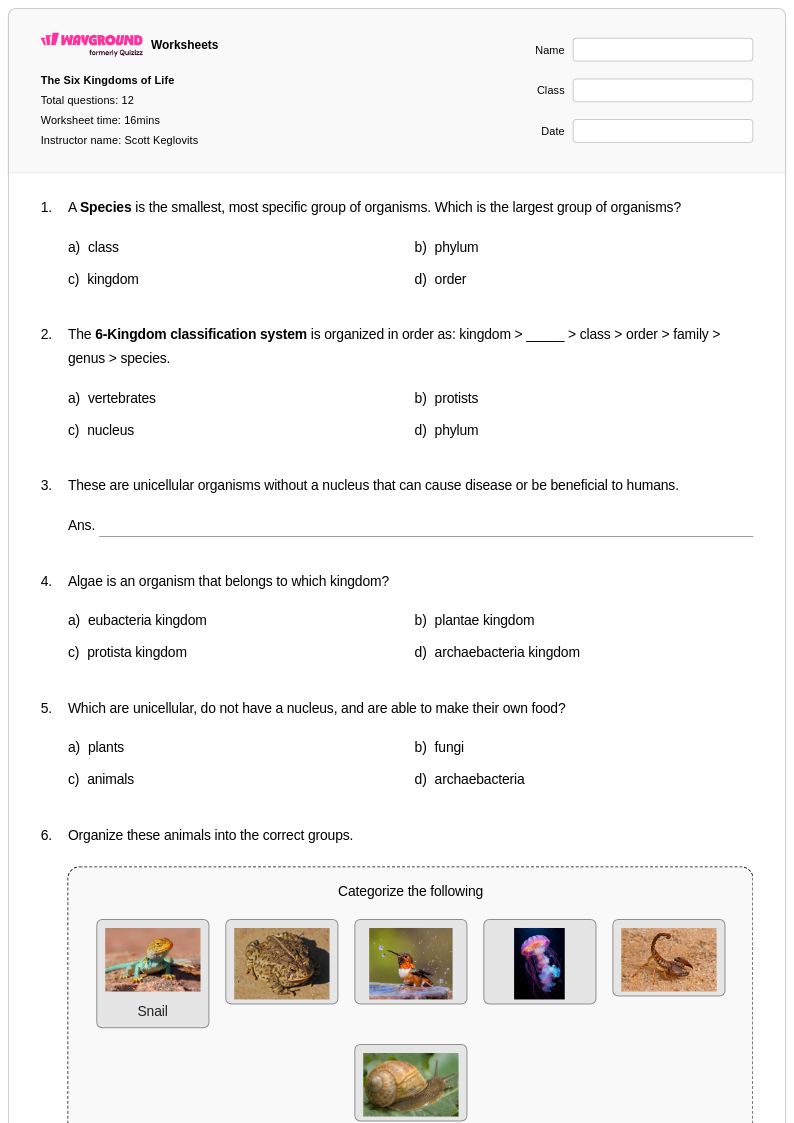
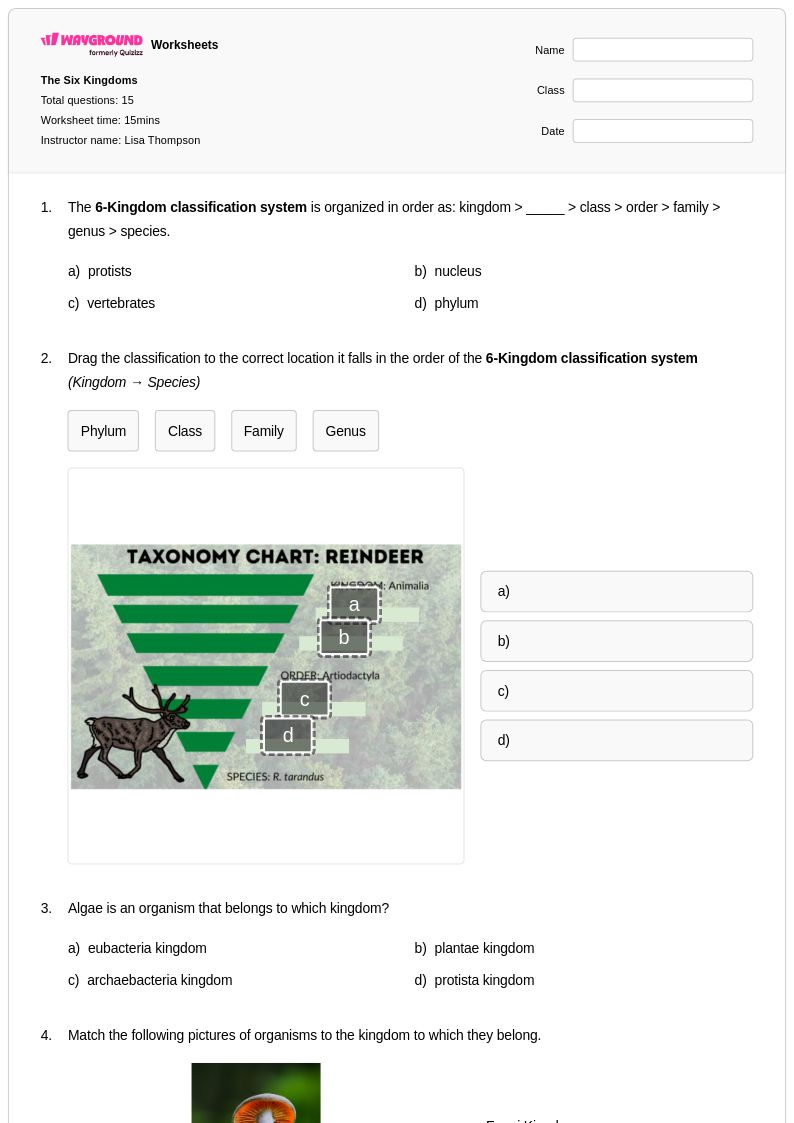
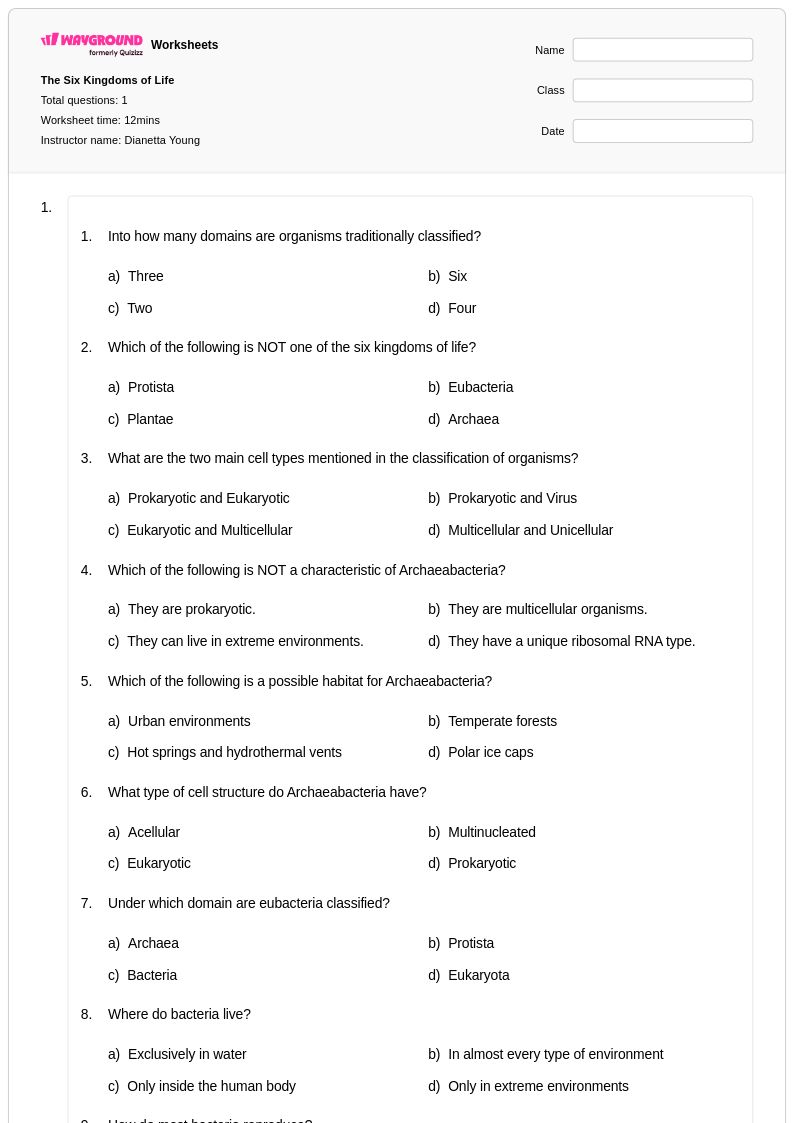
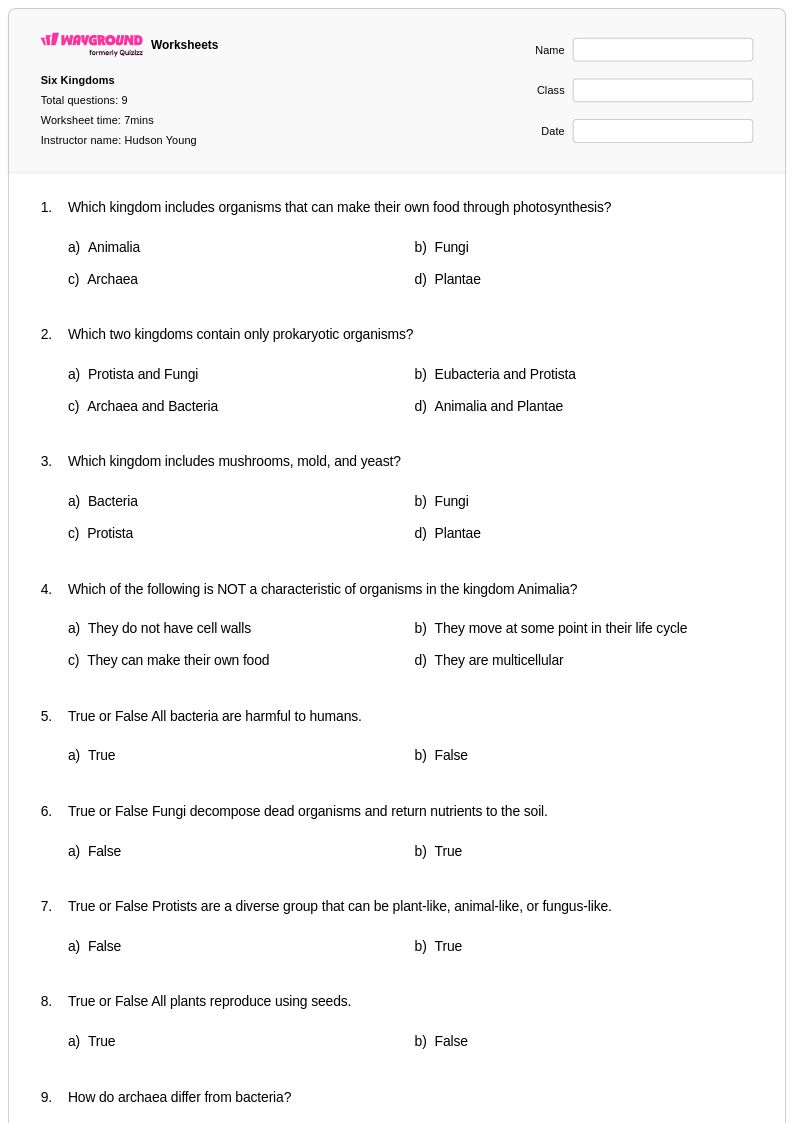
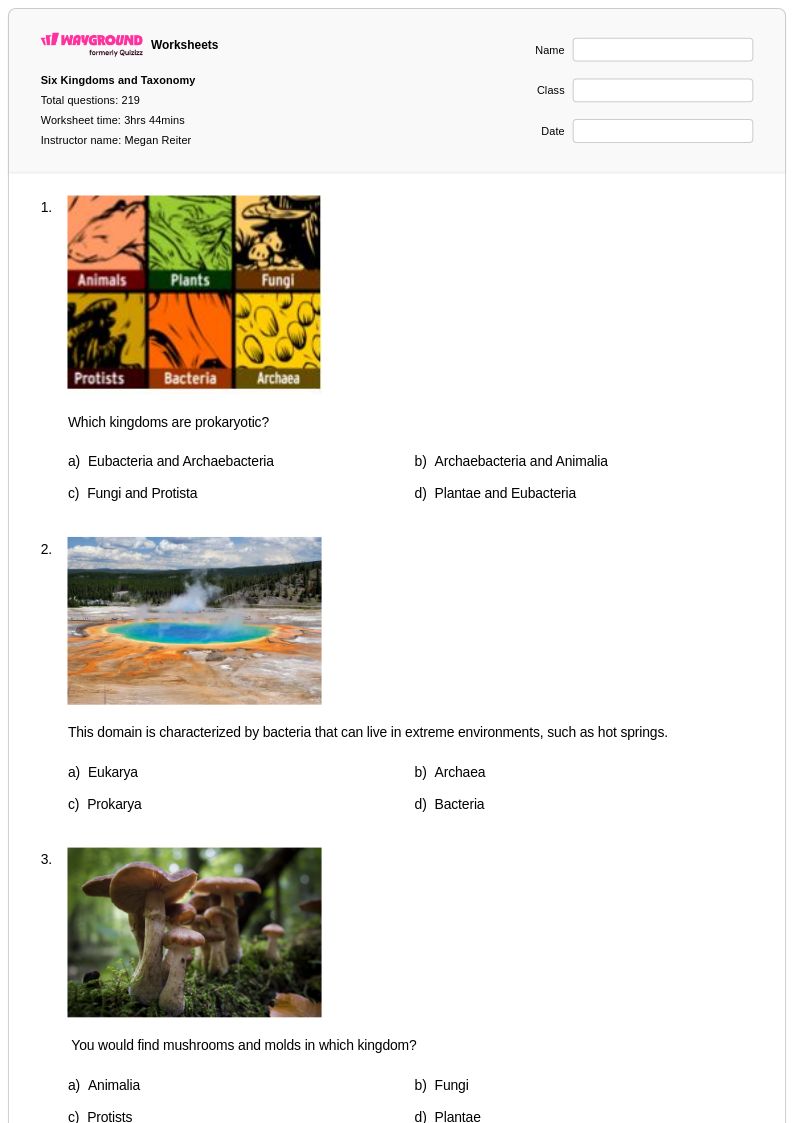
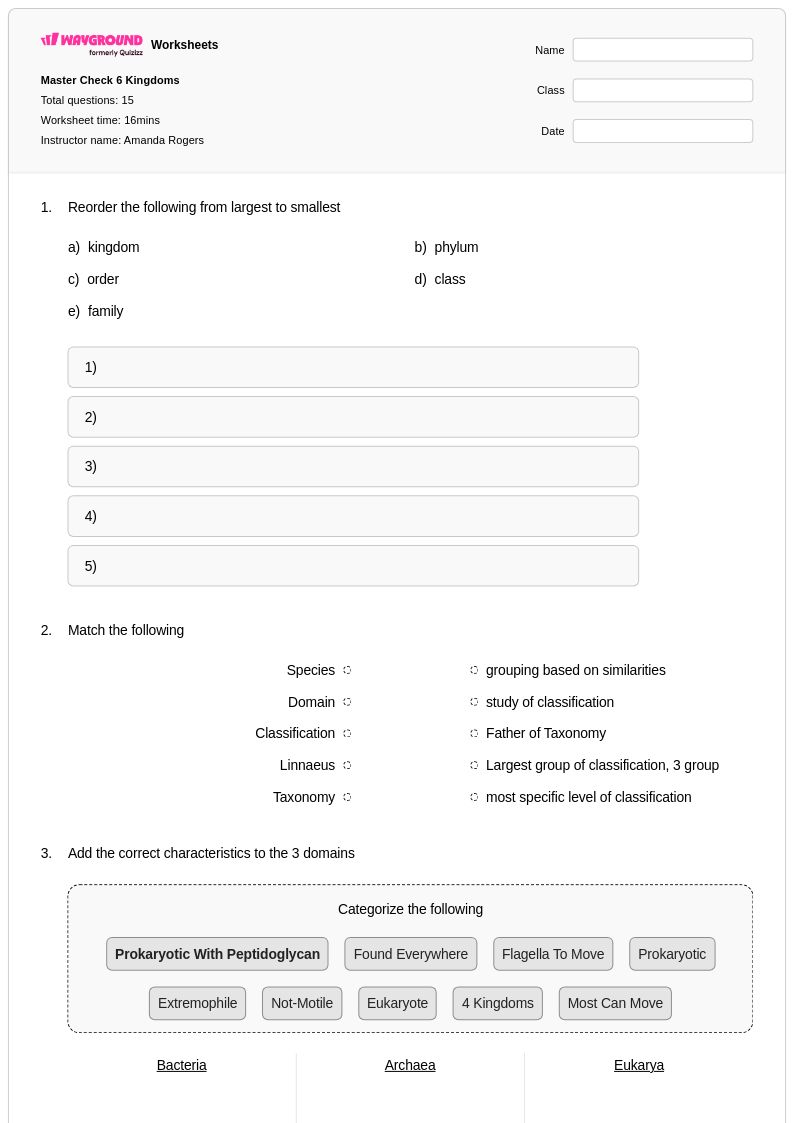
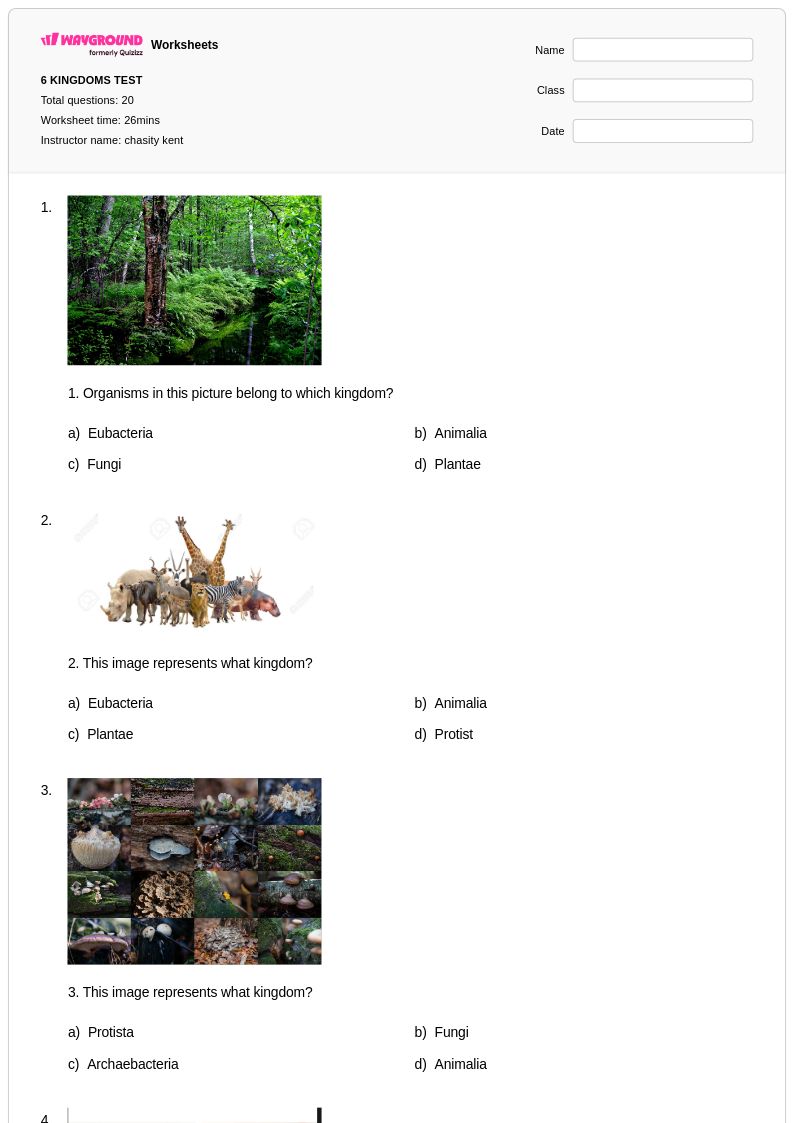
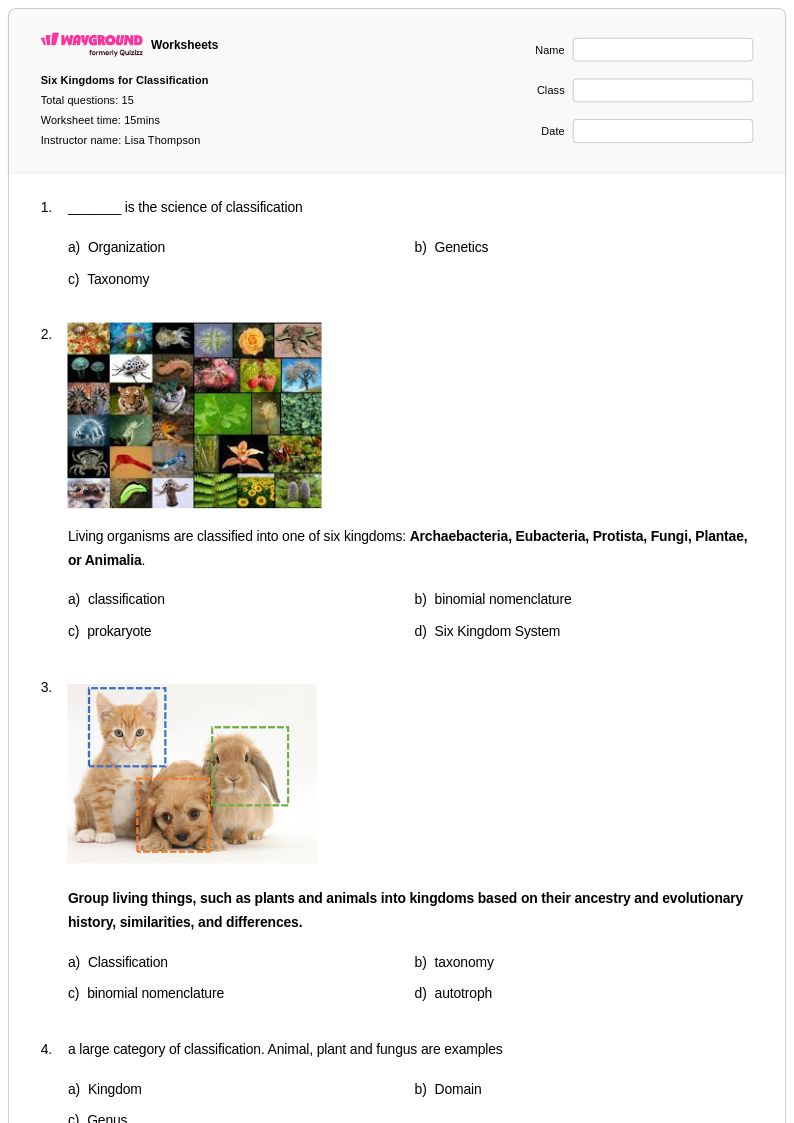
Six Kingdoms worksheets for Year 6 students available through Wayground (formerly Quizizz) provide comprehensive practice with the fundamental classification system that organizes all life on Earth. These expertly designed resources strengthen students' understanding of the six kingdoms - Bacteria, Archaea, Protista, Fungi, Plantae, and Animalia - while developing critical thinking skills in biological classification and organism identification. Students engage with practice problems that challenge them to categorize organisms based on cellular structure, nutrition methods, and reproductive strategies, building essential foundation knowledge for advanced biological concepts. Each worksheet collection includes detailed answer keys and is available as free printables in convenient pdf format, making it easy for educators to incorporate these materials into both classroom instruction and independent study sessions.
Wayground (formerly Quizizz) empowers teachers with access to millions of teacher-created resources specifically designed for Six Kingdoms instruction at the Year 6 level. The platform's robust search and filtering capabilities allow educators to quickly locate worksheets that align with specific learning standards and match their students' diverse academic needs. Teachers can easily customize existing materials or create differentiated versions to support remediation for struggling learners while providing enrichment opportunities for advanced students. Available in both printable and digital formats including downloadable pdfs, these resources seamlessly integrate into lesson planning workflows and support flexible instructional approaches. The comprehensive collection enables educators to provide targeted skill practice, assess student understanding of taxonomic principles, and reinforce key vocabulary essential for success in biological sciences.
FAQs
How do I teach the six kingdoms of life to biology students?
Teaching the six kingdoms works best when students first understand the criteria scientists use to distinguish them: cell type (prokaryotic vs. eukaryotic), cell wall composition, mode of nutrition, and reproductive strategies. Start with Archaebacteria and Eubacteria to establish the prokaryote baseline, then move through Protista, Fungi, Plantae, and Animalia in order of increasing structural complexity. Using comparative charts and classification activities helps students see the logic of the system rather than memorizing isolated facts.
What are common mistakes students make when classifying organisms into the six kingdoms?
The most frequent error is confusing Archaebacteria and Eubacteria — students often treat them as interchangeable because both are prokaryotes, but Archaebacteria have distinct membrane lipids and thrive in extreme environments. Another common mistake is placing fungi with plants because both are stationary and appear plant-like, when in fact fungi are heterotrophs that absorb nutrients externally. Students also struggle with Protista because it is a catch-all kingdom with enormous internal diversity, leading to overgeneralization about its members.
What exercises help students practice identifying organisms by kingdom?
Effective practice activities include organism-sorting tasks where students assign unfamiliar species to a kingdom based on a set of given characteristics, and comparative analysis exercises that ask students to contrast two kingdoms across multiple criteria simultaneously. Matching activities that pair kingdom names with defining traits, nutrition types, and example organisms reinforce recall while building conceptual connections. Timed identification drills using brief organism descriptions help students internalize the decision-making process they need for assessments.
How do I use Wayground's Six Kingdoms worksheets in my classroom?
Wayground's Six Kingdoms worksheets are available as printable PDFs for traditional classroom use and in digital formats for technology-integrated or remote learning environments, and teachers can also host them as a quiz directly on Wayground. The collection includes answer keys, so worksheets can be used for independent practice, homework, or self-paced review without requiring additional teacher prep. The digital format makes it easy to assign specific worksheets to individual students or the whole class, which is useful when differentiating between students who need foundational practice and those ready for comparative analysis tasks.
Why do scientists use a six-kingdom classification system instead of five or two?
The six-kingdom system separates Archaebacteria from Eubacteria based on biochemical and genetic evidence showing that these two groups of prokaryotes are fundamentally distinct, despite their superficial similarities. Earlier five-kingdom models grouped all bacteria together, which obscured the evolutionary distance between archaea and true bacteria. Teaching students why the system evolved helps them understand that taxonomy is evidence-based and subject to revision, which is an important lesson in scientific thinking.
How can I differentiate Six Kingdoms instruction for students at different levels?
For foundational learners, focus on the three or four most distinct kingdoms (Animalia, Plantae, Fungi, and Eubacteria) using concrete examples before introducing Protista and Archaebacteria, which require more abstract reasoning. Advanced students benefit from tasks that ask them to defend classification decisions or evaluate edge cases, such as whether slime molds belong in Fungi or Protista. On Wayground, teachers can apply accommodations such as reduced answer choices or read-aloud settings for individual students, ensuring the same worksheet material is accessible across ability levels without requiring separate versions.