Free Printable Plant and Animal Cell Worksheets for Year 6
Free Year 6 plant and animal cell worksheets with answer keys help students explore cellular structures, organelles, and functions through engaging printables and practice problems available as downloadable PDFs.
Explore printable Plant and Animal Cell worksheets for Year 6
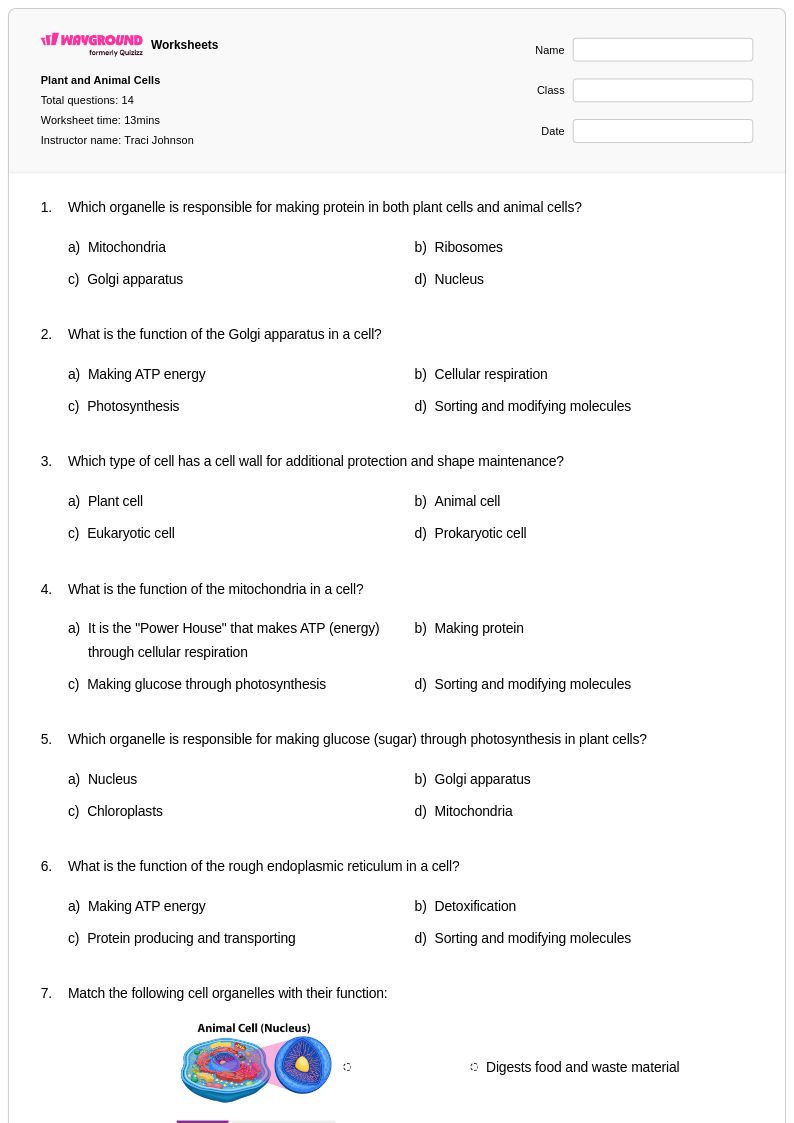
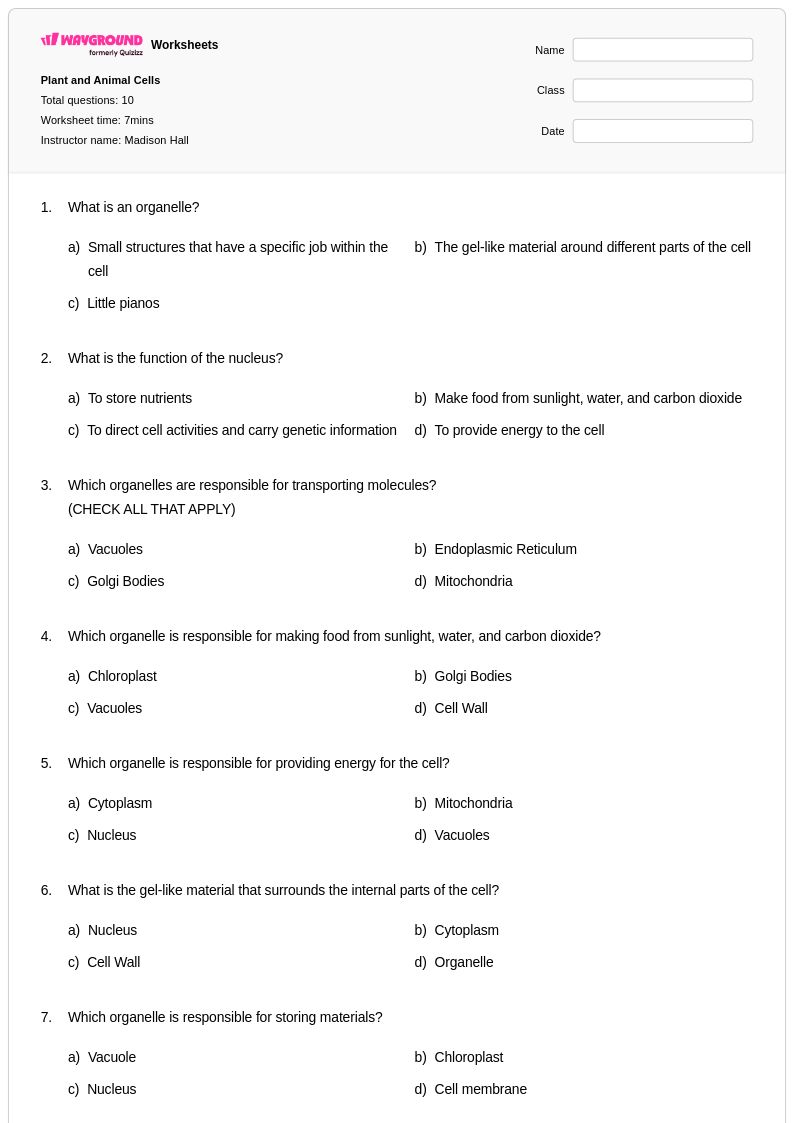
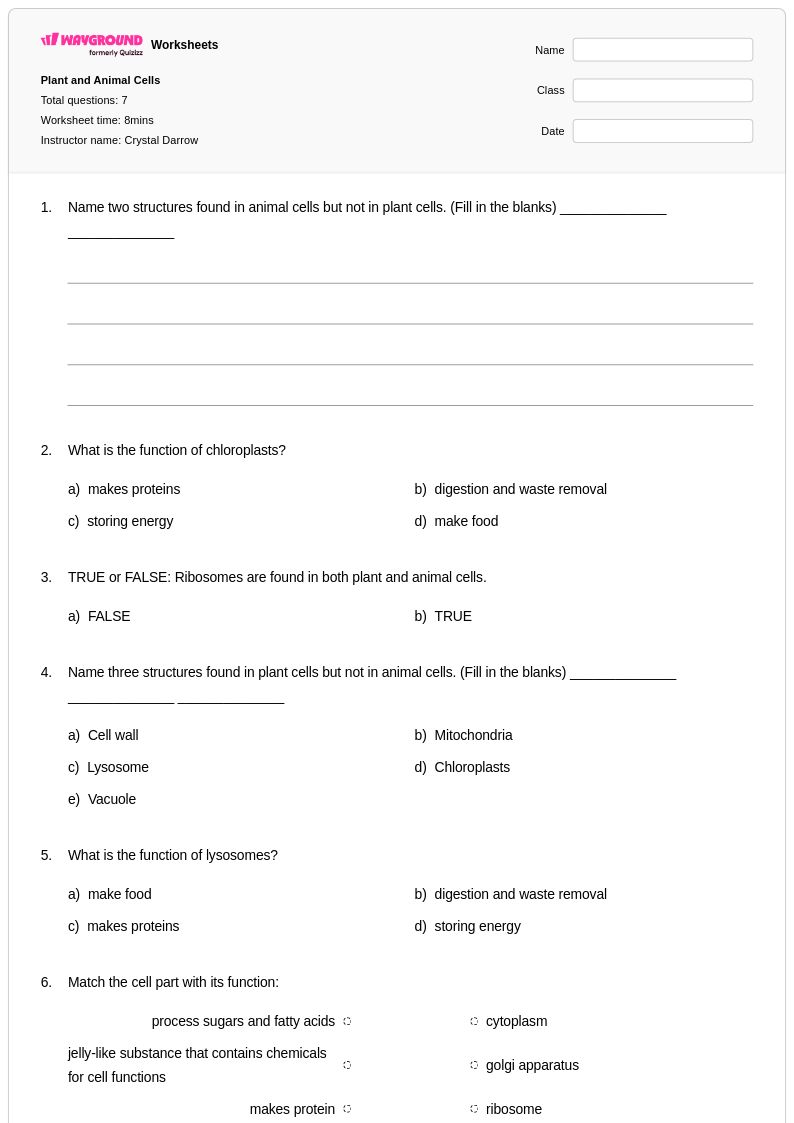
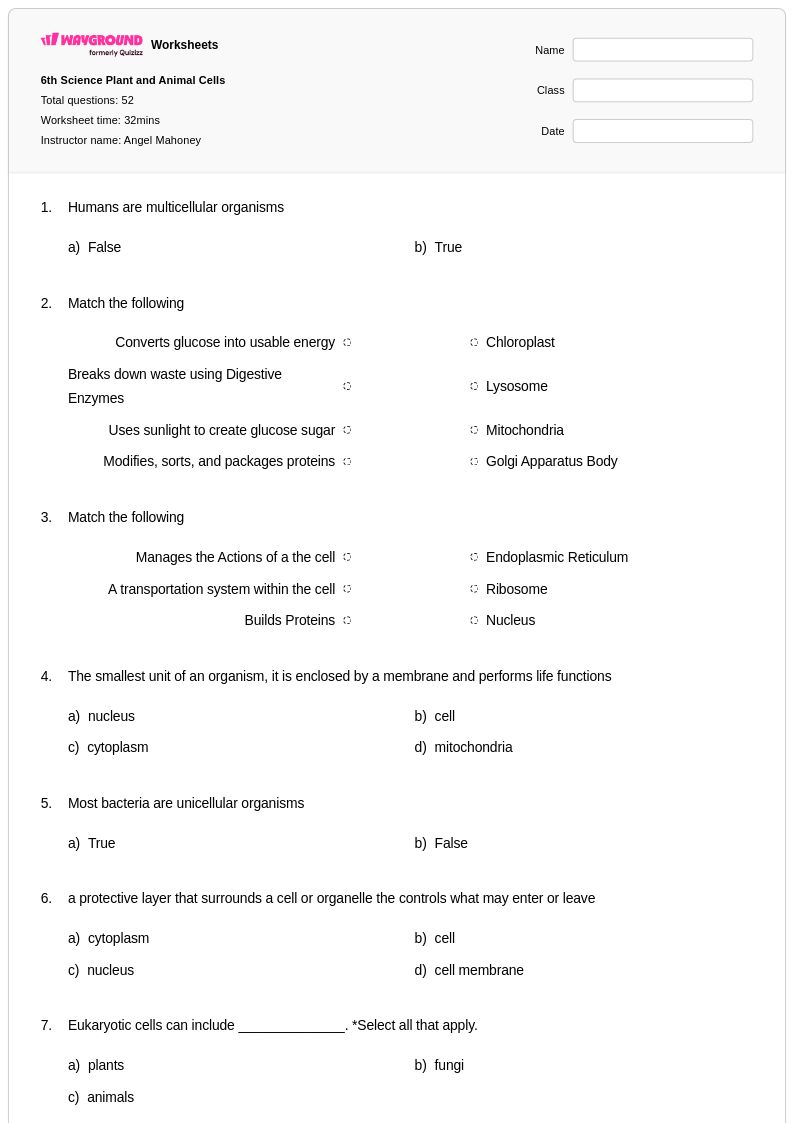
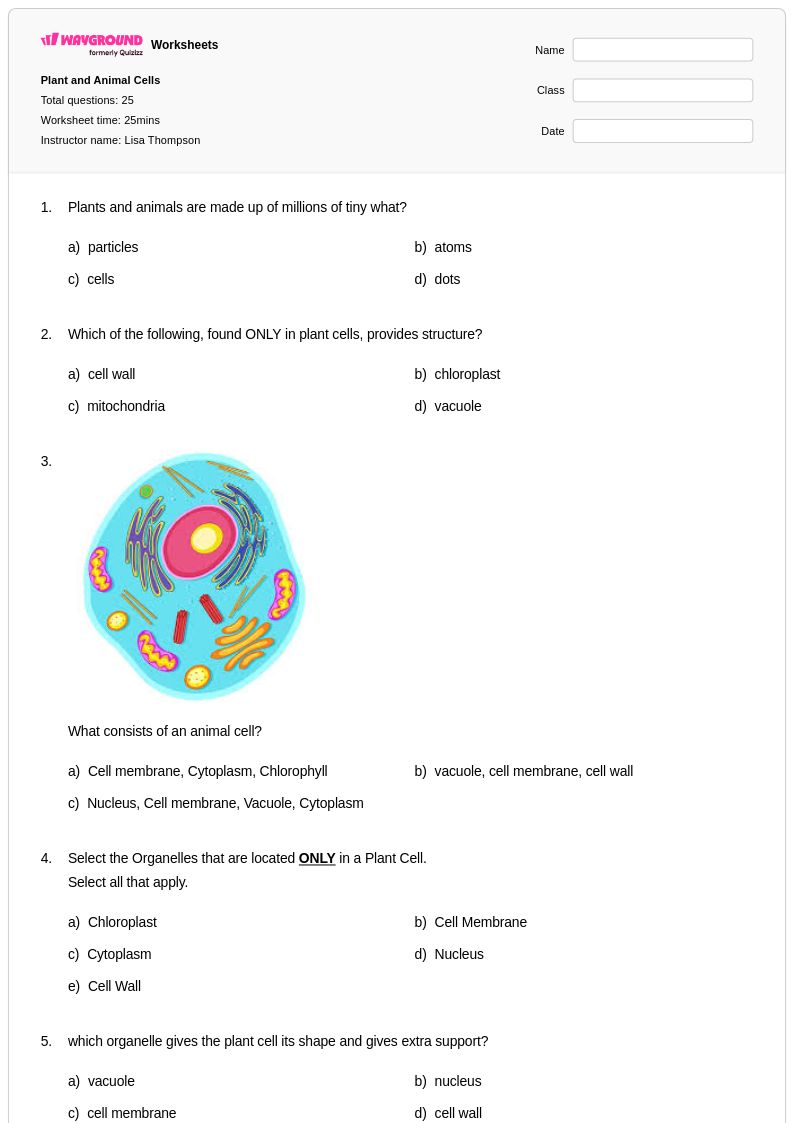
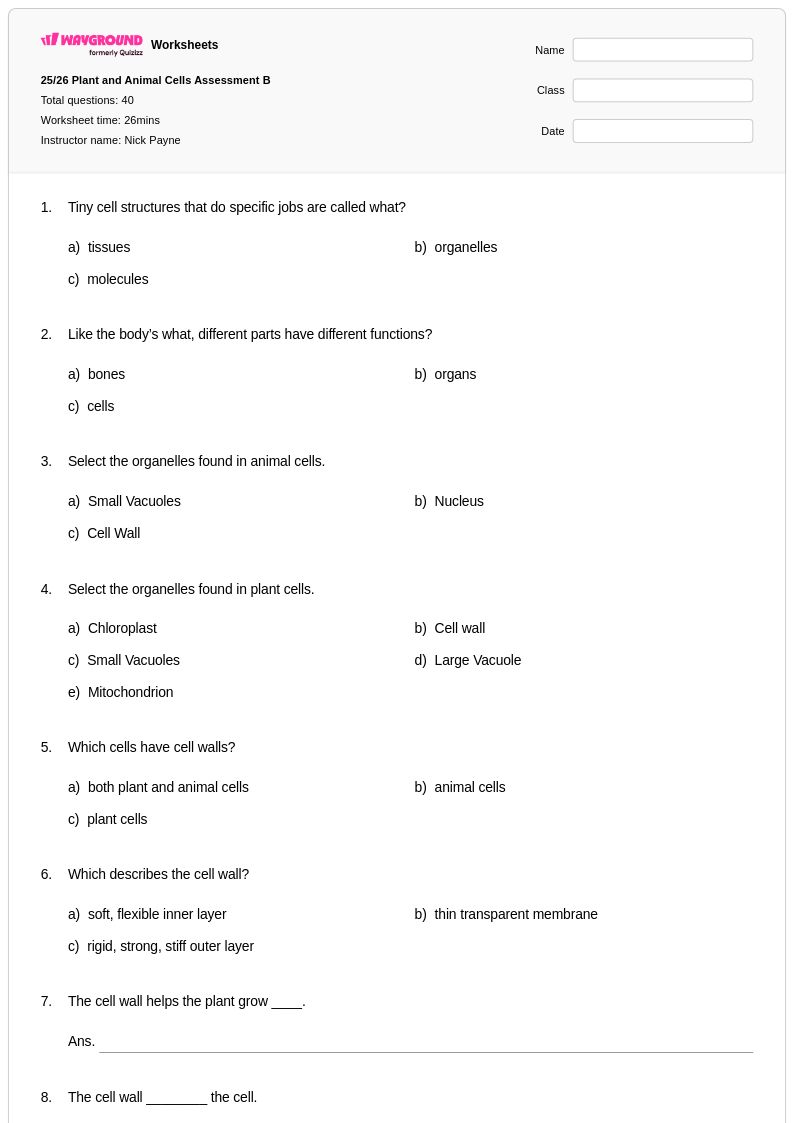
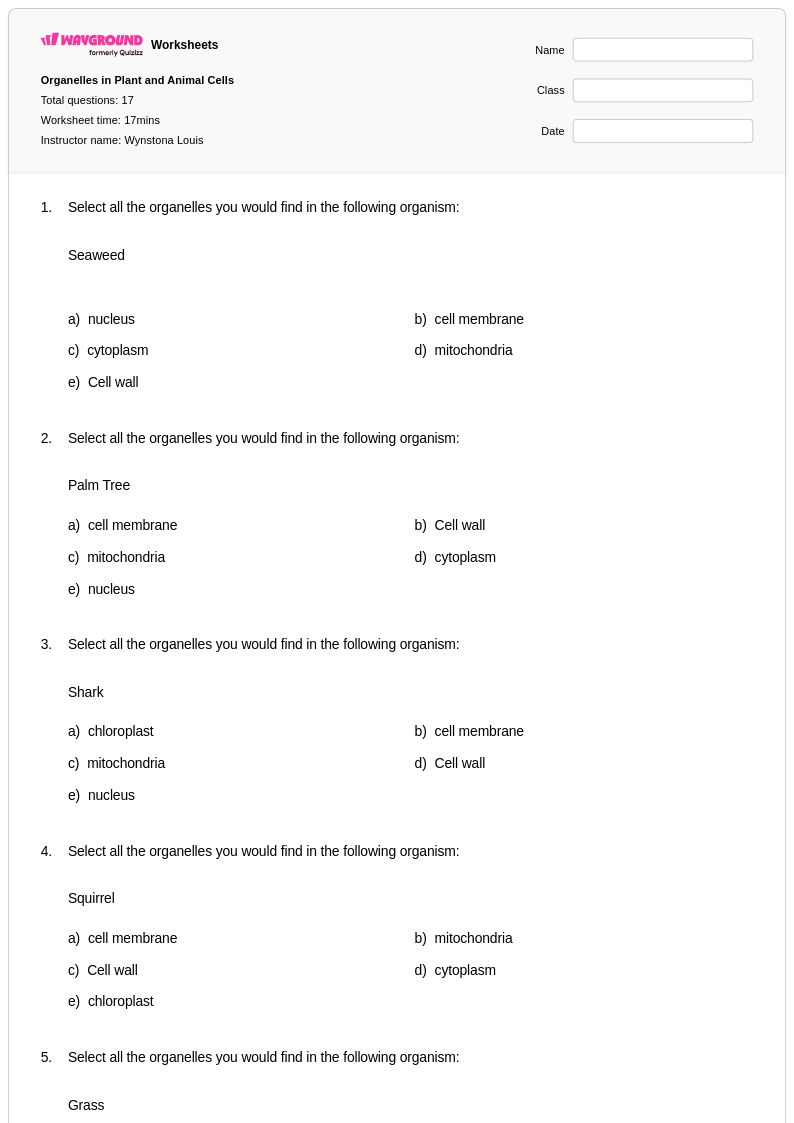
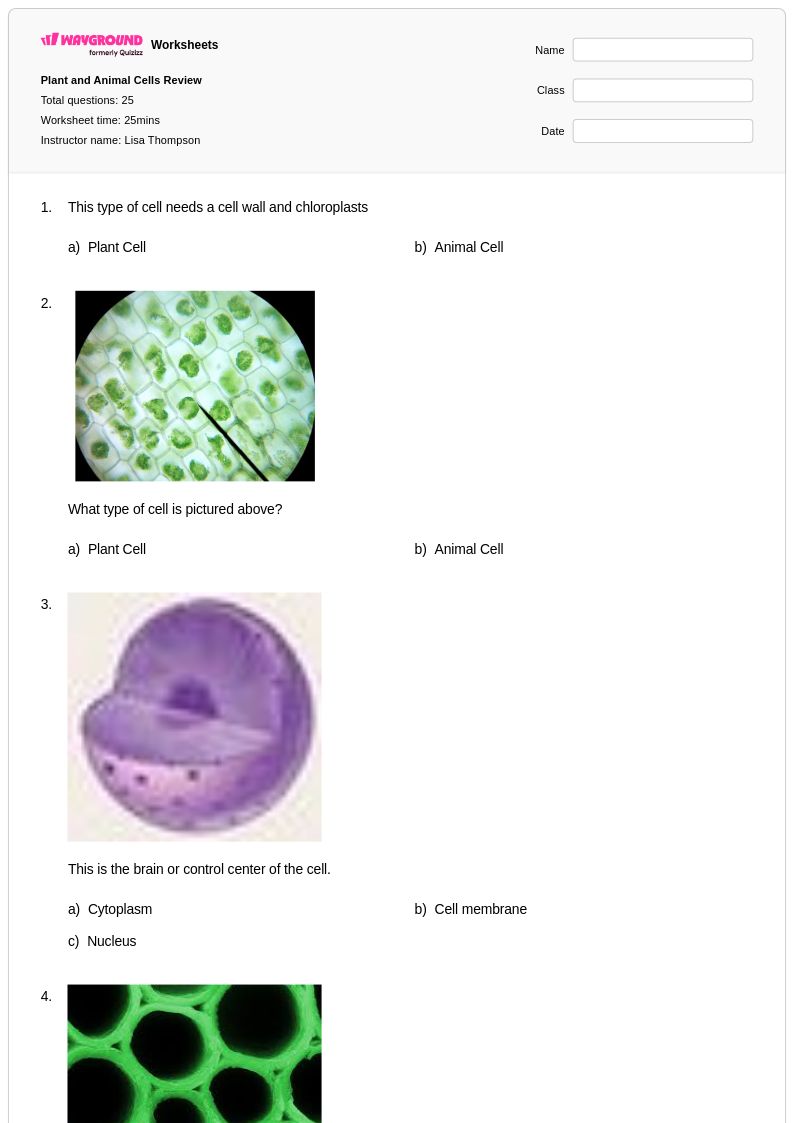
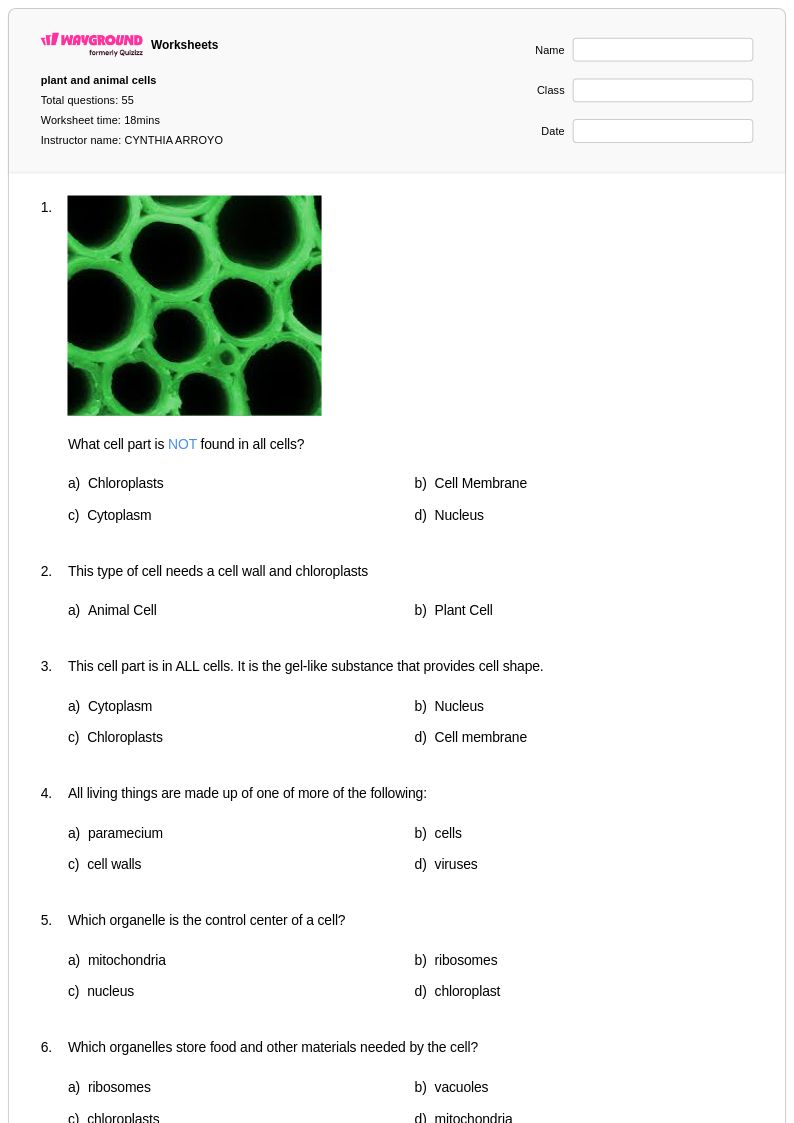
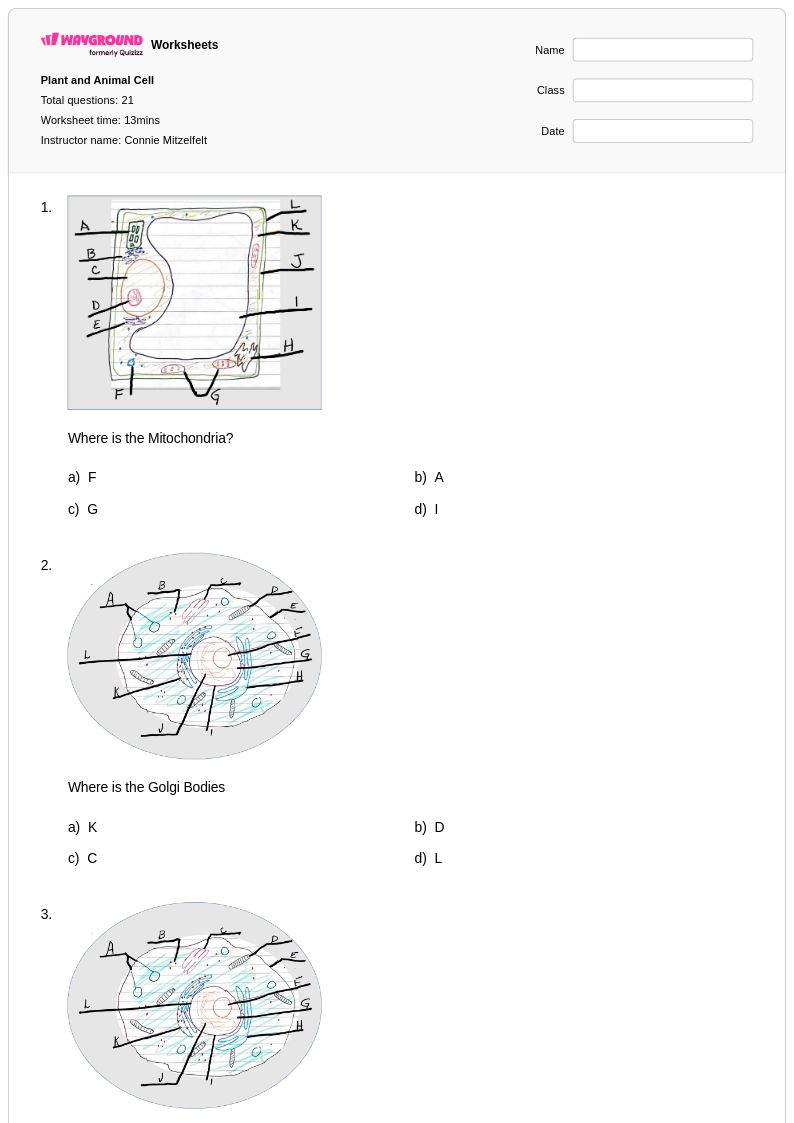
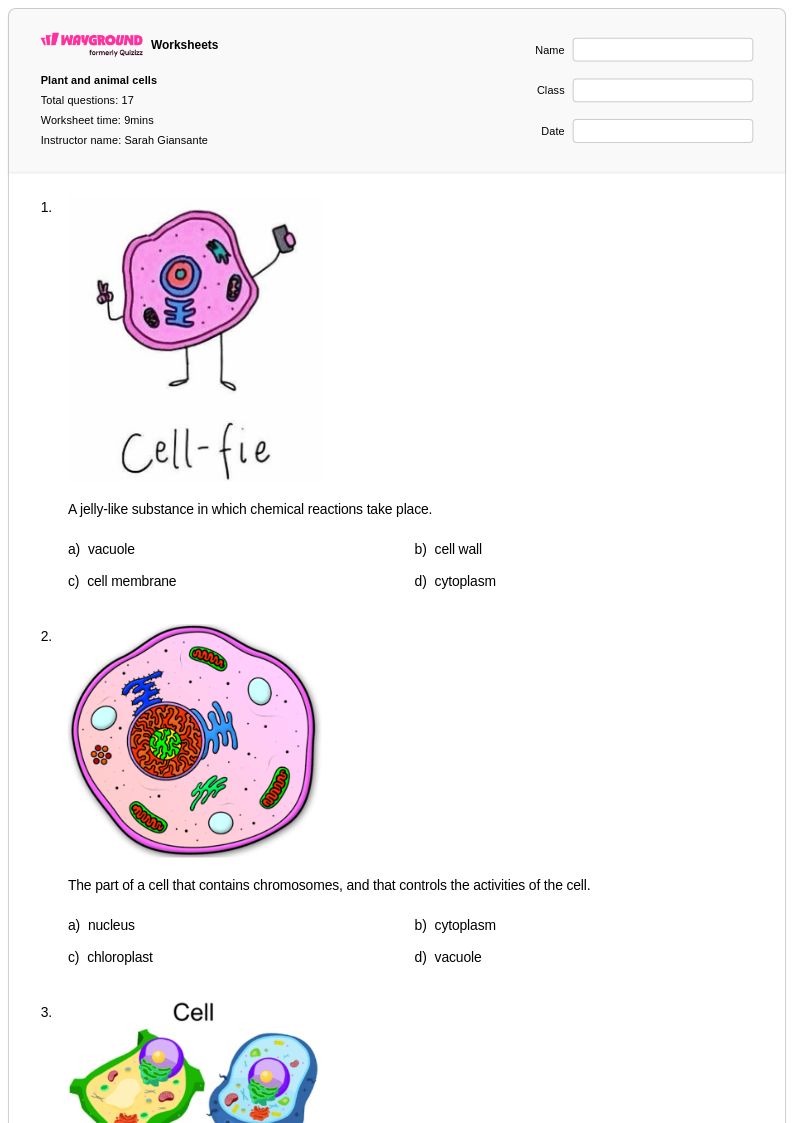
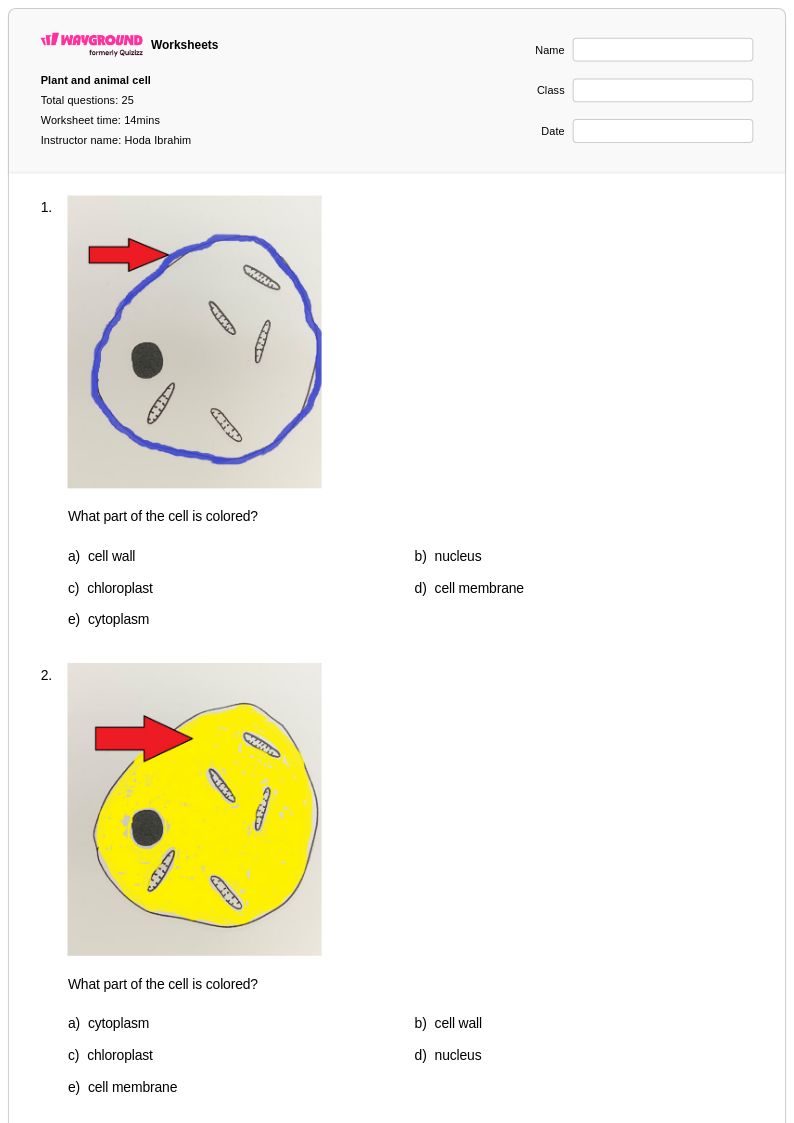
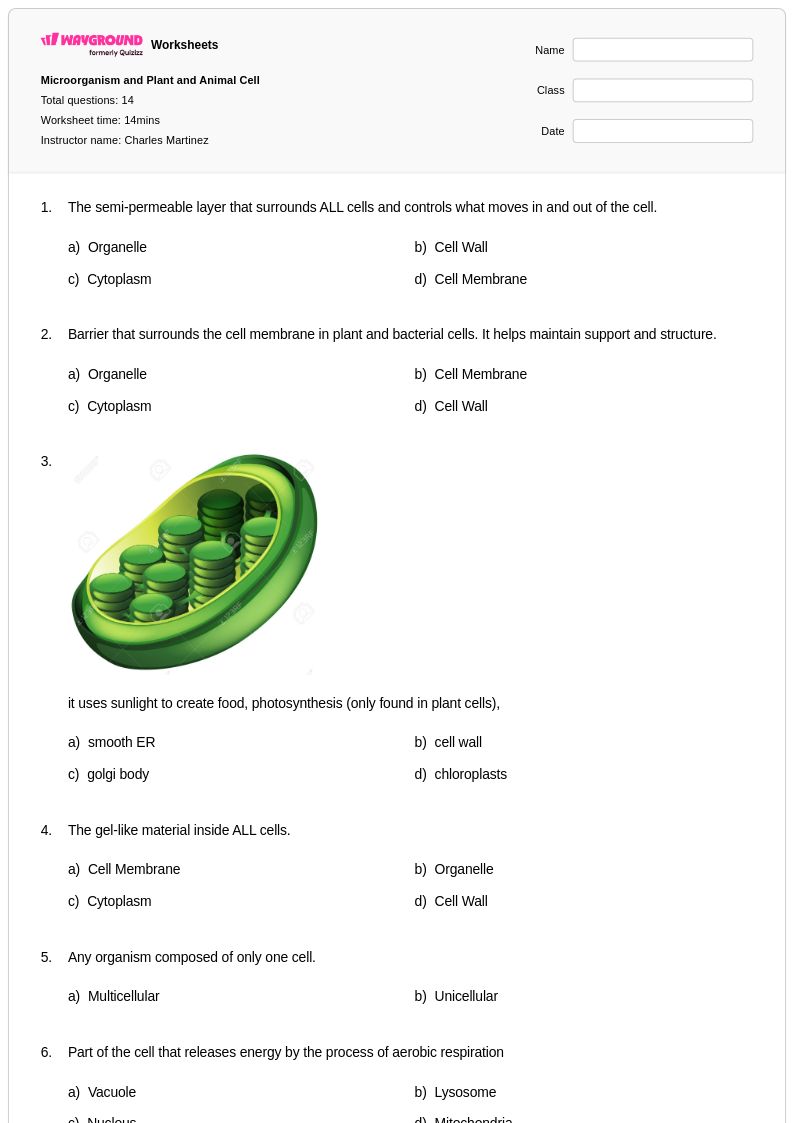
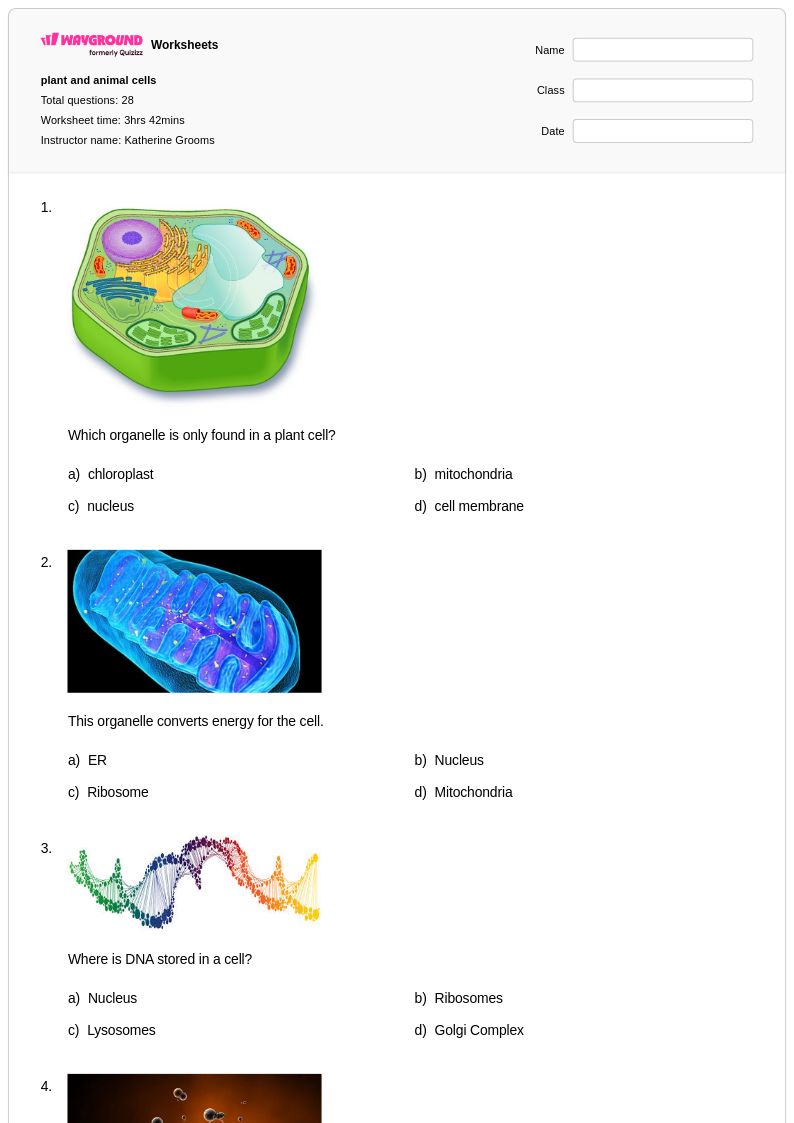
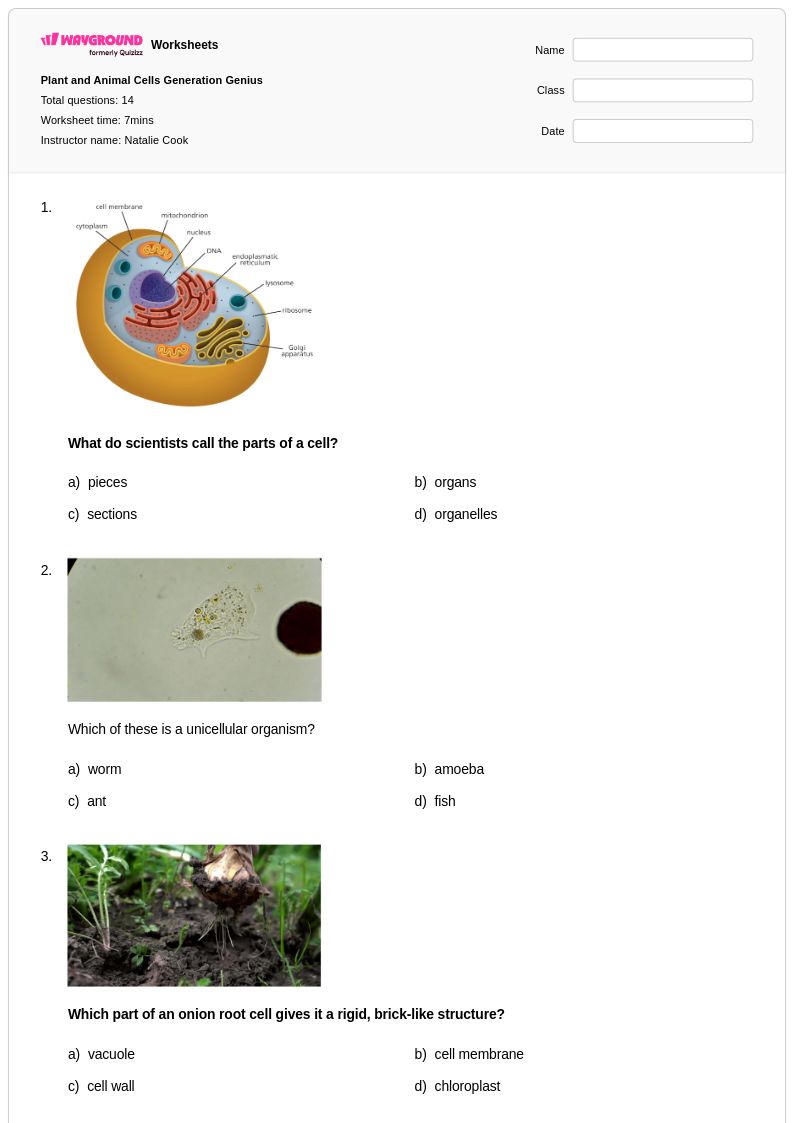
Plant and animal cell worksheets for Year 6 students through Wayground (formerly Quizizz) provide comprehensive exploration of cellular structures and functions that form the foundation of biological understanding. These carefully crafted educational resources guide sixth-grade learners through detailed comparisons of plant and animal cells, helping them identify key organelles such as the nucleus, mitochondria, cell membrane, and chloroplasts while understanding their specific roles in cellular processes. The worksheets strengthen critical scientific skills including microscopic observation, diagram labeling, structural analysis, and comparative reasoning through engaging practice problems that reinforce cellular biology concepts. Each worksheet collection includes detailed answer keys and is available as free printables in convenient pdf format, making them accessible resources for both classroom instruction and independent study.
Wayground (formerly Quizizz) empowers educators with an extensive library of millions of teacher-created plant and animal cell worksheets specifically designed to meet Year 6 science curriculum standards and learning objectives. The platform's robust search and filtering capabilities allow teachers to quickly locate materials that align with specific standards while offering powerful differentiation tools to accommodate diverse learning needs within the classroom. These flexible worksheet collections support comprehensive lesson planning by providing customizable resources available in both printable pdf format and interactive digital versions, enabling seamless integration into various instructional approaches. Teachers can effectively utilize these materials for targeted skill practice, remediation of challenging cellular concepts, and enrichment activities that deepen students' understanding of the fundamental differences and similarities between plant and animal cellular structures.
FAQs
How do I teach the differences between plant and animal cells?
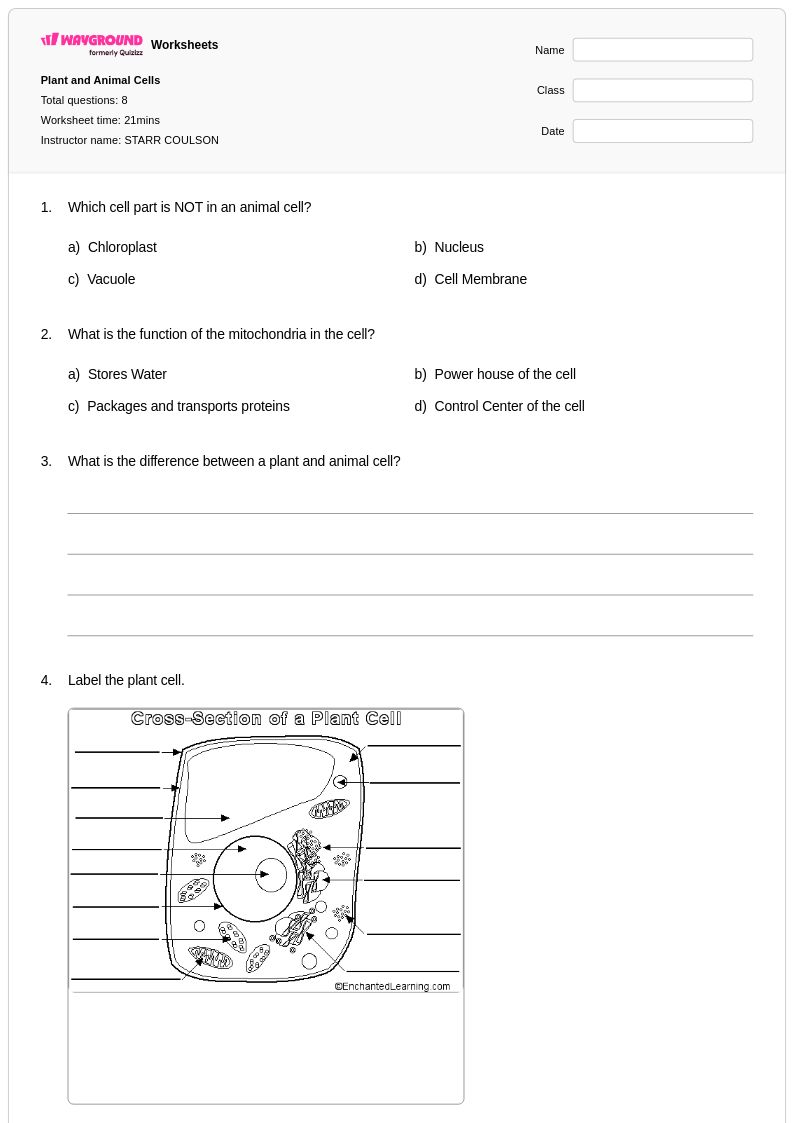
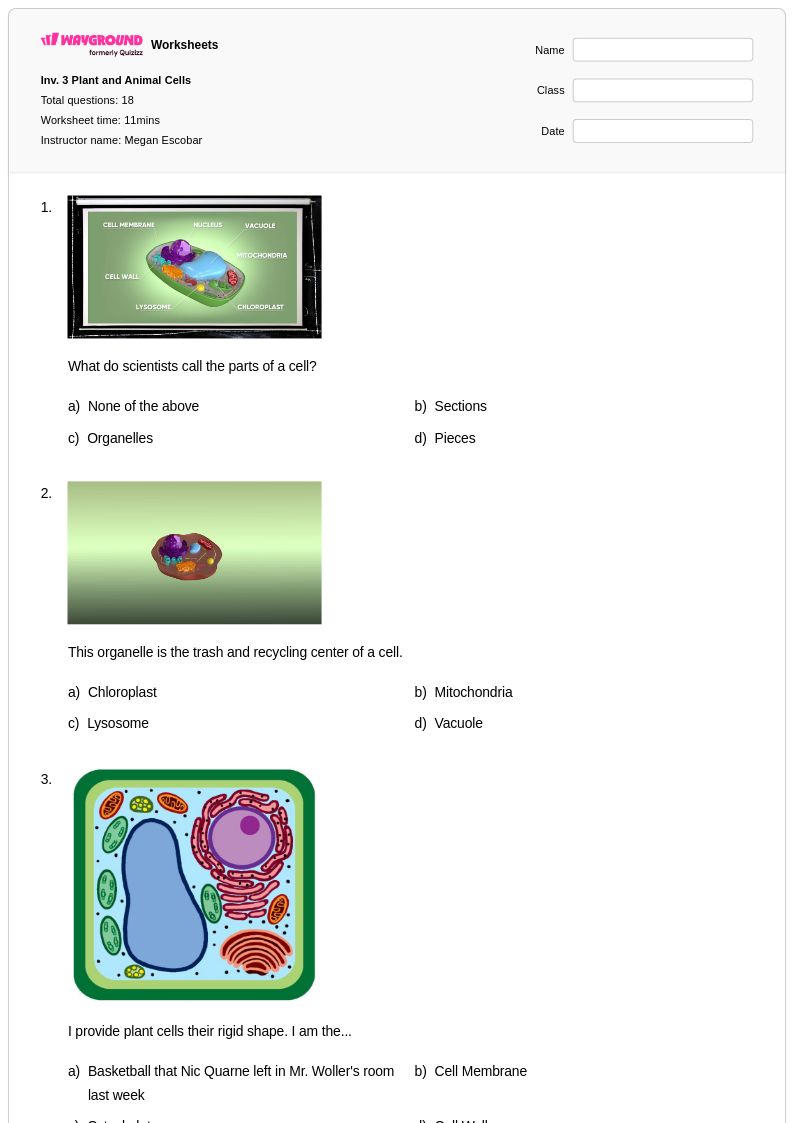
Start by establishing what plant and animal cells have in common before moving to what sets them apart. Focus student attention on the three structures unique to plant cells: the cell wall, chloroplasts, and a large central vacuole. Visual comparison charts and labeled diagrams are especially effective here because they let students see structural differences side by side rather than memorizing lists in isolation. Connecting each structural difference to its function — for example, why plant cells need a rigid wall while animal cells do not — builds deeper conceptual understanding than rote identification alone.
What exercises help students practice identifying plant and animal cell organelles?
Labeling diagrams is the most direct practice method, requiring students to identify organelles by location and match them to their functions. Microscopic image analysis adds an important layer of realism, asking students to distinguish cell types from actual or simulated images rather than clean textbook diagrams. Comparison tables that prompt students to mark which organelles appear in plant cells, animal cells, or both reinforce the distinctions without turning the task into simple memorization. Practice problems that ask students to explain why a cell has a particular organelle — not just name it — are especially effective for building durable understanding.
What mistakes do students commonly make when comparing plant and animal cells?
The most frequent error is assuming that animal cells have no vacuoles at all — in reality, animal cells have small, temporary vacuoles, while plant cells have a single large central vacuole. Students also frequently misattribute the cell membrane exclusively to animal cells, not realizing that plant cells have both a cell membrane and a cell wall. Another common misconception is conflating the function of mitochondria and chloroplasts, particularly the idea that chloroplasts replace mitochondria in plant cells rather than supplementing them. Targeted practice problems that directly address these error patterns help students self-correct before assessments.
How do I use plant and animal cell worksheets effectively in my classroom?
Plant and animal cell worksheets on Wayground are available as printable PDFs for traditional classroom use and in digital formats for technology-integrated environments, including the option to host them as a quiz directly on Wayground. Printable versions work well as lab companions or homework assignments following an initial lesson on cellular structure, while digital formats support independent practice, remote learning, and formative assessment with immediate feedback. All worksheets include answer keys, which reduces prep time and makes them practical for both in-class guided work and independent review sessions.
How can I differentiate plant and animal cell instruction for students at different levels?
For students who are still building foundational knowledge, focus first on the most visually distinct organelles — chloroplasts and cell walls — before introducing the full range of cellular components. More advanced students can be challenged with structure-function analysis questions, such as explaining why a cell optimized for photosynthesis would look different from one optimized for energy storage. Wayground supports individual accommodations including reduced answer choices to lower cognitive load for struggling learners, extended time for students who need it, and read-aloud functionality for students with reading difficulties — all configurable per student without disrupting the rest of the class.
What is the difference between prokaryotic and eukaryotic cells, and how does it connect to plant and animal cell study?
Prokaryotic cells, such as bacteria, lack a membrane-bound nucleus and membrane-enclosed organelles, while eukaryotic cells — including both plant and animal cells — have a defined nucleus and complex internal organization. Teaching this distinction first gives students the conceptual framework to understand why plant and animal cells, despite their differences, belong to the same broad category. When students understand that both are eukaryotic, comparisons between plant and animal cell structures become more meaningful because they are working within a shared baseline rather than treating the two as entirely unrelated.