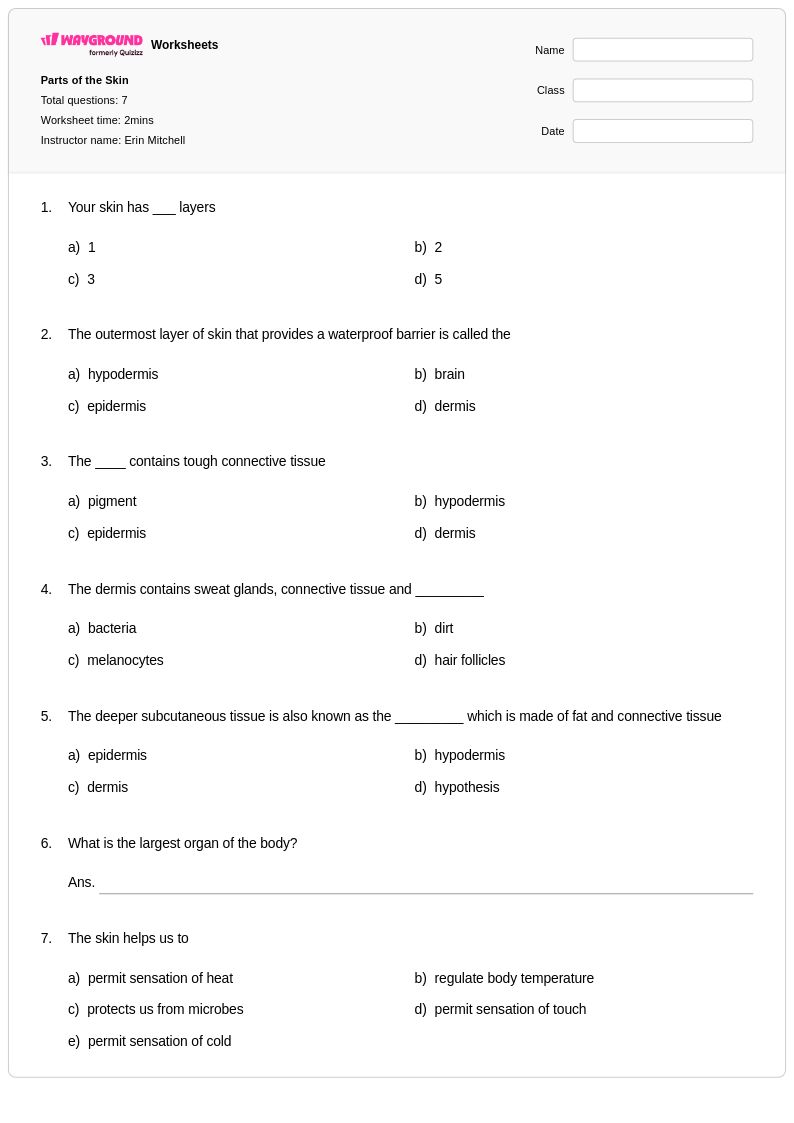
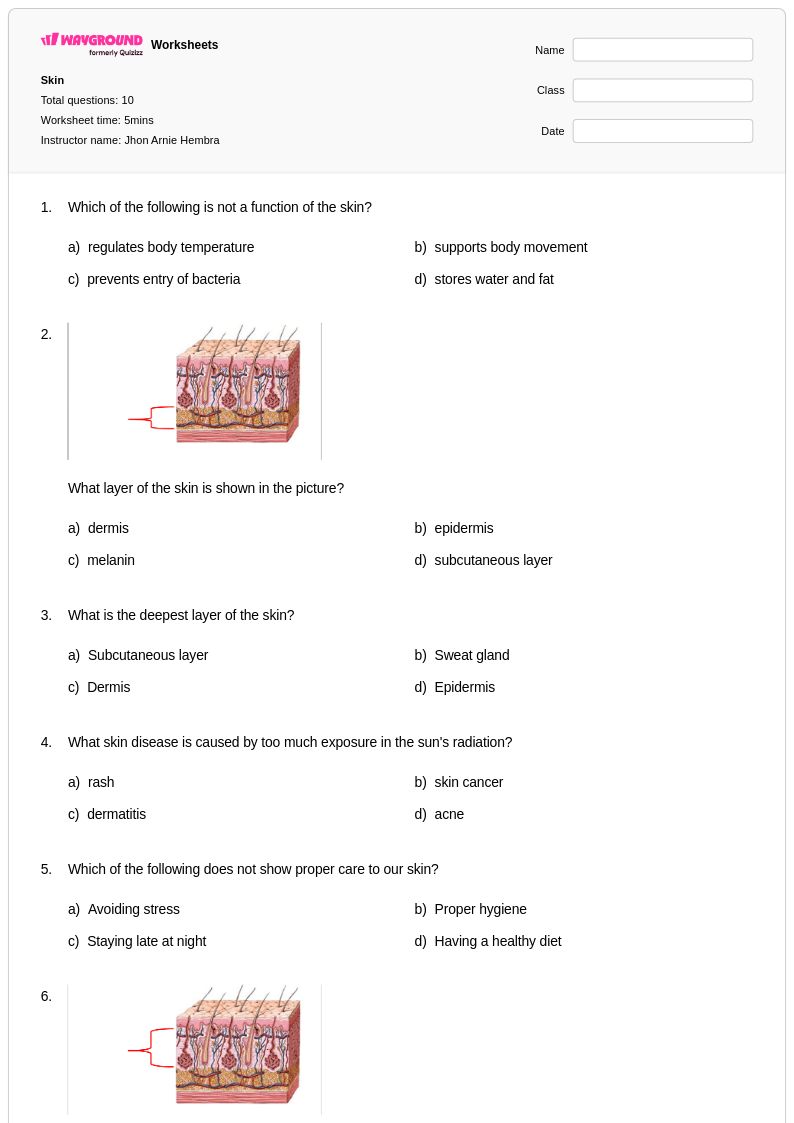
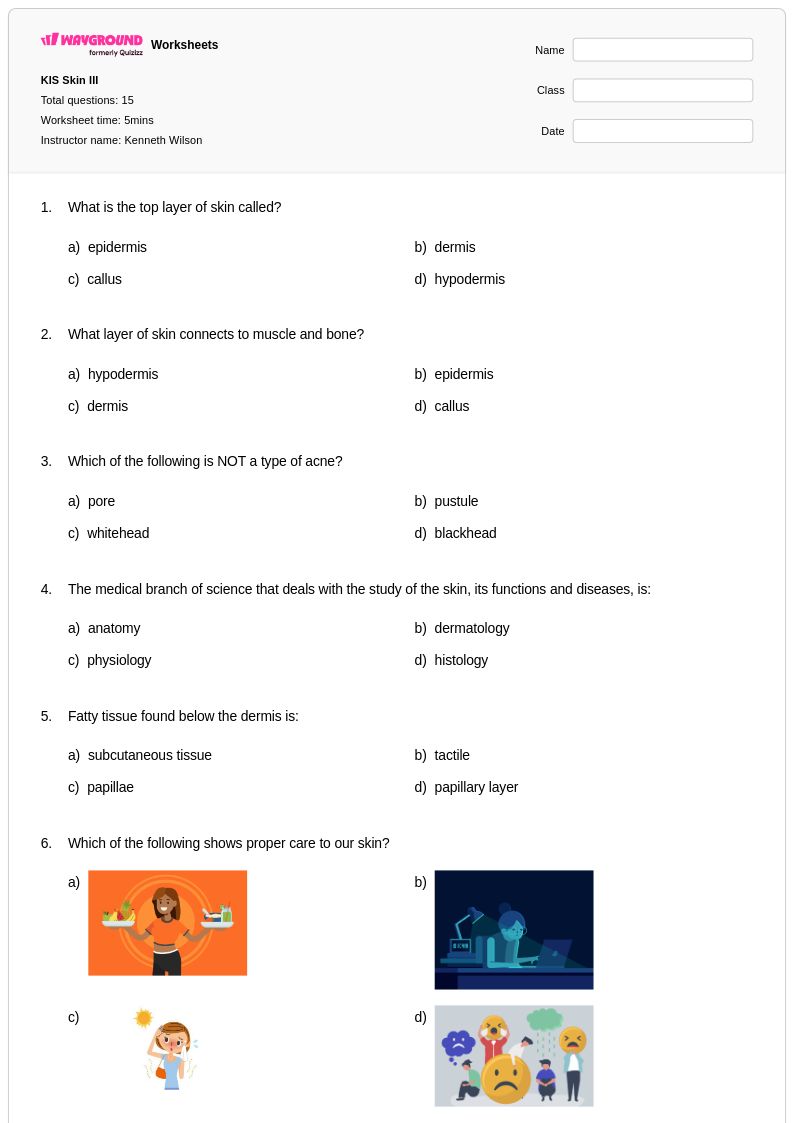
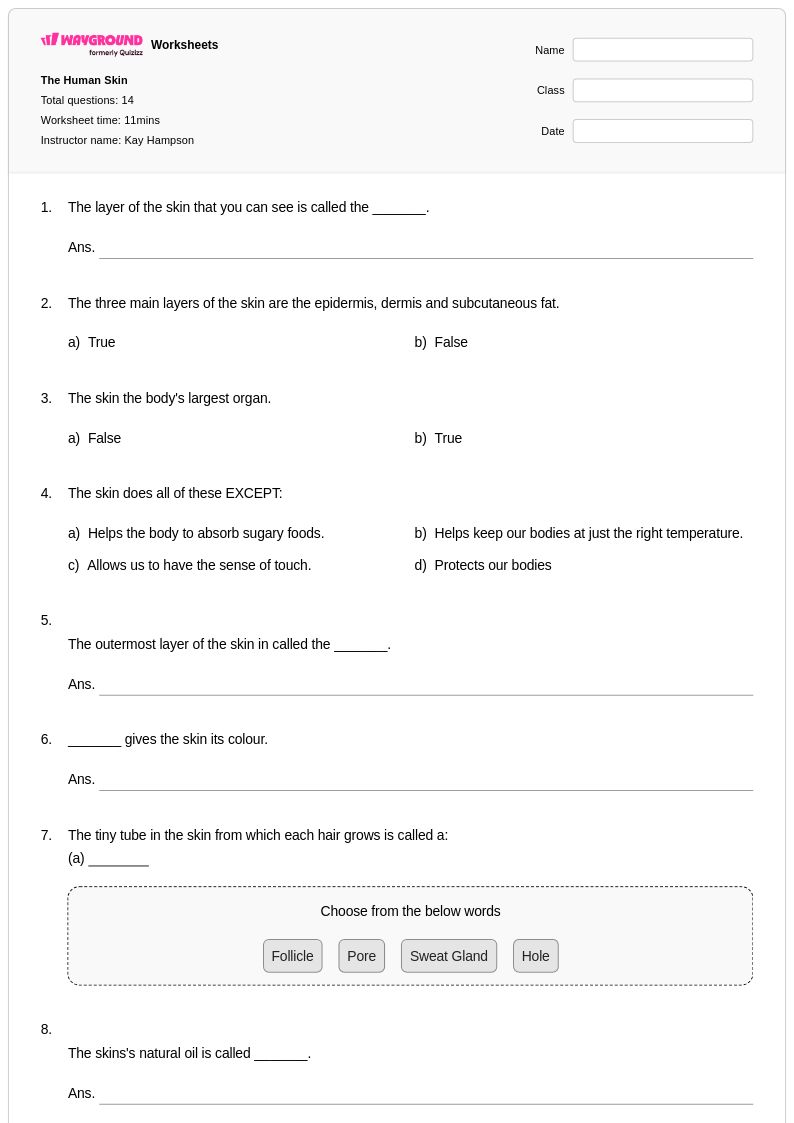
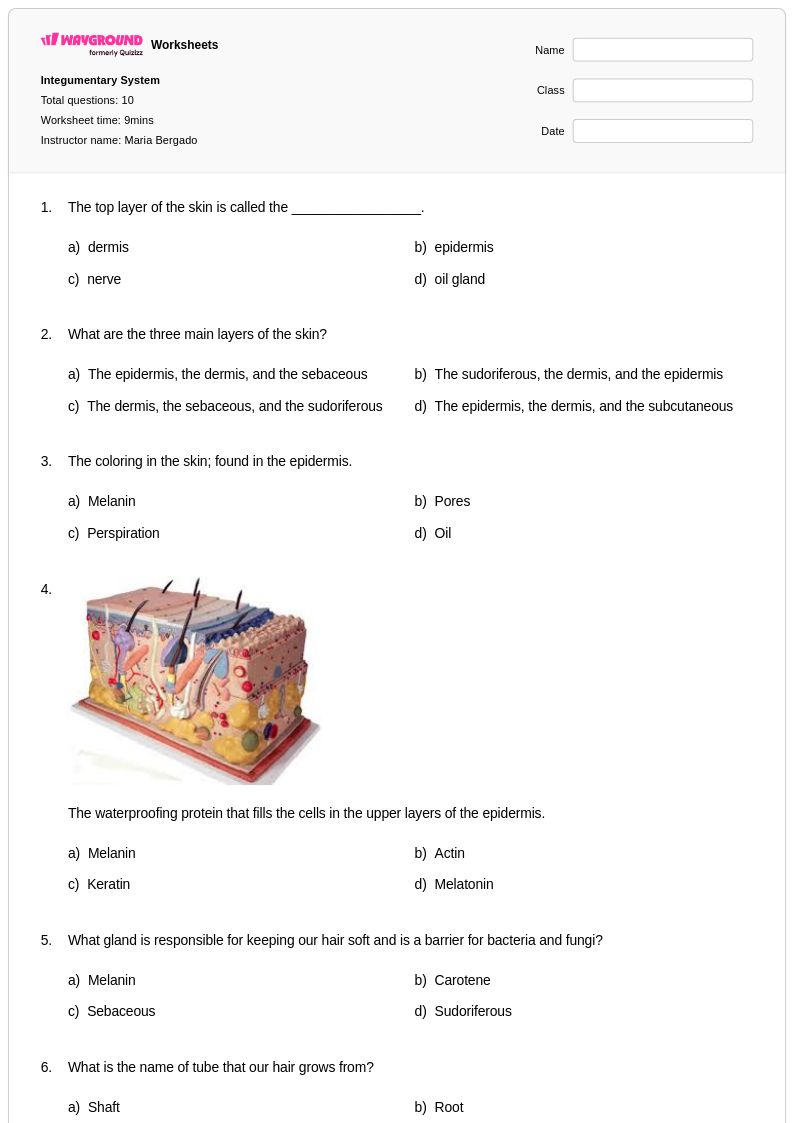
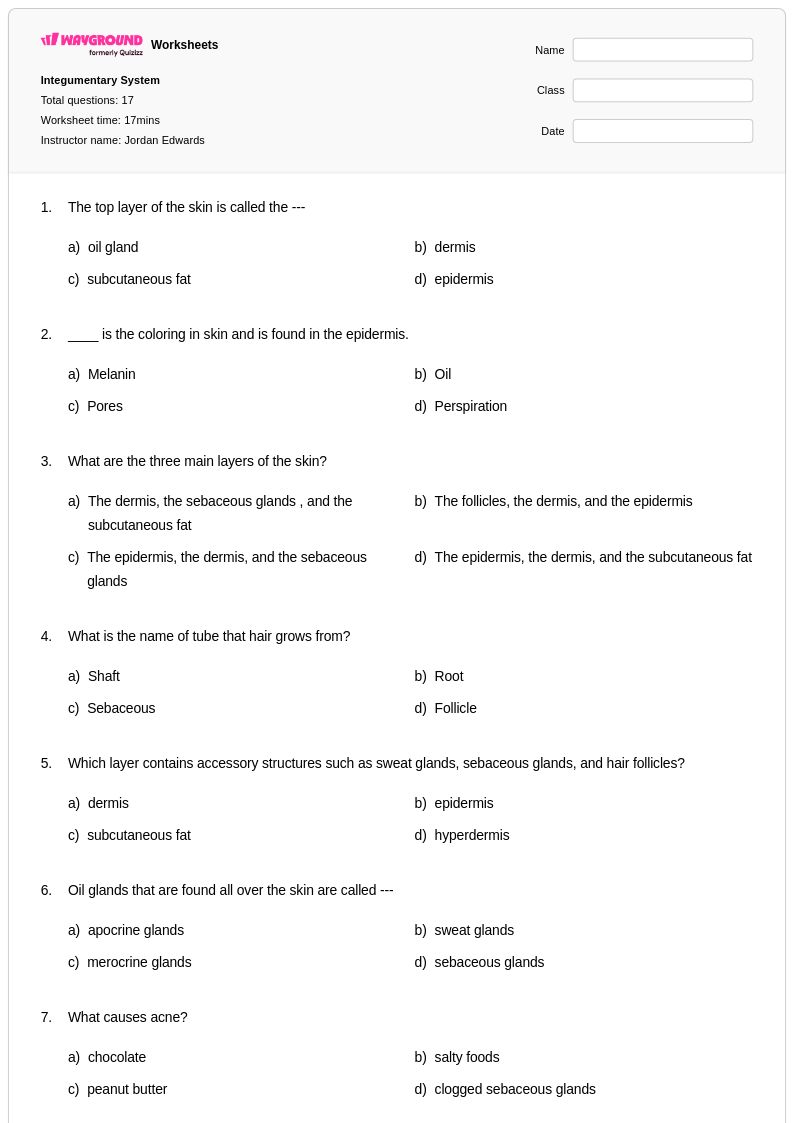
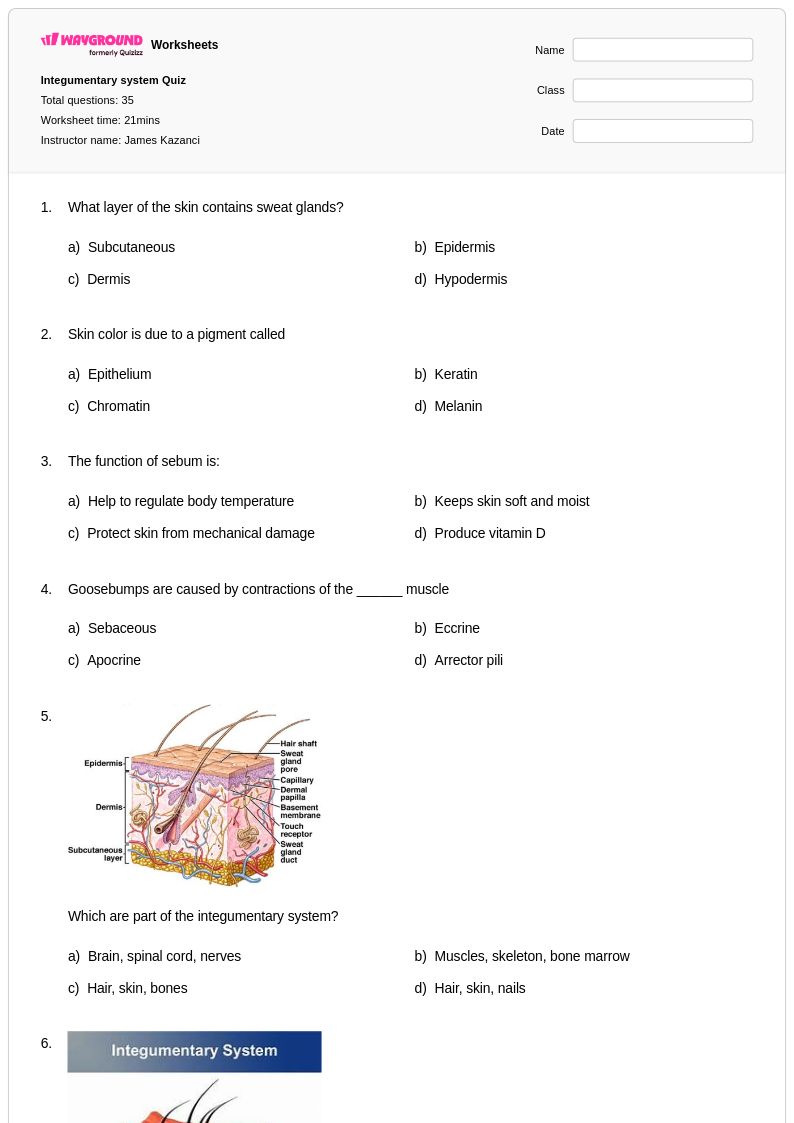
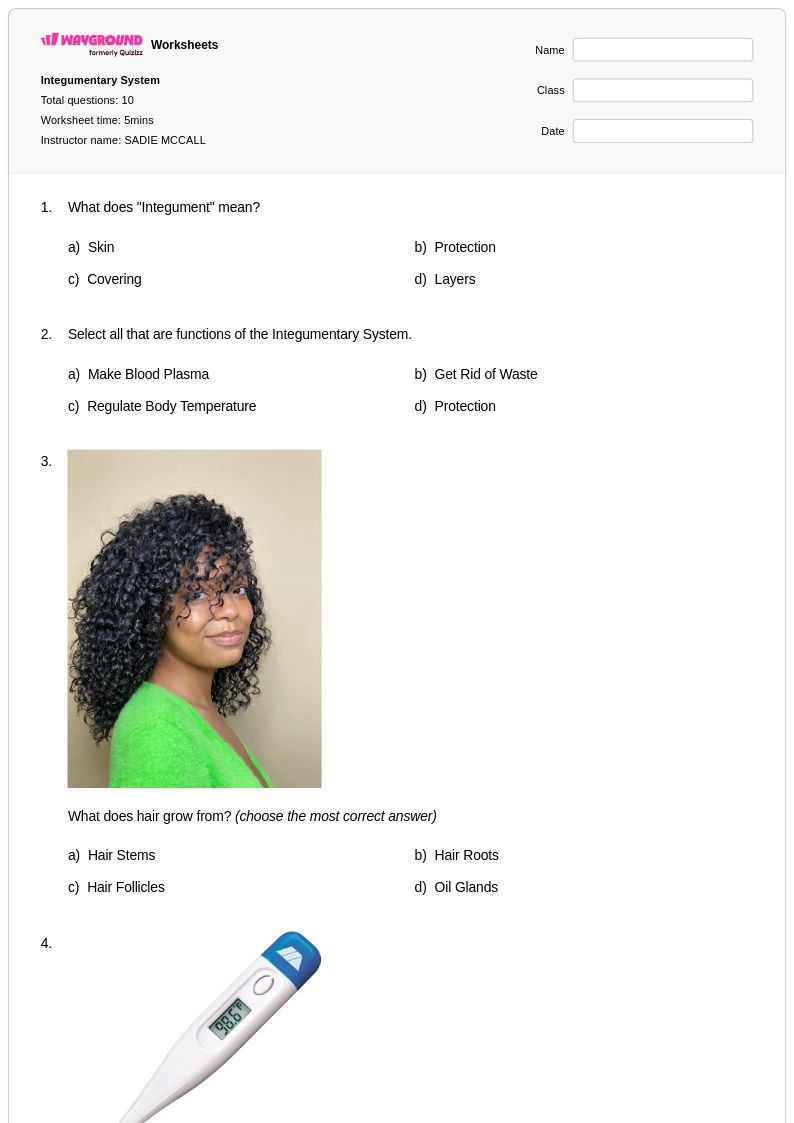
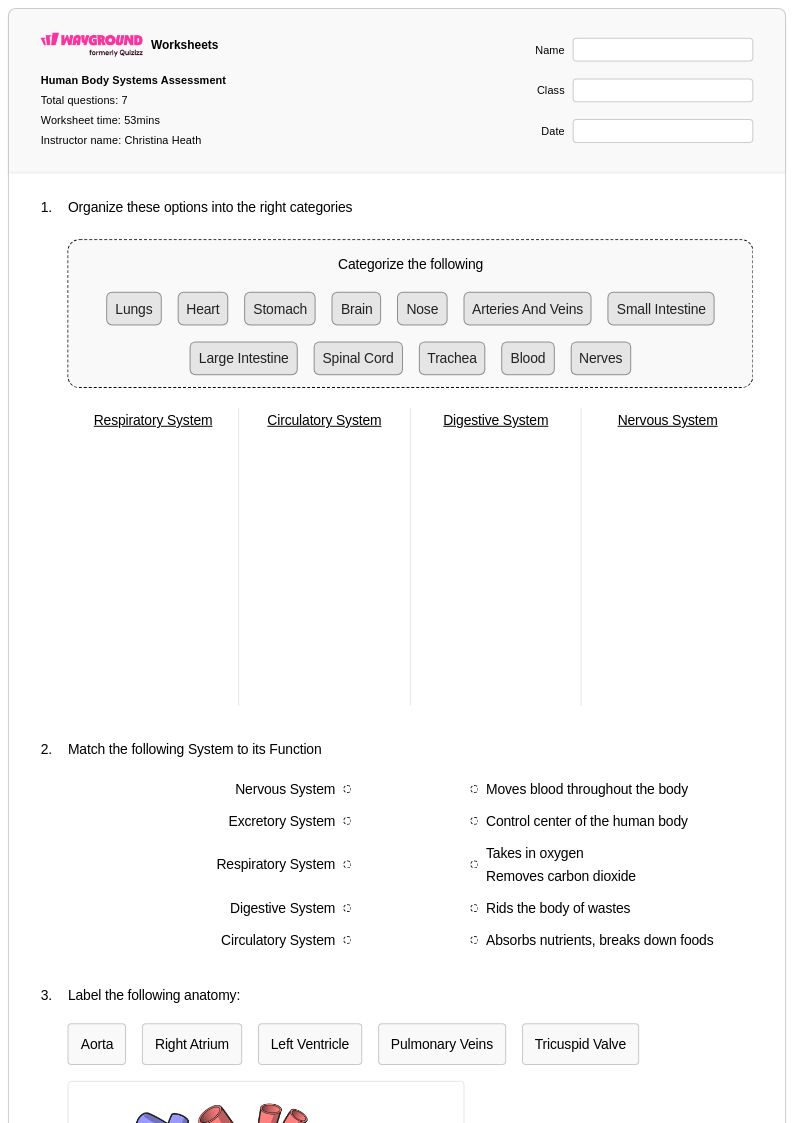
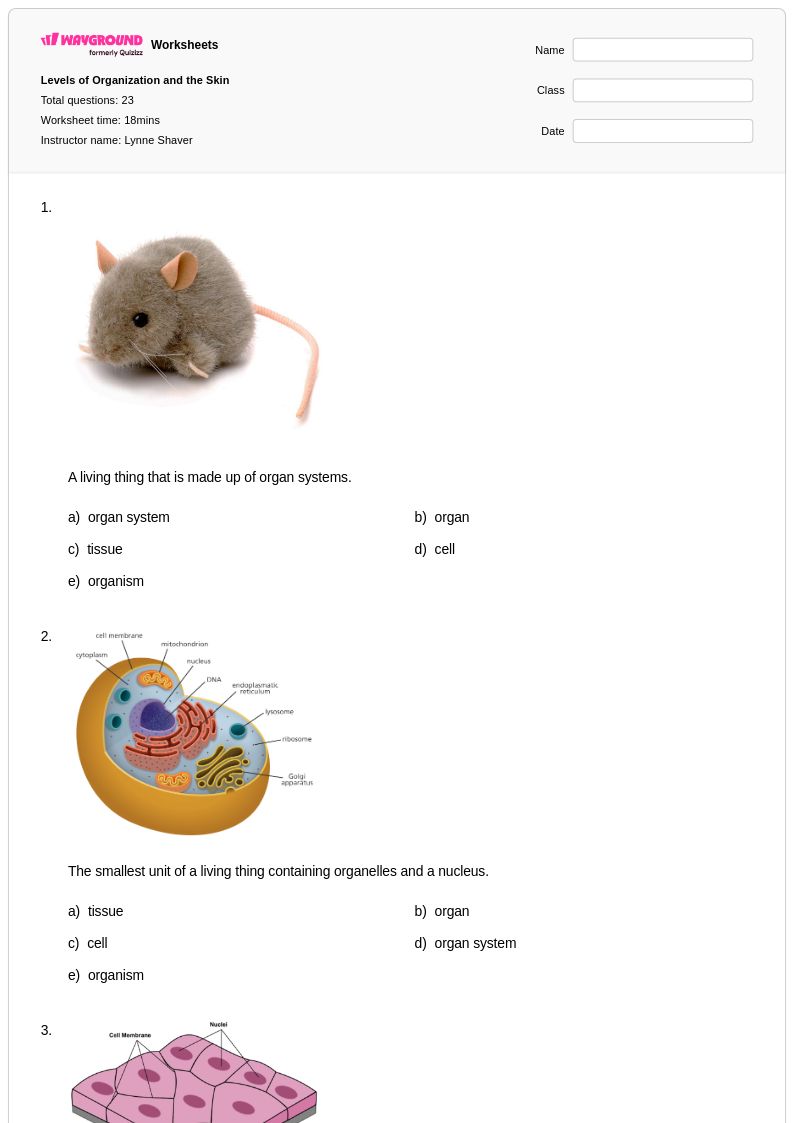
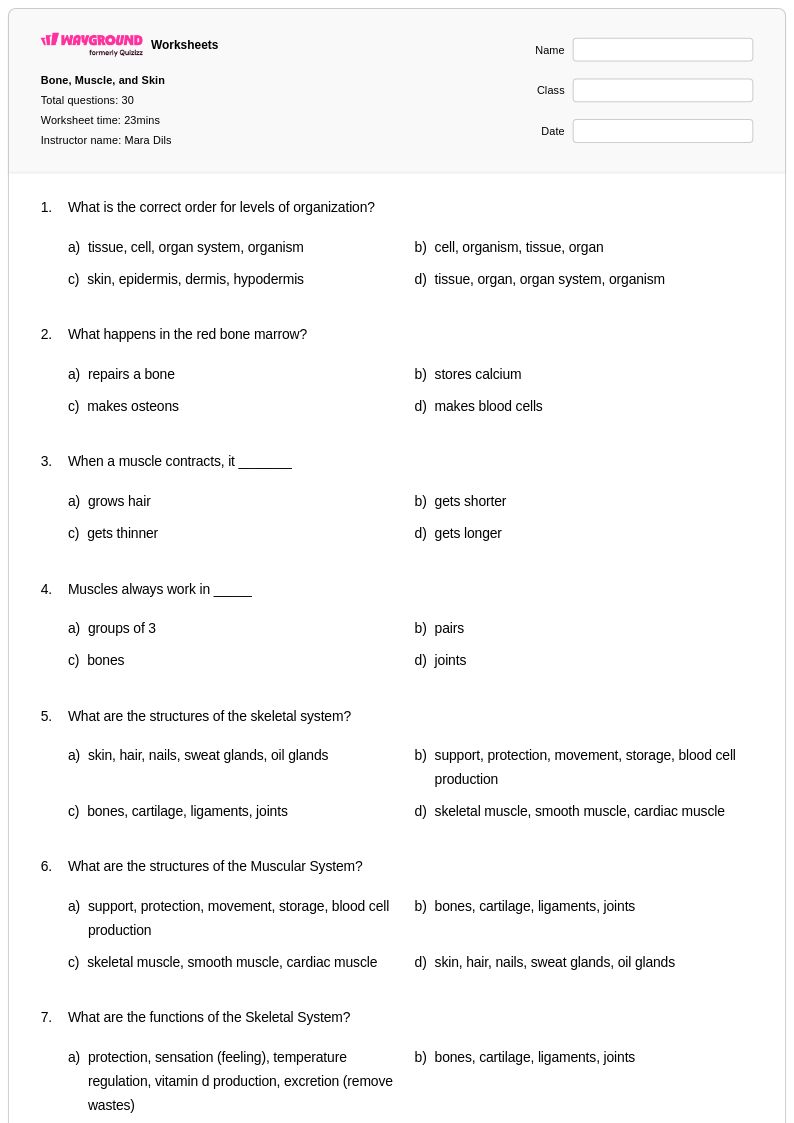
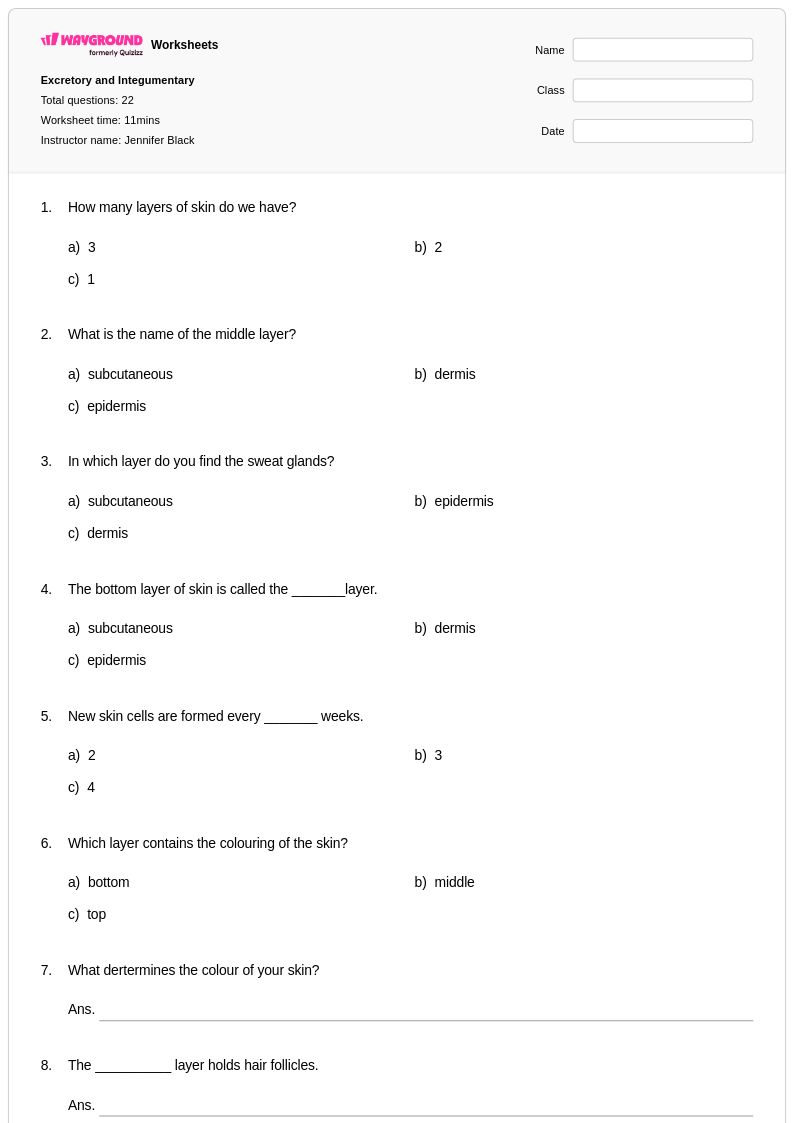
Explore Wayground's free Year 6 skin anatomy worksheets and printables that help students learn about skin layers, functions, and structures through engaging practice problems with comprehensive answer keys.
Explore printable Skin Anatomy worksheets for Year 6
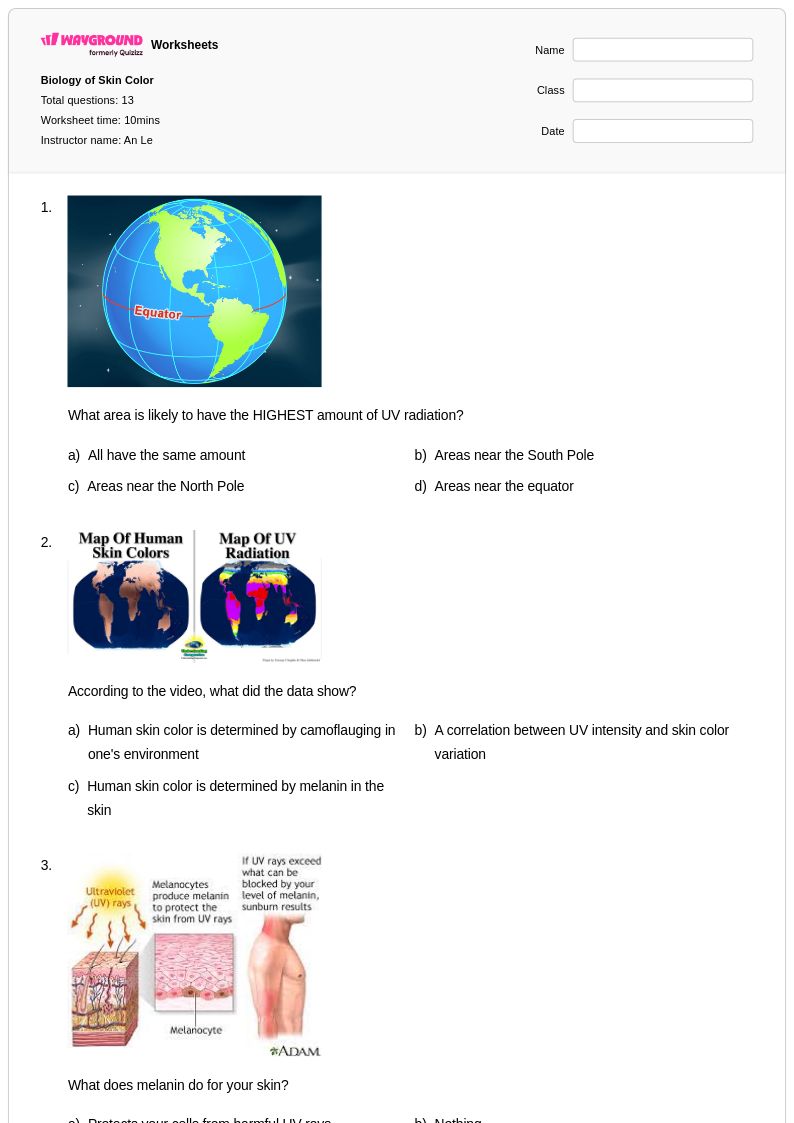
Year 6 skin anatomy worksheets available through Wayground (formerly Quizizz) provide comprehensive coverage of the integumentary system's structure and function, designed specifically for middle school biology students. These educational resources focus on building foundational knowledge of skin layers, including the epidermis, dermis, and hypodermis, while exploring specialized structures such as hair follicles, sweat glands, sebaceous glands, and sensory receptors. Students engage with detailed diagrams, labeling exercises, and practice problems that reinforce understanding of how the skin serves as the body's protective barrier, regulates temperature, and enables sensory perception. Each worksheet includes answer keys and is available as free printables in pdf format, making them accessible resources for both classroom instruction and independent study.
Wayground (formerly Quizizz) supports educators with millions of teacher-created skin anatomy worksheets that can be easily discovered through robust search and filtering capabilities, allowing teachers to find materials perfectly suited to their Year 6 biology curriculum requirements. The platform's standards alignment features ensure that worksheets meet educational benchmarks, while differentiation tools enable teachers to modify content complexity for diverse learners. Teachers can customize these resources to match their specific instructional goals, accessing materials in both printable pdf formats for traditional classroom use and digital formats for interactive learning experiences. This comprehensive worksheet collection streamlines lesson planning by providing ready-to-use materials for skill practice, targeted remediation for students struggling with anatomical concepts, and enrichment activities for advanced learners ready to explore more complex integumentary system functions.
FAQs
How do I teach skin anatomy to students who struggle with memorizing layers and structures?
Start by grounding students in the three primary layers of the skin: the epidermis, dermis, and hypodermis. Build from the outside in, teaching each layer's structure before connecting it to function. Cross-sectional diagram labeling is especially effective because it forces students to spatially organize structures like hair follicles, sebaceous glands, sweat glands, and sensory receptors rather than memorize them as a list. Repeated low-stakes labeling practice accelerates retention significantly.
What are good practice exercises for helping students learn the structures of the integumentary system?
Diagram labeling worksheets that show cross-sections of skin are among the most effective practice formats for this topic, as students must identify and place structures in context rather than simply recall definitions. Pairing labeling tasks with short-answer questions about function reinforces the relationship between structure and role, such as why sebaceous glands are positioned near hair follicles or how sensory receptors relate to their location in the dermis. Regular repetition with varied question formats builds both identification accuracy and conceptual understanding.
What mistakes do students commonly make when learning skin anatomy?
The most common error is confusing the epidermis and dermis, particularly misattributing structures like blood vessels and nerve endings to the epidermis when they are found in the dermis. Students also frequently conflate the hypodermis with the dermis, not recognizing it as a distinct layer with its own composition and function. Another common misconception is treating the skin as a passive barrier rather than an active organ with regulatory, sensory, and immune functions.
How can I use skin anatomy worksheets to support students with different learning needs?
Skin anatomy worksheets on Wayground can be assigned digitally, which allows teachers to apply individual accommodations directly to each student's experience. Features like Read Aloud support students who benefit from hearing questions read to them, while reduced answer choices can lower cognitive load for students who need it during diagram identification tasks. Extended time settings can be configured per student, and all accommodations are saved for reuse across future sessions without notifying other students.
How do I use skin anatomy worksheets effectively in my classroom?
Skin anatomy worksheets work well as structured practice after direct instruction on the integumentary system, reinforcing layer identification and structural relationships through diagram analysis and application questions. On Wayground, these worksheets are available as printable PDFs for traditional classroom use and in digital formats for technology-integrated environments, including the option to host them as a quiz. Each worksheet includes a complete answer key, making them equally effective for independent student practice, guided group work, or formative assessment.
How does skin anatomy connect to broader biology and physiology concepts students need to understand?
Skin anatomy is a gateway topic for understanding organ system integration, as the integumentary system interacts directly with the immune, nervous, circulatory, and endocrine systems. Teaching the function of sweat glands introduces thermoregulation; sensory receptors connect to the peripheral nervous system; and melanocytes link to cellular biology and UV response. Grounding students in skin anatomy early creates a concrete reference point for more abstract physiological processes covered later in the course.