Free Printable Sexual Vs Asexual Reproduction Worksheets for Year 6
Year 6 sexual vs asexual reproduction worksheets from Wayground help students master biological reproduction concepts through engaging printables, practice problems, and comprehensive answer keys for effective science learning.
Explore printable Sexual Vs Asexual Reproduction worksheets for Year 6
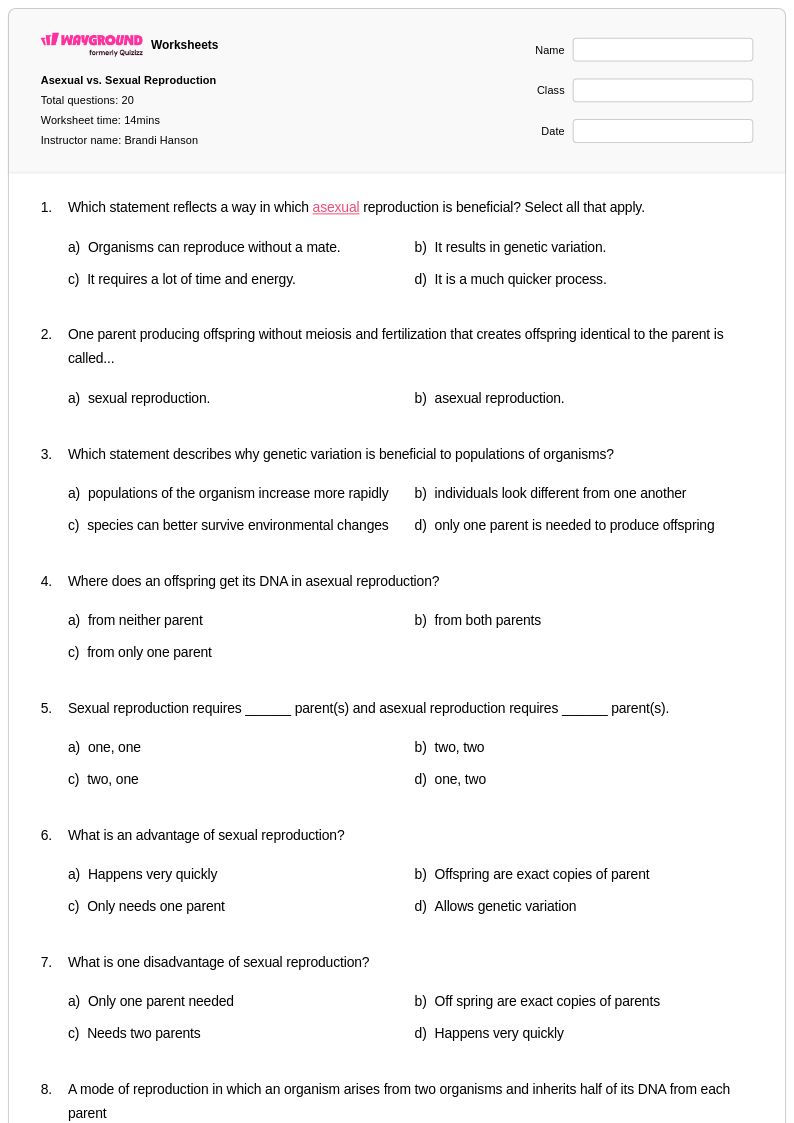
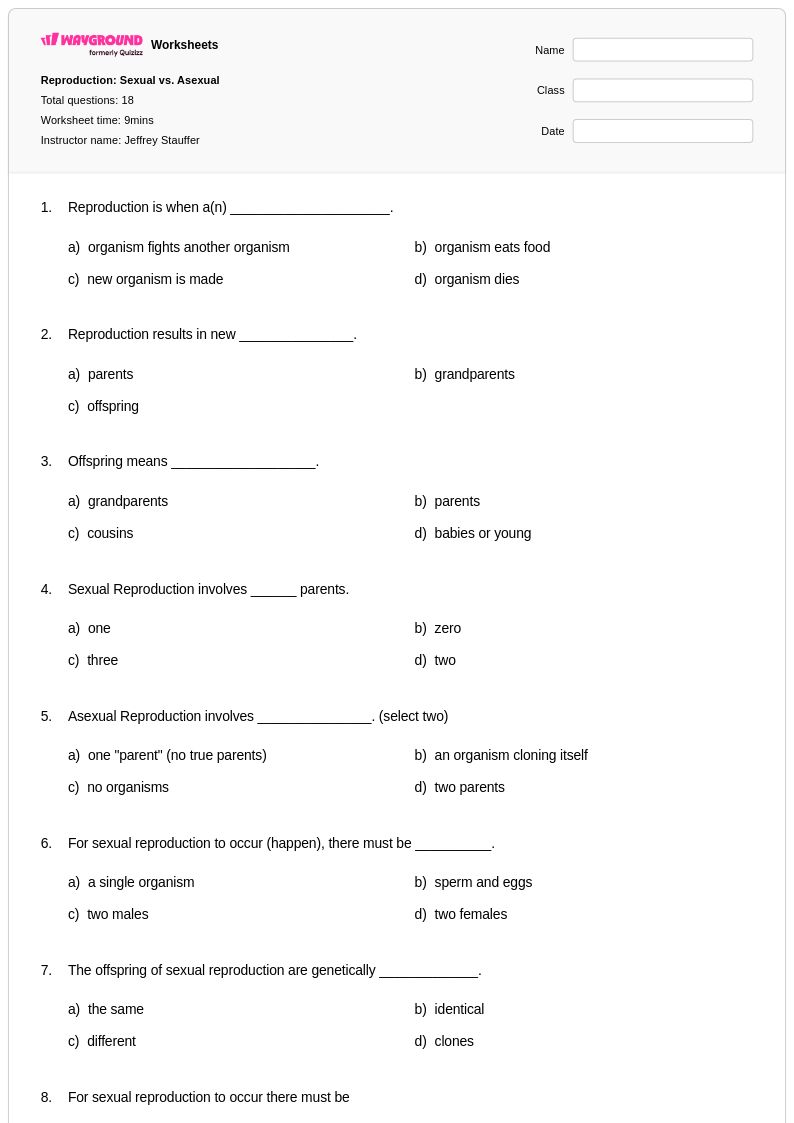
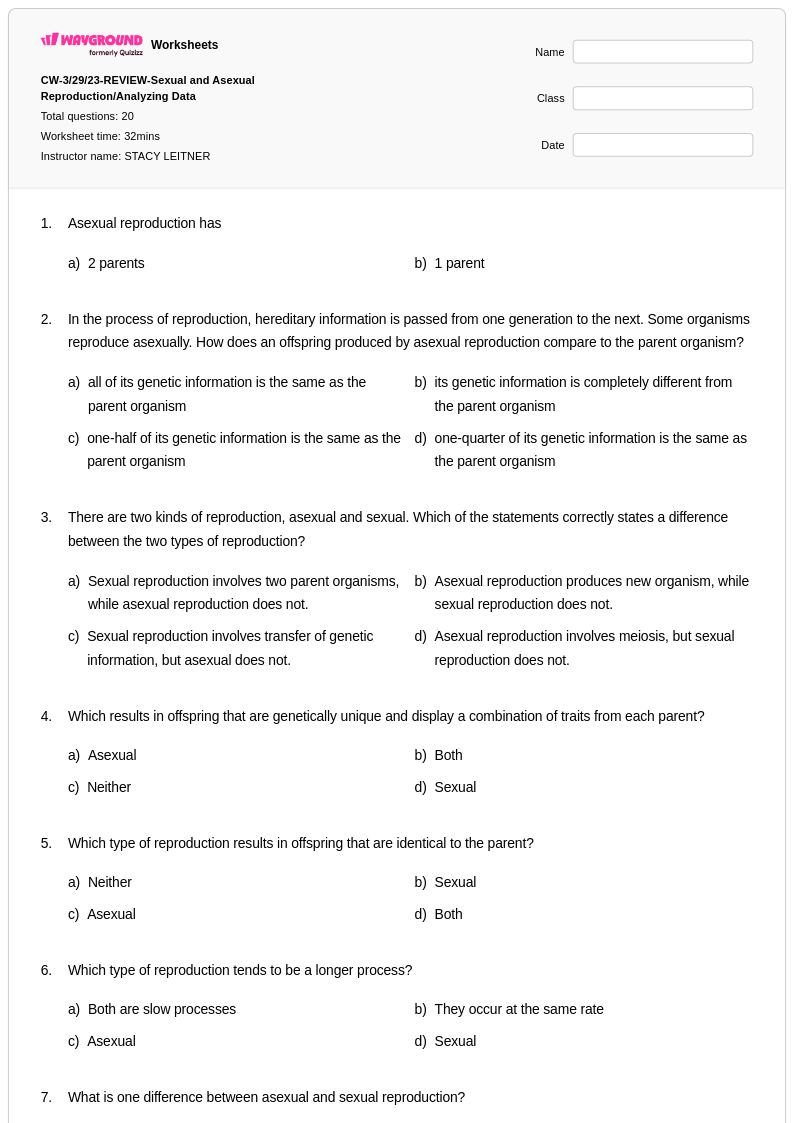
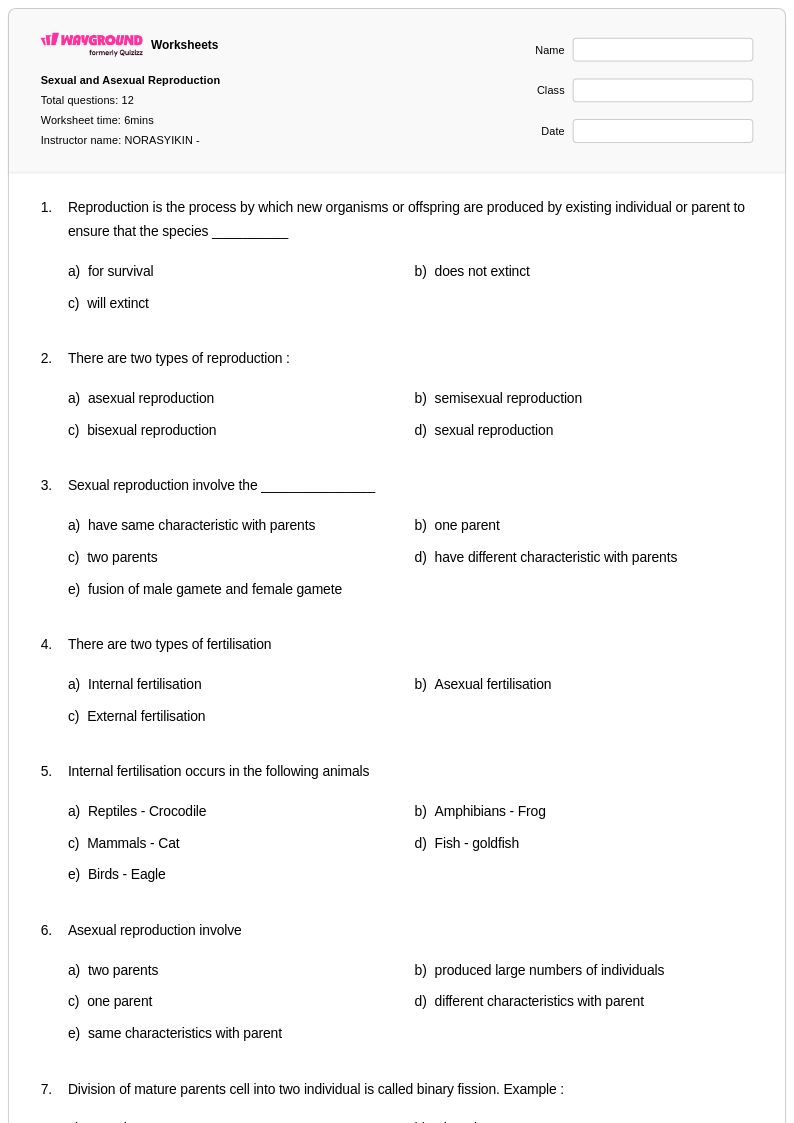
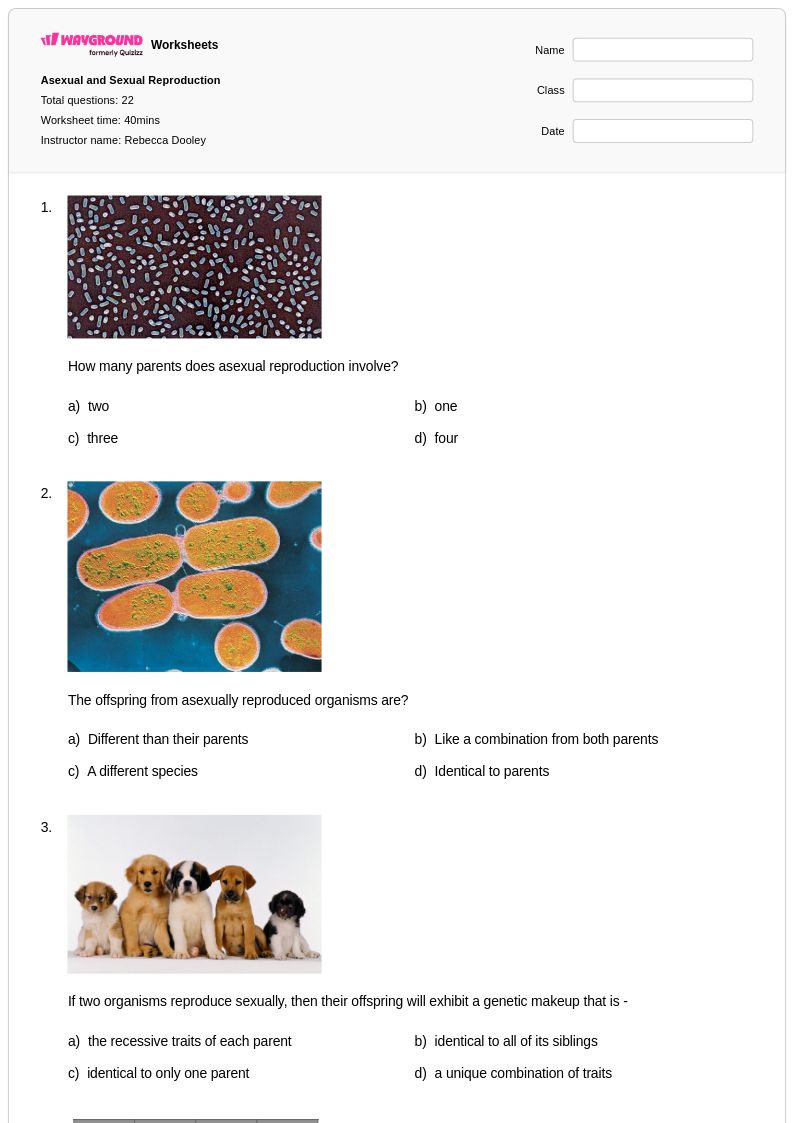
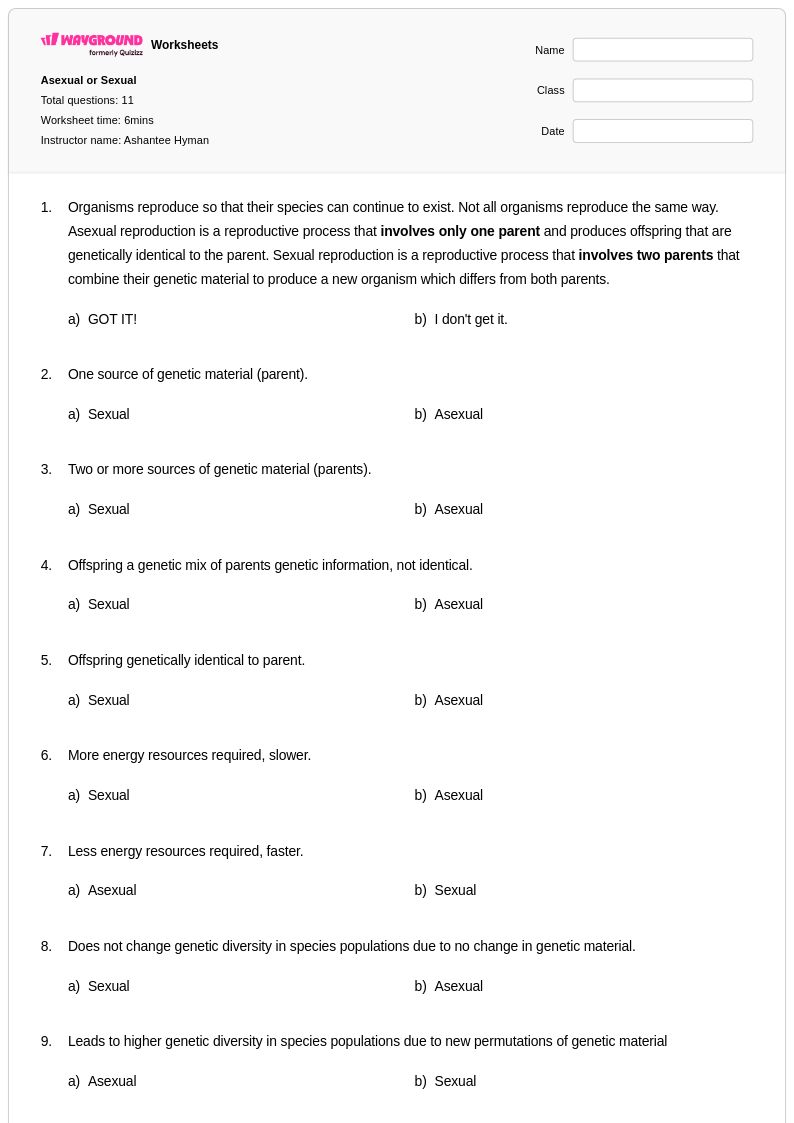
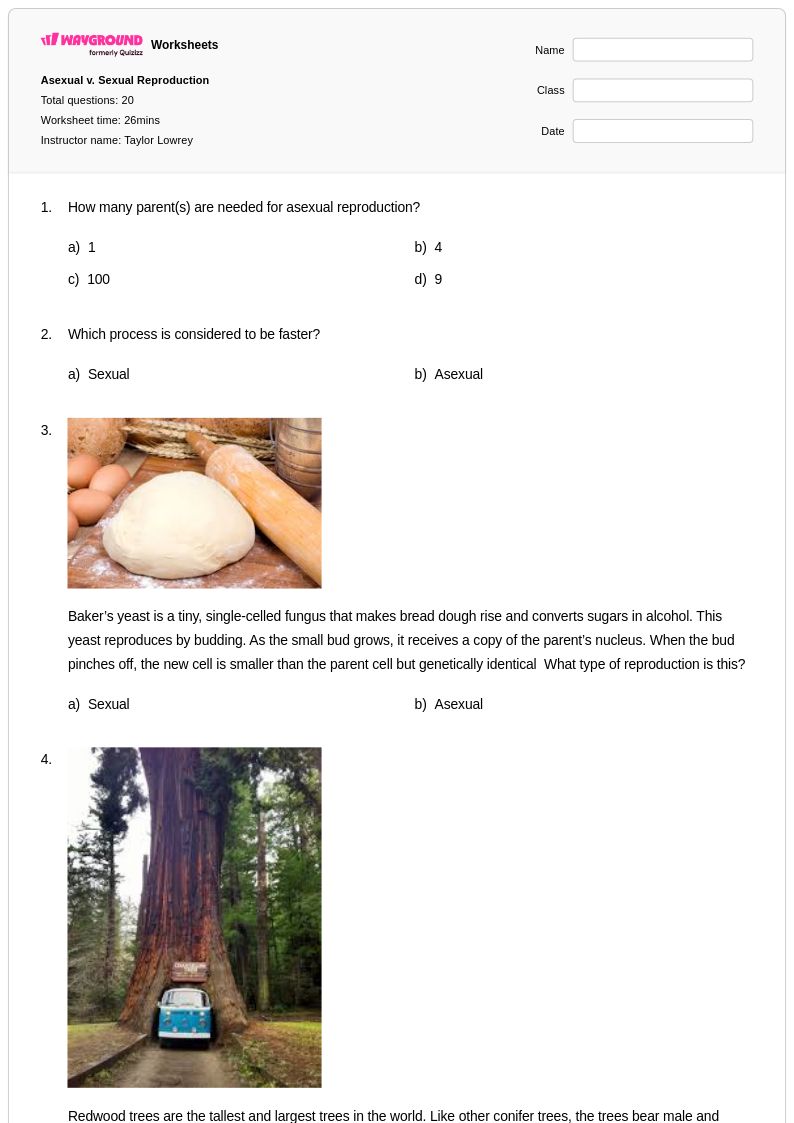
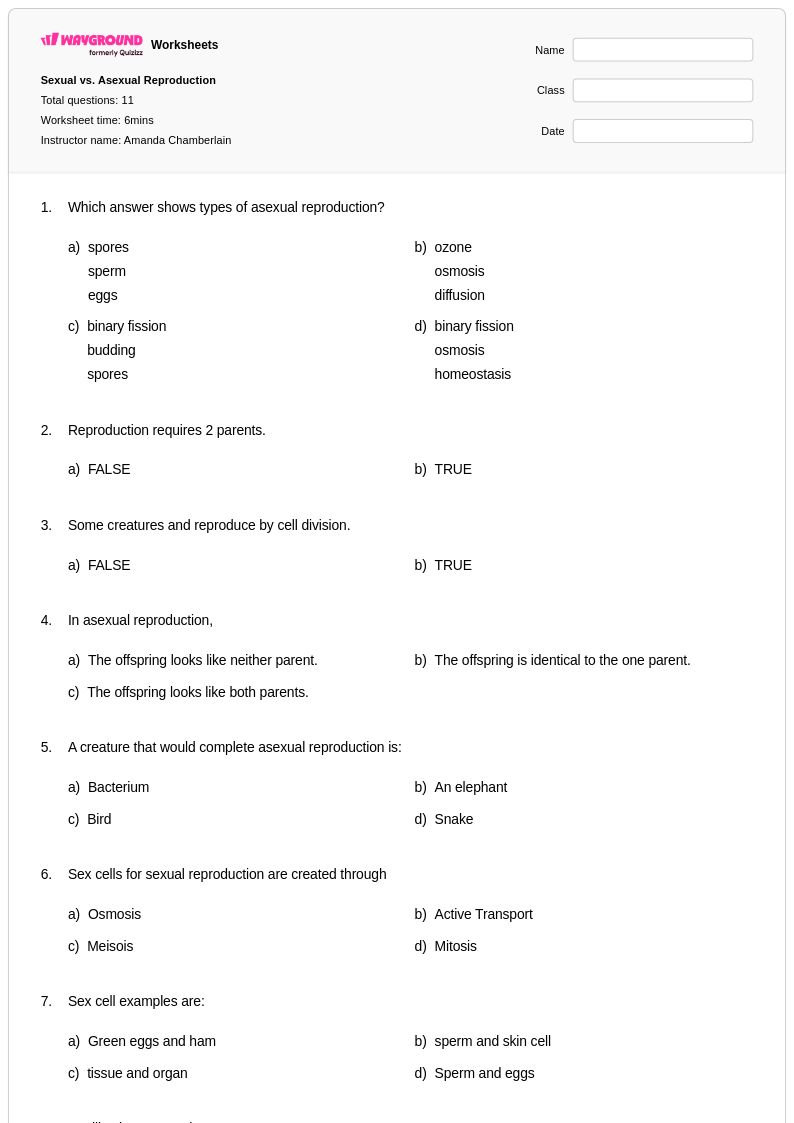
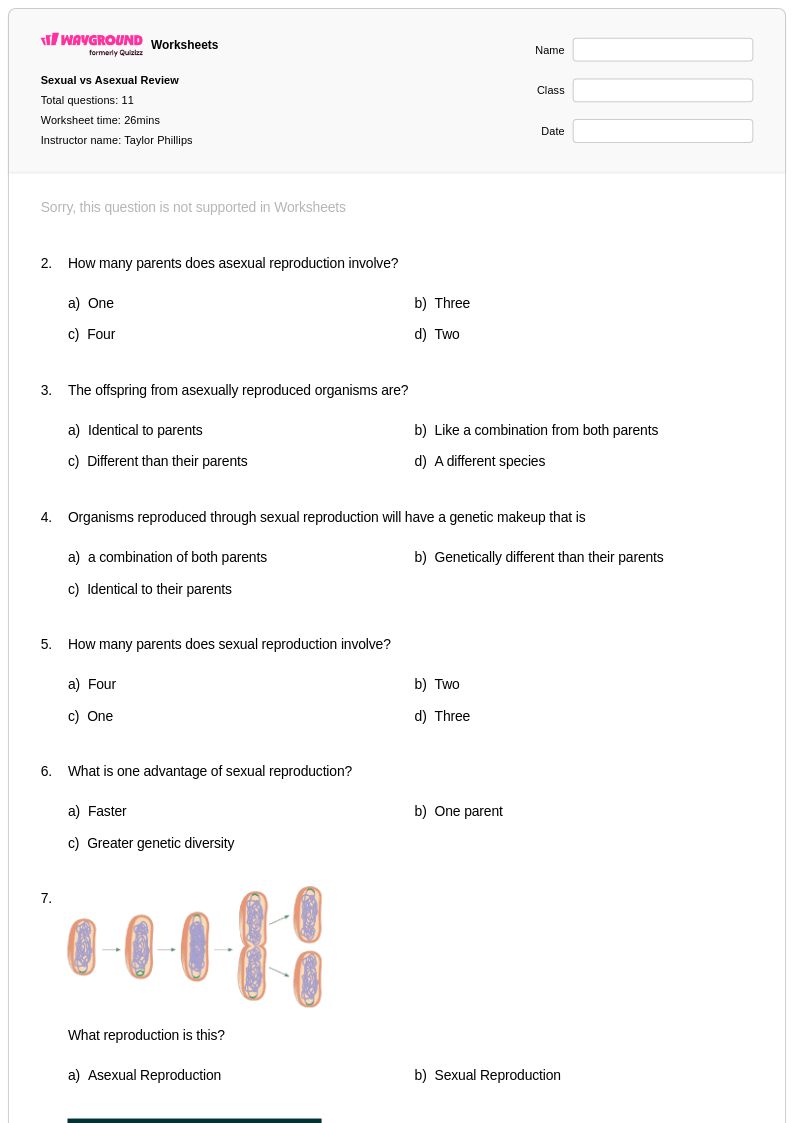
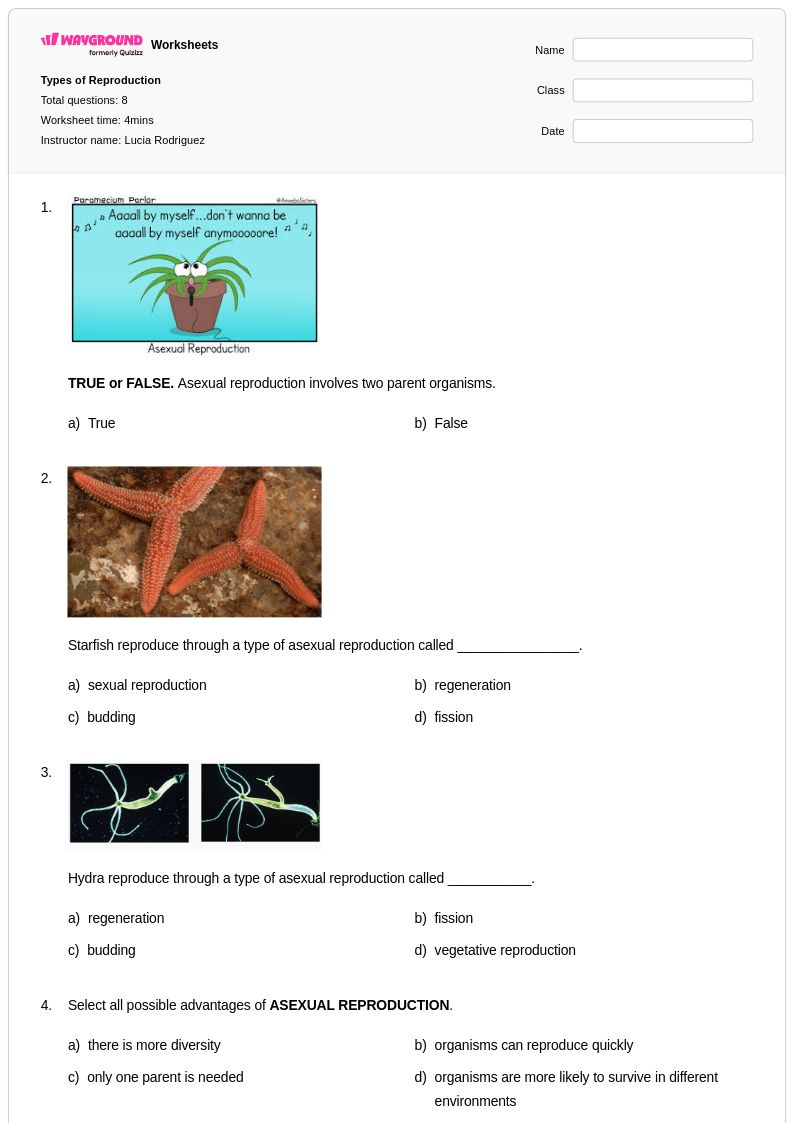
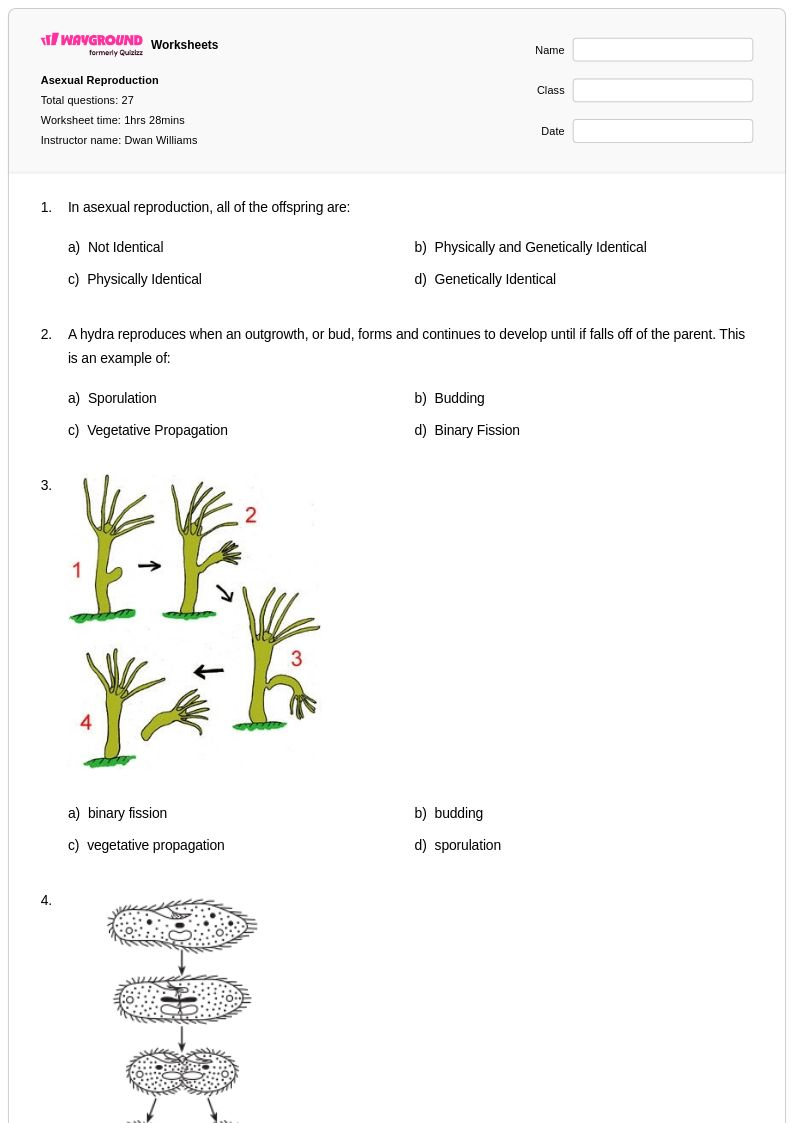
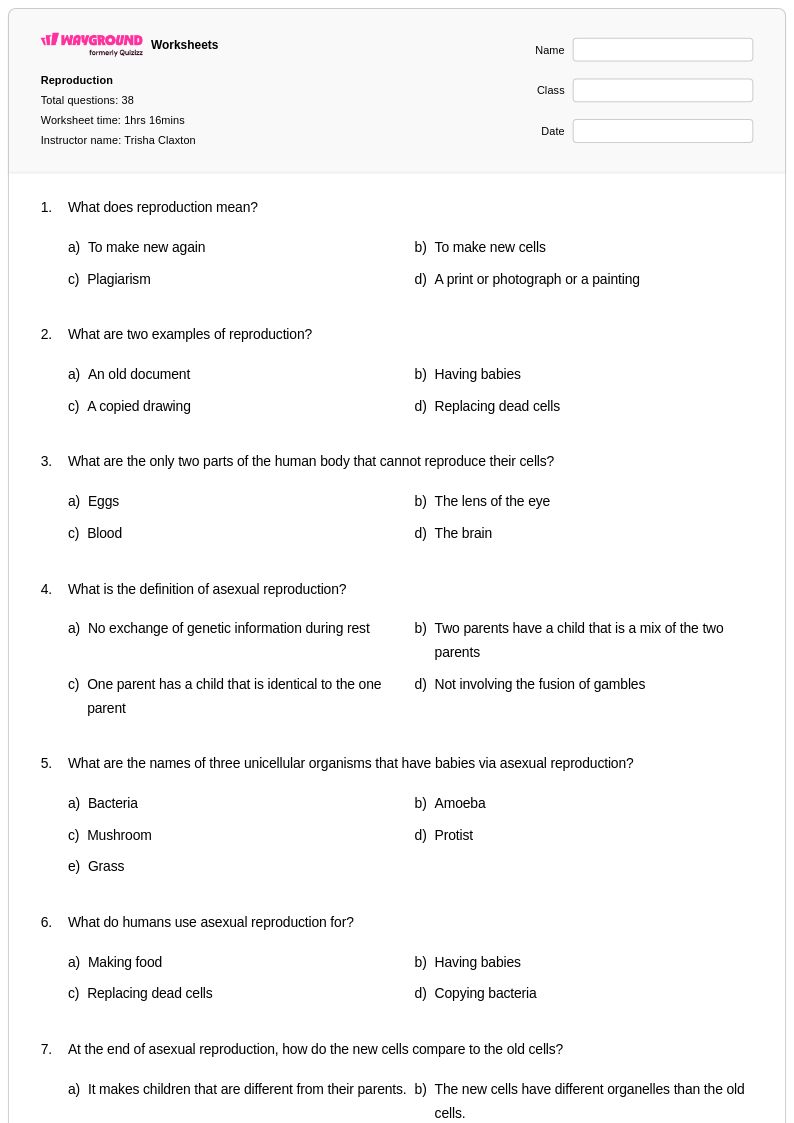
Sexual vs asexual reproduction worksheets for Year 6 students available through Wayground (formerly Quizizz) provide comprehensive coverage of fundamental reproductive strategies found throughout the biological world. These expertly crafted educational resources help students distinguish between organisms that reproduce through sexual reproduction, requiring two parents and genetic recombination, and those utilizing asexual reproduction methods such as binary fission, budding, and fragmentation that produce genetically identical offspring from a single parent. The worksheets strengthen critical thinking skills through comparative analysis activities, reinforce scientific vocabulary through labeling exercises, and develop conceptual understanding through practice problems that explore the advantages and disadvantages of each reproductive strategy. Students engage with real-world examples ranging from bacteria and fungi to plants and animals, while comprehensive answer keys support independent learning and enable teachers to provide immediate feedback on student progress. These free printables offer flexible pdf formats that accommodate diverse classroom needs and learning preferences.
Wayground's extensive collection of sexual vs asexual reproduction worksheets draws from millions of teacher-created resources specifically designed to support Year 6 biology instruction across varied educational standards and curricula. The platform's advanced search and filtering capabilities enable educators to quickly locate materials aligned with specific learning objectives, whether focusing on prokaryotic reproduction methods, plant propagation strategies, or animal reproductive behaviors. Teachers benefit from robust differentiation tools that allow customization of worksheet complexity, vocabulary support, and visual aids to meet individual student needs, while the availability of both printable and digital pdf formats ensures seamless integration into traditional classroom settings and remote learning environments. These comprehensive resources support effective lesson planning by providing ready-to-use materials for initial concept introduction, targeted skill practice, remediation for struggling learners, and enrichment activities for advanced students, ultimately enabling teachers to create engaging learning experiences that build solid foundational knowledge in reproductive biology.
FAQs
How do I teach the difference between sexual and asexual reproduction in biology class?
Start by grounding students in the core distinction: asexual reproduction produces genetically identical offspring from one parent, while sexual reproduction combines genetic material from two parents to produce genetically diverse offspring. Use comparative organizers or T-charts to contrast specific methods side by side, such as binary fission versus meiosis, or budding versus fertilization. Connecting each method to a real organism, such as bacteria for binary fission, strawberry plants for vegetative propagation, or frogs for sexual reproduction, helps students anchor abstract concepts in familiar biology.
What are common student misconceptions about sexual vs asexual reproduction?
A frequent misconception is that asexual reproduction is only found in simple or "primitive" organisms, when in fact many plants and animals, including sea stars and aphids, reproduce asexually under certain conditions. Students also often confuse mitosis with asexual reproduction and meiosis with sexual reproduction without understanding why: mitosis produces identical cells and underpins asexual processes, while meiosis produces gametes essential for sexual reproduction. Another common error is assuming genetic diversity is always advantageous, without recognizing the efficiency and speed benefits of asexual reproduction in stable environments.
What practice exercises help students compare sexual and asexual reproduction effectively?
Comparative analysis tasks work well, such as completing Venn diagrams contrasting the two reproductive strategies, or sorting cards featuring organisms and methods into the correct category. Scenario-based questions that ask students to predict which reproductive strategy would be more advantageous under specific environmental conditions build higher-order thinking. Practice problems that require students to identify the reproductive method used by a given organism, and justify their reasoning using key vocabulary like gametes, spores, binary fission, or budding, are especially effective for reinforcing conceptual understanding.
How do I use sexual vs asexual reproduction worksheets in my classroom?
Sexual vs asexual reproduction worksheets on Wayground are available as printable PDFs for traditional classroom distribution and as digital formats for technology-integrated instruction, giving teachers flexibility to assign them as in-class activities, homework, or review tasks. Digital versions can also be hosted as a quiz directly on Wayground, enabling real-time student responses and immediate formative data. The included answer keys support independent student review as well as efficient teacher grading, making these worksheets practical for both initial instruction and end-of-unit assessment.
How can I support struggling students when teaching sexual vs asexual reproduction?
Breaking the topic into smaller conceptual chunks, such as first distinguishing one-parent versus two-parent reproduction before introducing genetic outcomes, reduces cognitive overload for struggling students. On Wayground, teachers can apply individual accommodations including Read Aloud support so questions and content are read to students who need it, reduced answer choices to lower the difficulty of multiple-choice items, and extended time for students who need more processing time. These settings can be configured per student without notifying the rest of the class, allowing differentiated support to run seamlessly during the same session.
What real-world examples should I use when teaching asexual reproduction methods?
Grounding each asexual method in a concrete organism makes the content far more accessible for students. Binary fission is best illustrated with bacteria such as E. coli, while budding is clearly demonstrated through yeast or hydra. Vegetative propagation connects directly to everyday plant examples like strawberry runners, potato eyes, and spider plant offshoots. For fragmentation, sea stars and planaria are classic and engaging examples that students tend to remember. Using cross-kingdom examples also reinforces that asexual reproduction is widespread across all domains of life, not limited to any one group.