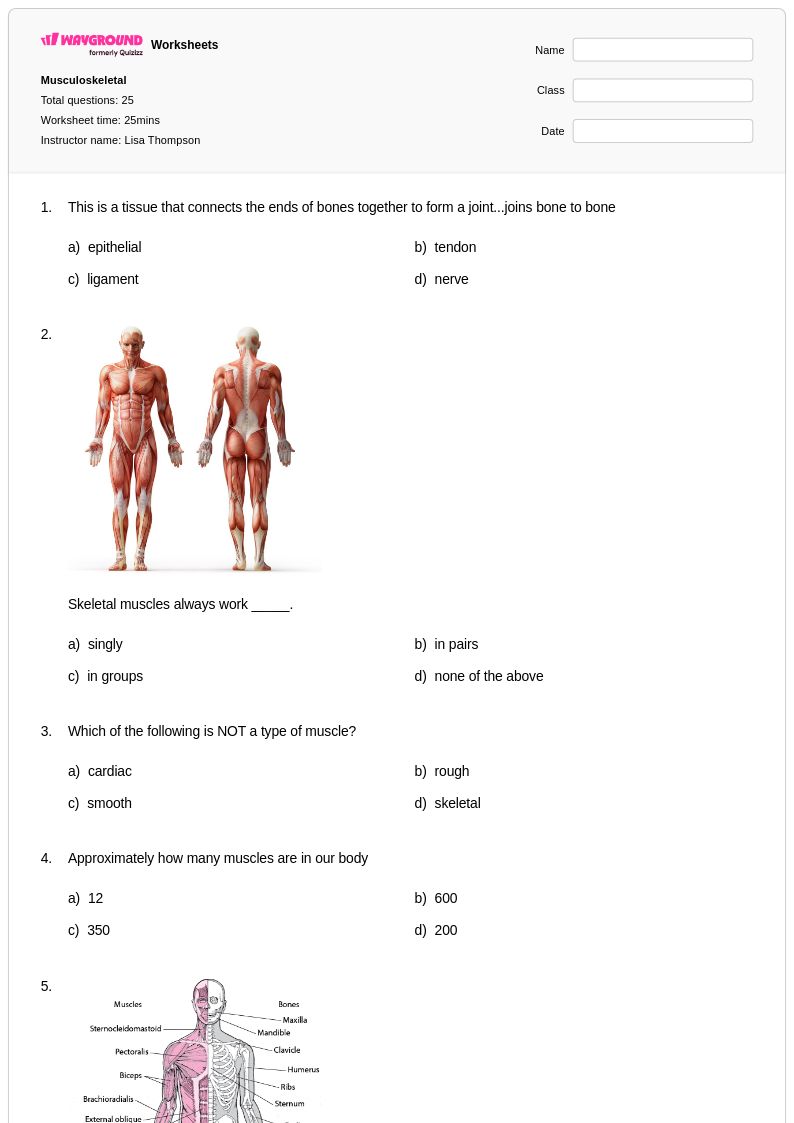
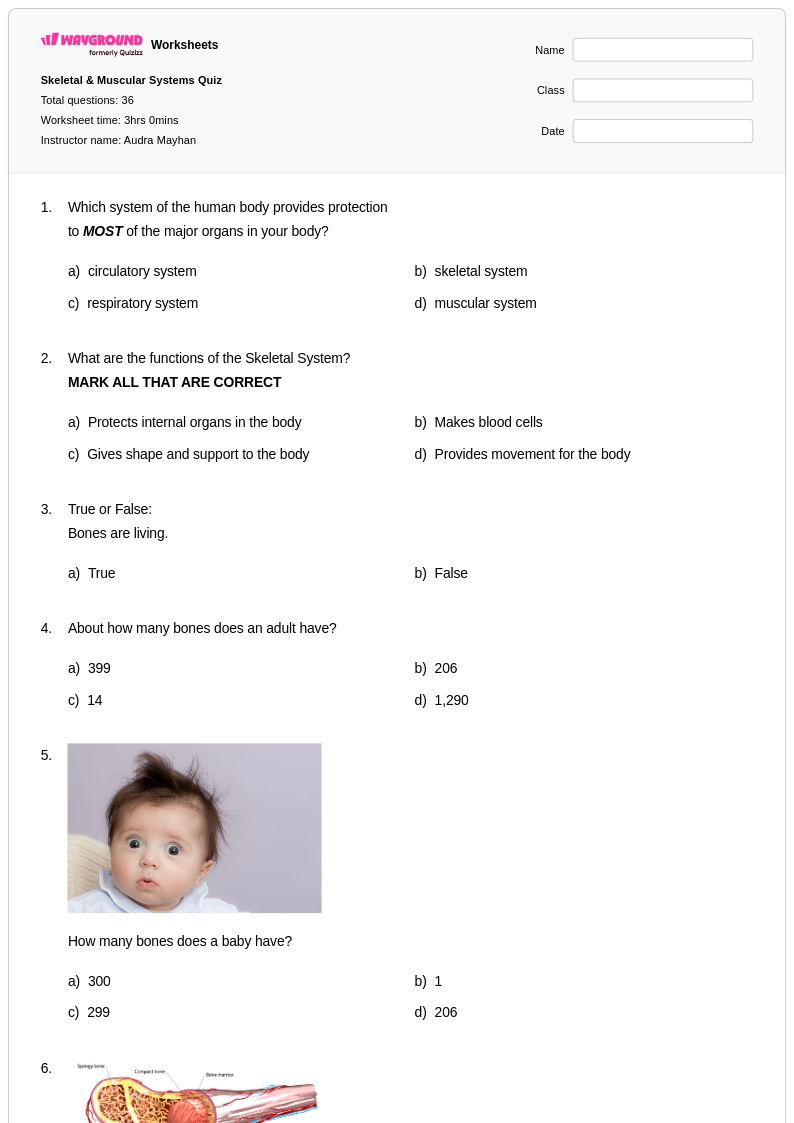
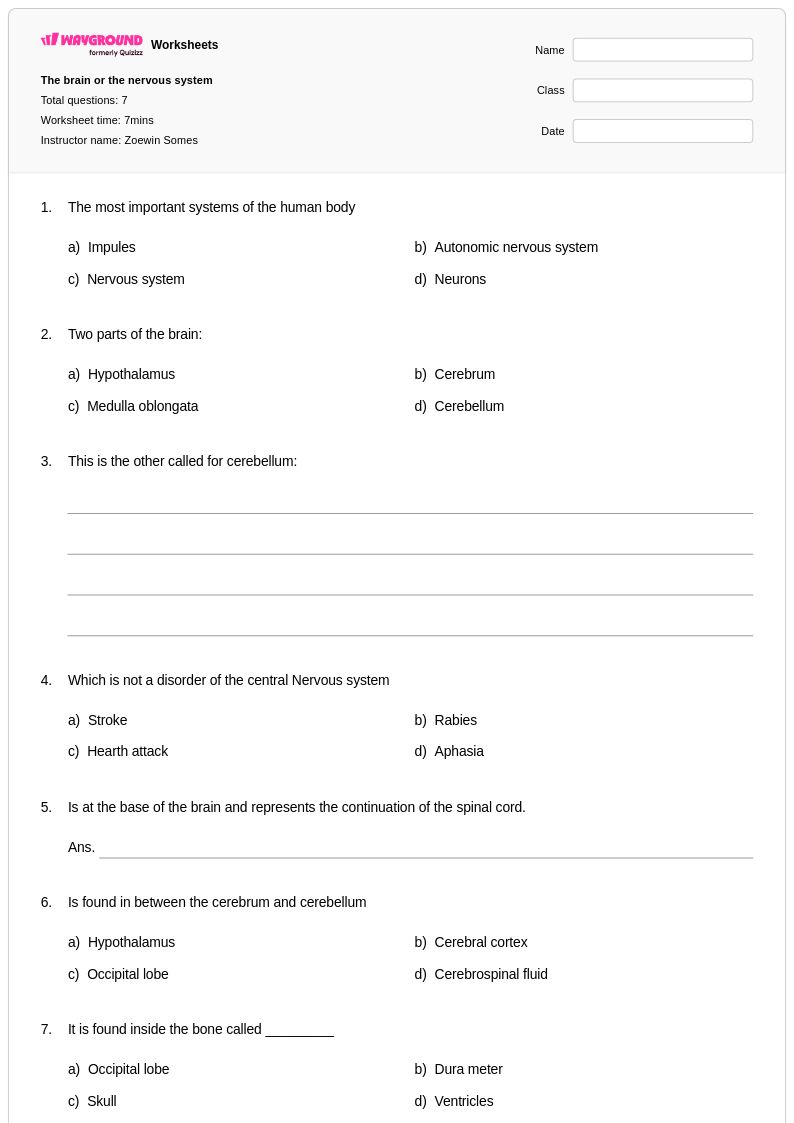
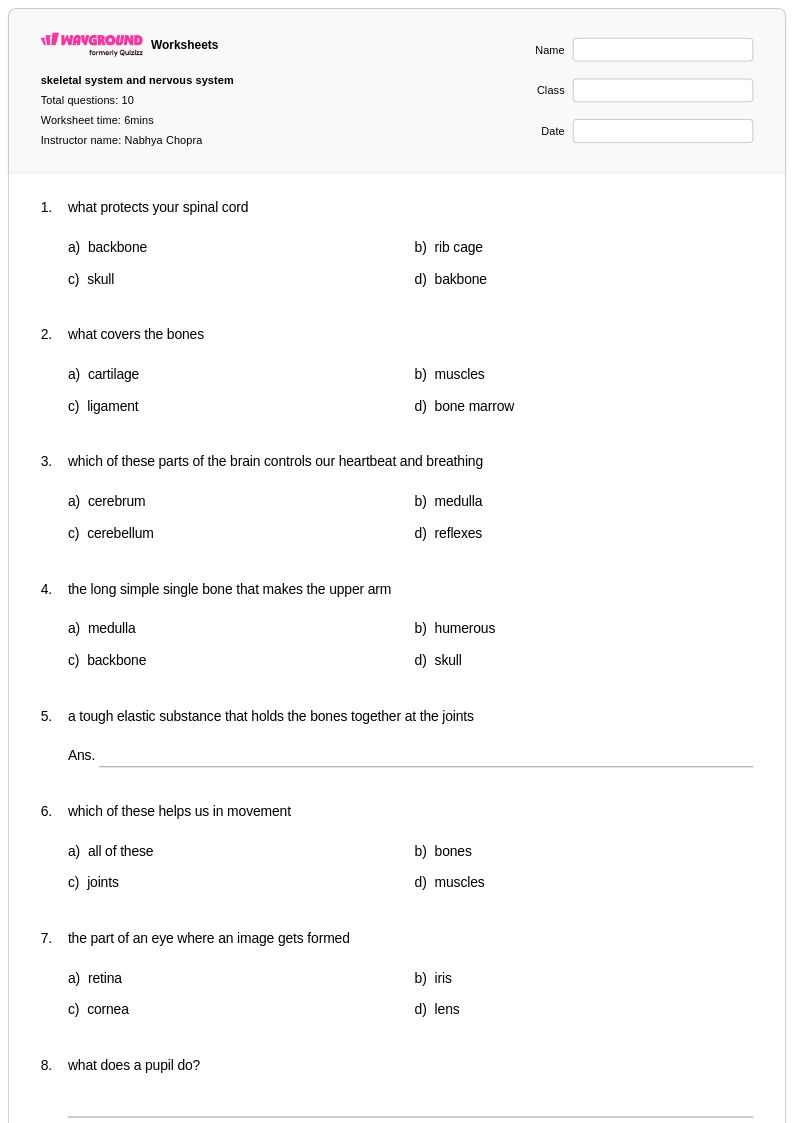
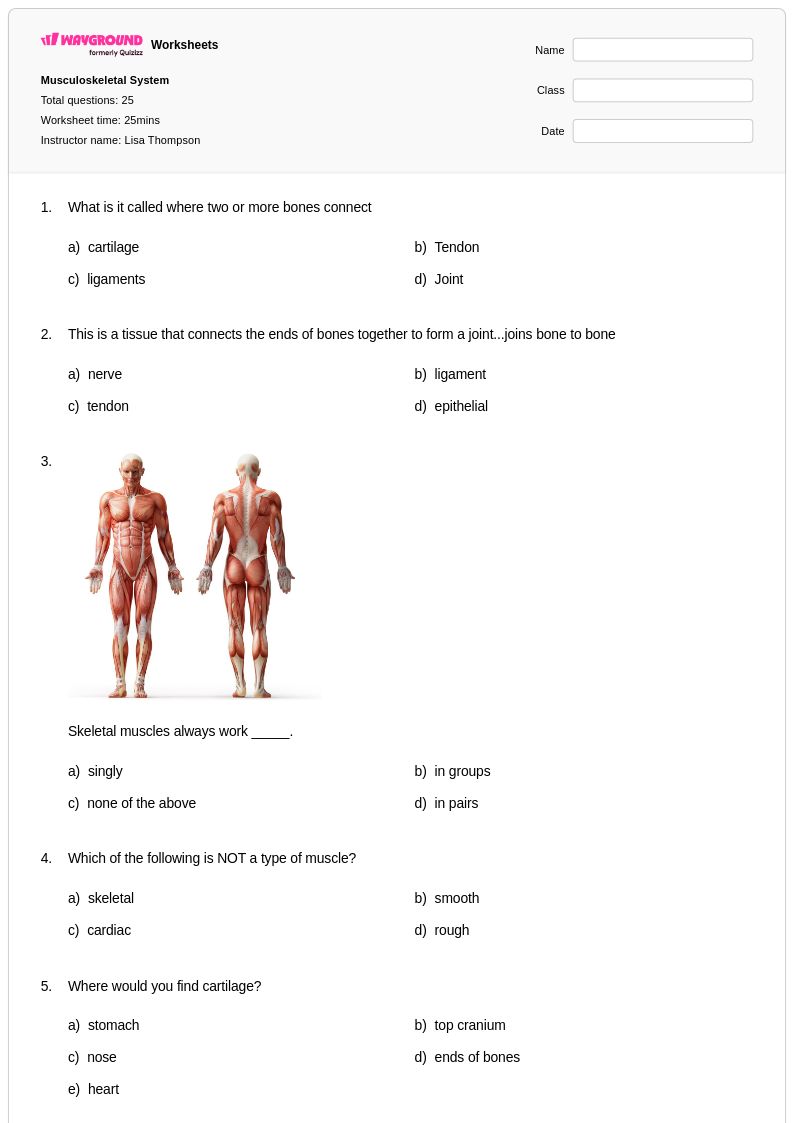
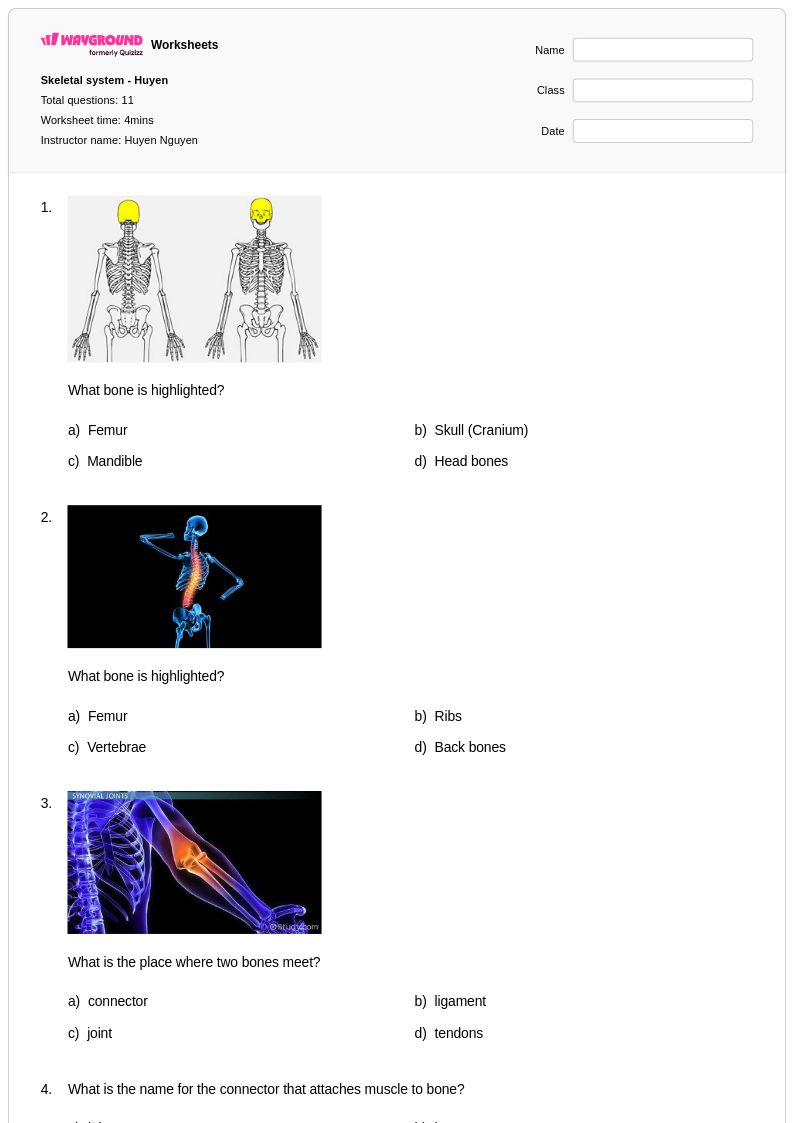
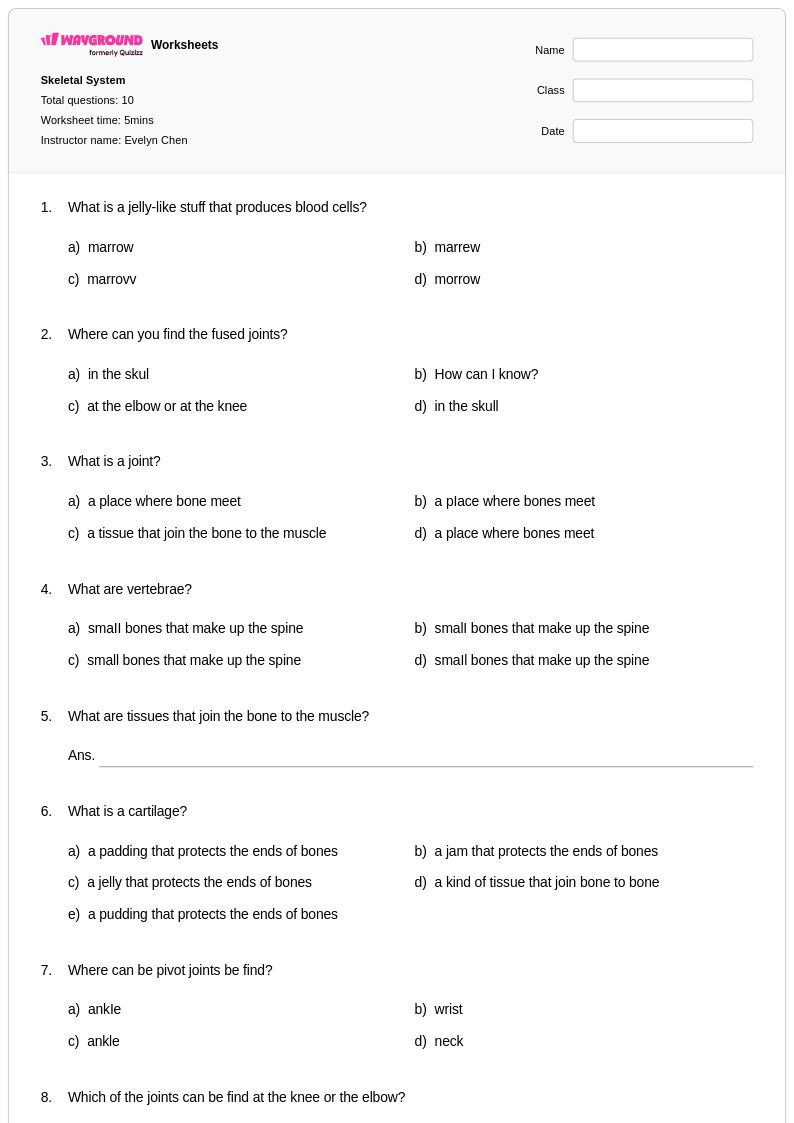
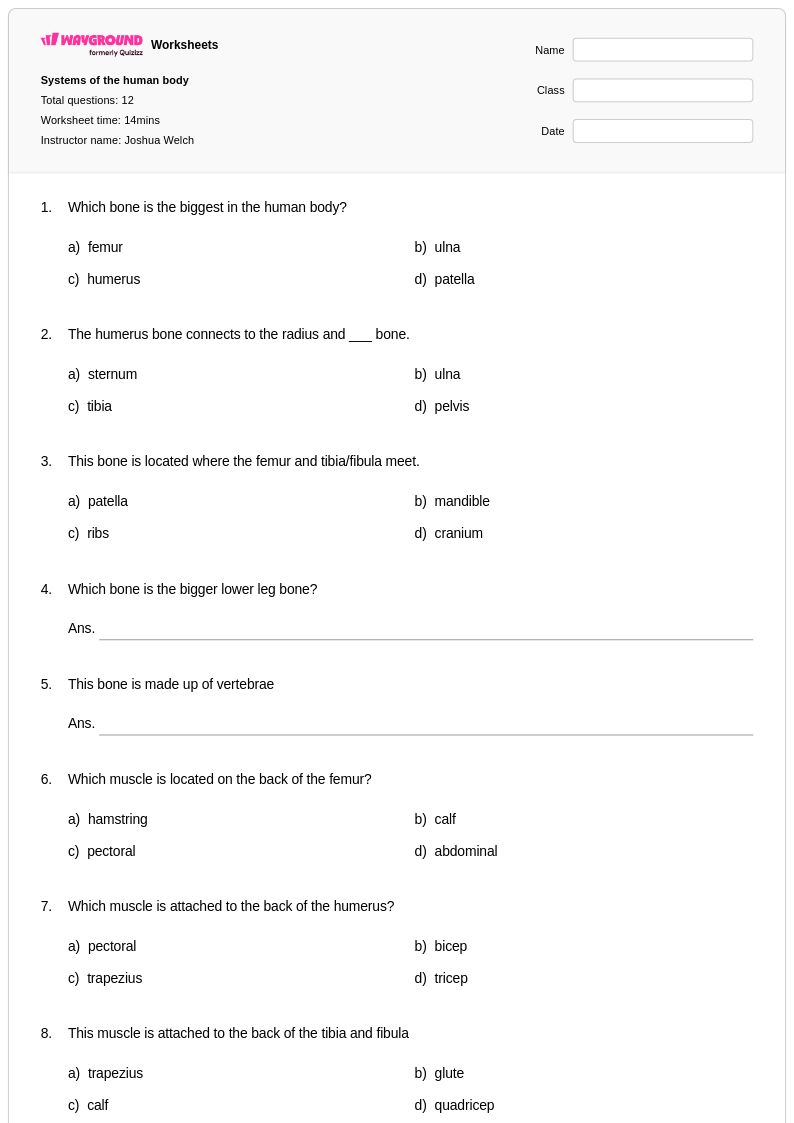
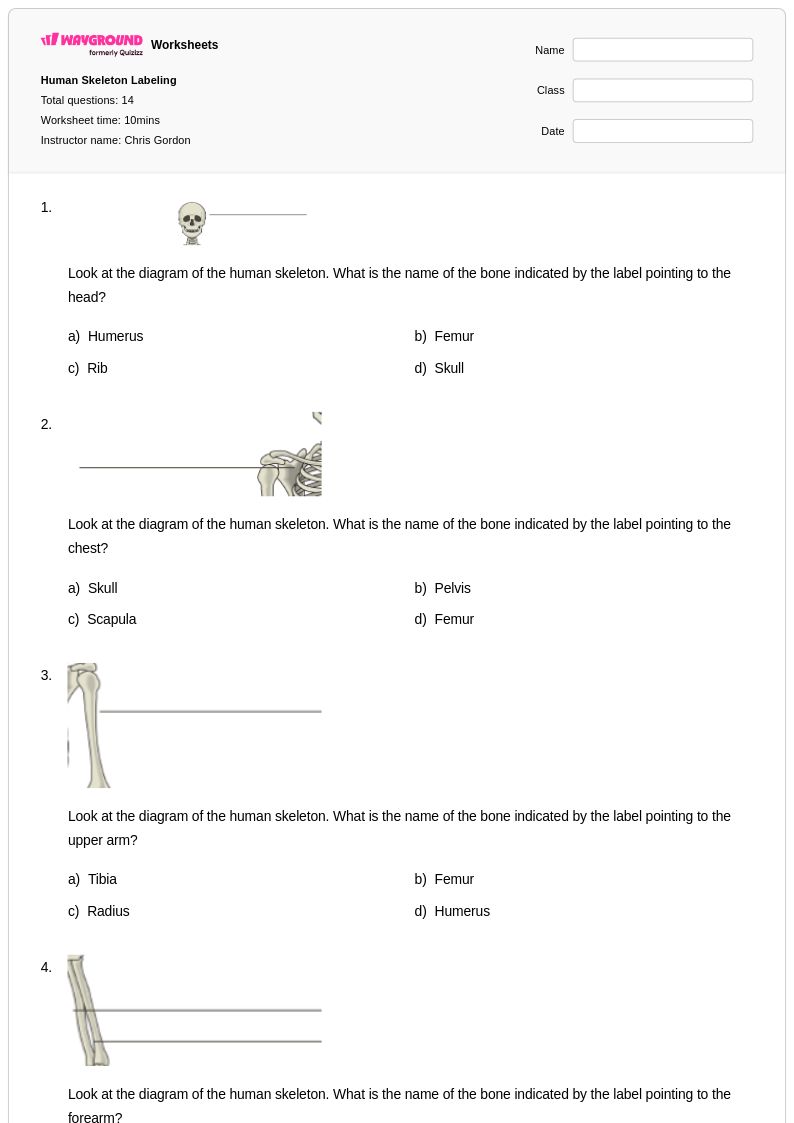
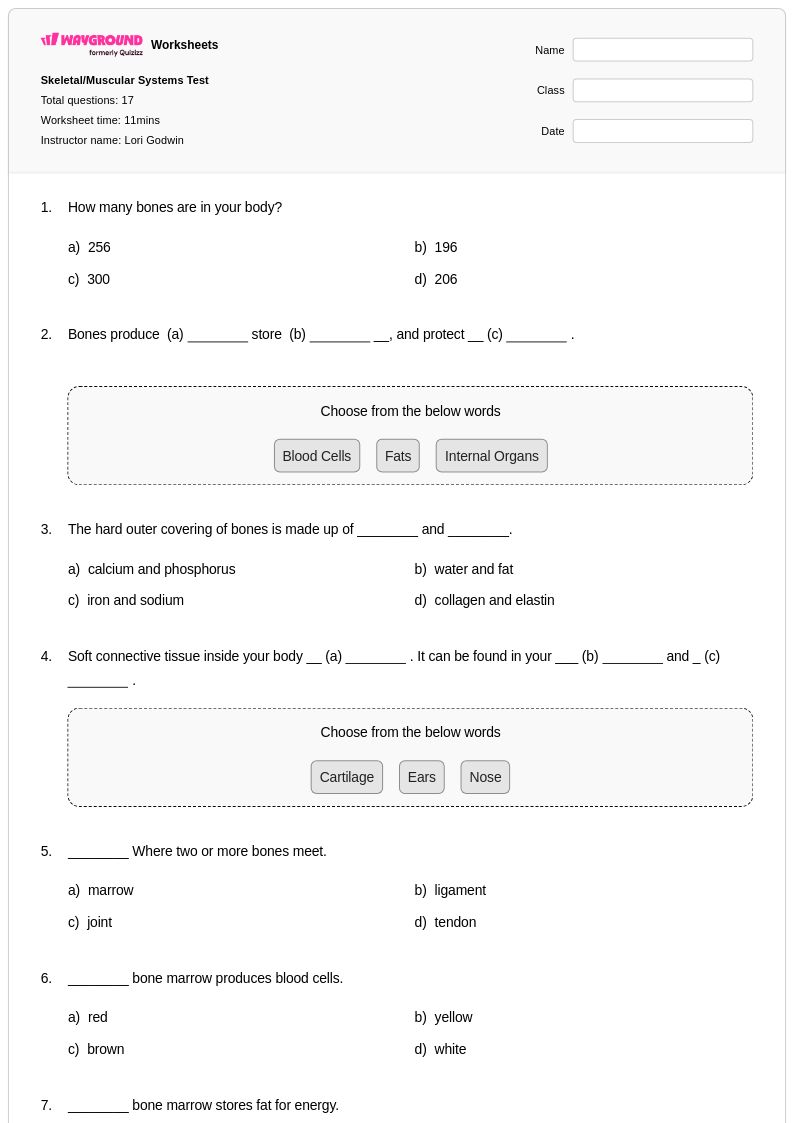
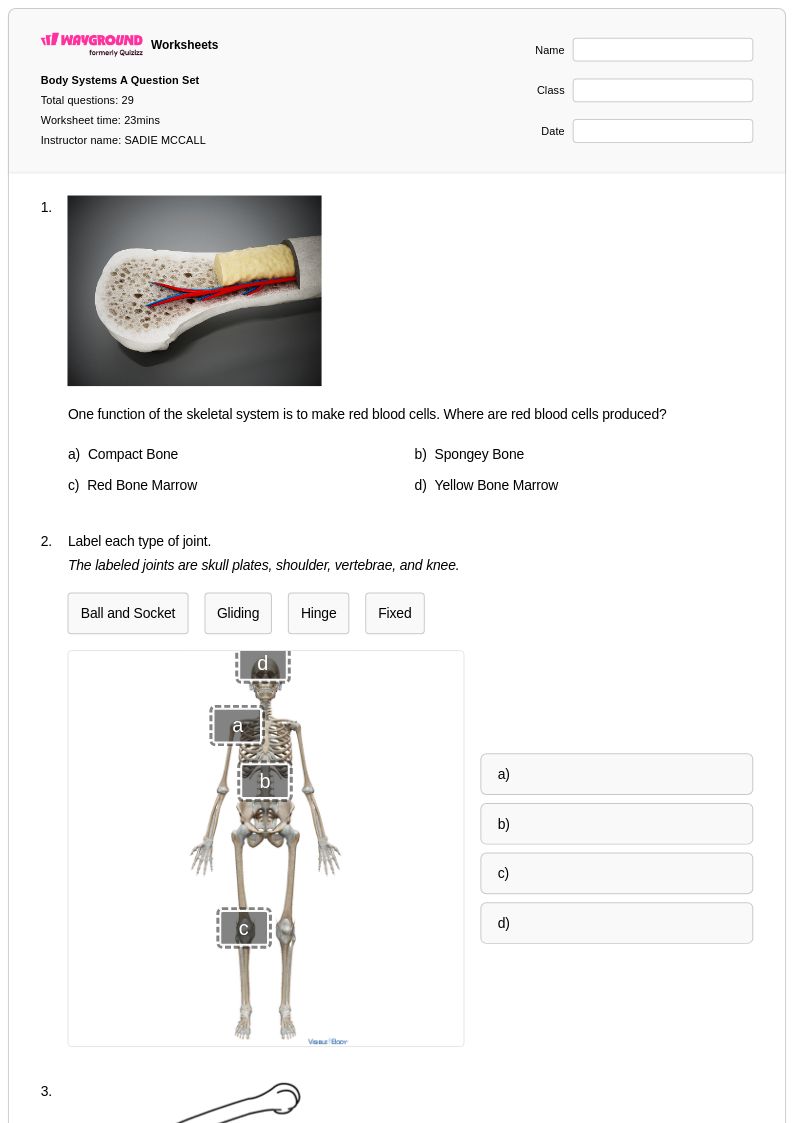
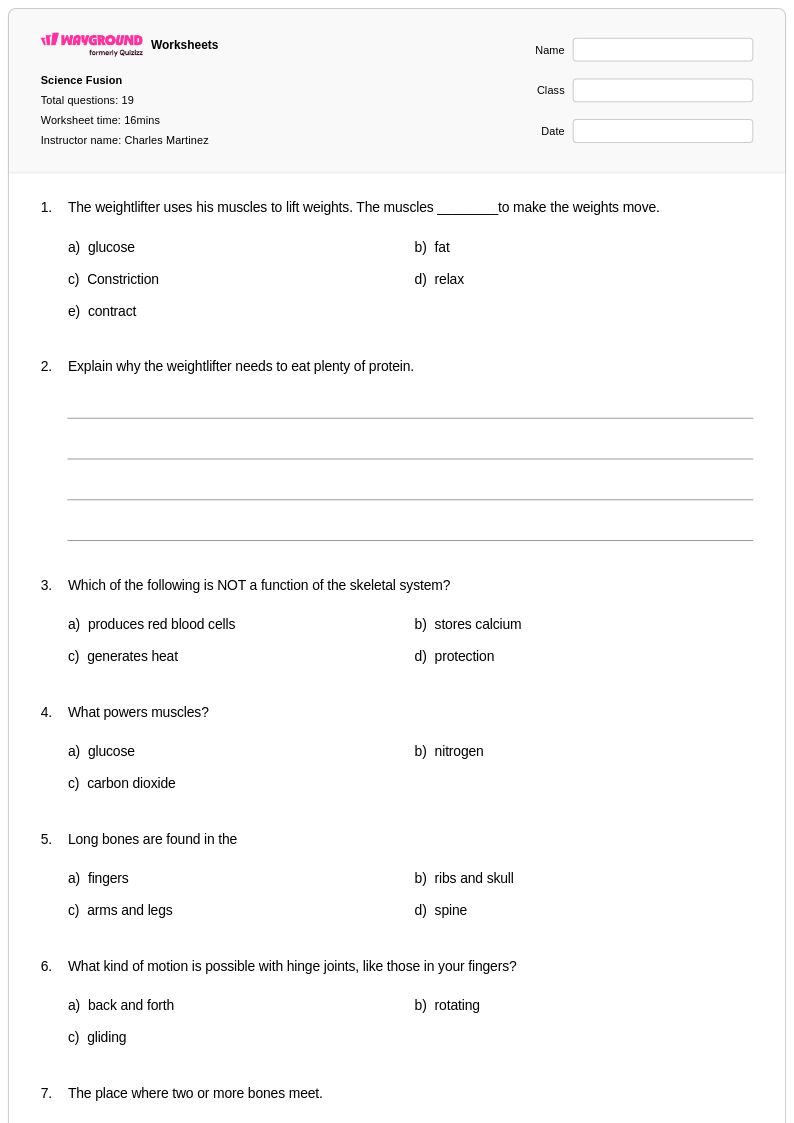
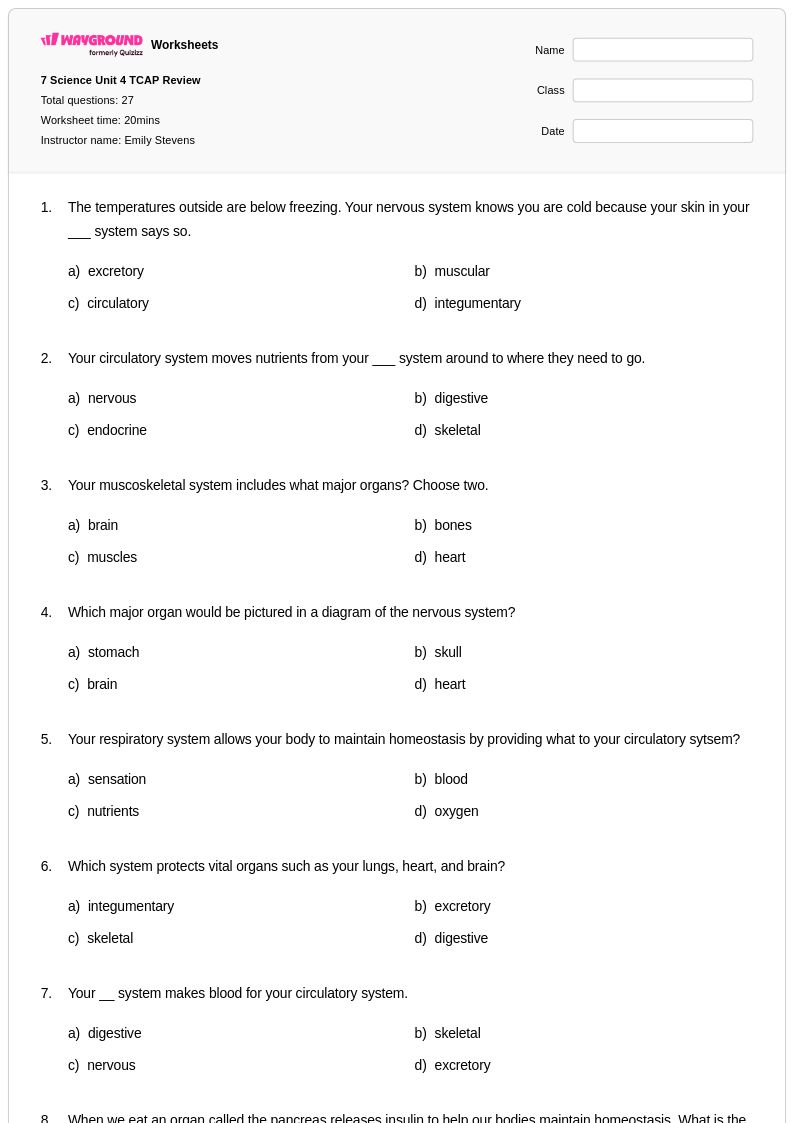
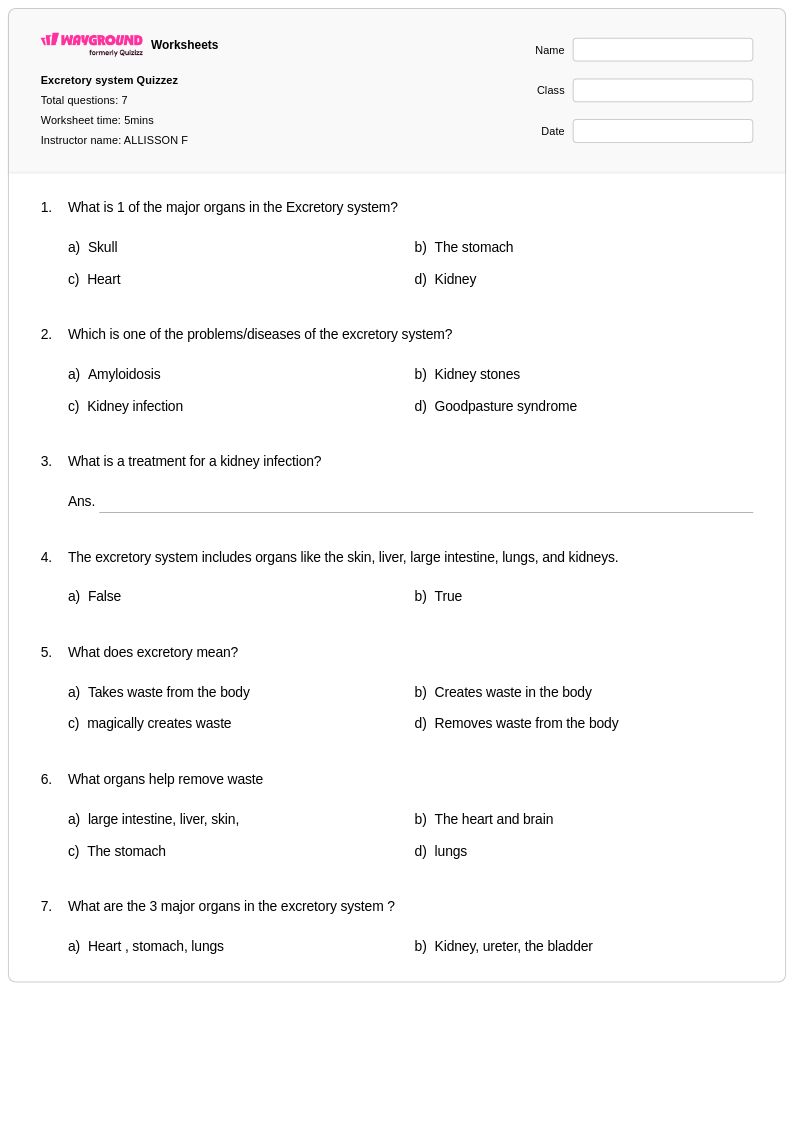
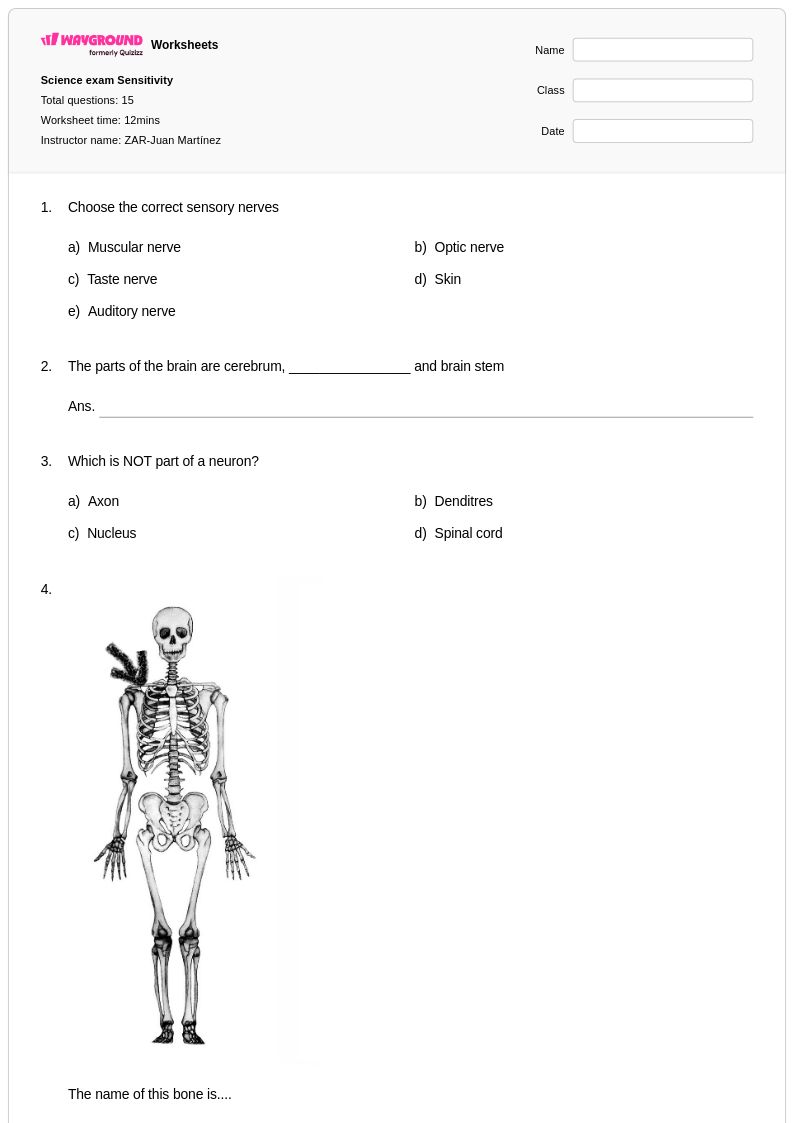
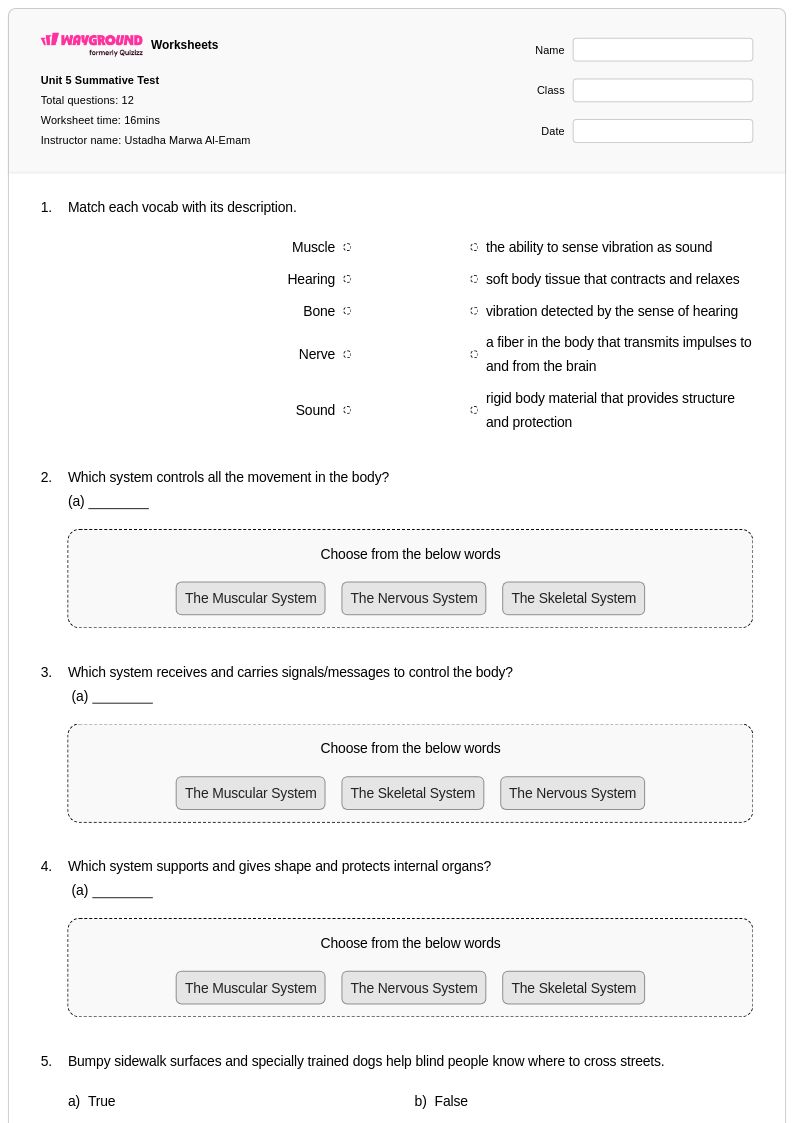
Explore Wayground's comprehensive collection of Year 7 skull worksheets featuring printable PDFs and answer keys to help students master bone structure, anatomy identification, and skeletal system functions through engaging practice problems.
Skull worksheets for Year 7 biology students available through Wayground (formerly Quizizz) provide comprehensive learning resources that help students master the complex anatomy and functions of the human skull. These educational materials focus on developing critical skills in anatomical identification, understanding bone structure and composition, and recognizing the protective and supportive roles of cranial and facial bones. Students work through practice problems that challenge them to label skull diagrams, identify sutures and foramina, and analyze the relationship between skull structure and brain protection. The collection includes detailed answer key materials and free printables that support independent study, while pdf formats ensure easy access for both classroom instruction and homework assignments.
Wayground (formerly Quizizz) empowers educators with an extensive library of millions of teacher-created skull anatomy resources specifically designed for Year 7 biology instruction. The platform's robust search and filtering capabilities allow teachers to quickly locate materials that align with curriculum standards and match their students' specific learning needs. These differentiation tools enable instructors to customize worksheets for various skill levels, supporting both remediation for struggling learners and enrichment opportunities for advanced students. Available in both printable and digital formats including downloadable pdfs, these resources streamline lesson planning while providing flexible options for in-class activities, laboratory exercises, and skill practice sessions that reinforce understanding of skull anatomy and its biological significance.
FAQs
How do I teach skull anatomy to students?
Teaching skull anatomy is most effective when you combine visual labeling with functional context. Start by introducing the major cranial bones (frontal, parietal, temporal, occipital, sphenoid, and ethmoid) before moving into facial bones, sutures, and foramina. Connecting each structure to its protective or sensory function helps students retain the material beyond rote memorization. Layering in cross-sectional diagrams after students have a baseline understanding of external anatomy builds conceptual depth.
What are common mistakes students make when learning skull anatomy?
Students frequently confuse the sphenoid and ethmoid bones because both are irregular, internal bones that are rarely visible in standard lateral-view diagrams. They also tend to conflate sutures with bones, not recognizing that sutures are fibrous joints rather than structural elements. Another common error is misidentifying foramina by location rather than by the nerves or vessels they transmit, which leads to functional misunderstanding rather than just labeling errors.
What exercises help students practice identifying cranial bones?
Labeling diagrams from multiple angles, including anterior, lateral, superior, and inferior views, is the most direct way to build identification fluency. Cross-sectional analysis exercises push students to locate internal bones like the sphenoid and ethmoid that are not visible externally. Comparative anatomy tasks, such as contrasting the human skull with another vertebrate, help students understand the functional logic behind cranial architecture rather than memorizing in isolation.
How do I differentiate skull anatomy worksheets for students at different levels?
For foundational learners, start with word banks and partially labeled diagrams focused on the eight major cranial bones. Advanced students can work with unlabeled diagrams requiring them to identify bones, sutures, and foramina without support, or complete functional analysis tasks connecting structures to brain and sensory organ protection. On Wayground, teachers can apply accommodations such as reduced answer choices or read-aloud support to individual students, allowing the same core material to be accessed at different levels without signaling differences to the class.
How do I use Wayground's skull anatomy worksheets in my classroom?
Wayground's skull anatomy worksheets are available as printable PDFs for traditional classroom distribution and in digital formats for technology-integrated learning, including the ability to host them as a quiz directly on the platform. This makes them suitable for in-class labeling practice, homework assignments, or independent study sessions. Answer keys are included, allowing students to self-check or enabling teachers to streamline grading after anatomical identification activities.
How do I assess student understanding of skull anatomy beyond simple labeling?
Move beyond identification by asking students to explain the functional significance of specific structures, such as why the foramen magnum is positioned inferiorly or how the zygomatic arch relates to jaw mechanics. Practice problems that require students to connect bone location to protective function test conceptual understanding rather than memorization. Comparing student performance on basic bone identification versus functional analysis tasks also helps pinpoint whether gaps are recall-based or comprehension-based.