Year 9 Biology tonicity worksheets from Wayground provide comprehensive printables and practice problems with answer keys to help students master how solutions affect cell membranes through free PDF exercises.
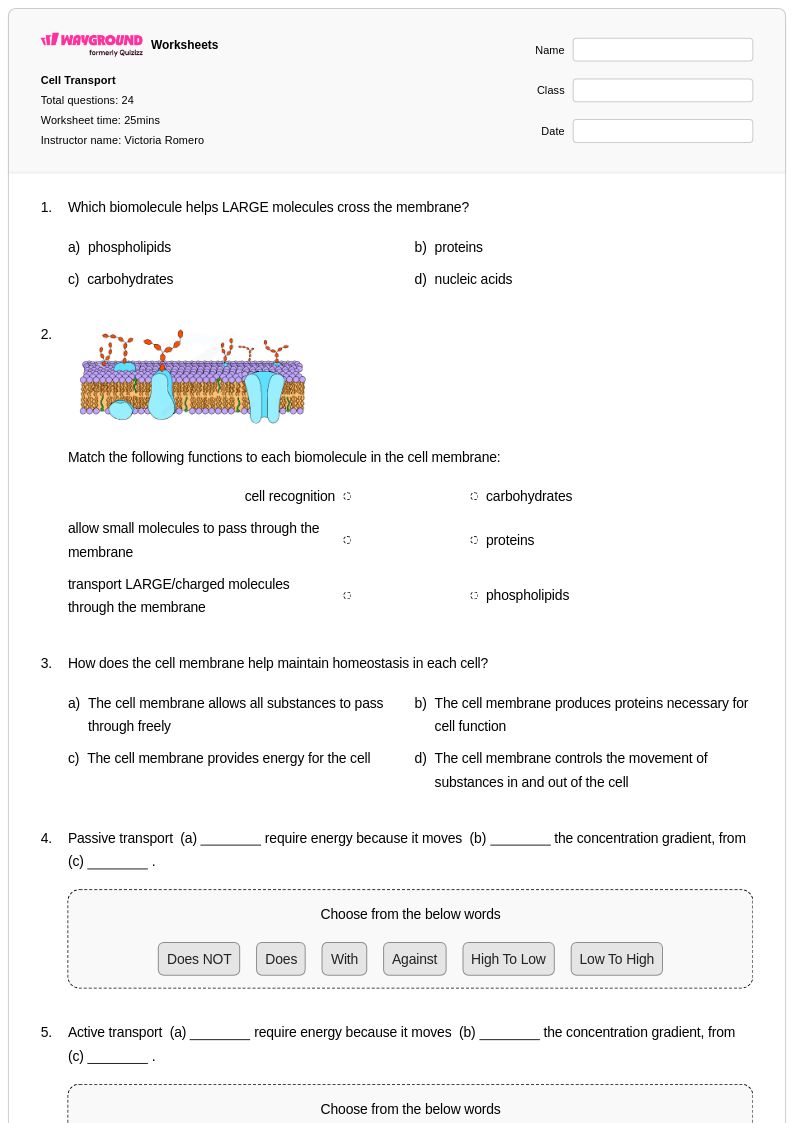
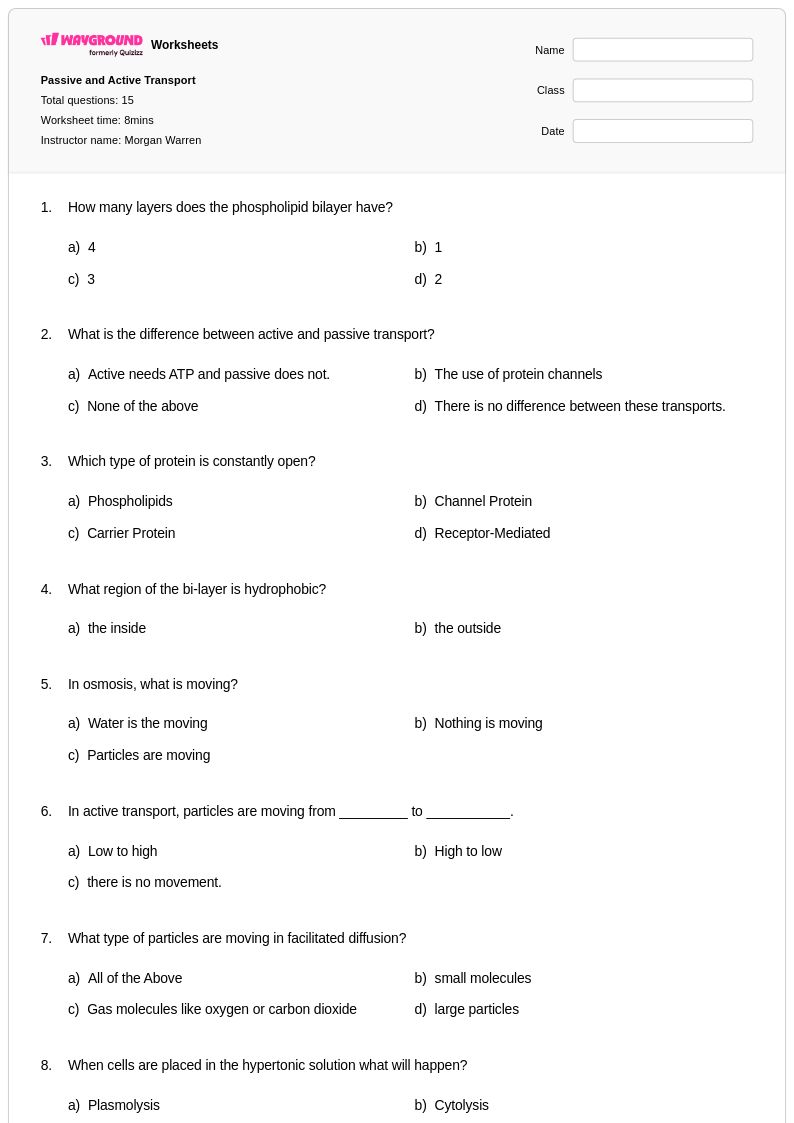
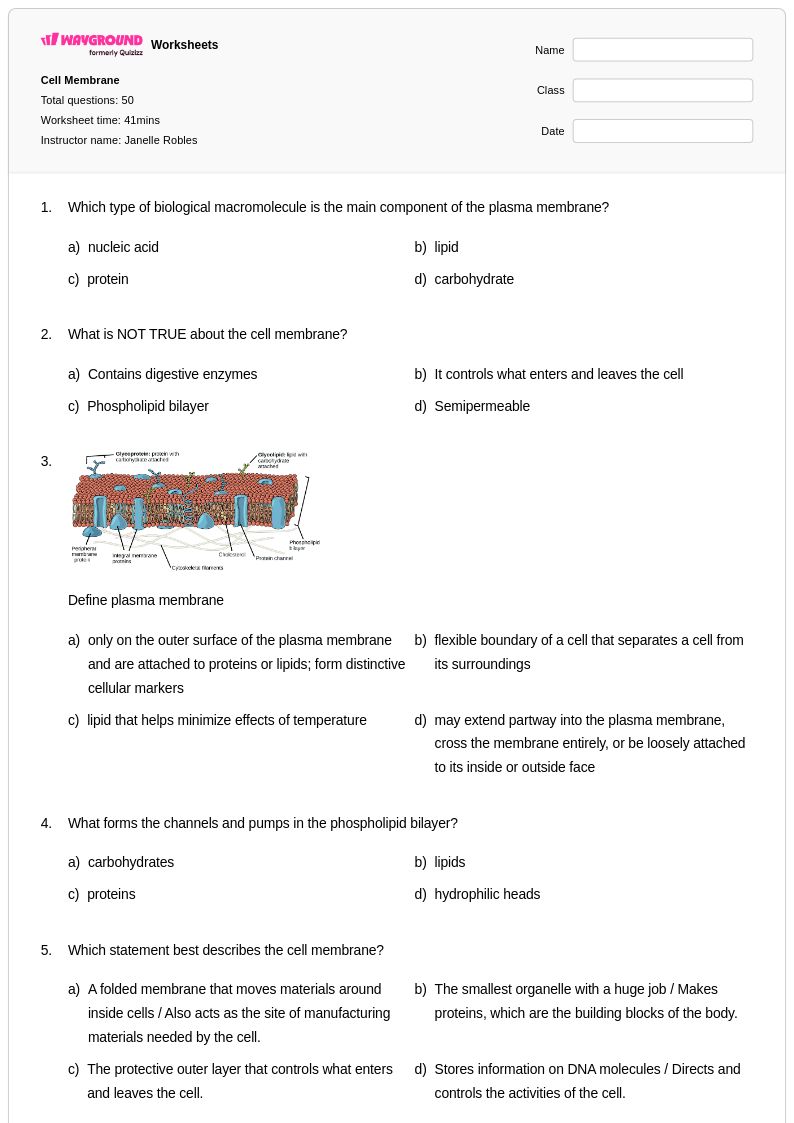
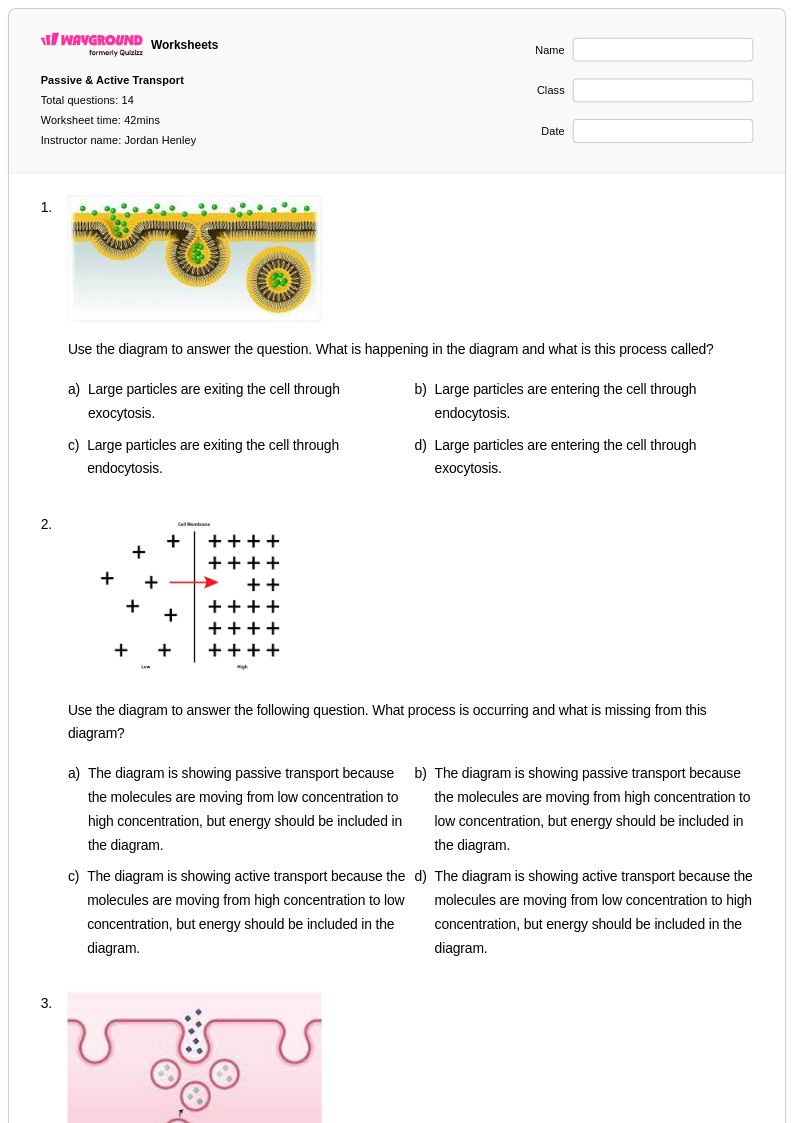
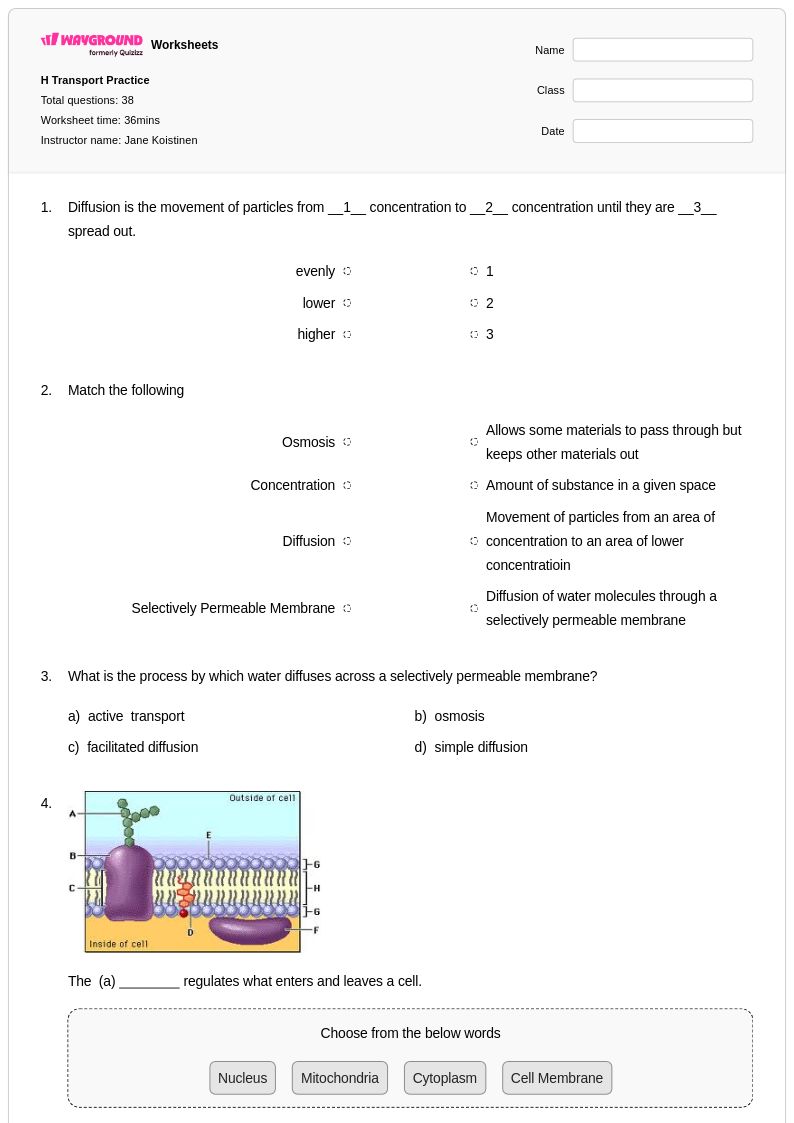
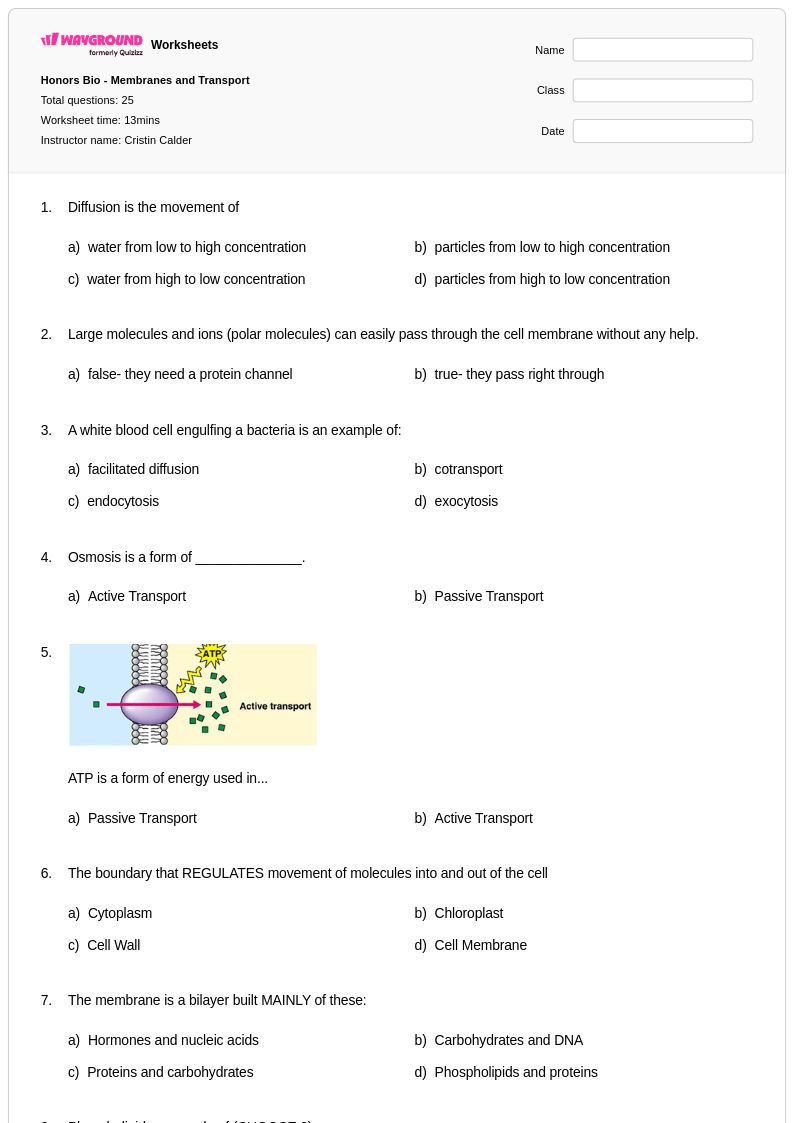
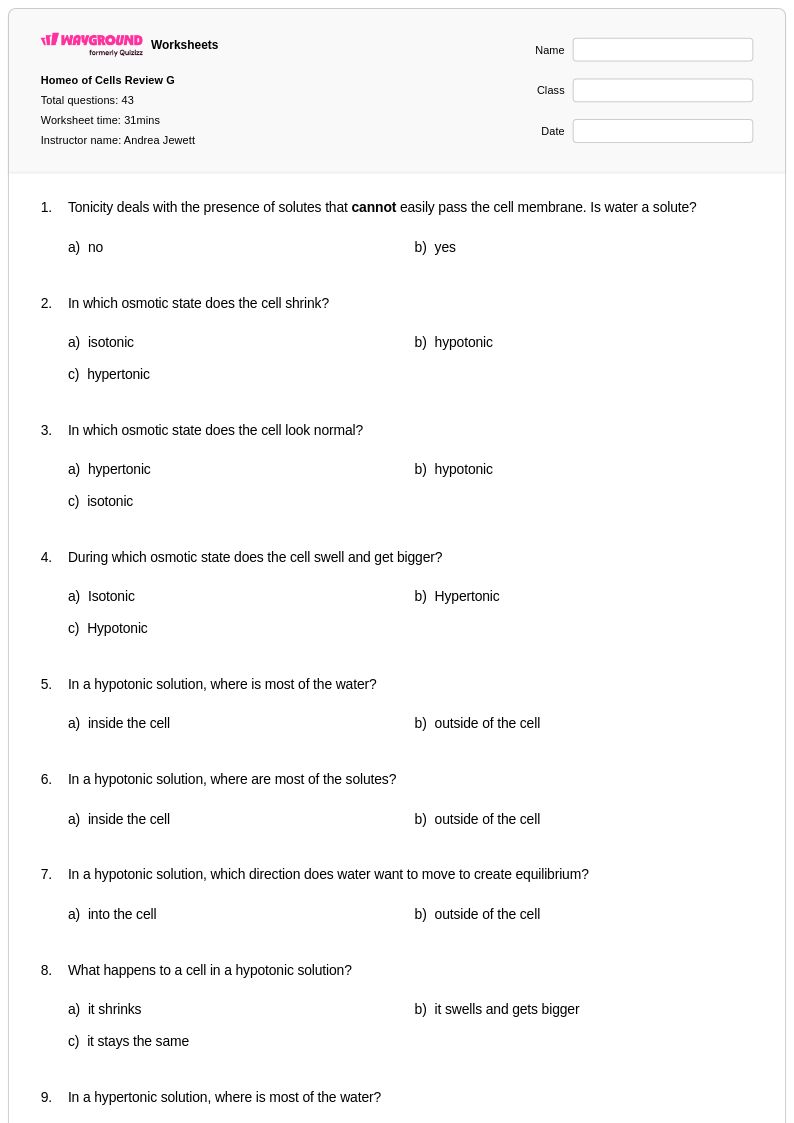
Tonicity worksheets for Year 9 students available through Wayground (formerly Quizizz) provide comprehensive practice with one of biology's most fundamental concepts in cellular transport. These carefully designed educational resources help students master the distinctions between hypotonic, hypertonic, and isotonic solutions while developing critical thinking skills about water movement across cell membranes. The worksheets strengthen analytical abilities through practice problems that require students to predict cellular responses in different solution environments, interpret diagrams of osmotic processes, and calculate solute concentrations. Each worksheet includes detailed answer keys that support both independent study and classroom instruction, with free printables available in convenient pdf format to accommodate various learning preferences and teaching situations.
Wayground (formerly Quizizz) empowers educators with access to millions of teacher-created tonicity resources that streamline lesson planning and enhance student understanding of cellular biology concepts. The platform's robust search and filtering capabilities allow teachers to quickly locate Year 9 appropriate materials that align with curriculum standards and match specific learning objectives for osmosis and diffusion units. Advanced differentiation tools enable instructors to customize worksheets for diverse learner needs, whether providing remediation for struggling students or enrichment opportunities for advanced learners. These versatile resources are available in both printable and digital formats, including downloadable pdfs, giving teachers the flexibility to implement tonicity practice activities across traditional classroom settings, hybrid learning environments, or fully digital instruction while maintaining consistent quality and academic rigor.
FAQs
How do I teach tonicity to biology students?
Teach tonicity by starting with the concept of solute concentration gradients and how water moves across semipermeable membranes from areas of low solute concentration to high. Use visual diagrams comparing hypotonic, isotonic, and hypertonic solutions alongside real-world examples like red blood cells crenating in saltwater or plant cells becoming turgid in freshwater. Connecting osmotic pressure to cellular homeostasis helps students understand why tonicity matters in both plant and animal physiology.
What practice problems help students master hypotonic, isotonic, and hypertonic solutions?
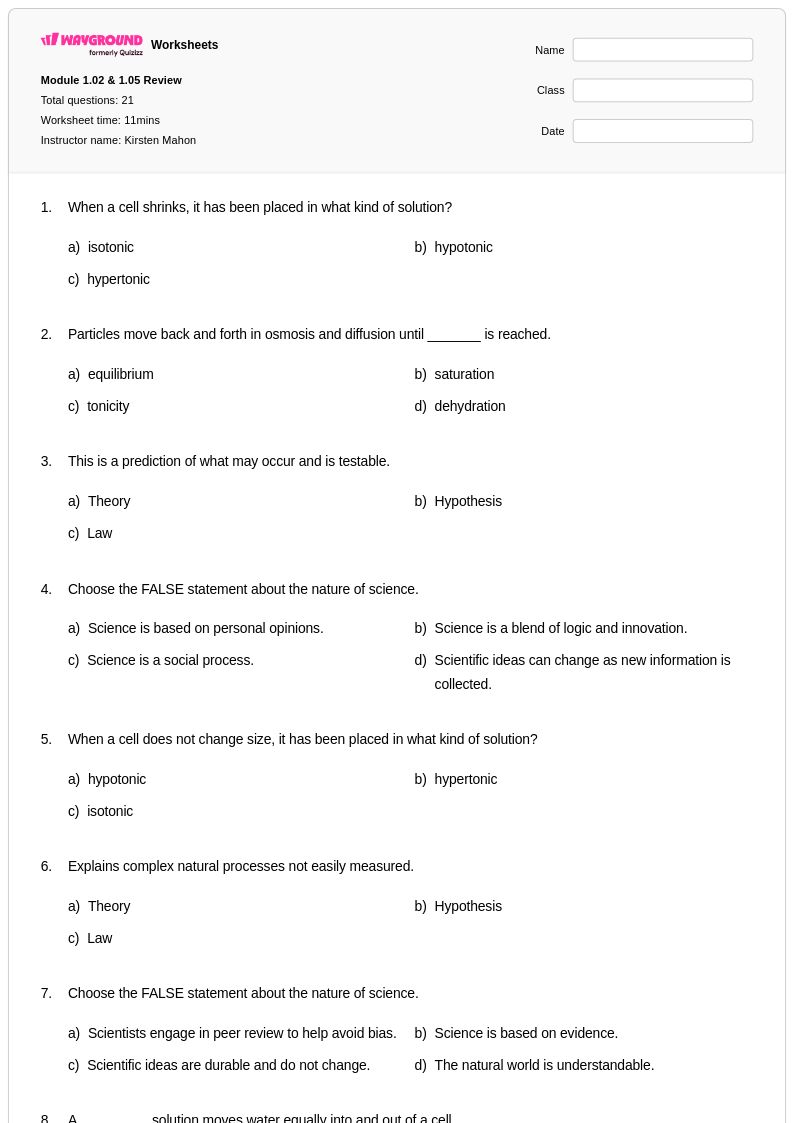
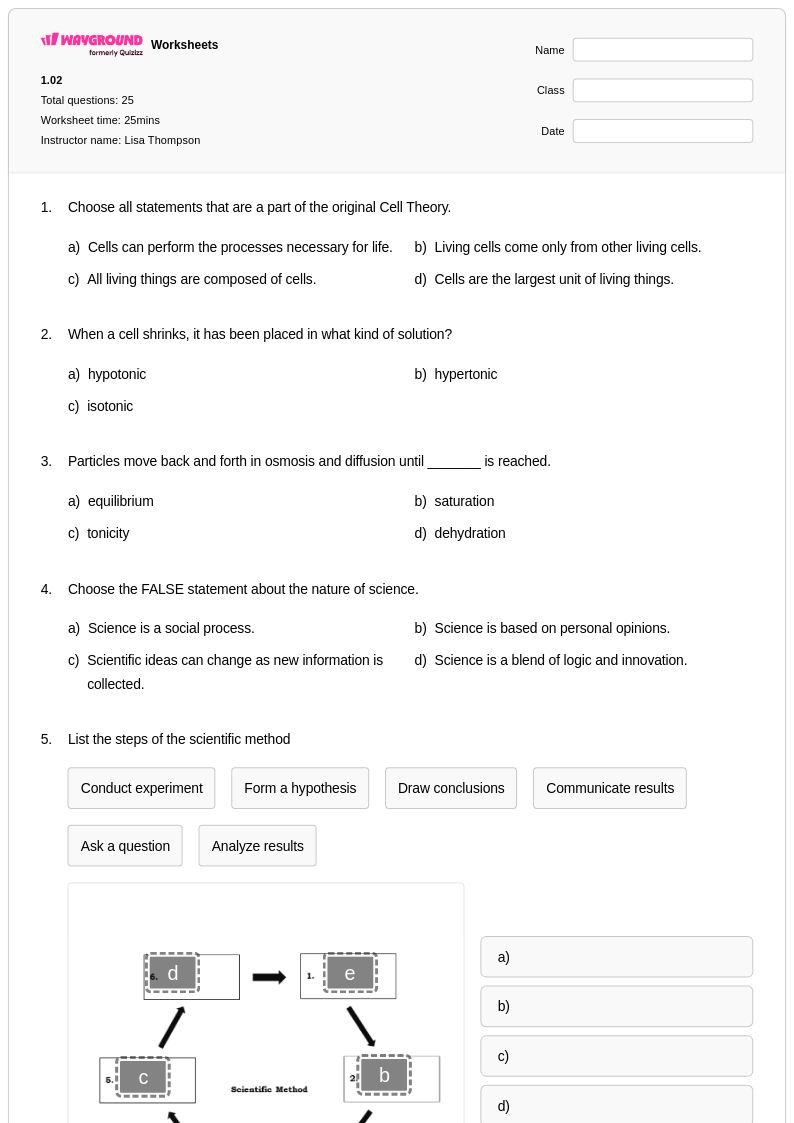
Effective practice problems ask students to predict whether a cell will swell, shrink, or remain unchanged when placed in a given solution, then explain the direction of net water movement. Problems that require students to compare solute concentrations on both sides of a membrane and connect outcomes to passive transport mechanisms are especially useful. Incorporating scenarios from both plant and animal physiology reinforces that tonicity principles apply broadly across biological systems.
What mistakes do students commonly make when learning about tonicity and osmosis?
The most common misconception is that water moves toward lower concentration rather than toward higher solute concentration, causing students to predict water movement in the wrong direction. Students also frequently confuse the terms hypotonic and hypertonic, particularly when asked to describe the solution relative to the cell rather than the cell relative to the solution. A third persistent error is conflating osmosis with active transport, so explicitly reinforcing that osmosis is passive and requires no energy input is essential.
How can I use tonicity worksheets to connect lab observations to classroom theory?
Tonicity worksheets work well as pre-lab or post-lab tools that ask students to predict experimental outcomes before an osmosis lab and then reconcile their predictions with actual results afterward. Problems that mirror lab setups, such as placing potato slices or dialysis bags in solutions of varying concentrations, help students translate abstract membrane dynamics into observable data. This approach strengthens the link between theoretical osmotic concepts and the physiological phenomena students observe directly.
How do I use Wayground's tonicity worksheets in my classroom?
Wayground's tonicity worksheets are available as printable PDFs for traditional classroom use and in digital formats for technology-integrated or remote learning environments, accommodating different teaching setups and student preferences. Each worksheet includes an answer key, supporting both independent student practice and guided whole-class instruction. Teachers can also host the content as a quiz directly on Wayground, making it straightforward to assign, collect, and assess student understanding of osmotic pressure and cellular water movement.
How can I differentiate tonicity instruction for students at different skill levels?
For students who are still building foundational understanding, reduce cognitive load by focusing first on one solution type at a time, using labeled diagrams before introducing numerical solute concentrations. More advanced students benefit from multi-step problems that require calculating water potential or predicting osmotic responses across sequential solution changes. On Wayground, teachers can apply individual accommodations such as reduced answer choices or read-aloud support to specific students, so differentiation happens at the assignment level without disrupting the rest of the class.

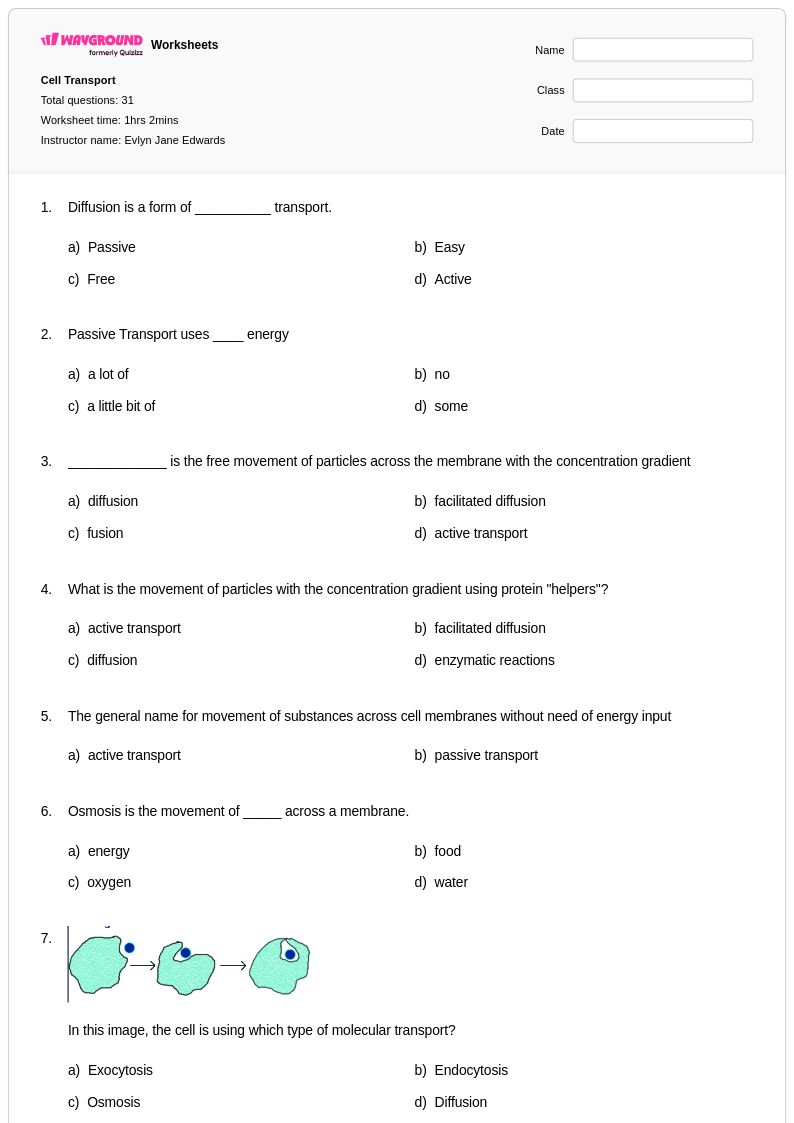
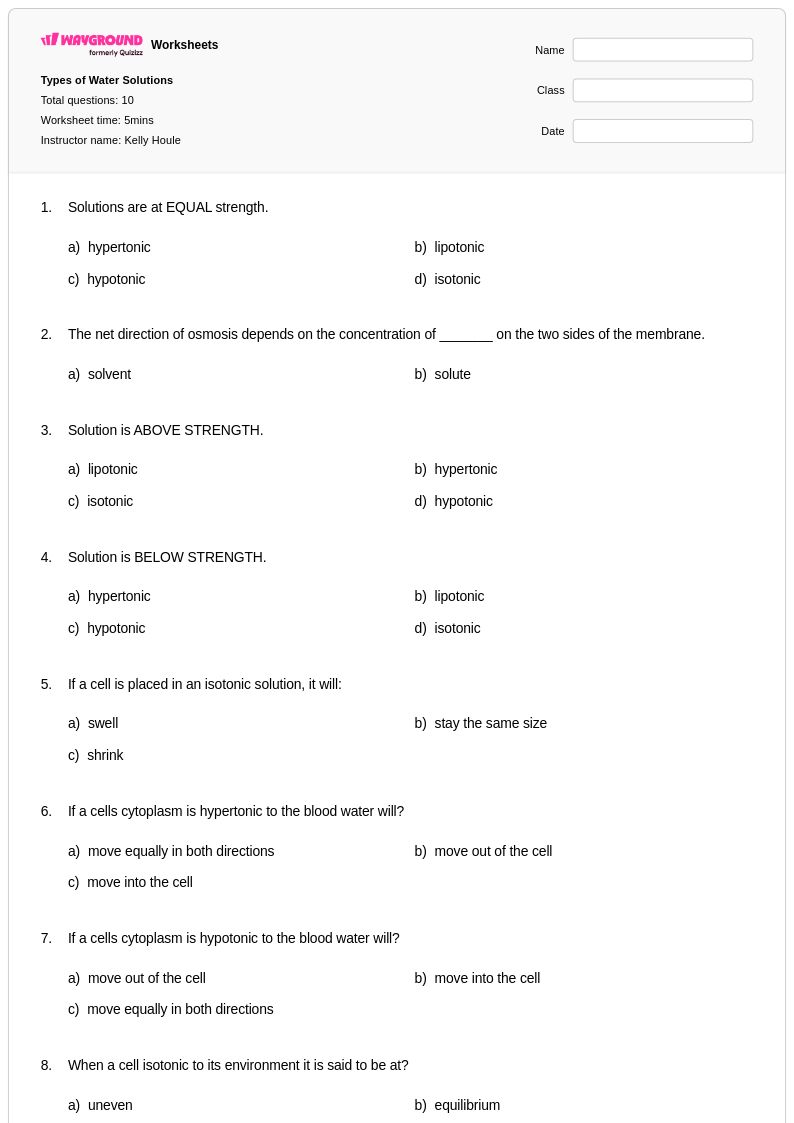
![Unit 2 Exam USR- [BXDVHJUGGJ] - Printable Tonicity Worksheets Year 9 - Quizizz](https://quizizz-static.s3.amazonaws.com/_media/worksheets-new/68d190e3dfdcfd9f94d66011-unit-2-exam-usr-bxdvhjuggj)