
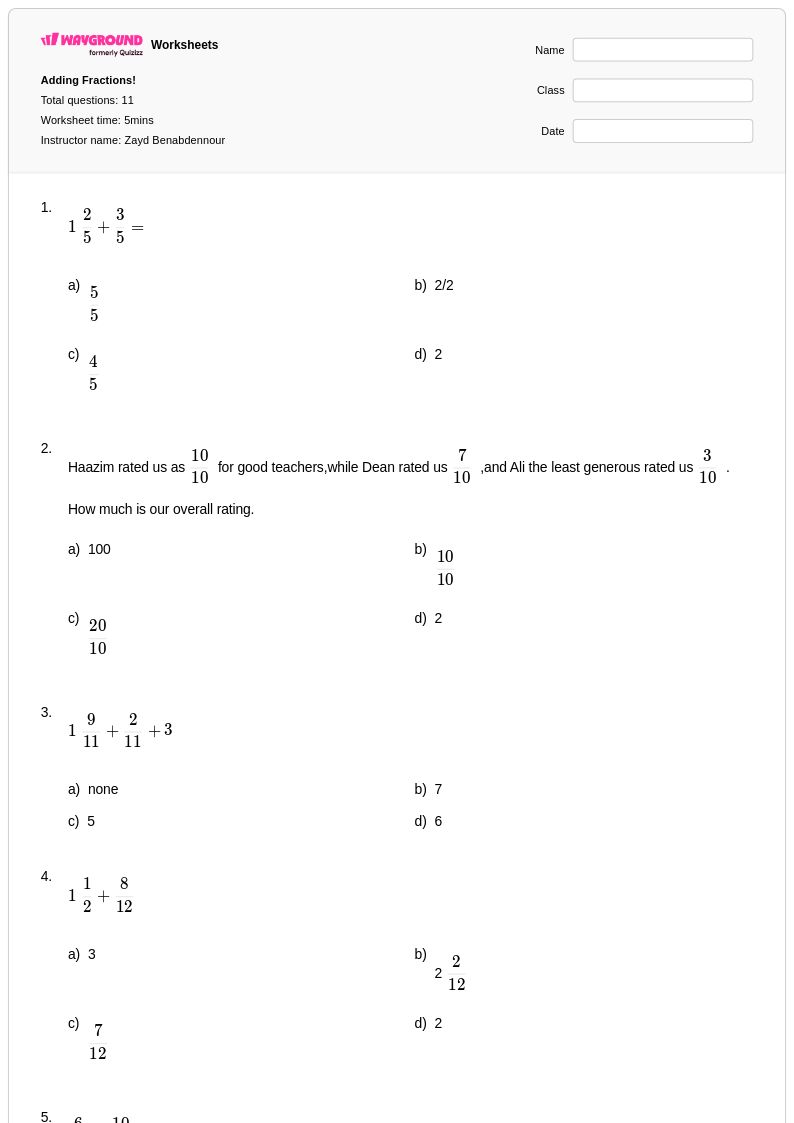
11 Q
5th
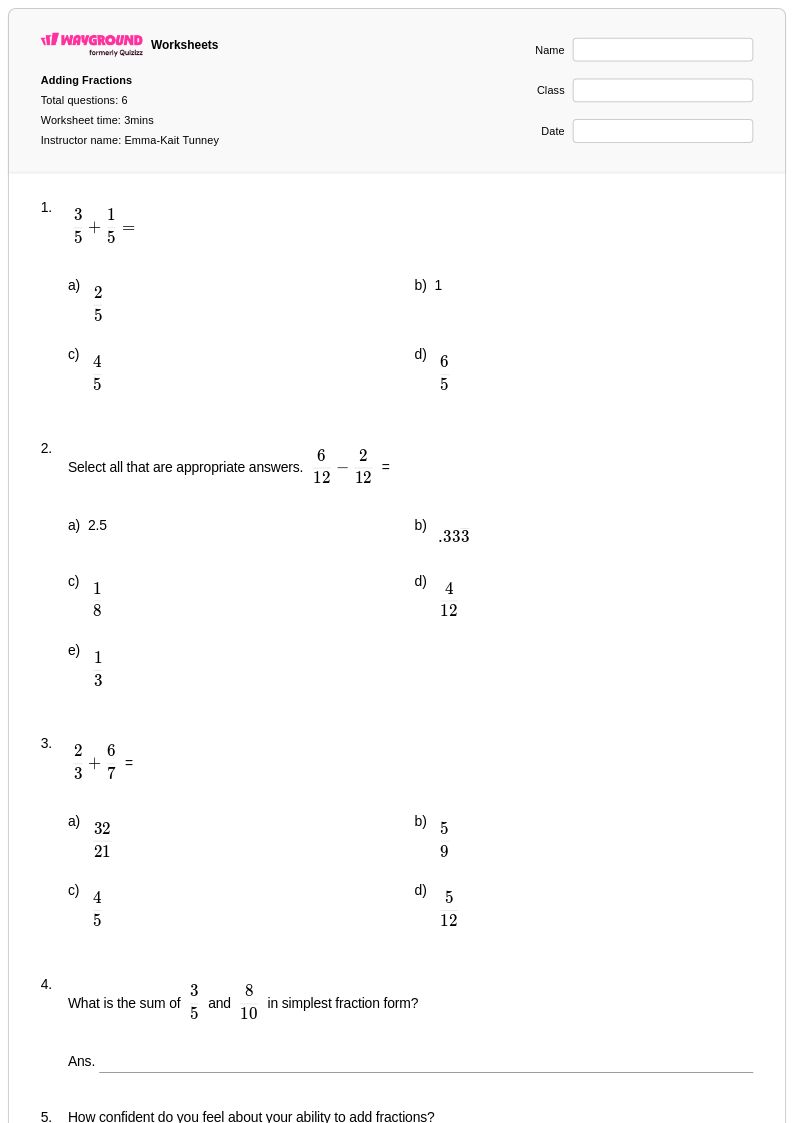
6 Q
3rd - 6th
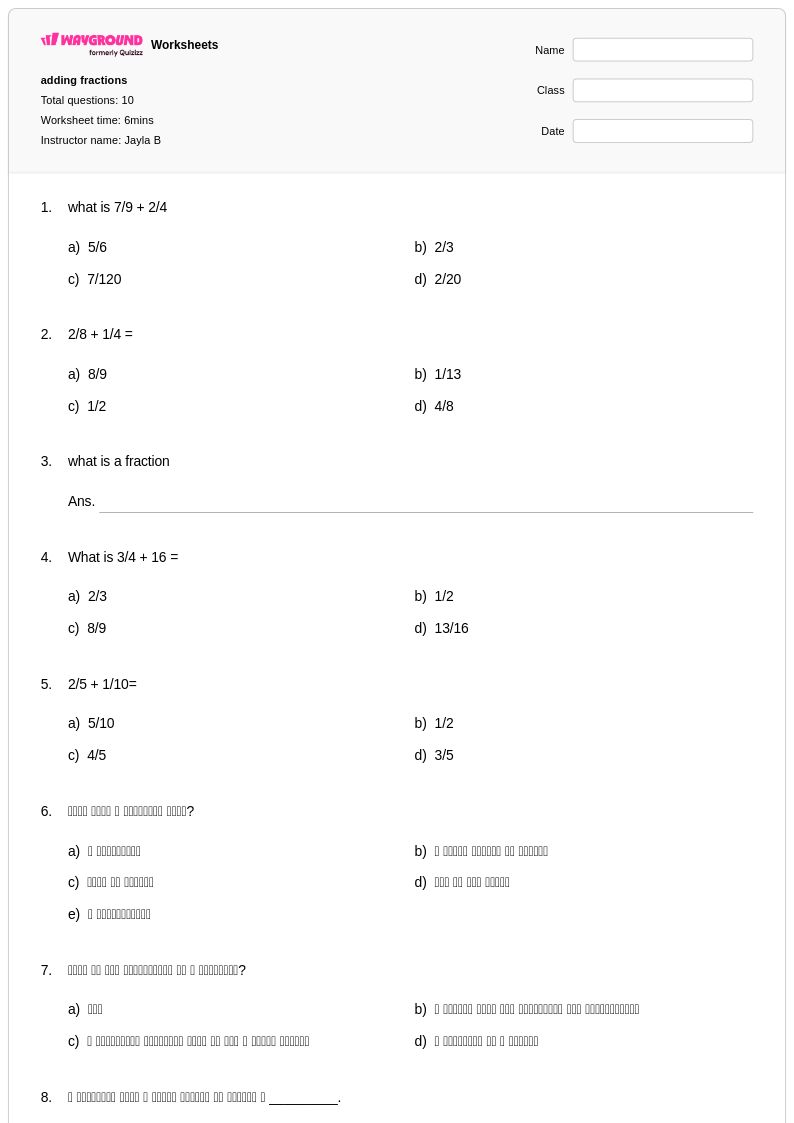
10 Q
5th - 7th
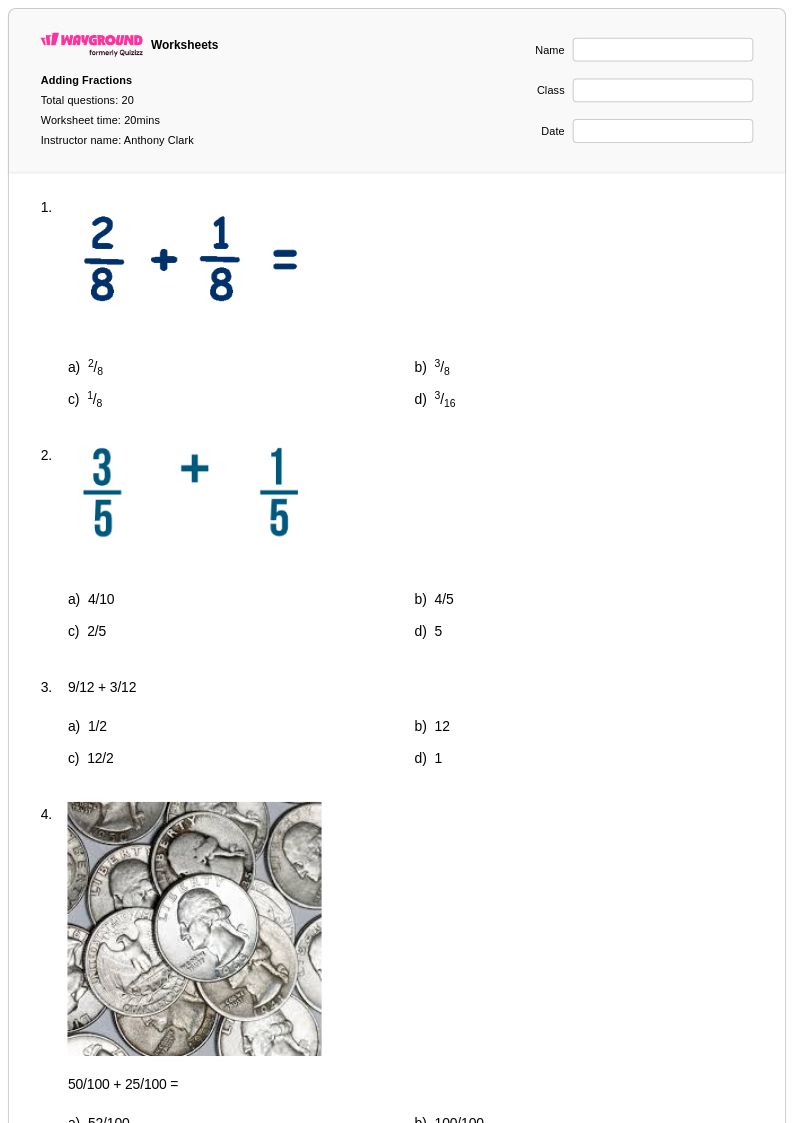
20 Q
4th - Uni
20 Q
5th - Uni
10 Q
5th
15 Q
5th
5 Q
5th
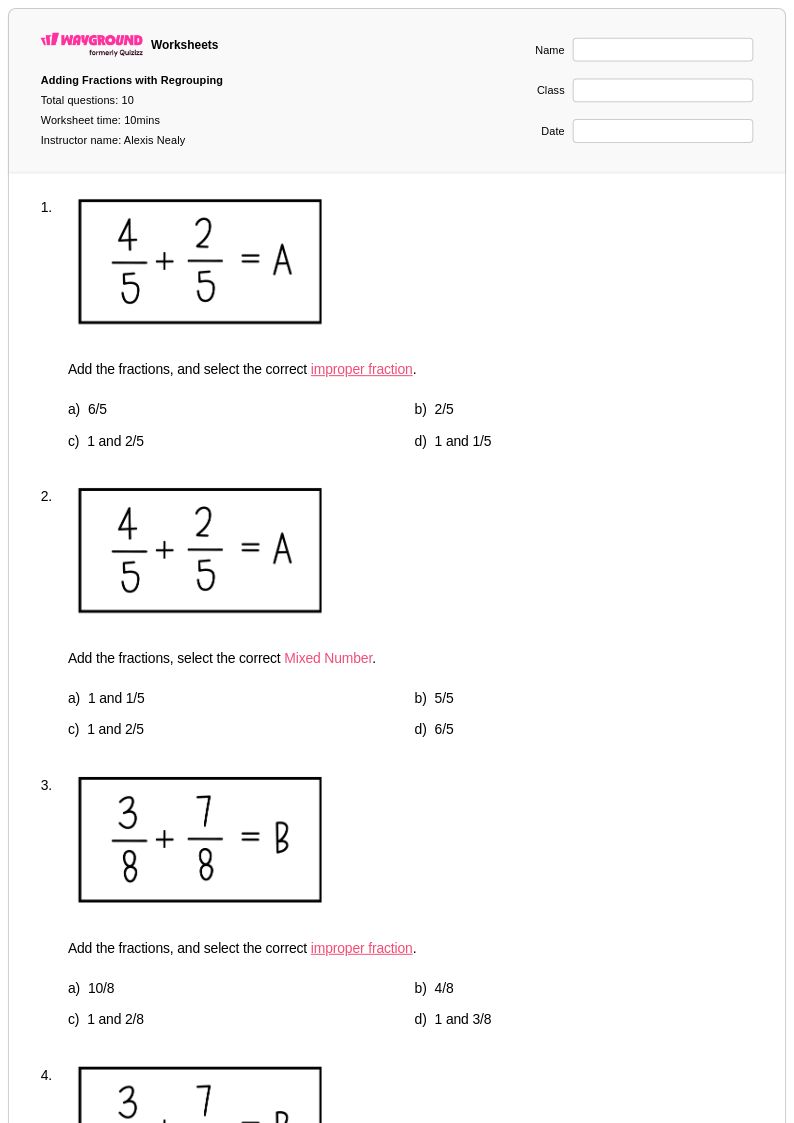
10 Q
3rd - 5th
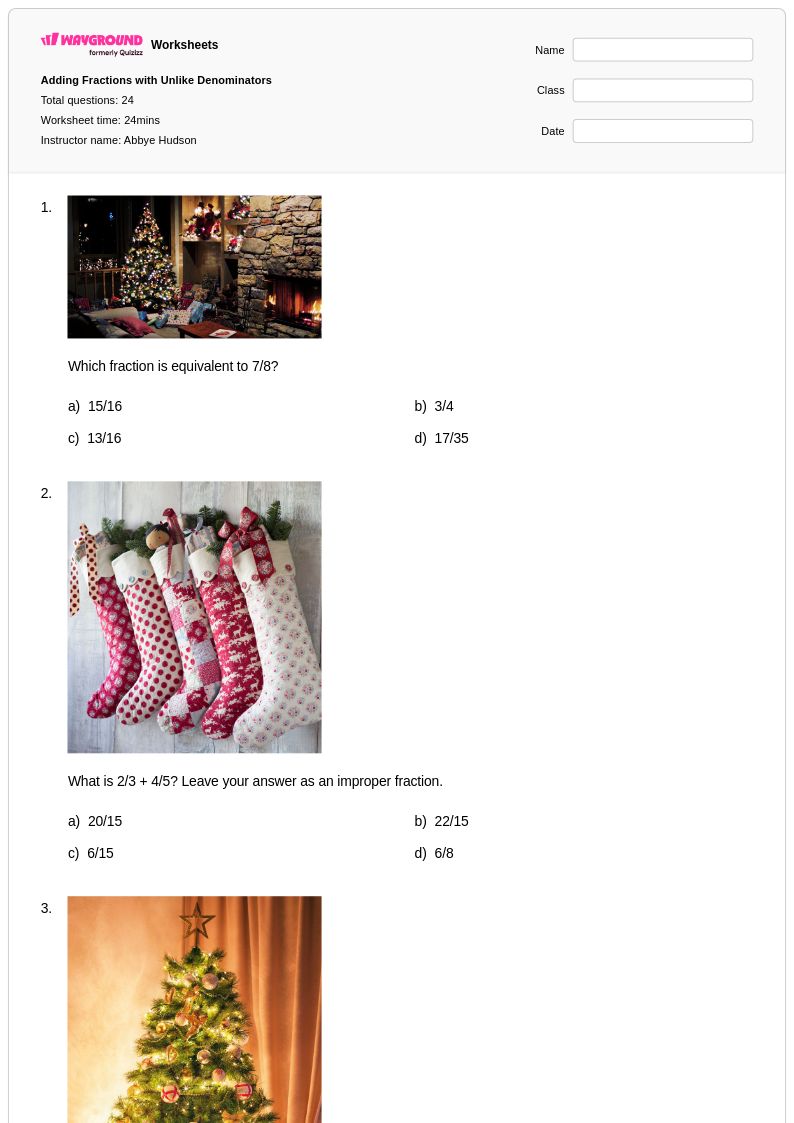
24 Q
5th
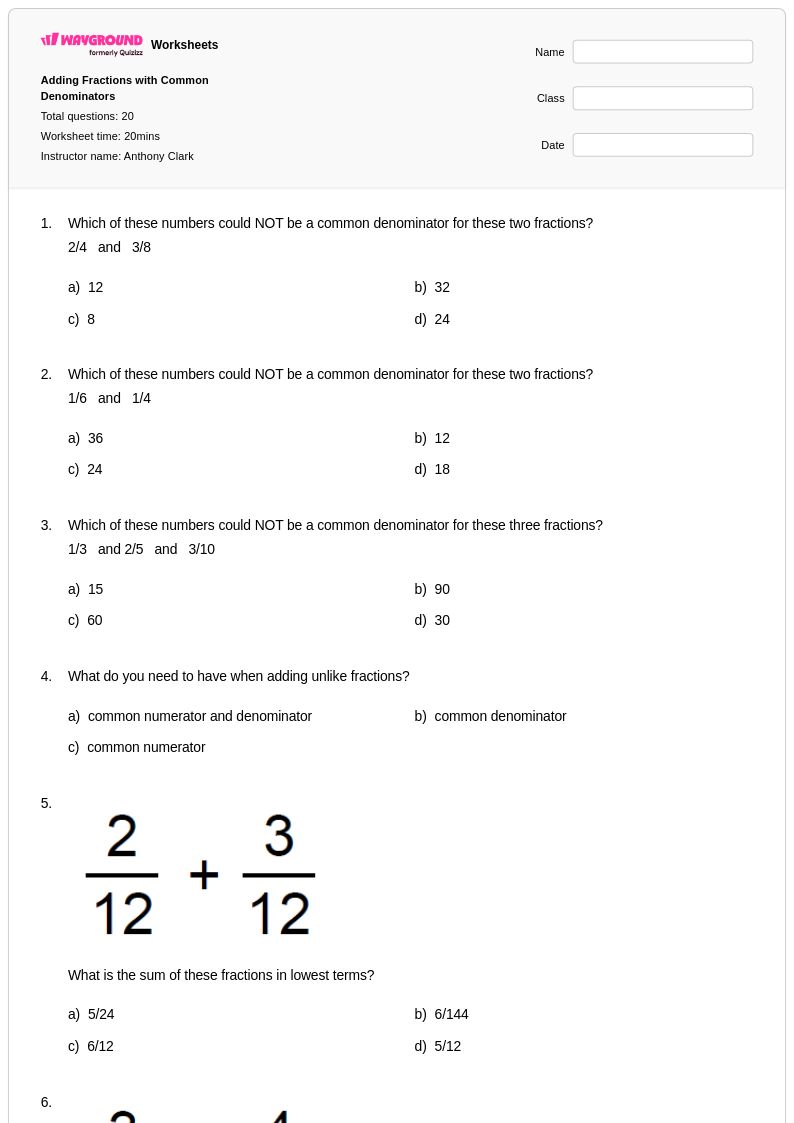
20 Q
5th - Uni
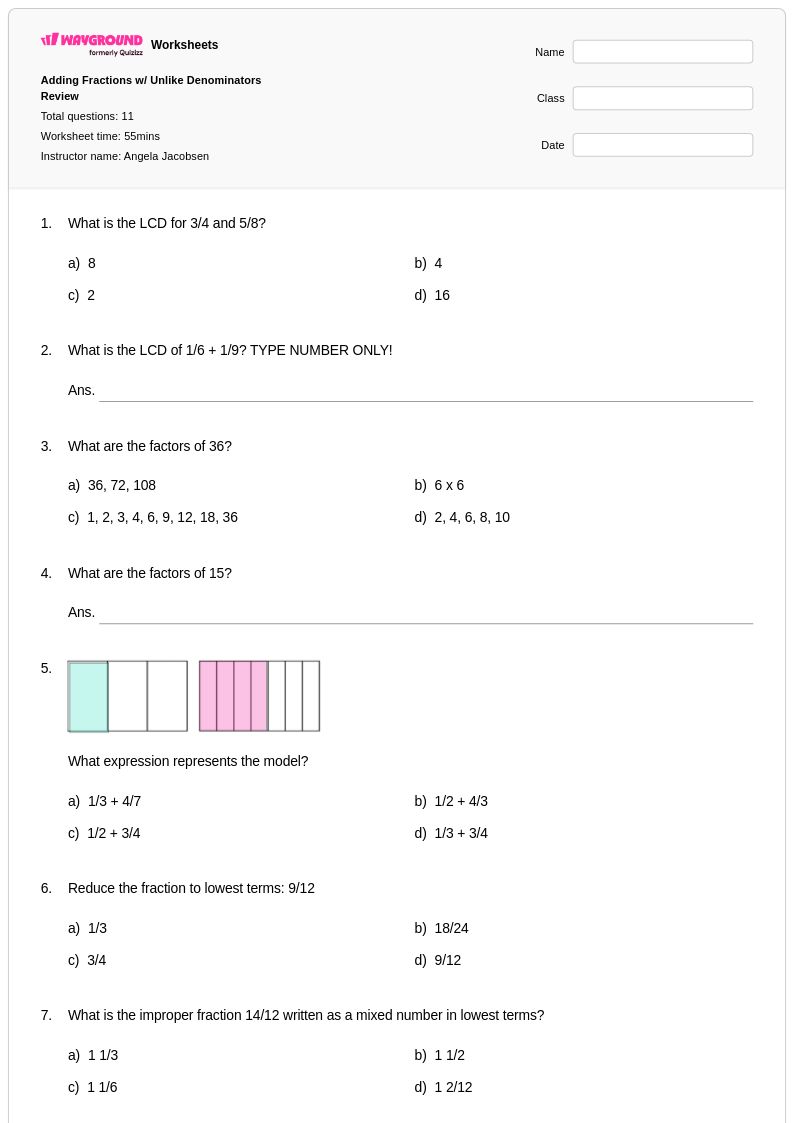
11 Q
5th
20 Q
4th - Uni
6 Q
4th - 8th
20 Q
4th - Uni
20 Q
5th - Uni
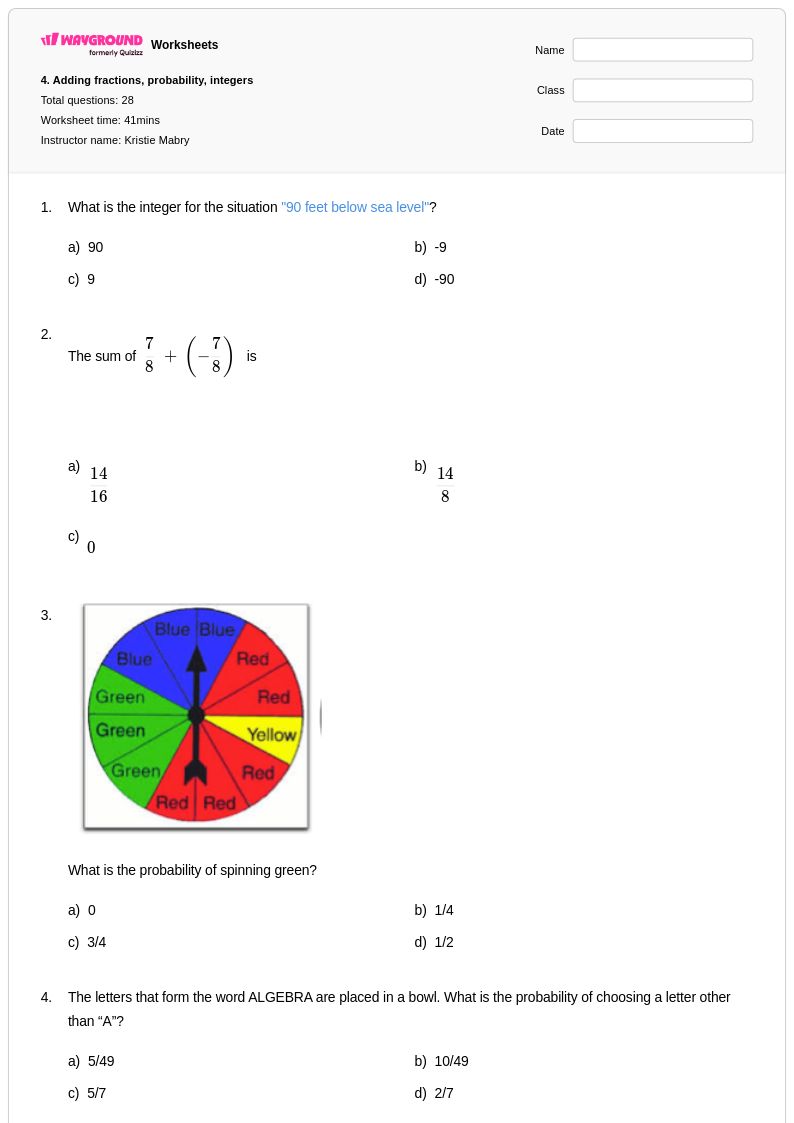
28 Q
5th
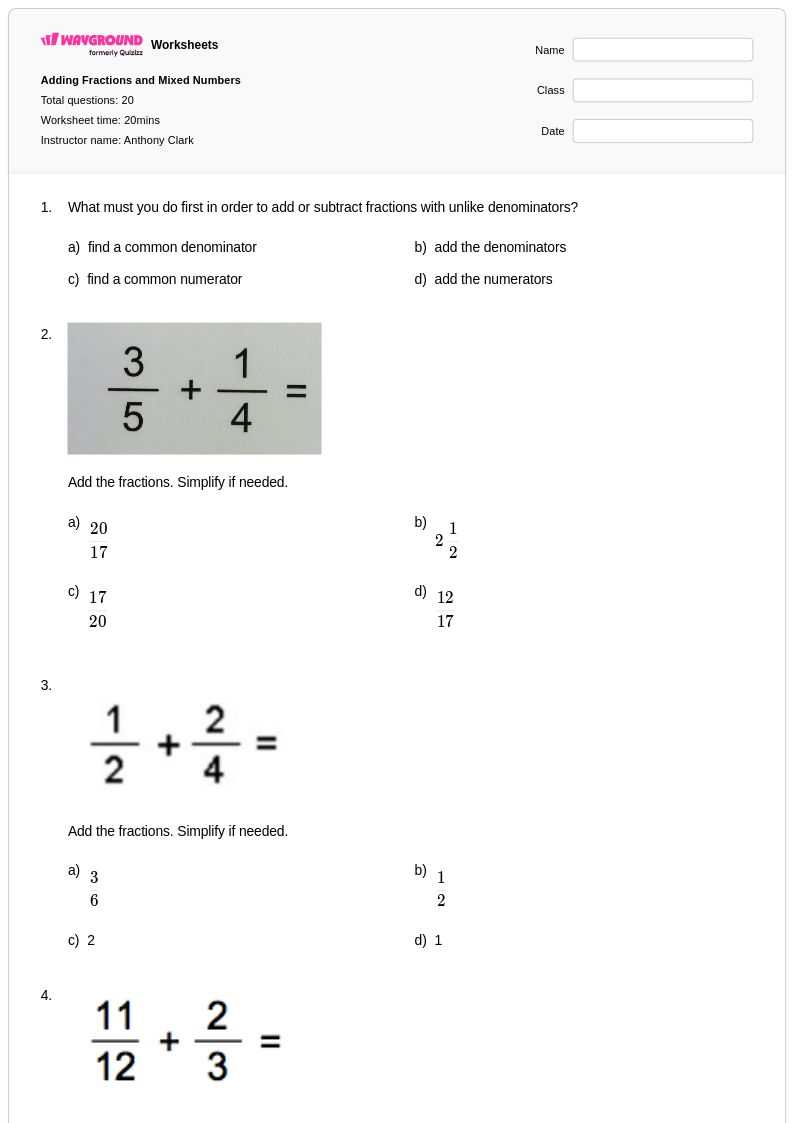
20 Q
5th - Uni
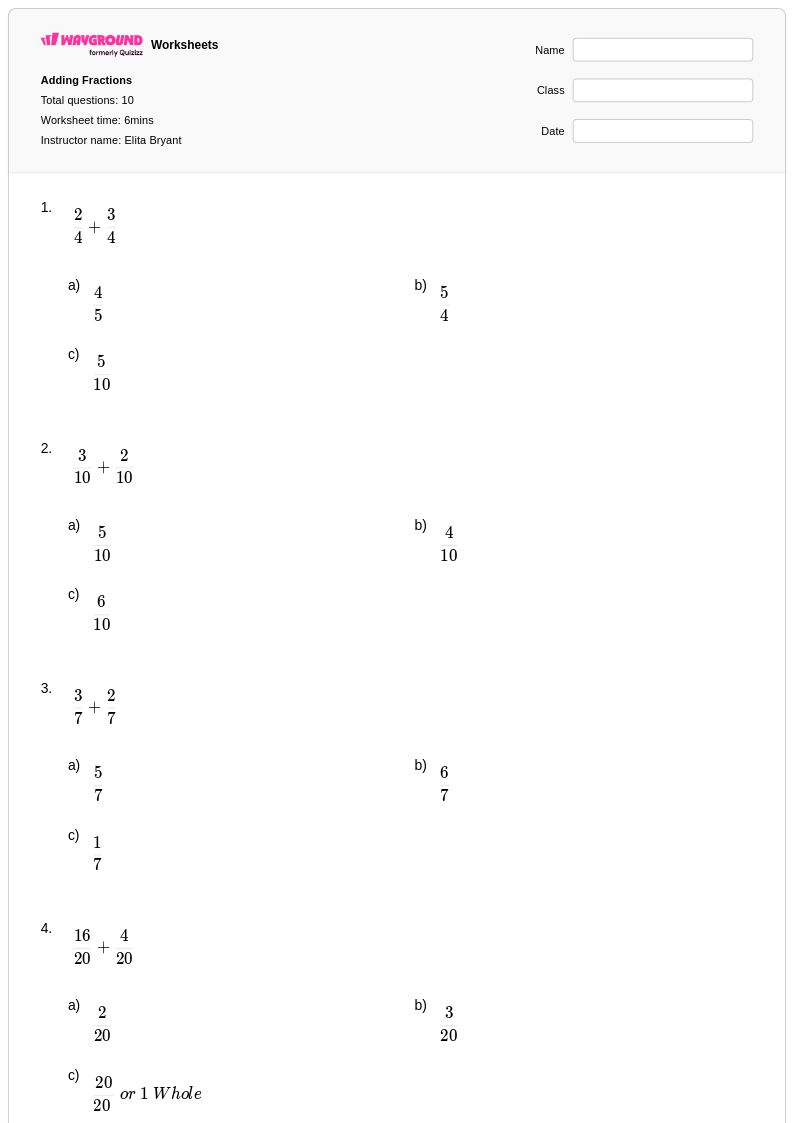
10 Q
4th - 5th
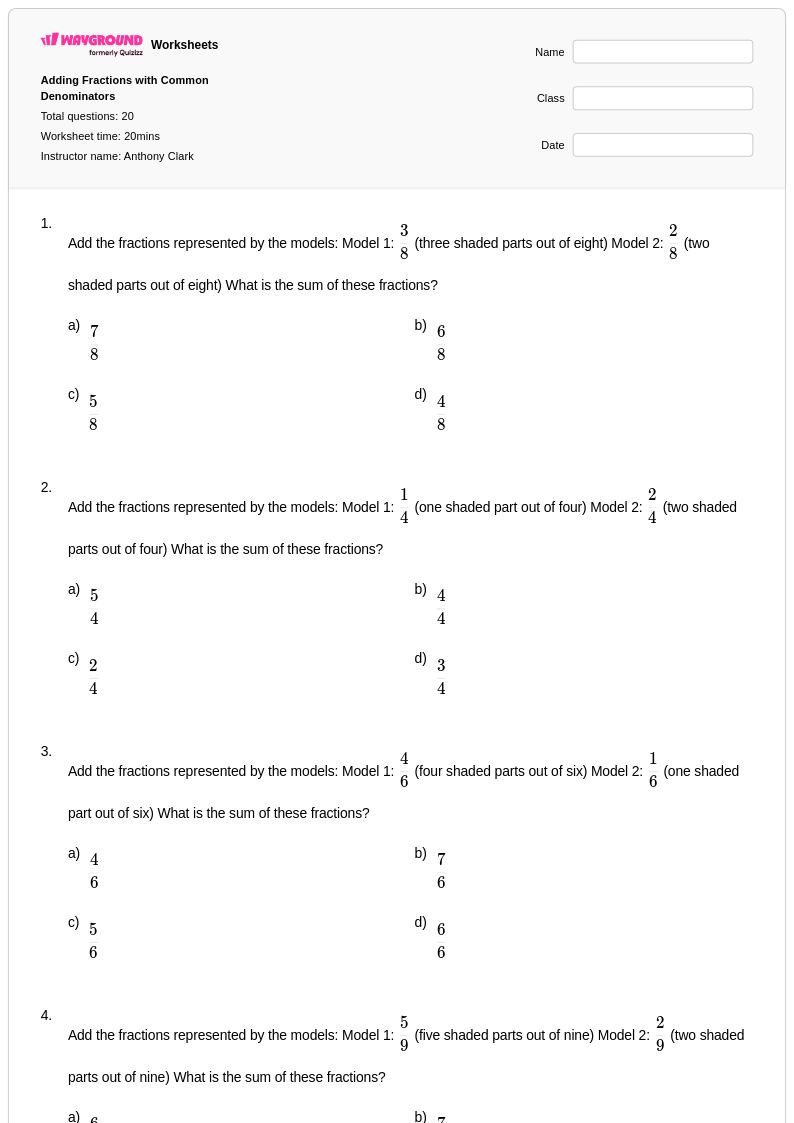
20 Q
5th - Uni
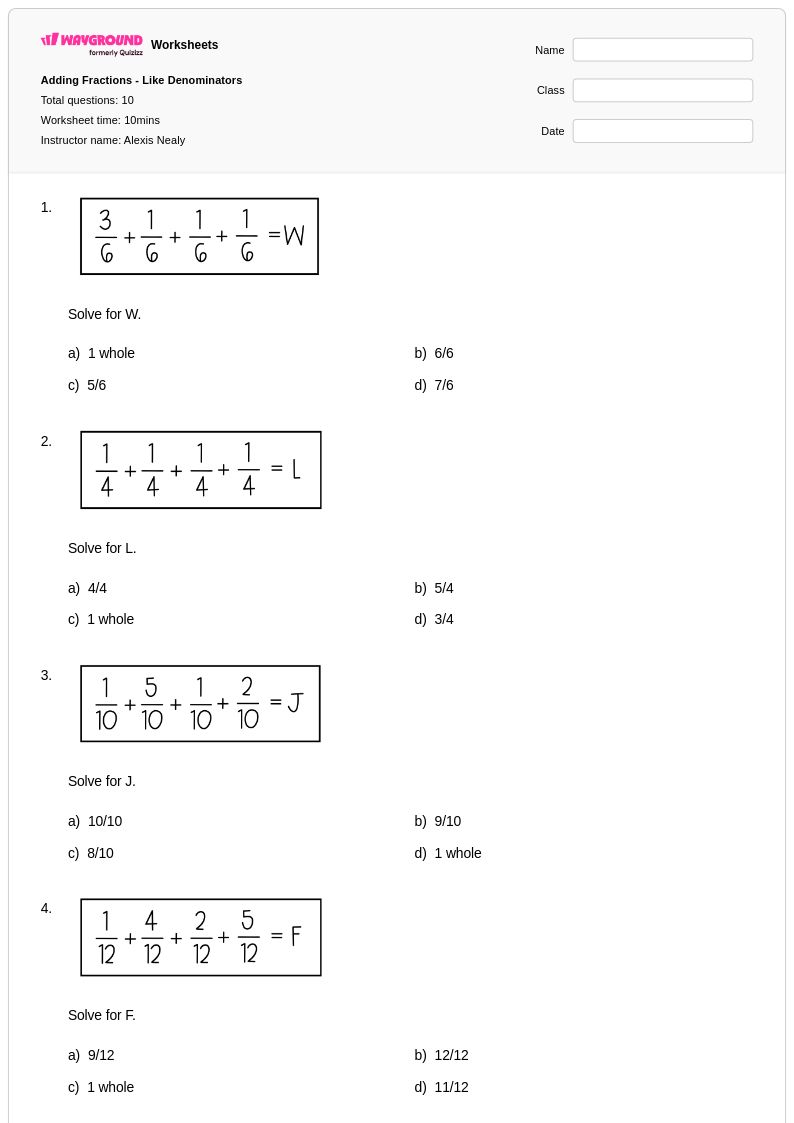
10 Q
3rd - 5th
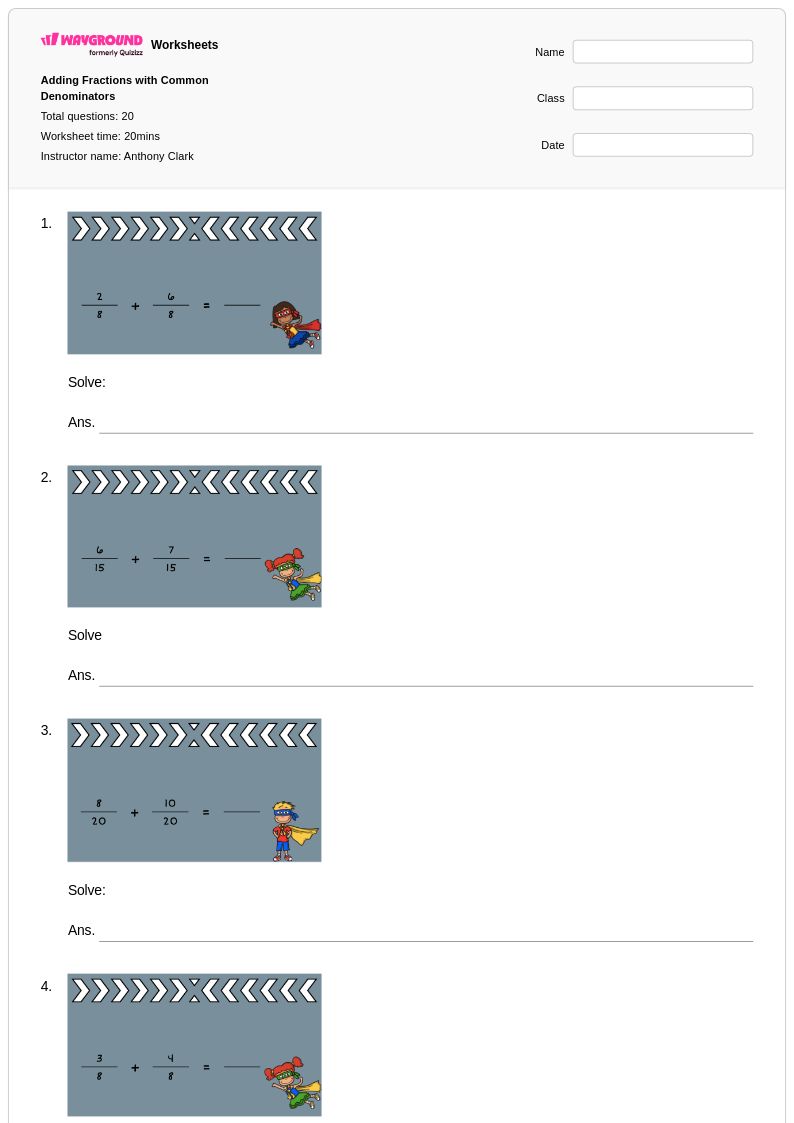
20 Q
5th - Uni
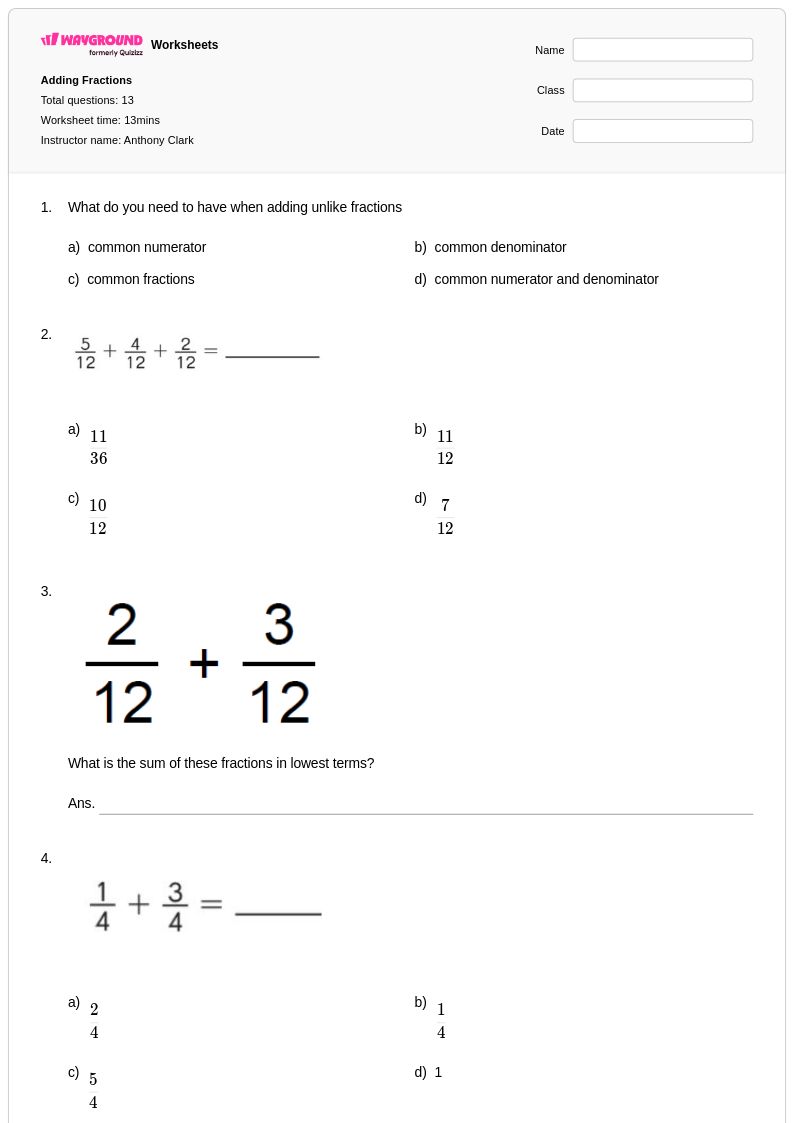
13 Q
4th - Uni
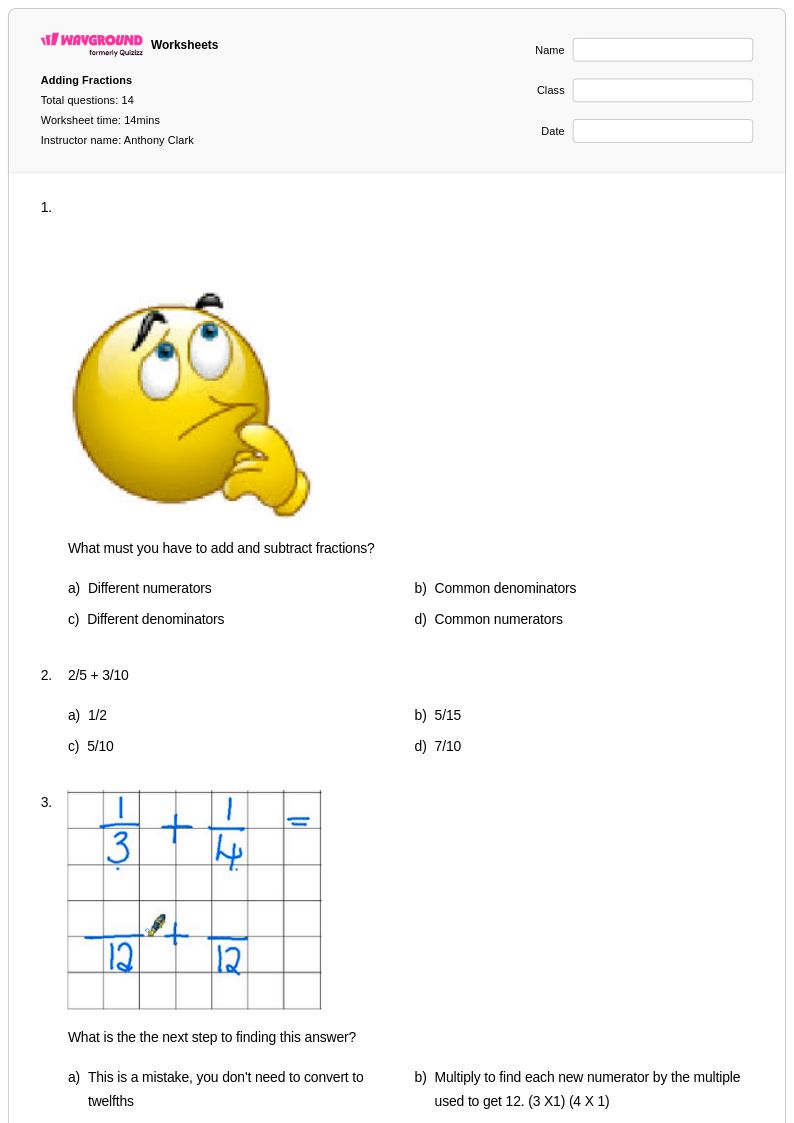
14 Q
4th - Uni
Explore Other Subject Worksheets for class 5
Explore printable Adding Fractions worksheets for Class 5
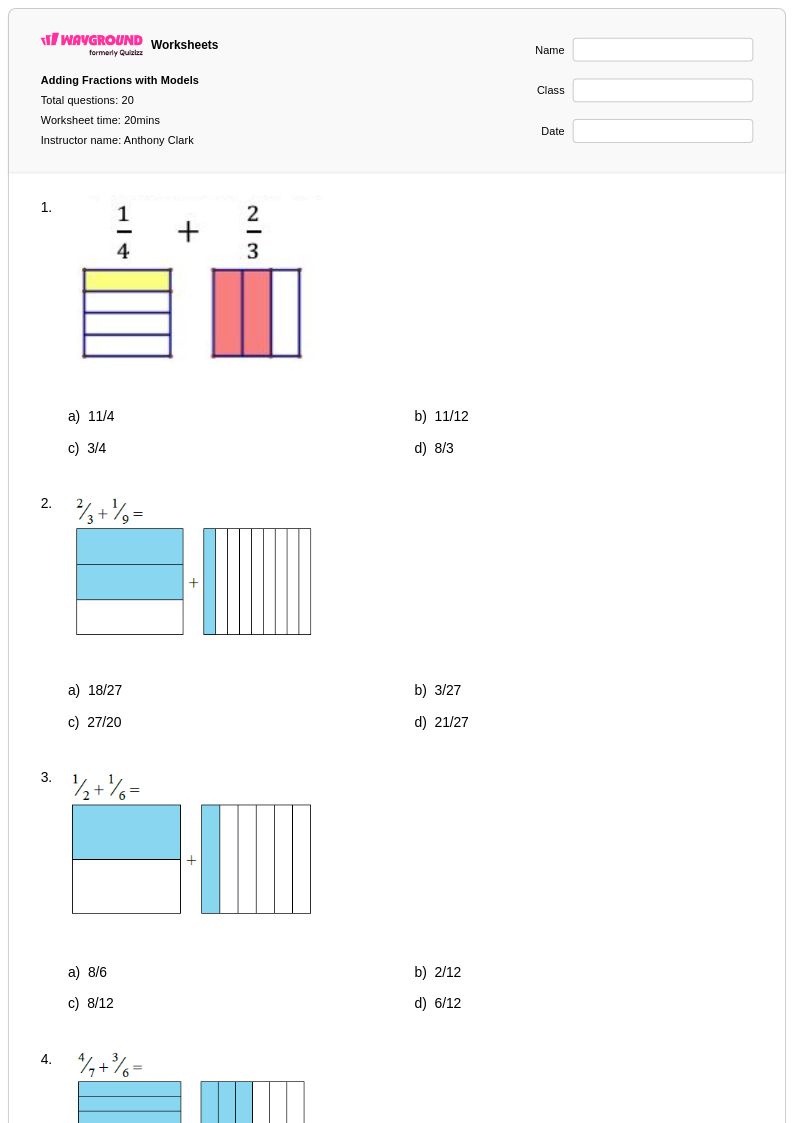
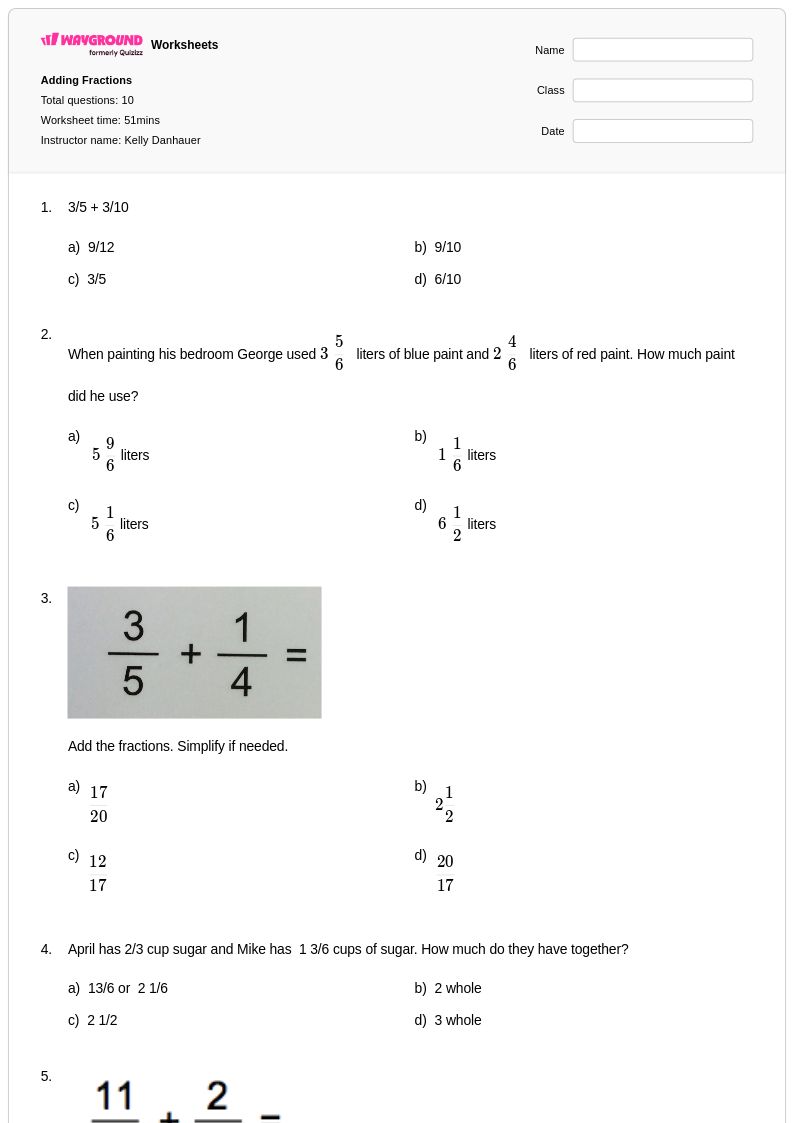
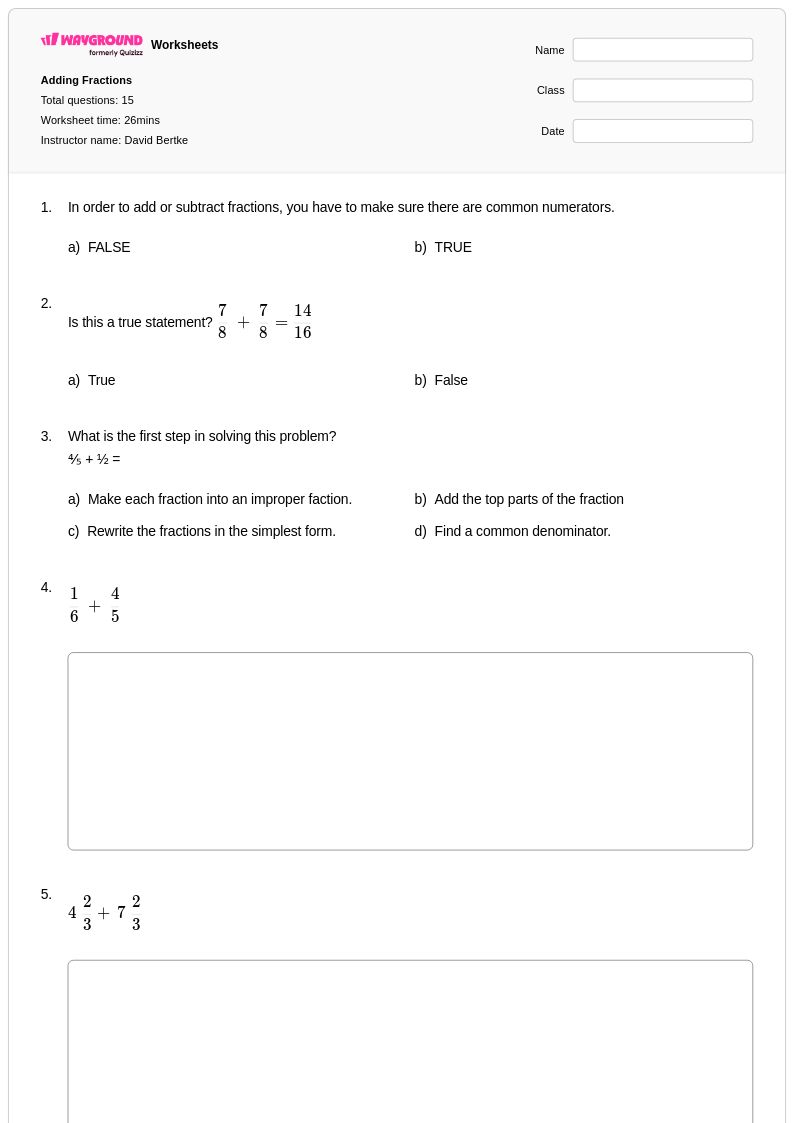
Class 5 adding fractions worksheets from Wayground (formerly Quizizz) provide comprehensive practice opportunities for students developing foundational fraction computation skills. These expertly designed resources focus on building fluency with adding fractions that share common denominators, finding equivalent fractions to enable addition with different denominators, and applying visual models to reinforce conceptual understanding. Each worksheet includes carefully scaffolded practice problems that progress from concrete representations to abstract calculations, helping students master the systematic approach required for fraction addition. Teachers can access these free printables as downloadable pdf files, complete with detailed answer keys that support efficient grading and enable students to self-check their mathematical reasoning and computational accuracy.
Wayground's extensive collection of teacher-created adding fractions resources offers educators powerful tools for differentiated instruction and targeted skill development. With millions of worksheets available through intuitive search and filtering capabilities, teachers can quickly locate materials aligned to specific learning standards and student needs. The platform's flexible customization features allow educators to modify difficulty levels, adjust problem types, and create personalized practice sets for remediation or enrichment purposes. These versatile resources are available in both printable and digital formats, enabling seamless integration into classroom instruction, homework assignments, and independent study sessions while supporting diverse learning preferences and technological capabilities across different educational environments.
FAQs
How do I teach adding fractions with unlike denominators in Grade 5?
What exercises are best for practicing fraction addition in fifth grade?
What mistakes do fifth graders make when adding fractions?
How can I use a Grade 5 adding fractions worksheet from Wayground?
Is adding fractions aligned with the Grade 5 Common Core curriculum?
How can I differentiate Grade 5 fraction-addition worksheets?
What grade do students learn to add fractions with different denominators?