
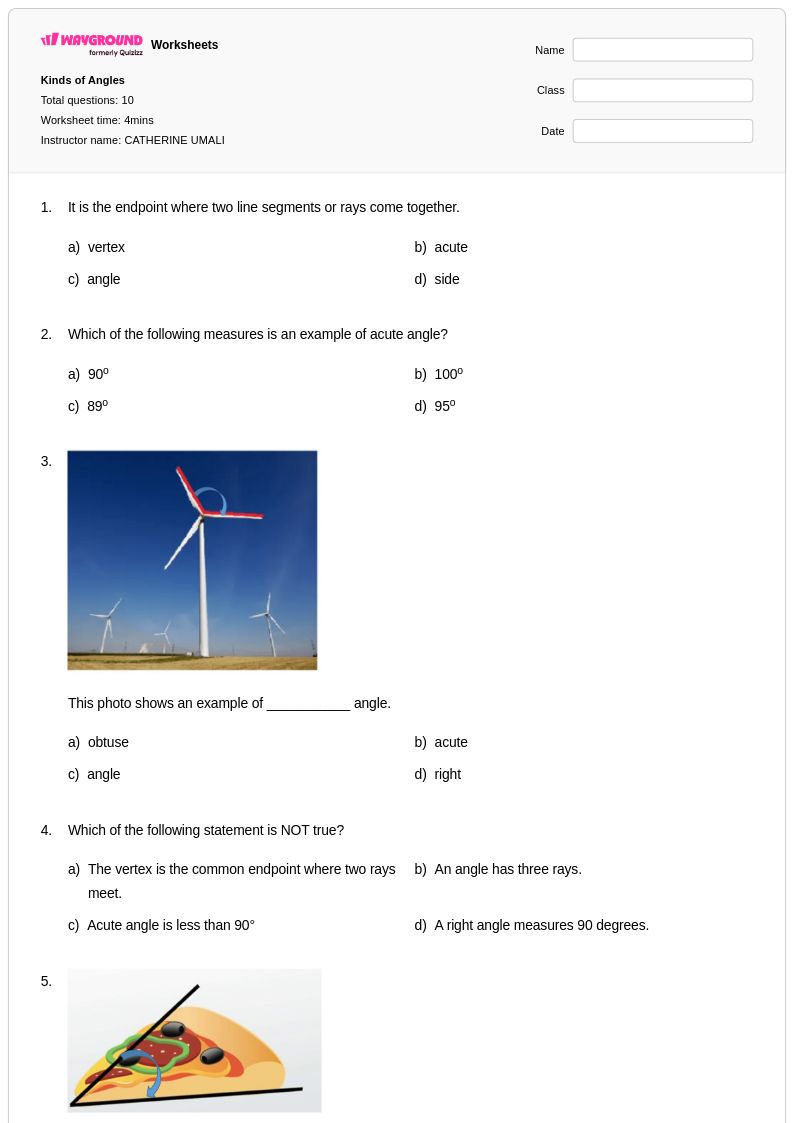
10 Q
4th - 7th
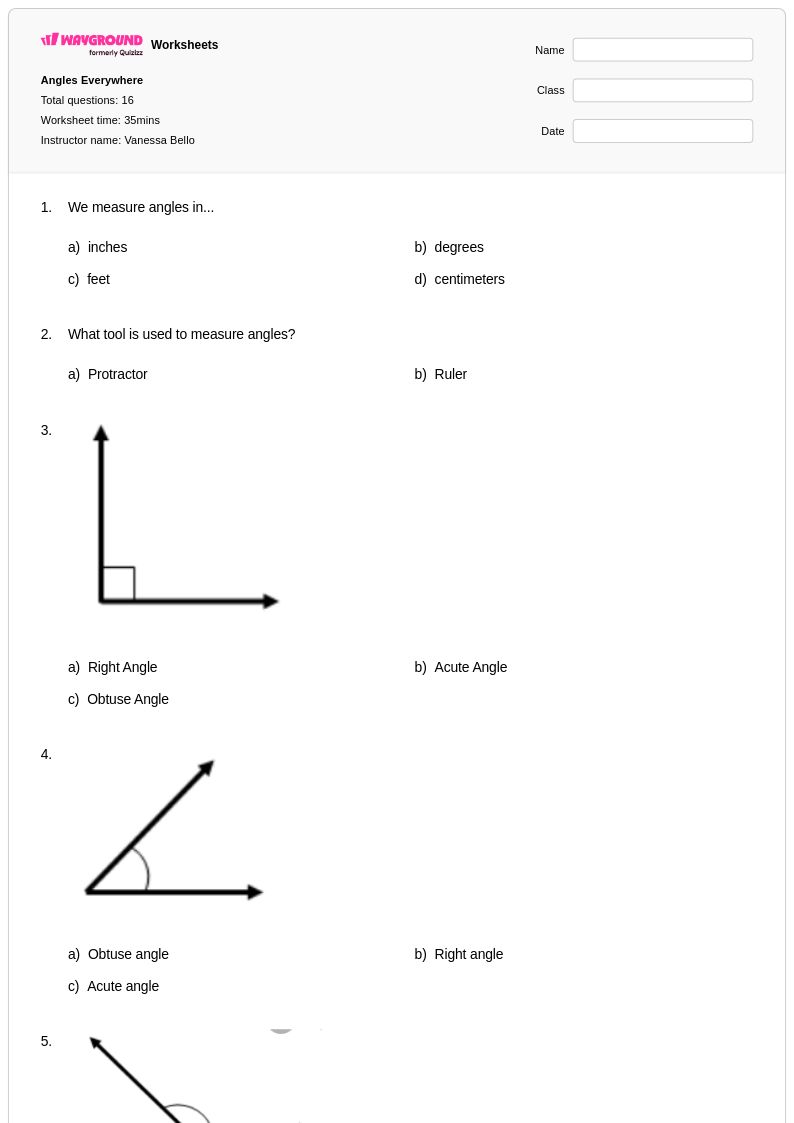
16 Q
4th - 5th
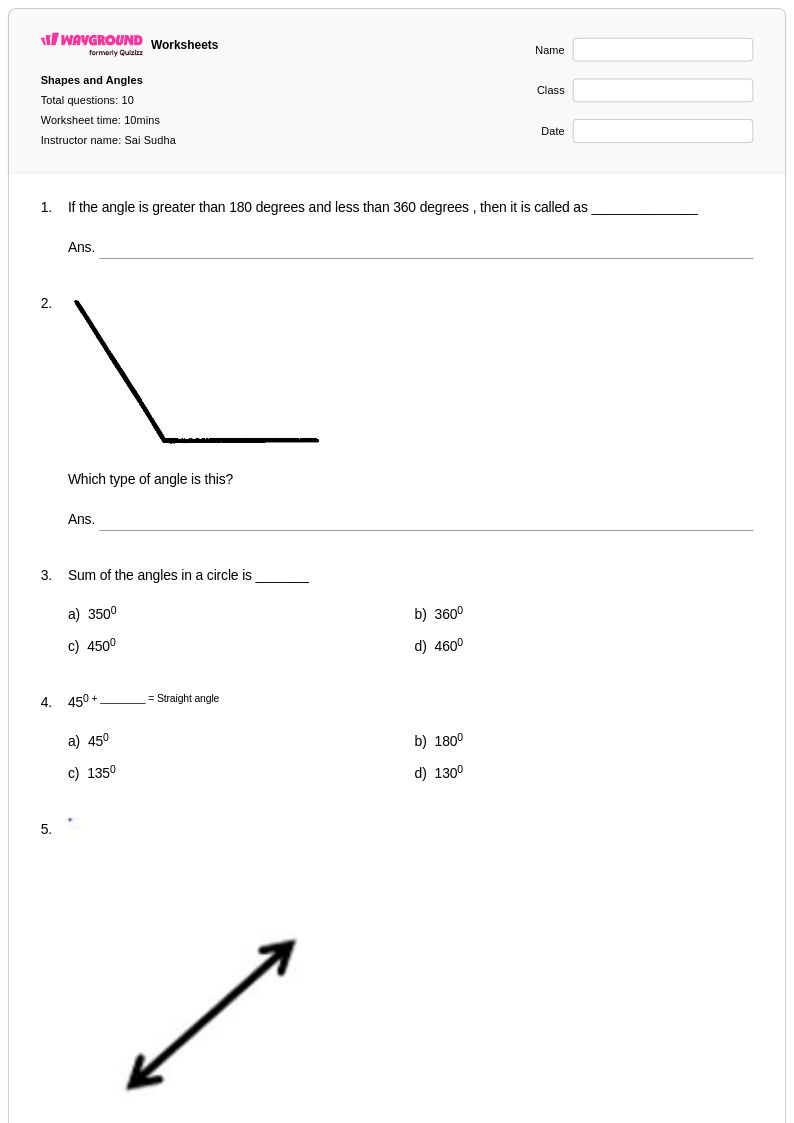
10 Q
3rd - 6th
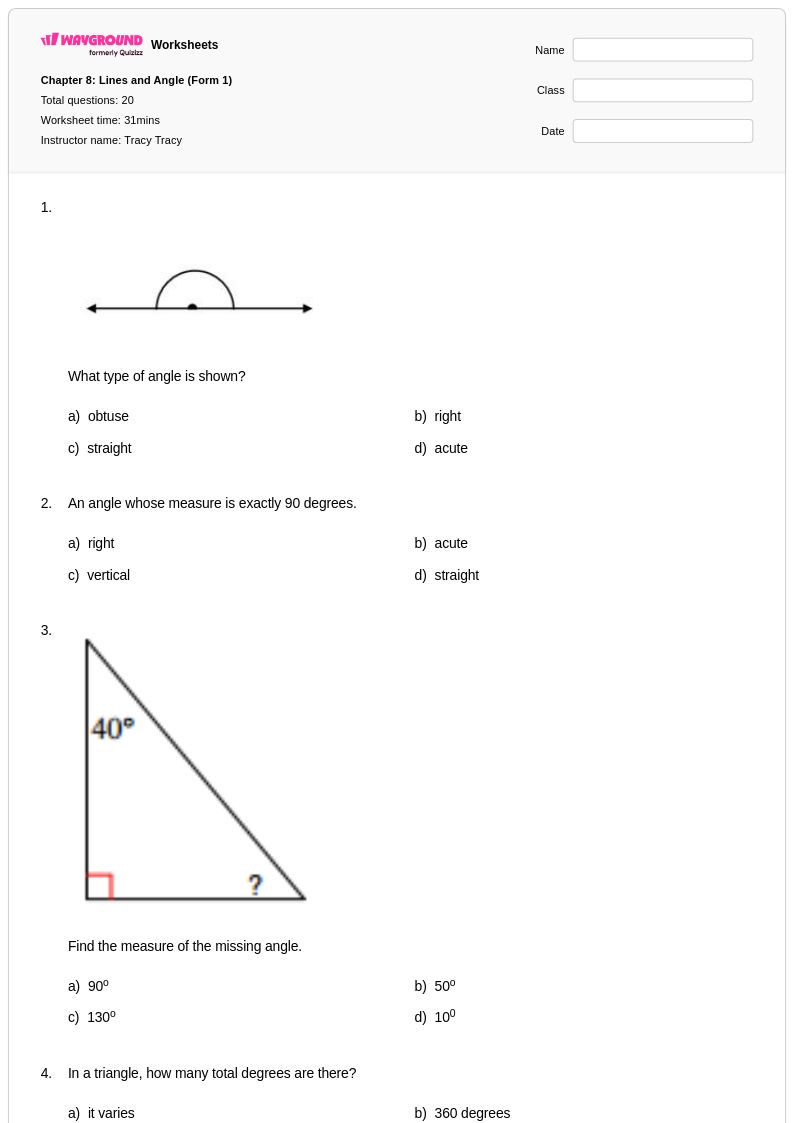
20 Q
1st - 5th
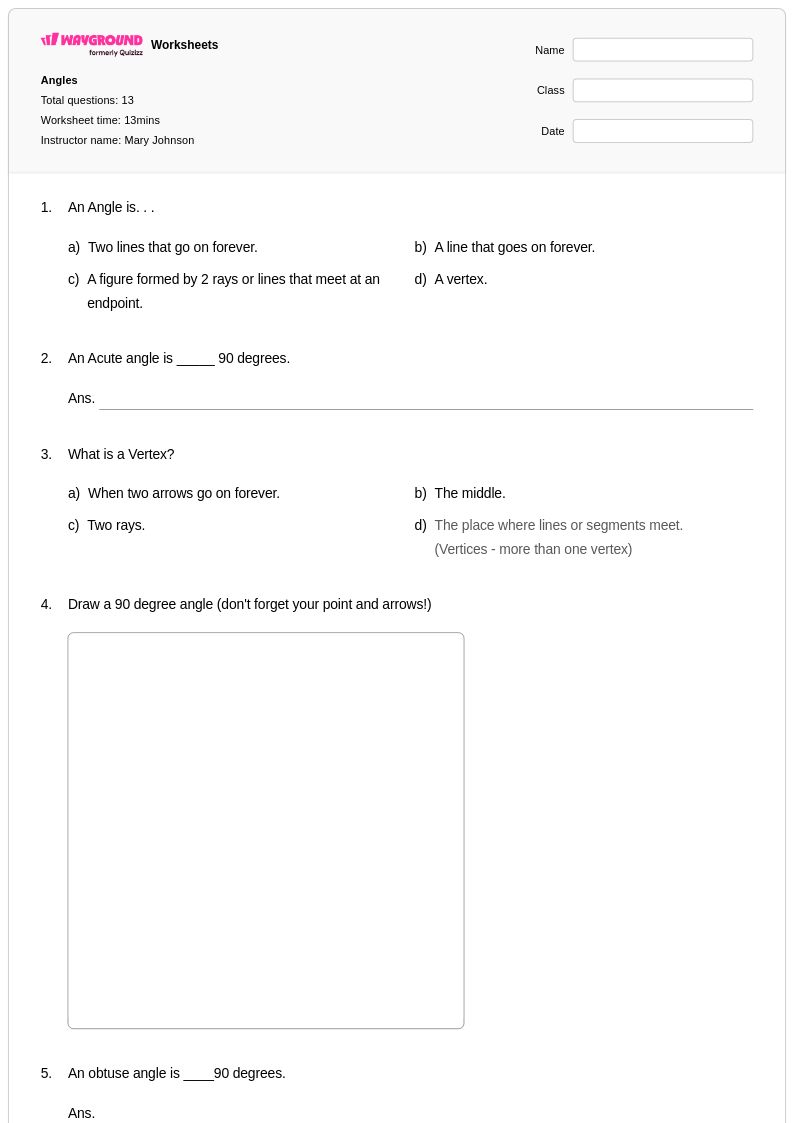
13 Q
3rd - 5th
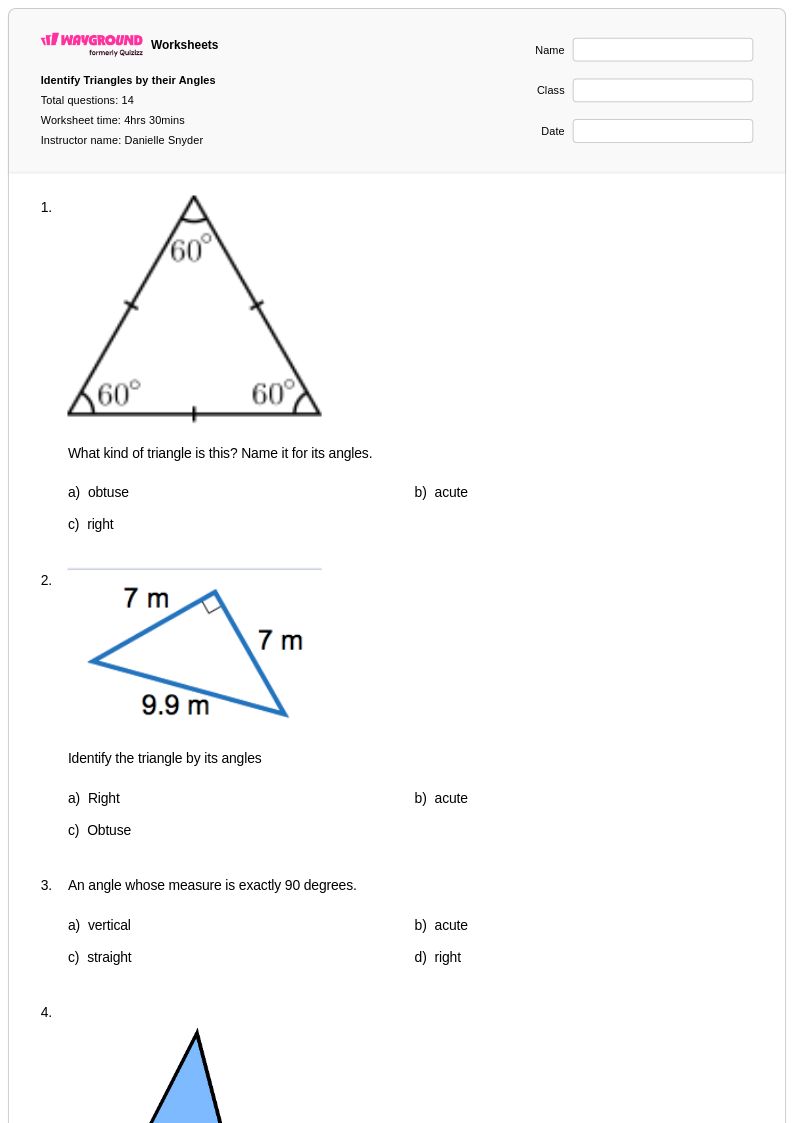
14 Q
5th
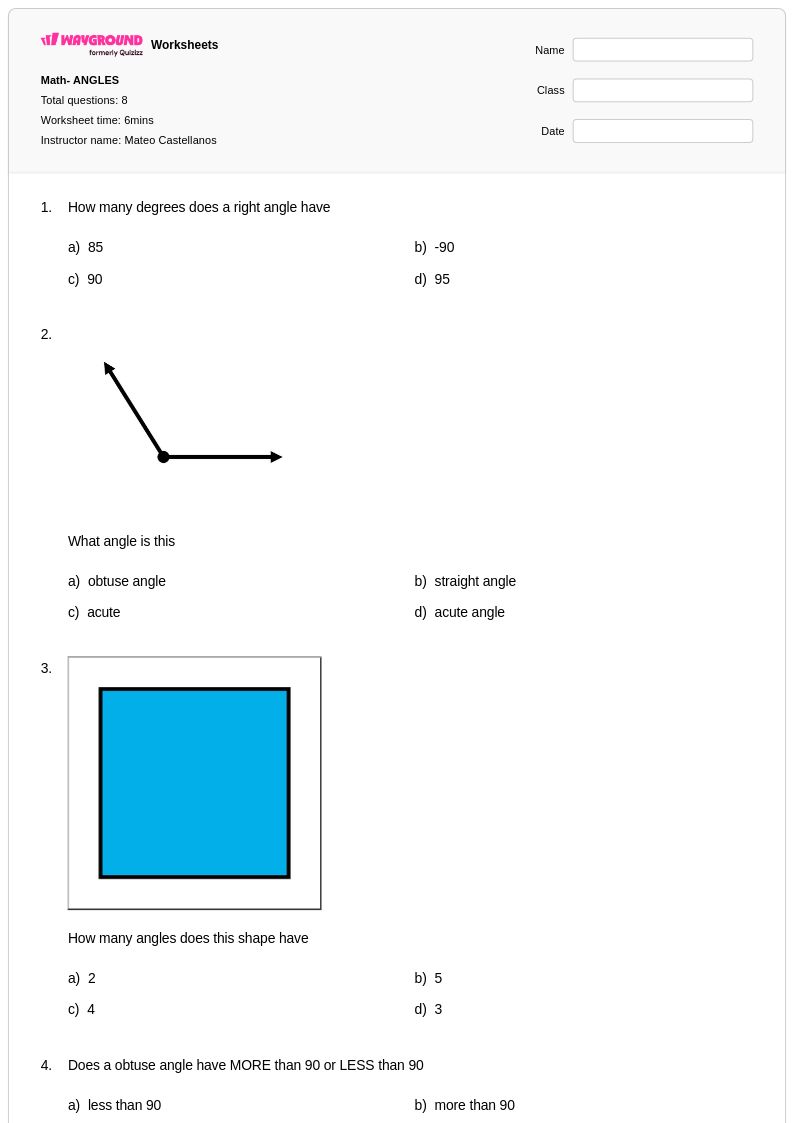
8 Q
3rd - 5th
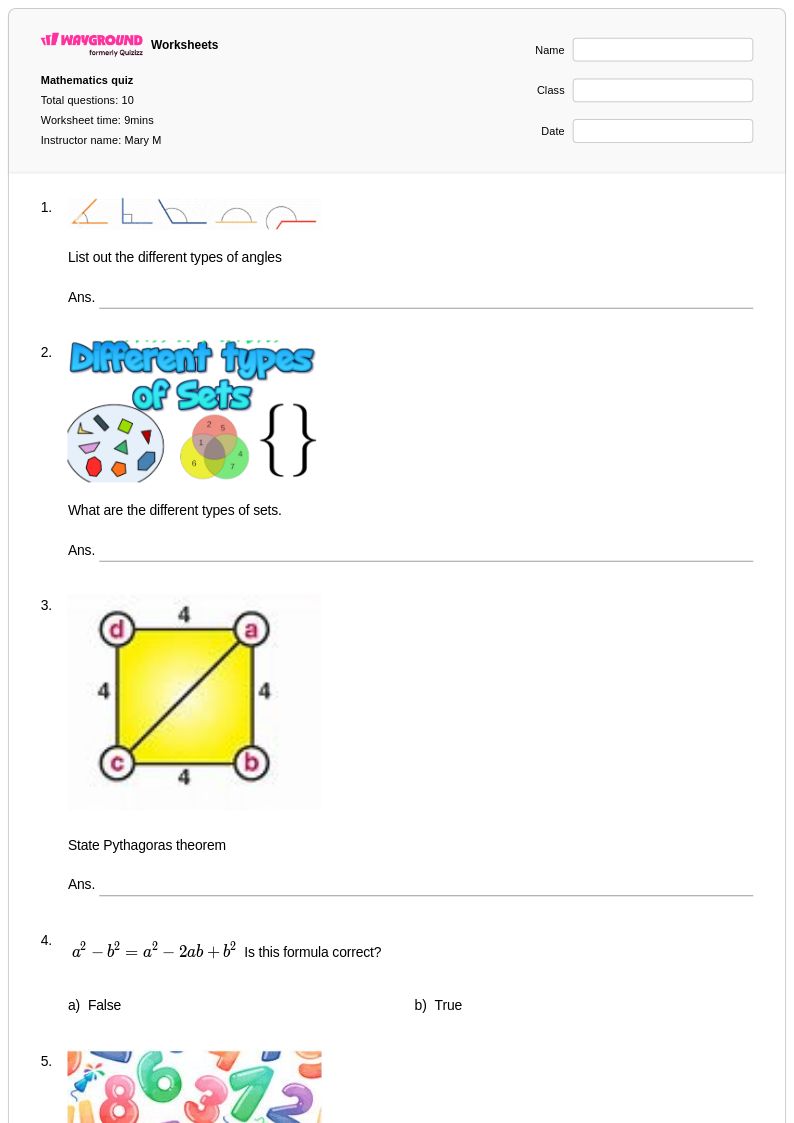
10 Q
5th
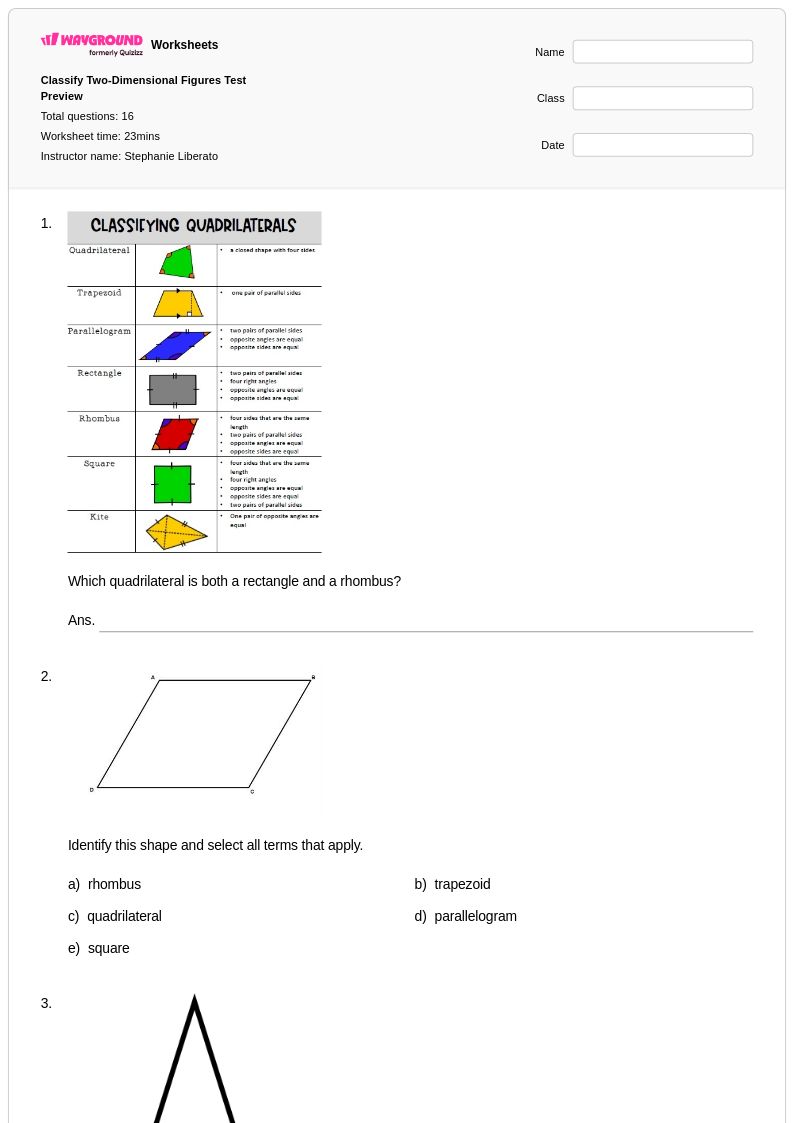
16 Q
5th
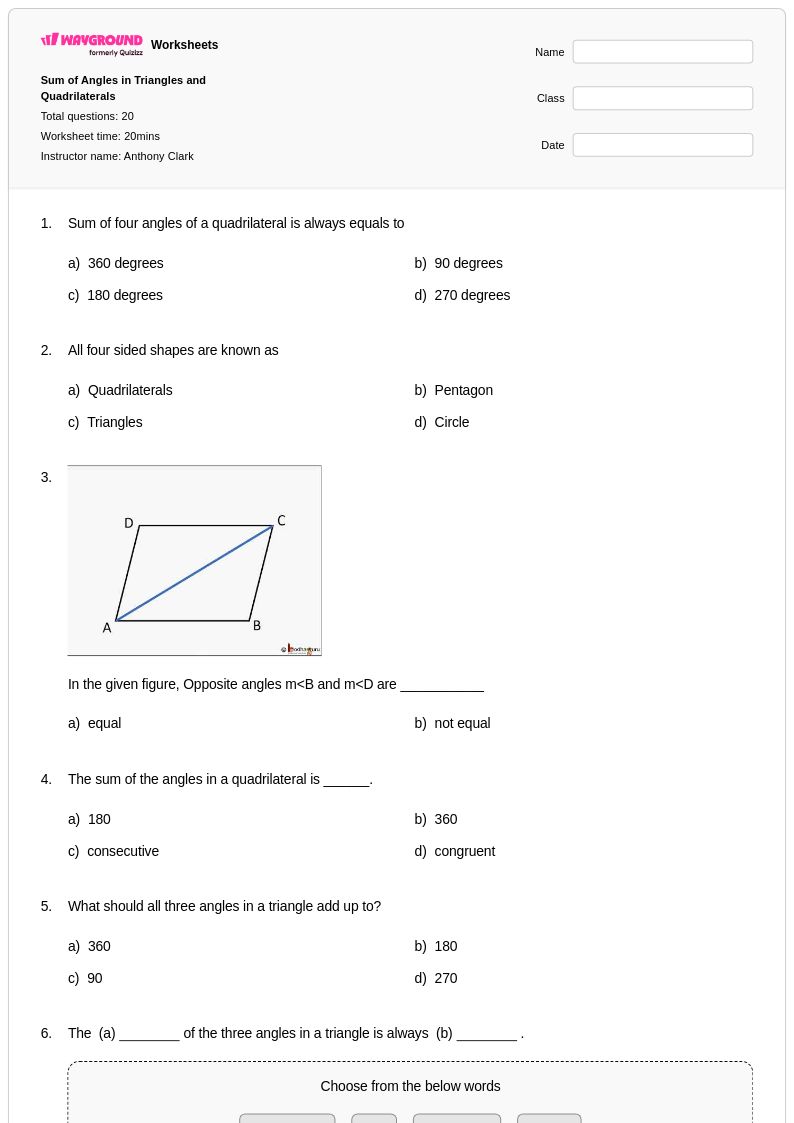
20 Q
5th - Uni
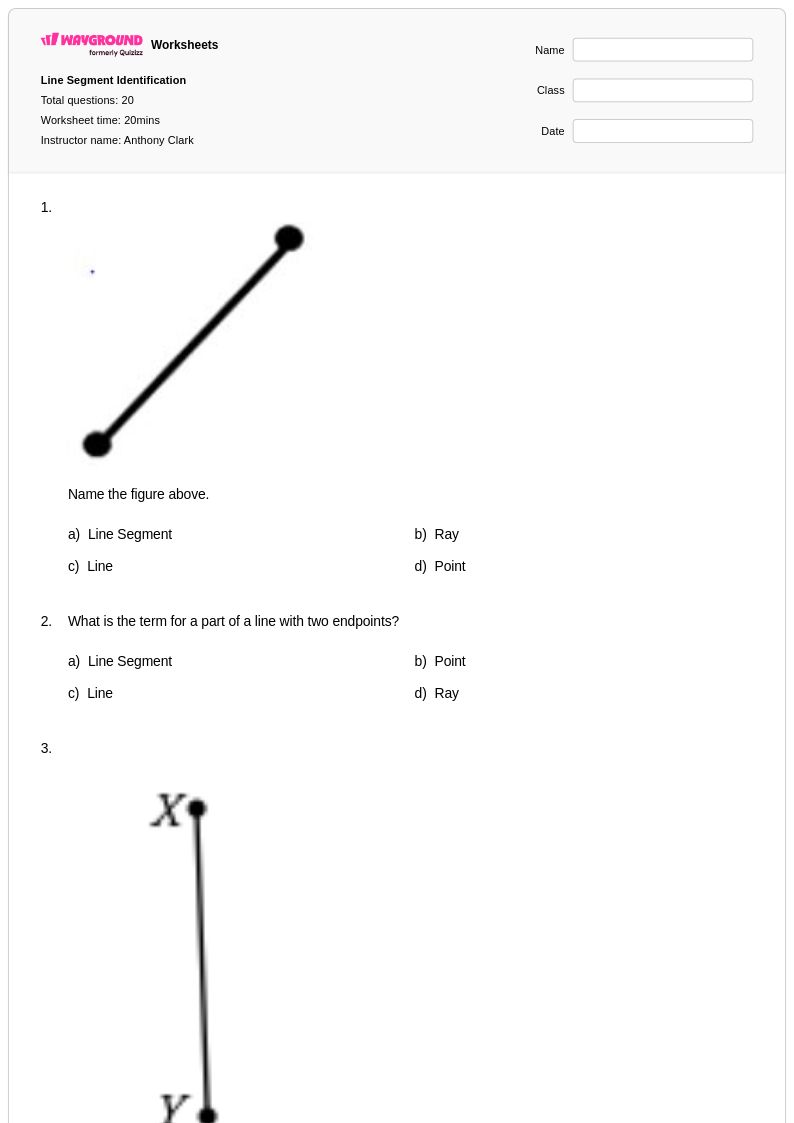
20 Q
4th - Uni
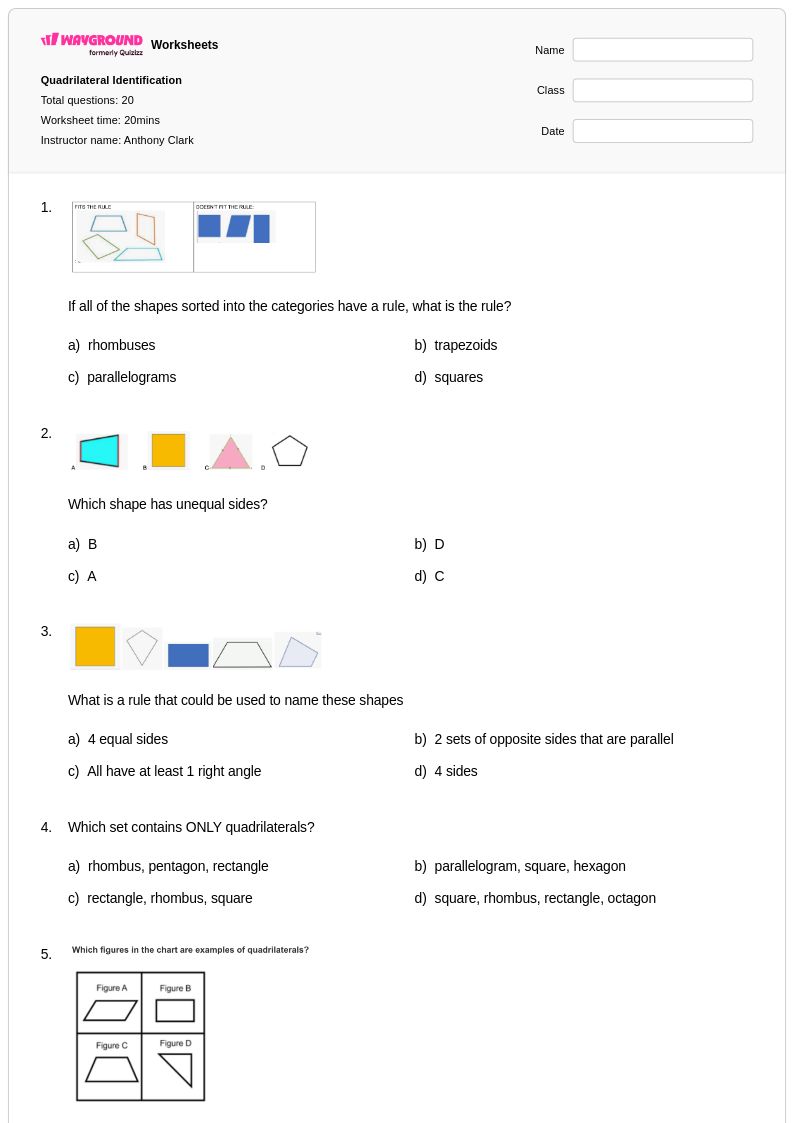
20 Q
3rd - Uni
20 Q
5th
15 Q
5th
10 Q
5th
20 Q
5th - Uni
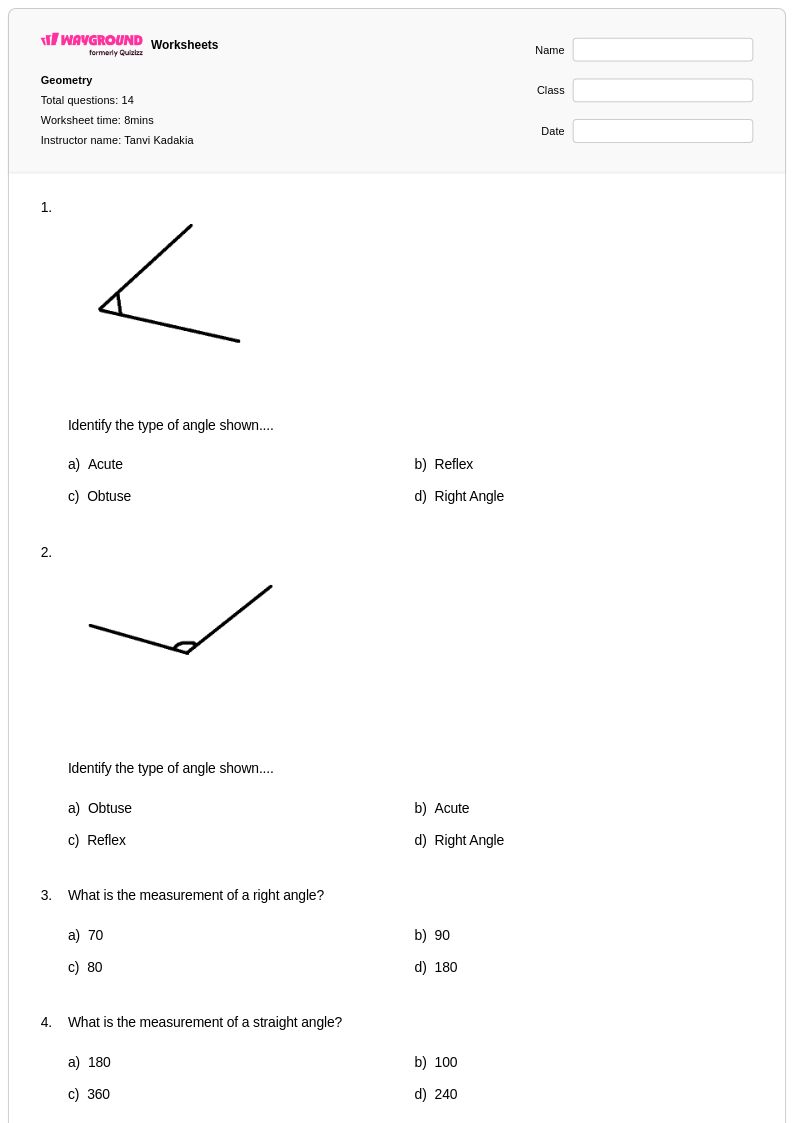
14 Q
5th
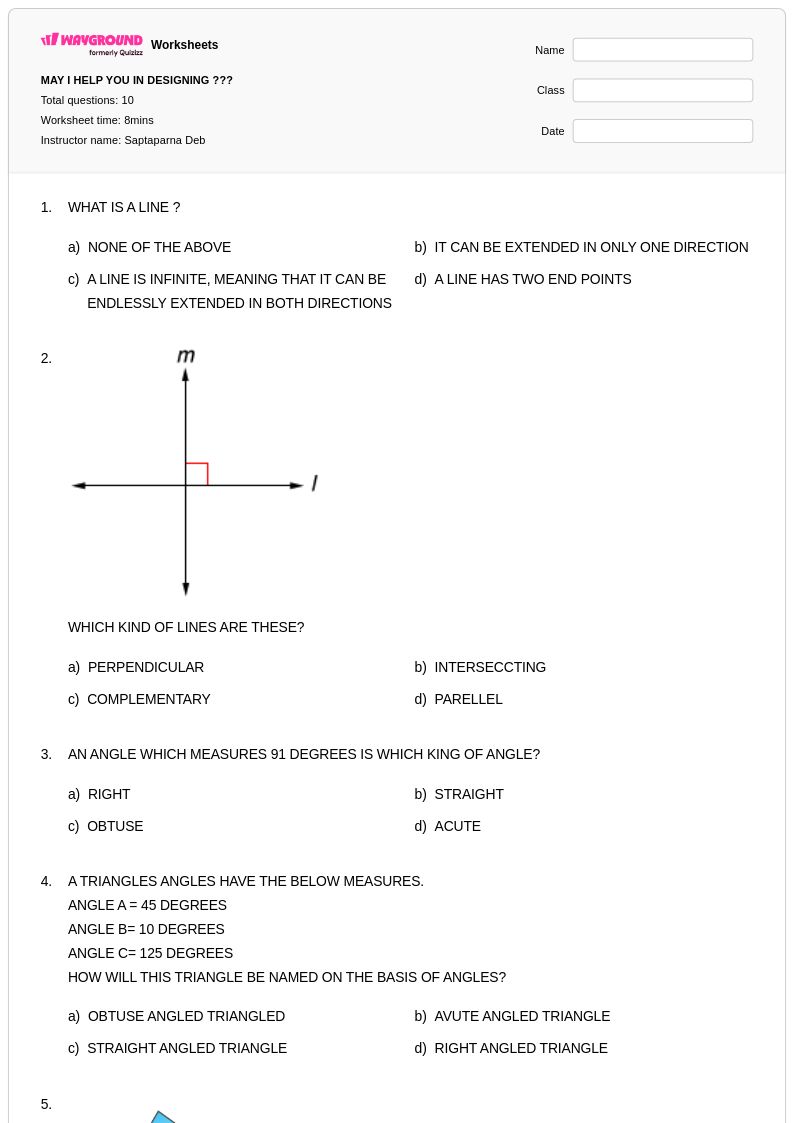
10 Q
5th
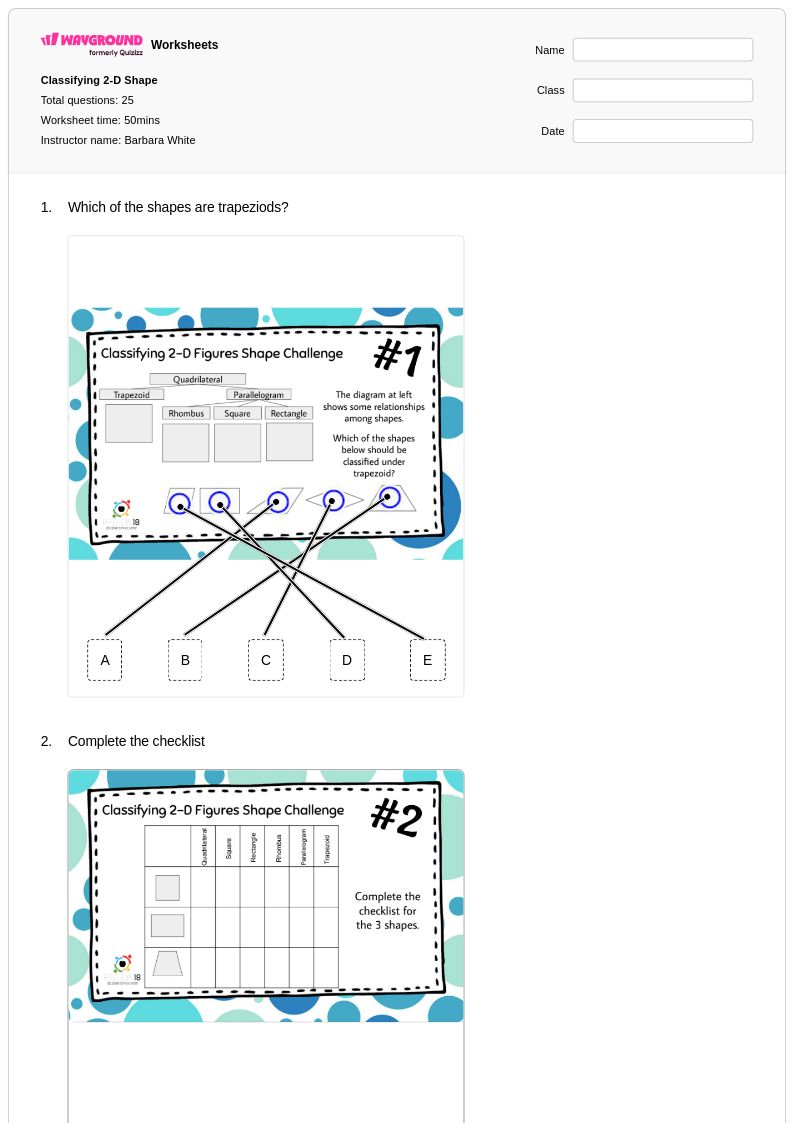
25 Q
5th
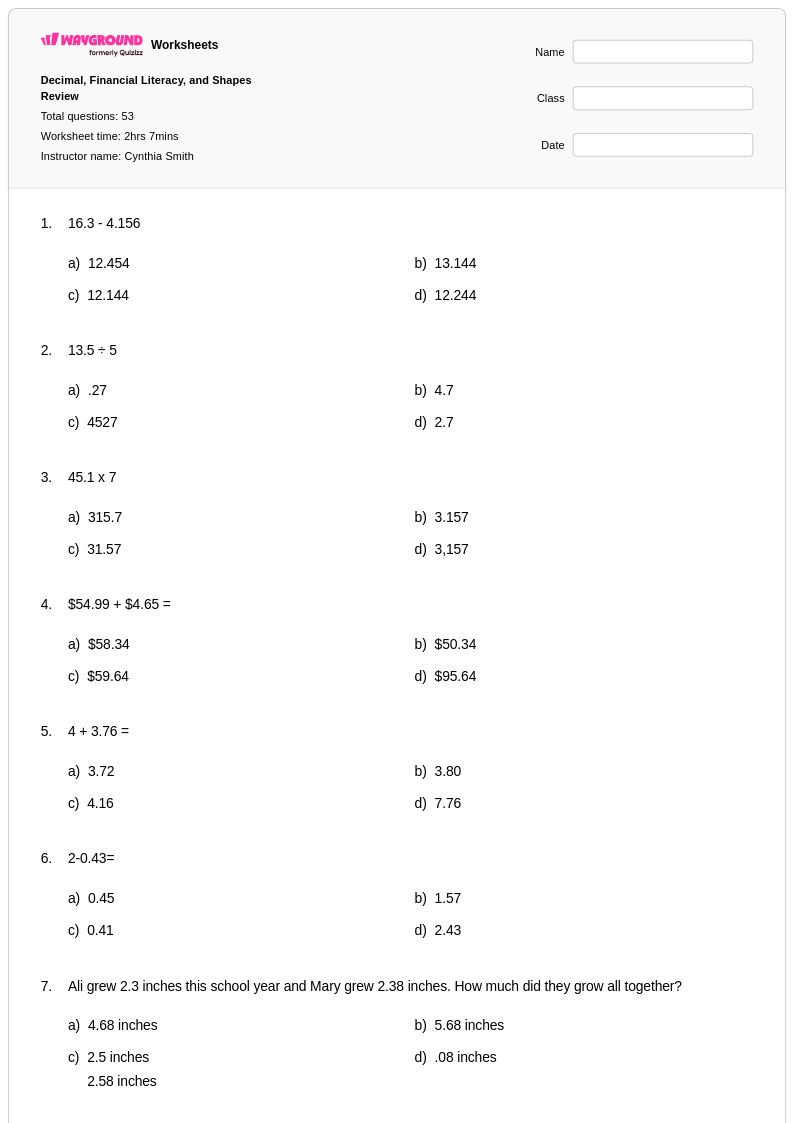
53 Q
5th
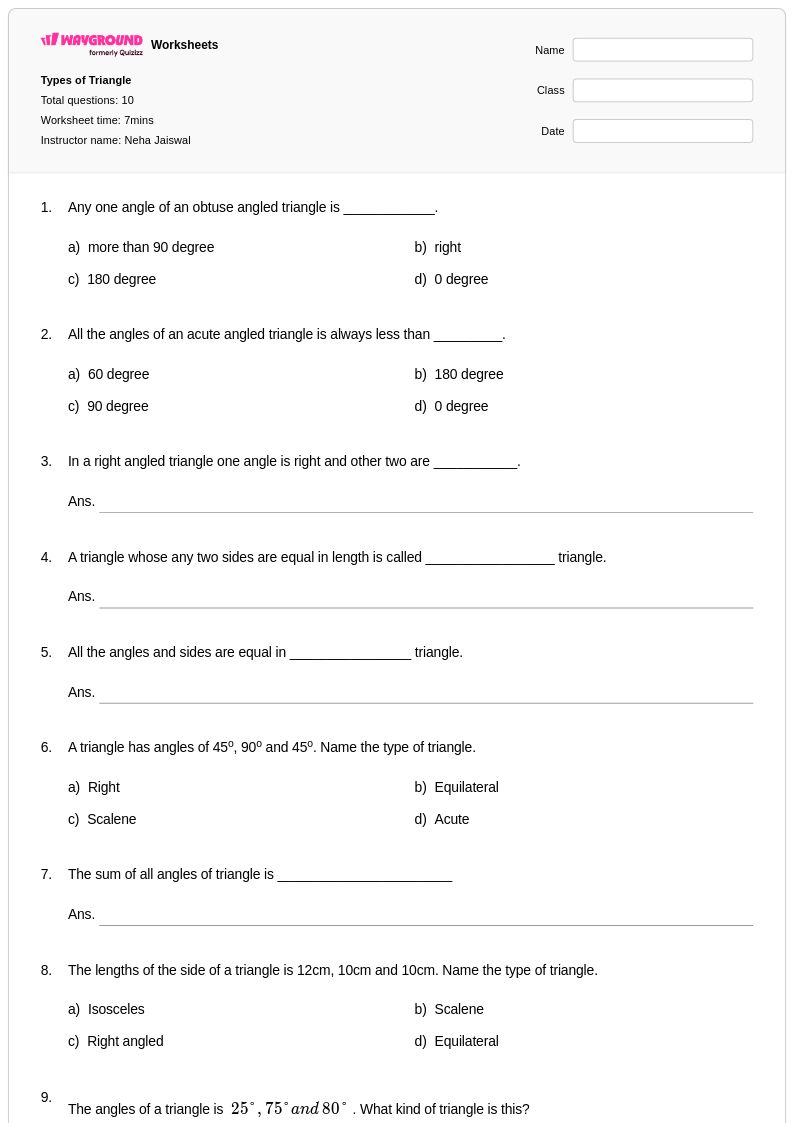
10 Q
5th - 6th
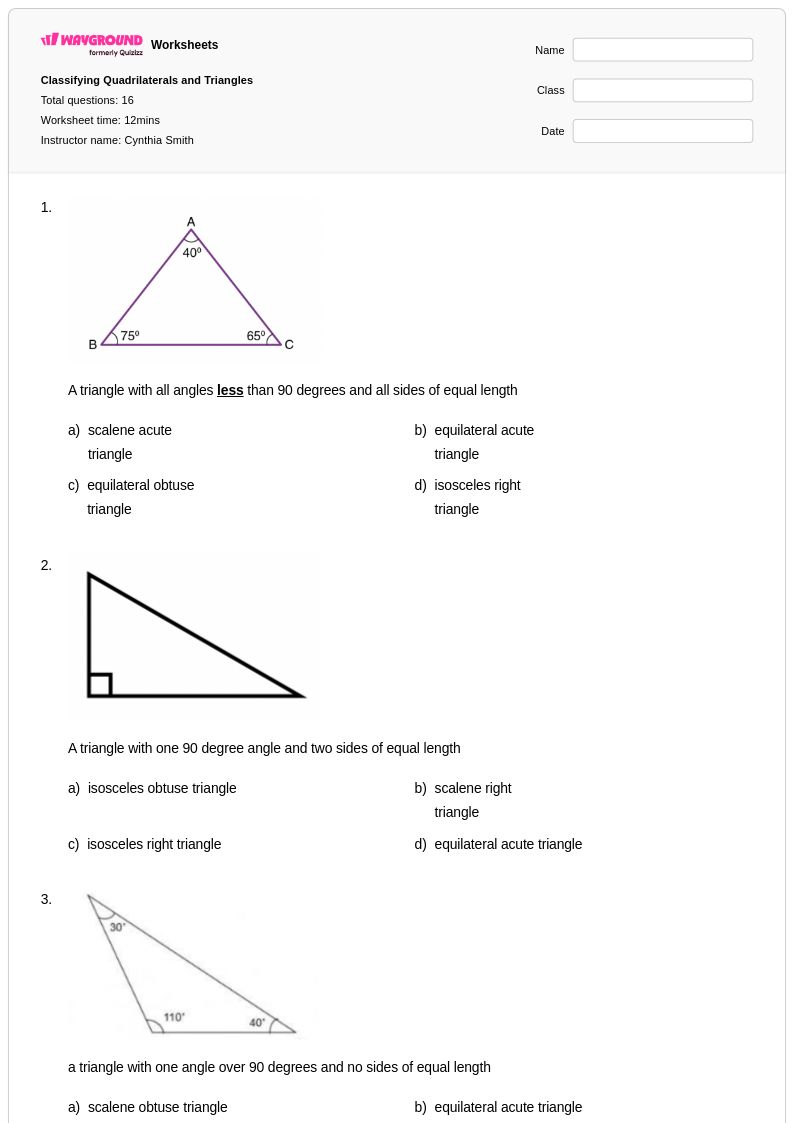
16 Q
5th
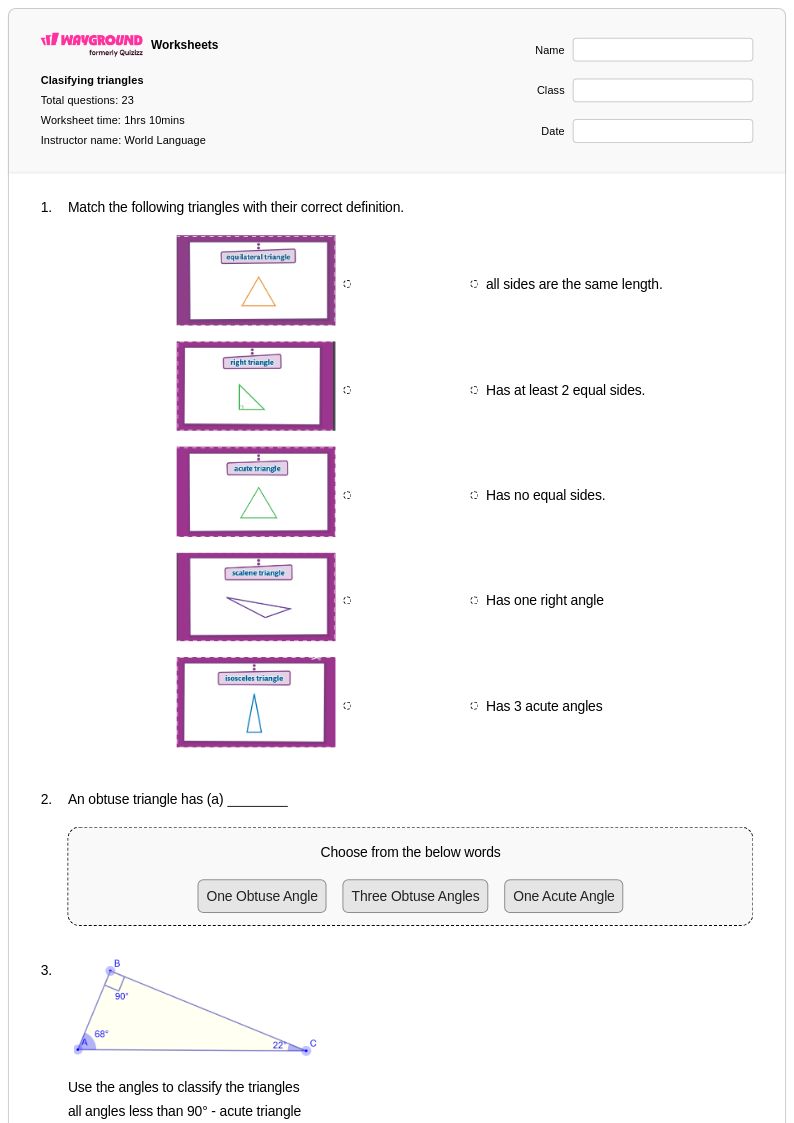
23 Q
5th
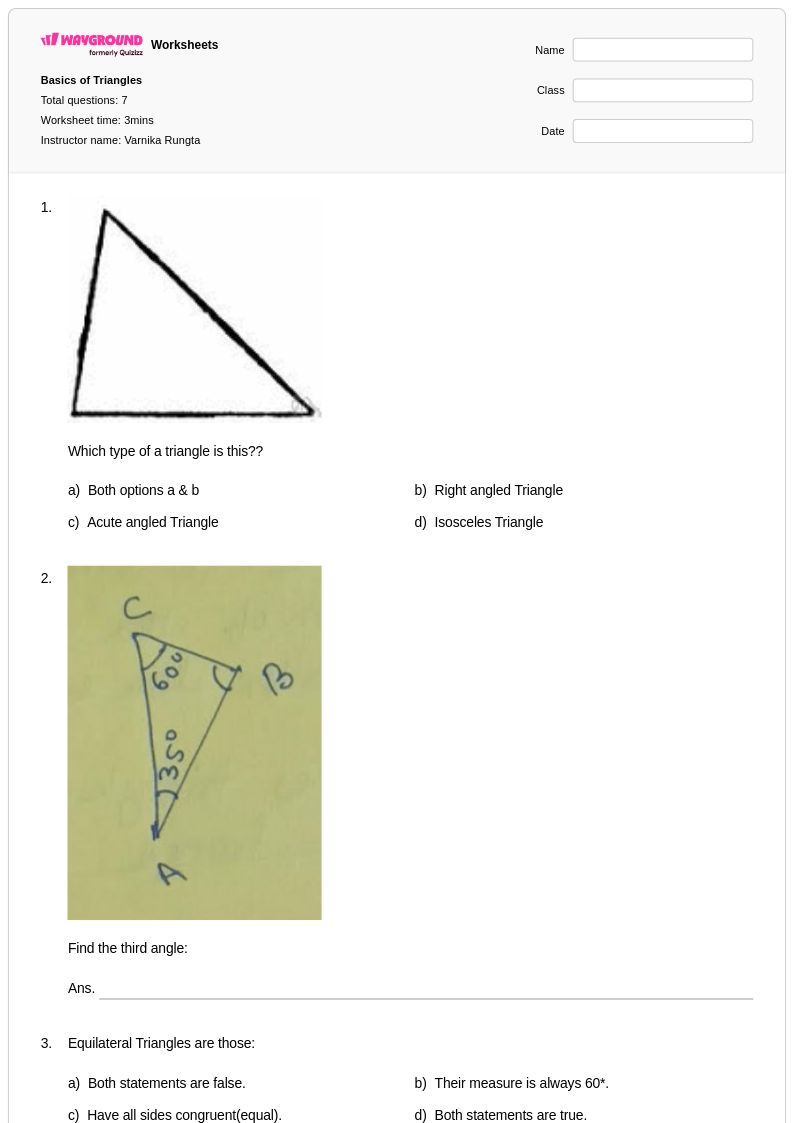
7 Q
5th
Explore Other Subject Worksheets for class 5
Explore printable Angle Identification worksheets for Class 5
Angle identification worksheets for Class 5 students through Wayground (formerly Quizizz) provide comprehensive practice in recognizing and categorizing different types of angles essential to mathematical understanding. These carefully designed resources help fifth-grade students develop critical geometric reasoning skills by working with acute, obtuse, right, and straight angles in various contexts and visual presentations. The worksheets strengthen students' ability to measure angles using protractors, identify angle relationships, and apply angle concepts to real-world situations through engaging practice problems. Each printable resource includes detailed answer keys that support independent learning and self-assessment, while the free pdf format ensures easy access for both classroom instruction and homework assignments.
Wayground (formerly Quizizz) empowers educators with an extensive collection of millions of teacher-created angle identification resources specifically aligned with Class 5 mathematics standards and curriculum expectations. The platform's robust search and filtering capabilities allow teachers to quickly locate worksheets that match their students' specific learning needs, whether for initial instruction, skill reinforcement, or assessment preparation. Advanced differentiation tools enable educators to customize content difficulty levels and modify worksheets to accommodate diverse learning styles and abilities within their classrooms. Available in both printable and digital formats including downloadable pdfs, these versatile resources support flexible lesson planning, targeted remediation for struggling learners, and enrichment opportunities for advanced students, making angle identification instruction more effective and accessible across varied educational settings.