
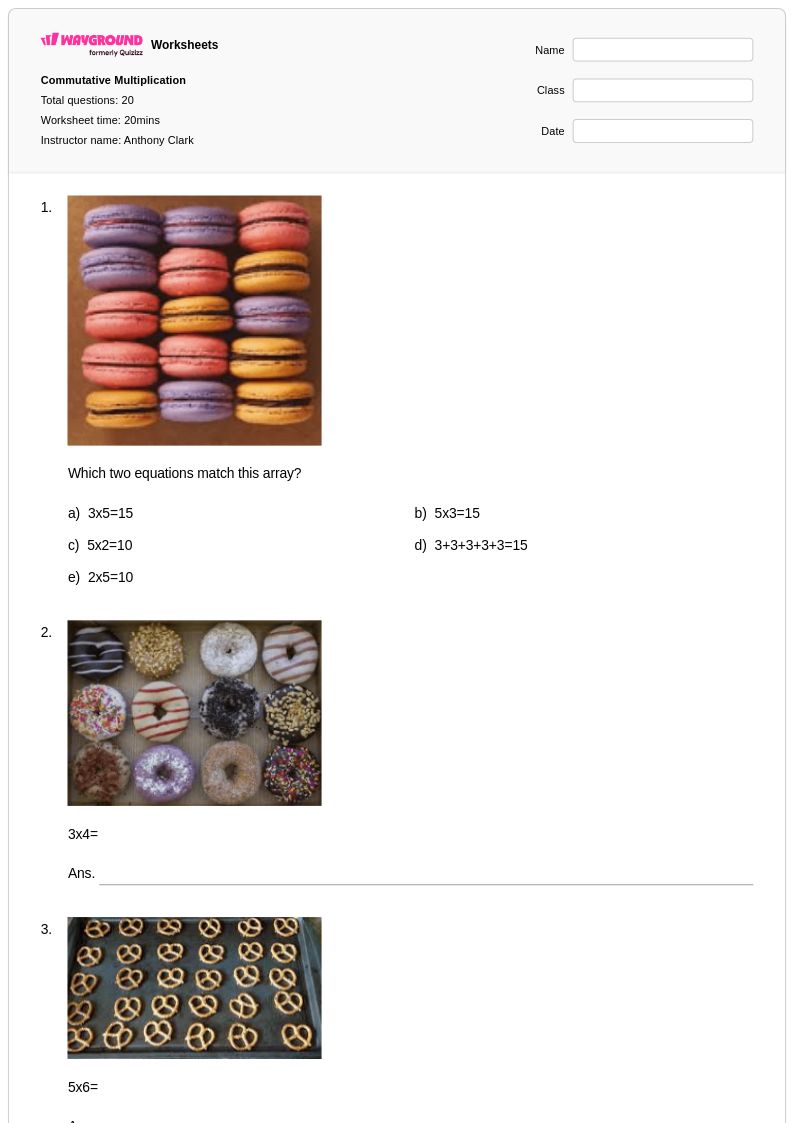
20Q
3rd - Uni
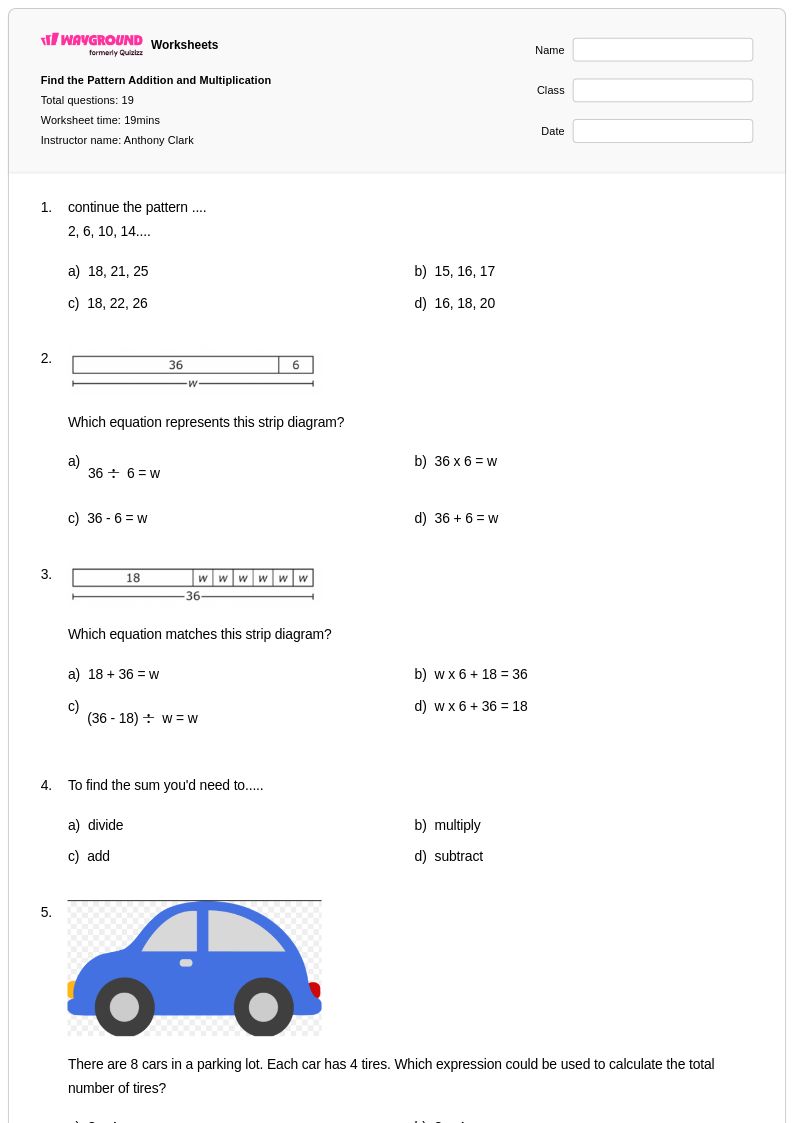
19Q
3rd - Uni
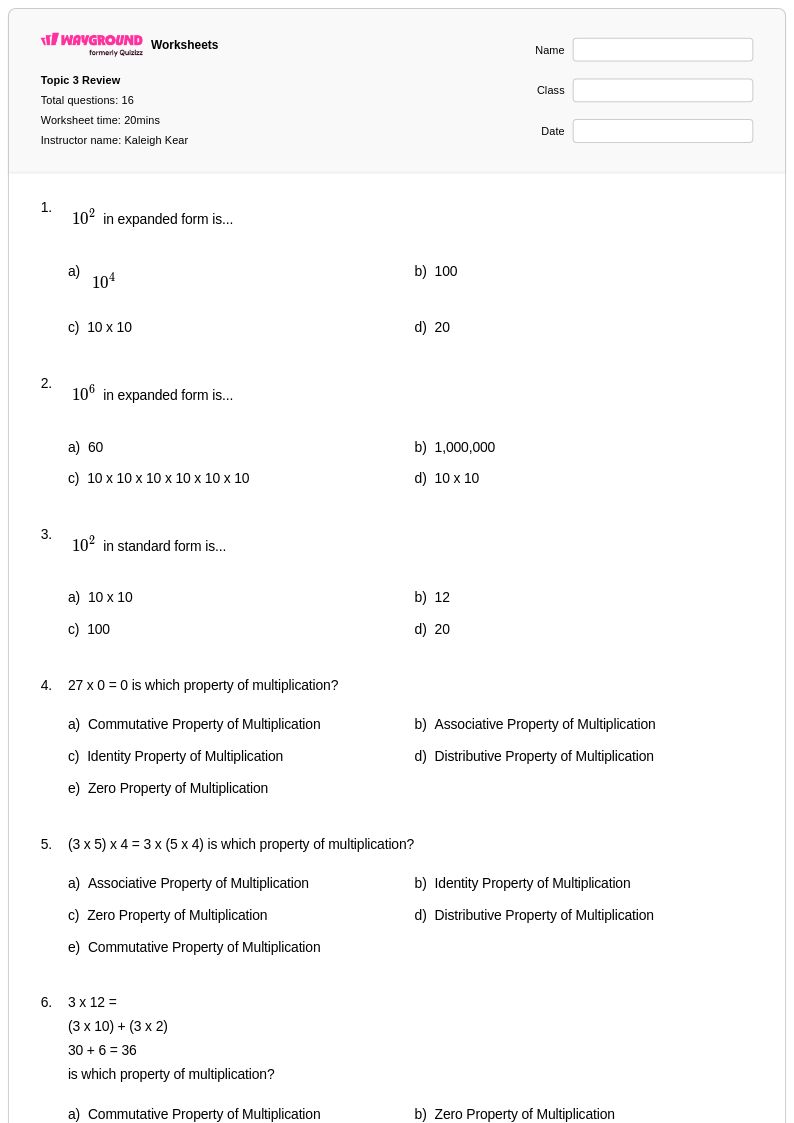
16Q
5th
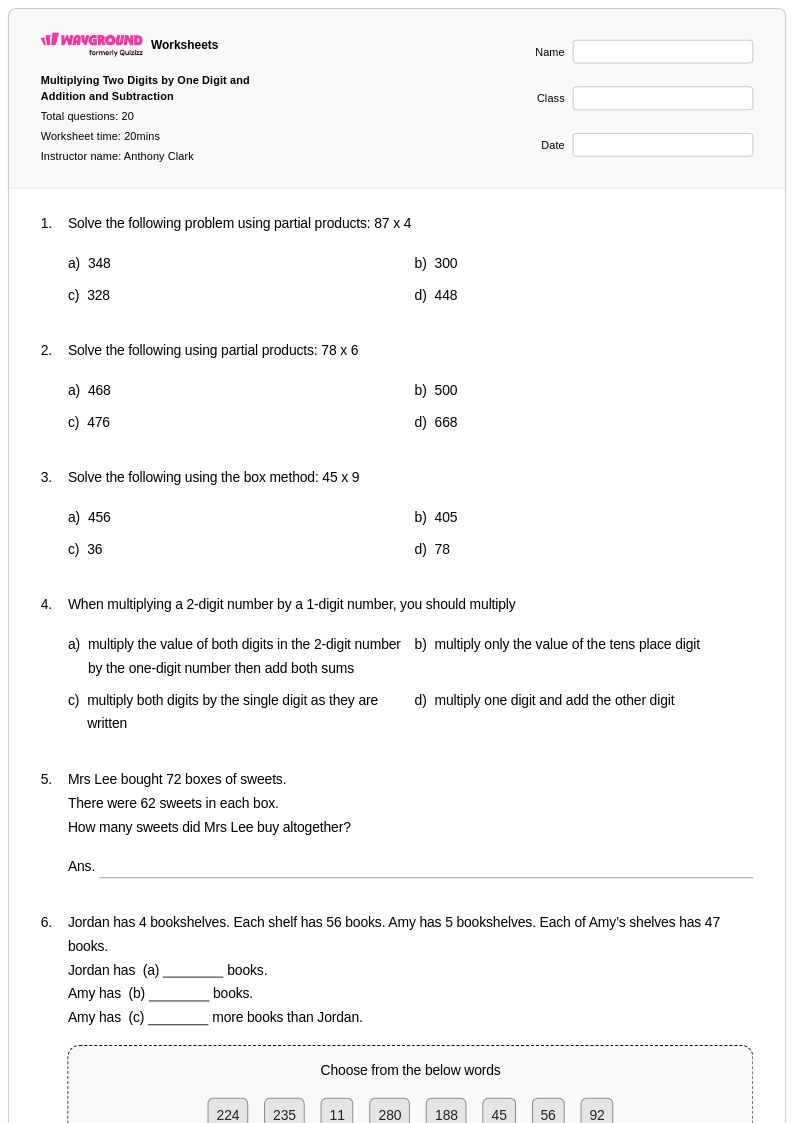
20Q
5th - Uni
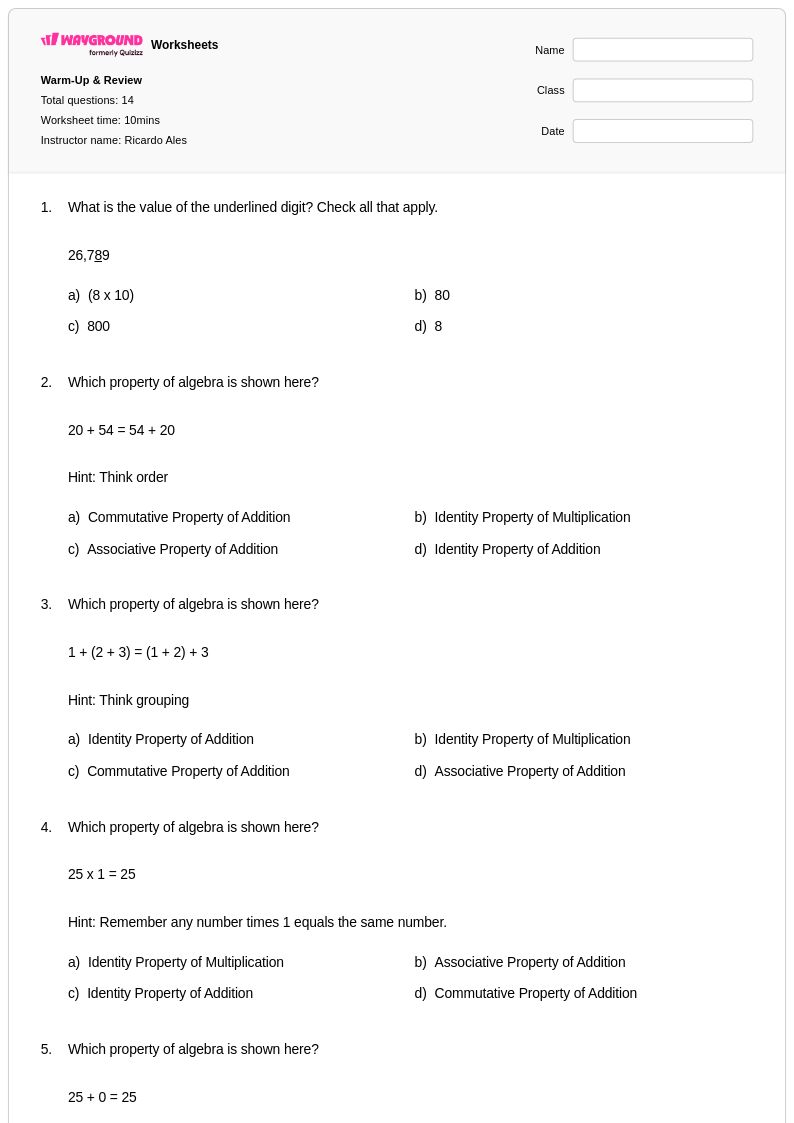
14Q
5th
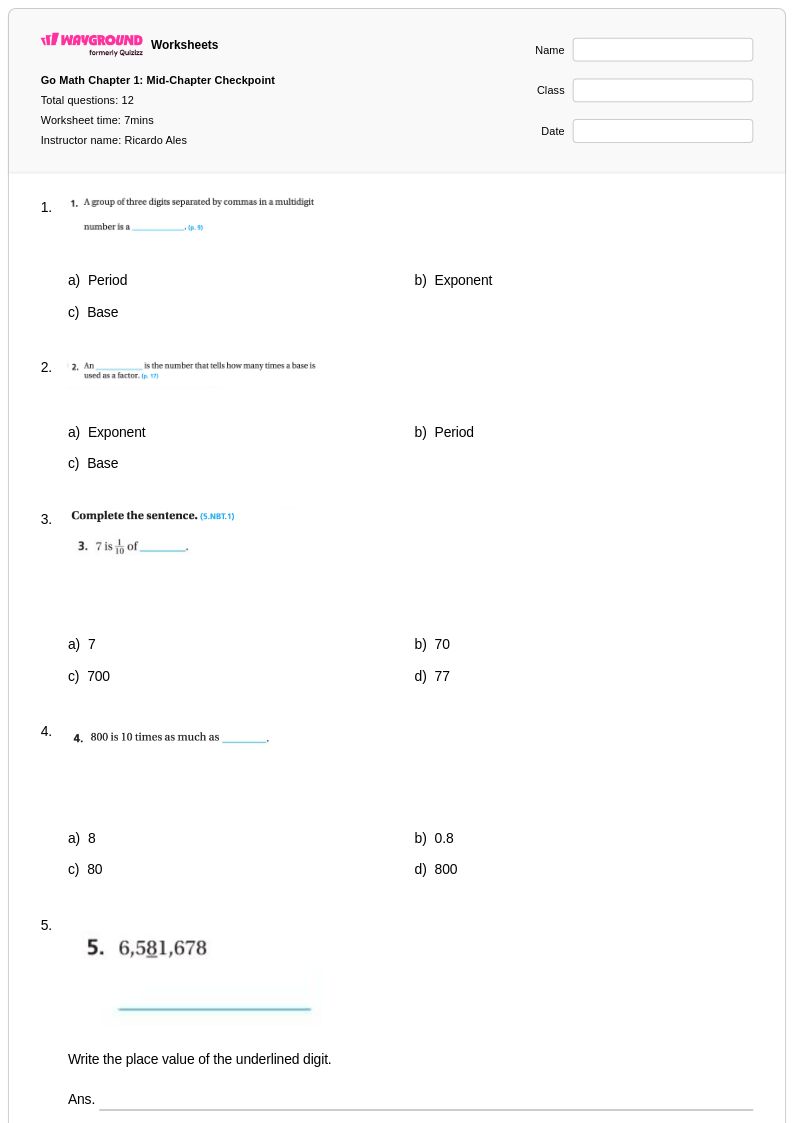
12Q
5th
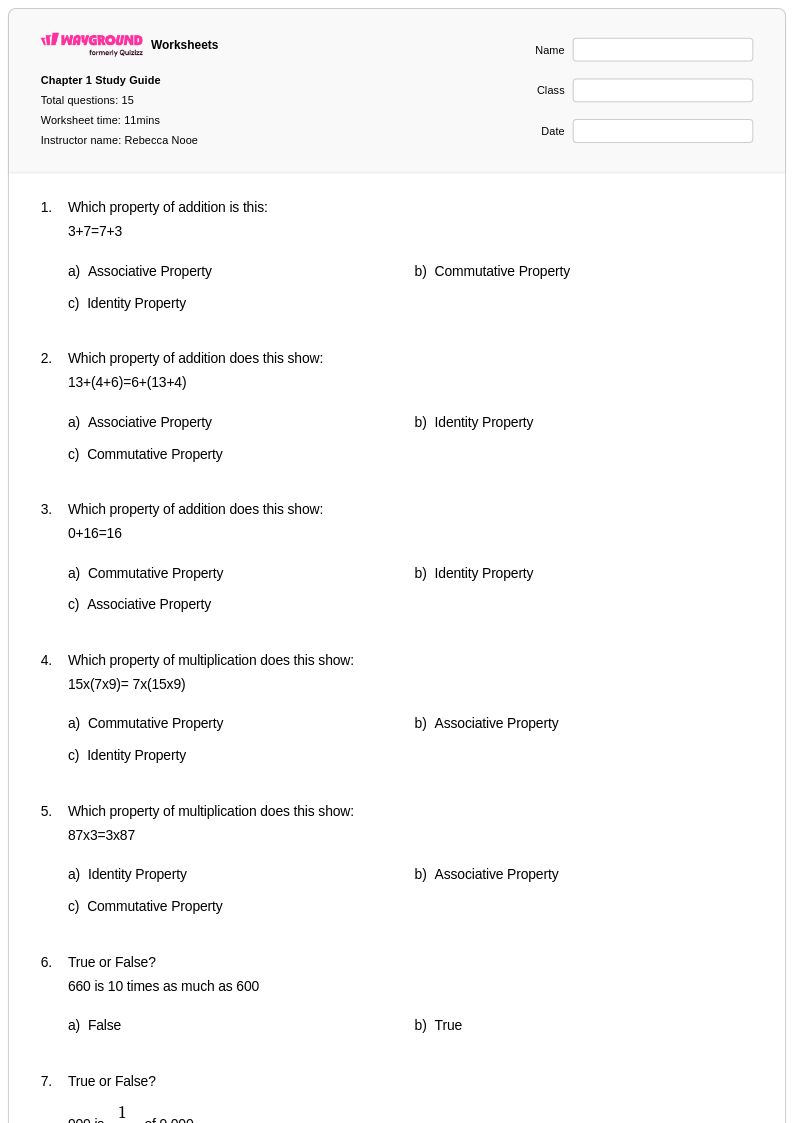
15Q
5th
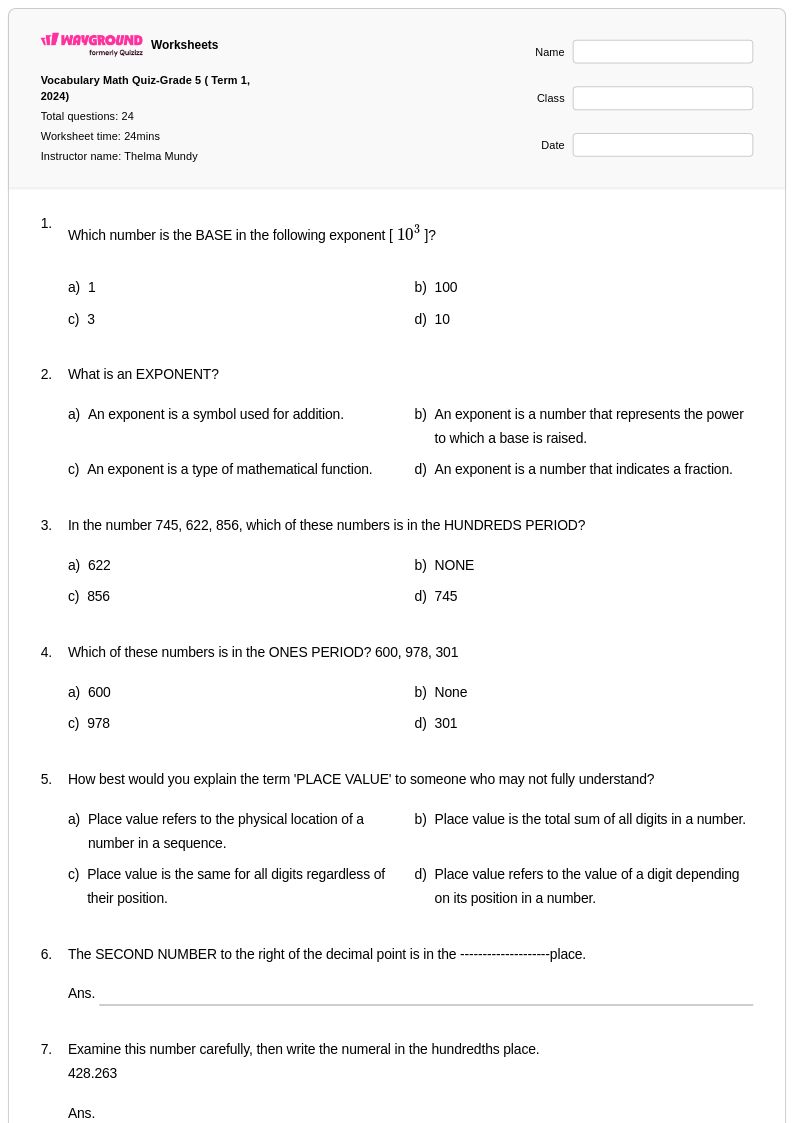
24Q
5th
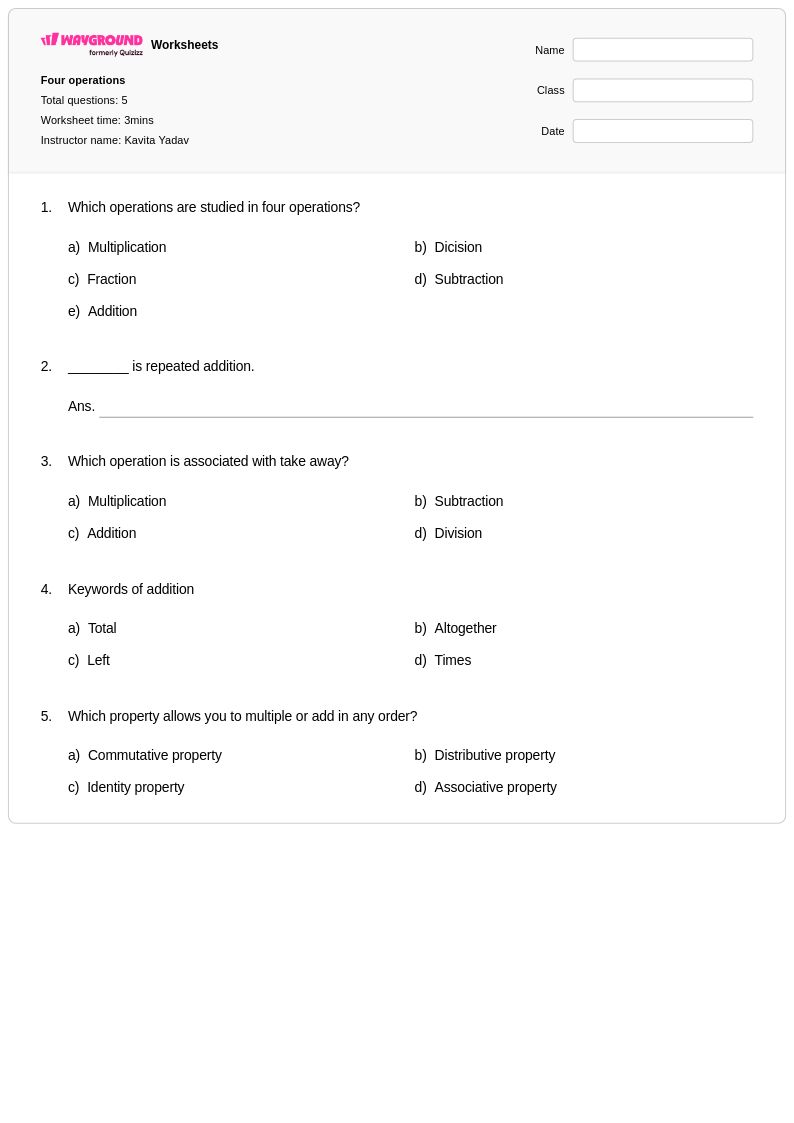
5Q
5th
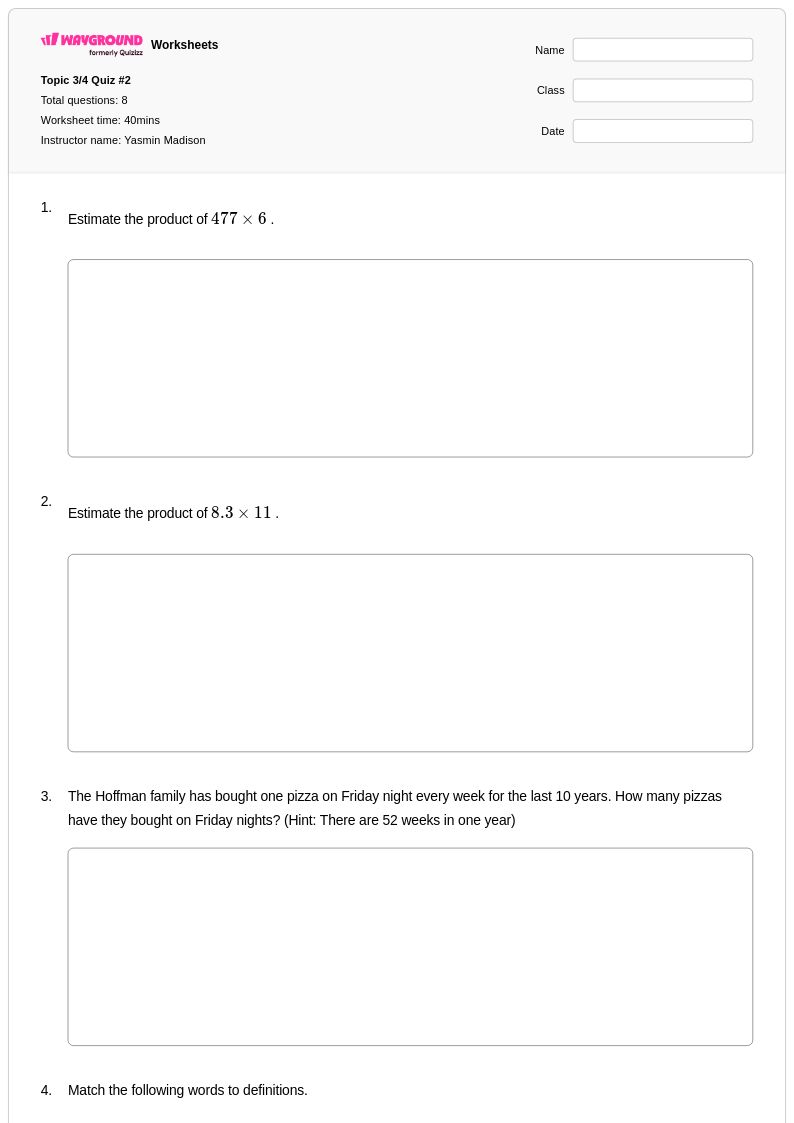
8Q
5th
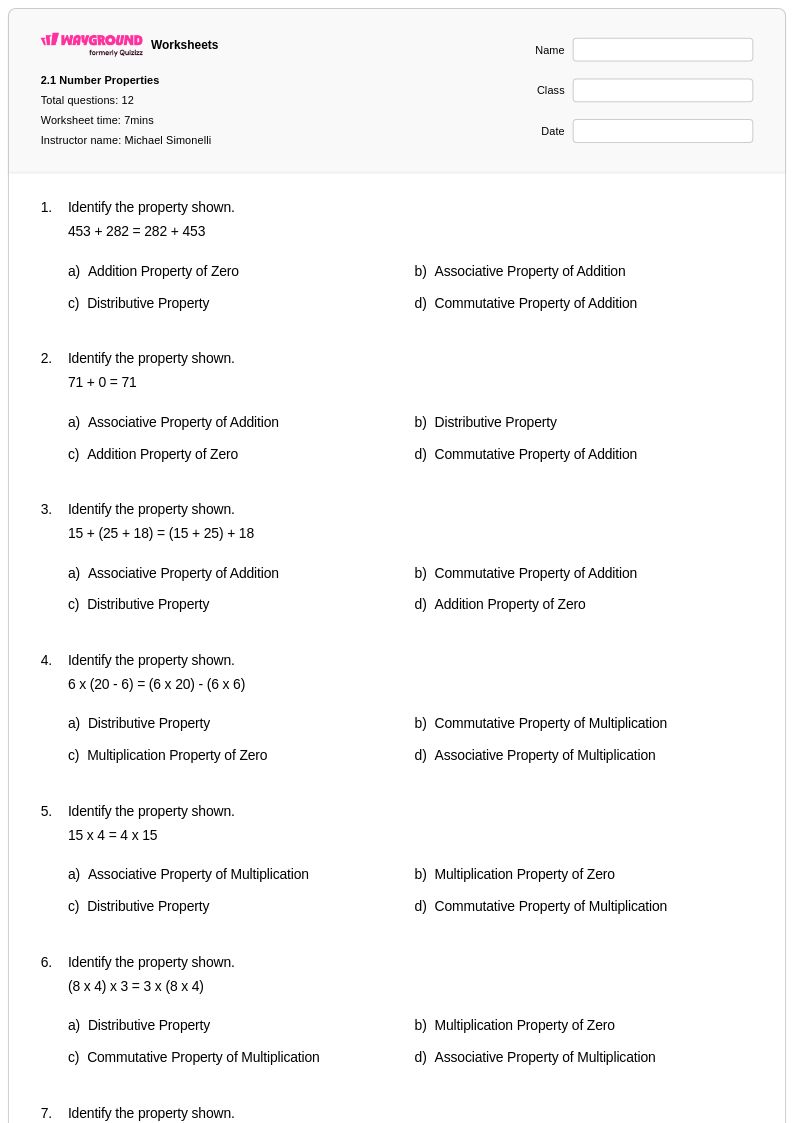
12Q
5th
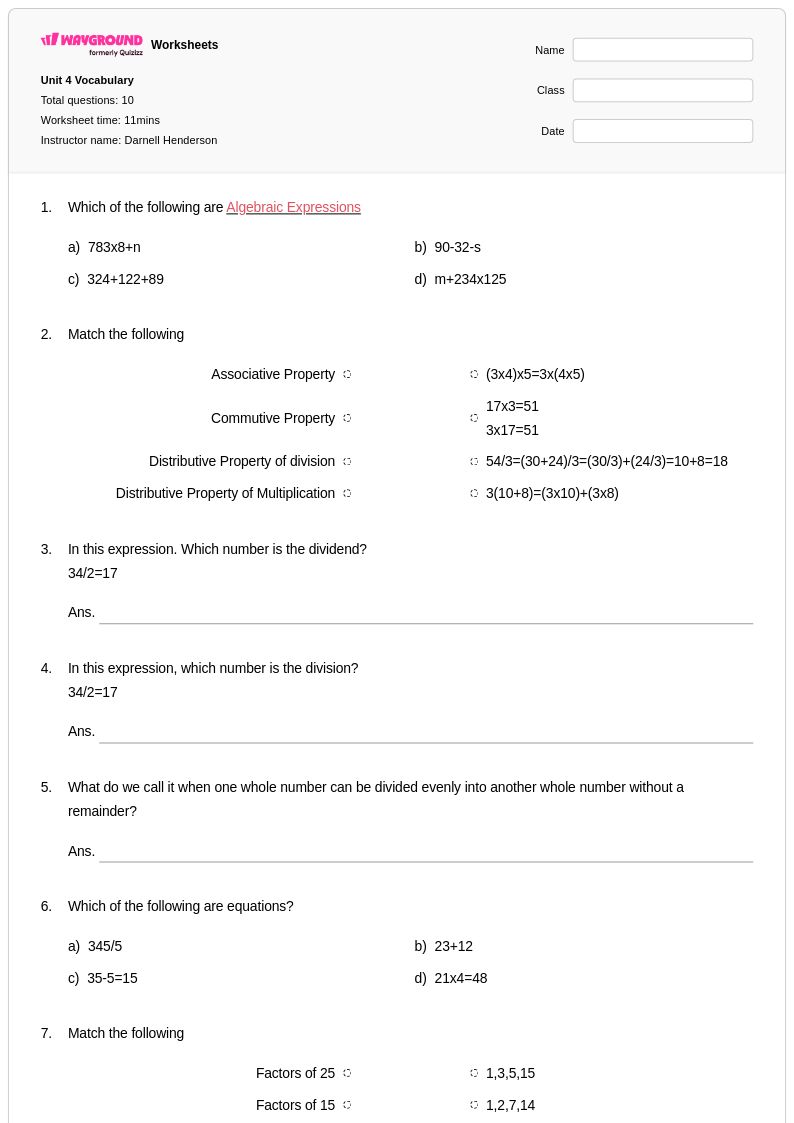
10Q
5th
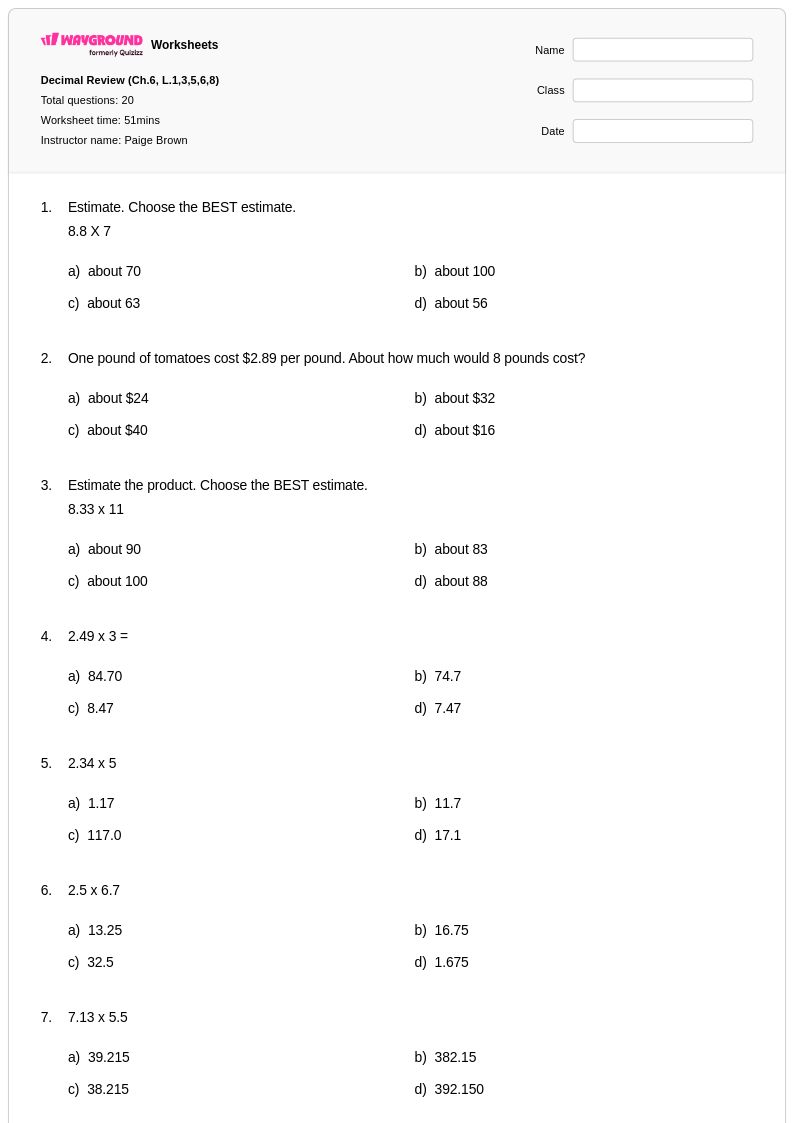
20Q
5th
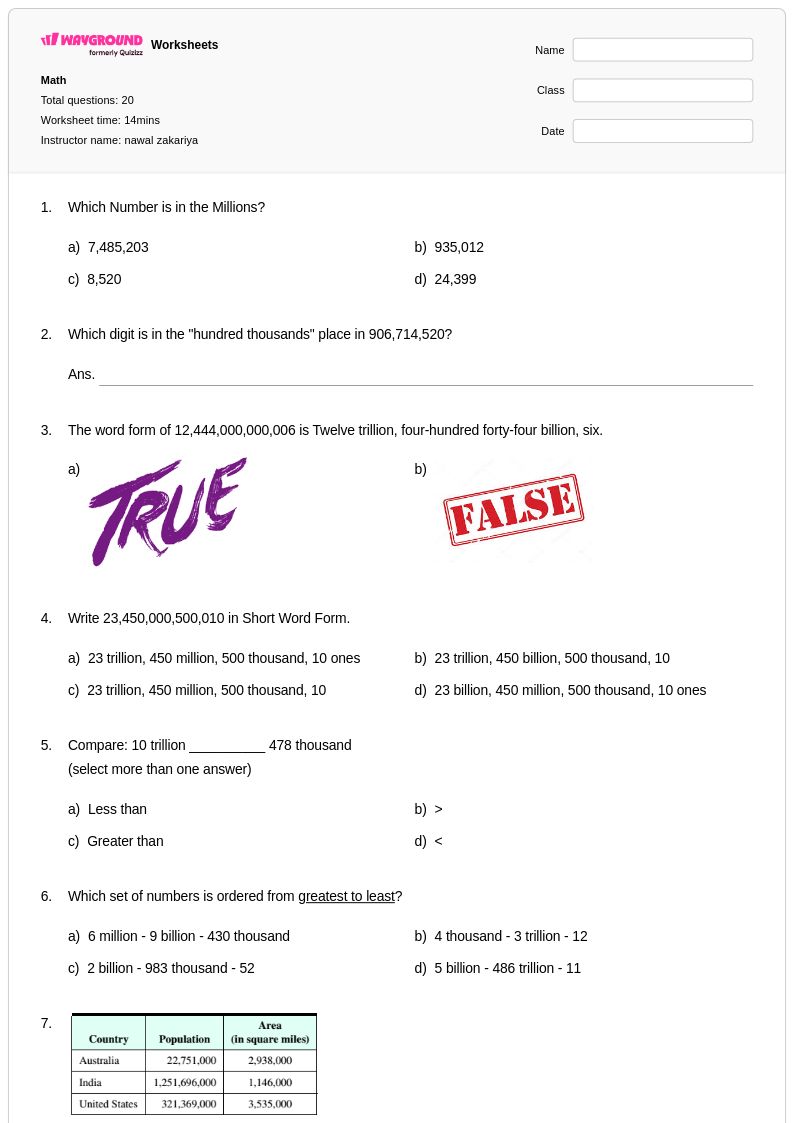
20Q
5th
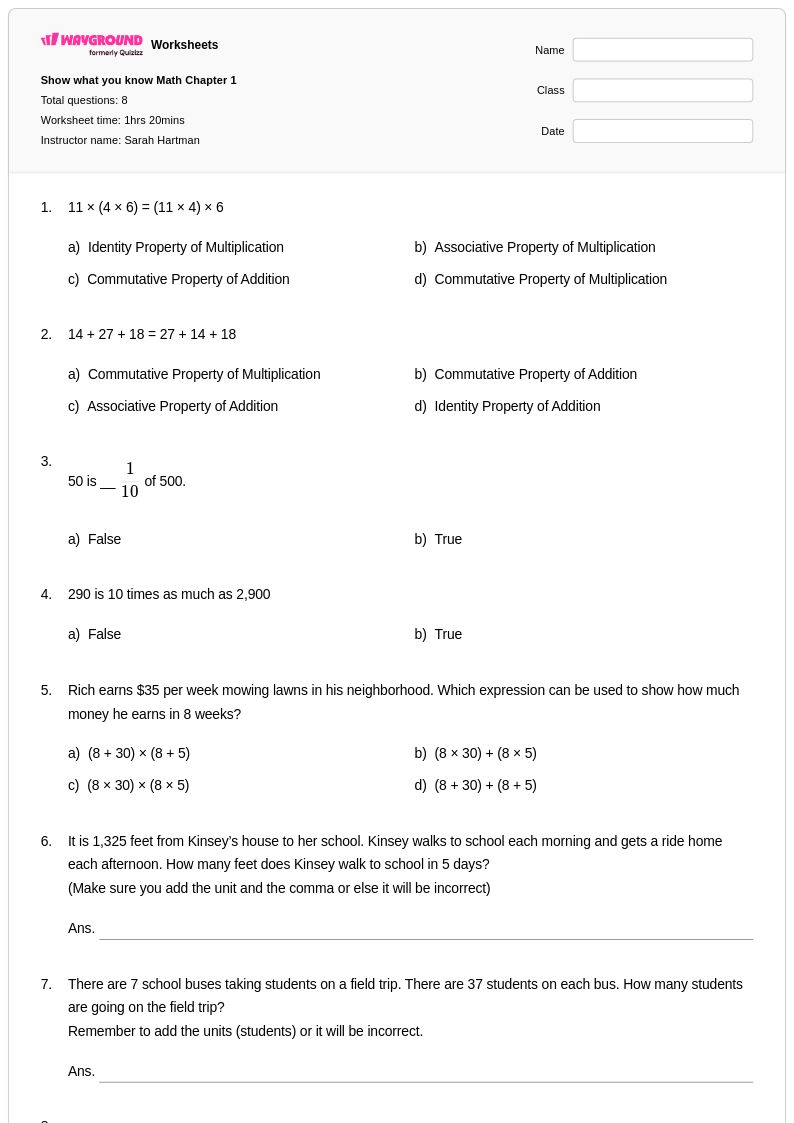
8Q
5th
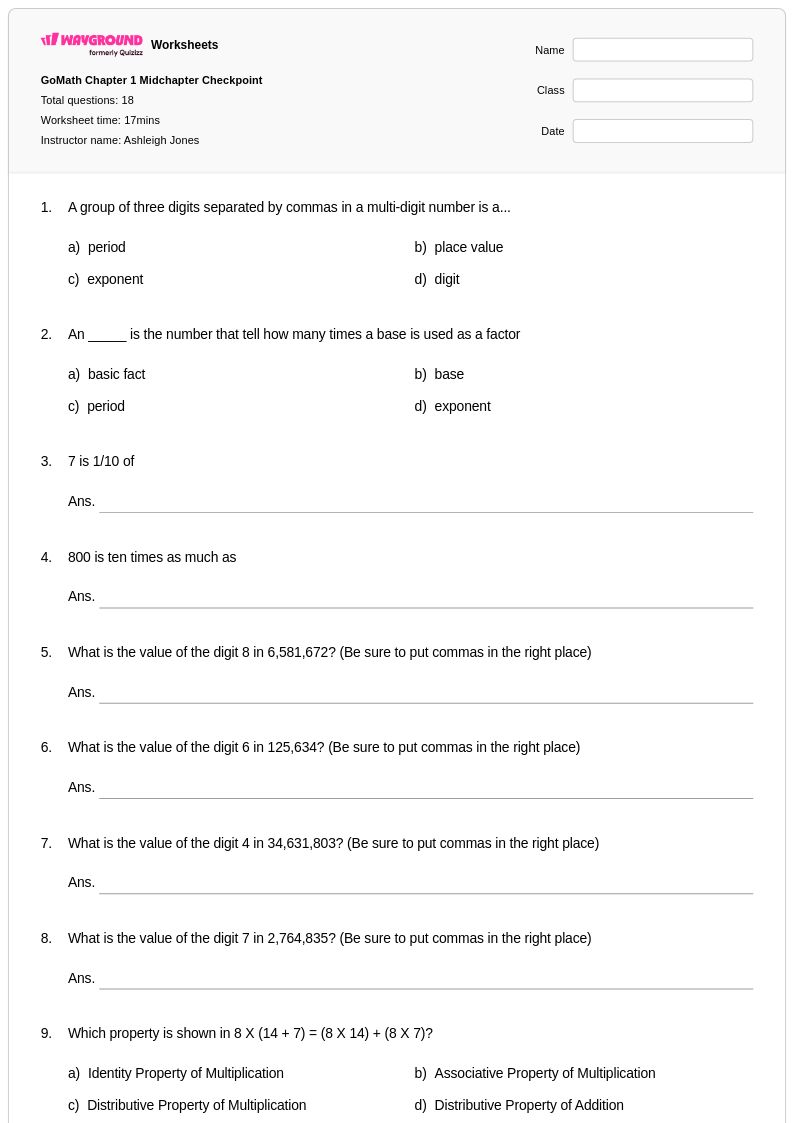
18Q
5th
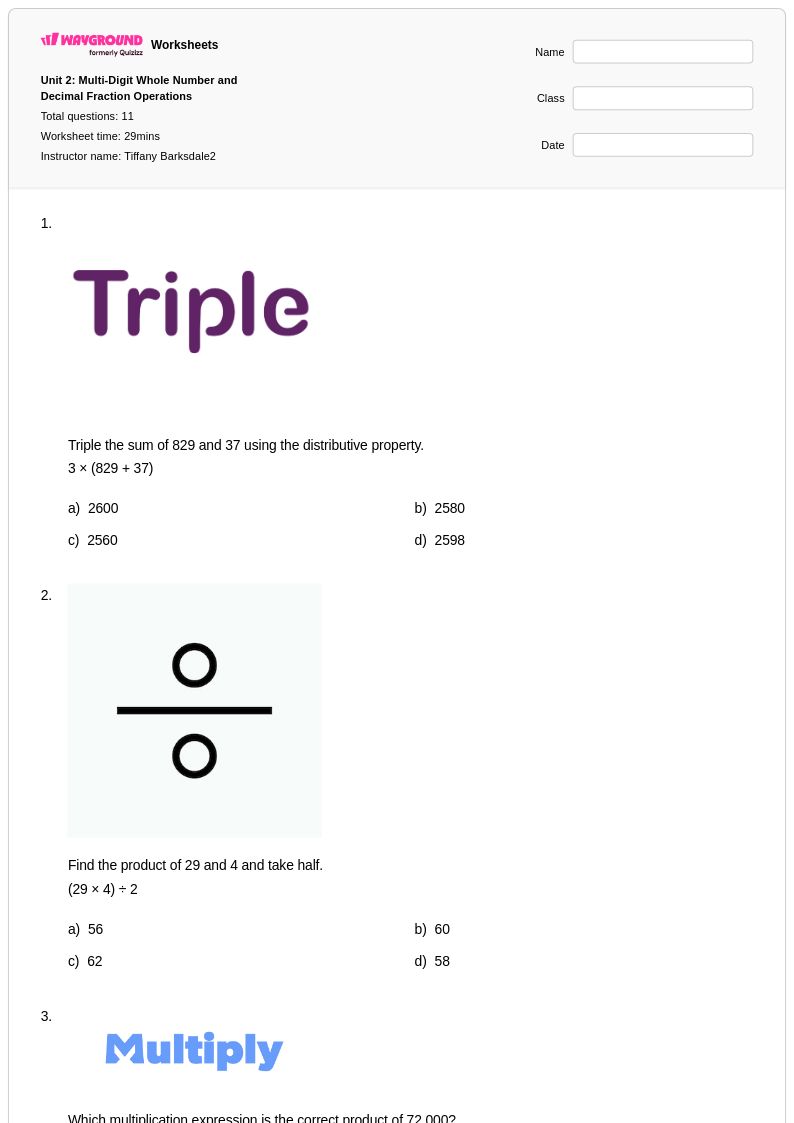
11Q
5th
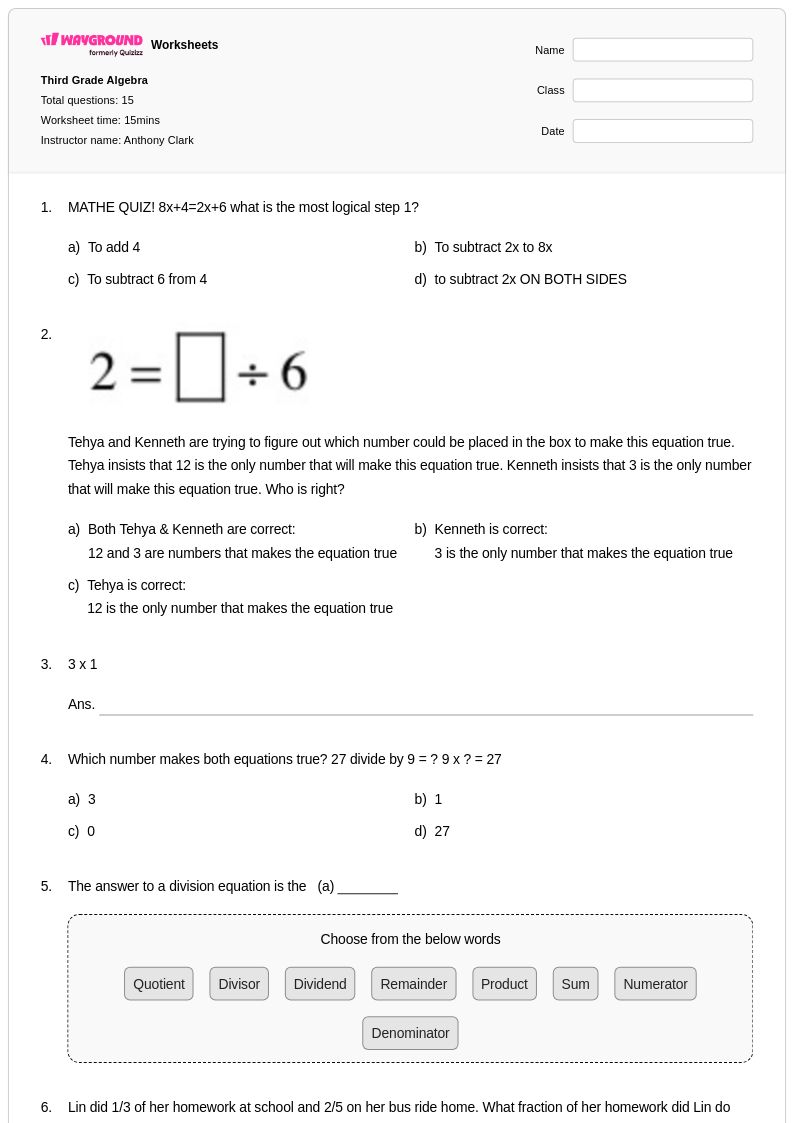
15Q
3rd - Uni
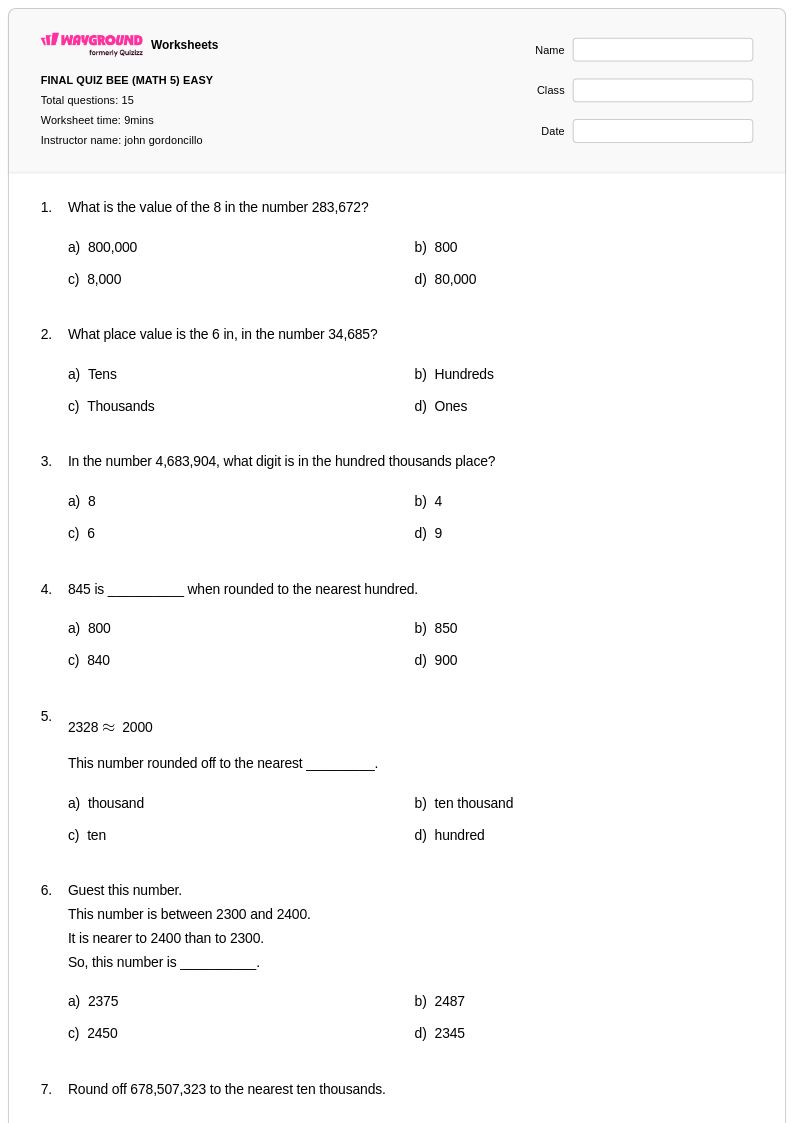
15Q
5th
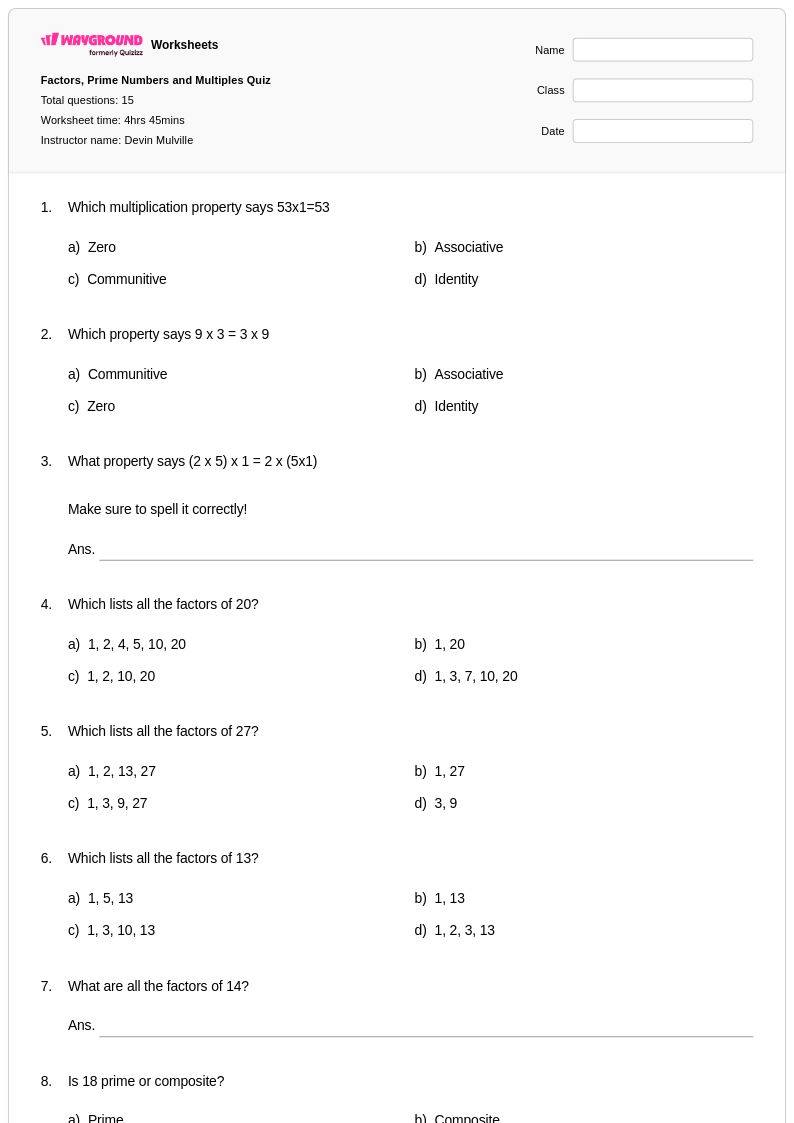
15Q
4th - 5th
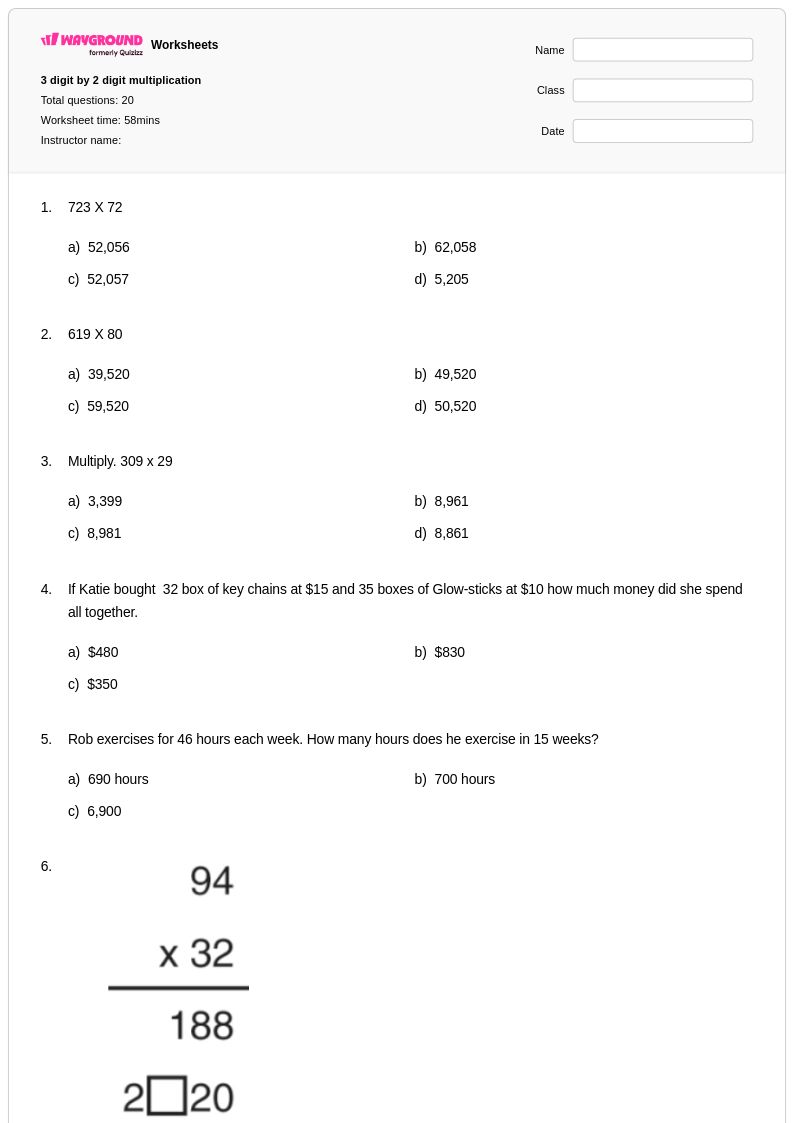
20Q
5th
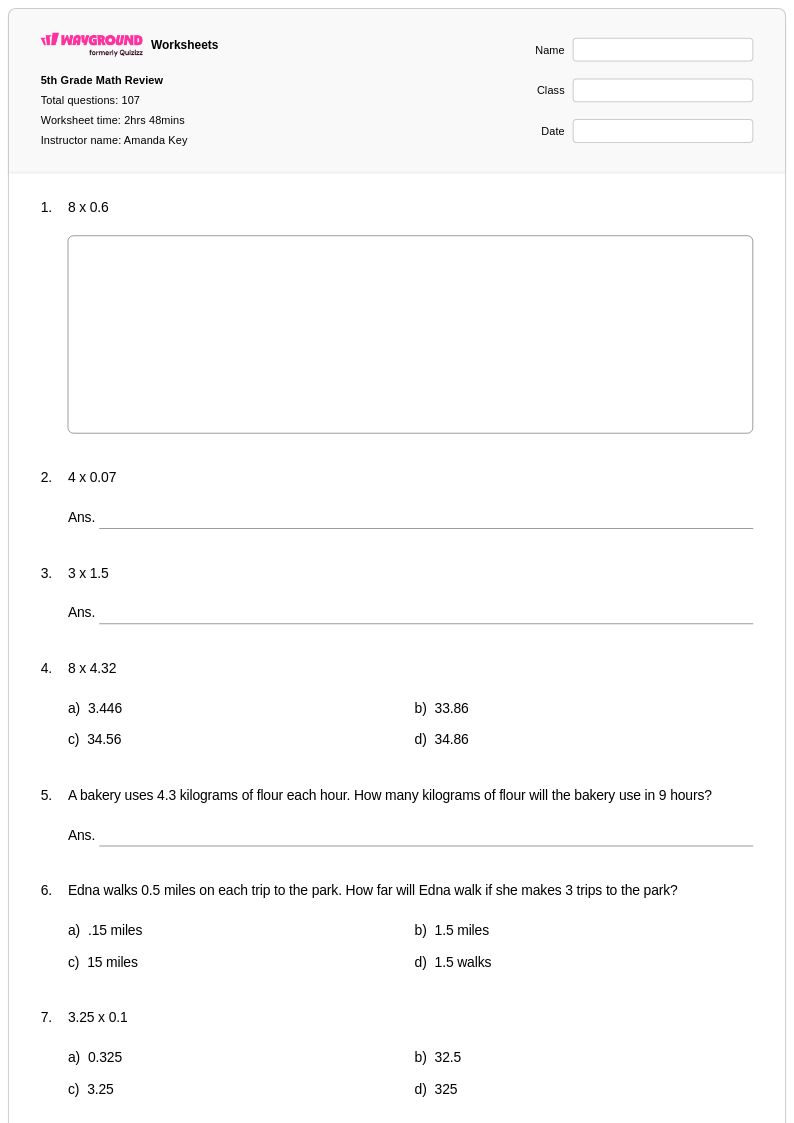
107Q
5th
Explore planilhas Associative Property of Multiplication por notas
Explore outras planilhas de assuntos para class 5
Explore printable Associative Property of Multiplication worksheets for Class 5
Associative Property of Multiplication worksheets for Class 5 through Wayground provide students with essential practice in understanding how grouping factors affects multiplication outcomes. These comprehensive worksheets help fifth-grade students master the fundamental concept that changing the grouping of three or more factors does not change the product, such as recognizing that (2 × 3) × 4 equals 2 × (3 × 4). Students develop critical mathematical reasoning skills through carefully structured practice problems that progress from simple numerical examples to more complex applications involving variables and word problems. Each worksheet collection includes detailed answer keys and is available as free printable pdf resources, allowing teachers to seamlessly integrate this foundational algebraic thinking into their mathematics instruction while building students' confidence with multiplication properties.
Wayground's extensive library contains millions of teacher-created Associative Property of Multiplication resources specifically designed to support Class 5 mathematics instruction across diverse classroom needs. The platform's robust search and filtering capabilities enable educators to quickly locate worksheets aligned with state and national mathematics standards, ensuring that practice materials directly support curriculum objectives. Teachers can easily differentiate instruction by selecting from various difficulty levels and problem formats, then customize worksheets to match individual student needs or whole-class requirements. These versatile resources are available in both printable pdf format for traditional paper-based practice and digital formats for technology-integrated learning environments, making them invaluable tools for initial skill instruction, targeted remediation sessions, and enrichment activities that deepen students' understanding of multiplication's fundamental properties.
FAQs
How do I teach the associative property of multiplication in Grade 5?
What exercises help fifth graders practice the associative property?
What errors do Grade 5 students make with the associative property?
How can I use this Grade 5 associative property worksheet?
How does the associative property support the Grade 5 Common Core progression?
How can I differentiate associative property practice for fifth graders?
Why is the associative property still taught in Grade 5?