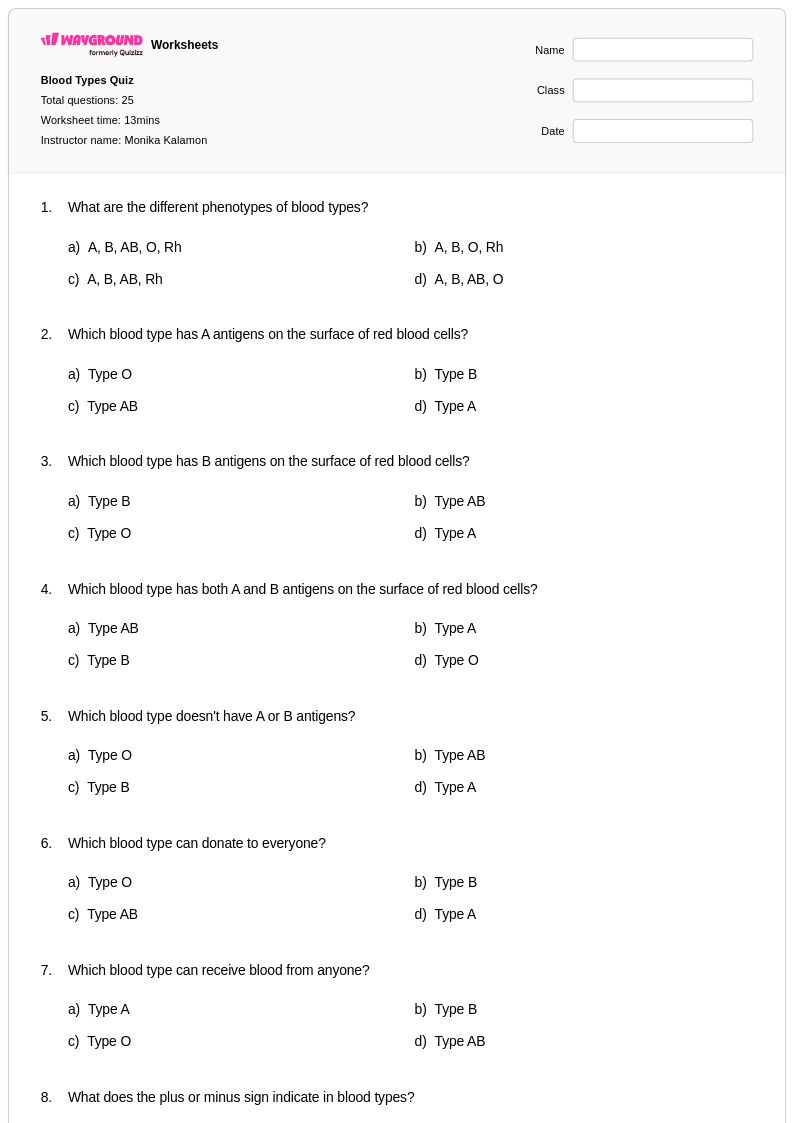
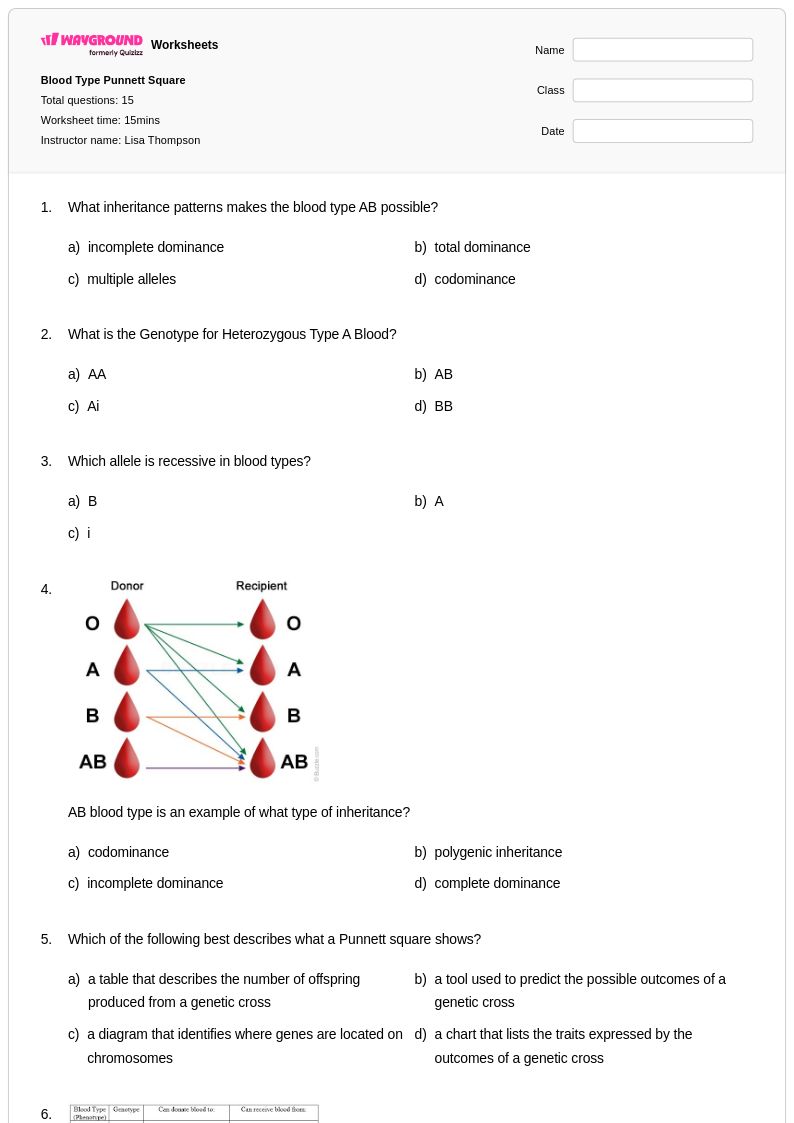
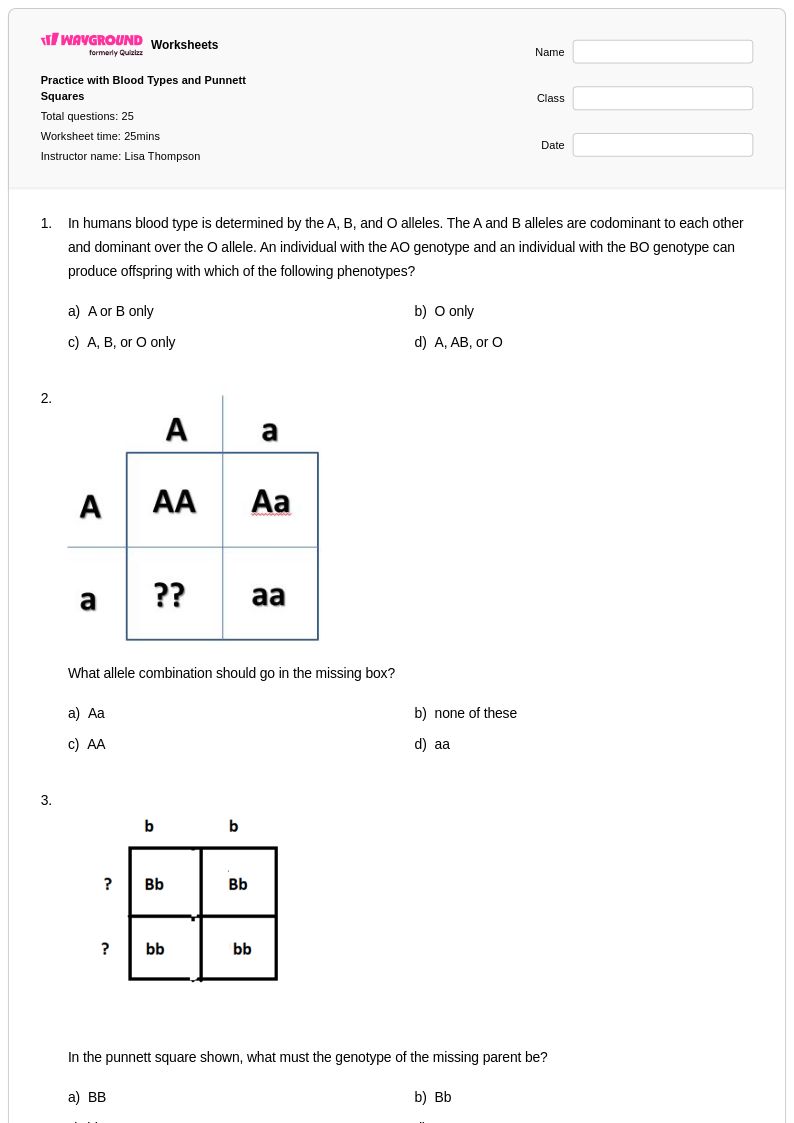
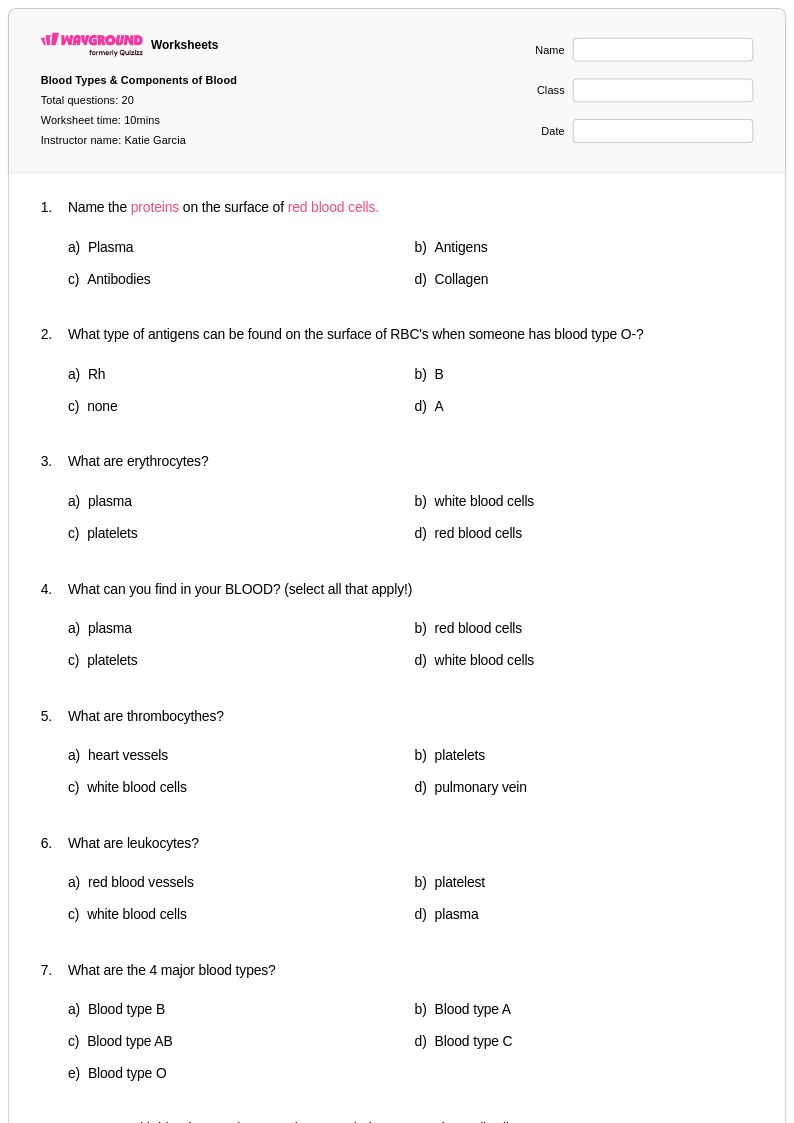
Class 10 blood type genetics worksheets from Wayground help students master inheritance patterns and ABO blood group systems through comprehensive printables, practice problems, and answer keys available as free PDF downloads.
Explore printable Blood Type worksheets for Class 10
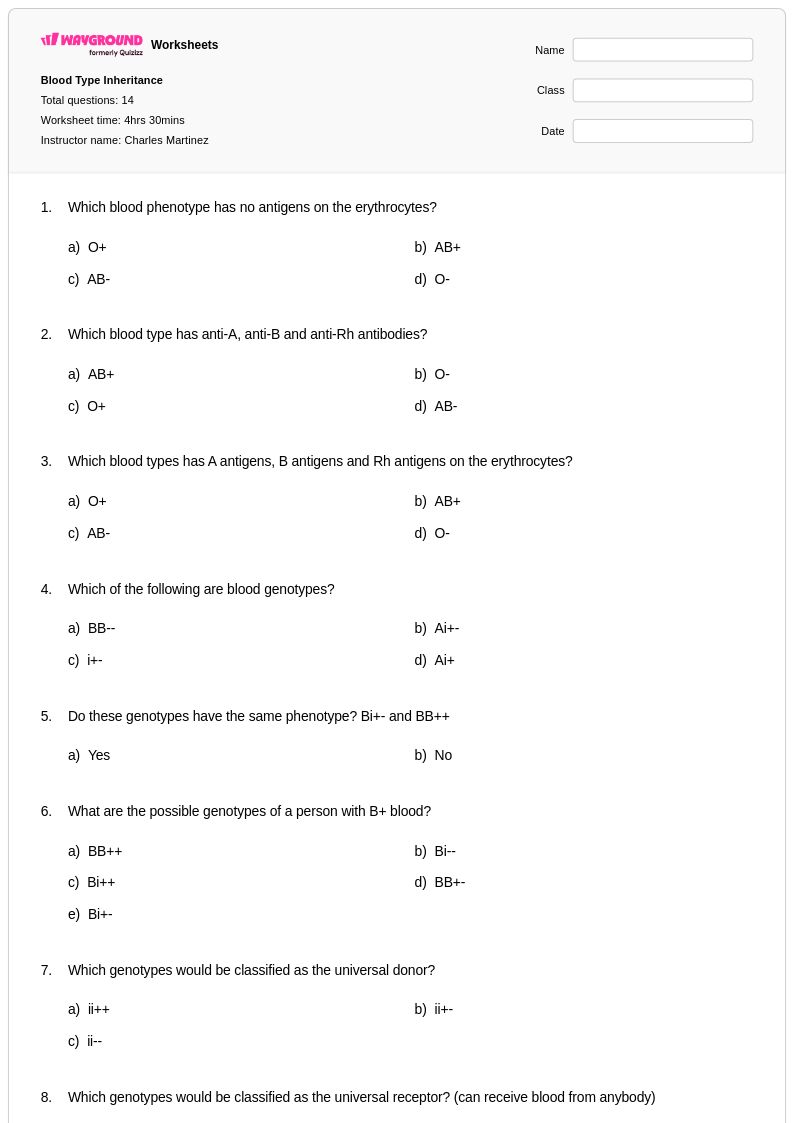
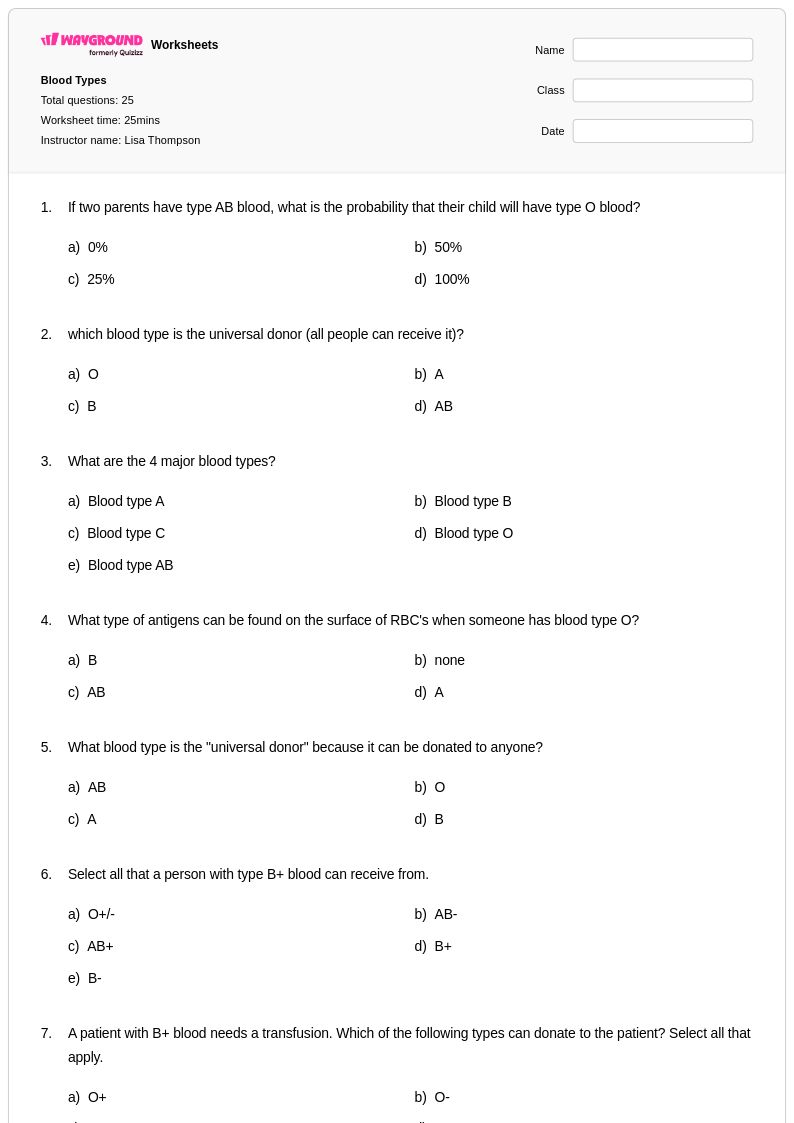
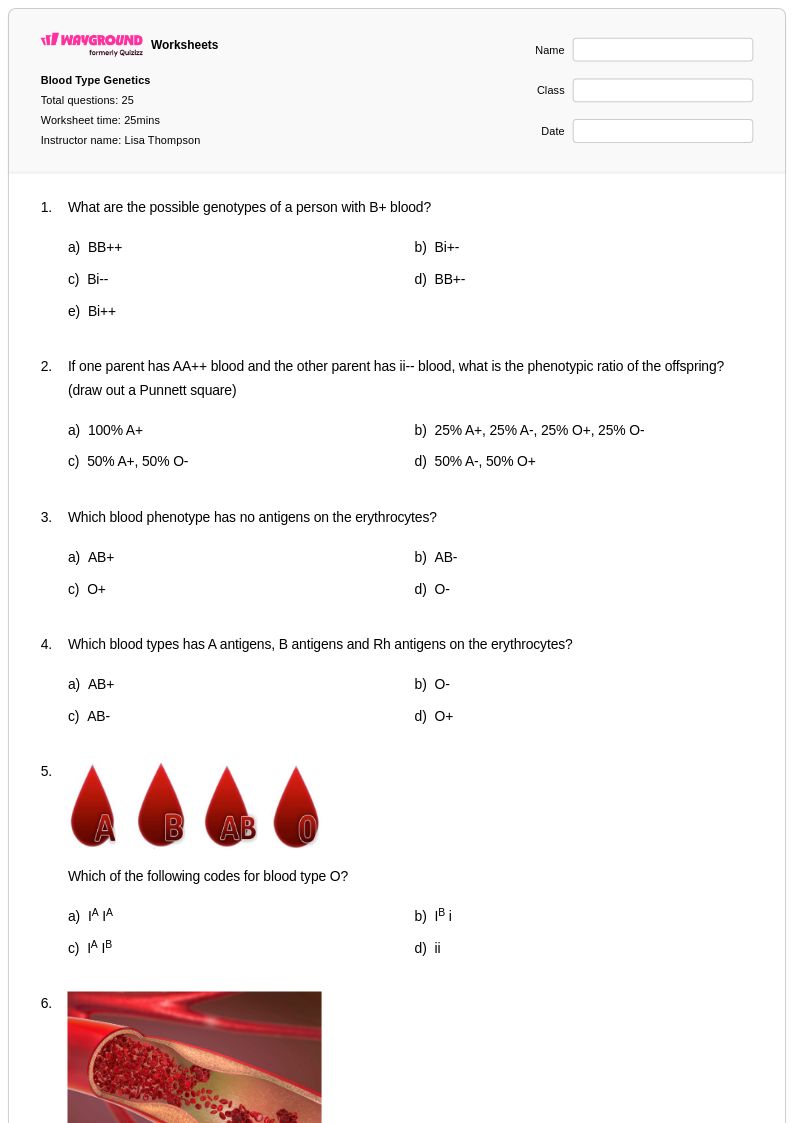
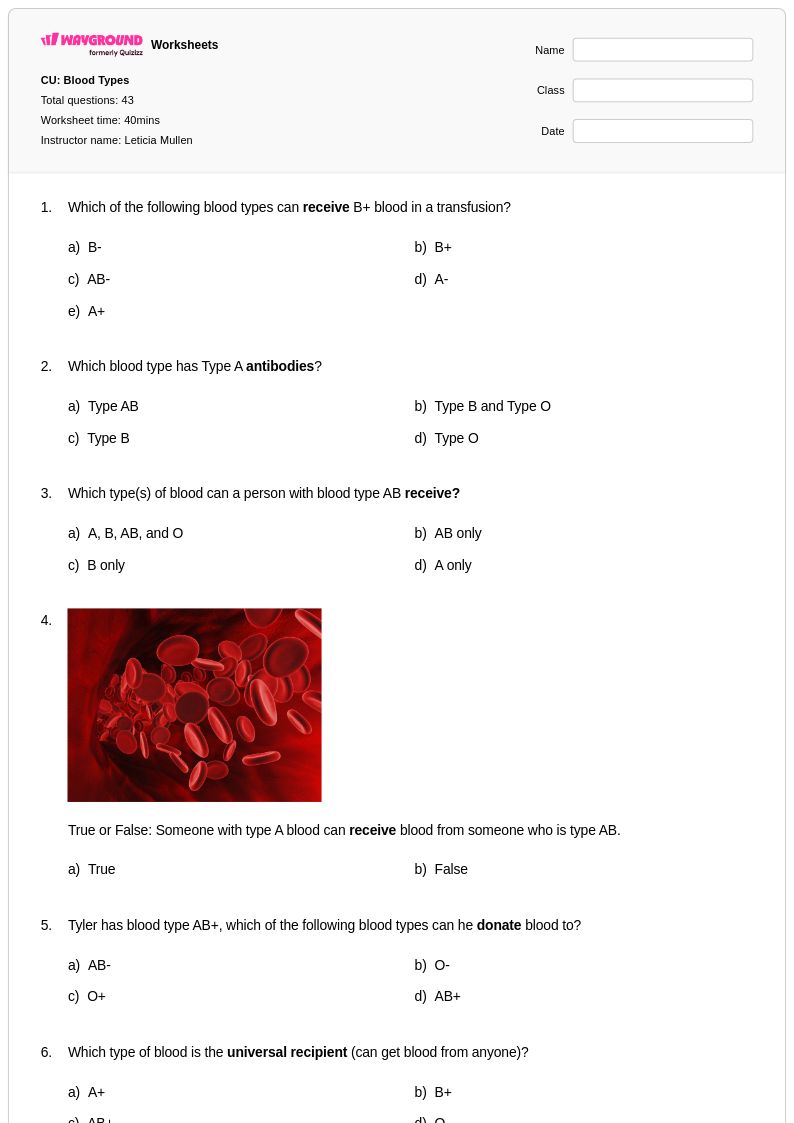
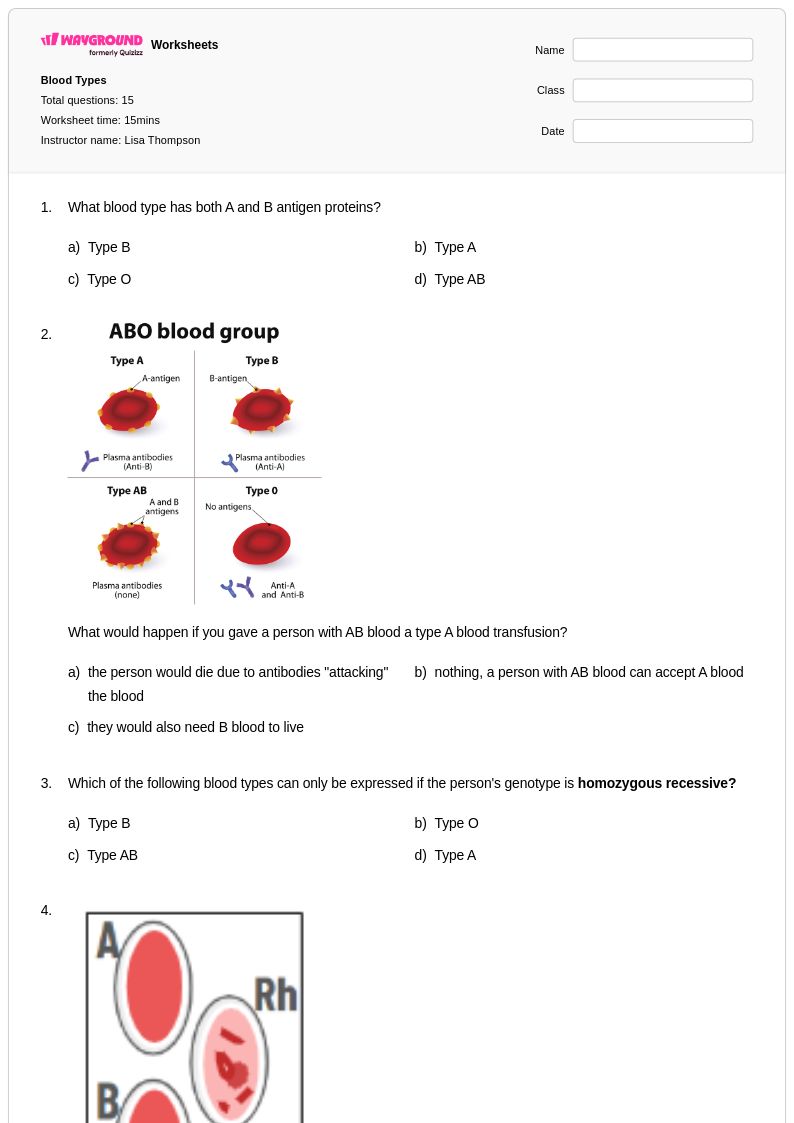
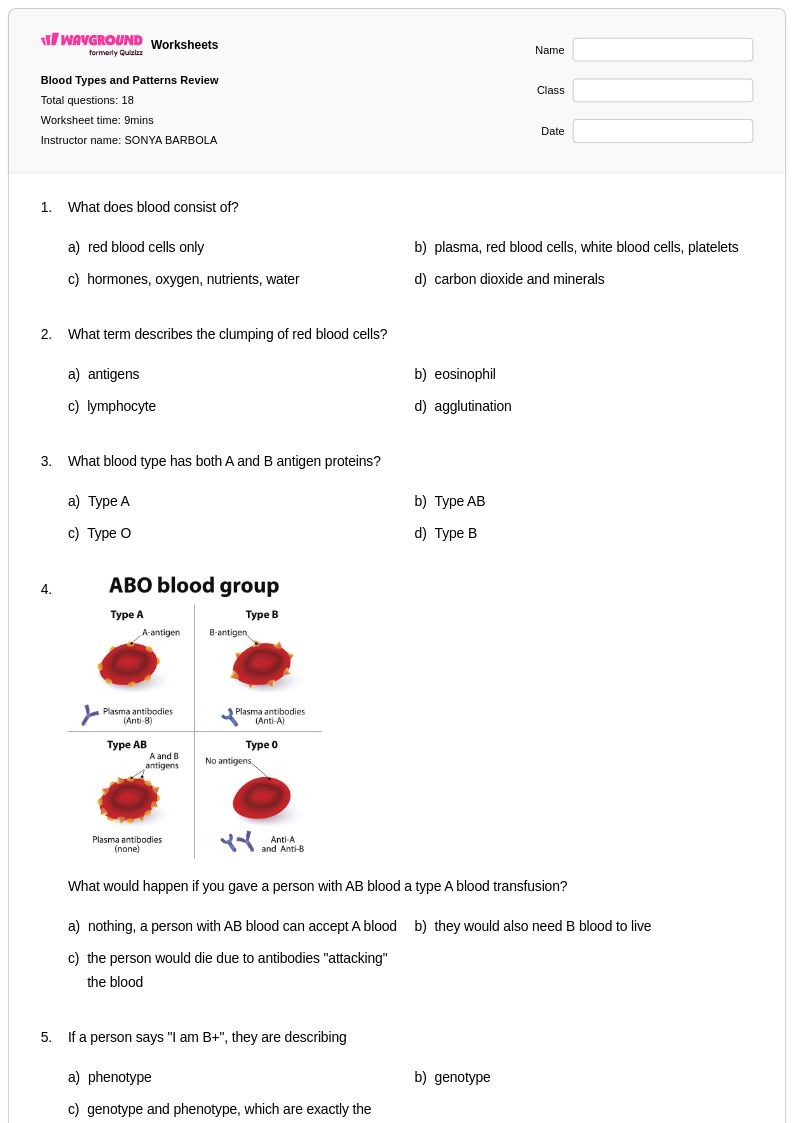
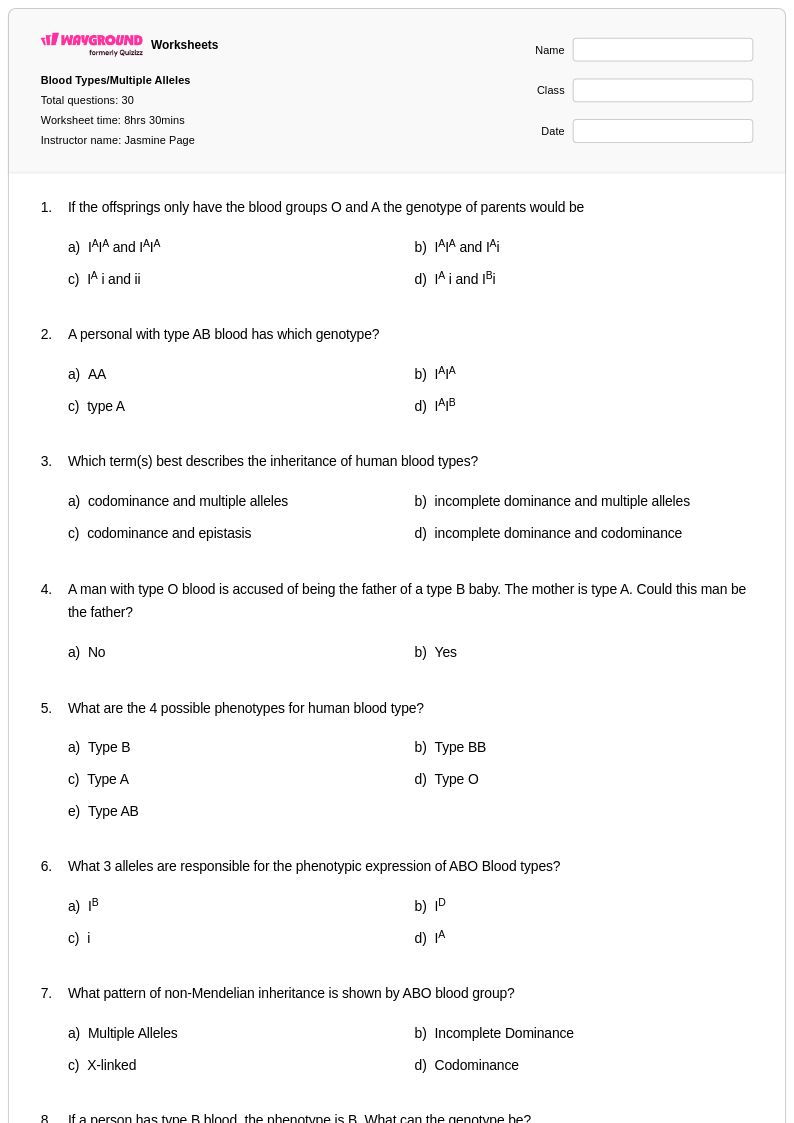
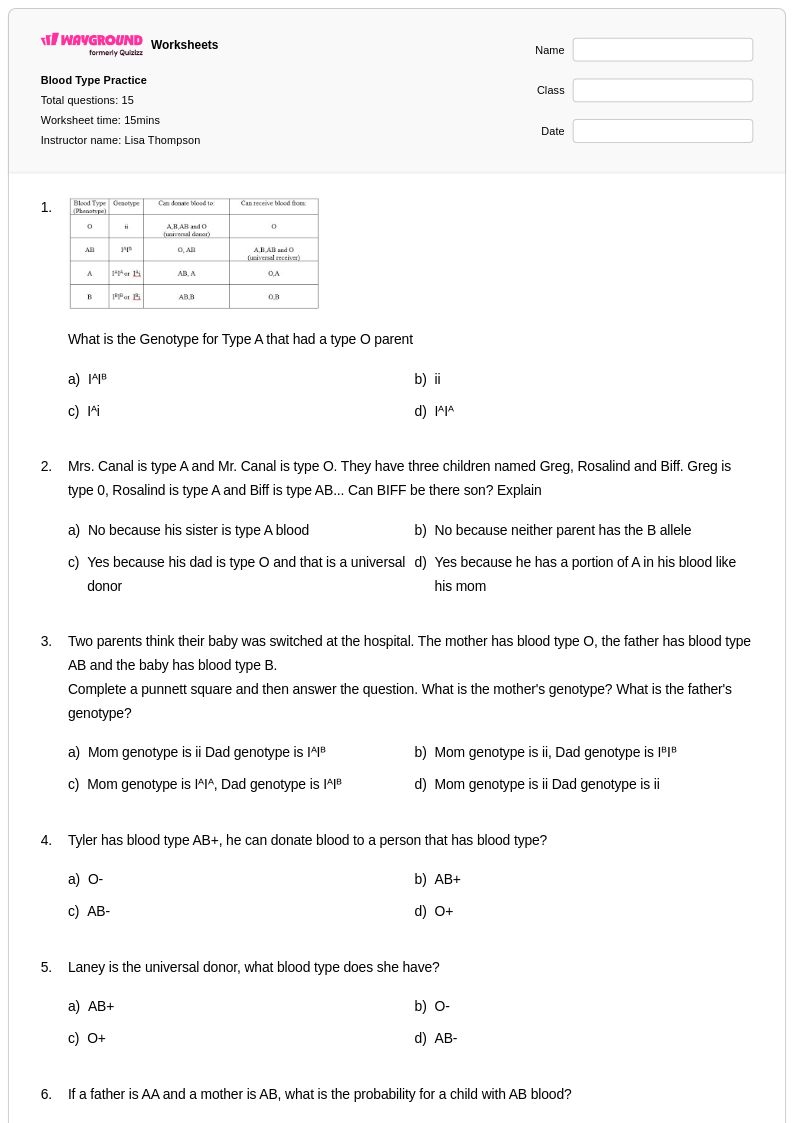
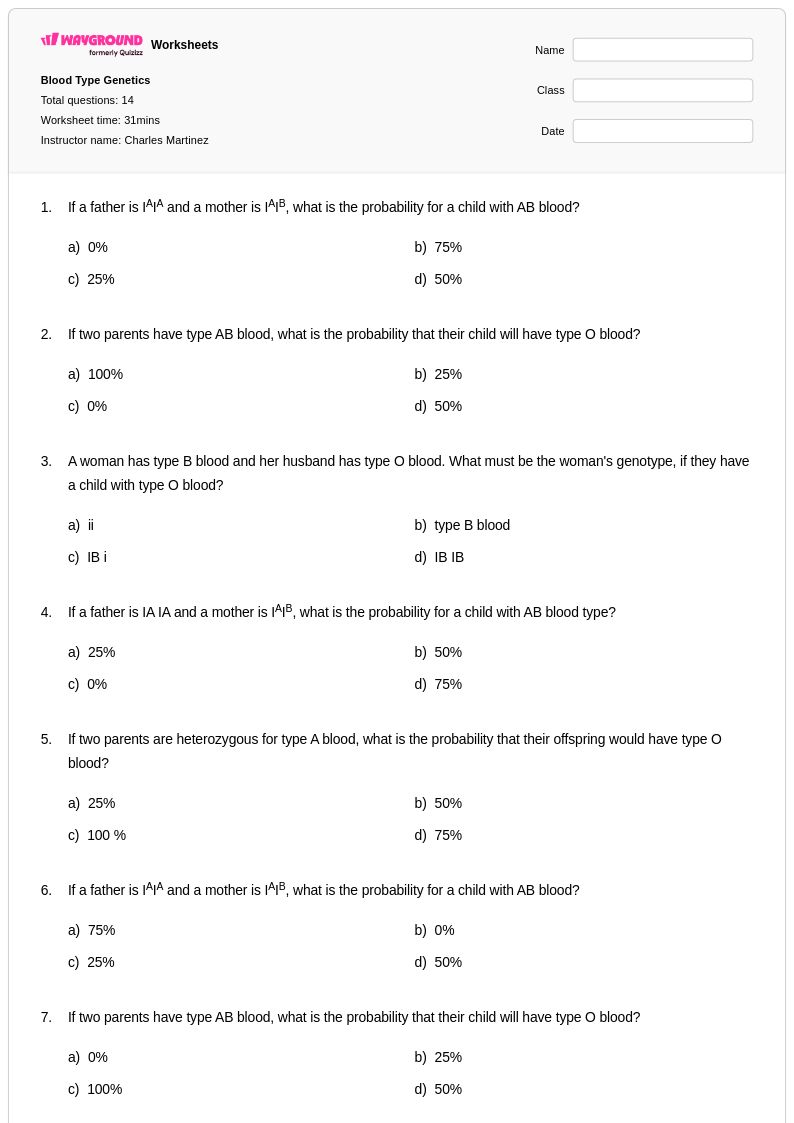
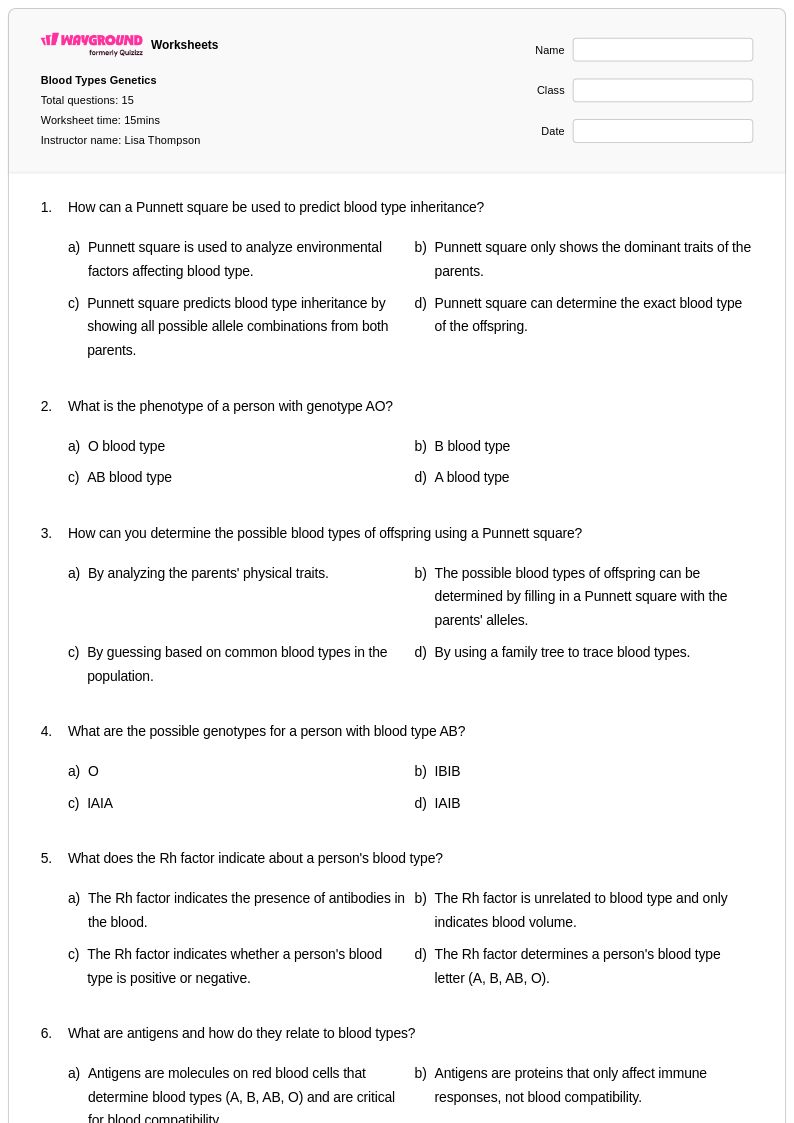
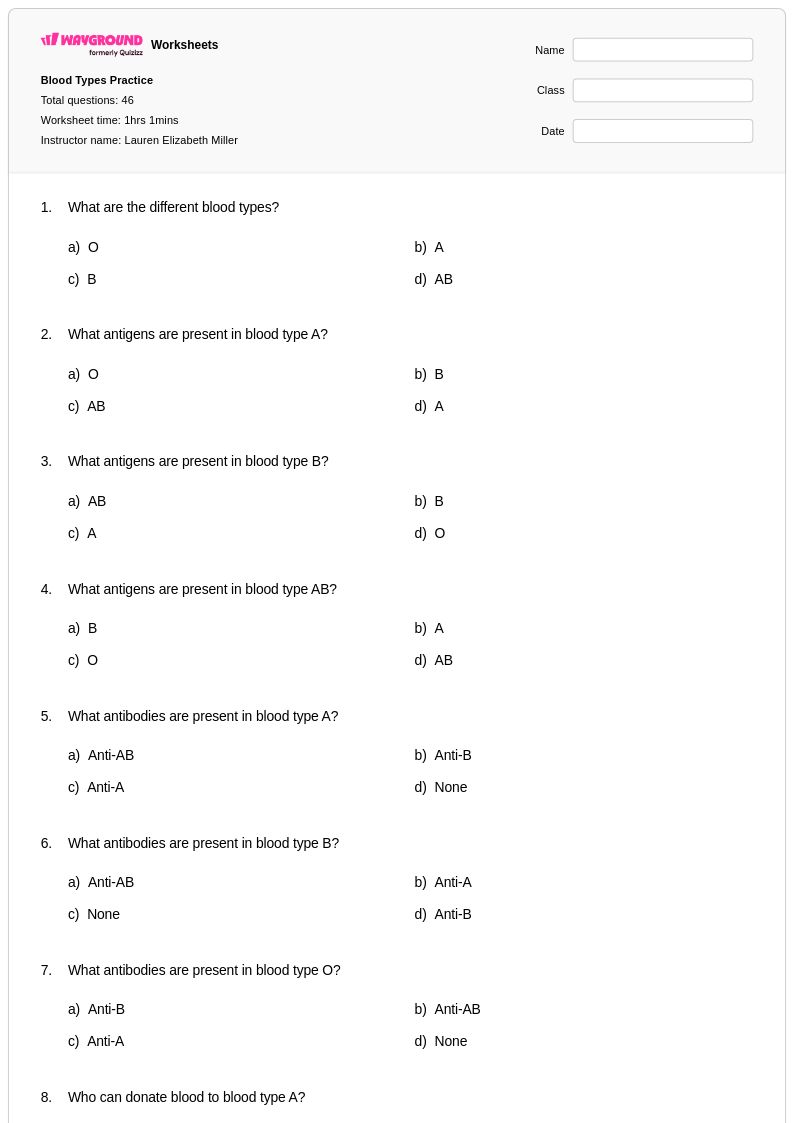
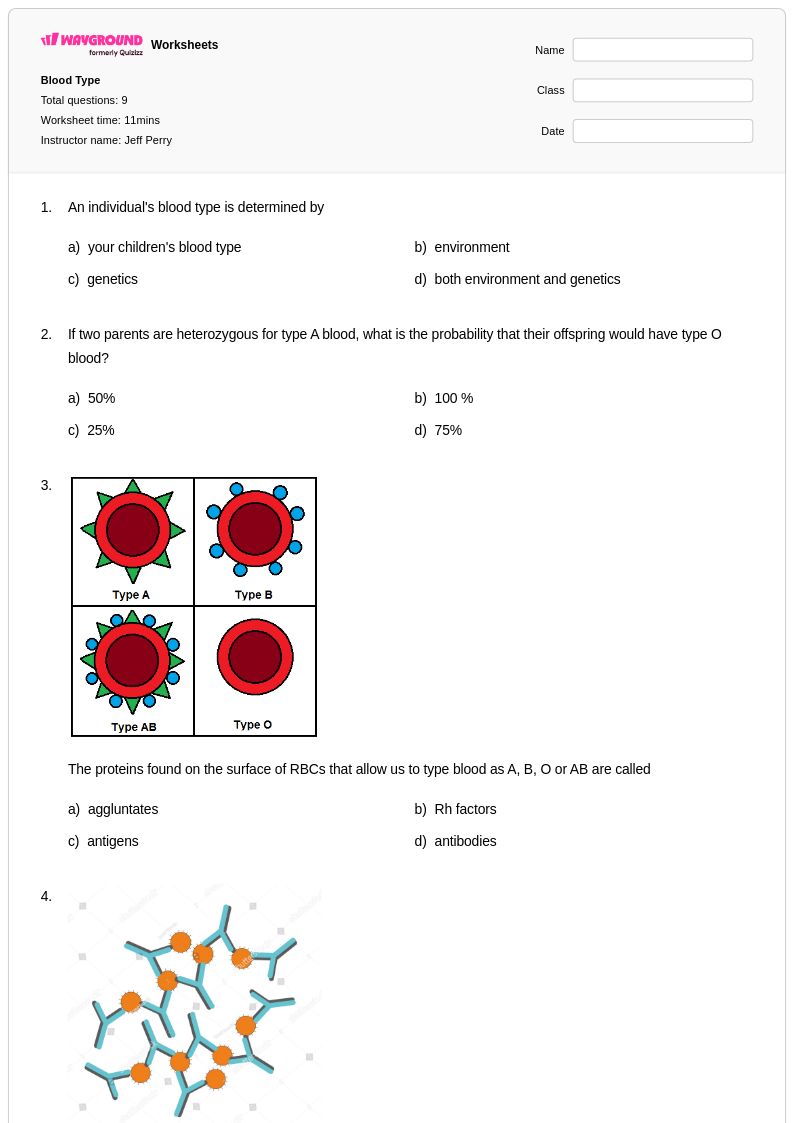
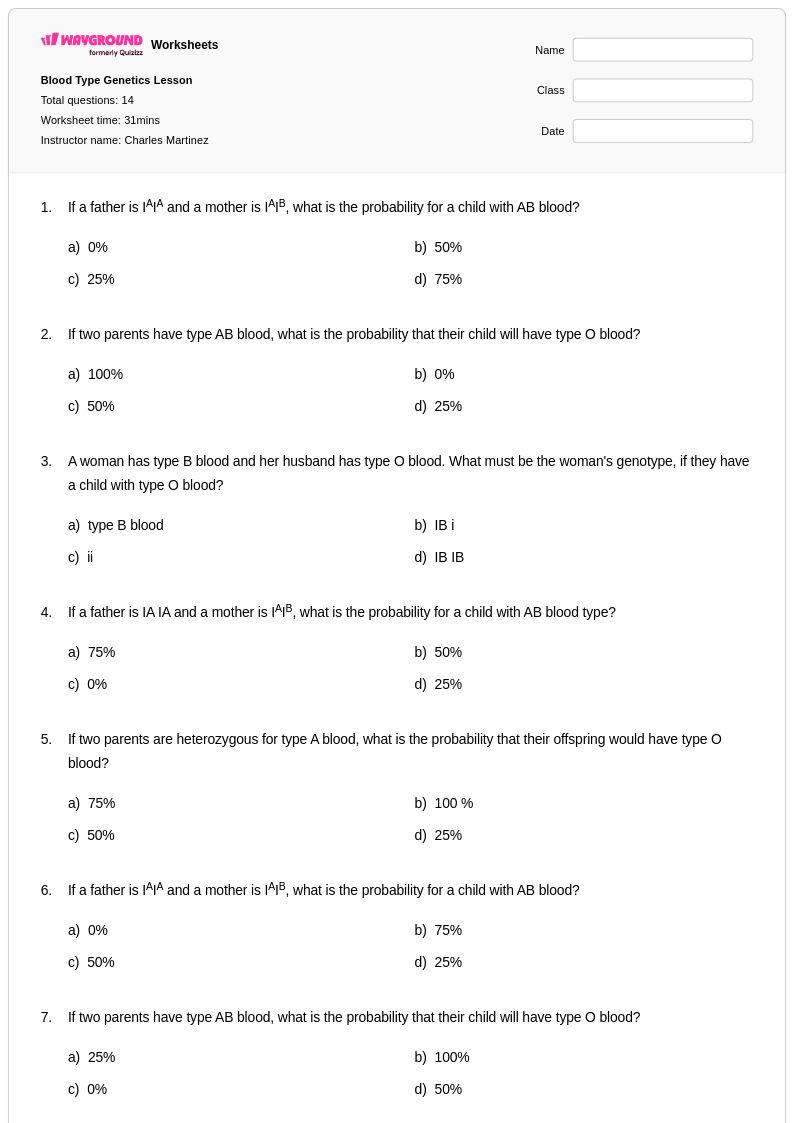
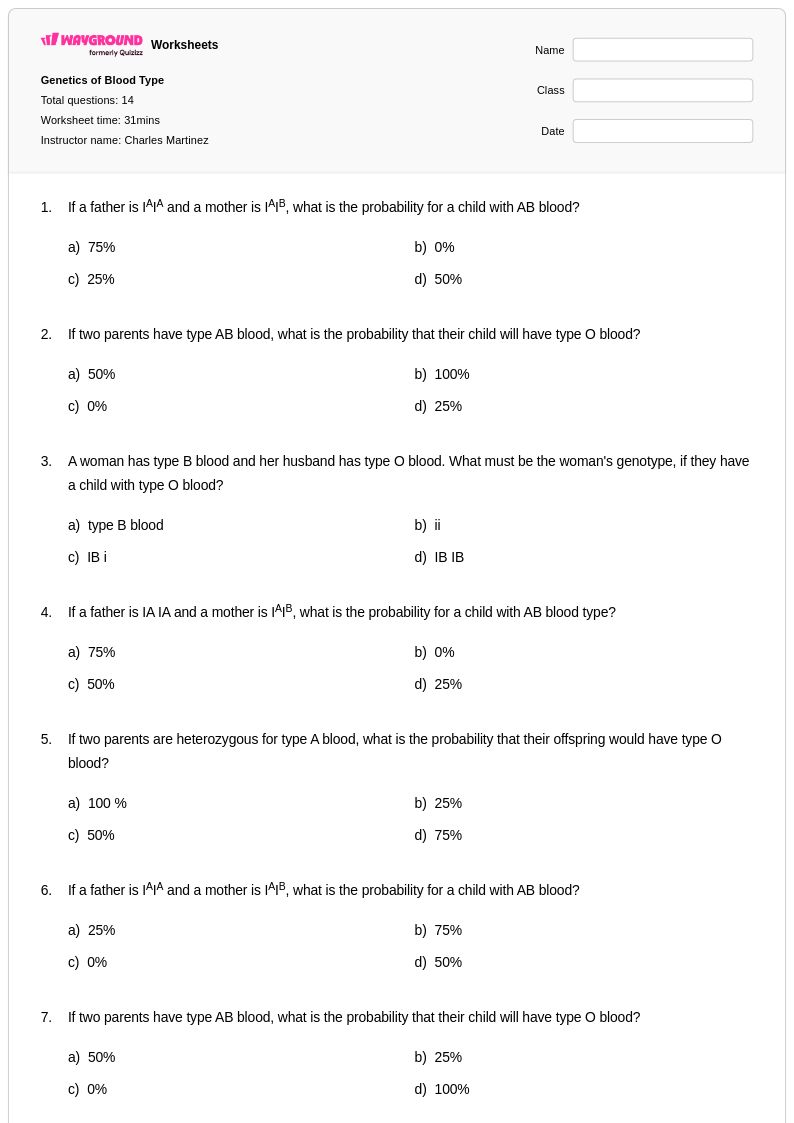
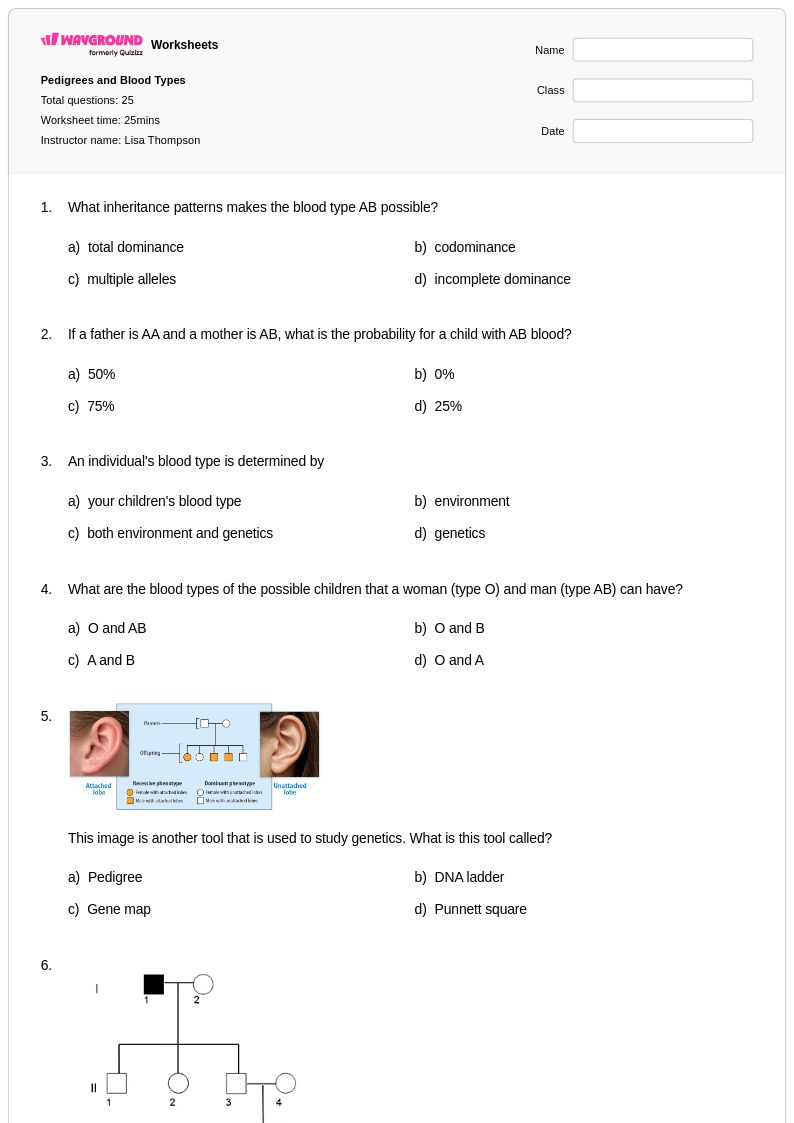
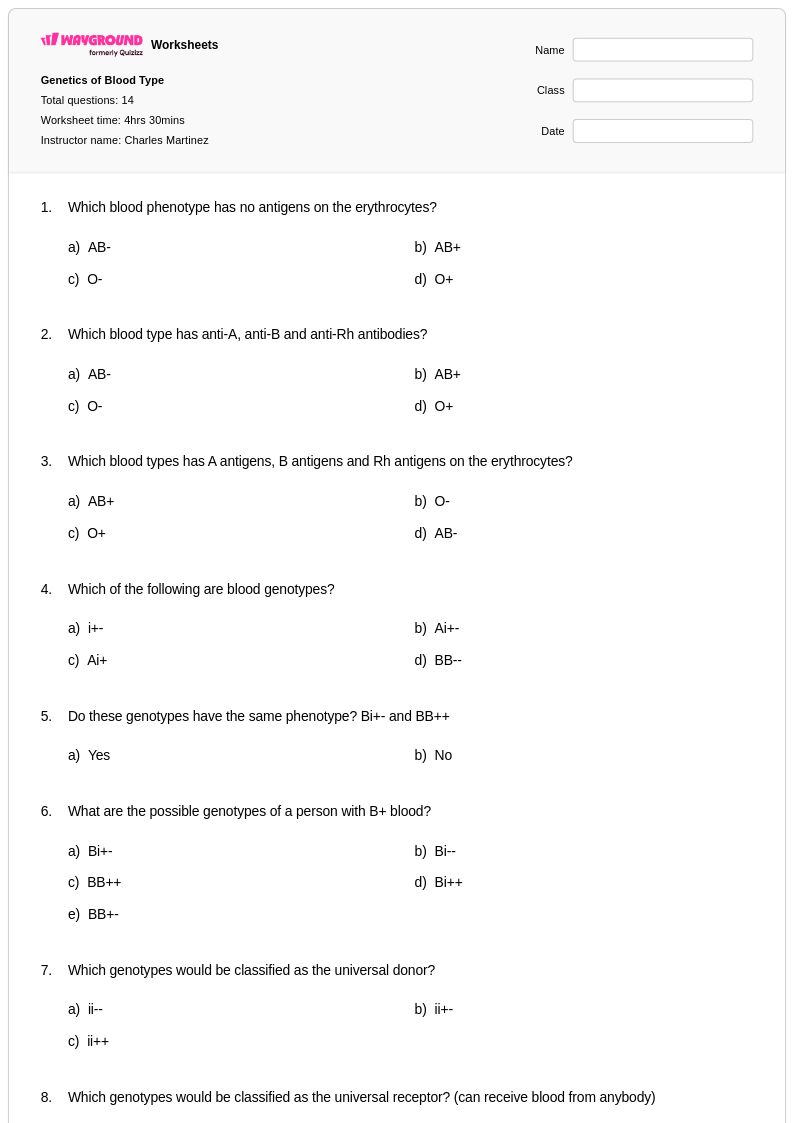
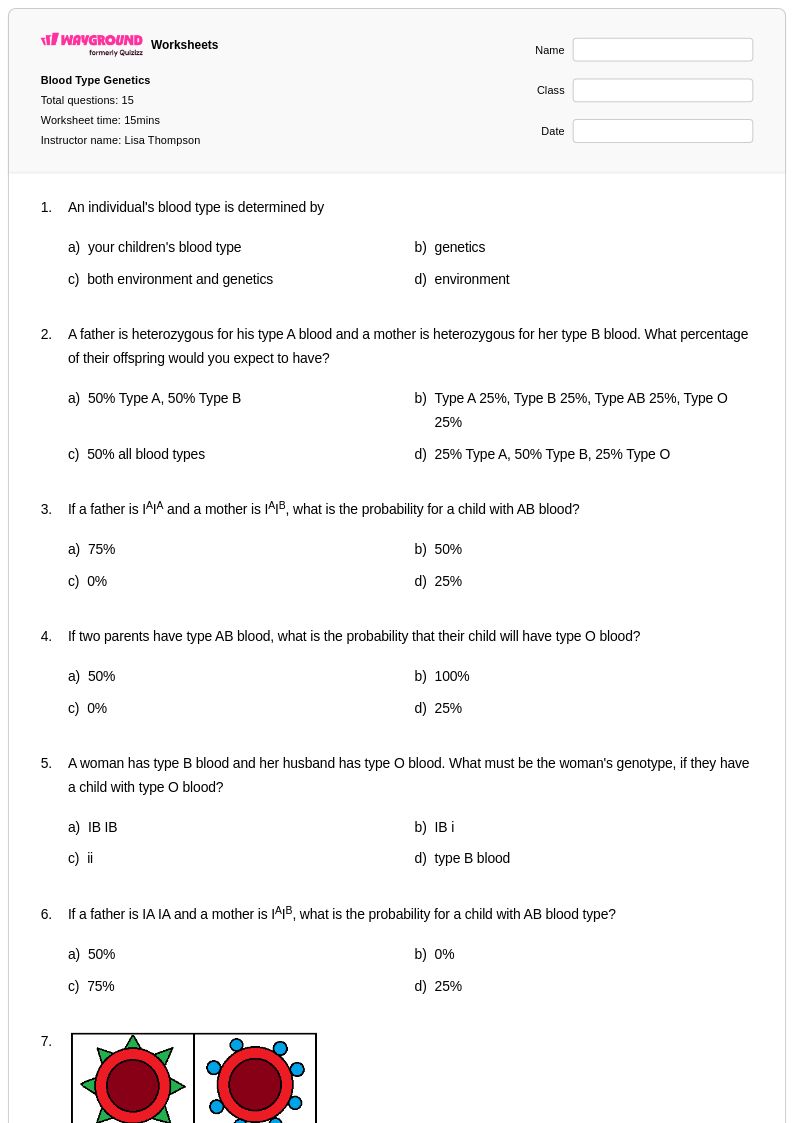
Blood type genetics worksheets for Class 10 students available through Wayground (formerly Quizizz) provide comprehensive practice materials that guide students through the complex inheritance patterns governing ABO and Rh blood group systems. These expertly designed worksheets strengthen critical analytical skills by challenging students to work through Punnett squares, interpret codominance and multiple allele inheritance, and solve real-world genetics problems involving blood type compatibility for transfusions and paternity testing. Students engage with practice problems that require them to determine possible offspring genotypes and phenotypes, calculate probability ratios, and analyze family pedigrees to trace blood type inheritance patterns across generations. Each worksheet collection includes detailed answer keys and is available as free printable pdf resources that reinforce essential concepts in Mendelian genetics while building proficiency in genetic notation and problem-solving methodologies.
Wayground (formerly Quizizz) empowers educators with an extensive library of millions of teacher-created blood type genetics worksheets specifically aligned with Class 10 science standards and curriculum requirements. The platform's advanced search and filtering capabilities allow teachers to quickly locate materials that match their specific instructional needs, whether focusing on basic ABO inheritance, complex Rh factor genetics, or advanced applications in medical genetics. These differentiation tools enable seamless customization of worksheet difficulty levels to accommodate diverse learning needs, from foundational skill practice through enrichment activities for advanced students. Available in both printable and digital formats including downloadable pdf versions, these resources streamline lesson planning while providing targeted remediation opportunities and flexible assessment options that support mastery of fundamental genetic principles and mathematical applications in biological inheritance patterns.
FAQs
How do I teach blood type genetics to high school students?
Start by establishing the ABO and Rh blood group systems before introducing the concept of codominance and multiple alleles. Students often find it easier to grasp how alleles IA, IB, and i combine to produce different phenotypes when they work through Punnett square problems that connect genotype to real-world outcomes like blood transfusion compatibility. Grounding the genetics in clinical scenarios, such as paternity testing or donor matching, significantly increases engagement and retention.
What practice problems work best for reinforcing blood type inheritance?
Punnett square problems that require students to determine possible offspring blood types from given parental genotypes are the most effective practice format for this topic. Problems that layer in codominance and multiple allele logic, rather than simple dominant-recessive patterns, push students to apply deeper conceptual understanding. Including real-world scenarios like blood transfusion compatibility or paternity case studies gives practice problems meaningful context and increases transfer of learning.
What misconceptions do students commonly have about blood type genetics?
The most frequent misconception is that blood type inheritance follows simple dominance, when in fact IA and IB are codominant and both are dominant over i. Students also commonly confuse phenotype with genotype, assuming that knowing a person's blood type tells them their exact allele combination, which is not always true for type A or type B individuals who could be heterozygous. A third common error is misapplying Rh factor inheritance separately from ABO type, leading to incomplete or incorrect conclusions about compatibility.
How can I use blood type worksheets to support students who are struggling with codominance?
For students struggling with codominance, focus first on distinguishing it from simple dominance using blood type as a concrete anchor example, since both IA and IB alleles are expressed simultaneously in type AB individuals. Structured Punnett square worksheets that walk students through each step, with answer keys for immediate self-correction, help struggling learners identify exactly where their reasoning breaks down. On Wayground, teachers can also enable accommodations such as reduced answer choices and read aloud support for individual students, reducing cognitive load while keeping the genetics content intact.
How do I use Wayground's blood type worksheets in my classroom?
Wayground's blood type worksheets are available as printable PDFs for traditional classroom use and in digital formats for technology-integrated learning environments, making them flexible for in-class practice, homework, or remediation sessions. Teachers can also host worksheets as a quiz directly on Wayground, enabling students to complete them interactively while the platform handles grading and feedback. Answer keys are included with every worksheet, allowing for efficient self-assessment or teacher-led review.
How do blood type worksheets connect genetics concepts to real-world applications?
Blood type worksheets are one of the most effective tools for bridging abstract genetics principles and real-world biology because the ABO and Rh systems appear directly in medical contexts students encounter in everyday life. Well-designed practice problems use scenarios such as blood transfusion compatibility, organ donation eligibility, and paternity testing to require students to apply Punnett square logic and codominance reasoning in meaningful ways. This connection strengthens both content retention and scientific reasoning skills.