Free Printable Population Ecology Worksheets for Class 10
Explore Class 10 population ecology through Wayground's comprehensive collection of free worksheets and printables, featuring practice problems and answer keys to help students master ecosystem dynamics, carrying capacity, and species interactions.
Explore printable Population Ecology worksheets for Class 10
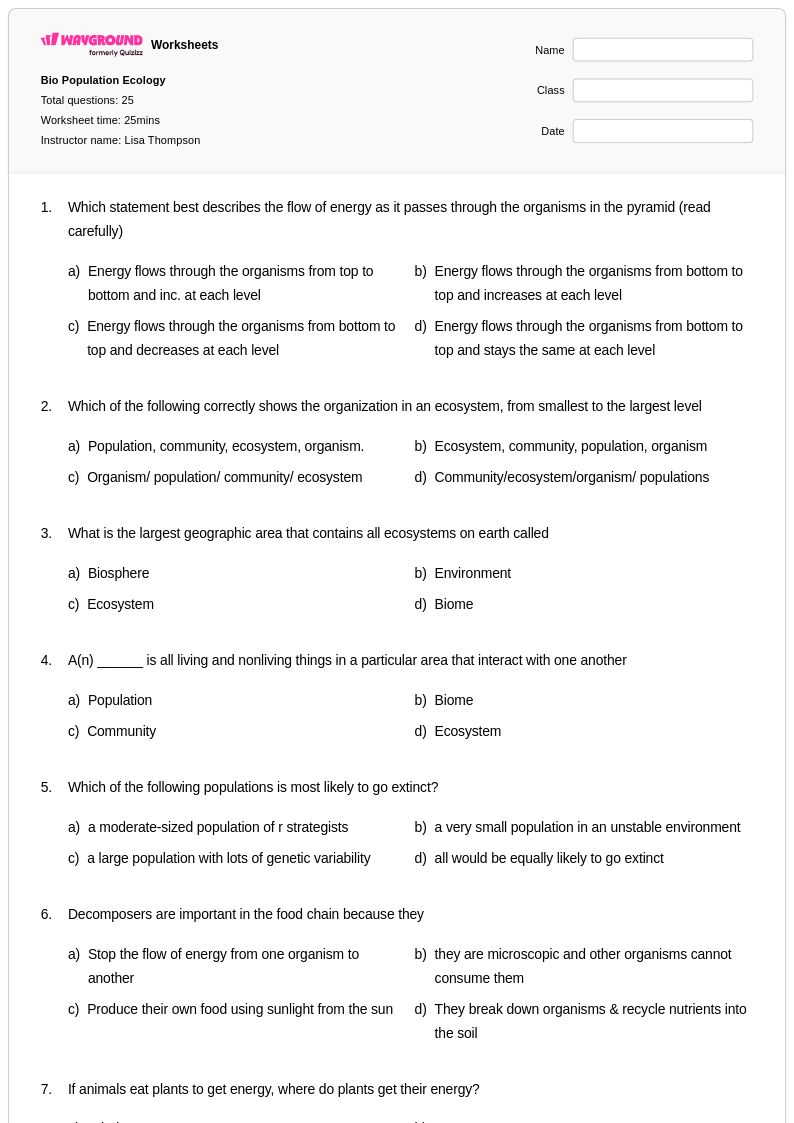
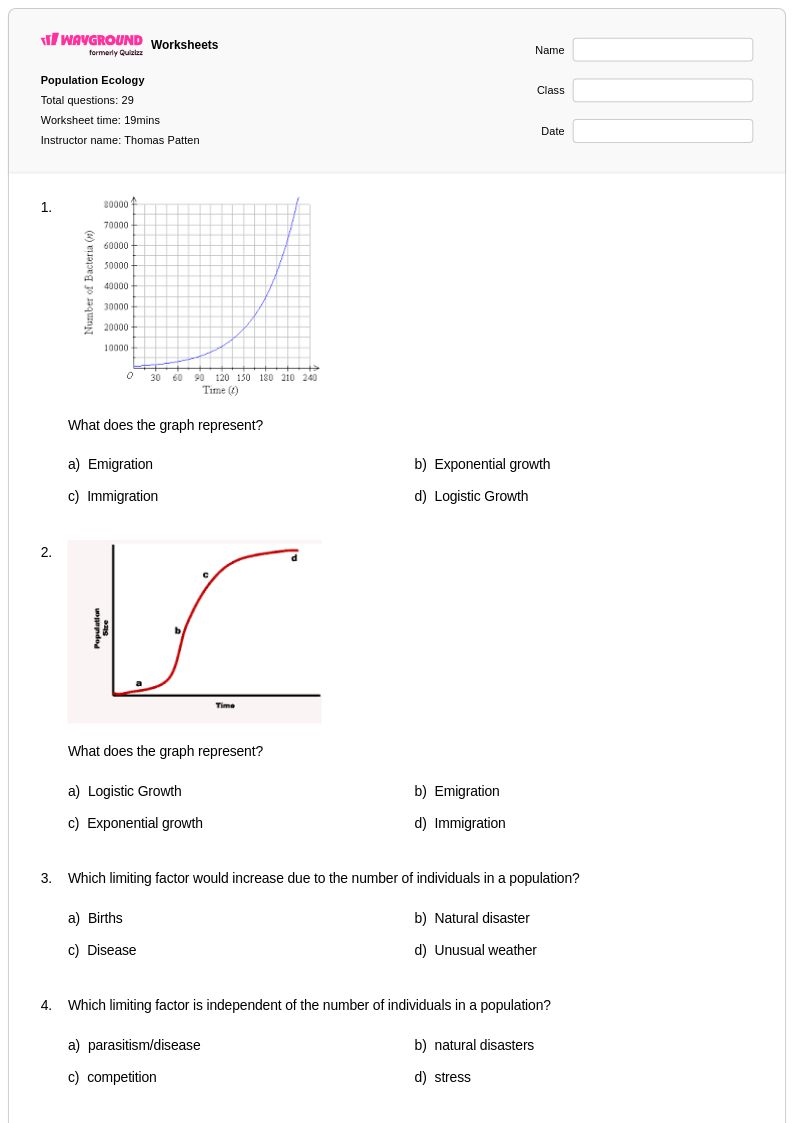
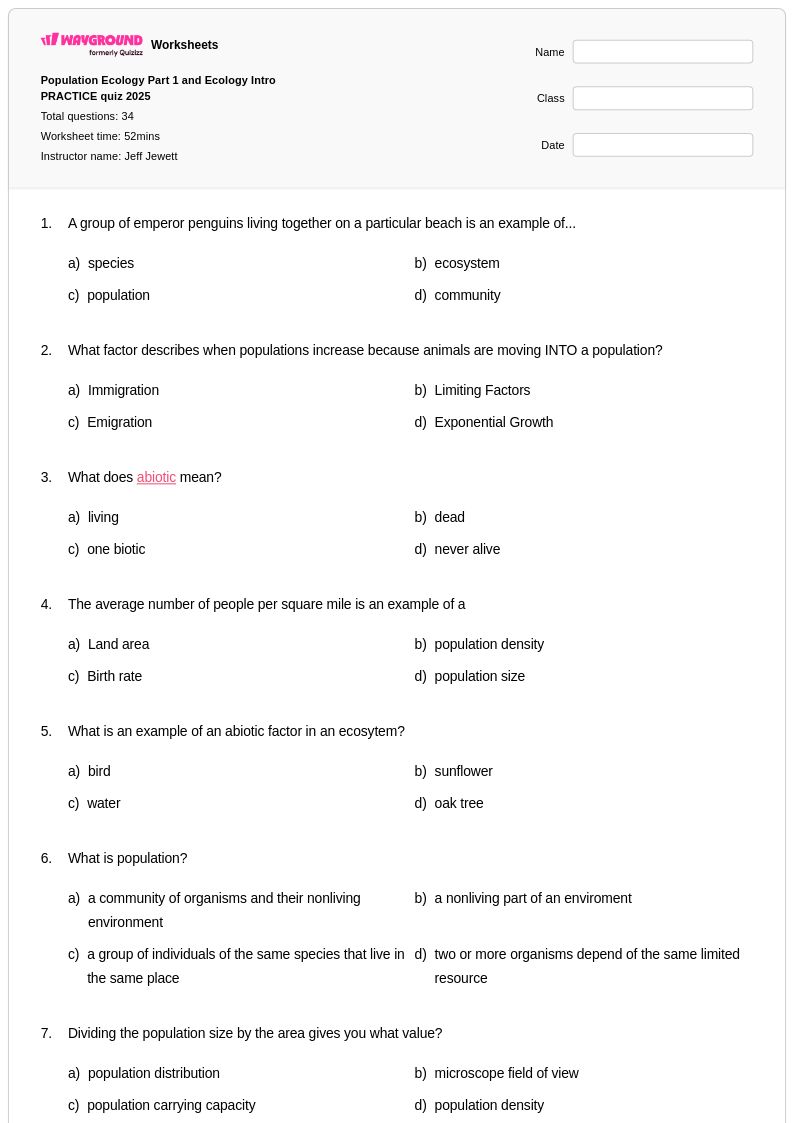
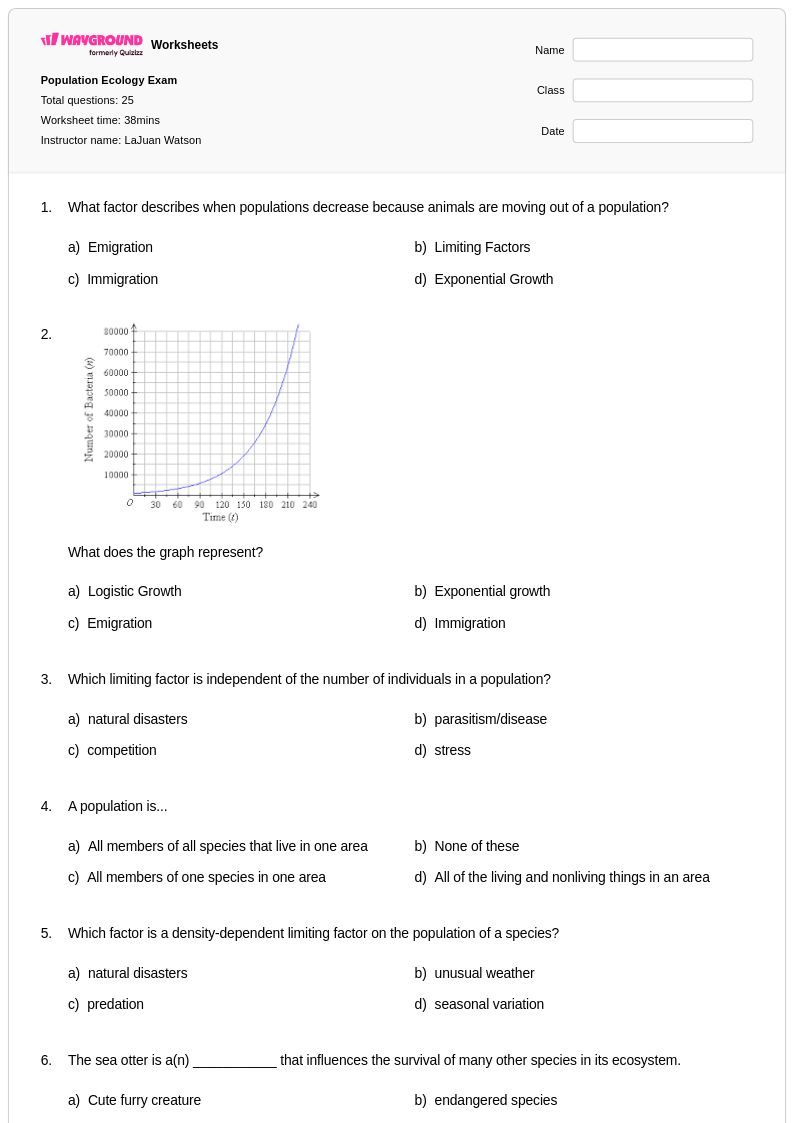
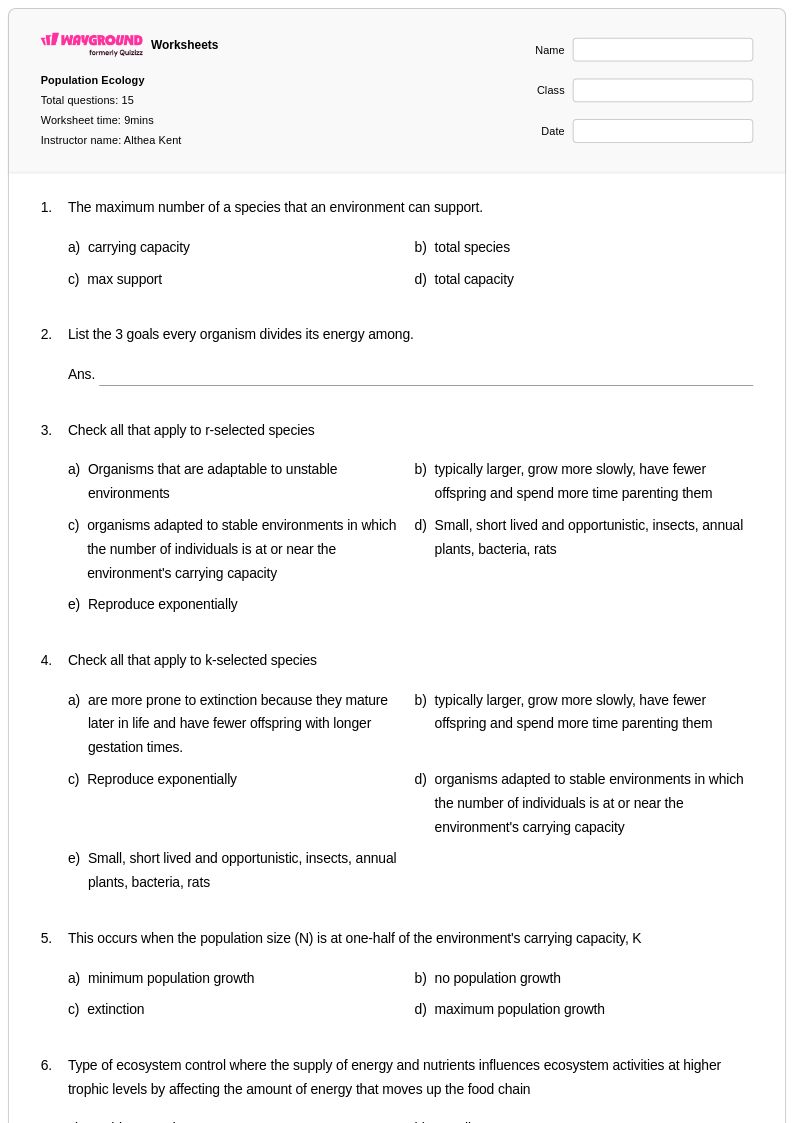
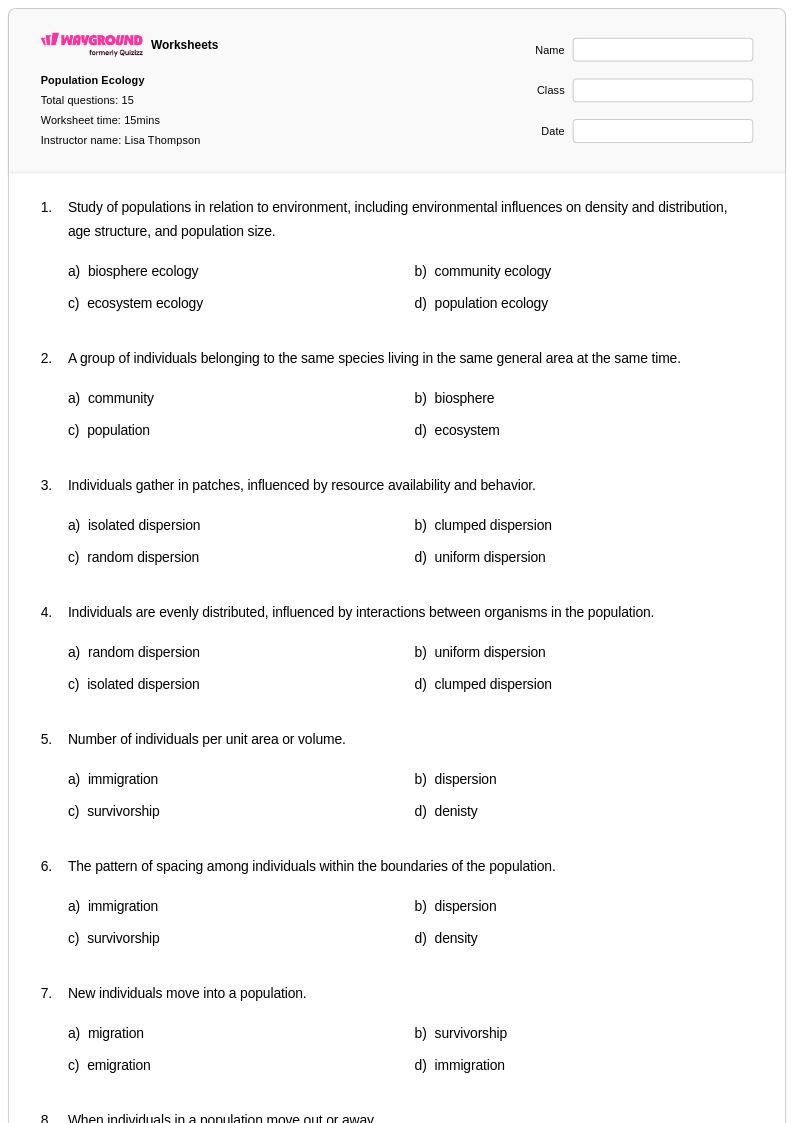
Population ecology worksheets for Class 10 students available through Wayground (formerly Quizizz) provide comprehensive coverage of how populations interact with their environment and change over time. These expertly designed resources strengthen students' understanding of population dynamics, carrying capacity, limiting factors, and growth patterns through engaging practice problems that mirror real-world ecological scenarios. The worksheets systematically build proficiency in analyzing population graphs, calculating growth rates, and interpreting data related to birth rates, death rates, and migration patterns. Each printable resource includes detailed answer keys that support independent learning and self-assessment, while the free pdf format ensures accessibility for diverse classroom needs and study environments.
Wayground's extensive collection draws from millions of teacher-created resources specifically aligned with Class 10 biology standards, offering educators powerful search and filtering capabilities to locate materials that match their specific population ecology curriculum requirements. The platform's differentiation tools enable teachers to customize worksheets for varying skill levels, supporting both remediation for struggling students and enrichment opportunities for advanced learners. These resources are available in both printable and digital formats, including downloadable pdfs, providing flexibility for in-person instruction, remote learning, or hybrid classroom environments. Teachers can efficiently plan lessons, assign targeted skill practice, and assess student understanding of complex population ecology concepts through these thoughtfully curated materials that adapt to diverse instructional approaches and learning objectives.
FAQs
How do I teach population ecology to high school biology students?
Start by grounding students in the difference between exponential and logistic growth before introducing real-world constraints like carrying capacity and limiting factors. Use population graphs and survivorship curves as visual anchors, then layer in predator-prey dynamics and demographic analysis. Building from mathematical models to ecological interpretation helps students connect quantitative skills with biological reasoning.
What worksheets and practice activities work best for teaching population growth models?
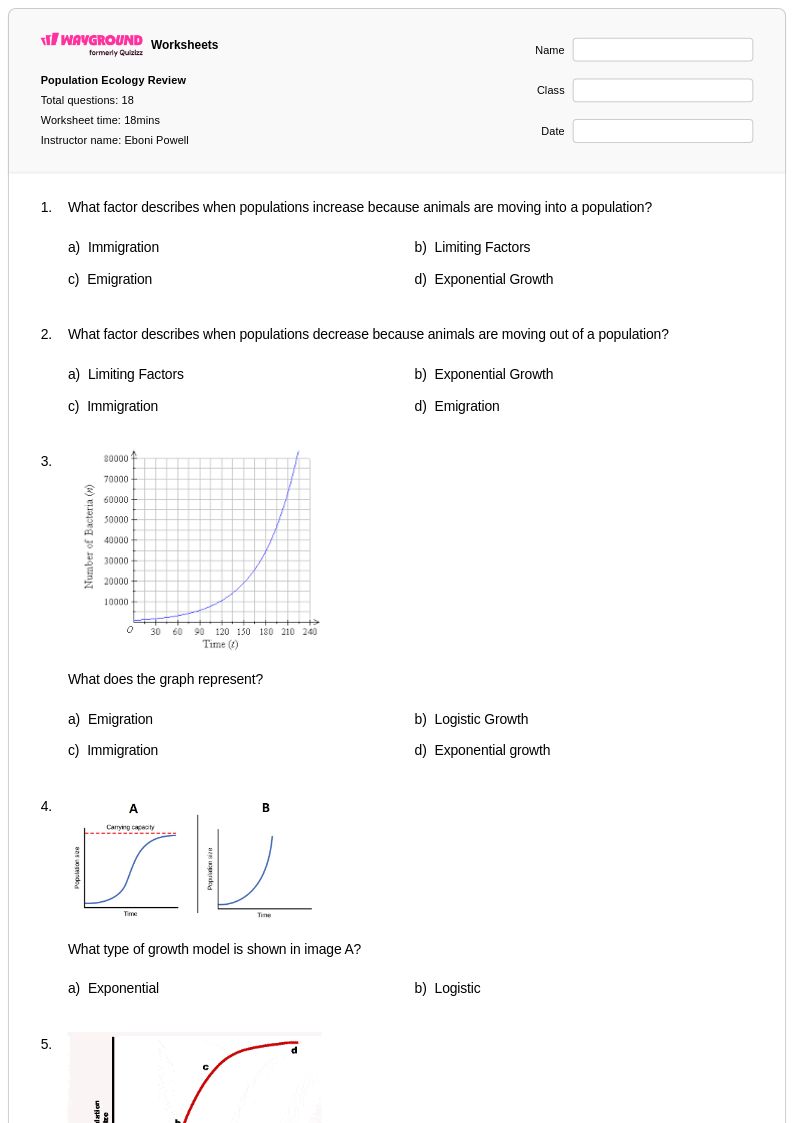
Practice problems that ask students to calculate growth rates, graph exponential versus logistic curves, and identify carrying capacity from data are particularly effective for reinforcing population growth models. Worksheets that require students to interpret population graphs under varying environmental conditions build both analytical and predictive skills. Pairing calculation exercises with graph interpretation ensures students can move fluently between quantitative and conceptual understanding.
What mistakes do students commonly make when learning population ecology?
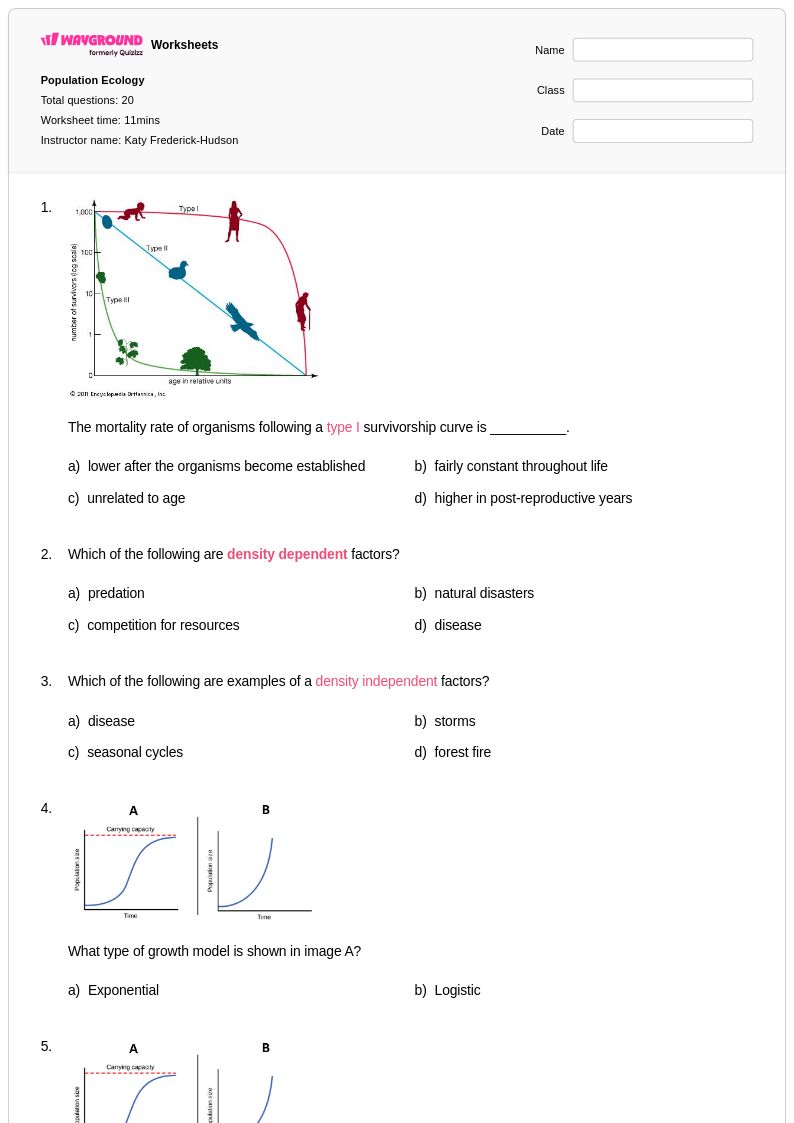
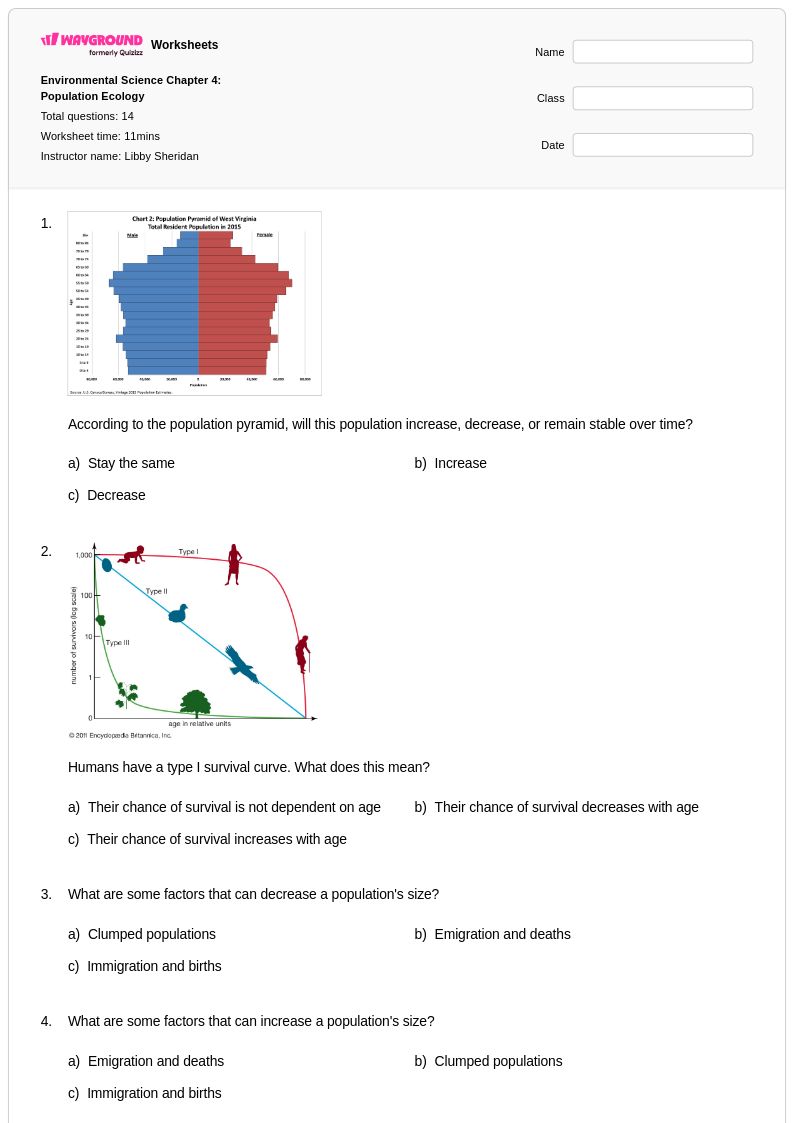
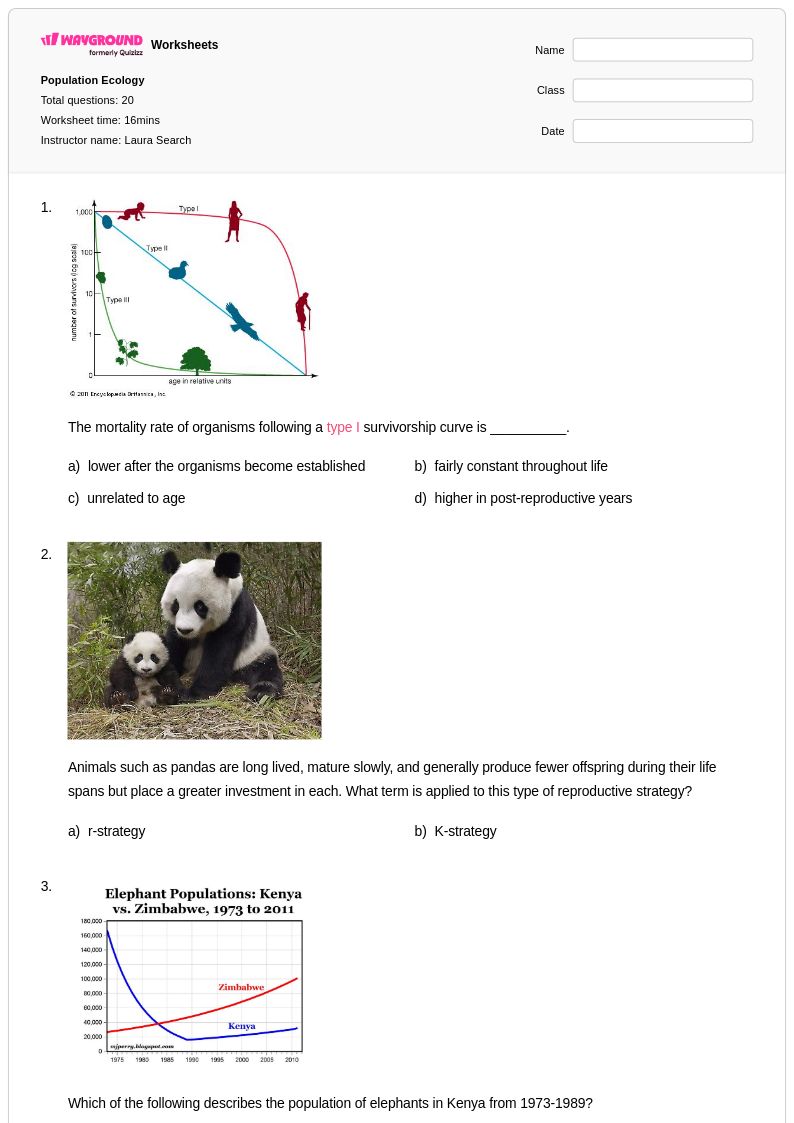
A frequent misconception is treating carrying capacity as a fixed ceiling rather than a dynamic value that shifts with environmental conditions. Students also tend to confuse exponential and logistic growth, applying exponential models to scenarios where resource limitation is clearly present. When analyzing survivorship curves, many students misread curve types, conflating late-loss and early-loss patterns, which leads to errors in predicting species life history strategies.
How do I help struggling students understand predator-prey relationships in population ecology?
Predator-prey dynamics are best taught using time-series graphs that show the lagged oscillation between predator and prey populations, since the visual pattern makes the cause-and-effect relationship concrete. Worksheets that ask students to annotate these graphs, identifying peaks, troughs, and the direction of population lag, help reinforce the underlying mechanism. On Wayground, teachers can enable the Read Aloud accommodation for students who struggle with text-heavy problems, and Reduced Answer Choices for students who need lower cognitive load when interpreting multi-variable scenarios.
How can I use Wayground's population ecology worksheets in my classroom?
Wayground's population ecology worksheets are available as printable PDFs for traditional classroom use and in digital formats for technology-integrated environments, including the option to host them as a graded quiz directly on Wayground. Teachers can search and filter materials to find resources aligned with specific standards, then customize them to target particular learning objectives such as logistic growth modeling or demographic analysis. The included answer keys support both self-paced independent study and teacher-led instruction.
How do I assess whether students truly understand carrying capacity versus limiting factors?
Students often conflate carrying capacity with limiting factors, so assessment should require them to distinguish between the two in context rather than just define them in isolation. Effective assessment tasks include presenting a population scenario and asking students to identify which specific limiting factors are depressing the population below its theoretical maximum. Problems that require written justification rather than multiple-choice selection are particularly diagnostic for catching surface-level versus genuine conceptual understanding.