Free Printable Nucleic Acids Worksheets for Class 10
Class 10 Biology nucleic acids worksheets from Wayground help students master DNA and RNA structure through engaging printables, practice problems, and comprehensive answer keys for effective learning.
Explore printable Nucleic Acids worksheets for Class 10
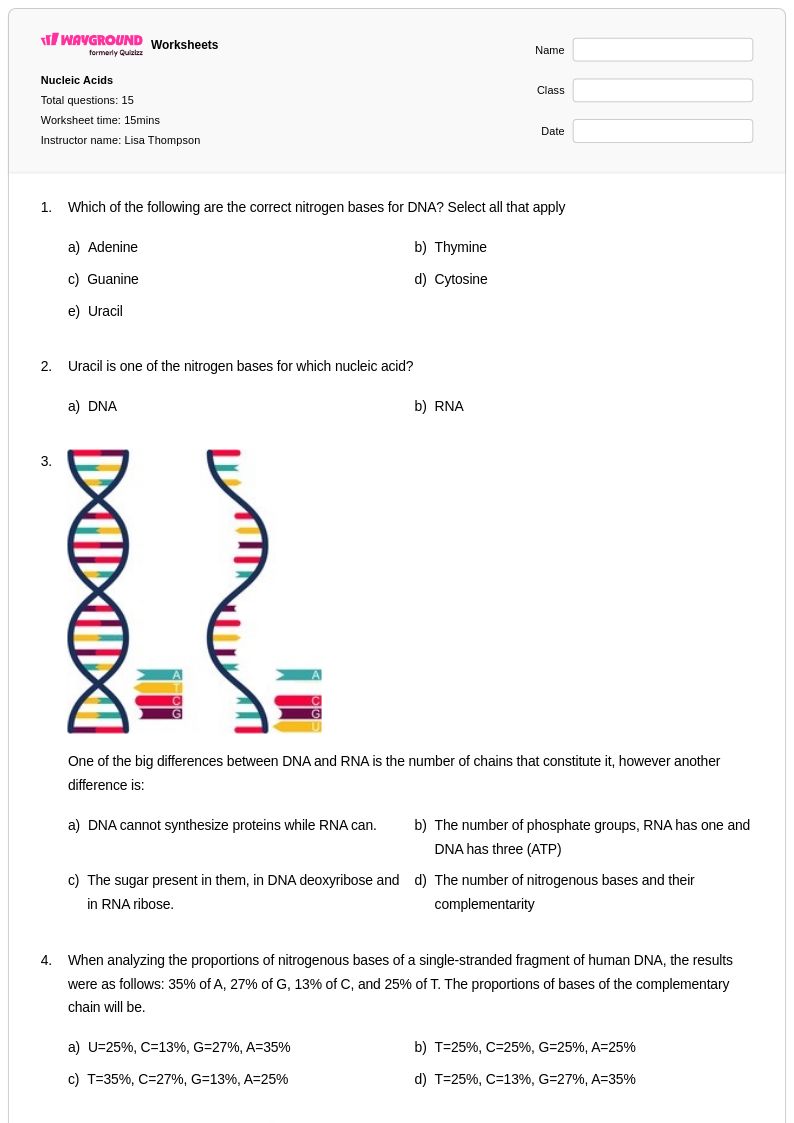
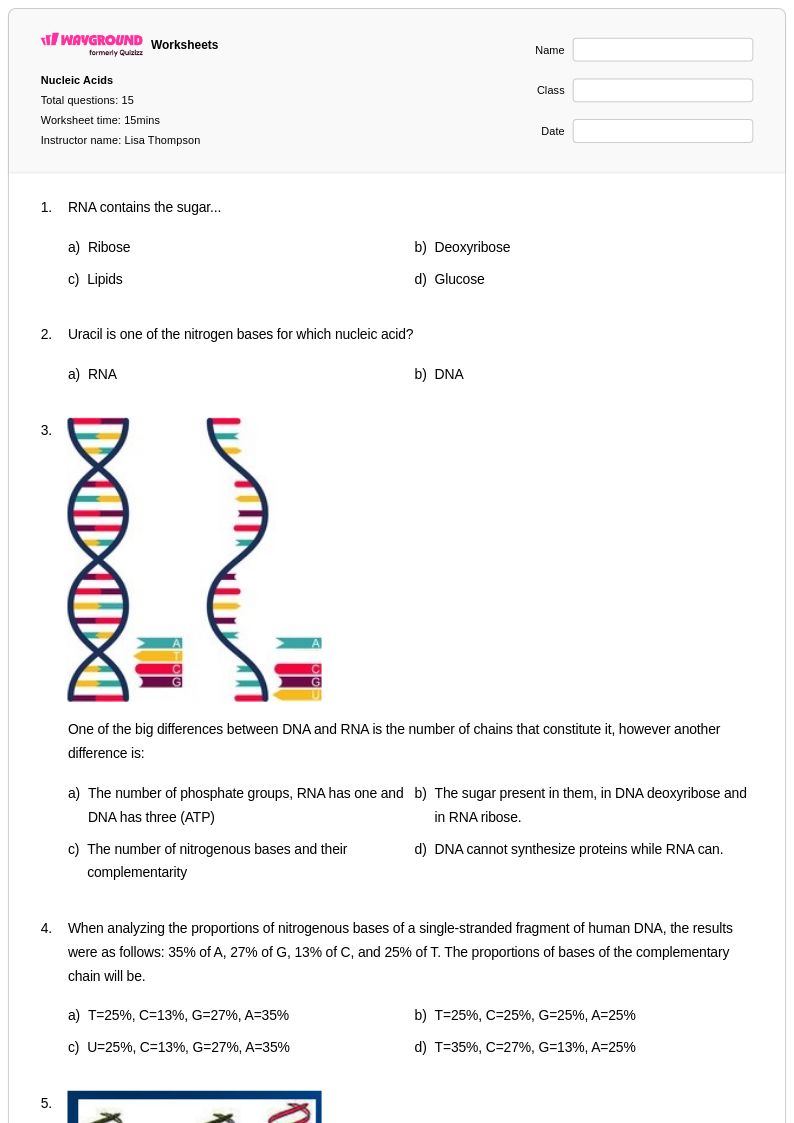
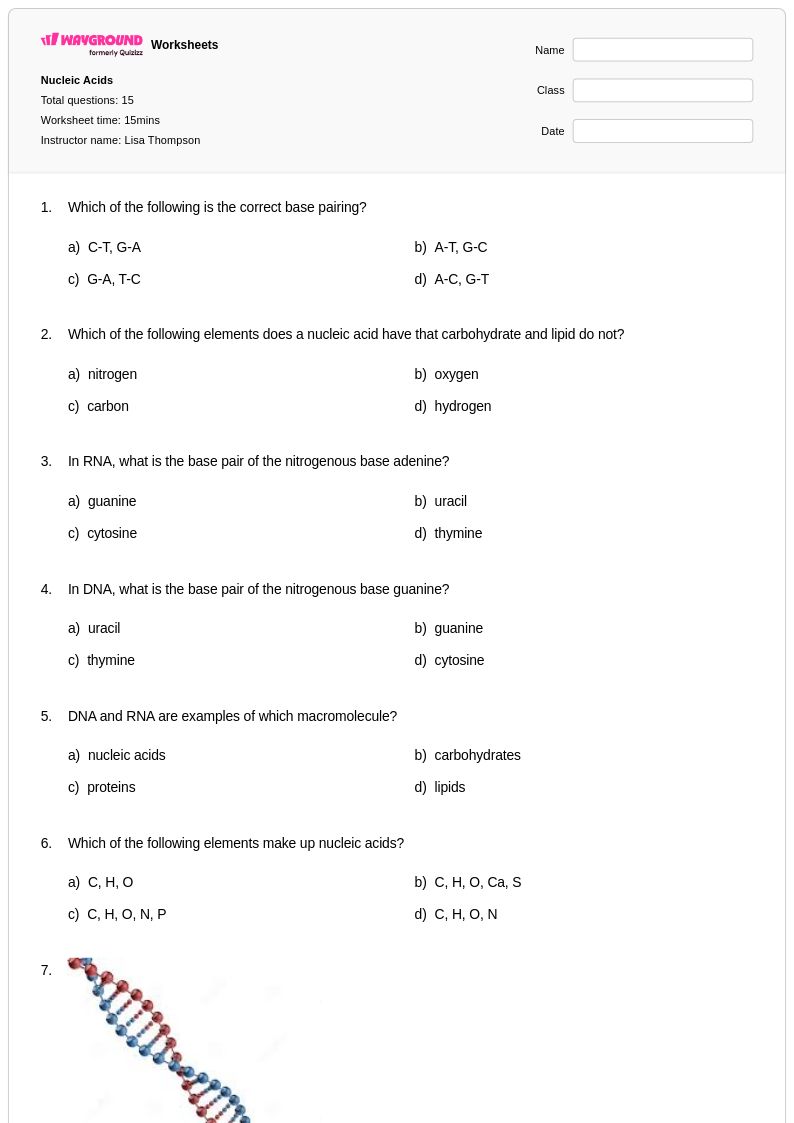
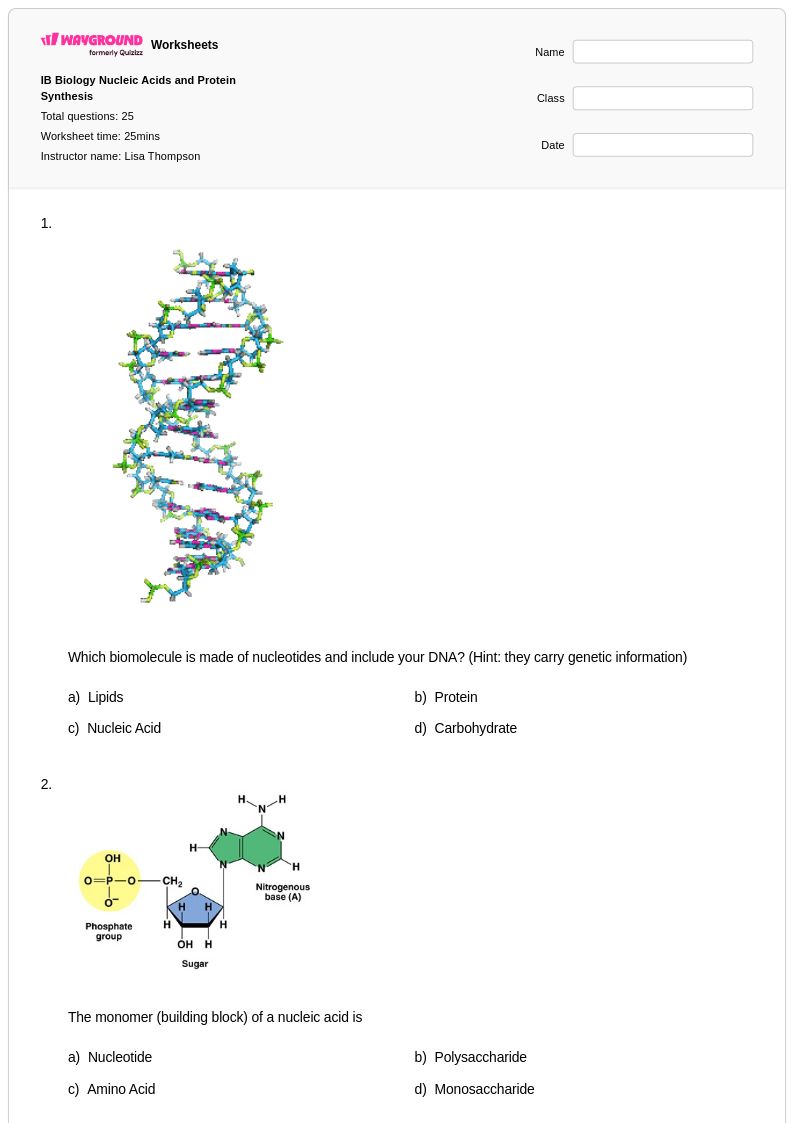
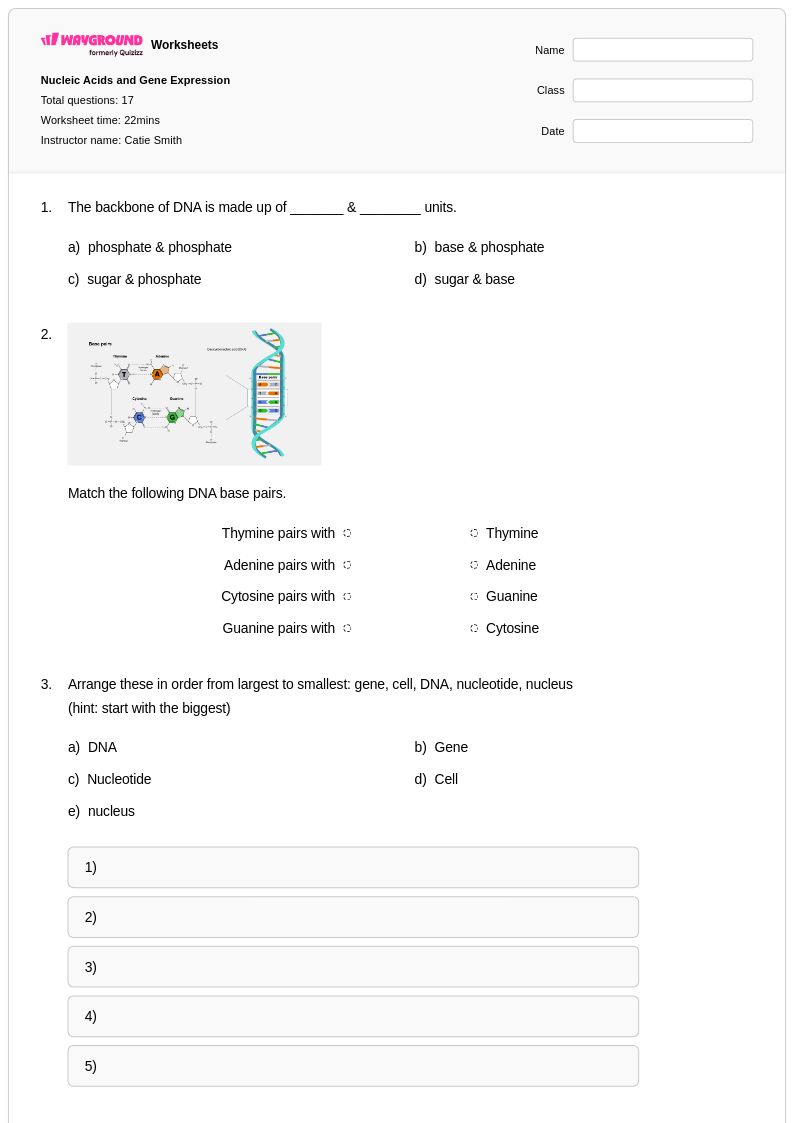
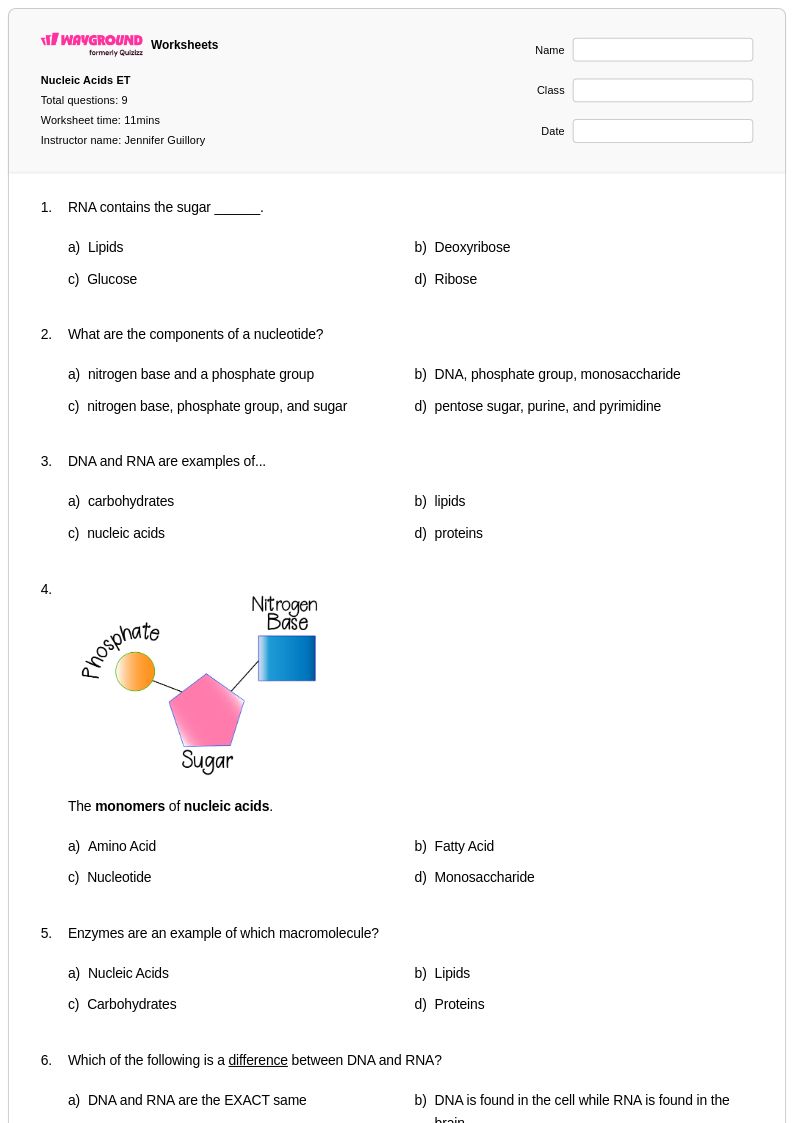
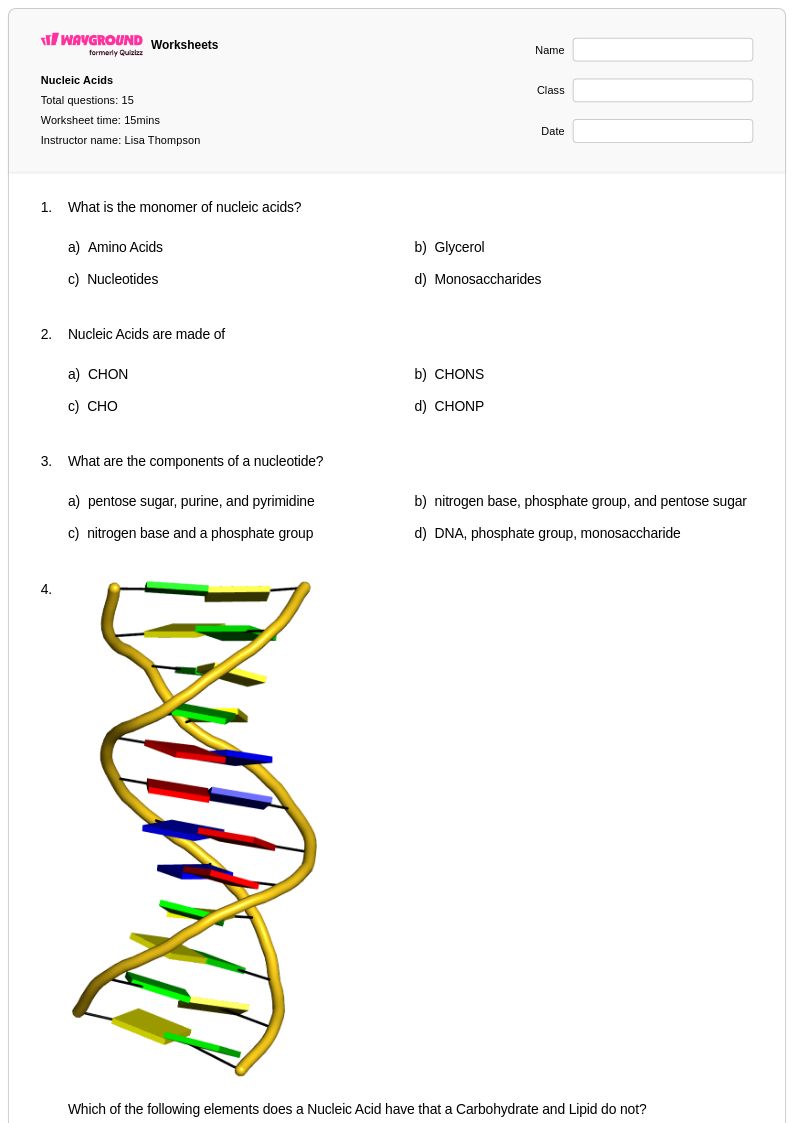
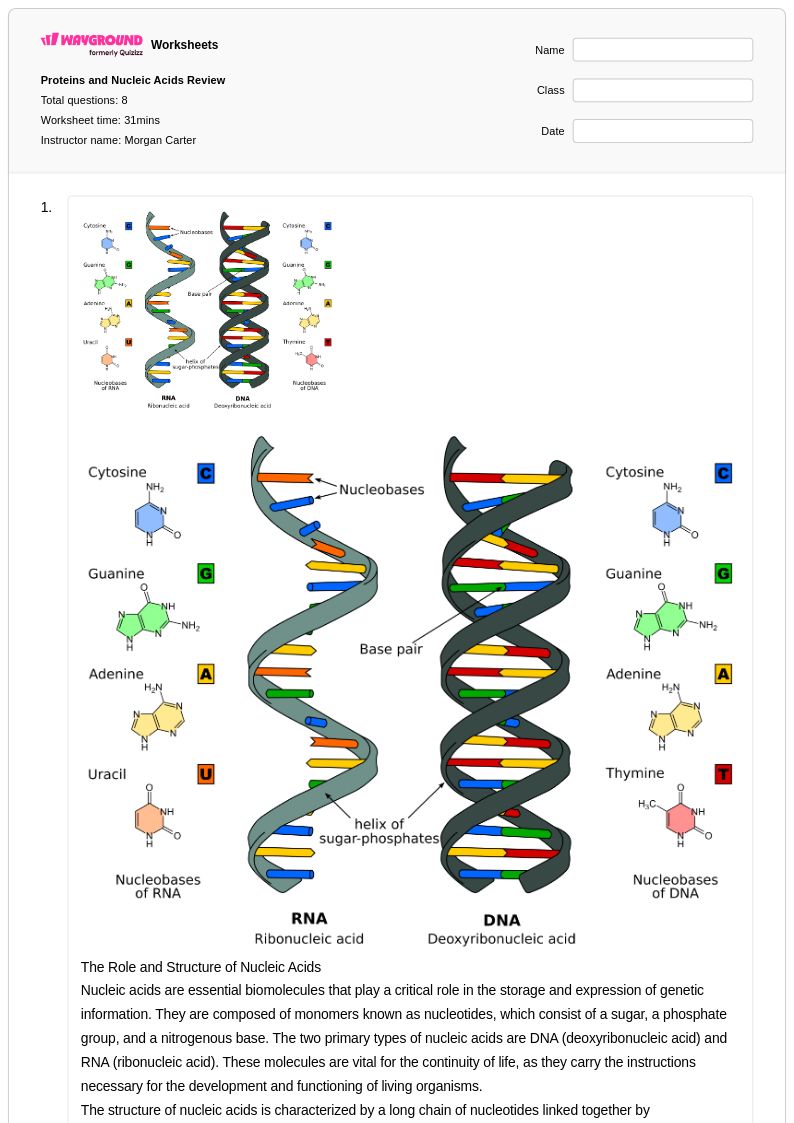
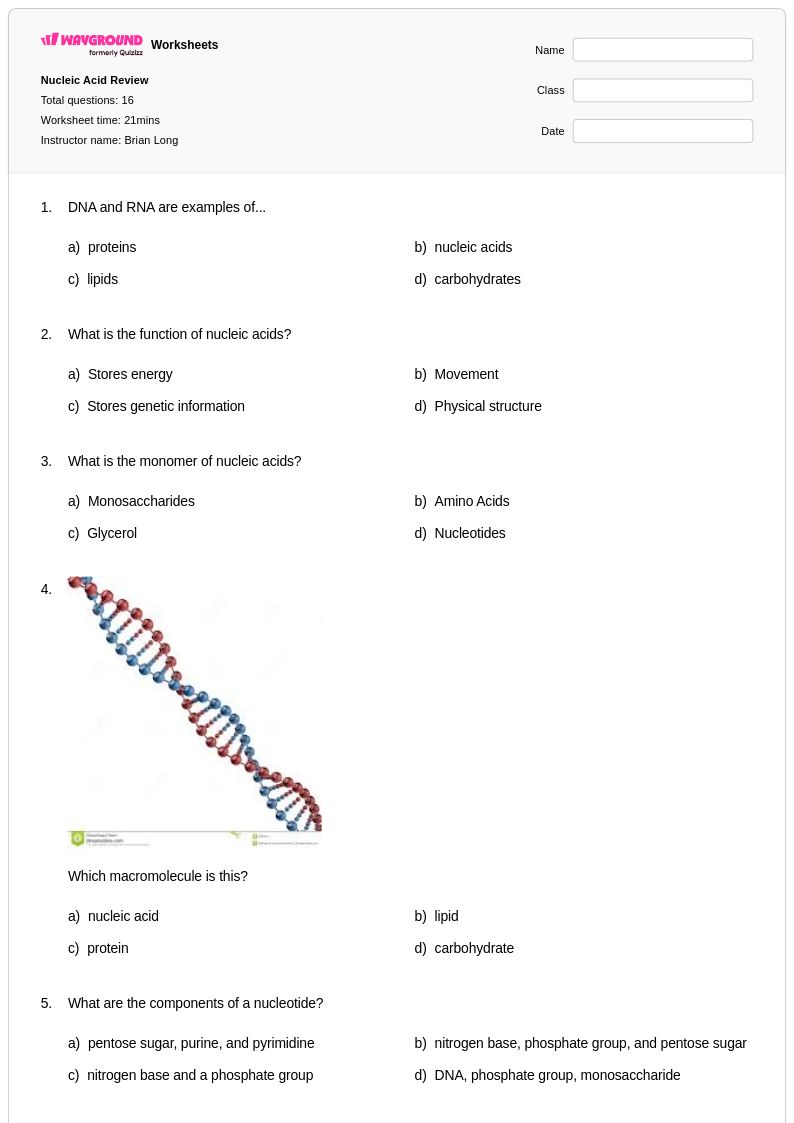
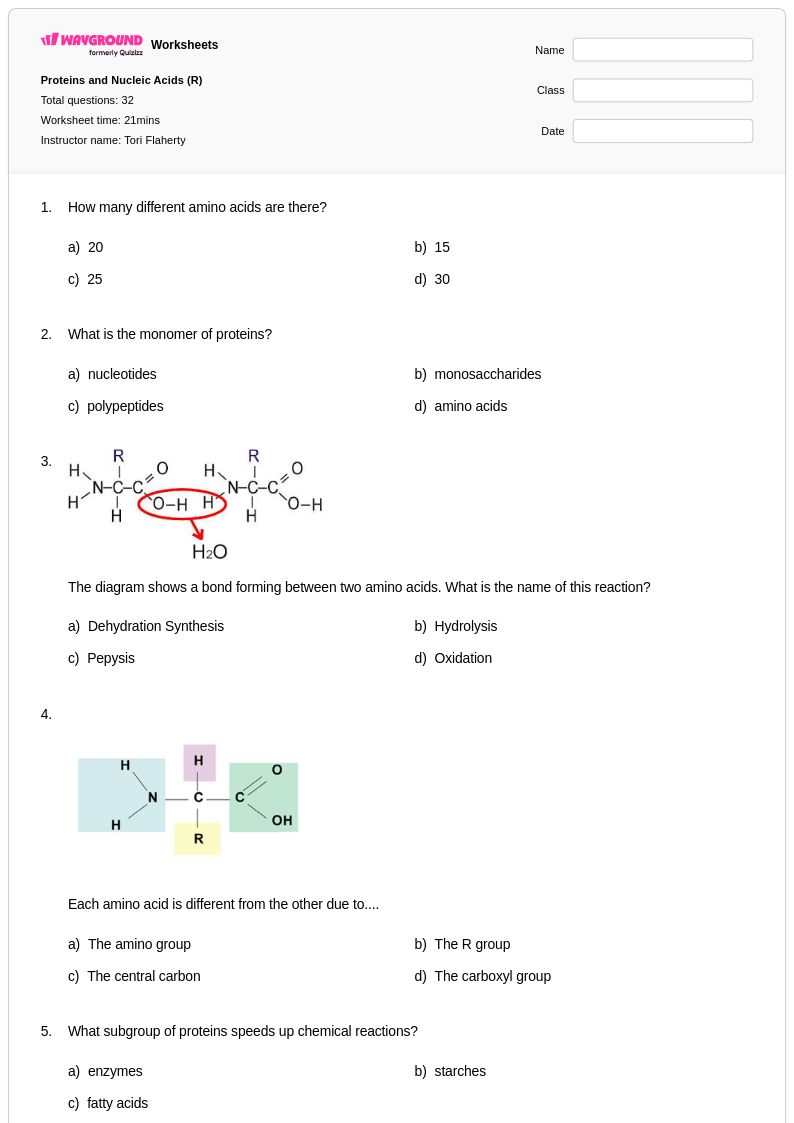
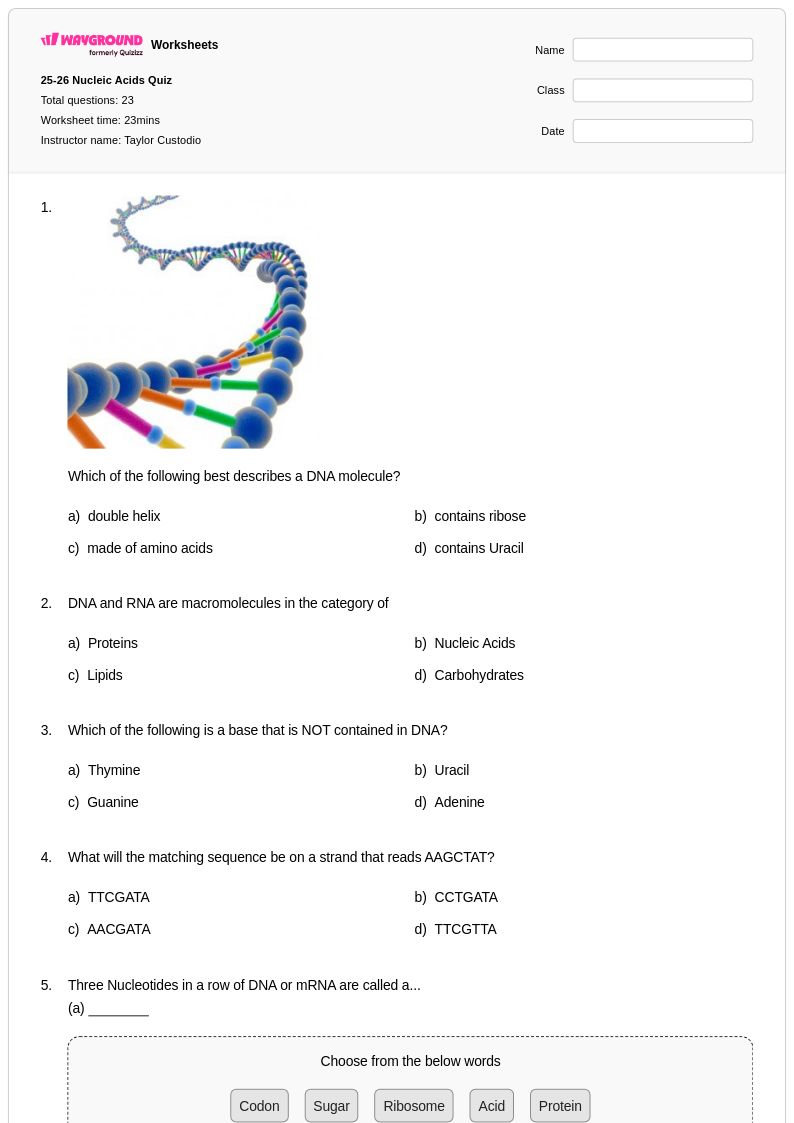
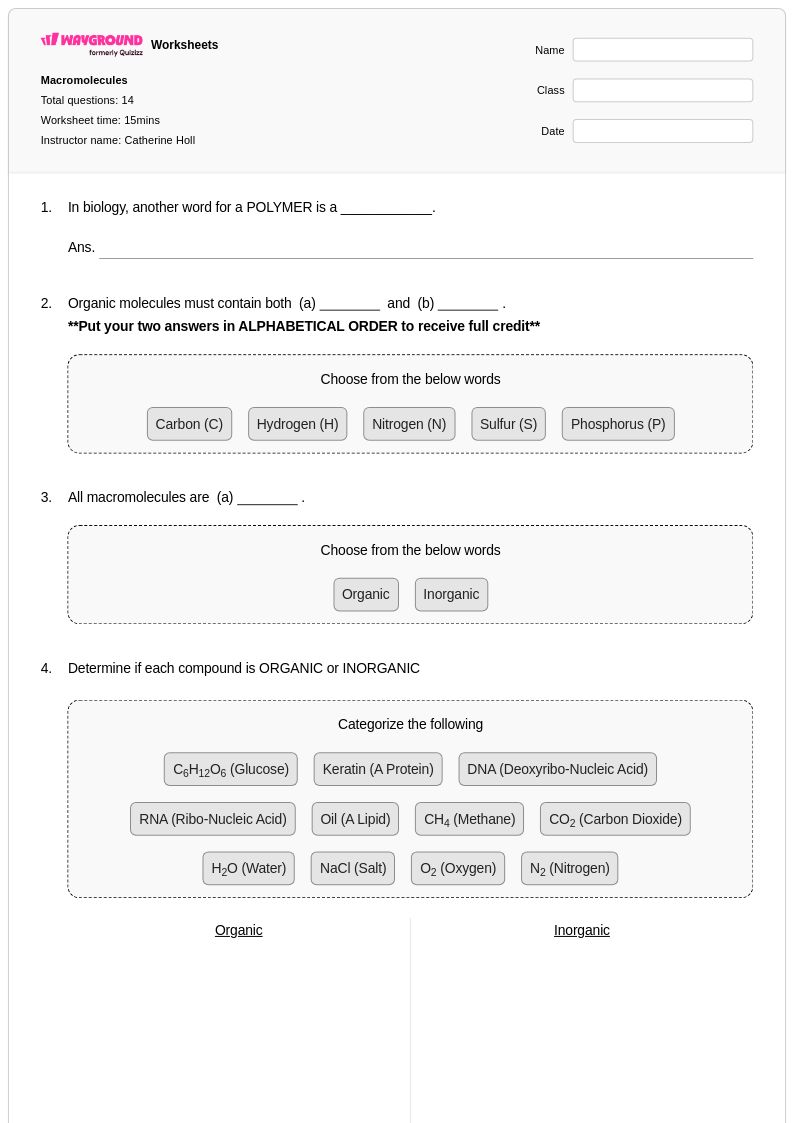
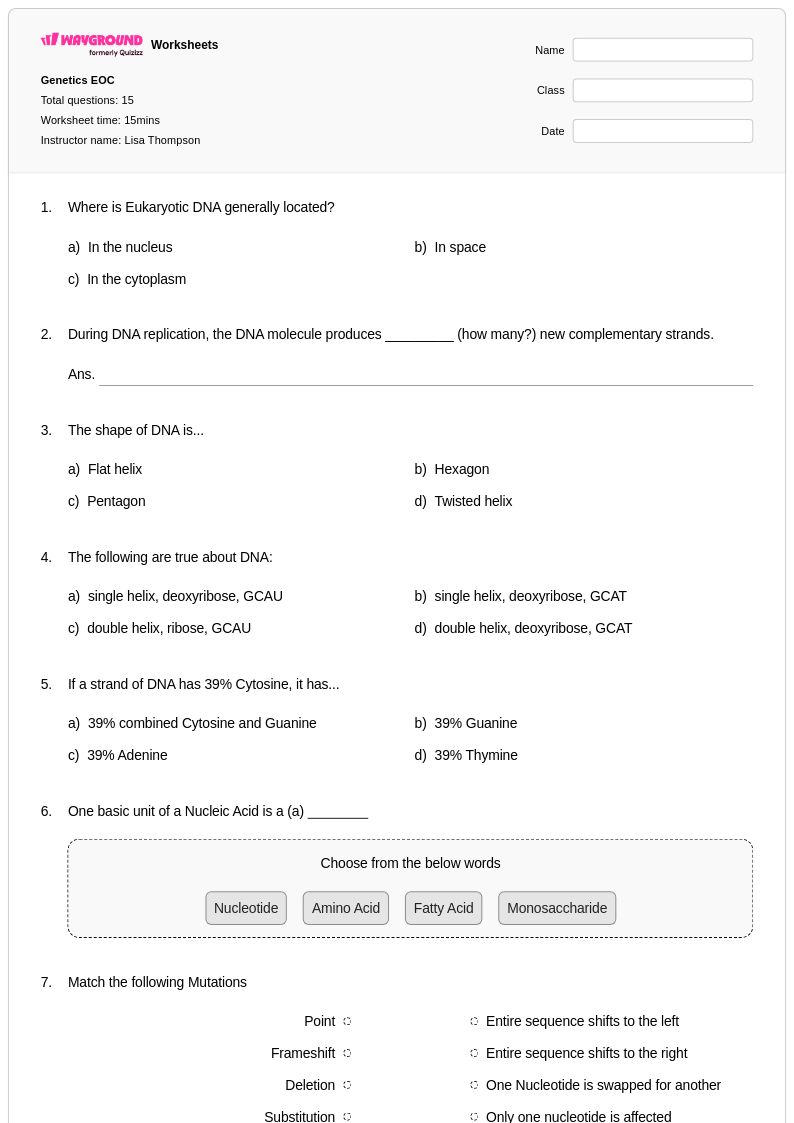
Nucleic acids form the foundation of molecular biology and genetics, making Class 10 nucleic acids worksheets essential resources for students developing their understanding of DNA and RNA structure, function, and replication processes. Wayground's comprehensive collection of nucleic acids worksheets provides targeted practice problems that guide students through complex concepts including base pairing rules, the double helix structure, transcription and translation mechanisms, and the role of nucleotides in heredity. These free printable resources strengthen critical analytical skills as students learn to interpret molecular diagrams, solve base sequence problems, and connect nucleic acid function to protein synthesis. Each worksheet comes with a detailed answer key that supports independent learning and allows students to verify their understanding of challenging molecular biology concepts through systematic practice.
Wayground's extensive library of teacher-created nucleic acids worksheets offers educators millions of high-quality resources specifically designed to support Class 10 biology instruction. The platform's advanced search and filtering capabilities enable teachers to quickly locate materials aligned with specific curriculum standards, whether focusing on DNA replication, RNA transcription, or genetic code translation. These versatile resources are available in both digital and printable PDF formats, allowing for seamless integration into diverse classroom environments and learning modalities. Teachers can customize worksheets to meet individual student needs, utilizing the collection for initial skill-building, targeted remediation of difficult concepts, or enrichment activities that challenge advanced learners to explore complex nucleic acid interactions and their biological significance.
FAQs
How do I teach nucleic acids to high school biology students?
Start by grounding students in nucleotide structure before moving to how nucleotides polymerize into DNA and RNA. Use visual models of the double helix to reinforce base pairing rules (A-T and G-C for DNA; A-U and G-C for RNA), then connect structure to function by tracing the central dogma from DNA replication through transcription and translation. Scaffolding these concepts sequentially prevents students from treating each process as isolated memorization.
What exercises help students practice DNA and RNA structure?
Complementary strand completion exercises are highly effective for reinforcing base pairing rules for both DNA and RNA. Labeling diagrams of the double helix, matching nucleotide components, and sequencing the steps of replication or transcription all build procedural fluency. Practice problems that ask students to interpret a DNA template and produce a corresponding mRNA strand connect structure directly to function.
What mistakes do students commonly make when learning about nucleic acids?
A frequent error is confusing the base pairing rules for DNA and RNA, particularly forgetting that uracil replaces thymine in RNA. Students also commonly conflate the processes of transcription and translation, misidentifying which molecule is produced in each step. Another persistent misconception is treating the two DNA strands as identical rather than complementary and antiparallel.
How can I help struggling students understand the central dogma of molecular biology?
Break the central dogma into three discrete, labeled stages: DNA replication, transcription, and translation. Use a consistent visual flowchart students annotate themselves, naming the inputs, outputs, and location of each process. Targeted practice problems that isolate one stage at a time allow students to build mastery incrementally before integrating all three into a unified model.
How do I use Wayground's nucleic acids worksheets in my classroom?
Wayground's nucleic acids worksheets are available as printable PDFs for traditional classroom use and in digital formats for technology-integrated environments, making them flexible for in-class instruction, homework, or remote learning. Teachers can also host the worksheets as a quiz directly on Wayground, enabling real-time student responses and streamlined review. Each worksheet includes a complete answer key, supporting both teacher-led correction and independent student self-assessment.
How can I differentiate nucleic acids instruction for students with different learning needs?
On Wayground, teachers can apply student-level accommodations such as Read Aloud for students who benefit from audio support, reduced answer choices to lower cognitive load for those who find complex molecular terminology overwhelming, and extended time per question for students who need additional processing time. These settings can be assigned to individual students while the rest of the class receives default settings, and they carry over across future sessions without requiring reconfiguration.