Free Printable Blood Typing Worksheets for Class 10
Explore Wayground's comprehensive collection of Class 10 blood typing worksheets and printables that help students master ABO and Rh blood group systems through engaging practice problems, free PDF resources, and detailed answer keys.
Explore printable Blood Typing worksheets for Class 10
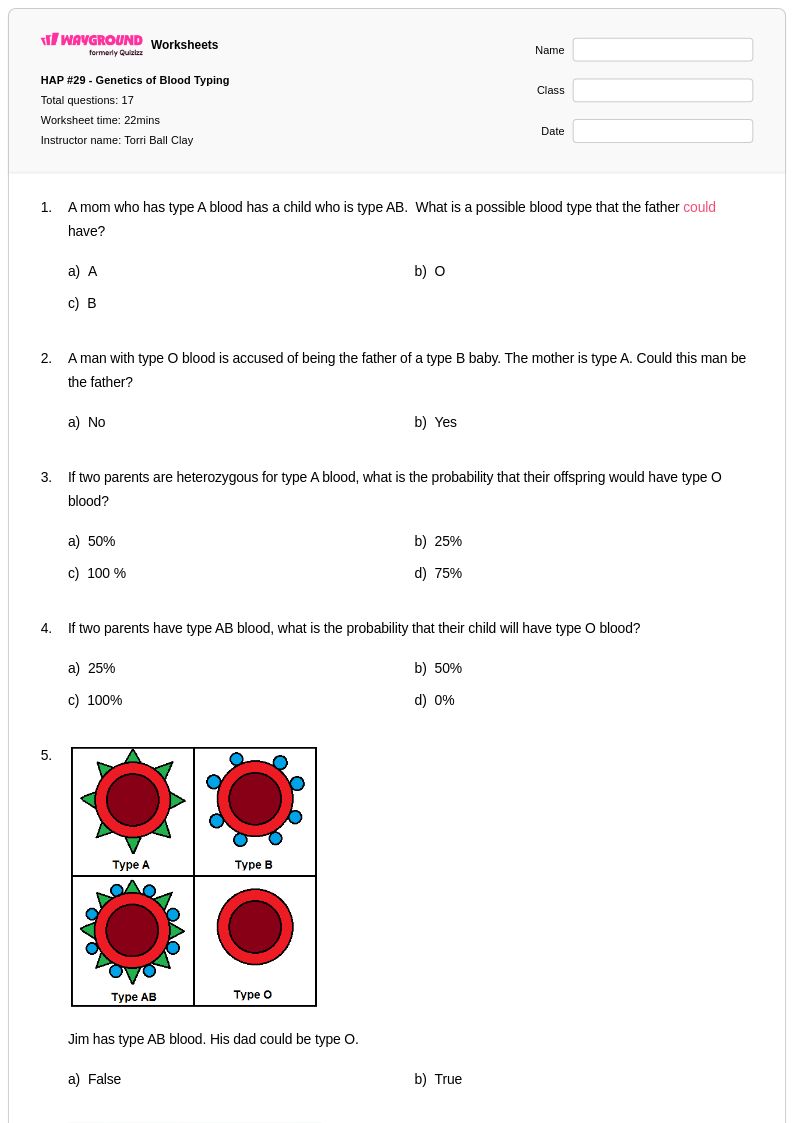
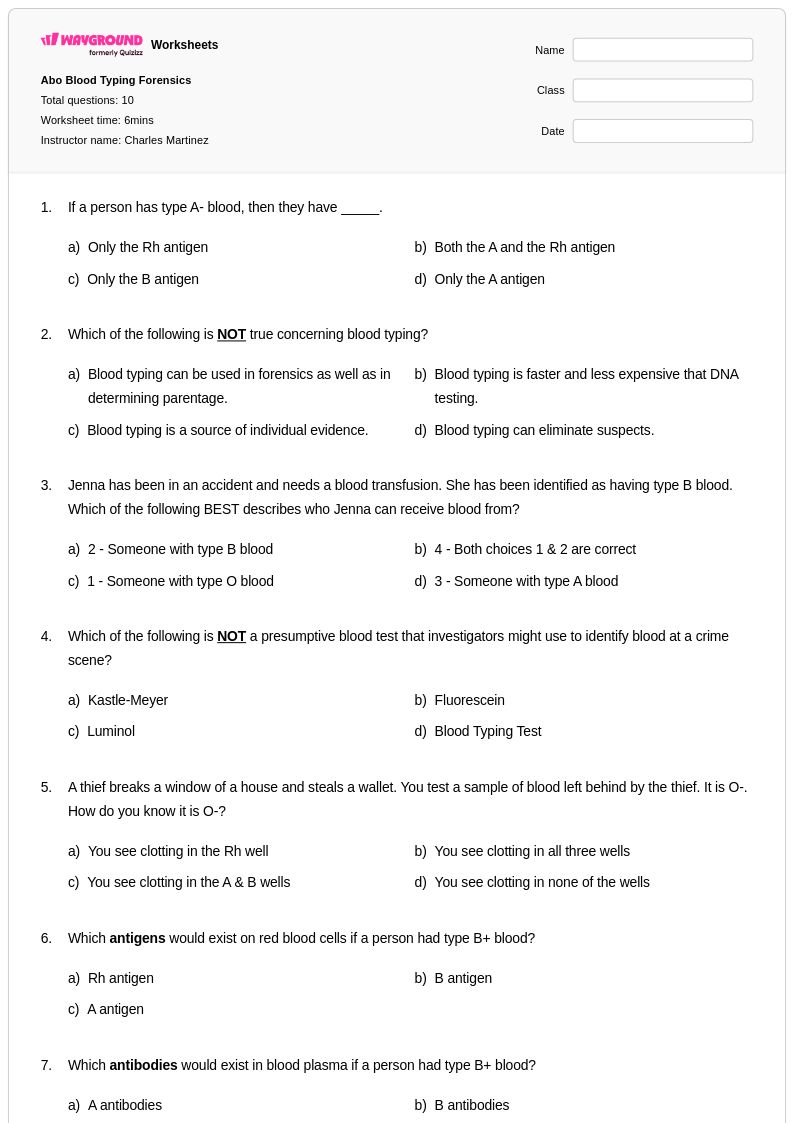
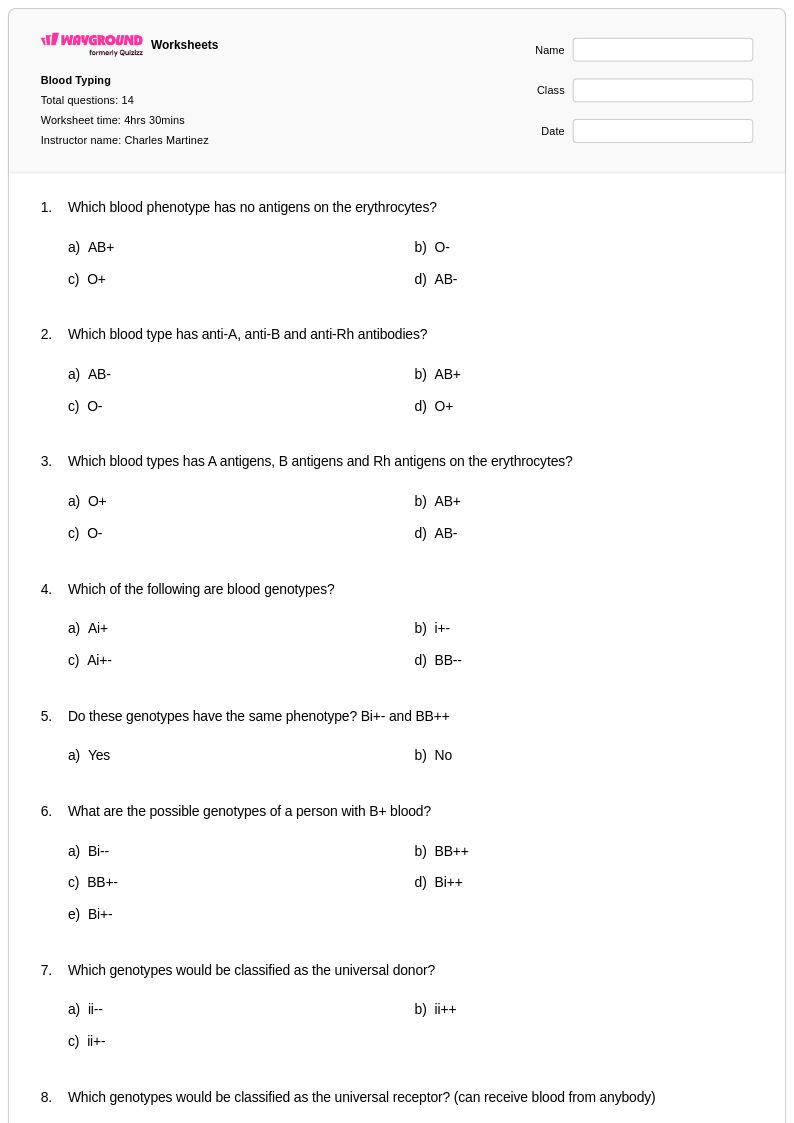
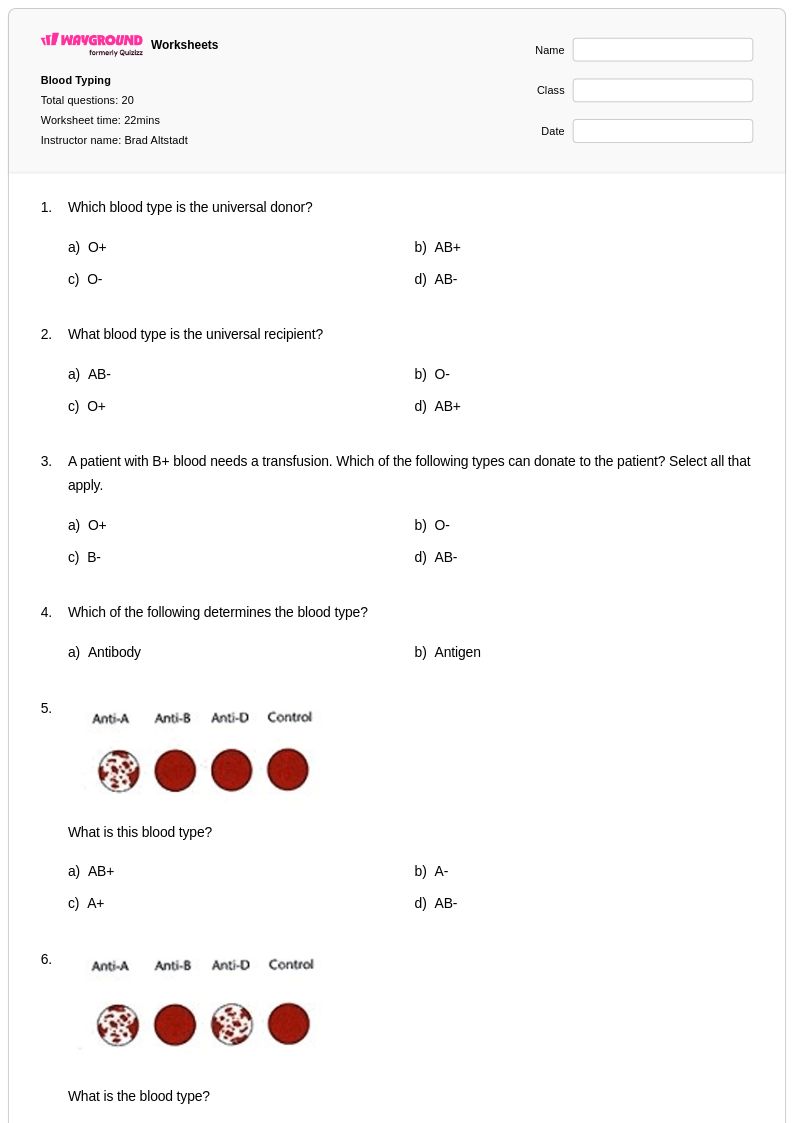
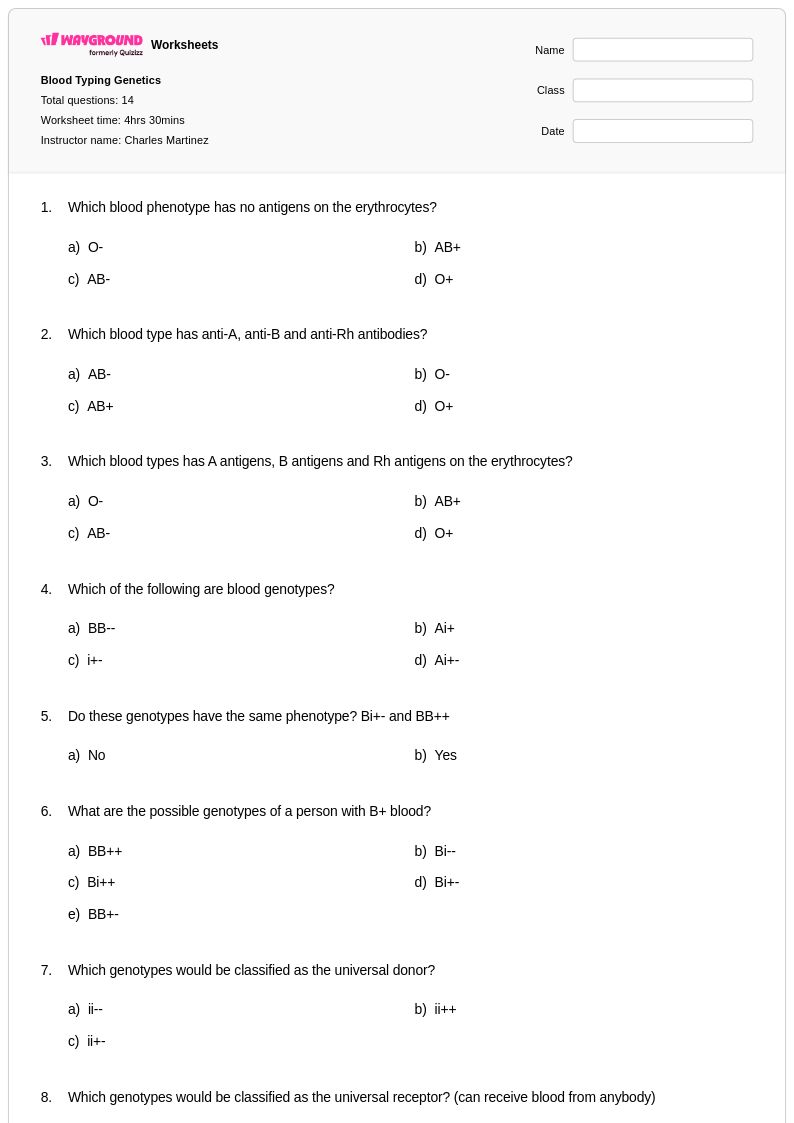
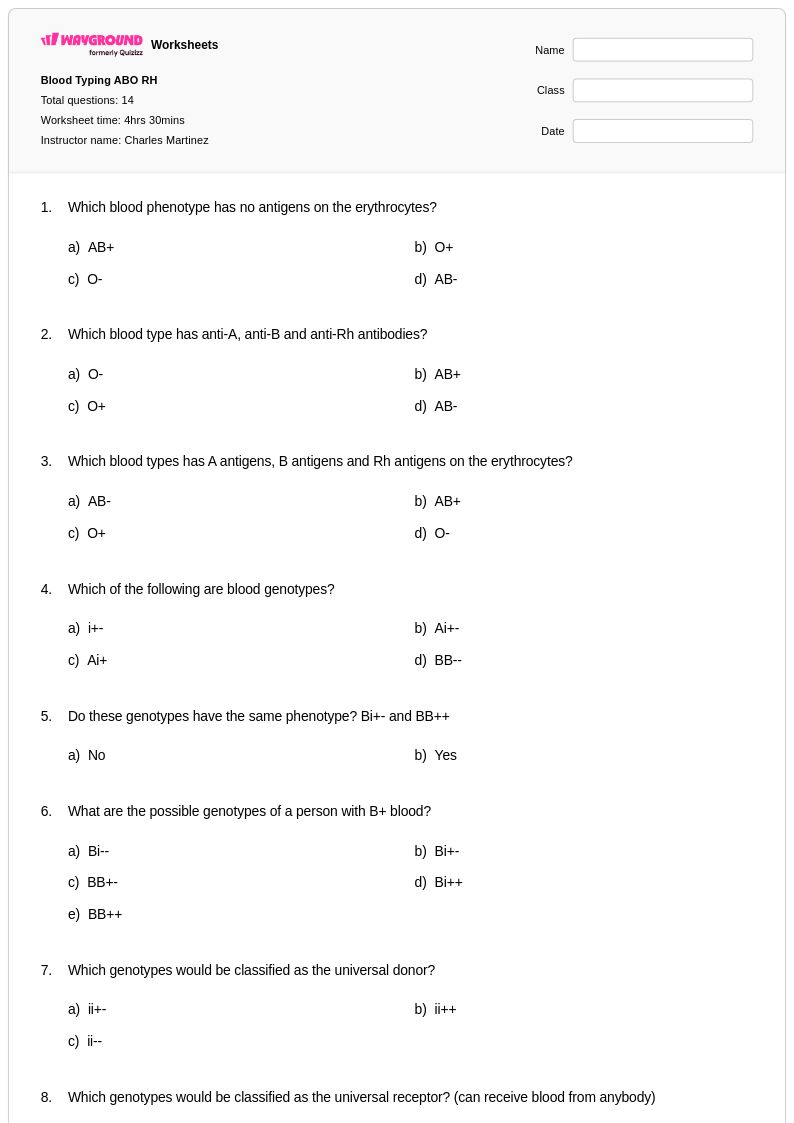
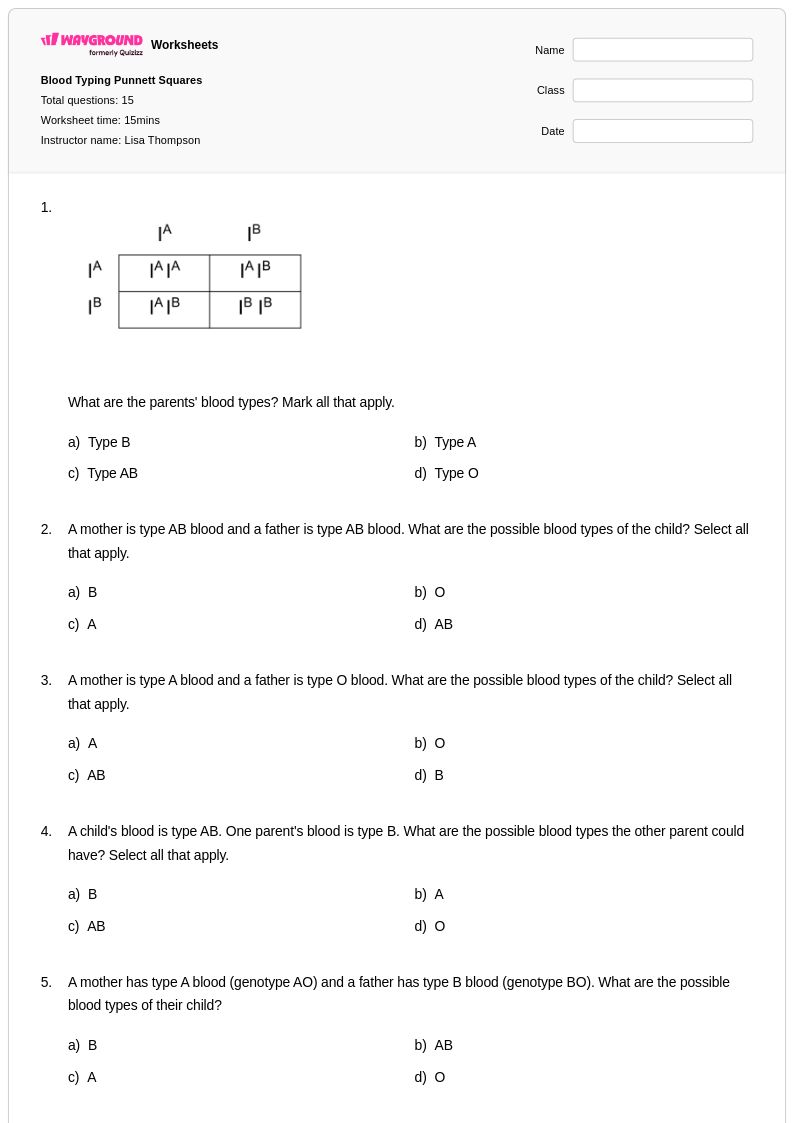
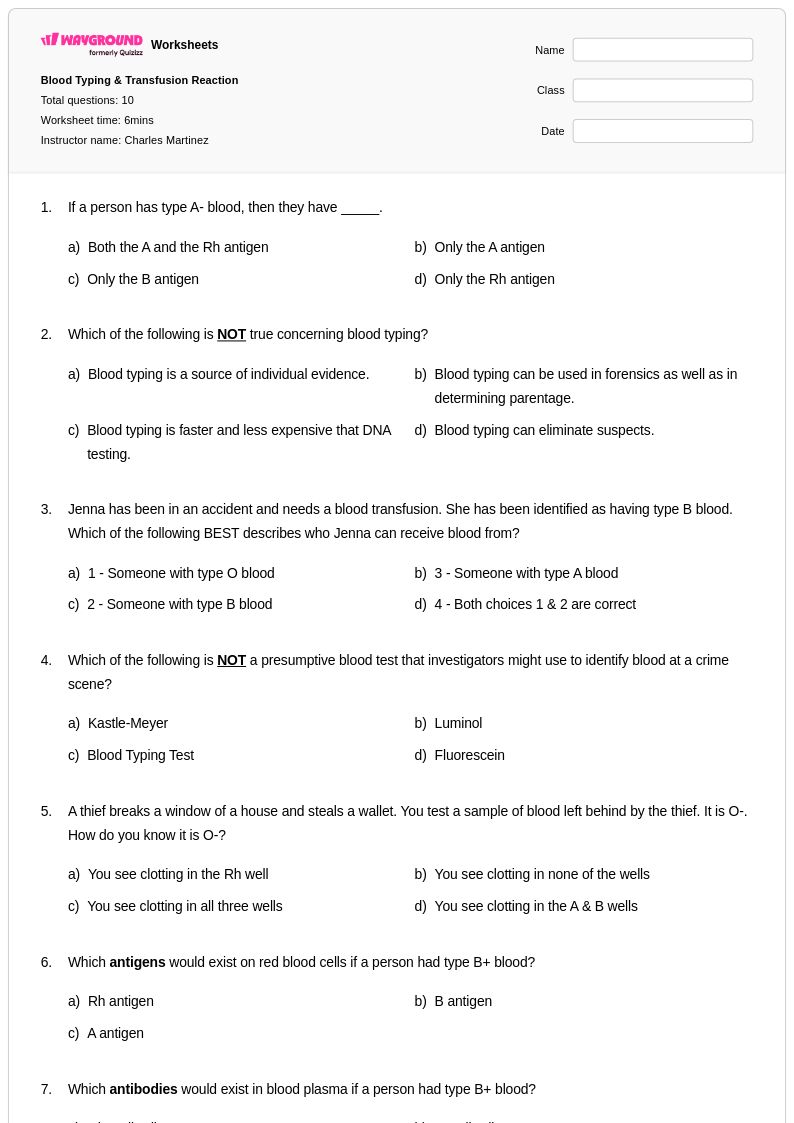
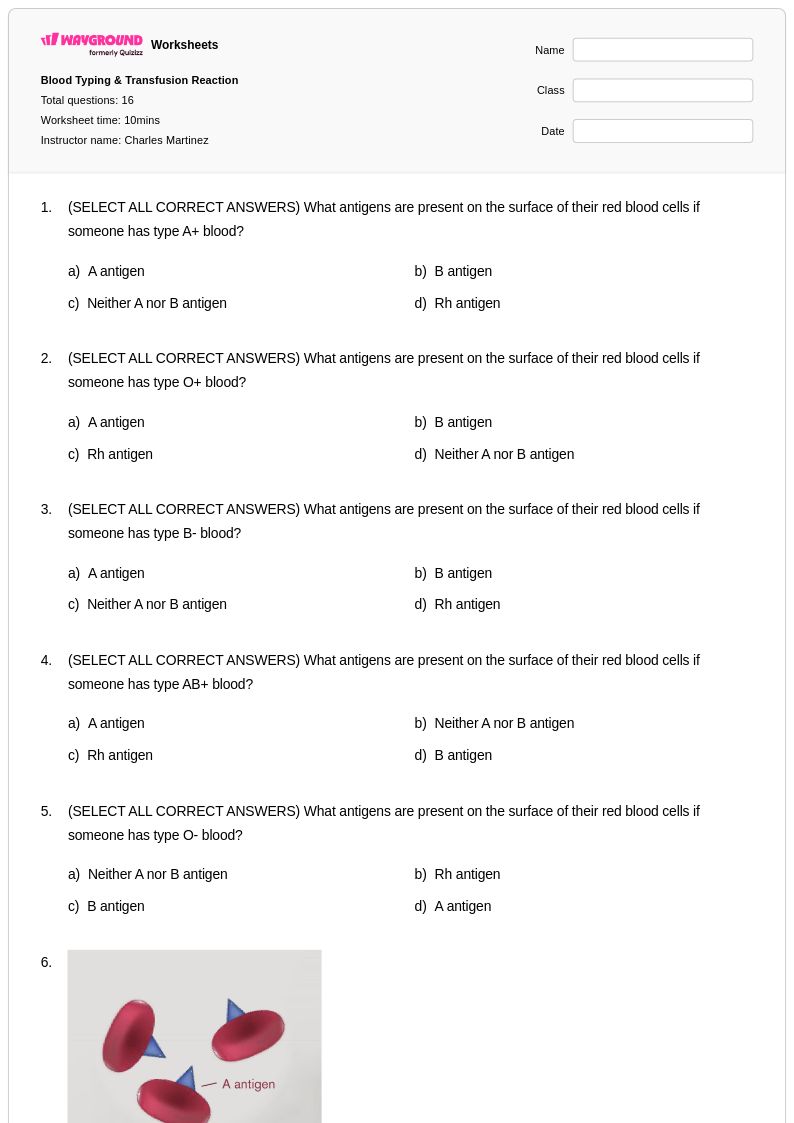
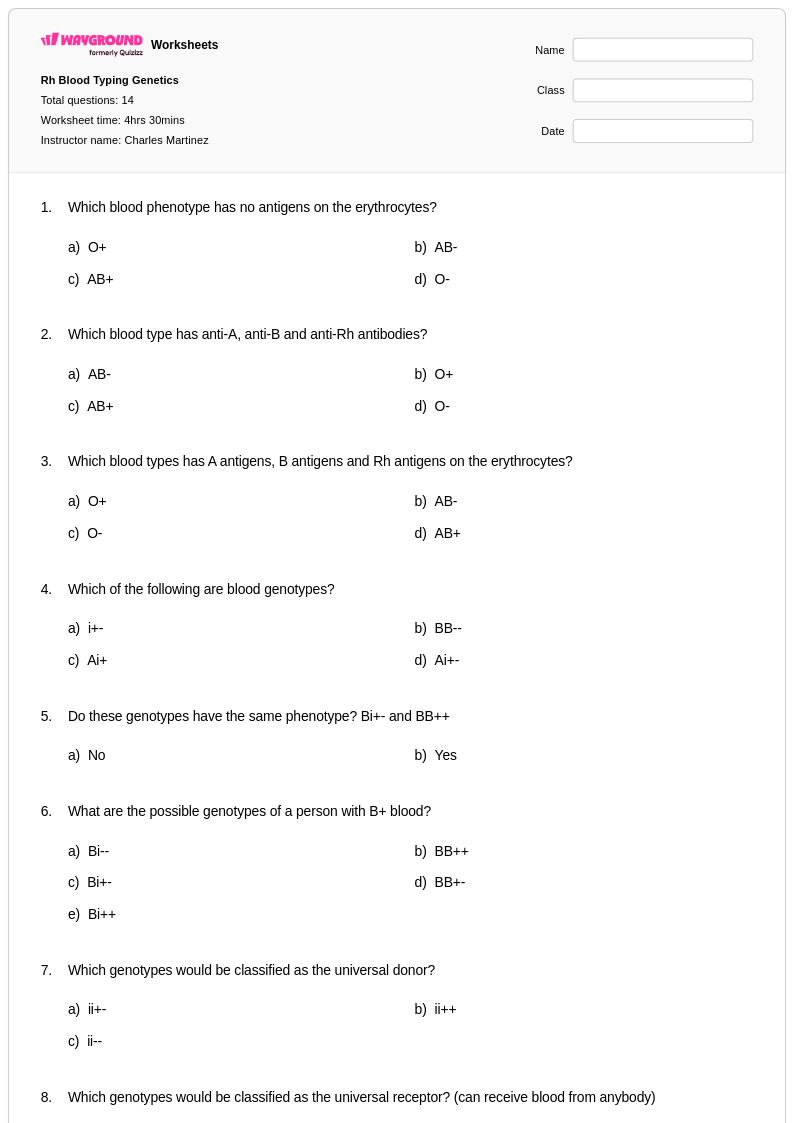
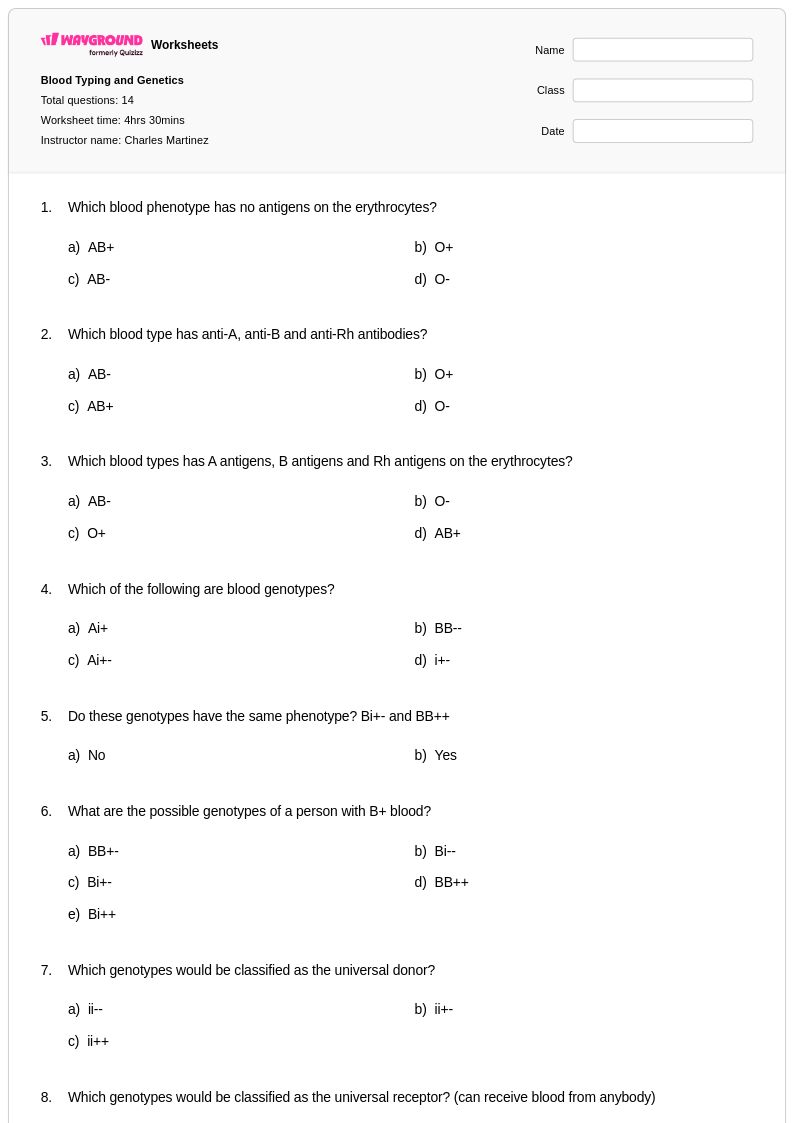
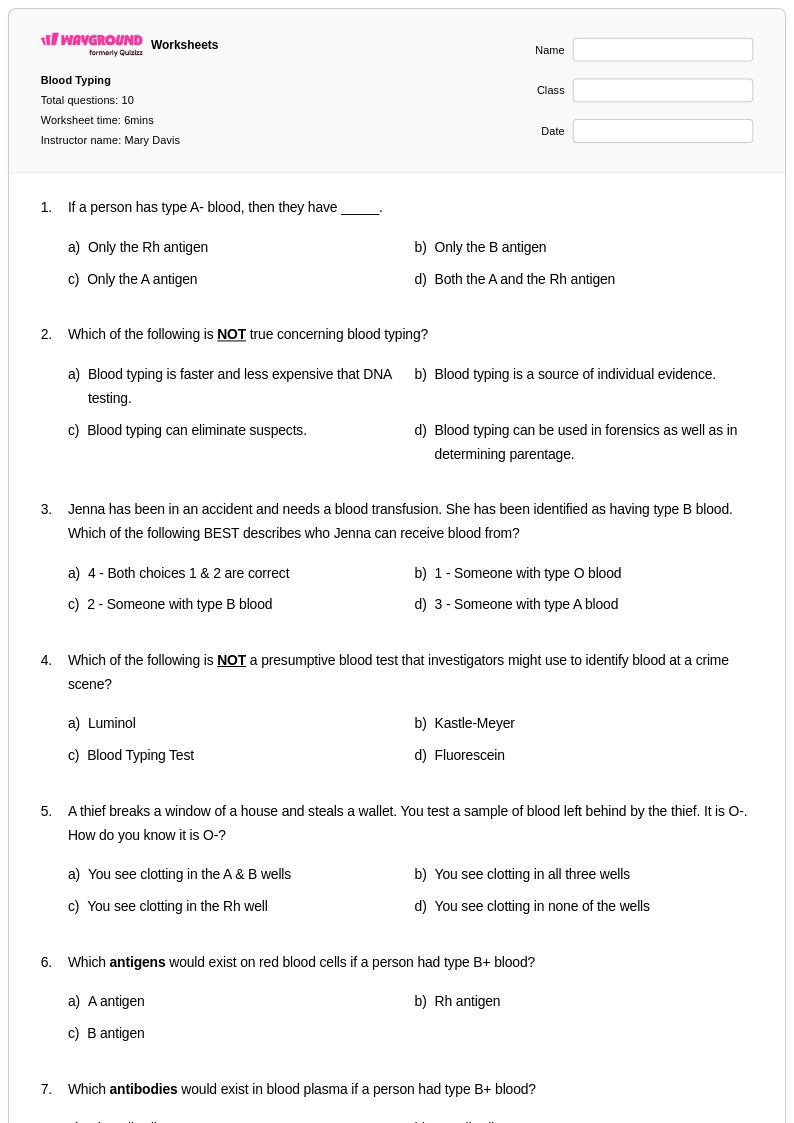
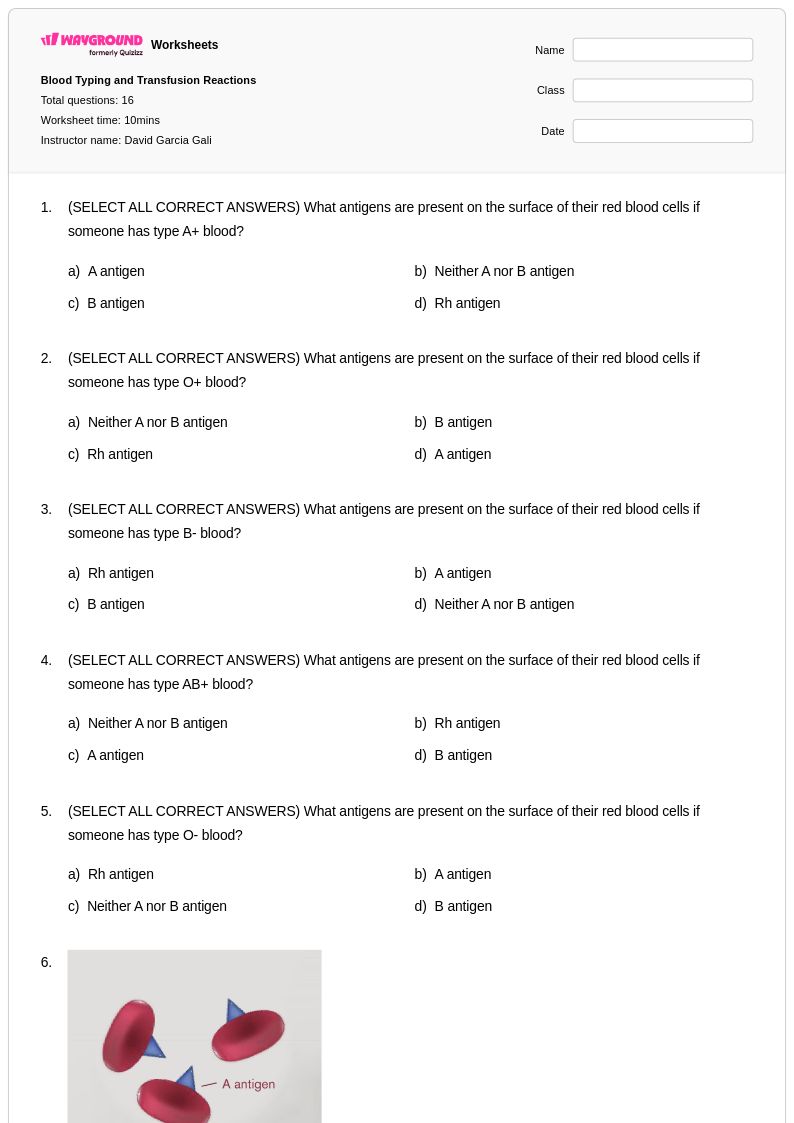
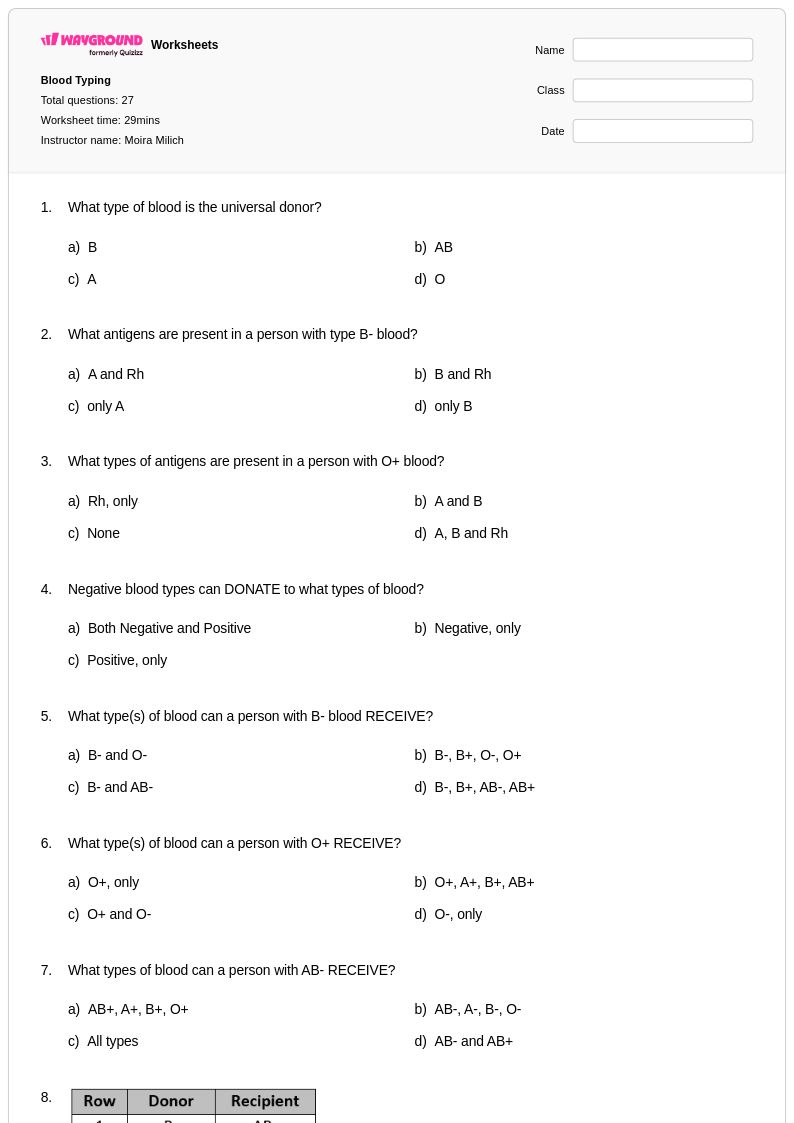
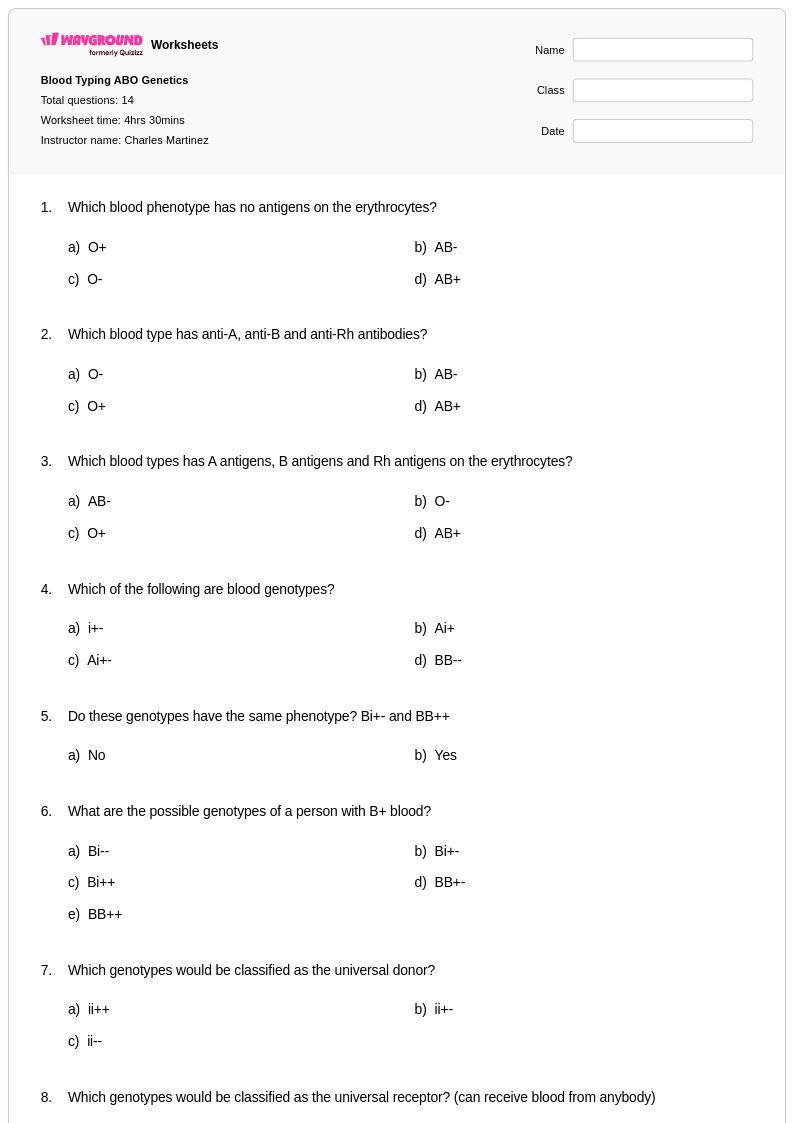
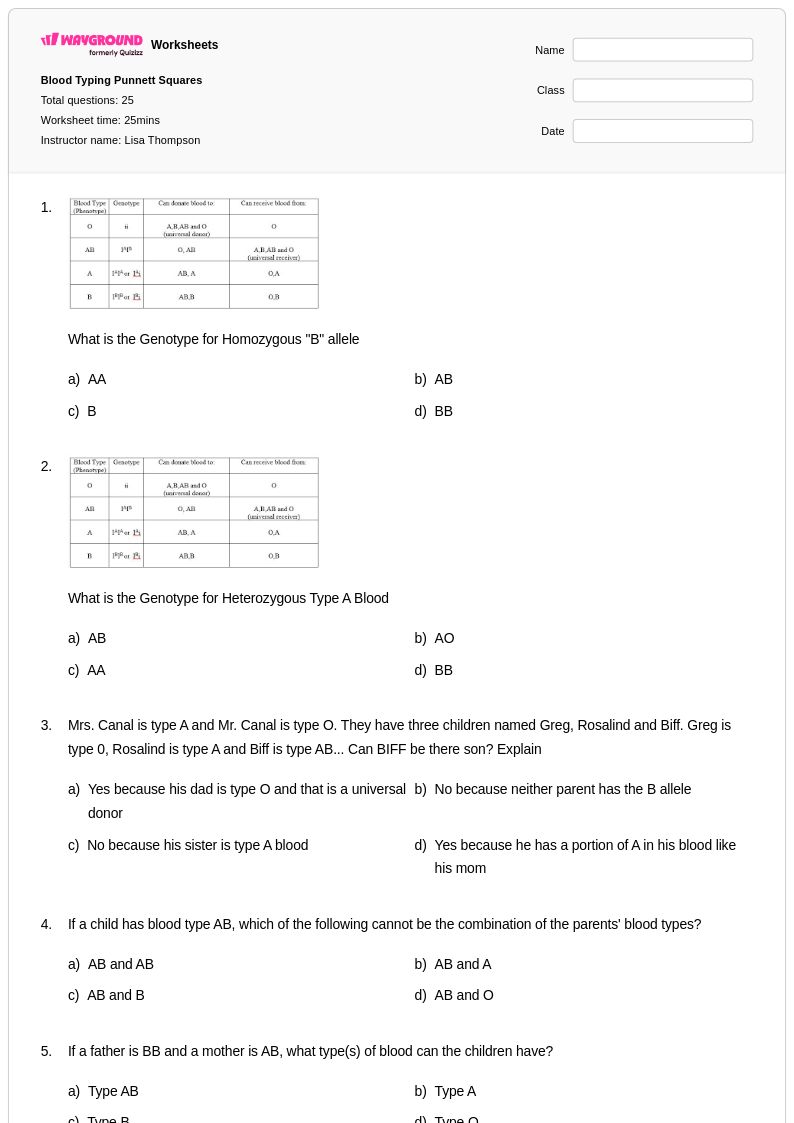
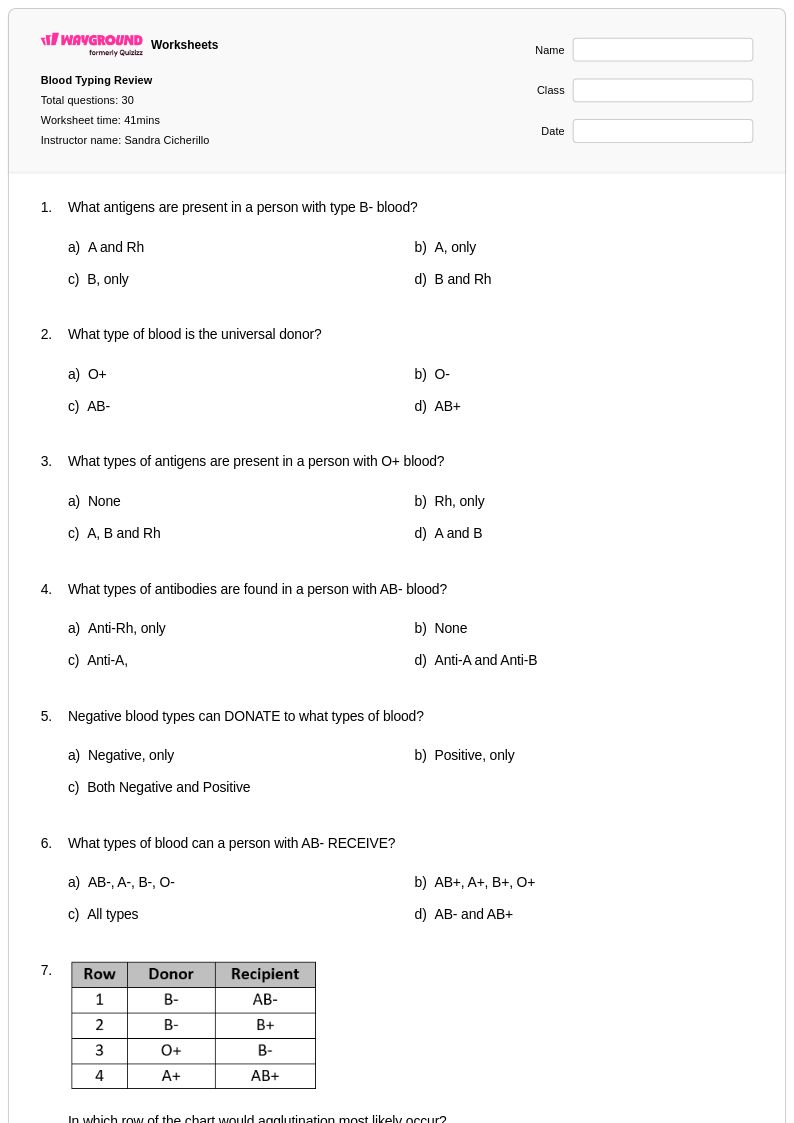
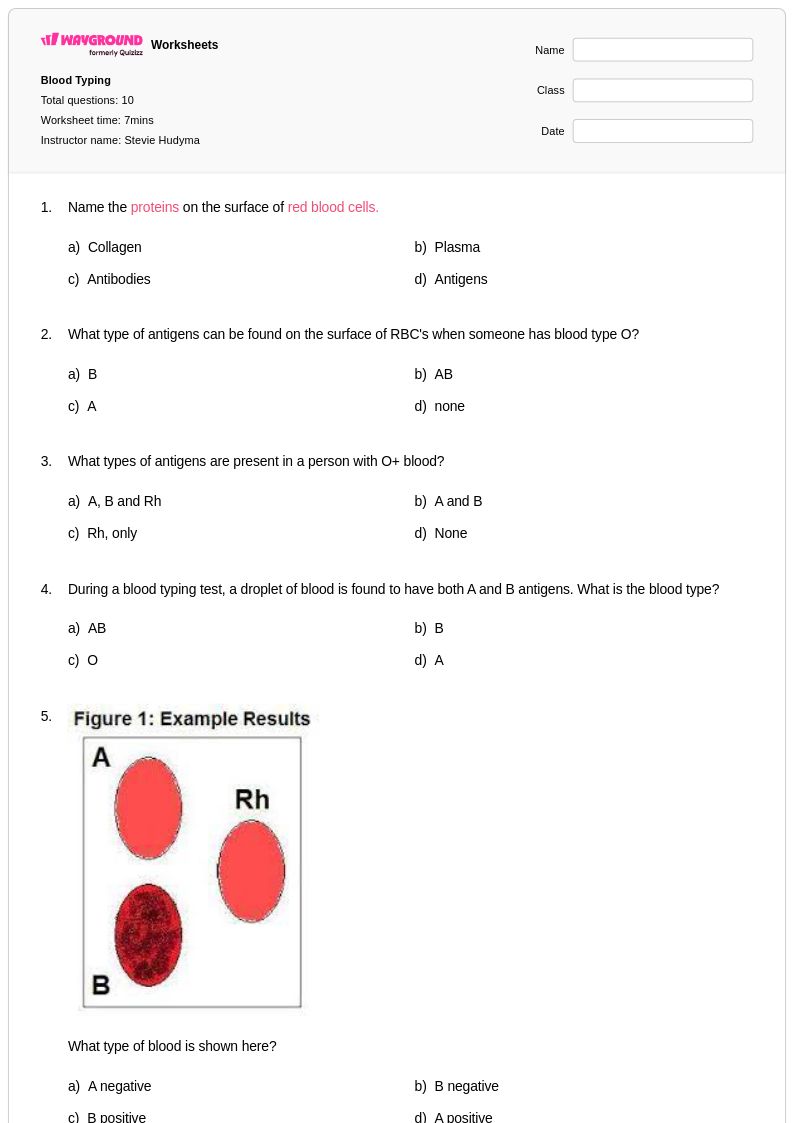
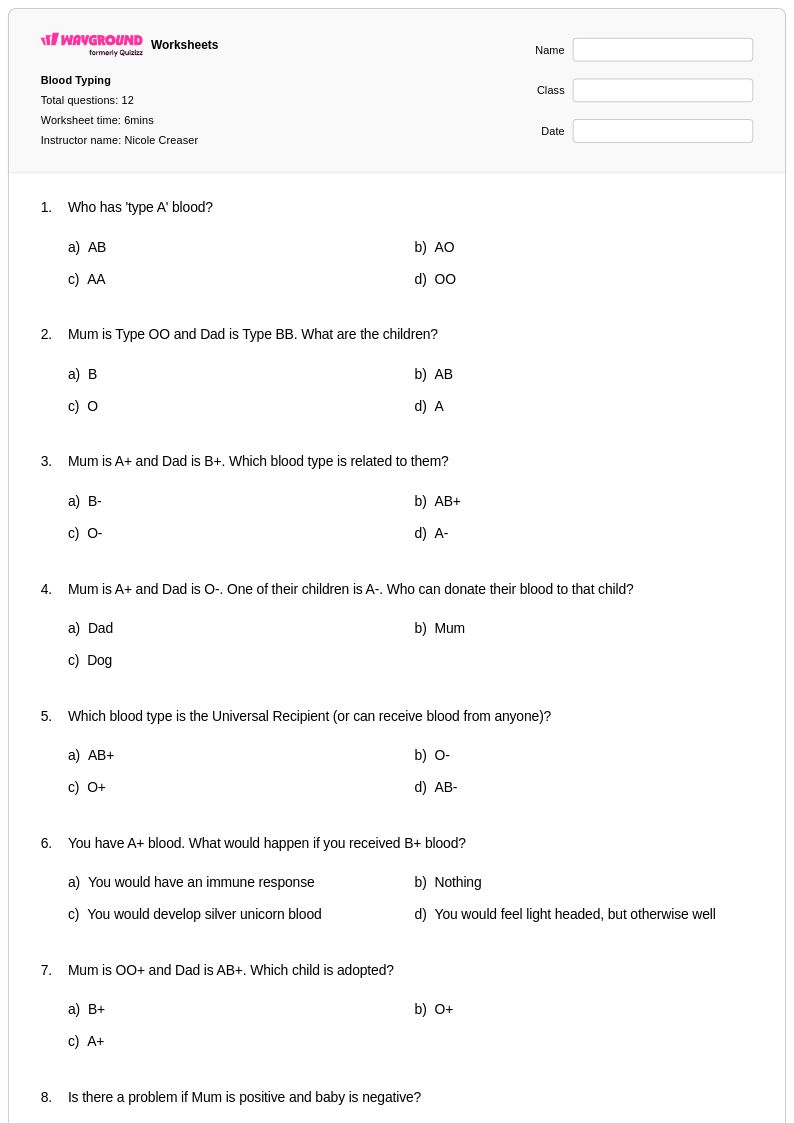
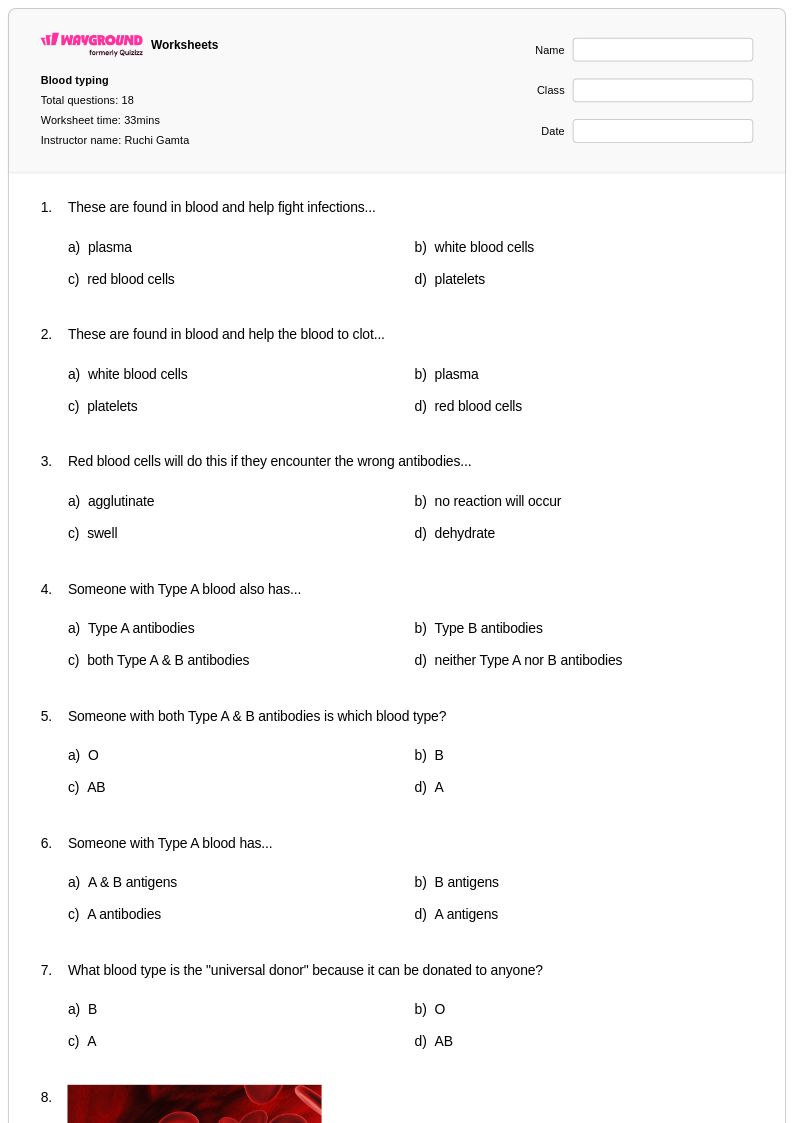
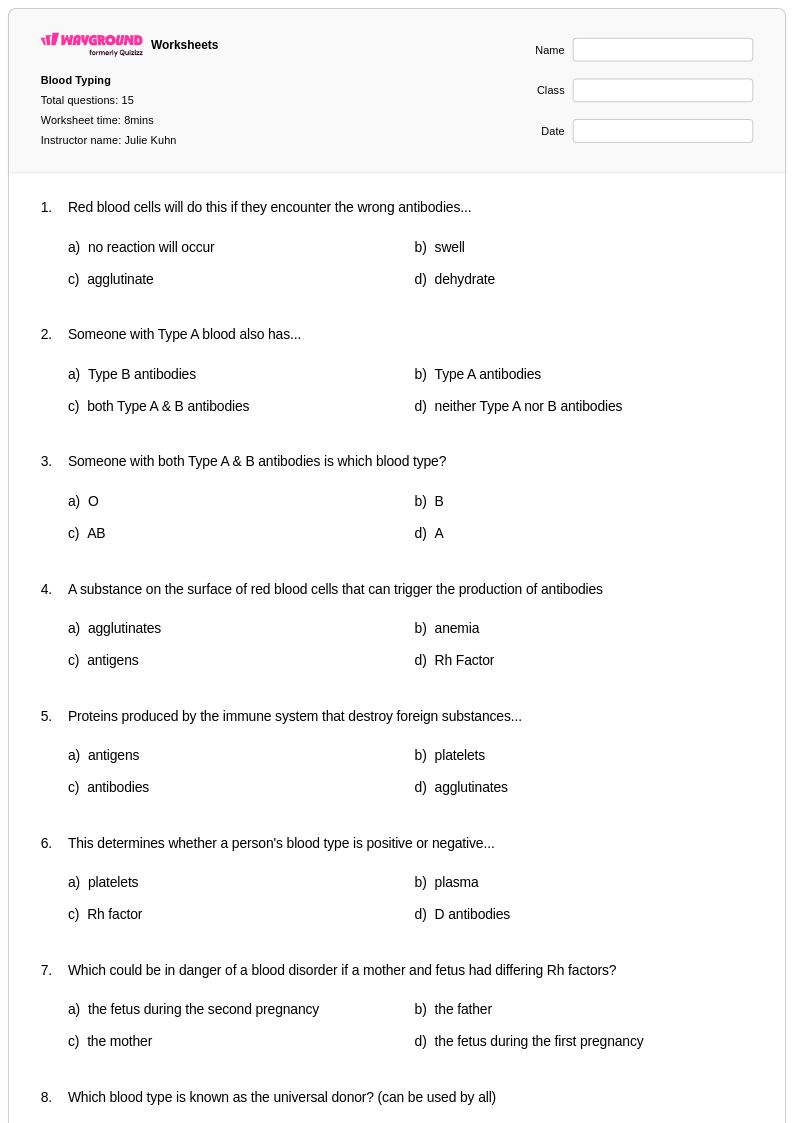
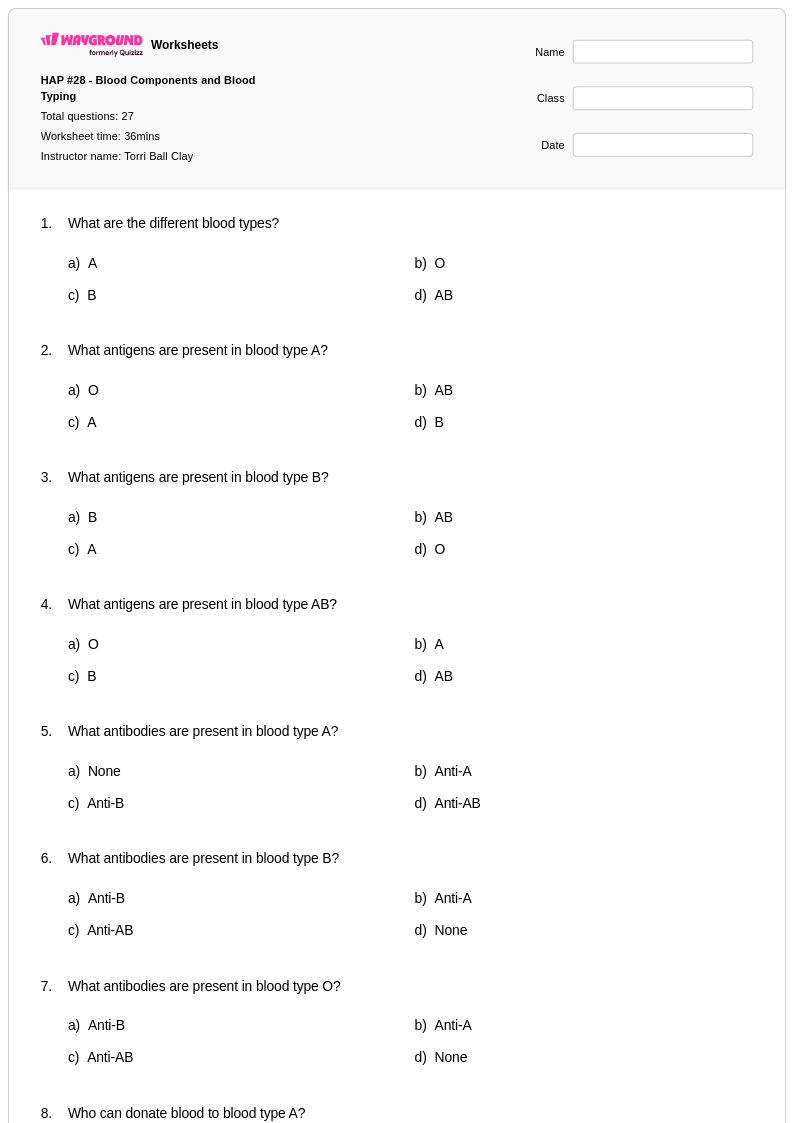
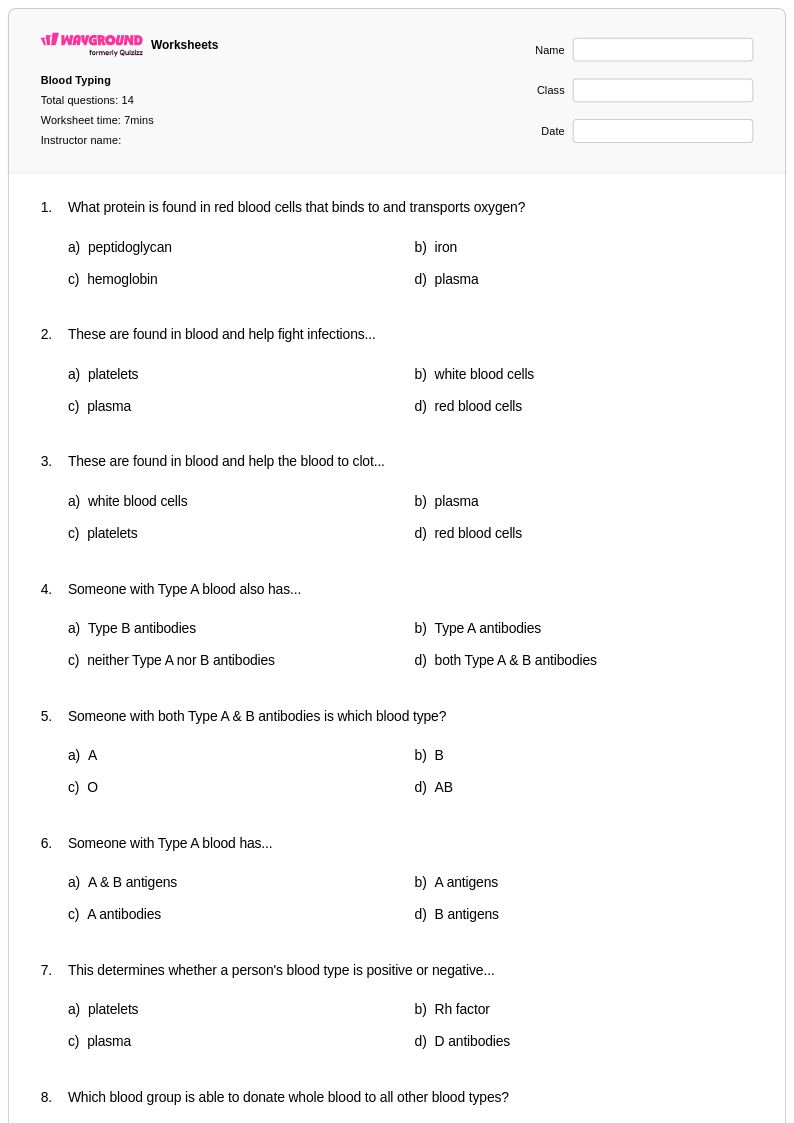
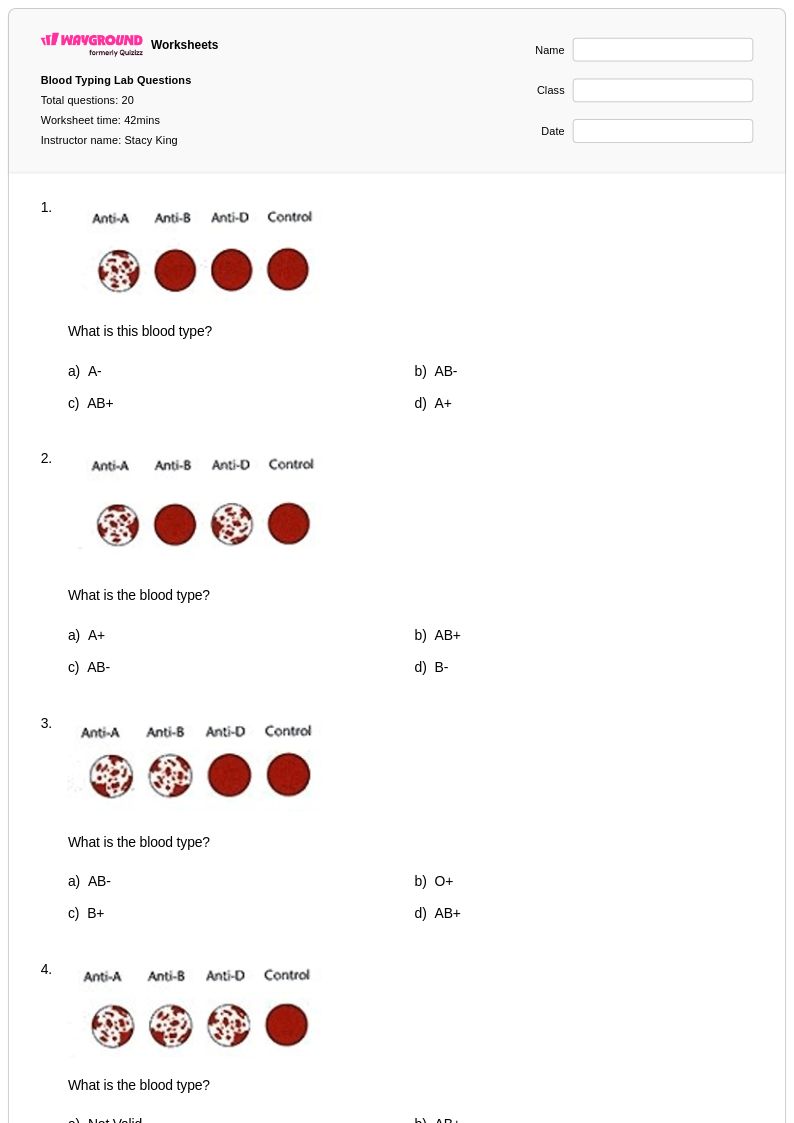
Blood typing worksheets for Class 10 students available through Wayground (formerly Quizizz) provide comprehensive practice with ABO and Rh blood group systems, genetic inheritance patterns, and clinical applications in transfusion medicine. These expertly designed resources strengthen critical thinking skills as students analyze Punnett squares for blood type inheritance, interpret antigen and antibody interactions, and solve complex genetic problems involving multiple alleles. The worksheet collections include detailed answer keys that guide students through step-by-step problem-solving processes, while printable pdf formats ensure accessibility for both classroom instruction and independent study. Free practice problems cover essential concepts from basic ABO genetics to advanced scenarios involving paternity testing and blood compatibility, helping students master the molecular basis of blood typing and its real-world medical significance.
Wayground (formerly Quizizz) supports biology educators with an extensive library of millions of teacher-created blood typing resources that can be easily located through robust search and filtering capabilities designed specifically for Class 10 curriculum requirements. The platform's standards alignment features ensure that worksheets meet established learning objectives for genetics and human biology, while differentiation tools allow teachers to modify content complexity for diverse learning needs within the classroom. Flexible customization options enable educators to adapt existing materials or create targeted assessments that address specific skill gaps, with resources available in both printable and digital pdf formats to accommodate various instructional preferences. These comprehensive tools streamline lesson planning while providing effective options for remediation, enrichment activities, and systematic skill practice that builds student confidence in applying genetic principles to blood typing scenarios.
FAQs
How do I teach blood typing to high school biology students?
Start by building a foundation in the ABO and Rh blood group systems before moving into the genetics behind blood inheritance. Use Punnett squares to show how blood type alleles are passed from parents to offspring, emphasizing that ABO is a classic example of codominance and multiple alleles. Once students understand the genetic principles, connect them to real-world applications like transfusion compatibility and blood typing in medical settings, which gives the content immediate relevance and helps students retain abstract concepts.
What worksheets or exercises help students practice blood type genetics?
The most effective practice involves Punnett square problems for ABO and Rh inheritance, transfusion compatibility scenarios where students determine safe donor-recipient pairings, and antigen-antibody interaction analysis. Exercises that require students to work backward from a child's blood type to determine possible parental genotypes are especially useful for reinforcing codominance and multiple allele logic. Mixing problem types within a single practice set ensures students can apply their knowledge flexibly rather than pattern-matching a single question format.
What mistakes do students commonly make when learning blood typing?
One of the most frequent errors is confusing genotype with phenotype in ABO blood typing, particularly with type A and type B, which can each result from two different genotype combinations. Students also commonly misapply standard dominant-recessive logic to ABO, forgetting that A and B alleles are codominant with each other but both dominant over O. A third common misconception is treating the Rh factor as part of the ABO system rather than as an independent antigen, which leads to errors in transfusion compatibility problems.
How do I use Wayground's blood typing worksheets in my classroom?
Wayground's blood typing worksheets are available as printable PDFs for traditional classroom use and in digital formats for technology-integrated environments, giving teachers flexibility based on their classroom setup. You can also host worksheets as a quiz directly on Wayground, which allows for immediate feedback and easy progress tracking. Each worksheet includes a detailed answer key, supporting both independent student practice and teacher-led review sessions.
How do I differentiate blood typing instruction for students at different skill levels?
For struggling learners, begin with visual aids showing blood type phenotypes and basic antigen-antibody labels before introducing genetic crosses. Advanced students can be challenged with multi-generational inheritance problems or forensic blood typing scenarios that require integrating both ABO and Rh data. On Wayground, teachers can apply accommodations such as reduced answer choices or read-aloud support to individual students without disrupting the experience of the rest of the class, making differentiation manageable within a single lesson.
What prior knowledge do students need before working on blood typing worksheets?
Students should have a working understanding of basic Mendelian genetics, including dominant and recessive alleles and how to complete a Punnett square, before tackling blood typing. Familiarity with the concepts of antigens and antibodies is also important, as the ABO system is directly tied to immune response. Students who are comfortable with these foundations will be able to engage with codominance and multiple alleles, the two genetic mechanisms that make blood typing more complex than standard monohybrid crosses.