Free Printable Messenger RNA Worksheets for Class 10
Explore Class 10 messenger RNA worksheets and printables through Wayground that help students master protein synthesis, transcription processes, and genetic coding with comprehensive practice problems, free PDF resources, and detailed answer keys.
Explore printable Messenger RNA worksheets for Class 10
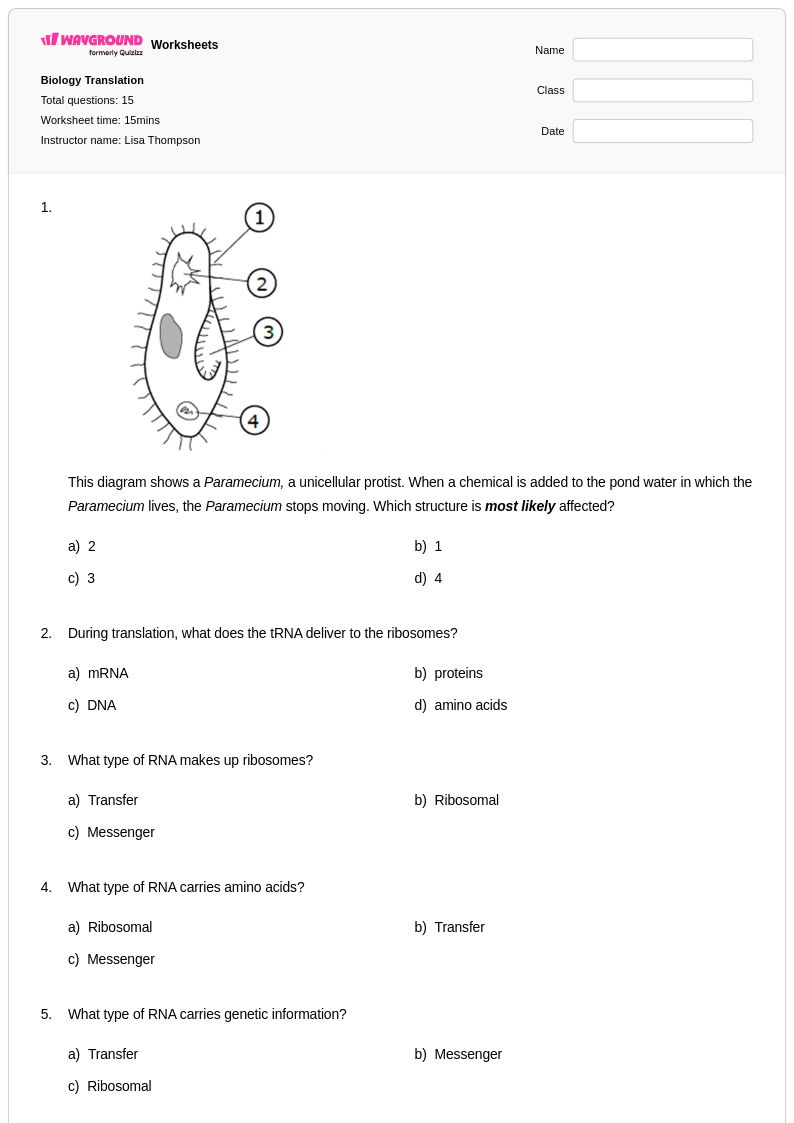
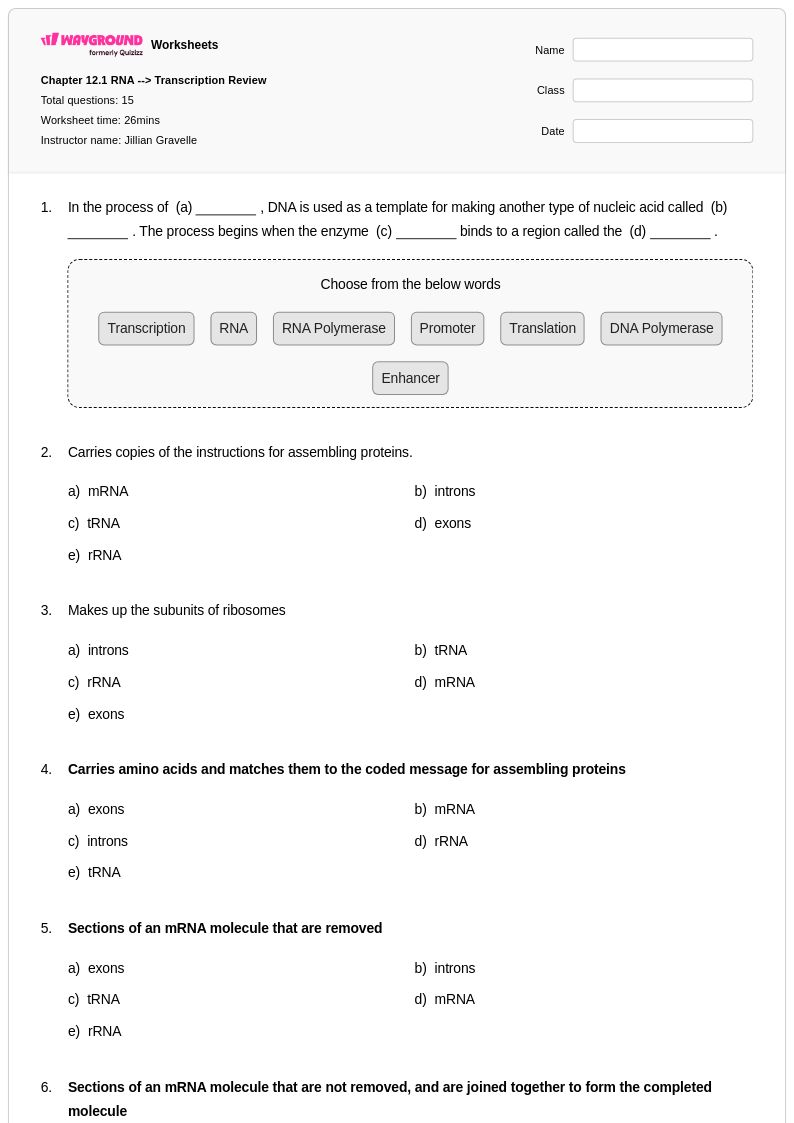
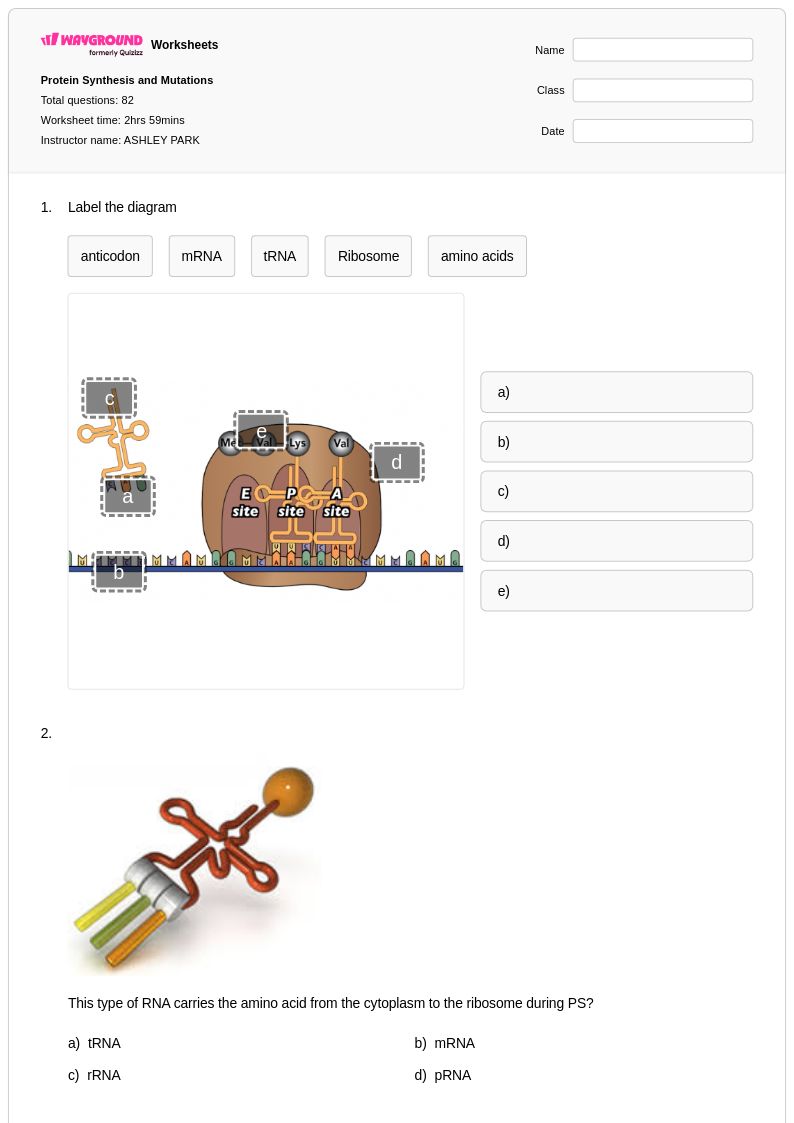
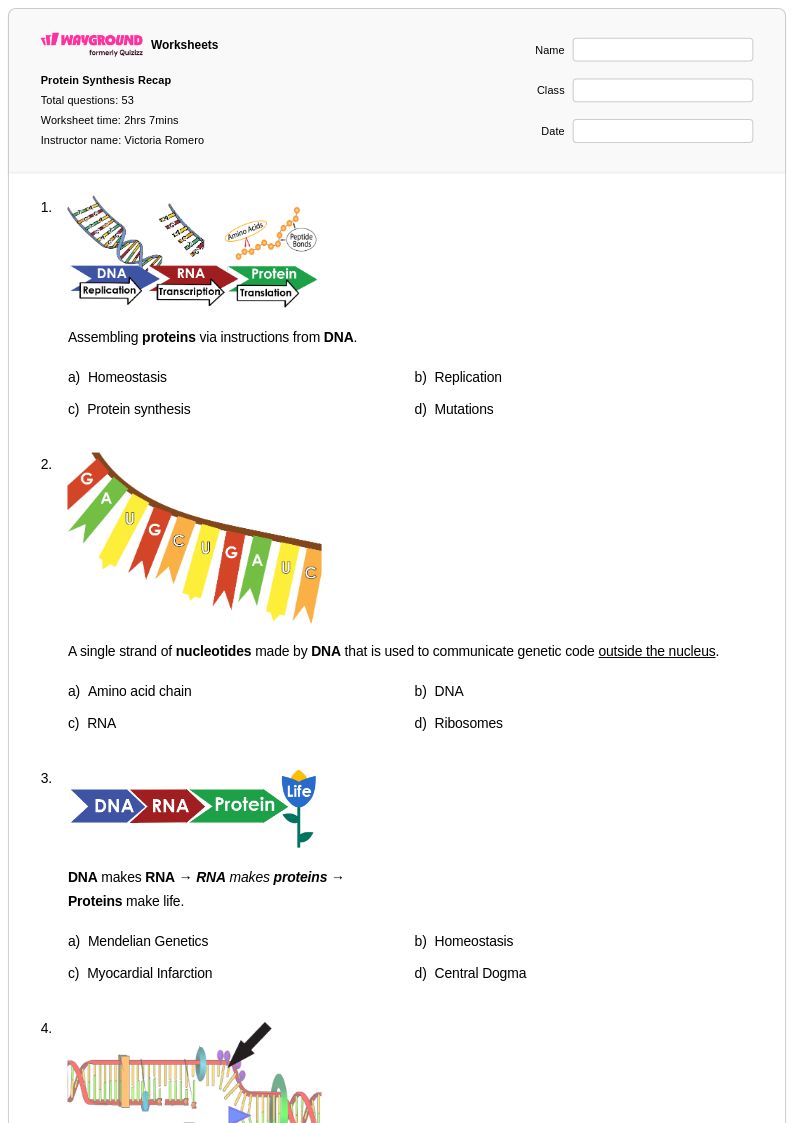
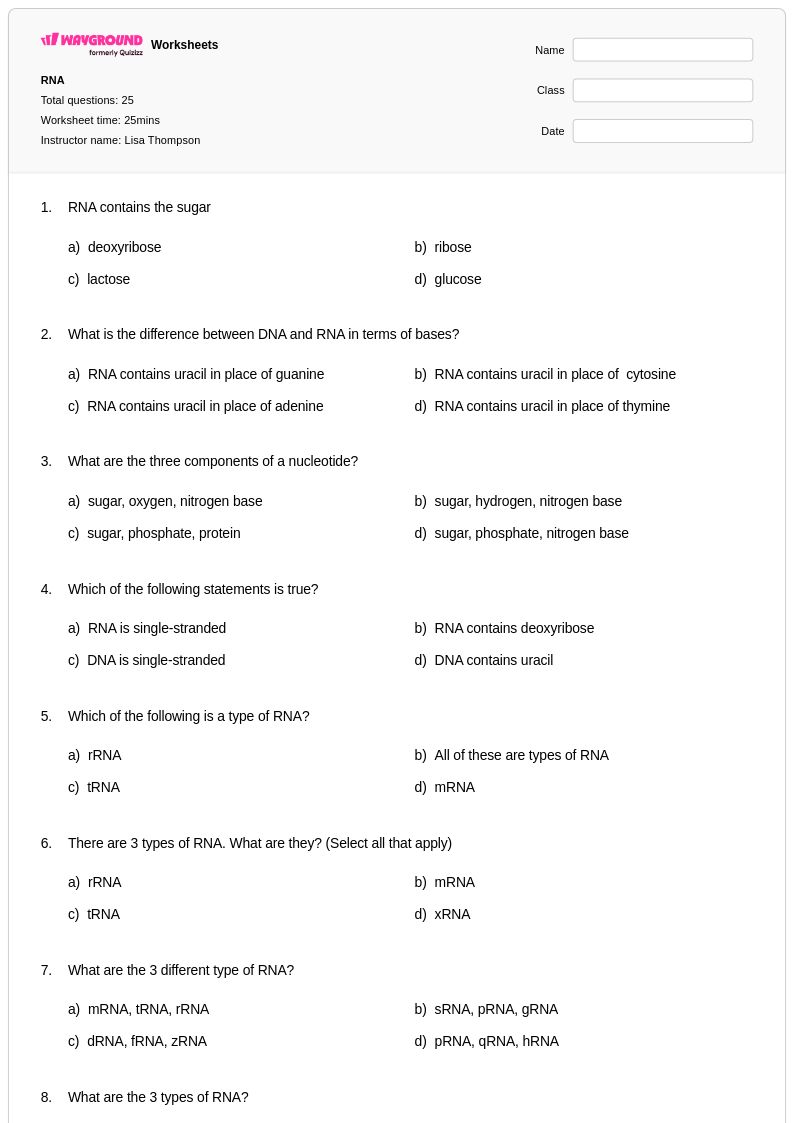
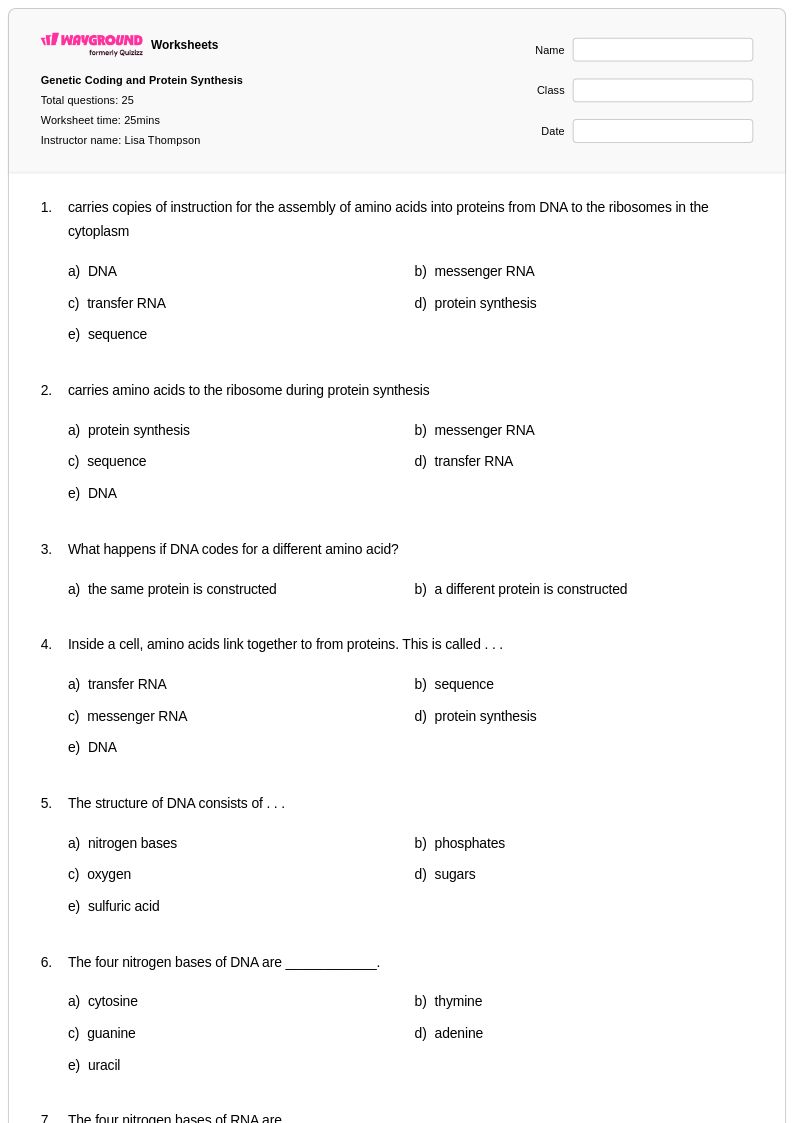
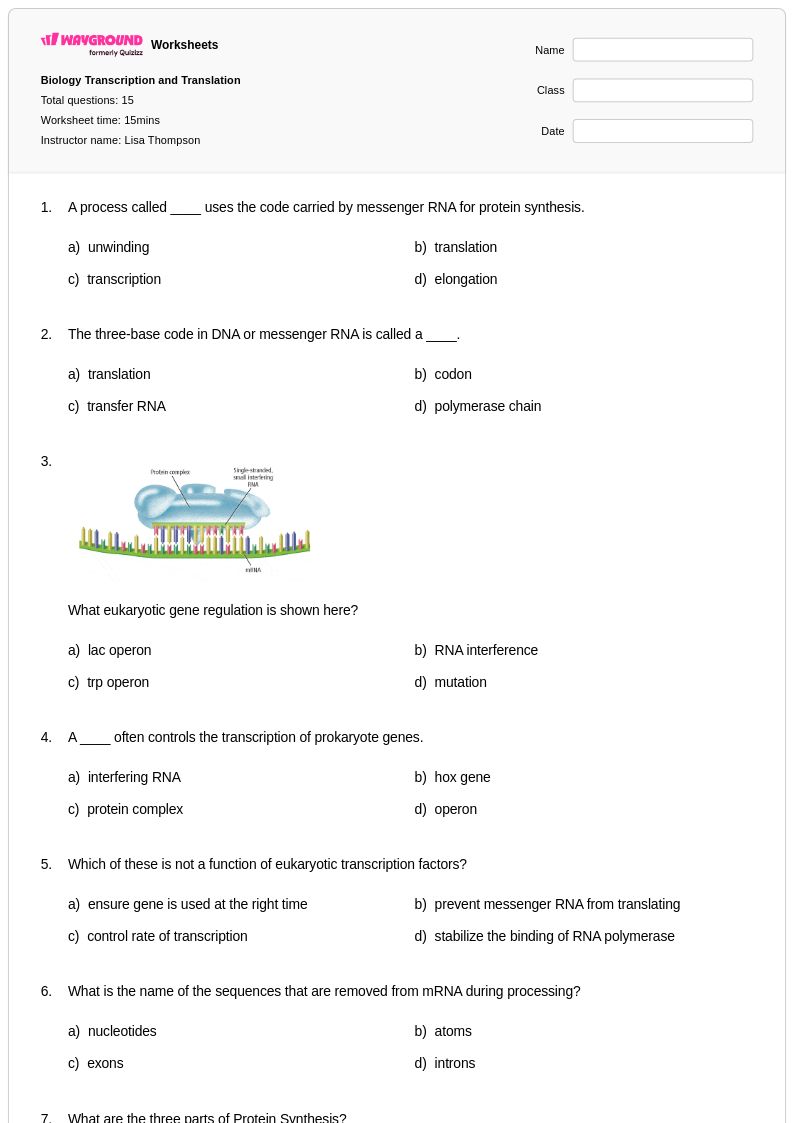
Messenger RNA worksheets for Class 10 students available through Wayground (formerly Quizizz) provide comprehensive coverage of this fundamental molecular biology concept, helping students master the critical role of mRNA in protein synthesis and gene expression. These expertly designed worksheets guide students through the intricate processes of transcription, mRNA processing, and translation, strengthening their understanding of how genetic information flows from DNA to proteins within cells. The collection includes detailed practice problems that challenge students to identify mRNA structure, analyze codon sequences, and trace the pathway from nuclear transcription to ribosomal translation, with each worksheet accompanied by a complete answer key to support independent learning and self-assessment. Available as free printables in convenient PDF format, these resources enable students to develop proficiency in molecular biology concepts while building essential scientific reasoning skills.
Wayground (formerly Quizizz) empowers educators with an extensive library of millions of teacher-created messenger RNA worksheets specifically designed for Class 10 biology instruction, featuring robust search and filtering capabilities that allow teachers to quickly locate materials aligned with specific curriculum standards and learning objectives. The platform's sophisticated differentiation tools enable instructors to customize worksheet difficulty levels and content focus areas, ensuring that resources meet the diverse needs of students requiring both remediation support and enrichment challenges. Teachers can seamlessly access these materials in both printable PDF formats for traditional classroom use and digital formats for online learning environments, facilitating flexible lesson planning and enabling targeted skill practice sessions that reinforce students' comprehension of mRNA's essential functions in cellular biology and genetic expression.
FAQs
How do I teach messenger RNA and its role in protein synthesis?
Start by grounding students in the central dogma: DNA is transcribed into mRNA in the nucleus, and that mRNA is then translated into protein at ribosomes in the cytoplasm. Use visual models to trace the journey of a single mRNA strand from transcription through translation, pausing to identify codons and their corresponding amino acids. Connecting each step to a concrete outcome, such as the production of a specific protein, helps students see why mRNA is the critical link between genetic information and cellular function.
What exercises help students practice reading mRNA codons and amino acid sequences?
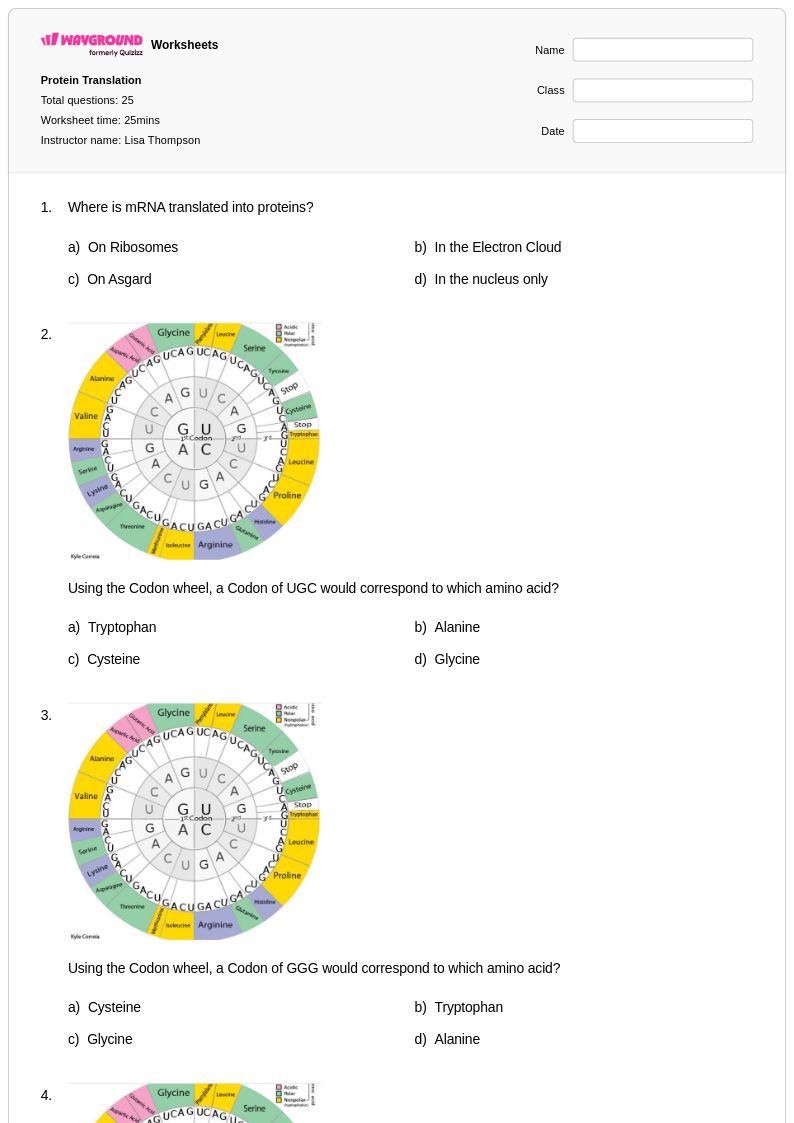
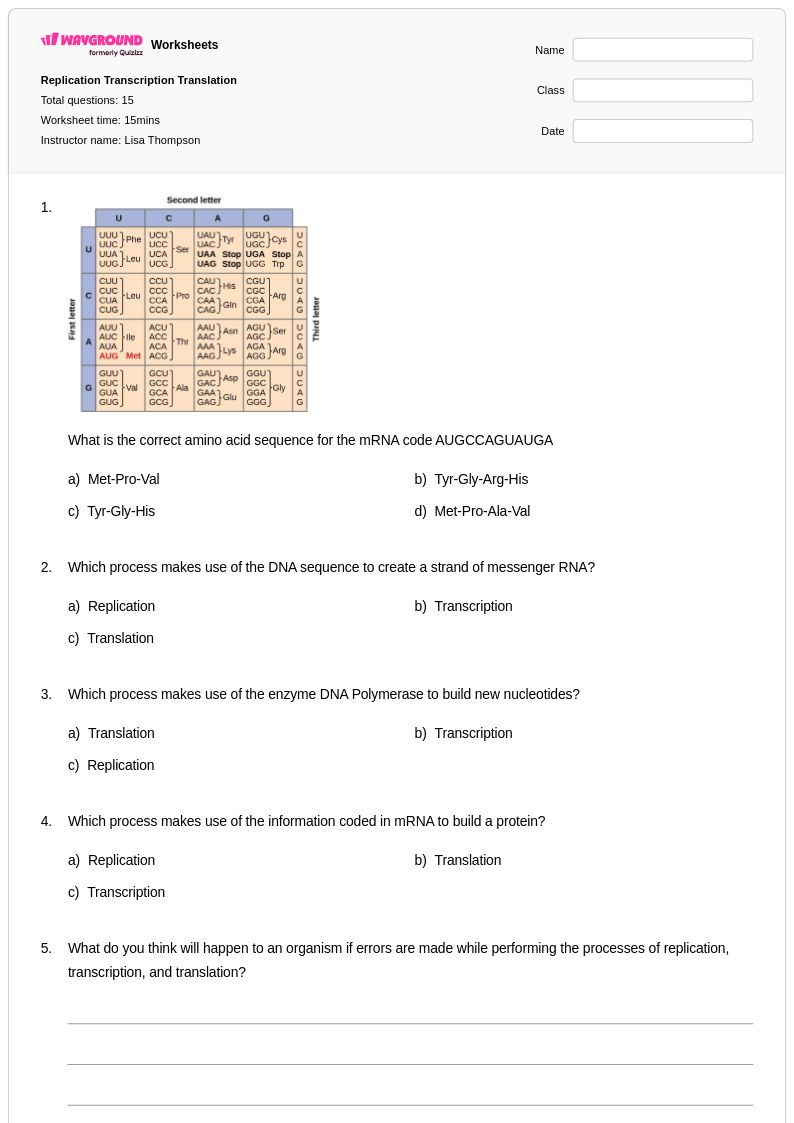
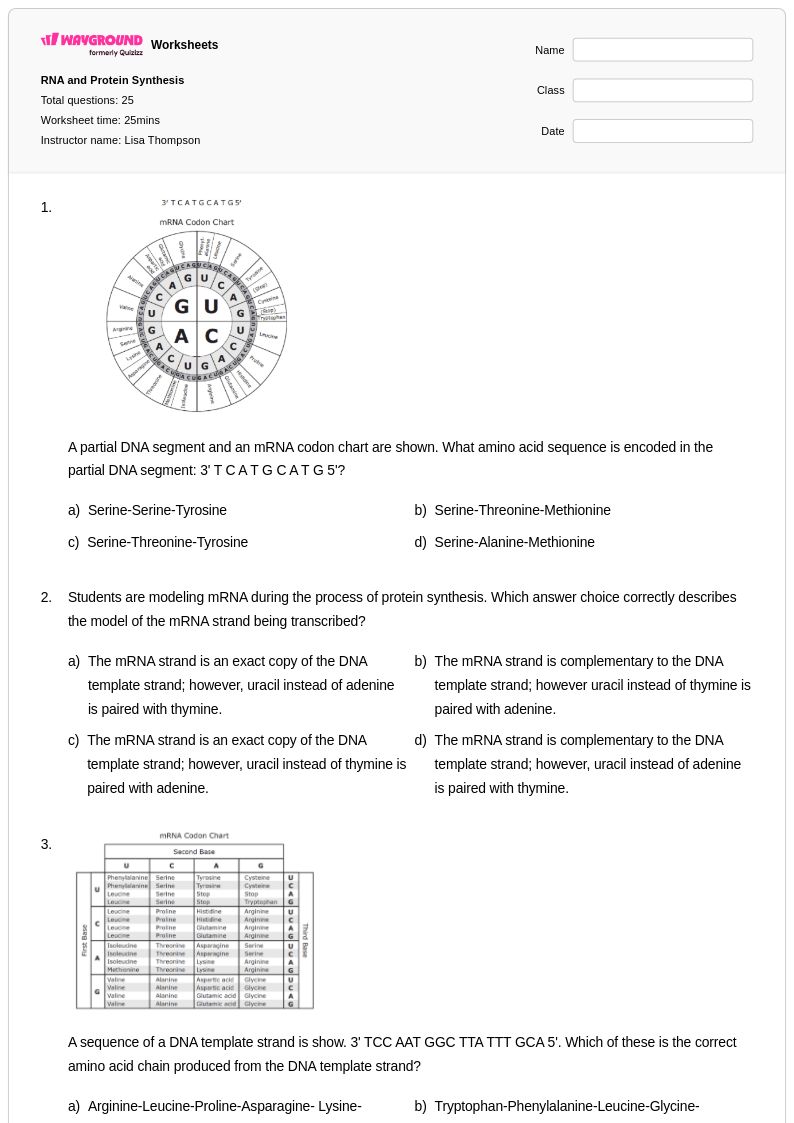
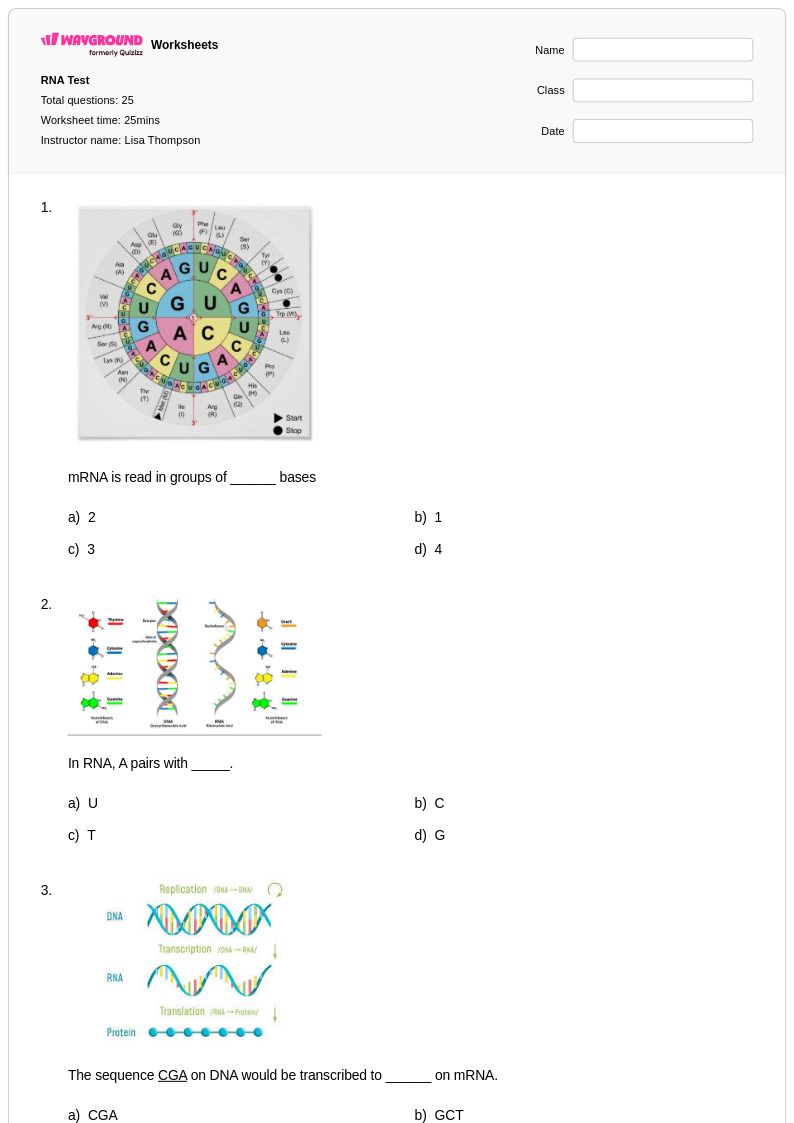
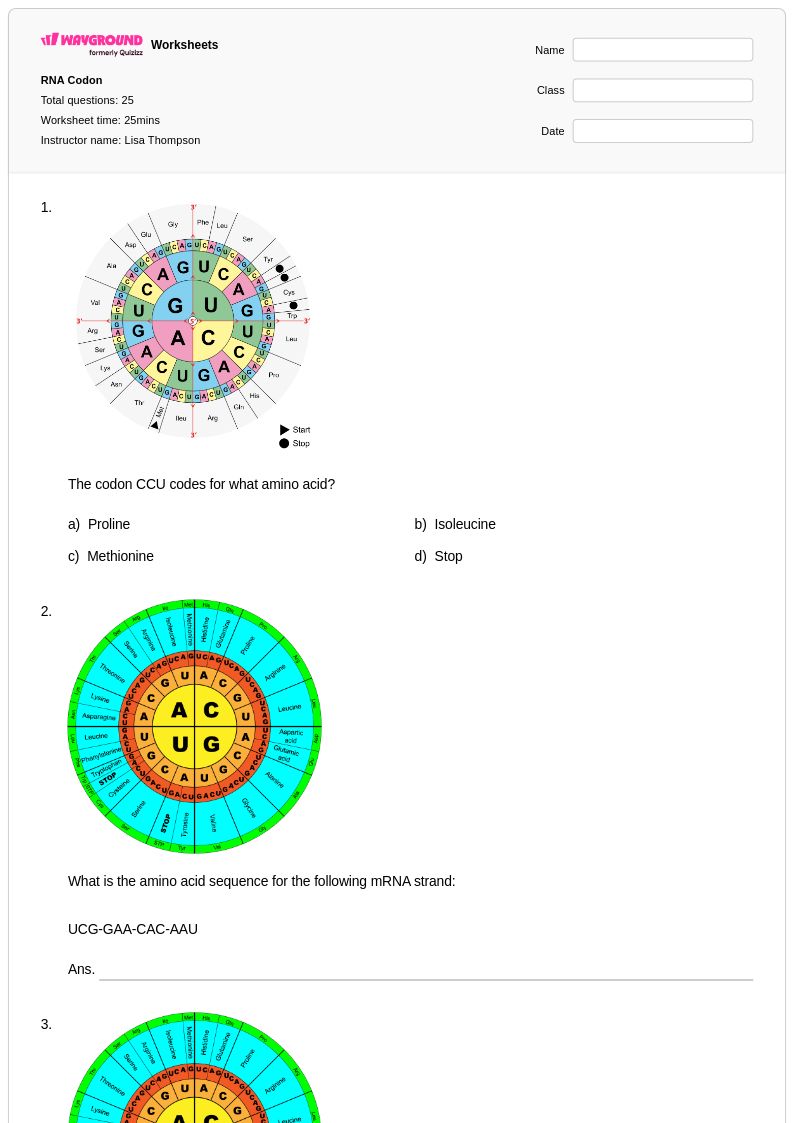
Codon chart exercises are among the most effective practice tools for this topic: give students an mRNA sequence and have them decode it step by step using a standard codon table to identify each amino acid. Scaffolded practice problems that progress from single-codon identification to full polypeptide translation help build fluency before students tackle more complex gene expression scenarios. Practice problems that include stop and start codons add an important layer of real-world accuracy.
What mistakes do students commonly make when learning about mRNA transcription and translation?
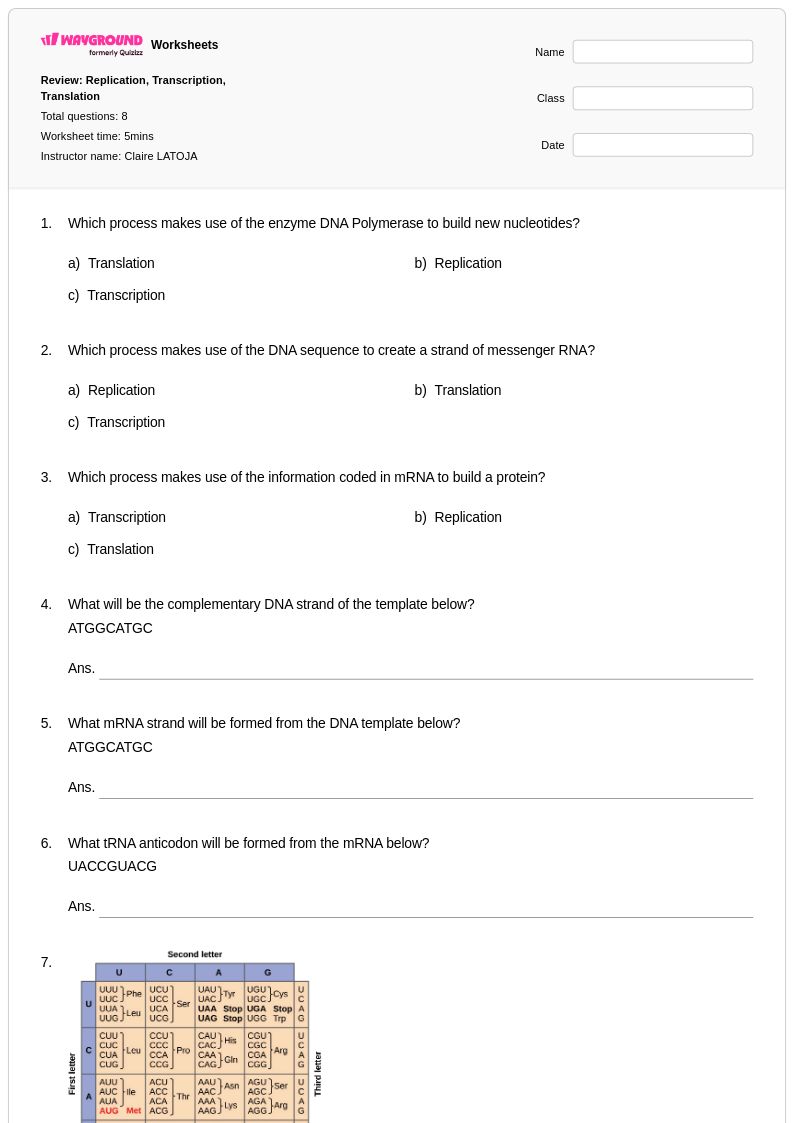
One of the most common errors is confusing transcription with translation: students frequently mix up where each process occurs and which molecules are involved. Another persistent misconception is applying DNA base-pairing rules directly to mRNA, forgetting that uracil replaces thymine in RNA. Students also often struggle to distinguish the template strand from the coding strand when writing out mRNA sequences, which leads to systematic errors in their codon readings.
How do I differentiate mRNA worksheets for students at different ability levels?
For students who need additional support, reduce the complexity of codon sequences used in practice problems and provide a pre-filled codon table to lower cognitive load. Advanced students can be challenged with problems involving gene regulation, mutations that alter the mRNA sequence, or multi-step translation scenarios. On Wayground, teachers can apply accommodations such as reduced answer choices or read-aloud support to individual students, allowing the rest of the class to work with standard settings without disruption.
How do I use Wayground's messenger RNA worksheets in my biology class?
Wayground's mRNA worksheets are available as printable PDFs for traditional classroom use and in digital formats for technology-integrated or remote learning environments, and teachers can also host them as a quiz directly on Wayground. Each worksheet includes a complete answer key, making them practical for independent practice, homework assignments, or targeted remediation of transcription and translation. The collection covers codon sequences, amino acid coding, and mRNA structure, so teachers can select resources that match the specific stage of instruction.
How does mRNA relate to the central dogma of molecular biology?
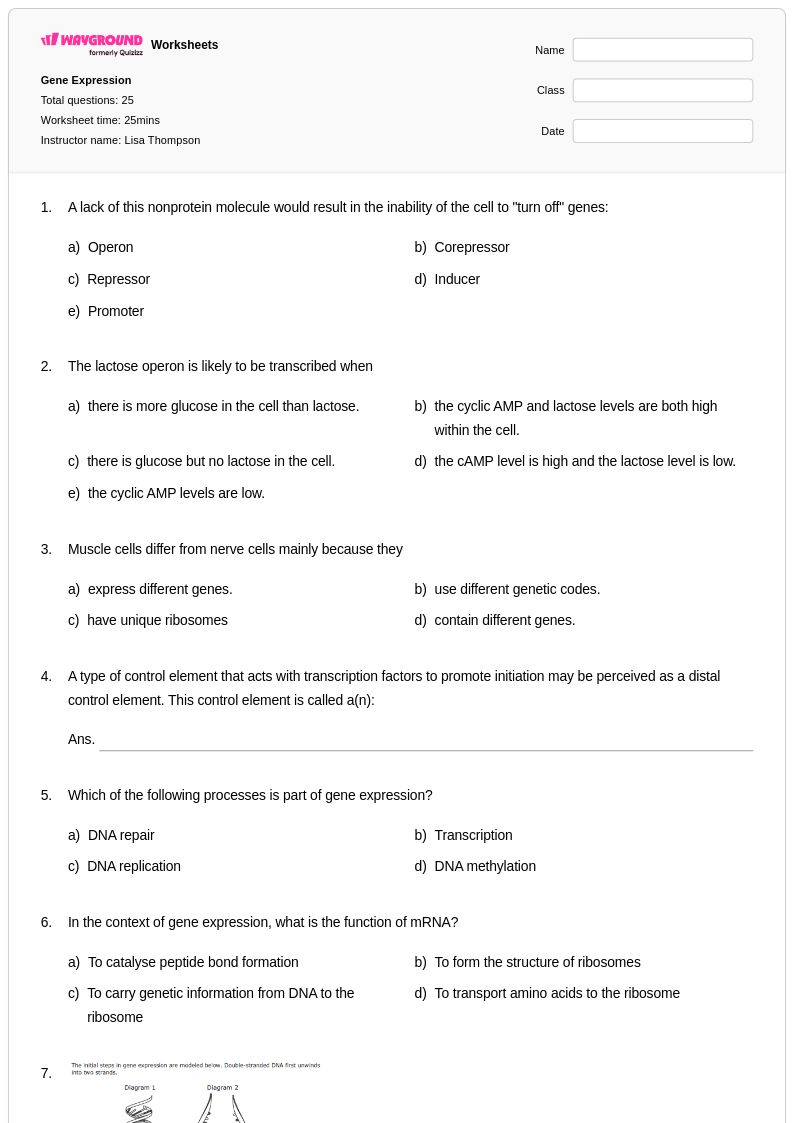
The central dogma describes the directional flow of genetic information: DNA is transcribed into messenger RNA, which is then translated into protein. mRNA is the intermediary molecule that carries the genetic instructions encoded in DNA out of the nucleus and to the ribosomes, where the actual protein is assembled. Understanding mRNA's role is essential for students to grasp how gene expression works and why changes to the mRNA sequence can alter or disrupt protein production.