
20 Q
9th - 12th
10 Q
9th - 12th
20 Q
9th - 12th
11 Q
9th - 12th
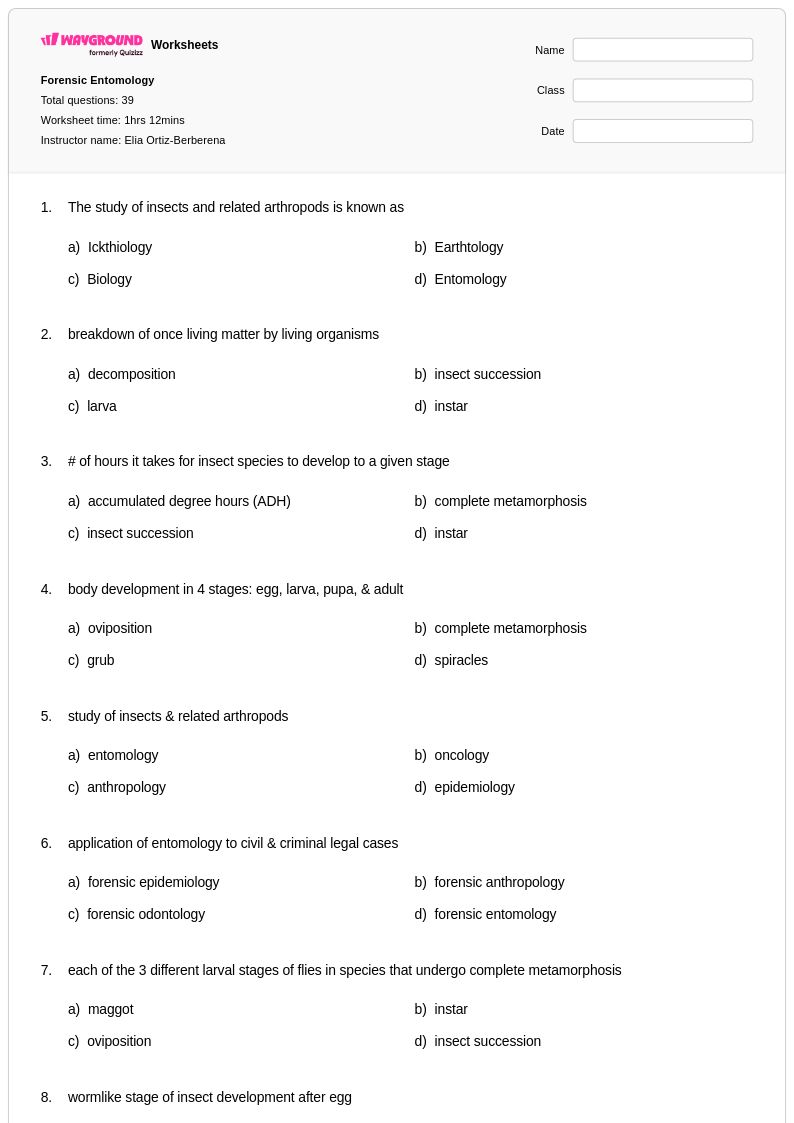
39 Q
10th - 12th
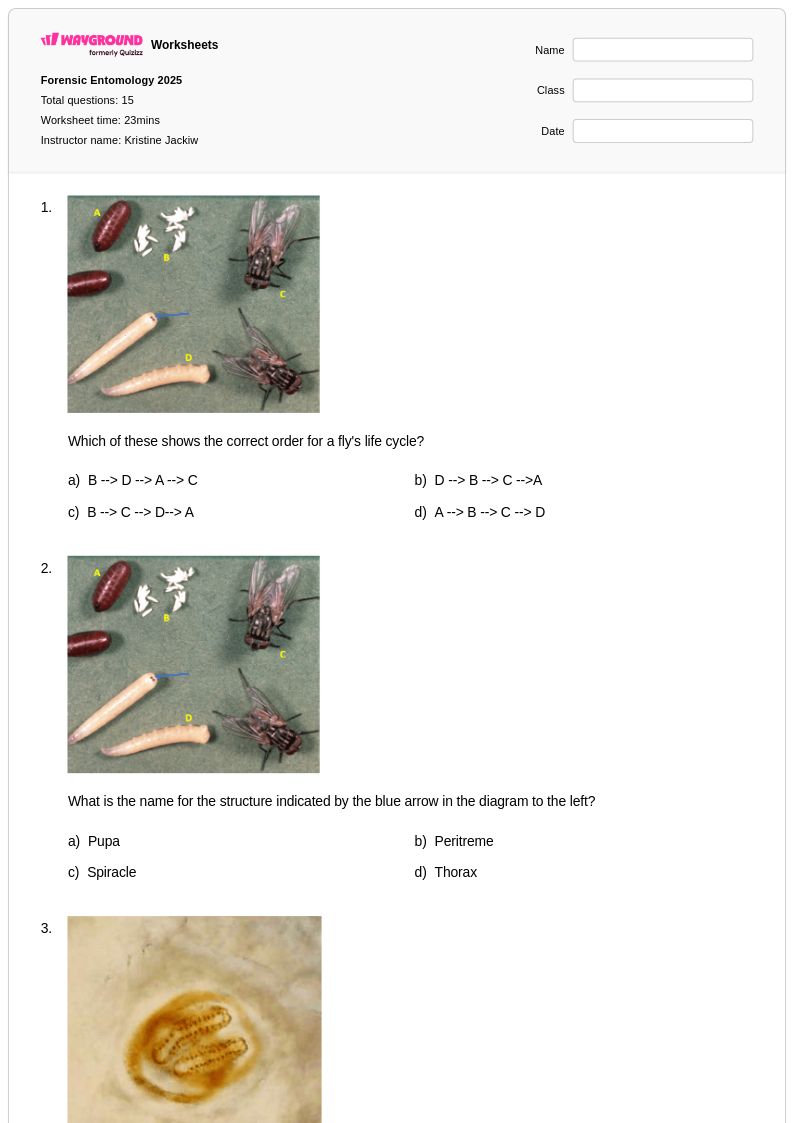
15 Q
9th - 12th
7 Q
7th - 12th
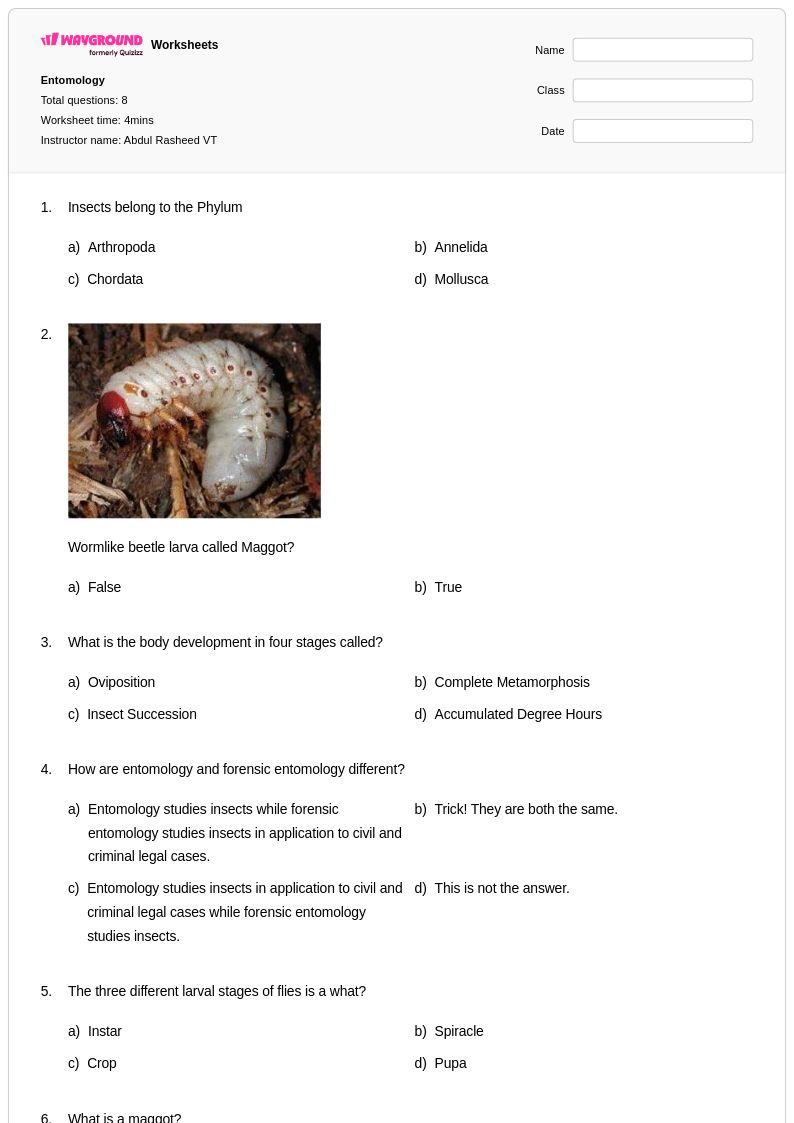
8 Q
10th - Uni
20 Q
10th - 12th
41 Q
10th - 12th
16 Q
9th - 12th
12 Q
9th - 12th
10 Q
10th
18 Q
10th
34 Q
9th - 12th
20 Q
9th - 12th
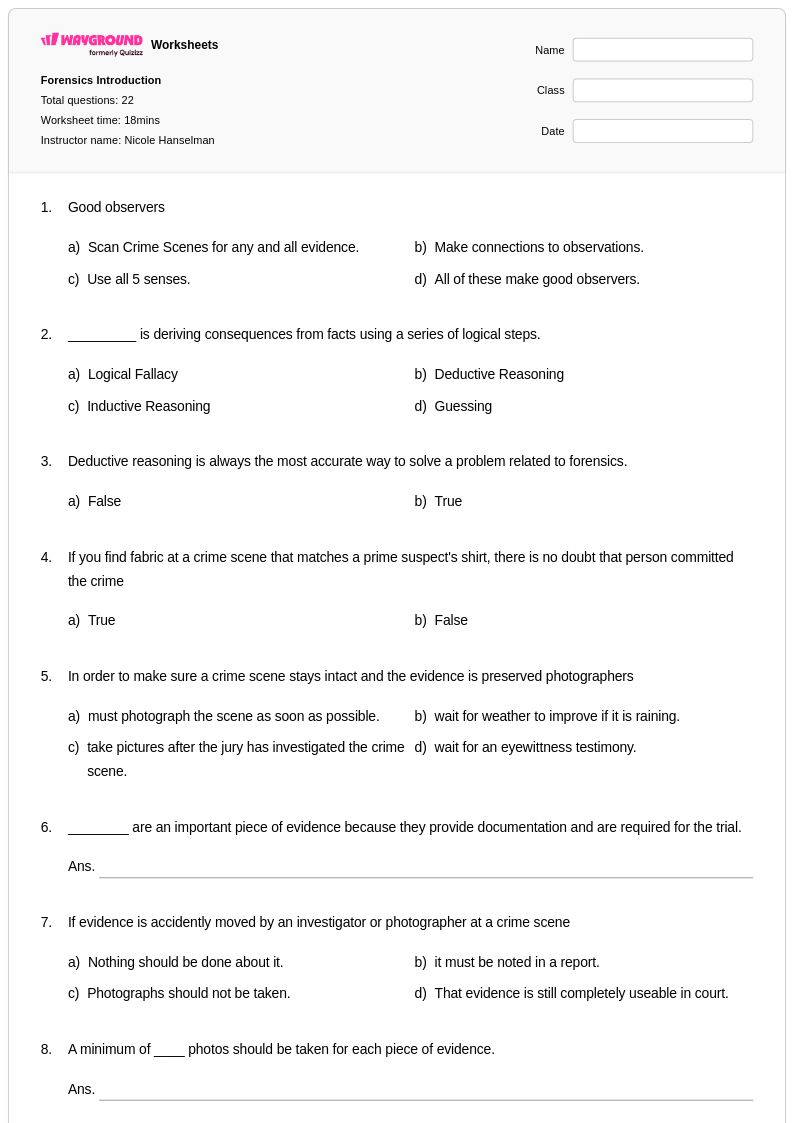
22 Q
9th - Uni
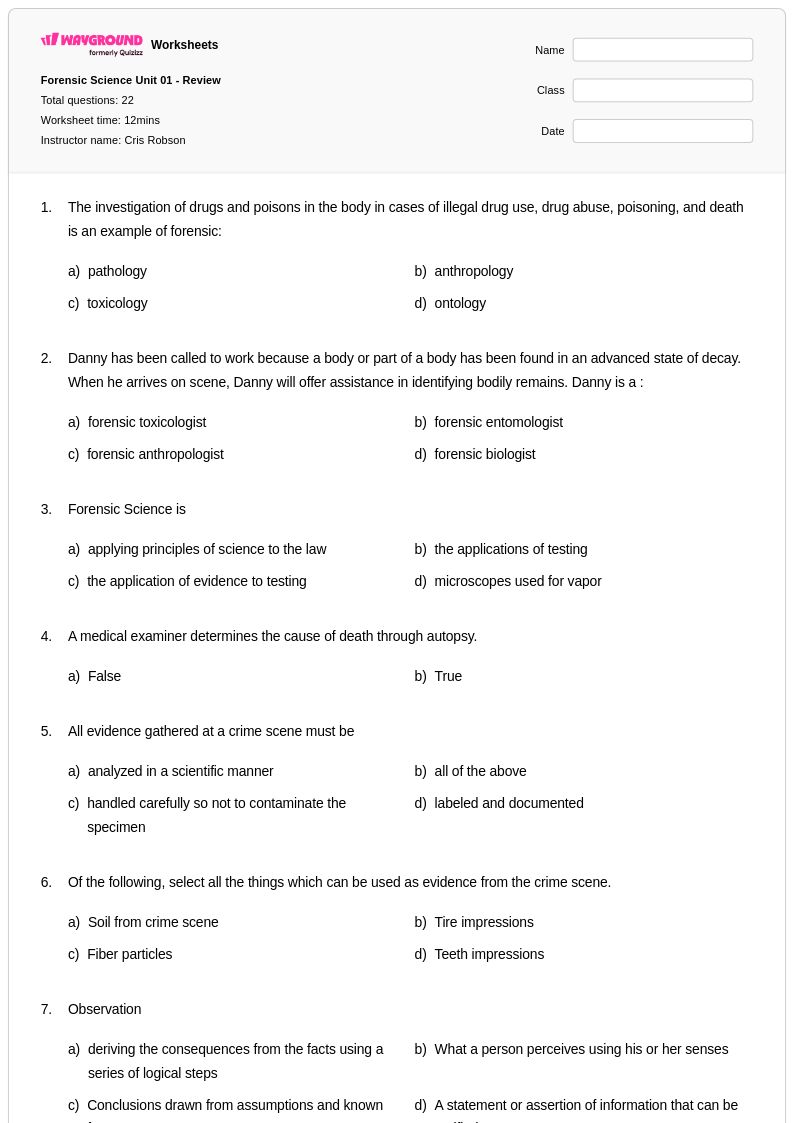
22 Q
10th - 12th
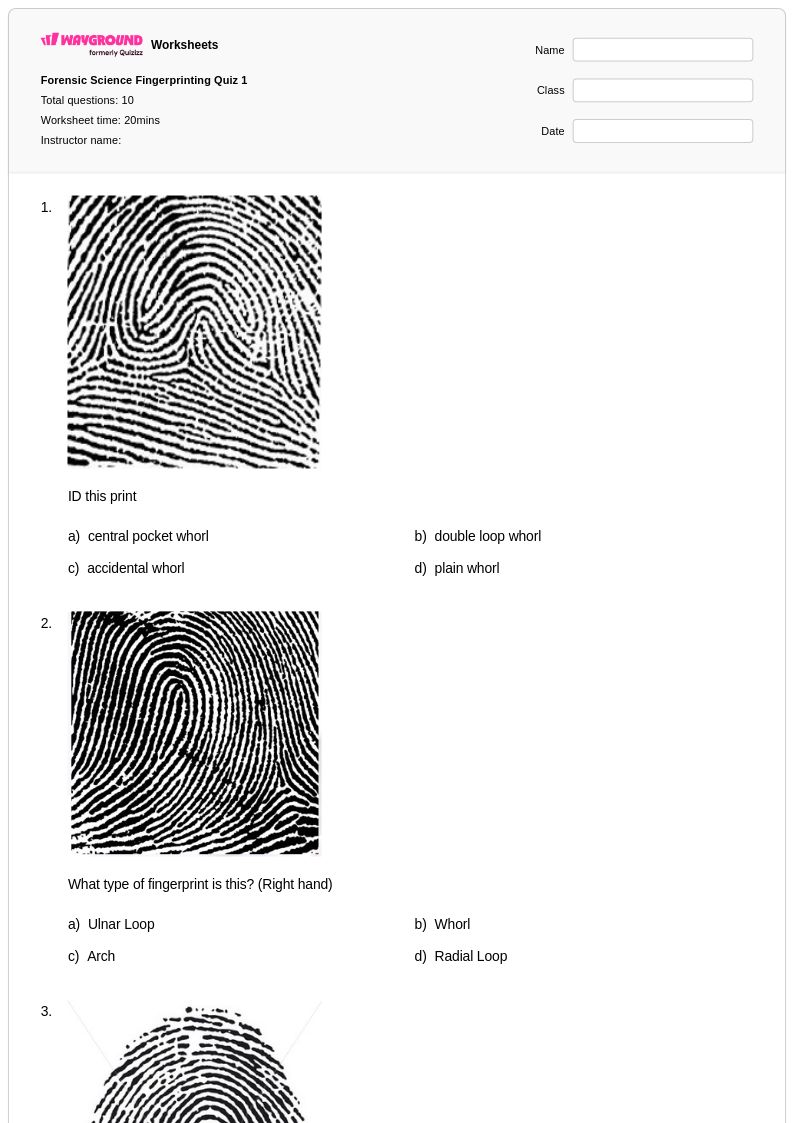
10 Q
9th - 12th
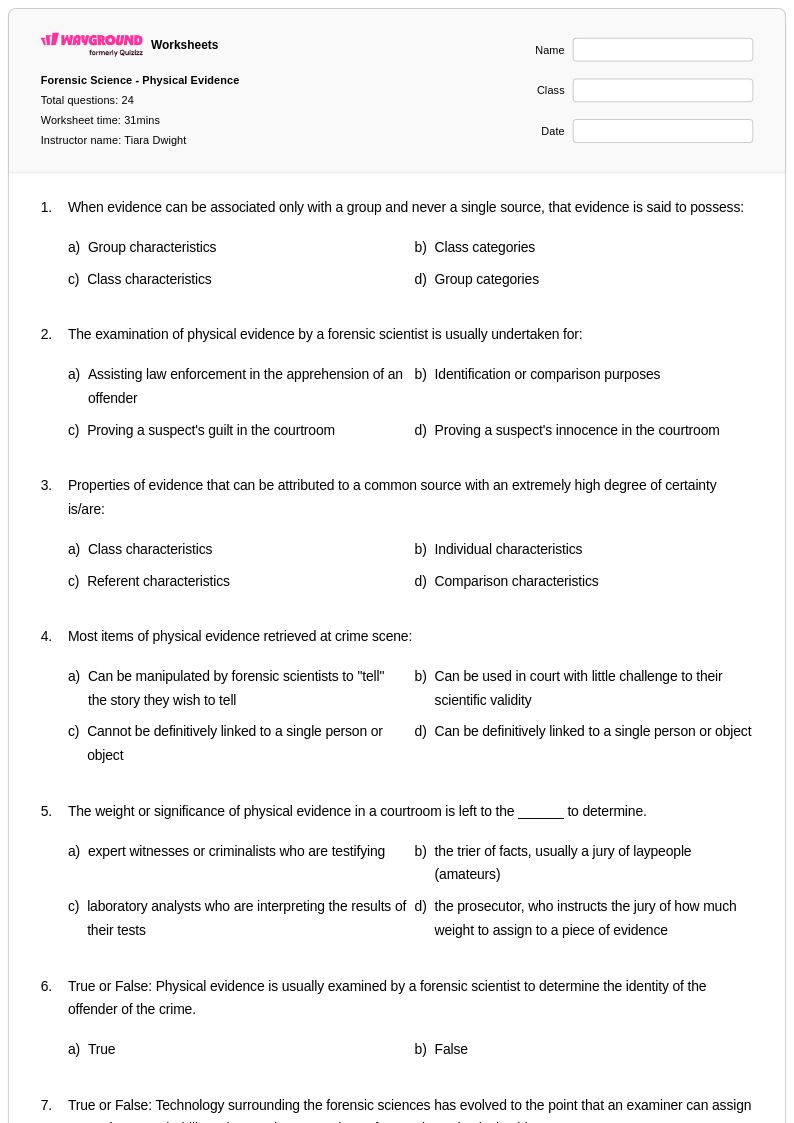
24 Q
10th - 12th
60 Q
9th - 12th
20 Q
10th - 12th
20 Q
9th - 12th
24 Q
9th - 12th
Explore Other Subject Worksheets for class 10
Explore printable Forensic Entomology worksheets for Class 10
Forensic entomology worksheets for Class 10 students available through Wayground (formerly Quizizz) provide comprehensive exploration of this fascinating intersection between biology and criminal investigation. These expertly crafted resources guide students through the scientific principles of using insect evidence to determine time of death, identify geographical locations, and analyze environmental conditions at crime scenes. Students develop critical analytical skills while learning to identify common carrion insects, understand succession patterns in decomposition, and interpret entomological data for forensic applications. The collection includes detailed practice problems that challenge students to apply their knowledge of insect life cycles, temperature effects on development rates, and species-specific behavioral patterns. Each worksheet comes complete with answer keys and is available as free printable pdf resources, making it easy for educators to incorporate hands-on forensic science learning into their Class 10 biology curriculum.
Wayground (formerly Quizizz) empowers teachers with access to millions of educator-created forensic entomology worksheets specifically designed for Class 10 biology instruction. The platform's robust search and filtering capabilities allow educators to quickly locate materials that align with specific learning standards and match their students' skill levels. Teachers can easily customize existing worksheets or create new ones using the platform's flexible tools, ensuring content meets the unique needs of their classroom while maintaining academic rigor. Whether delivered in printable format for traditional classroom use or accessed digitally for interactive learning experiences, these resources support effective lesson planning and provide valuable options for remediation and enrichment activities. The comprehensive nature of the worksheet collection enables teachers to scaffold learning progressively, from basic insect identification to complex forensic timeline analysis, helping students master both fundamental biological concepts and specialized forensic applications.
FAQs
How do I teach forensic entomology in a high school science class?
What kinds of practice problems help students understand accumulated degree days and postmortem interval estimation?
What mistakes do students commonly make when learning forensic entomology concepts?
How can I use forensic entomology worksheets to support students with different ability levels?
How do Wayground's forensic entomology worksheets work in the classroom?
How do insects help determine time of death in a forensic investigation?