Free Printable Brain Development Worksheets for Class 7
Explore Class 7 brain development worksheets and printables from Wayground that help students understand neural growth, cognitive changes, and how the adolescent brain develops through engaging practice problems with complete answer keys.
Explore printable Brain Development worksheets for Class 7
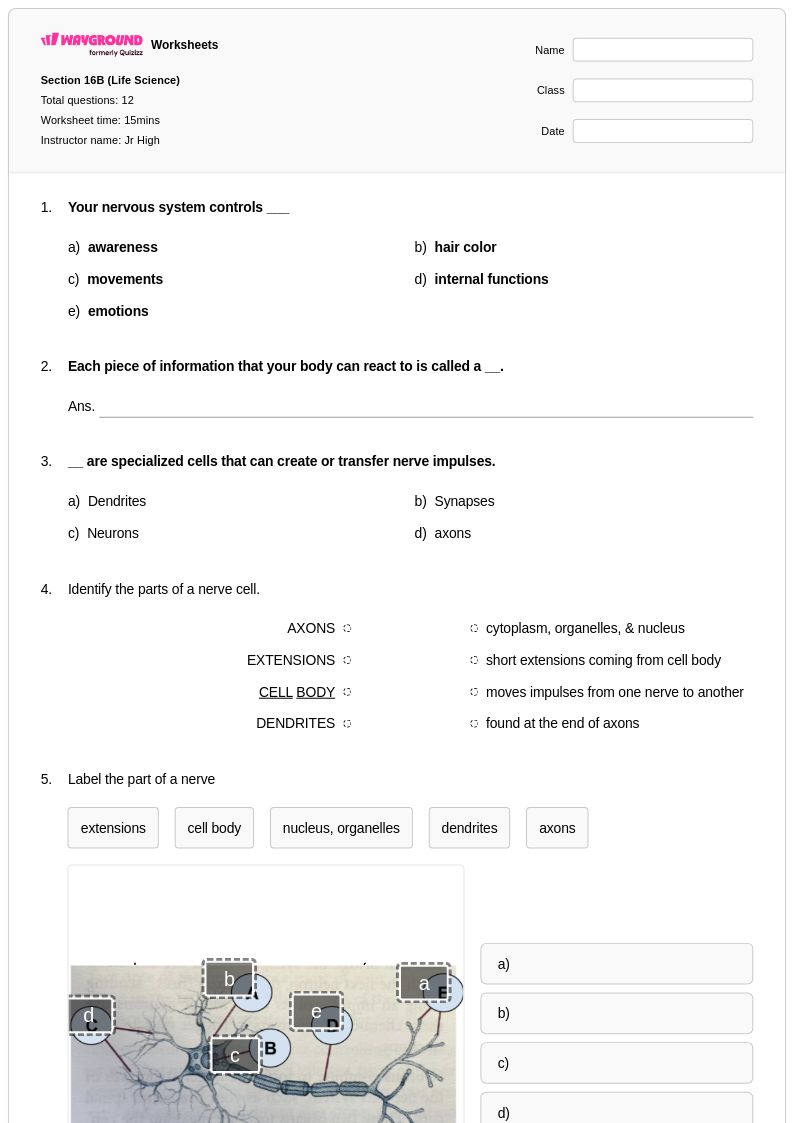
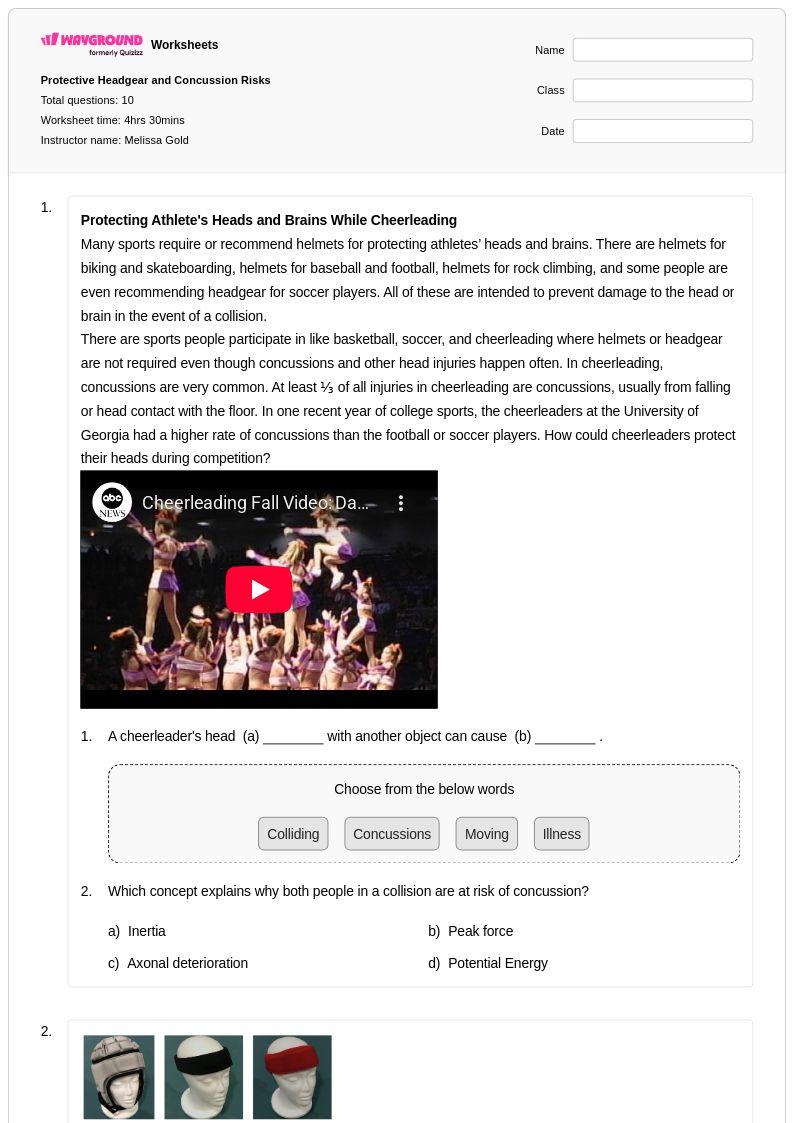
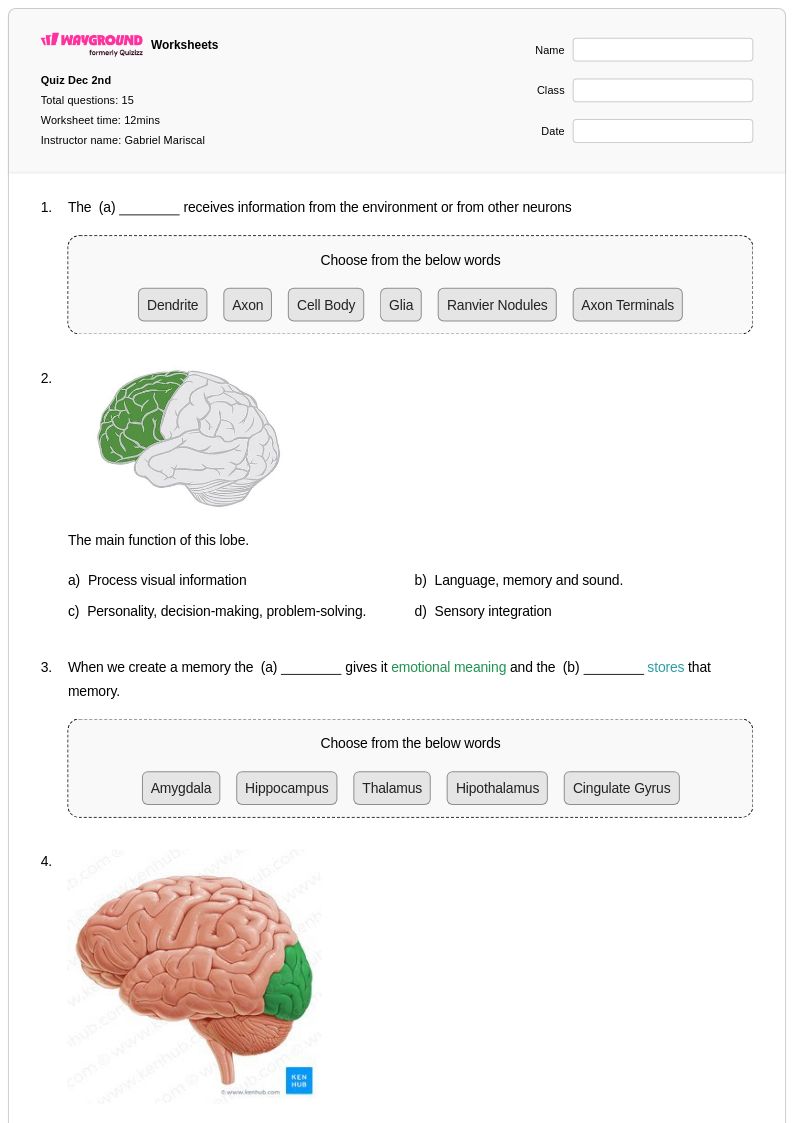
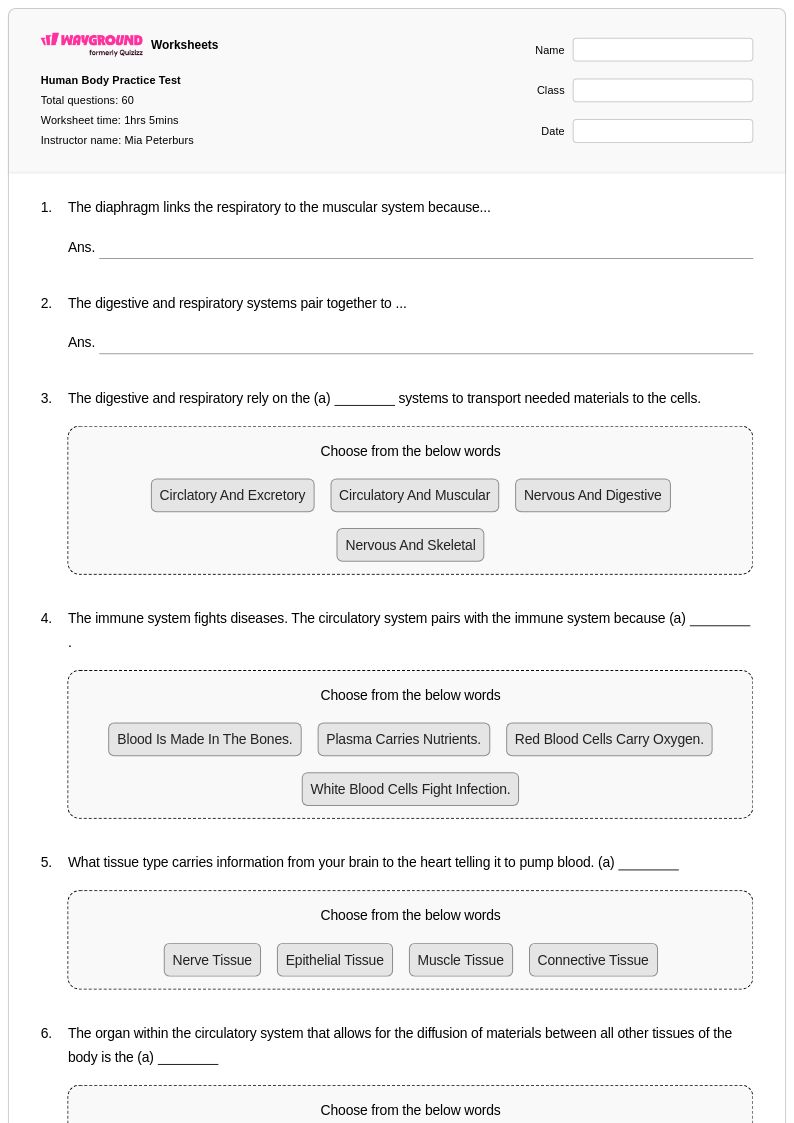
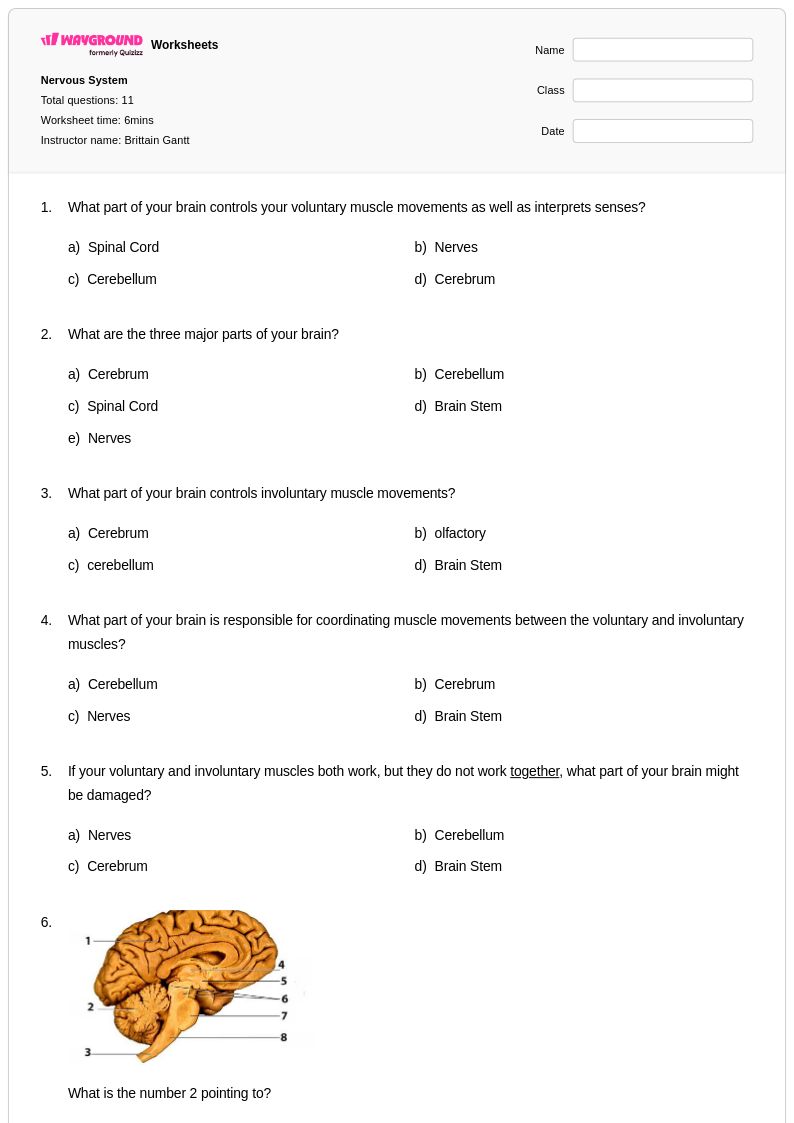
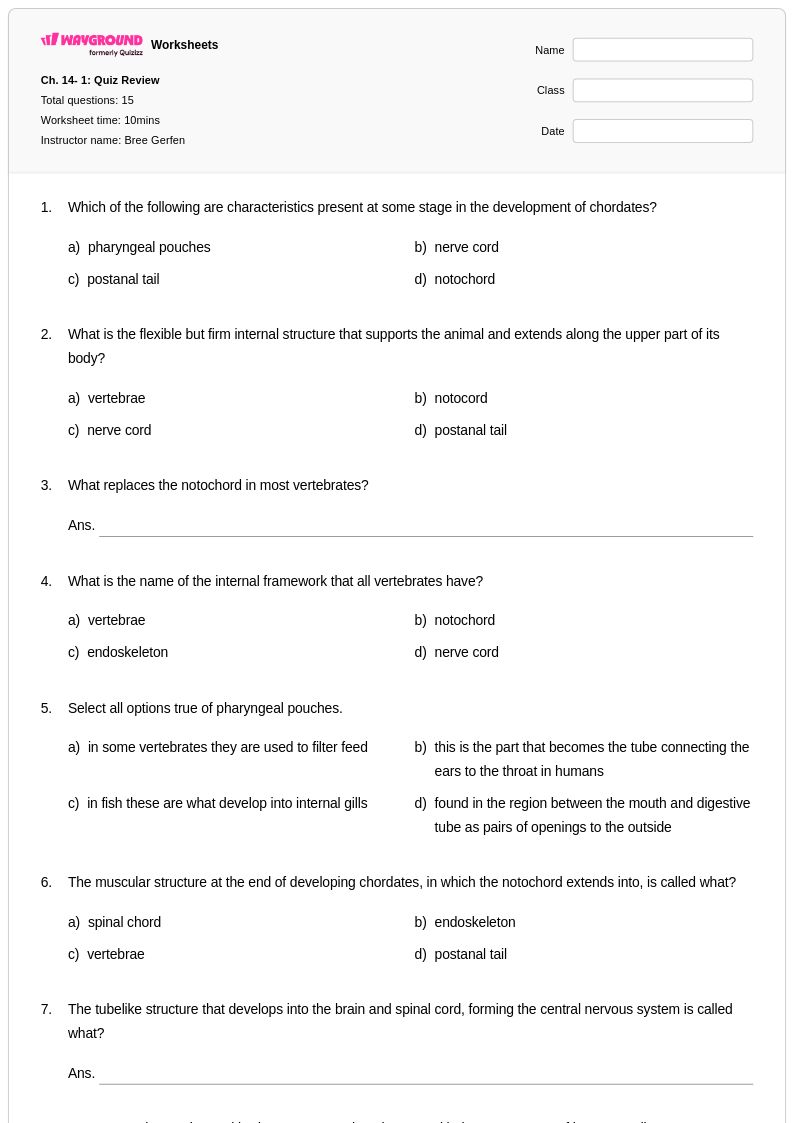
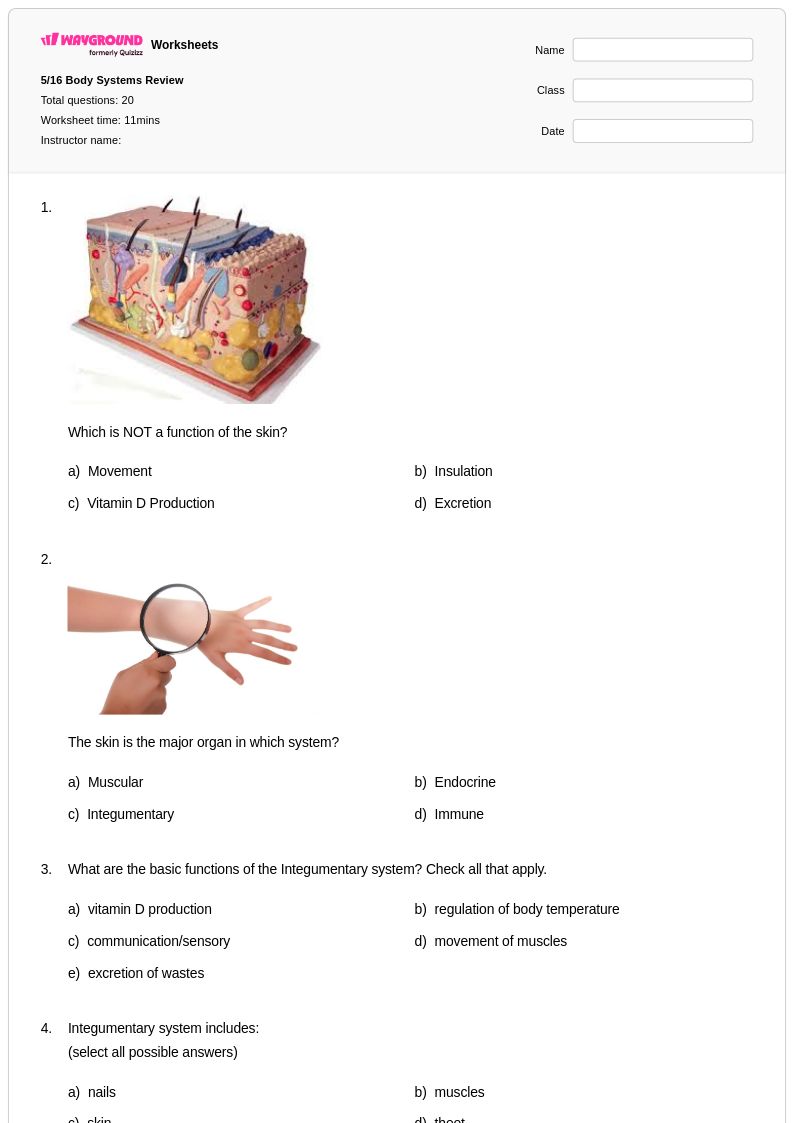
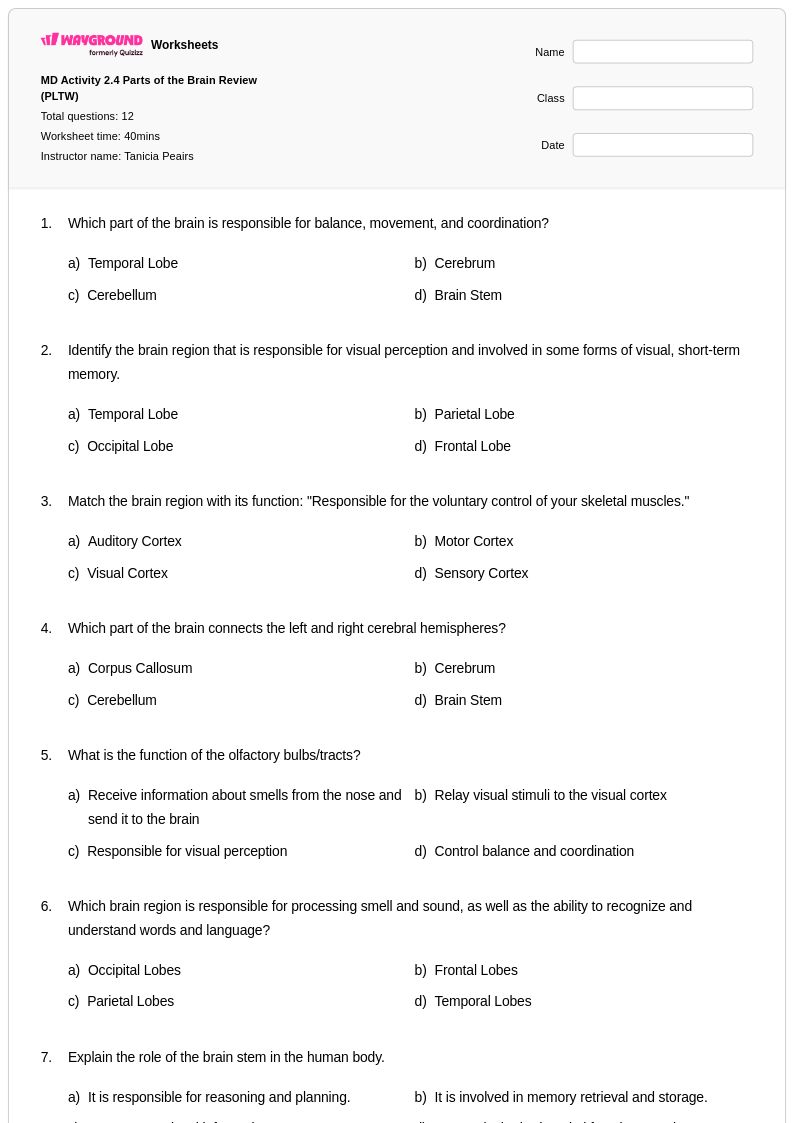
Class 7 brain development worksheets available through Wayground (formerly Quizizz) provide students with comprehensive practice materials that explore the fascinating changes occurring in the adolescent brain during this critical developmental period. These expertly crafted resources help seventh graders understand key concepts including neuroplasticity, synaptic pruning, prefrontal cortex maturation, and the impact of hormones on brain function and behavior. Students develop essential scientific literacy skills through engaging practice problems that require them to analyze brain imaging data, interpret research findings, and connect neurological development to observable changes in thinking patterns and decision-making abilities. Each worksheet collection includes detailed answer keys and is available as free printables in convenient pdf format, allowing educators to seamlessly integrate these materials into their existing curriculum while providing students with valuable reference tools for independent study and review.
Wayground (formerly Quizizz) empowers educators with access to millions of teacher-created brain development resources specifically designed for middle school science instruction. The platform's robust search and filtering capabilities enable teachers to quickly locate worksheets that align with specific learning standards and match their students' diverse academic needs. Advanced differentiation tools allow instructors to customize content difficulty levels, ensuring that struggling learners receive appropriate scaffolding while advanced students encounter enriching challenges that deepen their understanding of neuroscience concepts. Available in both printable and digital formats including downloadable pdf files, these comprehensive worksheet collections support flexible lesson planning approaches and enable teachers to provide targeted remediation for students who need additional practice with complex topics such as neurotransmitter function and brain structure identification, while simultaneously offering extension activities that encourage higher-level critical thinking about the relationship between brain development and adolescent behavior.
FAQs
How do I teach brain development to students?
Teaching brain development effectively means anchoring abstract neurobiological concepts to observable stages students can sequence and compare. Start with the prenatal period and neural tube formation, then move through synaptic pruning, myelination, and adolescent brain maturation. Connecting brain structure to real-world function — such as how the prefrontal cortex relates to decision-making — gives students a concrete framework for understanding cognitive development across the lifespan.
What are common mistakes students make when learning about brain development?
Students frequently confuse synaptic pruning with brain damage, not recognizing it as a necessary process that strengthens neural efficiency. Another common error is treating brain development as complete at birth rather than understanding it as a continuous process extending through adolescence and beyond. Students also tend to underestimate the role of environmental factors, assuming neurological growth is purely genetic rather than shaped by experience and neural plasticity.
What exercises help students practice understanding neural development concepts?
Developmental timeline activities are particularly effective, requiring students to sequence events like myelination, synaptic pruning, and cortical maturation in the correct order. Diagram-labeling tasks that connect brain regions to their cognitive functions reinforce structure-function relationships. Practice problems involving neuroimaging interpretation help students apply analytical skills to real scientific data, bridging classroom content with how neuroscientists actually study the brain.
How can I differentiate brain development instruction for students at different levels?
For students who struggle with complex terminology, reduce cognitive load by focusing on core concepts — such as how the brain changes from prenatal stages through adolescence — before introducing terms like myelination or synaptic pruning. Advanced learners can be challenged to explore cutting-edge neuroscience research or analyze how environmental factors interact with neural plasticity. On Wayground, teachers can apply accommodations like Read Aloud for students who need audio support and reduced answer choices for those who need scaffolding, with settings saved and reusable across sessions.
How do I use Wayground's brain development worksheets in my classroom?
Wayground's brain development worksheets are available as printable PDFs for traditional classroom use and in digital formats for technology-integrated or remote learning environments. Teachers can also host worksheets as a quiz directly on Wayground, making them suitable for formative assessment. Each worksheet includes a complete answer key, which supports independent student study and allows teachers to conduct thorough comprehension checks on complex neurobiological concepts without additional preparation.
How do environmental factors affect brain development, and how can I teach this to students?
Neural plasticity means the brain's structure and function are continuously shaped by experience, nutrition, stress, and sensory input — particularly during sensitive developmental windows. Teaching this concept effectively requires students to move beyond genetics-only explanations and examine how factors like early childhood enrichment or chronic stress alter neural connectivity. Case study comparisons or scenario-based problems that ask students to predict developmental outcomes based on different environmental conditions make this abstract concept tangible and analytically engaging.