Free Printable Classifying Reactions Worksheets for Class 9
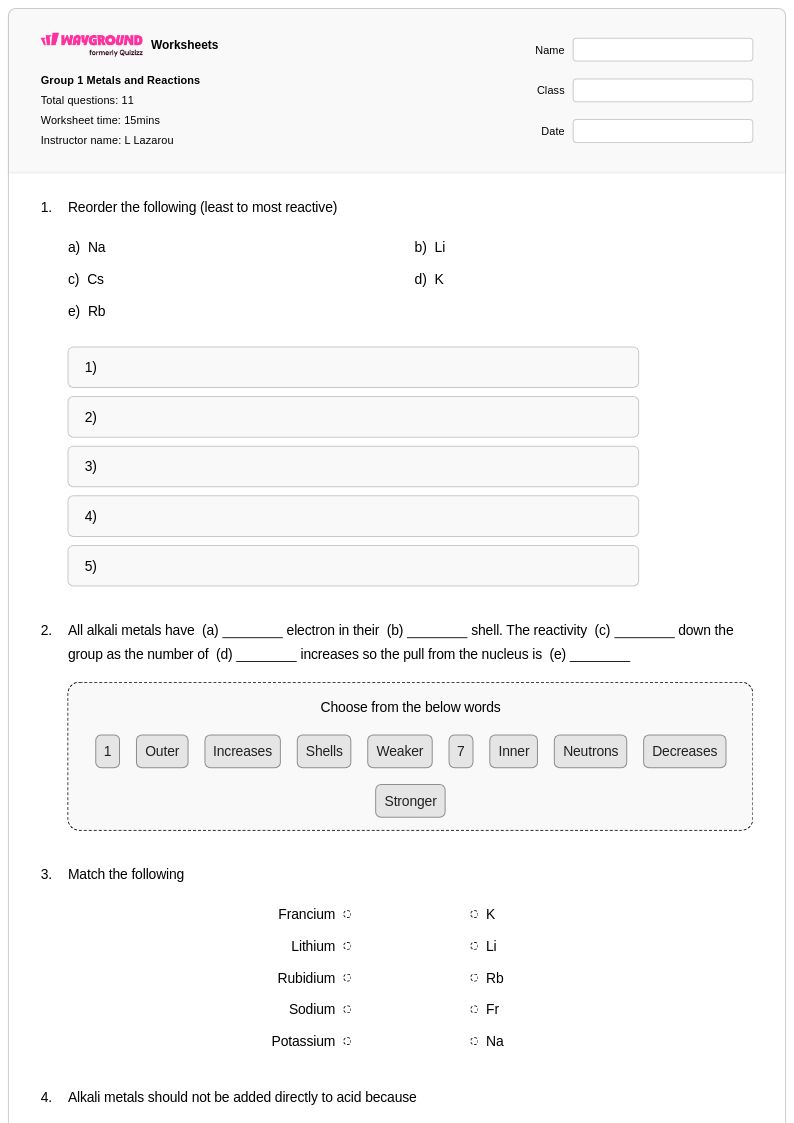
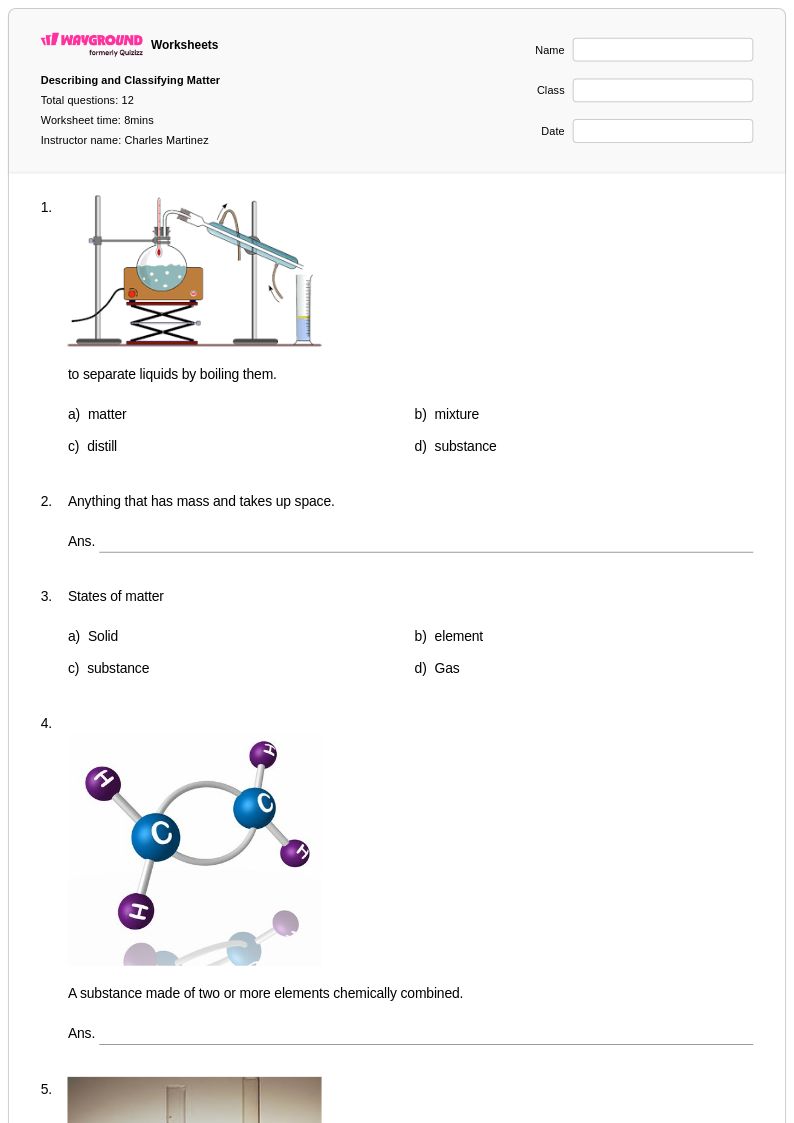
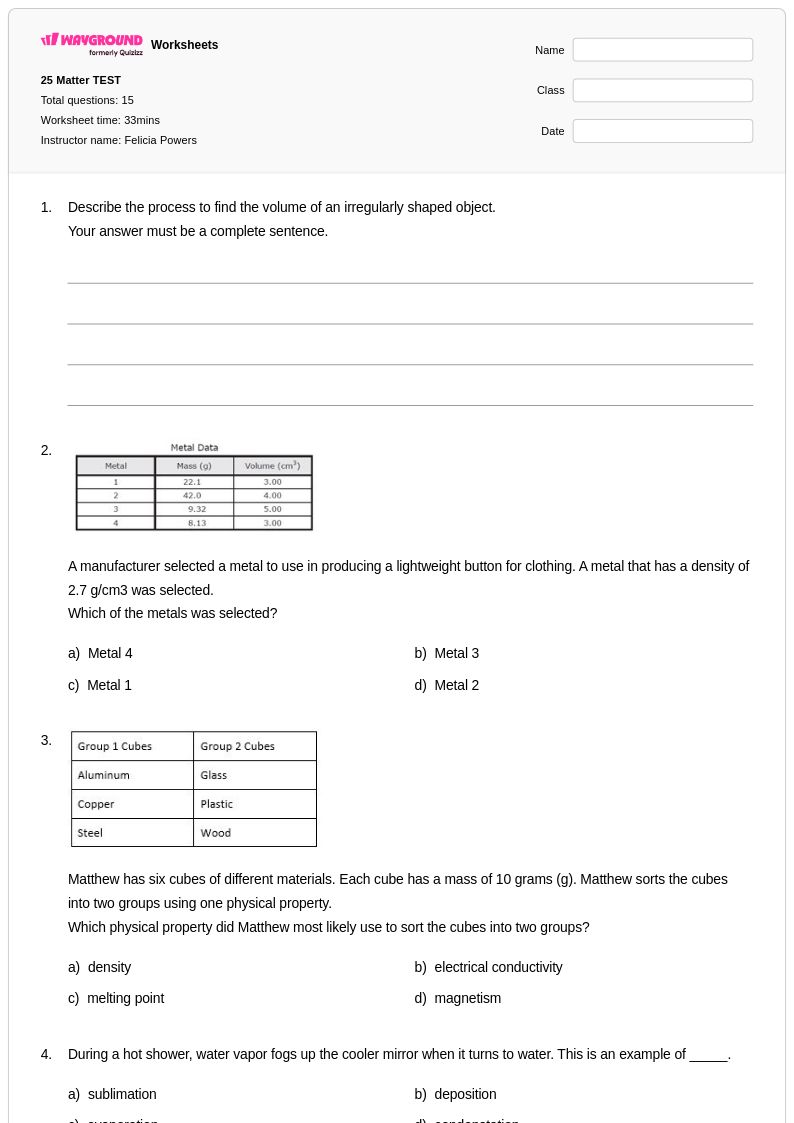
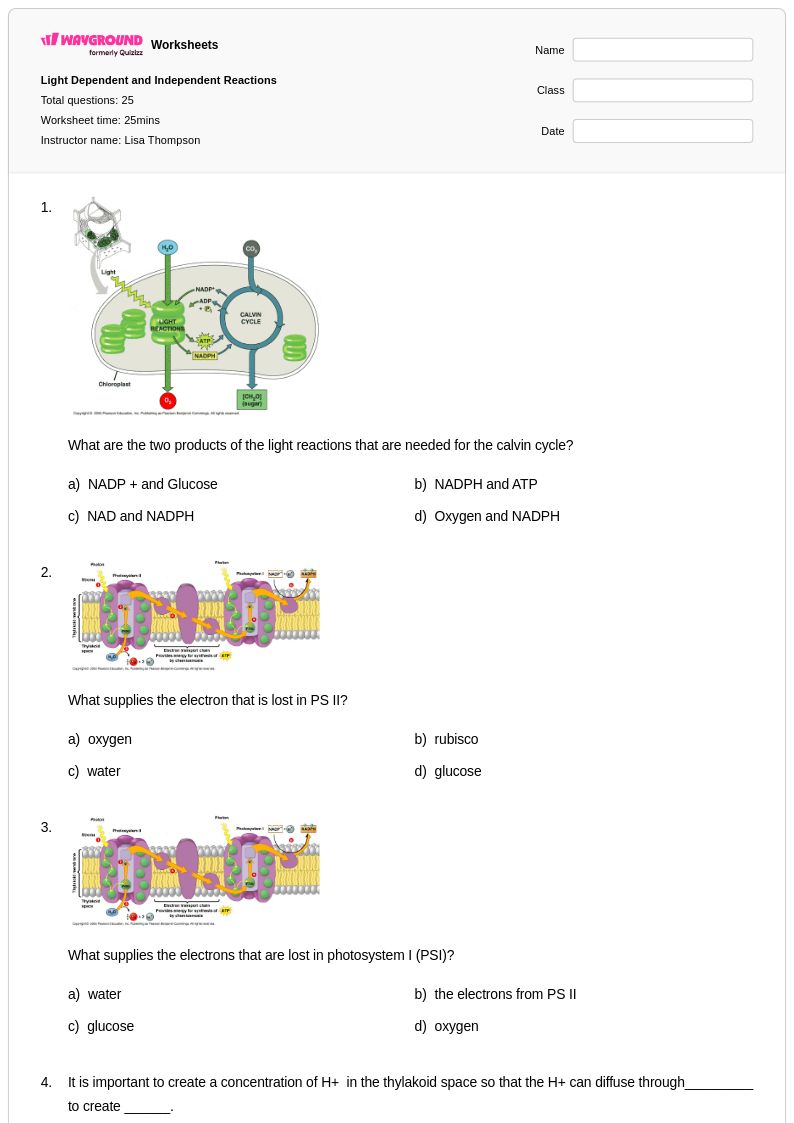
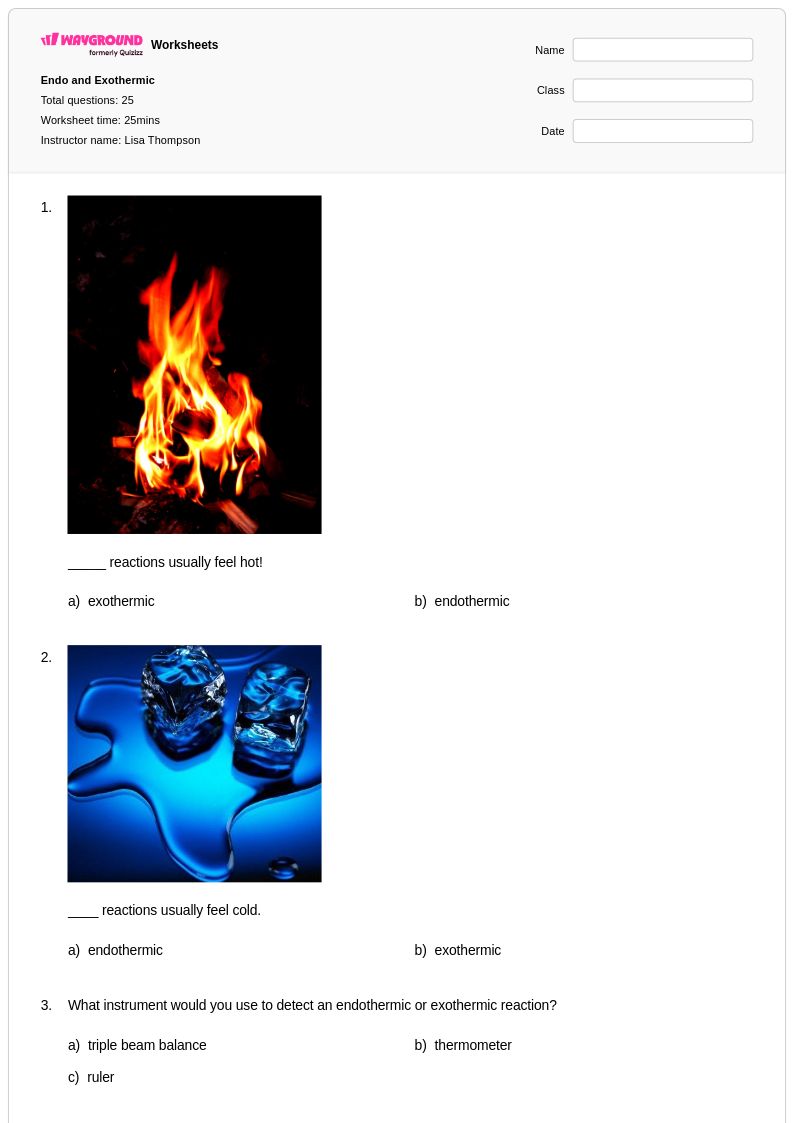
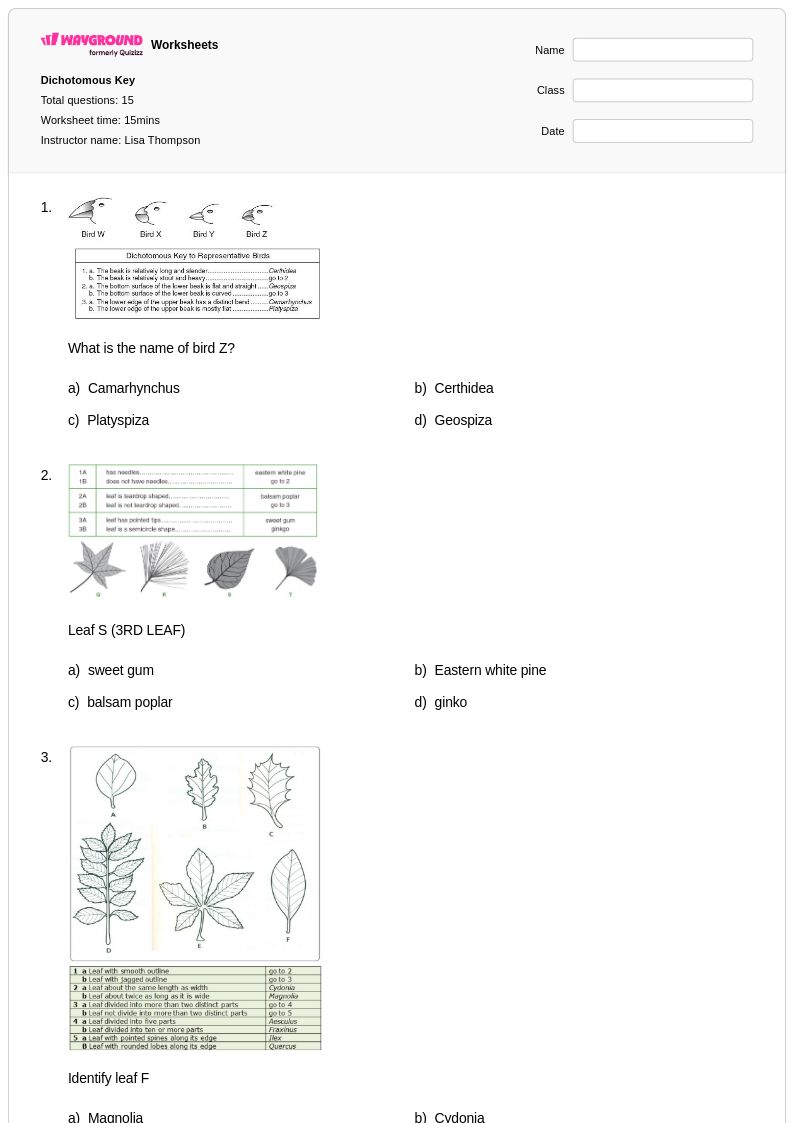
Free Class 9 classifying reactions worksheets and printables help students master identifying chemical reaction types through practice problems, with comprehensive answer keys and downloadable PDFs available on Wayground.
Explore printable Classifying Reactions worksheets for Class 9
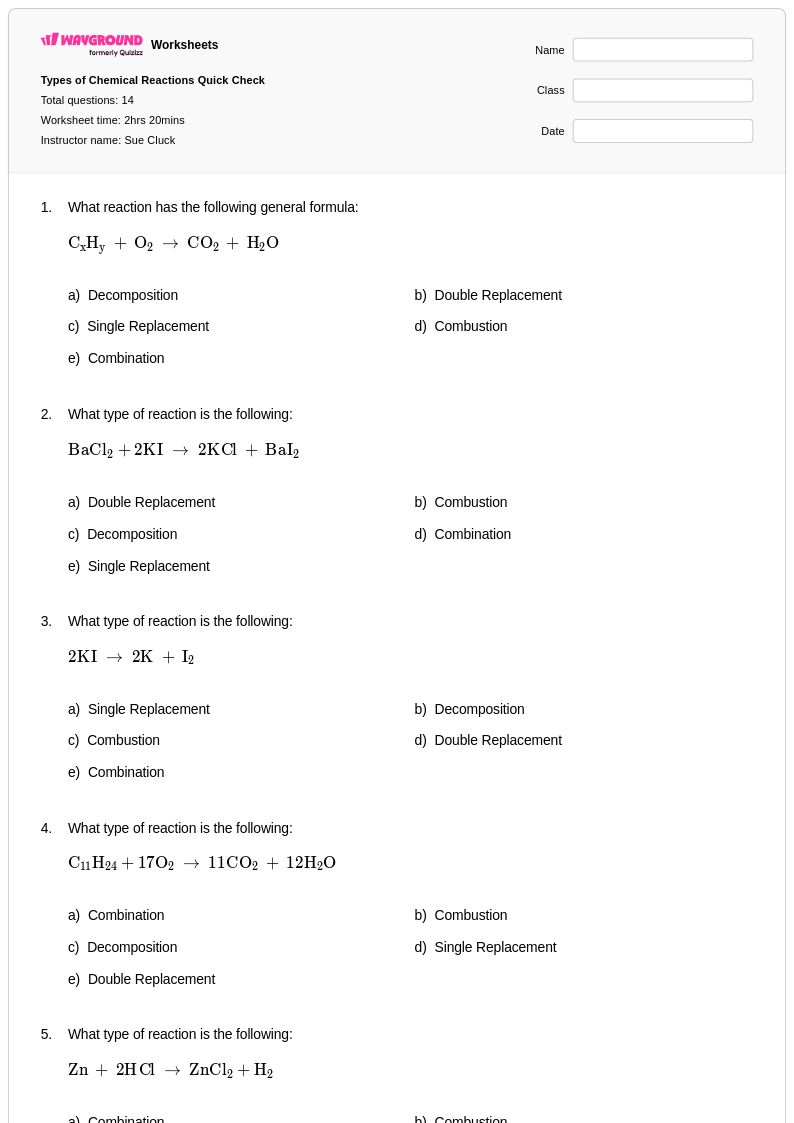
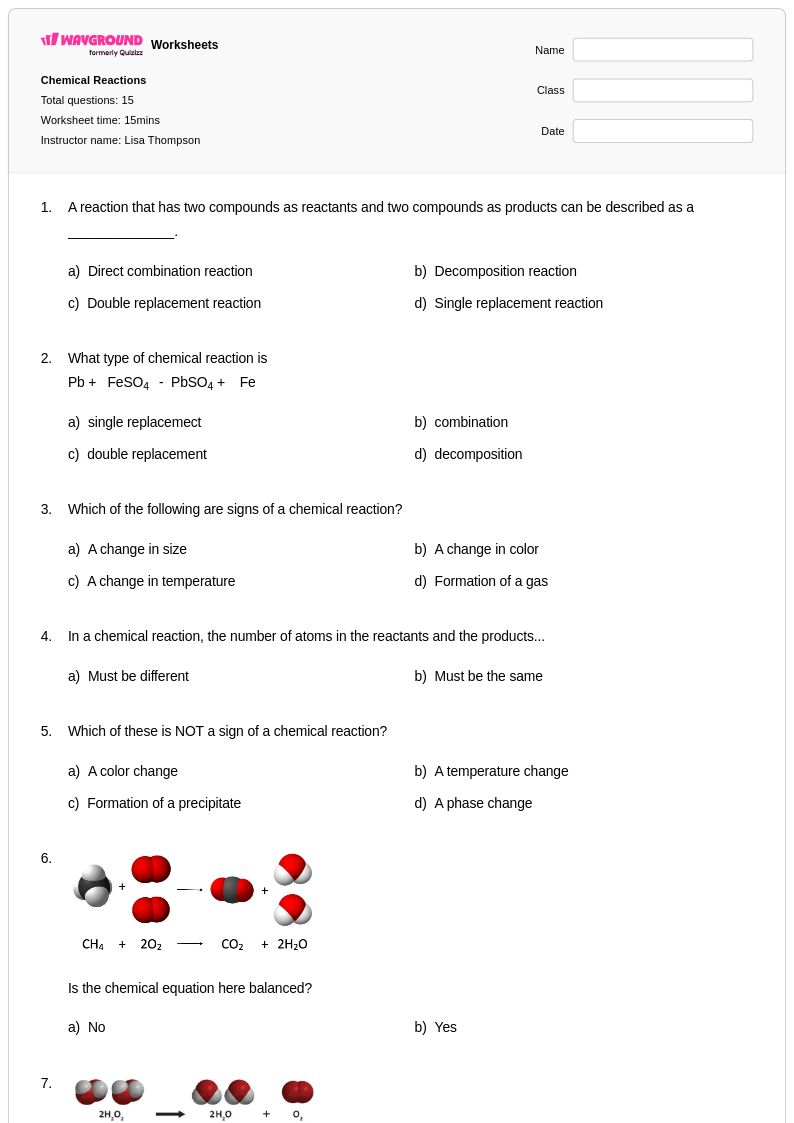
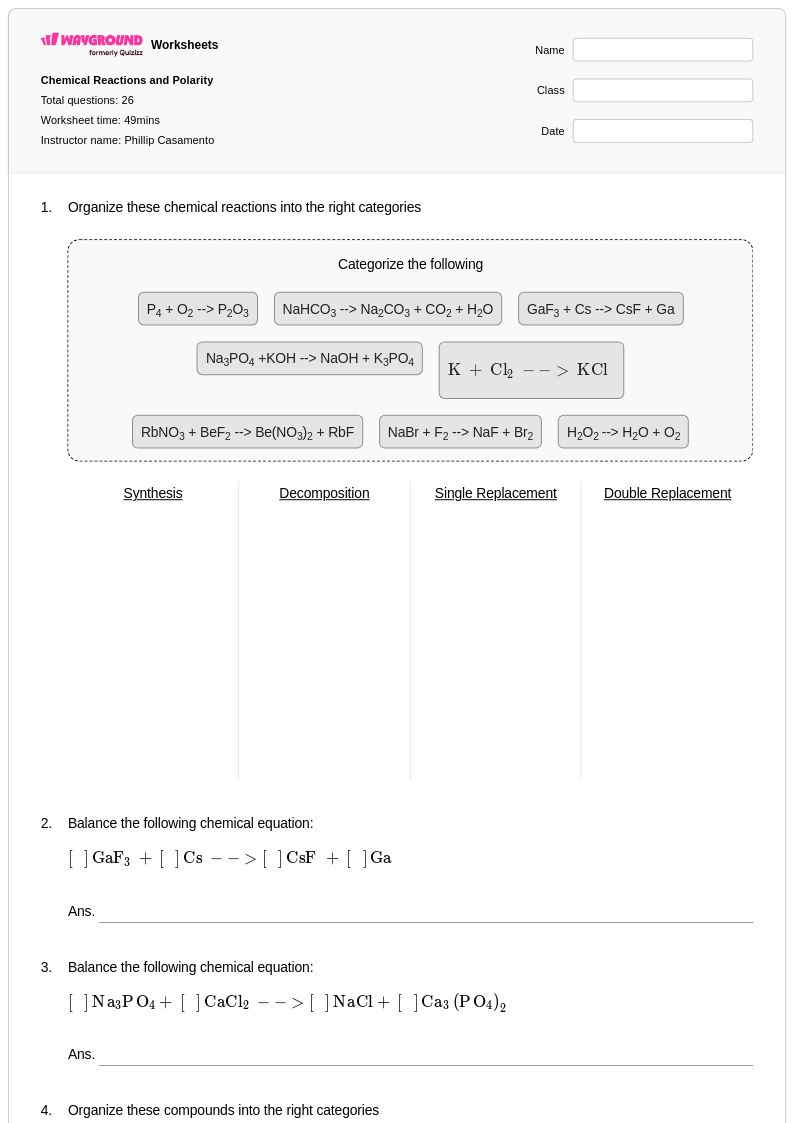
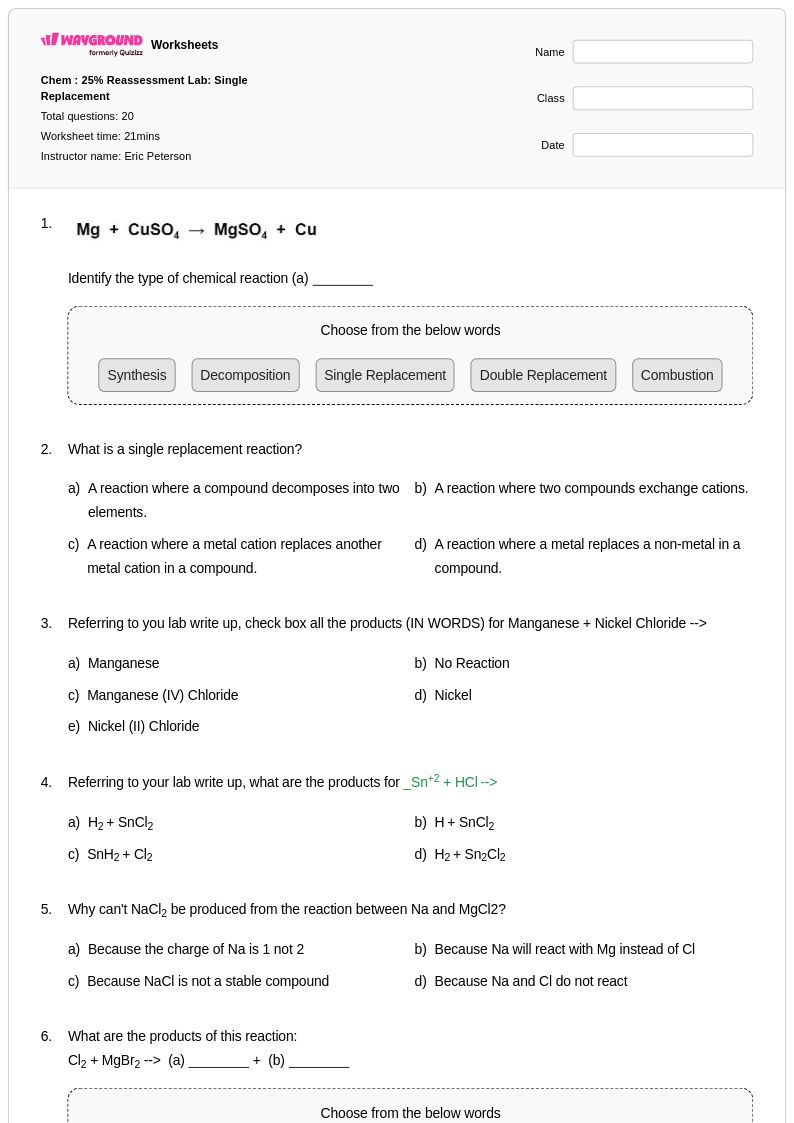
Class 9 classifying reactions worksheets available through Wayground (formerly Quizizz) provide comprehensive practice opportunities for students to master the fundamental skill of identifying and categorizing different types of chemical reactions. These expertly designed worksheets strengthen critical analytical abilities by guiding students through systematic examination of synthesis, decomposition, single replacement, double replacement, and combustion reactions. Each worksheet collection includes detailed answer keys that enable both independent study and teacher-guided instruction, while the free printable format ensures accessibility for diverse classroom settings. The practice problems progress logically from basic pattern recognition to complex multi-step reaction analysis, helping students develop the classification skills essential for advanced chemistry concepts.
Wayground (formerly Quizizz) empowers educators with millions of teacher-created resources specifically designed to support Class 9 chemistry instruction in classifying reactions. The platform's robust search and filtering capabilities allow teachers to quickly locate worksheets aligned with state and national science standards, while differentiation tools enable customization for students at varying skill levels. These flexible resources are available in both printable pdf formats for traditional classroom use and digital formats for technology-integrated learning environments. Teachers can seamlessly incorporate these worksheets into lesson planning for initial instruction, targeted remediation for struggling students, enrichment activities for advanced learners, and ongoing skill practice to reinforce reaction classification concepts throughout the academic year.
FAQs
How do I teach students to classify chemical reactions?
Start by introducing the five reaction types (synthesis, decomposition, single replacement, double replacement, and combustion) one at a time, using pattern recognition as the core skill. Show students how to identify reactants and products visually before applying labels. Once each type is established individually, present mixed sets of equations and have students sort them, which builds the comparative thinking needed for reliable classification.
What exercises help students practice classifying chemical reactions?
The most effective practice involves mixed-reaction sets where students must distinguish between all five types without prompting, since isolated drills can create false confidence. Exercises that ask students to both classify a reaction and predict its products reinforce understanding rather than rote memorization. Structured practice problems that progress from basic pattern recognition to multi-step reaction analysis are especially useful for building durable classification skills.
What mistakes do students commonly make when classifying chemical reactions?
The most frequent error is confusing single and double replacement reactions, particularly when students focus on the number of reactants rather than tracking which elements or ions are actually exchanging positions. Students also commonly misidentify combustion reactions, either overlooking the presence of oxygen as a reactant or failing to recognize that carbon dioxide and water are the defining products. Requiring students to annotate their reasoning step-by-step, rather than just labeling the reaction type, helps surface and correct these misconceptions early.
How do I differentiate classifying reactions instruction for different skill levels?
For students who are still building foundational skills, reduce the number of reaction types presented at once and provide a reference chart during practice. More advanced students benefit from exercises that remove structural cues, such as unbalanced or unfamiliar equations, that force deeper pattern analysis. On Wayground, teachers can apply accommodations such as reduced answer choices for students who need additional support, which lowers cognitive load without changing the underlying chemistry content.
How do I use Wayground's classifying reactions worksheets in my chemistry class?
Wayground's classifying reactions worksheets are available as printable PDFs, making them easy to use for in-class practice, homework, or lab warm-ups in a traditional setting. They are also available in digital formats, so teachers can assign them for remote or technology-integrated learning, or host them as a quiz directly on Wayground for instant student feedback. Each worksheet includes a detailed answer key, supporting both teacher-led review and independent student self-assessment.