Free Printable Combination Circuit Worksheets for Class 6
Class 6 combination circuit worksheets from Wayground help students master series and parallel circuit concepts through engaging printables, practice problems, and comprehensive answer keys available as free PDF downloads.
Explore printable Combination Circuit worksheets for Class 6
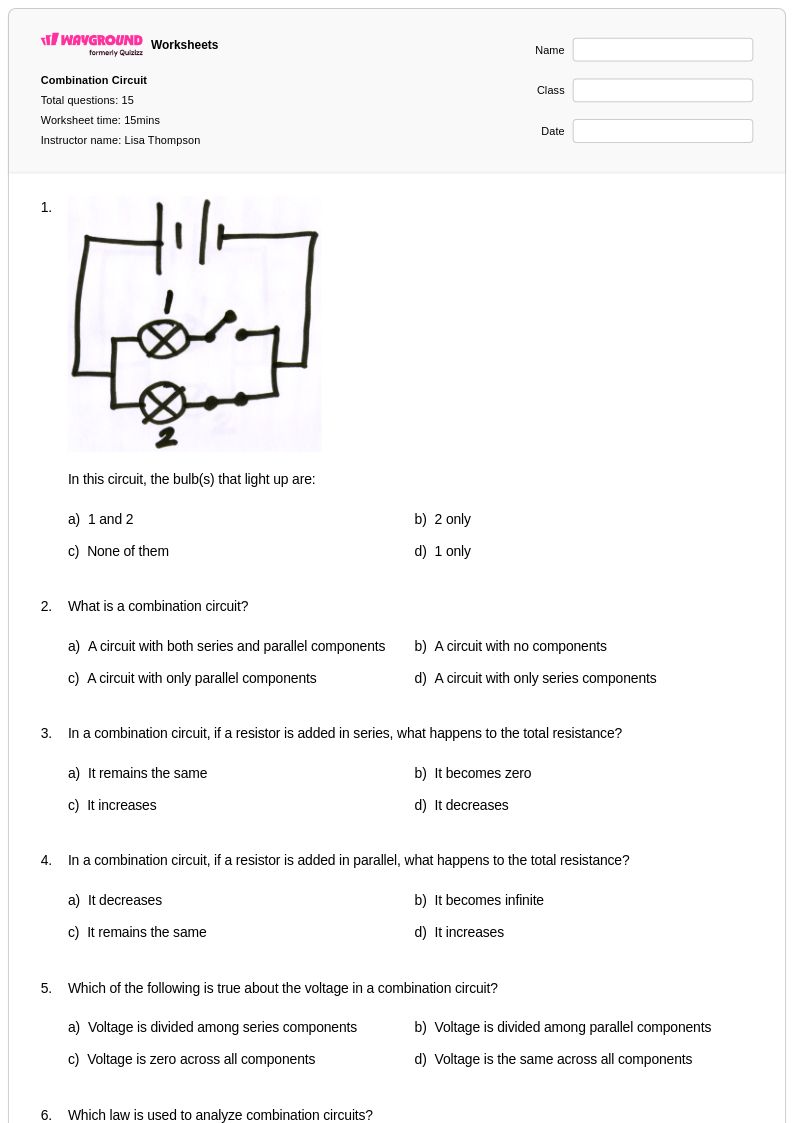
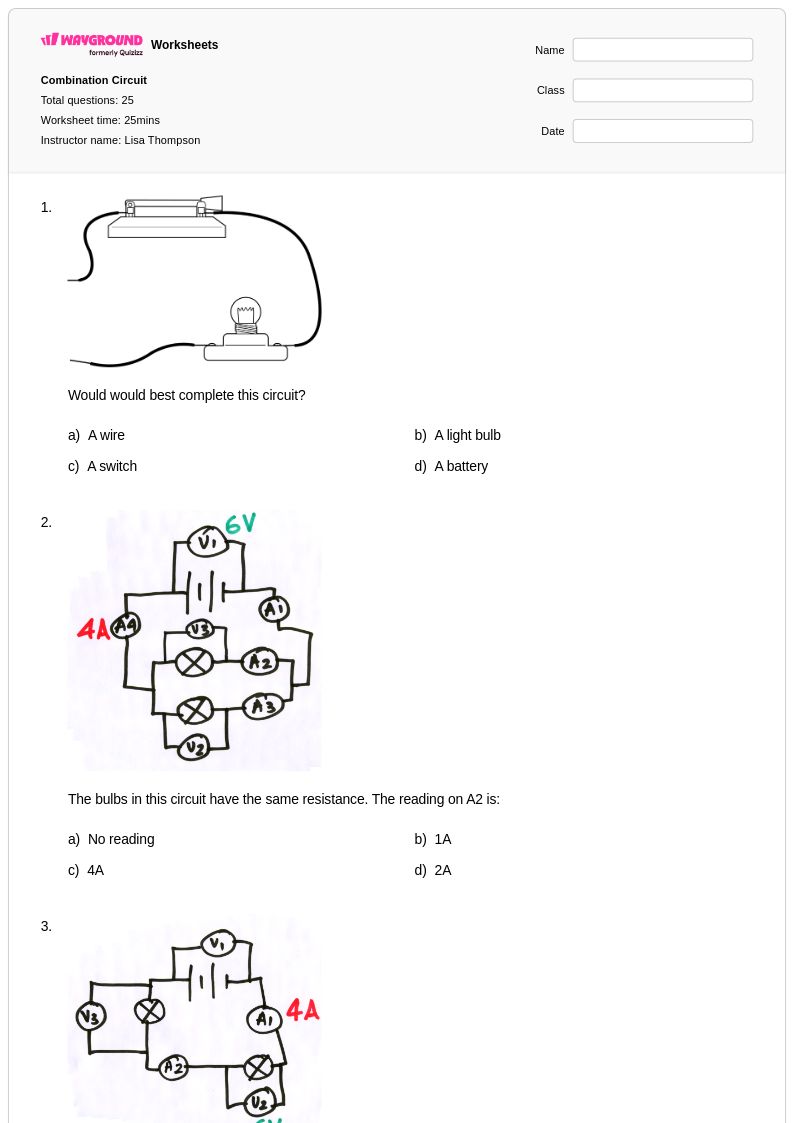
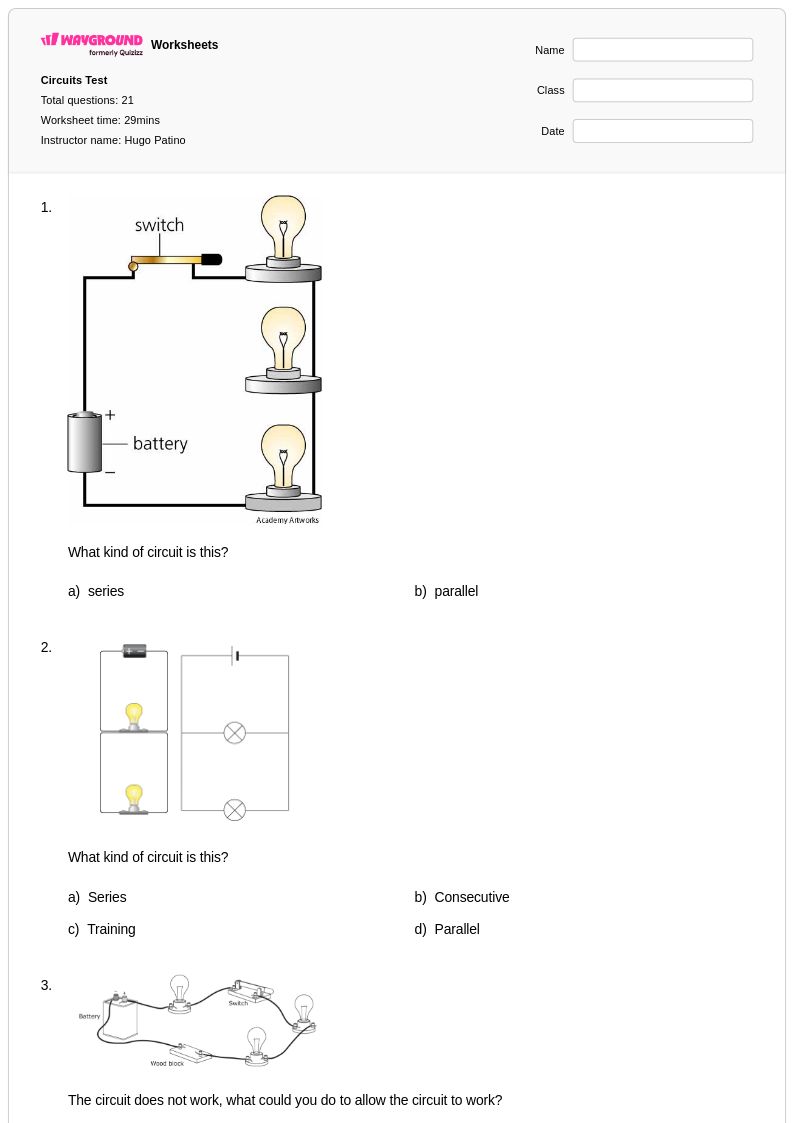
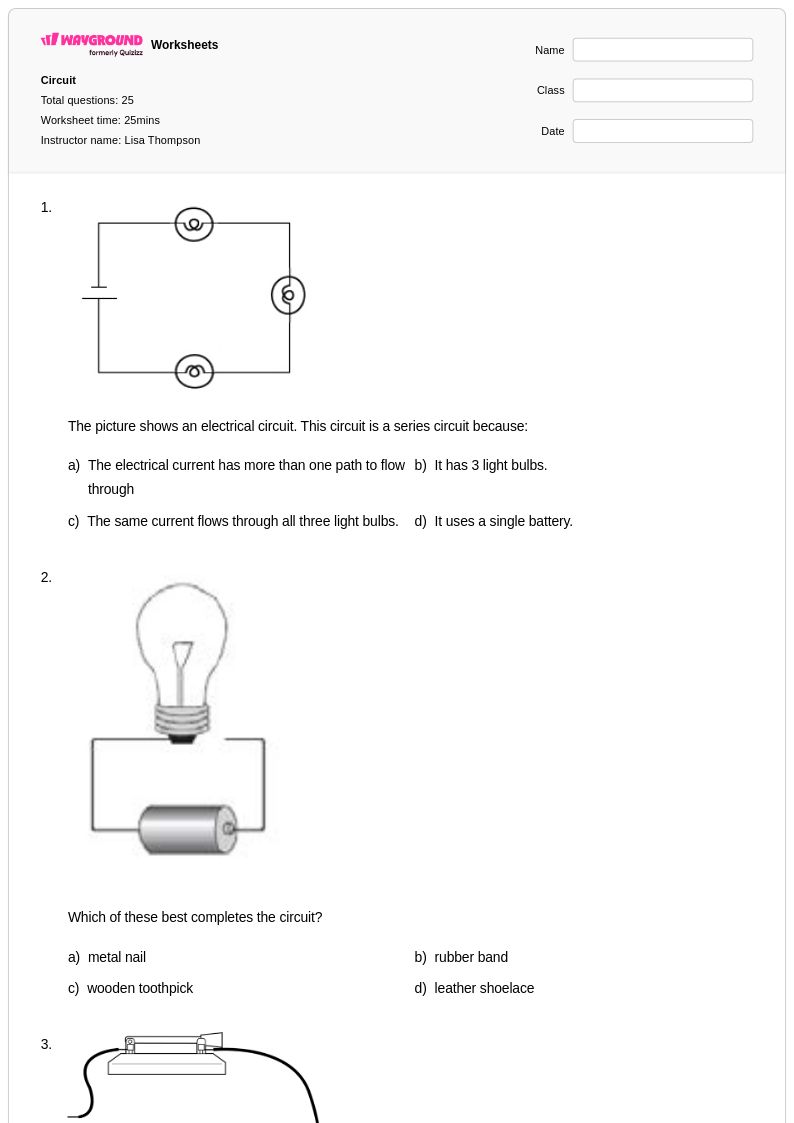
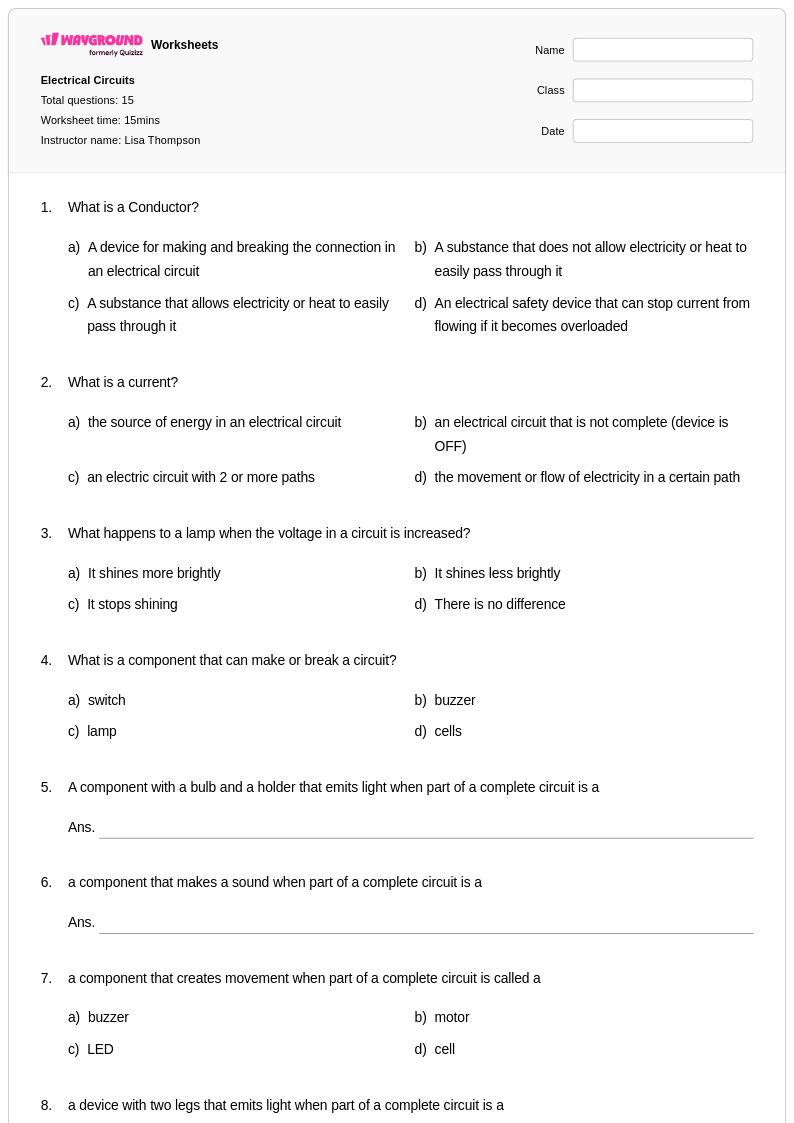
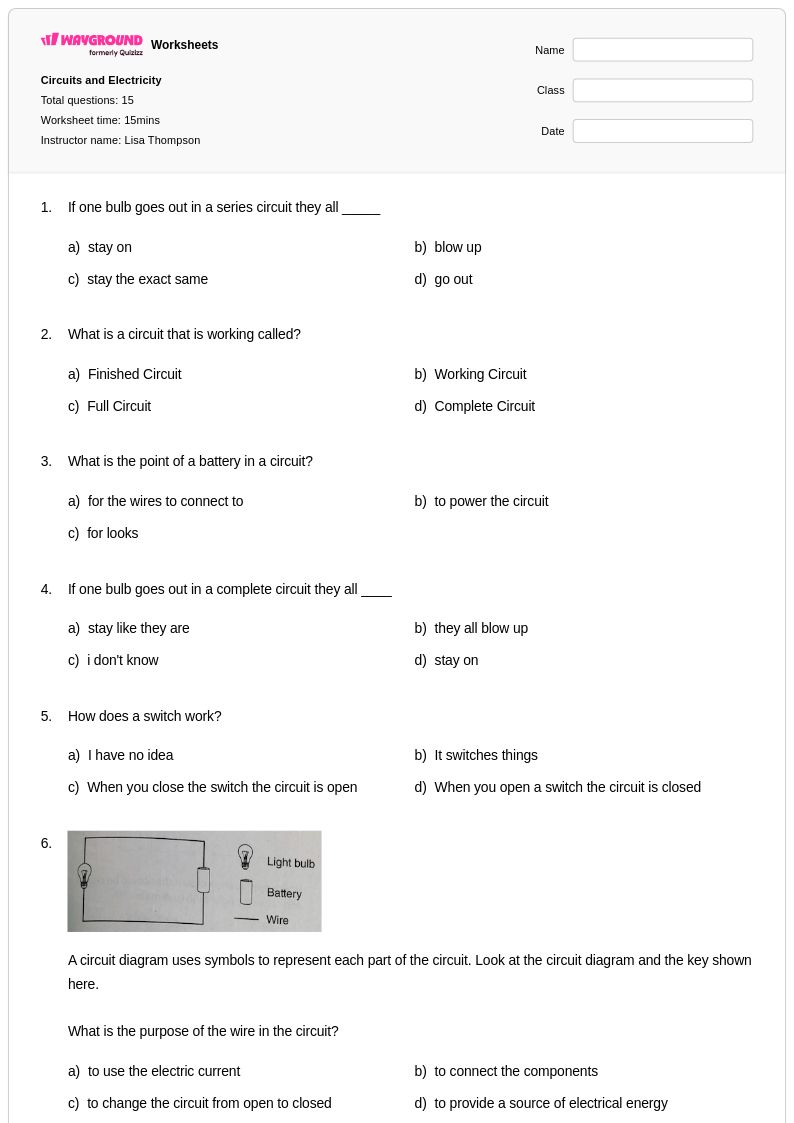
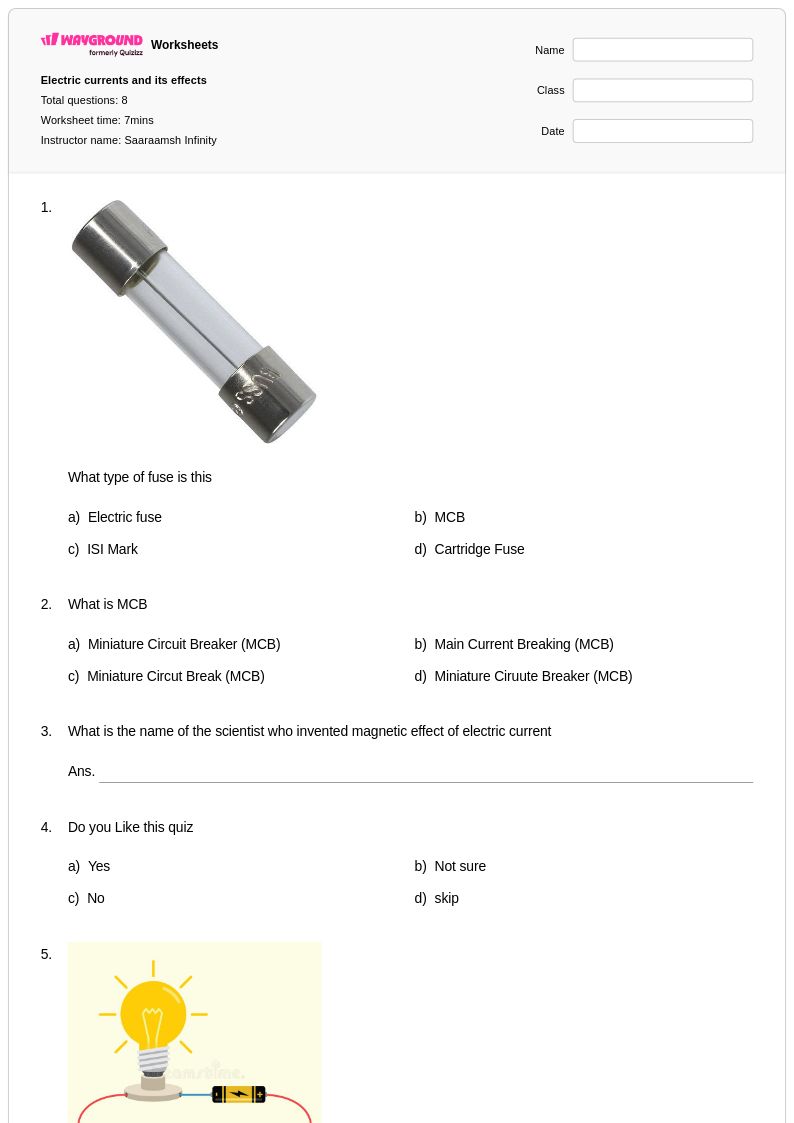
Combination circuit worksheets for Class 6 students available through Wayground (formerly Quizizz) provide comprehensive practice with electrical circuits that incorporate both series and parallel components. These educational resources help students develop critical thinking skills as they analyze how current flows through multiple pathways, calculate total resistance, and predict voltage drops across different circuit elements. The worksheets strengthen fundamental understanding of electrical principles through hands-on practice problems that require students to apply Ohm's law, identify circuit components, and troubleshoot common electrical scenarios. Each worksheet includes detailed answer keys that guide students through step-by-step solutions, while the free printable PDF format ensures easy classroom distribution and home study accessibility.
Wayground (formerly Quizizz) empowers educators with millions of teacher-created combination circuit resources that streamline lesson planning and student assessment. The platform's robust search and filtering capabilities allow teachers to quickly locate Class 6 appropriate materials that align with state science standards and curriculum objectives. Advanced differentiation tools enable instructors to customize worksheets based on individual student needs, creating targeted practice for remediation or enrichment activities. Teachers can seamlessly transition between printable PDF versions for traditional classroom work and digital formats for interactive learning experiences, while comprehensive answer keys support efficient grading and provide immediate feedback opportunities that enhance student understanding of complex electrical concepts.
FAQs
How do I teach combination circuits to students who already understand series and parallel circuits separately?
The key transition is helping students recognize which portions of a combination circuit behave as series segments and which behave as parallel branches before applying any formulas. Start by having students physically trace current paths through the circuit diagram and label each section. From there, they can reduce the circuit systematically, replacing parallel branches with equivalent resistances before treating the remaining components as a series circuit. This step-by-step reduction method builds analytical confidence before students tackle full network problems.
What practice exercises help students get better at solving combination circuit problems?
Students benefit most from structured practice that starts with two-branch combination circuits and gradually introduces additional parallel legs and series components. Exercises that require calculating total resistance, branch currents, and individual voltage drops in sequence reinforce the logical order of analysis. Problems that ask students to verify their answers using Kirchhoff's voltage and current laws add a self-checking layer that deepens understanding and reduces careless errors.
What mistakes do students commonly make when analyzing combination circuits?
The most frequent error is misidentifying which components are in series versus parallel, leading students to apply the wrong resistance formula to entire sections of the circuit. Students also commonly forget that voltage is shared equally across parallel branches but divided across series components, causing incorrect current calculations. A third common mistake is failing to recalculate total current after finding equivalent resistance, leaving the final branch current analysis incomplete.
How do I use Wayground's combination circuit worksheets in my classroom?
Wayground's combination circuit worksheets are available as printable PDFs for traditional classroom distribution and in digital formats for technology-integrated learning environments, including the option to host them as a quiz directly on Wayground. Both formats include complete answer keys, which makes them practical for independent practice, lab follow-up assignments, or homework. The digital format is especially useful for remote or hybrid settings where consistent formatting across devices matters.
How can I differentiate combination circuit worksheets for students at different skill levels?
For students who are still building foundational skills, begin with circuits that have only one parallel branch and one series resistor before introducing multi-branch networks. On Wayground, teachers can apply student-level accommodations such as reduced answer choices to lower cognitive load for struggling learners, or enable Read Aloud support for students who benefit from audio delivery of problem text. More advanced students can be directed to problems involving multiple resistors, capacitors, and power consumption calculations to extend their analysis skills.
When should students use Kirchhoff's laws versus Ohm's law alone when solving combination circuit problems?
Ohm's law is sufficient for straightforward combination circuits where total resistance can be found through systematic series-parallel reduction. Kirchhoff's laws become necessary when circuits cannot be simplified through reduction alone, such as bridge circuits or multi-loop networks where current paths are not clearly separable. Teaching students to first attempt circuit reduction and then reach for Kirchhoff's laws when reduction stalls is an efficient problem-solving habit worth reinforcing explicitly.