Free Printable Parallel Circuit Worksheets for Class 6
Class 6 parallel circuit worksheets from Wayground help students master electrical connections through engaging printables, practice problems, and comprehensive answer keys that make learning circuit fundamentals accessible and effective.
Explore printable Parallel Circuit worksheets for Class 6
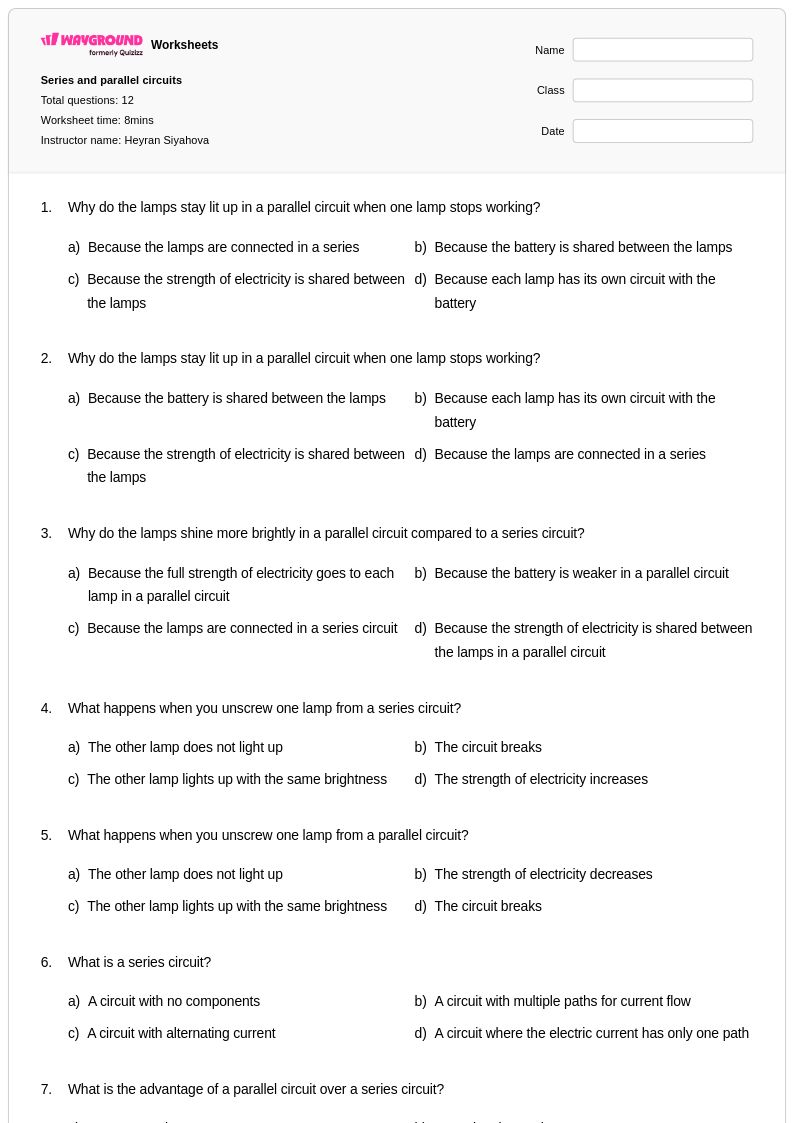
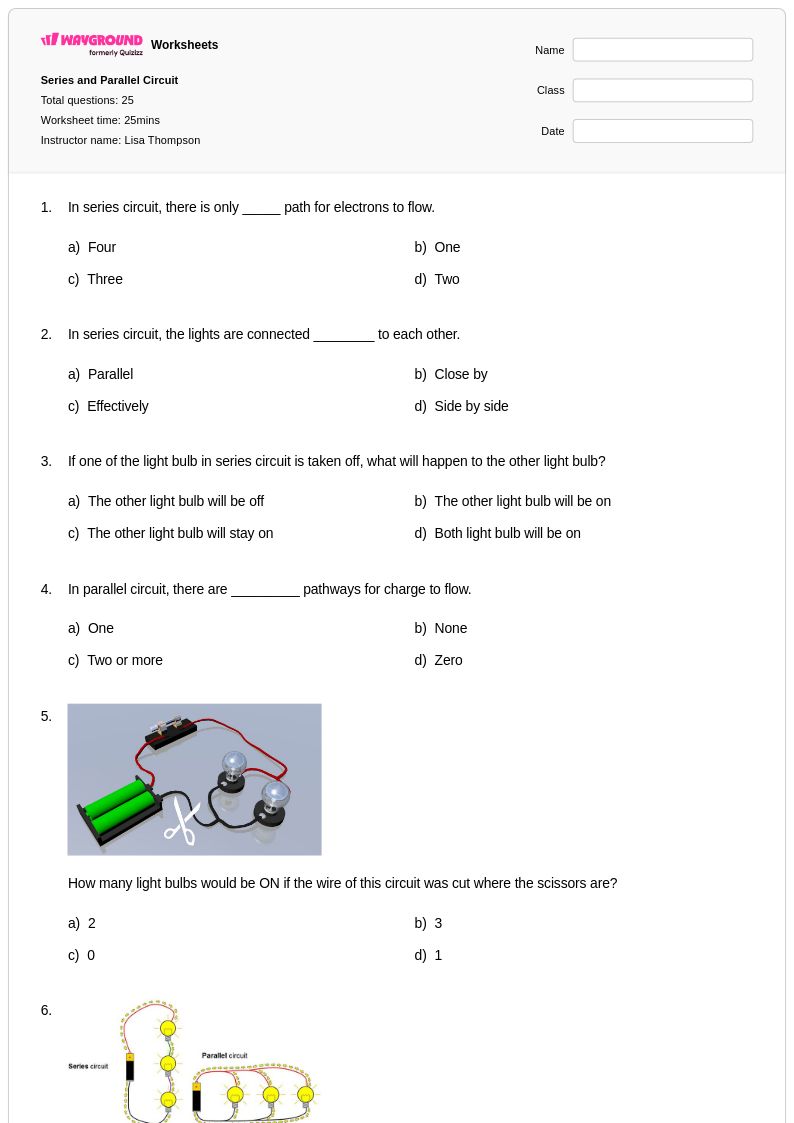
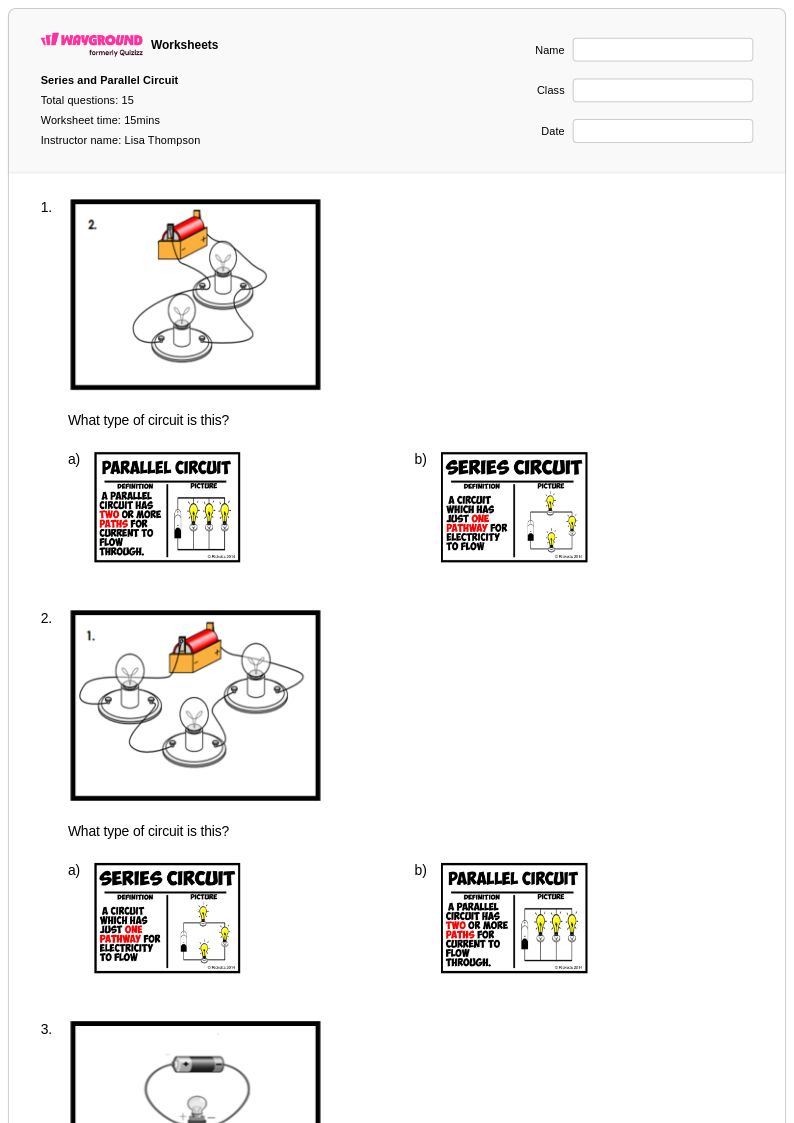
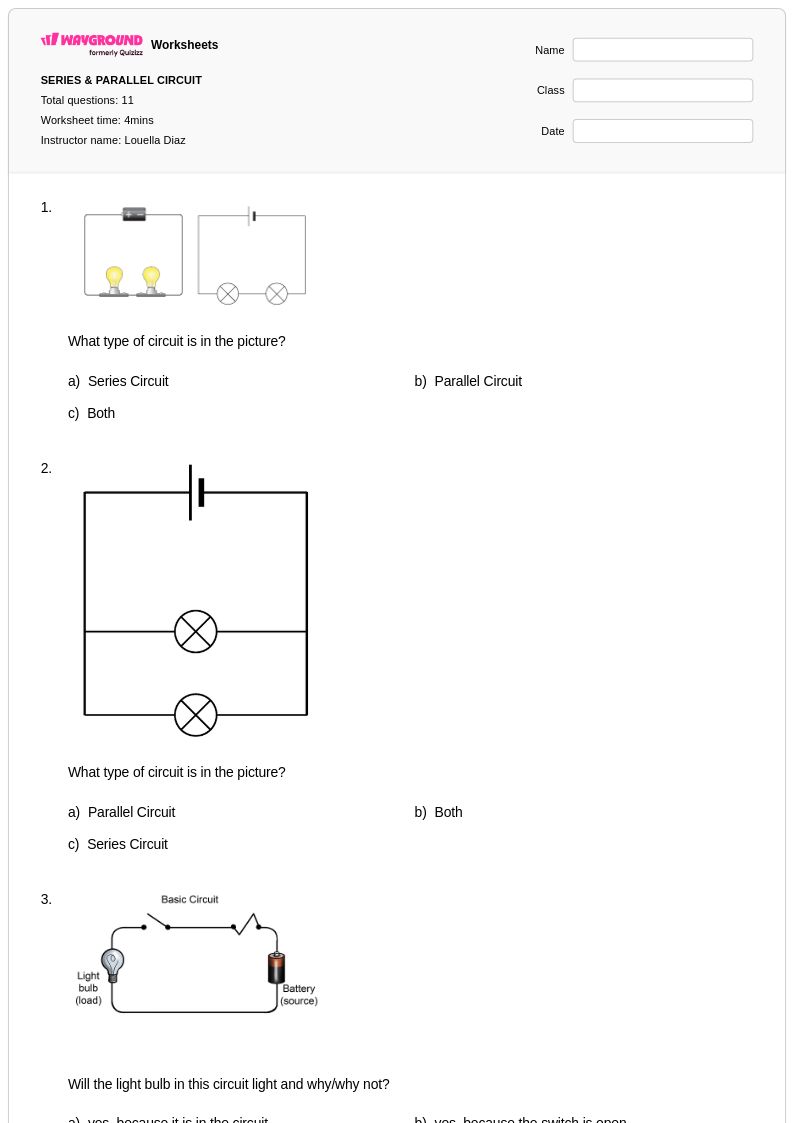
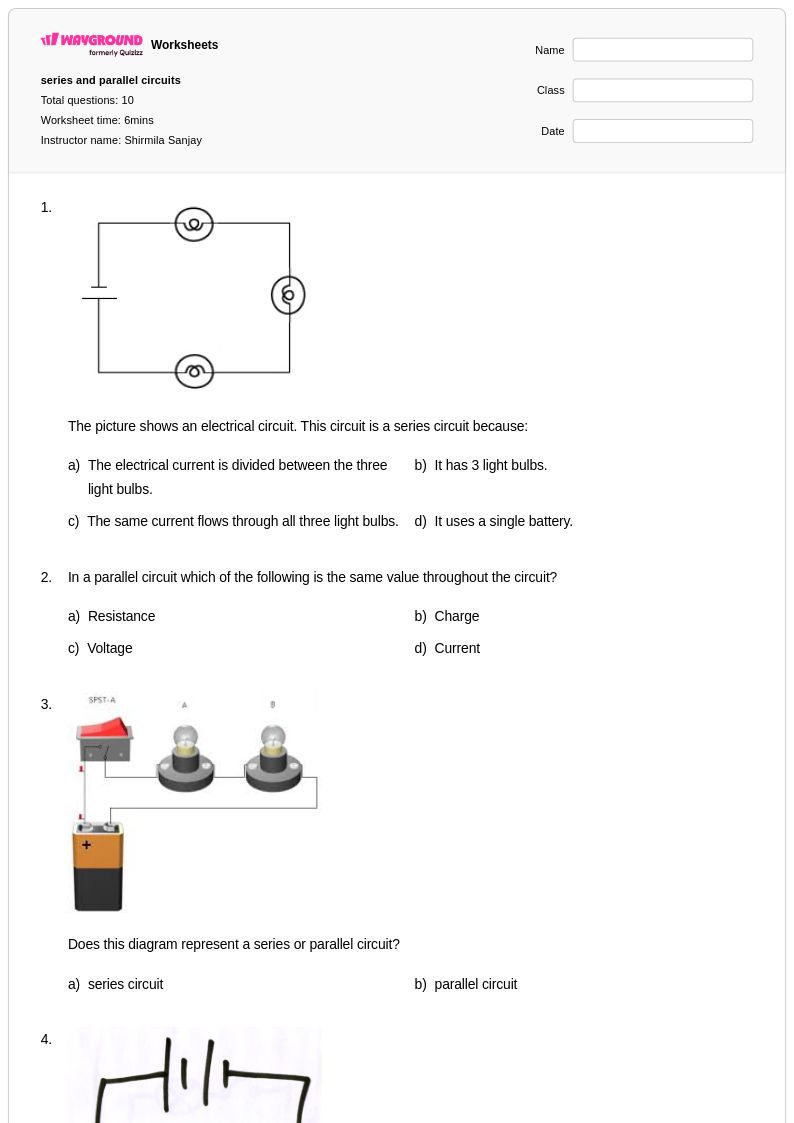
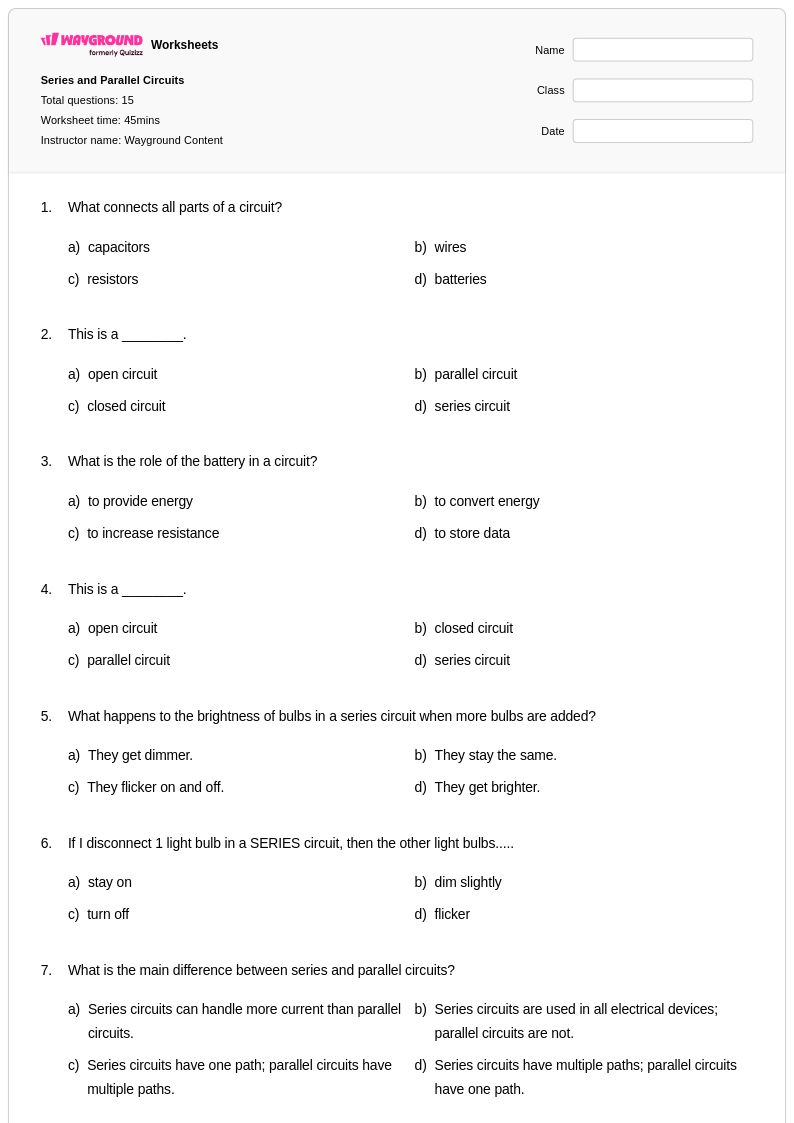
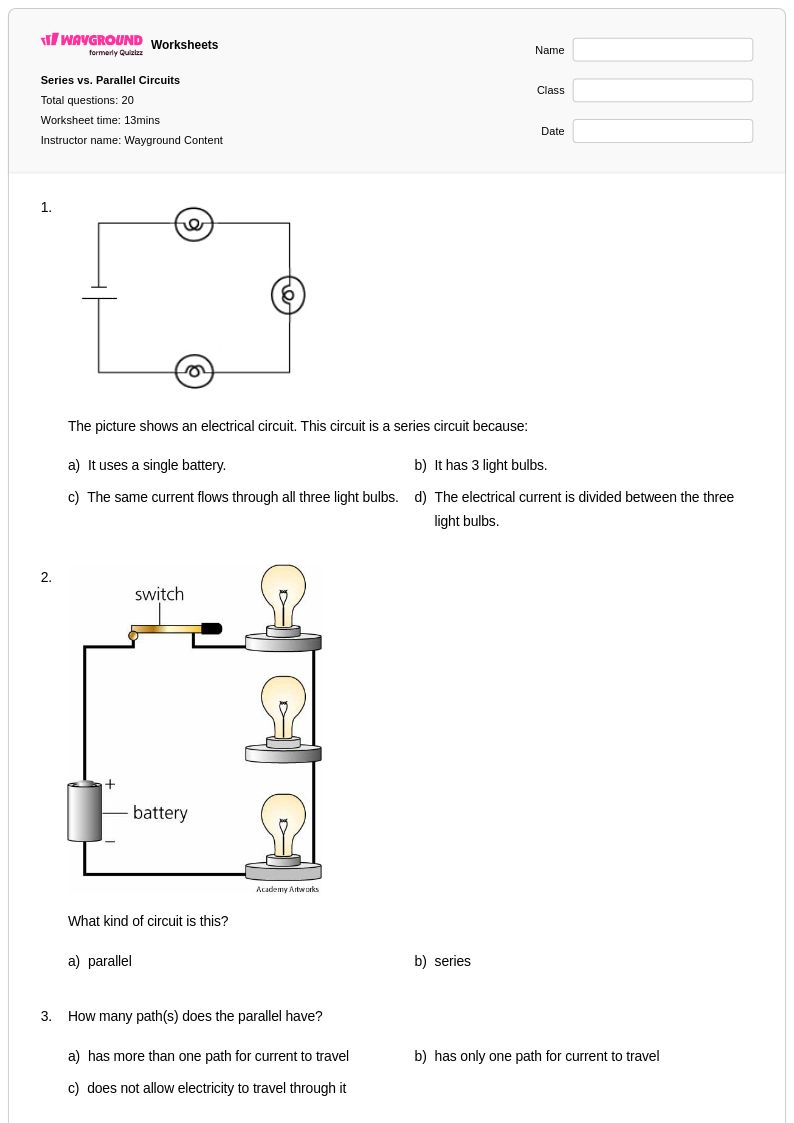
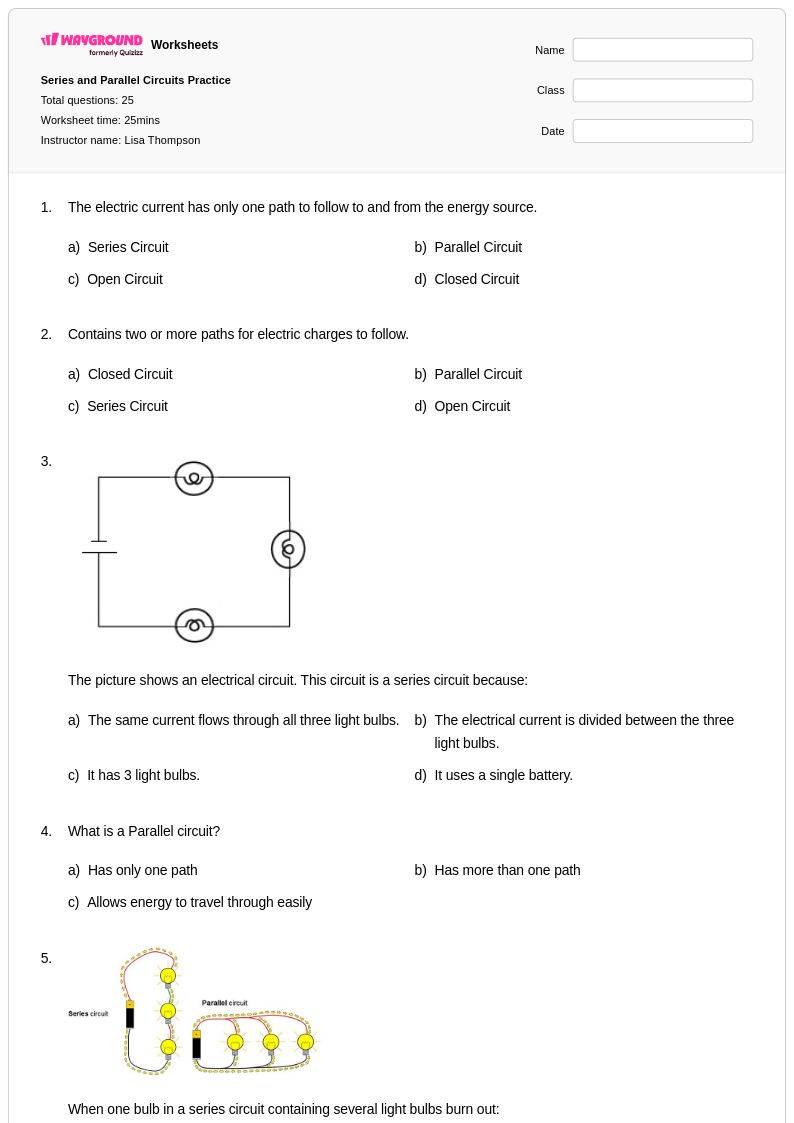
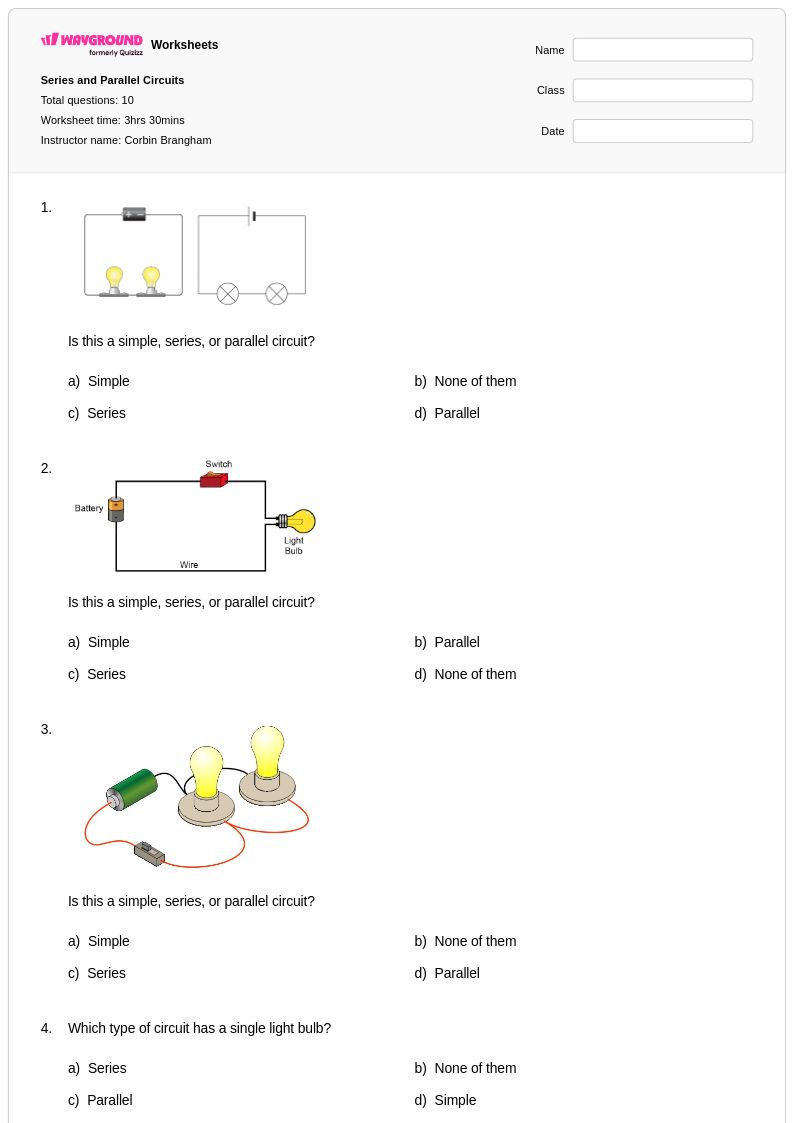
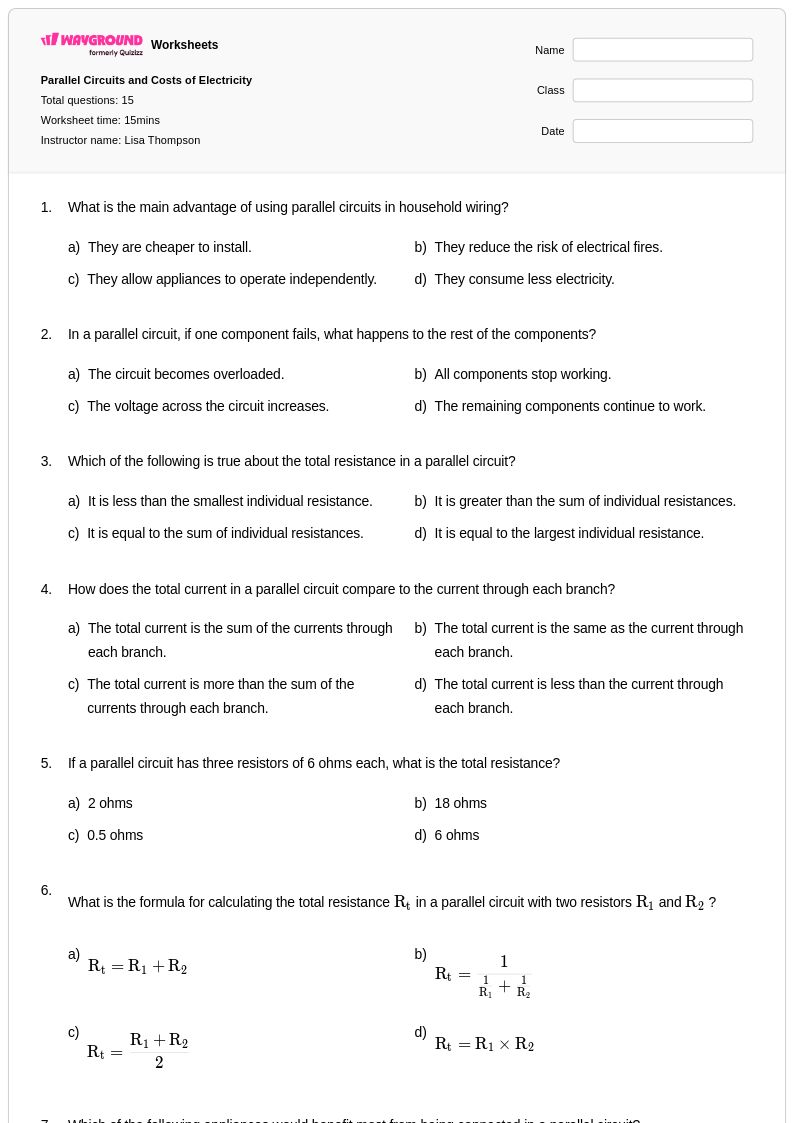
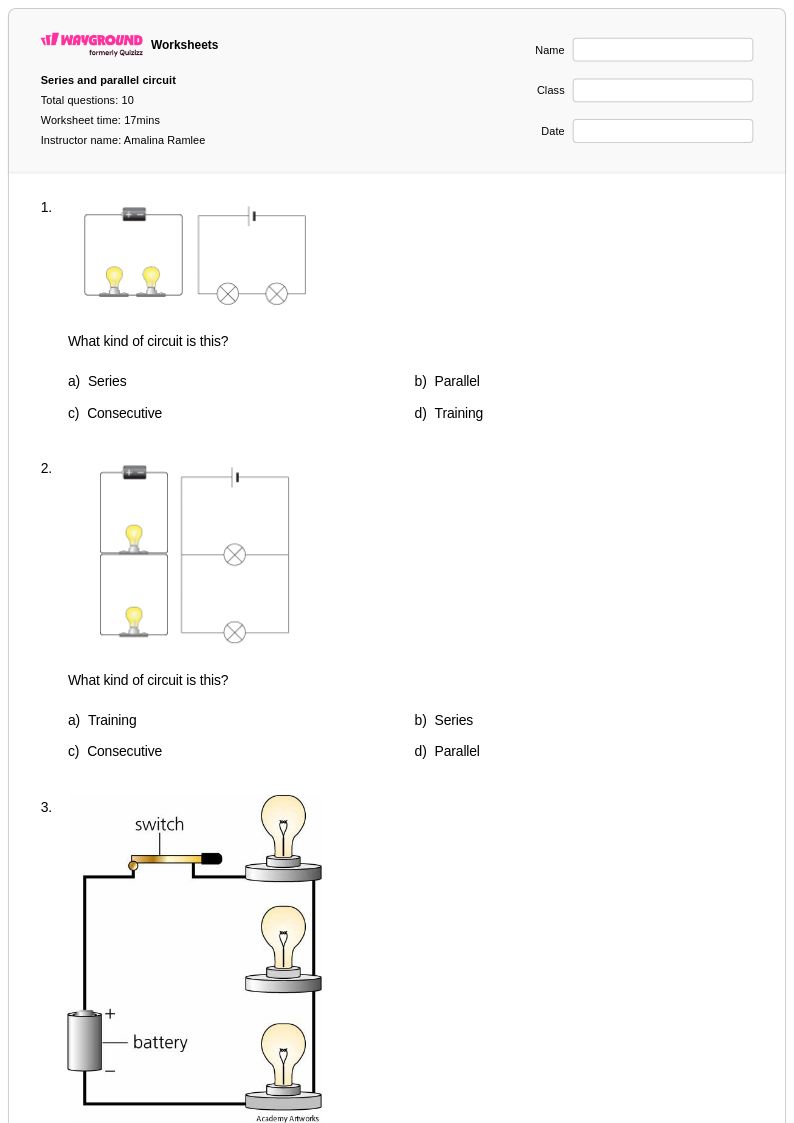
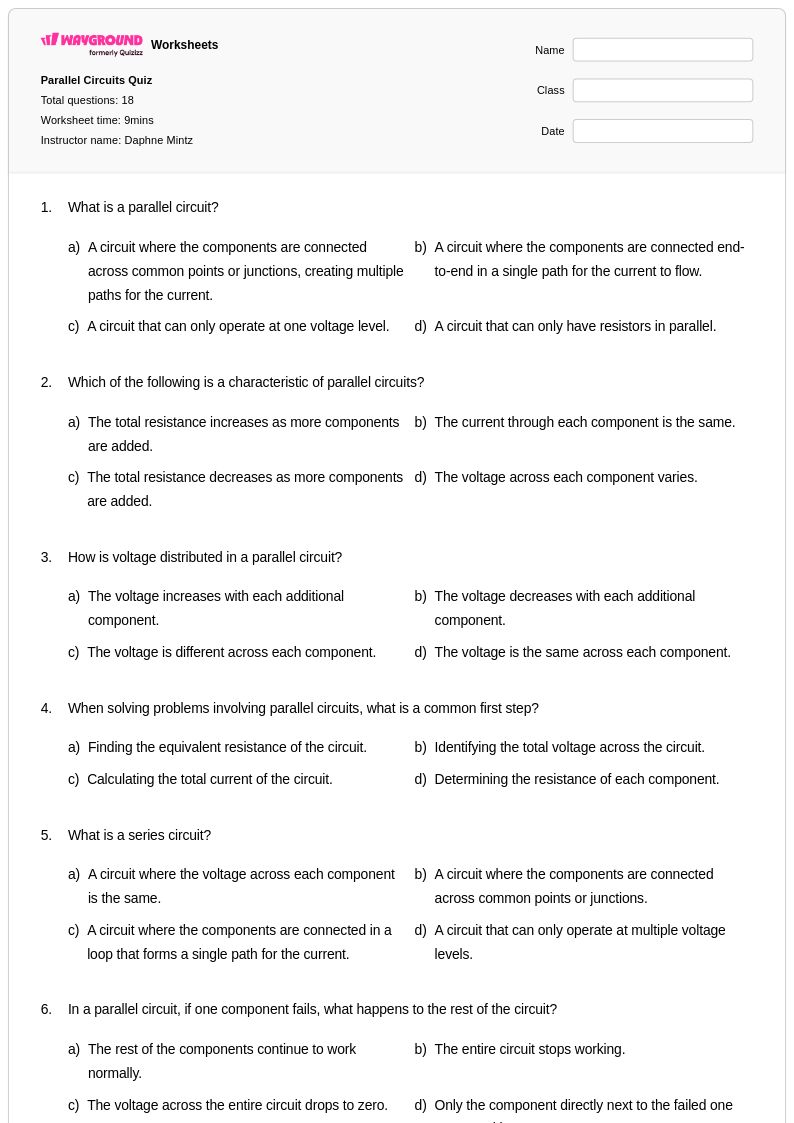
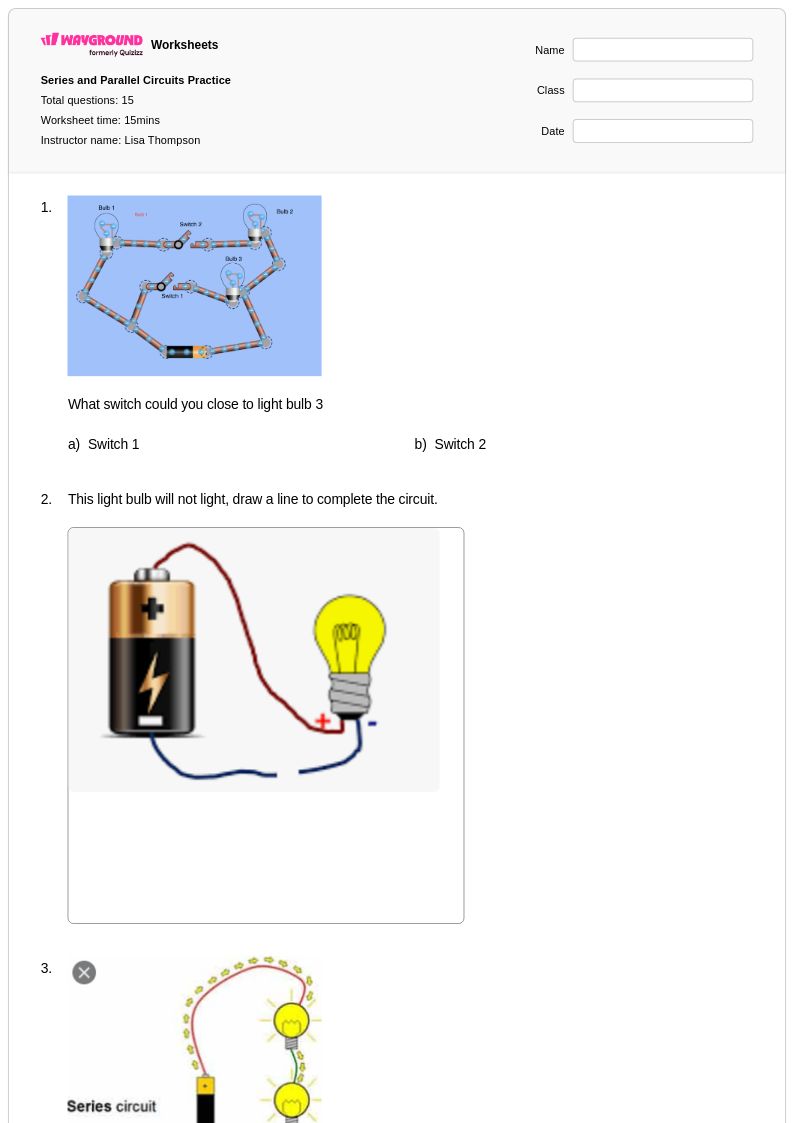
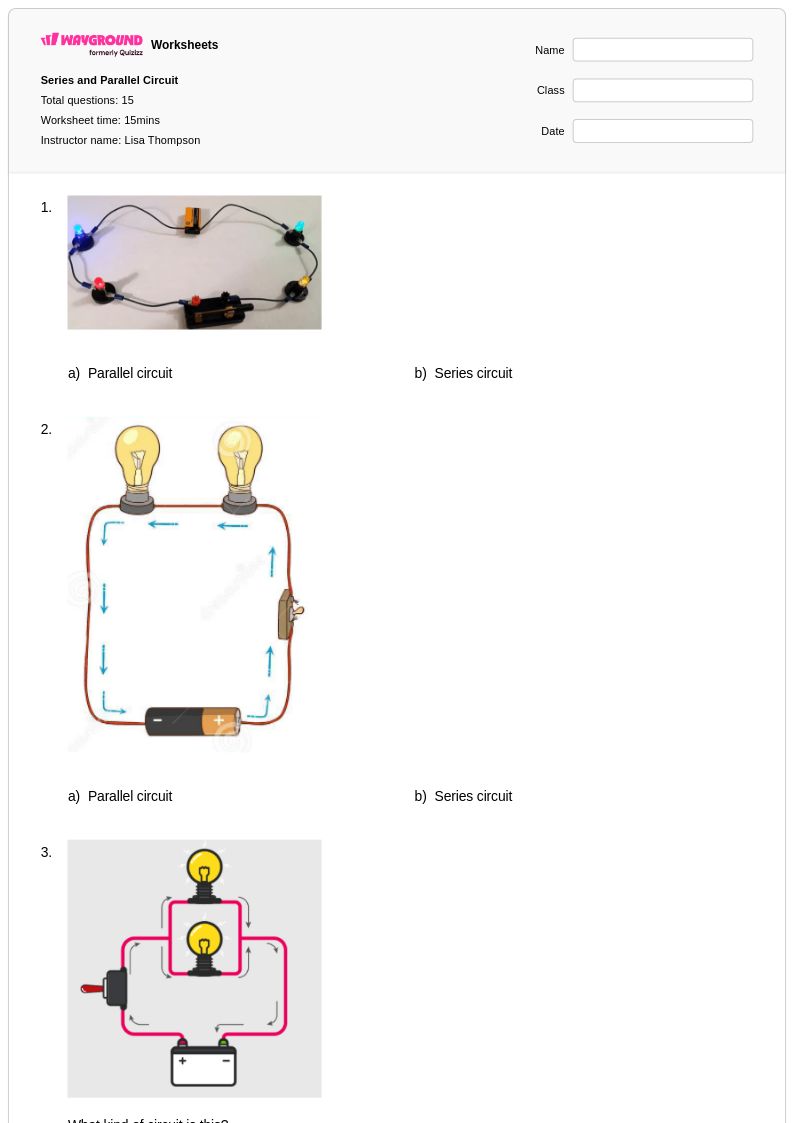
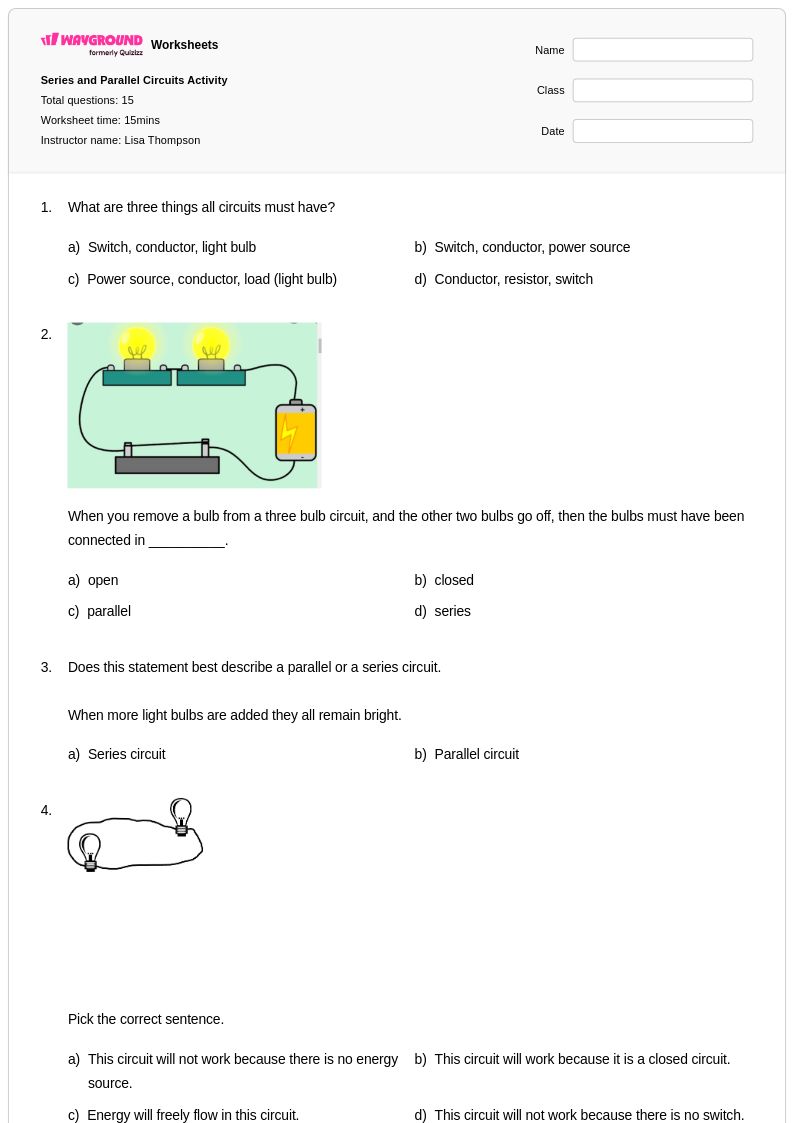
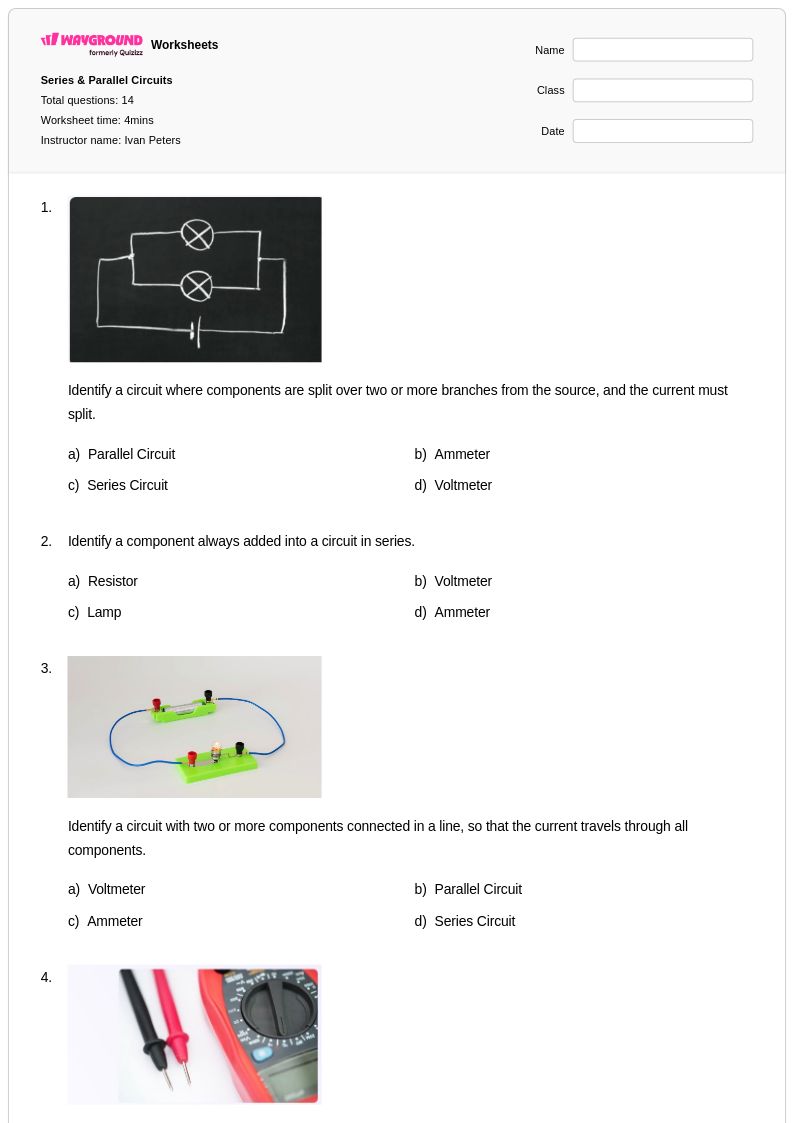
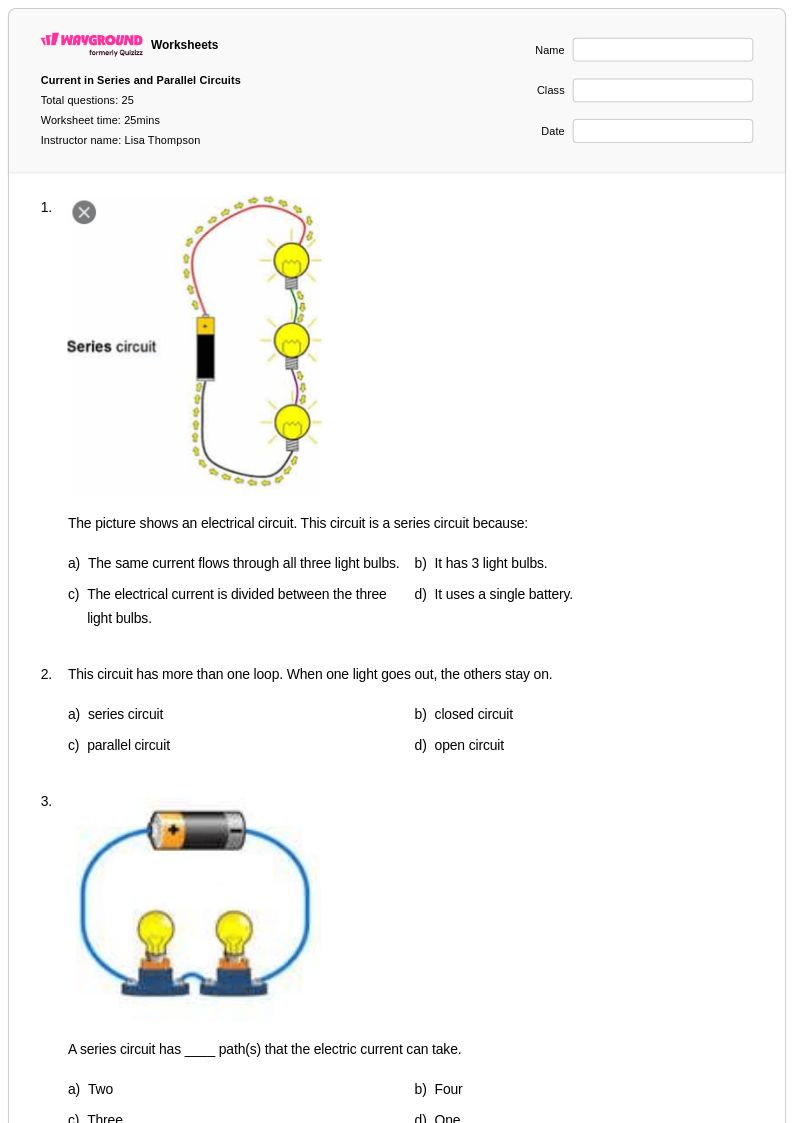
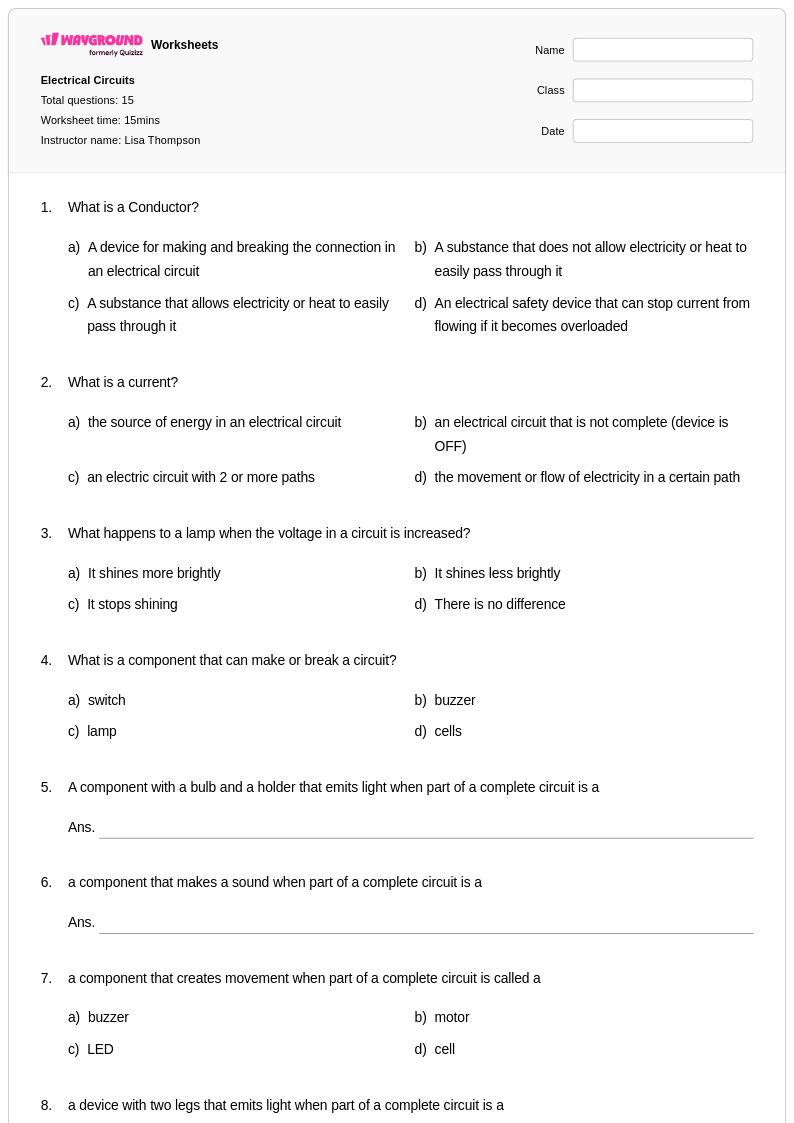
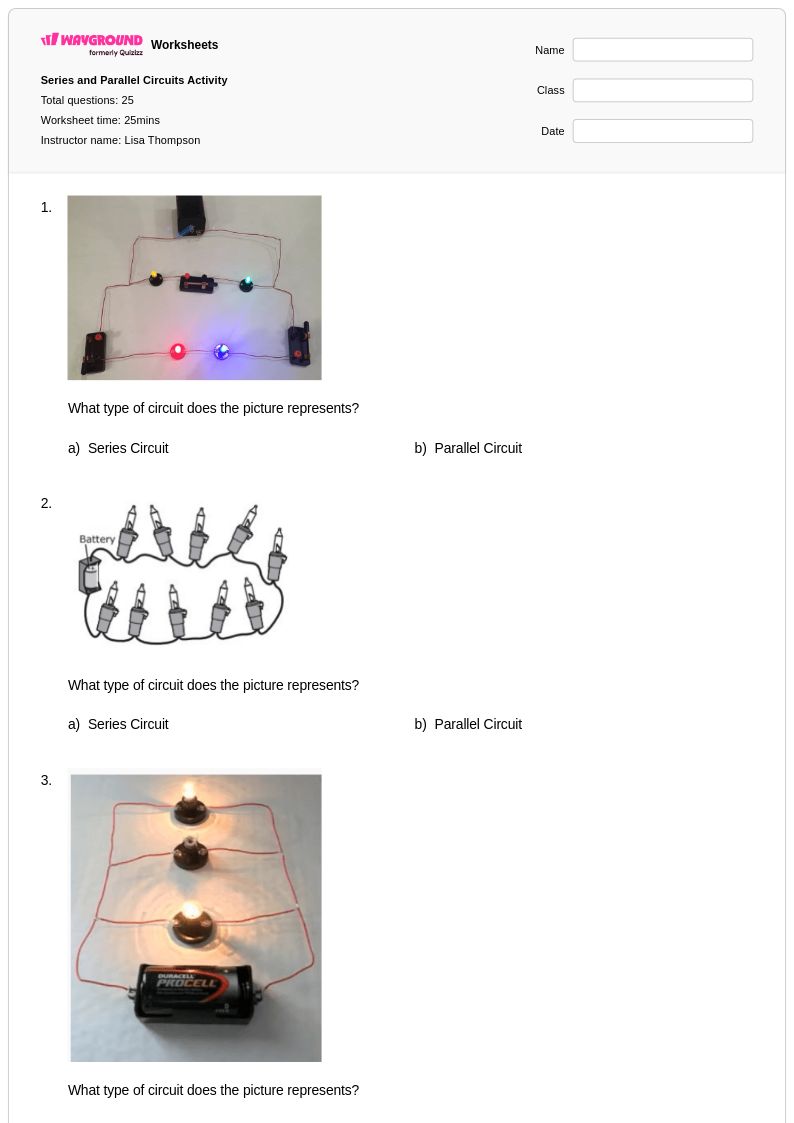
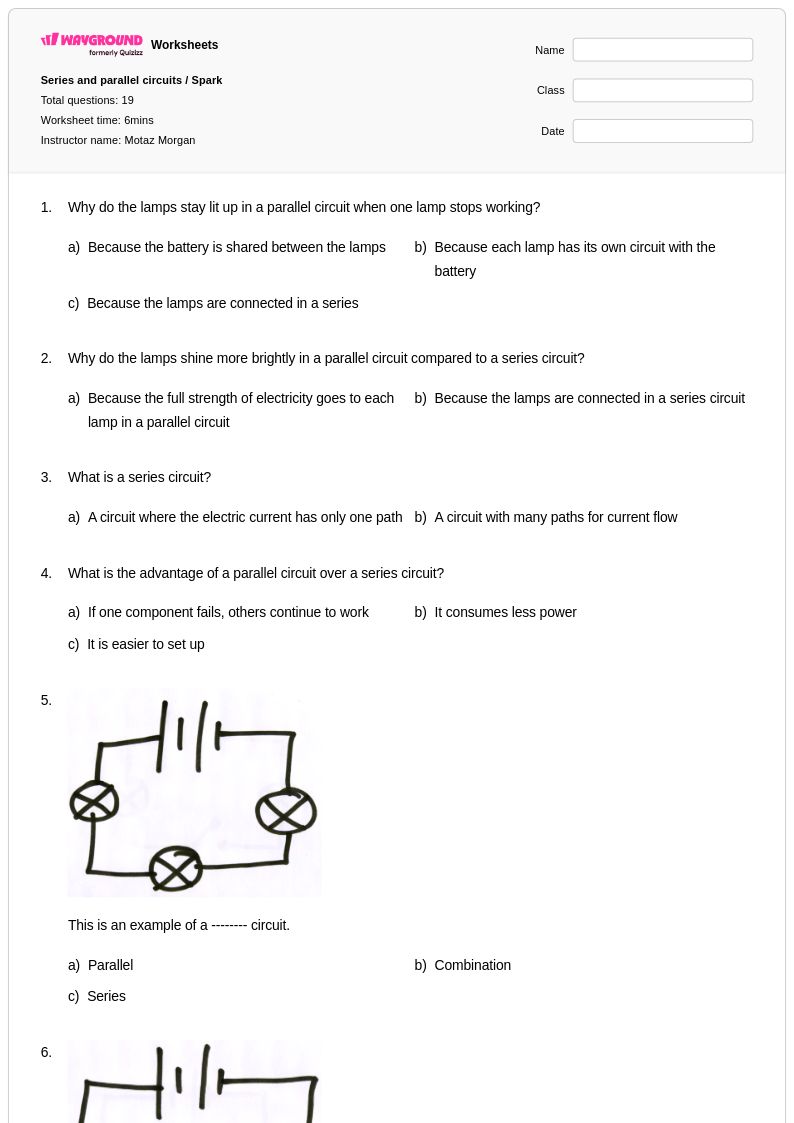
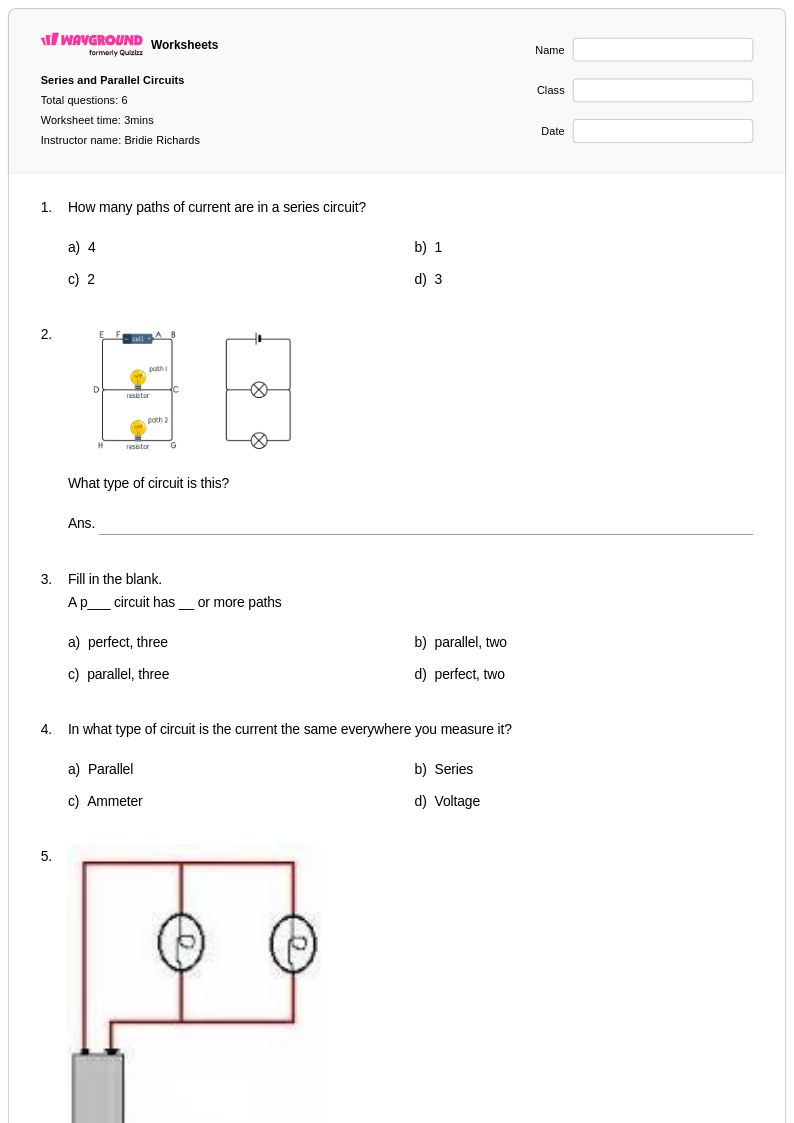
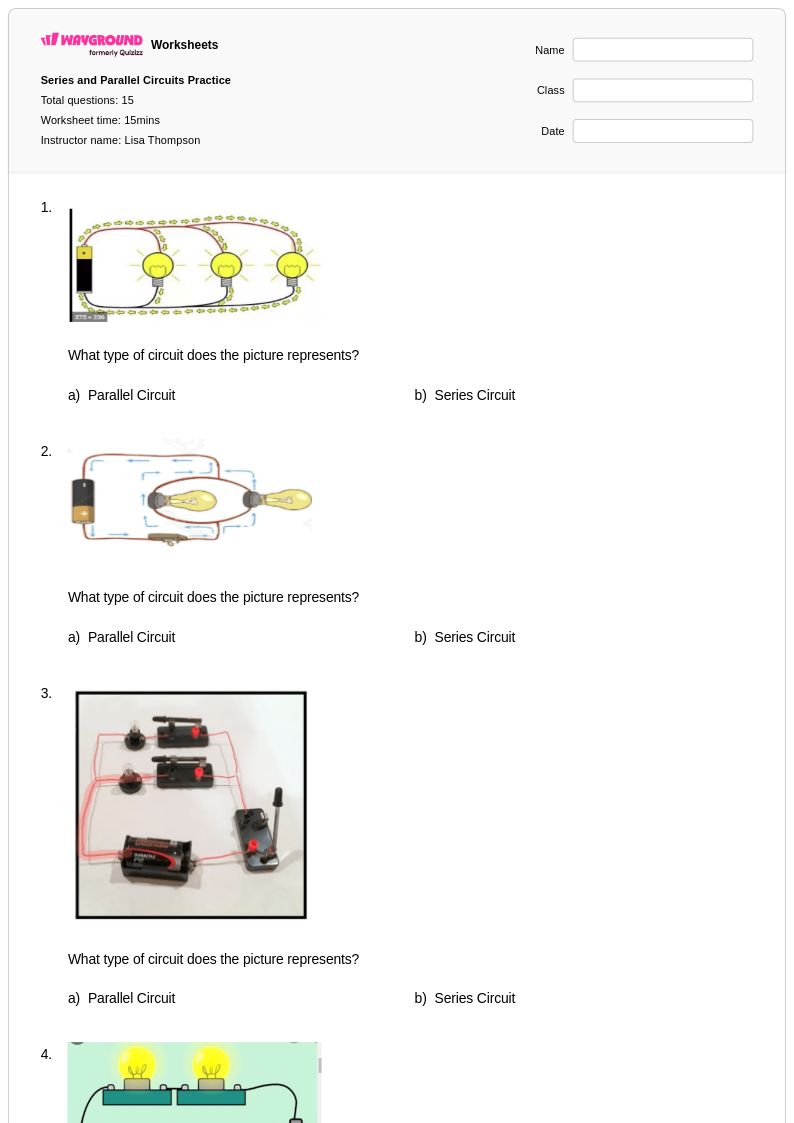
Parallel circuit worksheets for Class 6 students available through Wayground (formerly Quizizz) provide comprehensive practice opportunities for understanding how electrical components connect and function when arranged in multiple pathways. These educational resources strengthen critical thinking skills as students analyze circuit diagrams, predict current flow patterns, and compare the behavior of parallel circuits to series configurations. The worksheets feature hands-on practice problems that challenge students to identify components, trace electron paths, and explain why lights remain illuminated even when other bulbs are removed from parallel arrangements. Each printable resource includes detailed answer keys that support independent learning and self-assessment, while the free pdf format ensures accessibility for both classroom instruction and home study sessions.
Wayground (formerly Quizizz) empowers educators with millions of teacher-created parallel circuit worksheets that feature robust search and filtering capabilities aligned with science education standards. Teachers can easily differentiate instruction by selecting resources that match diverse learning needs, from foundational concept introduction to advanced circuit analysis challenges. The platform's flexible customization tools allow instructors to modify existing worksheets or create original assessments, while both printable and digital formats accommodate various classroom technologies and learning preferences. These comprehensive resources streamline lesson planning by providing ready-to-use materials for skill practice, targeted remediation for struggling learners, and enrichment activities that extend understanding of electrical principles beyond basic Class 6 expectations.
FAQs
How do I teach parallel circuits to students who keep confusing them with series circuits?
The most effective approach is to anchor the distinction in a single, concrete rule: in a parallel circuit, each component has its own dedicated pathway back to the power source, so current can flow even if one branch is broken. Use a side-by-side circuit diagram comparison early in the lesson, and have students trace current paths with their fingers before any calculation work begins. Reinforcing that voltage stays constant across parallel branches — while current splits — directly addresses the most common source of confusion with series circuits.
What practice problems should students work through to get comfortable with parallel circuit calculations?
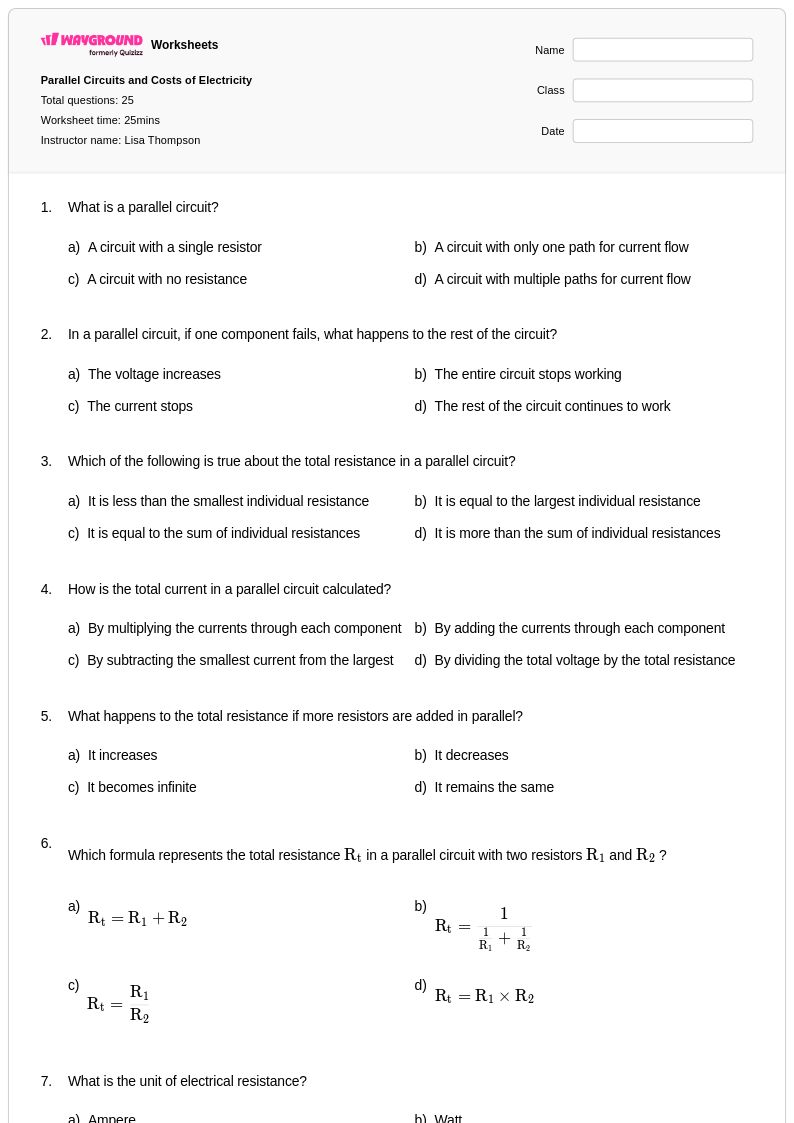
Students should progress through a structured sequence: start with identifying parallel branches in a diagram, then calculate equivalent resistance using the reciprocal formula (1/R_total = 1/R1 + 1/R2 + ...), and finally apply Kirchhoff's current law to find current in individual branches. Problems that mirror real-world configurations — such as household wiring or multi-bulb lighting setups — help students connect the math to practical applications. Parallel circuit worksheets that include circuit diagram interpretation alongside calculation problems are especially effective for building this full-skill proficiency.
What mistakes do students commonly make when calculating total resistance in a parallel circuit?
The most frequent error is adding resistor values directly, as students would in a series circuit, instead of applying the reciprocal formula. A related mistake is forgetting to take the reciprocal of the sum at the end, which produces an answer larger than any individual resistor — a result that should immediately signal an error, since total resistance in a parallel circuit is always less than the smallest branch resistance. Targeted practice problems that require students to check their answer against this rule help catch and correct both errors.
How do students commonly misunderstand voltage in a parallel circuit?
Many students assume voltage divides across parallel branches the way current does, applying series-circuit logic incorrectly. In reality, voltage is identical across every branch in a parallel circuit because each branch connects directly across the same two nodes of the power source. Worksheets that ask students to label voltage values on parallel circuit diagrams — rather than just calculate them — are particularly effective at correcting this misconception before it becomes entrenched.
How do I use Wayground's parallel circuit worksheets in my classroom?
Wayground's parallel circuit worksheets are available as printable PDFs for traditional classroom use and in digital formats for technology-integrated learning environments, giving you flexibility for in-class practice, homework, or assessment prep. You can also host them as a quiz directly on Wayground, which adds an interactive layer and allows you to track student performance. Each worksheet includes a complete answer key, supporting independent practice and self-assessment without requiring additional teacher preparation.
How can I support struggling students during parallel circuit lessons without slowing down the rest of the class?
Wayground's built-in accommodation tools let you assign targeted support to individual students without disrupting the class. You can enable read aloud for students who struggle with technical vocabulary in word problems, reduce the number of answer choices for students who need lower cognitive load, and grant extended time on digital assignments — all configurable per student from the Students or Classes tab. Students receiving accommodations are not flagged to their peers, so differentiation happens seamlessly in the background.