Free Printable Cycles of Matter Worksheets for Class 11
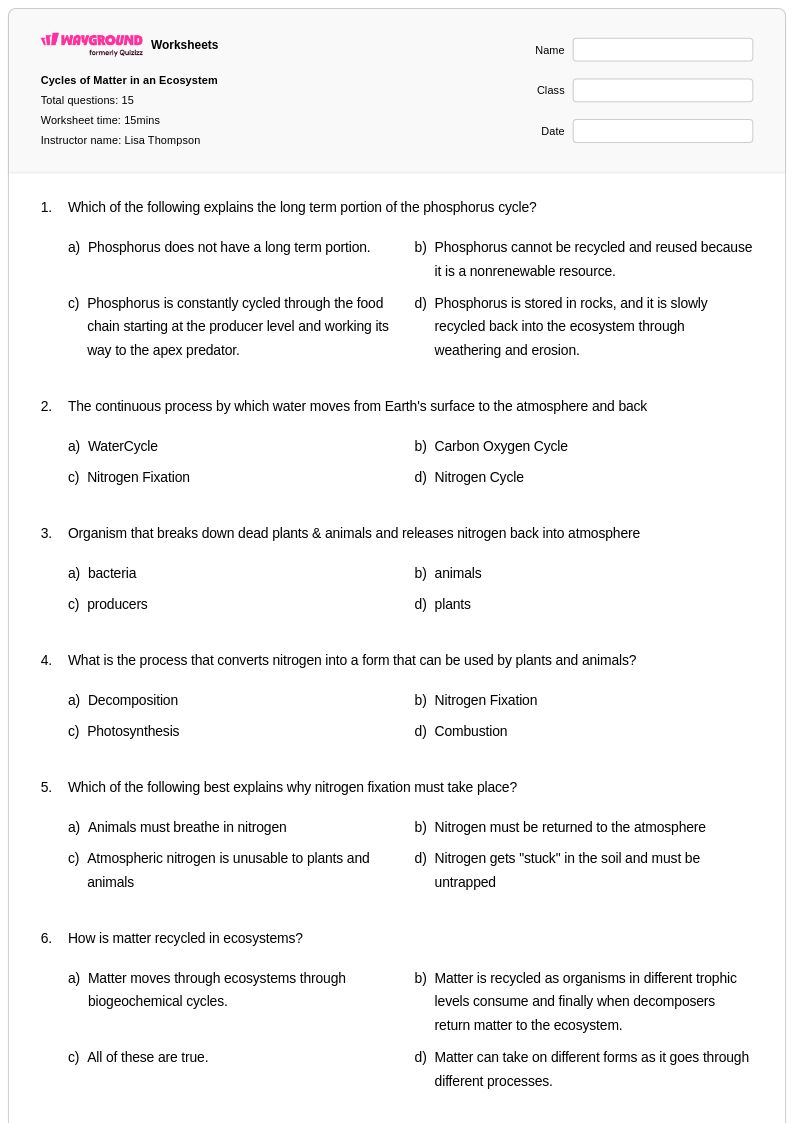
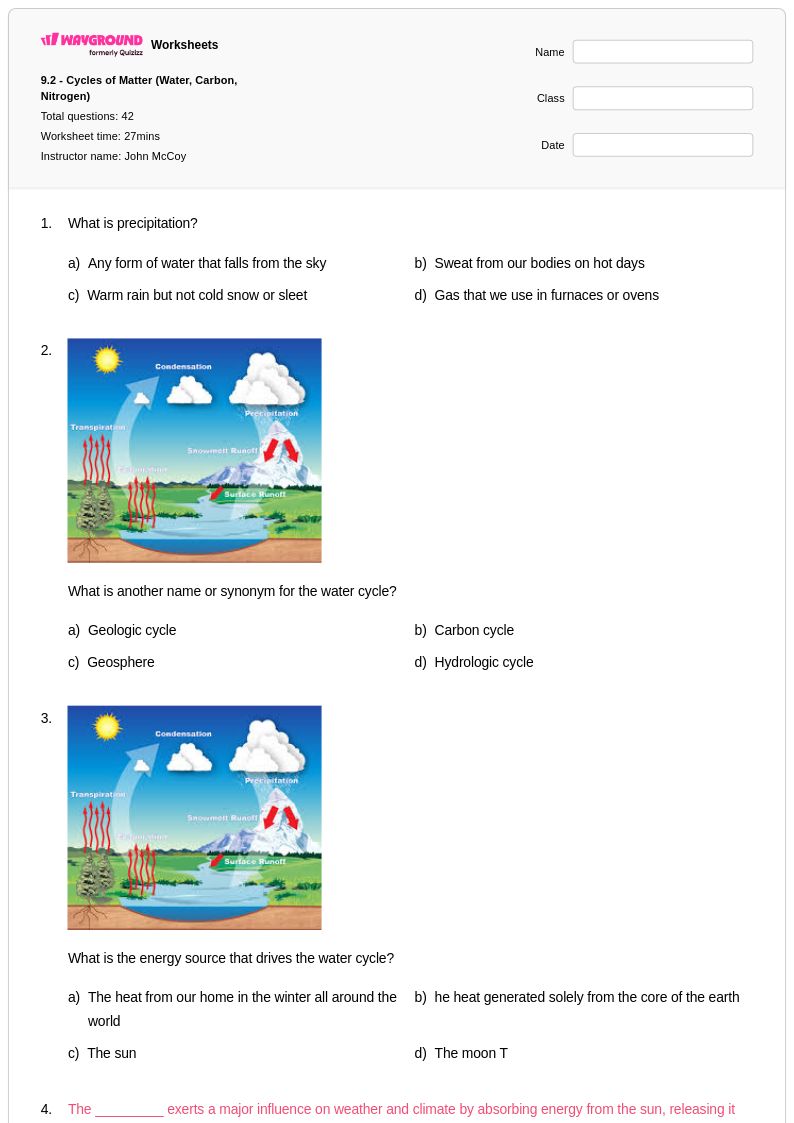
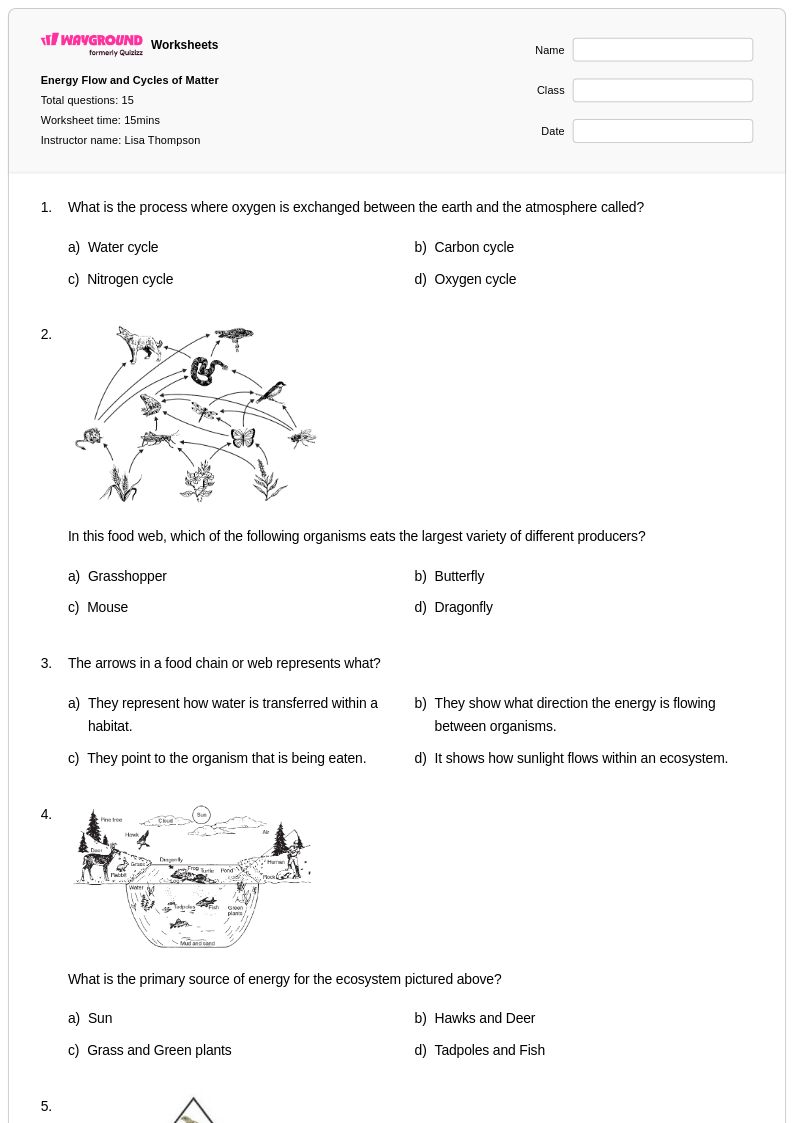
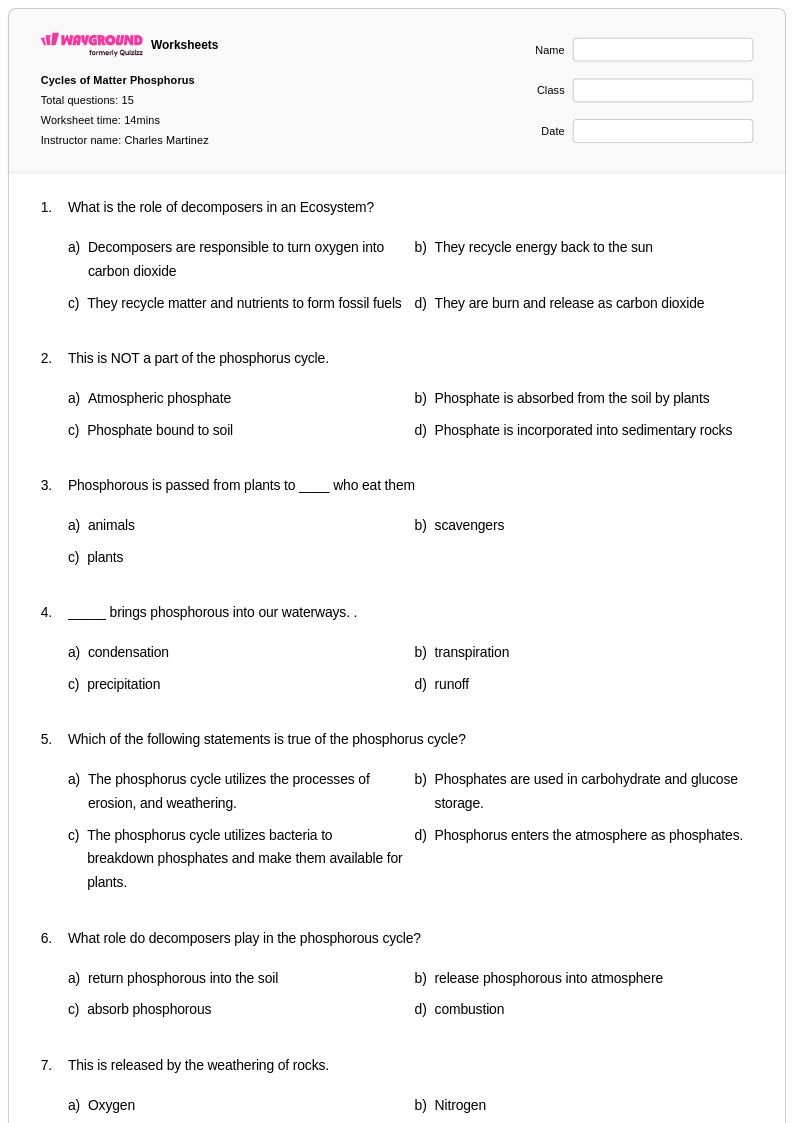
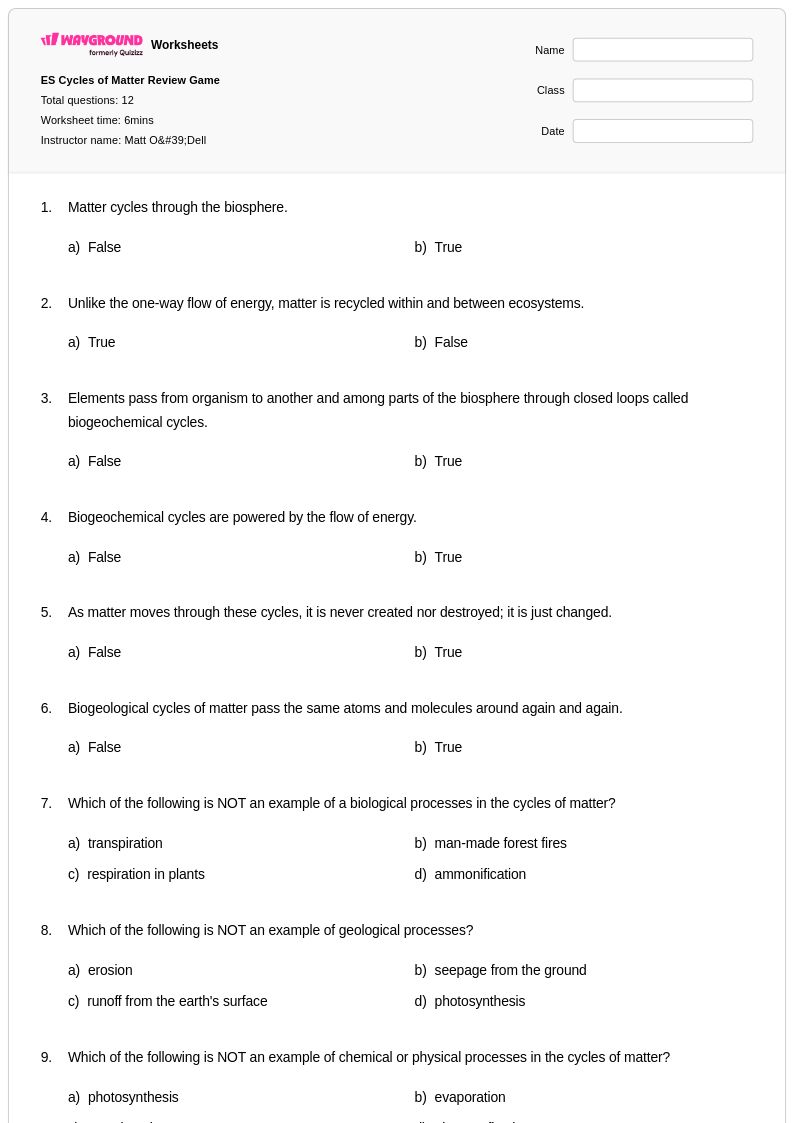
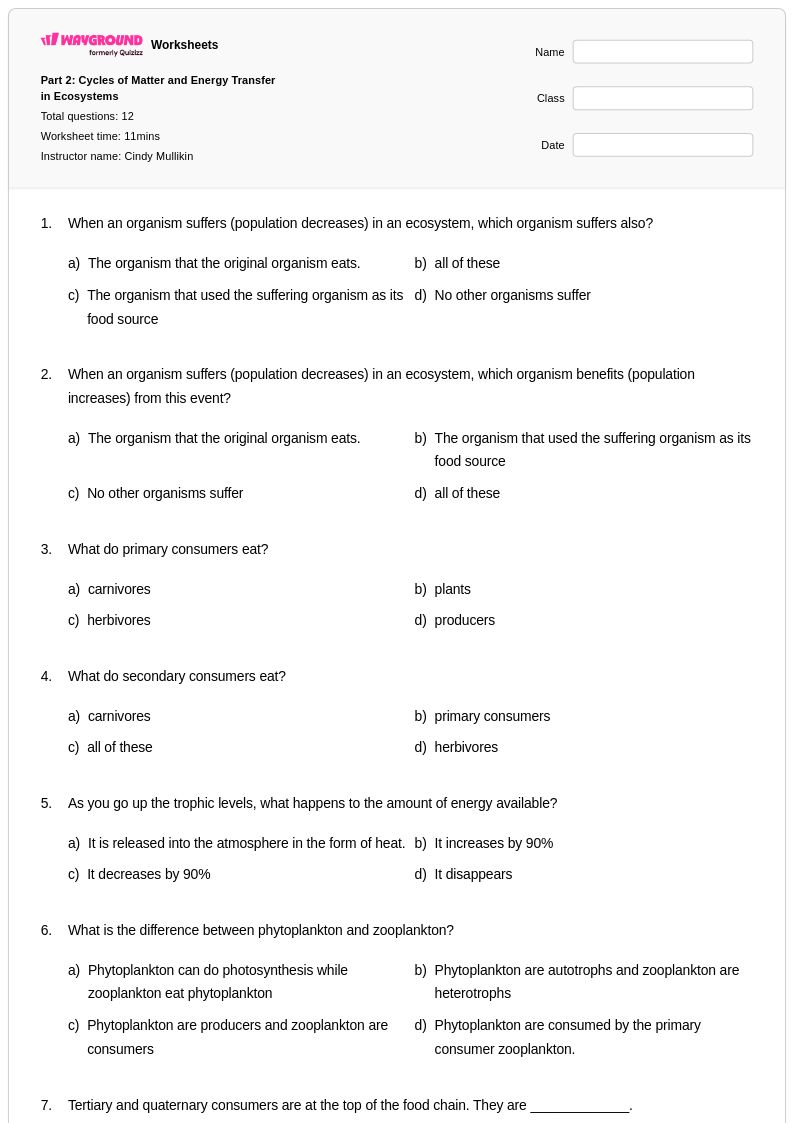
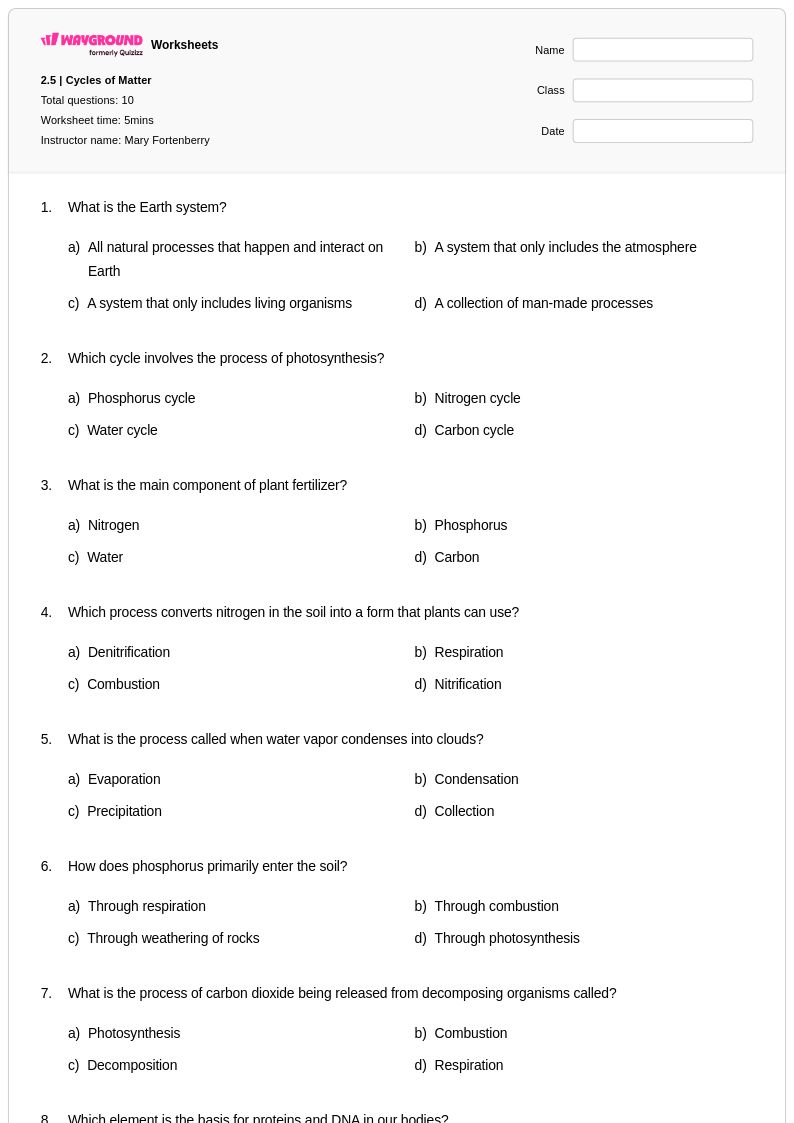
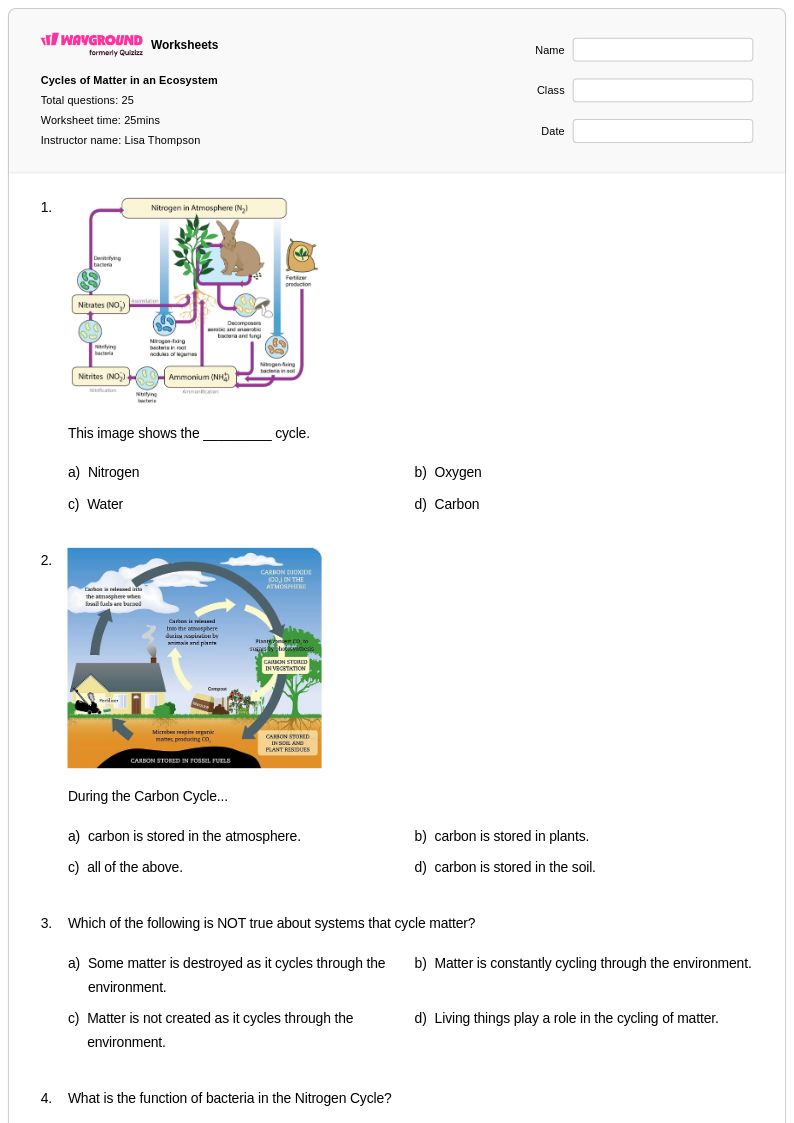
Class 11 Cycles of Matter worksheets from Wayground offer comprehensive printables and practice problems that help students master biogeochemical cycles, including carbon, nitrogen, and water cycles, complete with answer keys.
Explore printable Cycles of Matter worksheets for Class 11
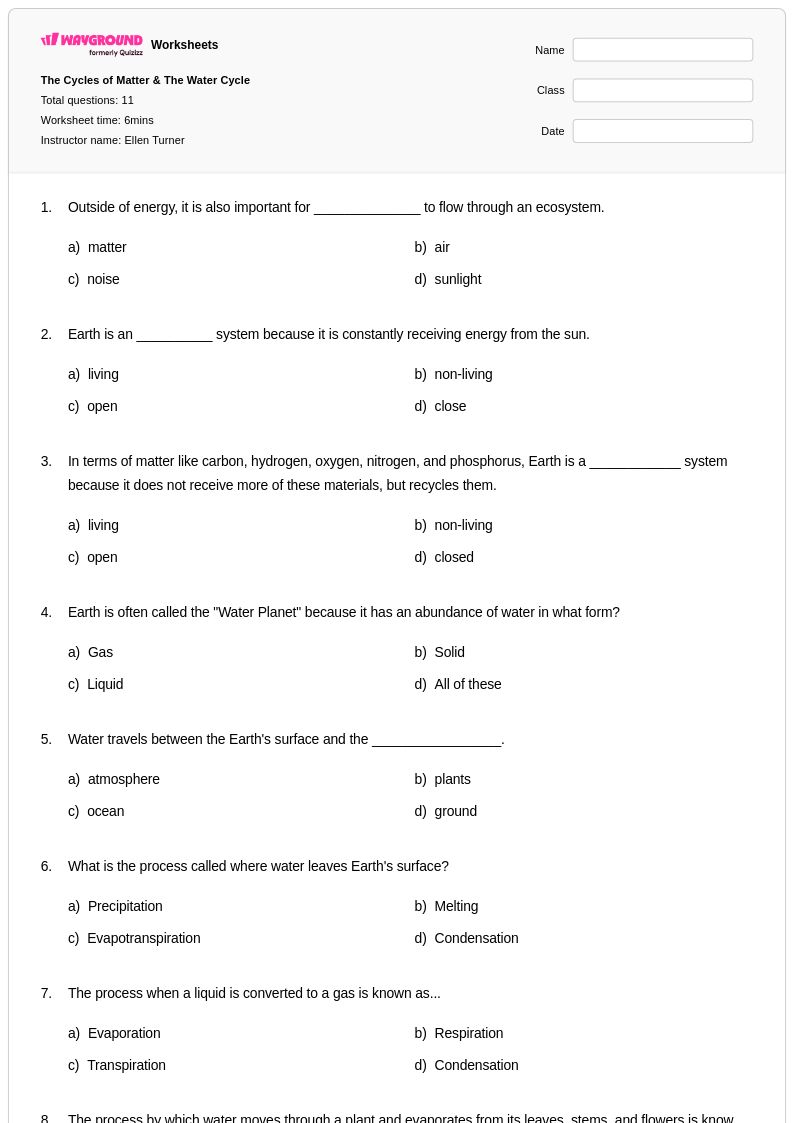
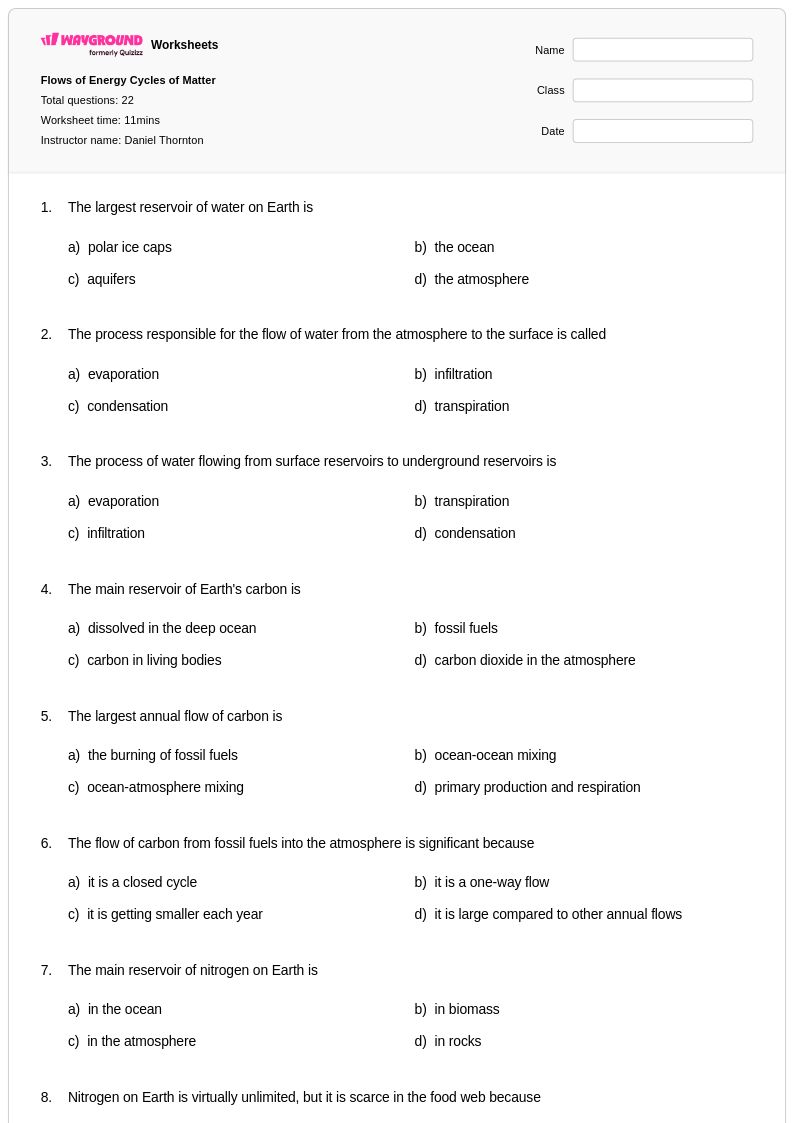
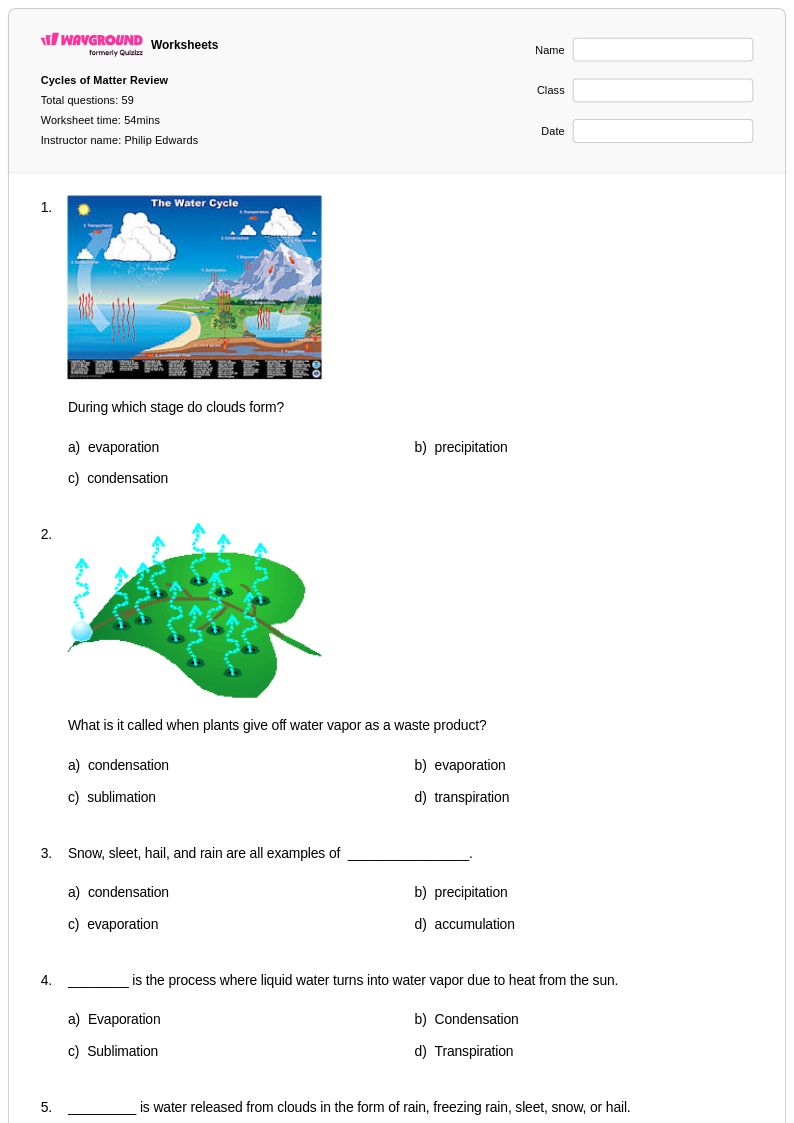
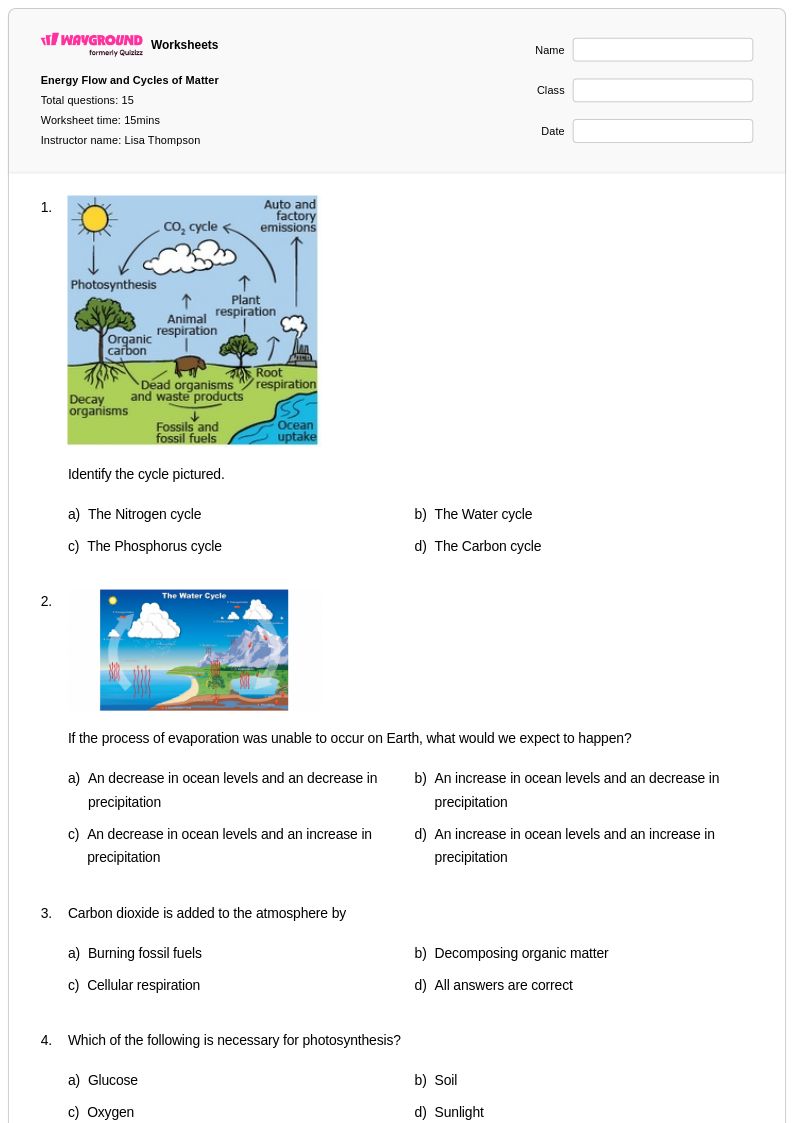
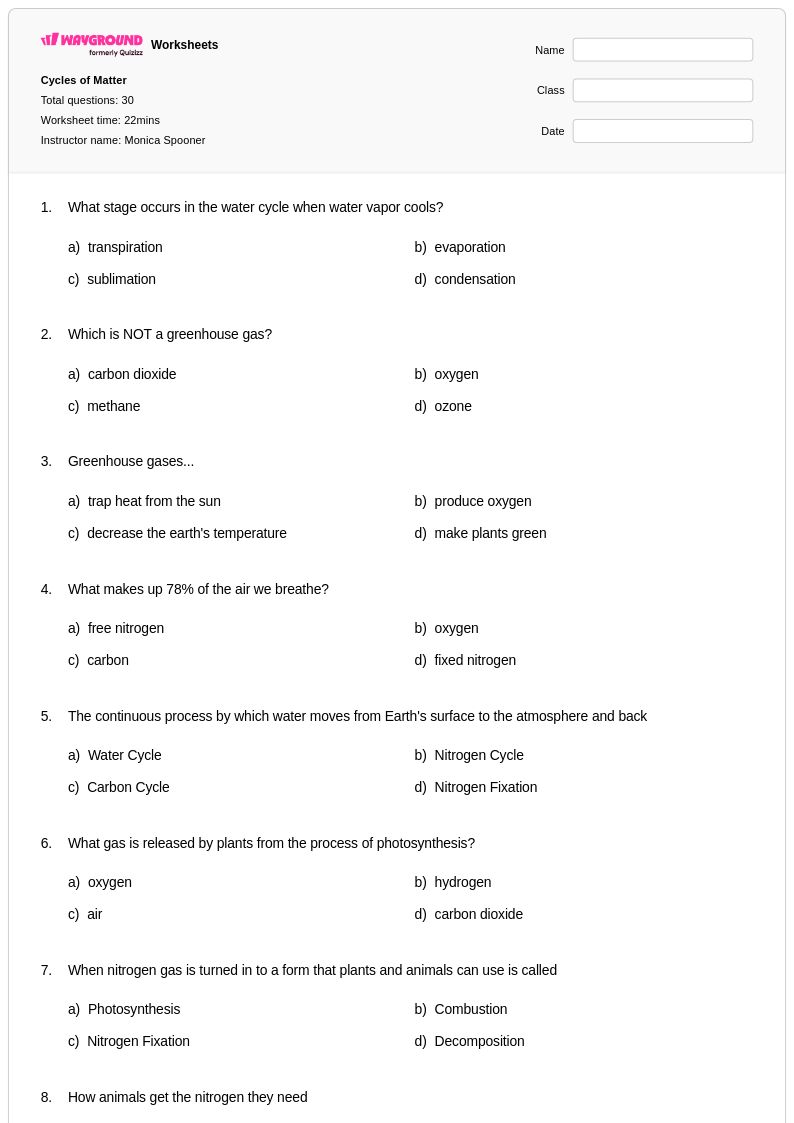
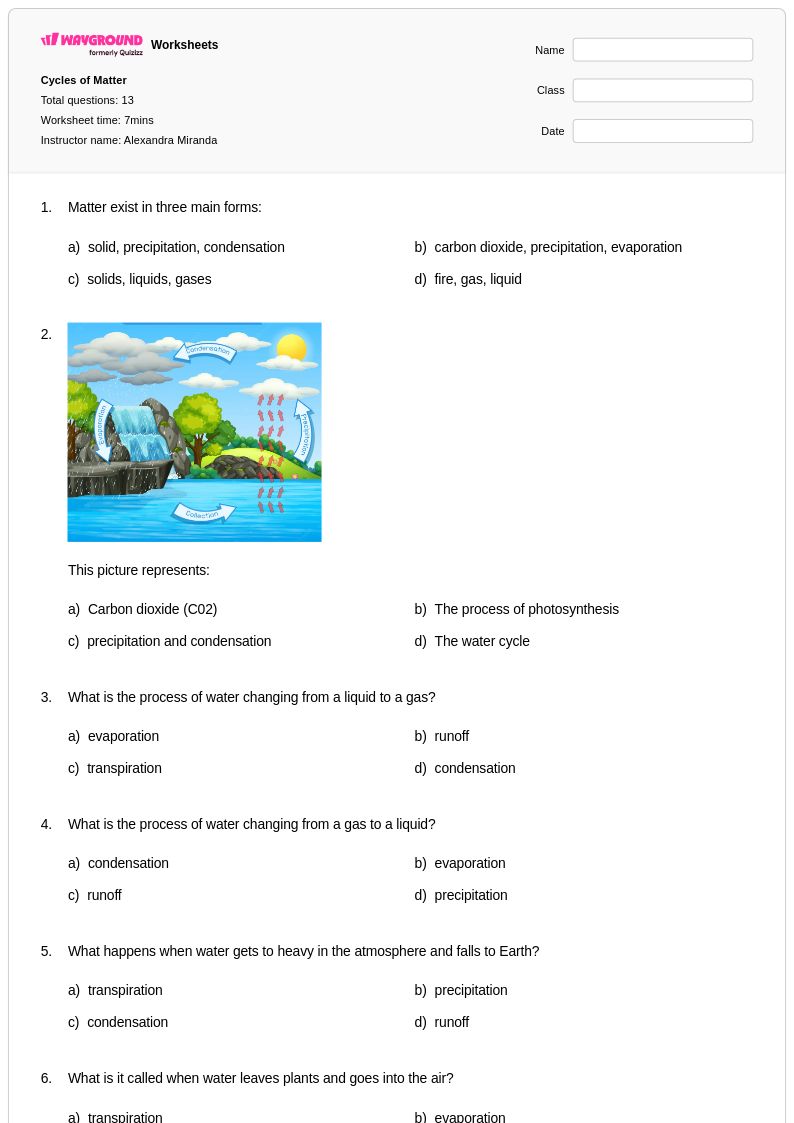
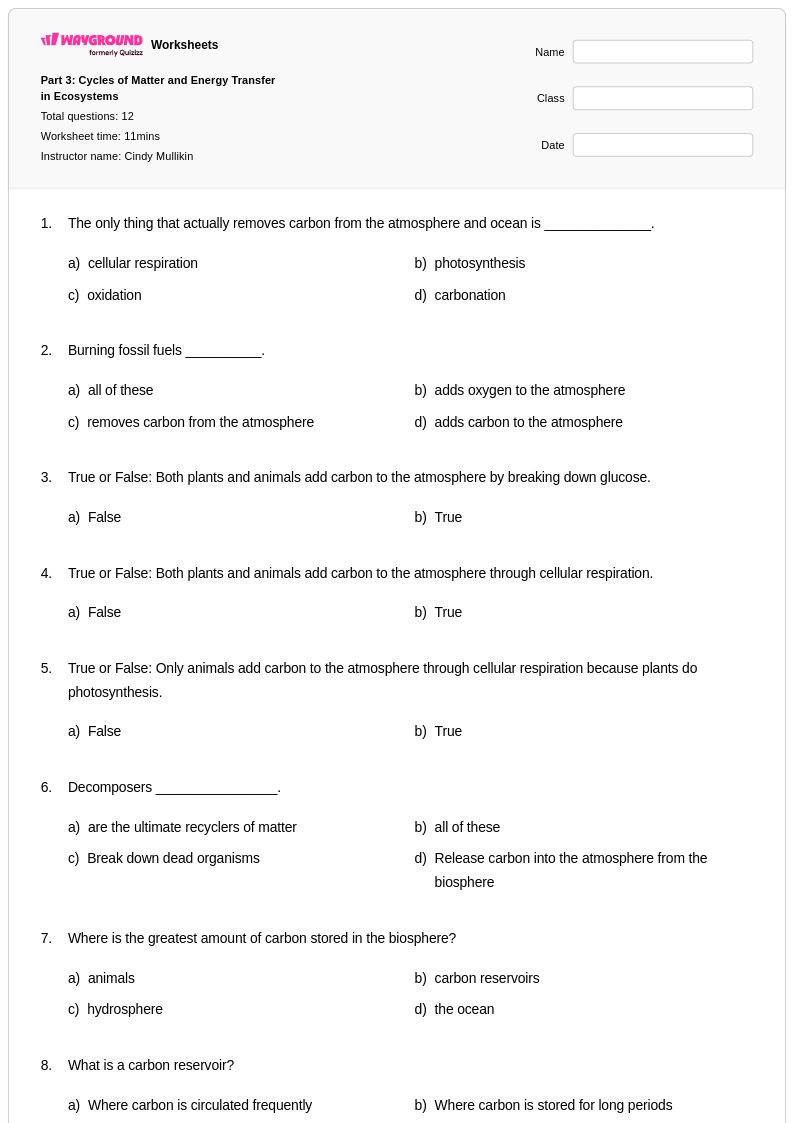
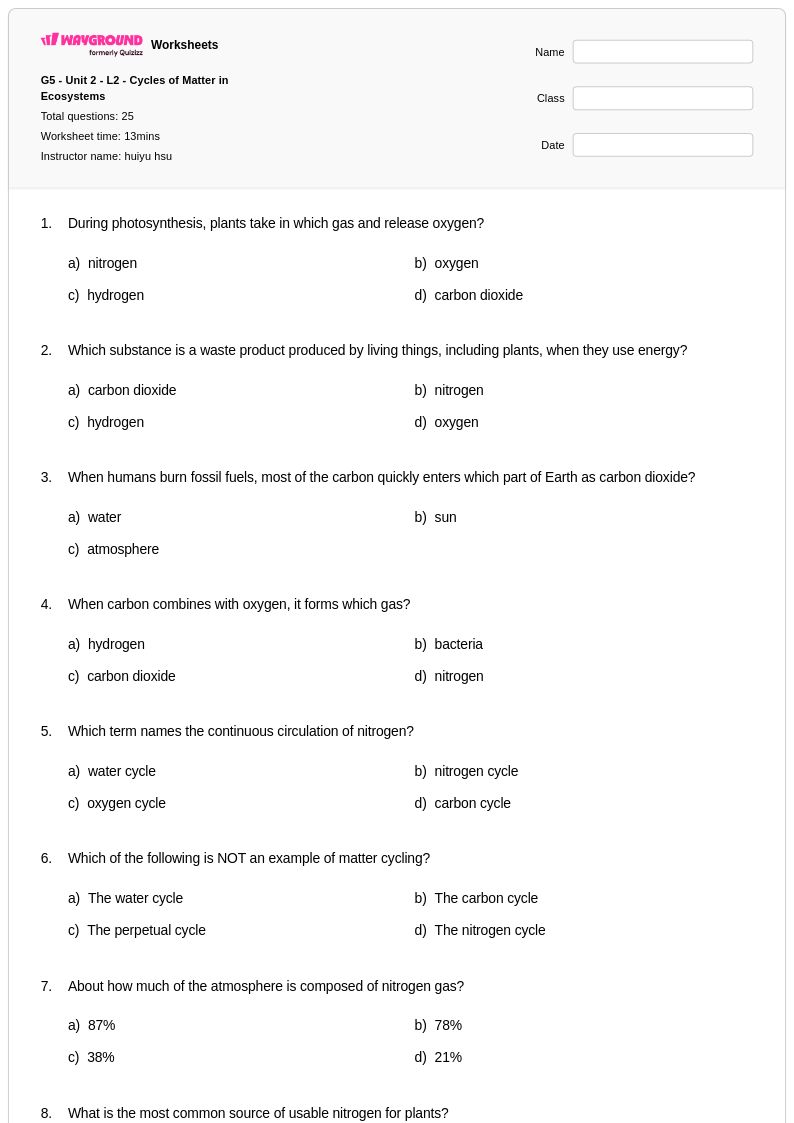
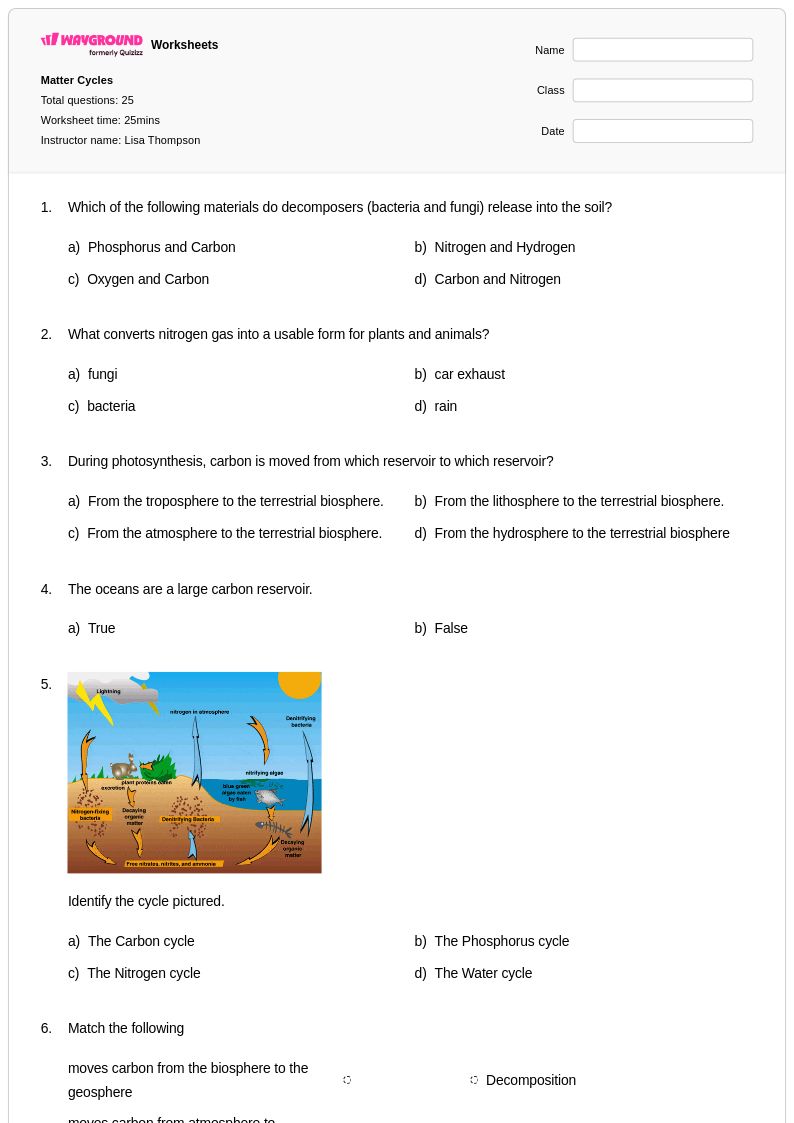
Cycles of Matter worksheets for Class 11 students available through Wayground (formerly Quizizz) provide comprehensive coverage of biogeochemical processes that sustain life on Earth. These expertly designed resources help students master complex concepts including the carbon, nitrogen, phosphorus, and water cycles, examining how matter moves through biotic and abiotic components of ecosystems. Students develop critical analytical skills by tracing element pathways, understanding reservoir dynamics, and evaluating human impacts on natural cycling processes. Each worksheet collection includes detailed answer keys and practice problems that reinforce understanding of molecular transformations, energy requirements, and the interconnected nature of Earth's spheres. These free printable resources serve as essential tools for building scientific literacy around environmental processes that govern planetary sustainability.
Wayground (formerly Quizizz) empowers educators with access to millions of teacher-created Cycles of Matter worksheet collections, featuring robust search and filtering capabilities that align with state and national science standards. Teachers can easily differentiate instruction by selecting from varied difficulty levels and question formats, customizing materials to meet diverse learning needs within their Class 11 classrooms. The platform's flexible design allows seamless transitions between digital and printable pdf formats, supporting both traditional classroom instruction and modern blended learning environments. These comprehensive resource libraries prove invaluable for lesson planning, targeted remediation of misconceptions about biogeochemical processes, enrichment activities for advanced learners, and systematic skill practice that prepares students for advanced placement coursework and standardized assessments in Earth and space science.
FAQs
How do I teach the cycles of matter in a way that students actually understand?
Start by grounding each cycle in a concrete, relatable process before introducing the technical vocabulary. For the water cycle, trace a single water molecule through evaporation, condensation, and precipitation. For the carbon cycle, connect fossil fuel combustion to atmospheric CO2 and photosynthesis. Once students can narrate a particle's journey through one cycle, they build the schema to compare cycles and understand conservation of mass across Earth's systems.
What's the best way to help students practice tracing matter through biogeochemical cycles?
Diagram-based practice is the most effective method for this topic because it requires students to actively sequence processes rather than passively recall vocabulary. Have students label reservoirs, draw arrows showing matter movement, and annotate what transformation is occurring at each step. Worksheets that combine cycle diagrams with short-answer analysis questions push students to connect visual representations to underlying chemistry.
What misconceptions do students commonly have about the cycles of matter?
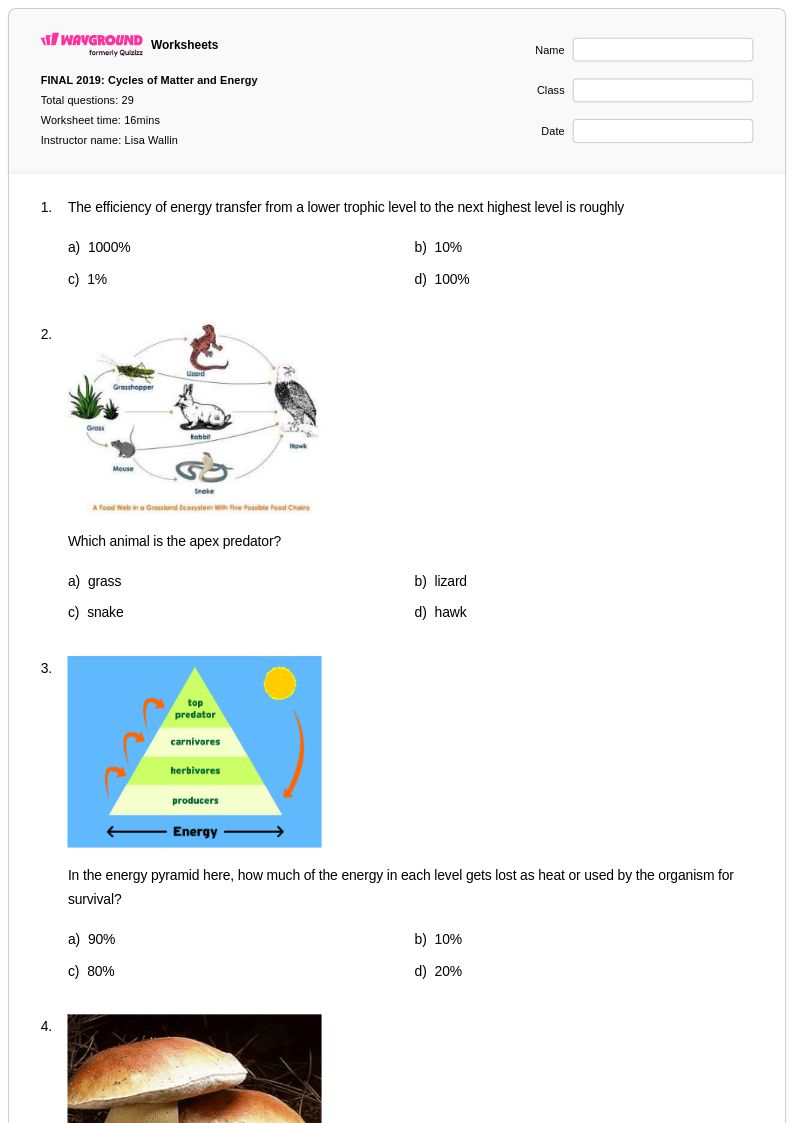
One of the most persistent misconceptions is that matter is created or destroyed as it moves through cycles, rather than conserved and transformed. Students also frequently conflate energy flow with matter cycling, assuming that because energy exits a food web, matter does too. Another common error is treating each biogeochemical cycle as isolated, when in reality the water, carbon, and nitrogen cycles are deeply interdependent.
How can I use cycles of matter worksheets to assess student understanding?
Effective assessment worksheets for this topic should move beyond fill-in-the-blank labeling and include tasks that require students to explain why a process occurs, predict what happens when a cycle is disrupted, or analyze a diagram with a deliberate error. These higher-order prompts reveal whether students understand the mechanisms of cycling or have only memorized the vocabulary.
How do I use Wayground's Cycles of Matter worksheets in my classroom?
Wayground's Cycles of Matter worksheets are available as printable PDFs for traditional classroom use and in digital formats for technology-integrated environments, so they work equally well as in-class practice, homework, or lab supplements. You can also host any worksheet as a live or self-paced quiz directly on the Wayground platform, which allows you to track student responses and identify gaps in real time. Each worksheet includes a complete answer key, reducing prep time for teachers.
How can I differentiate cycles of matter instruction for students who are struggling?
For students who struggle with the complexity of multiple overlapping cycles, reduce cognitive load by isolating one cycle at a time and using simplified diagrams before introducing full biogeochemical models. On Wayground, teachers can apply student-level accommodations such as reduced answer choices, read-aloud support, and extended time, which can be configured individually without other students being notified. These settings carry over across sessions, making ongoing differentiation manageable.