Free Printable Soil Horizons Worksheets for Class 11
Class 11 soil horizons worksheets from Wayground help students explore Earth's layered soil structure through comprehensive printables, practice problems, and answer keys that reinforce understanding of horizon formation and characteristics.
Explore printable Soil Horizons worksheets for Class 11
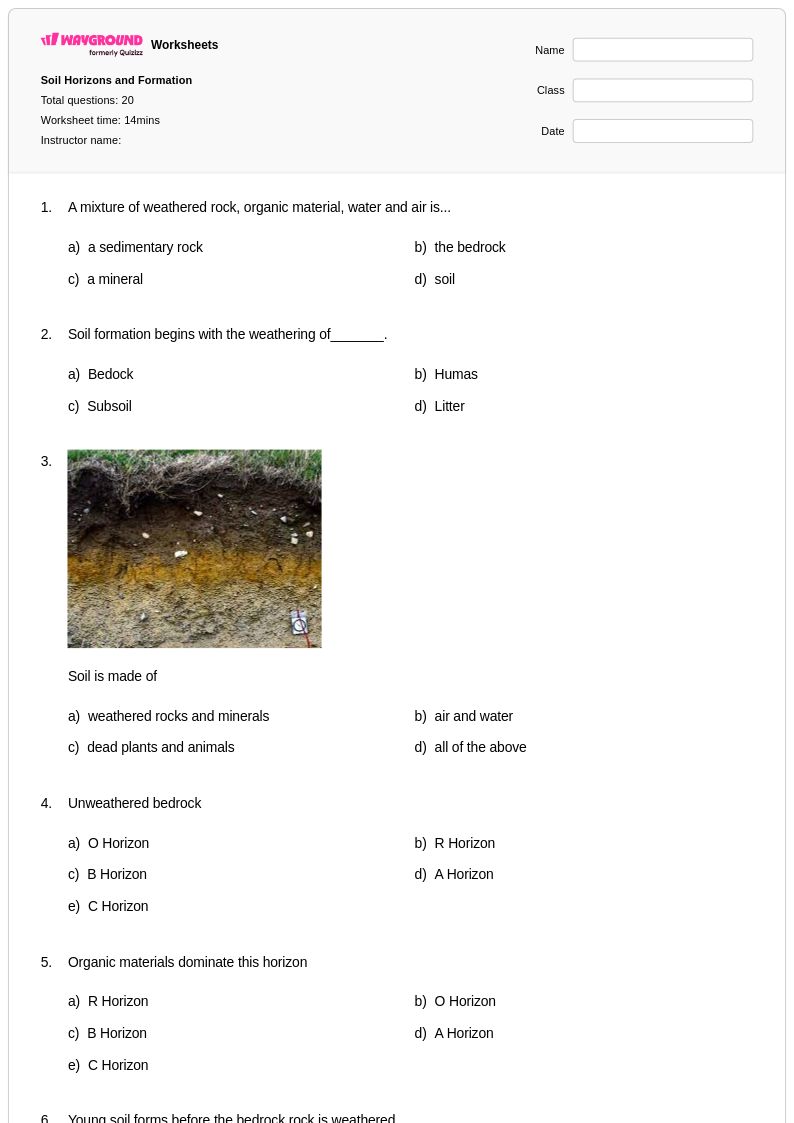
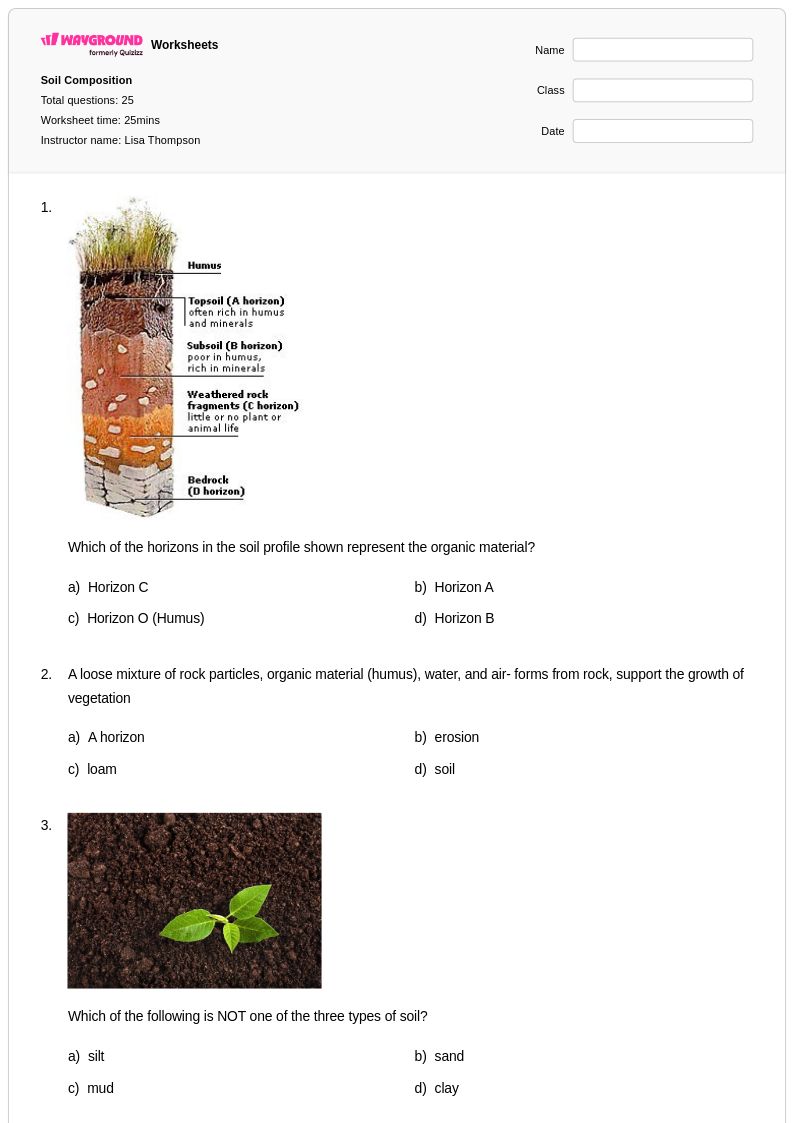
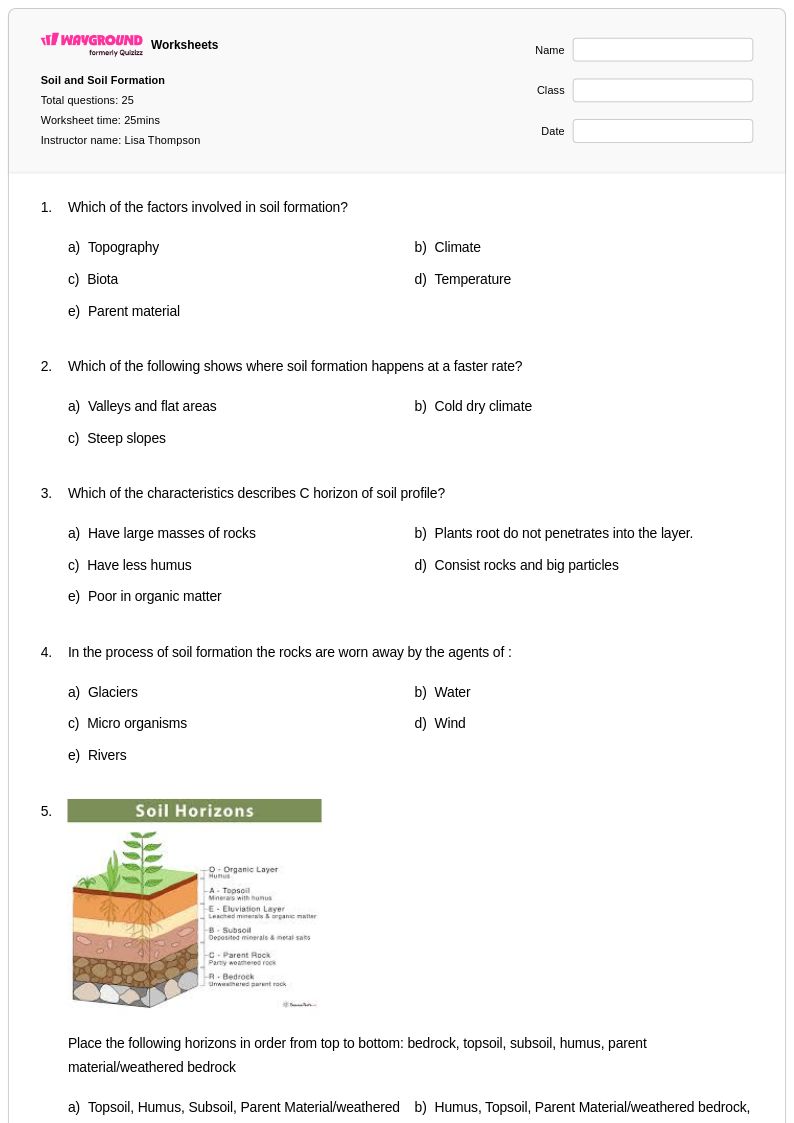
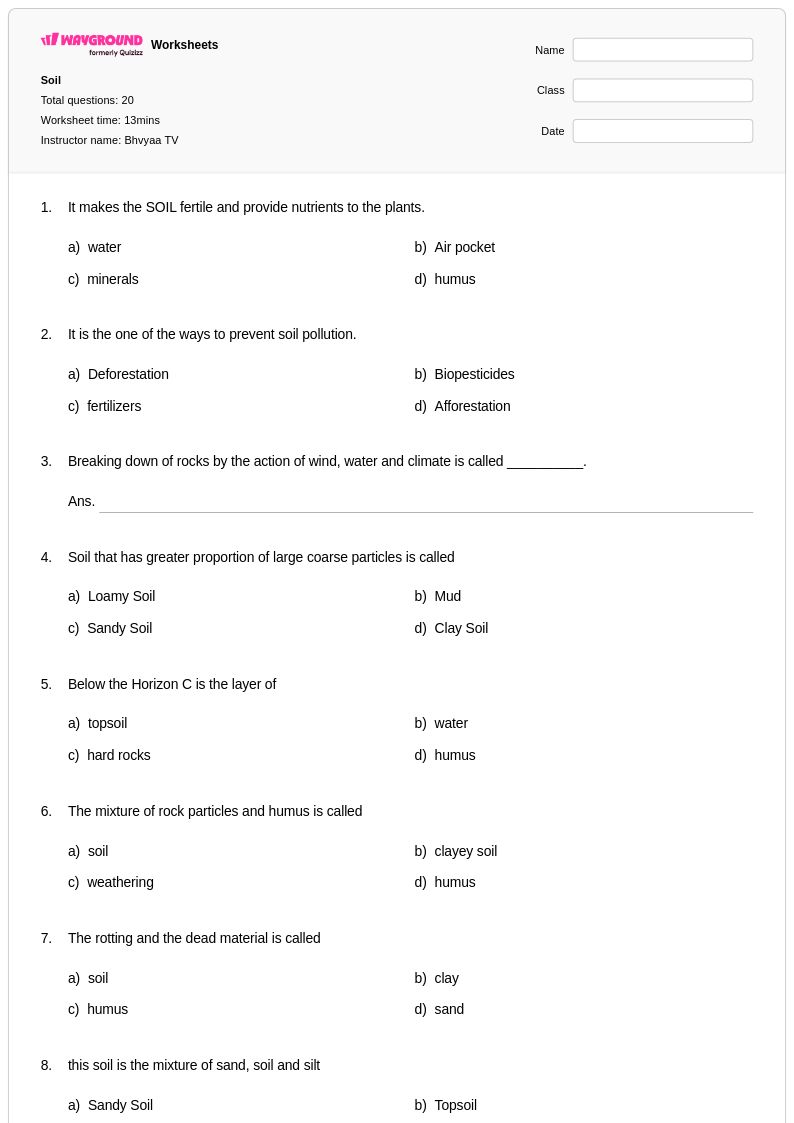
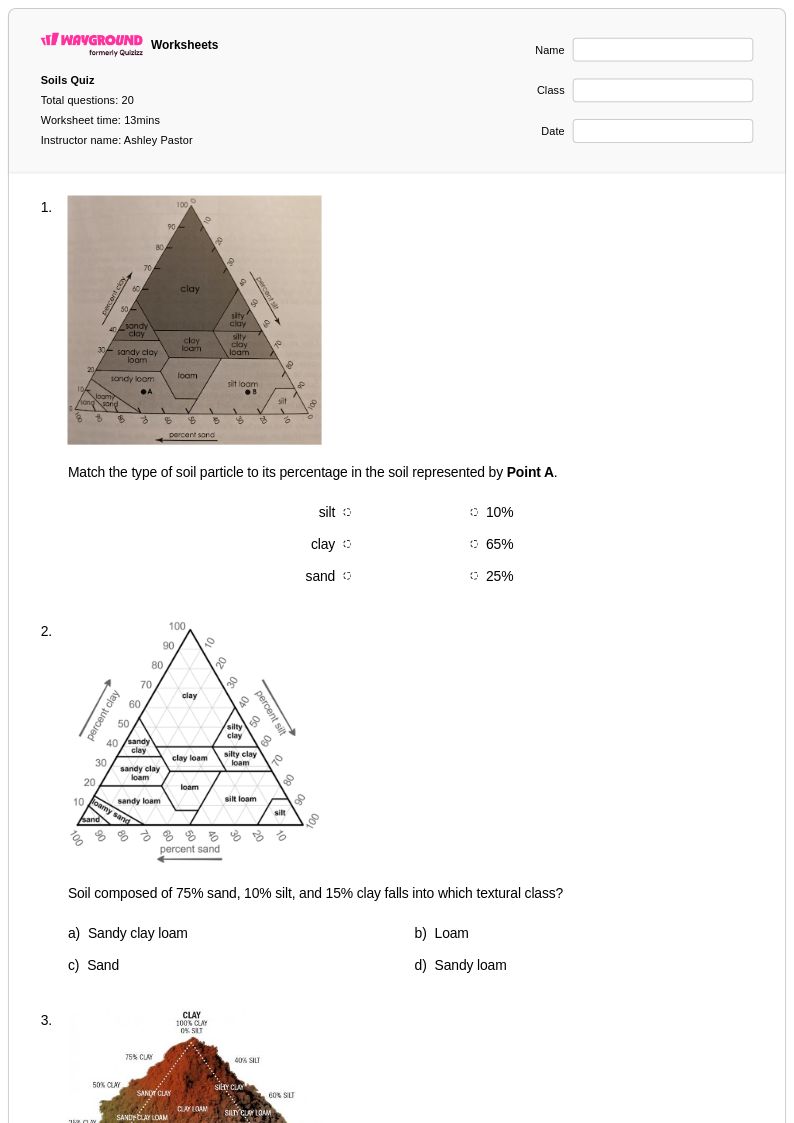
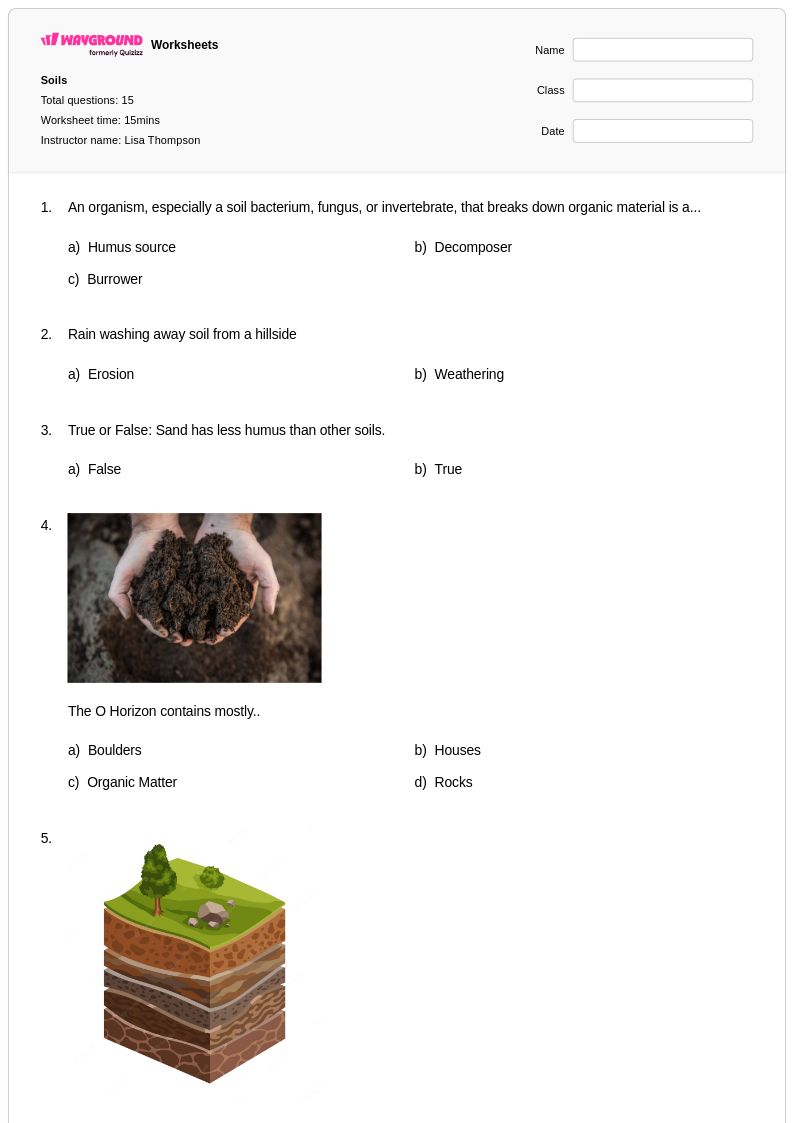
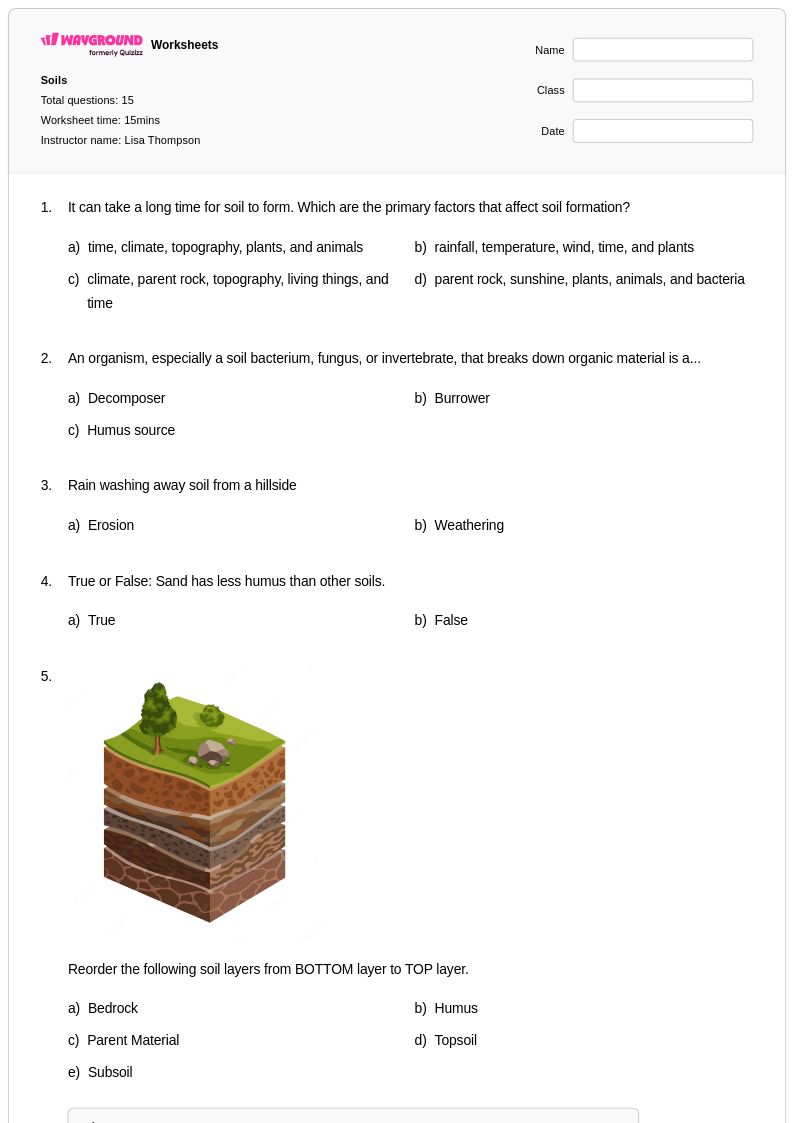
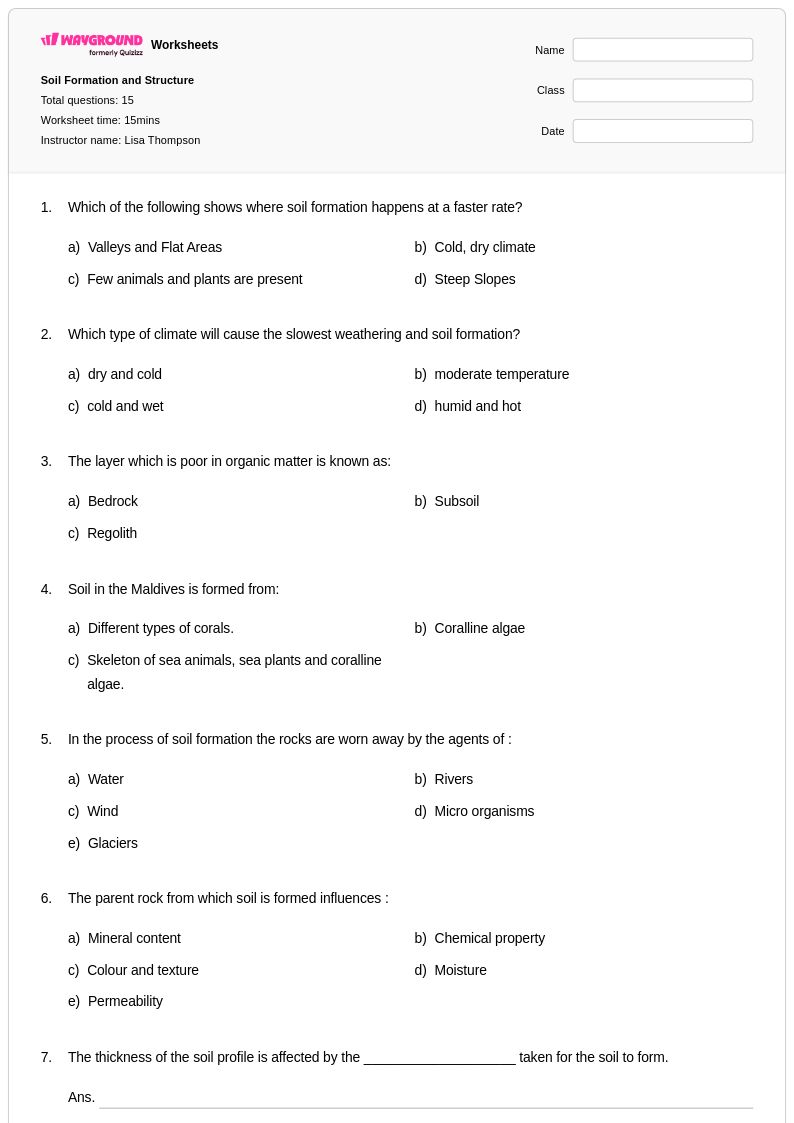
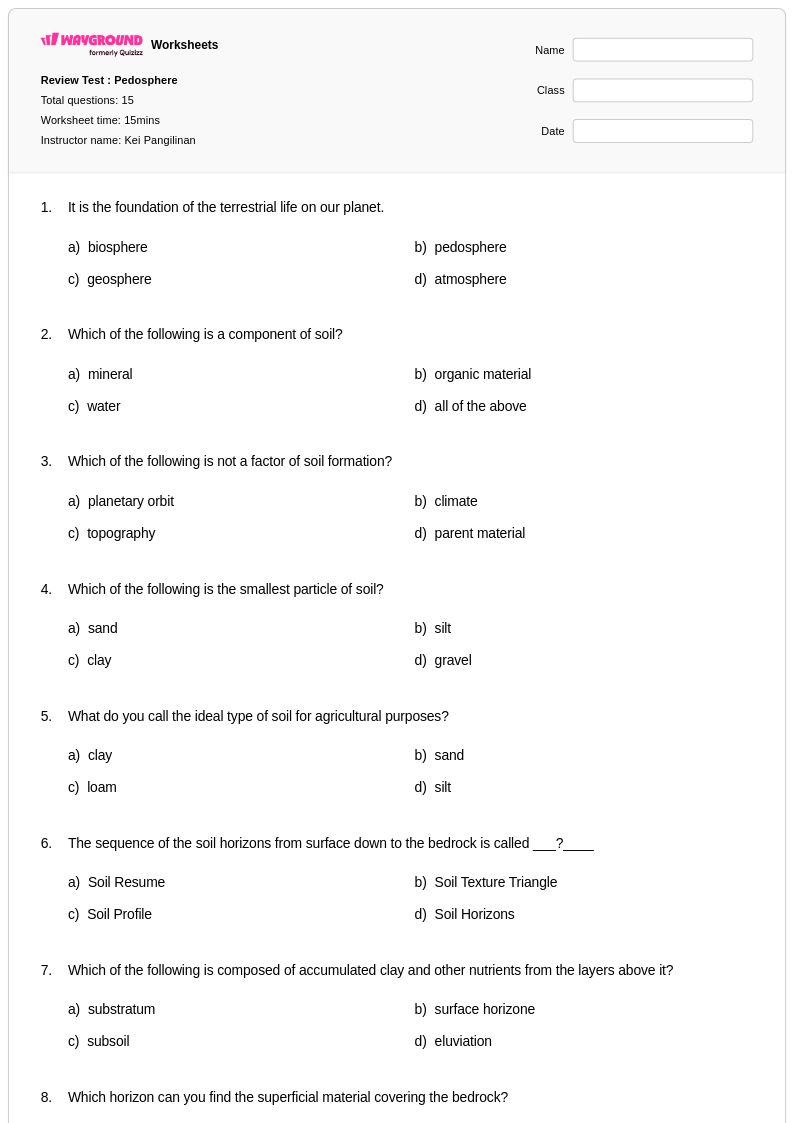
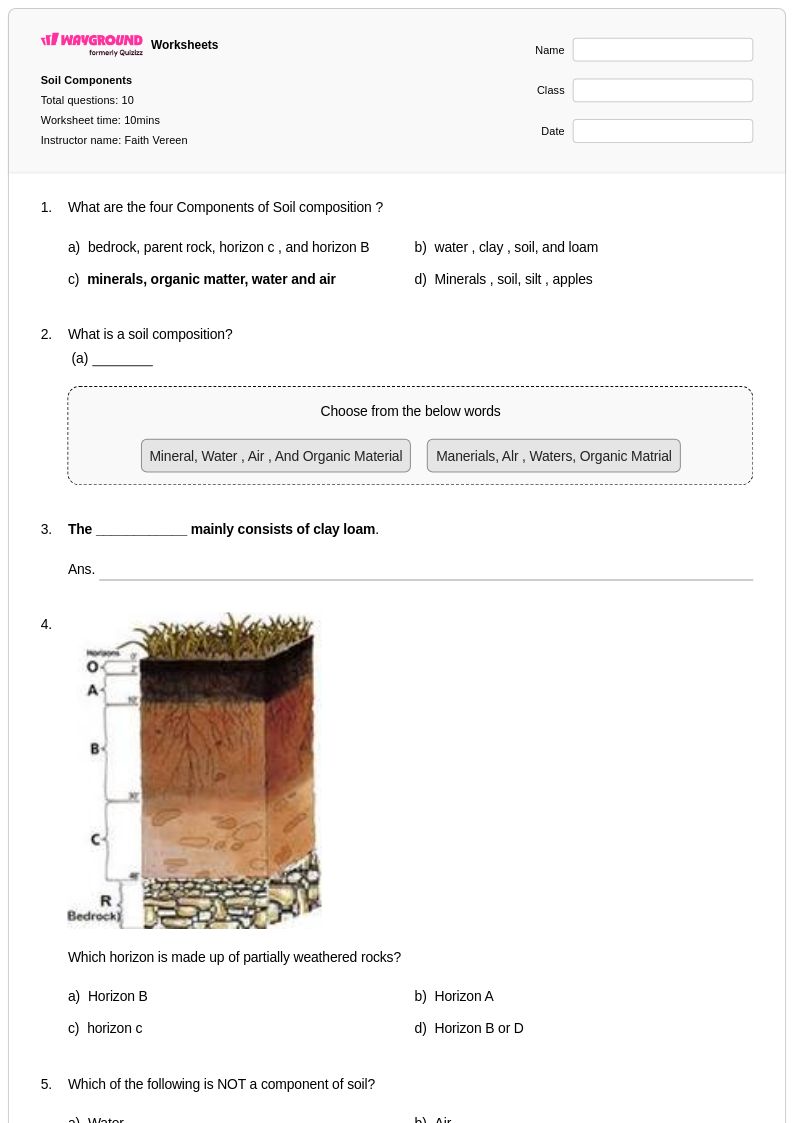
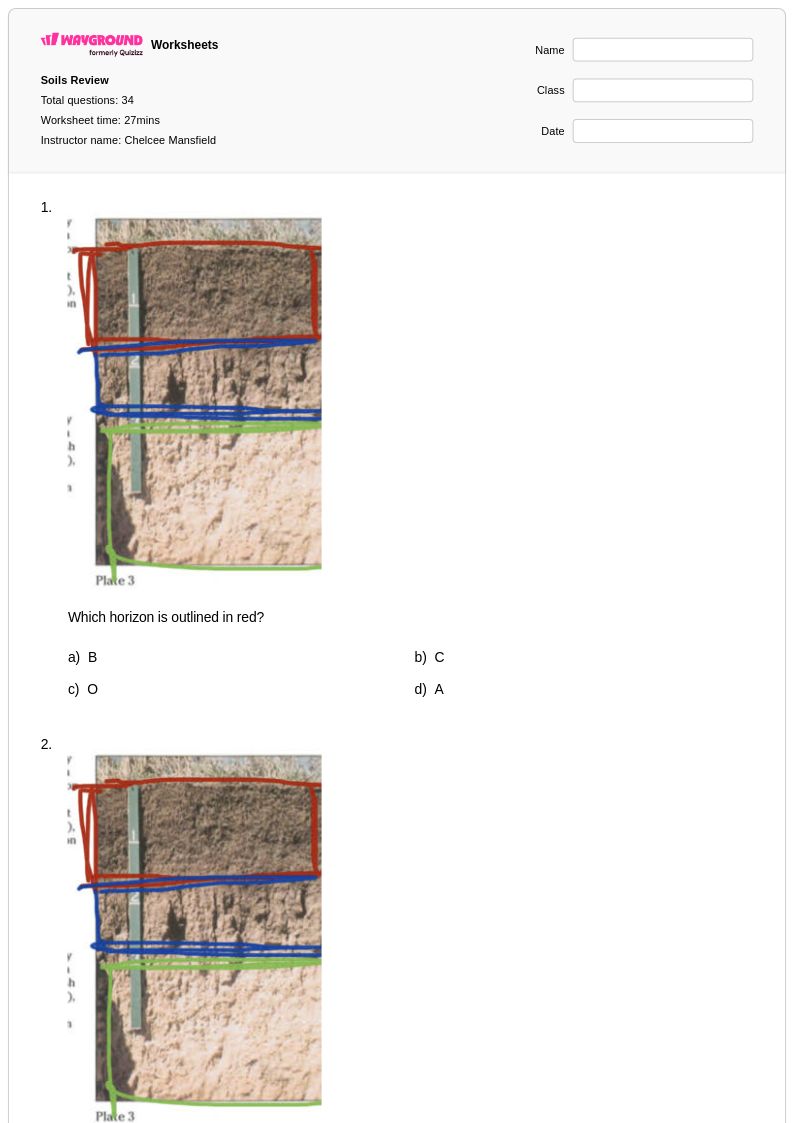
Soil horizons worksheets for Class 11 students available through Wayground (formerly Quizizz) provide comprehensive exploration of the distinct layers that comprise soil profiles in Earth and space science curricula. These educational resources guide students through the identification and analysis of O, A, E, B, C, and R horizons, helping them understand the complex processes of weathering, organic matter decomposition, and mineral translocation that create these stratified zones. The worksheets strengthen critical observation skills as students learn to recognize diagnostic characteristics such as color variations, texture differences, and organic content levels that distinguish each horizon. Practice problems within these free printables challenge students to interpret soil profile diagrams, analyze field data from soil samples, and connect horizon development to environmental factors like climate, topography, and parent material. Answer keys accompany these pdf resources, enabling students to verify their understanding of pedogenic processes and the temporal scales involved in soil formation.
Wayground (formerly Quizizz) empowers educators with an extensive collection of teacher-created soil horizons worksheets drawn from millions of available resources, each designed to meet the rigorous demands of Class 11 Earth and space science instruction. The platform's advanced search and filtering capabilities allow teachers to locate materials that align with specific curriculum standards and learning objectives, whether focusing on agricultural soils, forest pedology, or urban soil development. Differentiation tools enable instructors to customize worksheet difficulty levels and modify content to support diverse learning needs, from remediation activities for students struggling with basic horizon identification to enrichment exercises exploring advanced concepts like podzolization and gleization processes. These versatile resources are available in both printable and digital formats, including downloadable pdf versions, facilitating seamless integration into classroom instruction, laboratory exercises, and field study preparation while supporting comprehensive skill practice in soil science fundamentals.
FAQs
How do I teach soil horizons to my students?
Teaching soil horizons is most effective when students can visualize the vertical sequence of layers in a soil profile. Start by introducing the six main horizons (O, A, E, B, C, and R) using labeled diagrams, then connect each layer to the specific processes that formed it, such as organic matter decomposition in the O horizon or mineral leaching in the E horizon. Having students interpret real soil profile diagrams and compare horizons across different environments deepens conceptual understanding of how climate, vegetation, and time drive pedogenesis.
What are common mistakes students make when learning about soil horizons?
A frequent misconception is that all soil profiles contain every horizon in equal thickness, when in reality horizon development varies significantly by climate, parent material, and age of the soil. Students also commonly confuse the E horizon (eluviation, or leaching of minerals) with the B horizon (illuviation, or accumulation of those minerals), reversing the direction of material movement. Emphasizing the cause-and-effect relationship between leaching above and deposition below helps students correctly distinguish these two layers.
What exercises help students practice identifying soil horizons?
Diagram-labeling exercises are among the most effective practice tools, requiring students to identify and annotate each horizon within a cross-sectional soil profile. Classifying horizon characteristics, such as color, texture, and organic content, and matching those properties to the correct horizon reinforces descriptive understanding. Comparing soil profiles from different biomes, such as a tropical rainforest versus a desert, challenges students to apply their knowledge of environmental factors that influence horizon development.
How can I use soil horizons worksheets to support students at different skill levels?
For students who are still building foundational knowledge, worksheets that focus on identifying and naming the O, A, E, B, C, and R horizons with visual support are a strong starting point. More advanced learners benefit from tasks that require them to explain the soil formation processes behind each horizon or interpret data about horizon depth and composition. On Wayground, teachers can apply accommodations such as read aloud, reduced answer choices, and extended time to individual students, allowing the same worksheet to serve diverse learners without disrupting the rest of the class.
How do I use Wayground's soil horizons worksheets in my classroom?
Wayground's soil horizons worksheets are available as printable PDFs for traditional classroom use and in digital formats for technology-integrated learning environments, giving teachers flexibility across in-person, hybrid, and remote settings. Teachers can also host the worksheets as a quiz directly on Wayground, making it easy to assign, track, and review student responses in one place. Each worksheet includes a complete answer key, reducing prep time and making them practical for independent practice, homework, or structured review sessions.
What environmental factors should students understand when studying soil horizon development?
Students should understand that soil horizon development is driven by five main factors: climate, organisms, relief (topography), parent material, and time, often remembered by the acronym CLORPT. Climate is particularly influential because precipitation drives leaching and temperature affects decomposition rates, both of which directly shape the thickness and characteristics of individual horizons. Understanding these factors allows students to explain why soil profiles look different across geographic regions rather than treating horizon sequences as fixed or universal.