Free Printable Soil Erosion Worksheets for Class 11
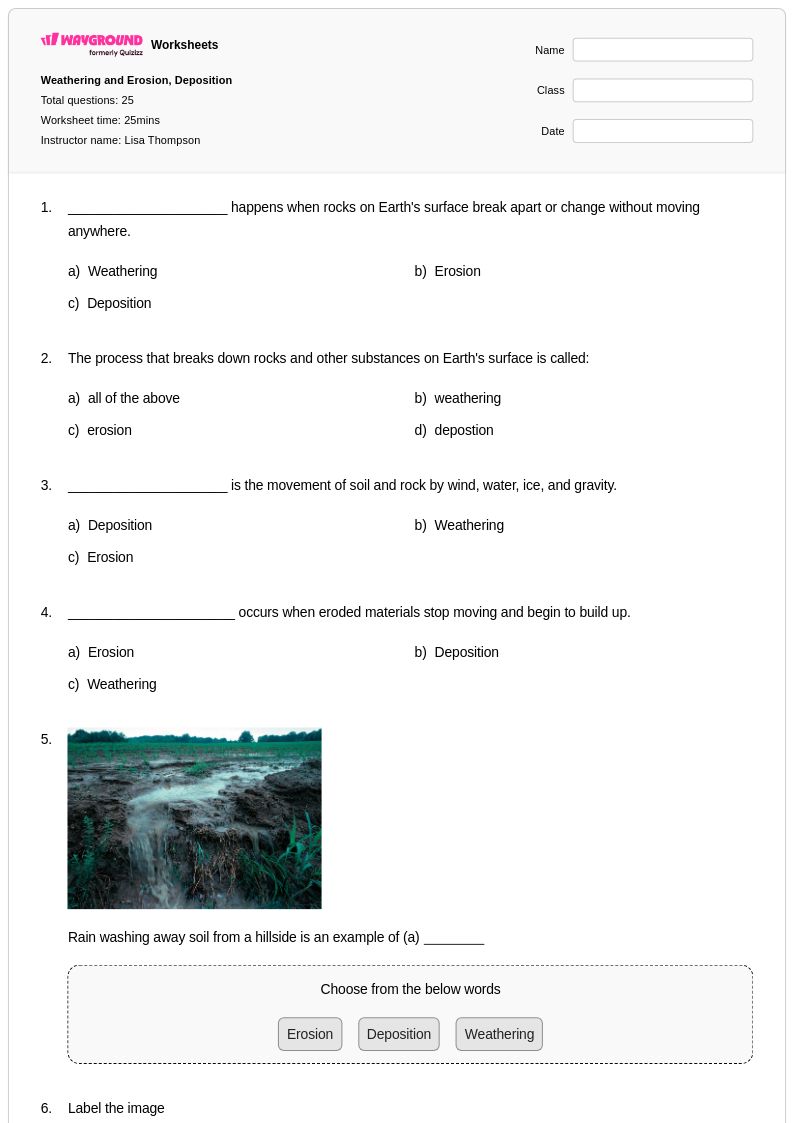
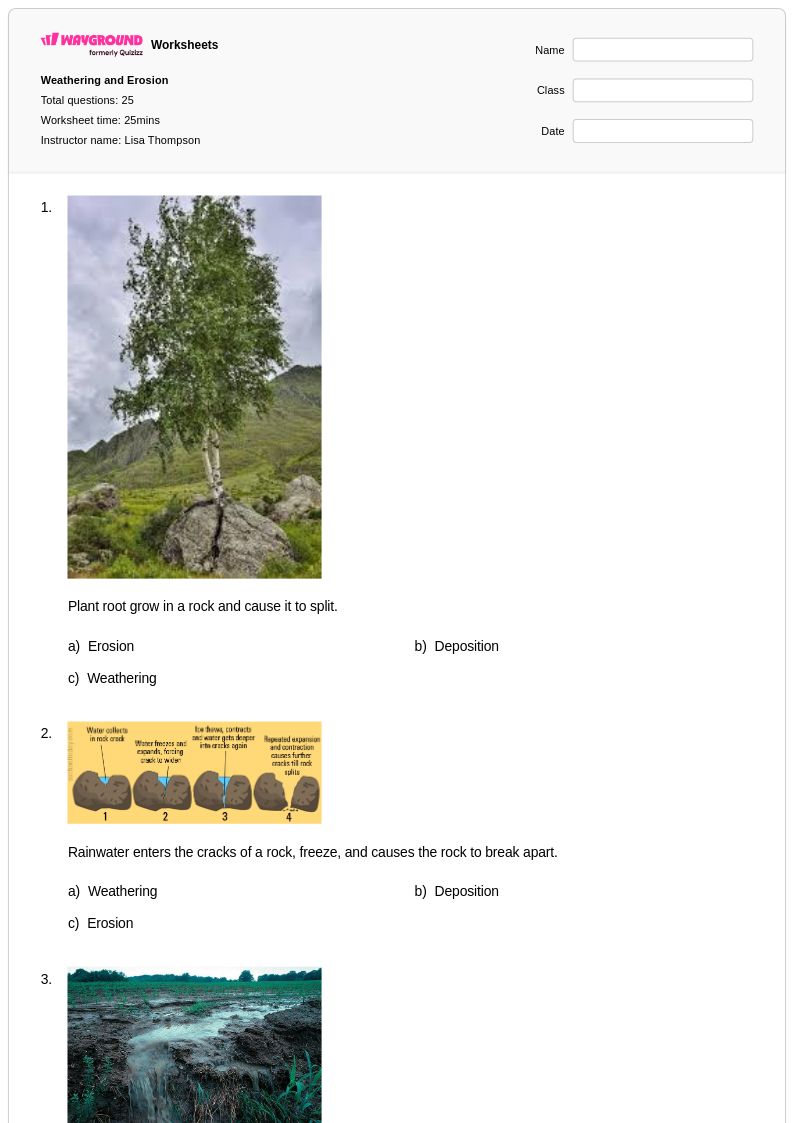
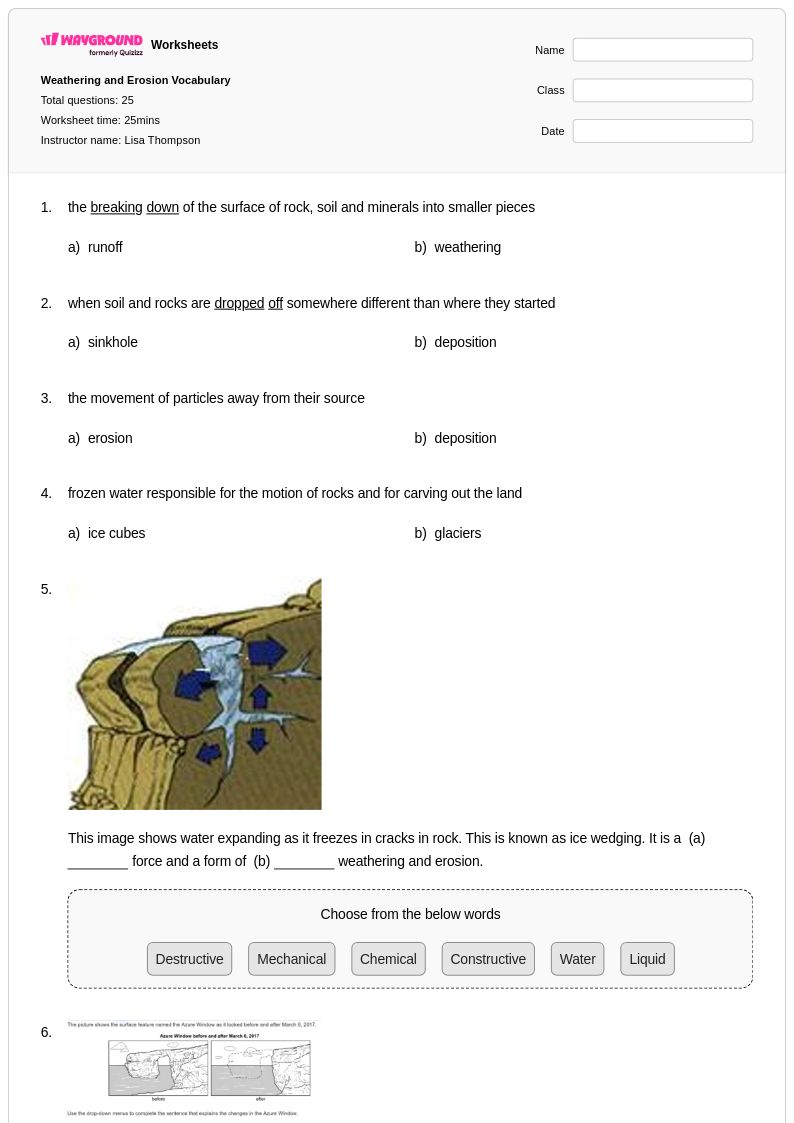
Free Class 11 soil erosion worksheets and printables help students explore weathering processes, sediment transport, and land degradation through engaging practice problems with comprehensive answer keys.
Explore printable Soil Erosion worksheets for Class 11
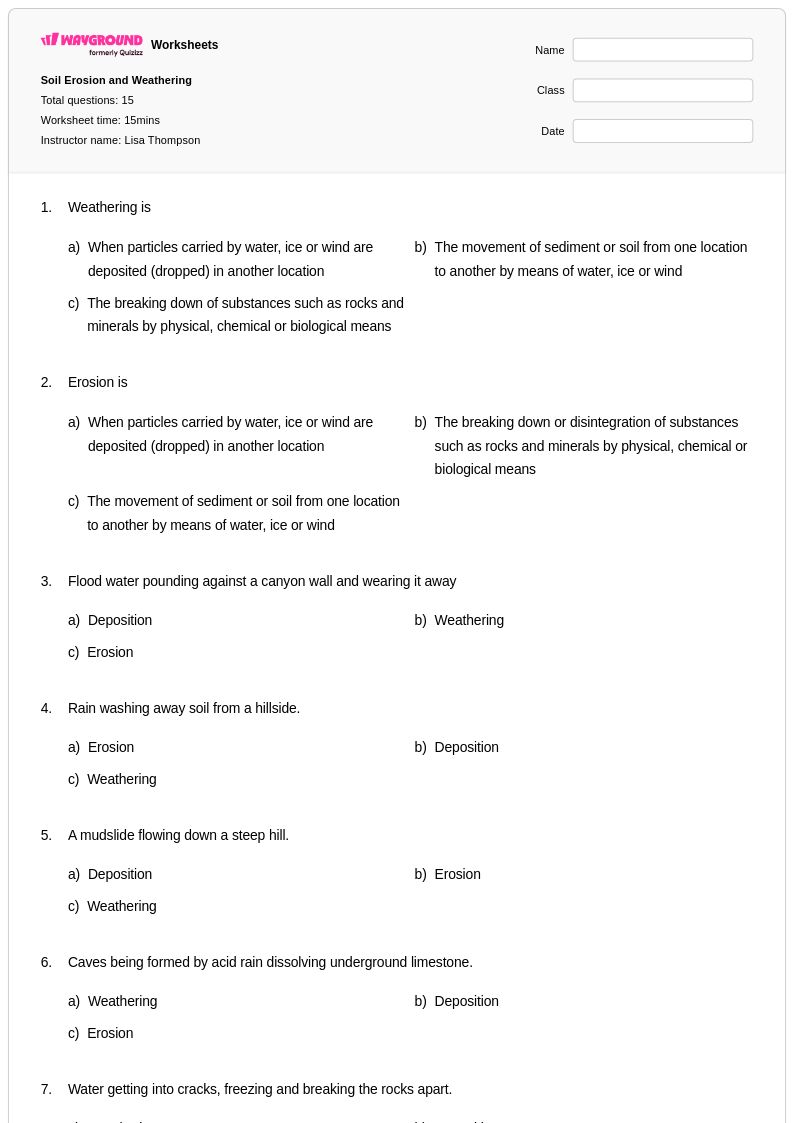
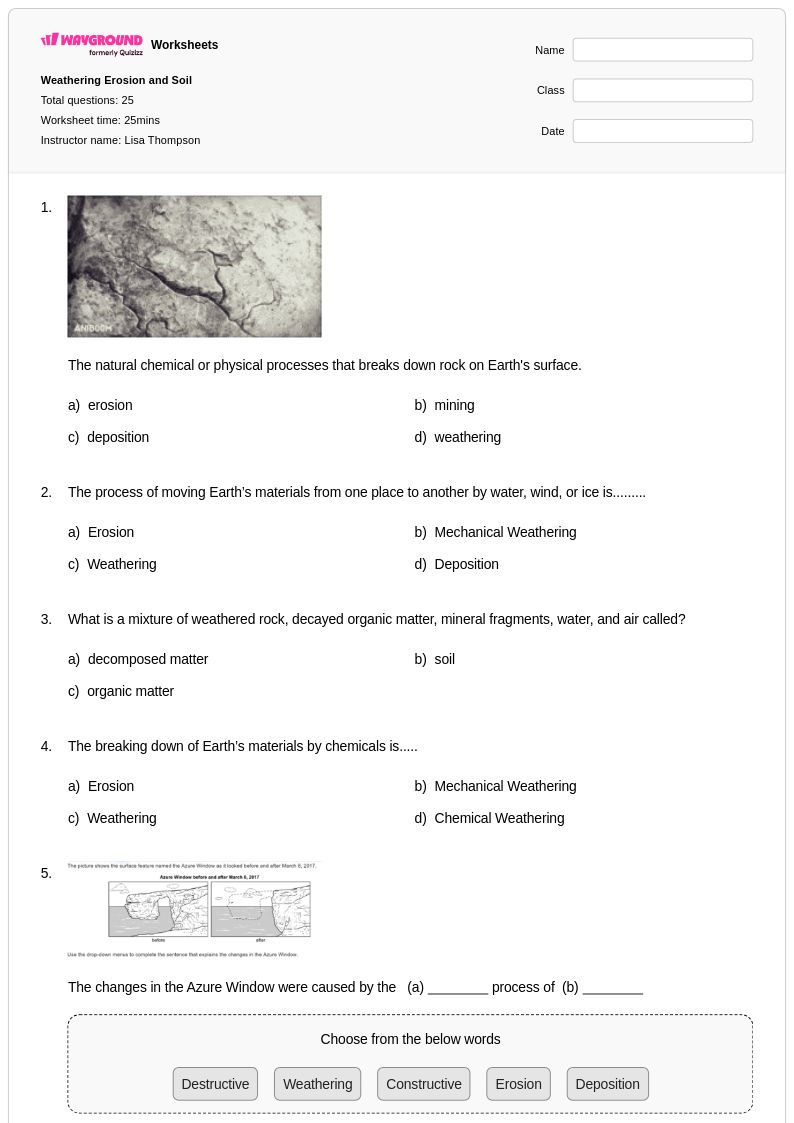
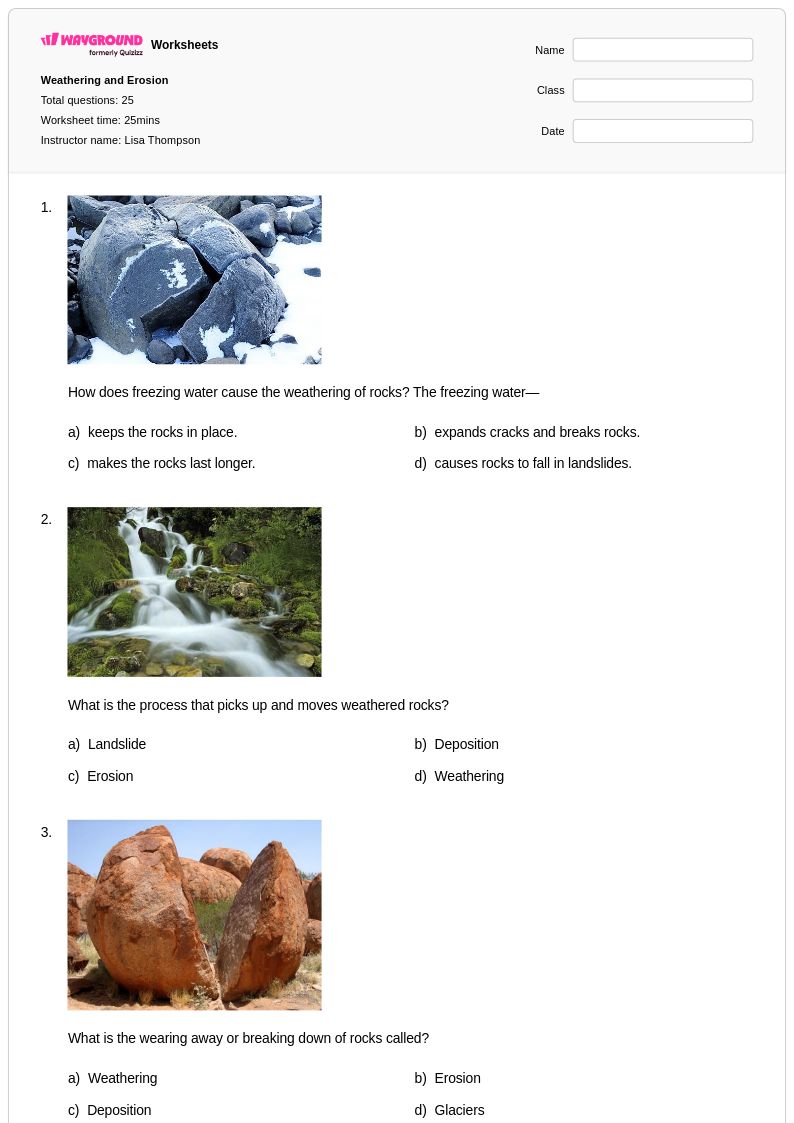
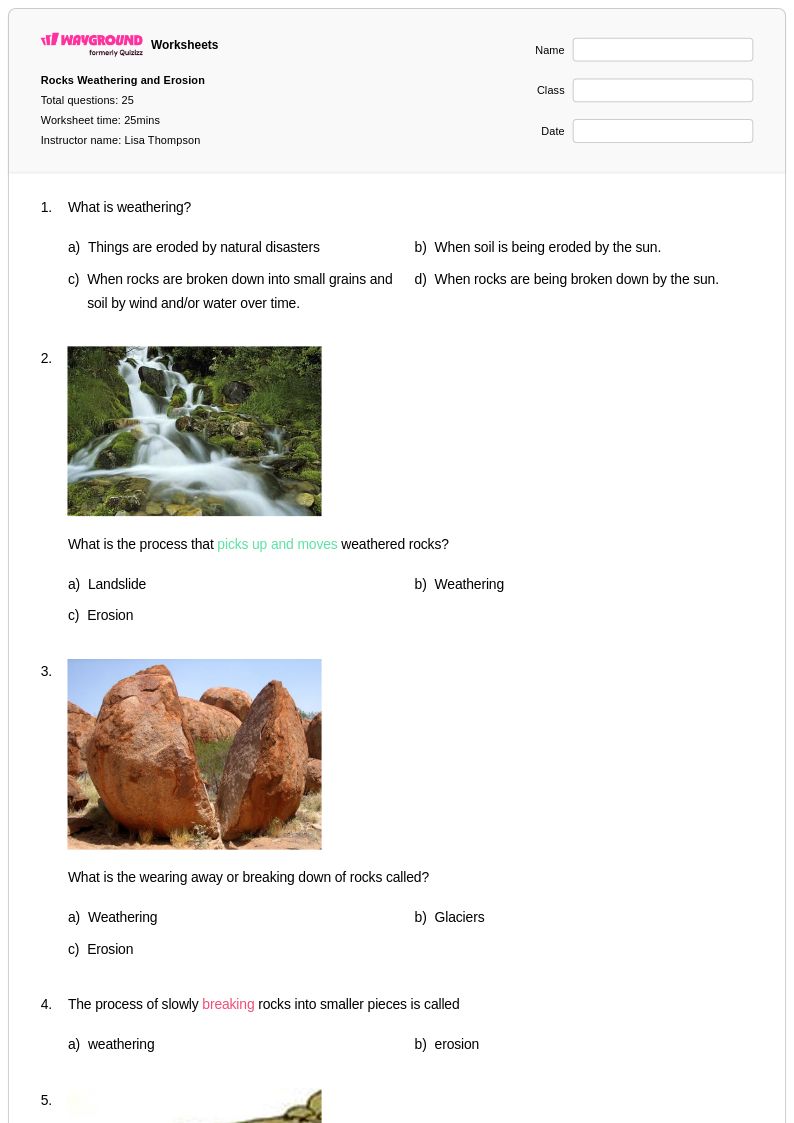
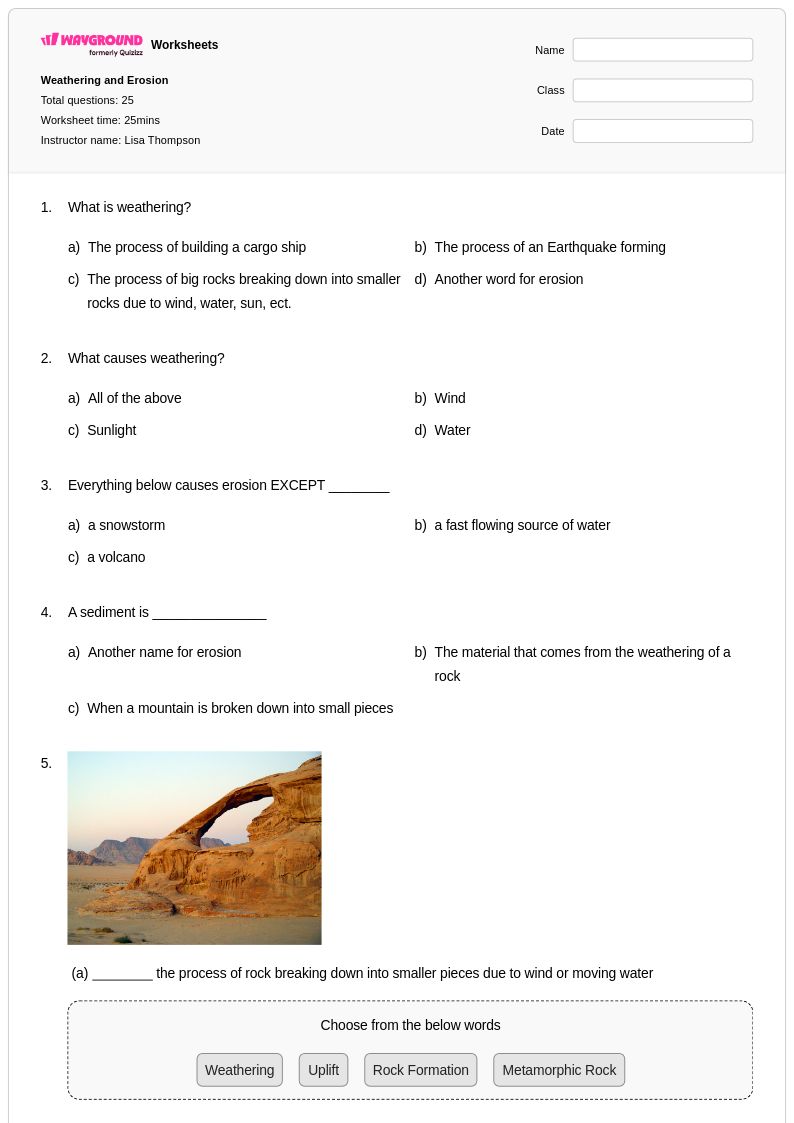
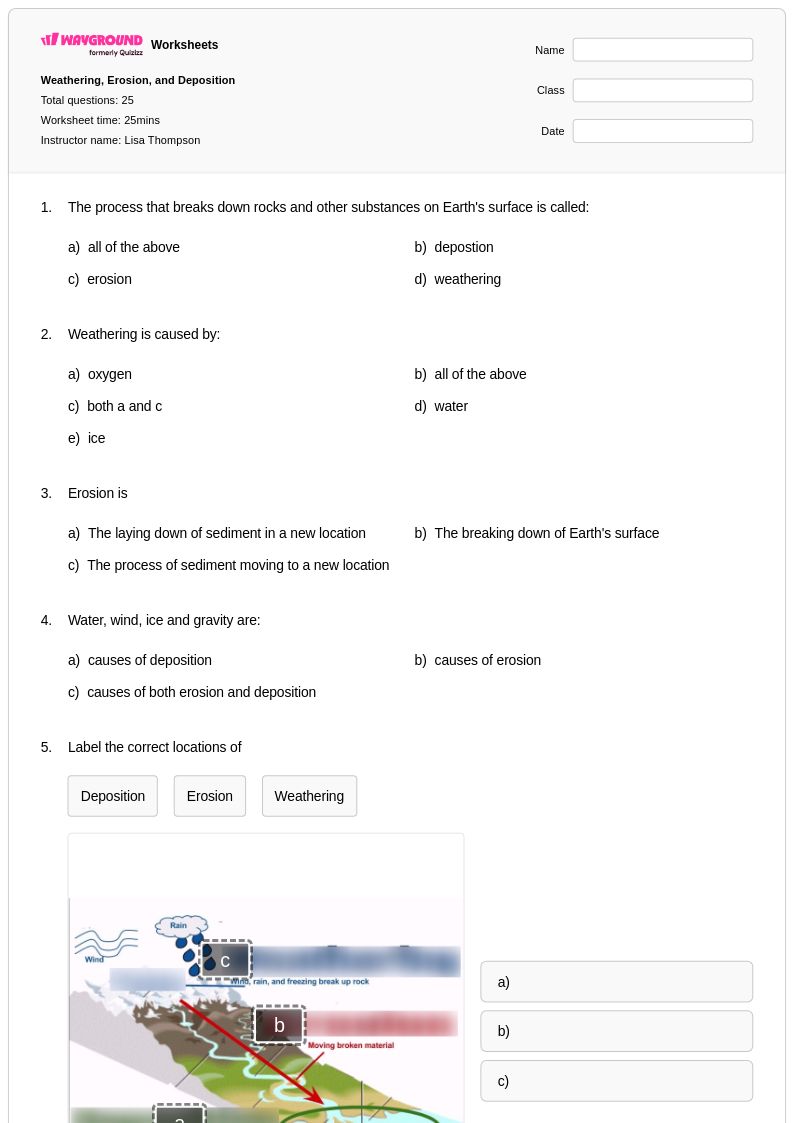
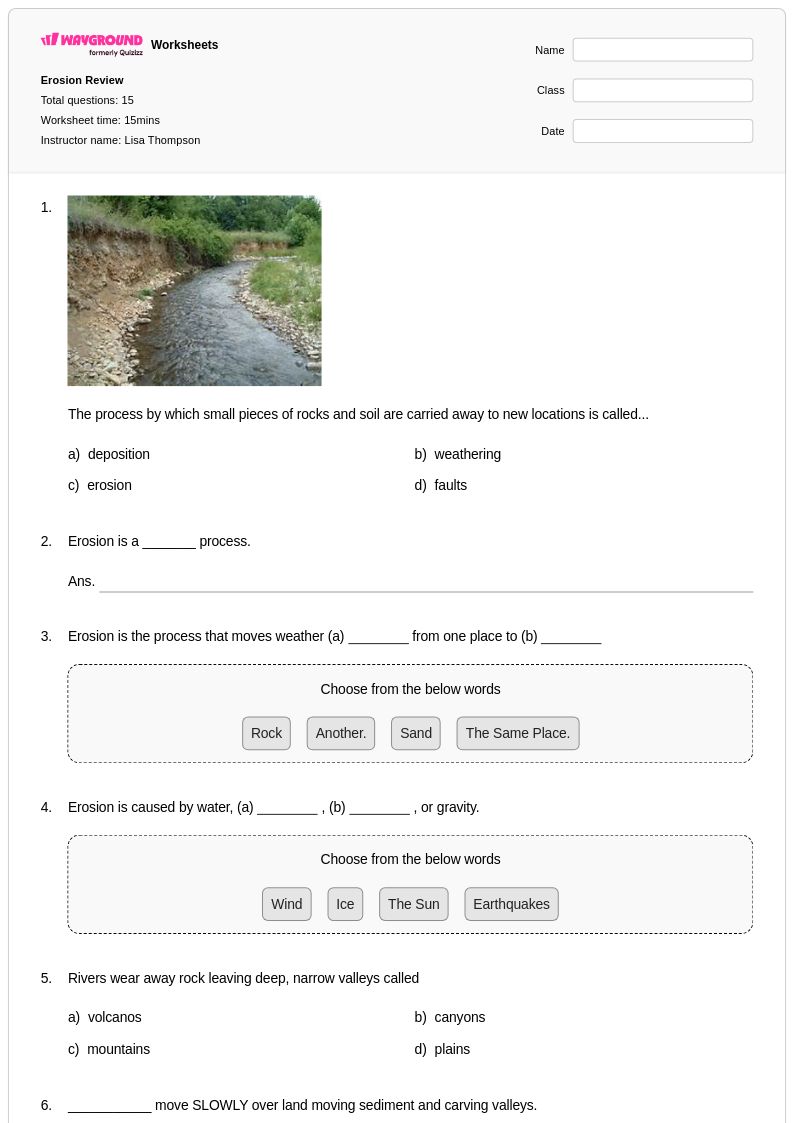
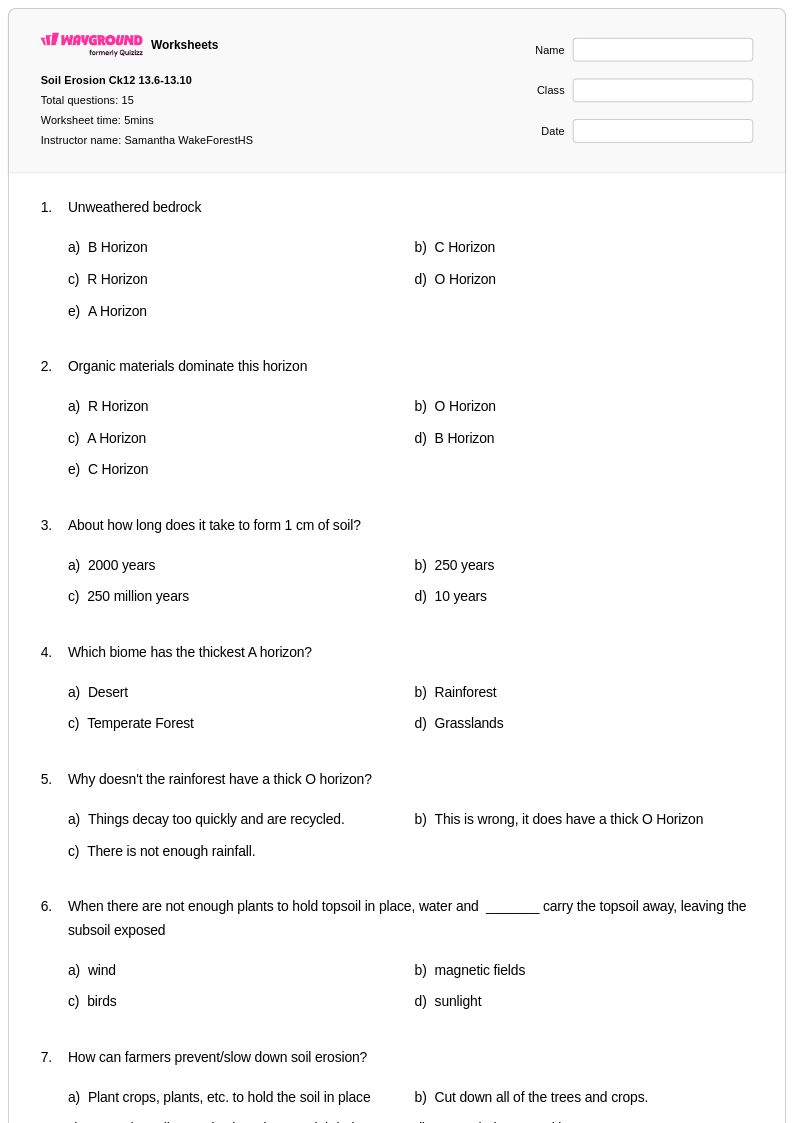
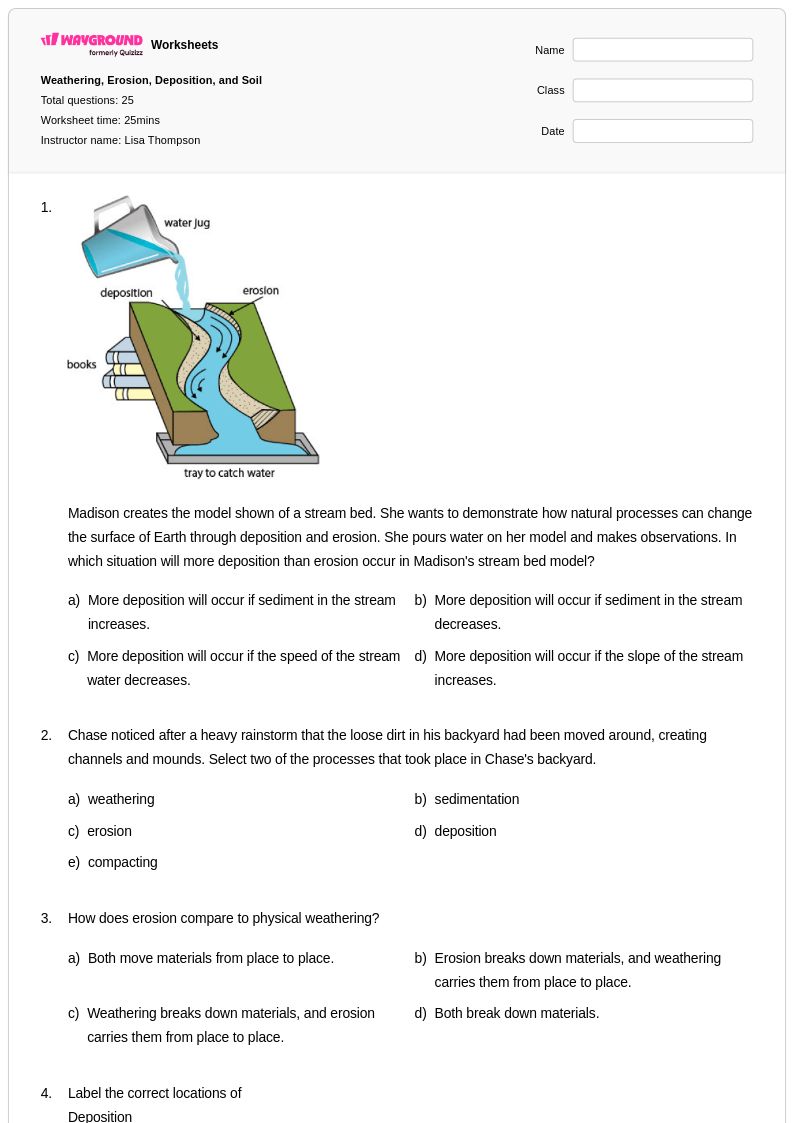
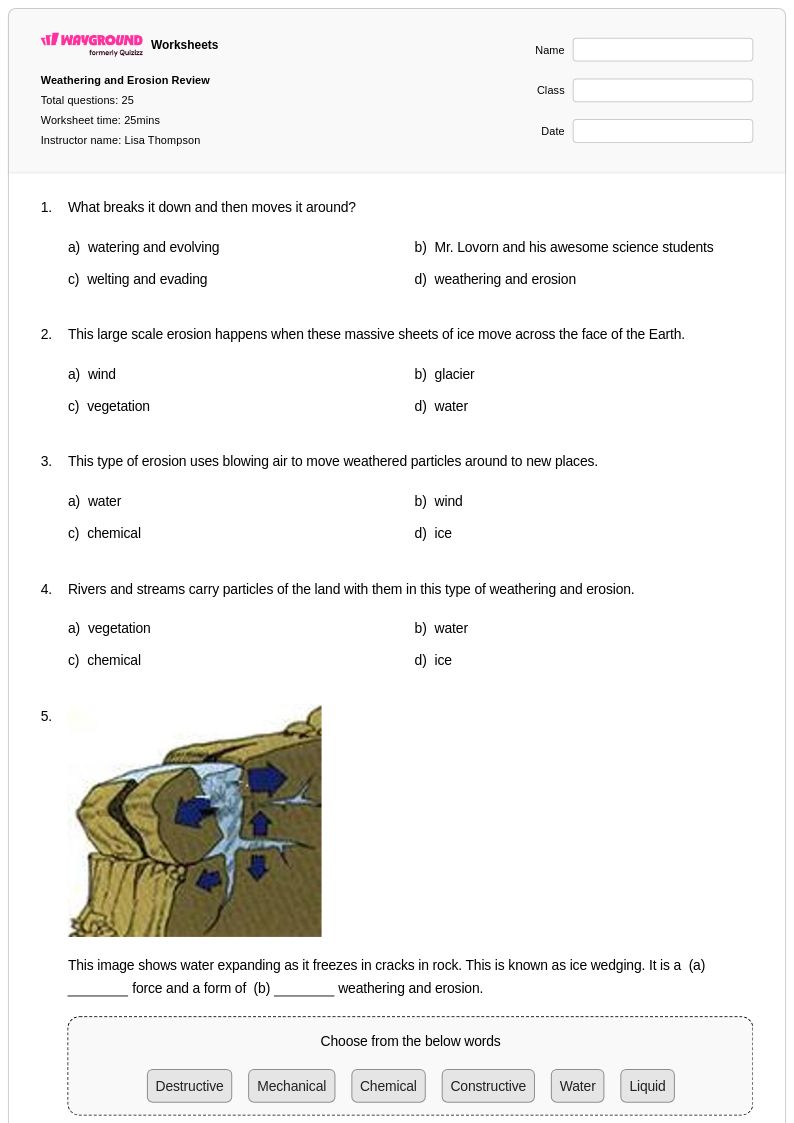
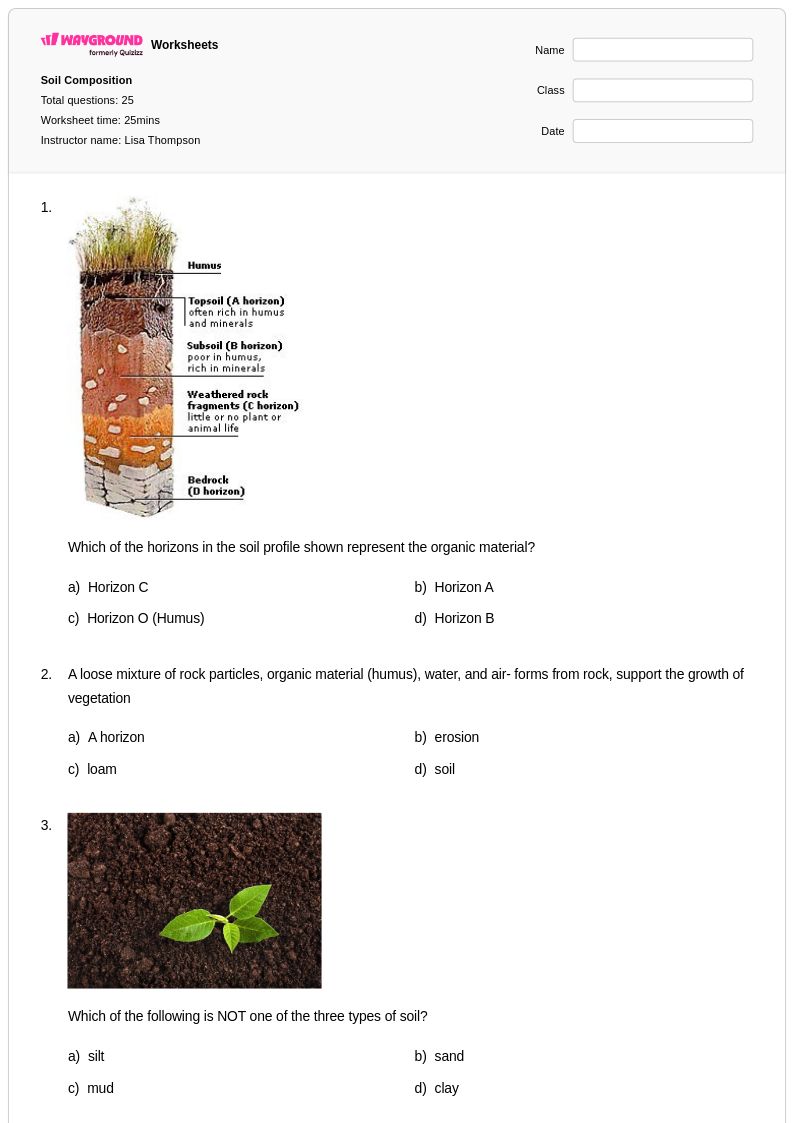
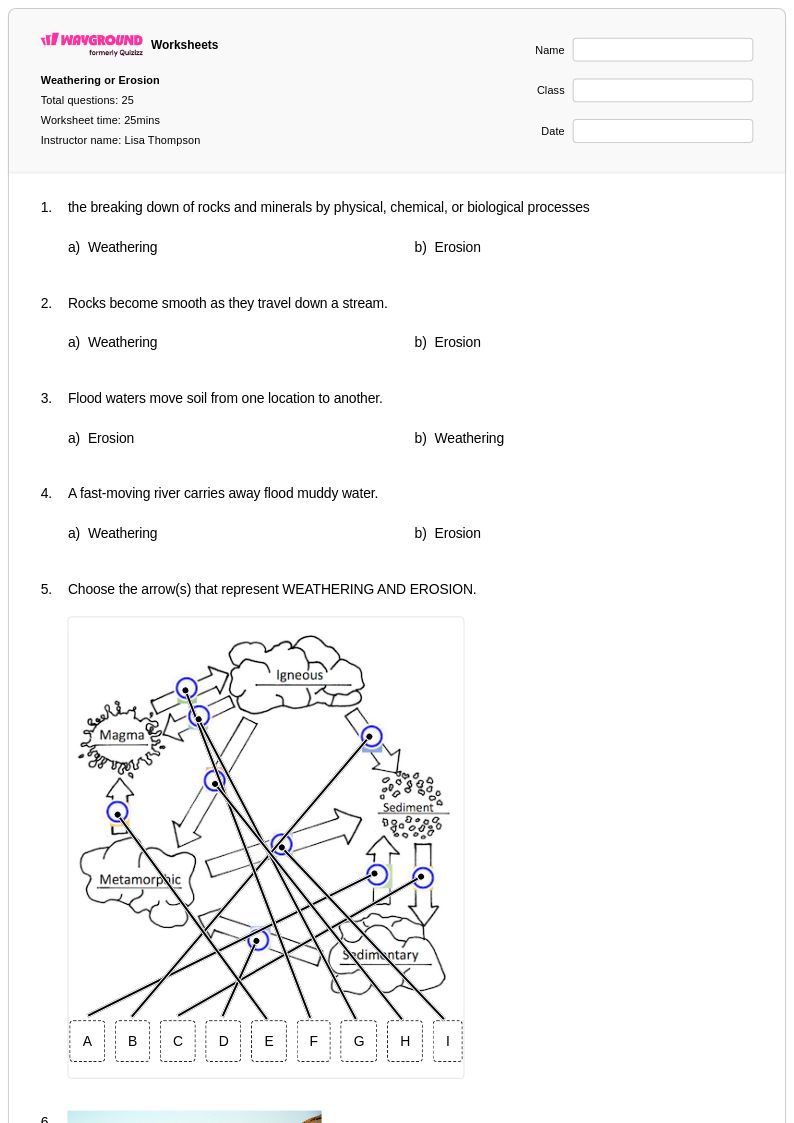
Soil erosion worksheets for Class 11 students available through Wayground (formerly Quizizz) provide comprehensive coverage of this critical Earth and Space Science concept, focusing on the processes that break down and transport earth materials across different environments. These educational resources strengthen students' understanding of mechanical and chemical weathering agents, the role of water, wind, and gravity in erosion processes, and the human activities that accelerate soil loss. The worksheets include detailed practice problems that challenge students to analyze erosion rates, identify vulnerable landscapes, and evaluate conservation strategies, with each printable resource featuring a complete answer key to support independent learning and self-assessment. These free materials help students master complex topics such as mass wasting, stream erosion patterns, and the relationship between vegetation cover and soil stability through structured exercises and real-world case studies.
Wayground (formerly Quizizz) supports educators with millions of teacher-created soil erosion worksheets that can be easily located through robust search and filtering capabilities, allowing instructors to find resources that align with specific curriculum standards and learning objectives. The platform's differentiation tools enable teachers to customize worksheet difficulty levels and content focus areas, making it simple to provide targeted remediation for struggling students or enrichment activities for advanced learners. These versatile resources are available in both printable pdf formats for traditional classroom use and digital versions for interactive learning environments, giving educators the flexibility to adapt their soil erosion instruction to diverse teaching situations. Teachers can efficiently plan comprehensive units on erosion processes, create targeted skill practice sessions, and develop assessment materials that accurately measure student understanding of this fundamental Earth science concept.
FAQs
How do I teach soil erosion to elementary or middle school students?
Start by grounding students in the four main agents of soil erosion: water, wind, ice, and human activity. Use visual comparisons, such as before-and-after images of eroded hillsides or farmland, to make the process concrete. From there, connect erosion to real consequences like crop loss and stream sedimentation so students understand why soil conservation matters. Hands-on simulations, such as pouring water over bare soil versus grass-covered soil, are especially effective for building lasting conceptual understanding.
What exercises help students practice identifying causes and effects of soil erosion?
Cause-and-effect mapping activities work well, where students trace how a specific agent (such as heavy rainfall or deforestation) leads to sediment transport and downstream impacts. Practice problems that ask students to analyze erosion patterns in different environments, such as agricultural fields versus forested slopes, build the analytical thinking needed to connect theory to real-world scenarios. Worksheets that integrate both identification and short-answer explanation push students beyond recall into genuine understanding.
What mistakes do students commonly make when learning about soil erosion?
A frequent misconception is that erosion only occurs dramatically, such as during floods or landslides, when in fact slow, gradual surface erosion is far more common and damaging. Students also often confuse weathering with erosion, not recognizing that weathering breaks down rock and soil in place while erosion involves movement and transport. Another common error is underestimating human activity as an erosion agent, particularly the role of agriculture, construction, and deforestation in accelerating natural erosion rates.
How can I use soil erosion worksheets to assess student understanding?
Soil erosion worksheets are effective for formative assessment when they include scenario-based questions that require students to identify erosion agents, predict outcomes, and propose conservation strategies rather than just recall definitions. Using worksheets with complete answer keys allows teachers to quickly identify patterns in student errors, such as confusion between deposition and erosion, and adjust instruction accordingly. Assigning worksheets as exit tickets or post-lesson checks gives a clear snapshot of where individual students stand before moving to conservation methods or related Earth science topics.
How do I use Wayground's soil erosion worksheets in my classroom?
Wayground's soil erosion worksheets are available as printable PDFs, making them easy to distribute for in-class practice or homework, and in digital formats for technology-integrated learning environments. Teachers can also host worksheets as a quiz directly on Wayground, enabling real-time student responses and automatic scoring. The platform supports student-level accommodations including extended time, read aloud, and reduced answer choices, which can be assigned to individual students while the rest of the class receives standard settings.
How do I differentiate soil erosion instruction for students at different levels?
For students who need remediation, focus on foundational vocabulary and single-agent erosion scenarios before introducing complex interactions like rill versus gully erosion. Advanced learners benefit from enrichment problems that ask them to evaluate conservation strategies, such as comparing contour plowing, terracing, and cover crops in terms of effectiveness. On Wayground, teachers can apply accommodations such as reduced answer choices or read aloud to specific students without disrupting the experience for the rest of the class, making differentiation manageable within a single assignment.