Free Printable Plate Boundary Worksheets for Class 11
Enhance Class 11 students' understanding of plate boundaries with Wayground's comprehensive collection of free worksheets, printables, and practice problems featuring detailed answer keys to master tectonic plate interactions and geological processes.
Explore printable Plate Boundary worksheets for Class 11
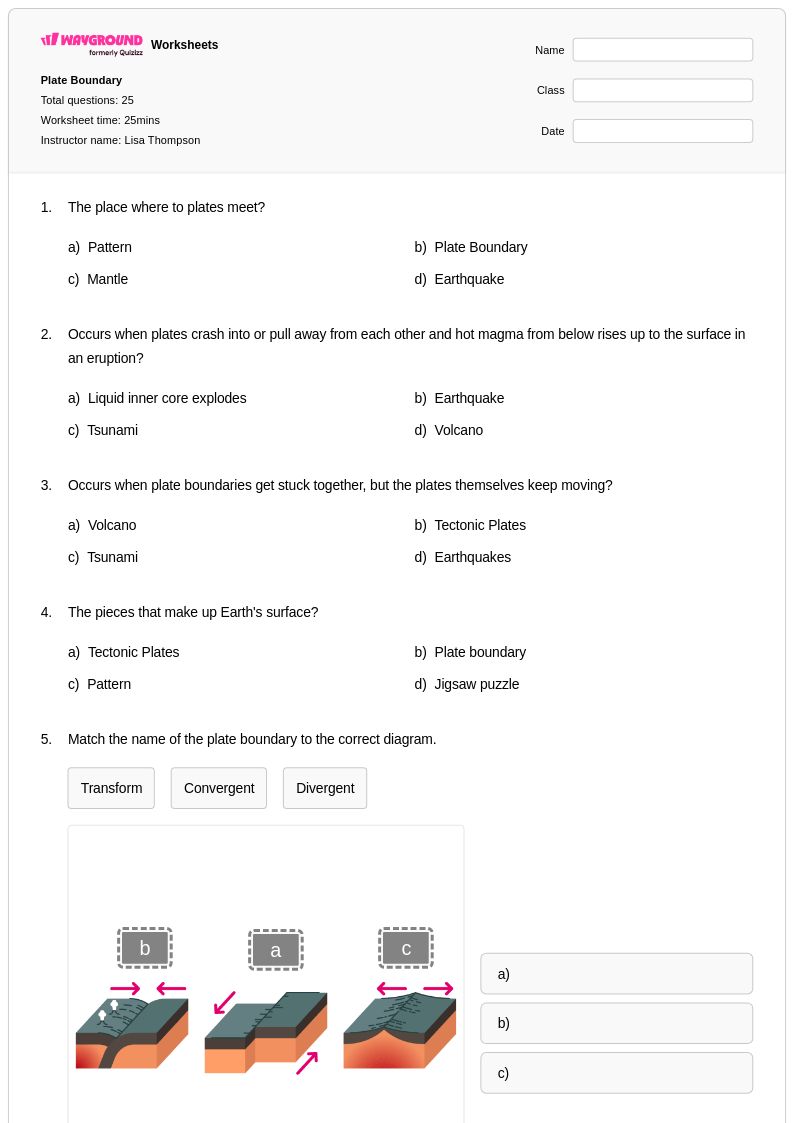
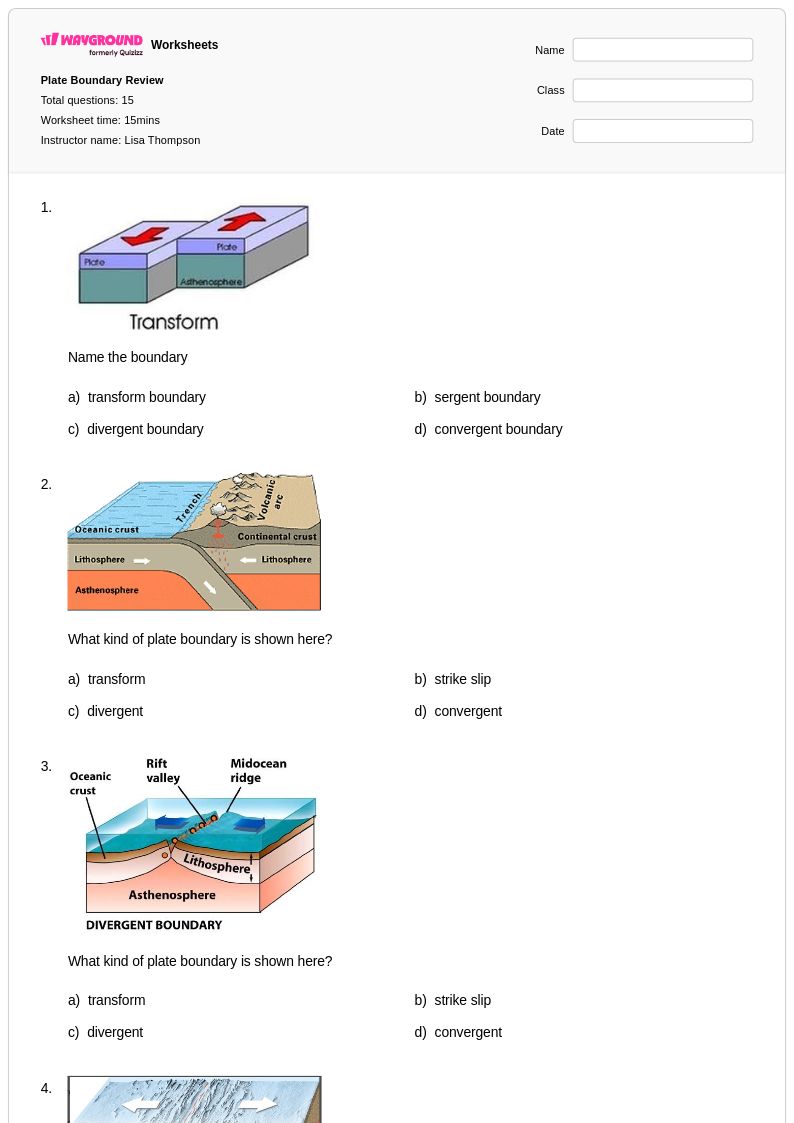
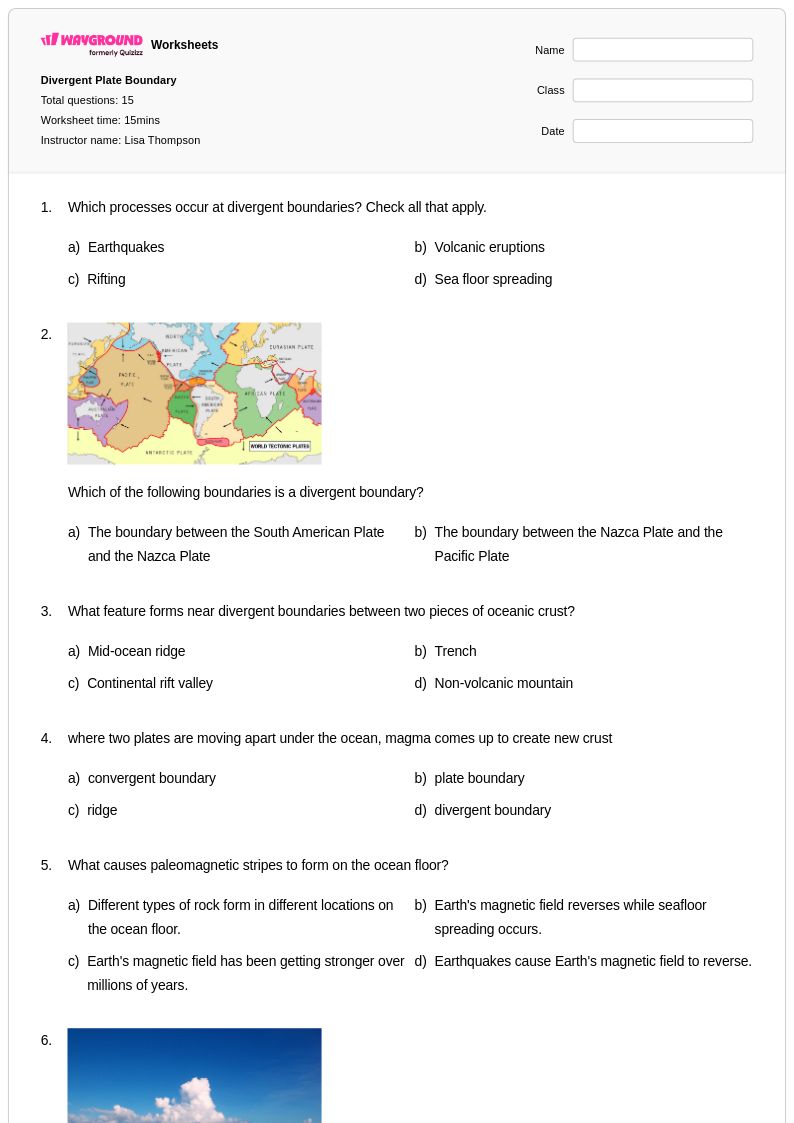
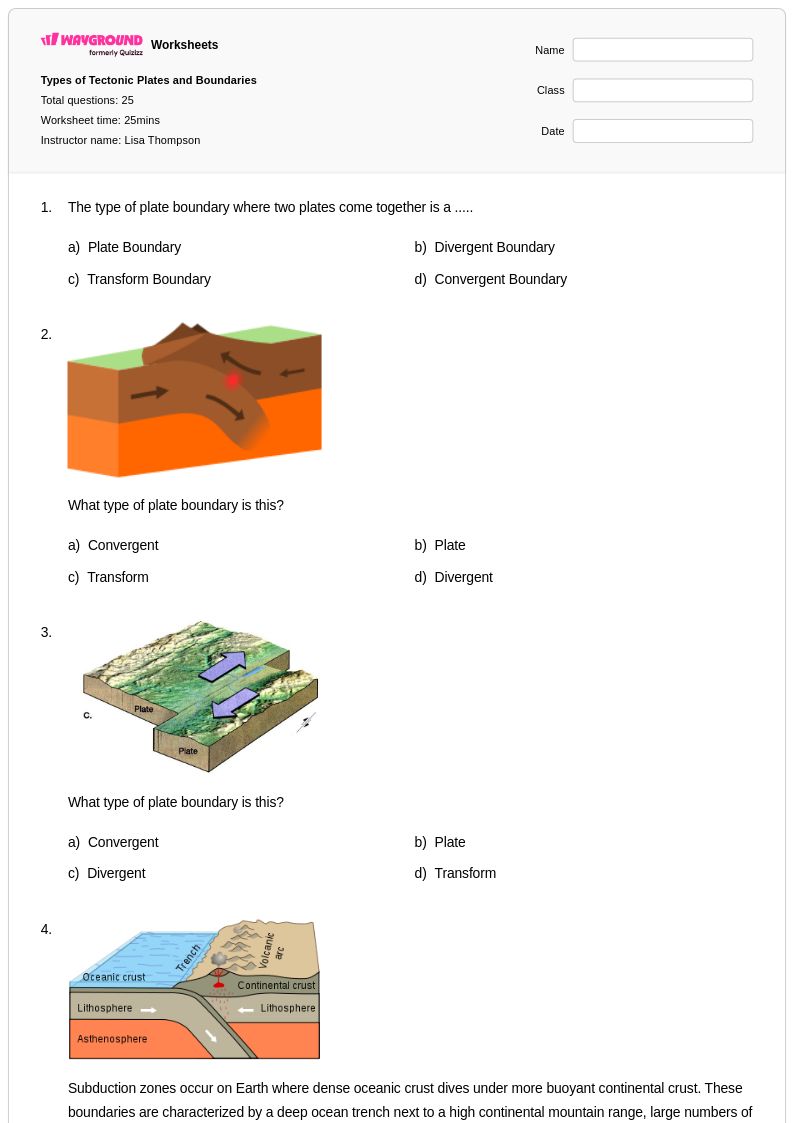
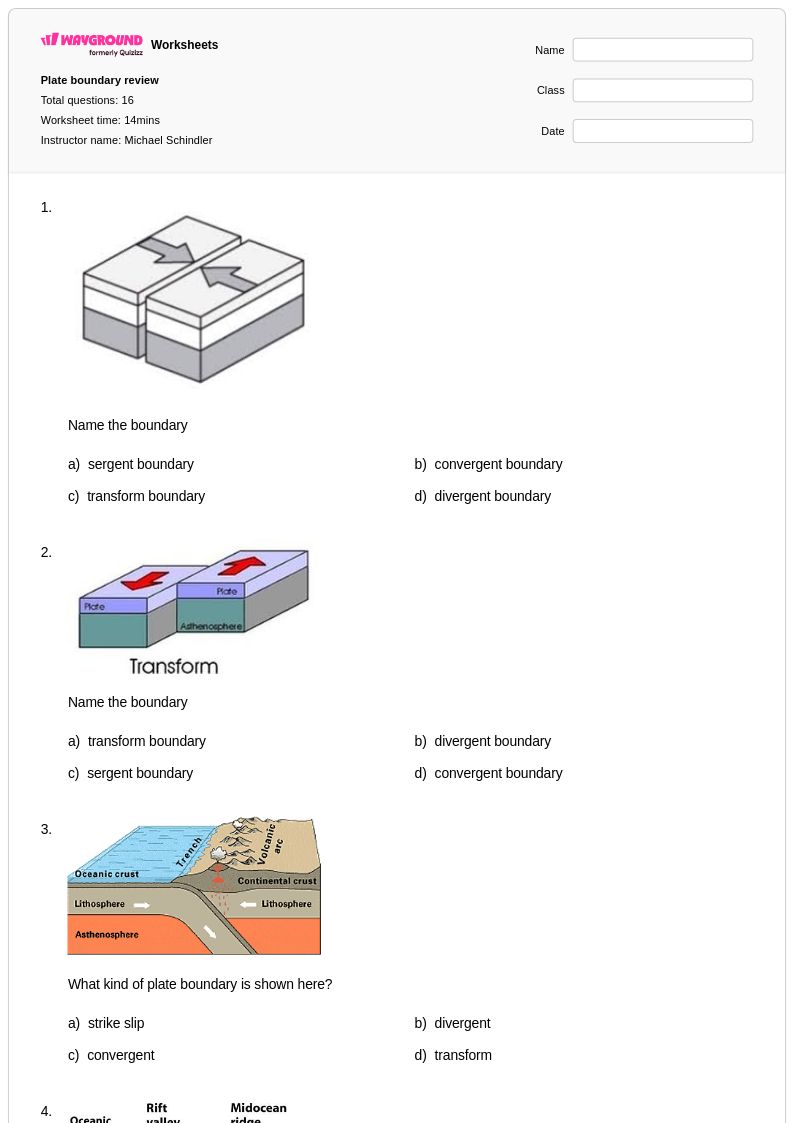
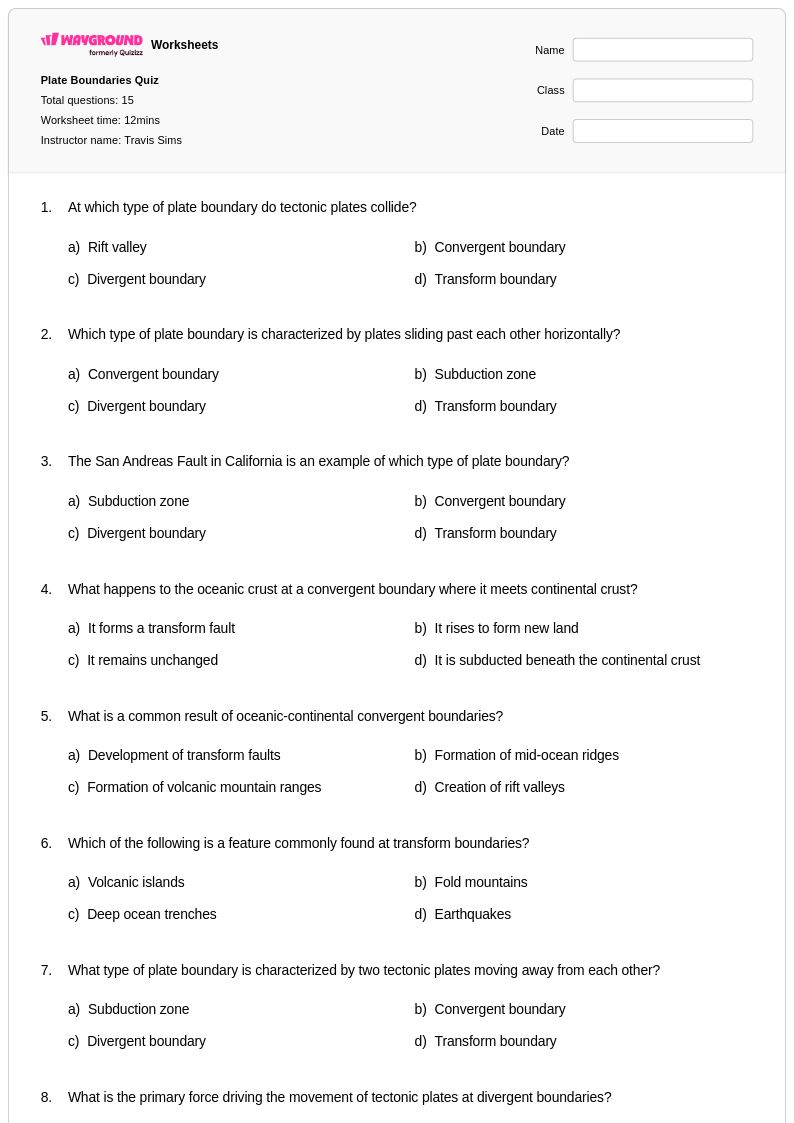
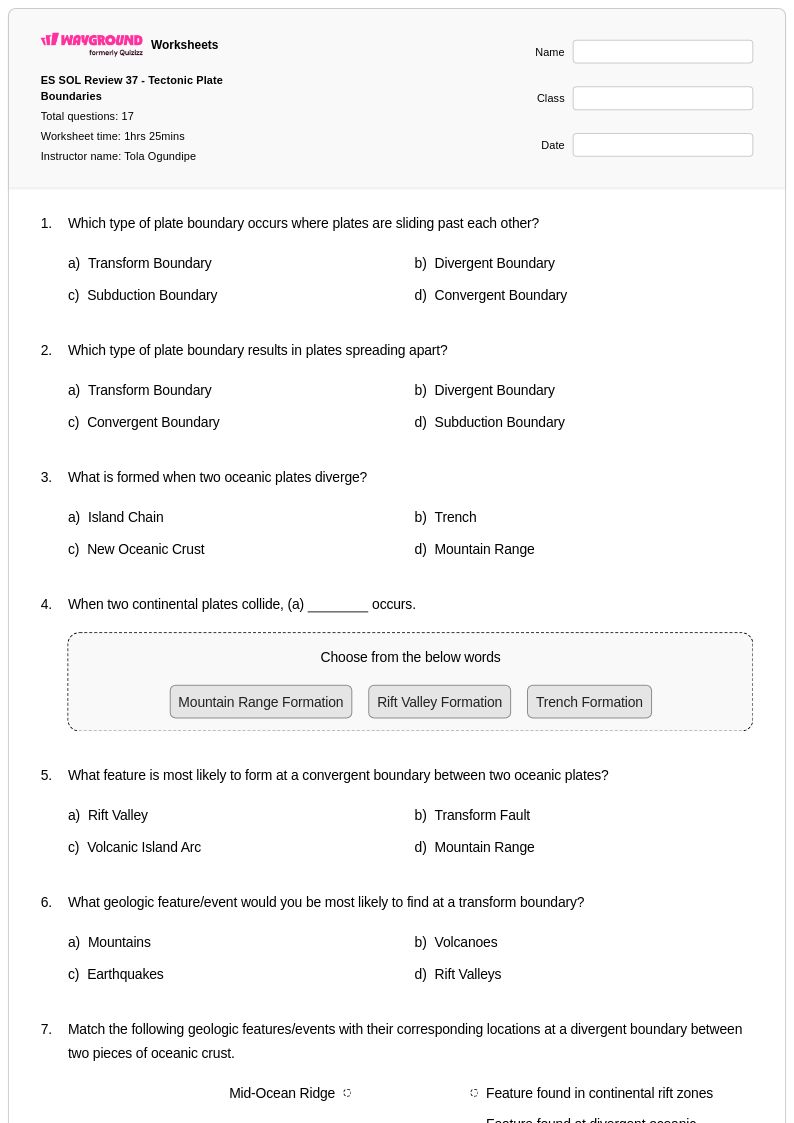
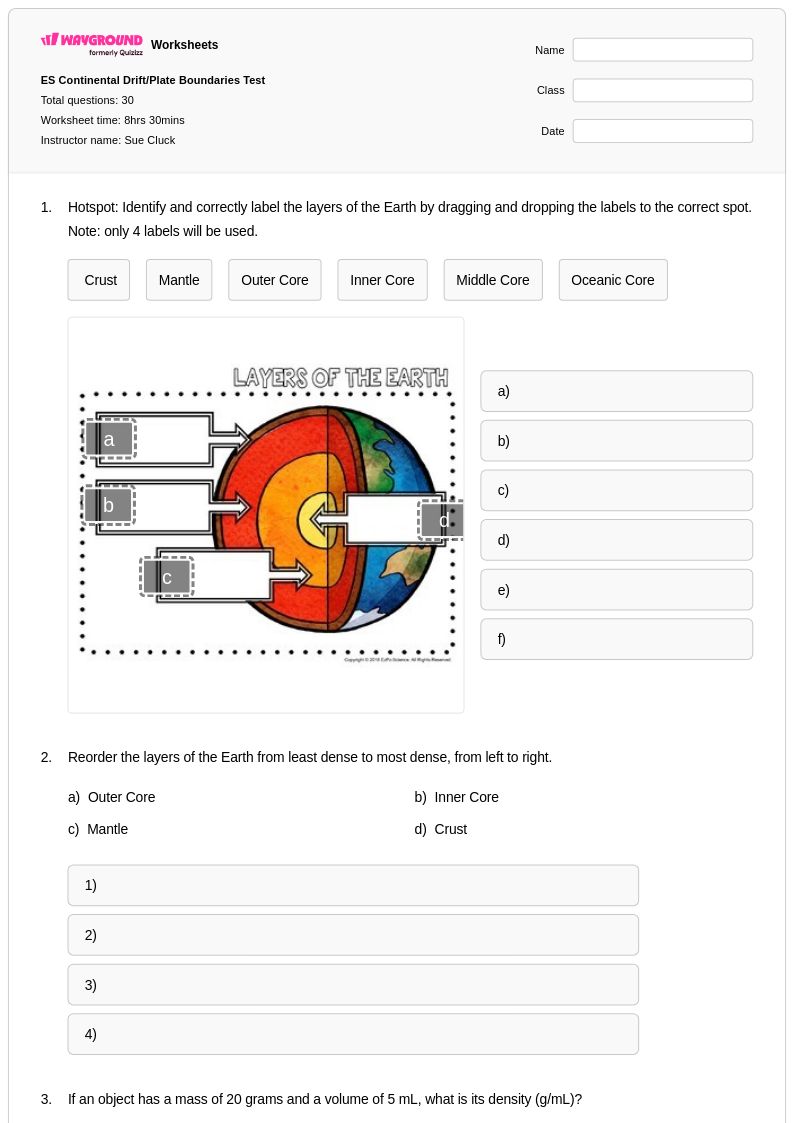
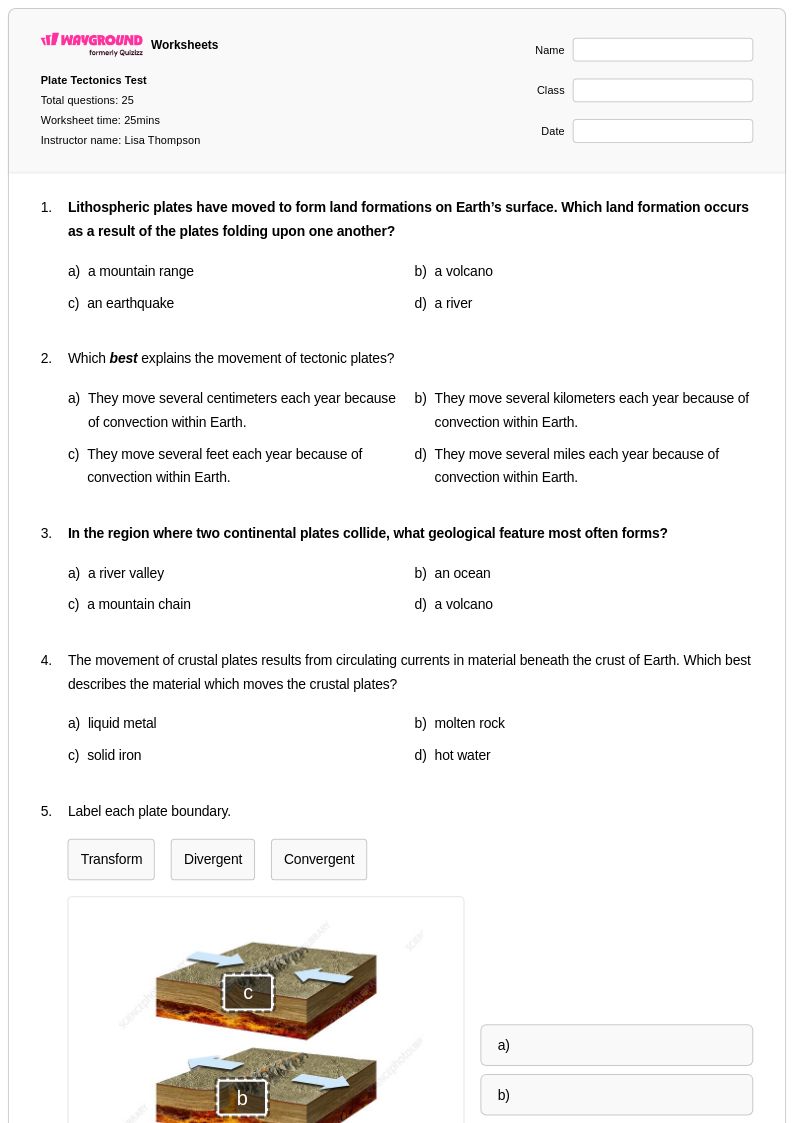
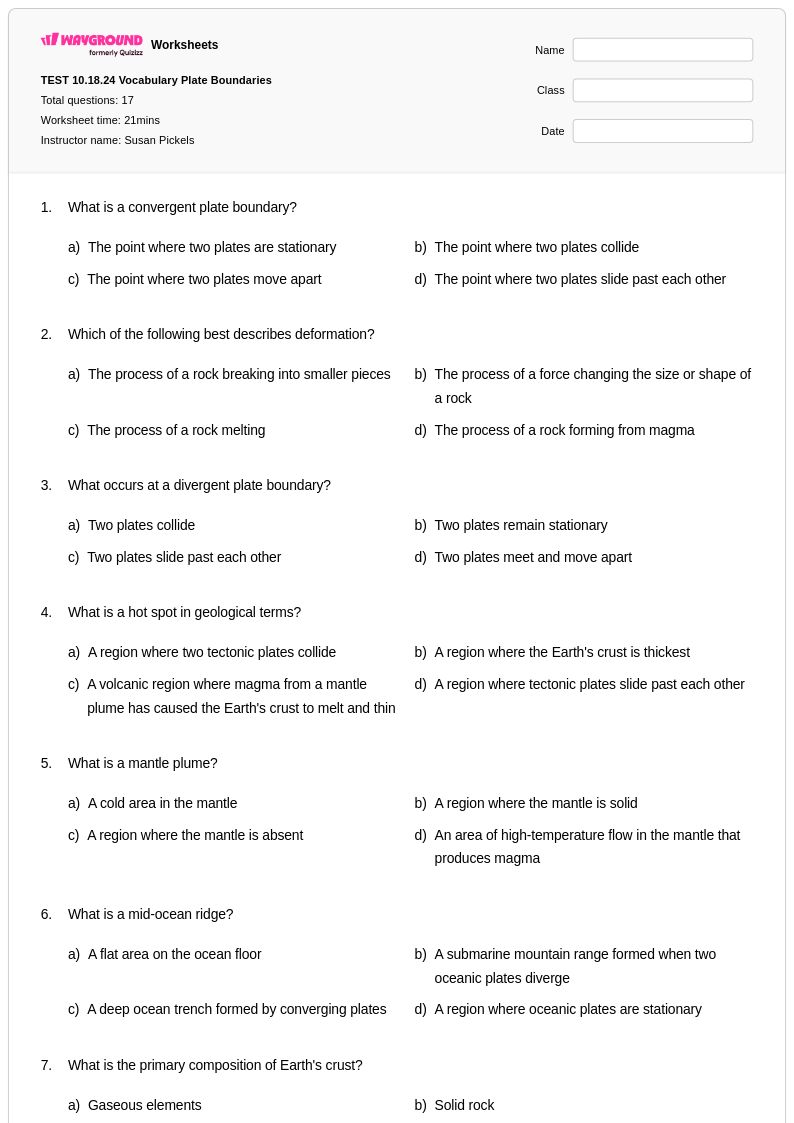
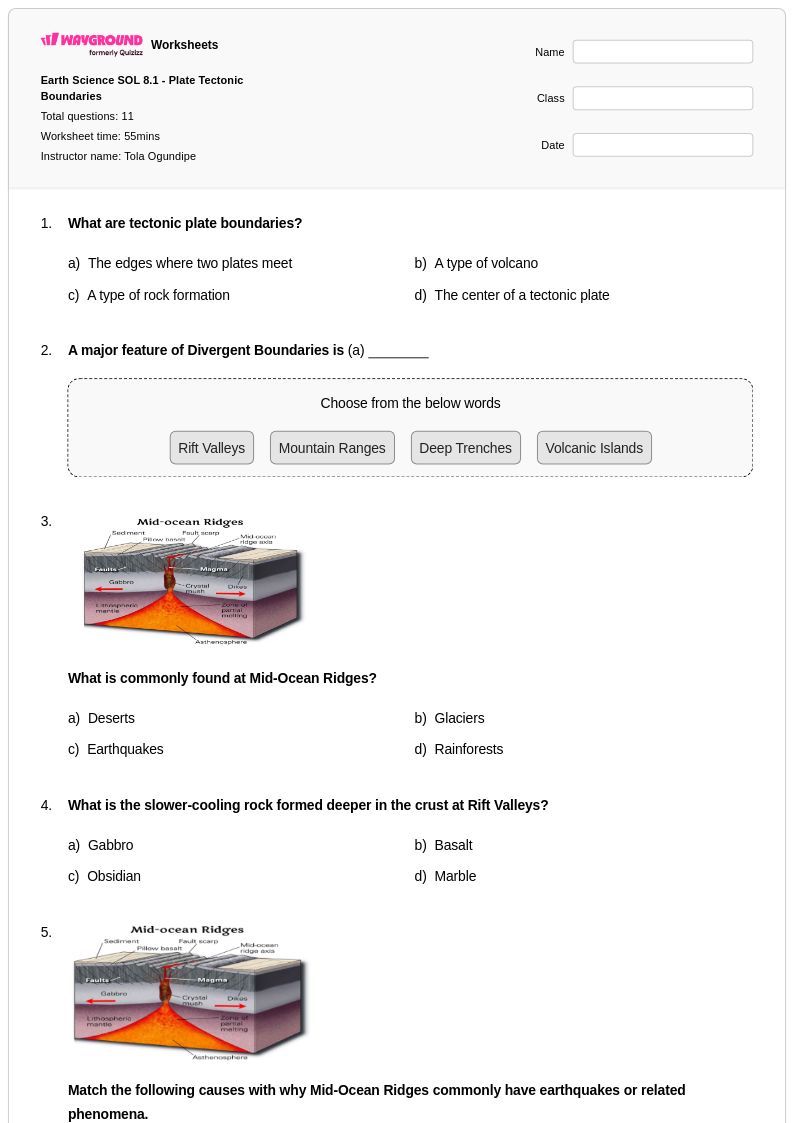
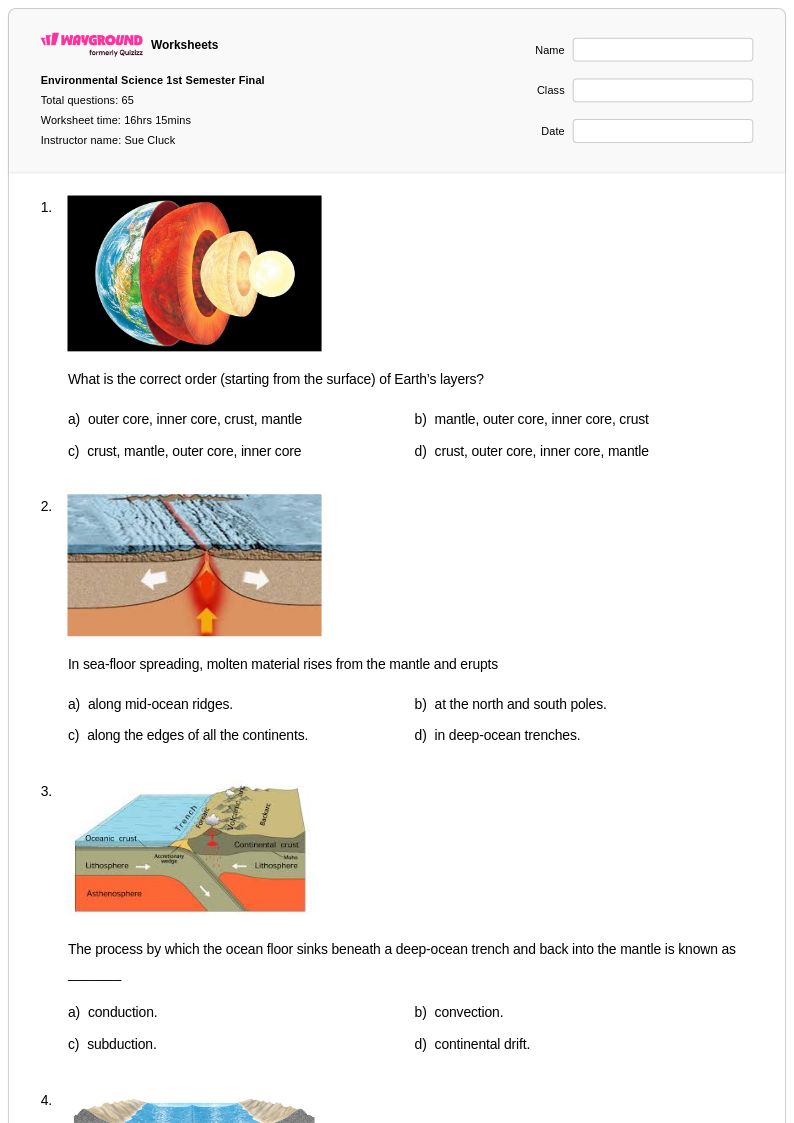
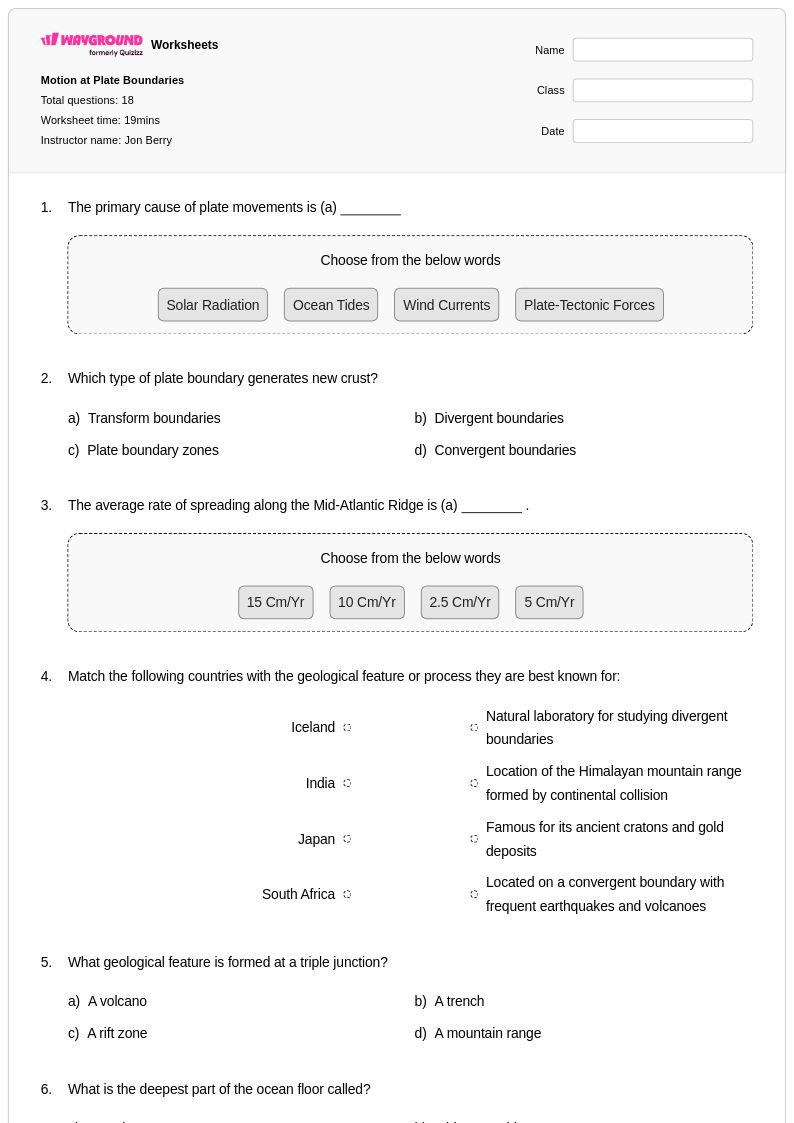
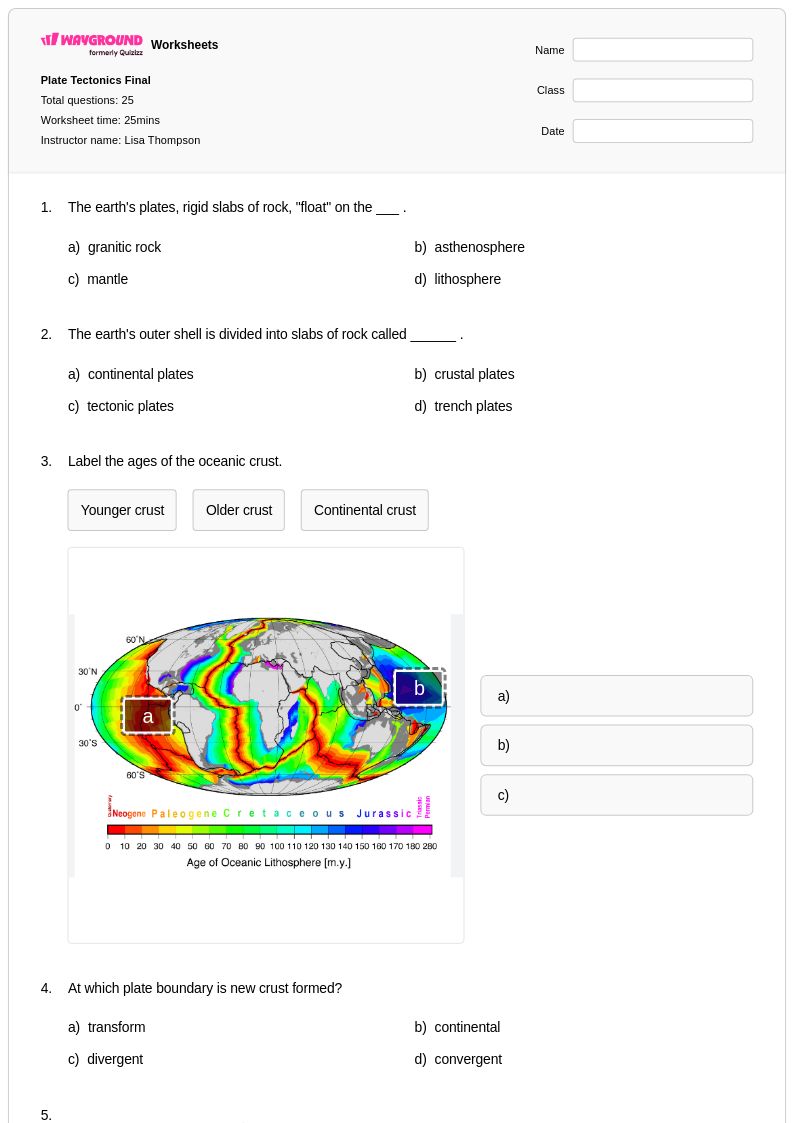
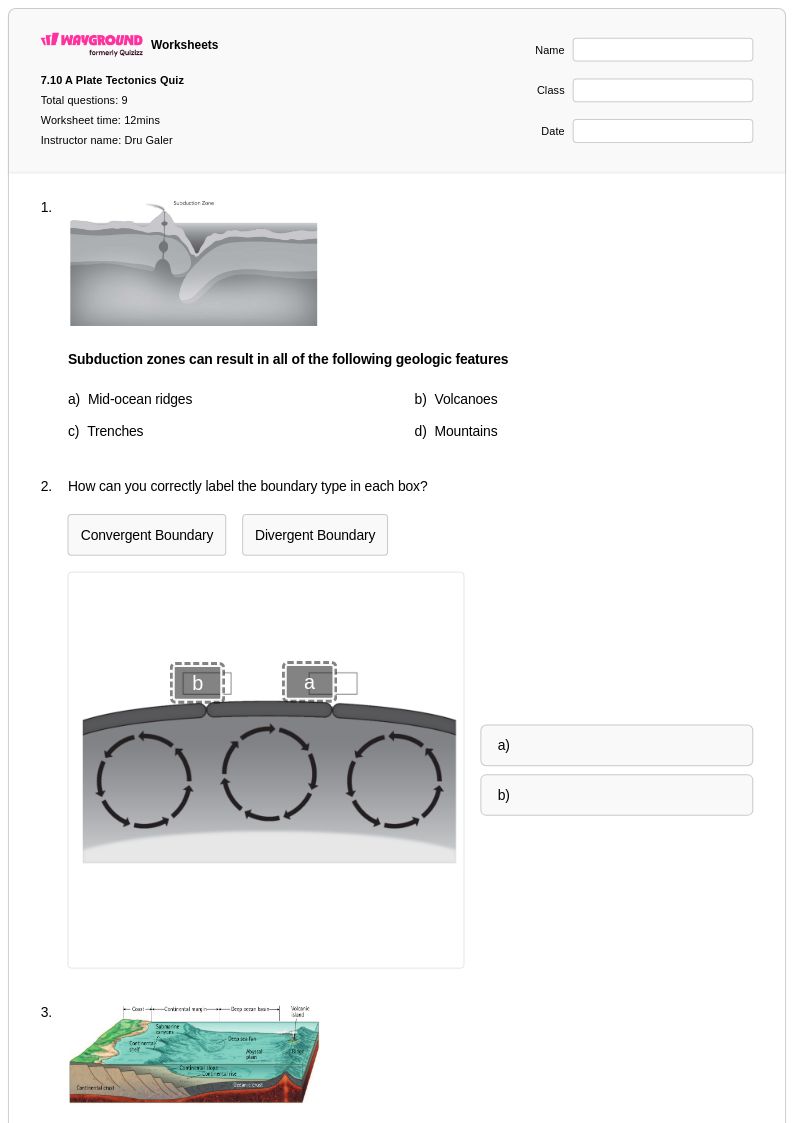
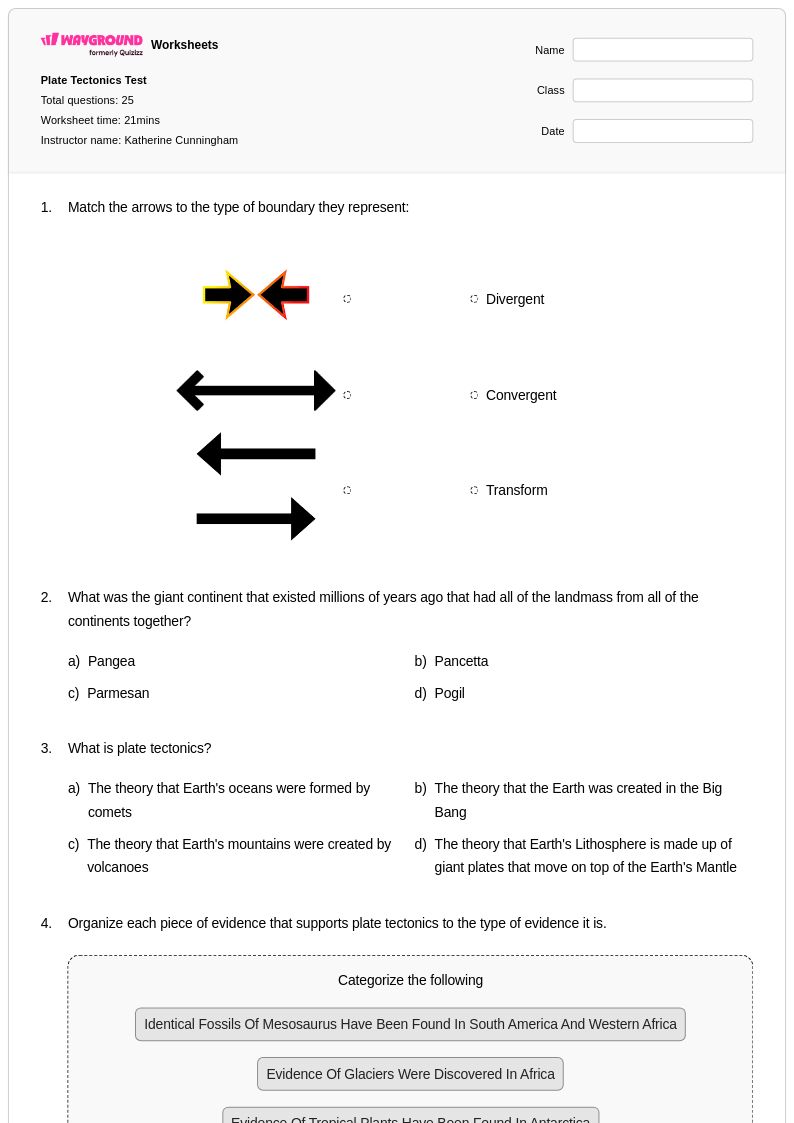
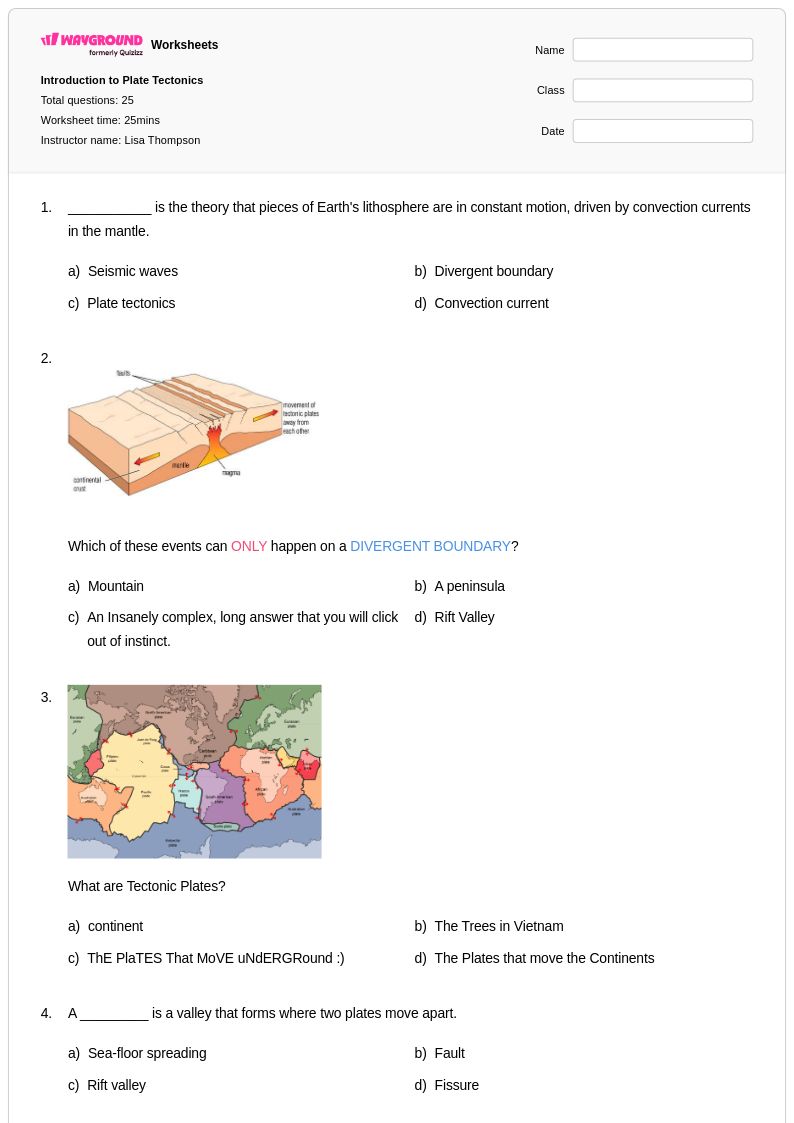
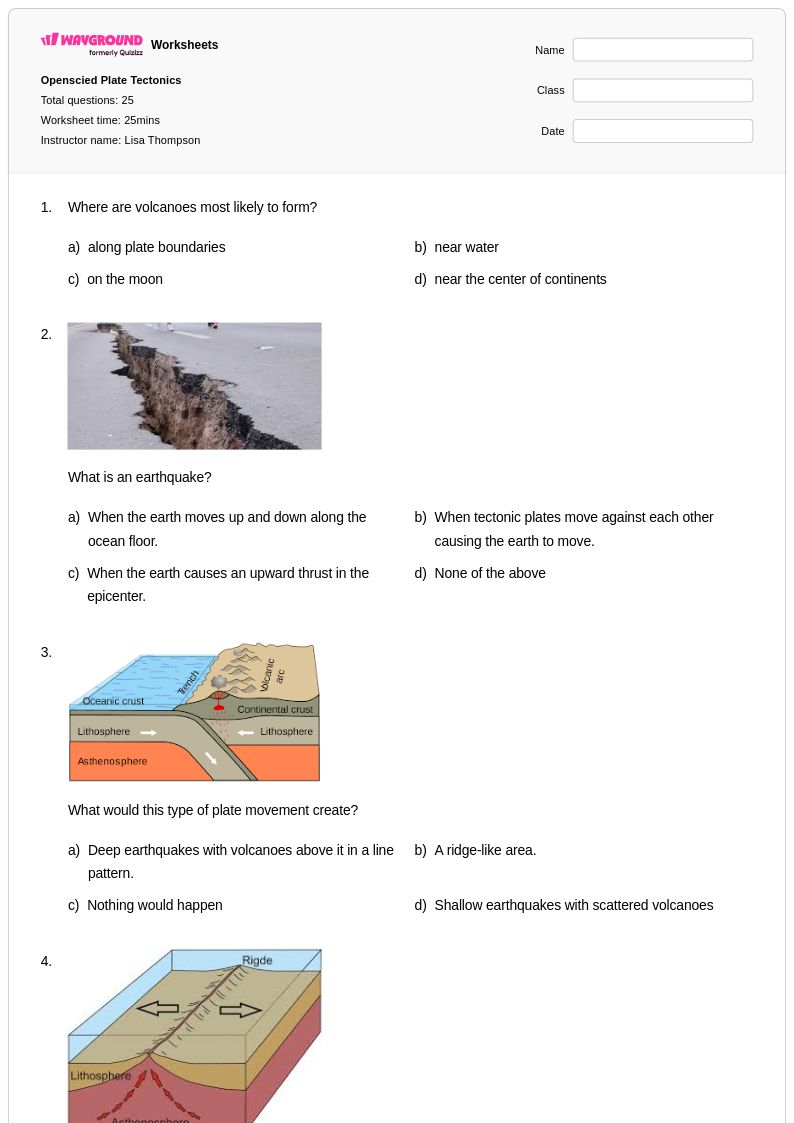
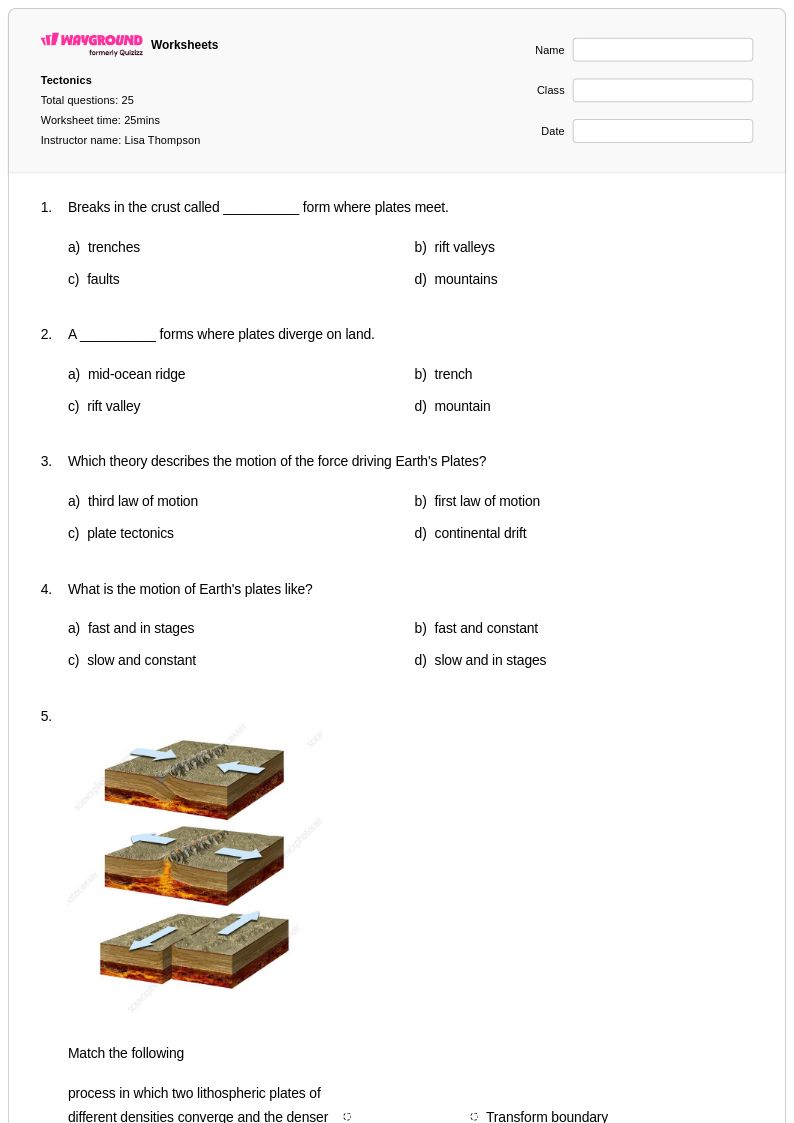
Plate boundary worksheets for Class 11 students available through Wayground (formerly Quizizz) provide comprehensive coverage of the dynamic interactions occurring where tectonic plates meet. These educational resources focus on the three primary types of plate boundaries—divergent, convergent, and transform—helping students understand the geological processes that shape our planet's surface. The worksheets strengthen critical analytical skills by guiding students through the examination of real-world examples, from the Mid-Atlantic Ridge's seafloor spreading to the subduction zones that create volcanic arcs. Each worksheet includes detailed practice problems that challenge students to identify boundary types, predict geological outcomes, and analyze the relationship between plate motion and surface features. These free printables come complete with comprehensive answer keys, allowing students to verify their understanding while teachers can efficiently assess comprehension of complex geological concepts through structured pdf formats.
Wayground (formerly Quizizz) empowers educators with an extensive collection of millions of teacher-created plate boundary resources specifically designed to support Class 11 Earth and Space Science instruction. The platform's robust search and filtering capabilities enable teachers to quickly locate worksheets aligned with specific curriculum standards, ensuring seamless integration into existing lesson plans. Advanced differentiation tools allow instructors to customize content complexity, accommodating diverse learning needs within the classroom while maintaining focus on essential concepts like seafloor spreading, mountain building, and earthquake distribution patterns. These versatile resources are available in both printable and digital formats, including downloadable pdf versions, making them ideal for in-class practice, homework assignments, remediation sessions, and enrichment activities. The comprehensive nature of these worksheet collections supports teachers in developing well-rounded understanding of plate tectonics while providing flexible options for skill practice and assessment preparation.
FAQs
How do I teach the three types of plate boundaries to middle school students?
Start by anchoring each boundary type to a concrete real-world example: the Mid-Atlantic Ridge for divergent boundaries, the Himalayas for convergent boundaries, and the San Andreas Fault for transform boundaries. Use cross-section diagrams to show plate movement direction and the resulting landforms or geological events at each boundary. Having students predict outcomes — such as whether a subduction zone or a mountain range will form — before confirming with evidence builds the analytical thinking this topic requires.
What exercises help students practice identifying plate boundary types?
Effective practice asks students to classify boundaries based on geological evidence rather than just memorizing definitions. Exercises that present a set of clues — such as the presence of a deep ocean trench, a rift valley, or lateral fault scarps — and ask students to identify the boundary type mirror the reasoning geologists actually use. Practice problems that require students to connect boundary type to resulting landform or seismic activity deepen understanding beyond surface-level recall.
What mistakes do students commonly make when learning about plate boundaries?
The most common error is confusing convergent boundary subtypes: students frequently mix up ocean-ocean, ocean-continent, and continent-continent collisions, not realizing each produces different outcomes such as island arcs, subduction trenches, or folded mountain ranges. Students also tend to treat transform boundaries as less significant, overlooking that they produce major earthquakes without creating or destroying crust. Targeted practice that explicitly contrasts these scenarios helps students build more precise mental models.
How can I use plate boundary worksheets to support students who struggle with tectonic concepts?
For students who struggle, focus first on movement direction — whether plates are moving apart, together, or past each other — before introducing landform outcomes. Simplified diagrams with labeled arrows reduce cognitive load and give struggling learners a reliable visual anchor. On Wayground, teachers can apply accommodations such as reduced answer choices and read-aloud support to individual students, making the same worksheet accessible at different levels without requiring separate materials.
How do I use Wayground's plate boundary worksheets in my classroom?
Wayground's plate boundary worksheets are available as printable PDFs for traditional classroom distribution and in digital formats for technology-integrated or hybrid learning environments. Teachers can also host worksheets as a quiz directly on Wayground, enabling real-time student responses and automatic grading. All worksheets include complete answer keys, so they work equally well for guided practice, independent review, or formative assessment without additional preparation.
How do plate boundary worksheets connect to real-world geological events?
Plate boundary worksheets that incorporate real-world examples — such as mapping the location of recent earthquakes or volcanic eruptions onto a plate boundary diagram — make abstract tectonic theory concrete and memorable. Students who can link the 2011 Tōhoku earthquake to a convergent oceanic boundary, or Icelandic volcanism to a divergent mid-ocean ridge, demonstrate a deeper conceptual understanding than those who only know boundary names. This application-level thinking is also what most standardized assessments in Earth science require.