
Recommended Topics for you
- Balancing a Checking Account
- Comparing Prices
- Comparison Shopping
- Income and Expenses
- Money Management
- Running Balance
- Saving Money
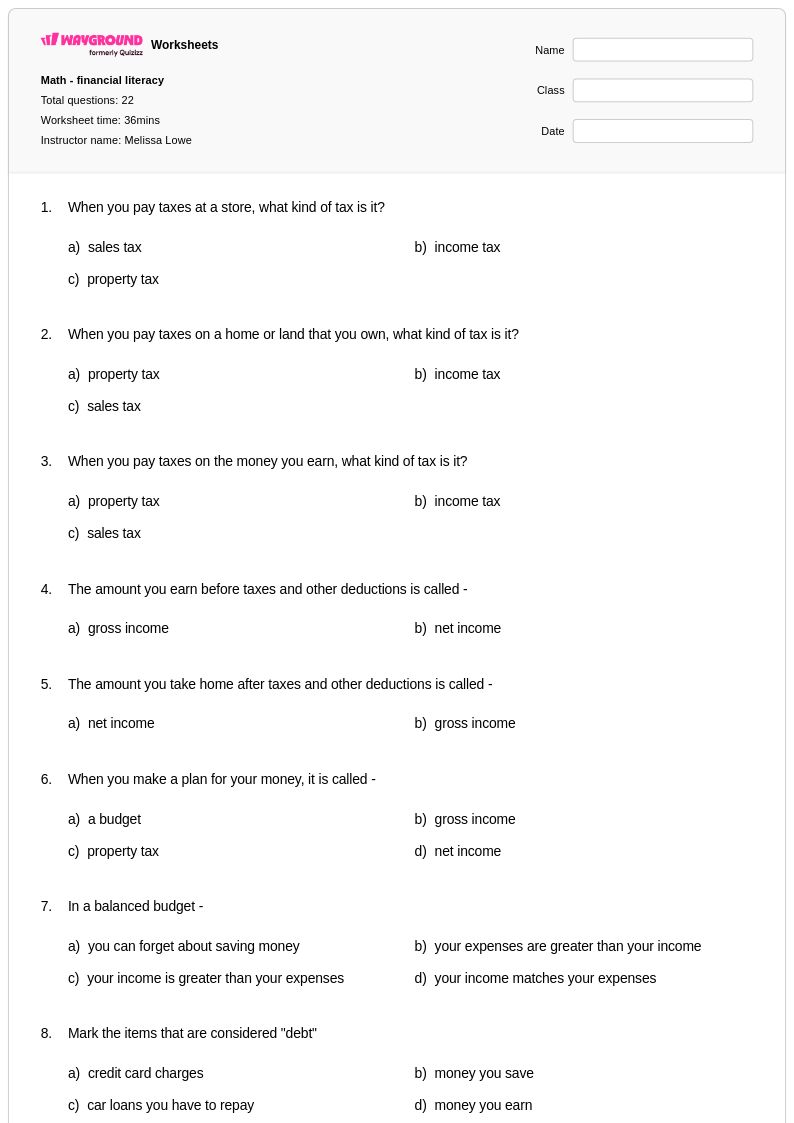
22 Q
5th
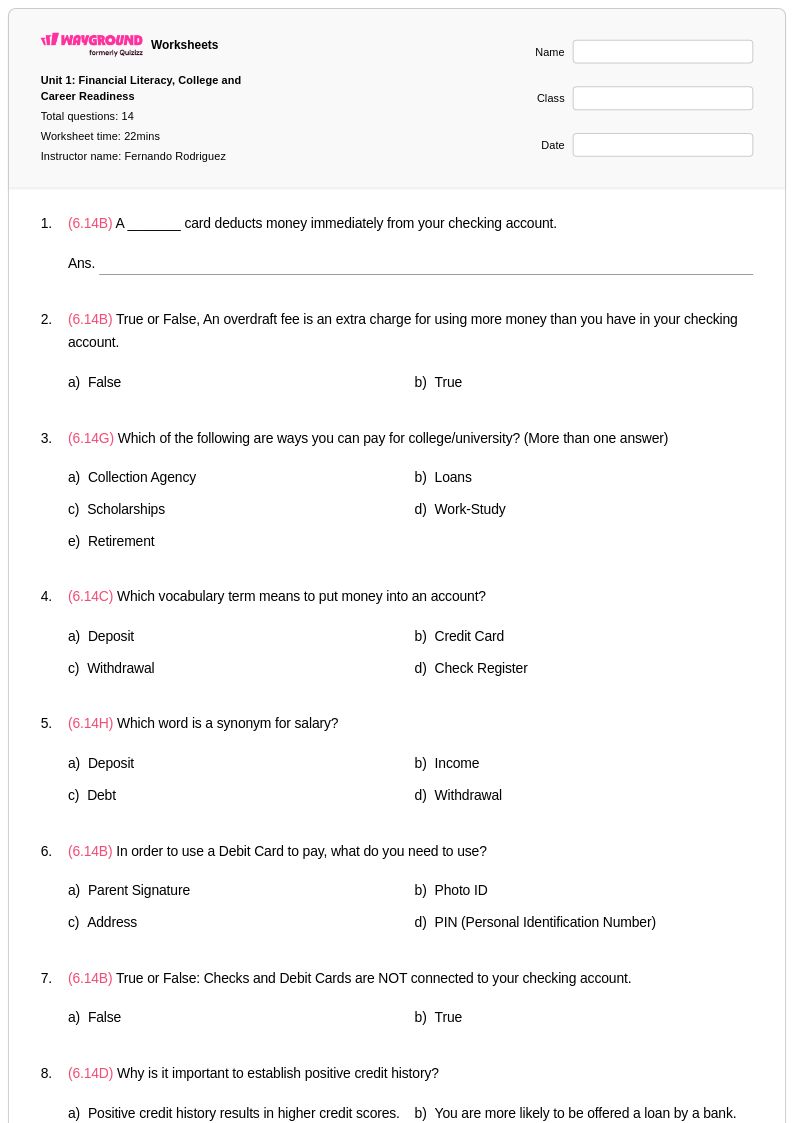
14 Q
6th
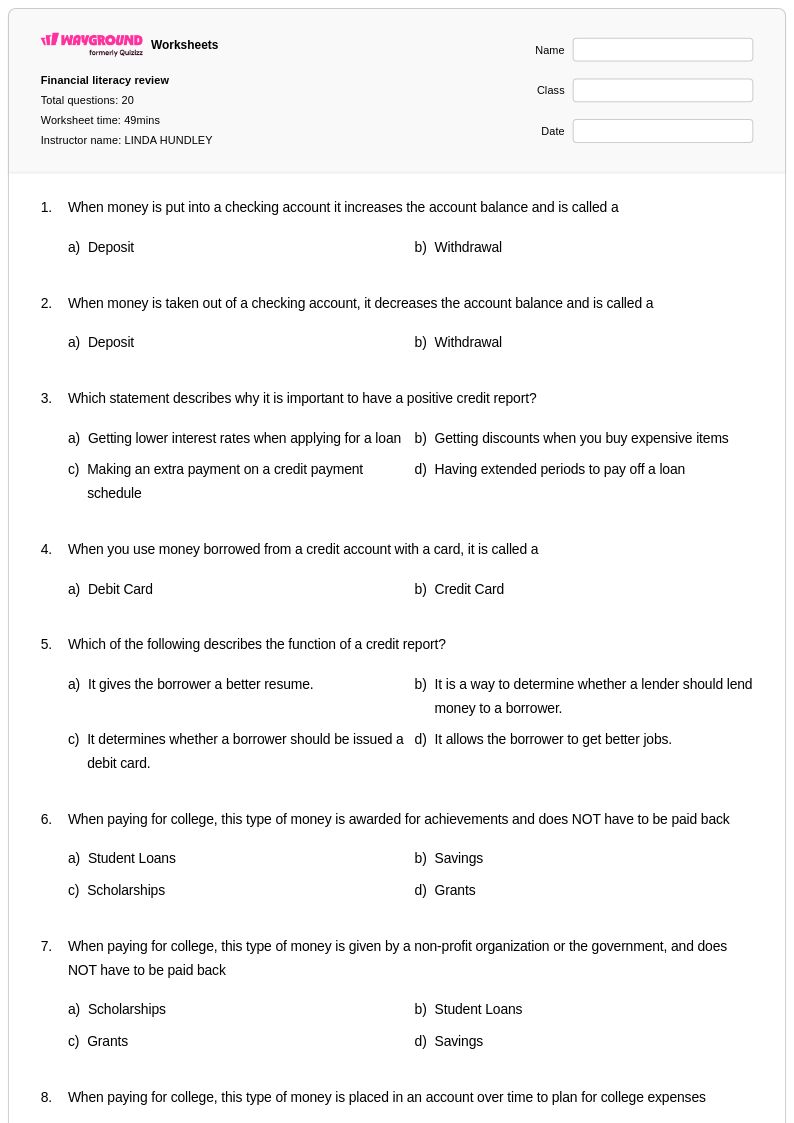
20 Q
6th
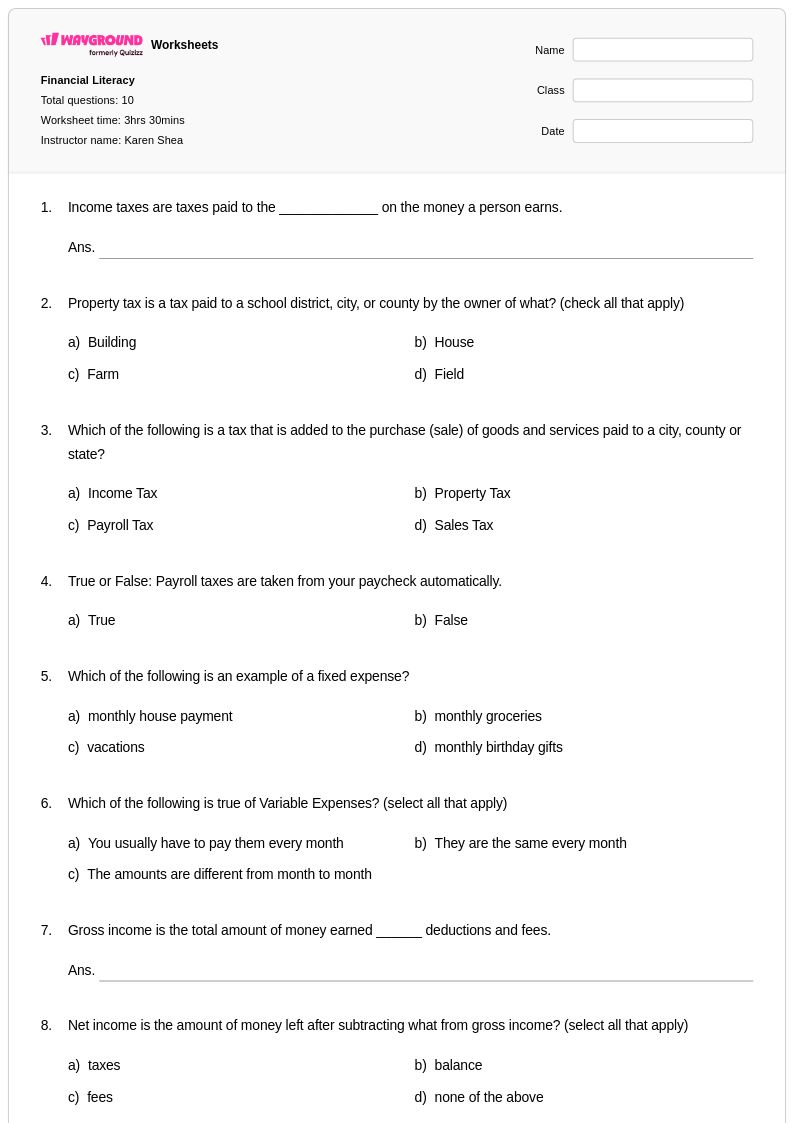
10 Q
5th
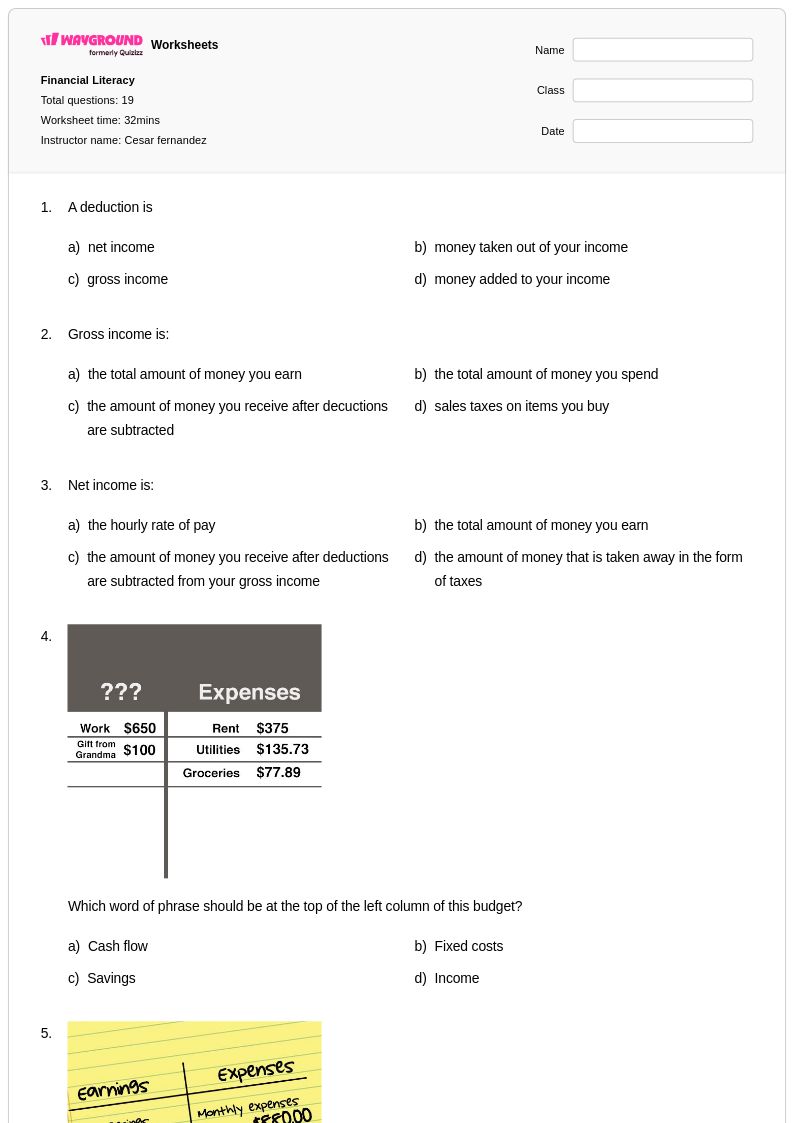
19 Q
5th
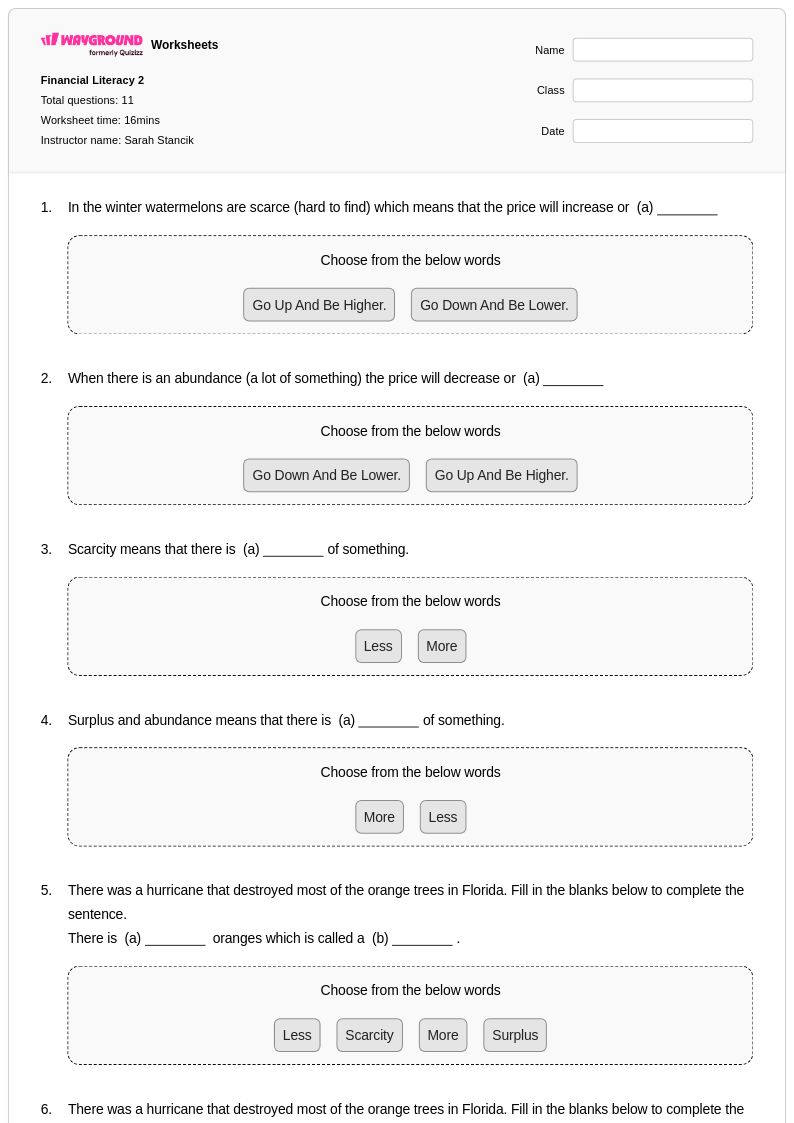
11 Q
3rd
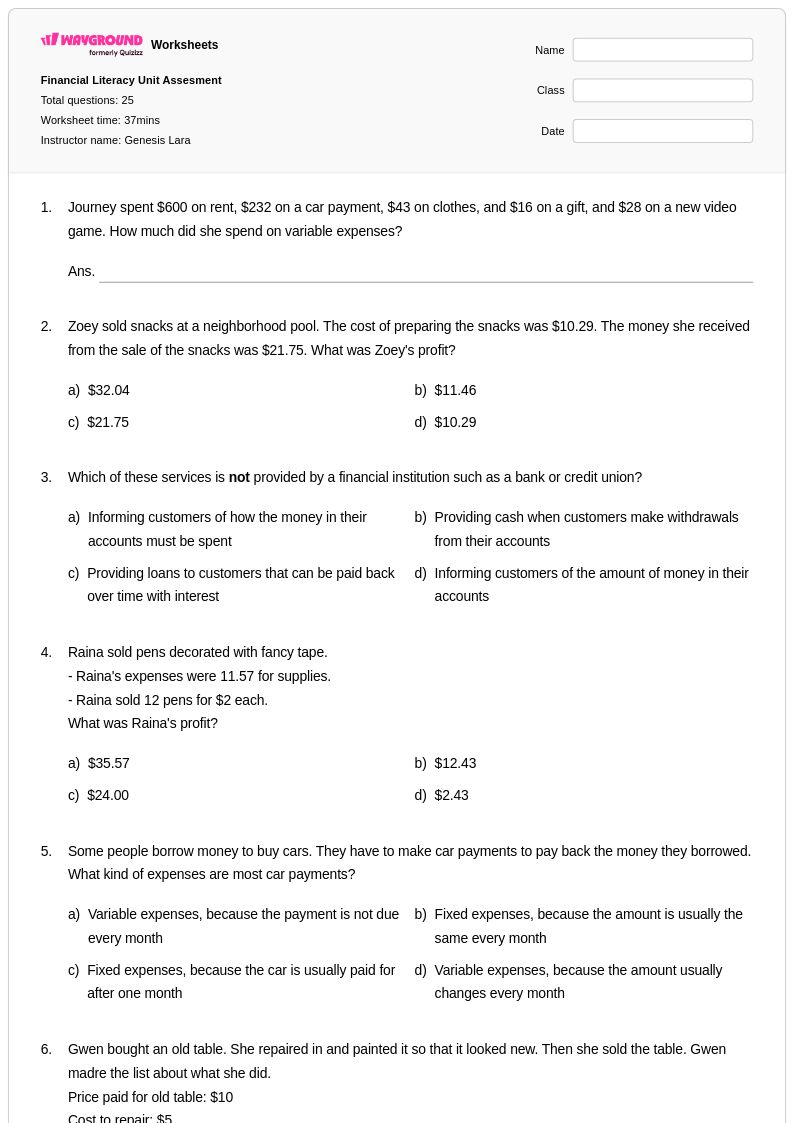
25 Q
4th
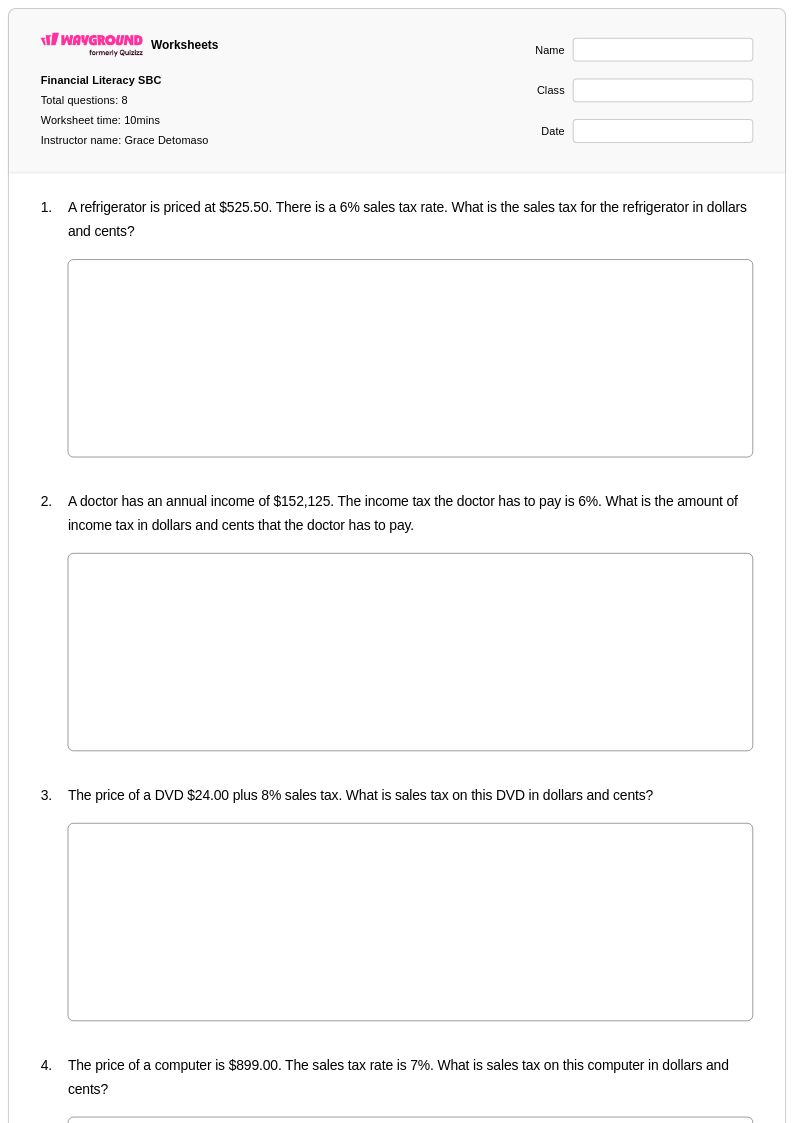
8 Q
7th
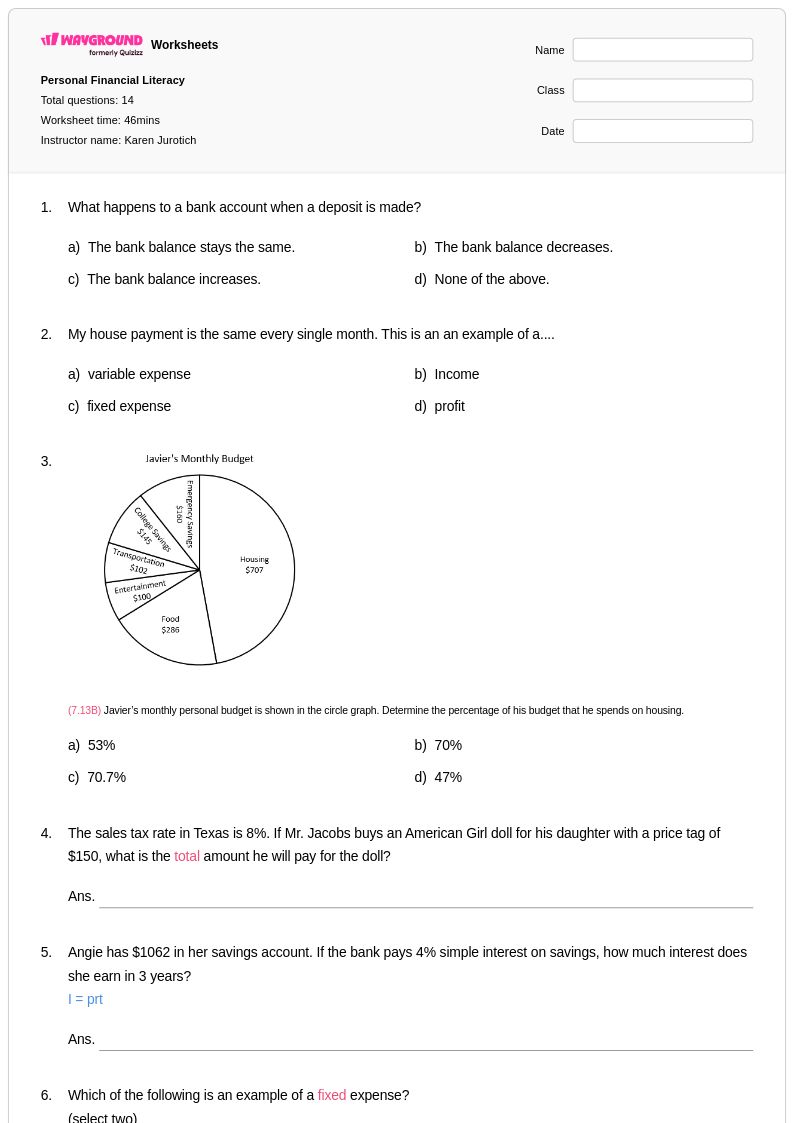
14 Q
7th
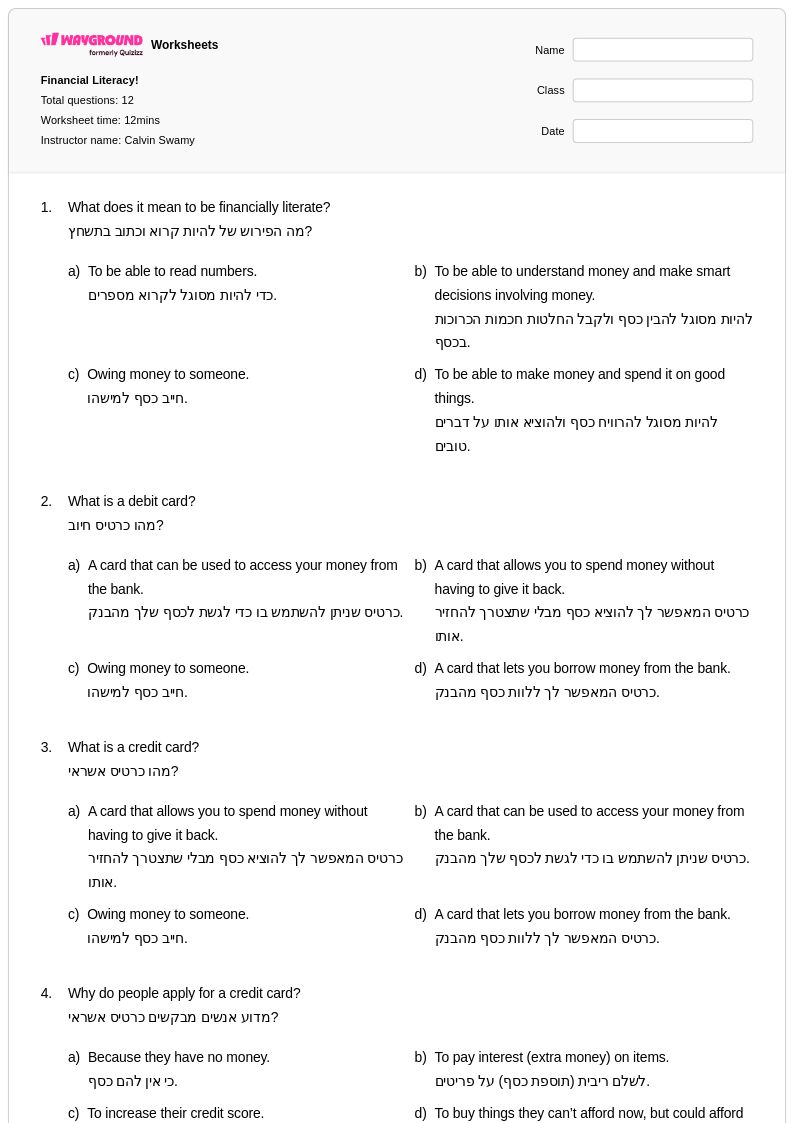
12 Q
4th - 6th
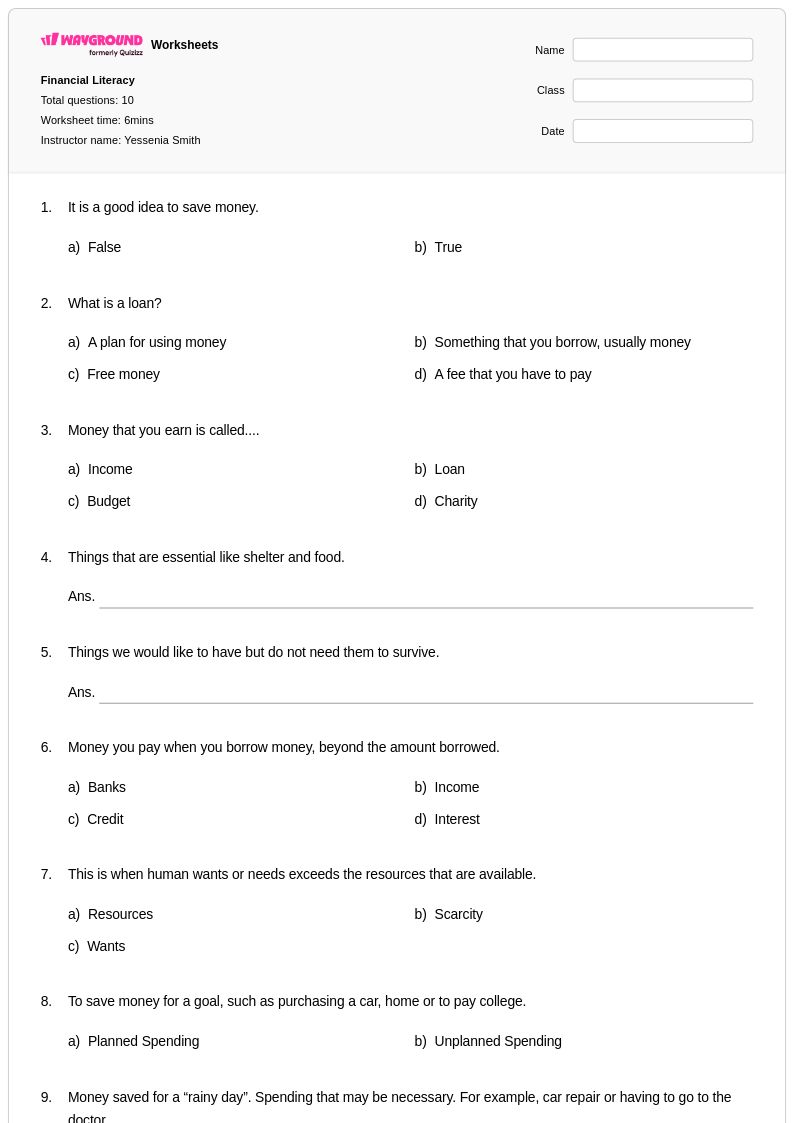
10 Q
3rd
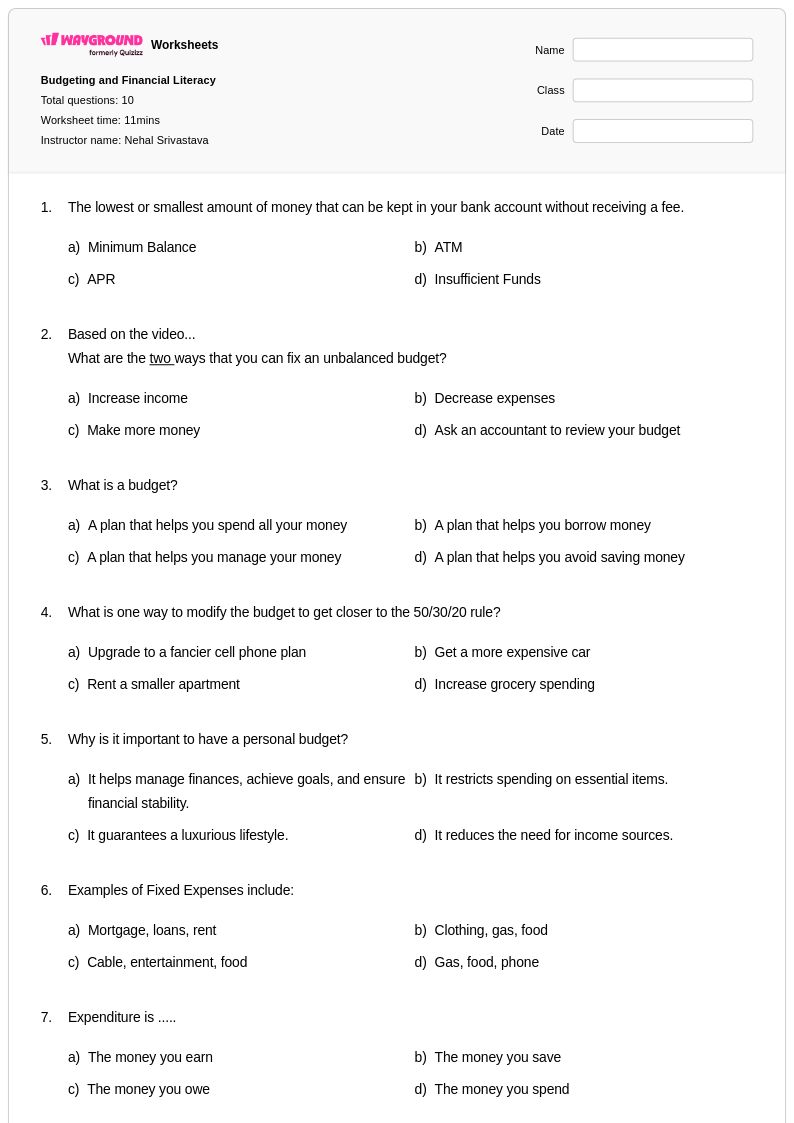
10 Q
11th
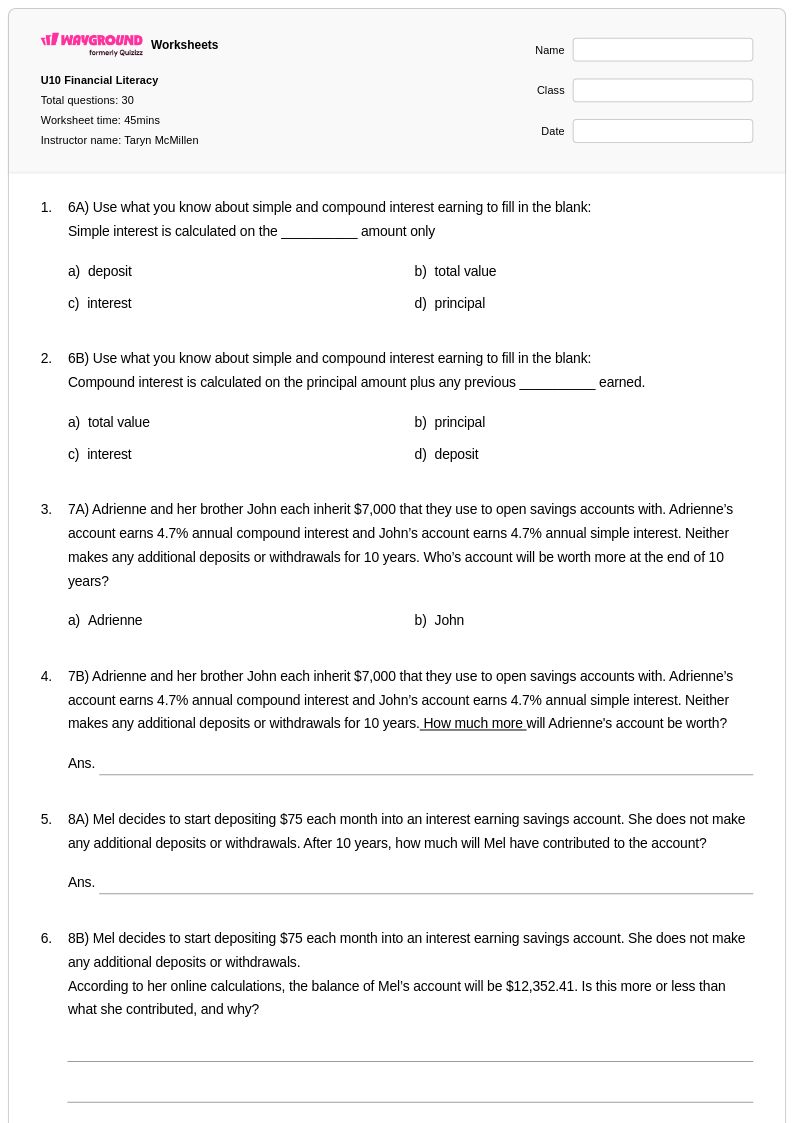
30 Q
8th
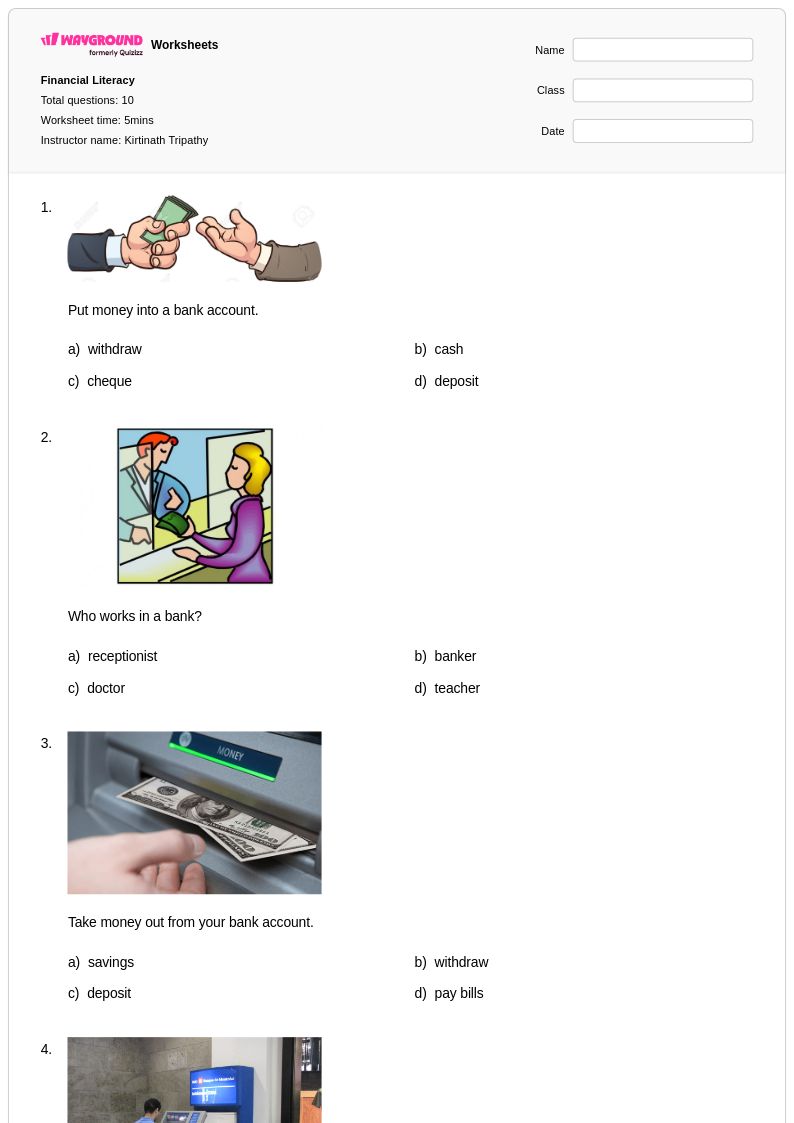
10 Q
6th
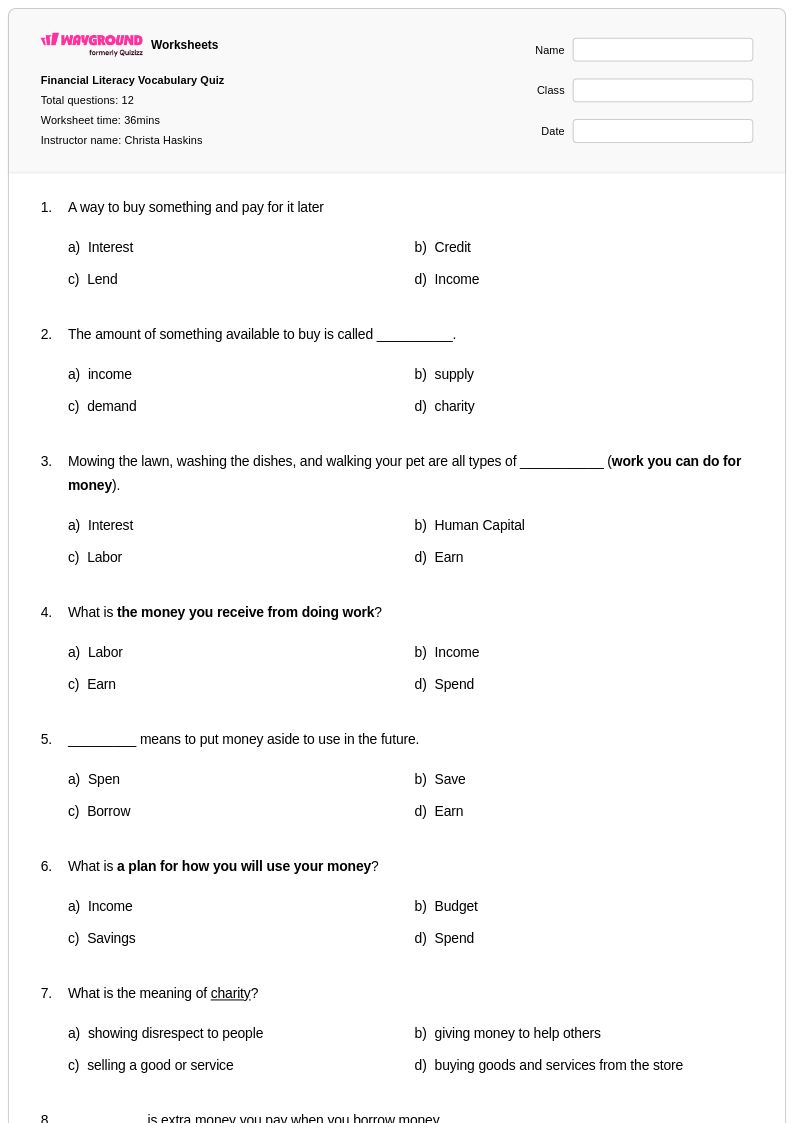
12 Q
3rd
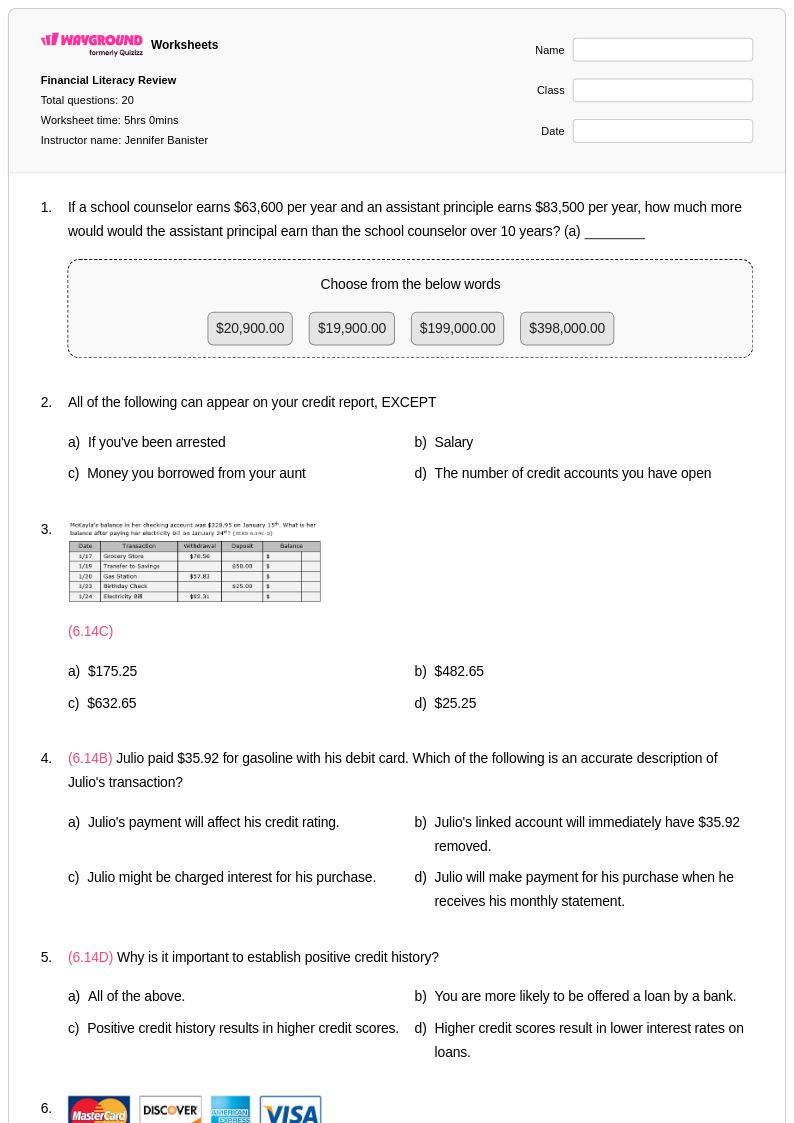
20 Q
6th - 8th
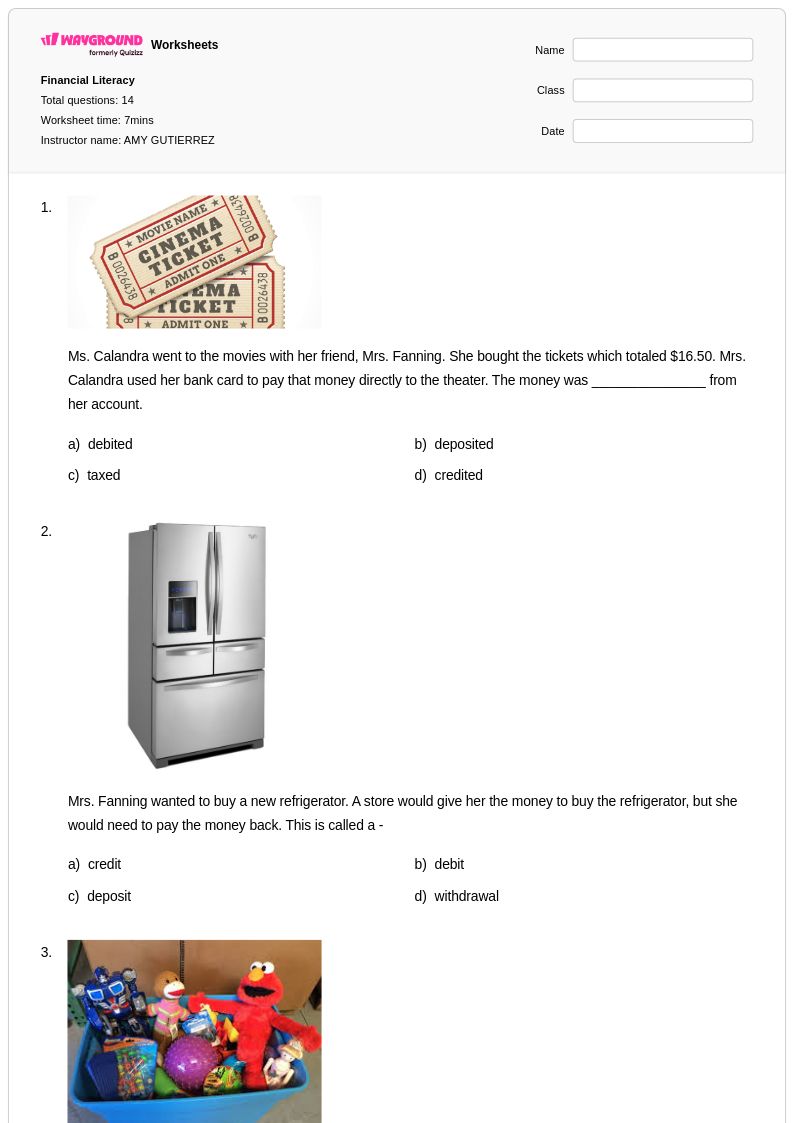
14 Q
4th
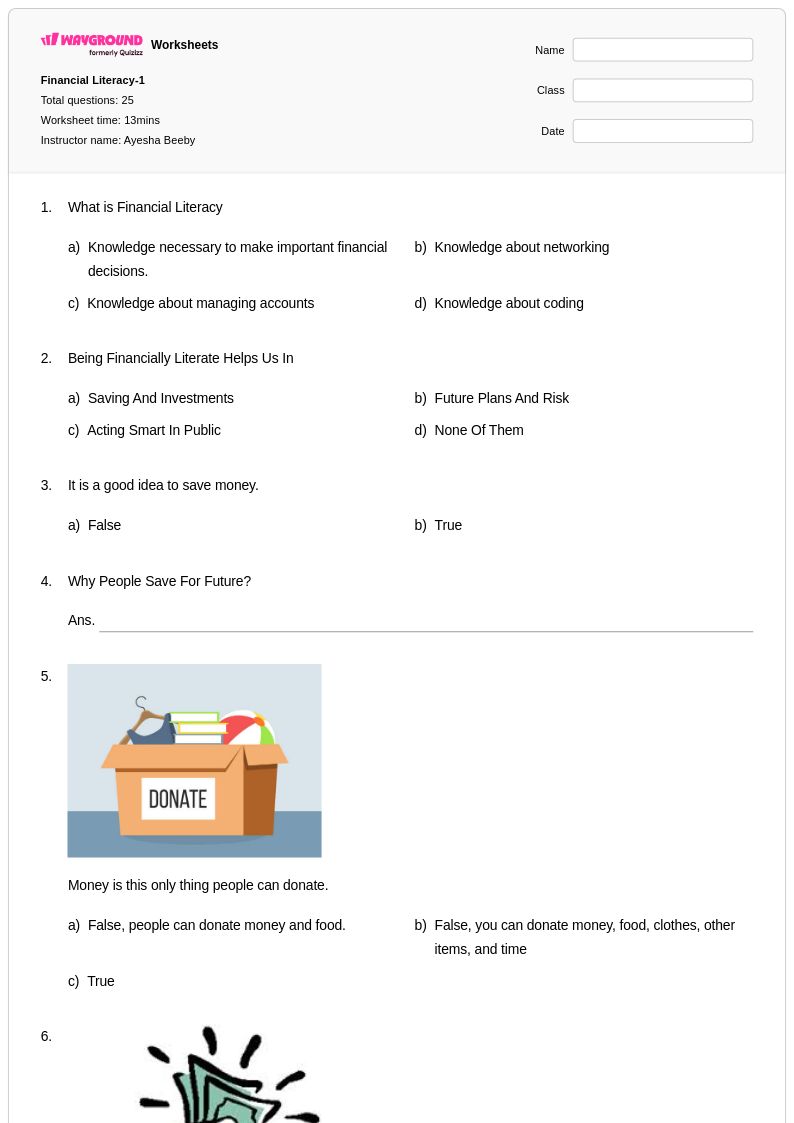
25 Q
6th
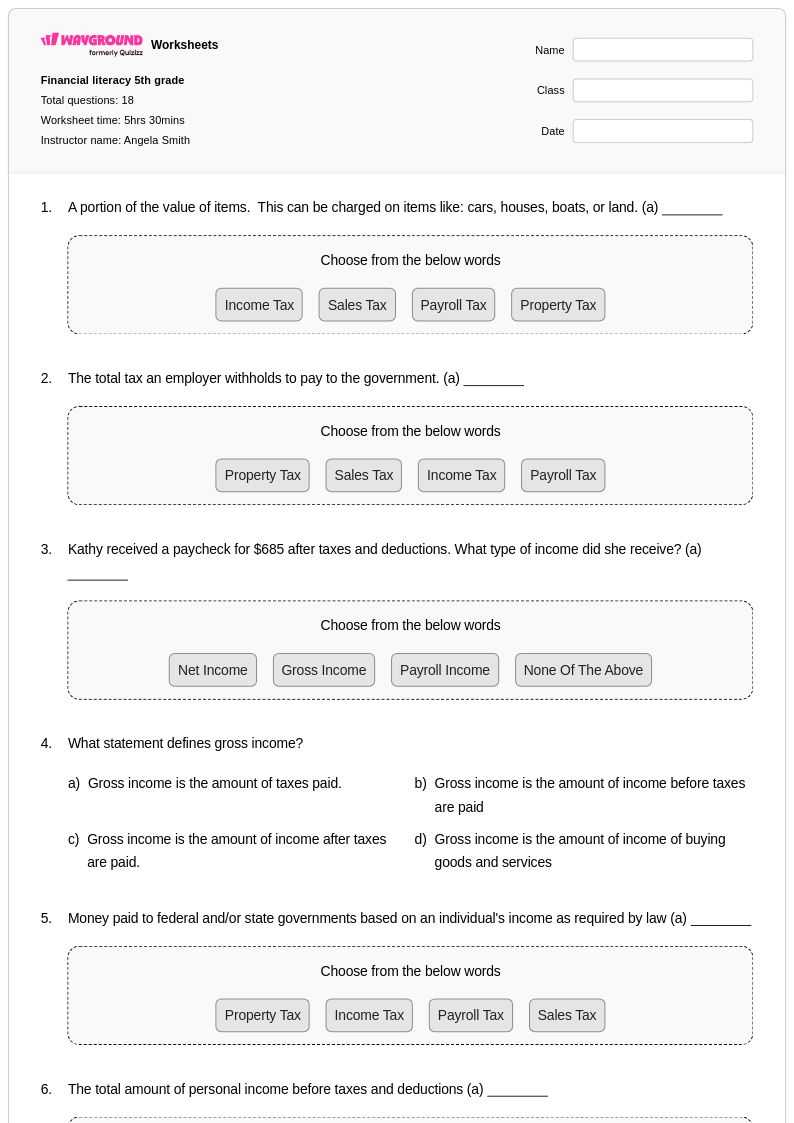
18 Q
5th
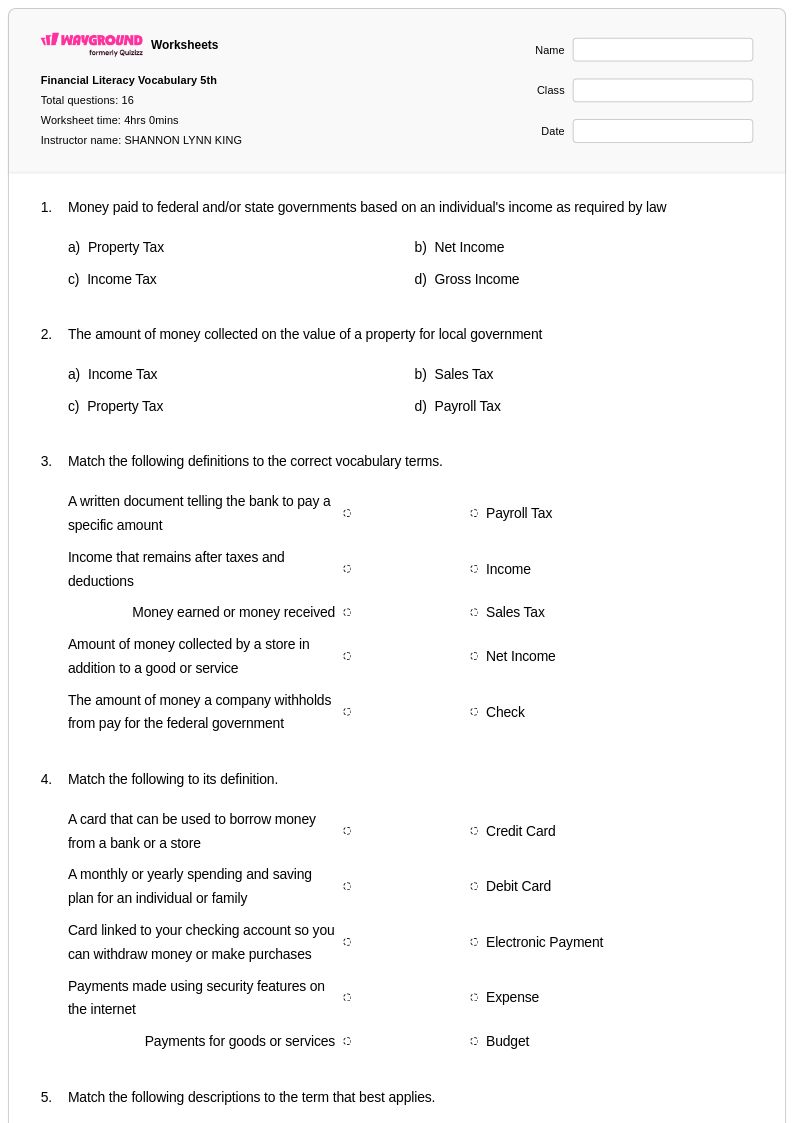
16 Q
5th
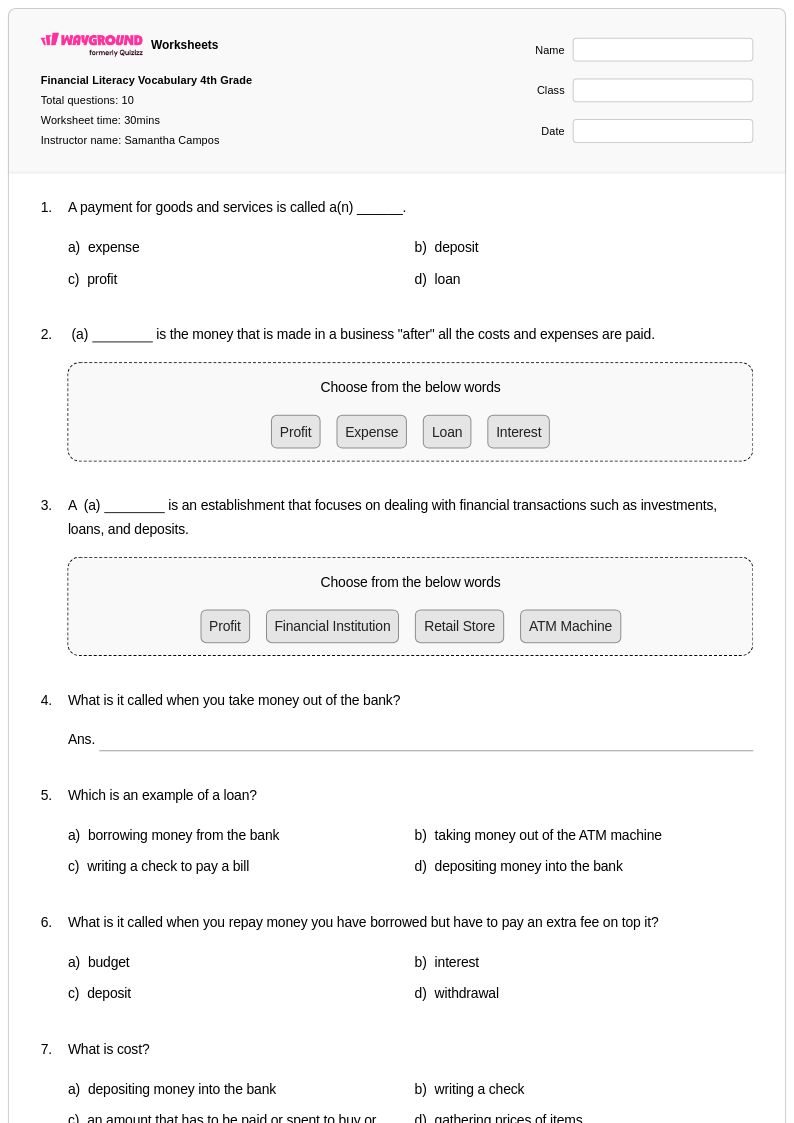
10 Q
4th
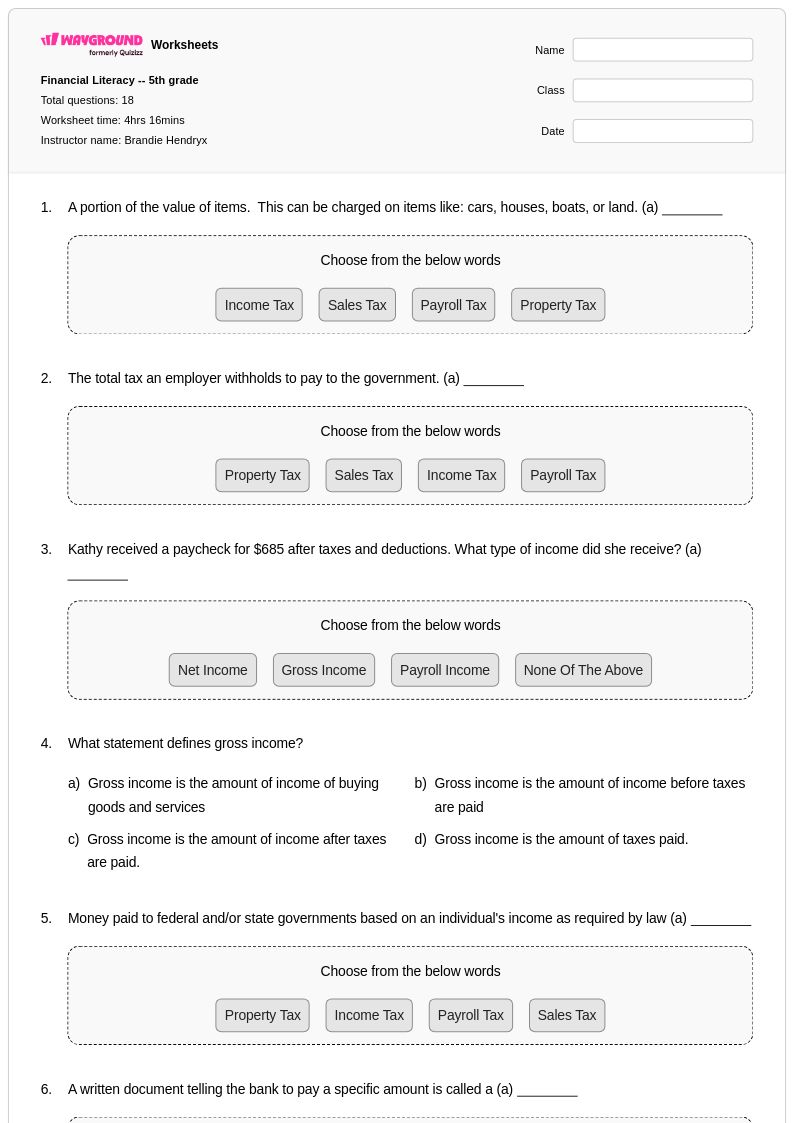
18 Q
5th
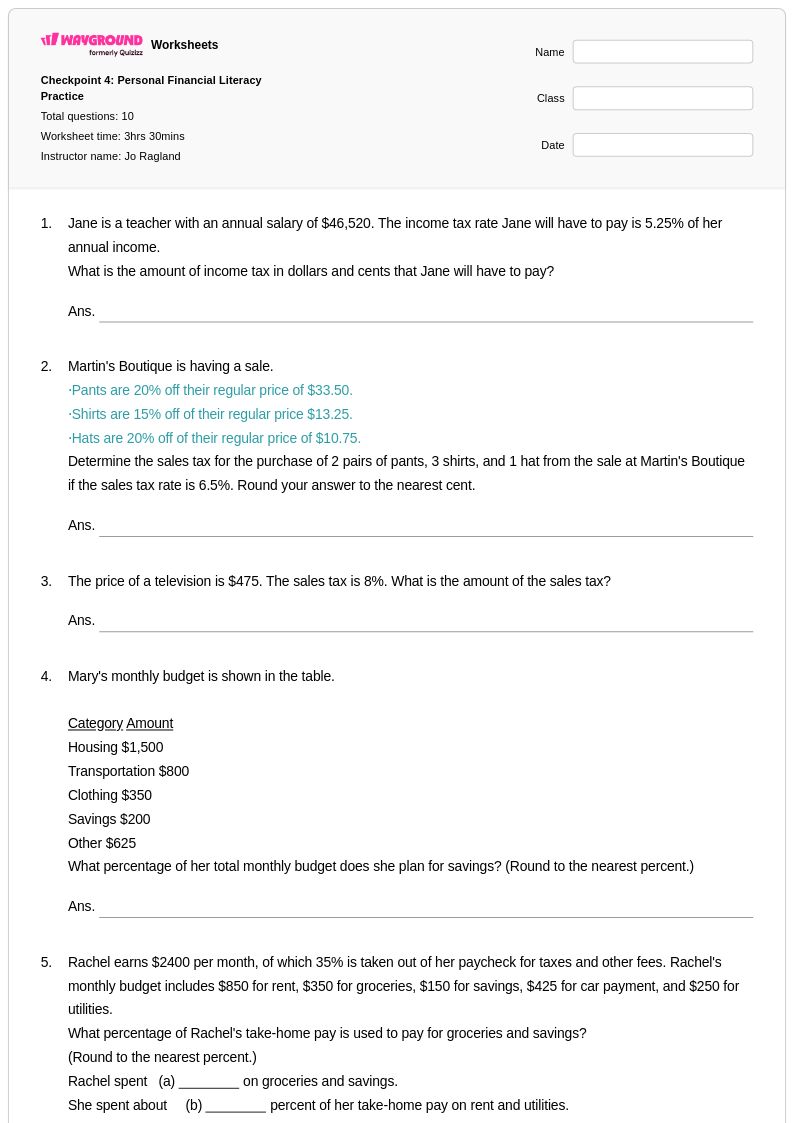
10 Q
7th
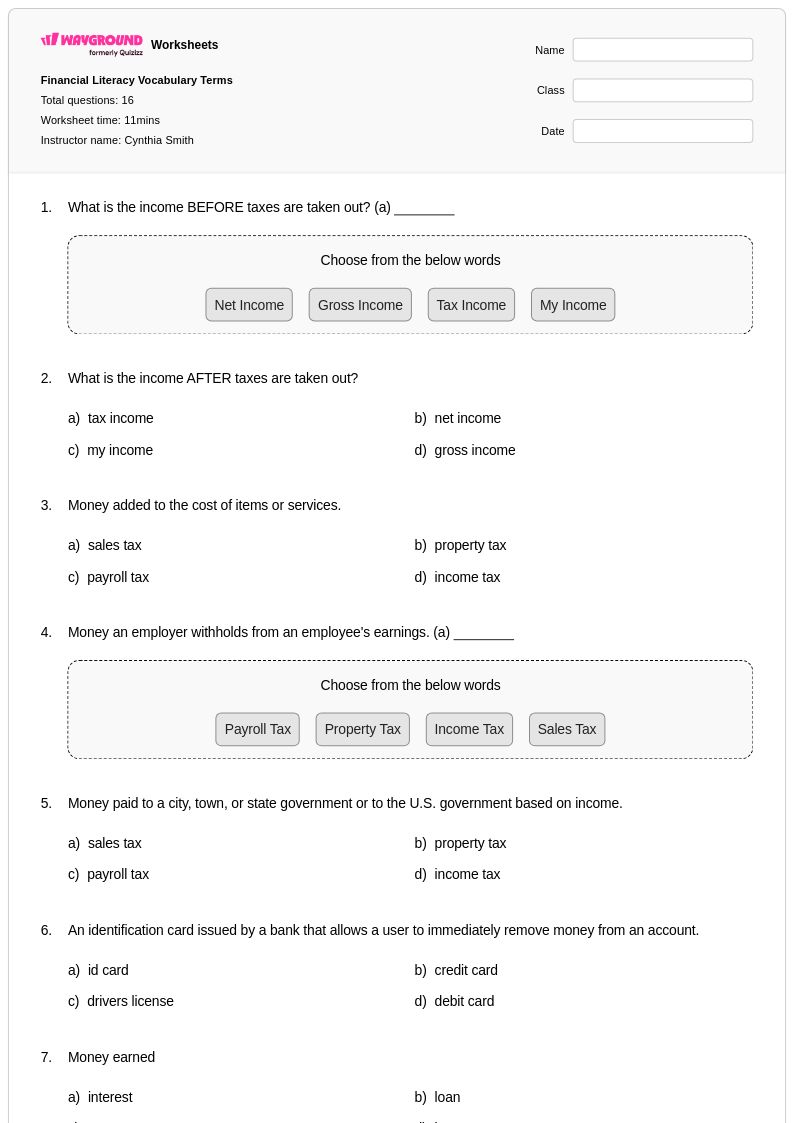
16 Q
5th
Explore Financial Literacy Worksheets by Grades
Explore Financial Literacy Worksheets for kindergarten by Topic
Explore Other Subject Worksheets for kindergarten
Explore printable Financial Literacy worksheets for Kindergarten
Financial literacy worksheets for kindergarten students available through Wayground (formerly Quizizz) introduce young learners to foundational money concepts through age-appropriate activities and visual exercises. These carefully designed practice problems help kindergarteners develop essential skills such as identifying coins and bills, understanding basic counting with money, recognizing the difference between needs and wants, and exploring simple spending decisions. Each worksheet incorporates hands-on learning opportunities that make abstract financial concepts concrete for developing minds, with accompanying answer keys that support both independent practice and guided instruction. The free printable resources utilize colorful illustrations and engaging scenarios that connect mathematical thinking to real-world money situations, building the groundwork for more advanced financial literacy skills in later grades.
Wayground (formerly Quizizz) empowers educators with an extensive collection of millions of teacher-created financial literacy resources specifically tailored for kindergarten mathematics instruction. The platform's robust search and filtering capabilities enable teachers to quickly locate worksheets that align with specific learning standards and match their students' developmental needs. These comprehensive differentiation tools allow educators to customize content for diverse learning styles and ability levels, while the flexible format options provide both printable PDF versions for traditional classroom use and digital alternatives for technology-integrated learning environments. Teachers can seamlessly incorporate these resources into lesson planning, use them for targeted skill remediation, provide enrichment opportunities for advanced learners, and create structured practice sessions that reinforce critical early financial literacy concepts throughout the academic year.
FAQs
How do I teach financial literacy to kindergarten students?
What financial literacy activities are appropriate for kindergarten?
What financial literacy mistakes do kindergarteners commonly make?
How can I use Wayground kindergarten financial literacy worksheets?
How does kindergarten financial literacy connect to Common Core math?
How can I differentiate kindergarten money activities?
What financial literacy skills should kindergarten students learn?