Free Printable Formula Writing Worksheets for Class 12
Master Class 12 chemistry formula writing with Wayground's comprehensive collection of free worksheets, printables, and practice problems that help students learn proper chemical notation, balancing equations, and molecular formulas with detailed answer keys.
Explore printable Formula Writing worksheets for Class 12
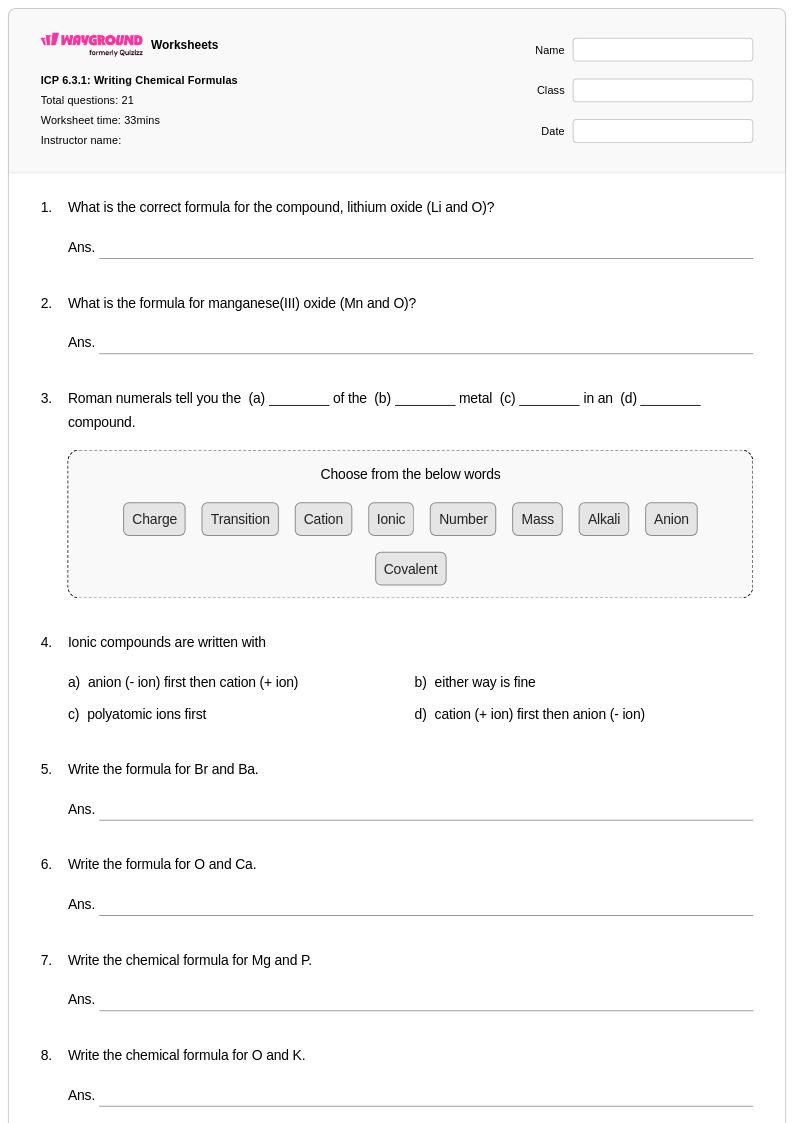
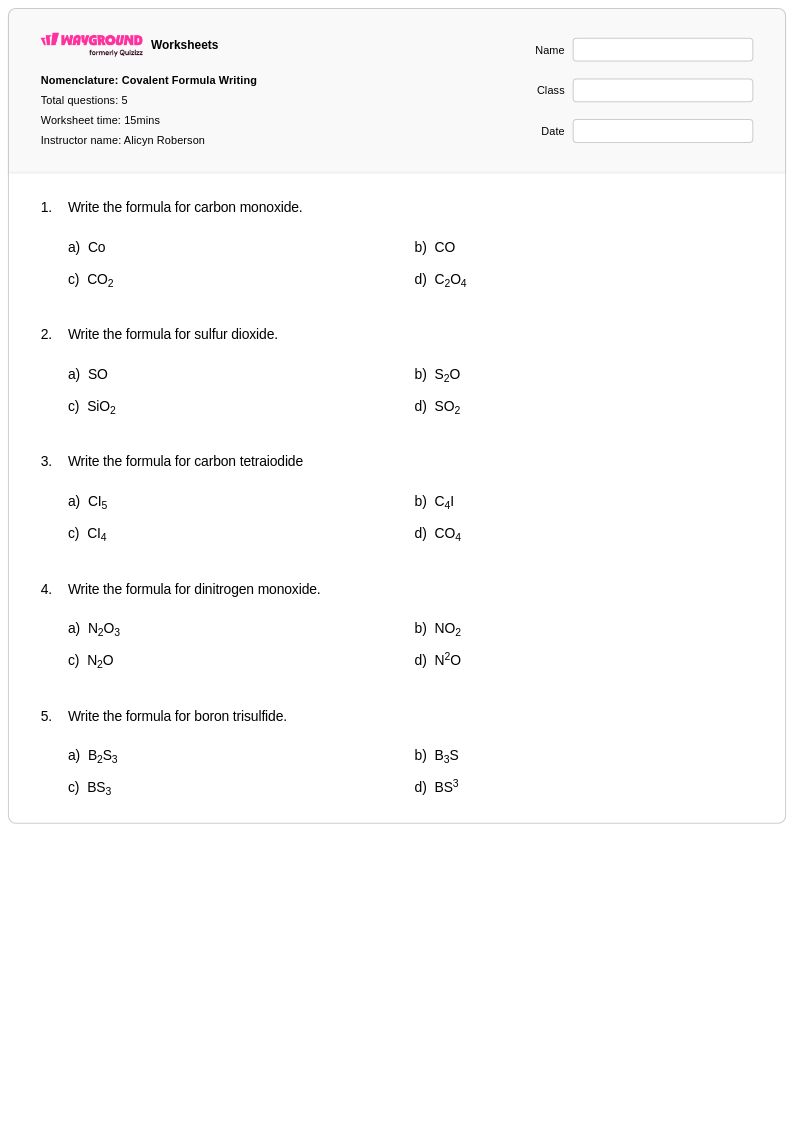
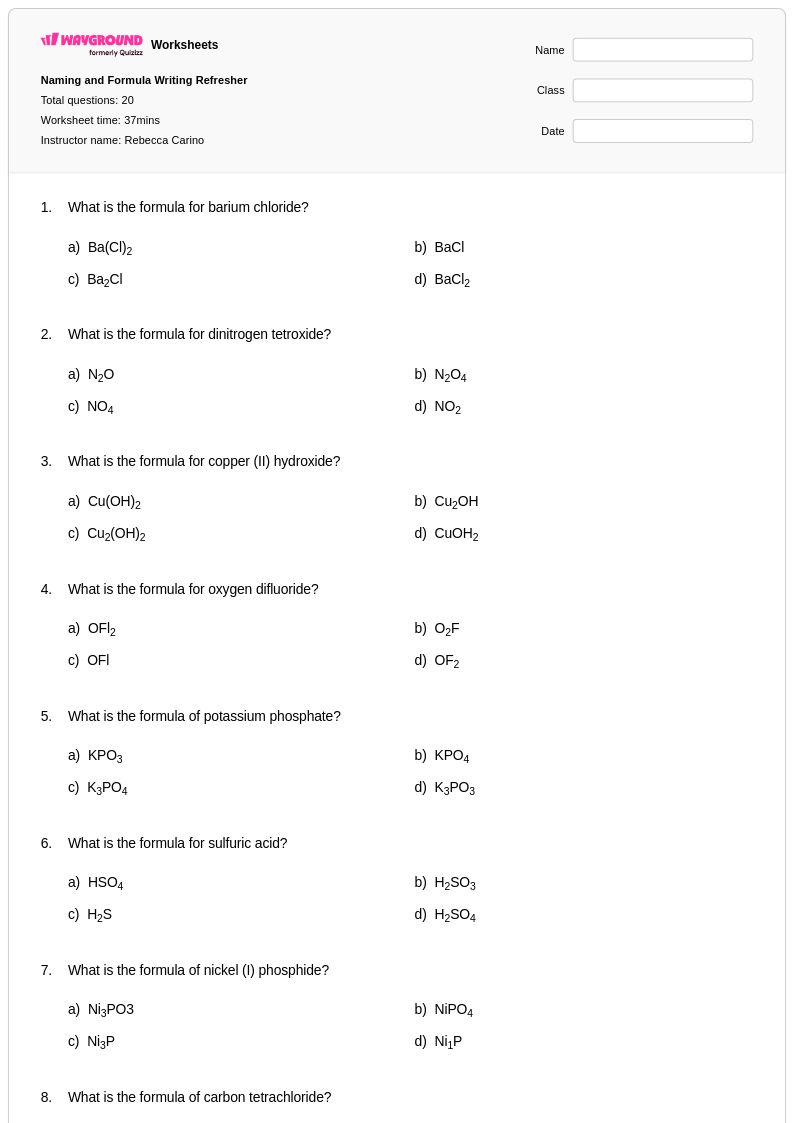
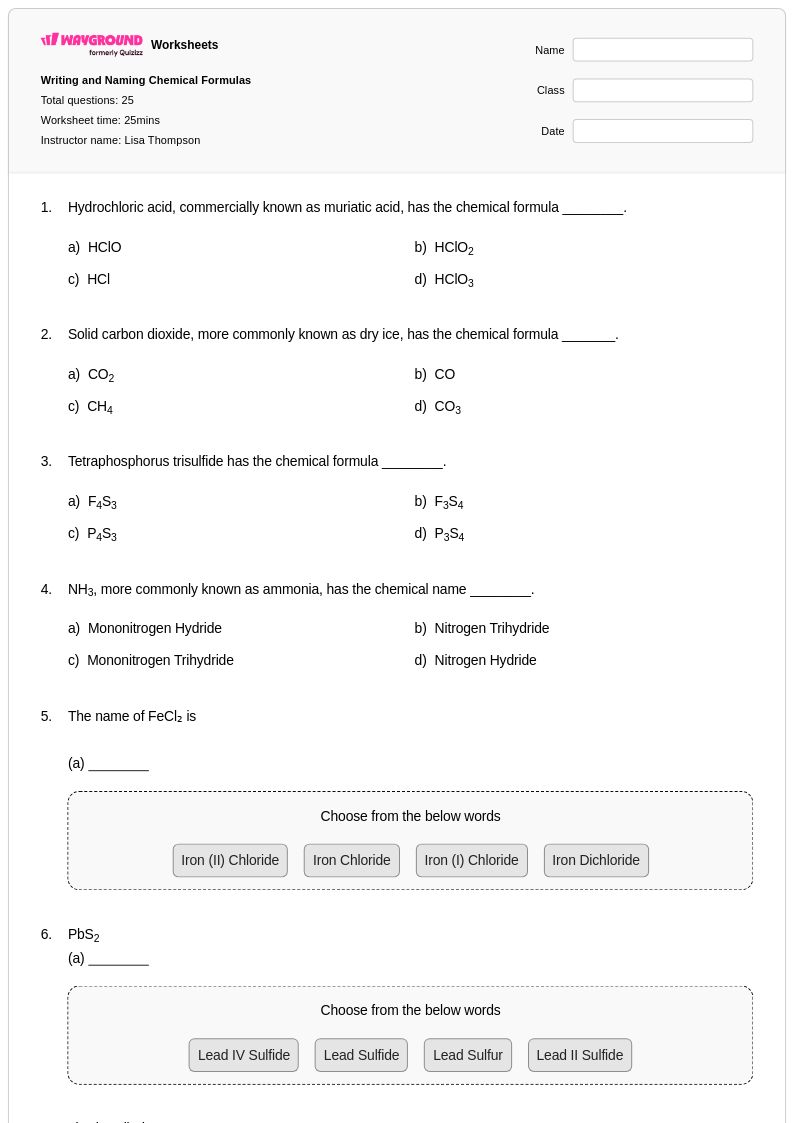
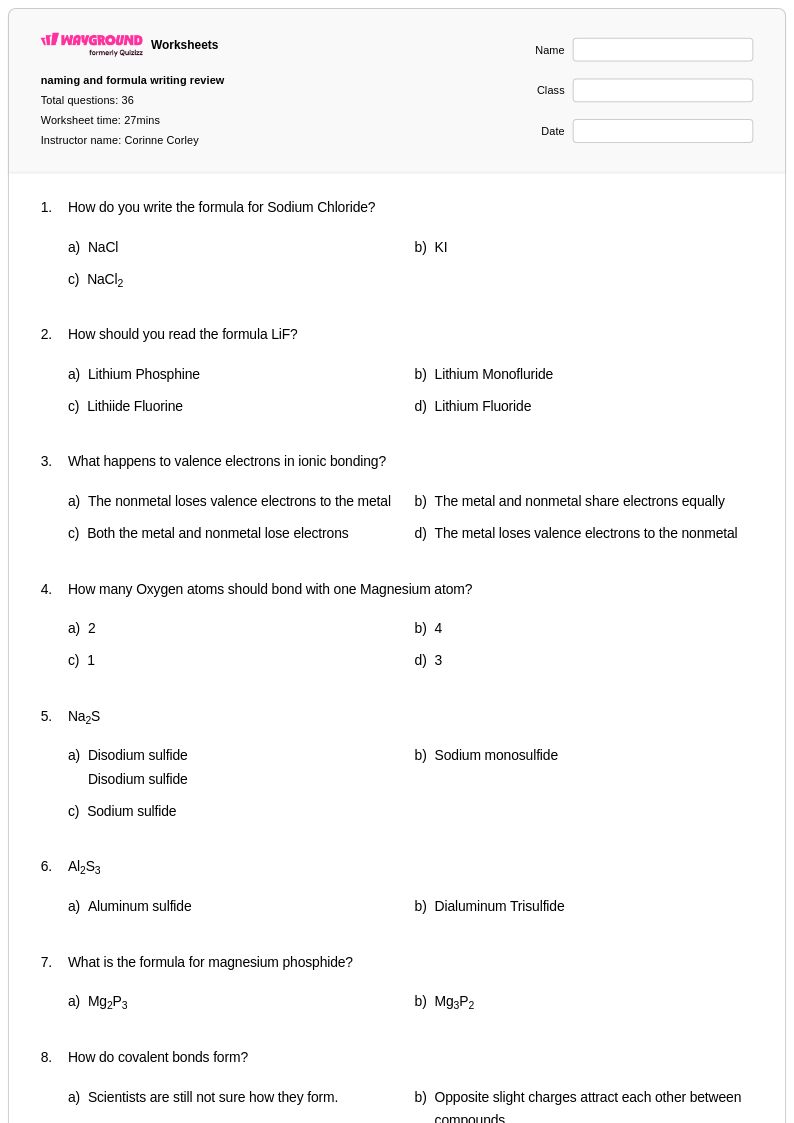
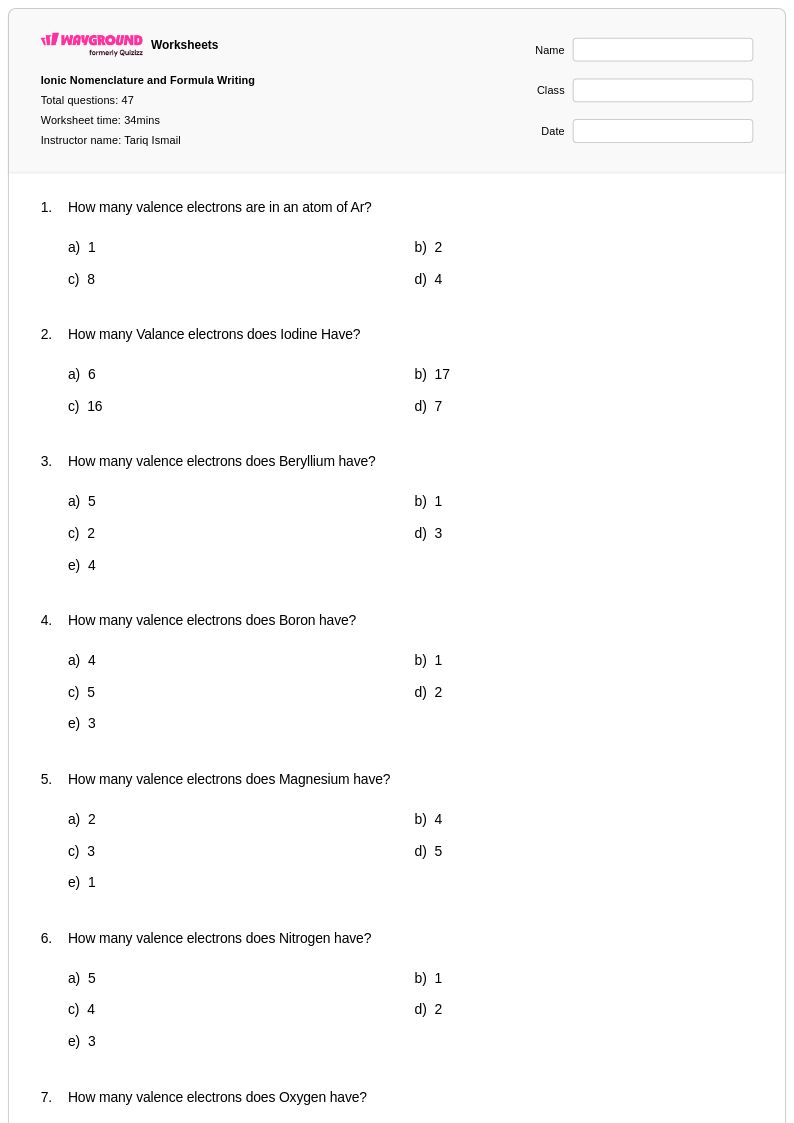
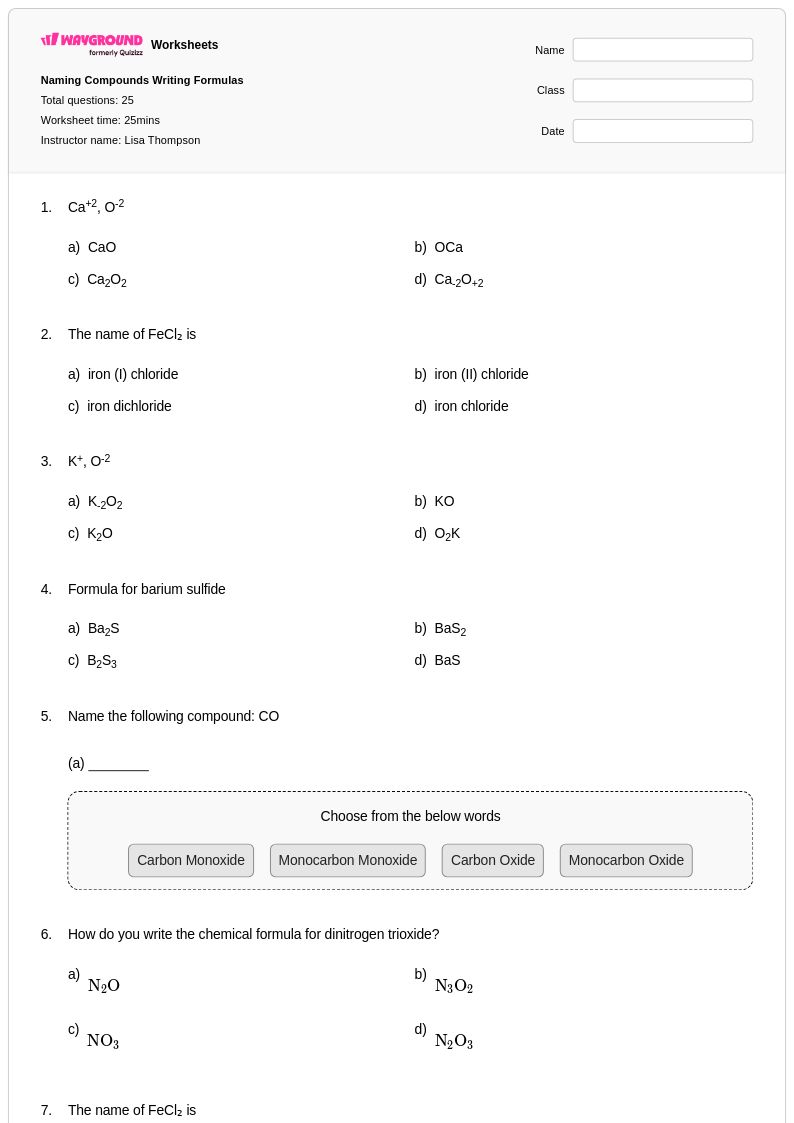
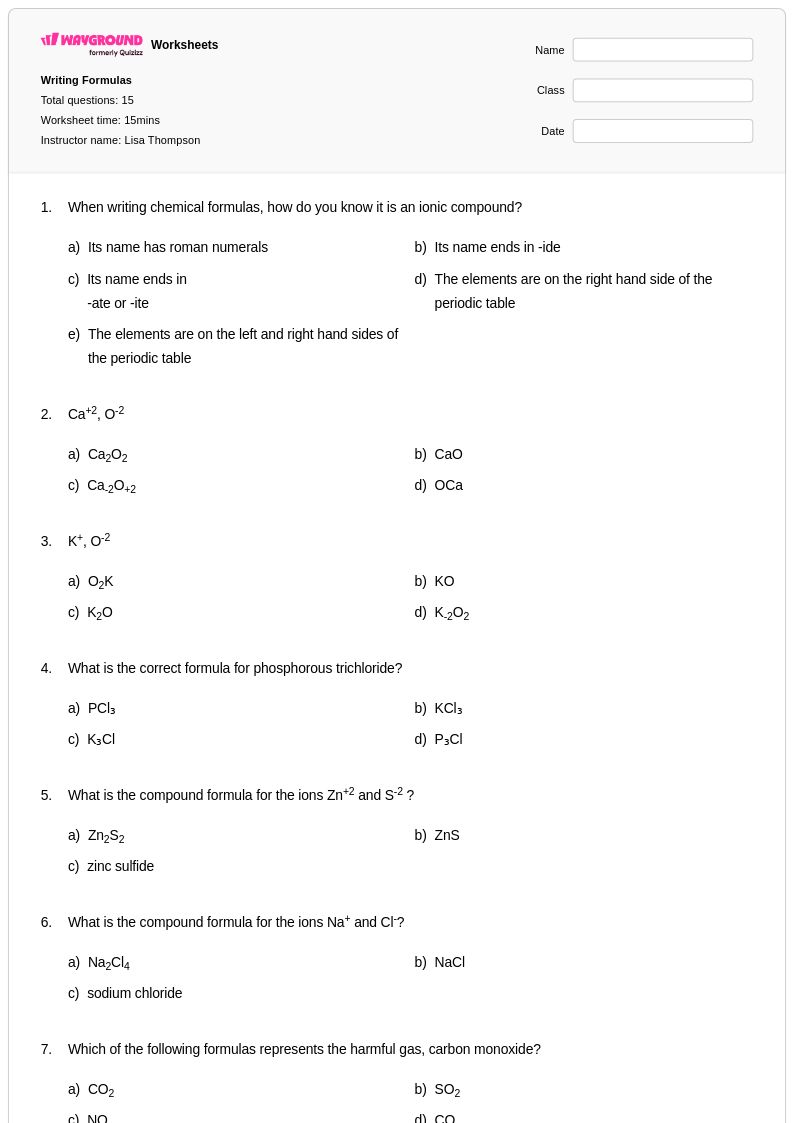
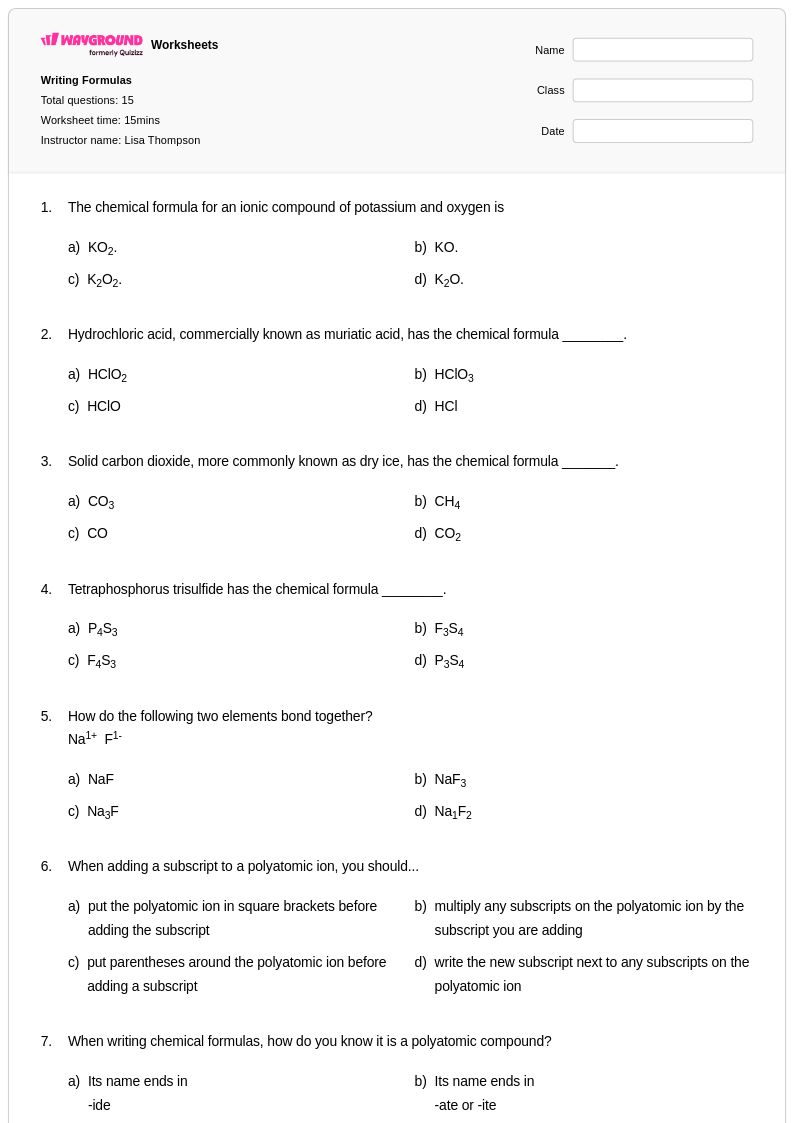
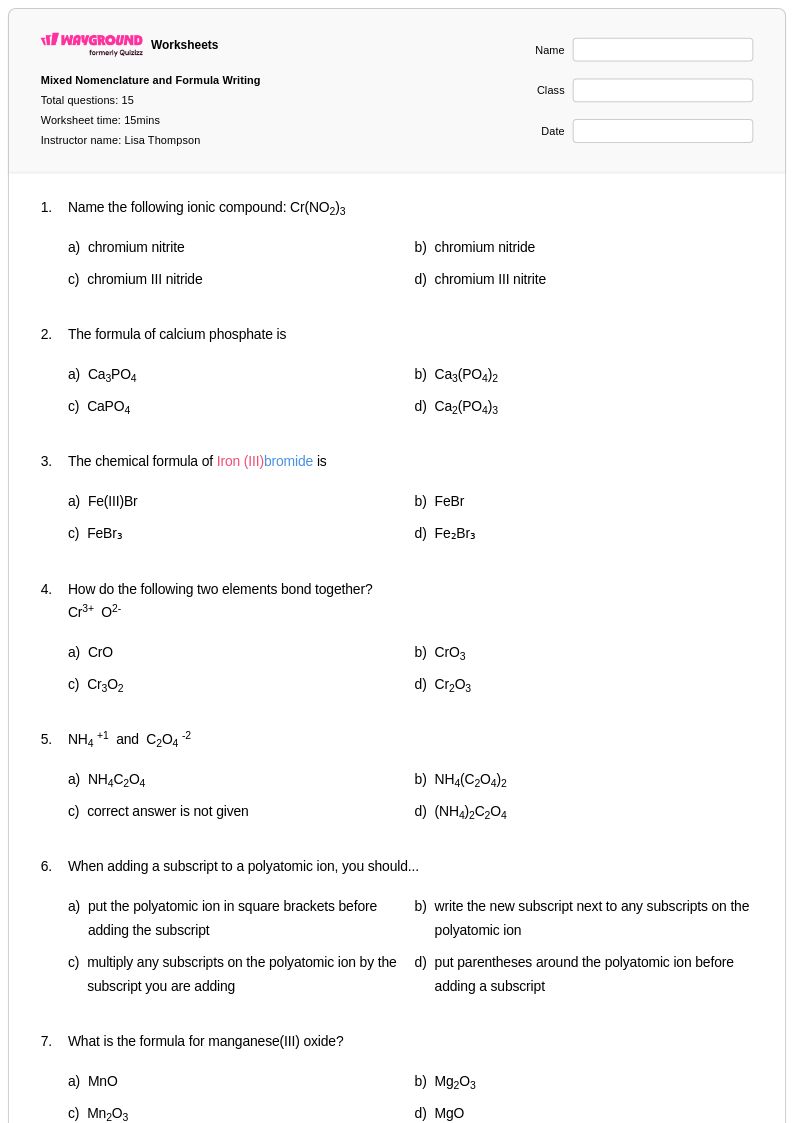
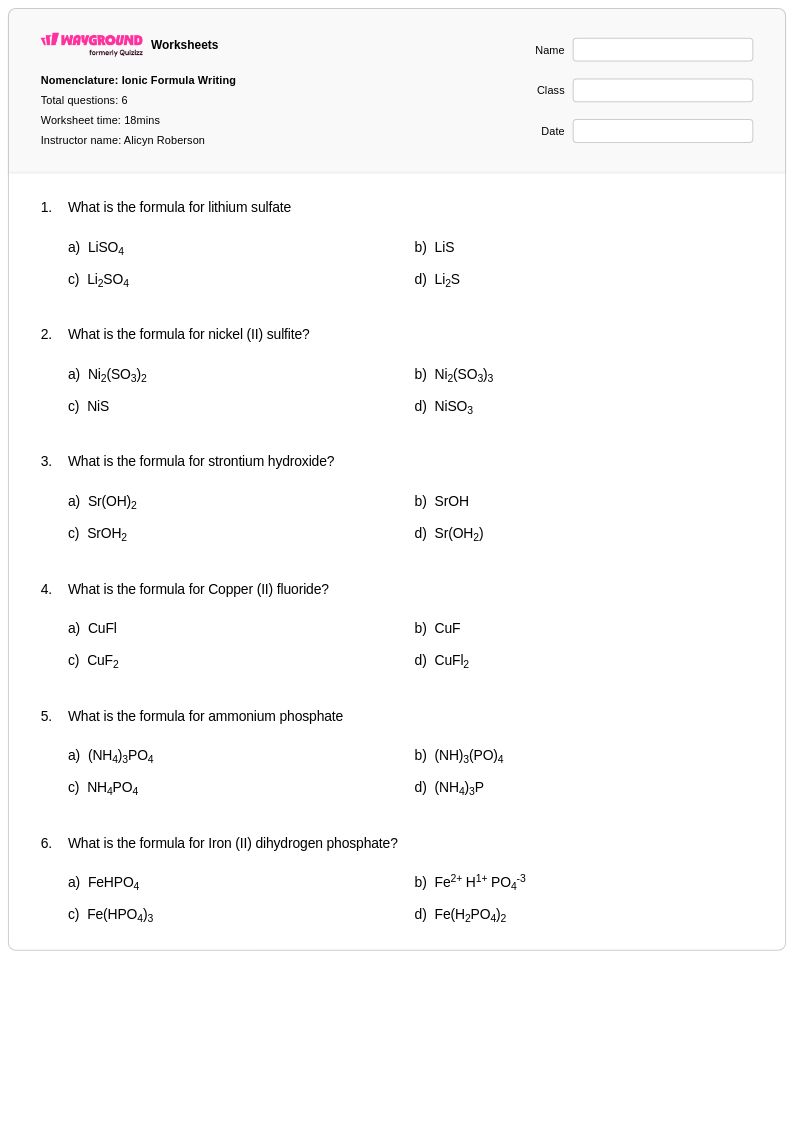
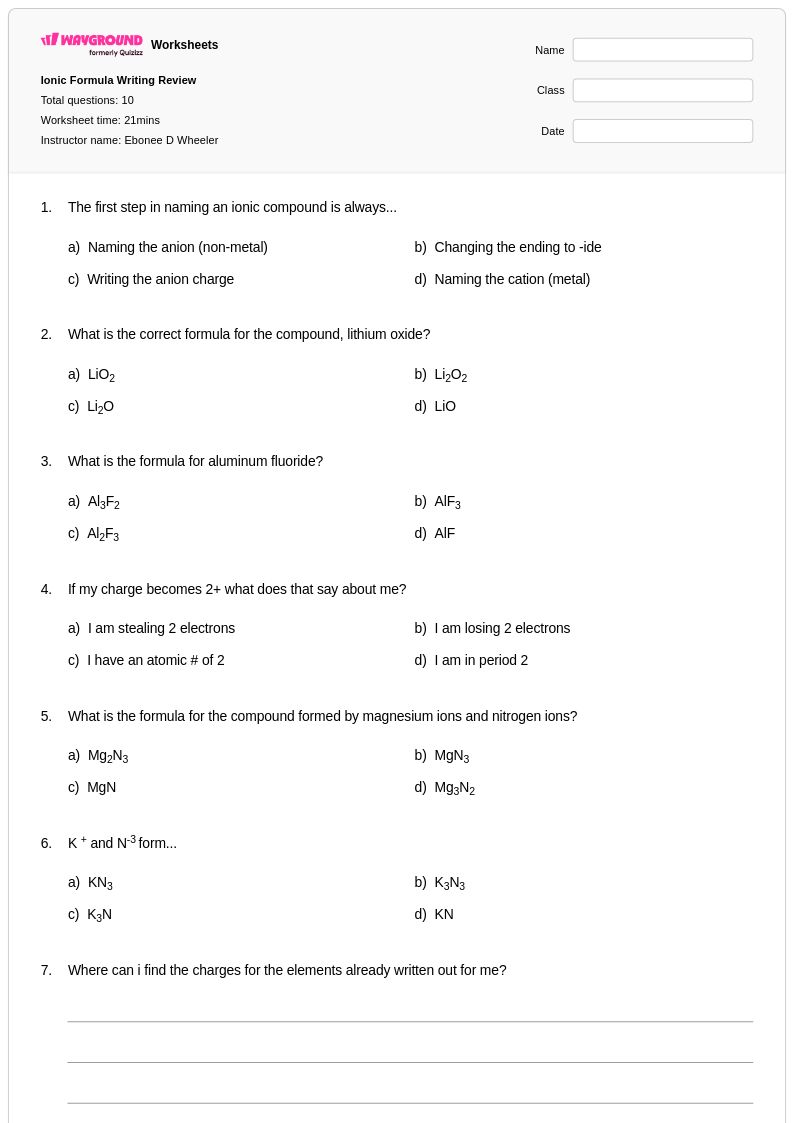
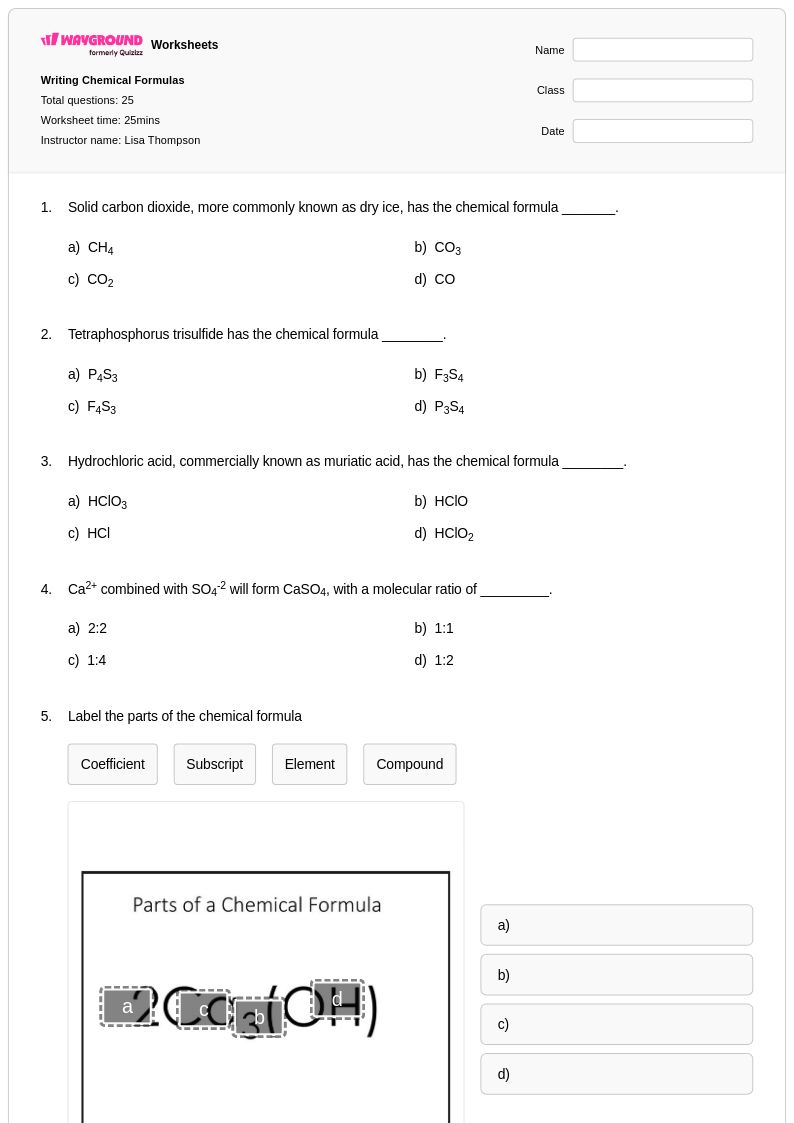
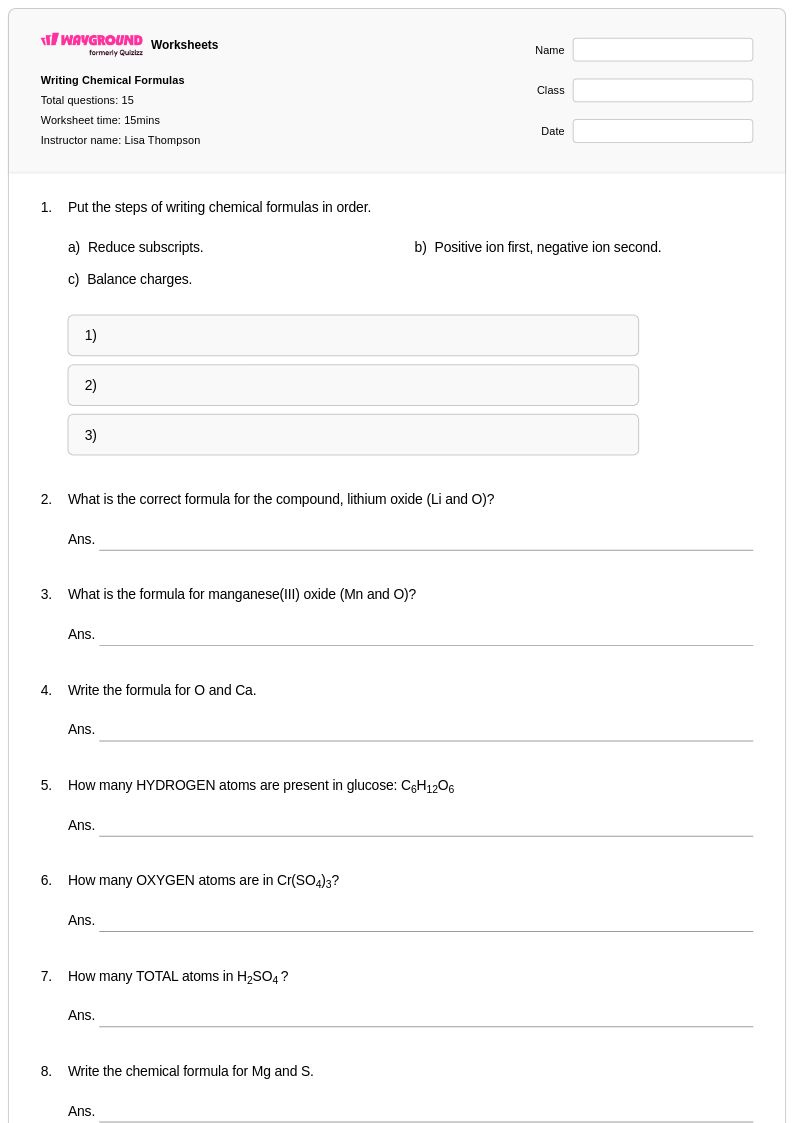
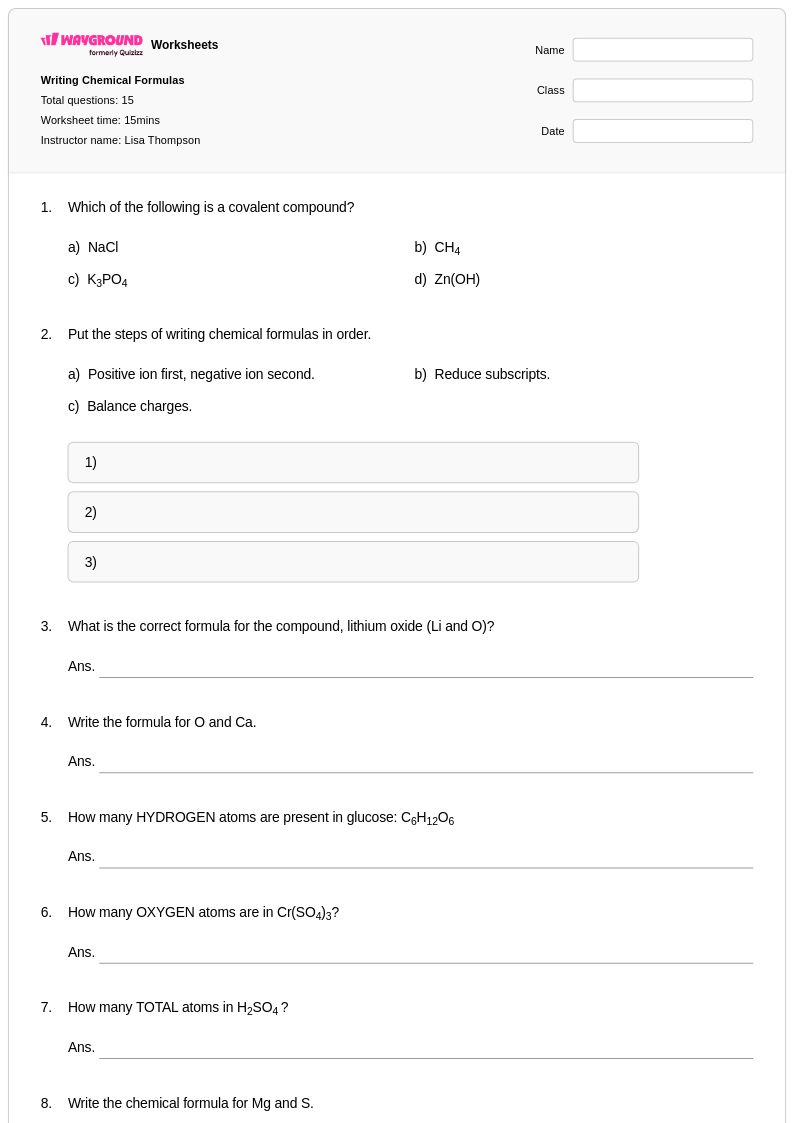
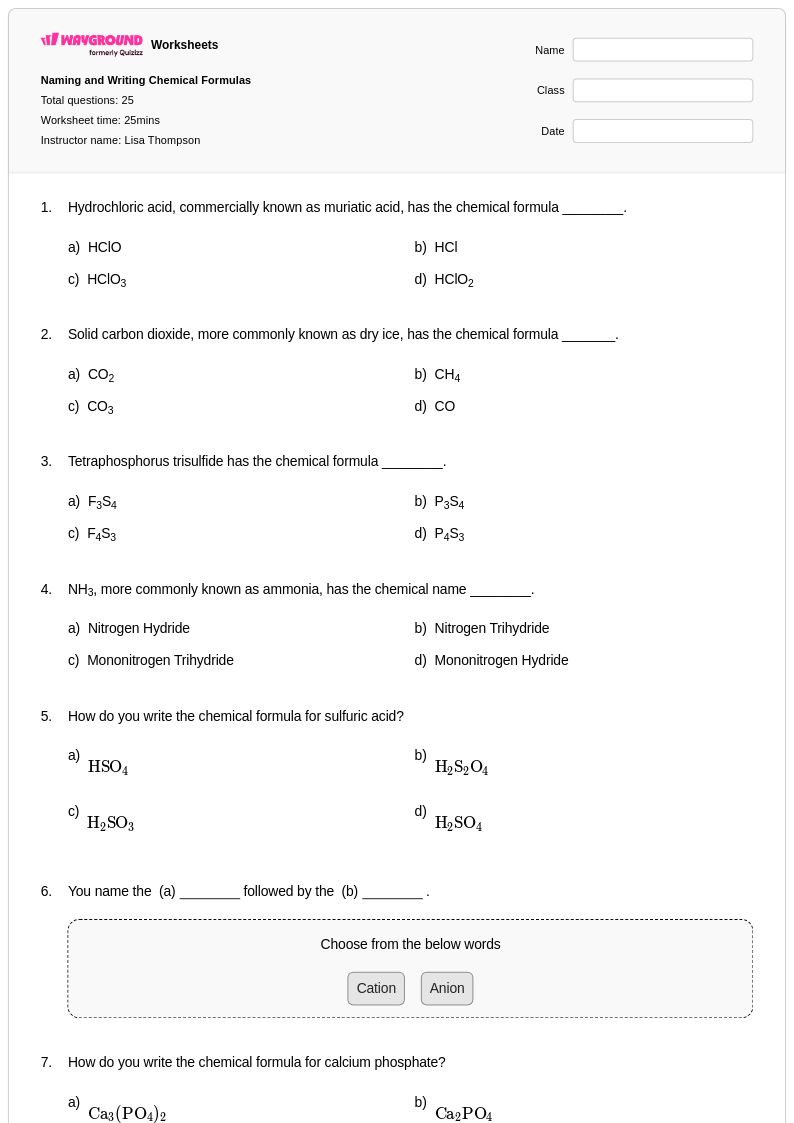
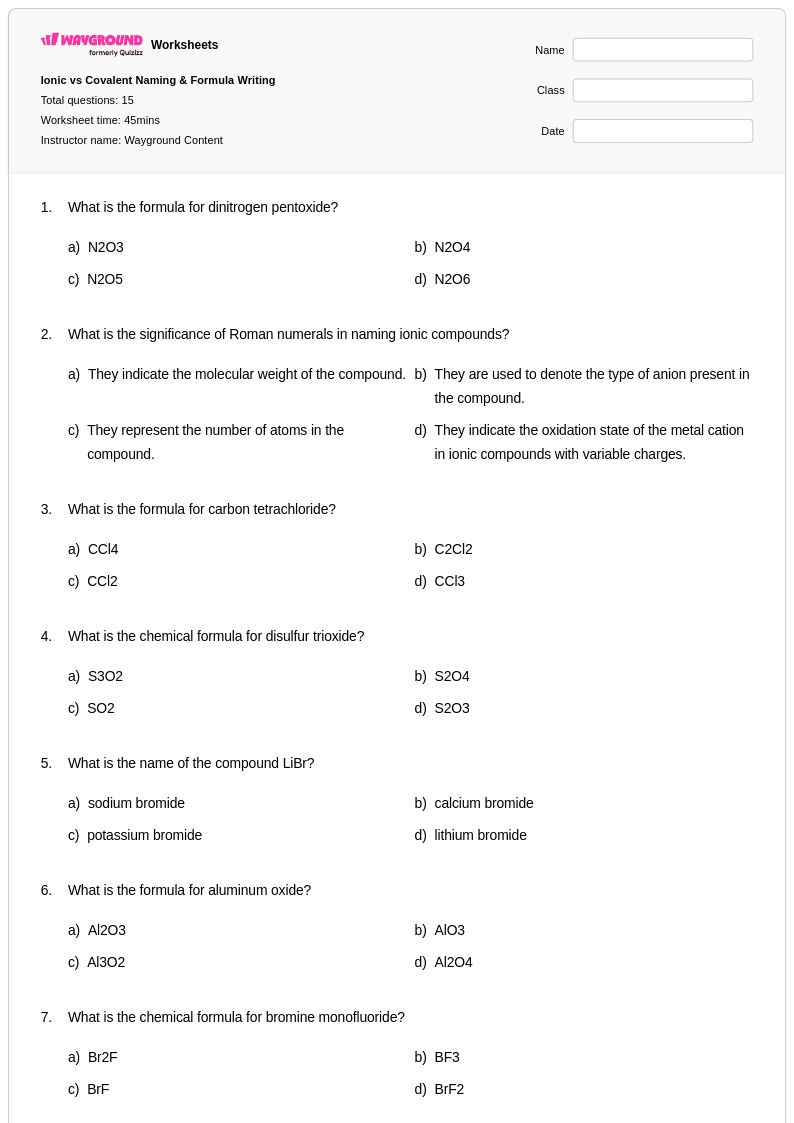
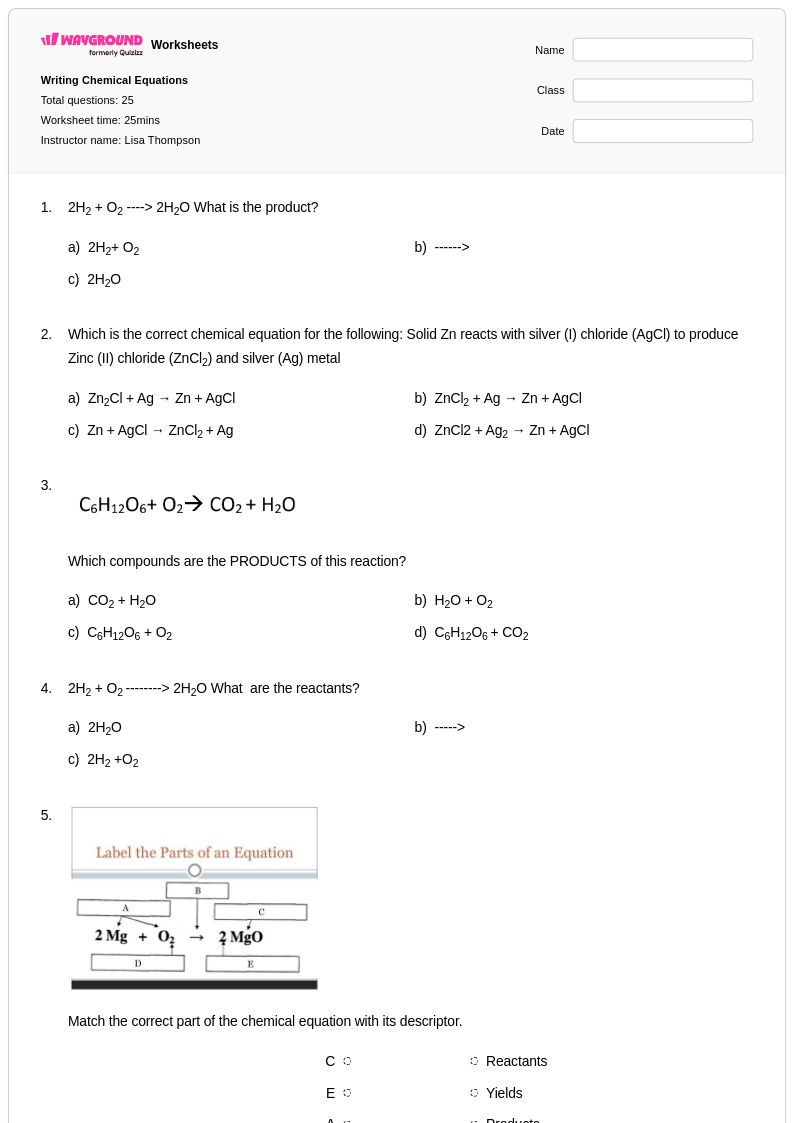
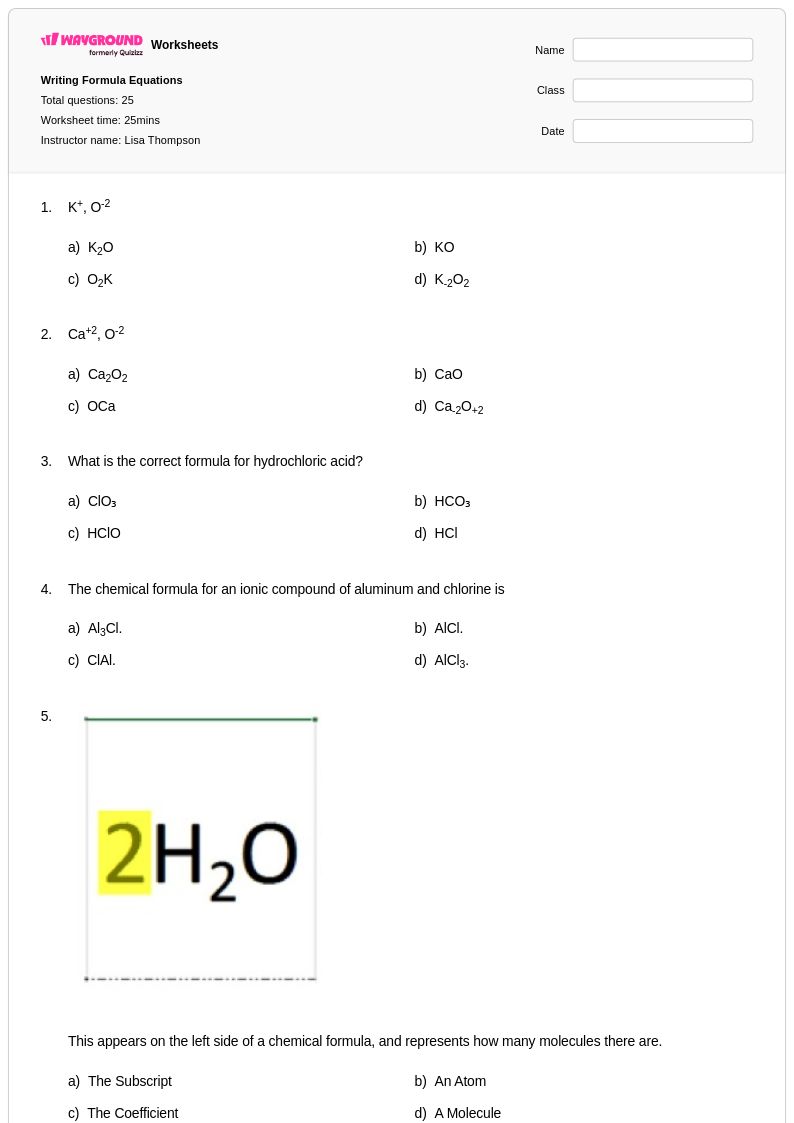
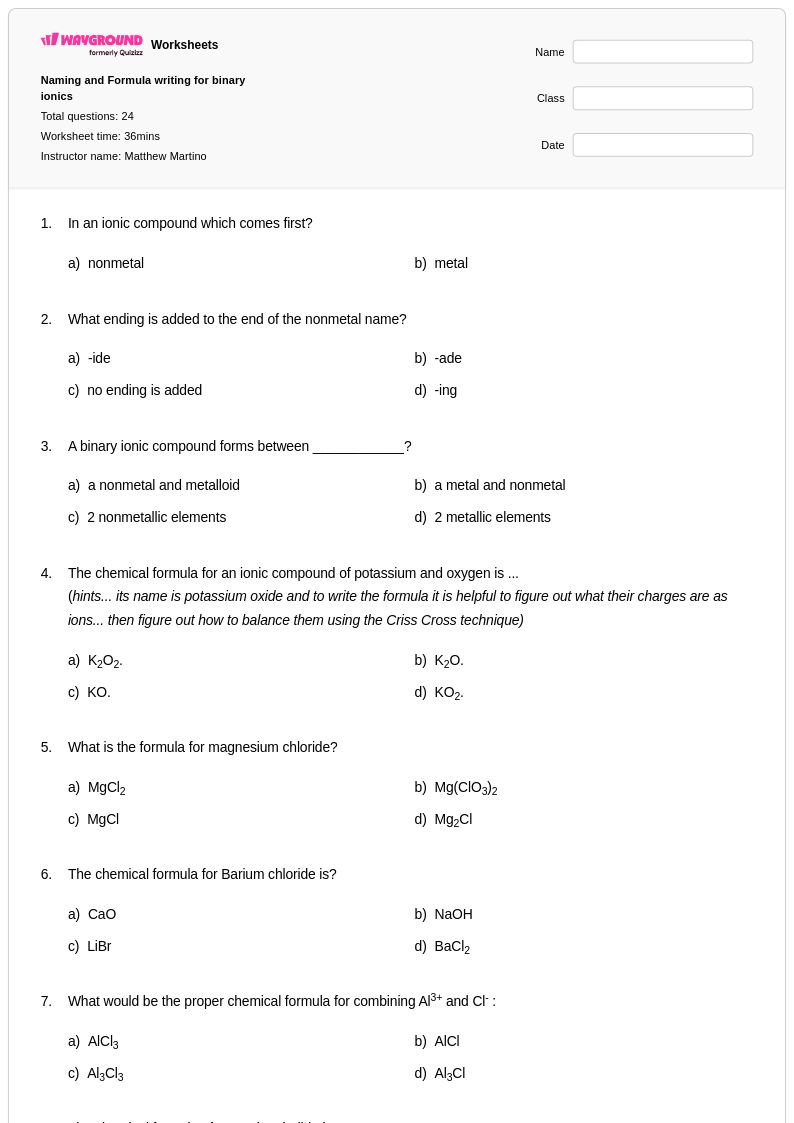
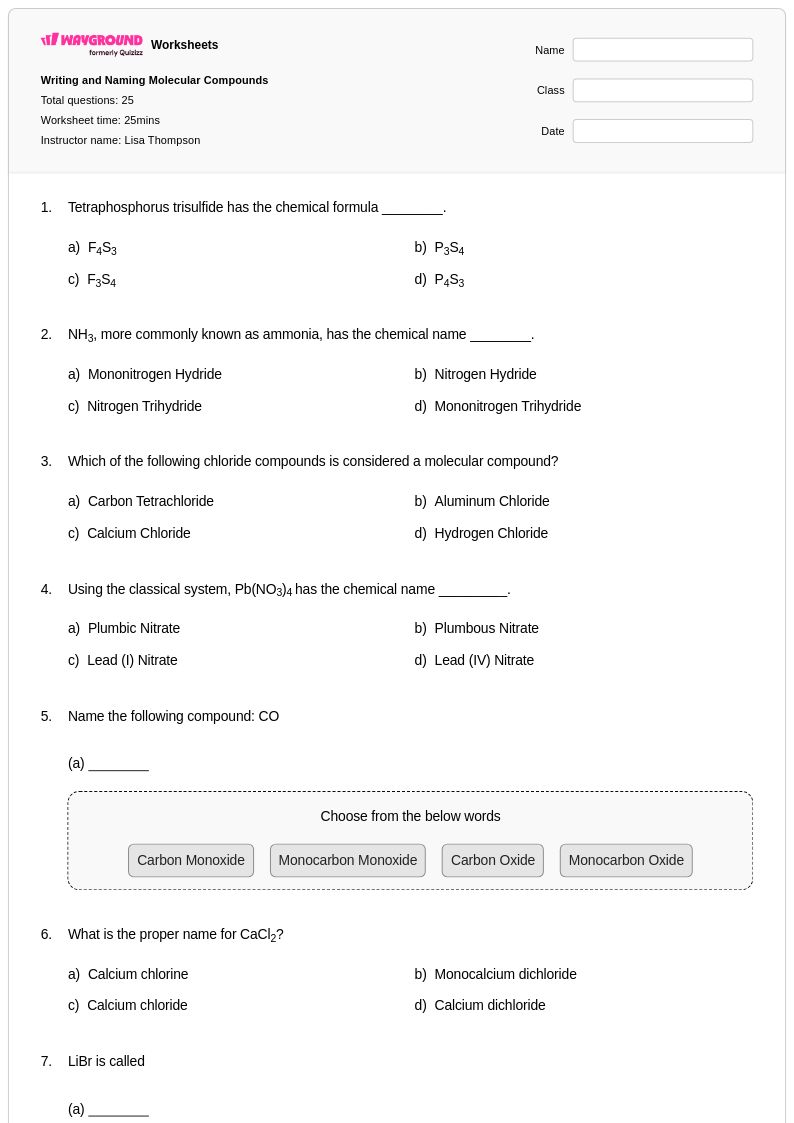
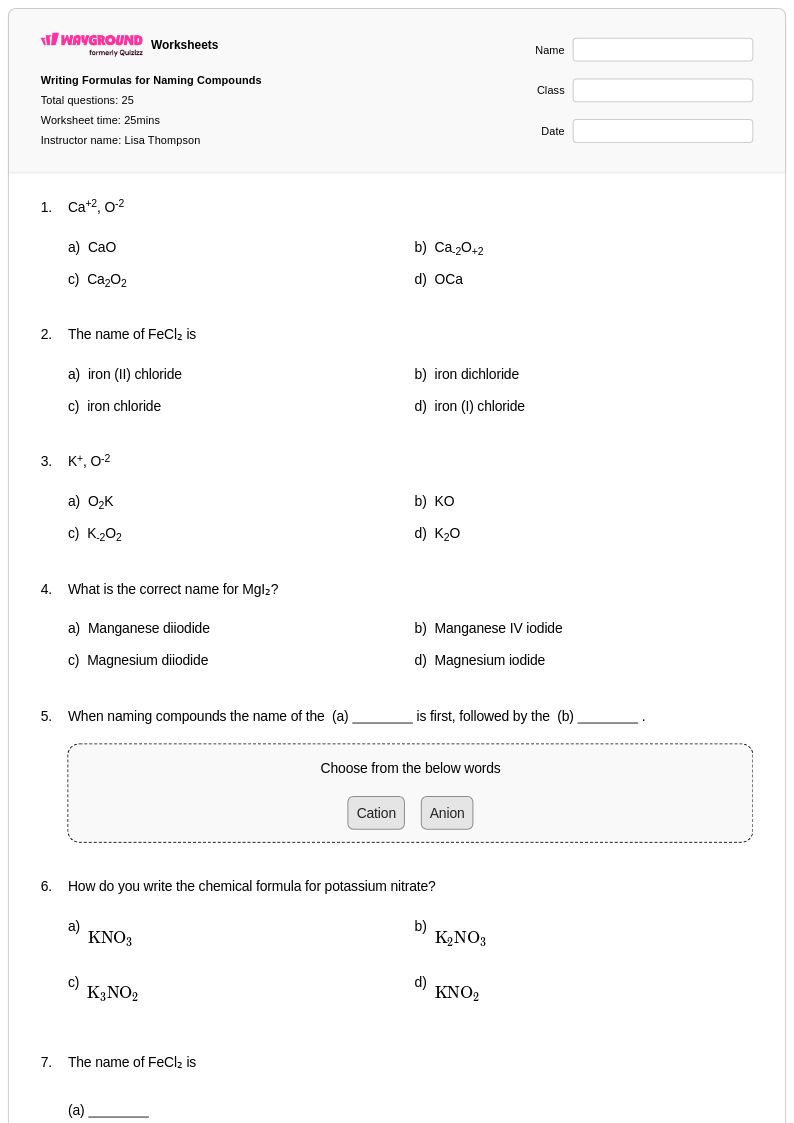
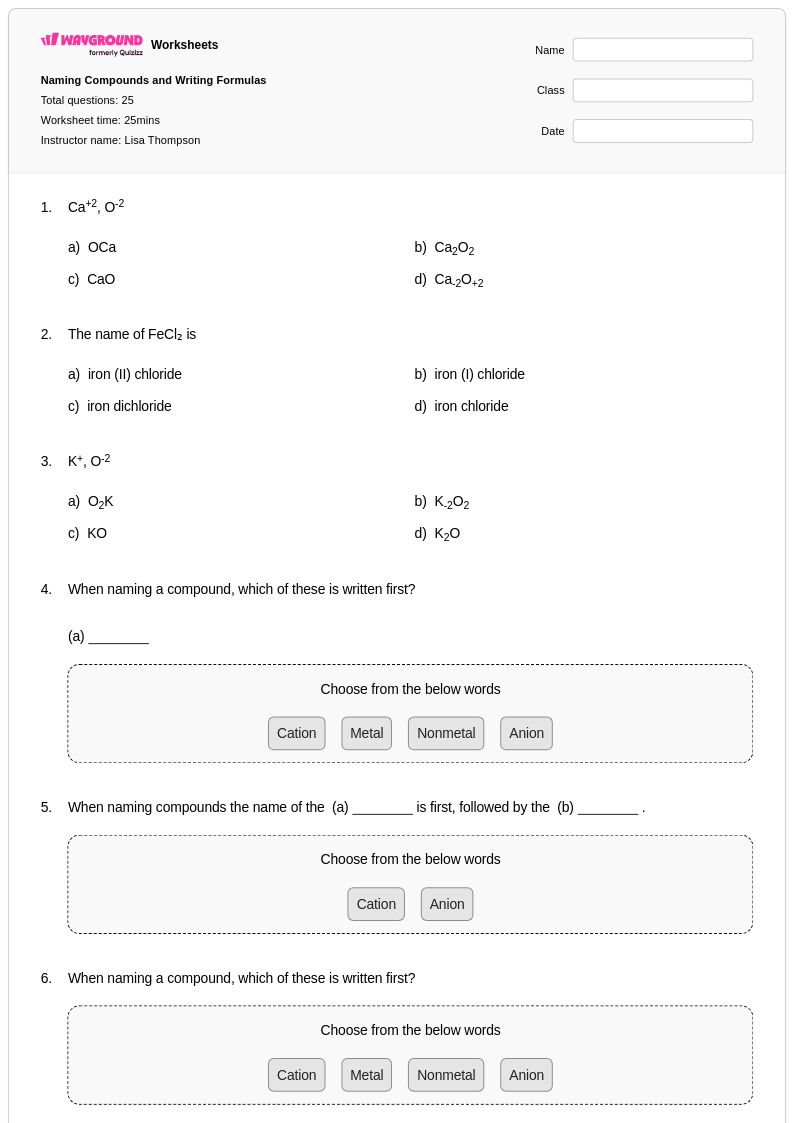
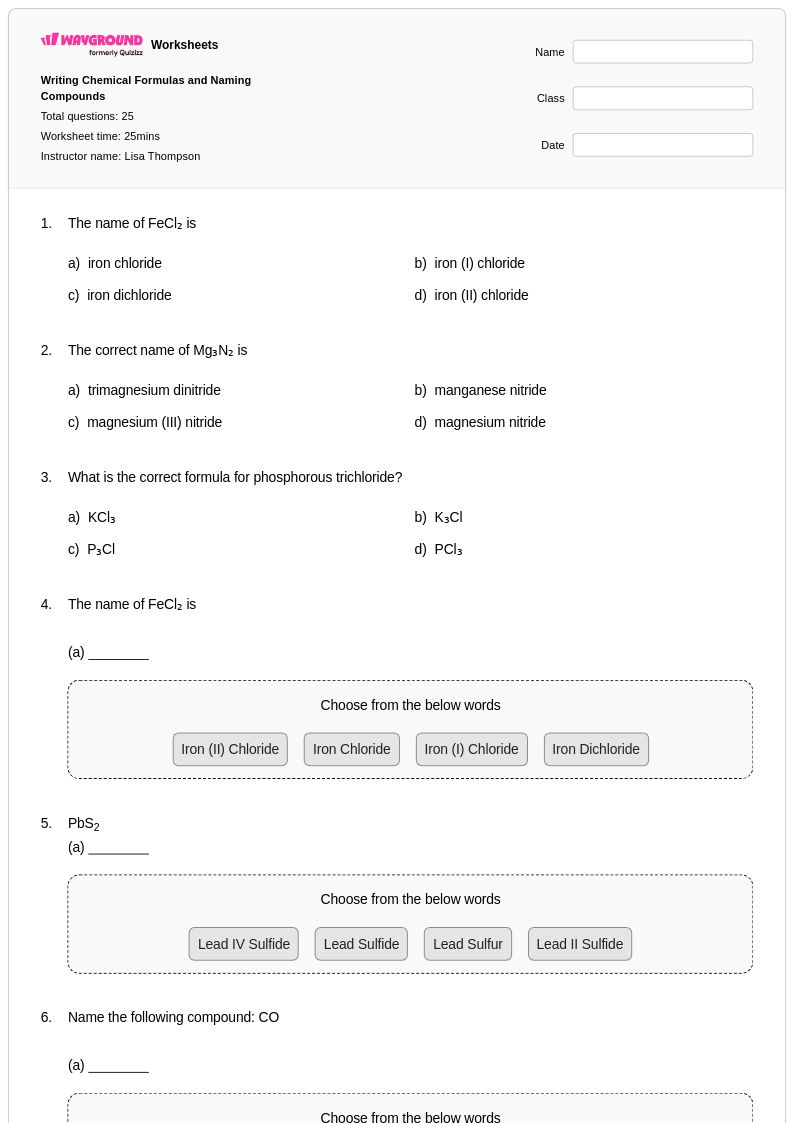
Class 12 formula writing worksheets available through Wayground (formerly Quizizz) provide comprehensive practice in constructing accurate chemical formulas for compounds across all major categories, including ionic compounds, covalent molecules, and polyatomic ions. These specialized worksheets strengthen critical skills such as determining oxidation states, applying nomenclature rules, balancing charges in ionic compounds, and understanding electron sharing patterns in covalent bonding. Students work through systematic practice problems that progress from simple binary compounds to complex coordination compounds and organic molecules, with each worksheet including detailed answer keys that explain the step-by-step reasoning behind proper formula construction. The free printable resources offer varied problem sets that reinforce the connection between chemical names and their corresponding molecular representations, ensuring students master this fundamental chemistry skill before advancing to higher-level coursework.
Wayground (formerly Quizizz) supports chemistry educators with an extensive collection of millions of teacher-created formula writing resources that can be easily located through robust search and filtering capabilities organized by specific compound types, difficulty levels, and curriculum standards alignment. Teachers can customize these worksheets to match their classroom needs, selecting from printable pdf formats for traditional assignments or digital versions for interactive practice sessions. The platform's differentiation tools enable educators to provide targeted remediation for students struggling with charge balancing while offering enrichment activities featuring complex molecular structures for advanced learners. These flexible resources streamline lesson planning by providing ready-to-use materials for skill practice, formative assessment, and exam preparation, allowing teachers to focus on guiding students through the logical reasoning processes that underpin accurate chemical formula construction.
FAQs
How do I teach chemical formula writing to chemistry students?
Start by teaching students to identify whether a compound is ionic or covalent, since the rules for writing formulas differ between the two. For ionic compounds, students need to understand oxidation states and how to balance charges using the criss-cross method. For covalent compounds, focus on prefixes and the order of elements. Introducing polyatomic ions early — and requiring students to memorize common ones like sulfate, nitrate, and phosphate — prevents major errors when moving to ternary compounds. Building from binary to ternary compounds in a deliberate sequence gives students a structured foundation before tackling more complex molecular structures.
What exercises help students practice writing chemical formulas?
The most effective practice exercises move students through a clear progression: writing formulas for binary ionic compounds first, then binary covalent compounds, then ternary compounds containing polyatomic ions. Naming-to-formula drills and formula-to-name reversals reinforce both directions of chemical notation. Including compound identification tasks — where students must first classify a compound before writing its formula — builds the decision-making skills chemistry requires. Systematic practice problems that escalate in complexity are especially useful for building fluency before assessments.
What mistakes do students commonly make when writing chemical formulas?
The most frequent error is failing to balance ionic charges correctly, often because students misapply the criss-cross method or forget to reduce subscripts to their simplest ratio. Students also frequently confuse the rules for ionic and covalent compounds, applying prefixes to ionic formulas or ignoring charge balance in covalent ones. Polyatomic ions cause persistent errors — students often split them apart when adding subscripts instead of placing them in parentheses first. Consistently flagging these patterns during practice helps students self-monitor before the mistakes become entrenched.
How can I use formula writing worksheets in my chemistry class?
Formula writing worksheets on Wayground are available as printable PDFs for traditional classroom use and in digital formats for technology-integrated environments, including the ability to host them as a quiz directly on Wayground. This makes them suitable for in-class practice, homework assignments, independent study, and remediation sessions. Each worksheet includes detailed answer keys and step-by-step solutions, allowing students to self-check their work and reducing the grading burden on teachers. The flexibility of both formats means they integrate cleanly into virtually any instructional setup.
How do I differentiate formula writing practice for students at different levels?
For students who are struggling, begin with binary ionic compounds only and provide a reference sheet of common ions and oxidation states before asking them to work independently. Advanced students can be challenged with more complex ternary compounds, transition metals with variable oxidation states, or tasks that require writing and naming formulas without scaffolding. On Wayground, teachers can apply student-level accommodations such as reduced answer choices to lower cognitive load for specific learners, or enable Read Aloud for students who need questions read to them — all without other students being notified of those adjustments.
How do I find formula writing worksheets that match my curriculum standards?
Wayground draws from millions of teacher-created resources and offers search and filtering capabilities alongside standards alignment features, allowing teachers to locate formula writing worksheets that match specific educational objectives. This makes it practical to find materials targeting a precise skill — such as writing formulas for binary covalent compounds or applying oxidation states to transition metals — rather than settling for general chemistry packets that may not align with what students have been taught.