Free Printable Formula Writing Worksheets for Class 11
Enhance Class 11 chemistry skills with our comprehensive formula writing worksheets featuring printable PDFs, free practice problems, and detailed answer keys to master chemical equation formation and molecular formulas.
Explore printable Formula Writing worksheets for Class 11
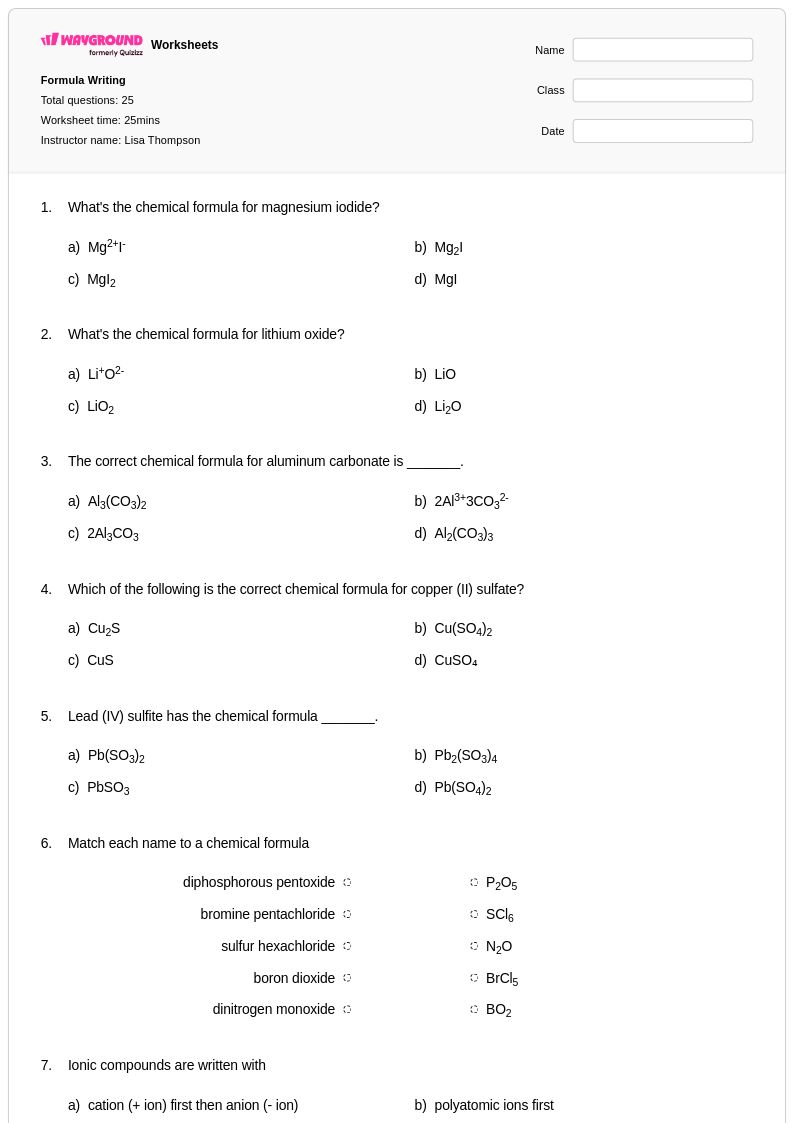
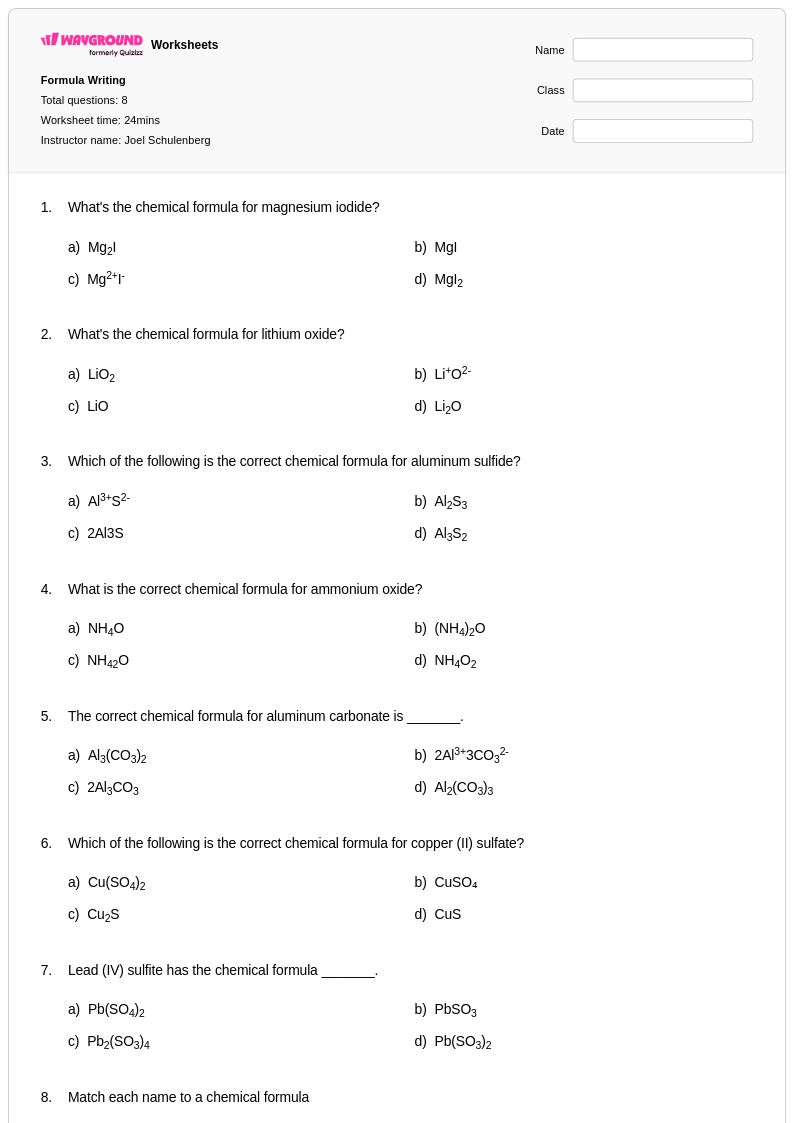
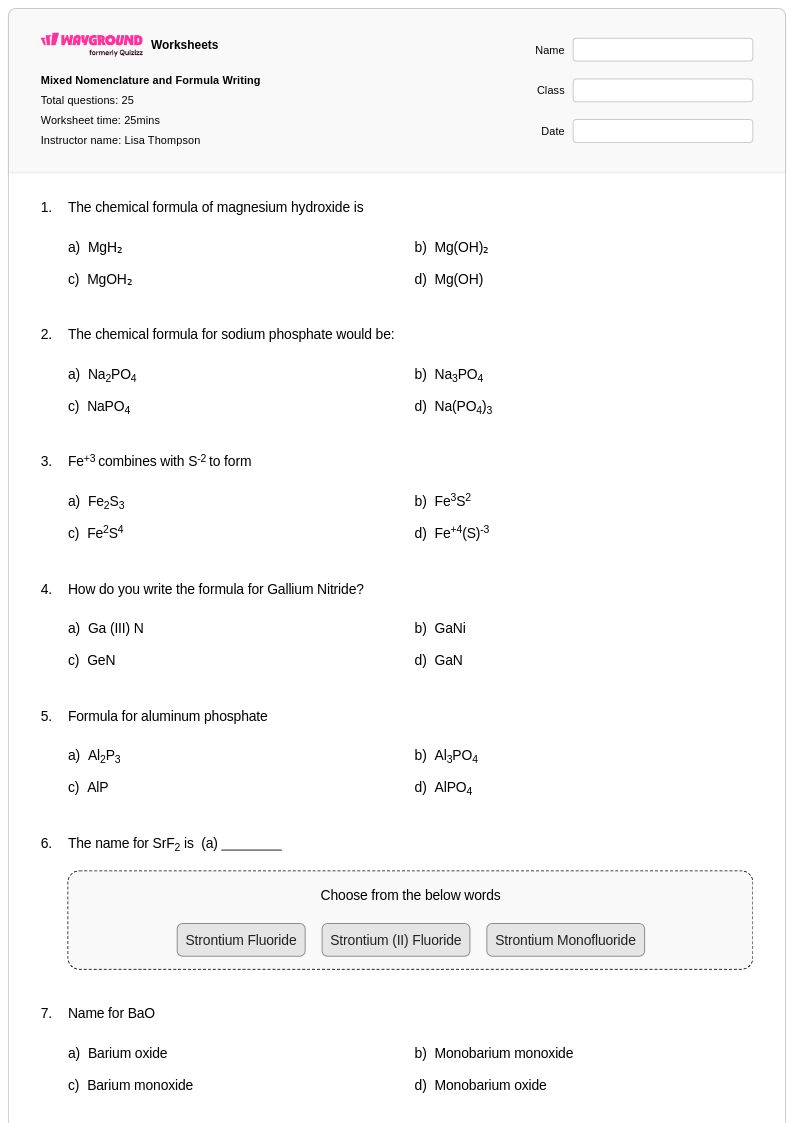
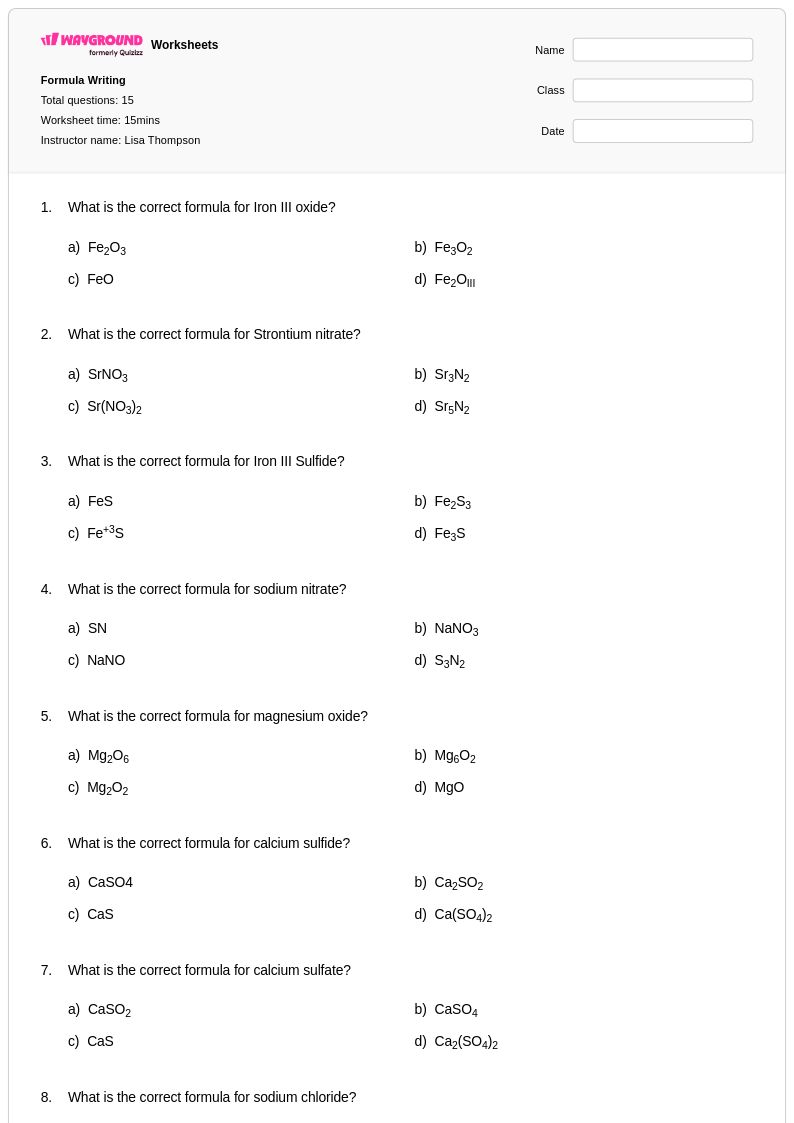
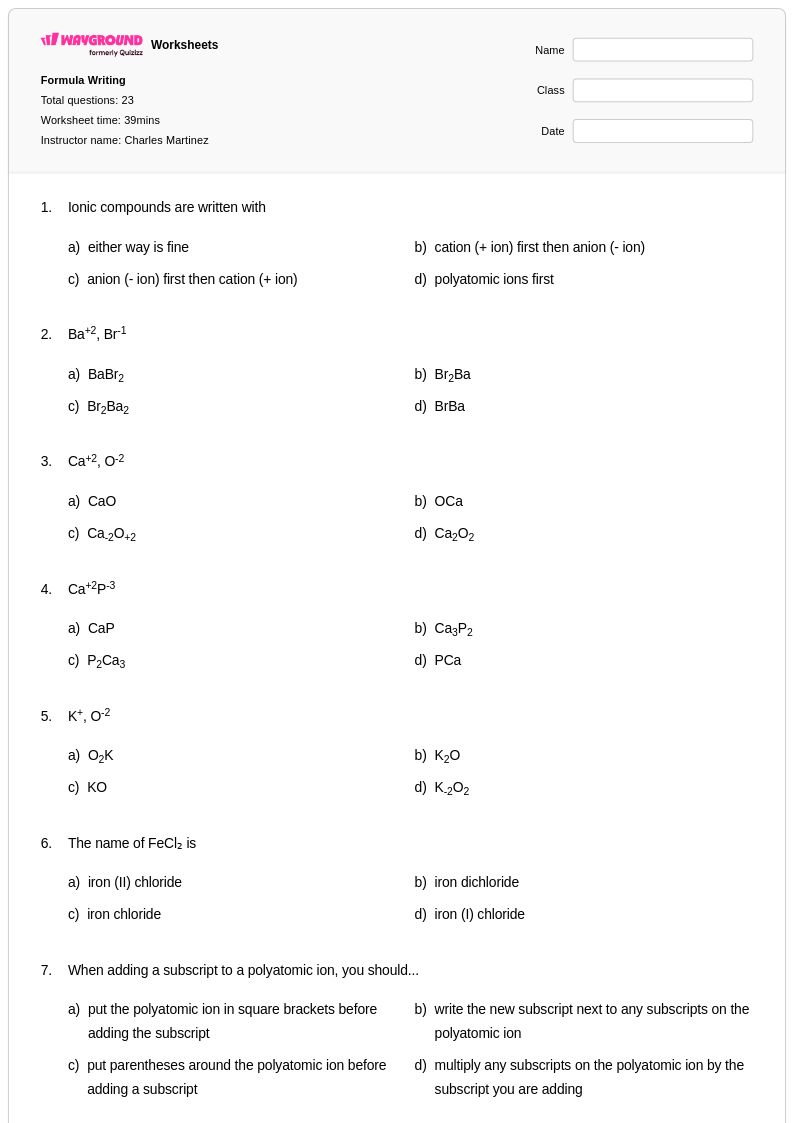
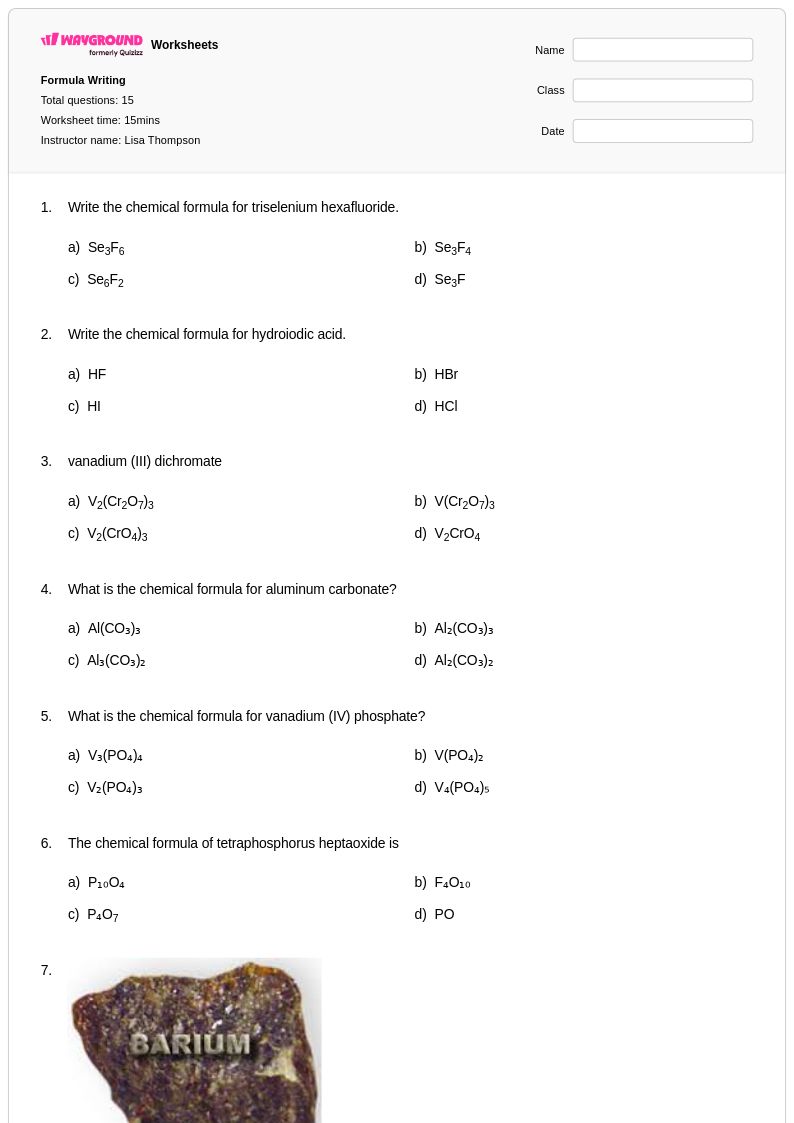
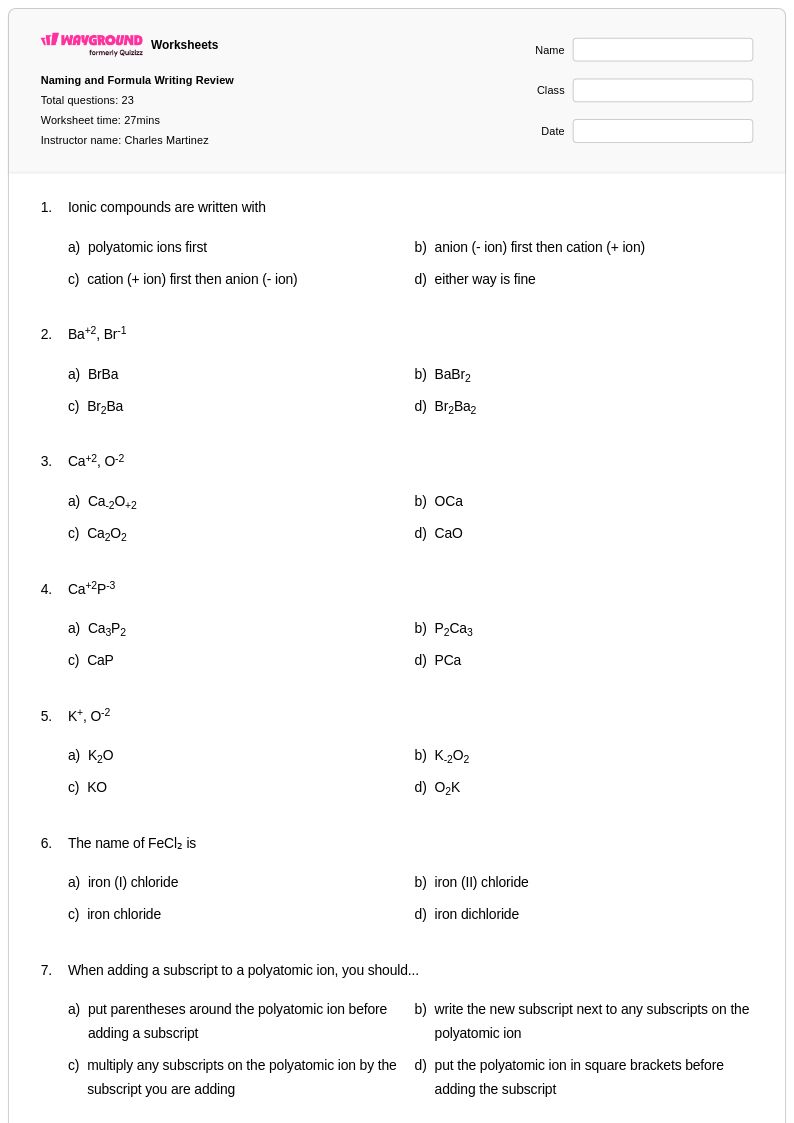
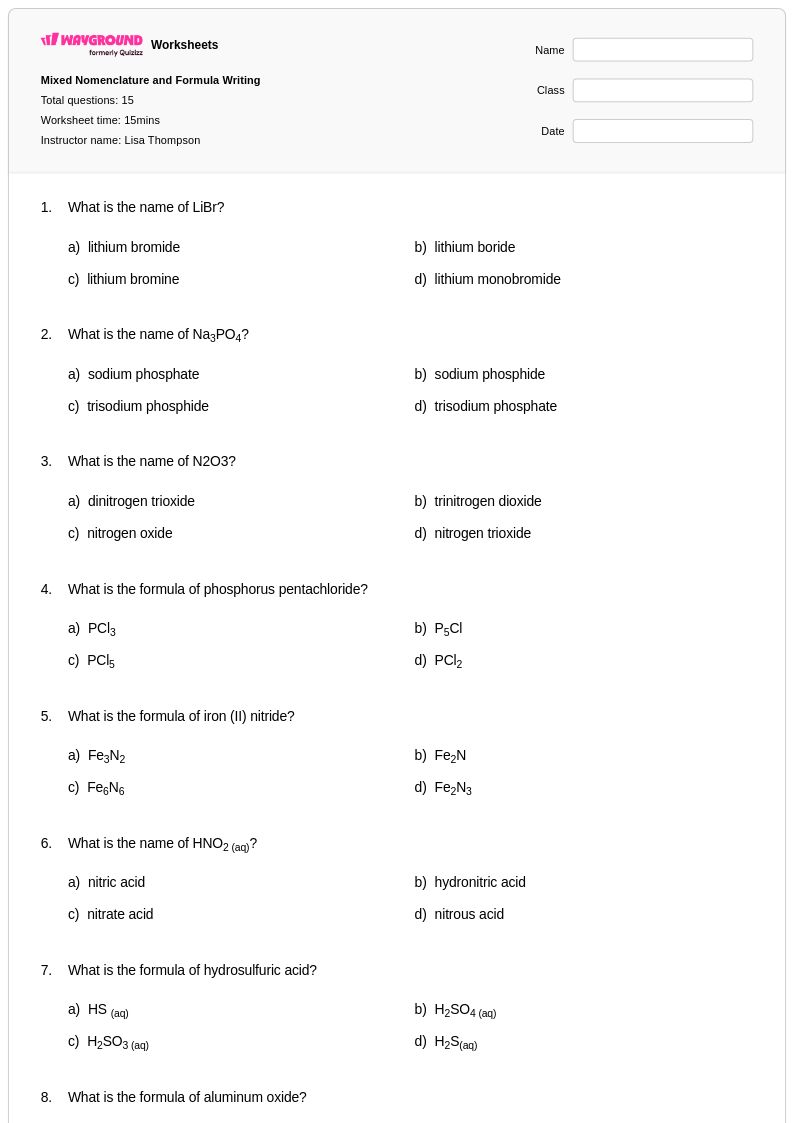
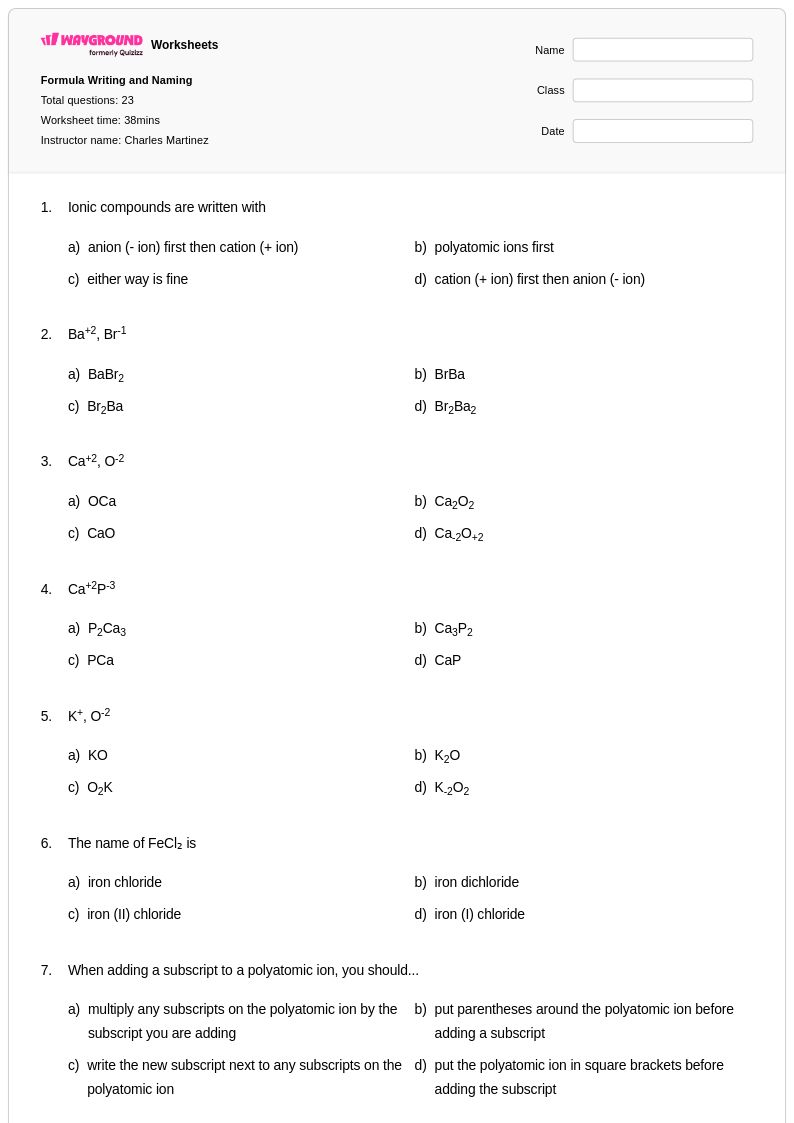
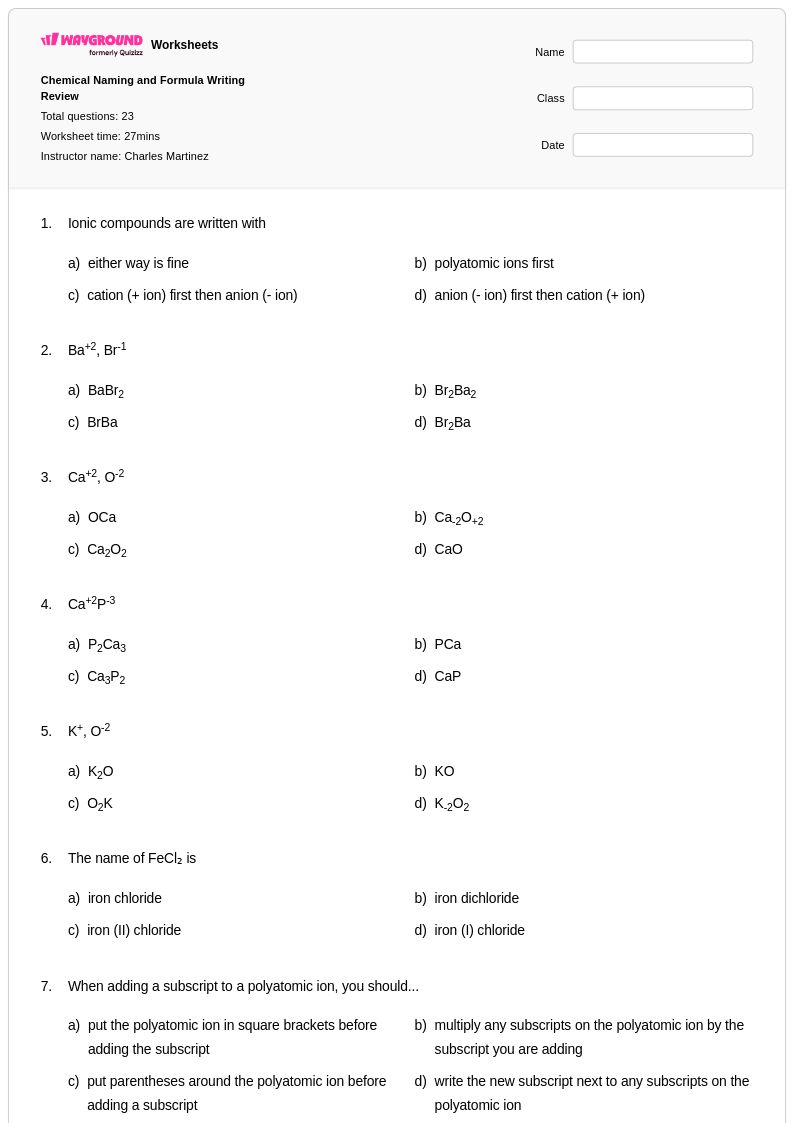
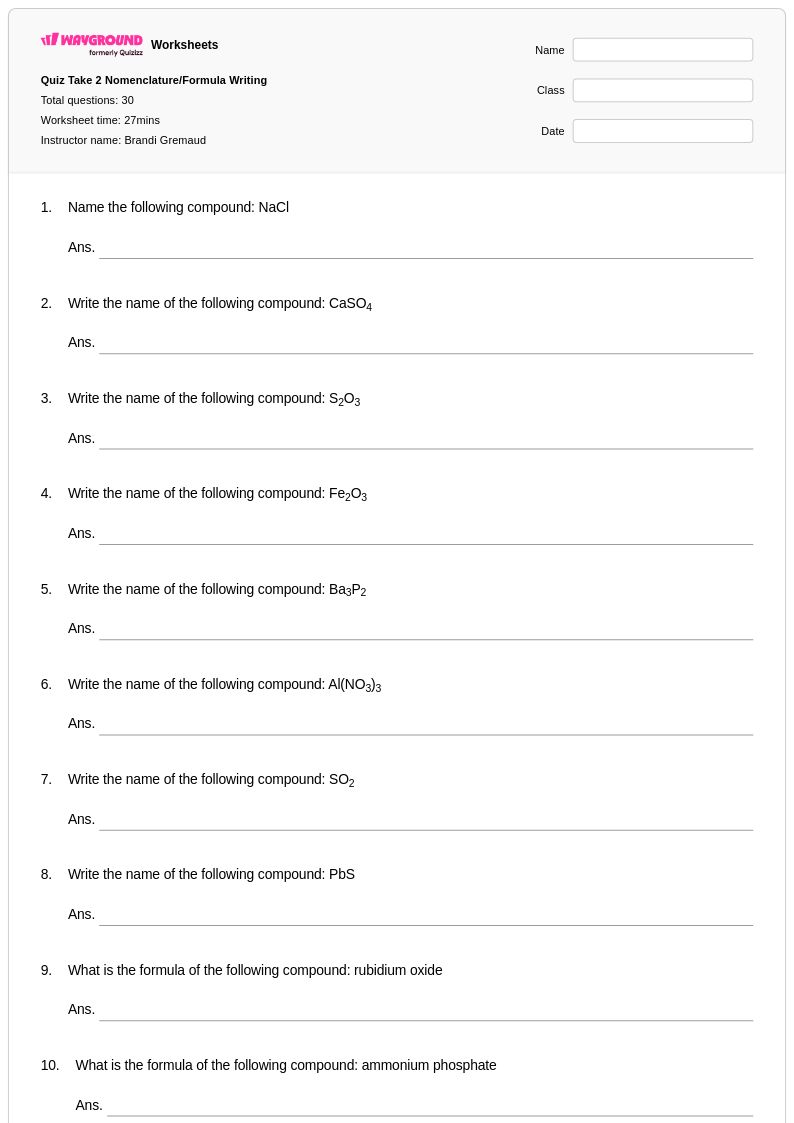
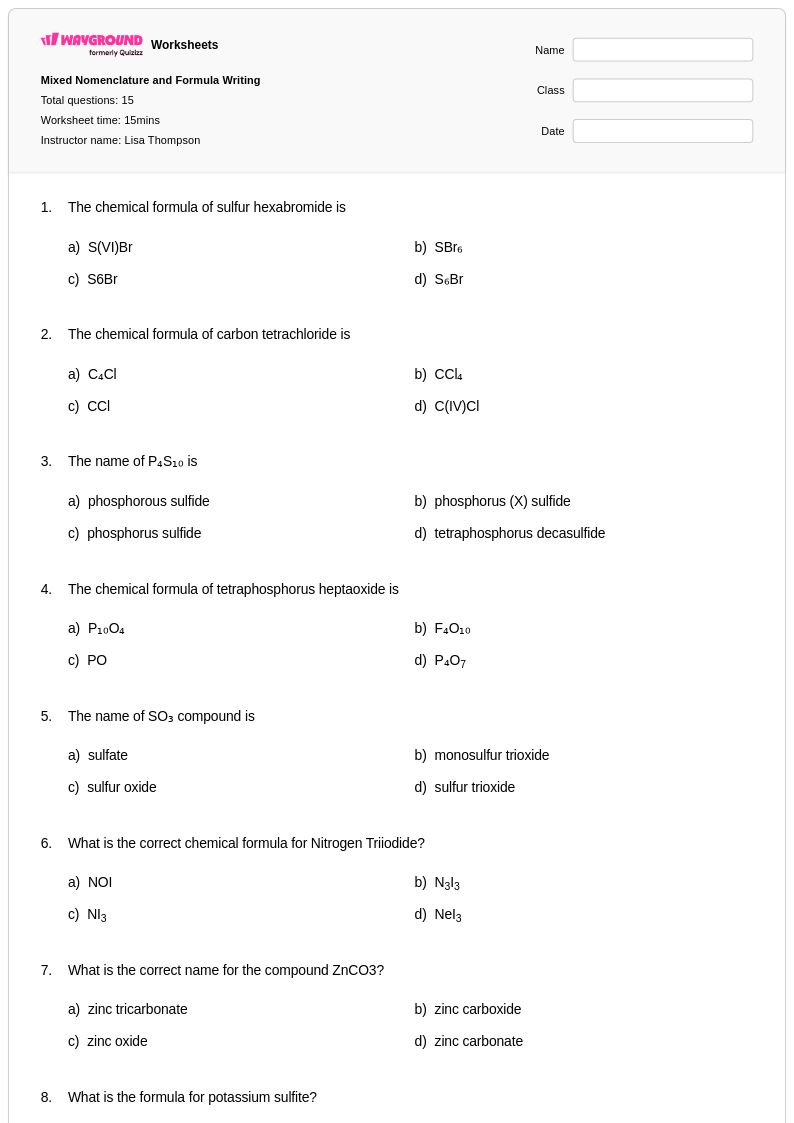
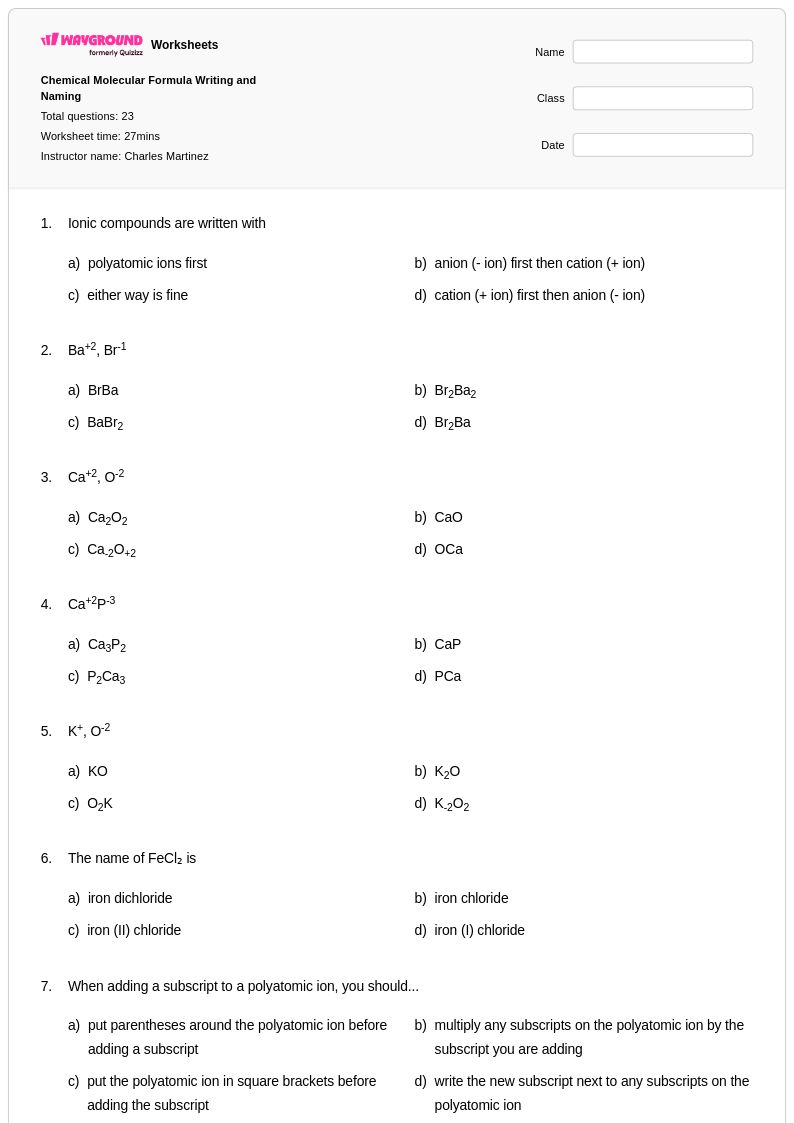
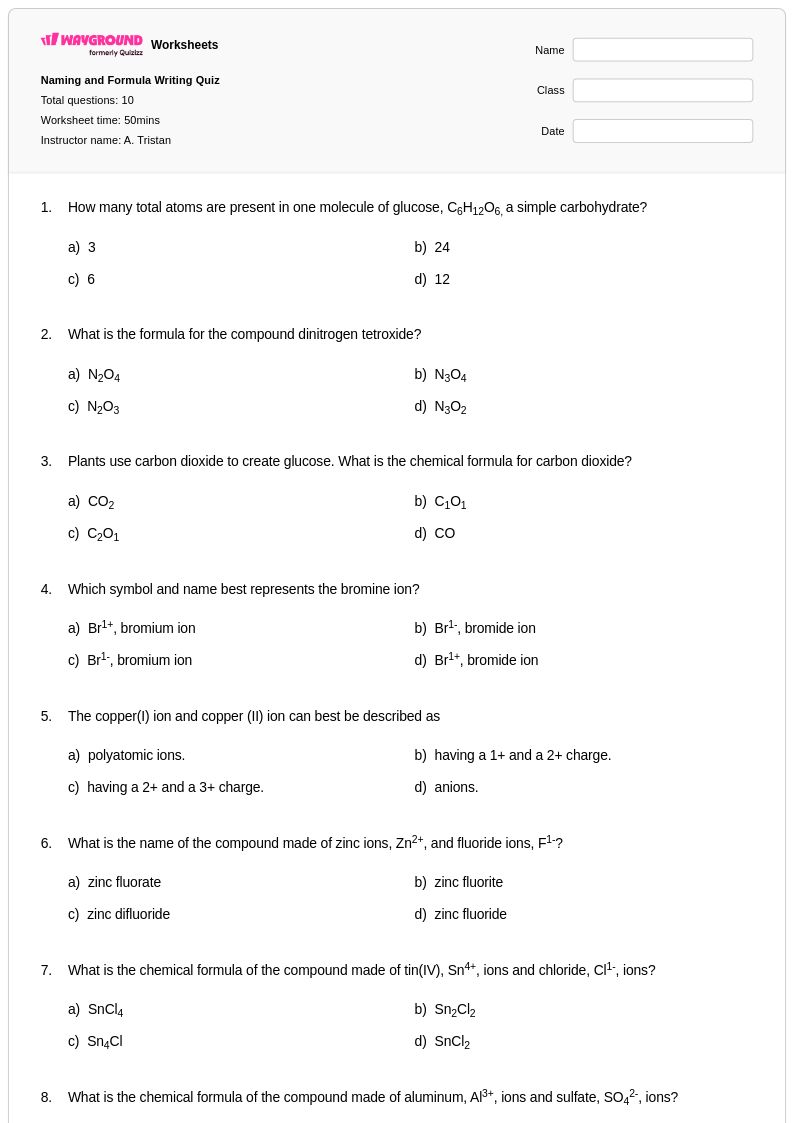
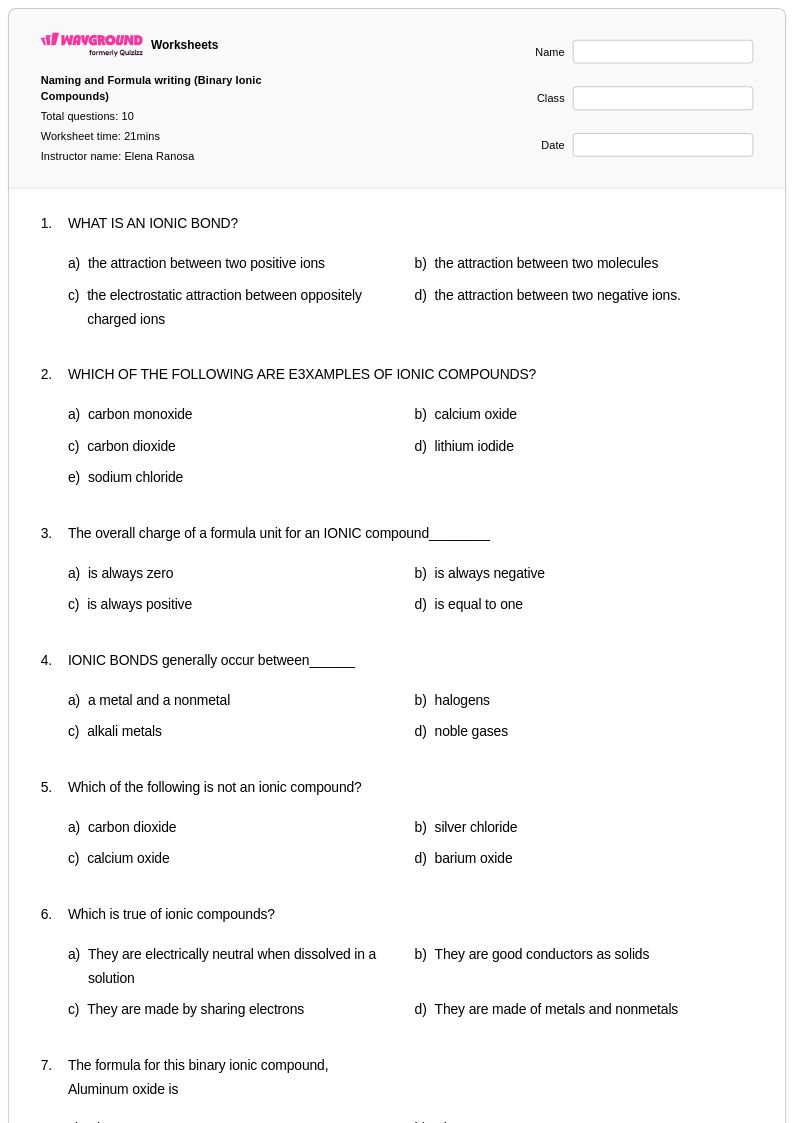
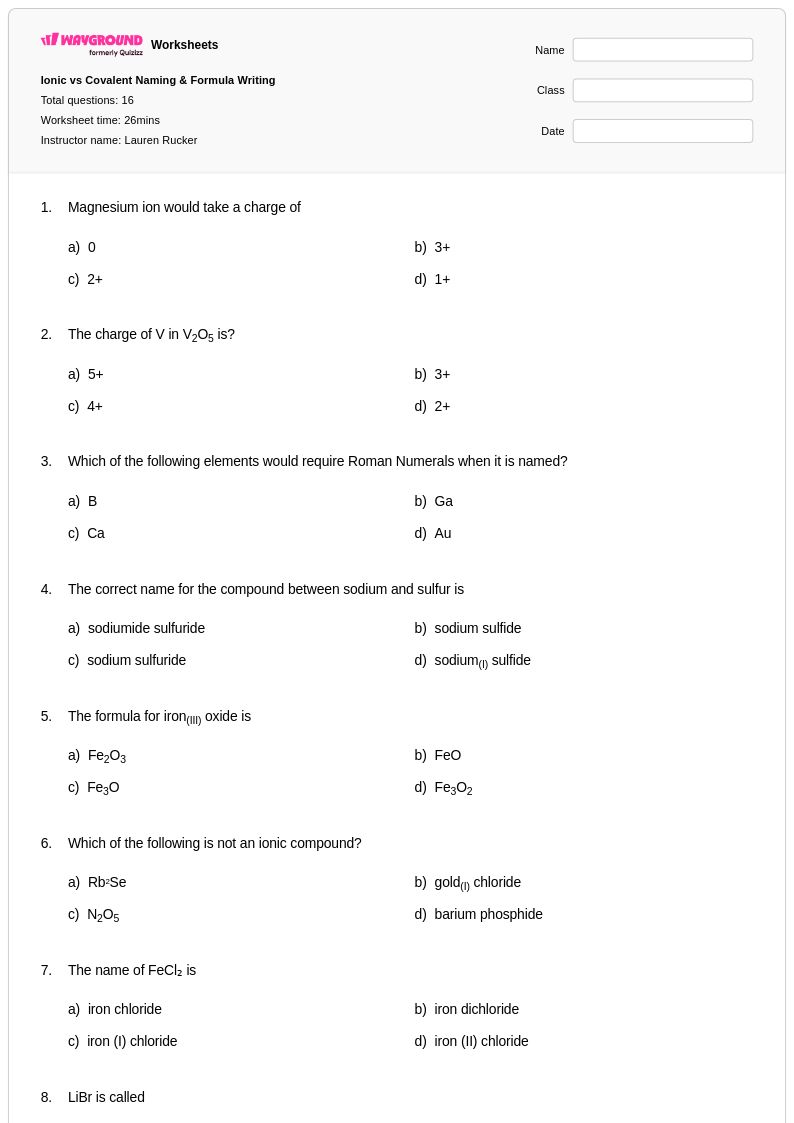
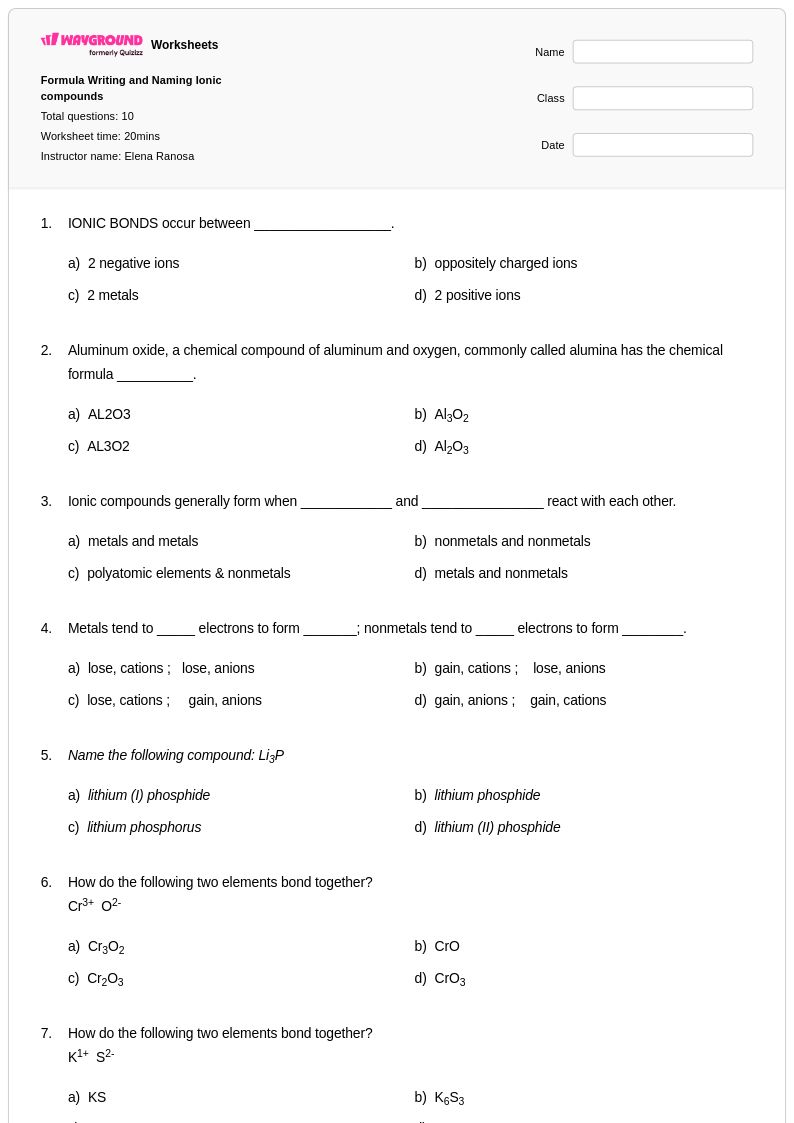
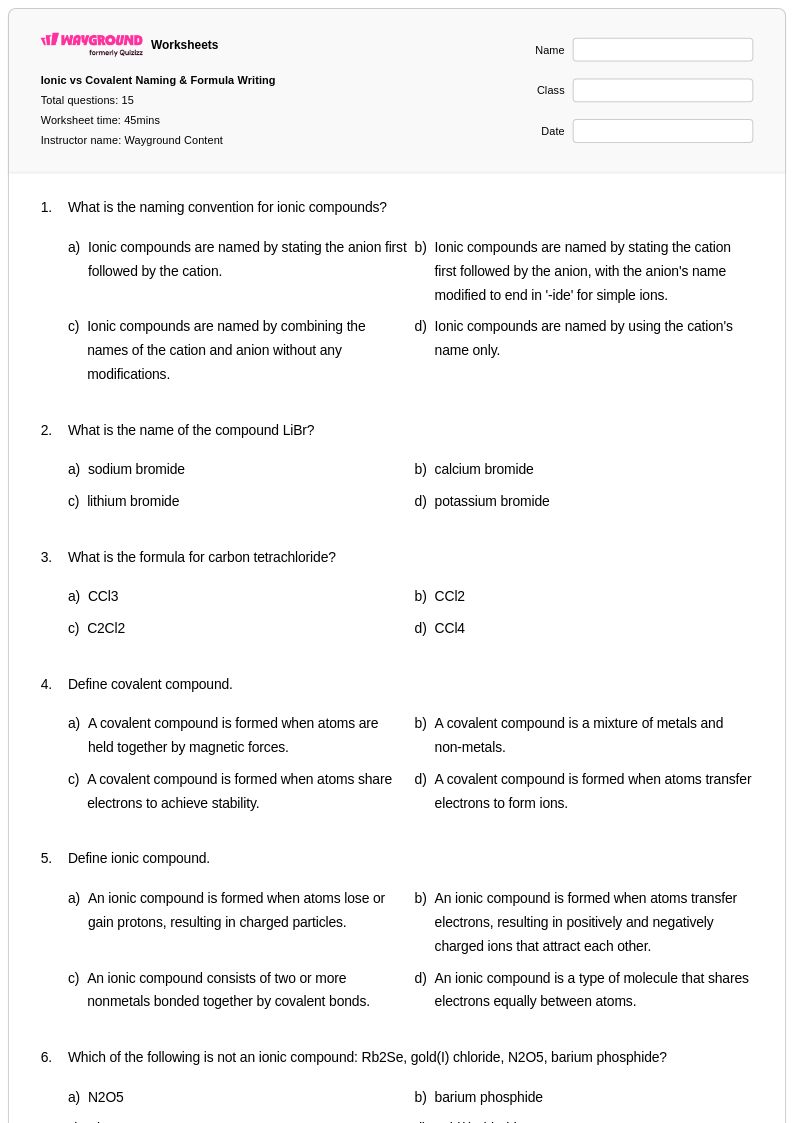
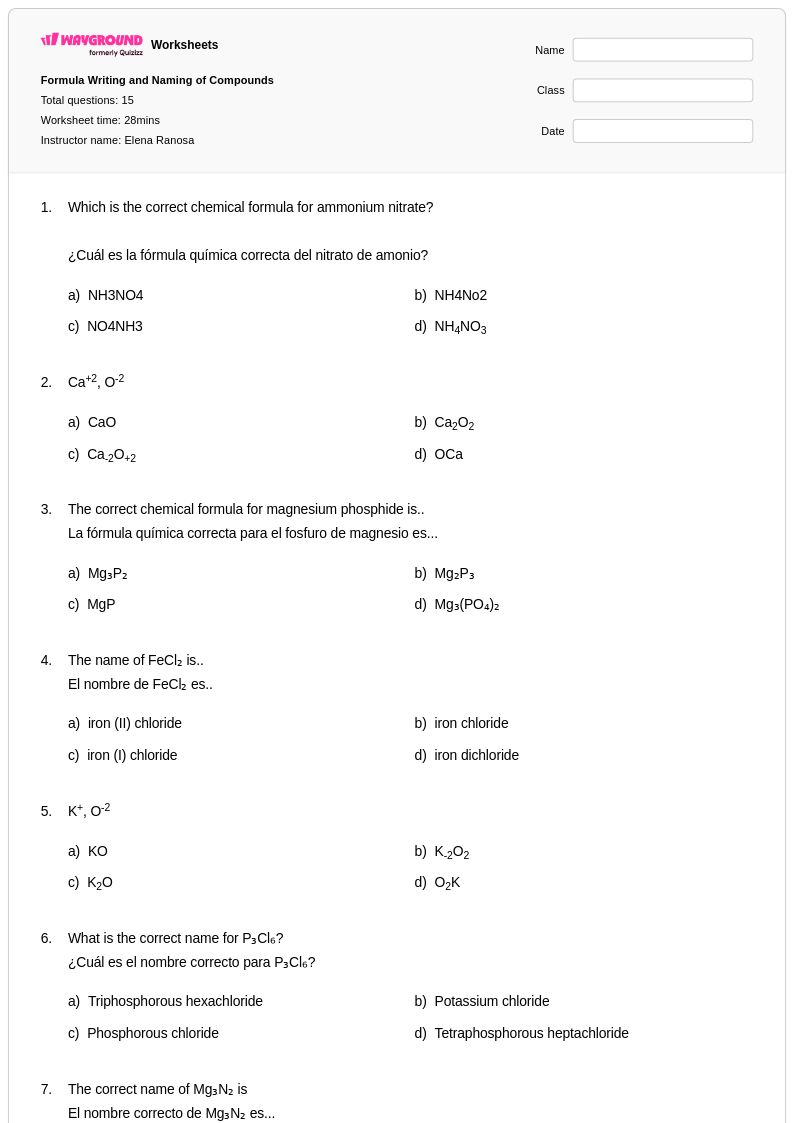
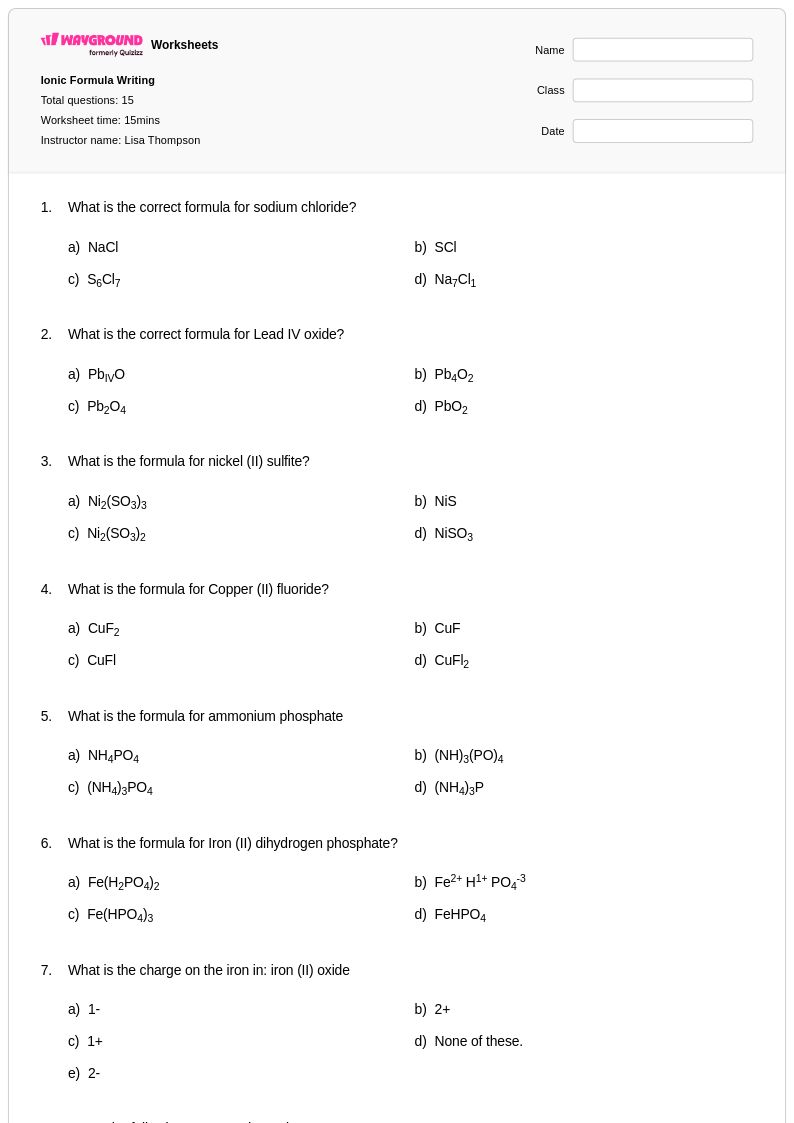
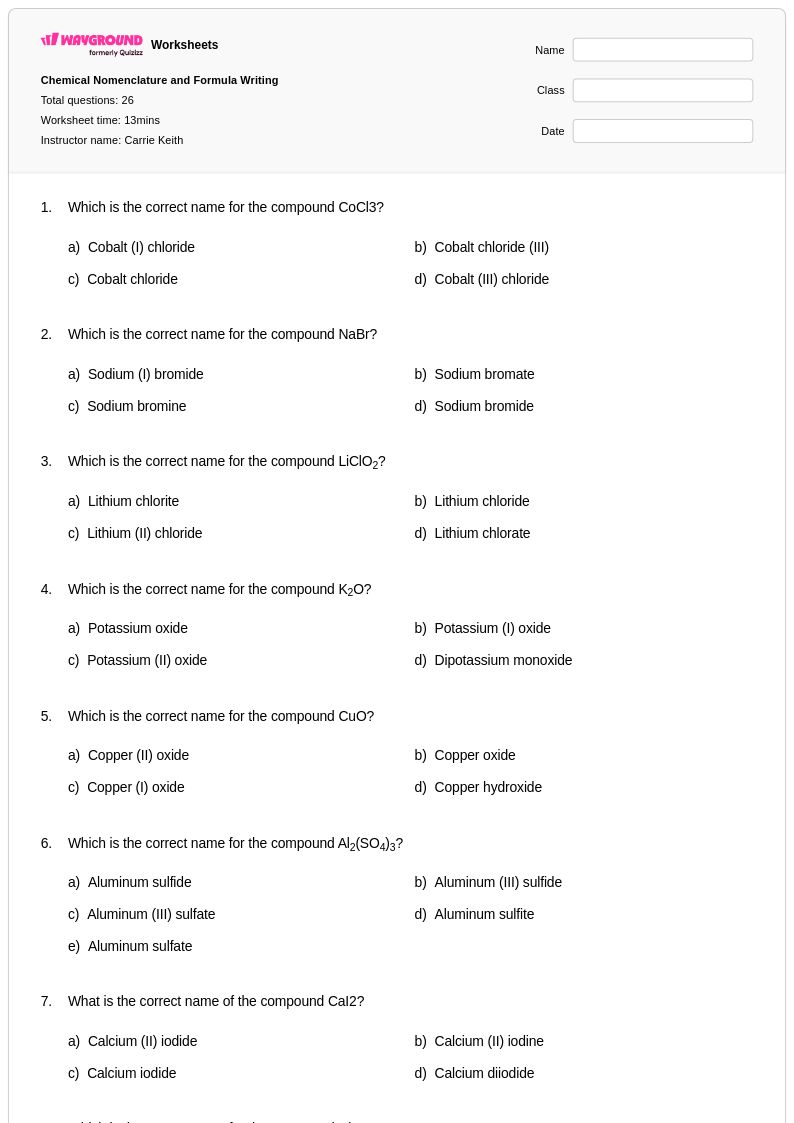
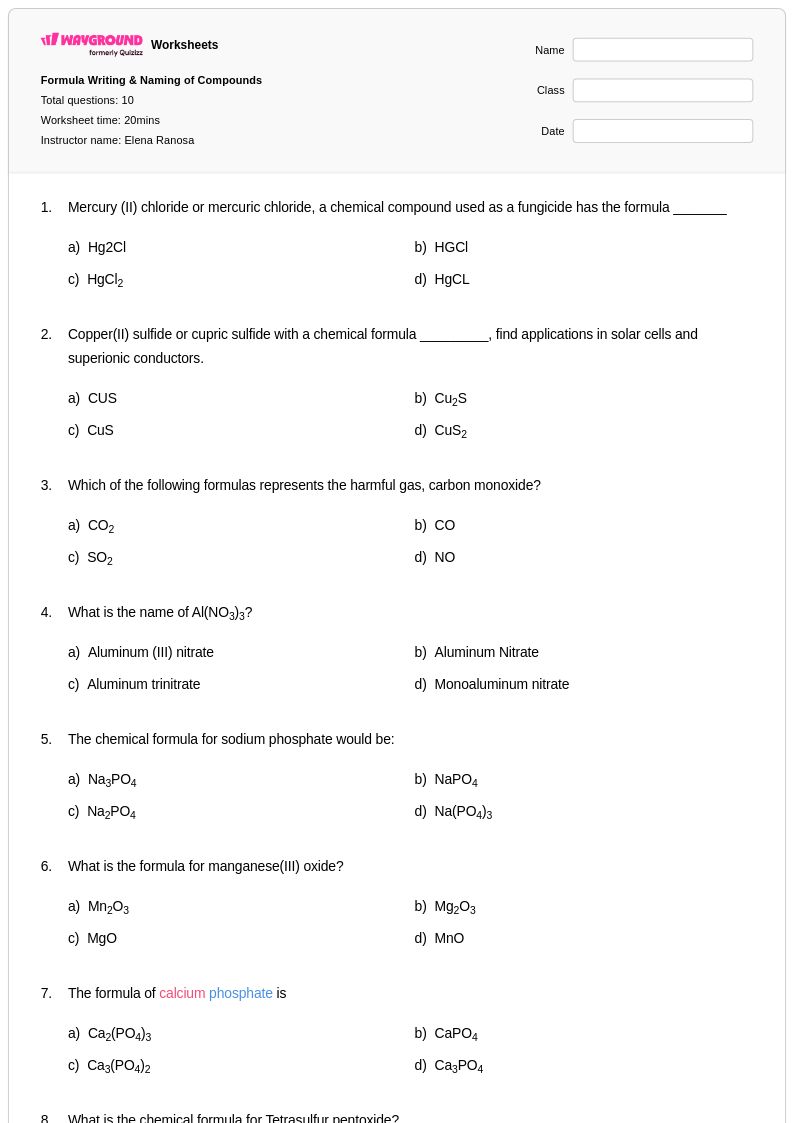
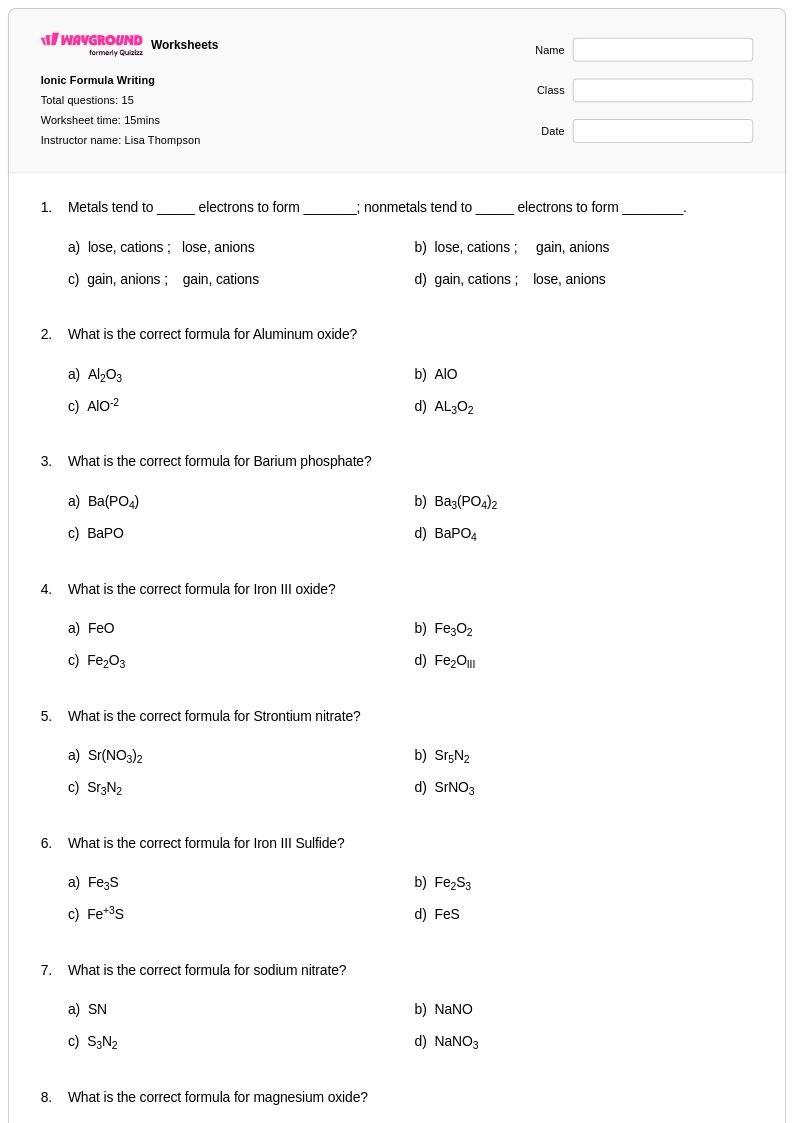
Formula writing worksheets for Class 11 chemistry provide essential practice in constructing accurate chemical formulas for ionic and molecular compounds, helping students master this fundamental skill required for advanced chemistry coursework. These comprehensive worksheets available through Wayground cover key concepts including determining oxidation states, applying the crisscross method for ionic compounds, writing formulas for polyatomic ions, and constructing molecular formulas using prefixes and chemical nomenclature rules. Students work through systematic practice problems that reinforce their understanding of how elements combine in specific ratios, while answer keys enable immediate feedback and self-assessment. The printable pdf format allows for flexible use in classroom settings, homework assignments, or independent study sessions, ensuring students develop confidence in translating compound names into correct chemical formulas and vice versa.
Wayground's extensive collection of teacher-created formula writing resources supports educators with millions of high-quality worksheets specifically designed for Class 11 chemistry instruction. The platform's robust search and filtering capabilities allow teachers to quickly locate materials aligned with specific curriculum standards and learning objectives, while differentiation tools enable customization for students with varying skill levels and learning needs. These versatile resources are available in both digital and printable pdf formats, making them ideal for diverse classroom environments and teaching approaches. Teachers can effectively use these worksheets for initial skill introduction, targeted remediation for struggling students, enrichment activities for advanced learners, and regular practice to reinforce formula writing proficiency throughout the academic year, ultimately supporting comprehensive chemistry education that builds toward more complex topics like stoichiometry and chemical reactions.
FAQs
How do I teach chemical formula writing to chemistry students?
Start by teaching students to identify whether a compound is ionic or covalent, since the rules for writing formulas differ between the two. For ionic compounds, students need to understand oxidation states and how to balance charges using the criss-cross method. For covalent compounds, focus on prefixes and the order of elements. Introducing polyatomic ions early — and requiring students to memorize common ones like sulfate, nitrate, and phosphate — prevents major errors when moving to ternary compounds. Building from binary to ternary compounds in a deliberate sequence gives students a structured foundation before tackling more complex molecular structures.
What exercises help students practice writing chemical formulas?
The most effective practice exercises move students through a clear progression: writing formulas for binary ionic compounds first, then binary covalent compounds, then ternary compounds containing polyatomic ions. Naming-to-formula drills and formula-to-name reversals reinforce both directions of chemical notation. Including compound identification tasks — where students must first classify a compound before writing its formula — builds the decision-making skills chemistry requires. Systematic practice problems that escalate in complexity are especially useful for building fluency before assessments.
What mistakes do students commonly make when writing chemical formulas?
The most frequent error is failing to balance ionic charges correctly, often because students misapply the criss-cross method or forget to reduce subscripts to their simplest ratio. Students also frequently confuse the rules for ionic and covalent compounds, applying prefixes to ionic formulas or ignoring charge balance in covalent ones. Polyatomic ions cause persistent errors — students often split them apart when adding subscripts instead of placing them in parentheses first. Consistently flagging these patterns during practice helps students self-monitor before the mistakes become entrenched.
How can I use formula writing worksheets in my chemistry class?
Formula writing worksheets on Wayground are available as printable PDFs for traditional classroom use and in digital formats for technology-integrated environments, including the ability to host them as a quiz directly on Wayground. This makes them suitable for in-class practice, homework assignments, independent study, and remediation sessions. Each worksheet includes detailed answer keys and step-by-step solutions, allowing students to self-check their work and reducing the grading burden on teachers. The flexibility of both formats means they integrate cleanly into virtually any instructional setup.
How do I differentiate formula writing practice for students at different levels?
For students who are struggling, begin with binary ionic compounds only and provide a reference sheet of common ions and oxidation states before asking them to work independently. Advanced students can be challenged with more complex ternary compounds, transition metals with variable oxidation states, or tasks that require writing and naming formulas without scaffolding. On Wayground, teachers can apply student-level accommodations such as reduced answer choices to lower cognitive load for specific learners, or enable Read Aloud for students who need questions read to them — all without other students being notified of those adjustments.
How do I find formula writing worksheets that match my curriculum standards?
Wayground draws from millions of teacher-created resources and offers search and filtering capabilities alongside standards alignment features, allowing teachers to locate formula writing worksheets that match specific educational objectives. This makes it practical to find materials targeting a precise skill — such as writing formulas for binary covalent compounds or applying oxidation states to transition metals — rather than settling for general chemistry packets that may not align with what students have been taught.