
Recommended Topics for you
104 Q
9th - 12th
8 Q
11th
22 Q
9th - 12th
34 Q
11th - 12th
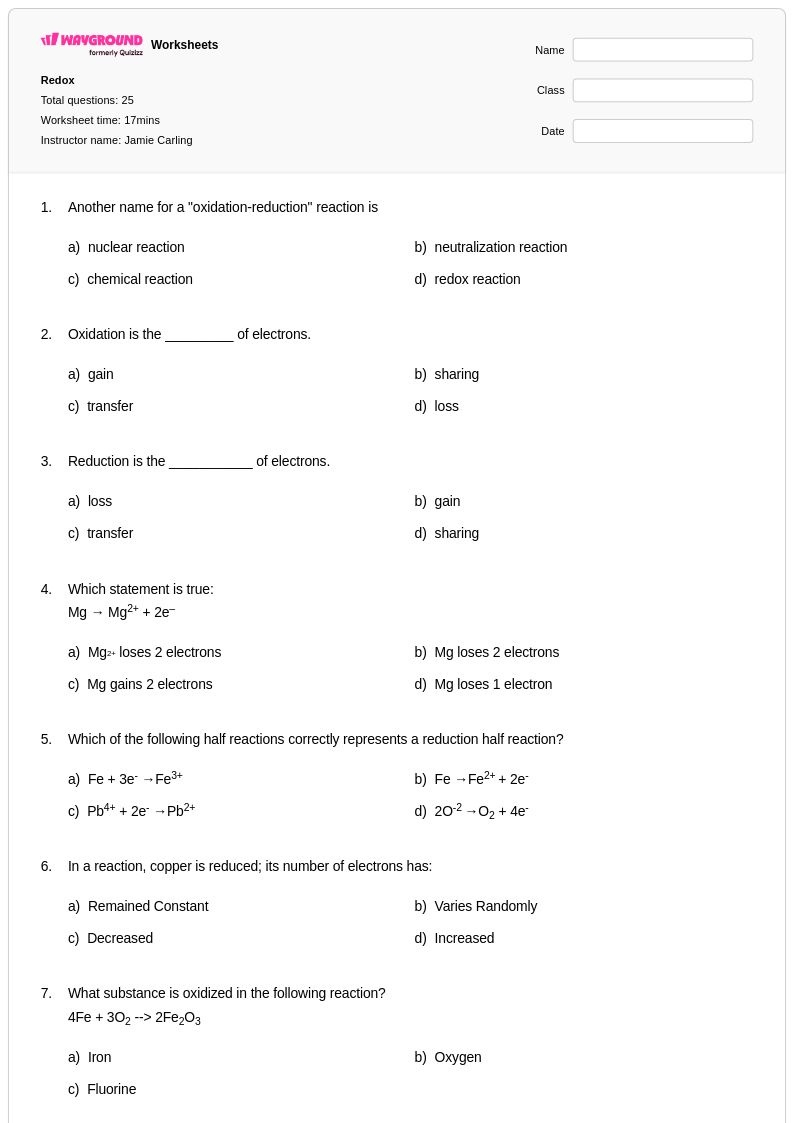
25 Q
11th
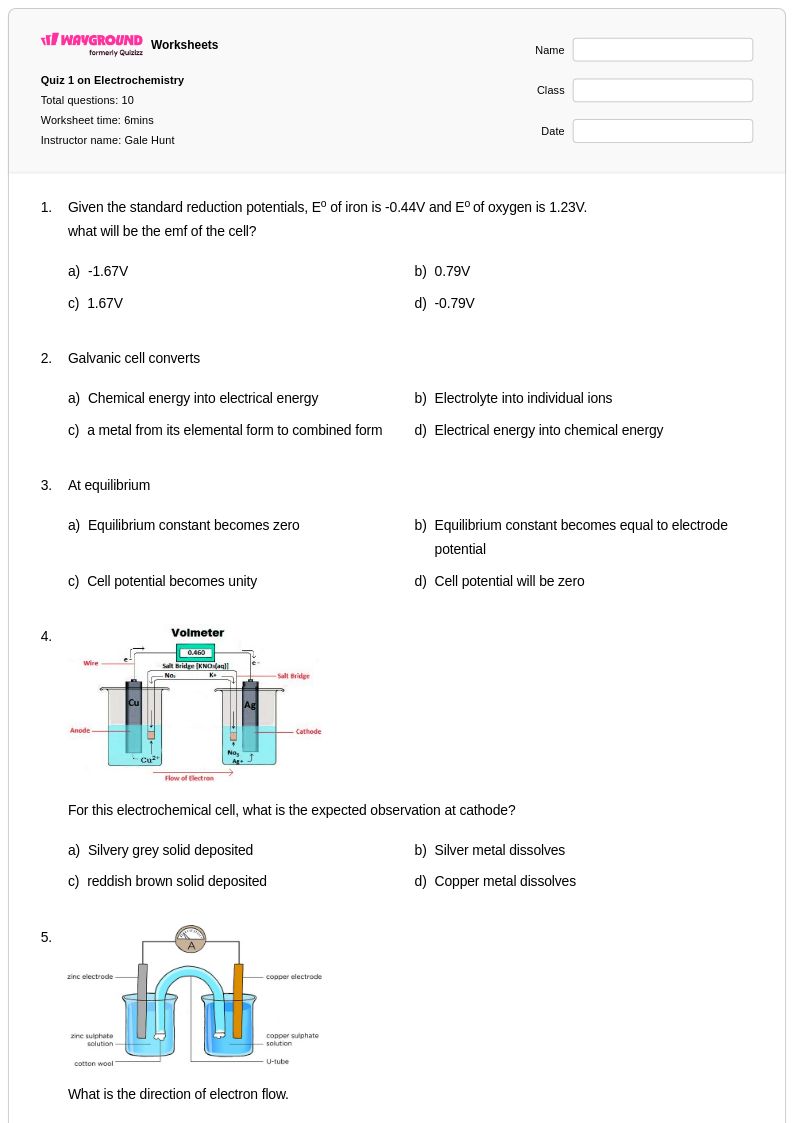
10 Q
11th - Uni
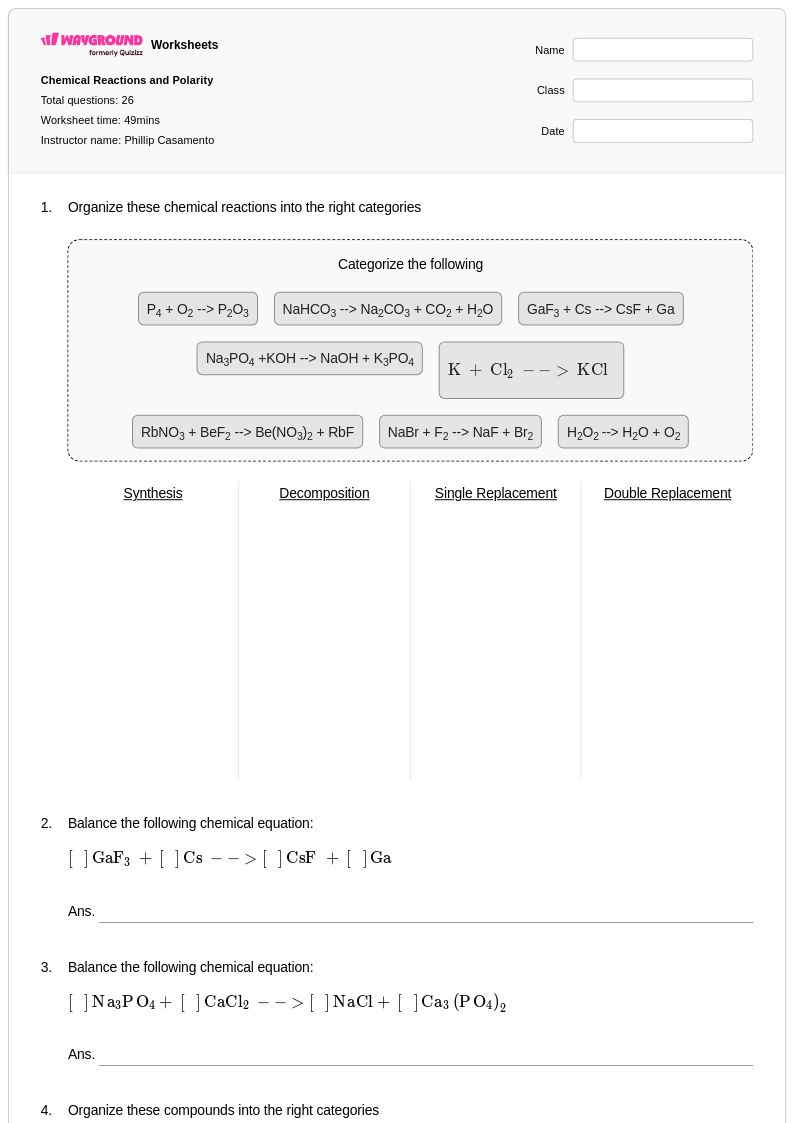
26 Q
9th - 12th
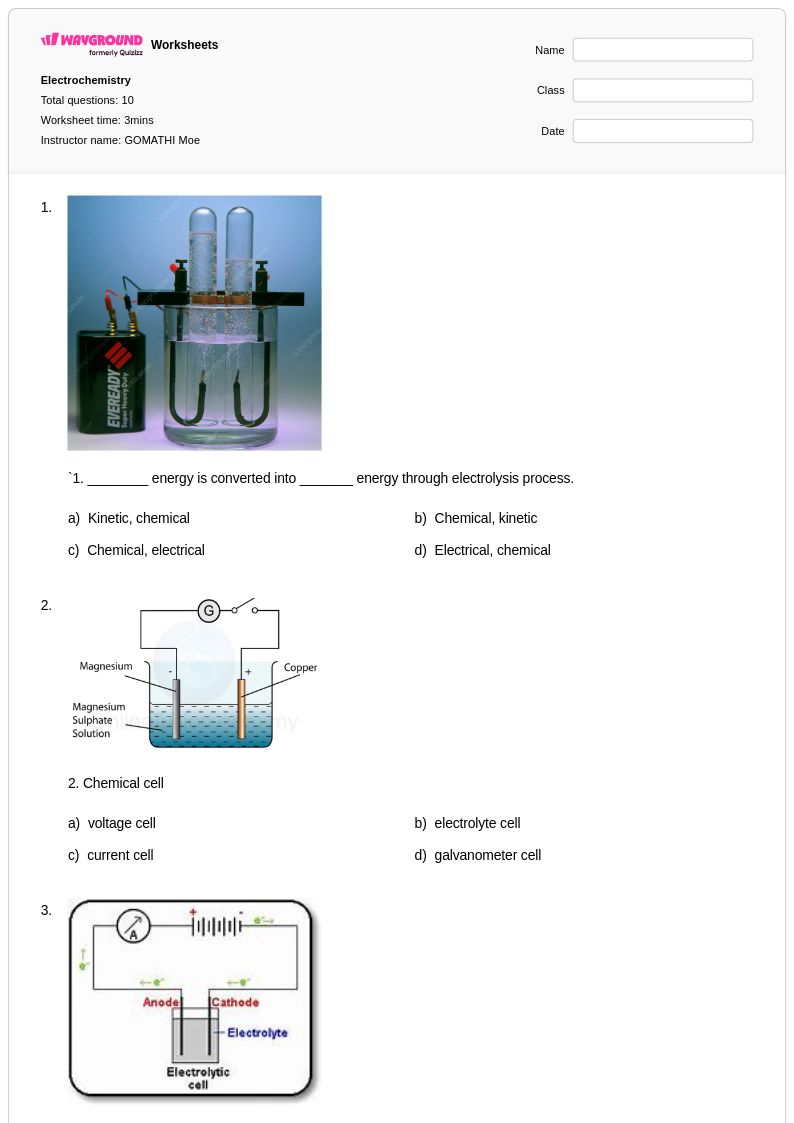
10 Q
11th
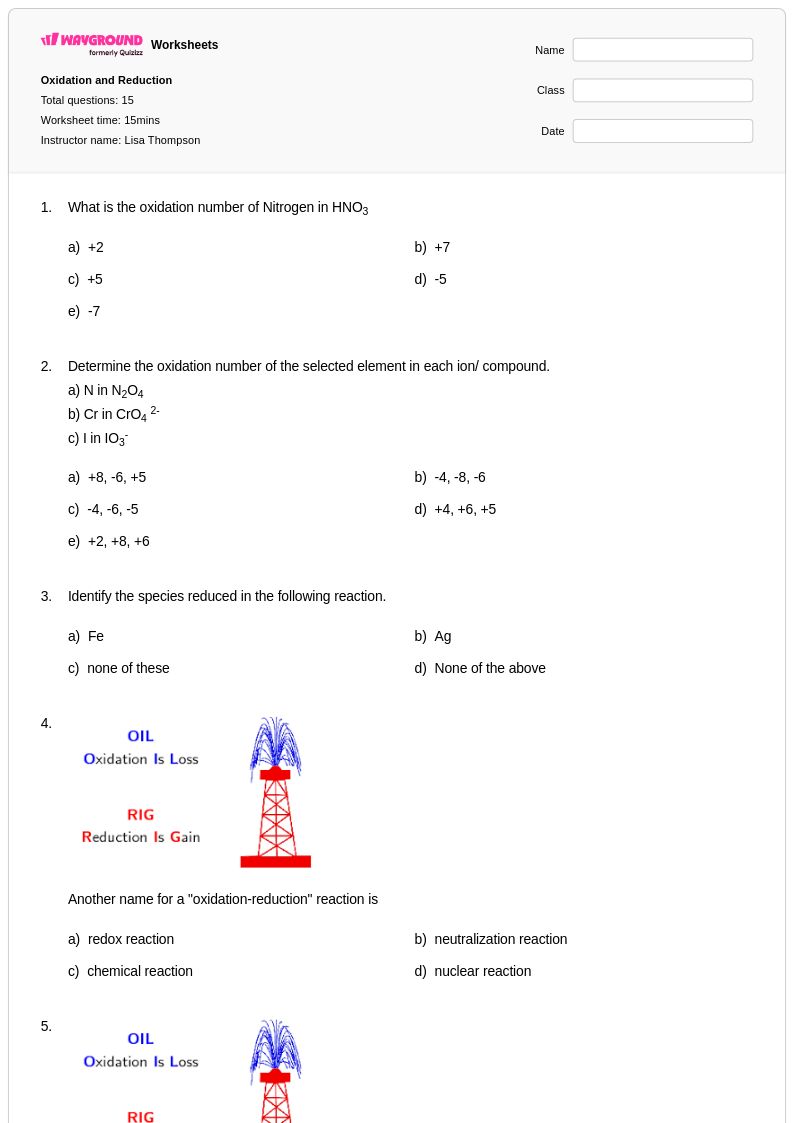
15 Q
9th - Uni
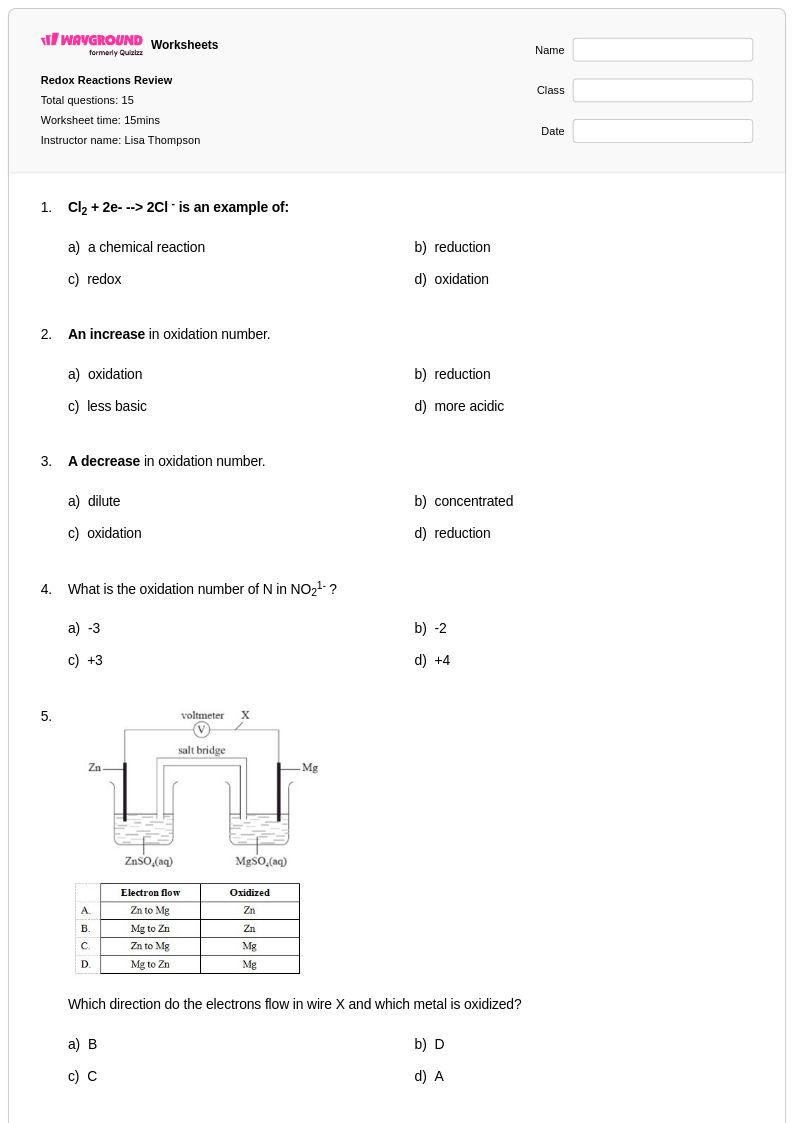
15 Q
10th - Uni
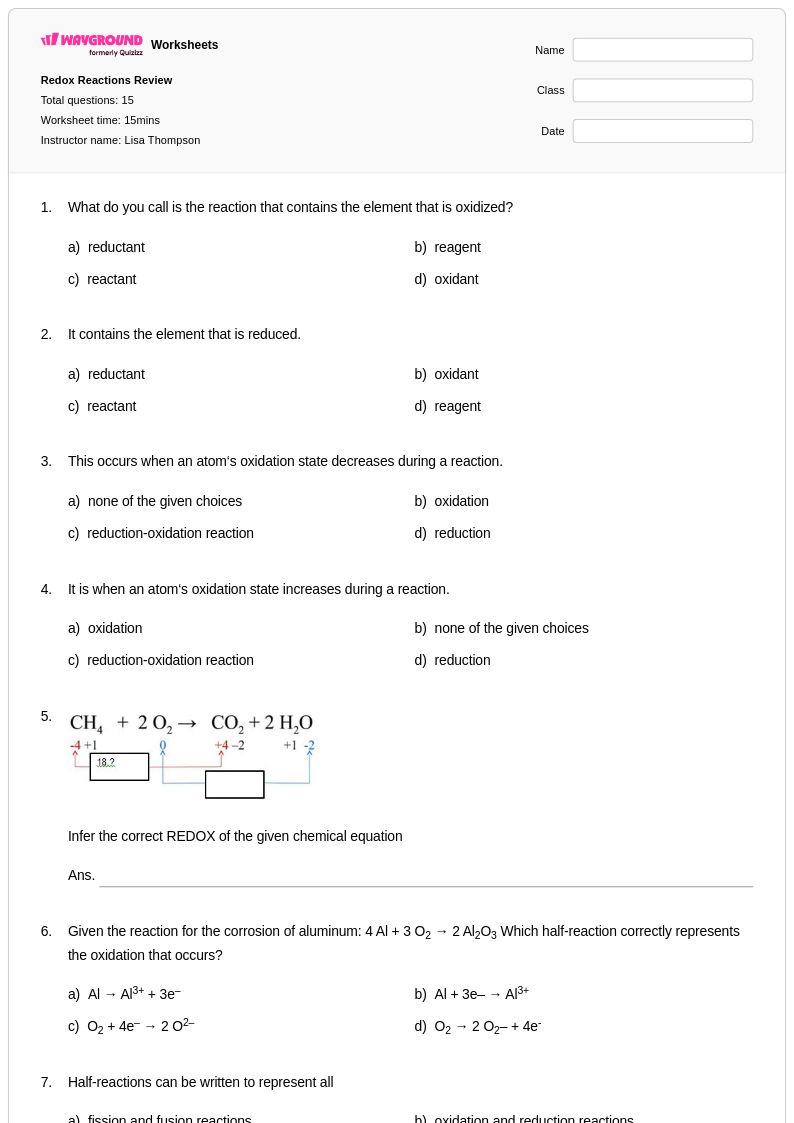
15 Q
10th - Uni
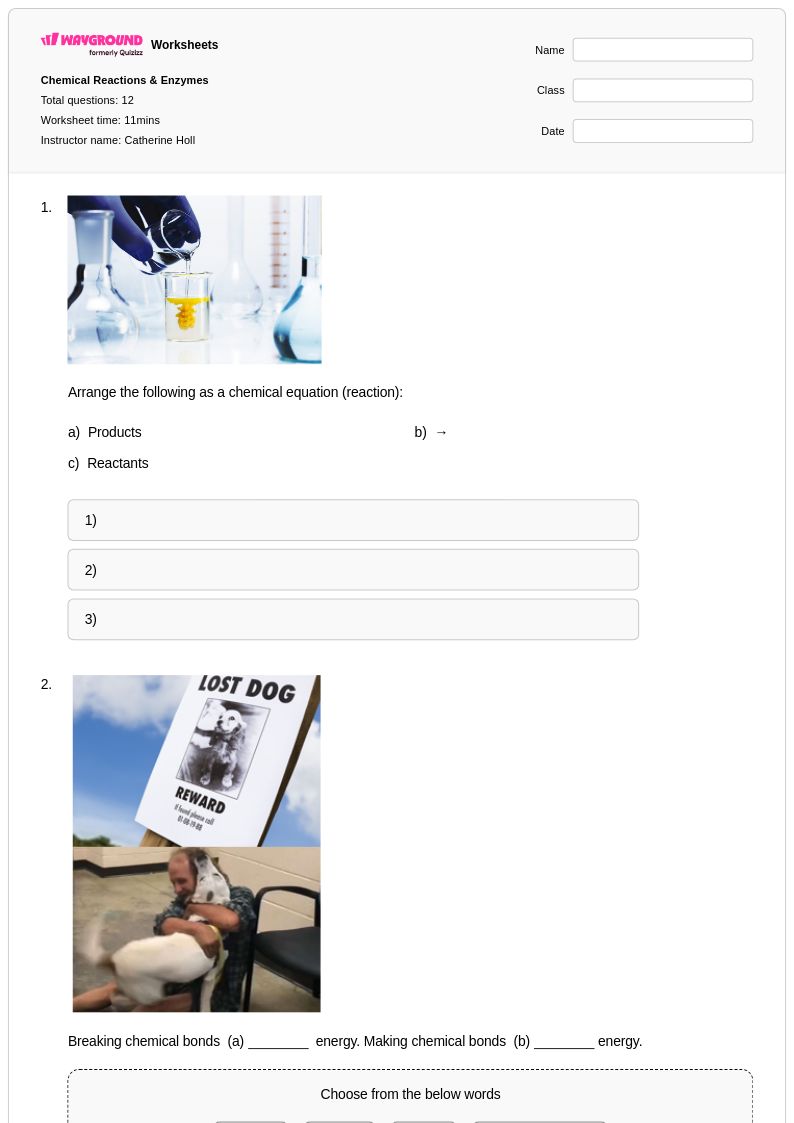
12 Q
9th - Uni
13 Q
9th - 12th
25 Q
8th - Uni
25 Q
9th - Uni
25 Q
8th - Uni
20 Q
8th - Uni
15 Q
10th - Uni
25 Q
8th - Uni
25 Q
9th - Uni
41 Q
11th - 12th
15 Q
10th - Uni
25 Q
8th - Uni
15 Q
10th - Uni
Explore Redox Reactions and Electrochemistry Worksheets for class 11 by Topic
Explore Other Subject Worksheets for class 11
Explore printable Redox Reactions and Electrochemistry worksheets for Class 11
Redox reactions and electrochemistry worksheets for Class 11 students available through Wayground (formerly Quizizz) provide comprehensive practice with electron transfer processes, oxidation-reduction mechanisms, and electrochemical cell operations. These expertly designed worksheets strengthen critical analytical skills including balancing redox equations using half-reaction methods, calculating cell potentials, determining spontaneity of reactions, and analyzing galvanic and electrolytic cells. Students develop proficiency in identifying oxidizing and reducing agents, applying standard reduction potentials, and understanding the relationship between thermodynamics and electrochemistry through structured practice problems that range from fundamental concept reinforcement to advanced application scenarios. Each worksheet includes detailed answer keys and explanations, making them valuable resources for independent study, homework assignments, and exam preparation, with free printables available in convenient pdf format for easy classroom distribution.
Wayground (formerly Quizizz) supports chemistry educators with an extensive collection of millions of teacher-created redox and electrochemistry resources that can be easily accessed through robust search and filtering capabilities designed to match specific curriculum standards and learning objectives. Teachers benefit from sophisticated differentiation tools that allow customization of worksheet difficulty levels, problem types, and content focus areas to meet diverse student needs within Class 11 chemistry classrooms. The platform's flexible format options include both printable pdf versions for traditional paper-based assignments and digital formats for technology-integrated instruction, enabling seamless adaptation to various teaching environments and student preferences. These comprehensive worksheet collections streamline lesson planning while providing targeted resources for remediation of challenging concepts like electrode processes and cell notation, enrichment activities for advanced learners exploring real-world electrochemical applications, and systematic skill practice that builds student confidence in manipulating complex redox equations and electrochemical calculations.
FAQs
How do I teach redox reactions and electrochemistry effectively in a high school chemistry class?
What are the best exercises for practicing balancing redox equations?
What mistakes do students commonly make when working with redox reactions and electrochemistry?
How do I help students understand the Nernst equation and when to apply it?
How do I use Wayground's redox reactions and electrochemistry worksheets in my classroom?
How can I differentiate redox and electrochemistry practice for students at different skill levels?