Free Printable Alkenes Naming Worksheets for Class 11
Free Class 11 alkenes naming worksheets and printable PDFs help students master IUPAC nomenclature rules through structured practice problems and comprehensive answer keys for organic chemistry success.
Explore printable Alkenes Naming worksheets for Class 11
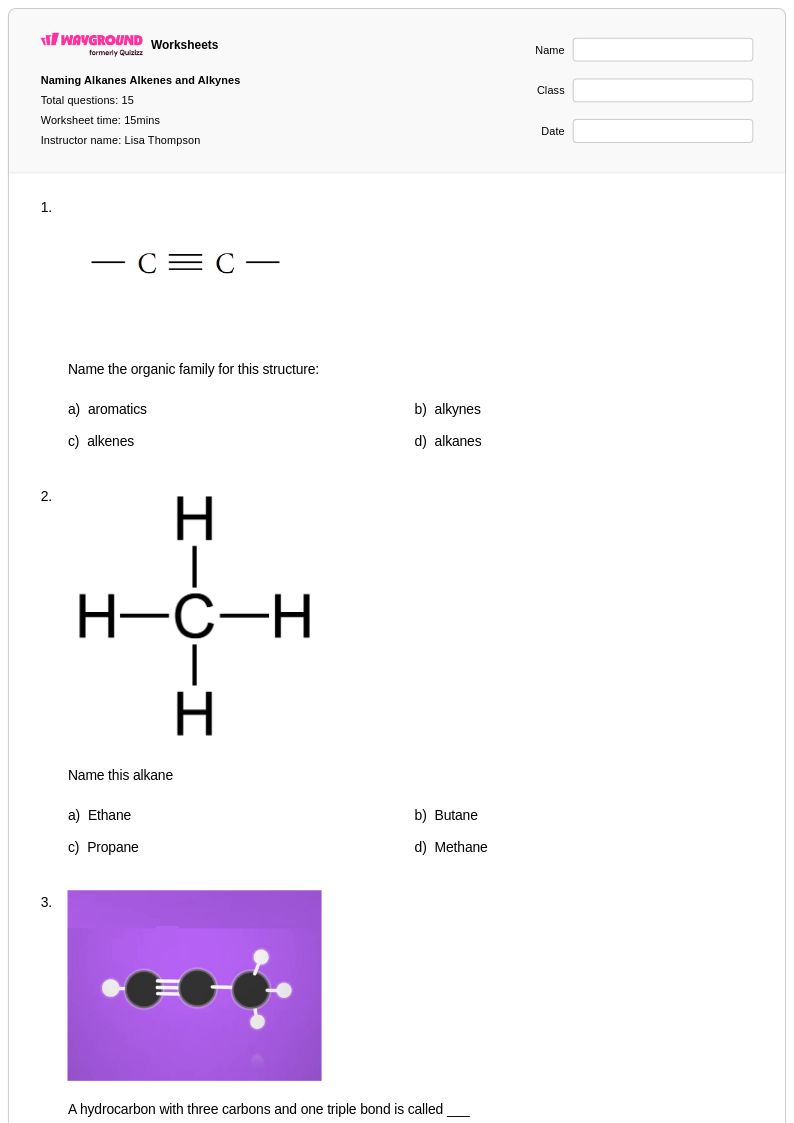
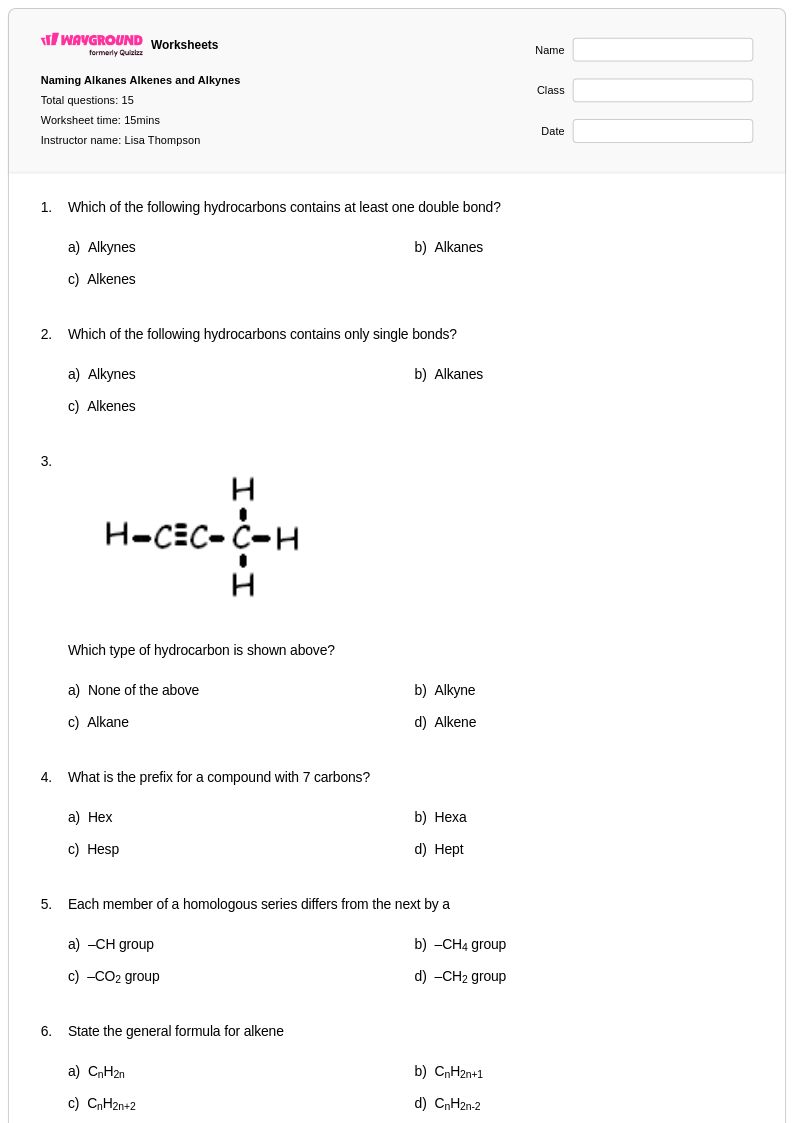
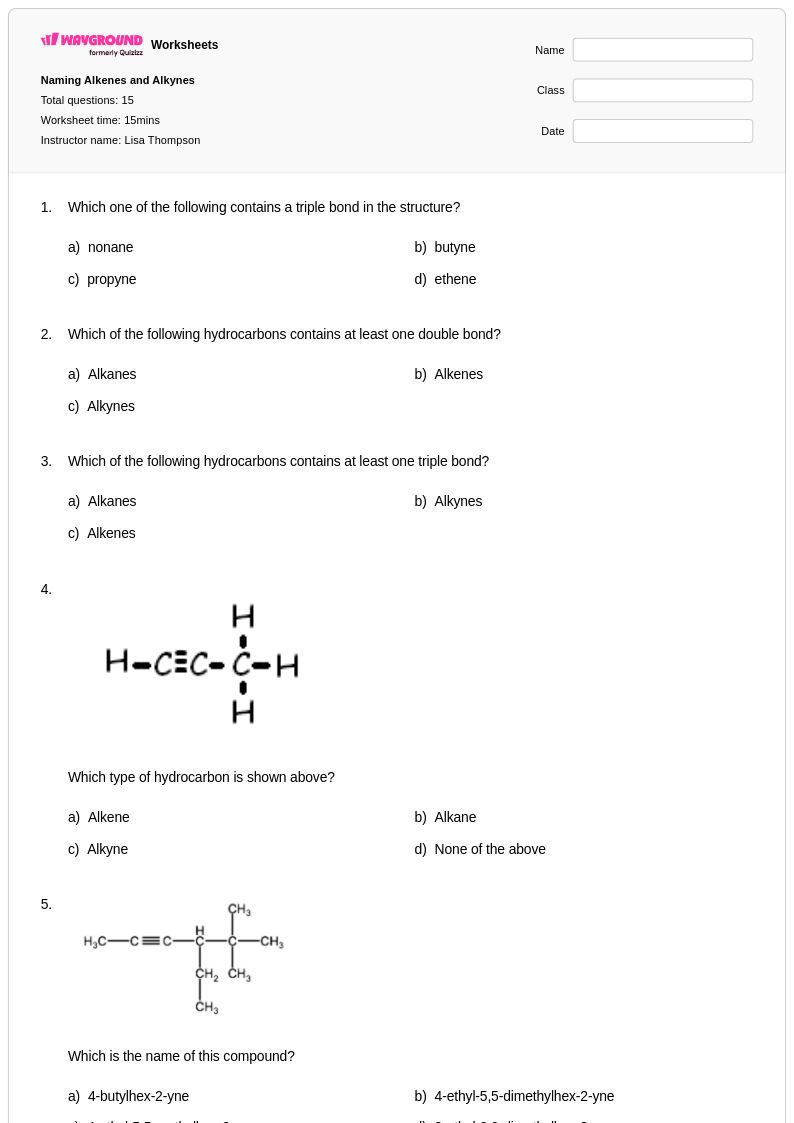
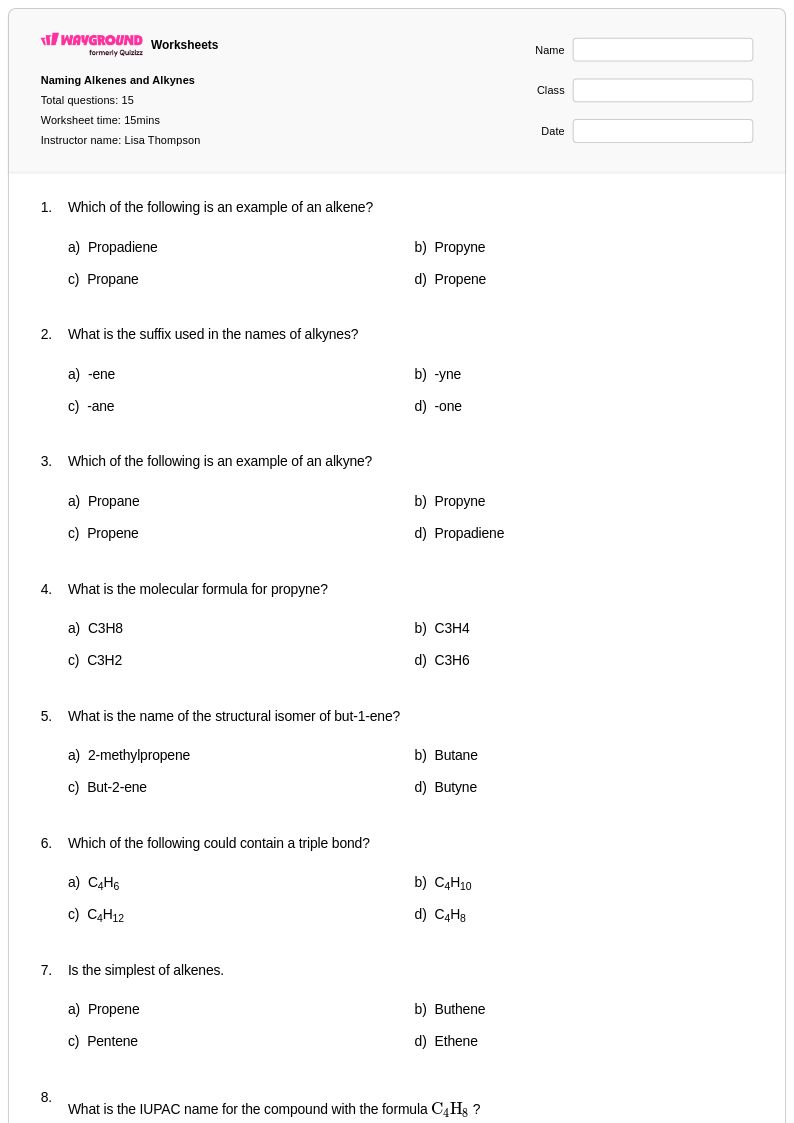
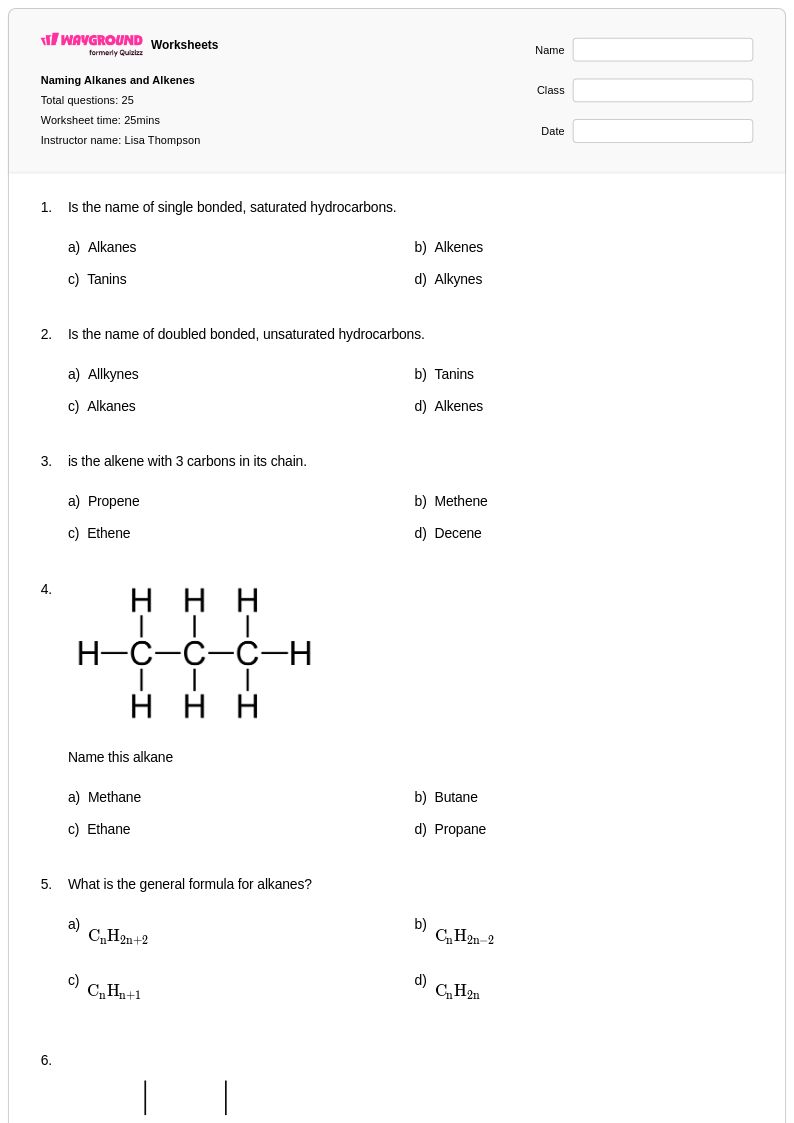
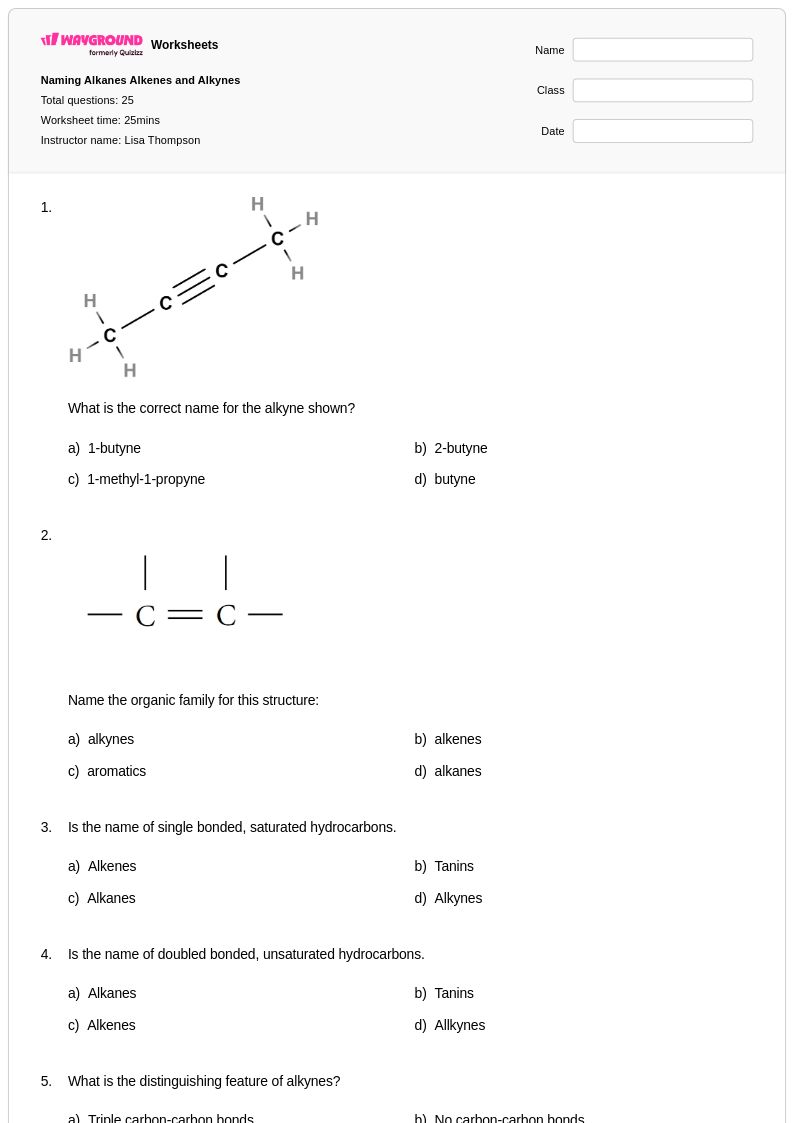
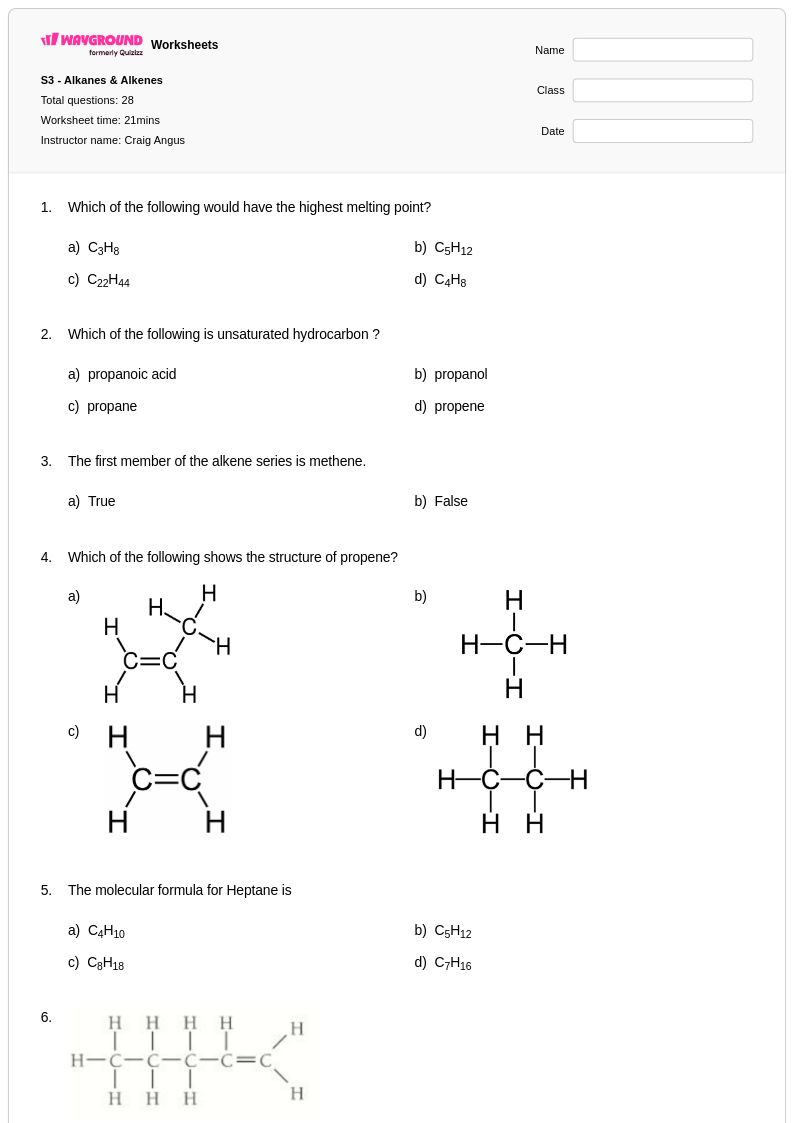
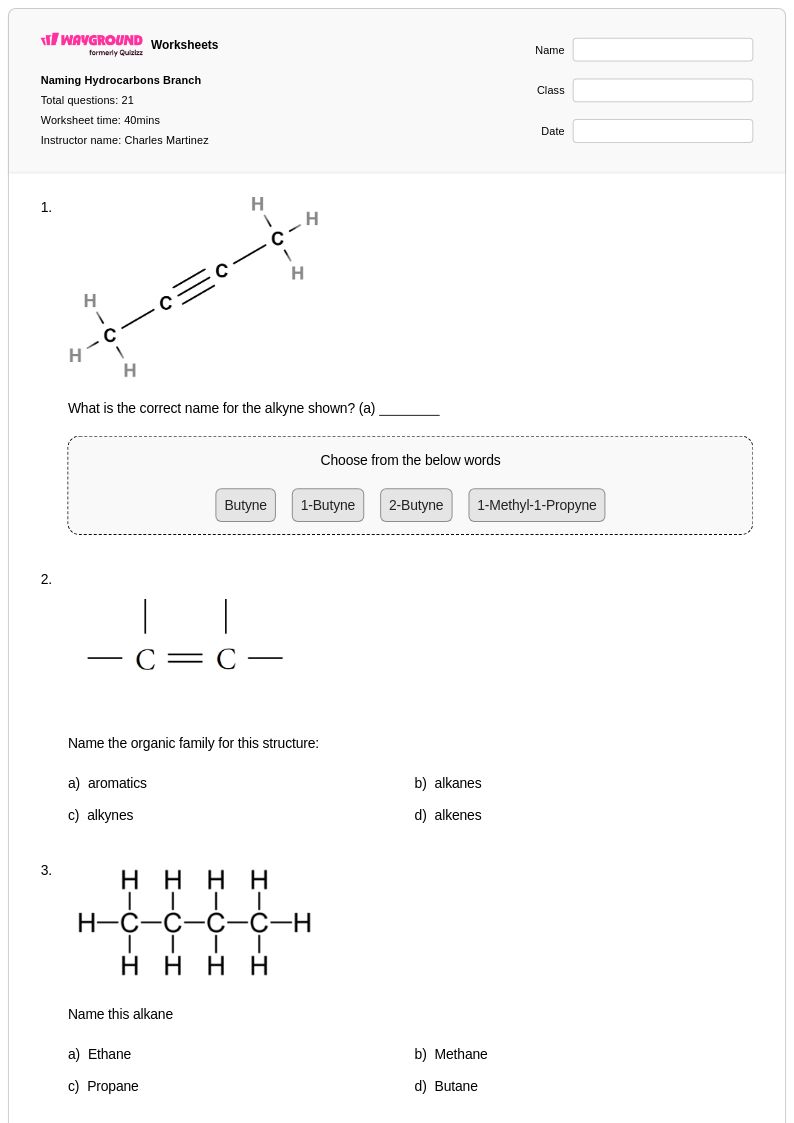
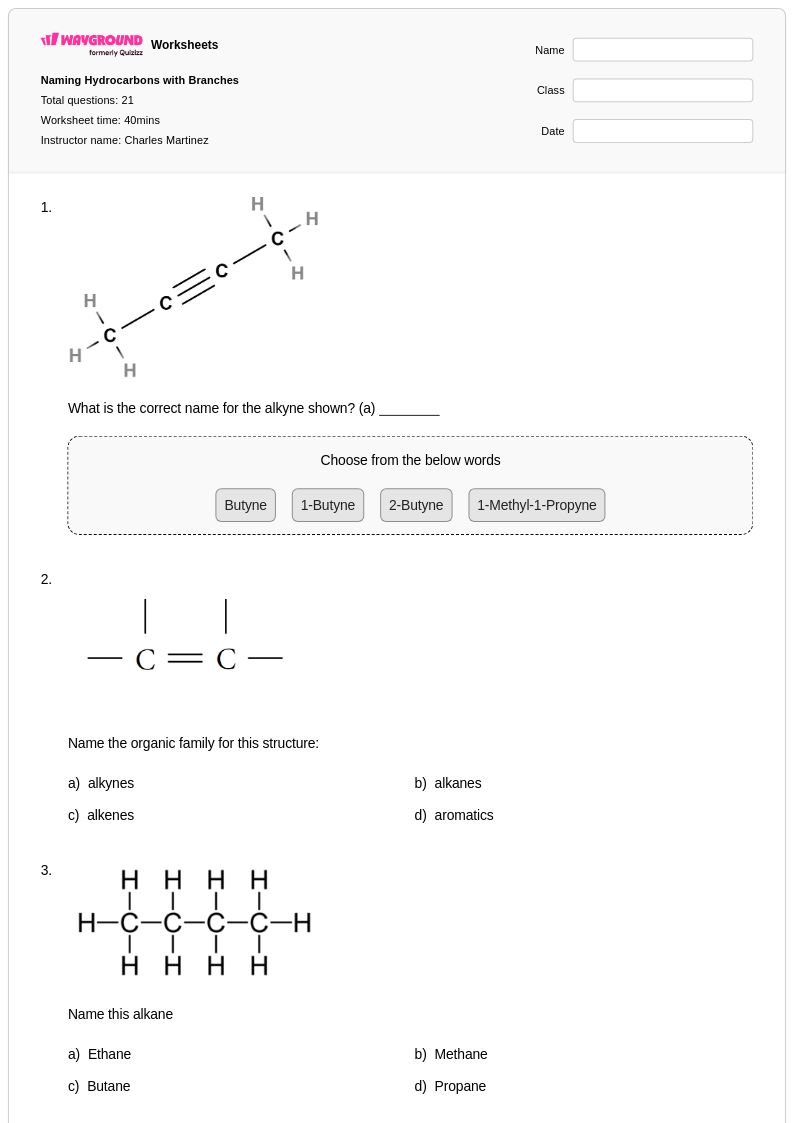
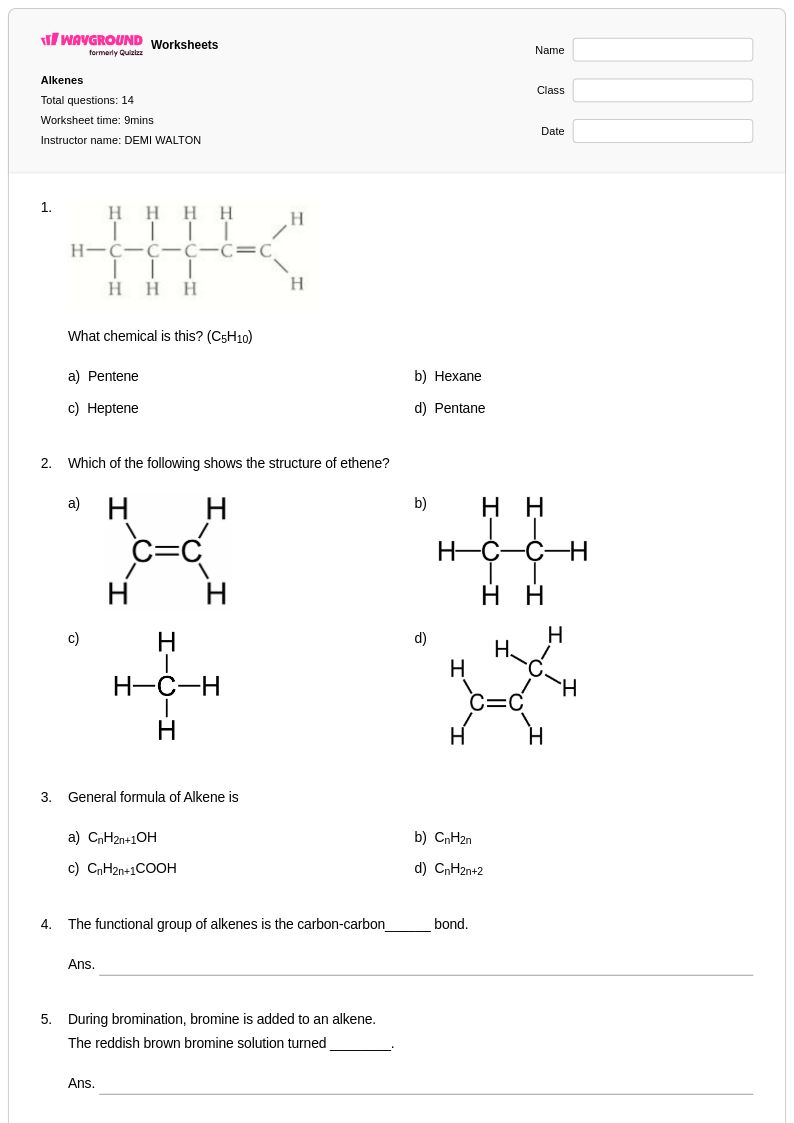
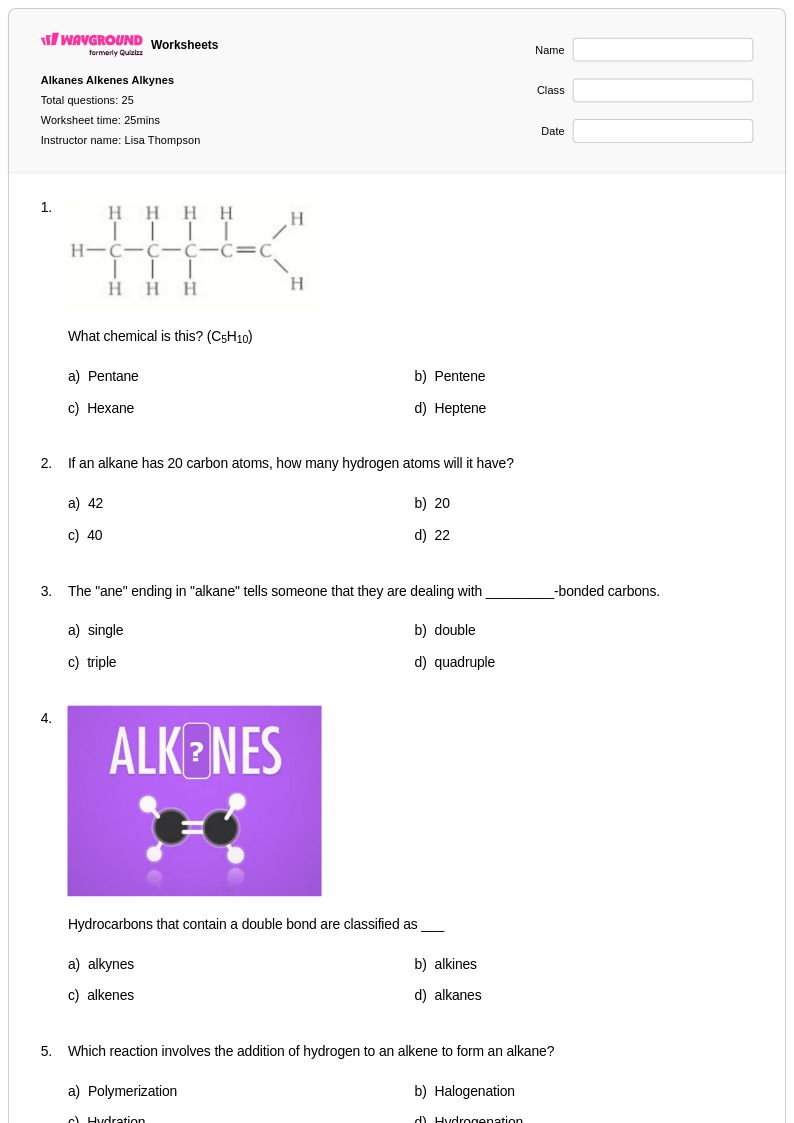
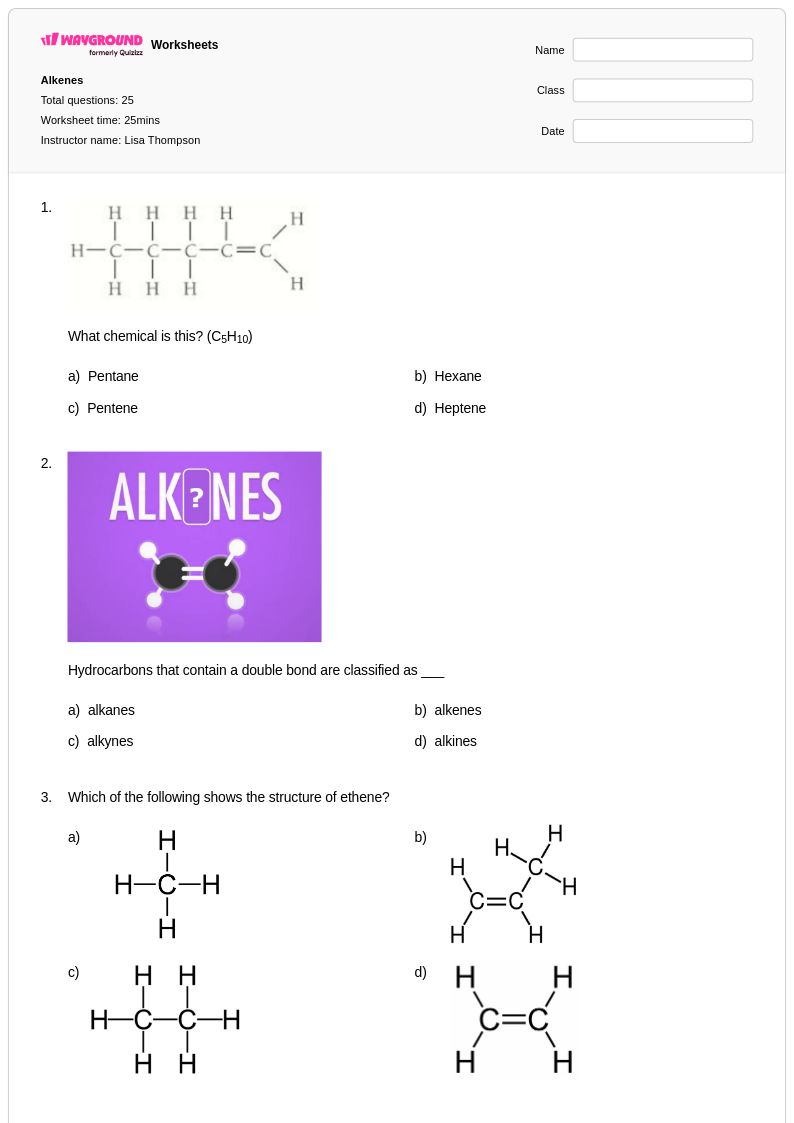
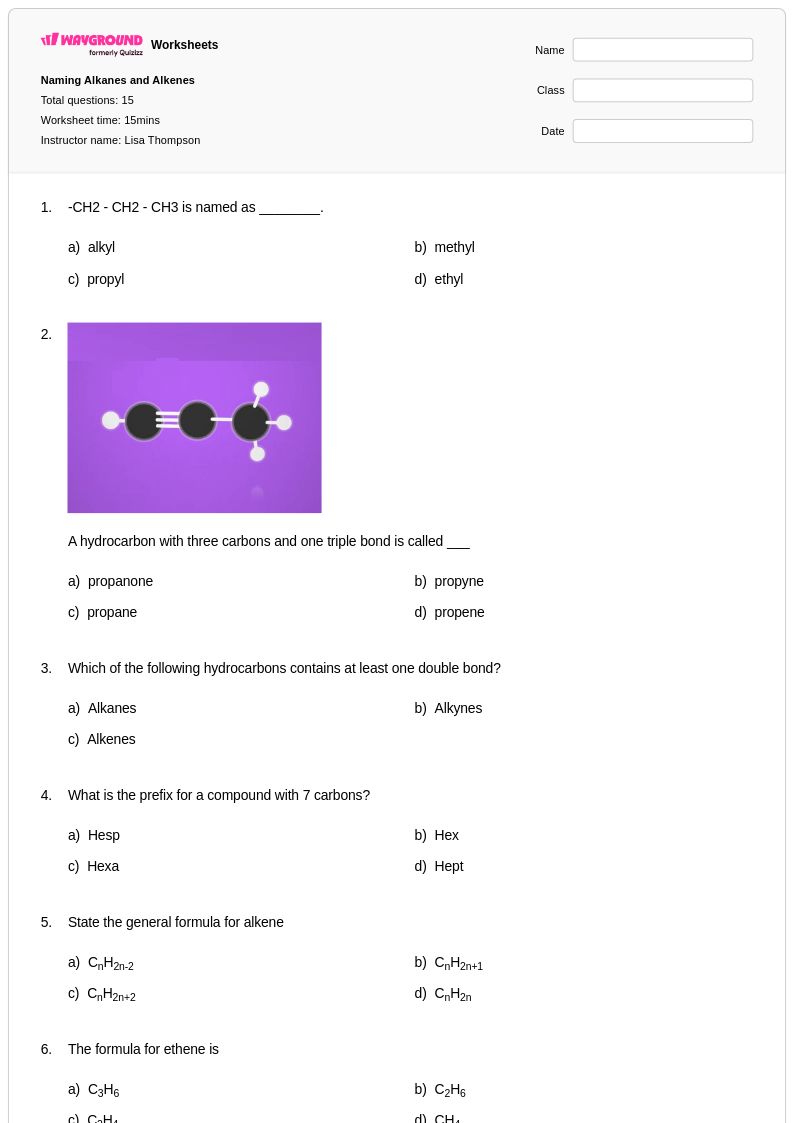
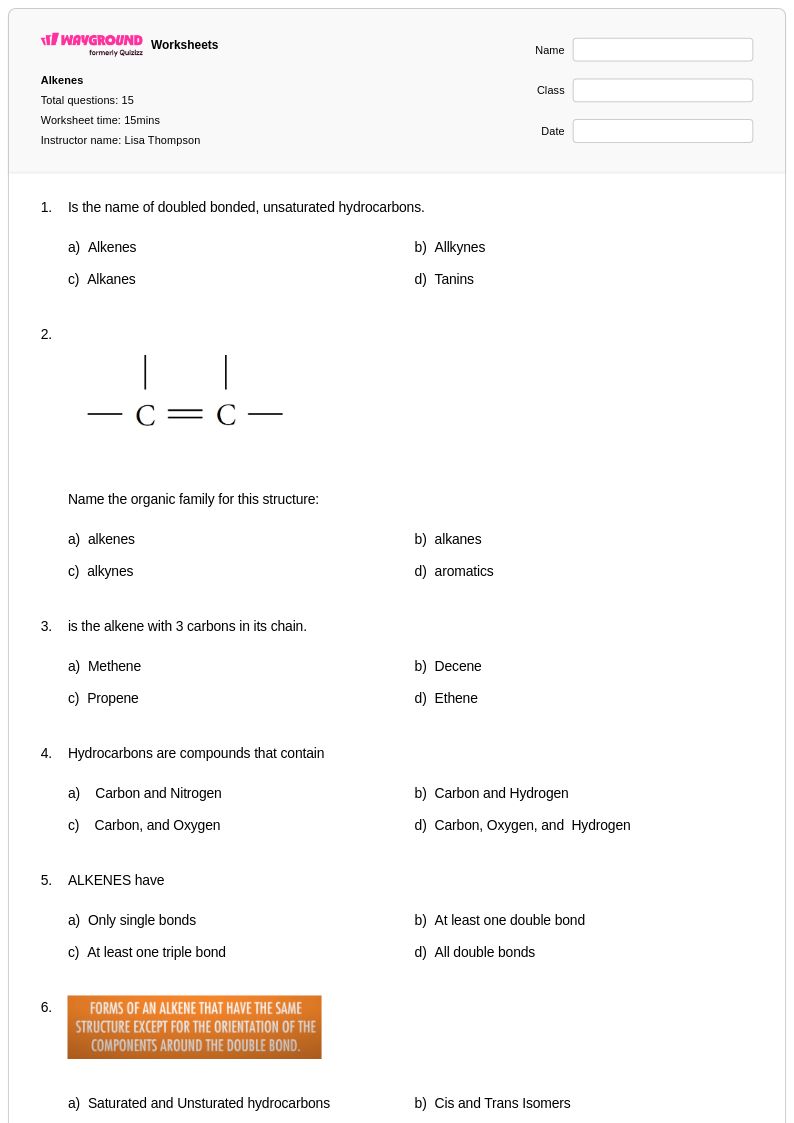
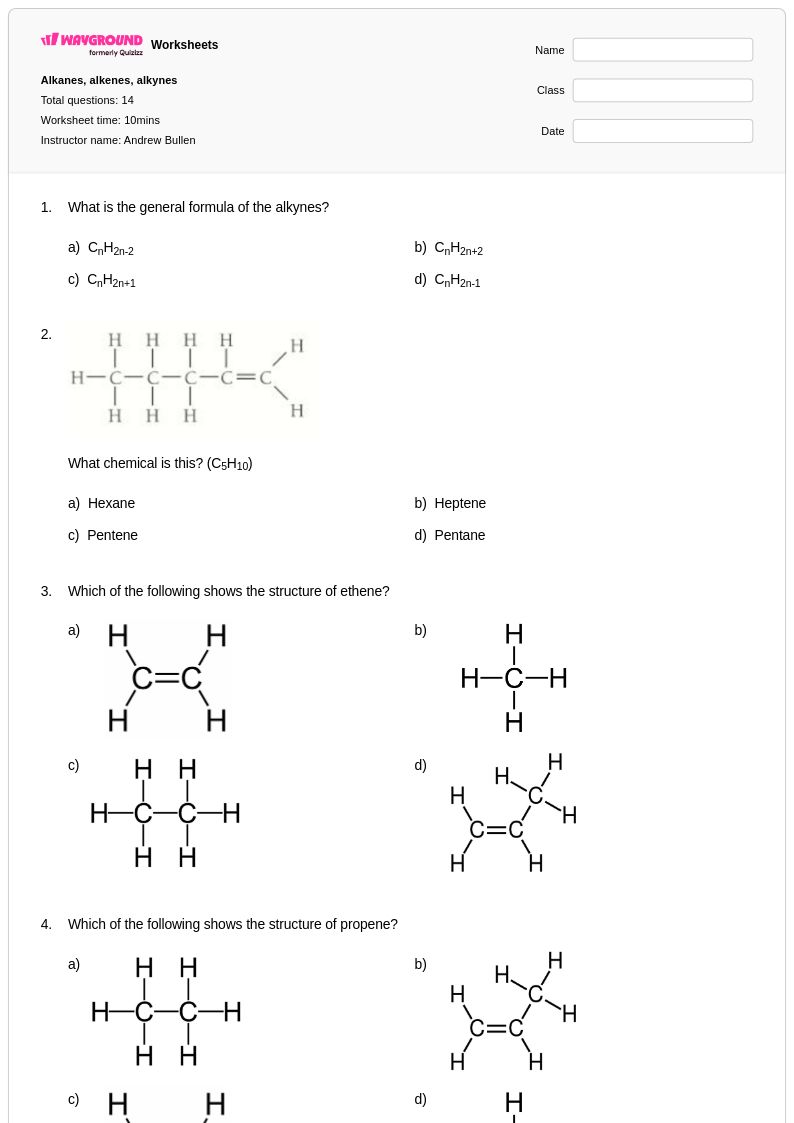
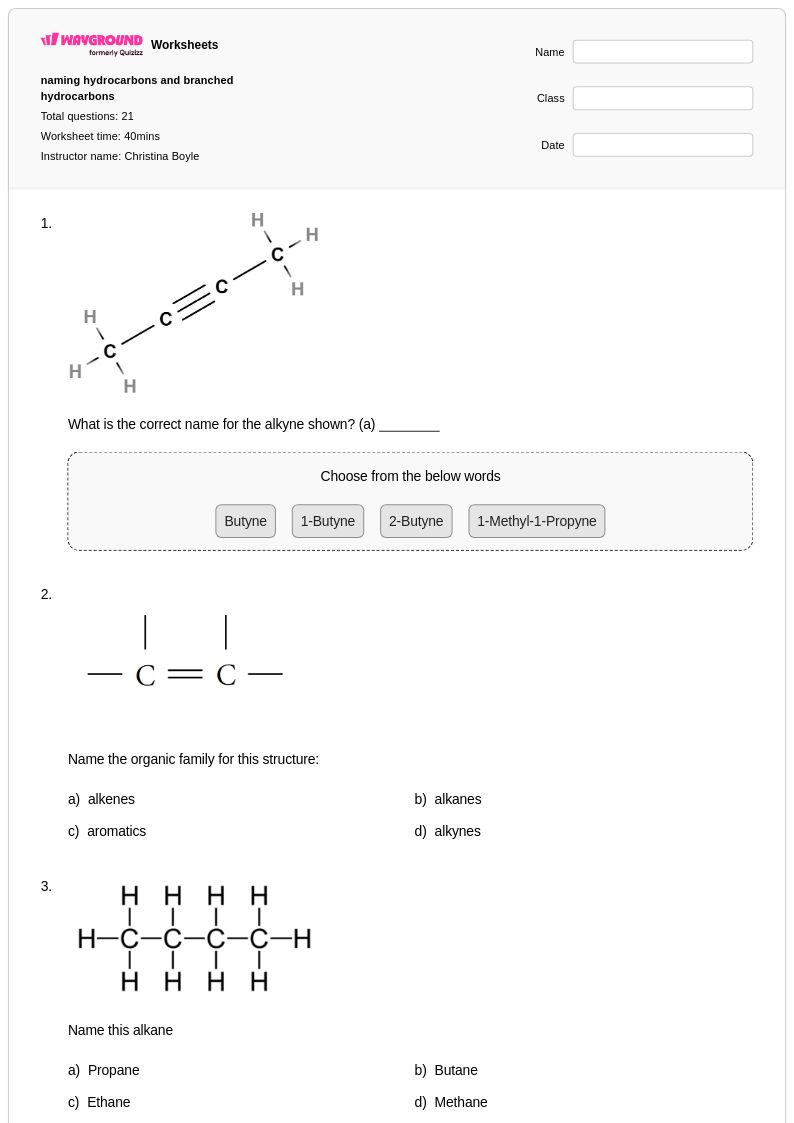
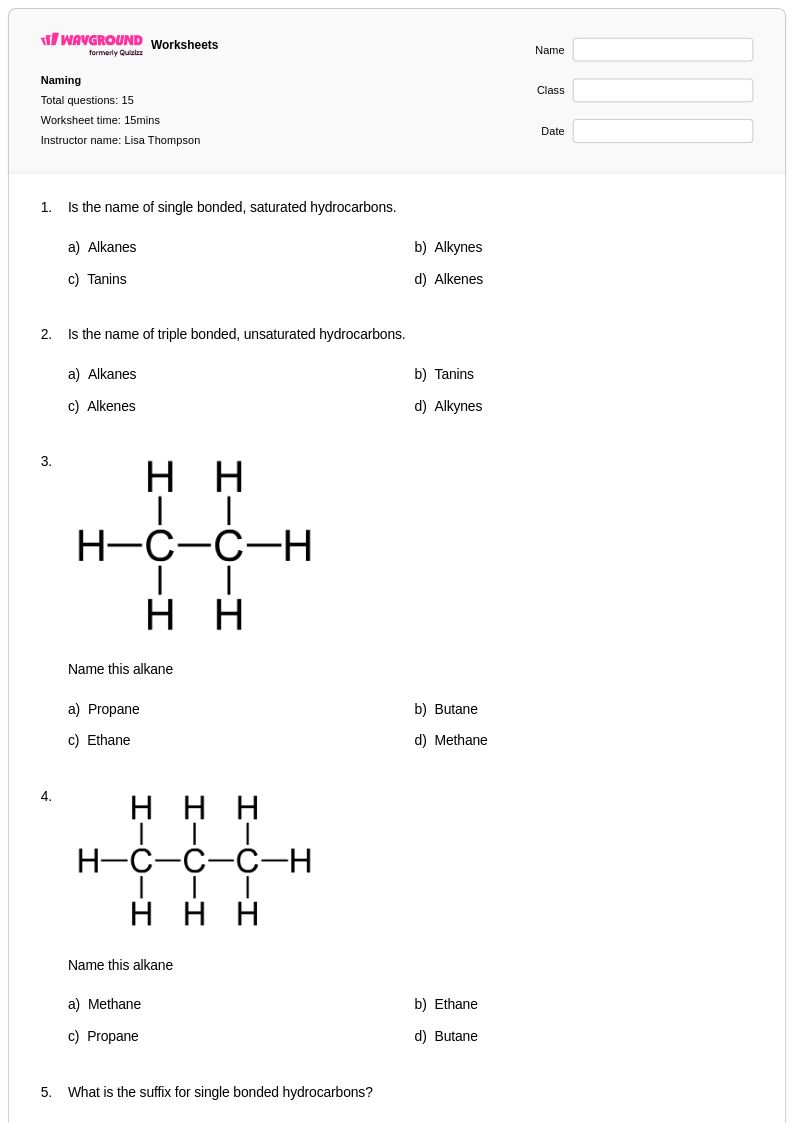
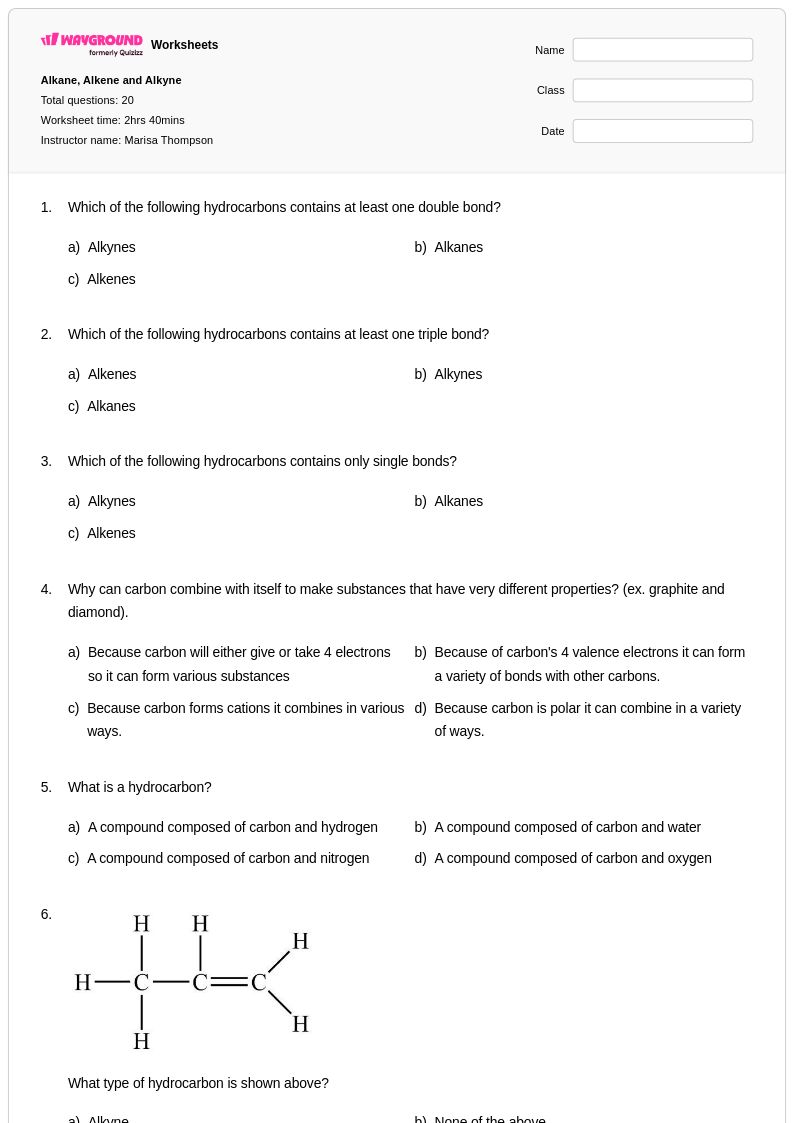
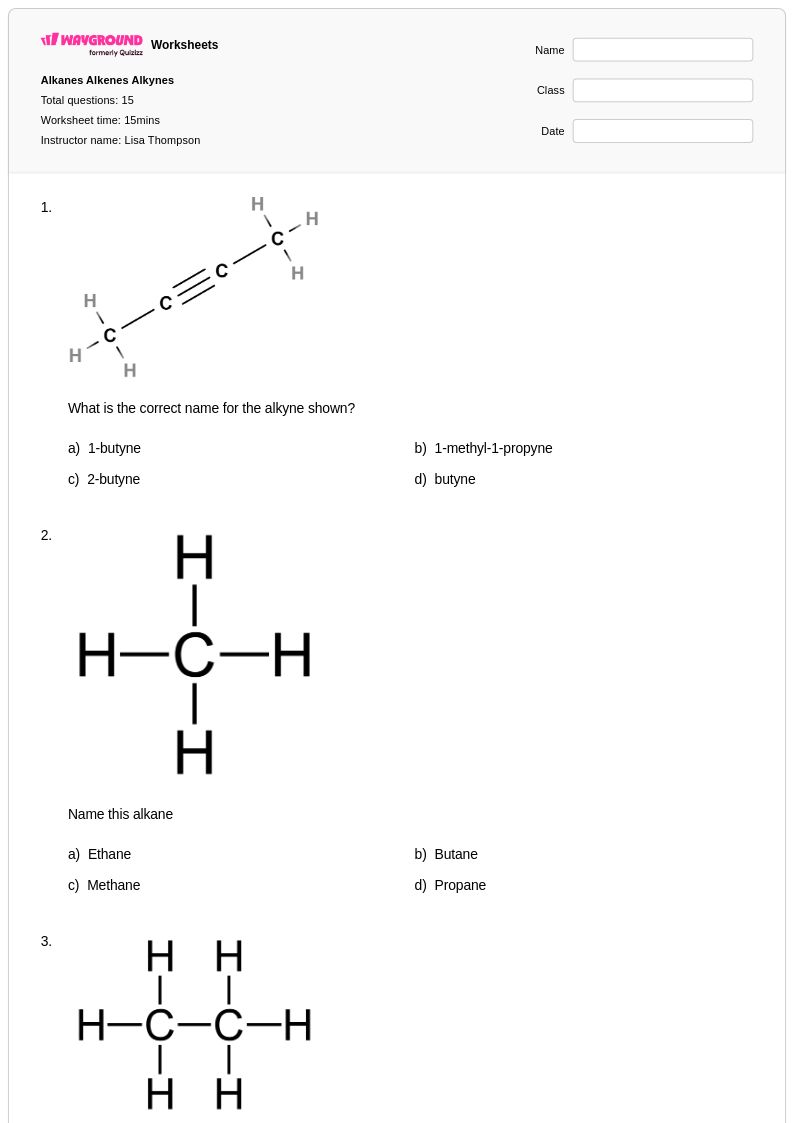
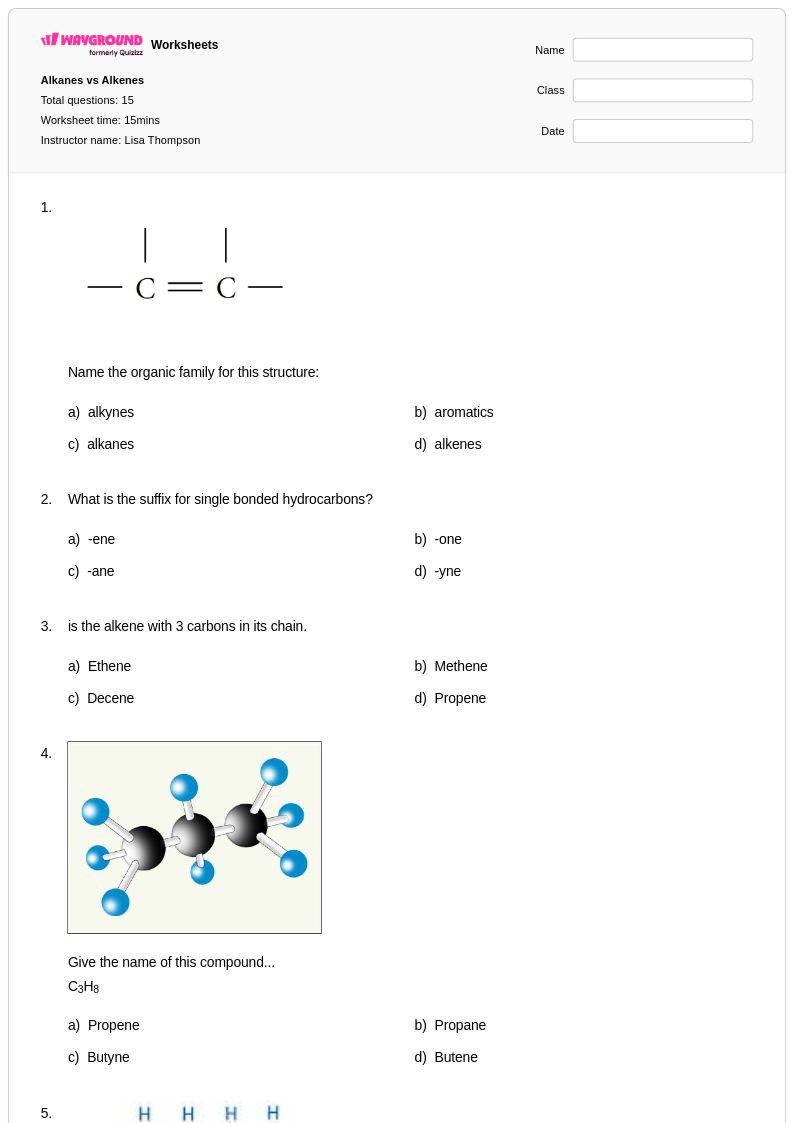
Alkenes naming worksheets for Class 11 chemistry students available through Wayground (formerly Quizizz) provide comprehensive practice in the systematic nomenclature of unsaturated hydrocarbons containing carbon-carbon double bonds. These expertly crafted worksheets strengthen students' ability to apply IUPAC naming conventions, identify the longest carbon chain containing the double bond, assign proper numbering to give the alkene functional group the lowest possible number, and incorporate substituent groups with correct positional indicators. Students develop proficiency in distinguishing between structural isomers, recognizing geometric isomerism in alkenes, and applying priority rules for complex branched structures. Each worksheet includes detailed practice problems progressing from simple alkenes like ethene and propene to more complex polyfunctional molecules, with comprehensive answer keys provided in printable PDF format to support independent learning and self-assessment.
Wayground (formerly Quizizz) empowers chemistry educators with access to millions of teacher-created alkenes naming resources specifically designed for Class 11 curriculum standards. The platform's advanced search and filtering capabilities allow instructors to quickly locate worksheets aligned with specific learning objectives, whether focusing on basic nomenclature rules or advanced stereochemistry concepts. Teachers can customize existing materials or create differentiated versions to accommodate diverse learning needs, from remediation exercises for struggling students to enrichment problems challenging advanced learners. The flexible digital and printable PDF formats enable seamless integration into various instructional models, supporting both classroom practice sessions and homework assignments while facilitating efficient lesson planning and targeted skill development in organic chemistry nomenclature.
FAQs
How do I teach IUPAC naming of alkenes to chemistry students?
Start by ensuring students can name simple alkanes before introducing the double bond, since alkene naming builds directly on that foundation. Teach the steps sequentially: identify the longest carbon chain containing the double bond, number the chain to give the double bond the lowest locant, and apply the '-ene' suffix with the position number. Once students are comfortable with linear alkenes, introduce branched alkenes and then progress to cis-trans and E-Z isomerism as a separate conceptual layer.
What exercises help students practice naming alkenes?
Effective practice combines structural-to-name and name-to-structural exercises so students work in both directions. Begin with simple unbranched alkenes, then introduce branching and multiple substituents, and finally present polyunsaturated compounds. Including cis-trans and E-Z nomenclature problems as a distinct exercise set helps students recognize geometric isomerism as a separate naming decision rather than conflating it with chain-numbering rules.
What are the most common mistakes students make when naming alkenes?
The most frequent error is numbering the carbon chain from the wrong end, resulting in the double bond receiving a higher locant than necessary. Students also commonly confuse which chain qualifies as the 'parent' chain, particularly in branched structures where a longer chain without the double bond might seem more obvious. Mixing up cis/trans and E/Z nomenclature systems is another persistent mistake, especially when more than one substituent differs in priority.
How do I teach cis-trans isomerism alongside alkene naming?
Introduce cis-trans isomerism only after students are confident with base IUPAC alkene names, so the geometric distinction does not overwhelm the naming procedure itself. Use molecular models or clear structural diagrams to show restricted rotation around the double bond before connecting it to nomenclature. Emphasize that cis-trans notation applies only when each carbon of the double bond bears two different substituents, and then introduce E-Z nomenclature as the more systematic alternative based on Cahn-Ingold-Prelog priority rules.
How do I use Wayground's alkenes naming worksheets in my classroom?
Wayground's alkenes naming worksheets are available as printable PDFs for traditional classroom use and in digital formats for technology-integrated environments, giving you flexibility for in-class practice, homework, or lab follow-up. You can also host them as a quiz directly on Wayground, which makes them suitable for formative assessment with immediate feedback. The worksheets include complete answer keys, so students can self-assess after independent practice, and the progressive difficulty structure means you can assign different problems to different skill levels within the same class period.
How can I differentiate alkene naming instruction for students at different skill levels?
For students who are still developing foundational skills, reduce cognitive load by starting with symmetrical alkenes where cis-trans decisions are not required, and provide partially completed naming templates as scaffolding. More advanced learners can be challenged with polyunsaturated compounds, complex branching, and E-Z nomenclature for molecules with four different substituents on the double bond. On Wayground, you can apply accommodations such as reduced answer choices or read-aloud support to individual students, allowing the rest of the class to work with standard settings without interruption.