
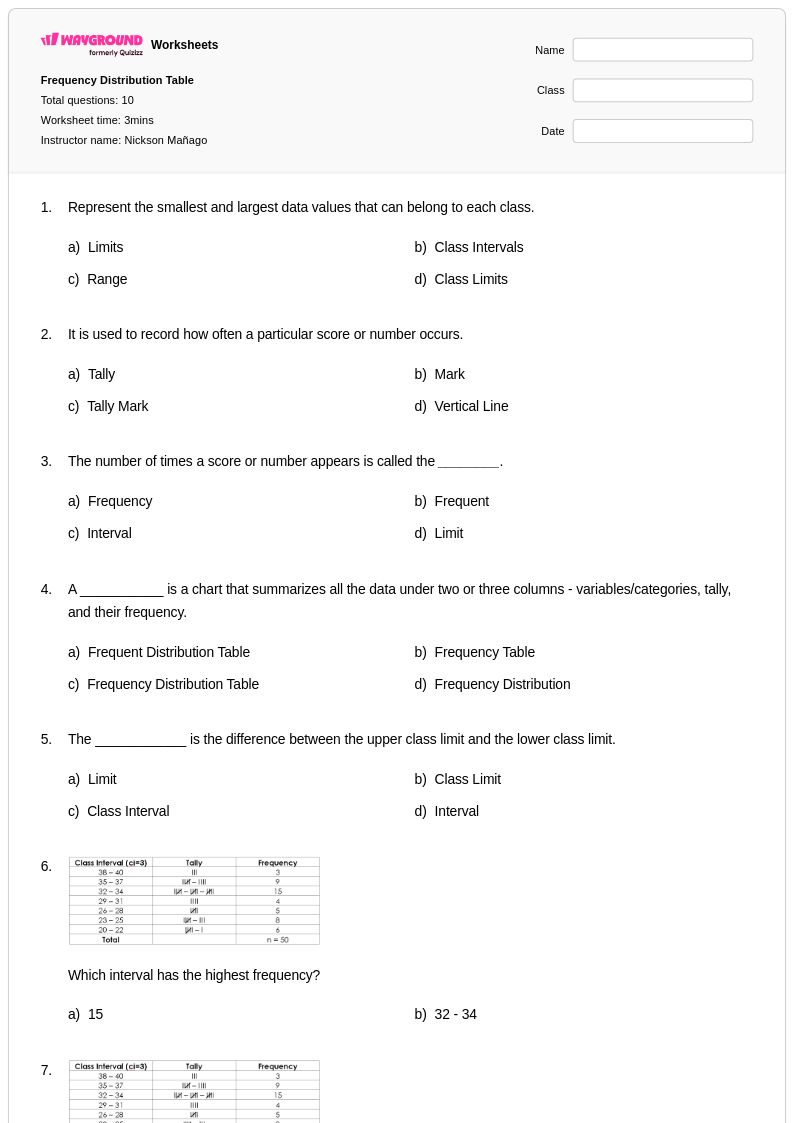
10 Q
7th - 12th
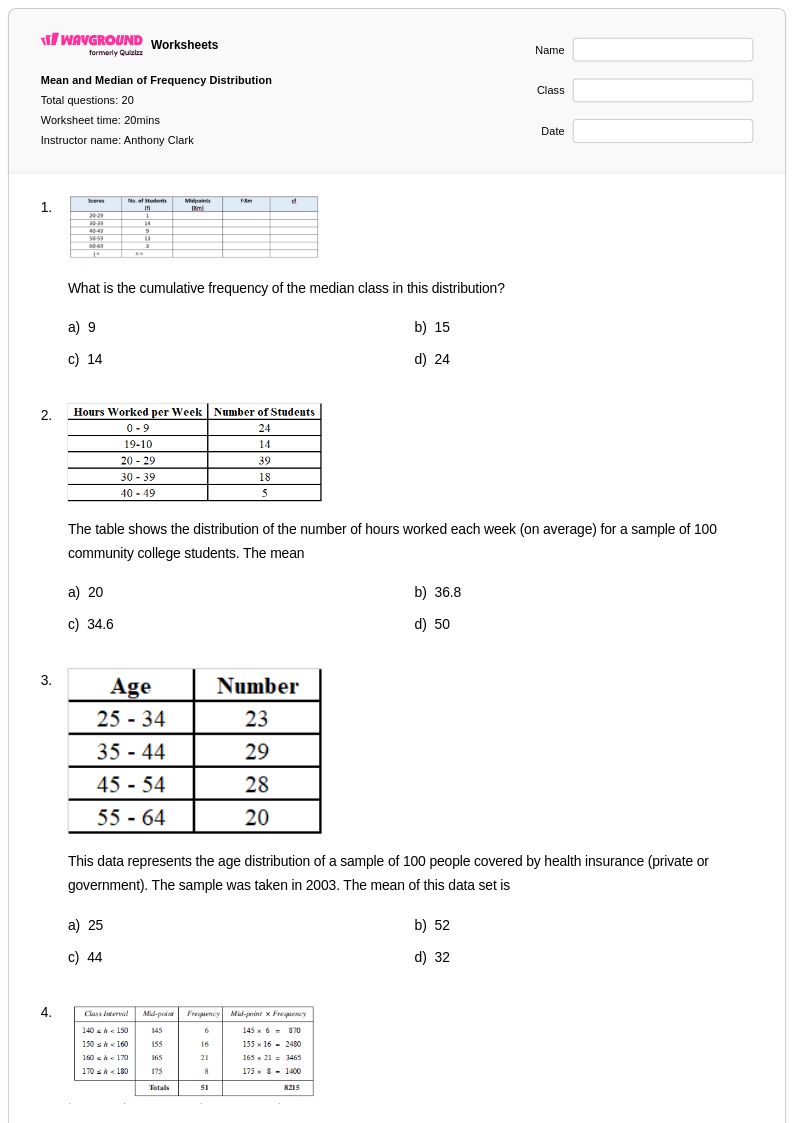
20 Q
6th - Uni
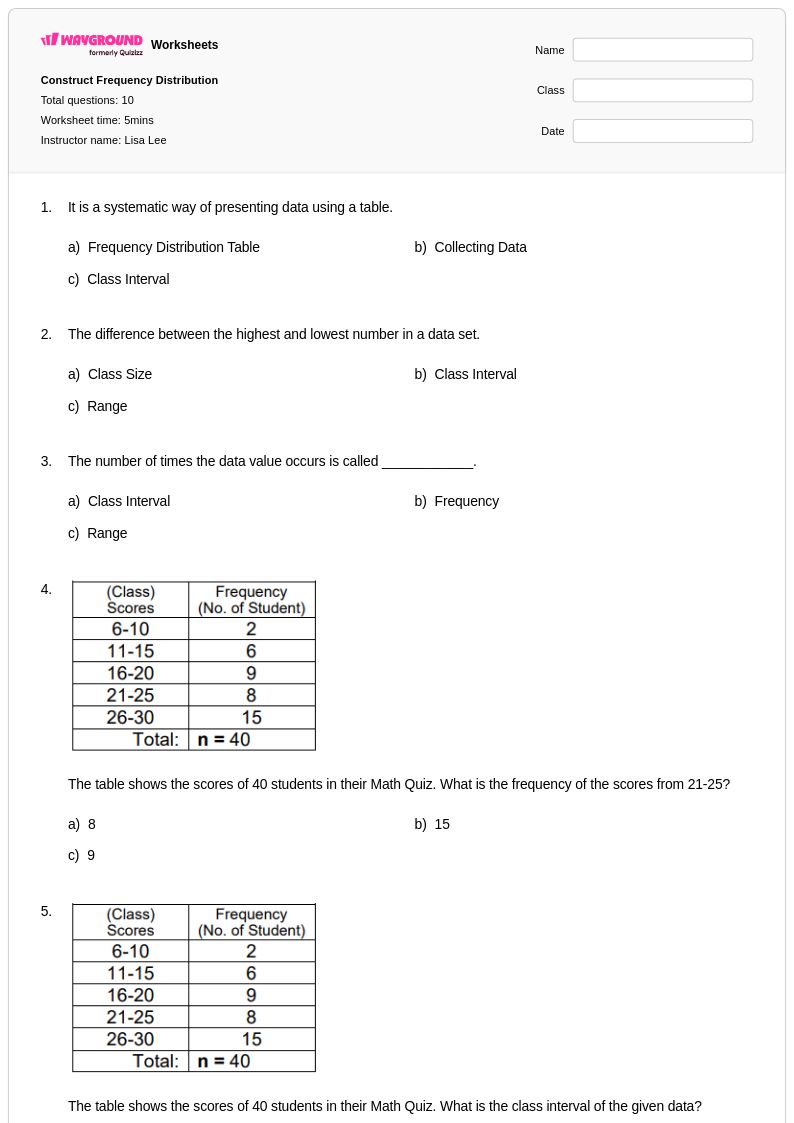
10 Q
7th
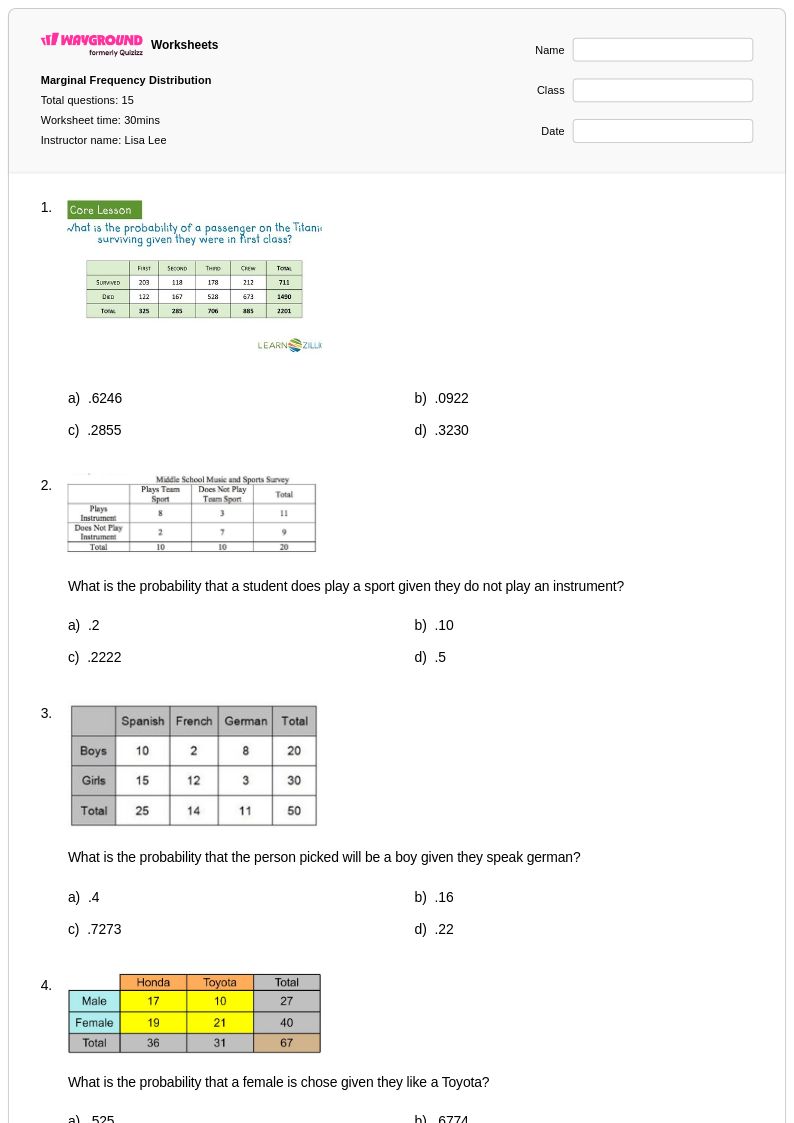
15 Q
7th - 10th
20 Q
7th
18 Q
7th
15 Q
6th - Uni
16 Q
6th - Uni
14 Q
6th - Uni
20 Q
6th - Uni
15 Q
6th - Uni
11 Q
7th
15 Q
6th - 8th

11 Q
6th - 8th
15 Q
5th - 7th
19 Q
6th - Uni
10 Q
7th
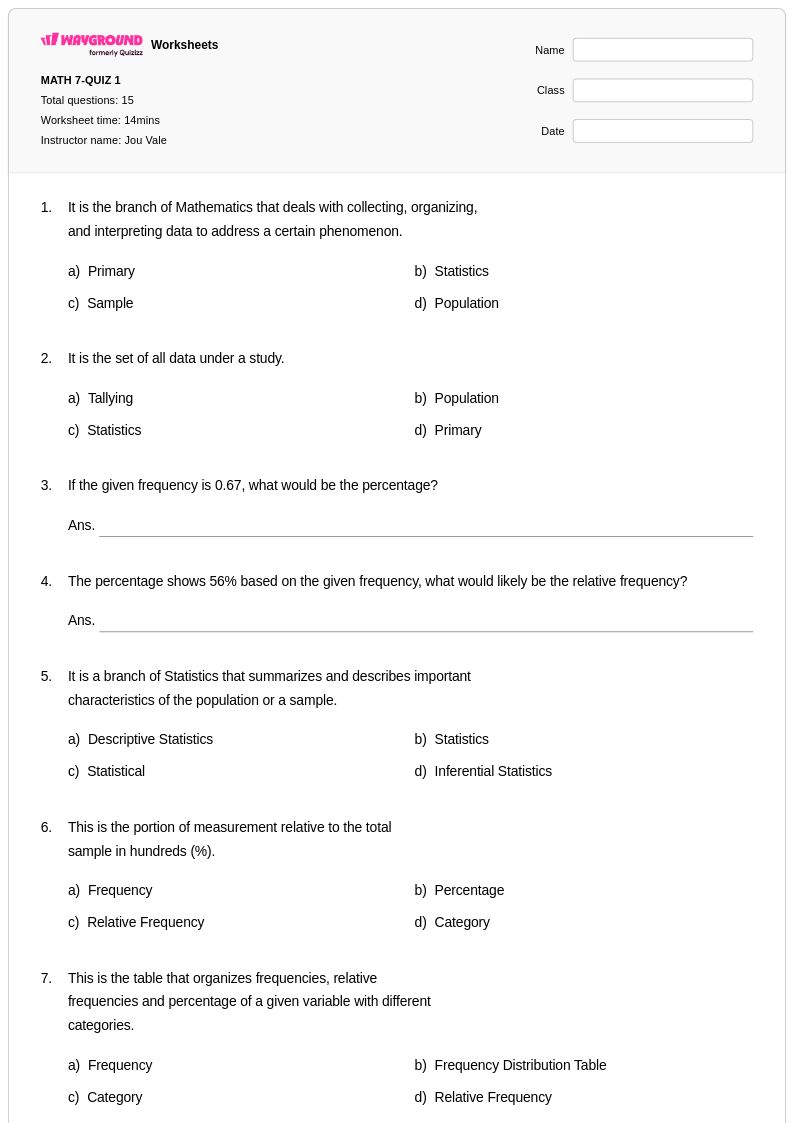
15 Q
7th
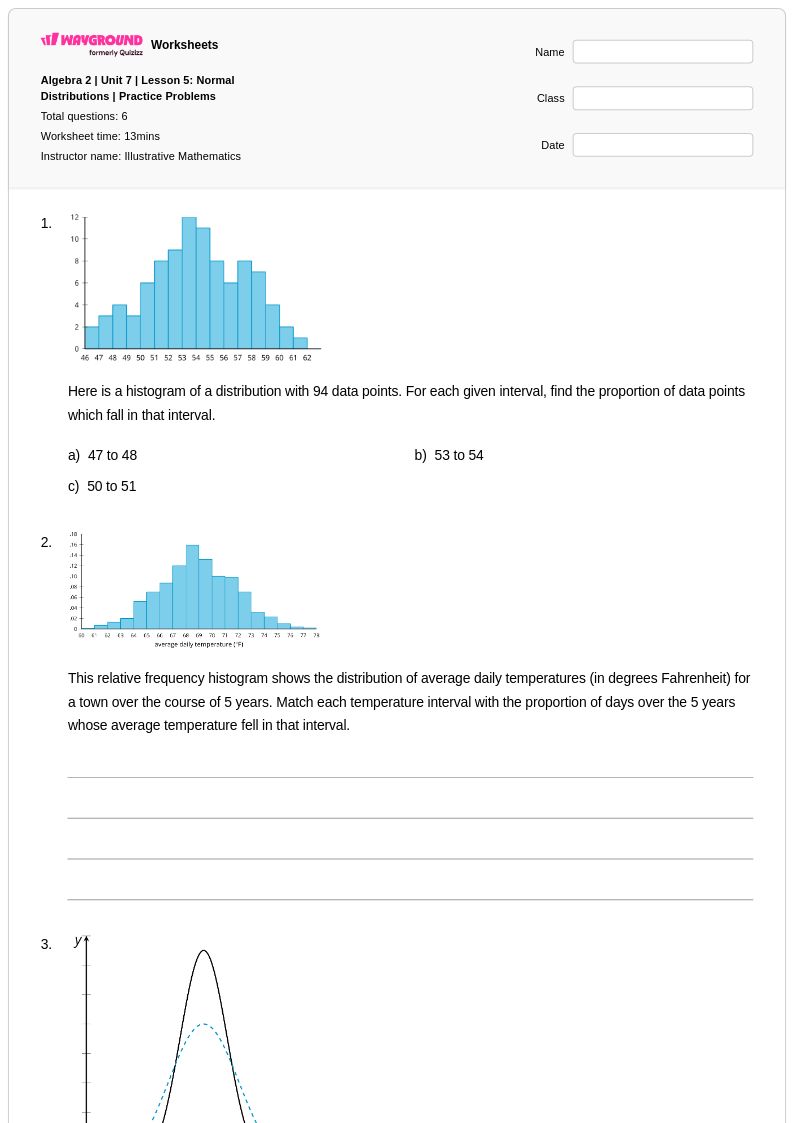
6 Q
6th - Uni
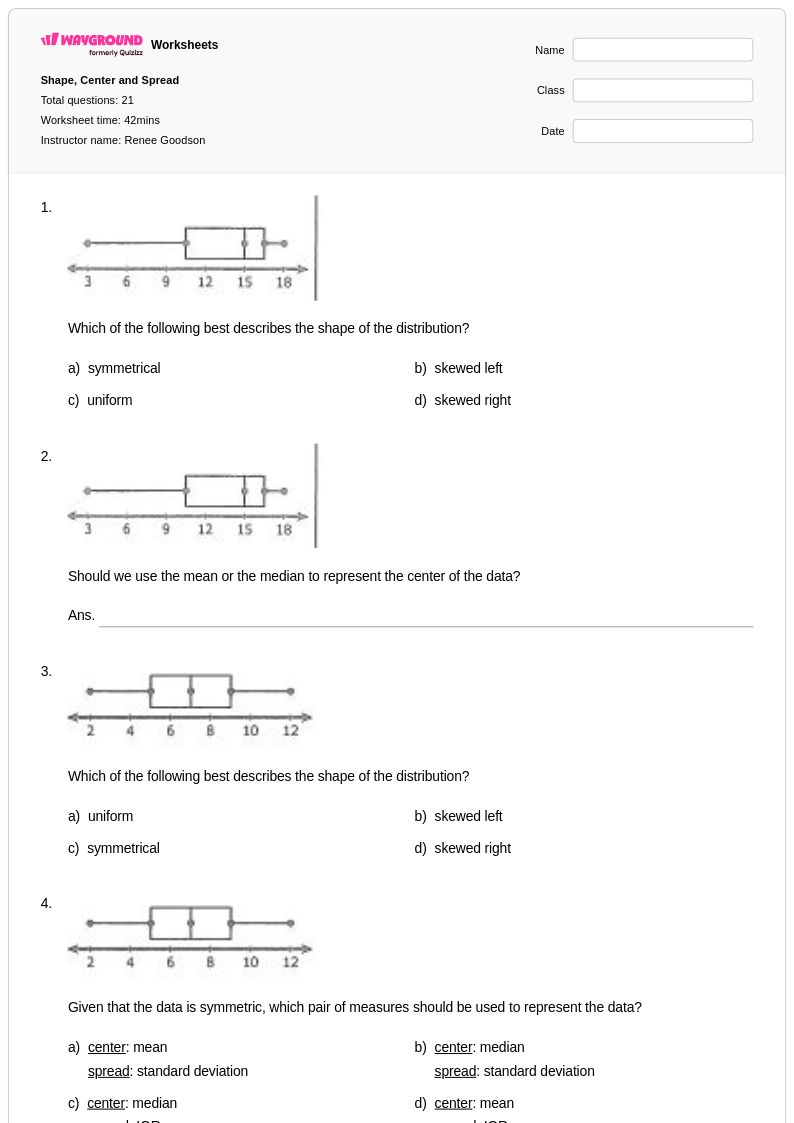
21 Q
6th - 9th
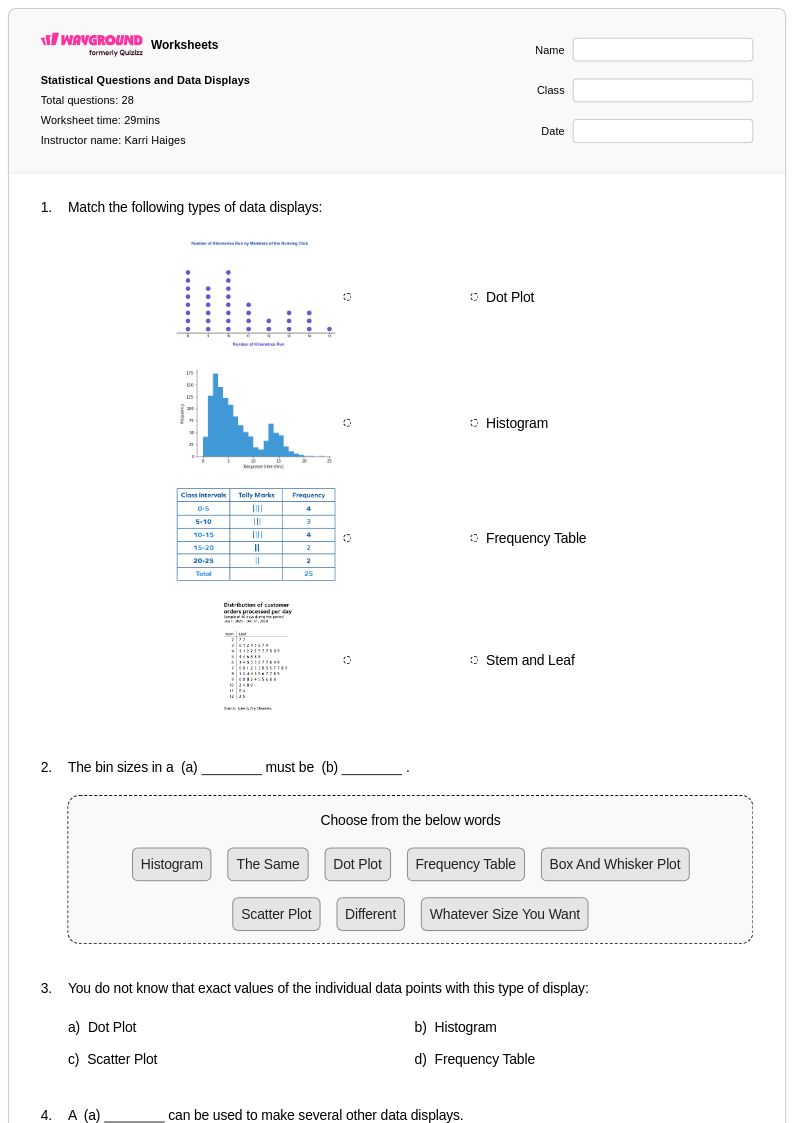
28 Q
6th - 8th
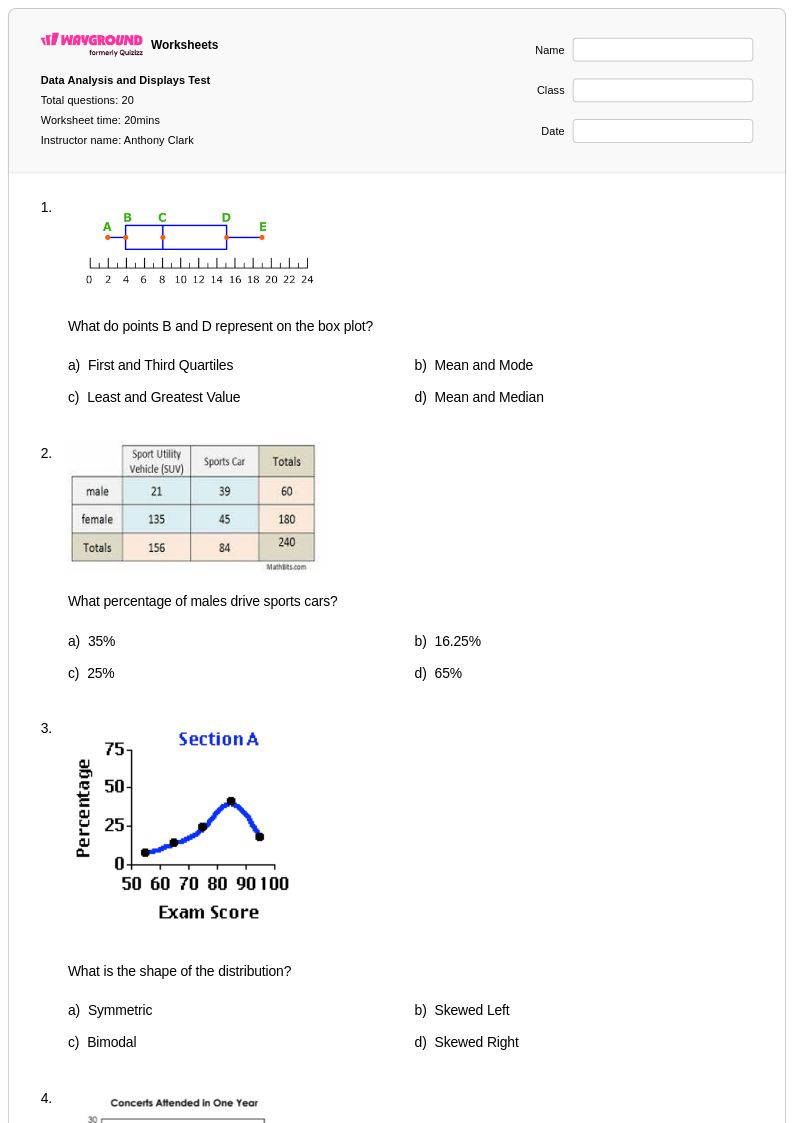
20 Q
7th - Uni
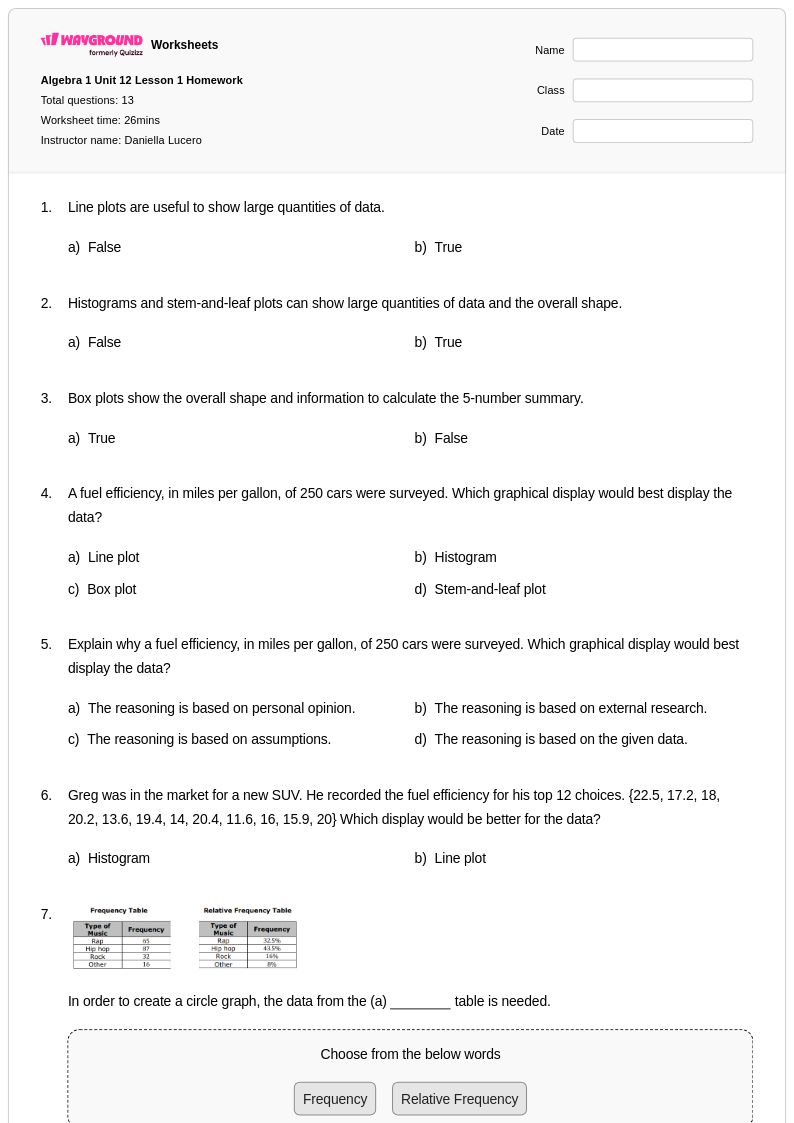
13 Q
6th - Uni
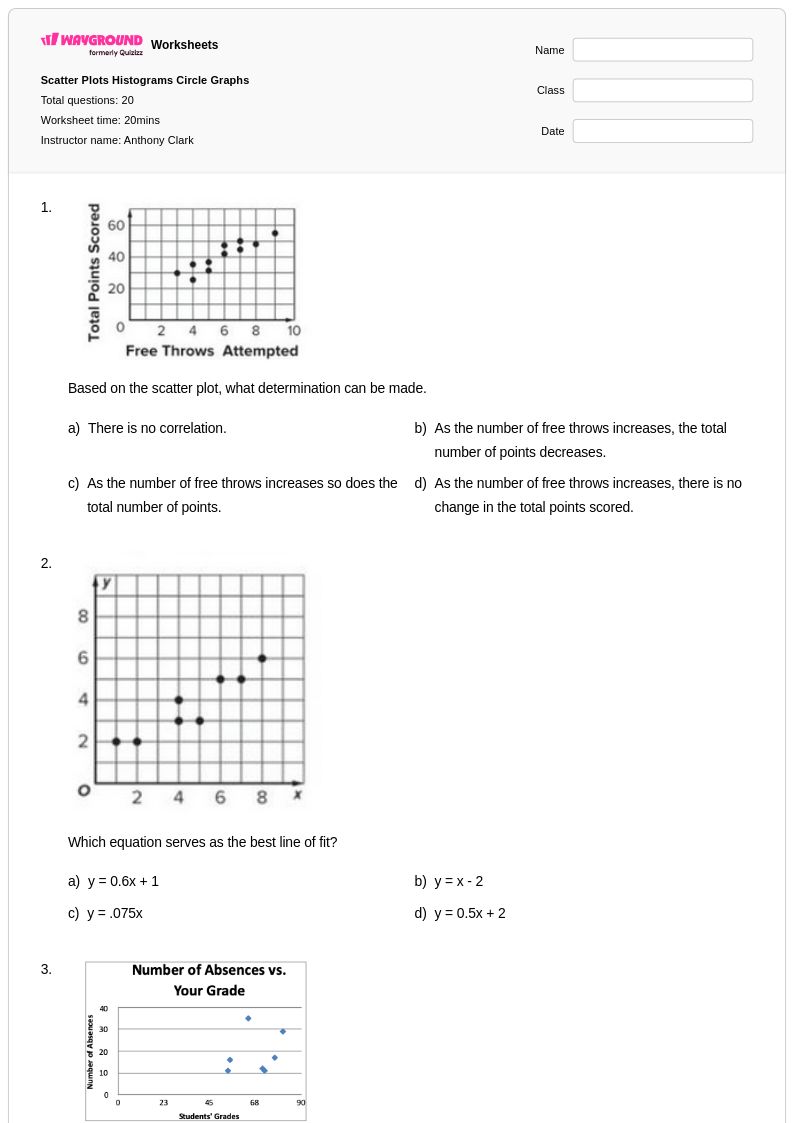
20 Q
7th - Uni
Explore Frequency Distribution Worksheets by Grades
Explore Other Subject Worksheets for class 7
Explore printable Frequency Distribution worksheets for Class 7
Frequency distribution worksheets for Class 7 students available through Wayground (formerly Quizizz) provide comprehensive practice in organizing, analyzing, and interpreting data sets using systematic tabular formats. These carefully designed resources strengthen essential statistical skills including creating frequency tables, calculating relative frequencies, determining class intervals, and constructing meaningful data representations from raw numerical information. Students develop proficiency in reading and creating both grouped and ungrouped frequency distributions while building foundational understanding of data organization principles that support advanced statistical concepts. Each worksheet collection includes detailed answer keys and is available as free printables in convenient PDF format, offering structured practice problems that reinforce critical thinking about data patterns and mathematical relationships within statistical contexts.
Wayground (formerly Quizizz) empowers educators with access to millions of teacher-created frequency distribution resources specifically designed to support Class 7 mathematics instruction in probability and statistics. The platform's robust search and filtering capabilities enable teachers to quickly locate worksheets aligned with curriculum standards while utilizing differentiation tools to customize content for diverse learning needs and skill levels. These comprehensive collections are available in both printable and digital formats, including downloadable PDF versions, providing maximum flexibility for classroom implementation, homework assignments, and independent study sessions. Teachers can seamlessly integrate these resources into lesson planning for skill practice, targeted remediation of statistical concepts, and enrichment activities that challenge students to apply frequency distribution knowledge in increasingly complex mathematical scenarios.
FAQs
What is the focus of frequency distributions in Grade 7?
How can I help 7th graders understand relative frequency?
What types of problems are included in a 7th-grade frequency distribution worksheet?
What's a common point of confusion for 7th graders with this topic?
How do I assign this Grade 7 frequency distribution worksheet?
How does learning about relative frequency prepare 7th graders for future math?