
20 Q
2nd - Uni
20 Q
2nd - Uni
10 Q
2nd - Uni
15 Q
2nd - Uni
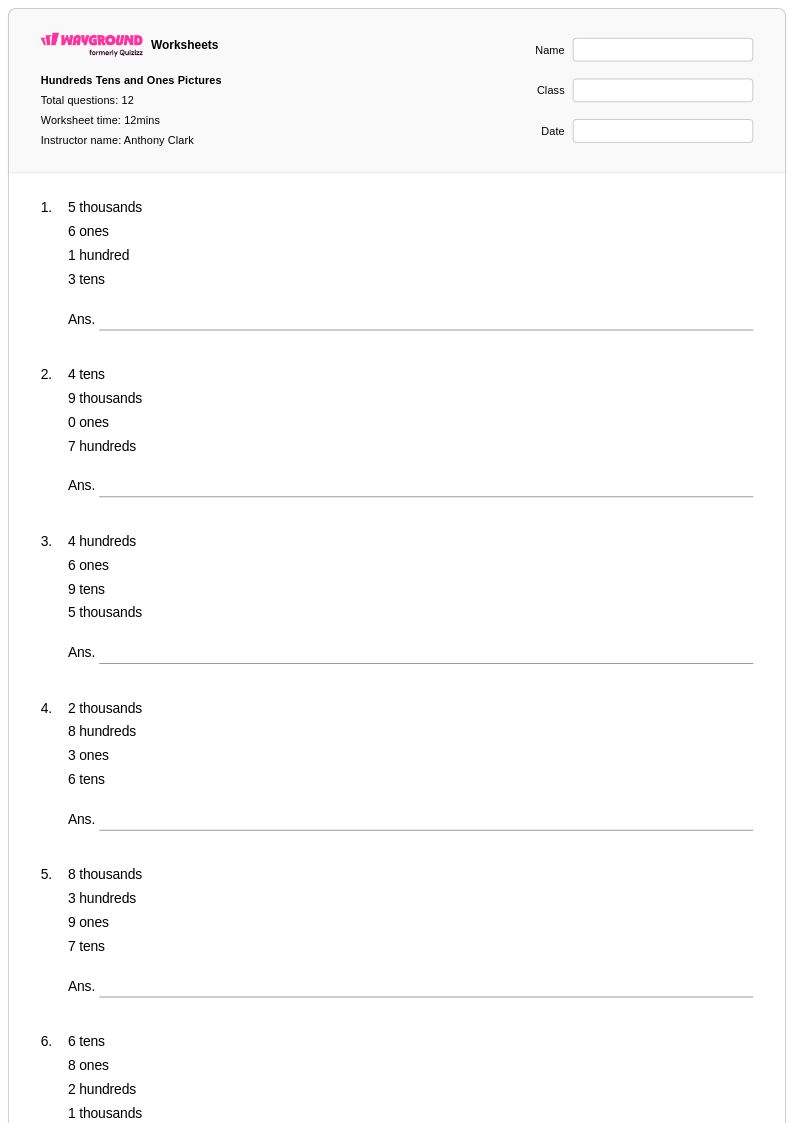
12 Q
2nd - Uni
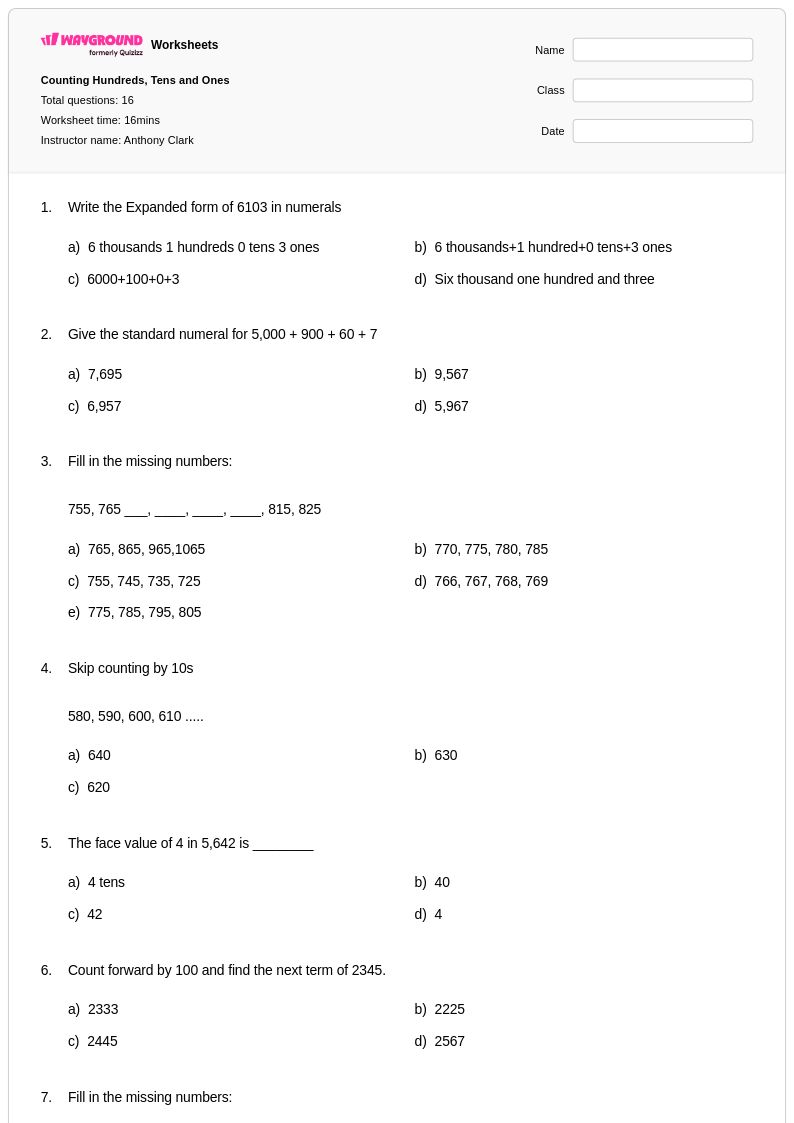
16 Q
2nd - Uni
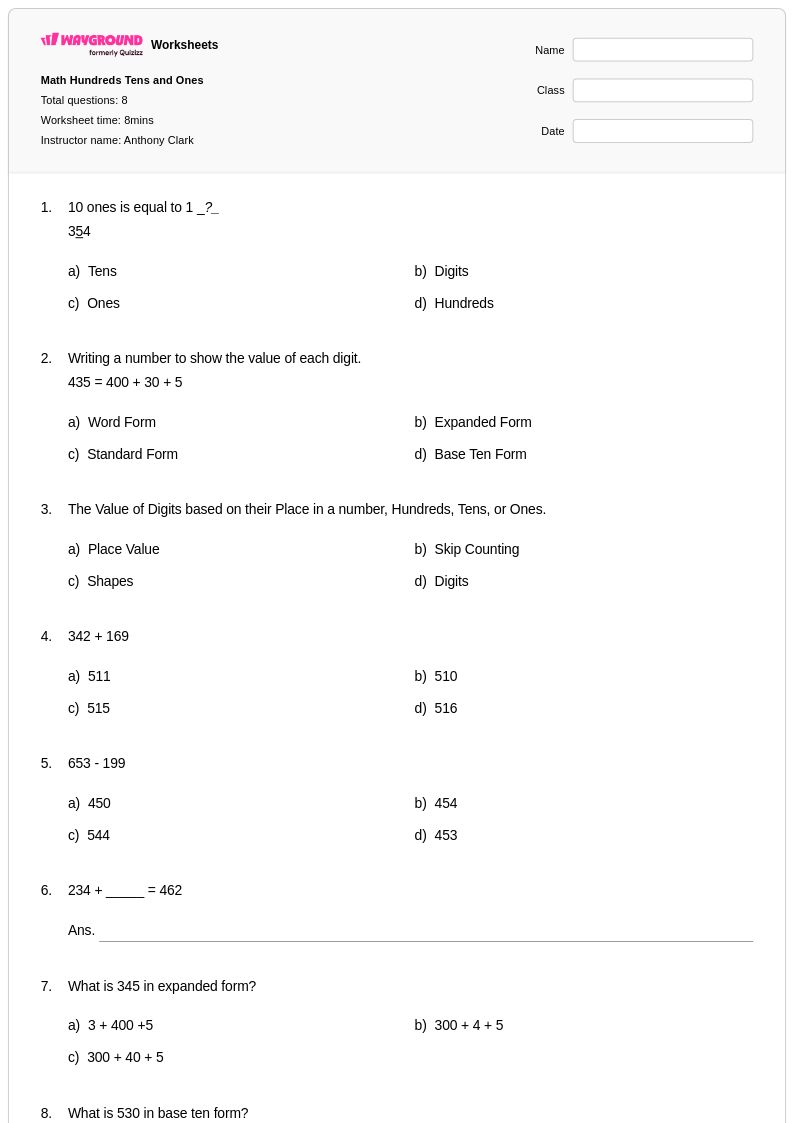
8 Q
2nd - Uni
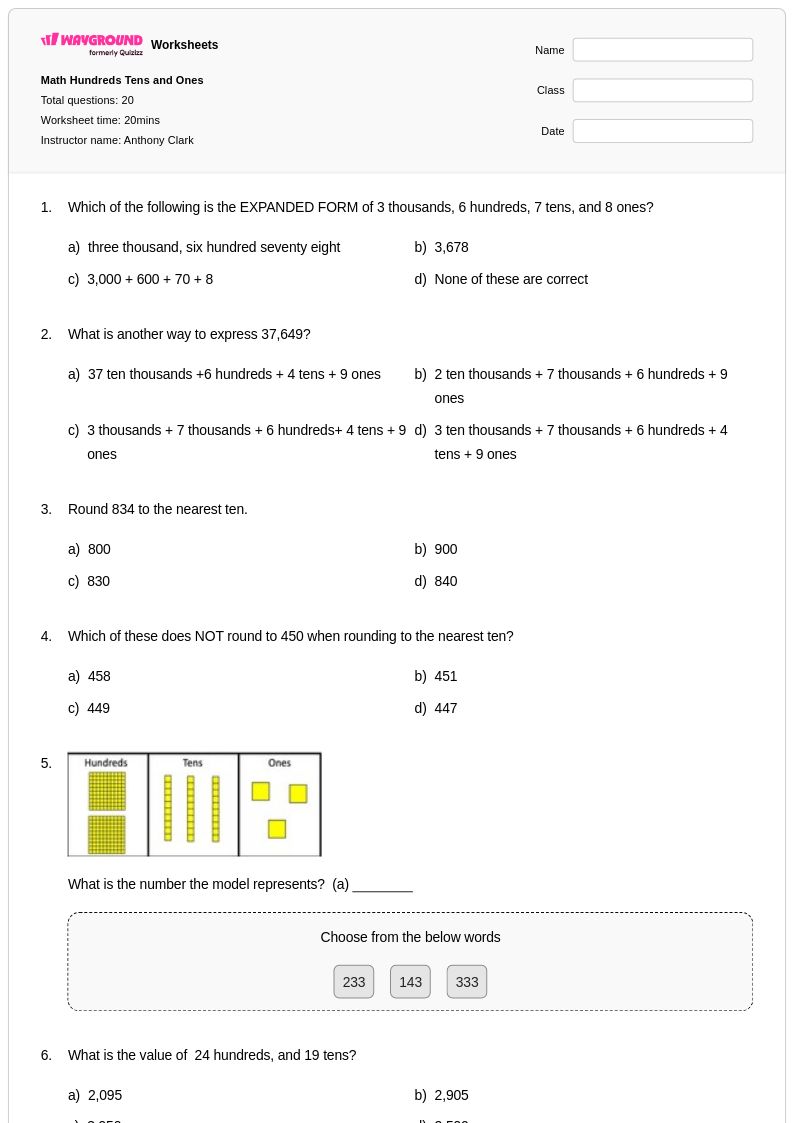
20 Q
2nd - Uni
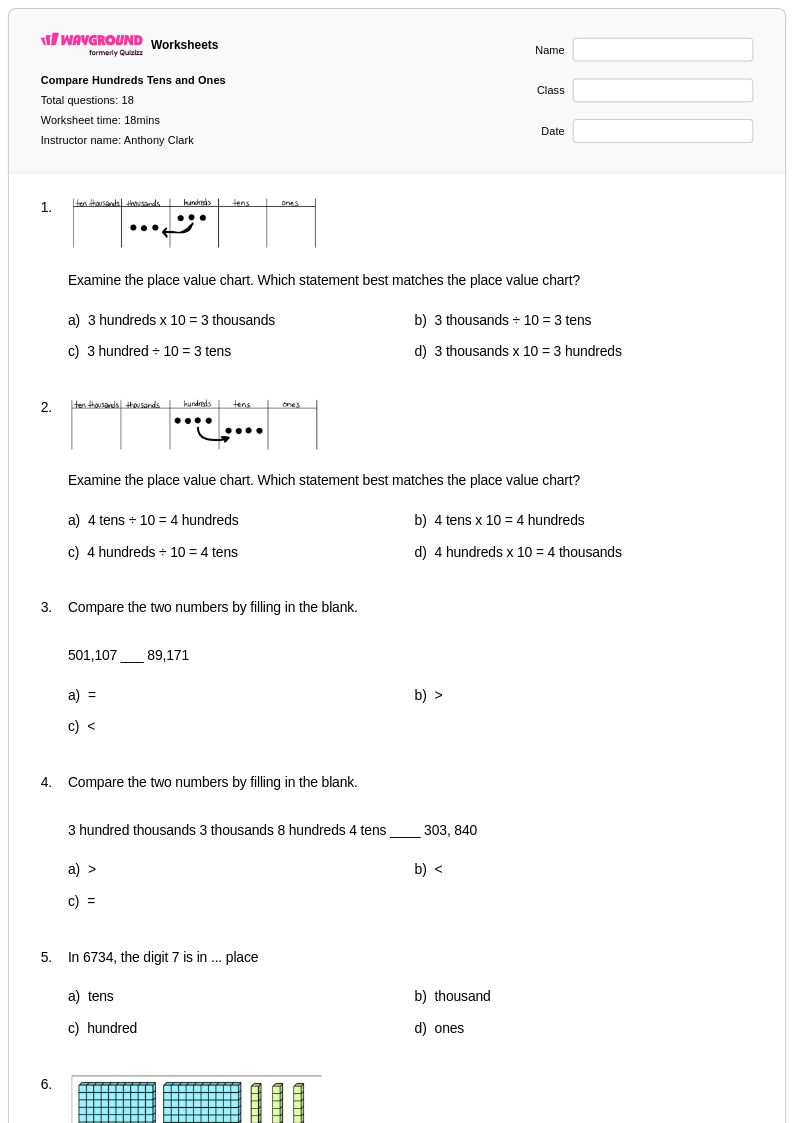
18 Q
4th - Uni
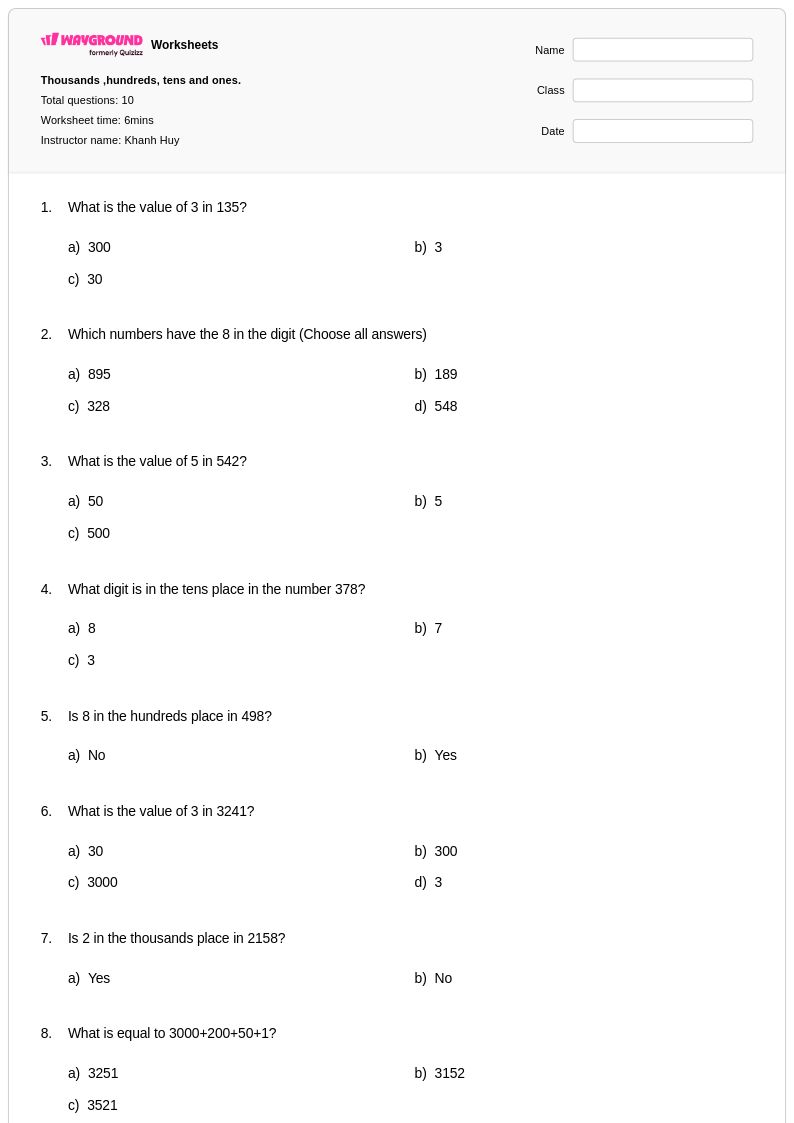
10 Q
1st - 5th
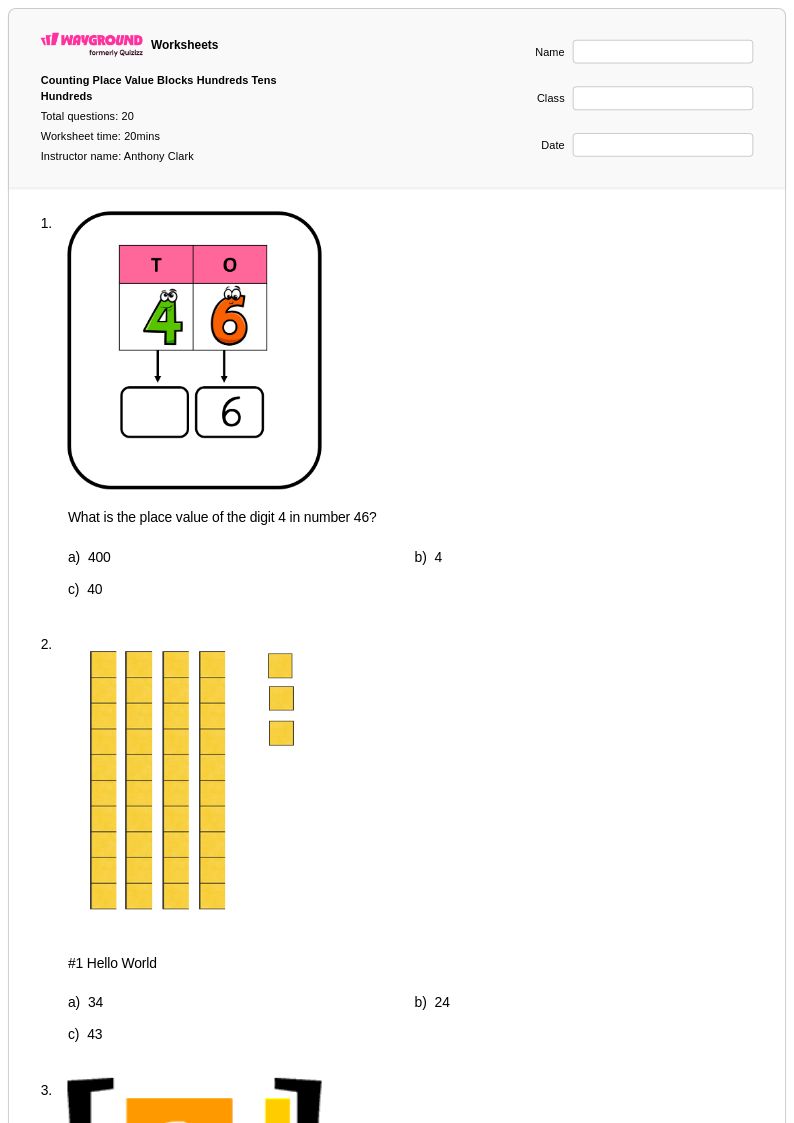
20 Q
2nd - Uni
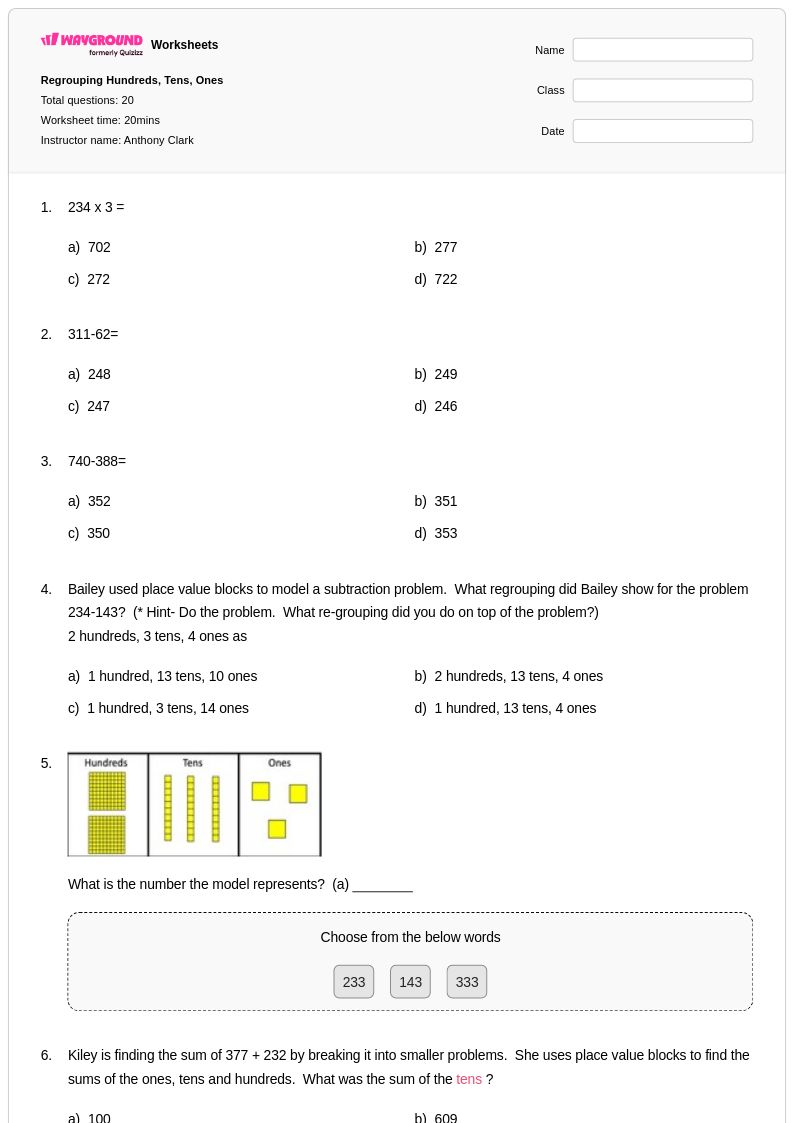
20 Q
3rd - Uni
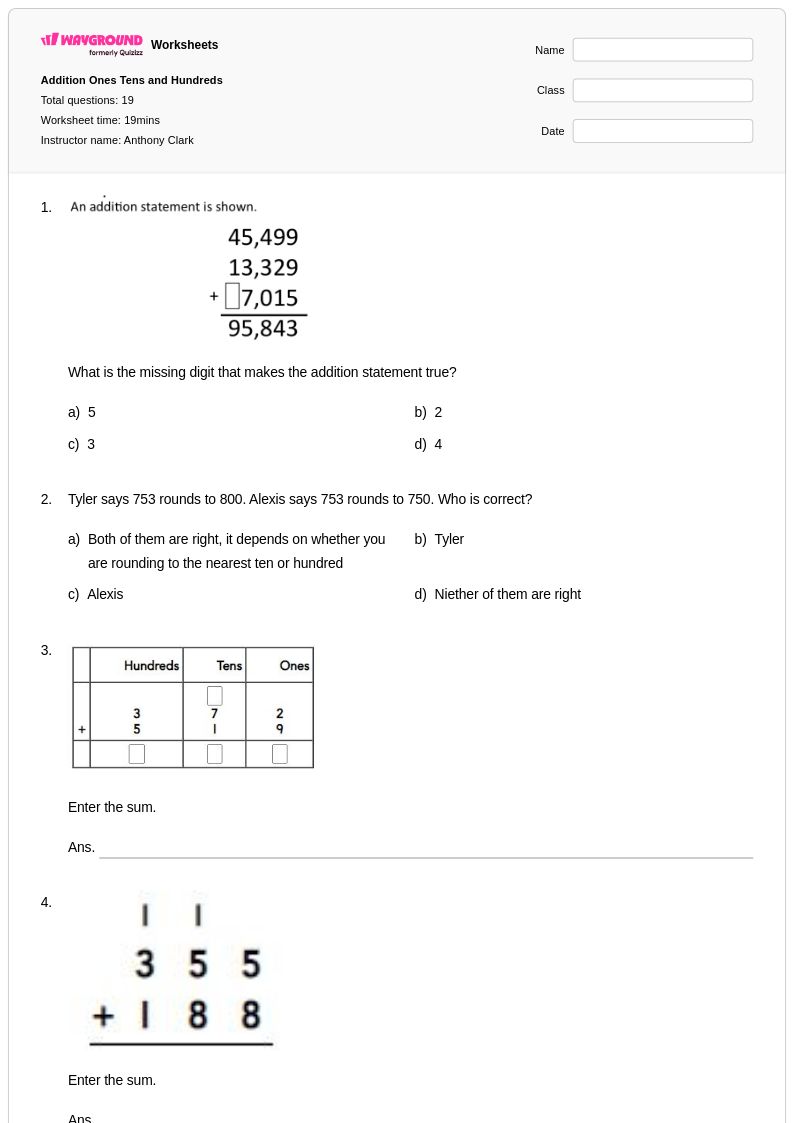
19 Q
2nd - Uni
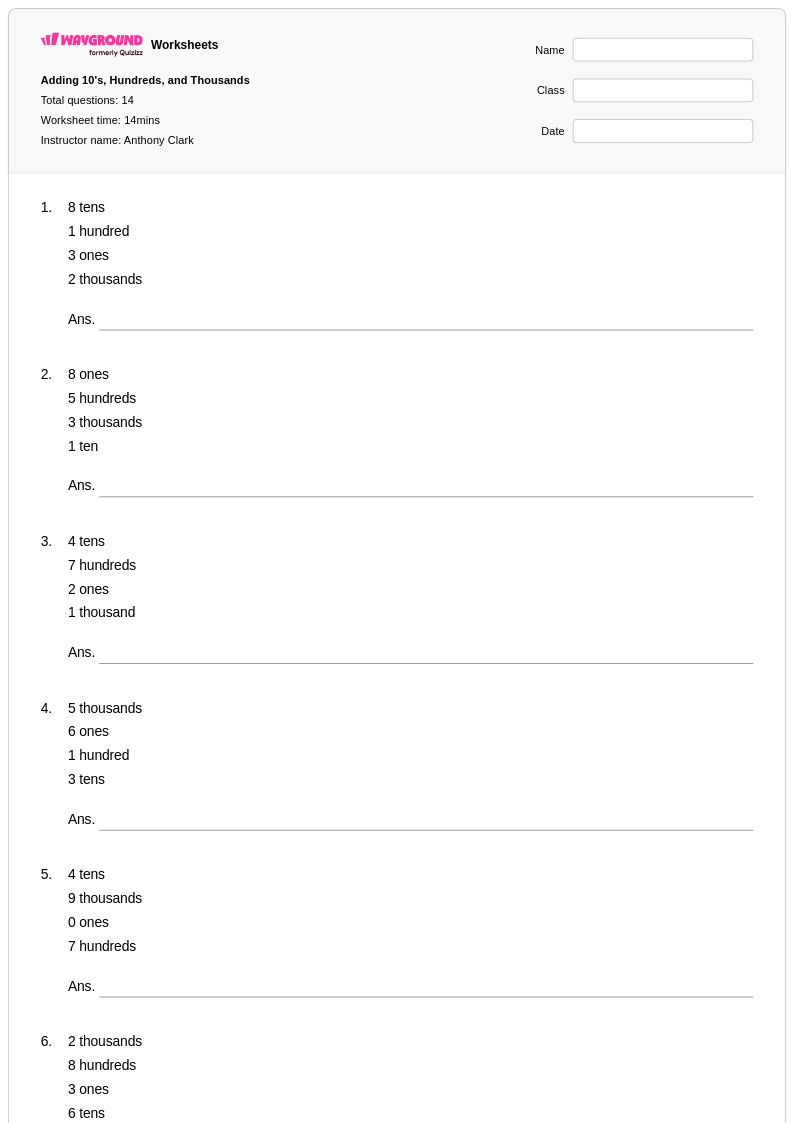
14 Q
4th - Uni
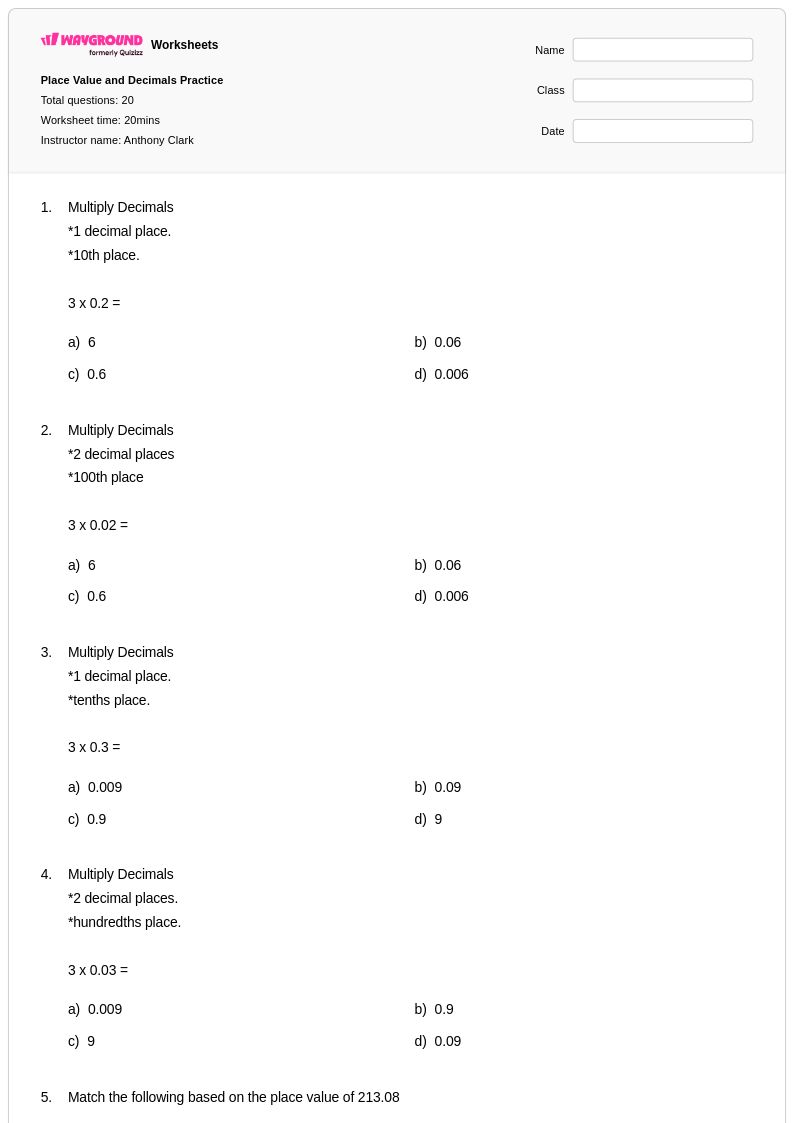
20 Q
4th - Uni
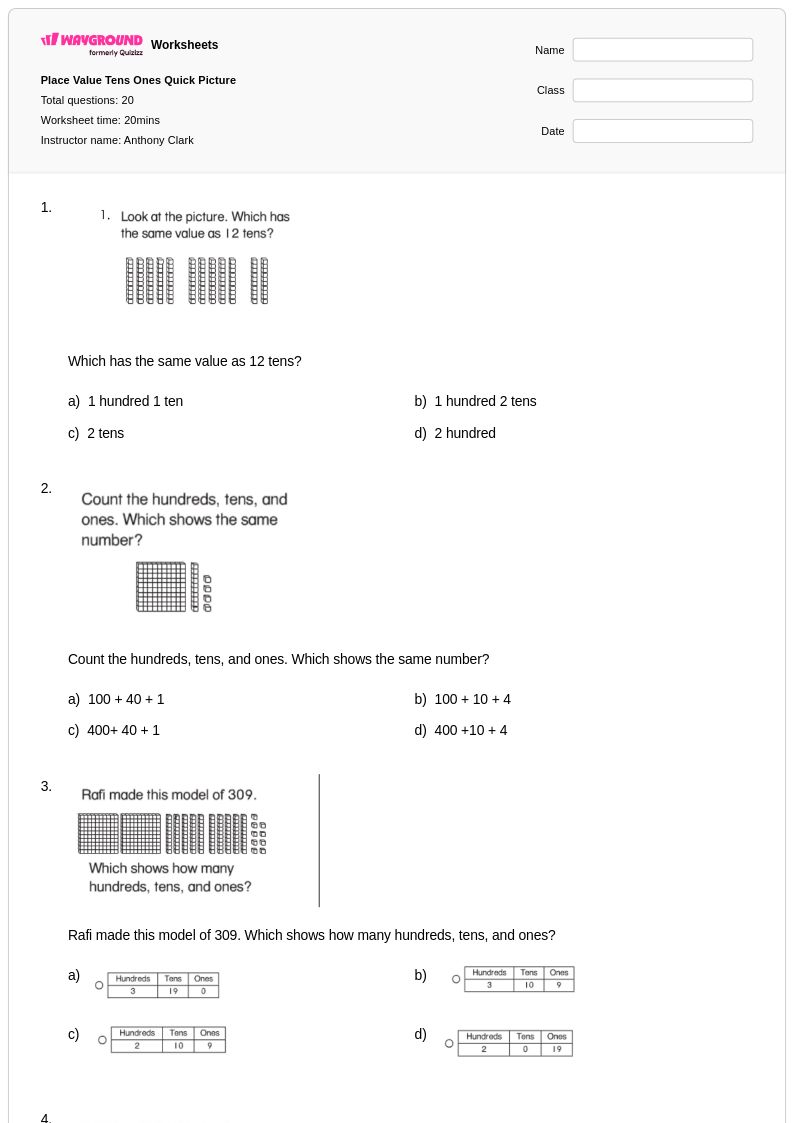
20 Q
2nd - Uni
20 Q
2nd - Uni
20 Q
2nd - Uni
38 Q
5th
20 Q
2nd - Uni
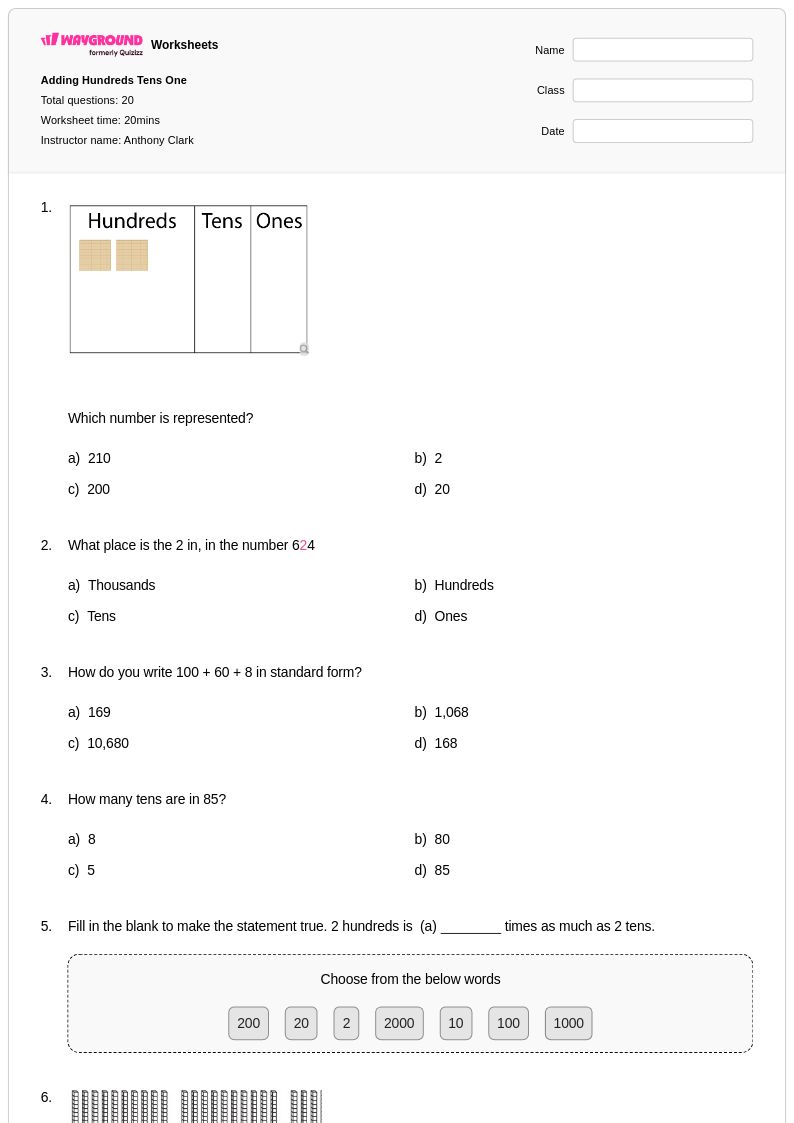
20 Q
2nd - Uni
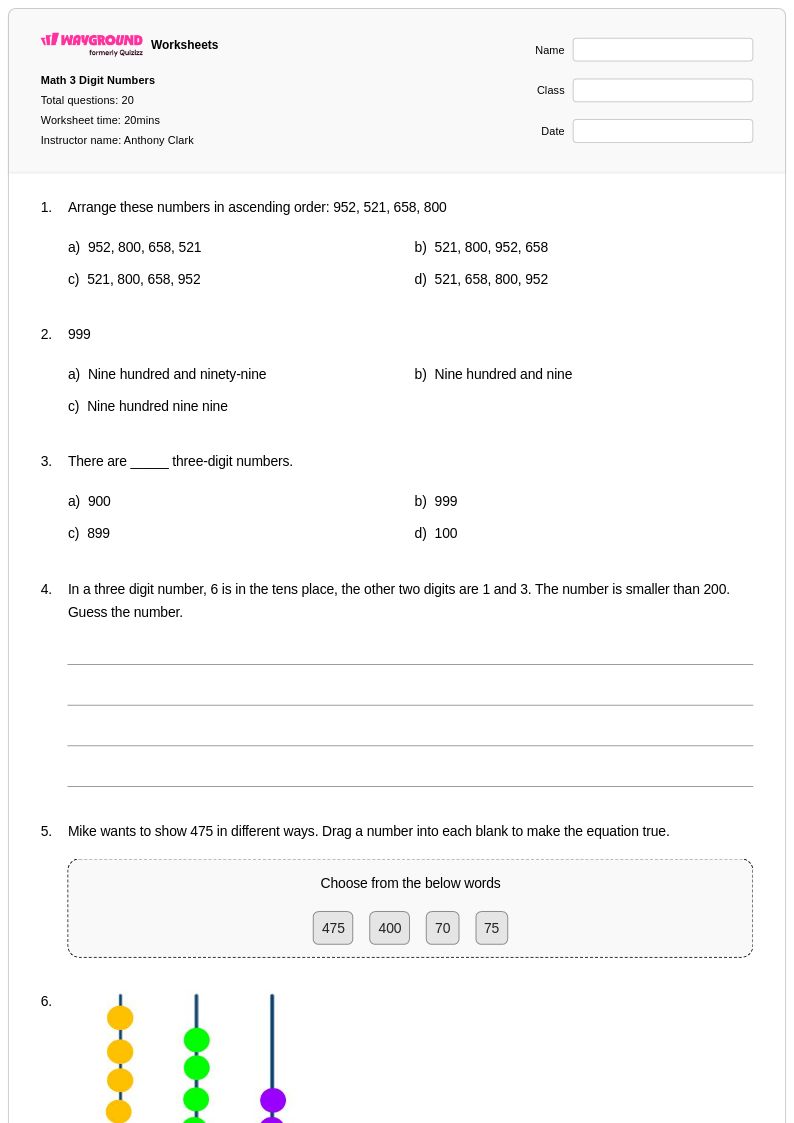
20 Q
2nd - Uni
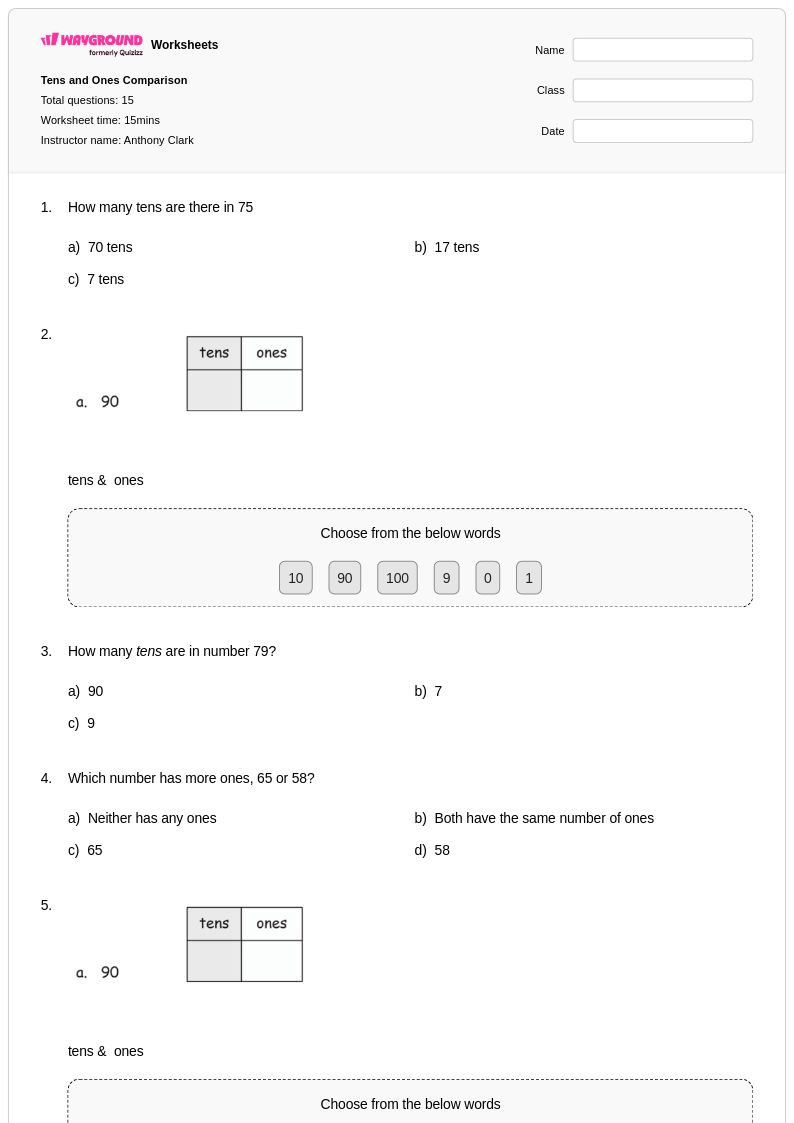
15 Q
2nd - Uni
Explore Hundreds, Tens, and Ones Worksheets by Grades
Explore Other Subject Worksheets for class 5
Explore printable Hundreds, Tens, and Ones worksheets for Class 5
Hundreds, tens, and ones worksheets for Class 5 provide essential practice in understanding place value concepts that form the foundation of mathematical reasoning. These comprehensive worksheets available through Wayground (formerly Quizizz) help students master the critical skill of decomposing and recomposing numbers using base-ten understanding. Students work through carefully designed practice problems that strengthen their ability to identify digit values in different positions, compare numbers based on place value relationships, and manipulate multi-digit numbers with confidence. Each worksheet includes a complete answer key and is available as a free printable pdf, making it simple for educators to incorporate targeted place value instruction into daily math lessons while providing students with concrete visual representations of abstract numerical concepts.
Wayground (formerly Quizizz) supports educators with an extensive collection of teacher-created resources that address hundreds, tens, and ones concepts through multiple instructional approaches. The platform's robust search and filtering capabilities allow teachers to quickly locate worksheets that align with specific standards and learning objectives, while differentiation tools enable customization based on individual student needs and skill levels. These versatile materials are available in both printable and digital formats, including downloadable pdf versions, providing maximum flexibility for classroom instruction, homework assignments, and independent practice sessions. Teachers can effectively use these resources for lesson planning, targeted remediation of place value misconceptions, enrichment activities for advanced learners, and ongoing skill practice that builds computational fluency throughout the academic year.
FAQs
How do I teach hundreds, tens, and ones in Grade 5?
What exercises help fifth graders practice hundreds, tens, and ones?
What place-value mistakes are common in Grade 5?
How should I use these hundreds, tens, and ones worksheets?
How does this place-value topic align with the Grade 5 Common Core curriculum?
How can I differentiate hundreds, tens, and ones practice in Grade 5?
What grade level is this hundreds, tens, and ones practice for?