
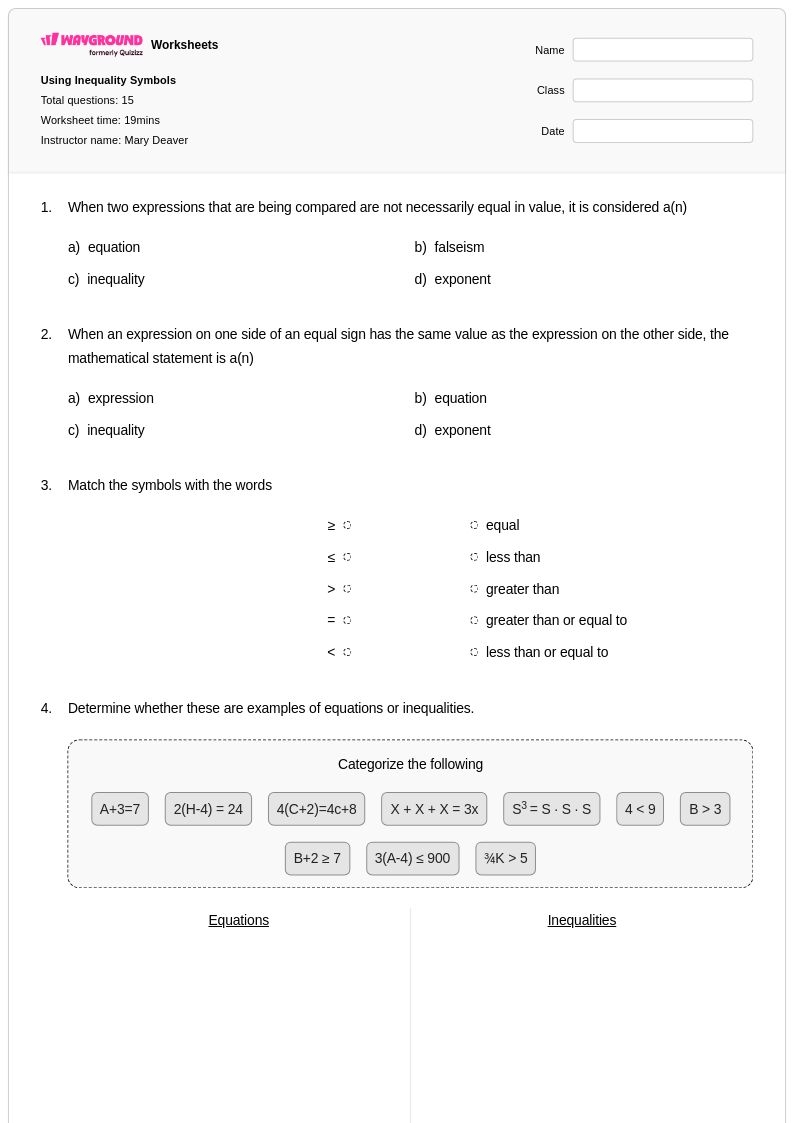
15 Q
6th
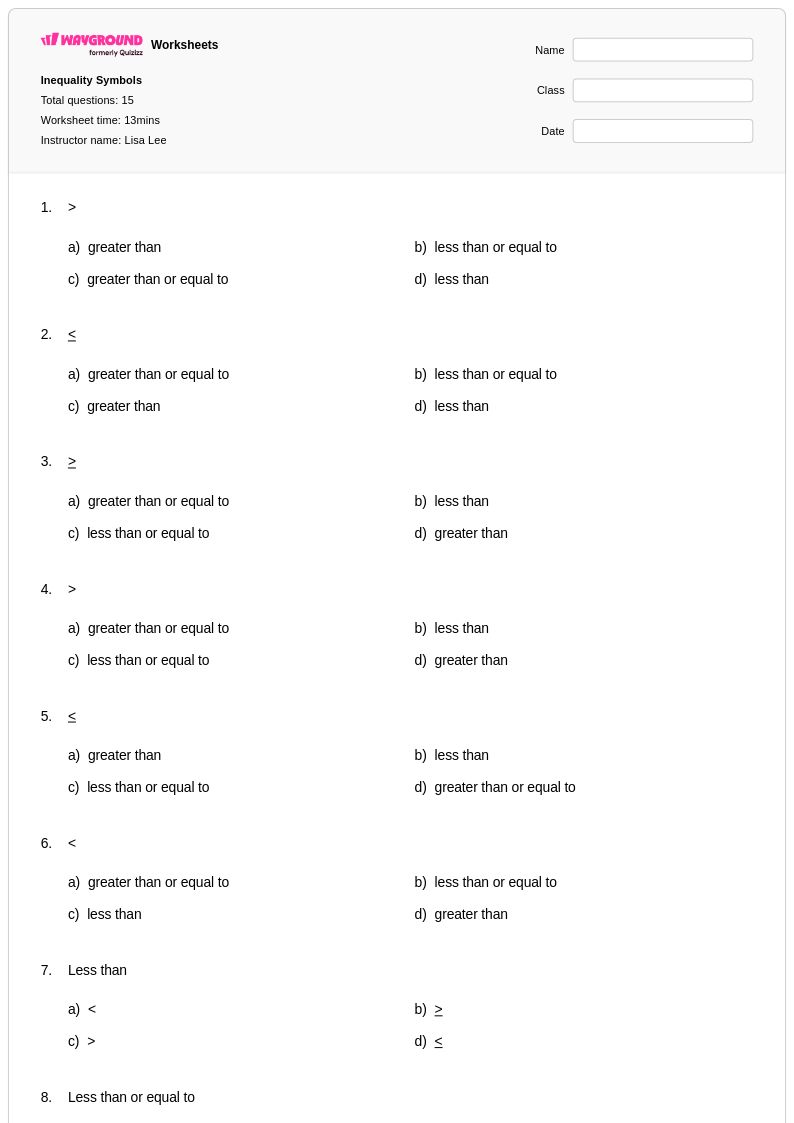
15 Q
6th - 12th
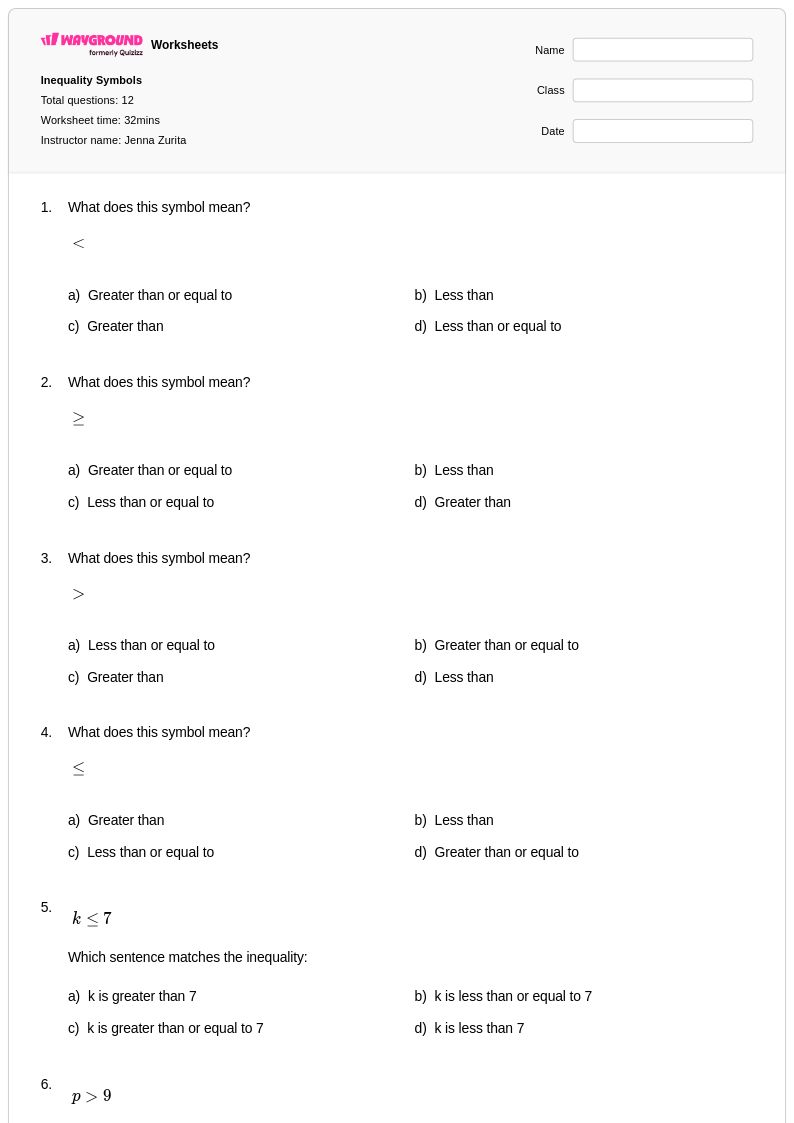
12 Q
6th - 9th
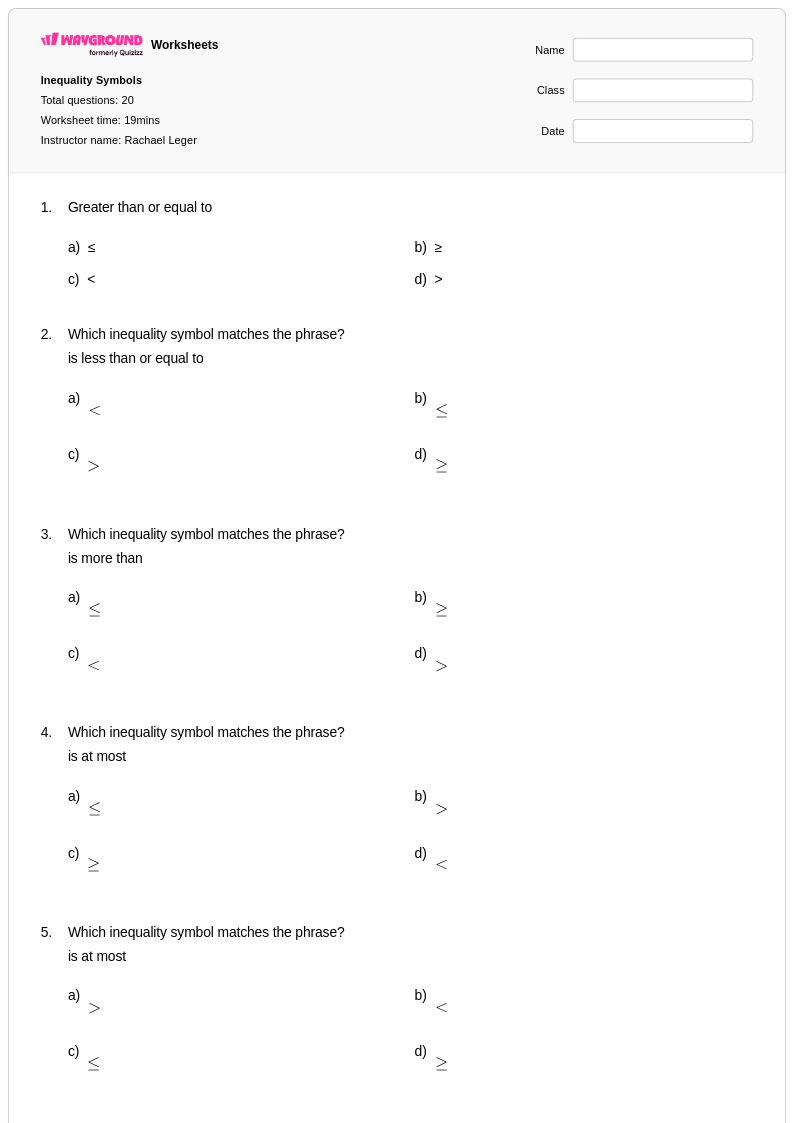
20 Q
6th
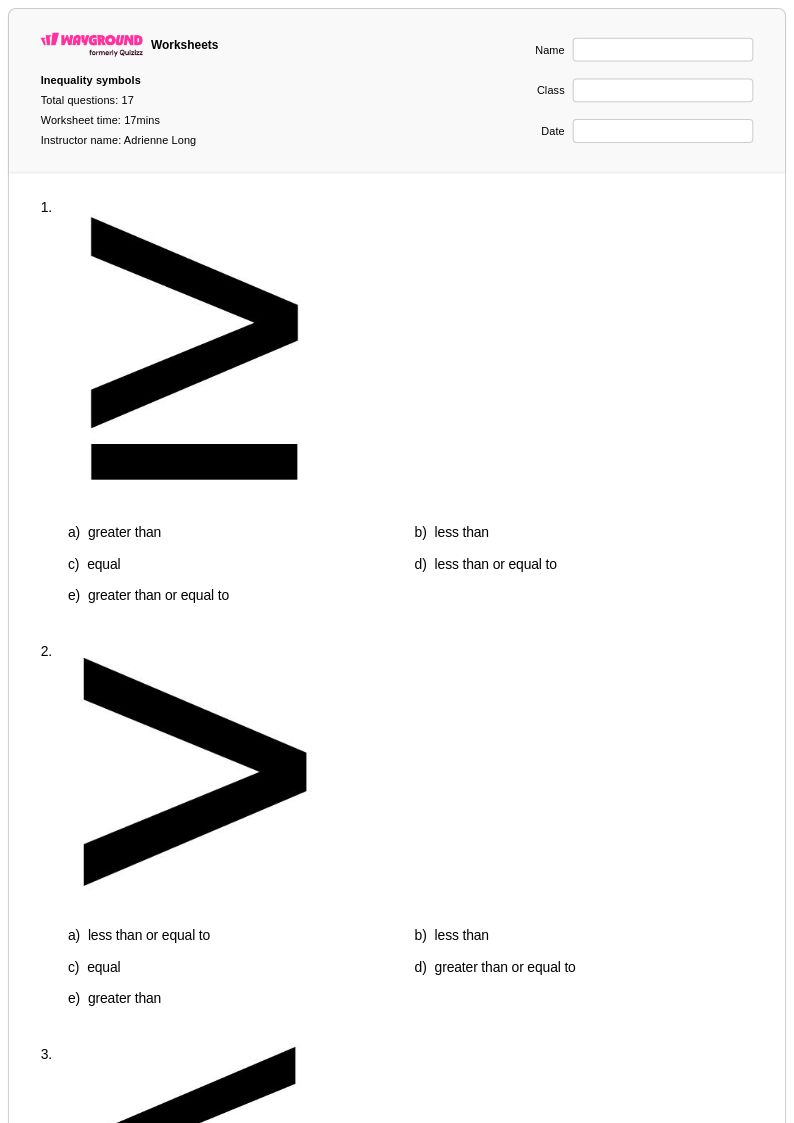
17 Q
8th - 10th
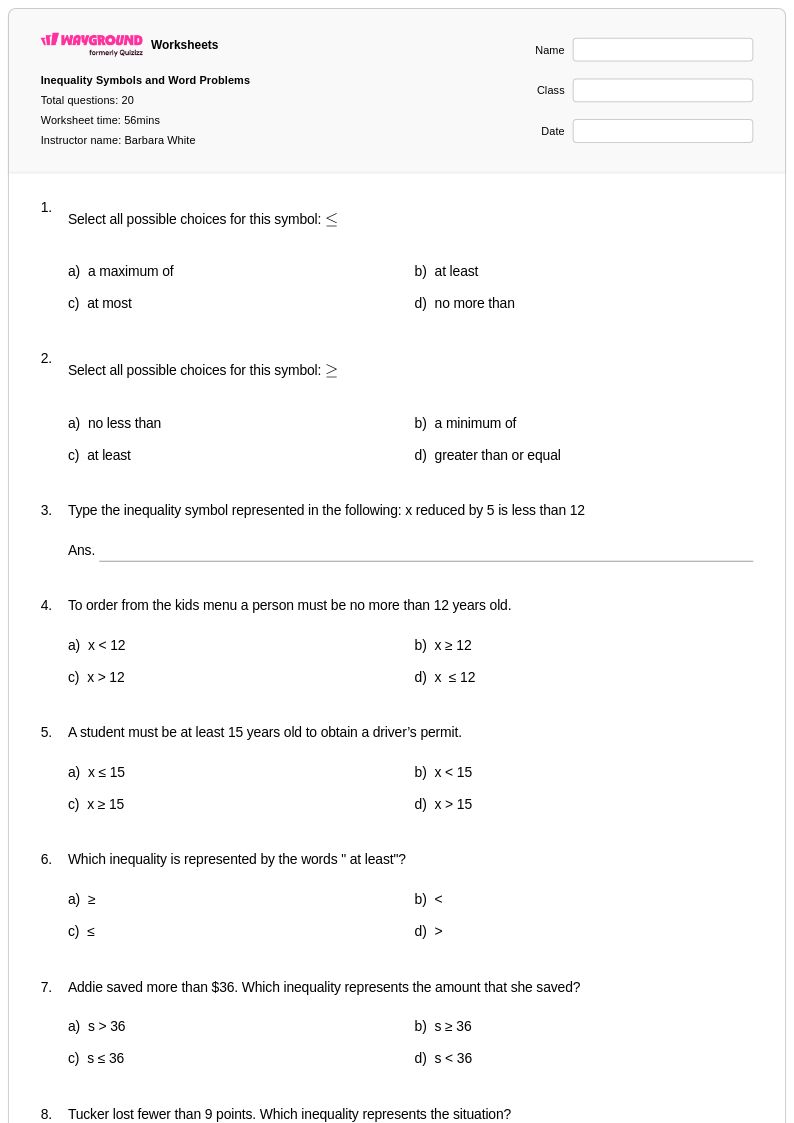
20 Q
5th - 7th
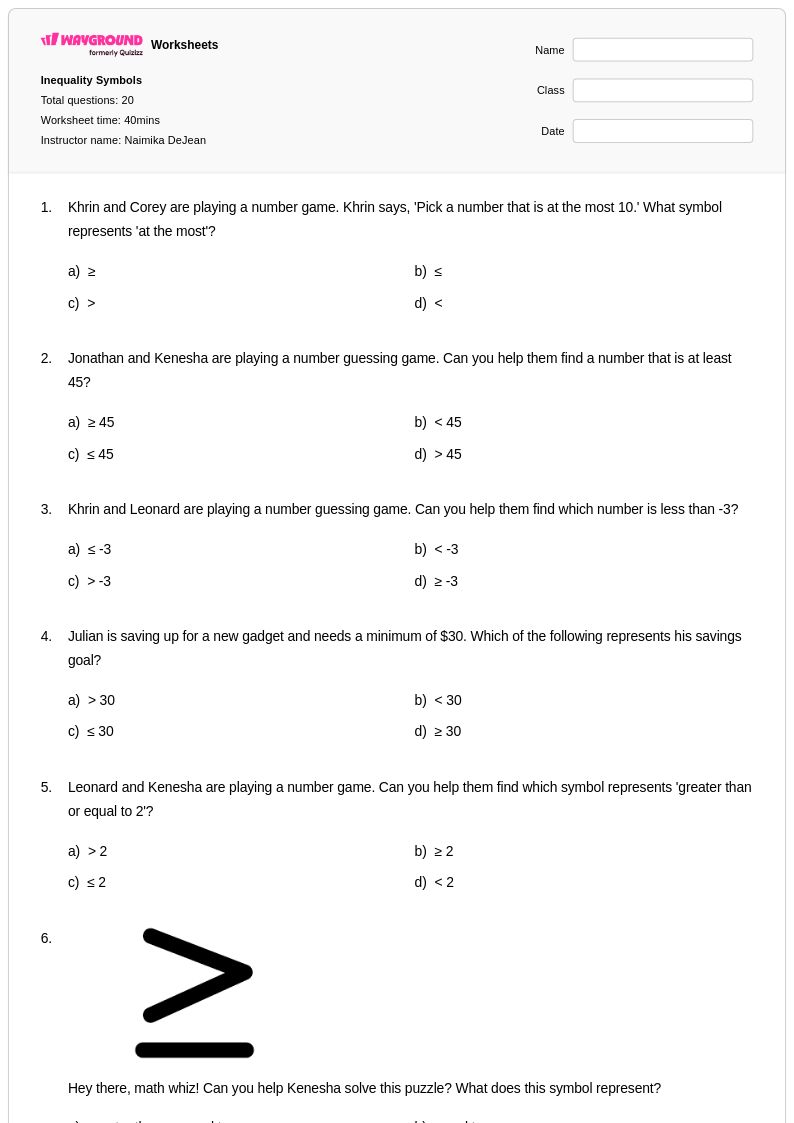
20 Q
8th
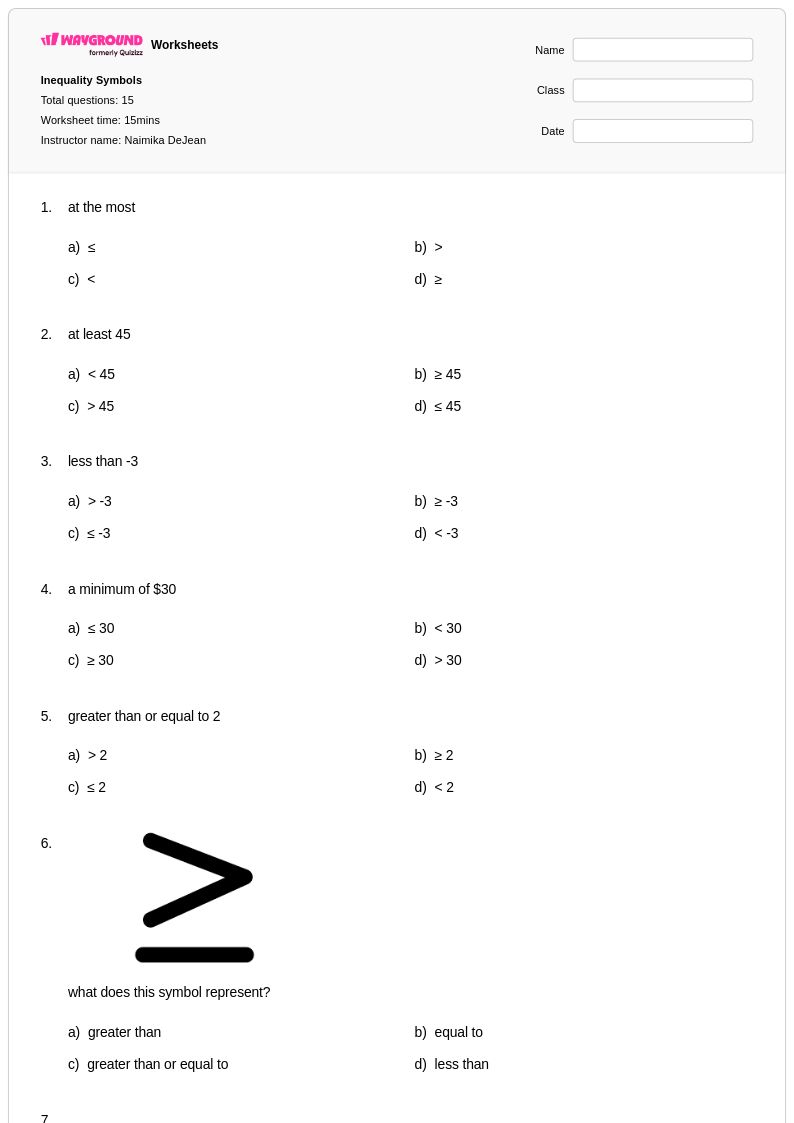
15 Q
8th
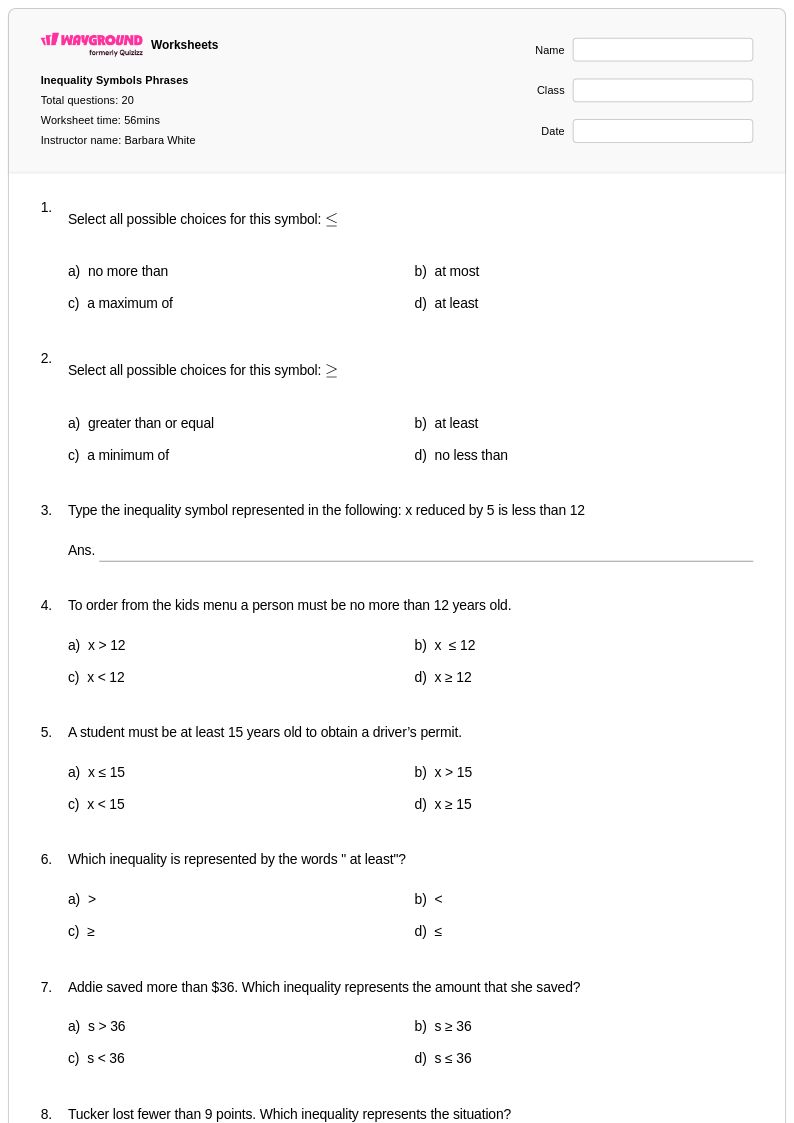
20 Q
5th - 7th
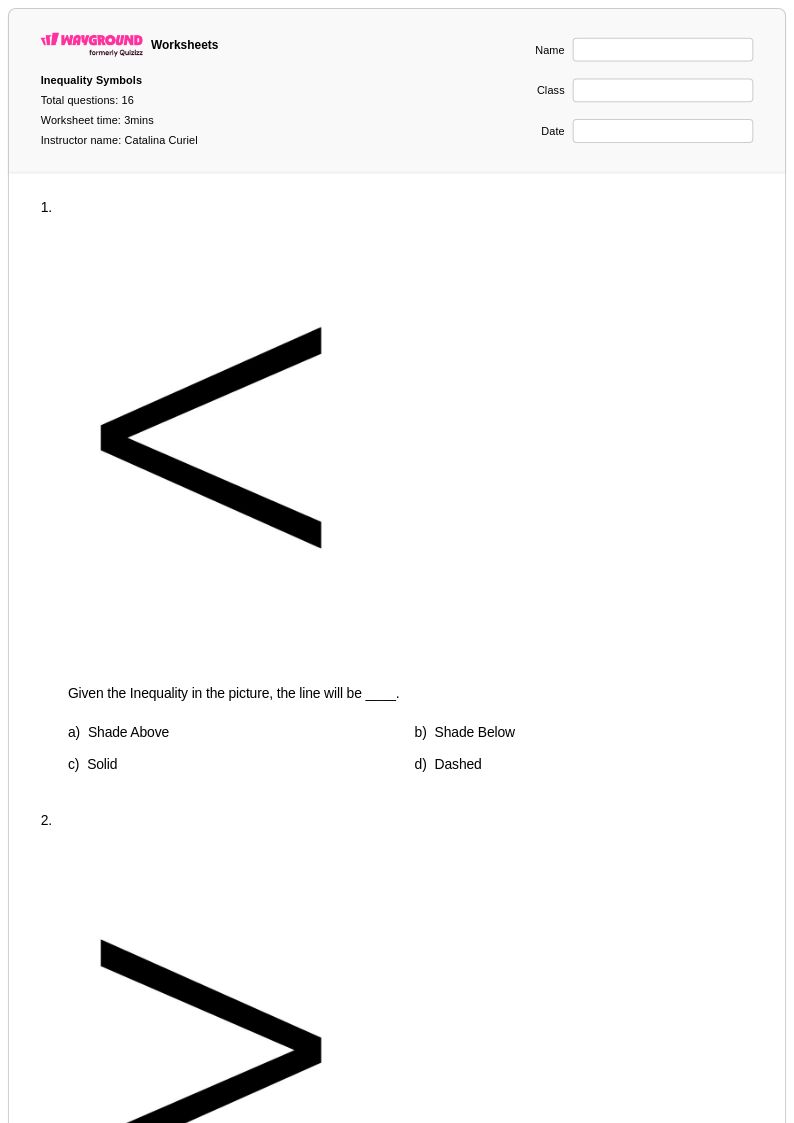
16 Q
5th - 9th
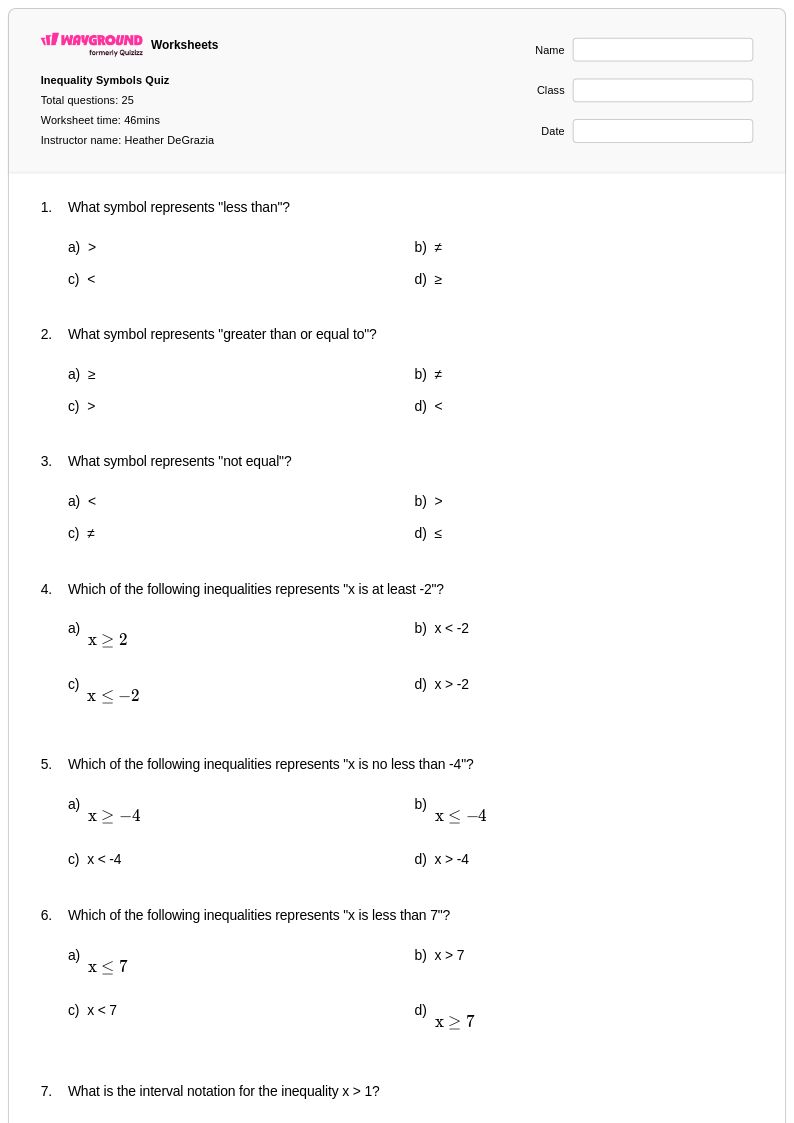
25 Q
9th
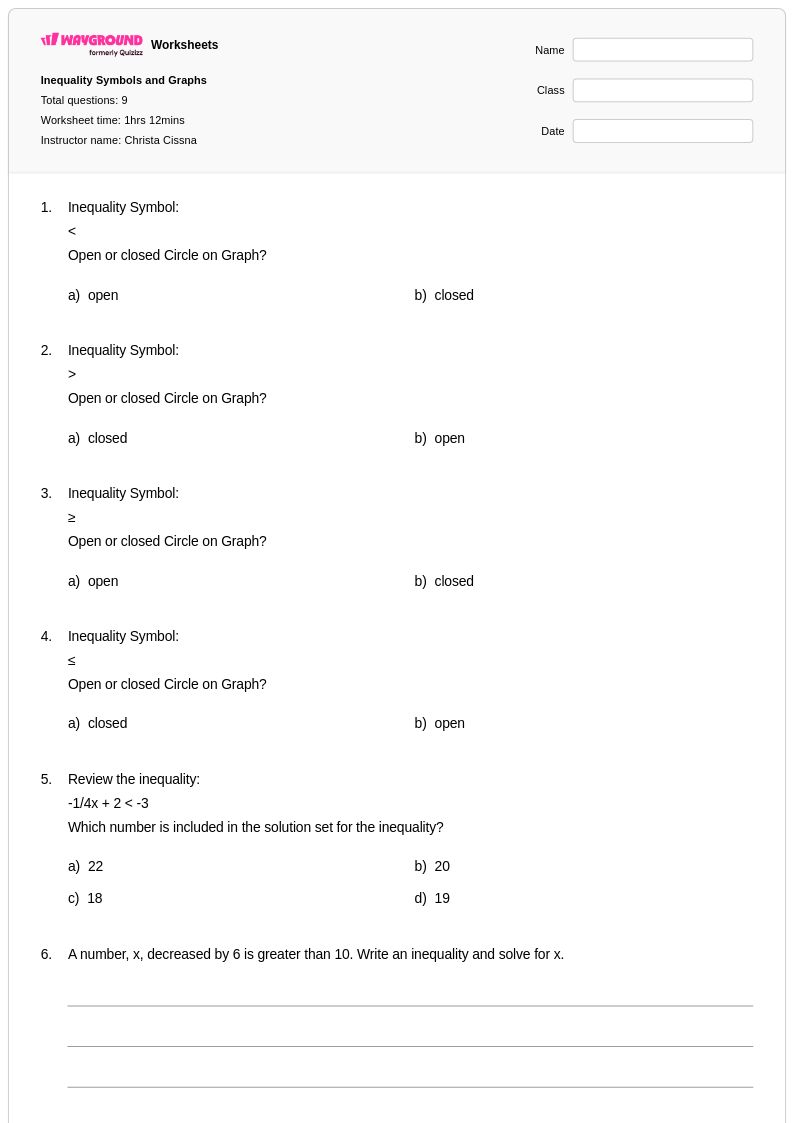
9 Q
7th - Uni
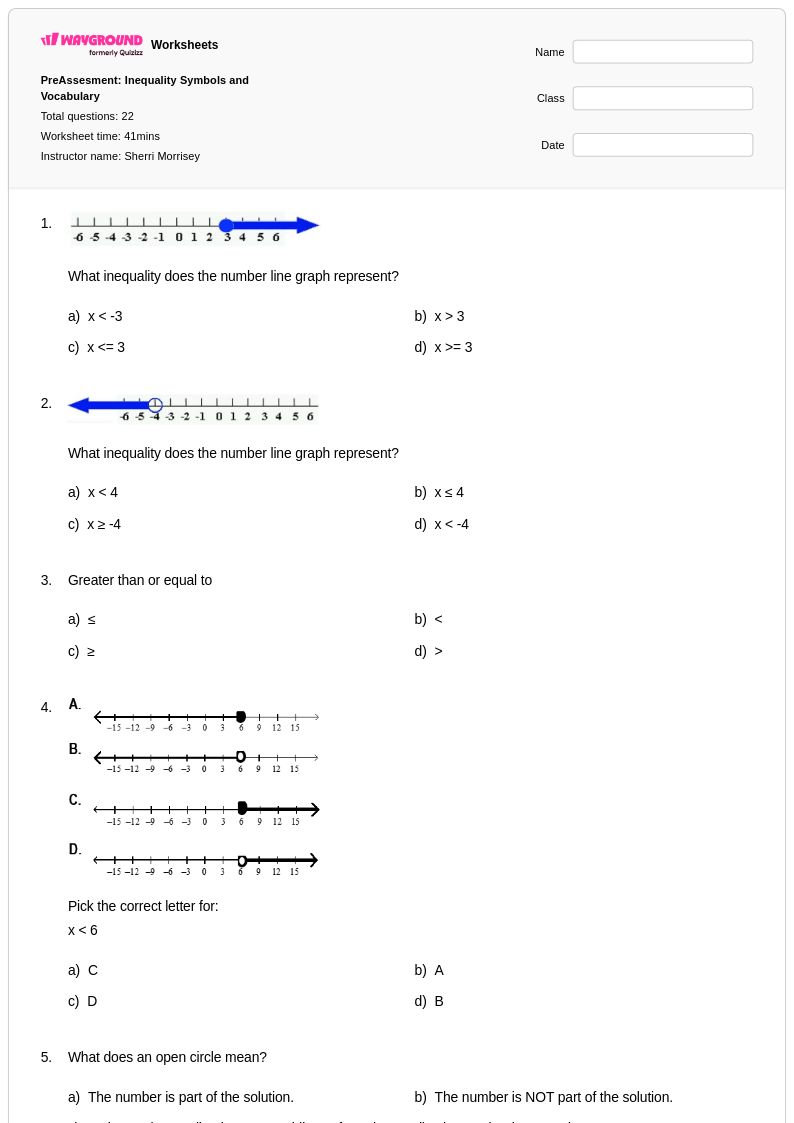
22 Q
9th
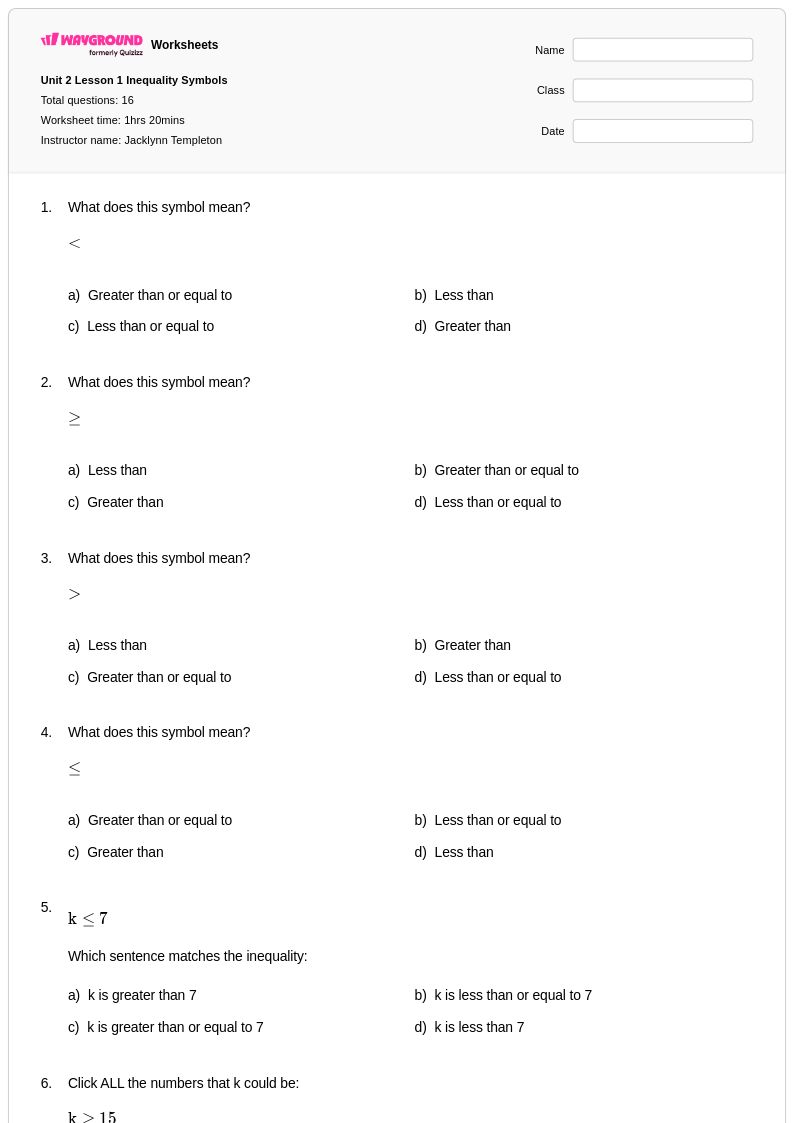
16 Q
9th - 10th
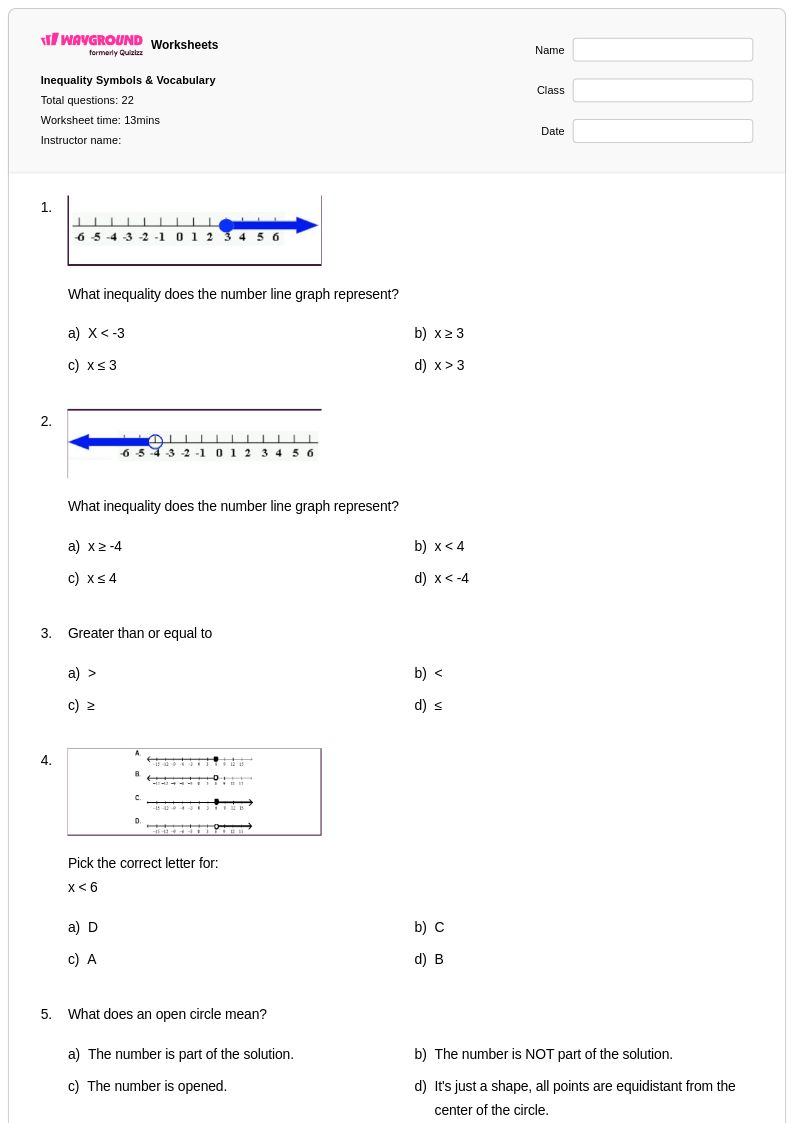
22 Q
6th - 8th
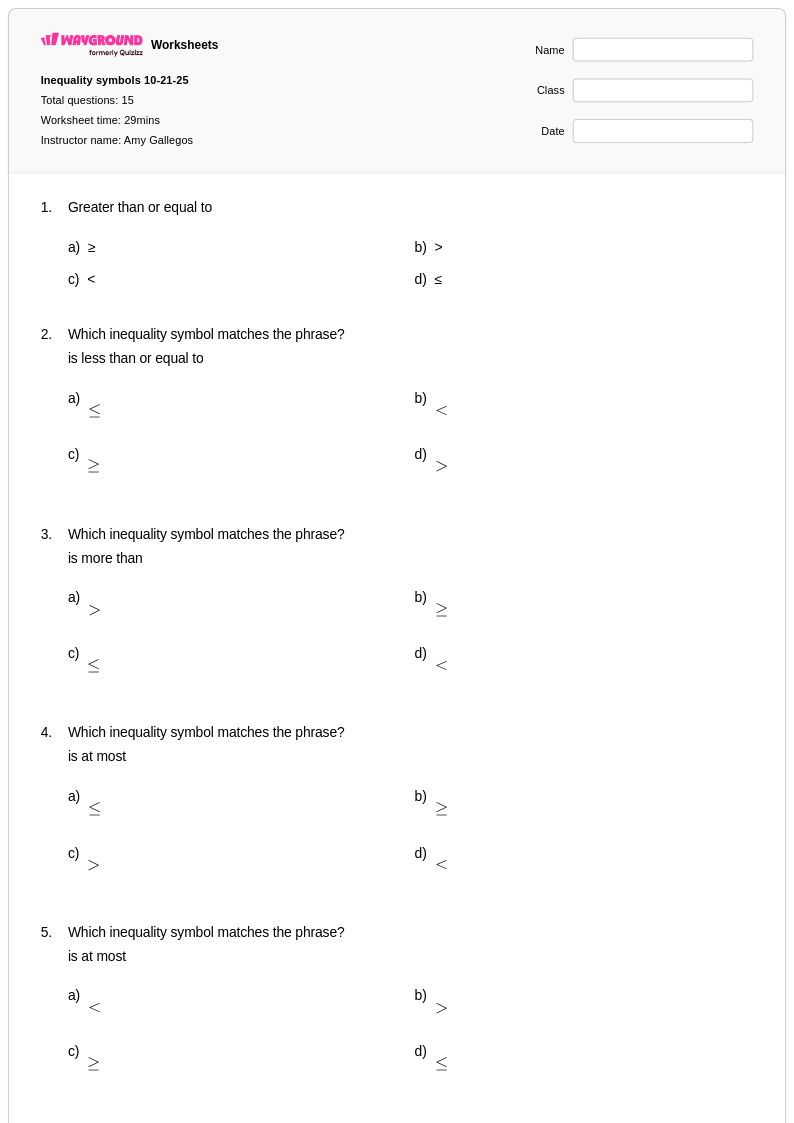
15 Q
7th - Uni
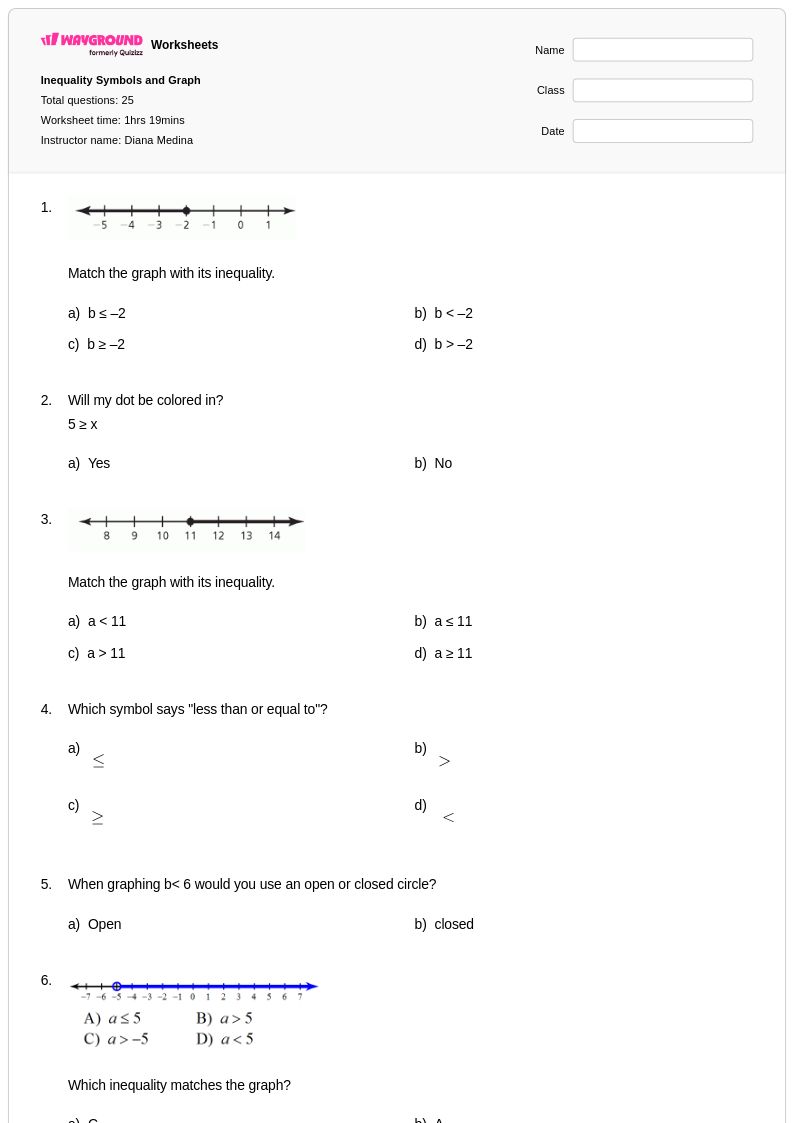
25 Q
6th
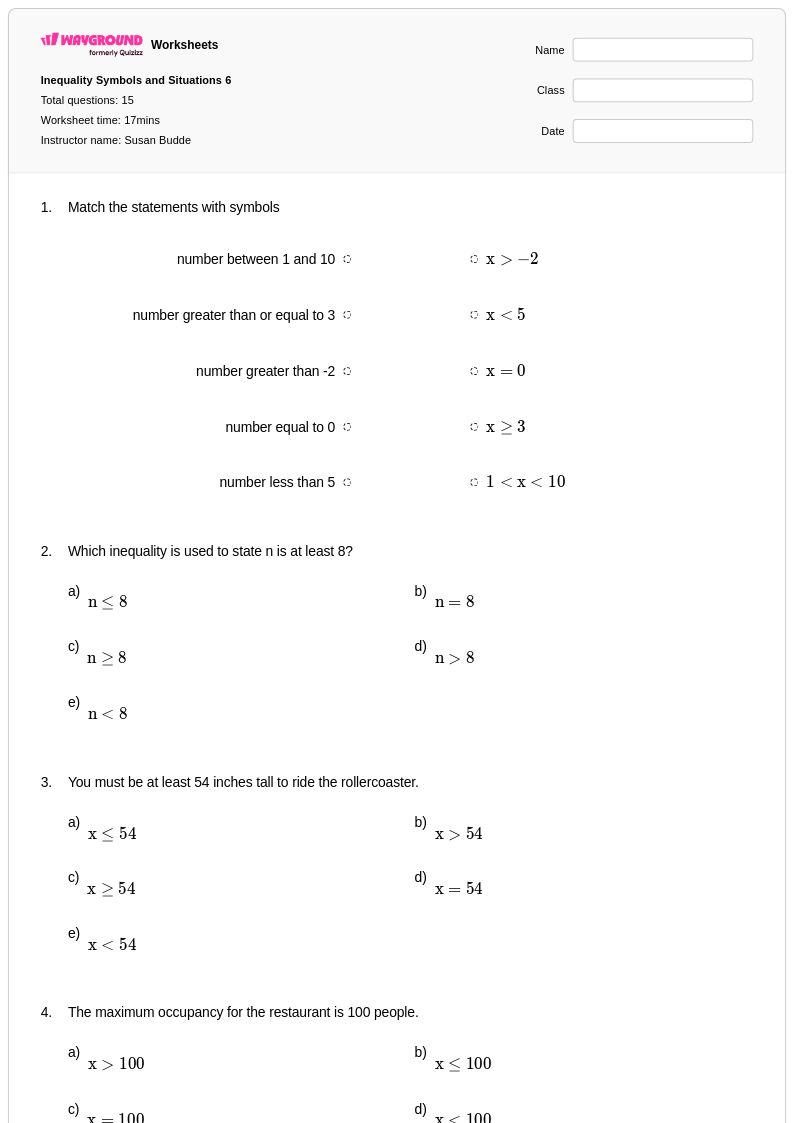
15 Q
9th - 12th
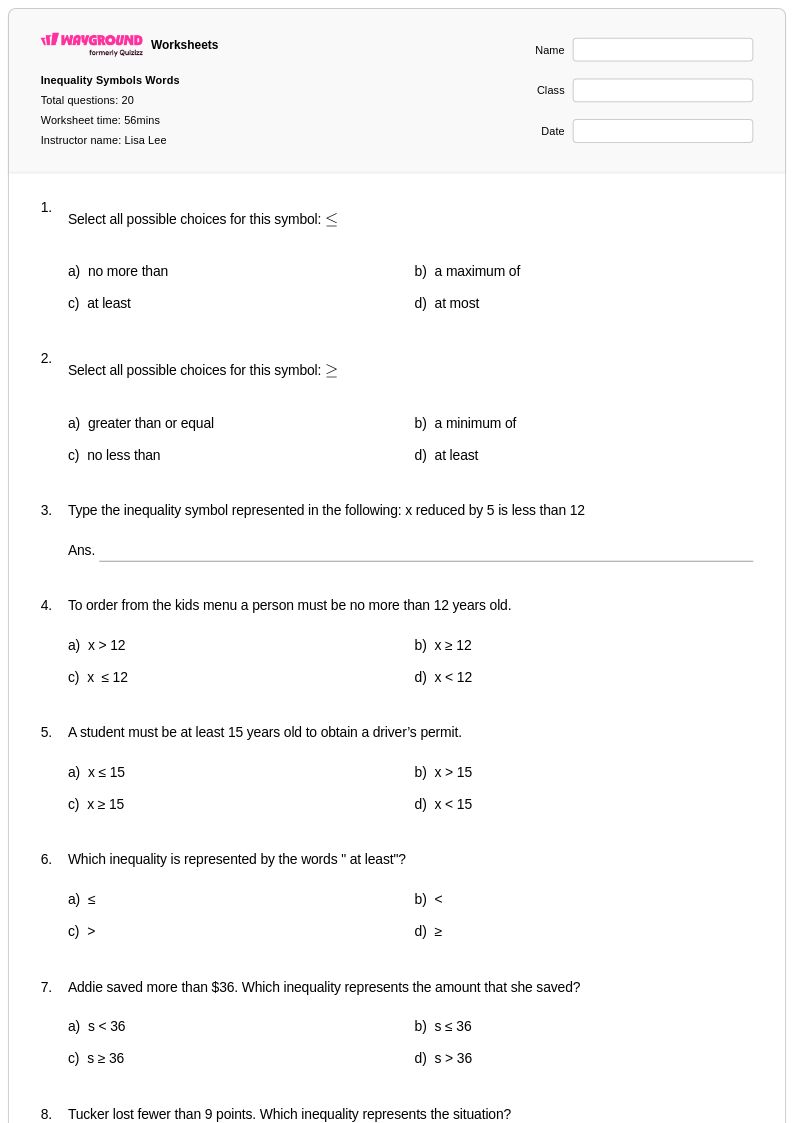
20 Q
5th - 7th
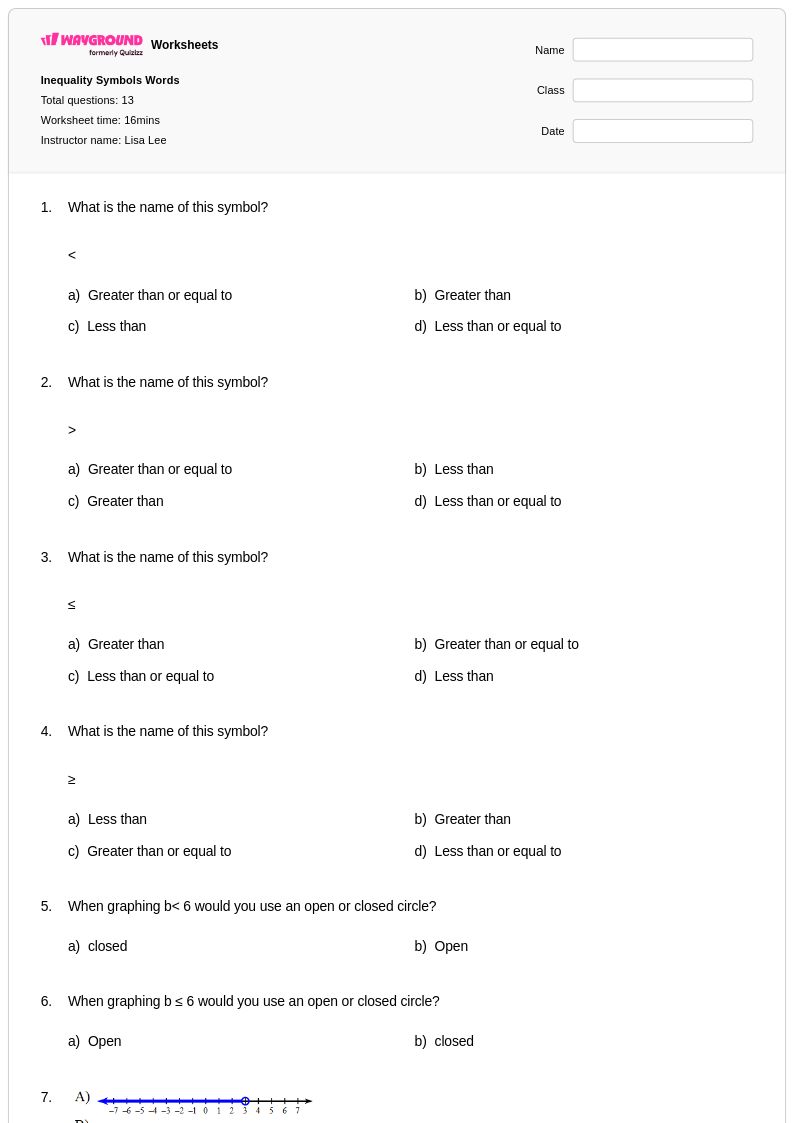
13 Q
6th
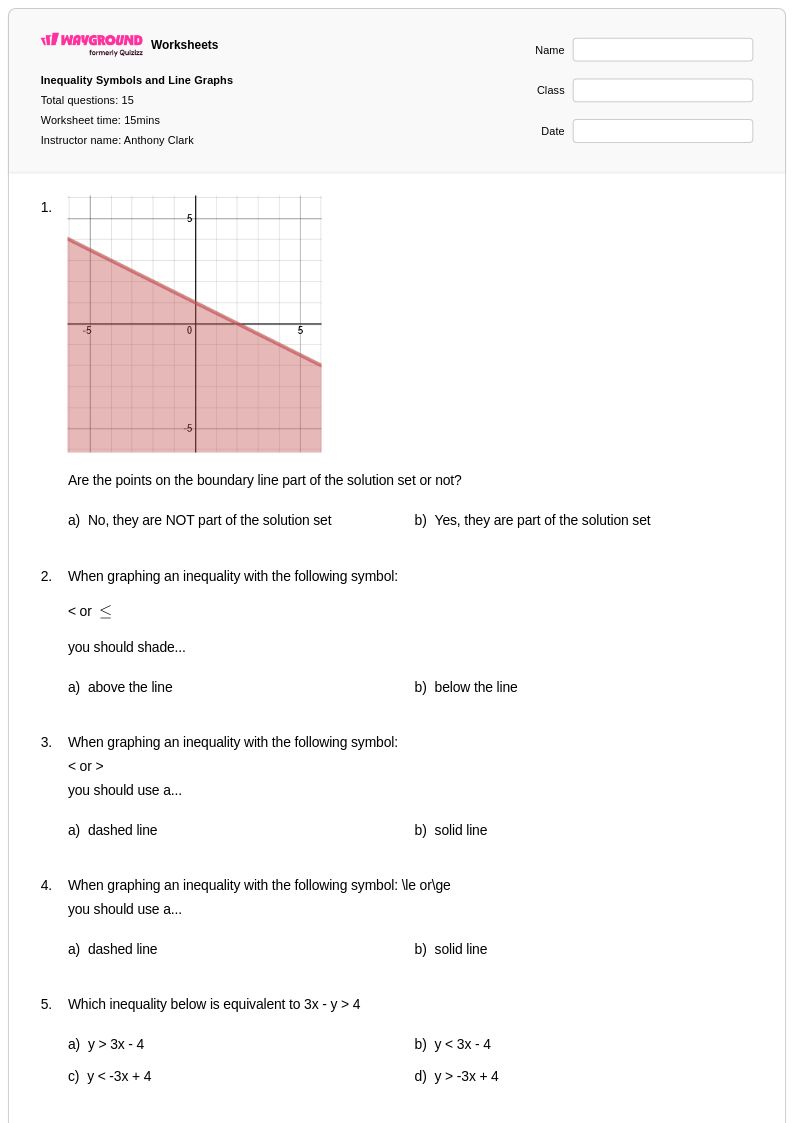
15 Q
9th - Uni
Explore Worksheets by Subjects
Explore printable Inequality Symbols worksheets
Inequality symbols worksheets available through Wayground (formerly Quizizz) provide students with comprehensive practice in understanding and applying the fundamental comparison operators that form the foundation of algebraic reasoning. These carefully designed worksheets focus on helping students master the proper use of greater than, less than, greater than or equal to, and less than or equal to symbols while developing critical thinking skills needed for more advanced mathematical concepts. Each worksheet includes structured practice problems that progress from basic symbol recognition to complex inequality expressions, complete with detailed answer keys that enable students to verify their understanding and identify areas for improvement. The free printable resources offer teachers and students convenient access to high-quality pdf materials that reinforce symbol comprehension through varied problem types and real-world applications.
Wayground (formerly Quizizz) empowers educators with an extensive collection of teacher-created inequality symbols worksheets drawn from millions of available resources, all accessible through intuitive search and filtering tools that streamline lesson preparation. The platform's robust standards alignment ensures that worksheets meet curriculum requirements while providing differentiation tools that allow teachers to customize materials for diverse learning needs and skill levels. These versatile resources support both remediation for struggling students and enrichment opportunities for advanced learners, available in both printable pdf format for traditional classroom use and digital formats for interactive learning experiences. Teachers can efficiently plan targeted skill practice sessions, create supplementary materials for homework assignments, and develop assessment tools that accurately measure student progress in understanding mathematical inequality relationships.
FAQs
How do I teach inequality symbols to my students?
What exercises help students practice inequality symbols?
What are common mistakes students make with inequality symbols?
How can I use this inequality symbols worksheet?
How do inequality symbols fit into the math curriculum?
How can I differentiate practice for inequality symbols?