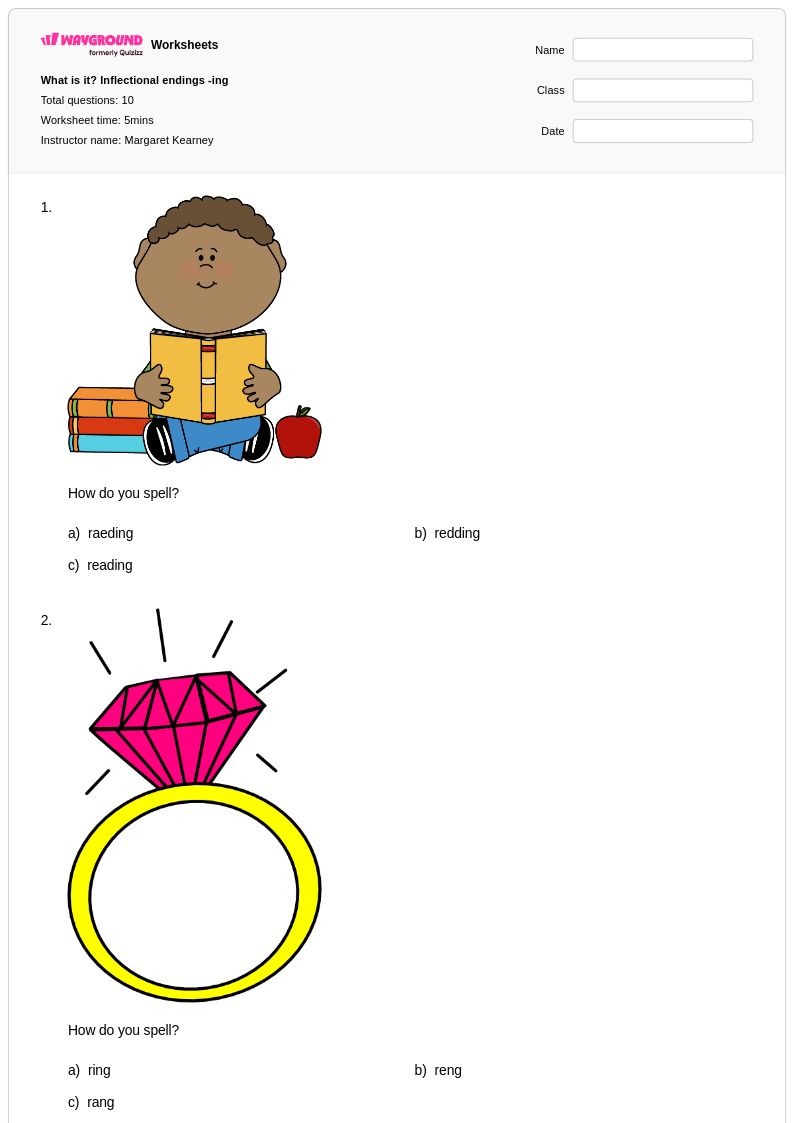
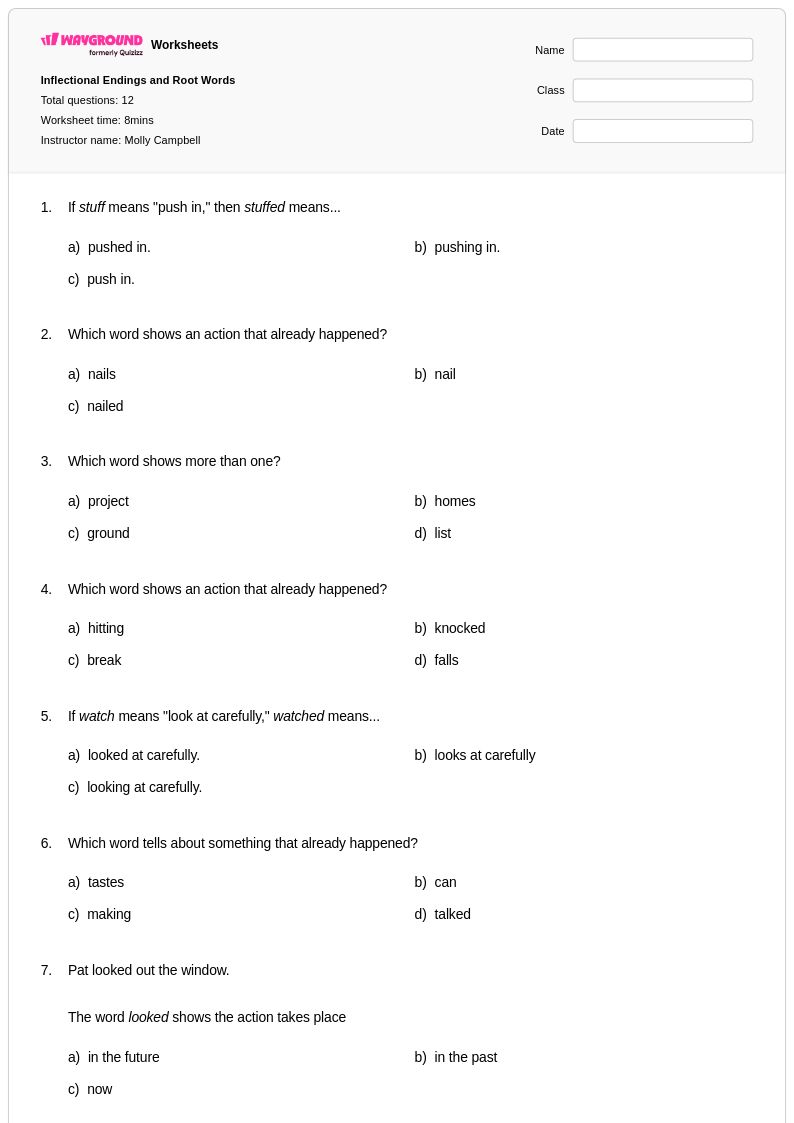
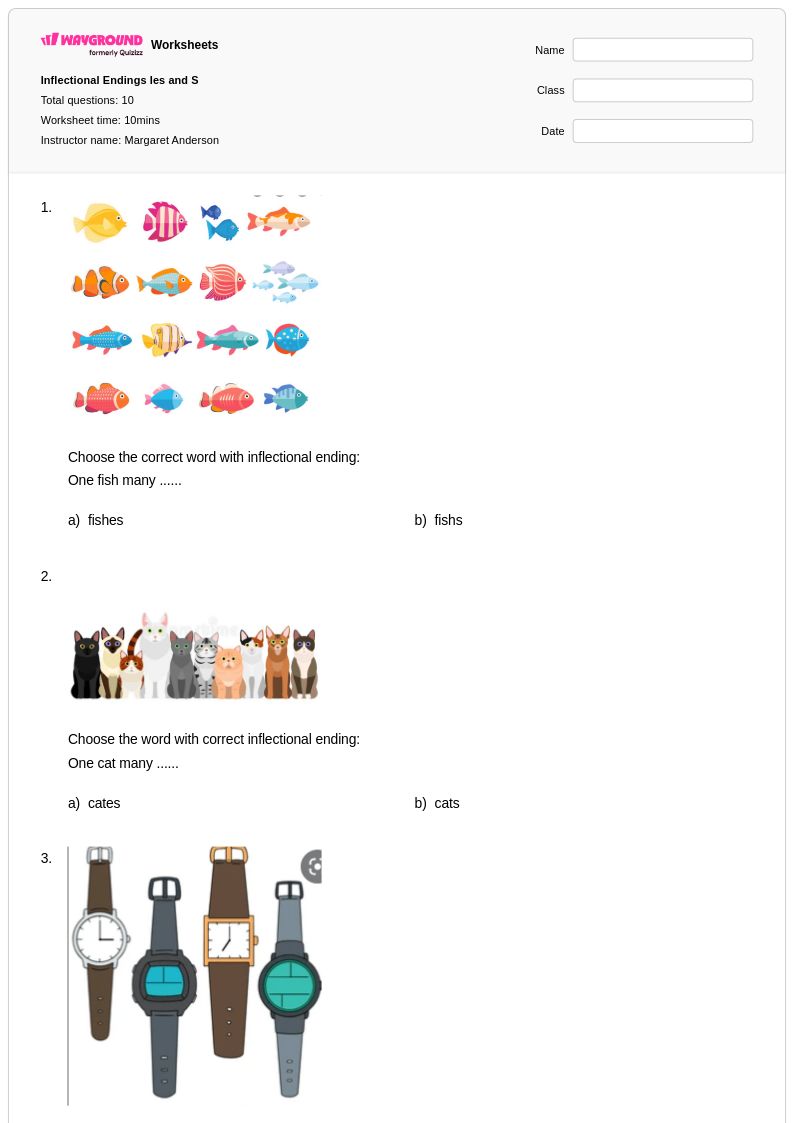
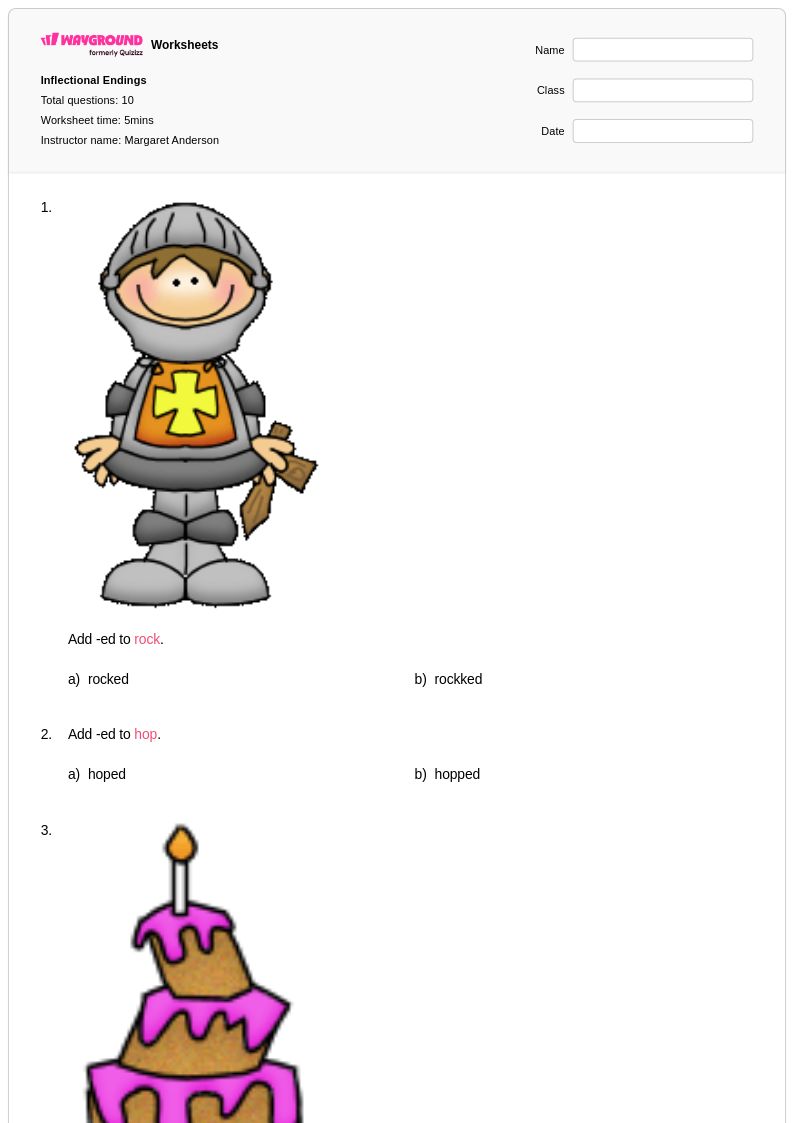
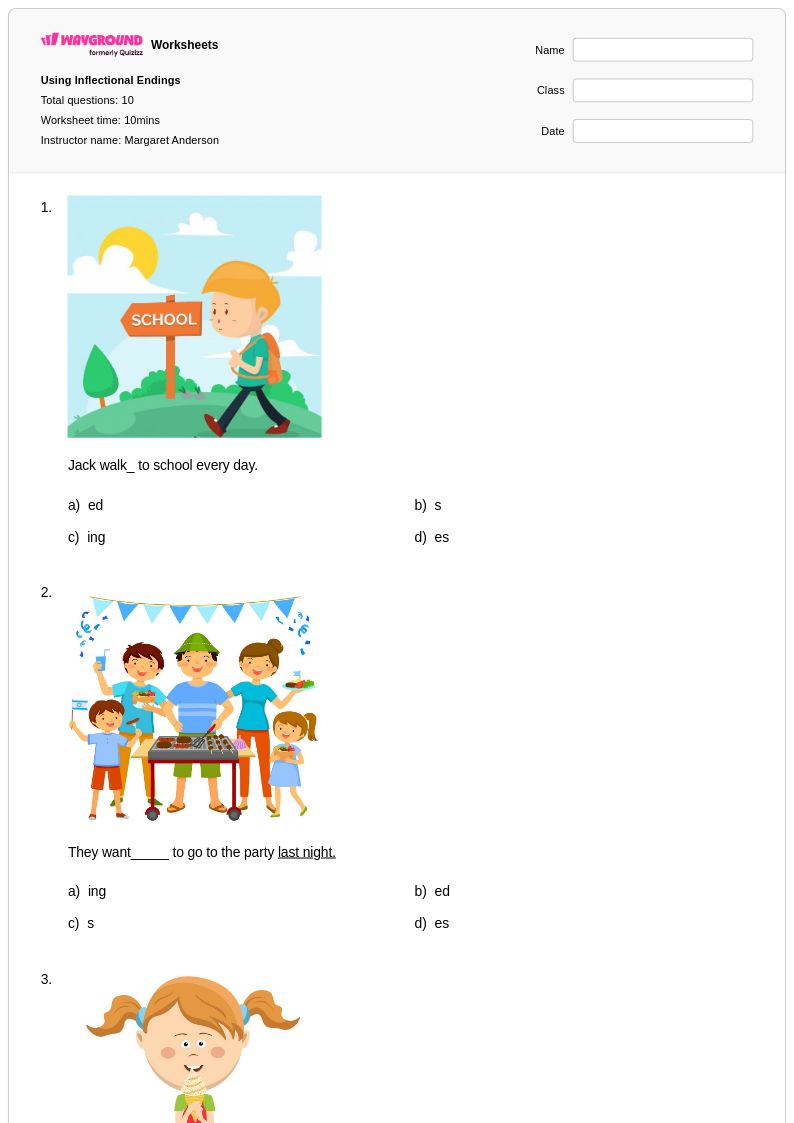
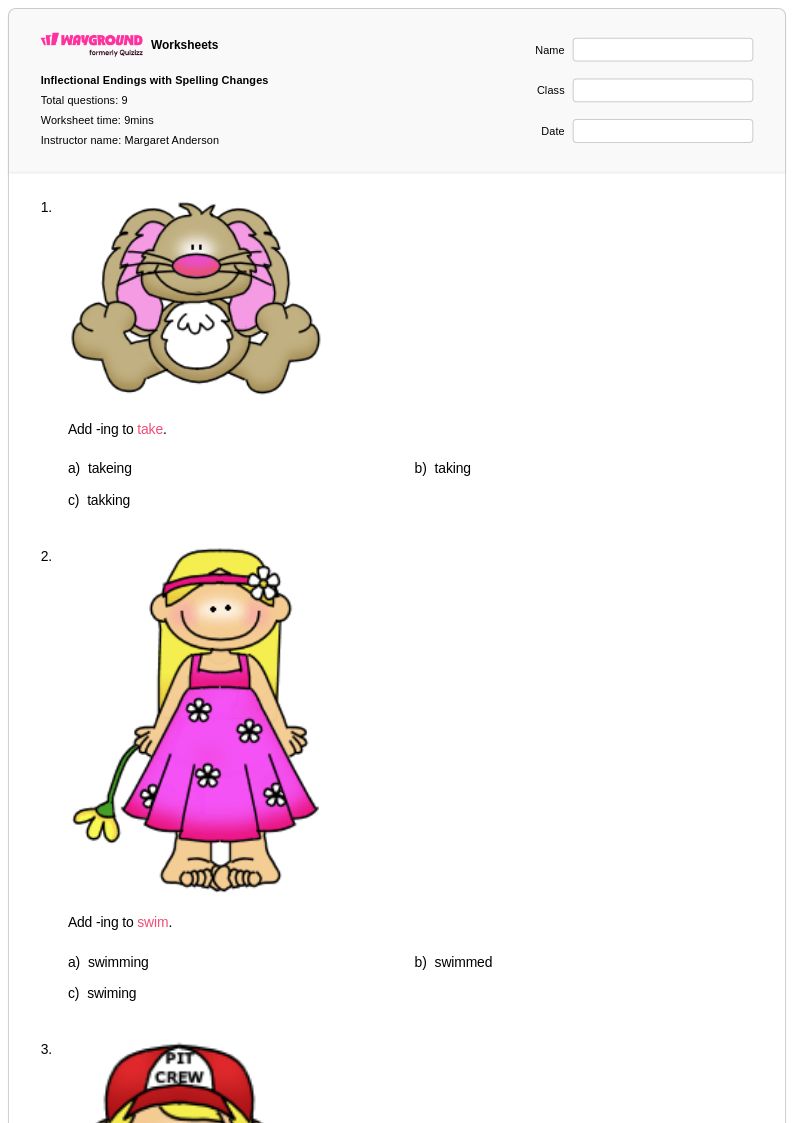
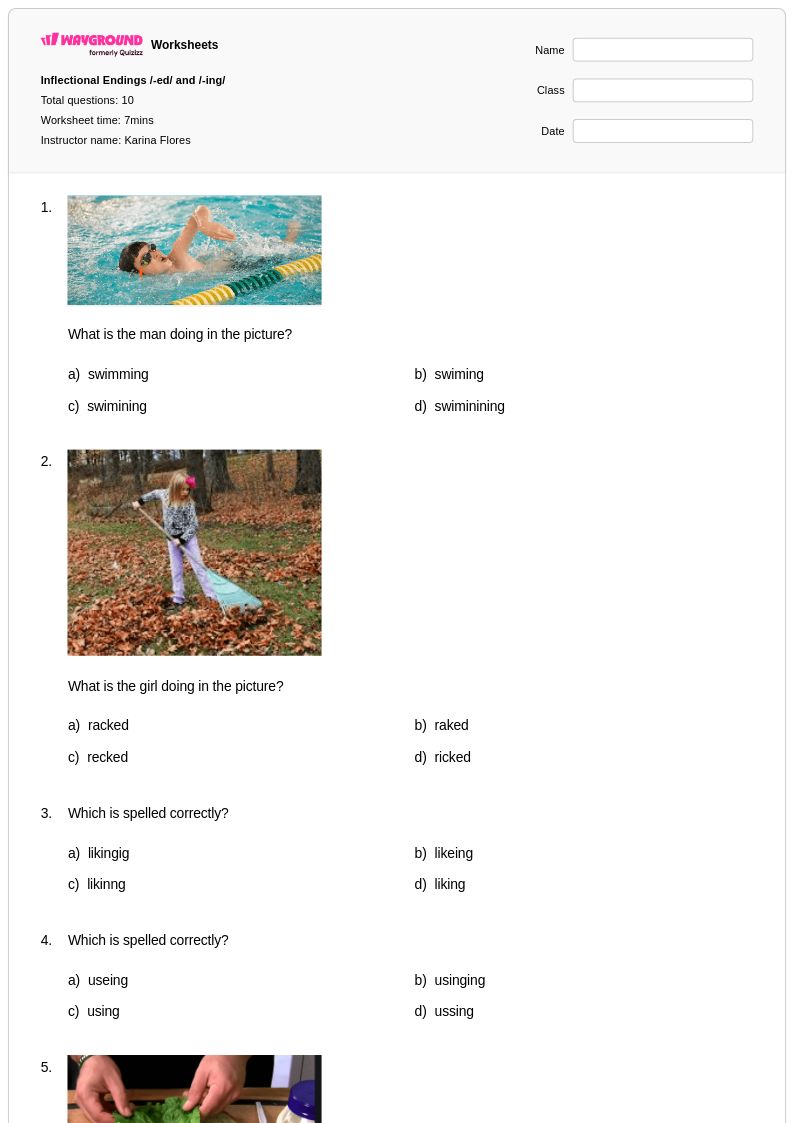
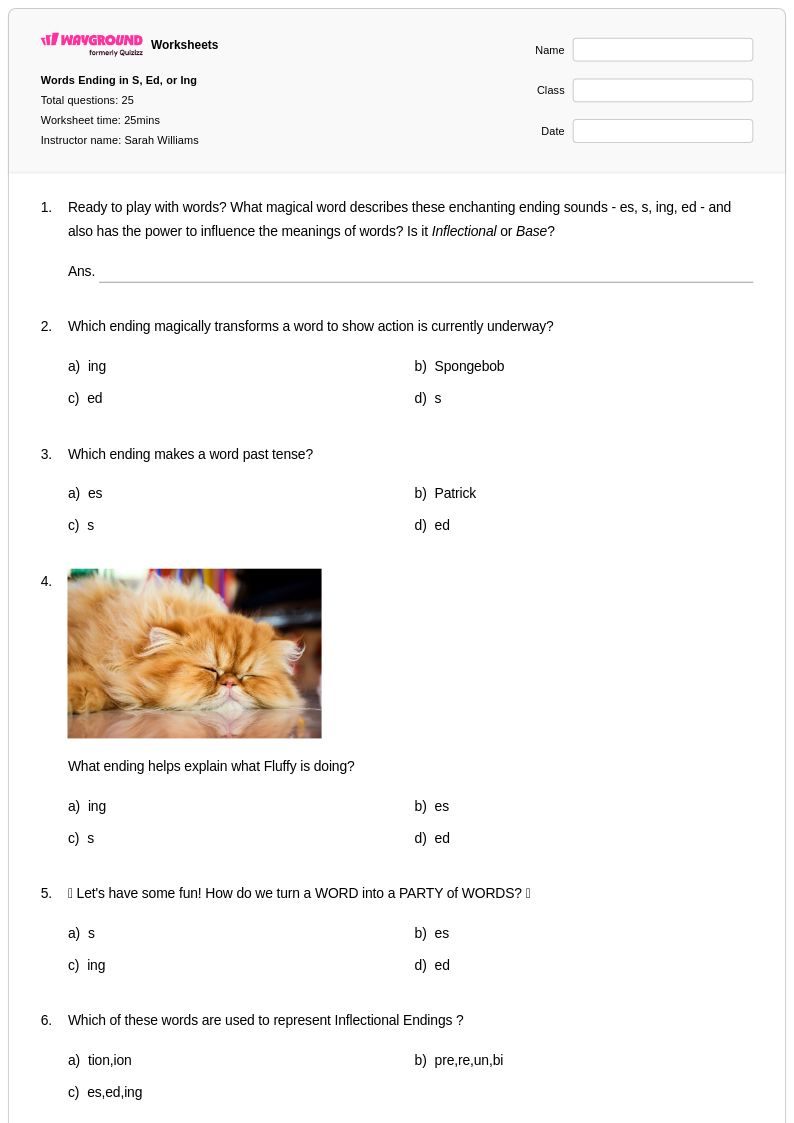
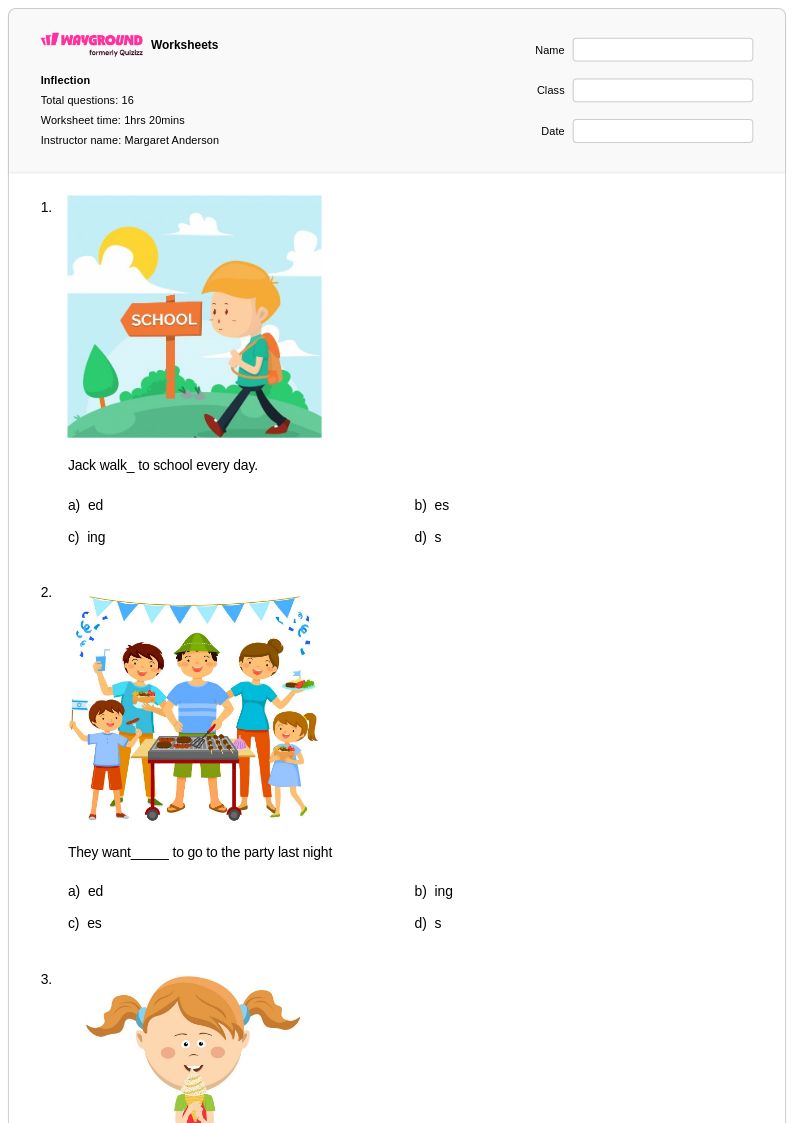
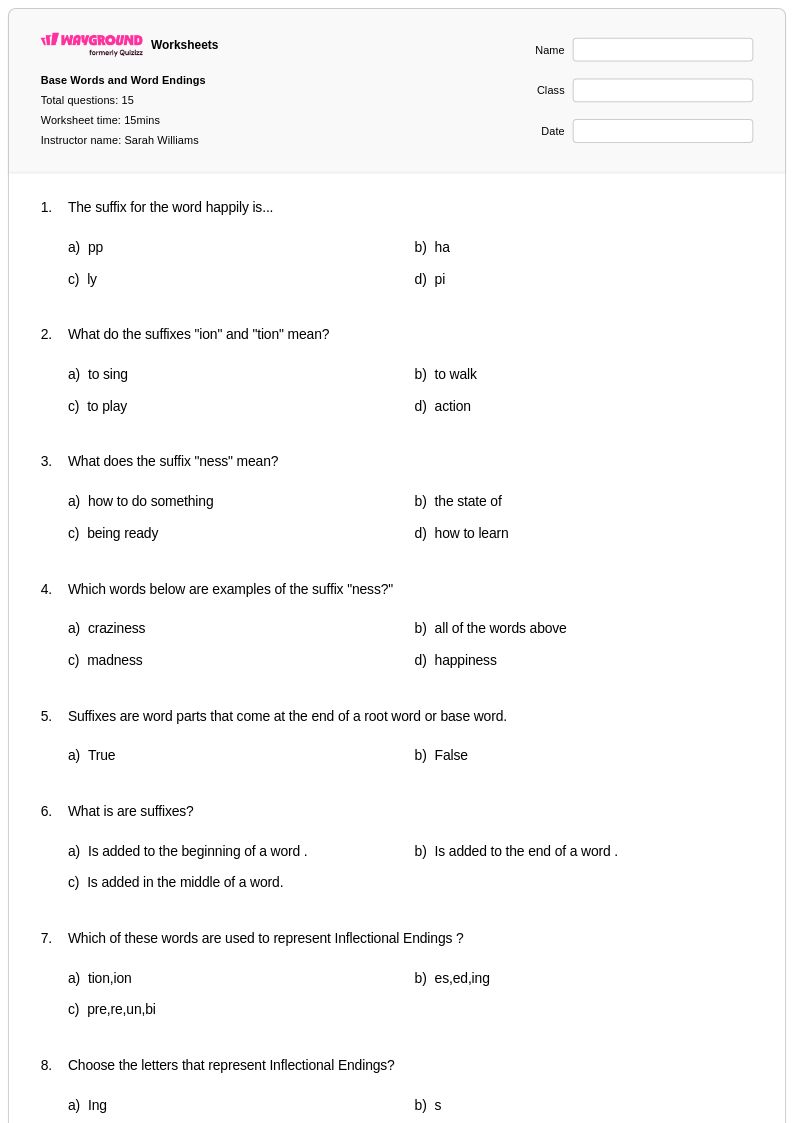
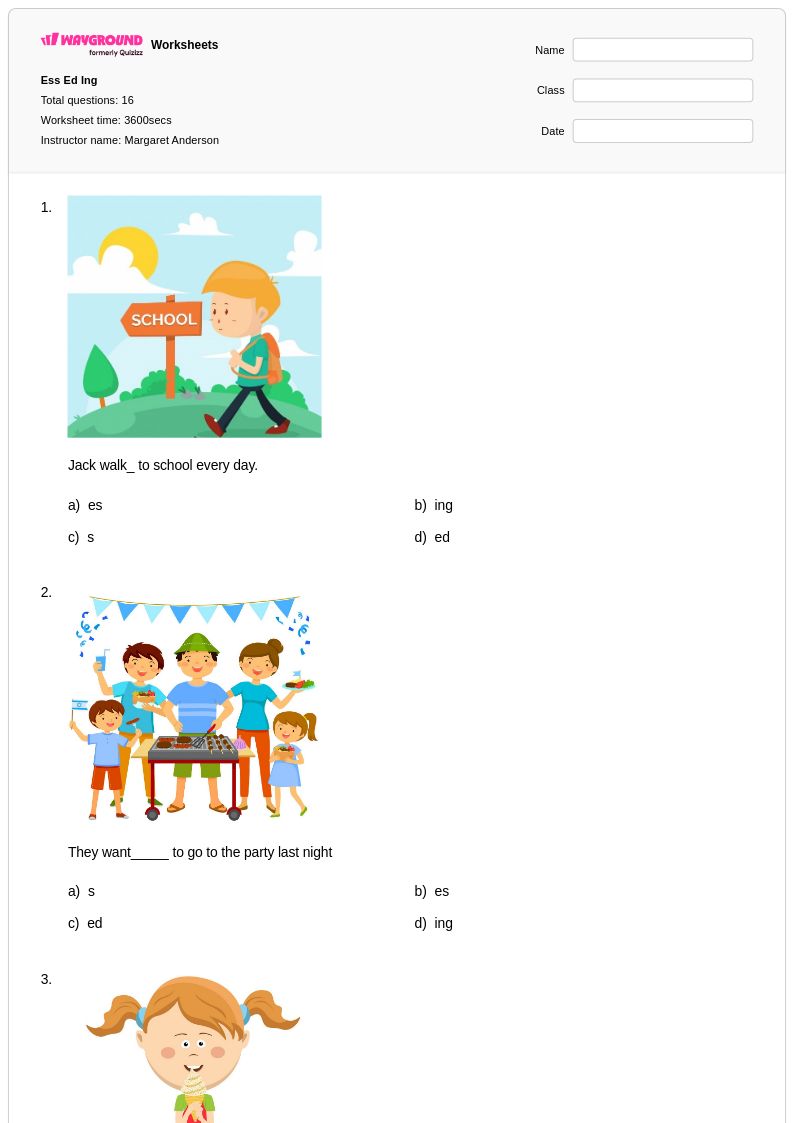
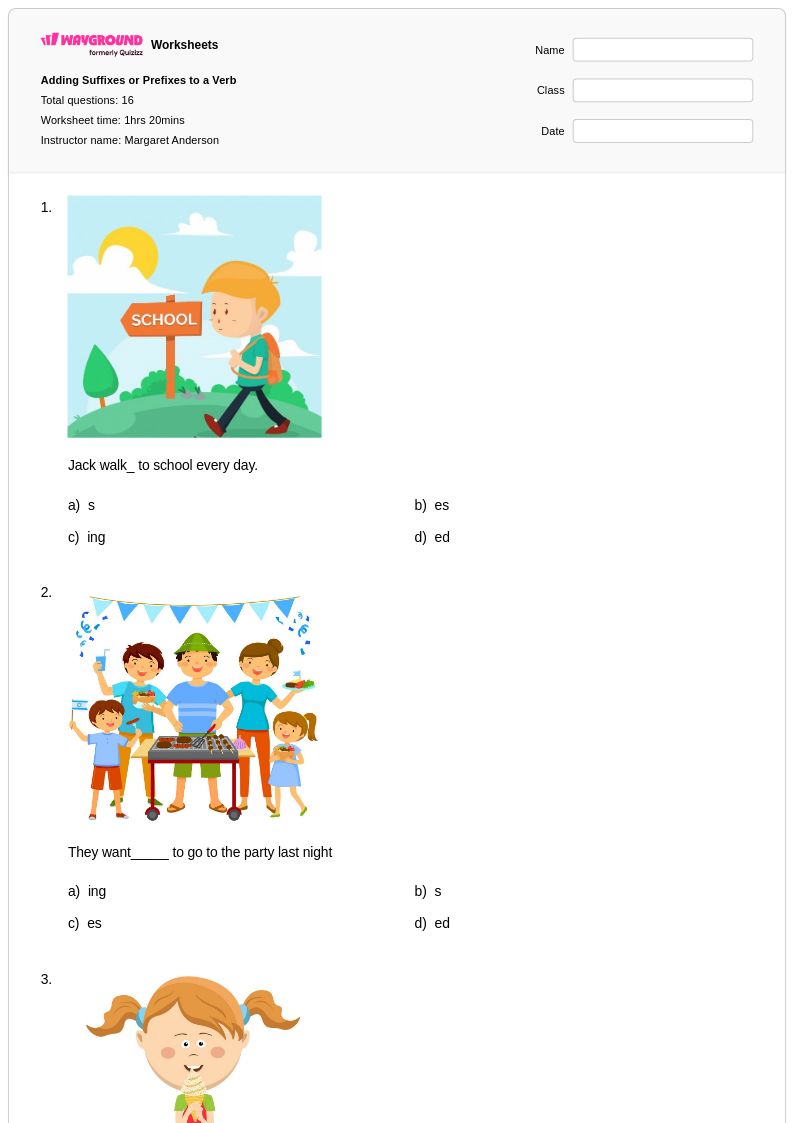
Enhance students' understanding of inflectional endings with Wayground's comprehensive collection of free worksheets, printables, and practice problems that build essential word pattern recognition skills through engaging exercises and detailed answer keys.
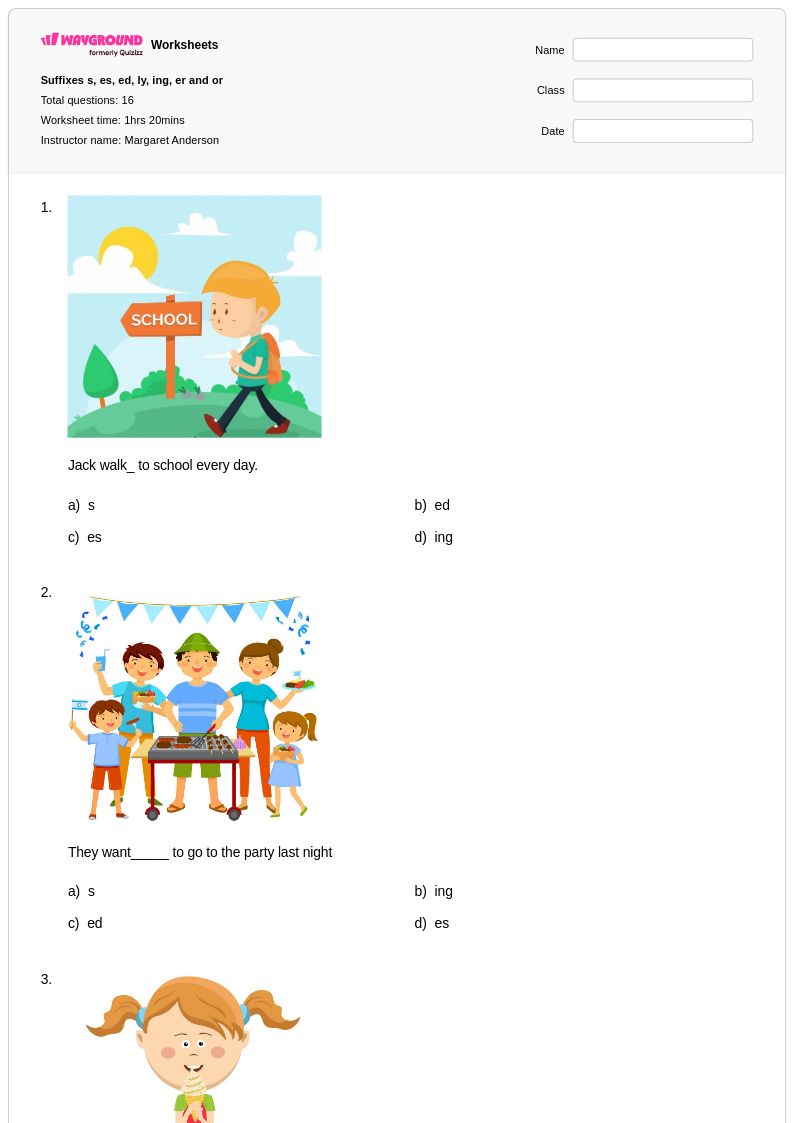
Inflectional endings worksheets available through Wayground (formerly Quizizz) provide comprehensive practice with the systematic morphological changes that modify word meanings and grammatical functions in English. These expertly designed resources help students master essential word pattern skills including pluralization, verb tense formation, comparative and superlative adjective forms, and possessive constructions. Each worksheet collection focuses on developing students' ability to recognize, apply, and manipulate inflectional suffixes such as -s, -es, -ed, -ing, -er, -est, and -'s through carefully scaffolded practice problems that progress from basic identification to complex application tasks. The printable pdf formats include detailed answer keys that support both independent practice and guided instruction, while free downloadable printables ensure accessibility for diverse classroom needs.
Wayground's extensive collection of inflectional endings worksheets draws from millions of teacher-created resources, offering educators powerful search and filtering capabilities to locate materials perfectly aligned with their instructional objectives and curriculum standards. The platform's robust differentiation tools enable teachers to customize worksheet difficulty levels, modify practice problems, and adapt content for diverse learning needs, supporting both remediation for struggling learners and enrichment for advanced students. Available in both printable pdf and interactive digital formats, these resources integrate seamlessly into lesson planning workflows while providing flexible options for homework assignments, formative assessments, and targeted skill practice sessions. The comprehensive standards alignment features help educators ensure their inflectional endings instruction meets grade-level expectations while building students' foundational understanding of English morphology and word structure patterns.
FAQs
How do I teach inflectional endings to early elementary students?
Start by anchoring inflectional endings to words students already know, then show how adding -s, -es, -ed, or -ing changes the word's job in a sentence. Use sorting activities where students categorize words by their suffix and discuss what each ending signals, such as plurality or past tense. Gradually move from recognition tasks to production tasks, asking students to write their own sentences using inflected forms. Explicit, repeated exposure across reading and writing contexts is key to transfer.
What exercises help students practice inflectional endings effectively?
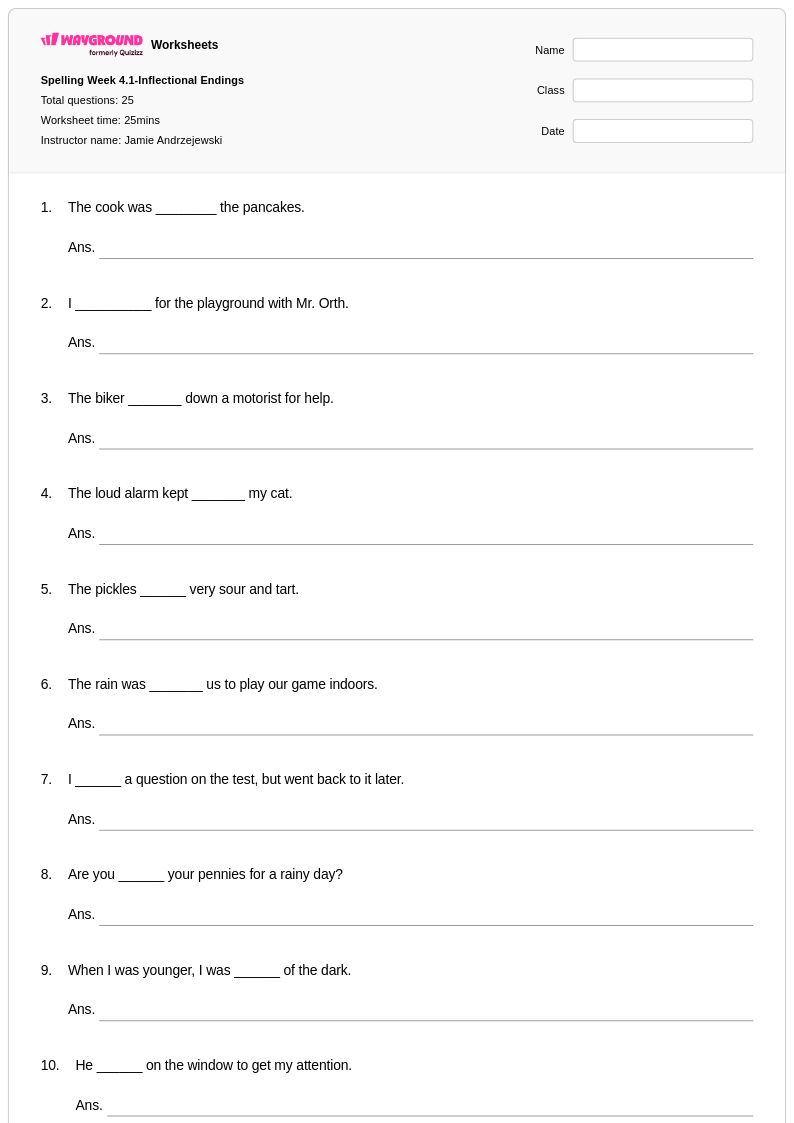
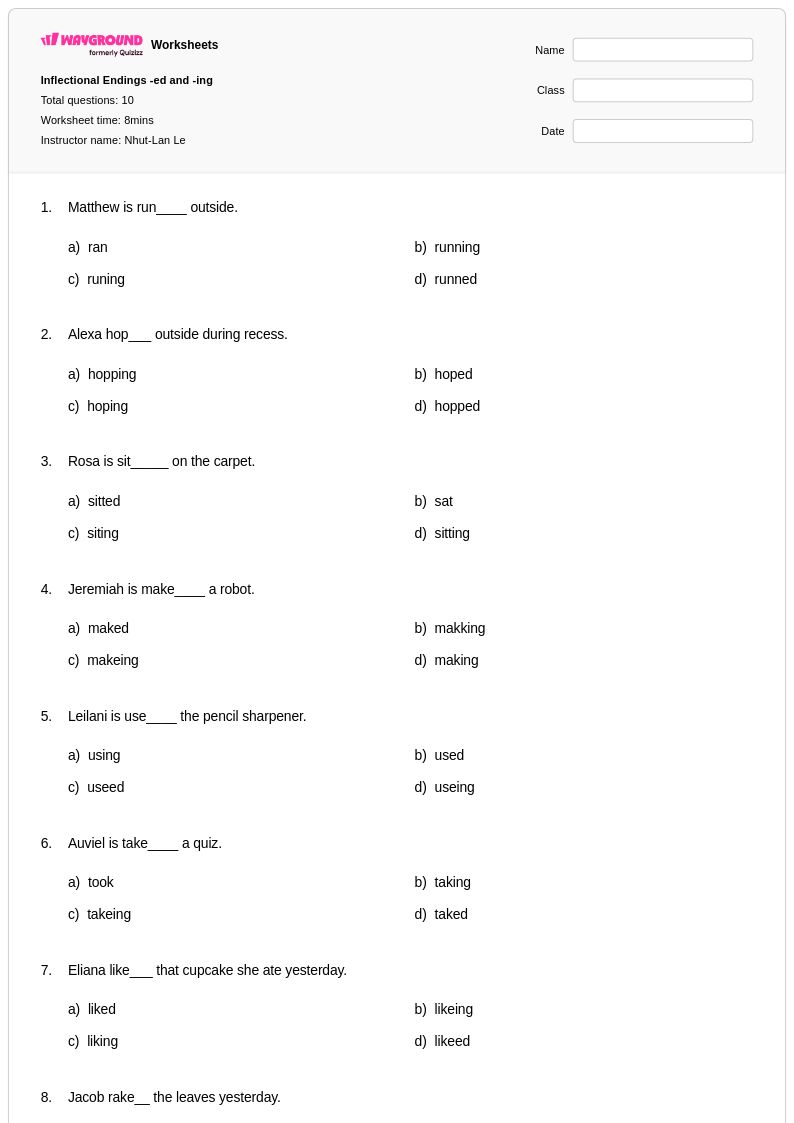
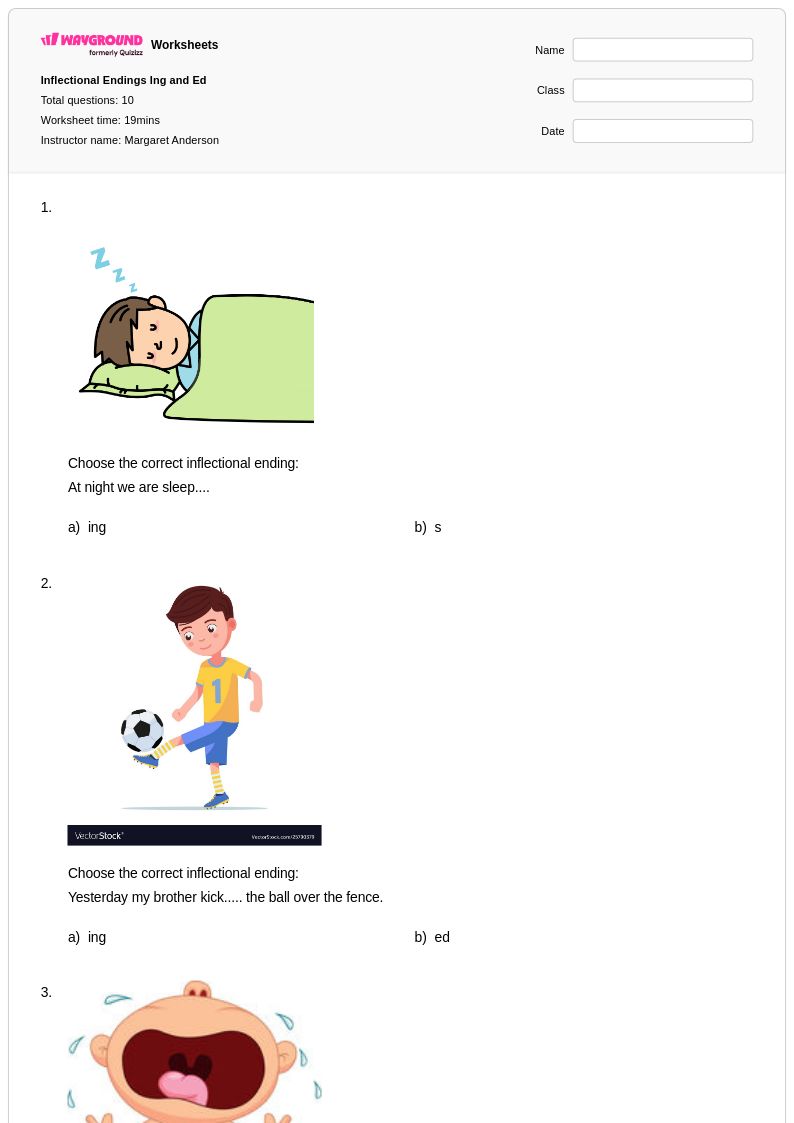
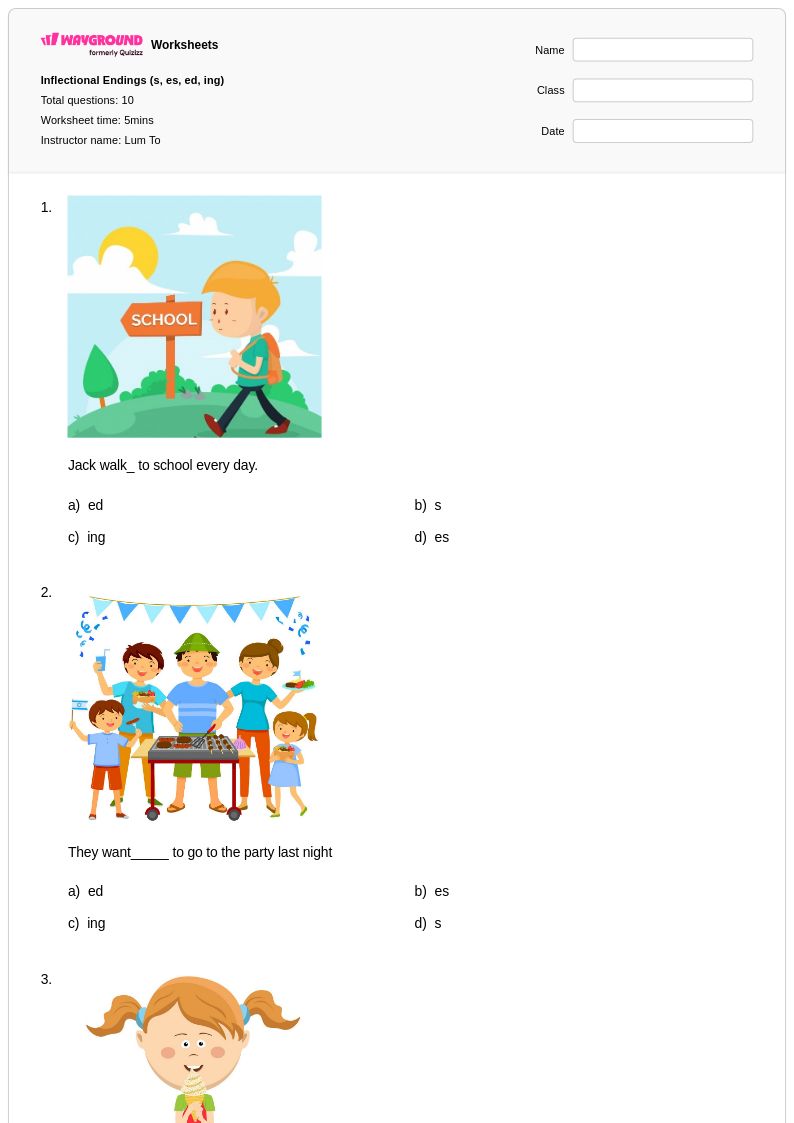
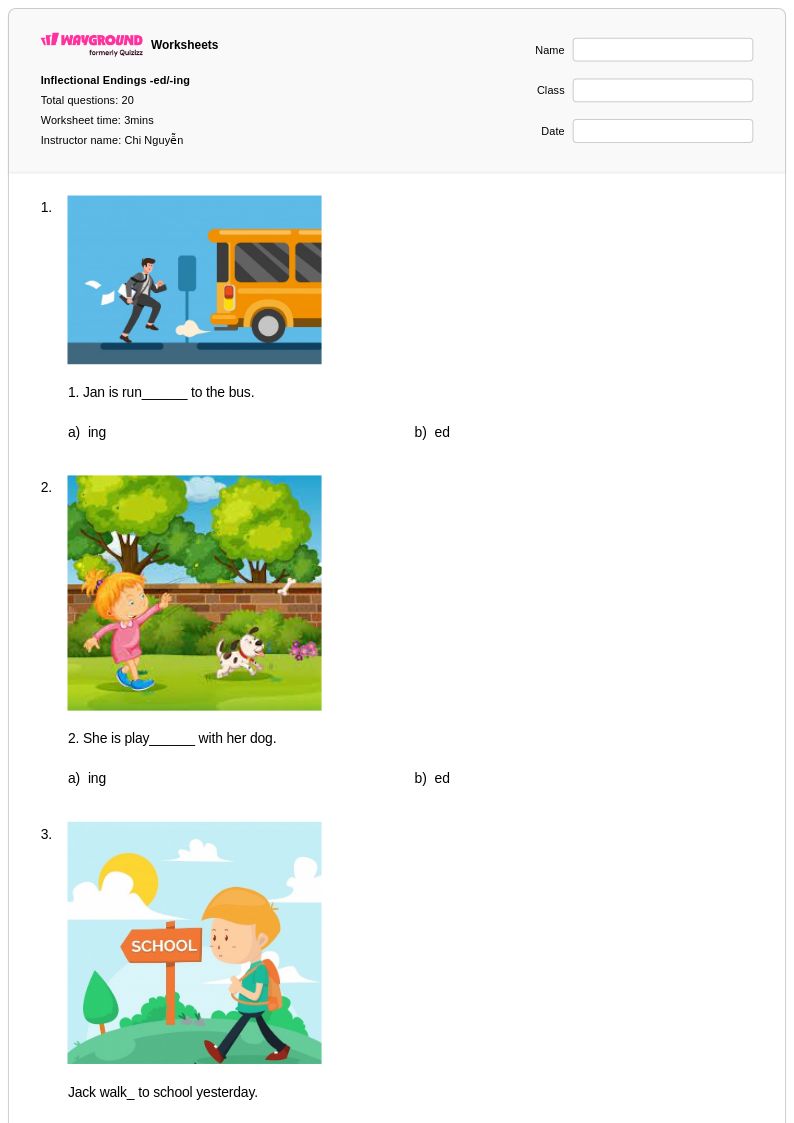
The most effective practice combines identification, transformation, and application tasks. Start with exercises where students identify the base word and the inflectional ending separately, then move to transformation drills where they change a base word to match a given tense or number. Cloze sentences, where students fill in the correct inflected form, bridge isolated skill practice to authentic reading and writing use. Scaffolded practice that progresses from simpler suffixes like -s to more complex forms like -est or -'s builds lasting fluency.
What spelling rules do students need to know when adding inflectional endings?
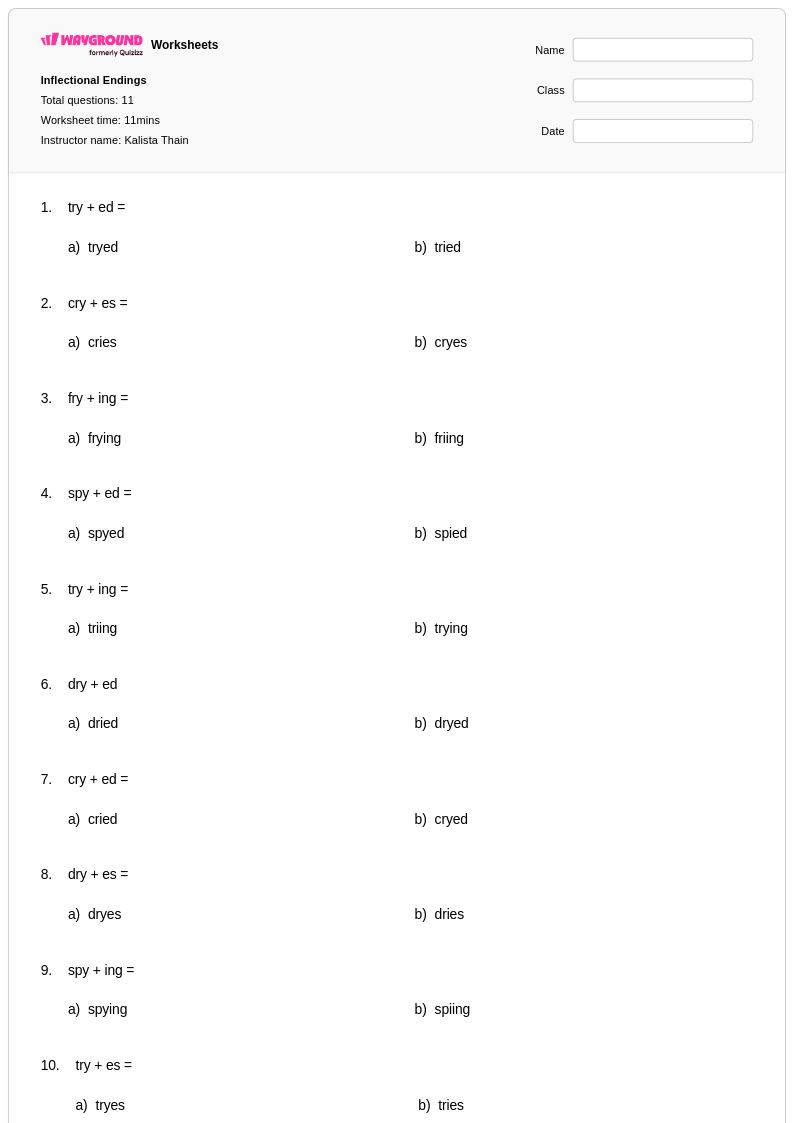
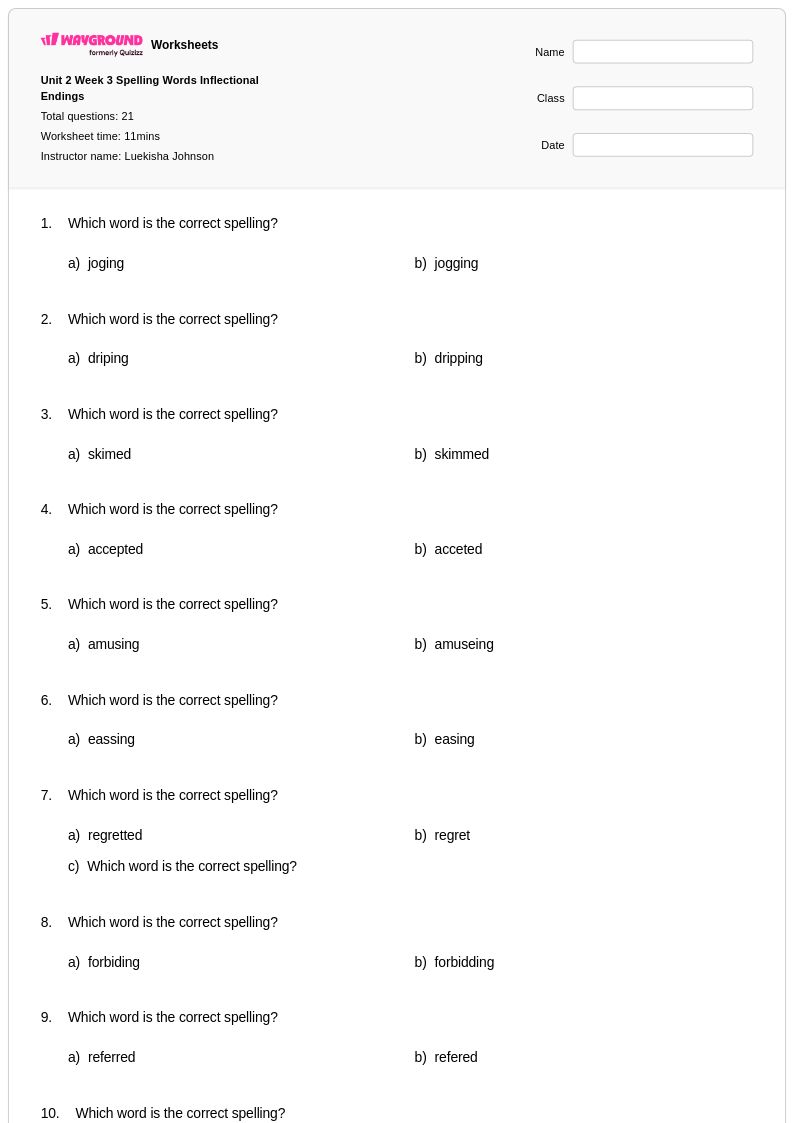
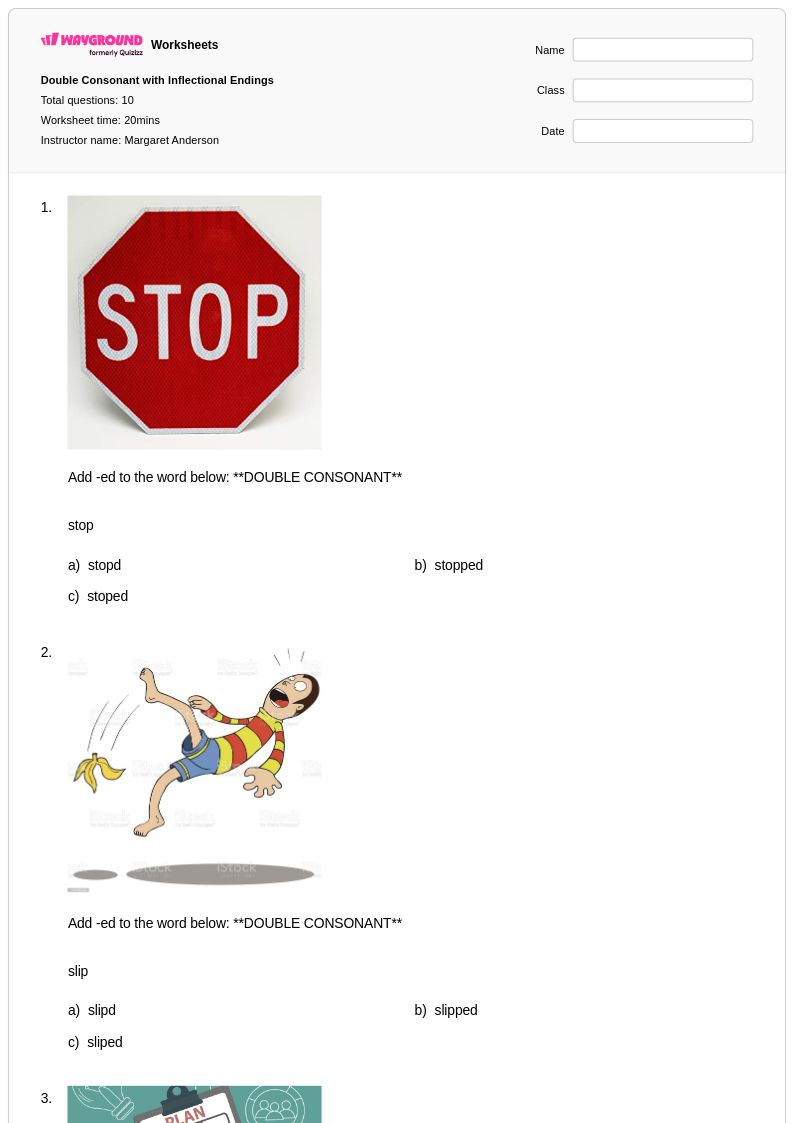
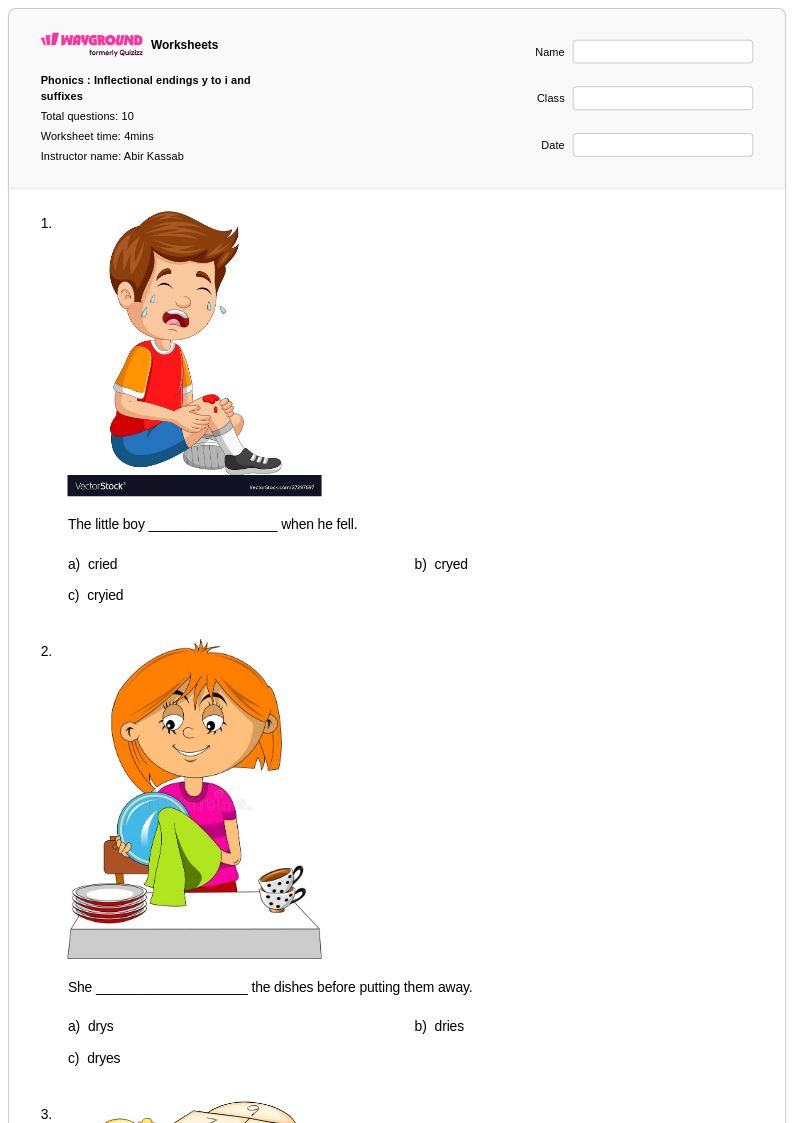
Students must learn several key spelling rules that apply when adding inflectional endings. The doubling rule requires doubling the final consonant in short-vowel, single-syllable words before adding -ed or -ing, as in 'run' becoming 'running.' The drop-e rule applies when a word ends in silent e, requiring students to drop the e before adding a vowel suffix, as in 'bake' becoming 'baking.' The change-y rule applies when a word ends in a consonant plus y, requiring the y to change to i before adding -es or -ed, as in 'carry' becoming 'carried.'
What mistakes do students commonly make with inflectional endings?
One of the most common errors is overgeneralizing inflectional rules to irregular words, such as writing 'goed' instead of 'went' or 'mouses' instead of 'mice.' Students also frequently misapply spelling rules, forgetting to double consonants or drop the silent e before adding a suffix. Another typical error is confusing the comparative and superlative forms, using both an inflectional ending and an adverb simultaneously, as in 'more taller.' Targeting these specific misconceptions during instruction and using error-analysis exercises can help students self-correct.
How can I use Wayground's inflectional endings worksheets in my classroom?
Wayground's inflectional endings worksheets are available as printable PDFs for traditional classroom use and in digital formats for technology-integrated environments, giving you flexibility to assign them as independent practice, guided small-group work, or homework. You can also host them as a quiz directly on Wayground, which makes them easy to use for formative assessment. Digital formats also allow you to apply individual student accommodations such as read aloud or extended time, so diverse learners can access the same content with appropriate support.
How do inflectional endings differ from derivational suffixes?
Inflectional endings modify a word's grammatical function without changing its core meaning or part of speech, such as adding -s to 'dog' to indicate plurality. Derivational suffixes, by contrast, create an entirely new word with a different meaning or part of speech, such as adding -ful to 'care' to form the adjective 'careful.' English has a small, closed set of inflectional endings, while derivational suffixes are far more numerous. Teaching this distinction helps students decode unfamiliar words and understand how word structure signals meaning.