
20 Q
4th - Uni
15 Q
4th - 5th
22 Q
5th
15 Q
4th - 5th
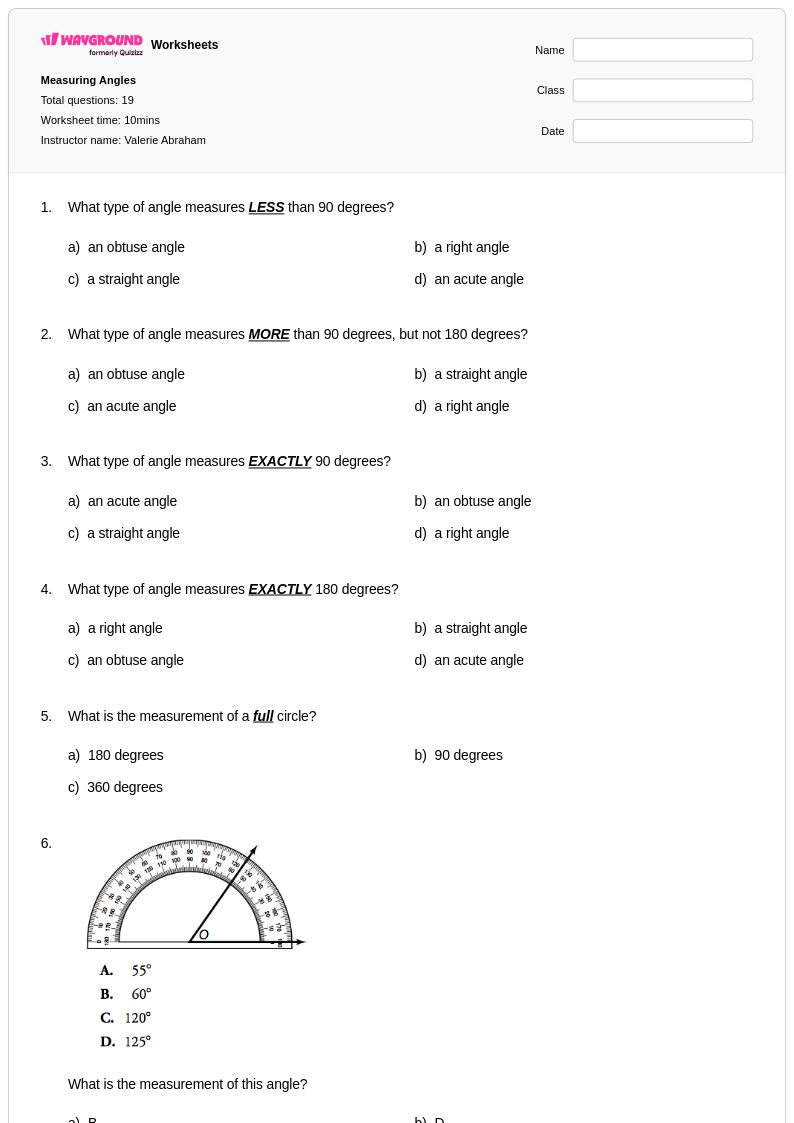
19 Q
4th - 5th
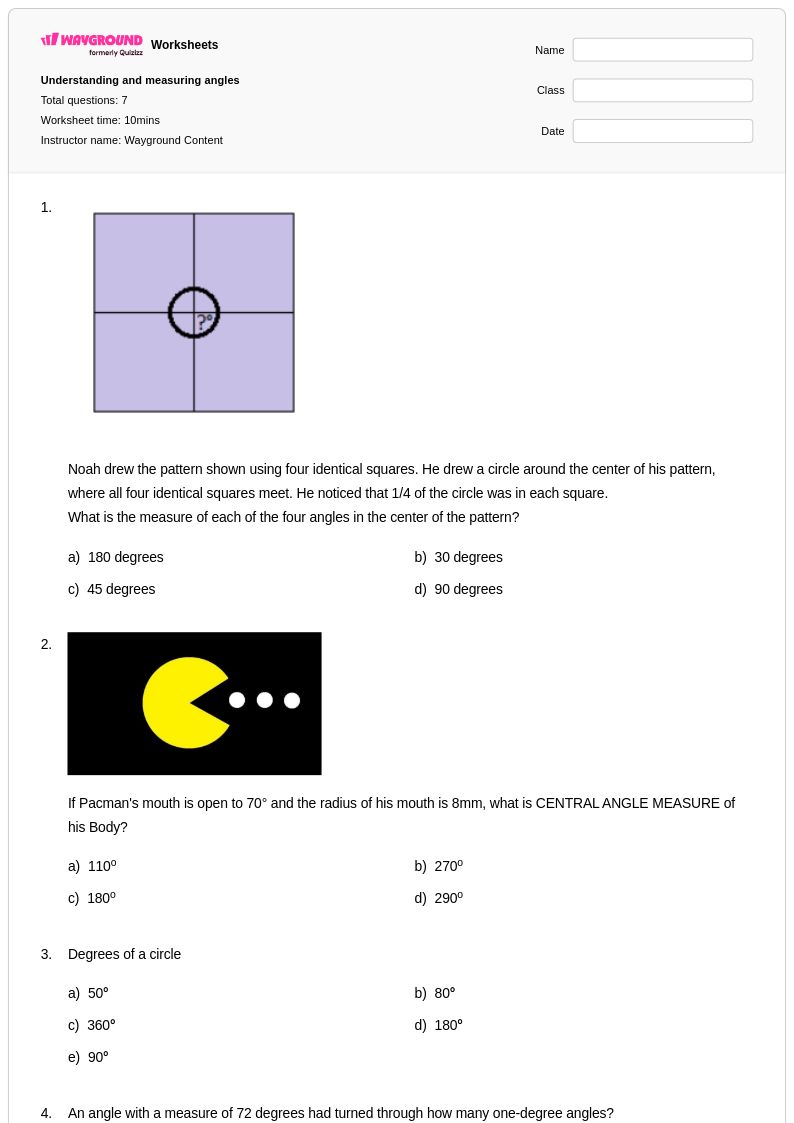
7 Q
4th - 12th
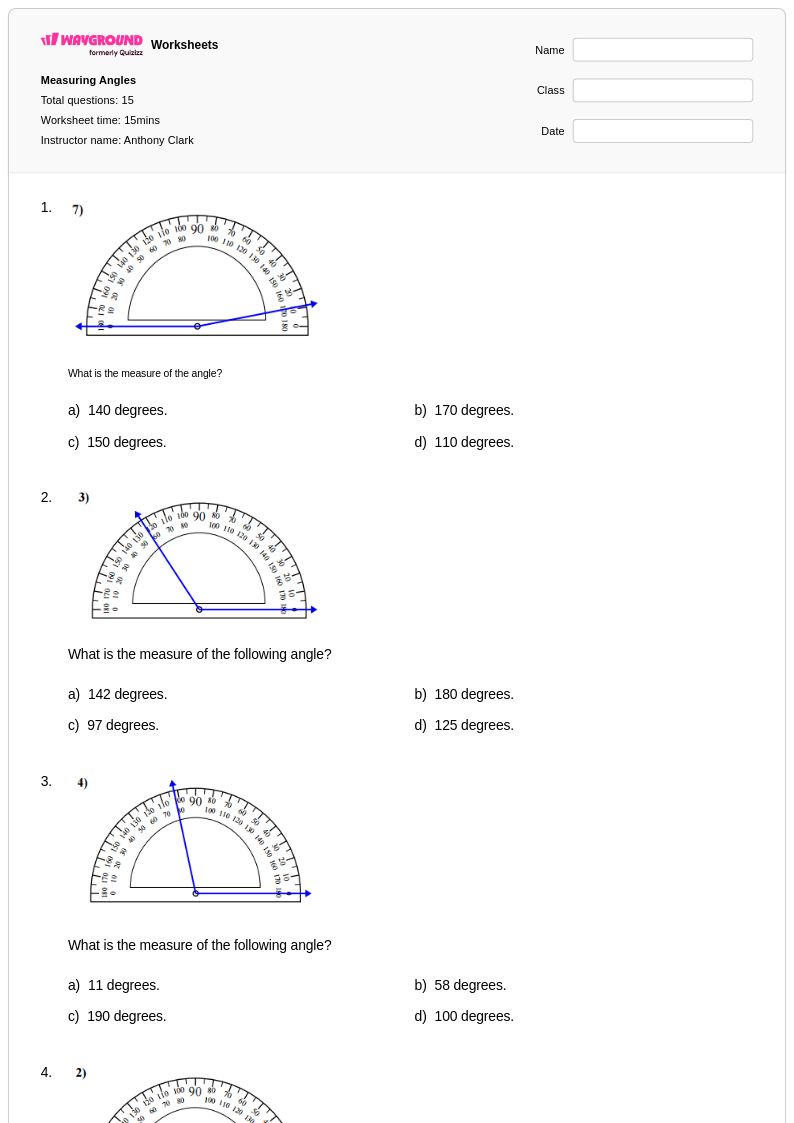
15 Q
4th - Uni
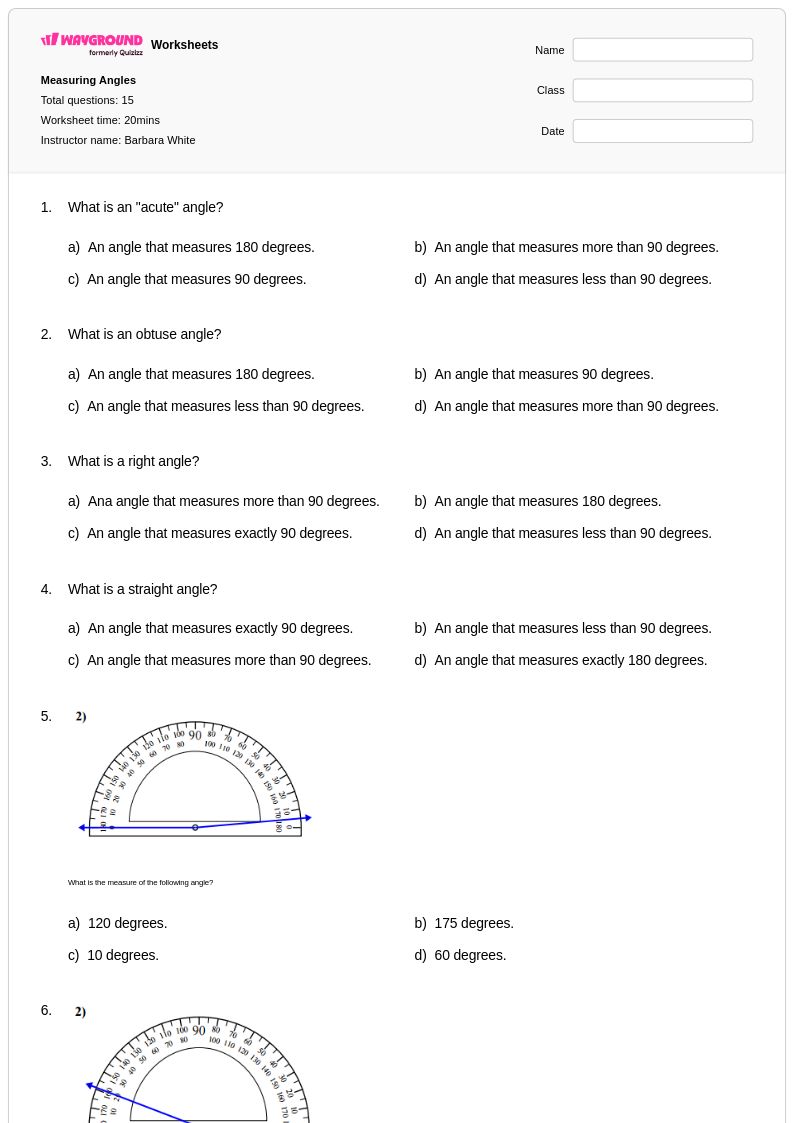
15 Q
1st - 7th
15 Q
4th - Uni
5 Q
1st - 5th
23 Q
4th - 6th
15 Q
4th - Uni
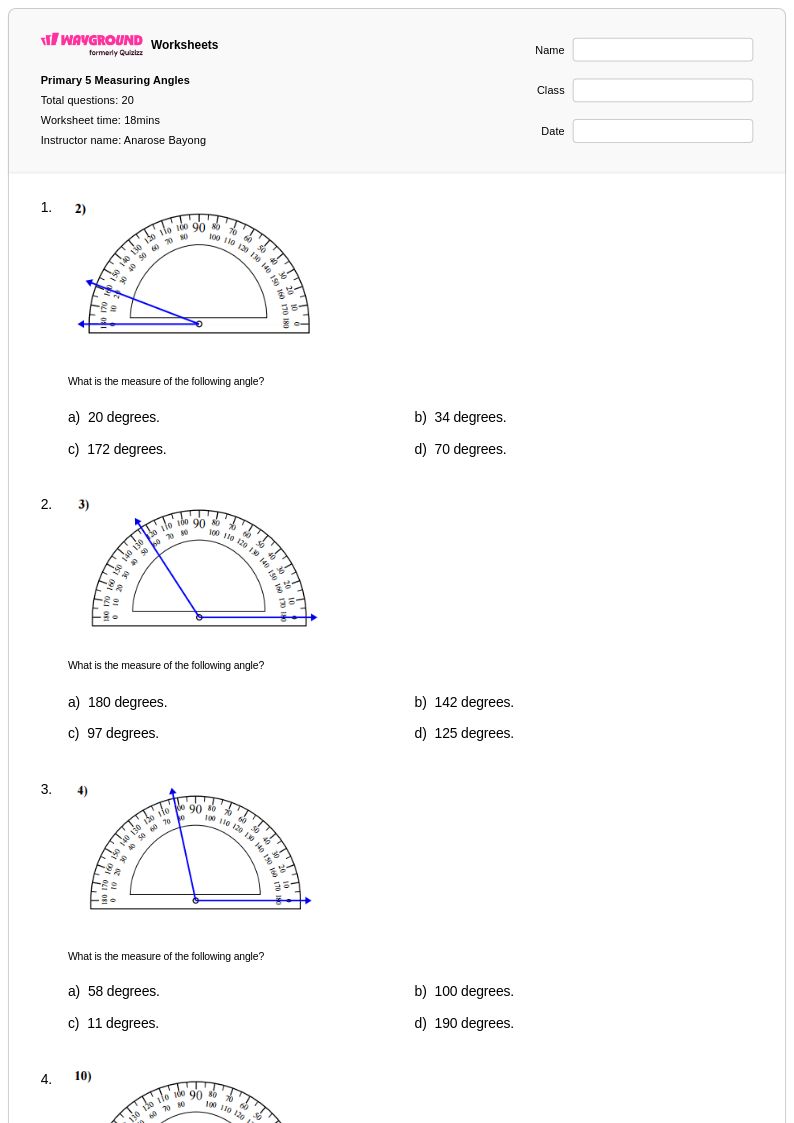
20 Q
5th
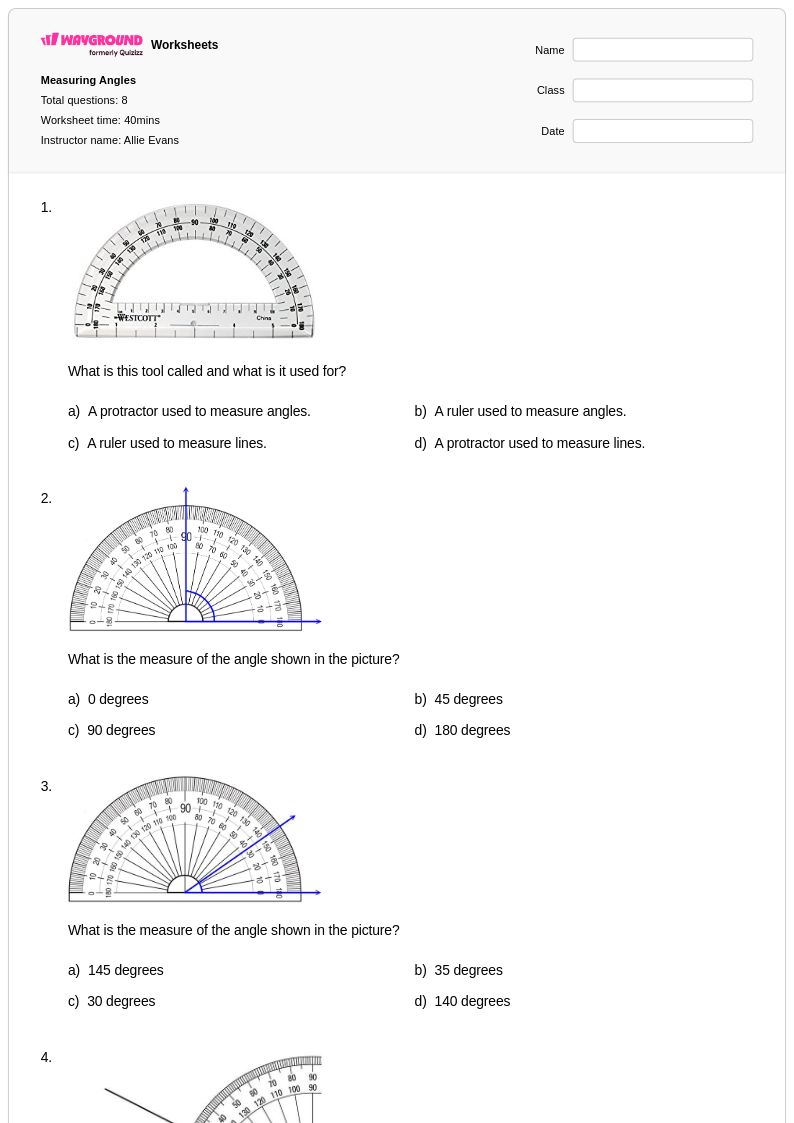
8 Q
3rd - 5th
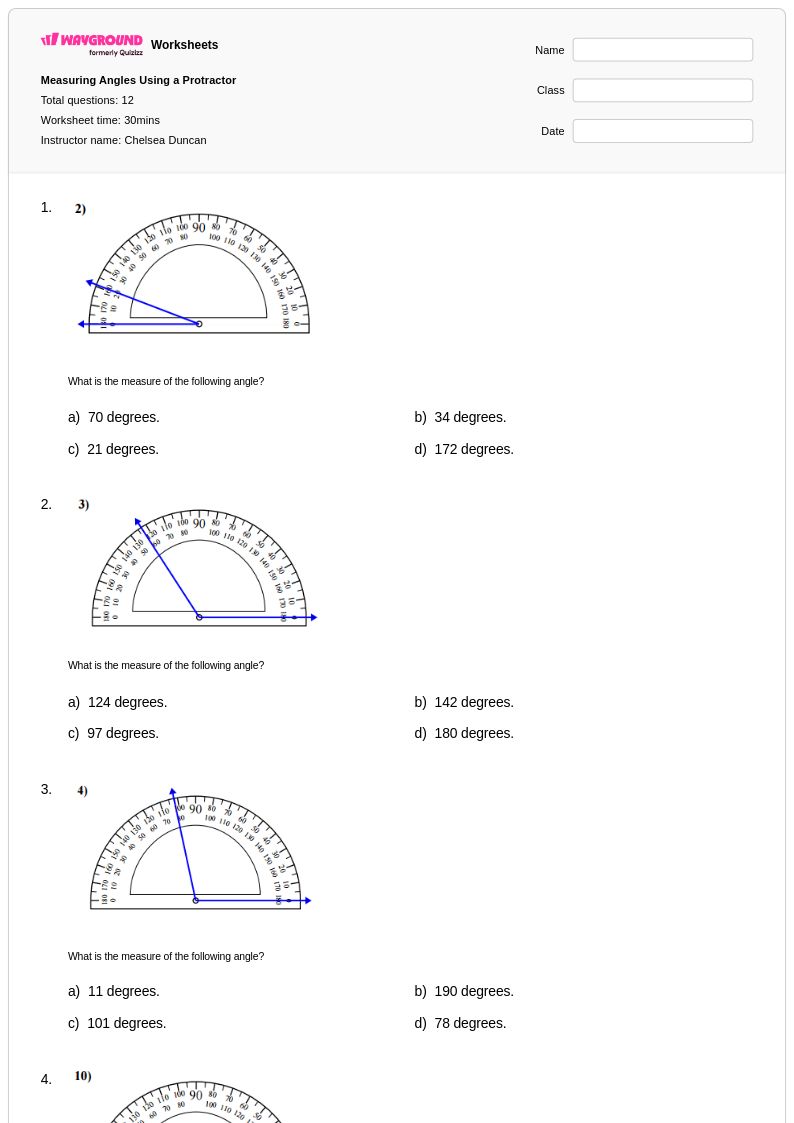
12 Q
5th
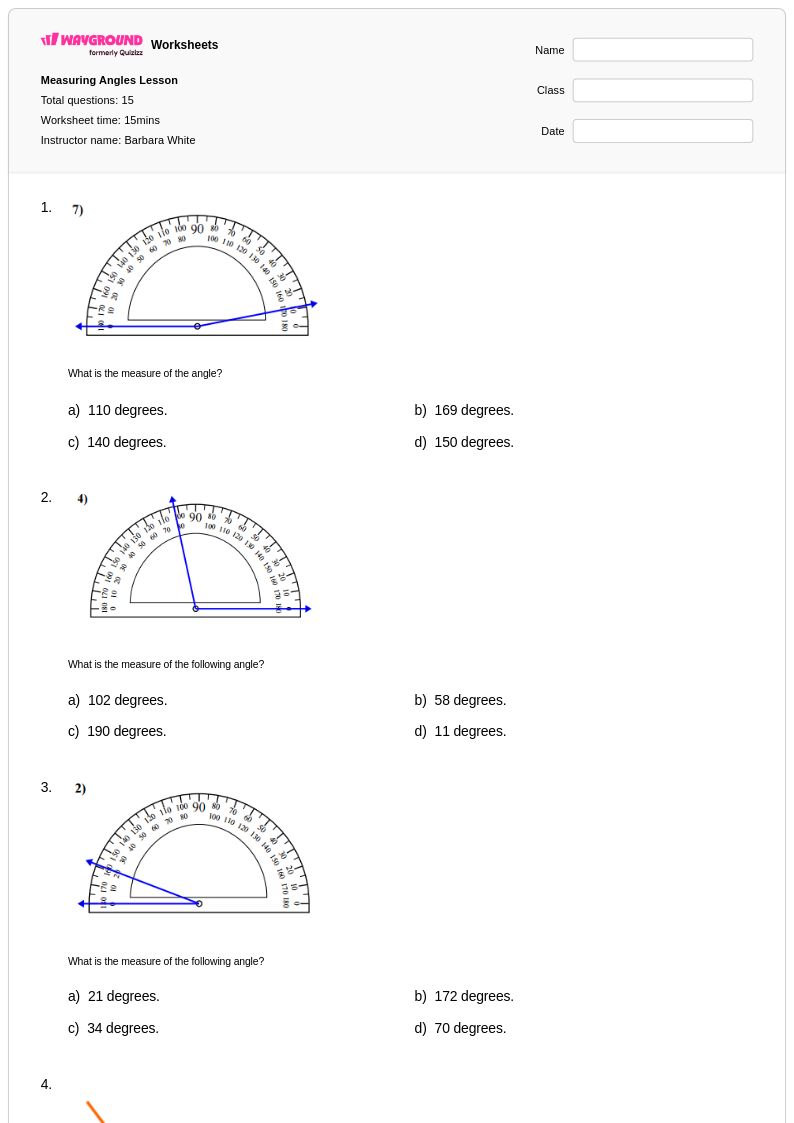
15 Q
4th - 5th
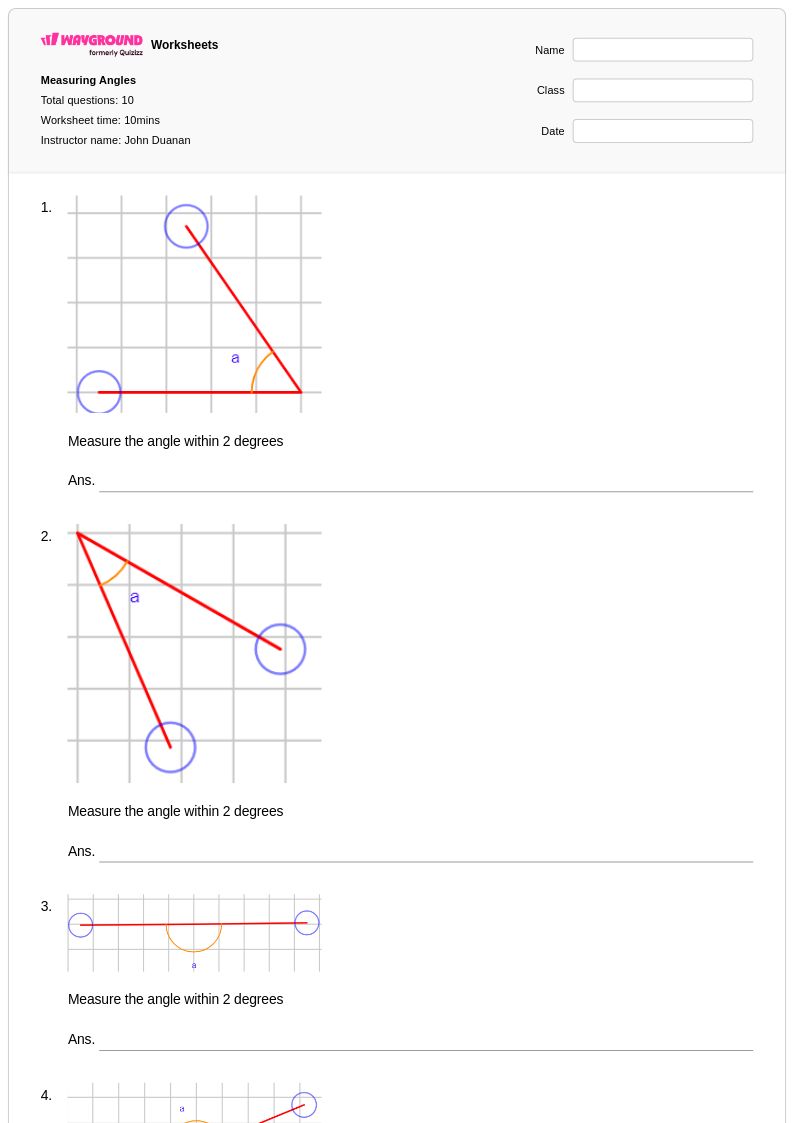
10 Q
4th - 5th
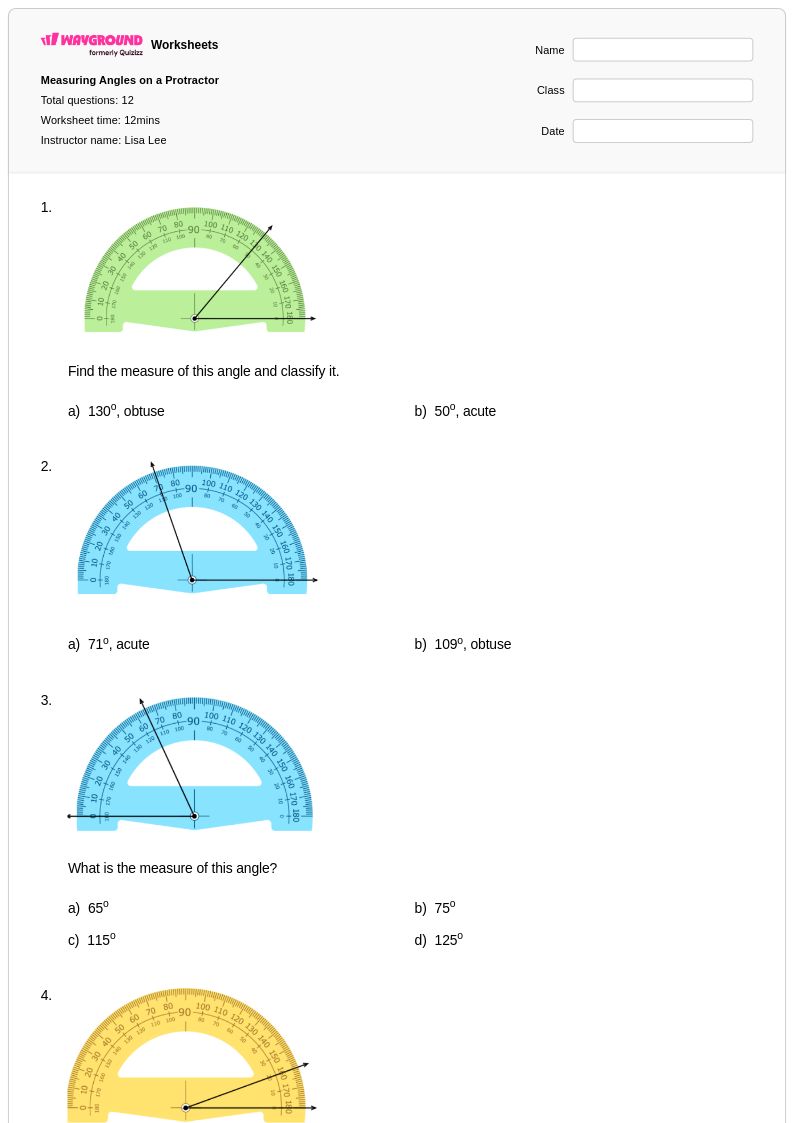
12 Q
4th - 8th
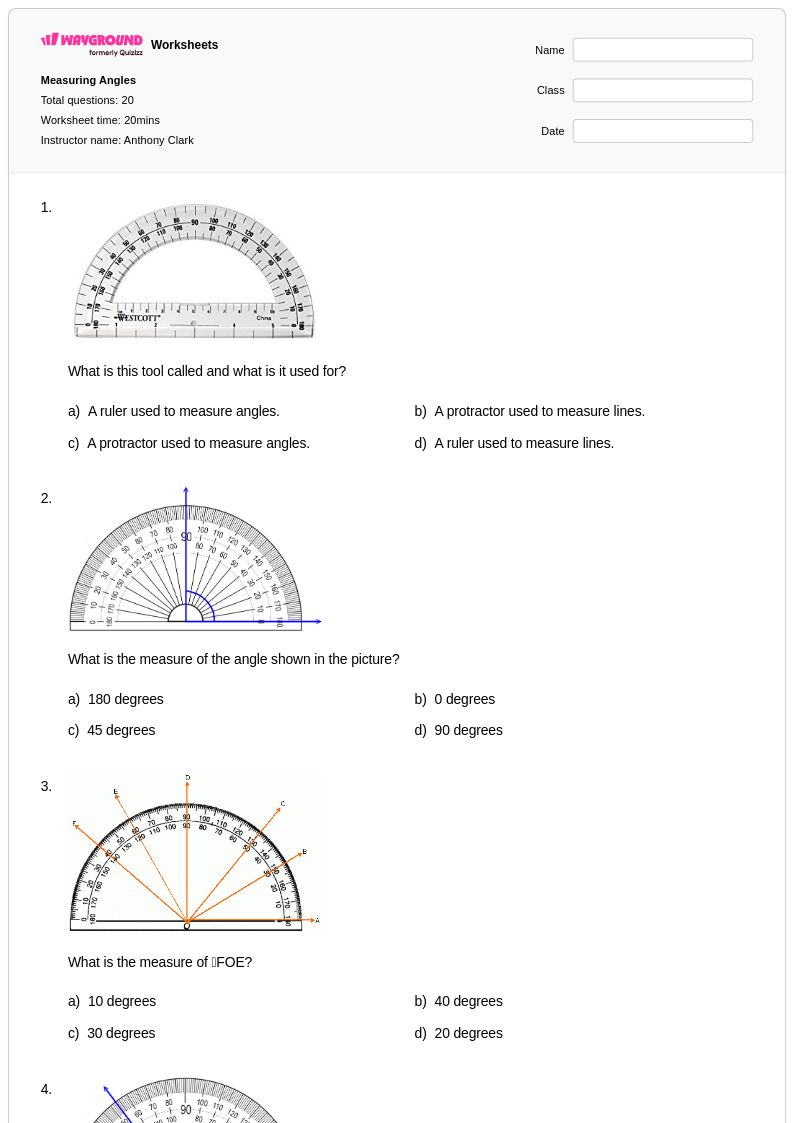
20 Q
4th - Uni
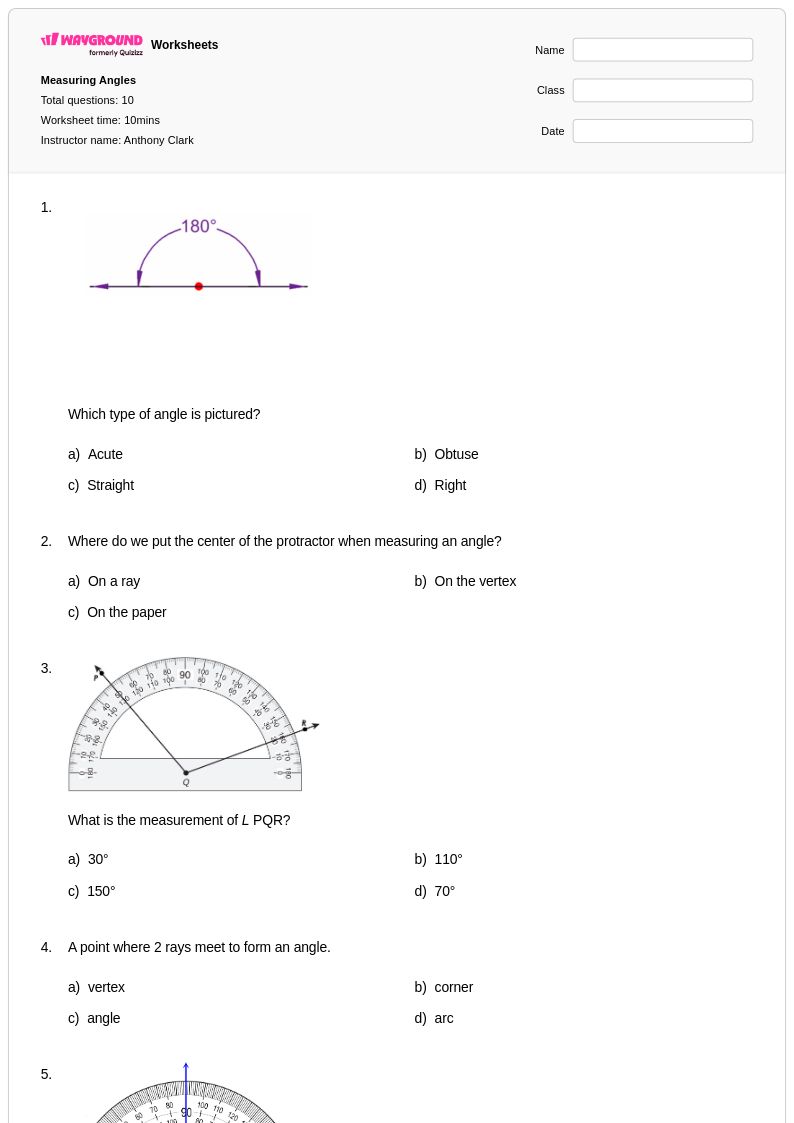
10 Q
4th - Uni
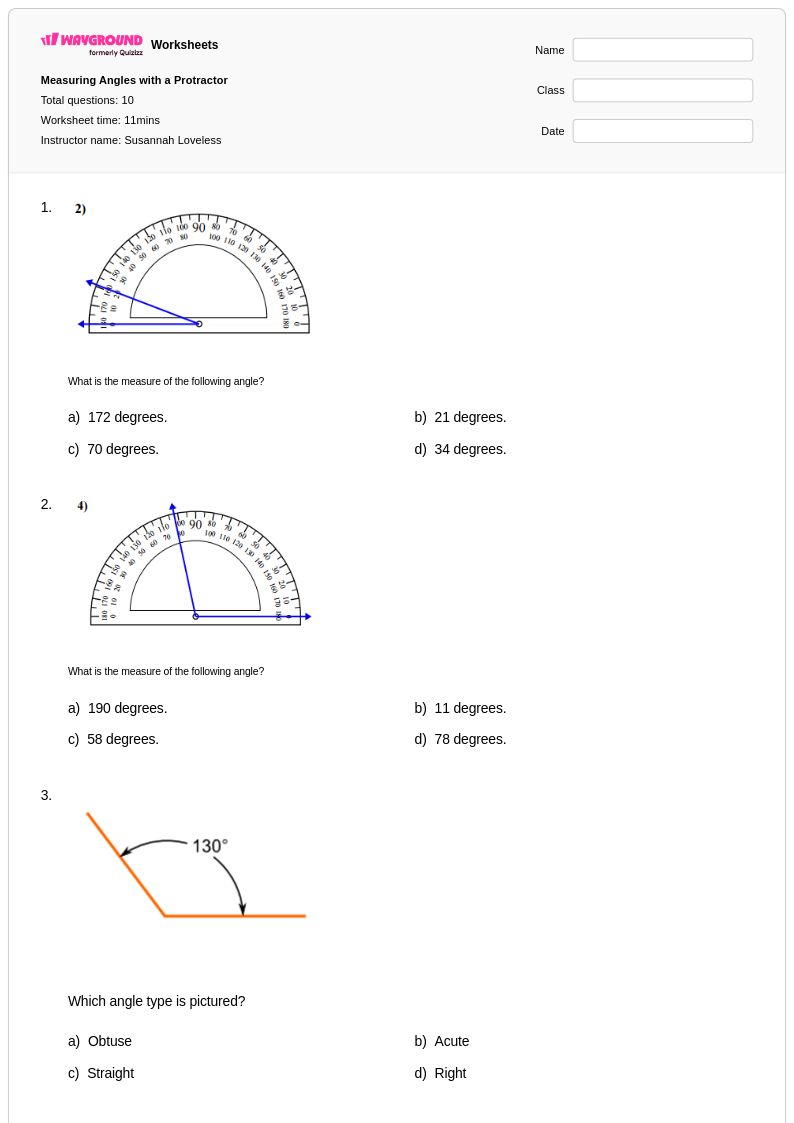
10 Q
4th - 5th
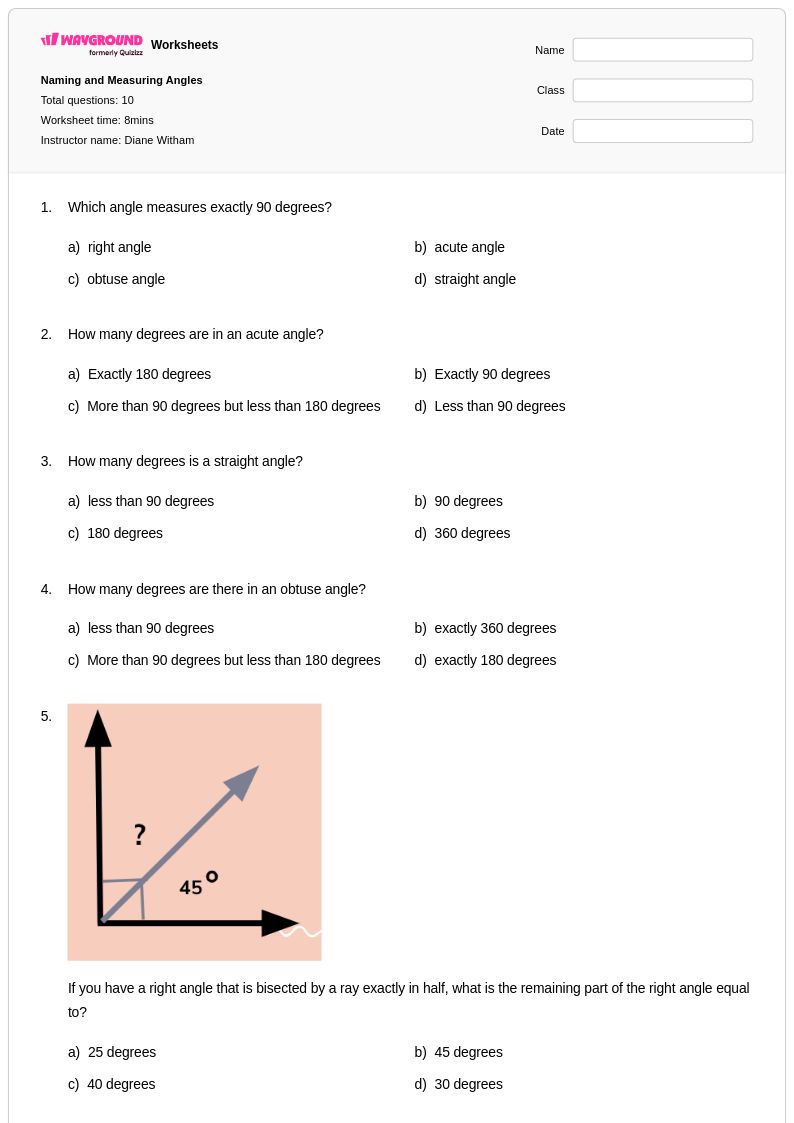
10 Q
4th - 5th
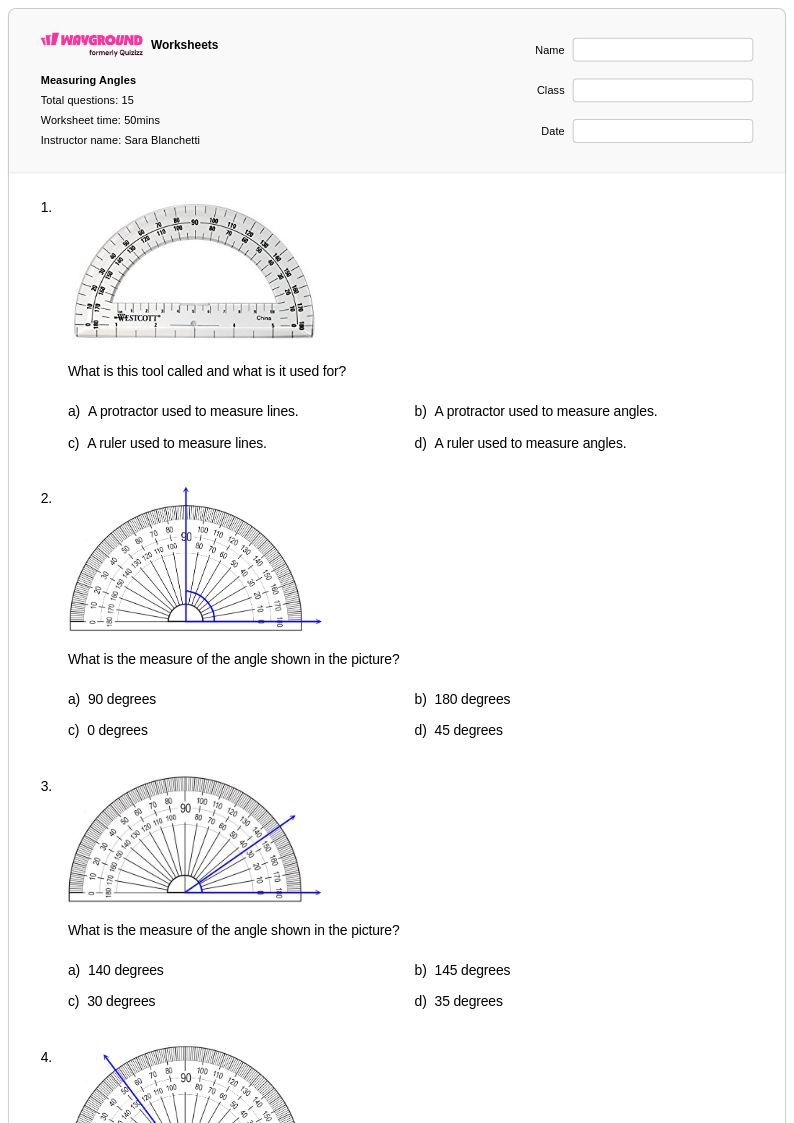
15 Q
5th - 12th
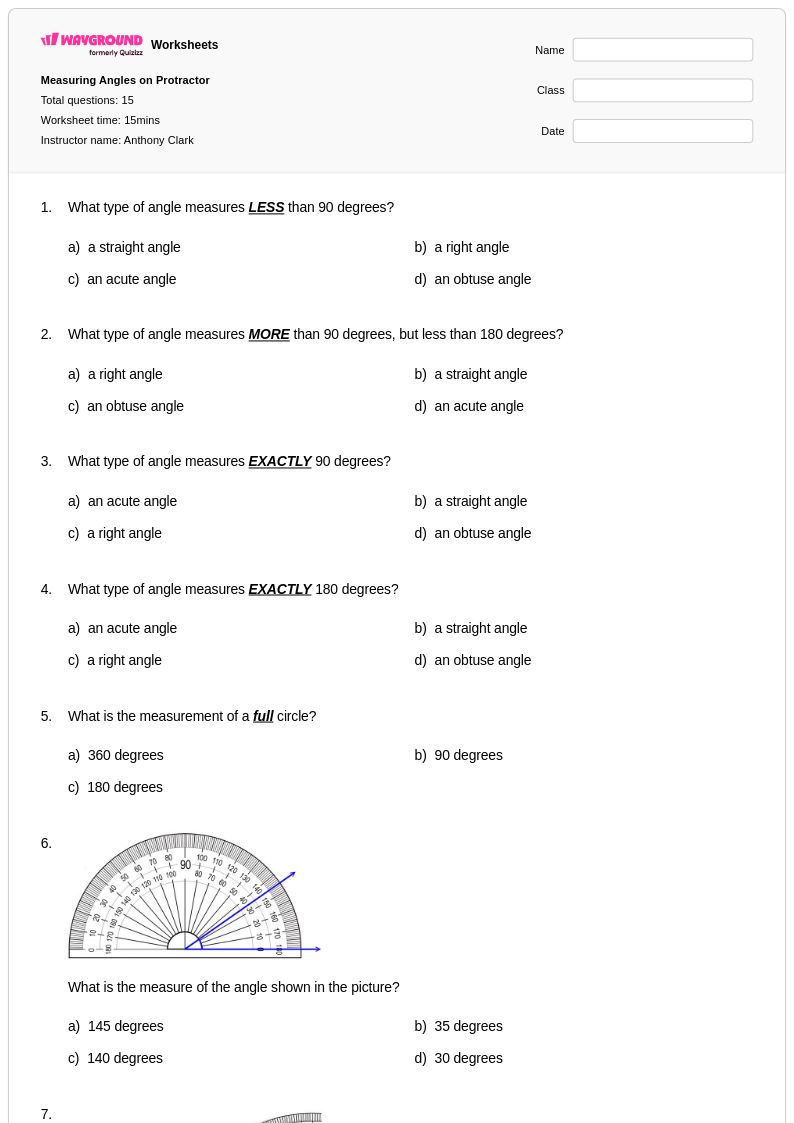
15 Q
4th - Uni
Explore Other Subject Worksheets for class 5
Explore printable Measuring Angles worksheets for Class 5
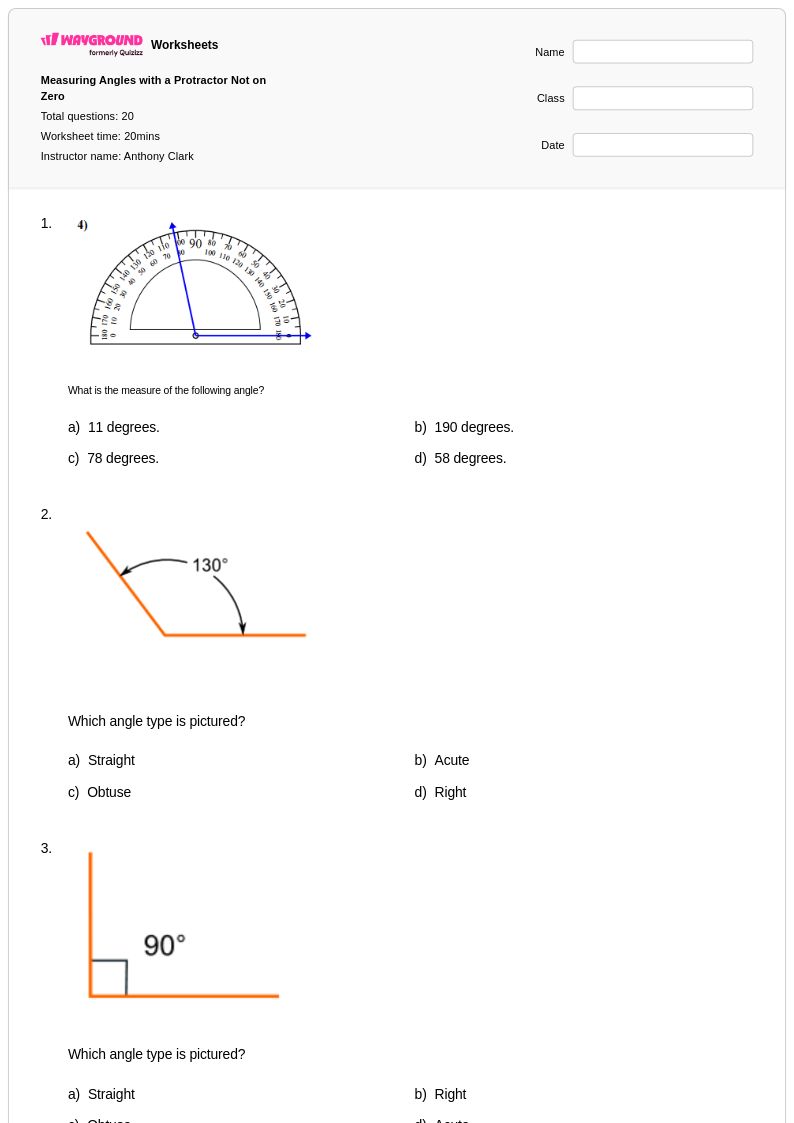
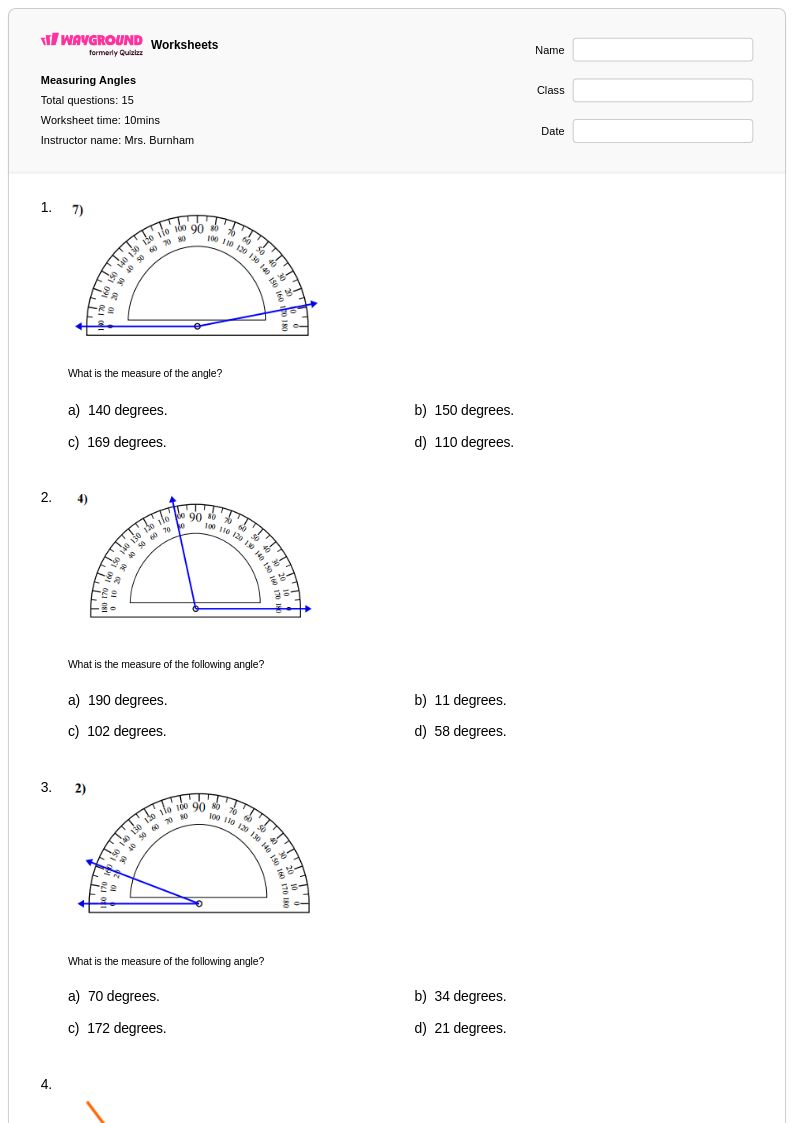
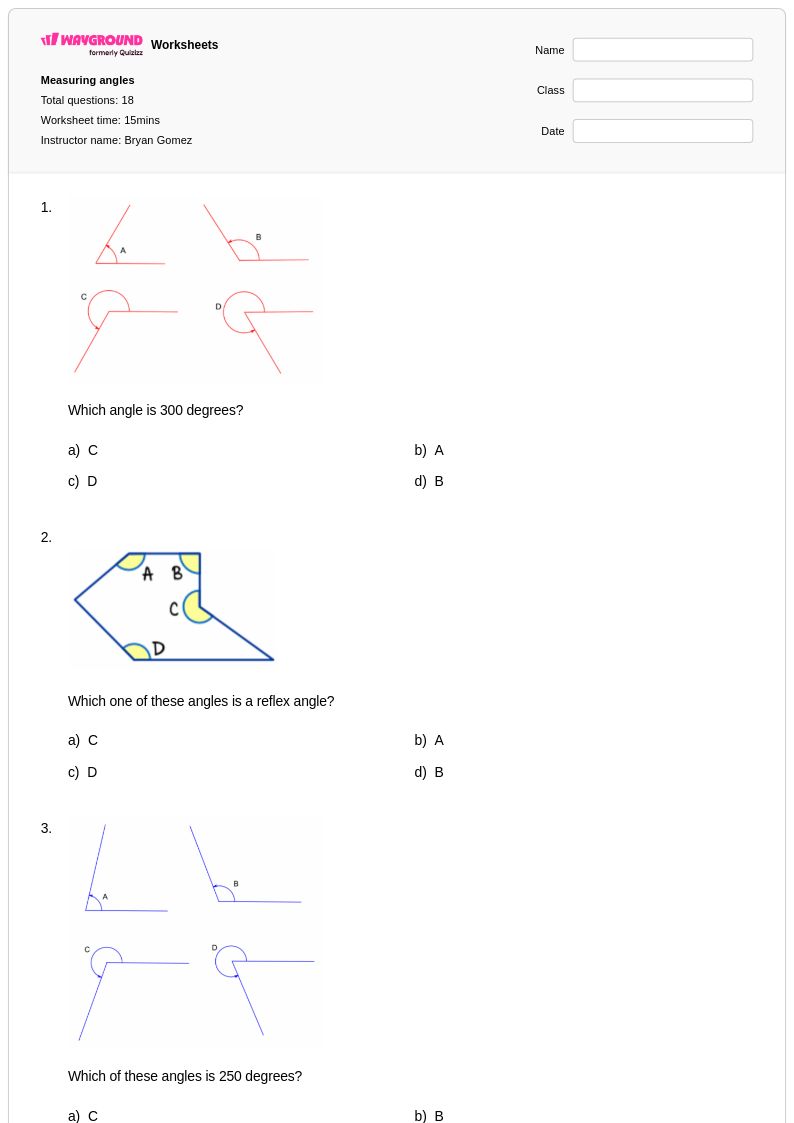
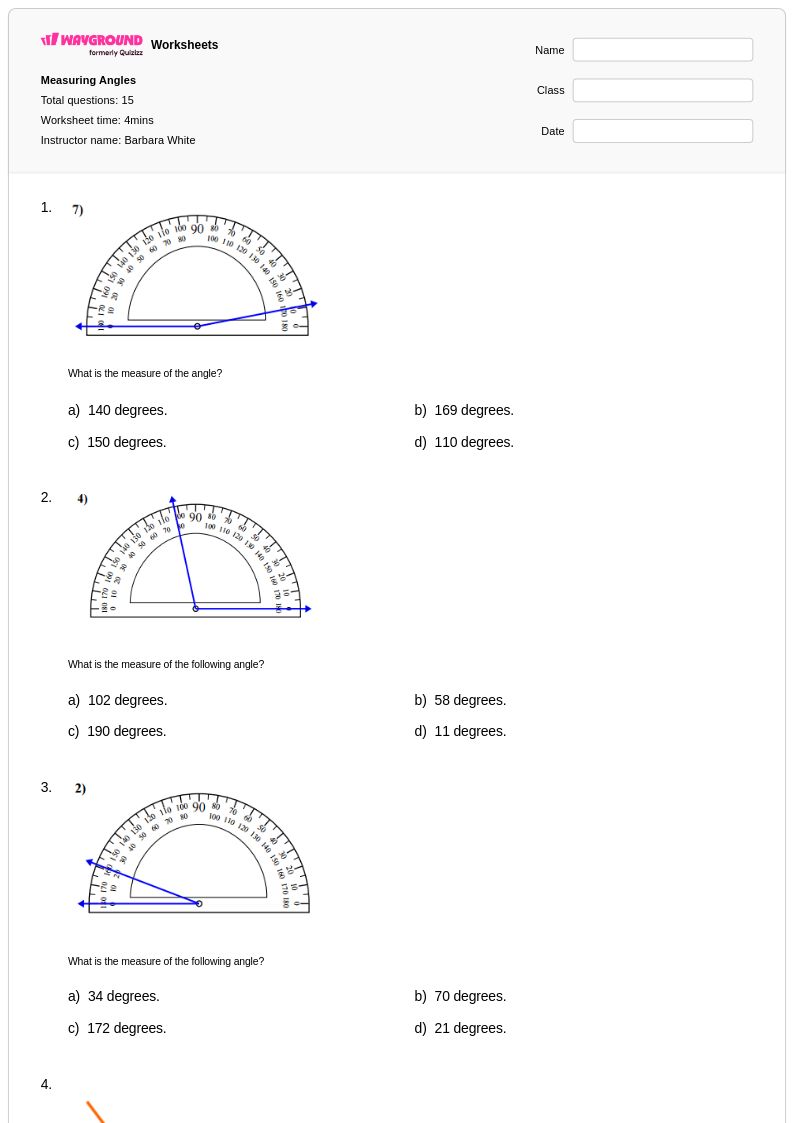
Measuring angles represents a fundamental mathematical skill that Class 5 students must master to build spatial reasoning and geometric understanding. Wayground's comprehensive collection of measuring angles worksheets provides fifth-grade learners with systematic practice in using protractors, identifying angle types, and determining precise angle measurements in degrees. These carefully crafted printables strengthen students' ability to distinguish between acute, right, obtuse, and straight angles while developing accuracy in measurement techniques. Each worksheet includes detailed answer keys that support independent learning and self-assessment, with free pdf resources covering everything from basic protractor positioning to complex angle measurement practice problems that align with fifth-grade mathematical standards.
Wayground's platform, formerly known as Quizizz, empowers educators with access to millions of teacher-created measuring angles resources specifically designed for Class 5 mathematics instruction. The robust search and filtering system enables teachers to quickly locate worksheets that match their specific curriculum requirements and standards alignment needs, while differentiation tools allow for seamless customization based on individual student abilities and learning objectives. Available in both printable and digital pdf formats, these measuring angles worksheets support flexible classroom implementation for direct instruction, remediation sessions, enrichment activities, and independent skill practice. Teachers can efficiently plan comprehensive geometry lessons knowing they have access to high-quality, educator-vetted resources that systematically build students' angle measurement proficiency through progressive skill development and varied problem-solving opportunities.
FAQs
How does measuring angles in Grade 5 build on what students learned in Grade 4?
How can I help 5th graders apply their angle measurement skills?
What types of problems are appropriate for Grade 5 angle practice?
What's a common challenge for 5th graders with angle addition problems?
How does this align with Grade 5 Common Core math standards?
How can I use these Grade 5 angle worksheets for my class?