
16 Q
3rd - 6th
9 Q
5th
11 Q
4th - 5th
20 Q
4th - Uni
20 Q
4th - Uni
20 Q
4th - Uni
11 Q
2nd - 5th
9 Q
5th
10 Q
KG - 11th
16 Q
4th - Uni
19 Q
4th - Uni
9 Q
5th
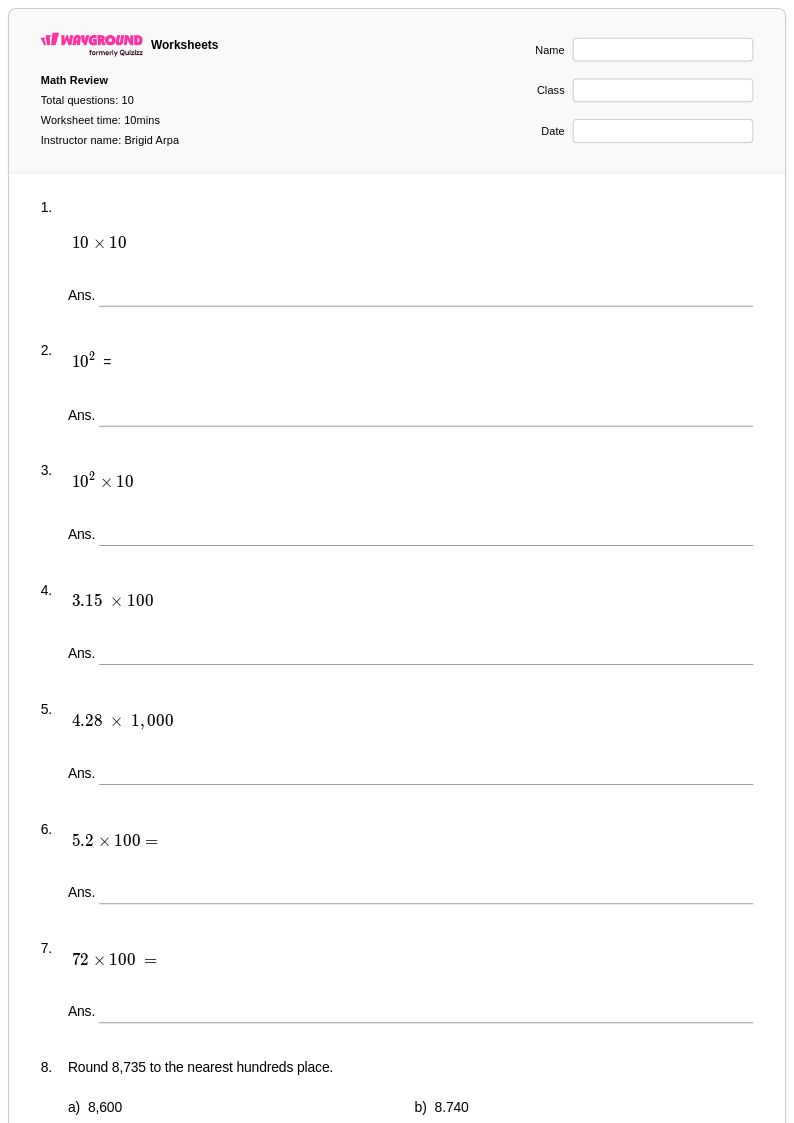
10 Q
5th
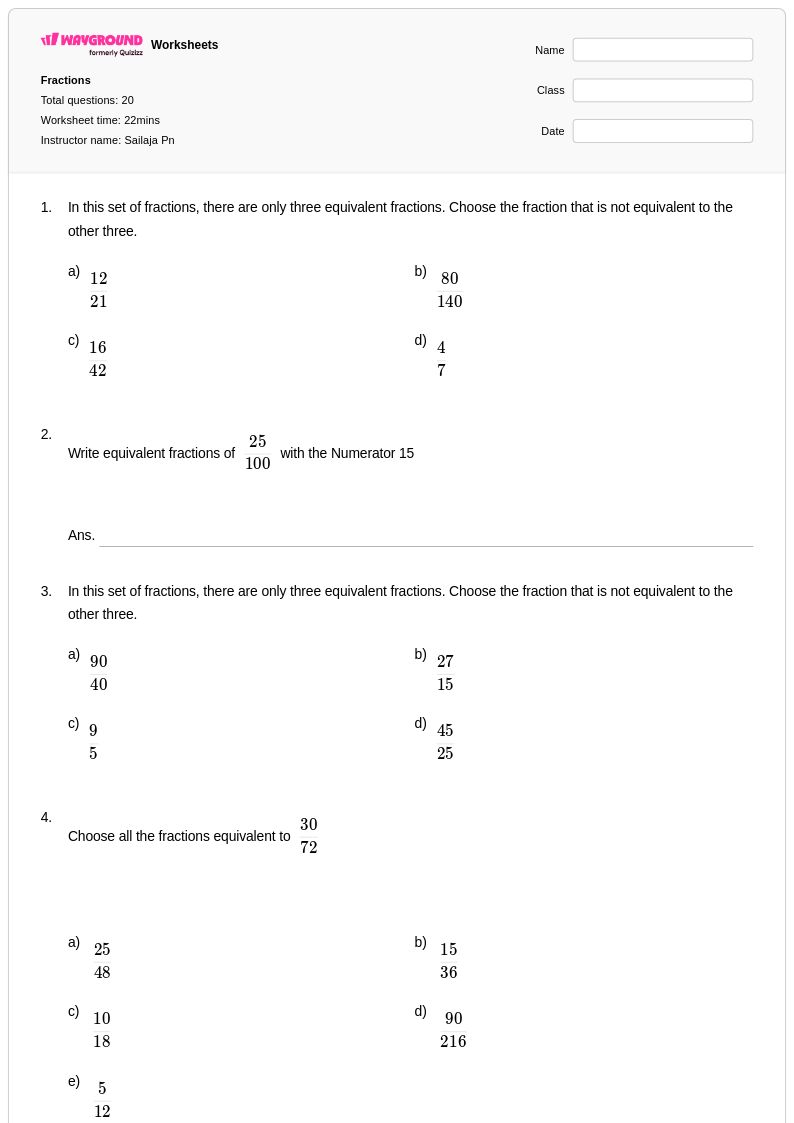
20 Q
5th - 6th
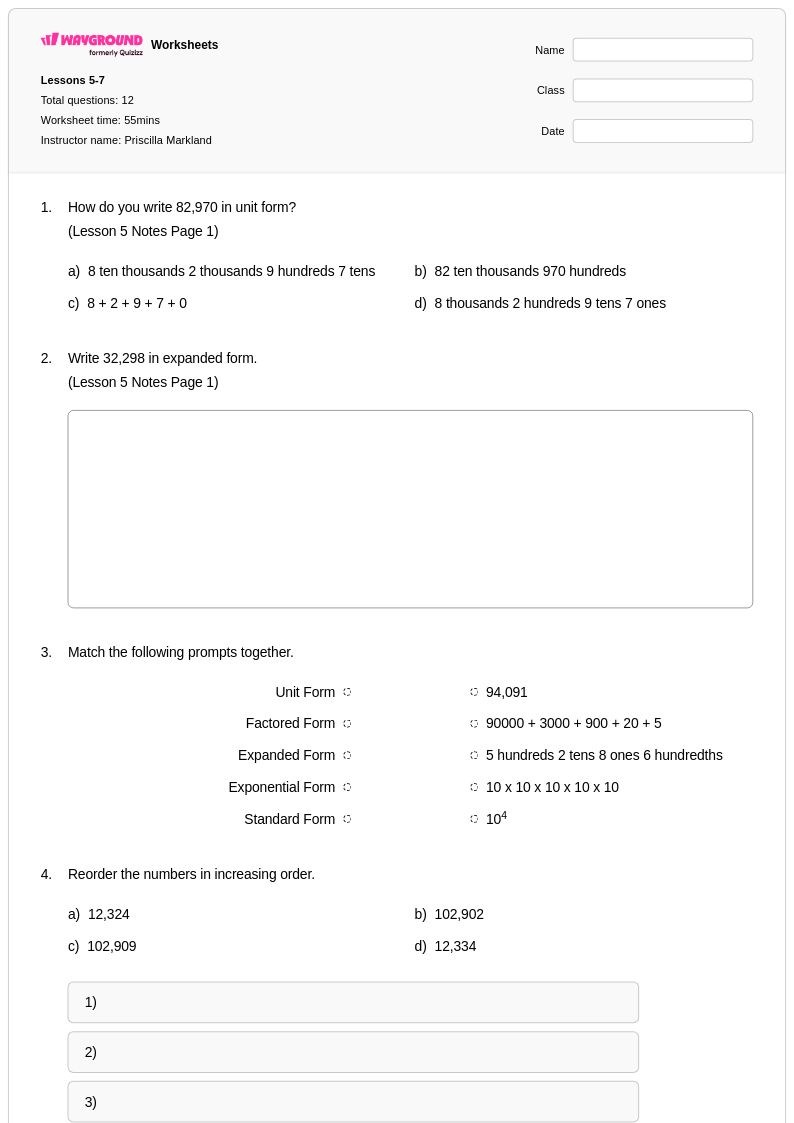
12 Q
5th
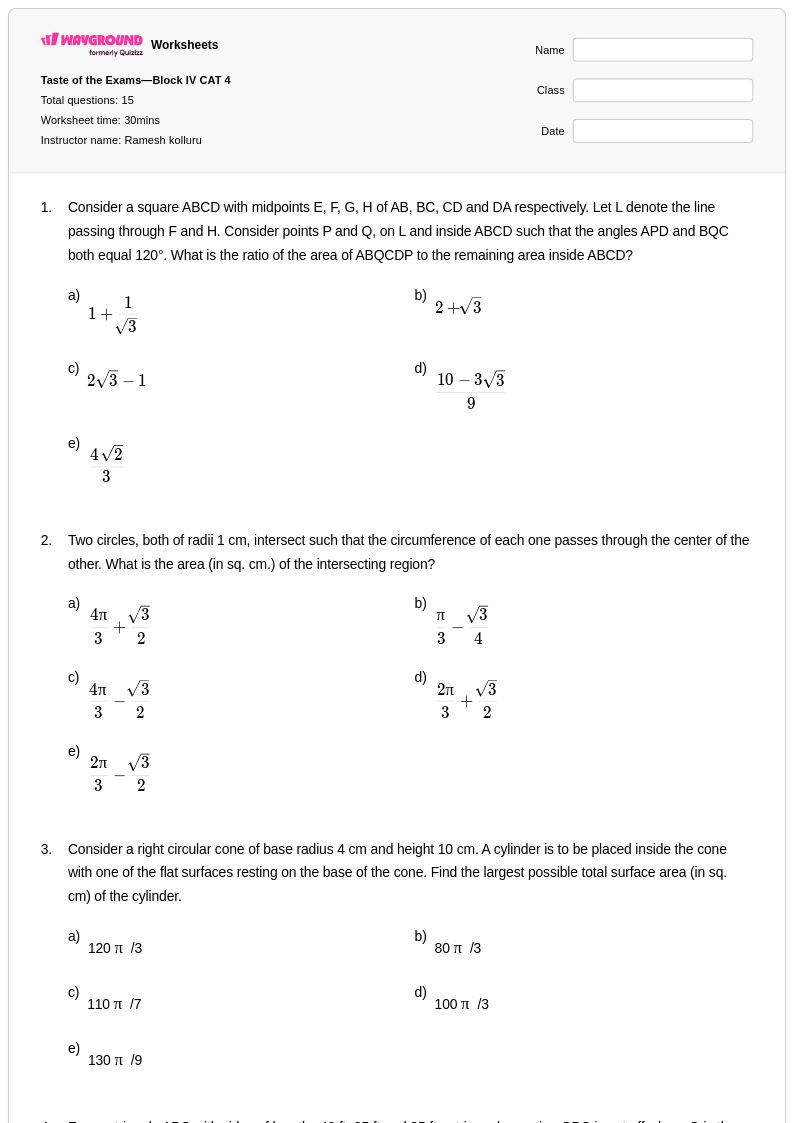
15 Q
4th - 10th
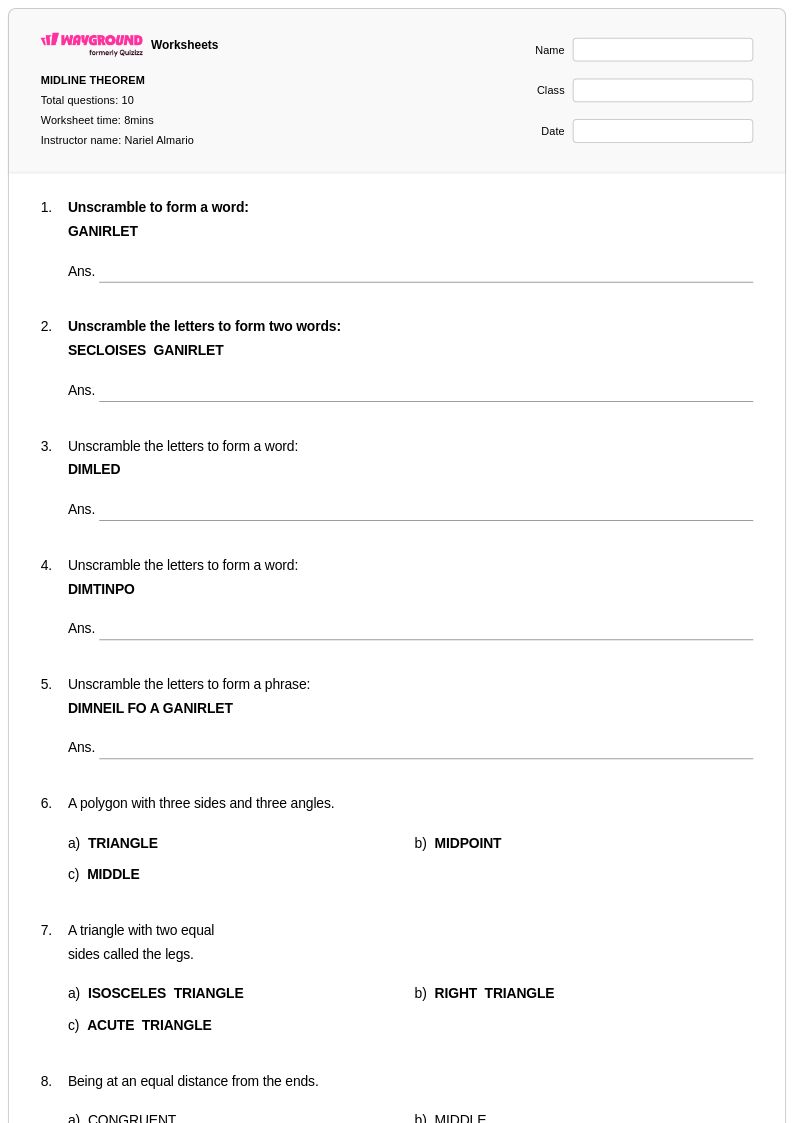
10 Q
1st - 5th
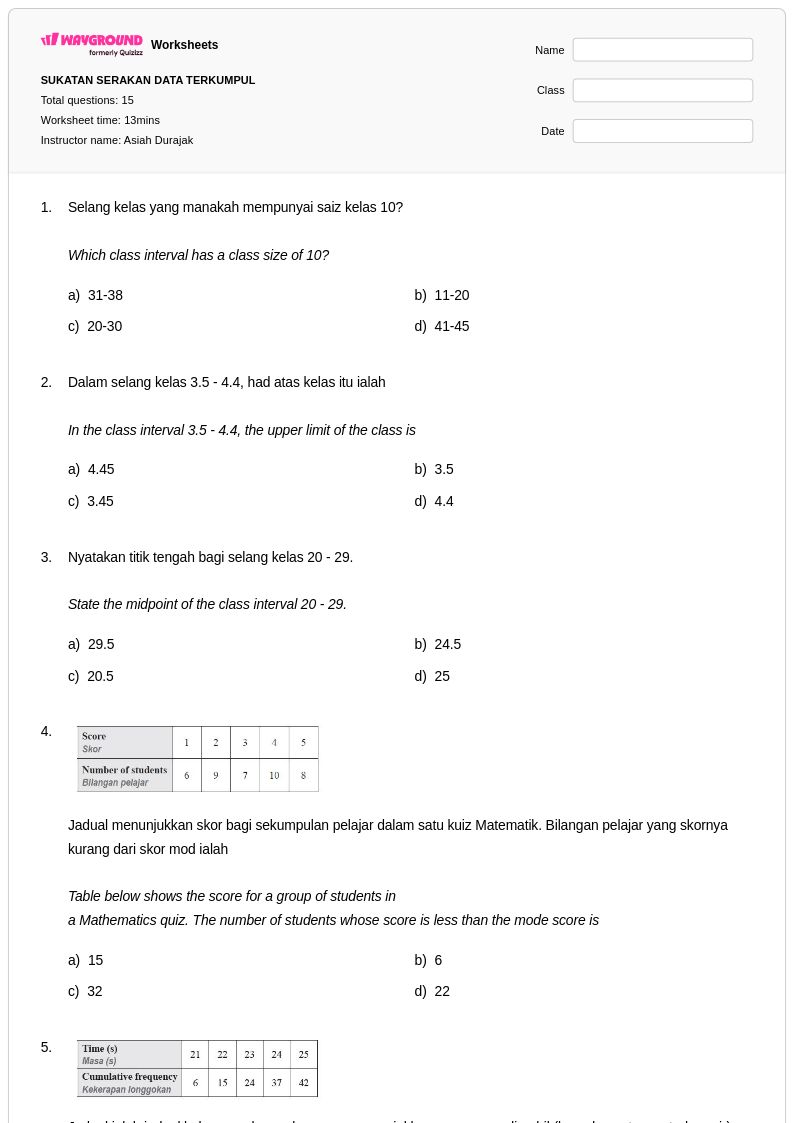
15 Q
5th
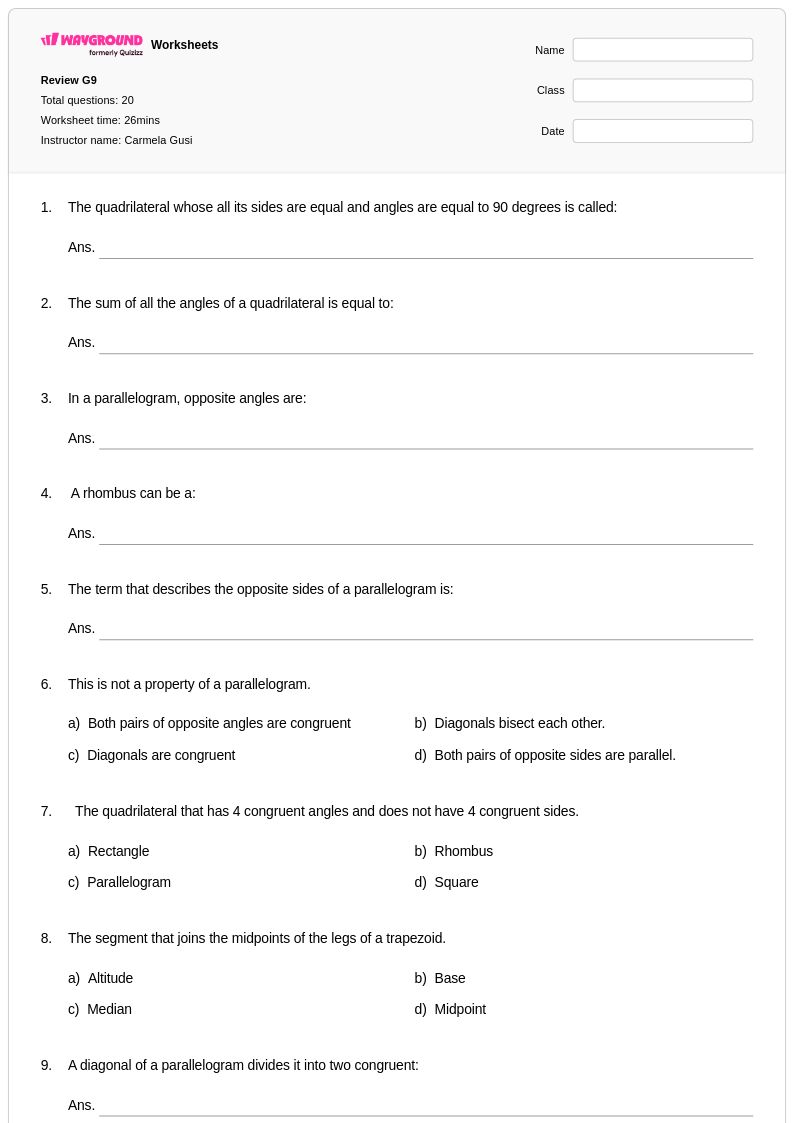
20 Q
5th
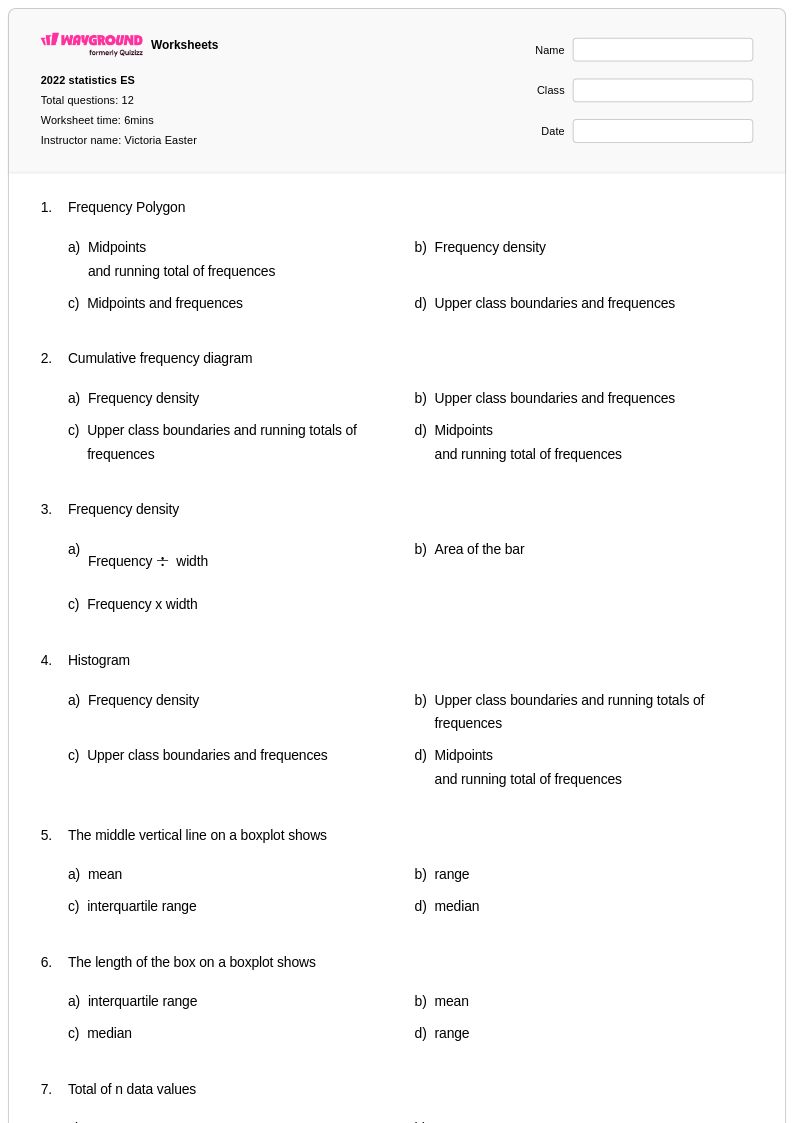
12 Q
5th - 9th
20 Q
4th - Uni
20 Q
3rd - Uni
15 Q
4th - 10th
14 Q
1st - 5th
Explore Other Subject Worksheets for class 5
Explore printable Midpoints worksheets for Class 5
Midpoints worksheets for Class 5 students available through Wayground (formerly Quizizz) provide essential practice in understanding and calculating the middle point between two locations on a line segment or coordinate plane. These comprehensive worksheets strengthen foundational geometric reasoning skills by teaching students to identify midpoints using visual representations, number lines, and basic coordinate systems. Each worksheet includes carefully crafted practice problems that progress from simple whole number calculations to more complex scenarios, helping students develop spatial awareness and precision in geometric measurements. The collection features both guided exercises with detailed answer keys and independent practice sets, all available as free printables in convenient pdf format for immediate classroom use.
Wayground (formerly Quizizz) empowers teachers with millions of educator-created midpoints resources that can be easily searched, filtered, and customized to match specific Class 5 mathematics standards and individual student needs. The platform's robust differentiation tools allow instructors to modify worksheet difficulty levels, adjust problem quantities, and select from various visual formats to accommodate diverse learning styles and abilities. Teachers can seamlessly integrate these materials into their geometry curriculum for initial skill introduction, targeted remediation sessions, or enrichment activities for advanced learners. Whether delivered as traditional printable worksheets or interactive digital assignments, these midpoints resources support comprehensive lesson planning while providing the flexibility educators need to address varying mathematical proficiency levels within their Class 5 classrooms.
FAQs
How should I approach teaching midpoints in 5th grade?
What skills do these Grade 5 midpoint worksheets reinforce?
What are common errors for 5th graders when finding midpoints?
How can I use this worksheet for my 5th-grade math class?
How does this topic support 5th-grade curriculum standards?
How can I support students who struggle with the calculations?