
15 P
1st
15 P
1st
10 P
1st
15 P
1st
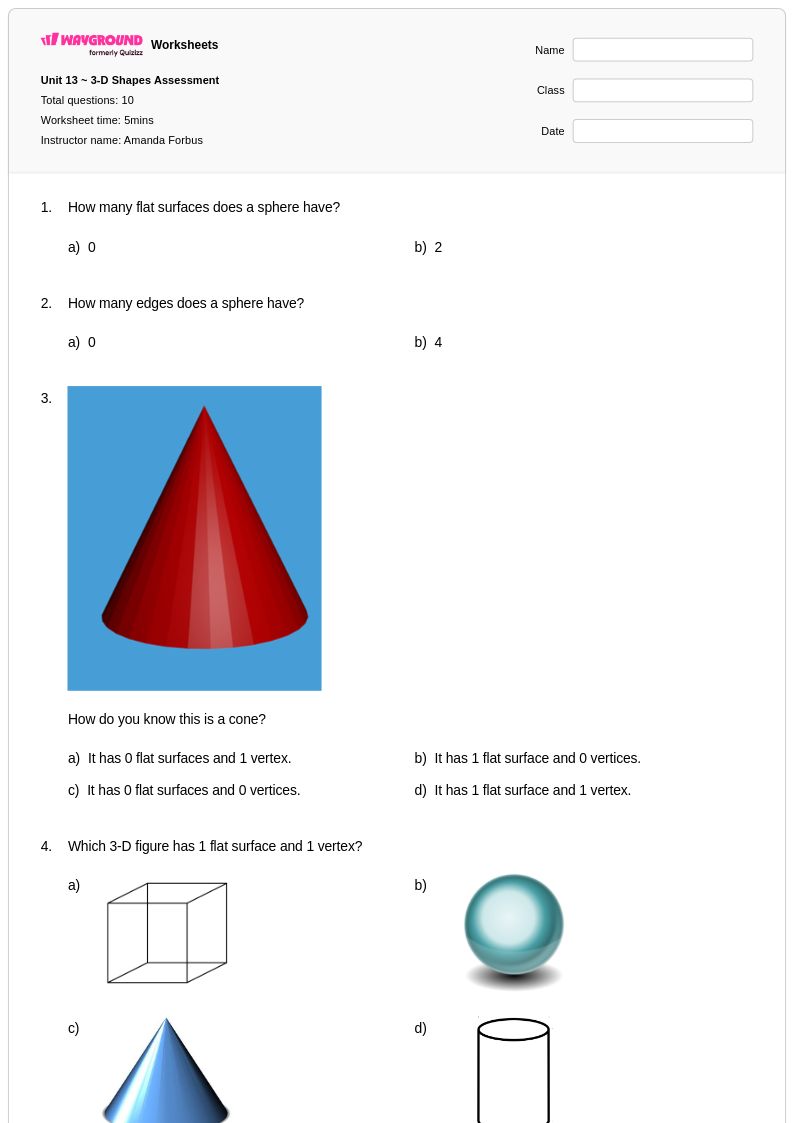
10 P
1st
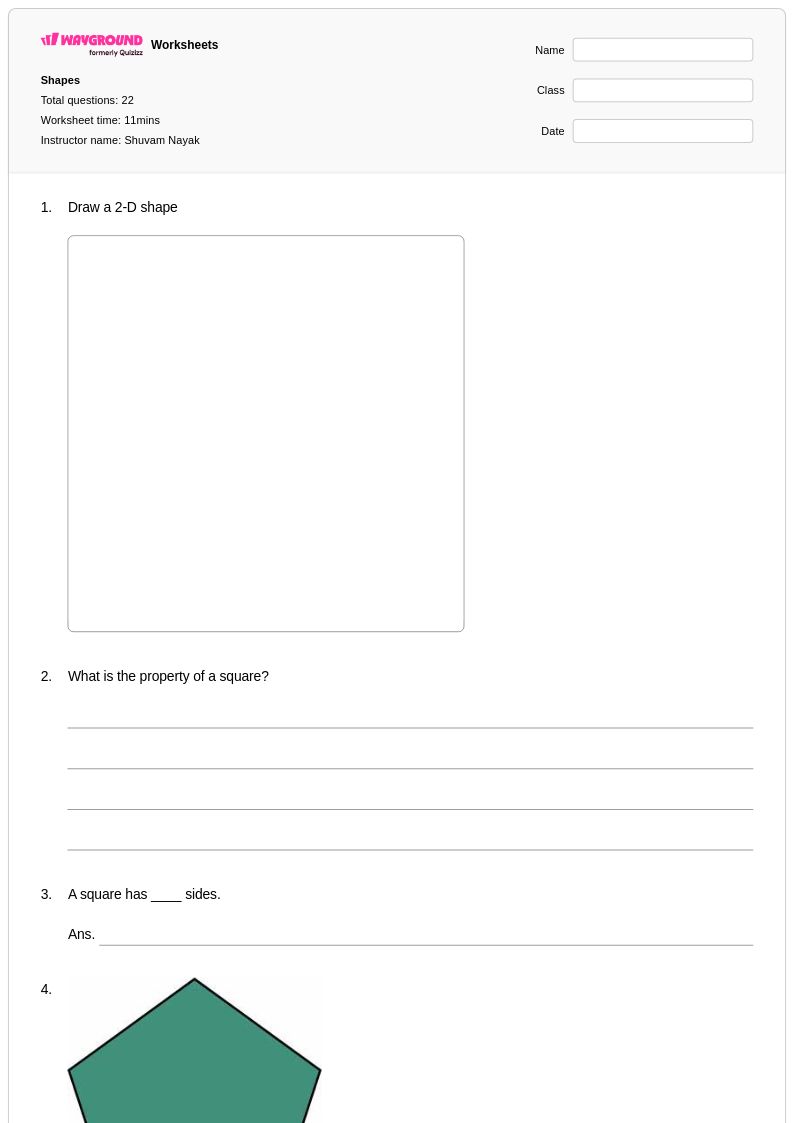
22 P
1st - 5th
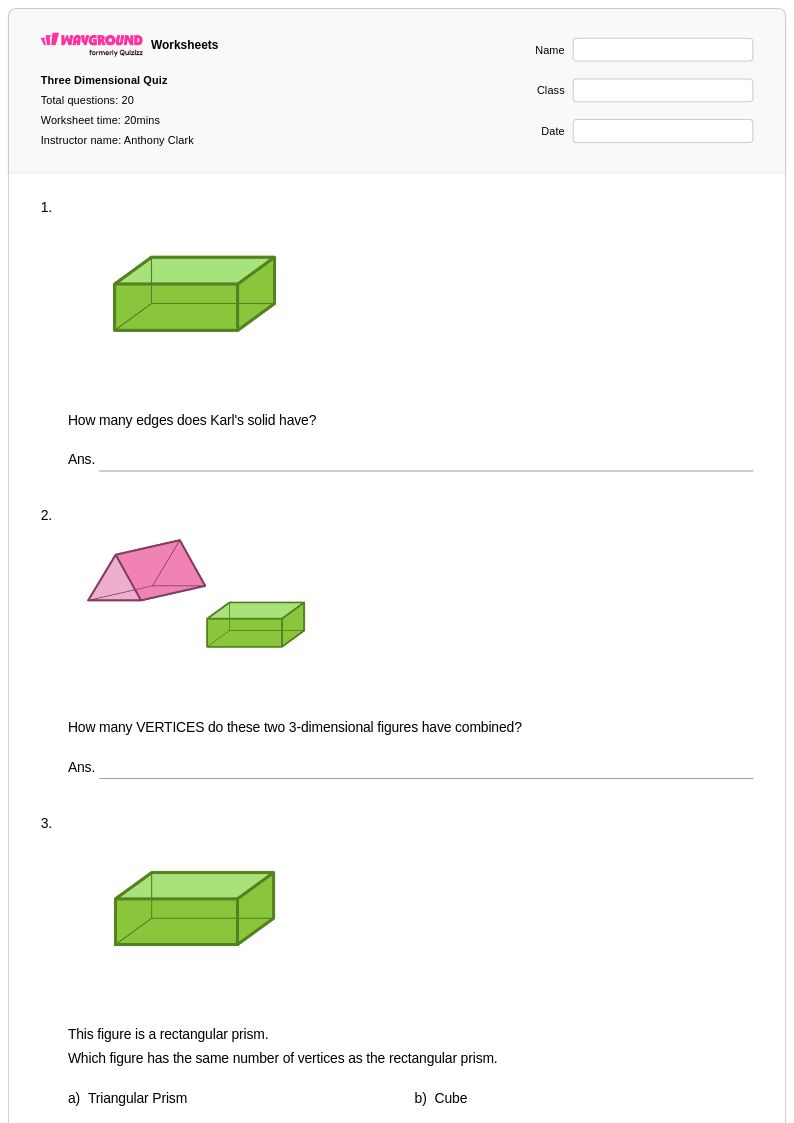
20 P
1st - Uni
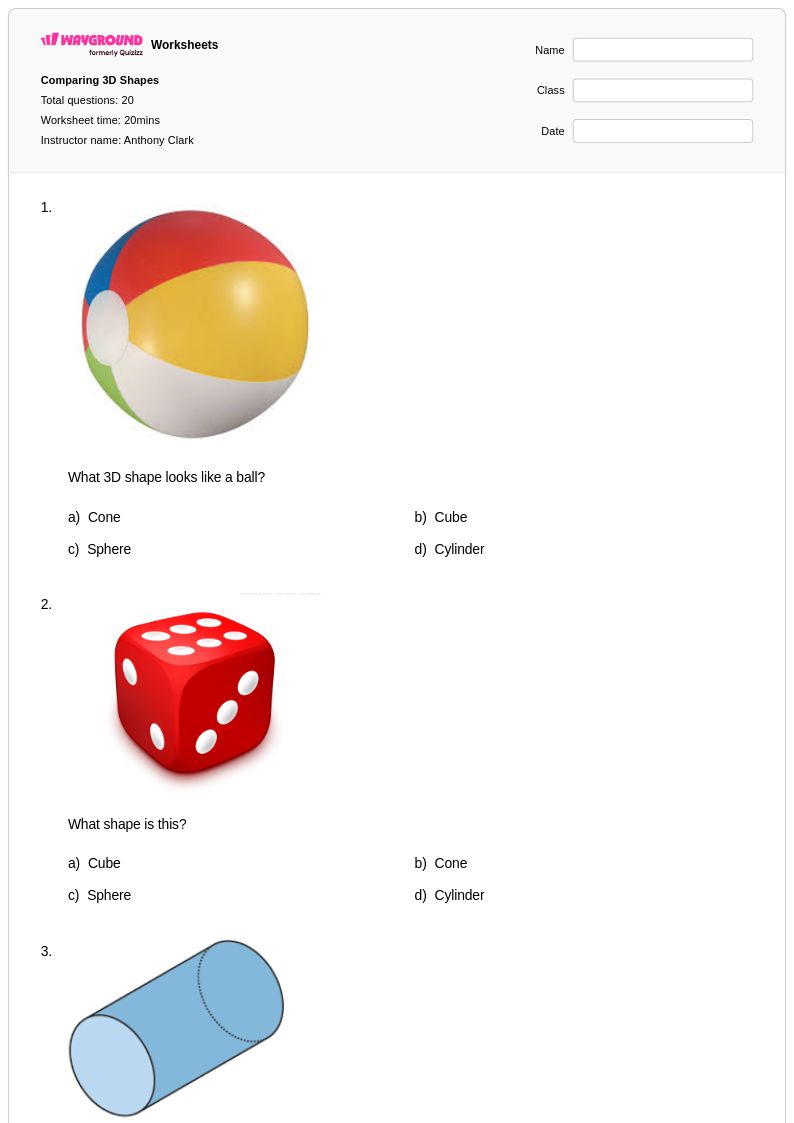
20 P
1st - Uni
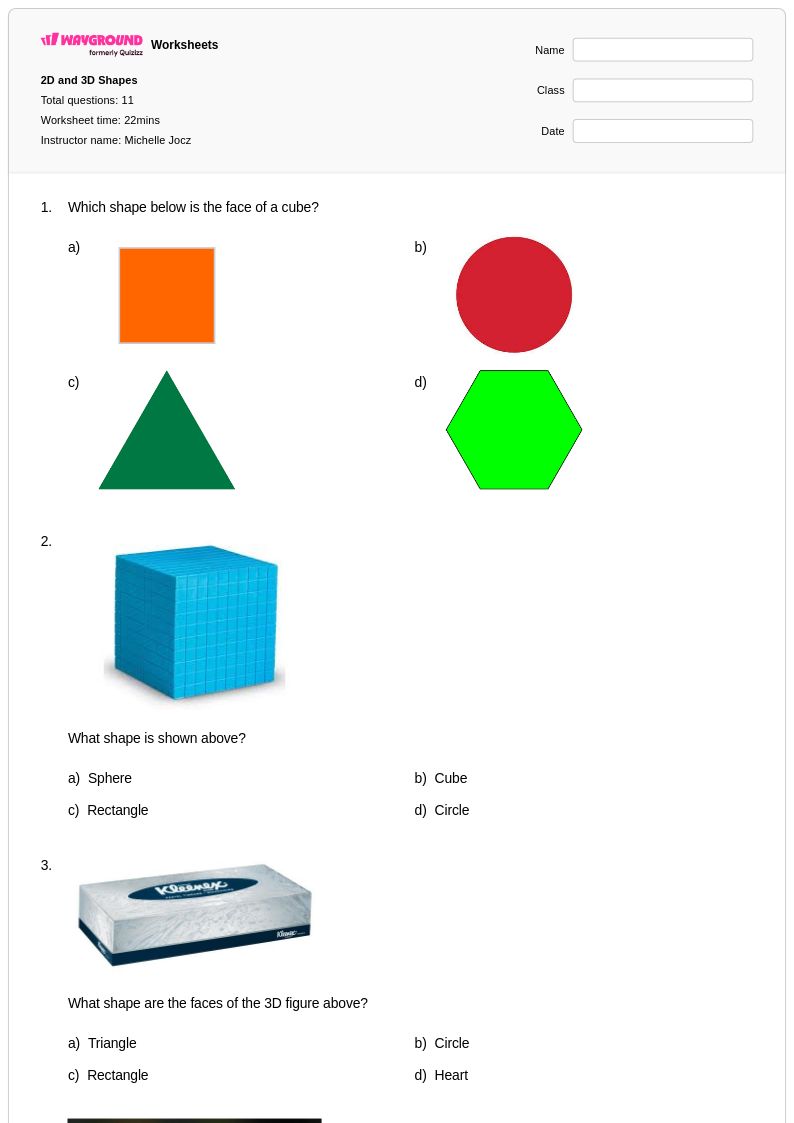
11 P
1st - 3rd
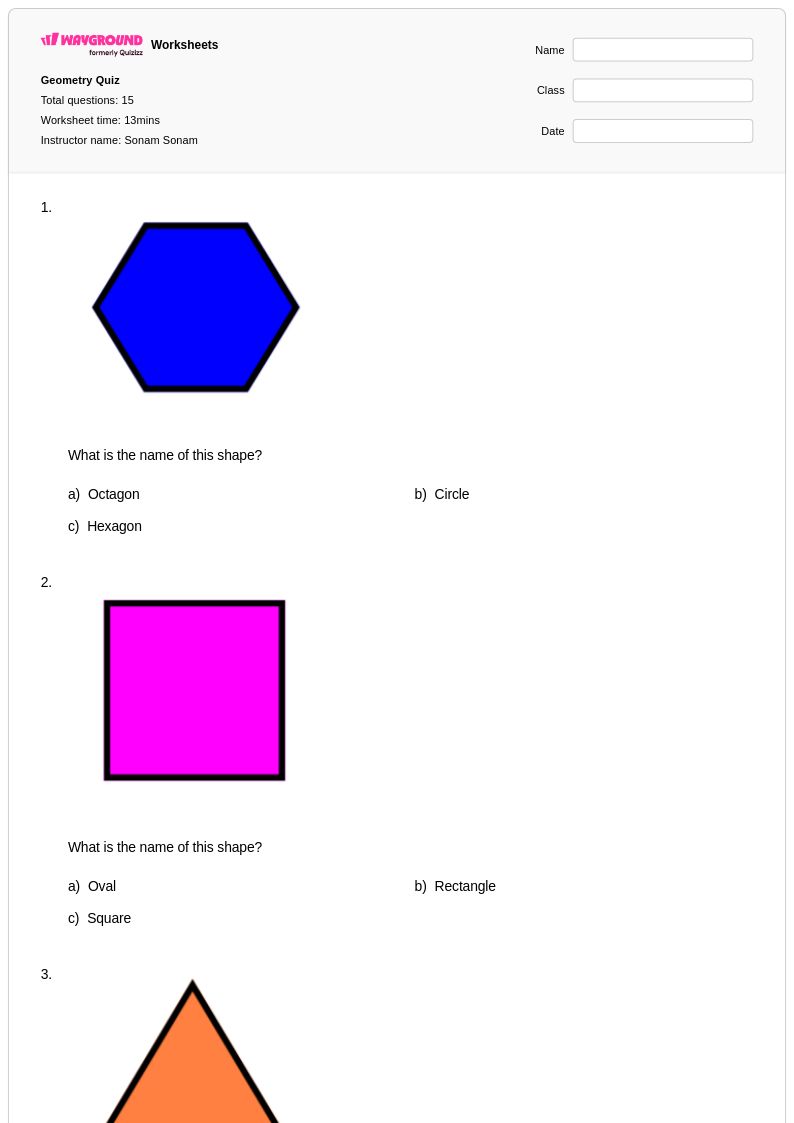
15 P
1st
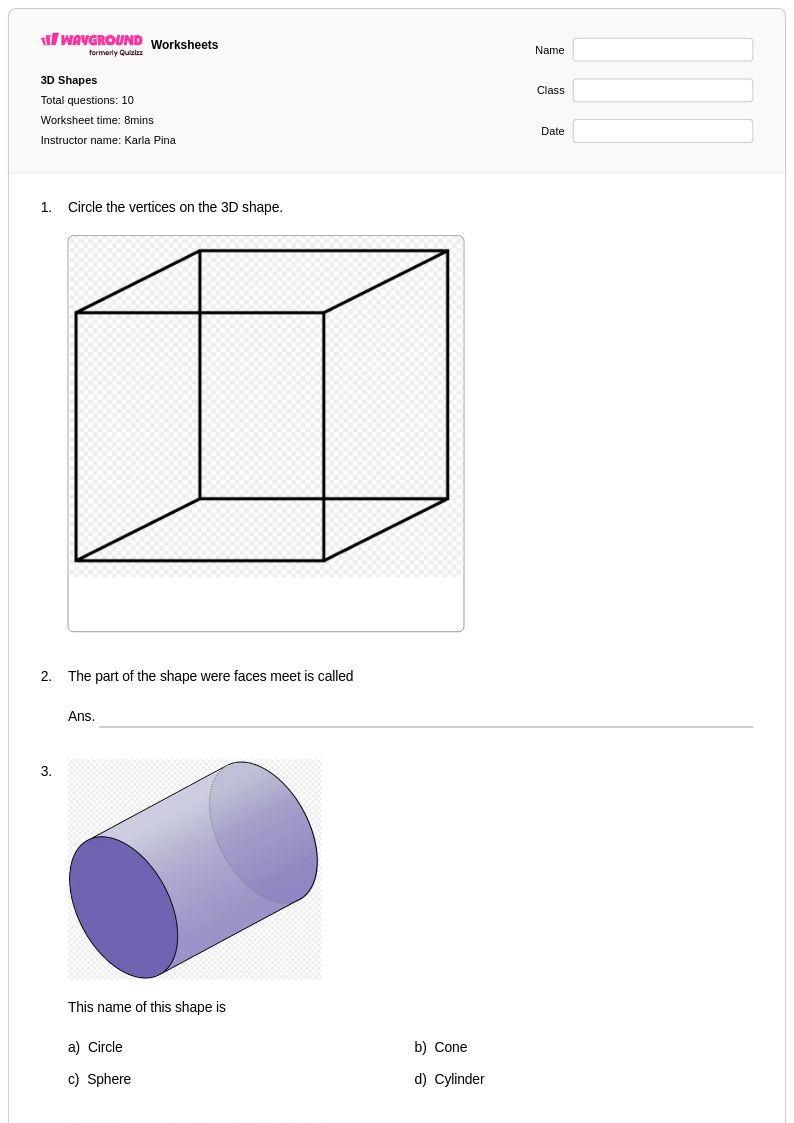
10 P
1st - 5th
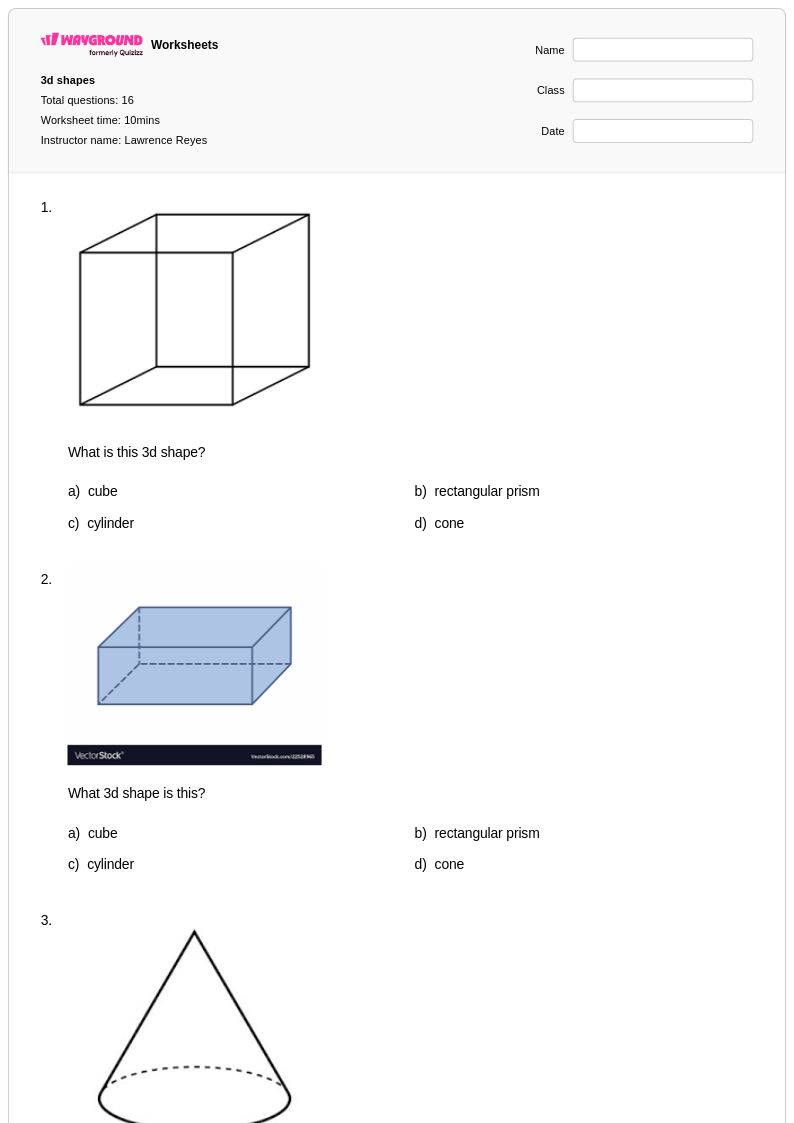
16 P
1st
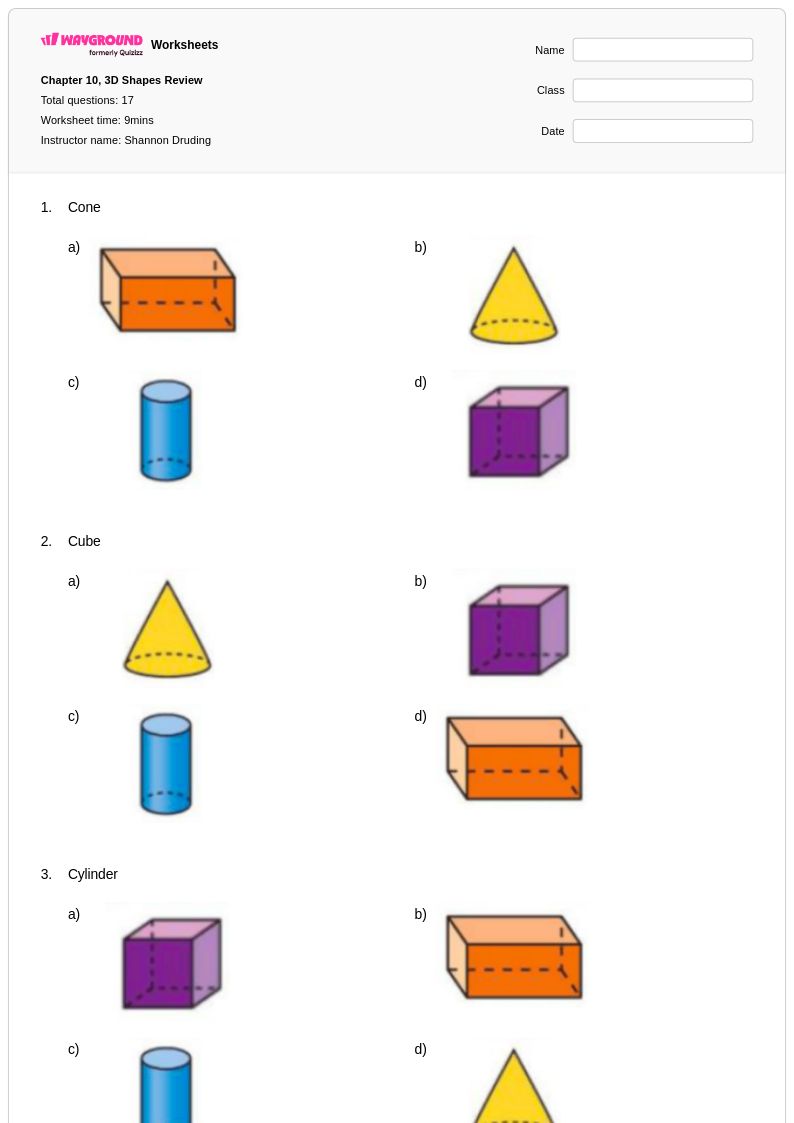
17 P
1st
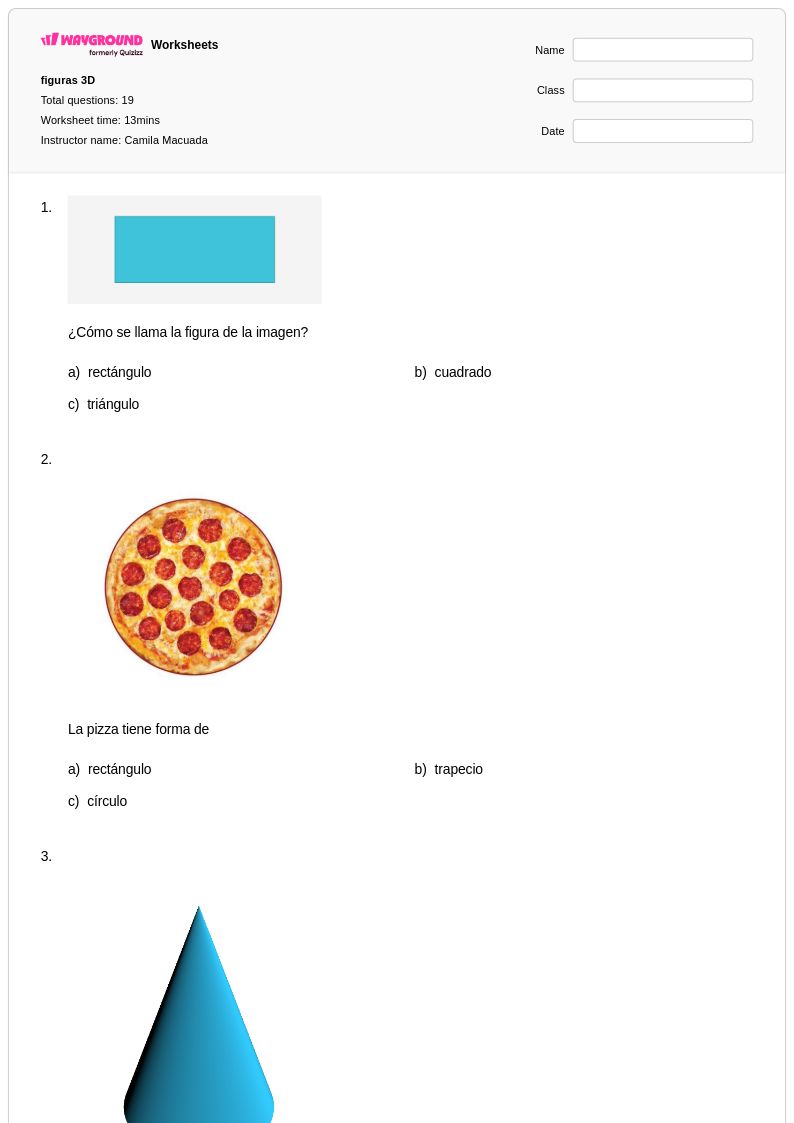
19 P
1st
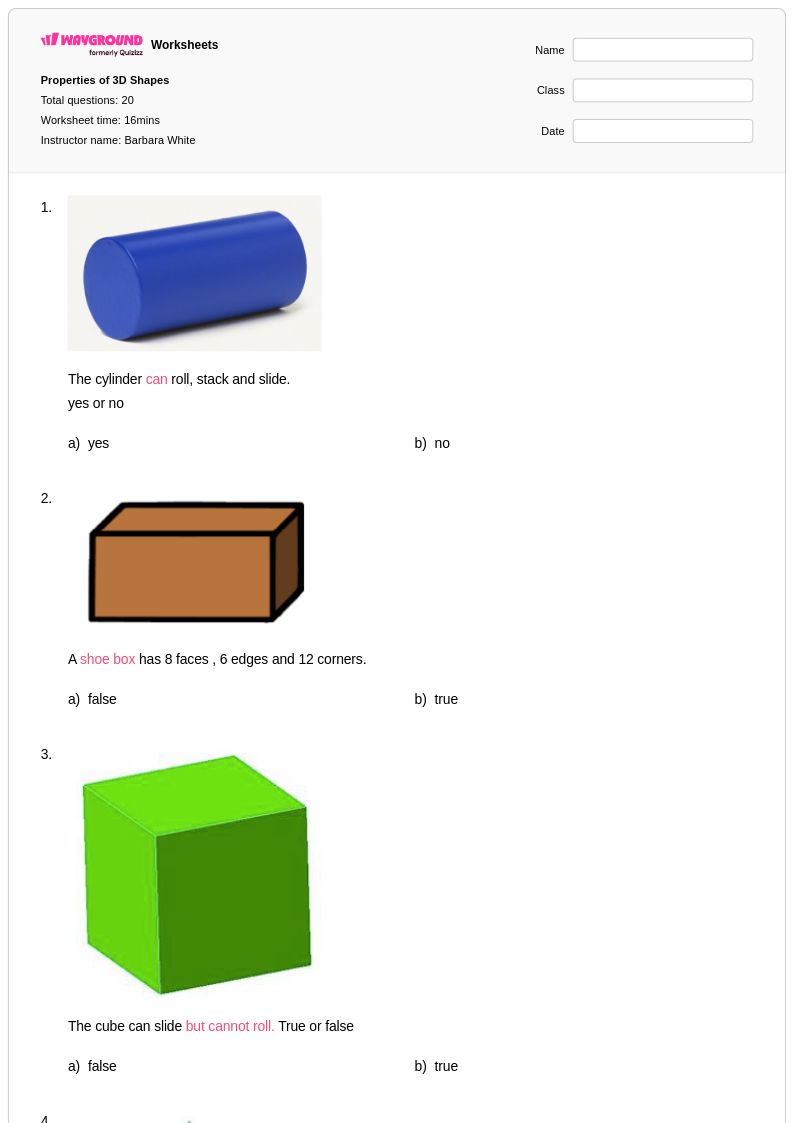
20 P
1st
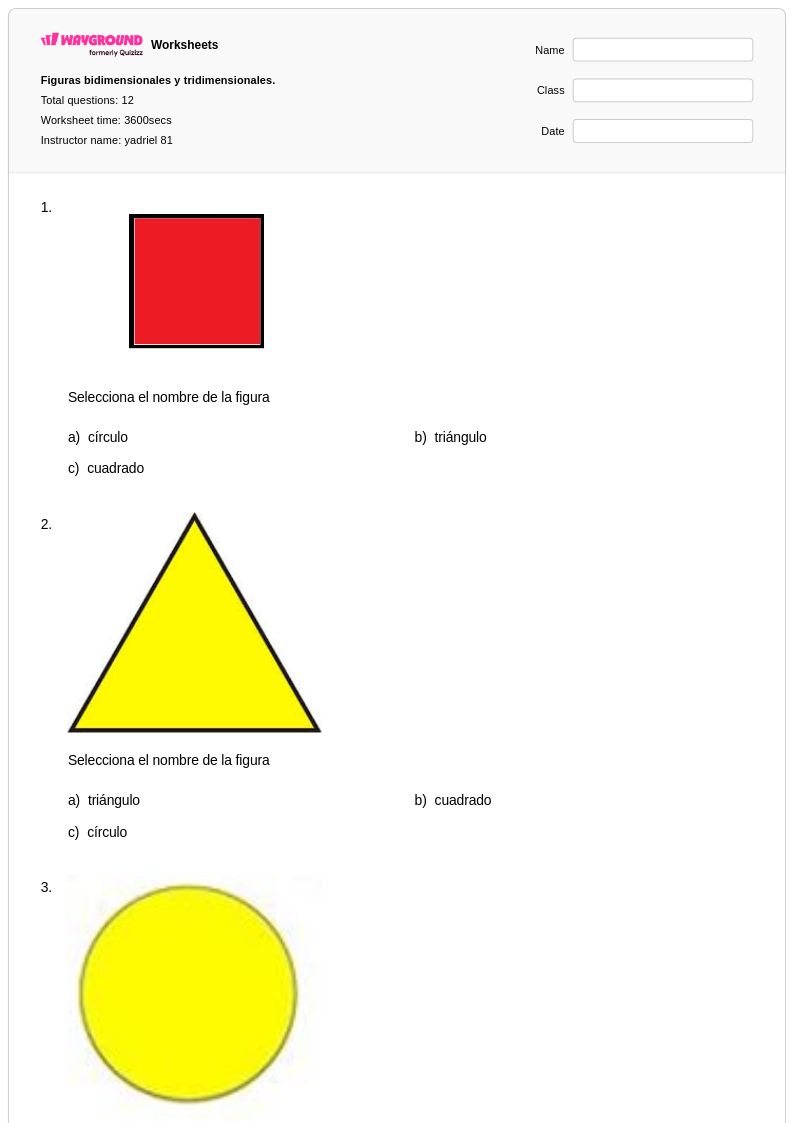
12 P
1st
9 P
1st
20 P
1st
6 P
1st
20 P
1st - 2nd
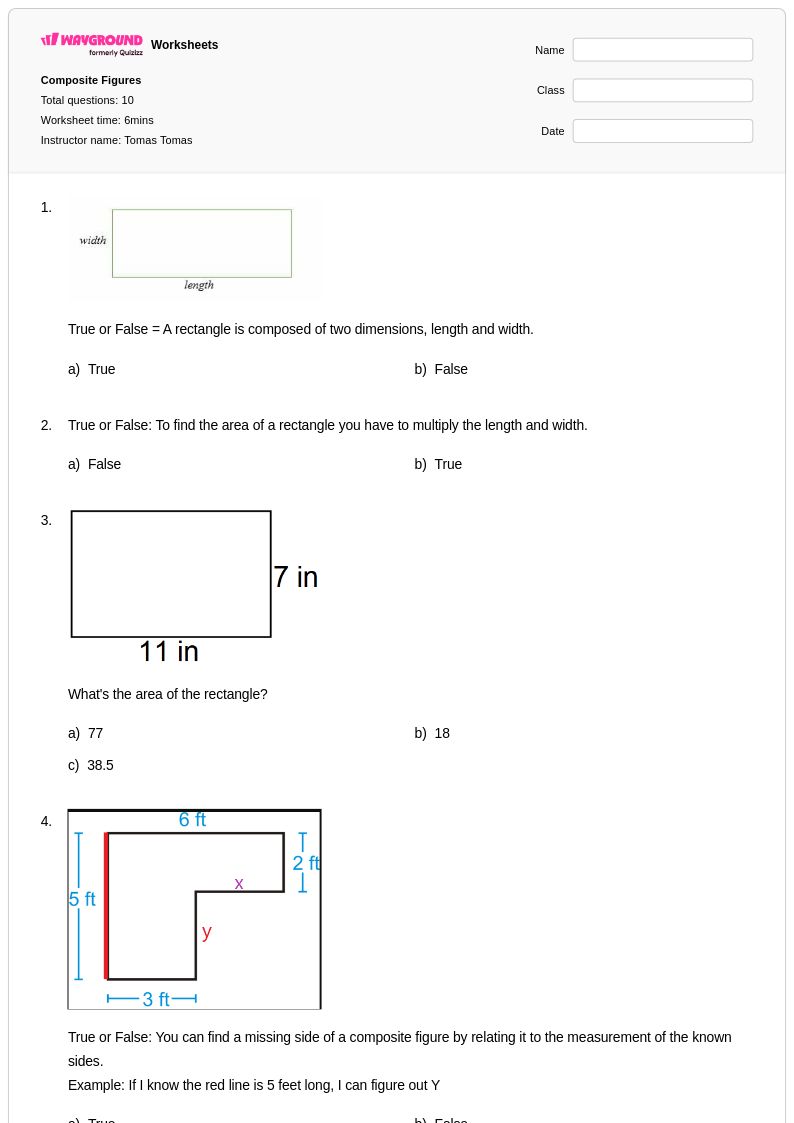
10 P
1st
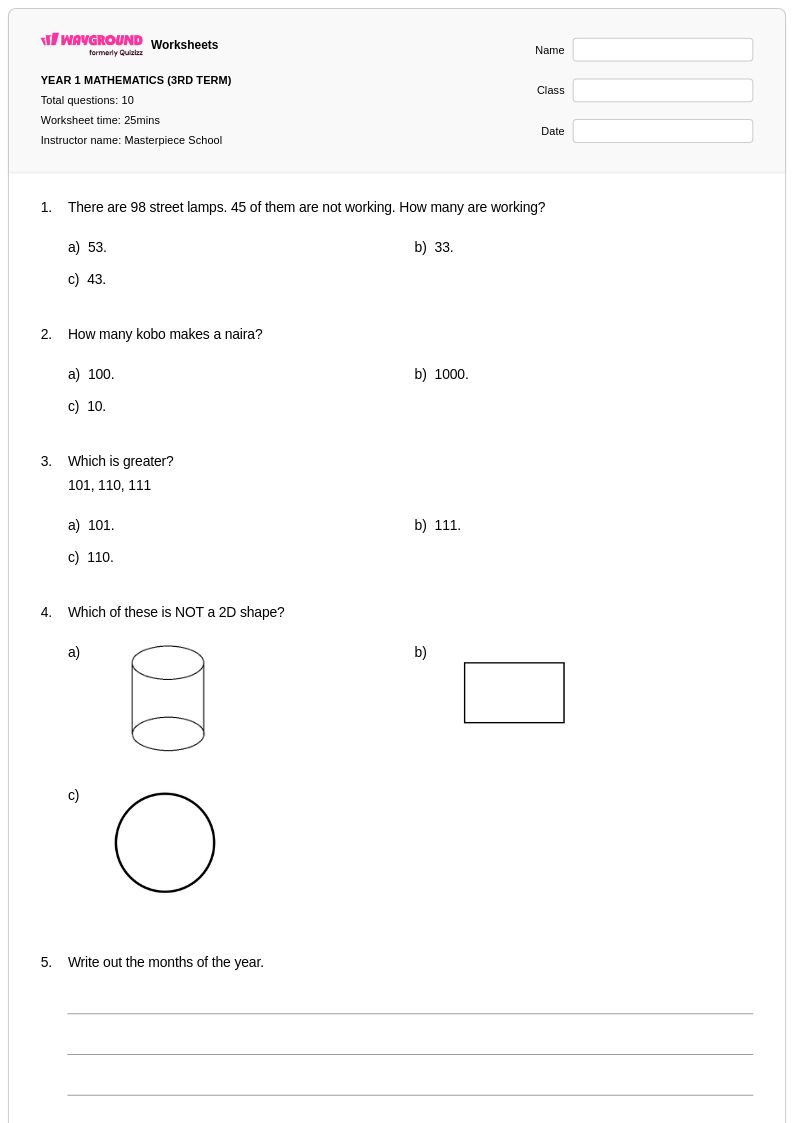
10 P
1st
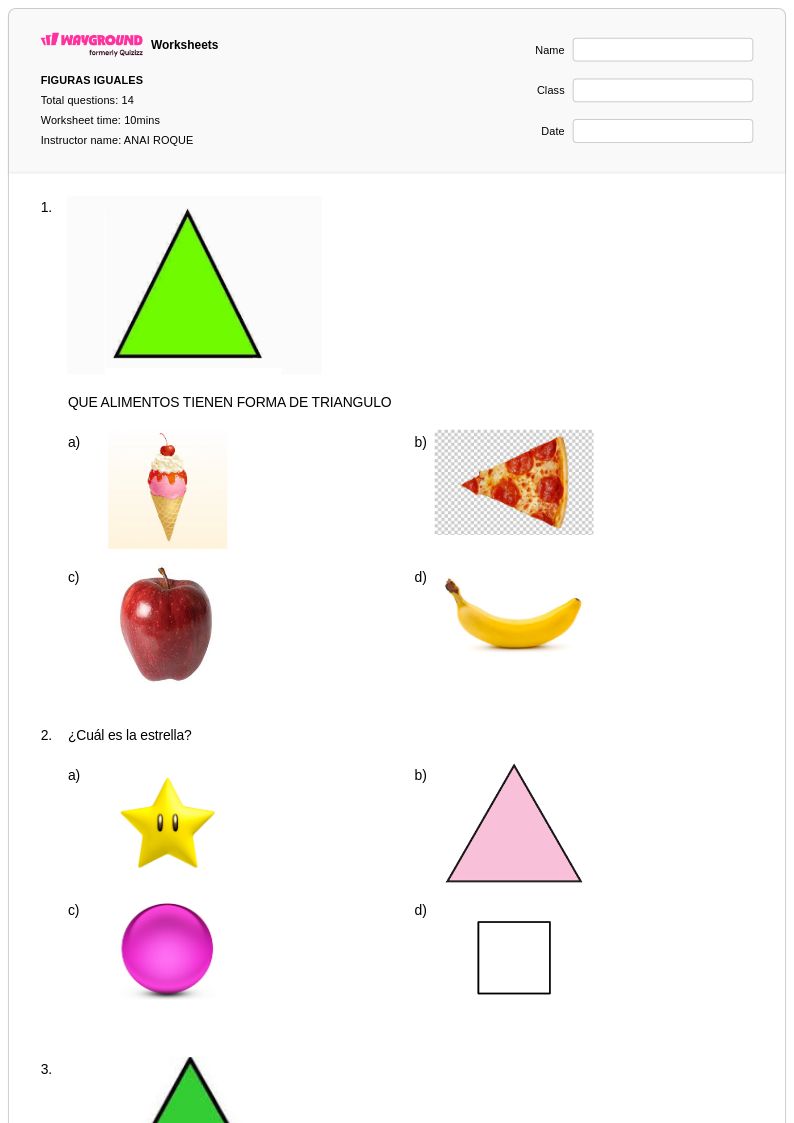
14 P
1st
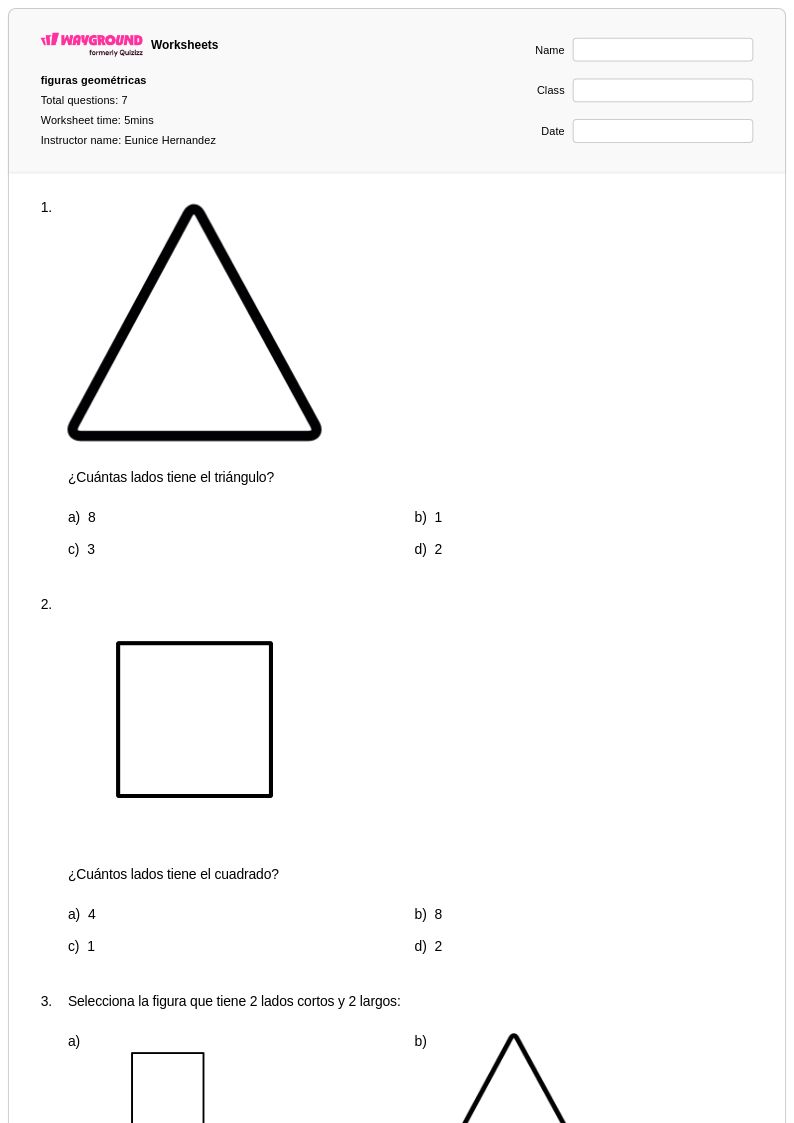
7 P
1st - 3rd
Przeglądaj Nets of 3d Figures arkusze ćwiczeń według ocen
Przeglądaj inne arkusze tematyczne dla class 1
Explore printable Nets of 3d Figures worksheets for Class 1
Nets of 3D figures worksheets for Class 1 students available through Wayground (formerly Quizizz) introduce young learners to the foundational concept of how flat shapes can be folded to create three-dimensional objects. These carefully designed practice problems help first-grade students develop spatial reasoning skills by exploring simple nets for basic shapes like cubes and rectangular prisms through hands-on activities and visual exercises. The worksheets strengthen critical thinking abilities as students learn to identify which flat patterns will successfully fold into solid figures, building essential geometric understanding that supports future mathematical learning. Each printable resource includes comprehensive materials with answer keys, making it easy for educators to implement effective geometry instruction while providing students with engaging free practice opportunities in both digital and pdf formats.
Wayground (formerly Quizizz) empowers teachers with an extensive collection of millions of teacher-created resources specifically designed to support Class 1 geometry instruction on nets of 3D figures. The platform's robust search and filtering capabilities allow educators to quickly locate age-appropriate worksheets that align with curriculum standards, while built-in differentiation tools enable customization to meet diverse learning needs within the classroom. Teachers can seamlessly adapt these resources for various instructional purposes, from initial concept introduction to targeted remediation and enrichment activities, with flexible options available in both printable and interactive digital formats. This comprehensive approach to worksheet management streamlines lesson planning while ensuring students receive consistent, high-quality practice opportunities that reinforce spatial visualization skills and geometric reasoning abilities essential for mathematical success.
FAQs
What do first graders learn about nets of 3D figures?
How can I teach nets to first graders?
What exercises are good for Grade 1 practice with nets?
What is a common challenge for first graders with nets?
How does this topic connect to Grade 1 math standards?
How do I use this Grade 1 nets worksheet?