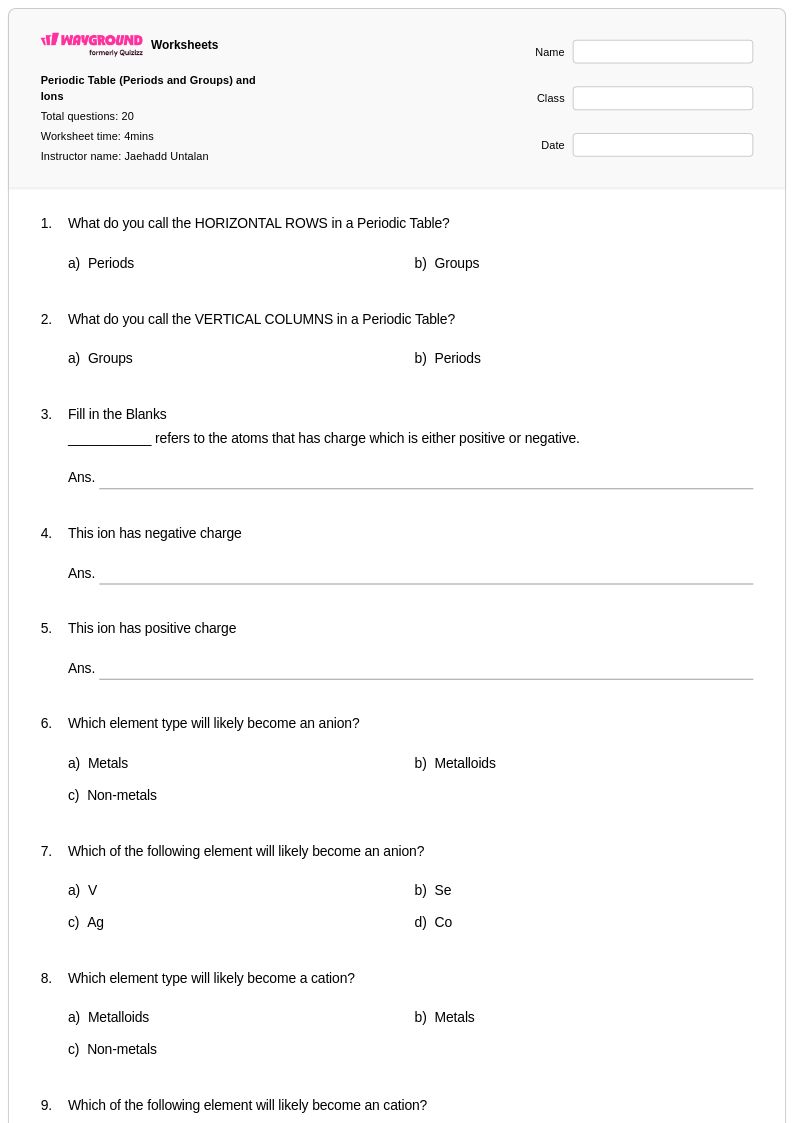
Explore Class 9 oxidation worksheets and printables from Wayground that help students master chemical reactions, electron transfer, and redox processes through engaging practice problems with complete answer keys.
Explore printable Oxidation worksheets for Class 9
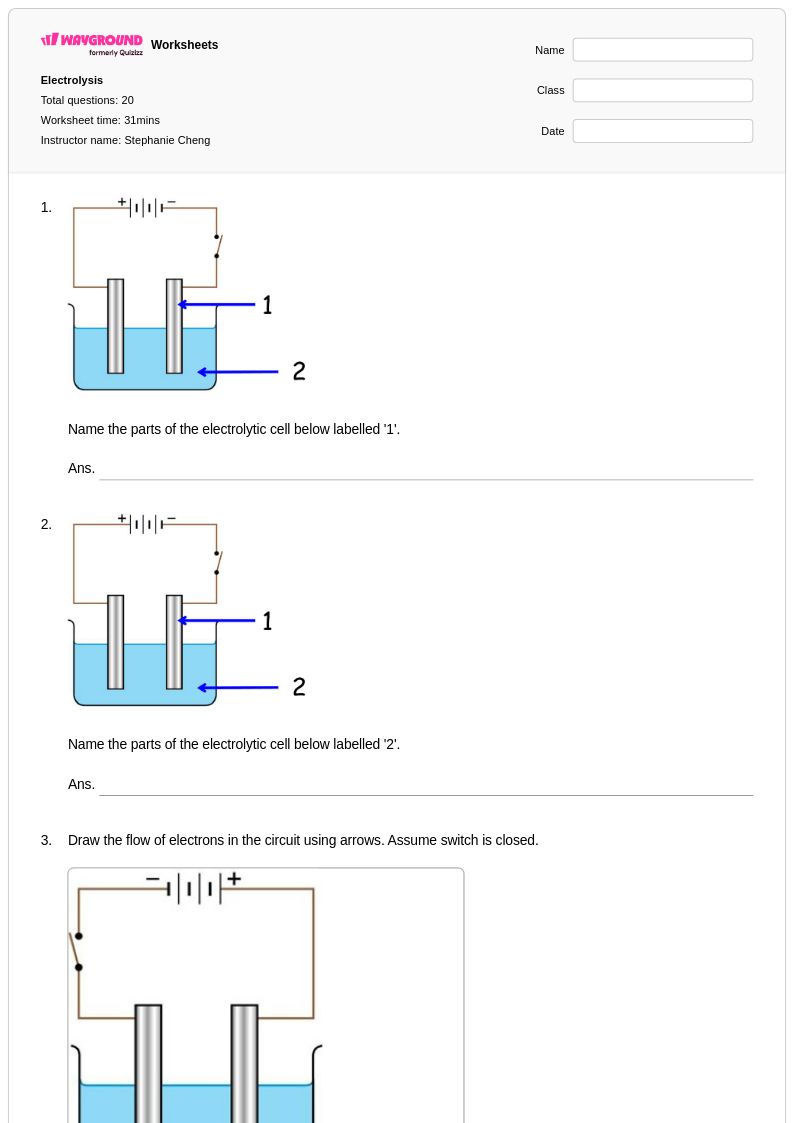
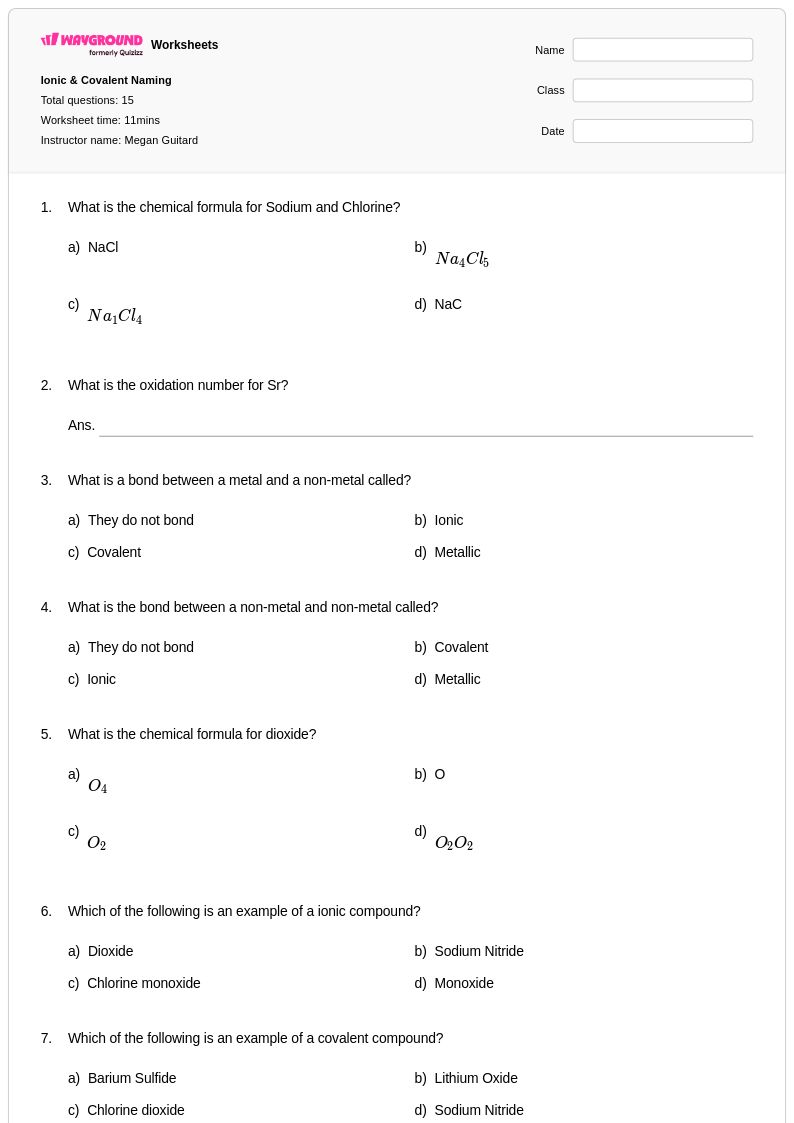
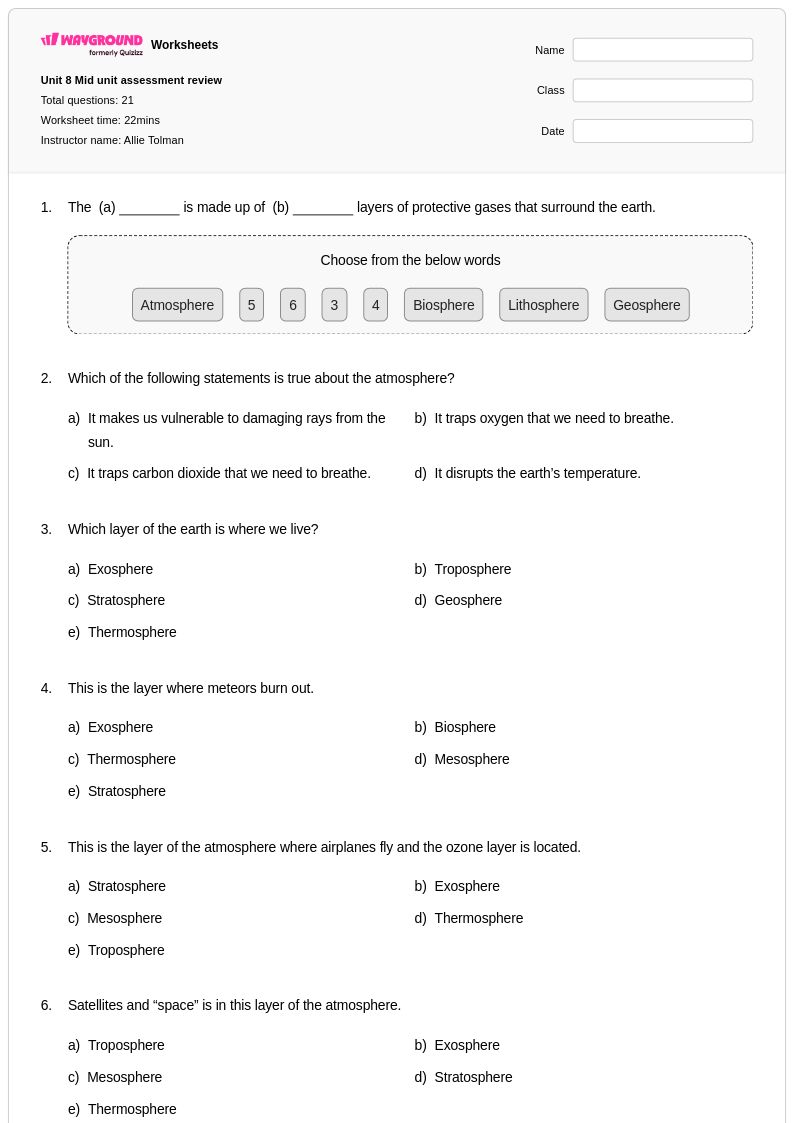
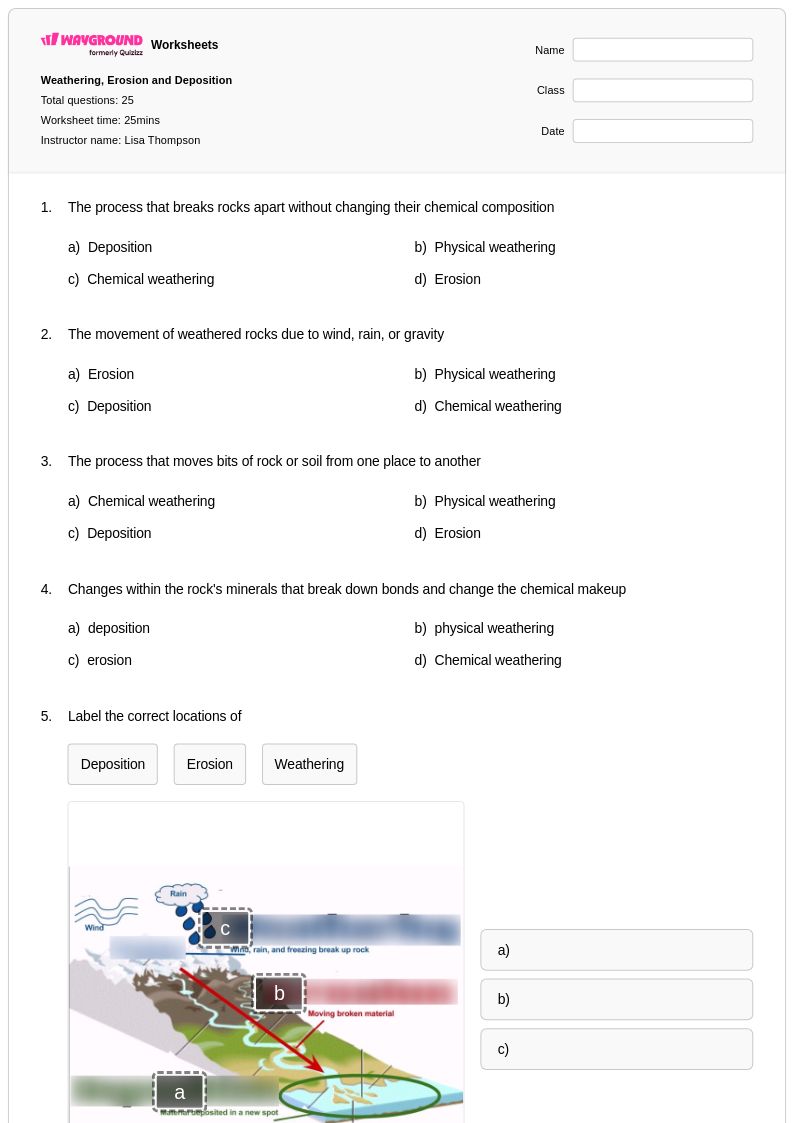
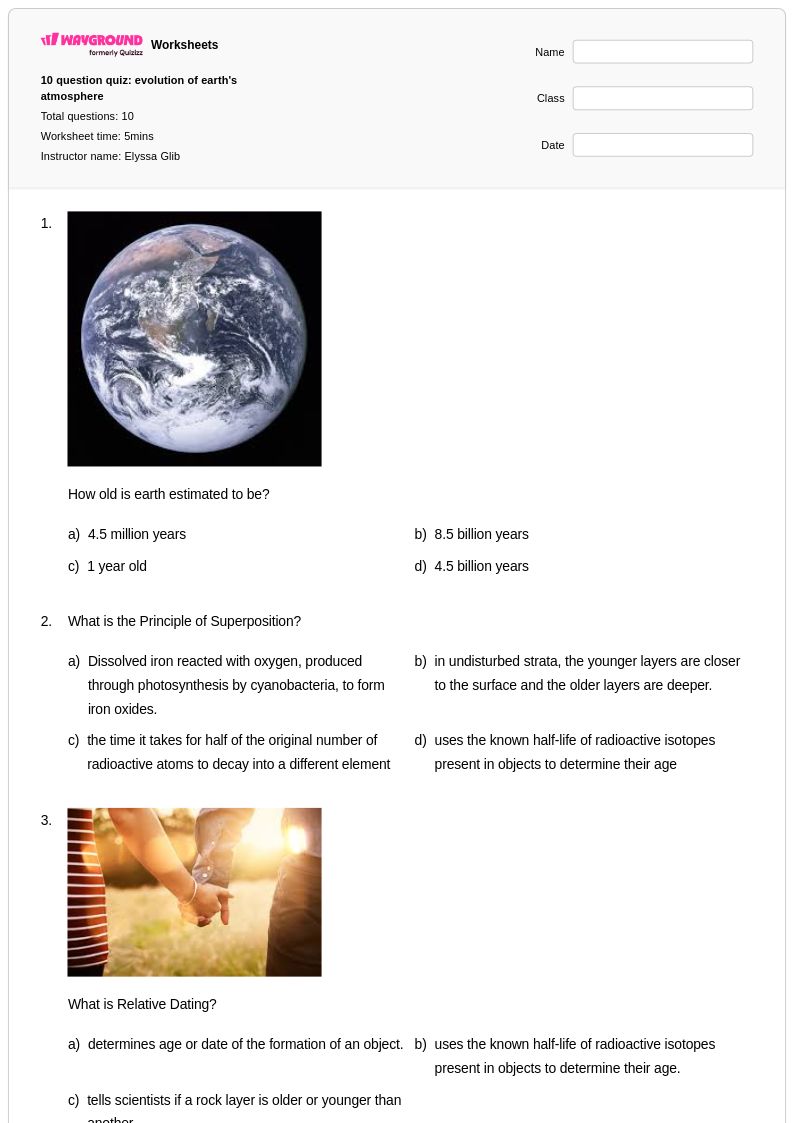
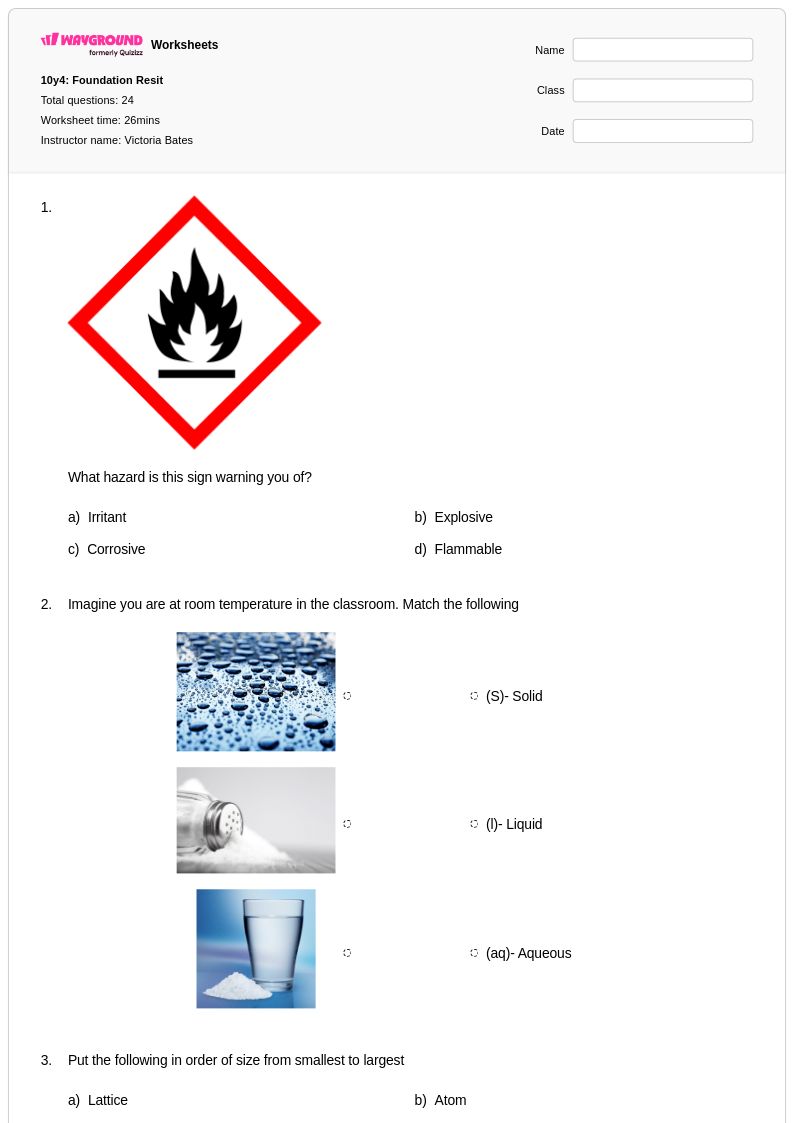
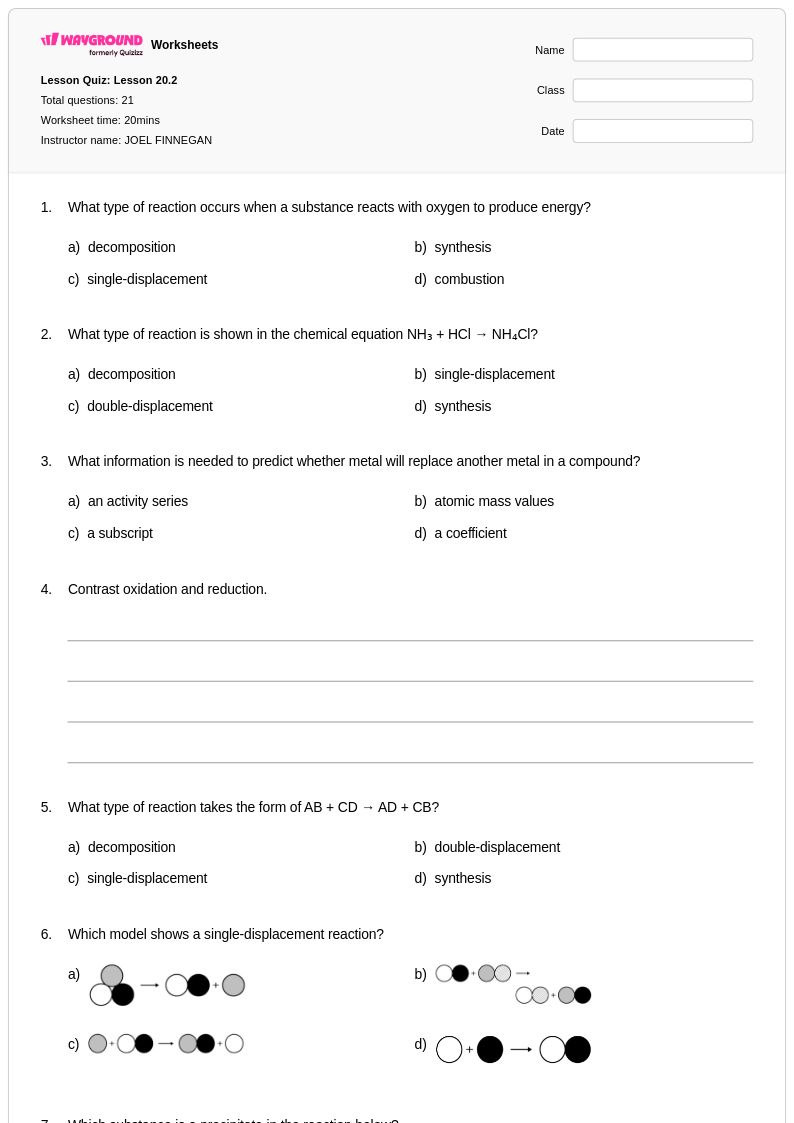
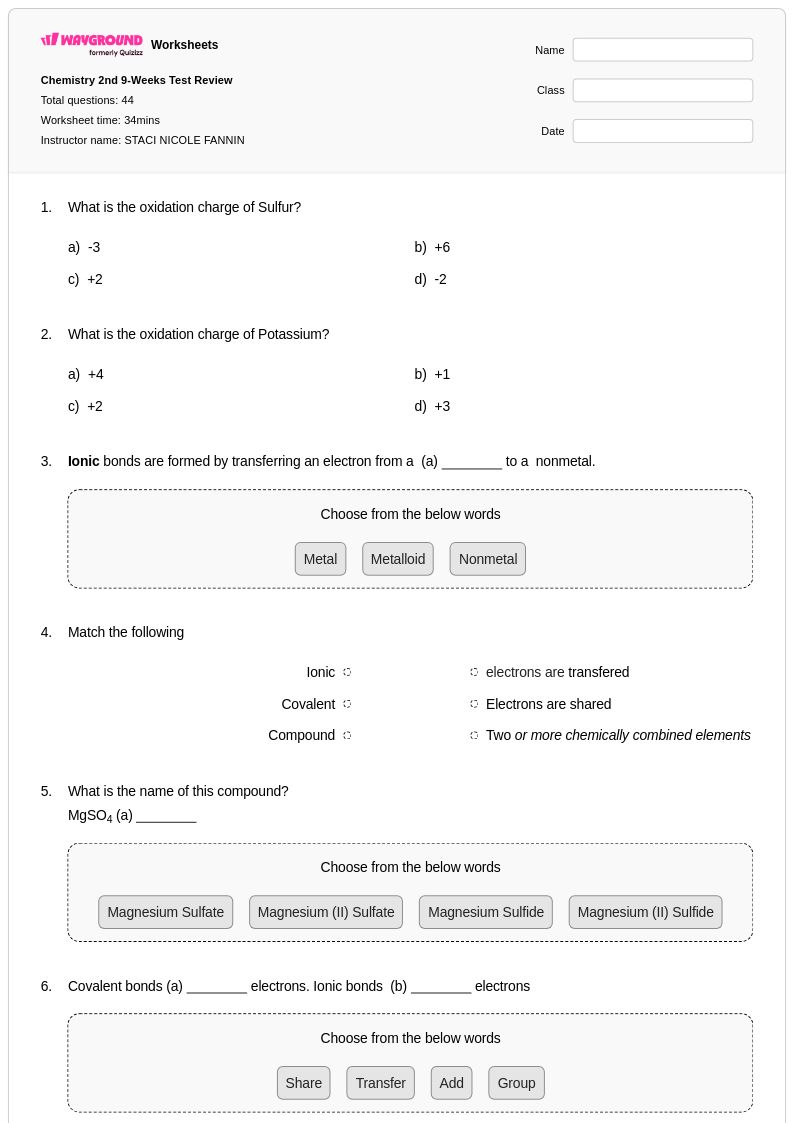
Oxidation worksheets for Class 9 students through Wayground (formerly Quizizz) provide comprehensive coverage of this fundamental chemistry concept, focusing on electron transfer processes, oxidation states, and redox reactions. These educational resources strengthen students' understanding of how atoms lose electrons during chemical reactions, helping them identify oxidizing agents, calculate oxidation numbers, and balance redox equations. The practice problems included in these worksheets progress systematically from basic electron loss concepts to more complex applications involving combustion reactions, metal corrosion, and biological oxidation processes. Each worksheet comes with a detailed answer key, making them valuable tools for both classroom instruction and independent study, while the free printable format ensures accessibility for all learning environments.
Wayground (formerly Quizizz) supports chemistry educators with an extensive collection of teacher-created oxidation worksheets, drawing from millions of high-quality resources that align with Class 9 chemistry standards and curriculum requirements. The platform's advanced search and filtering capabilities allow teachers to quickly locate worksheets that match specific learning objectives, whether focusing on introductory oxidation concepts or advanced redox stoichiometry. These differentiation tools enable educators to customize content for diverse learning needs, supporting both remediation for struggling students and enrichment activities for advanced learners. Available in both digital and printable pdf formats, these worksheets integrate seamlessly into lesson planning, providing flexible options for skill practice, formative assessment, and homework assignments that reinforce critical oxidation chemistry concepts.
FAQs
How do I teach oxidation and reduction to chemistry students?
Start by establishing that oxidation is the loss of electrons and reduction is the gain of electrons, using the mnemonic OIL RIG (Oxidation Is Loss, Reduction Is Gain) as an anchor. Introduce oxidation states through simple rules — elements in pure form are always 0, monatomic ions equal their charge — before progressing to polyatomic compounds. Build toward half-reaction notation so students can see electron transfer explicitly before balancing full redox equations.
What exercises help students practice assigning oxidation numbers?
The most effective practice sequence moves from single-element and monatomic ion assignments to polyatomic compounds, then to complex molecules with multiple oxidation state rules in conflict. Students should practice identifying which rules take precedence — for example, oxygen is typically -2 except in peroxides — and justify each assignment in writing. Timed problem sets and error-correction tasks, where students identify mistakes in pre-worked examples, are especially effective for building fluency.
What mistakes do students commonly make when balancing redox equations?
The most frequent error is forgetting to balance both mass and charge when using the half-reaction method — students often balance atoms correctly but neglect to add electrons to equalize charge on each side. Another common mistake is confusing oxidation state changes with the number of electrons transferred, particularly in reactions involving species with multiple oxidizable atoms. Students also frequently misapply the rule for oxygen in peroxides, assigning -2 instead of the correct -1.
How do I help struggling students understand electron transfer in redox reactions?
Concrete visual models work best — use color-coded half-reaction cards where students physically match electrons lost by the oxidized species to electrons gained by the reduced species. Reducing cognitive load by starting with simple metal displacement reactions (e.g., zinc in copper sulfate solution) before introducing abstract equations helps students build an intuitive model of electron flow. On Wayground, teachers can enable the Read Aloud accommodation and reduce answer choices for students who need additional support, allowing those students to engage with the same content at a manageable level of difficulty.
How can I use Wayground's oxidation worksheets in my classroom?
Wayground's oxidation worksheets are available as printable PDFs for traditional classroom use and in digital formats for technology-integrated or remote learning environments. Teachers can also host worksheets directly as a quiz on Wayground, enabling live student responses and immediate feedback. The printable format works well for independent practice or homework, while the digital format supports formative assessment during class with real-time visibility into student performance.
How do I differentiate oxidation instruction for mixed-ability chemistry classes?
Structure your materials in tiers: assign oxidation number identification to students still building foundational skills, half-reaction balancing to on-level learners, and full redox equation balancing in acidic and basic solutions to advanced students. Wayground's platform supports individual student accommodations such as extended time per question and reduced answer choices, which can be applied to specific students without affecting the rest of the class. This means a single digital worksheet can serve the full range of ability levels simultaneously.