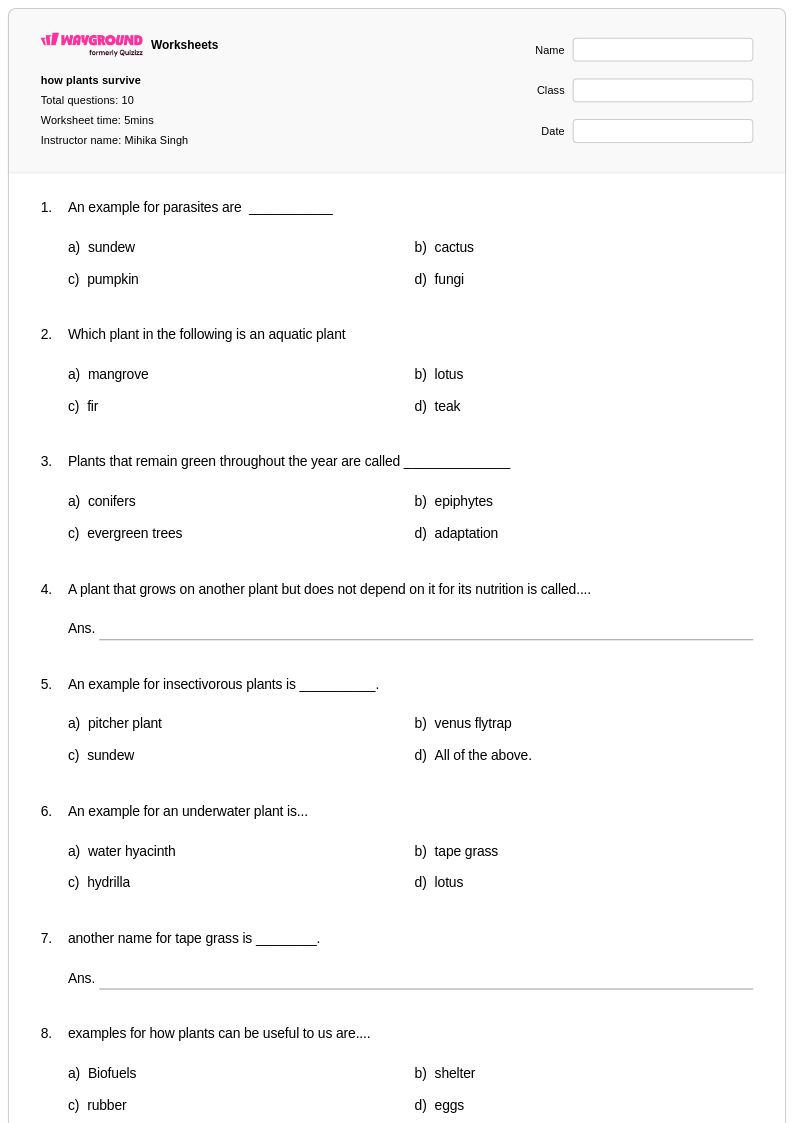
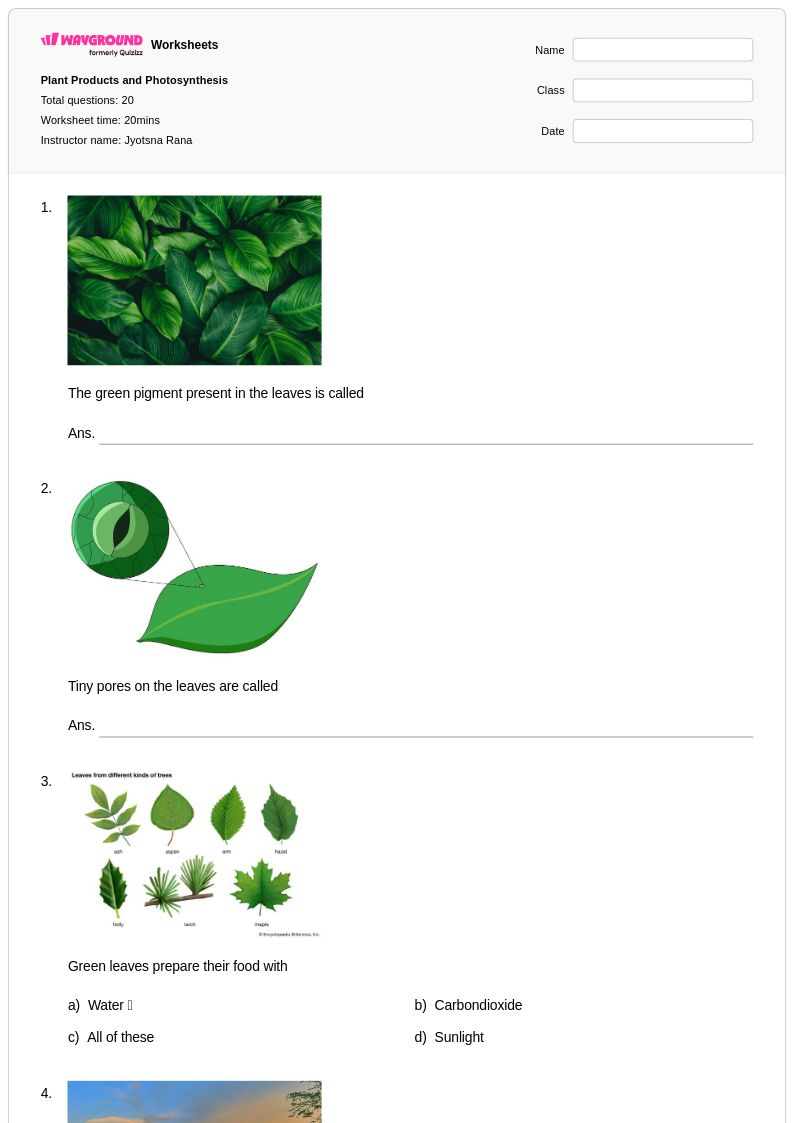
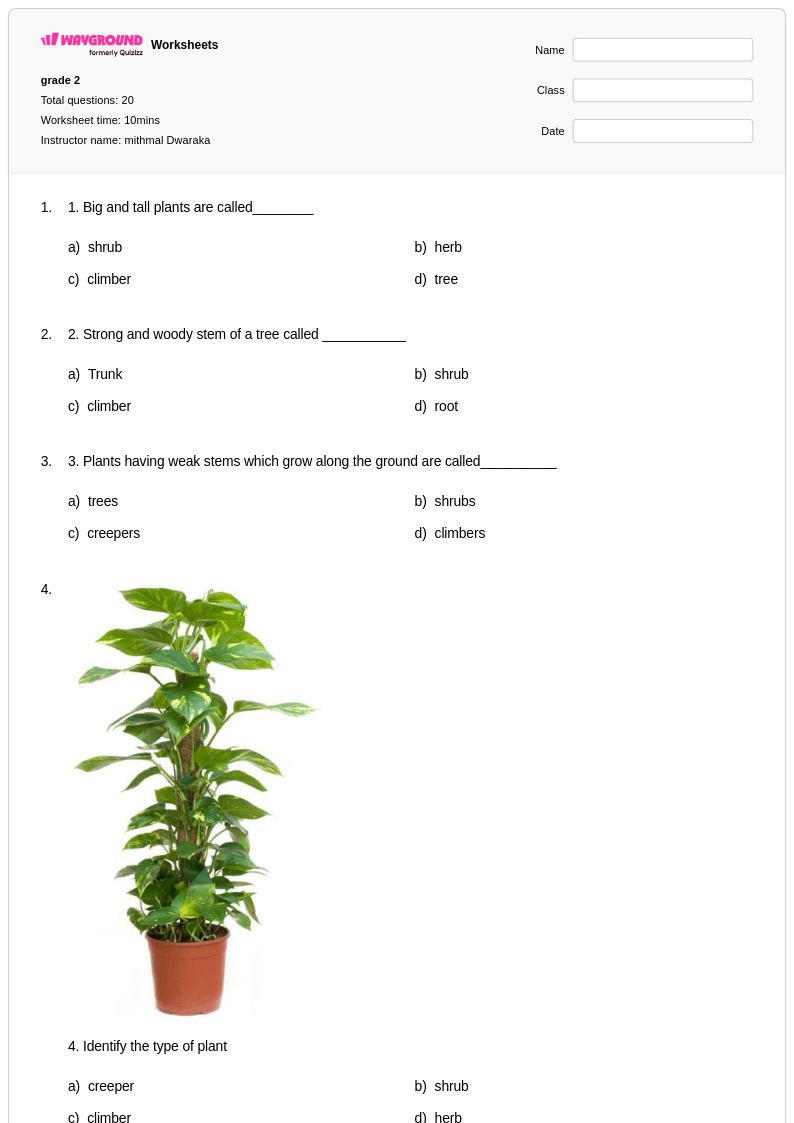
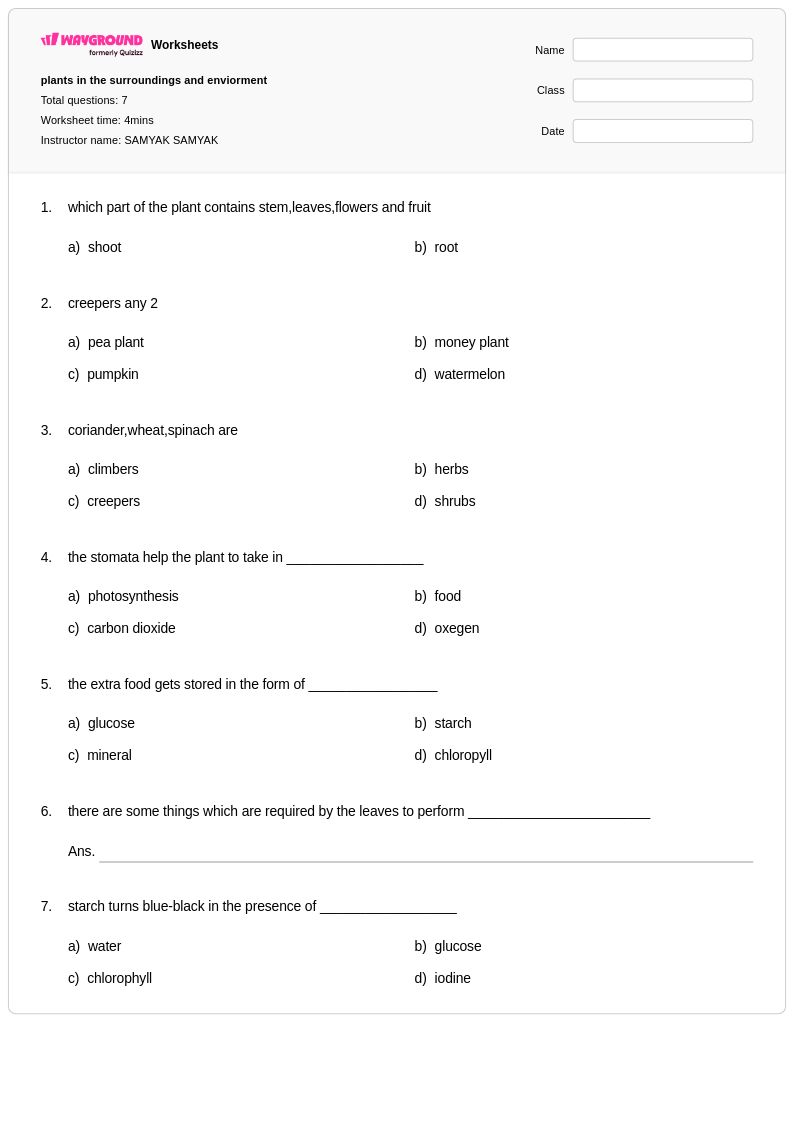
Explore Class 3 pumpkin life science worksheets and free printables that help students learn about plant growth, life cycles, and seasonal changes through engaging practice problems with answer keys.
Pumpkin-focused Class 3 life science worksheets from Wayground (formerly Quizizz) provide young learners with engaging opportunities to explore plant biology through hands-on investigations of this familiar fall favorite. These carefully designed educational resources guide third-grade students through essential scientific concepts including plant life cycles, seed development, and plant structures while using pumpkins as a concrete, observable example. Students develop critical thinking skills as they examine pumpkin anatomy, compare different varieties, and investigate how environmental factors affect pumpkin growth. The comprehensive worksheet collection includes detailed answer keys to support independent learning, free printable pdf formats for classroom flexibility, and varied practice problems that reinforce key vocabulary and scientific observation techniques.
Wayground's extensive platform empowers educators with access to millions of teacher-created pumpkin life science resources specifically tailored for Class 3 learning objectives. The robust search and filtering system allows teachers to quickly locate materials aligned with state science standards, while built-in differentiation tools enable seamless customization for diverse learning needs within the classroom. These versatile worksheets are available in both printable pdf formats for traditional instruction and interactive digital versions that enhance student engagement through multimedia elements. Teachers can efficiently plan seasonal science units, provide targeted remediation for struggling learners, offer enrichment activities for advanced students, and create meaningful skill practice opportunities that connect abstract scientific concepts to students' real-world experiences with pumpkins and plant life.
FAQs
How do I teach pumpkin life science in the classroom?
Teaching pumpkin life science works best when students can observe real specimens alongside structured worksheets. Guide students through pumpkin anatomy by examining external features, seeds, and flesh, then connect observations to broader plant biology concepts like germination, pollination, and seasonal growth cycles. Pairing hands-on investigation with worksheets that prompt measurement, data recording, and comparison helps students develop genuine scientific inquiry skills rather than just memorizing vocabulary.
What exercises help students practice plant life cycle concepts using pumpkins?
Effective practice exercises include sequencing the pumpkin life cycle from seed to harvest, measuring and comparing pumpkin circumference and weight, sketching and labeling seed structures, and recording observations across growth stages. Worksheets that ask students to compare pumpkin varieties or document changes over time reinforce both botanical vocabulary and data collection skills. These activities build a concrete foundation for understanding plant biology through a familiar, seasonal subject.
What mistakes do students commonly make when learning about plant life cycles through pumpkins?
A common misconception is that seeds are not living organisms, leading students to overlook germination as an active biological process. Students also frequently confuse the roles of pollination and fertilization, or assume all pumpkin varieties grow and mature at the same rate. When working with measurement tasks, students often record observations inconsistently, which is why worksheets that provide structured data tables and step-by-step prompts help develop accurate scientific habits.
How can I differentiate pumpkin science worksheets for students at different skill levels?
Select worksheets that vary in complexity, from basic life cycle sequencing for younger or struggling learners to more analytical tasks like comparing growth data across varieties for advanced students. On Wayground, teachers can filter resources by skill level and customize content to match specific learning objectives. For students who need additional support, Wayground also offers built-in accommodations such as read aloud, reduced answer choices, and extended time, which can be assigned individually without affecting the rest of the class.
How do I use Wayground's pumpkin worksheets in my classroom?
Wayground's pumpkin science worksheets are available as printable PDFs for traditional classroom use and in digital formats for technology-integrated learning environments, giving teachers flexibility regardless of their classroom setup. You can also host any worksheet as a live quiz on Wayground, making it easy to assign as a formative assessment or interactive whole-class activity. Complete answer keys are included with every worksheet, reducing prep time and making it straightforward to review student work.