
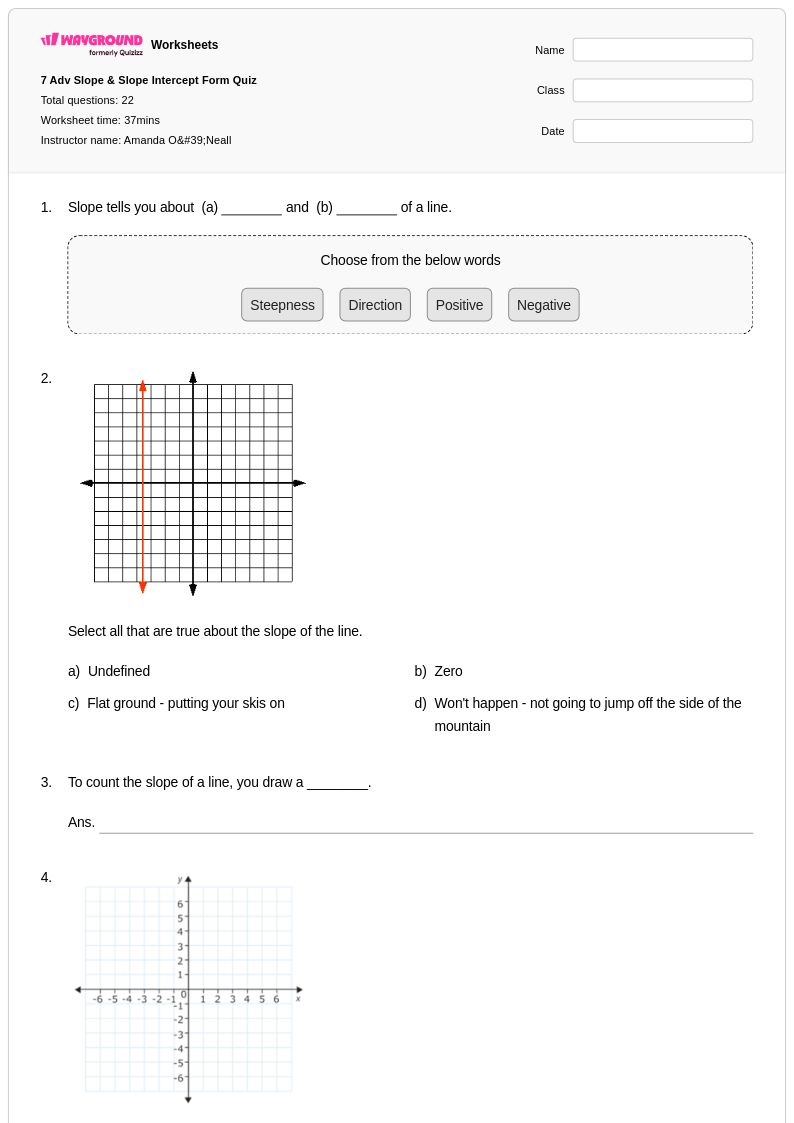
22 Q
7th
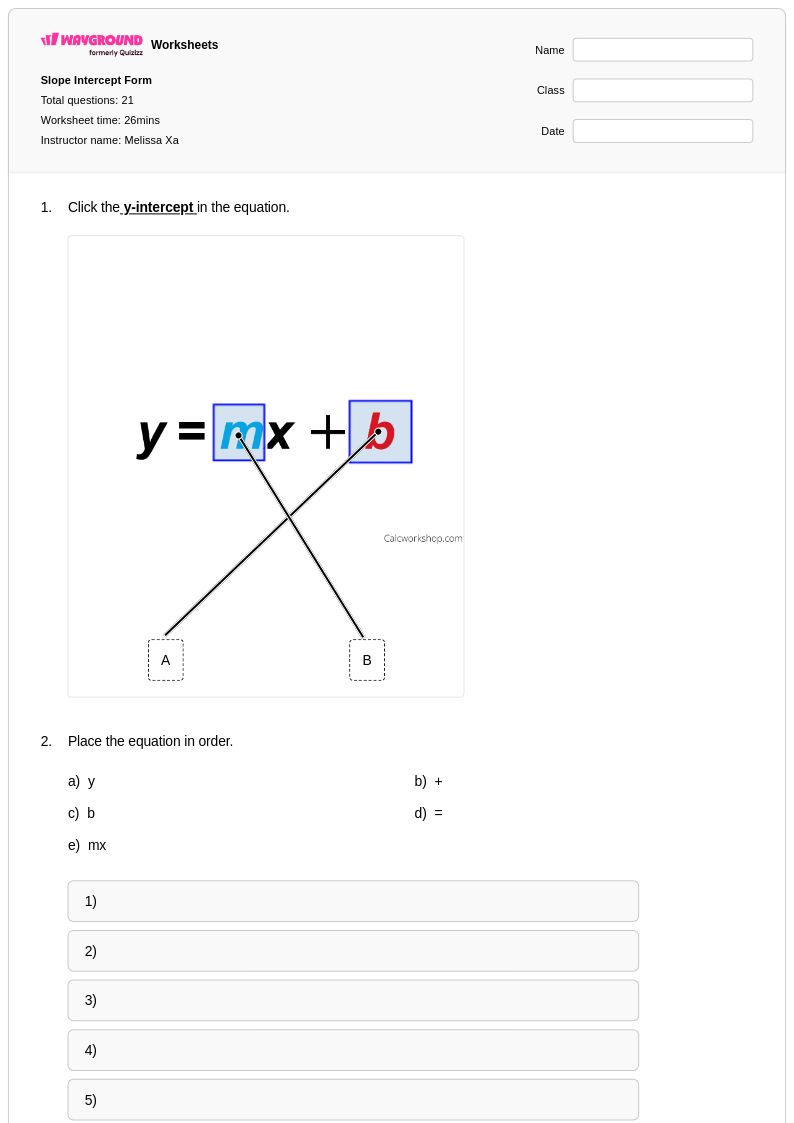
21 Q
6th - 8th
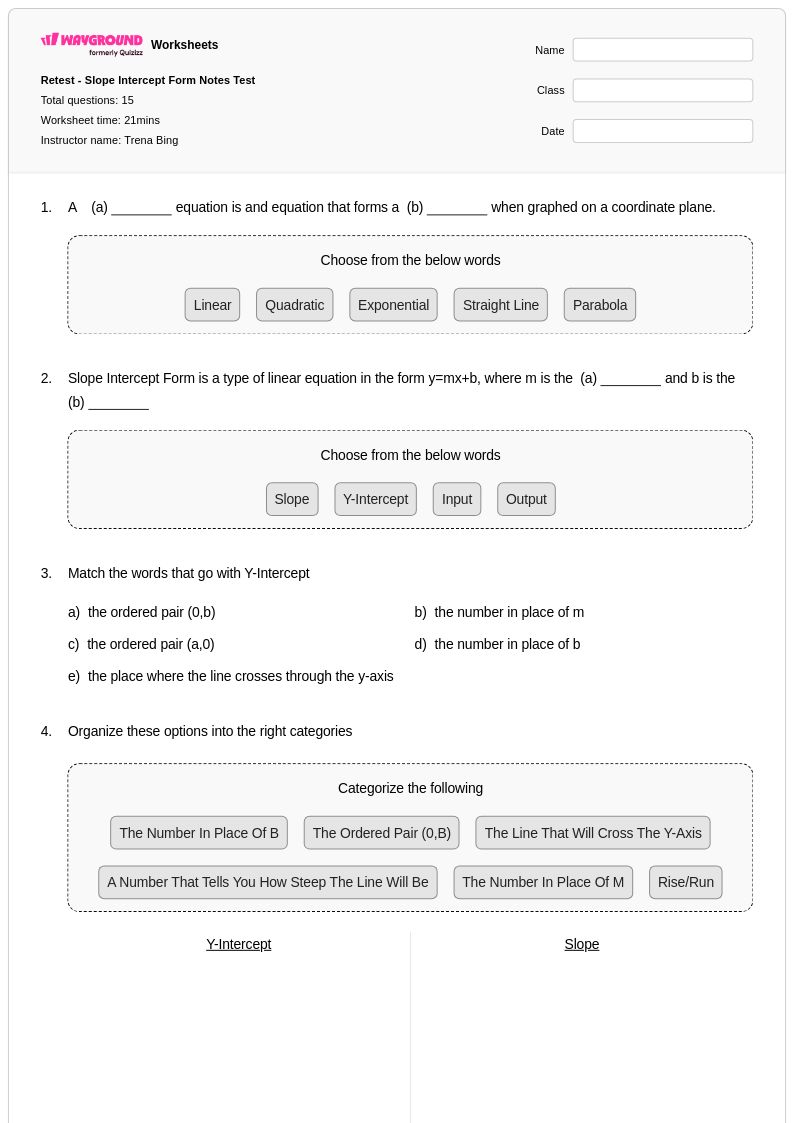
15 Q
9th - 12th
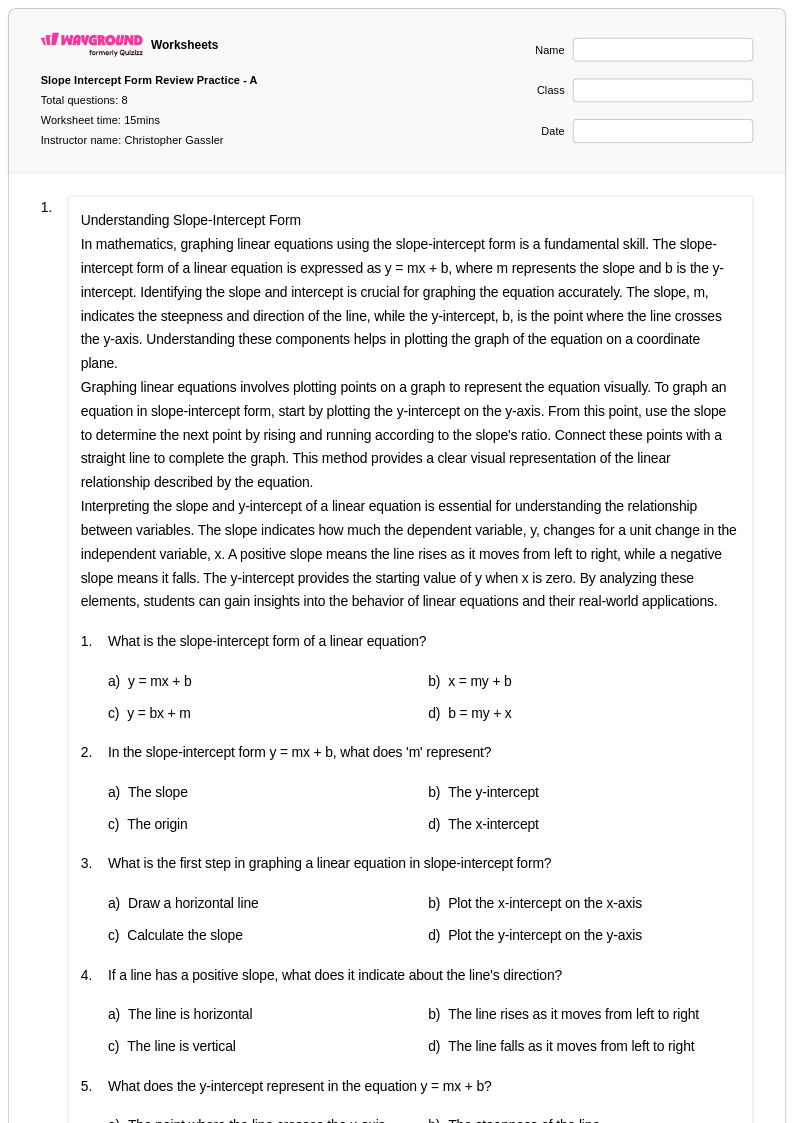
13 Q
9th
20 Q
8th
20 Q
7th
18 Q
9th
13 Q
9th
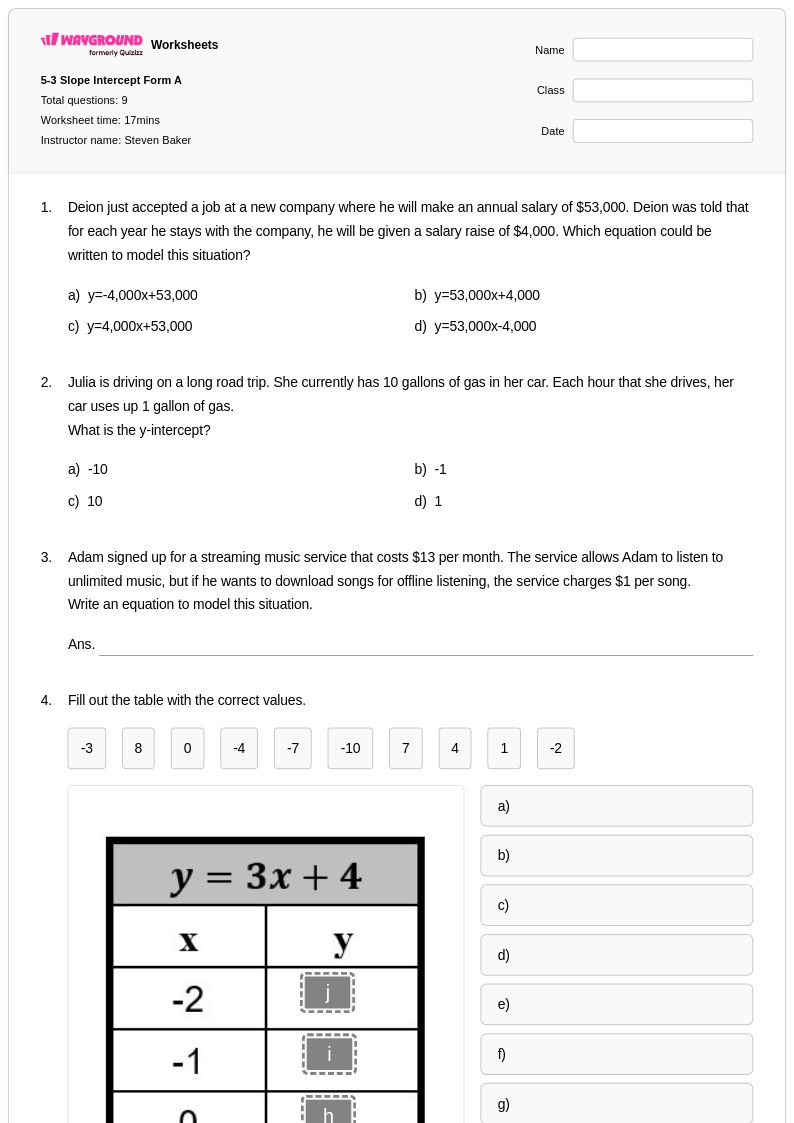
9 Q
9th - 12th
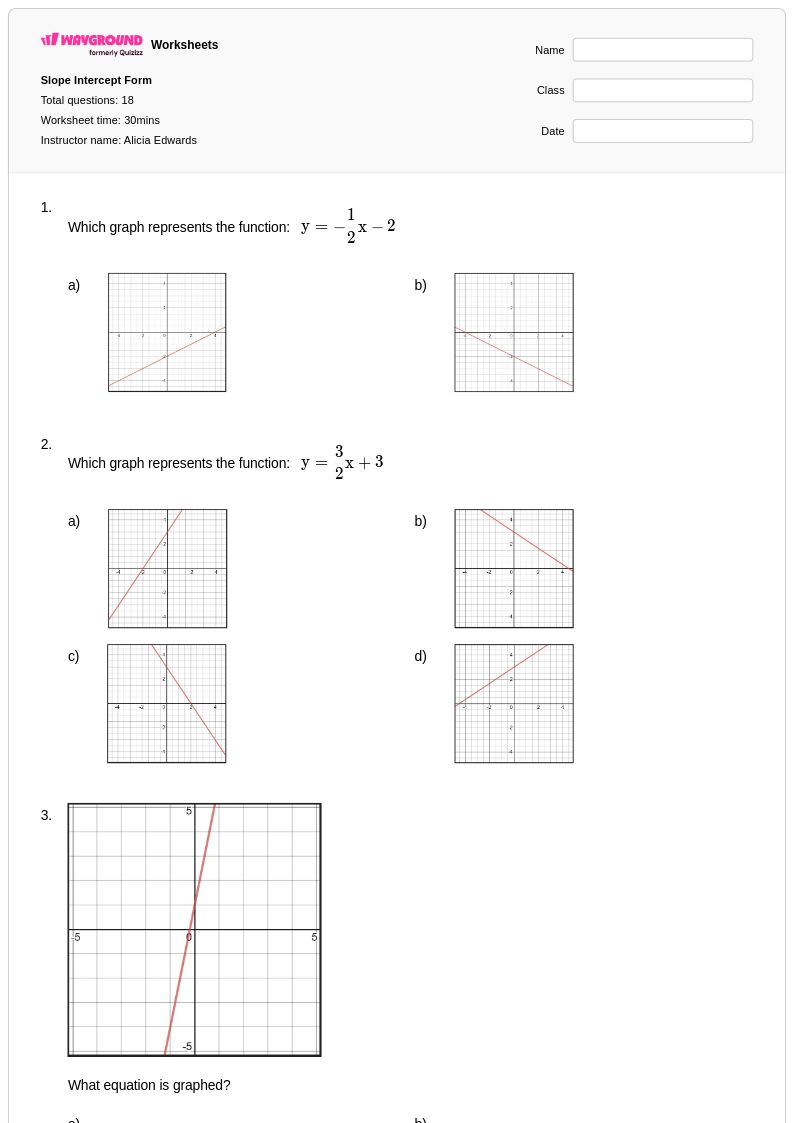
18 Q
9th
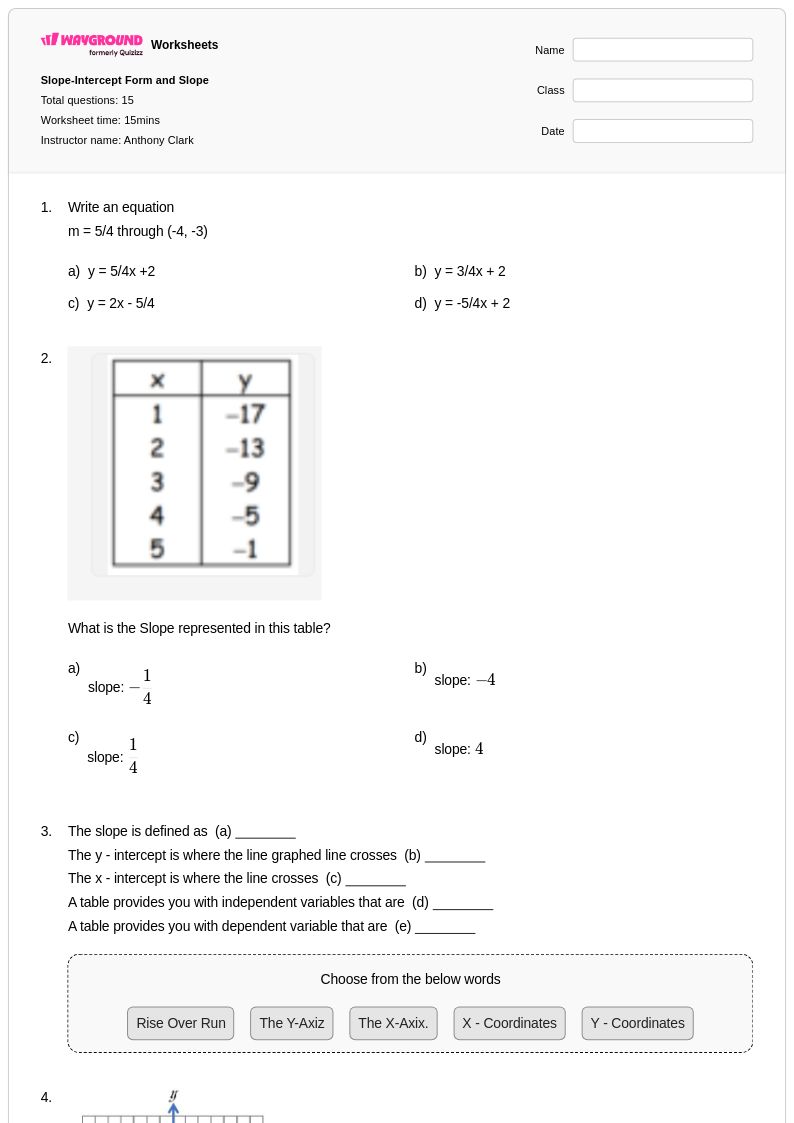
15 Q
8th - Uni
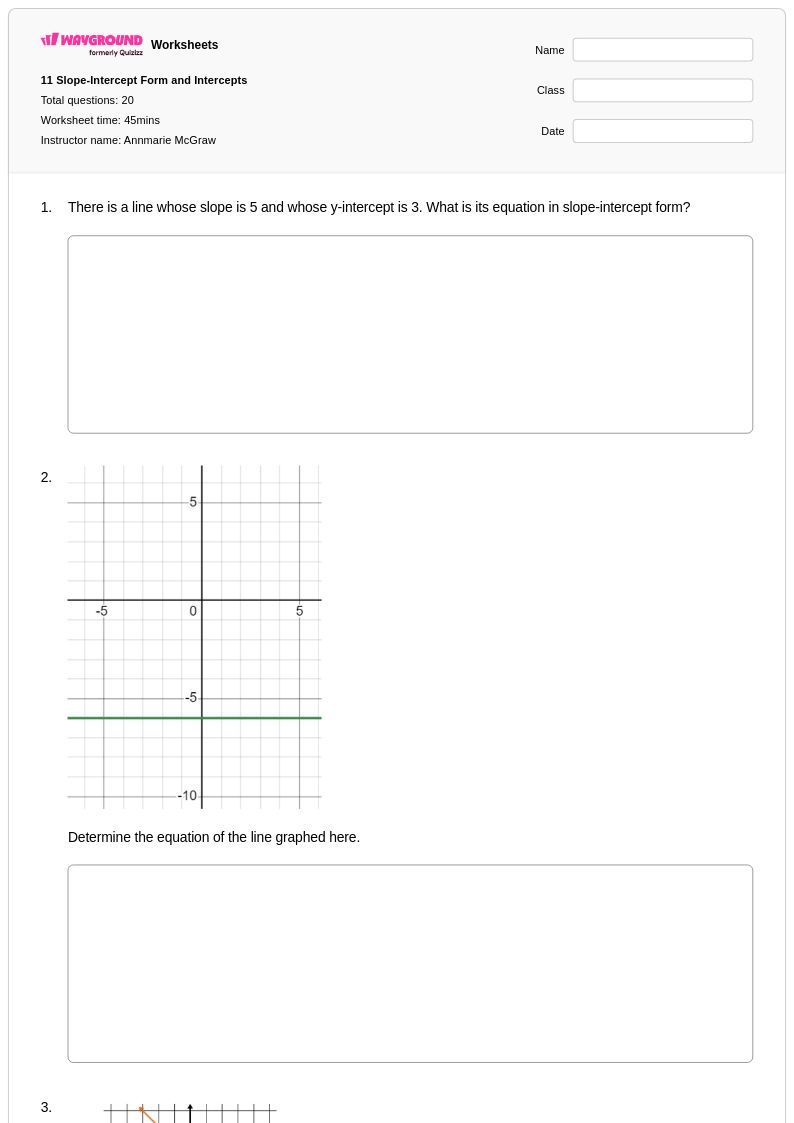
20 Q
8th
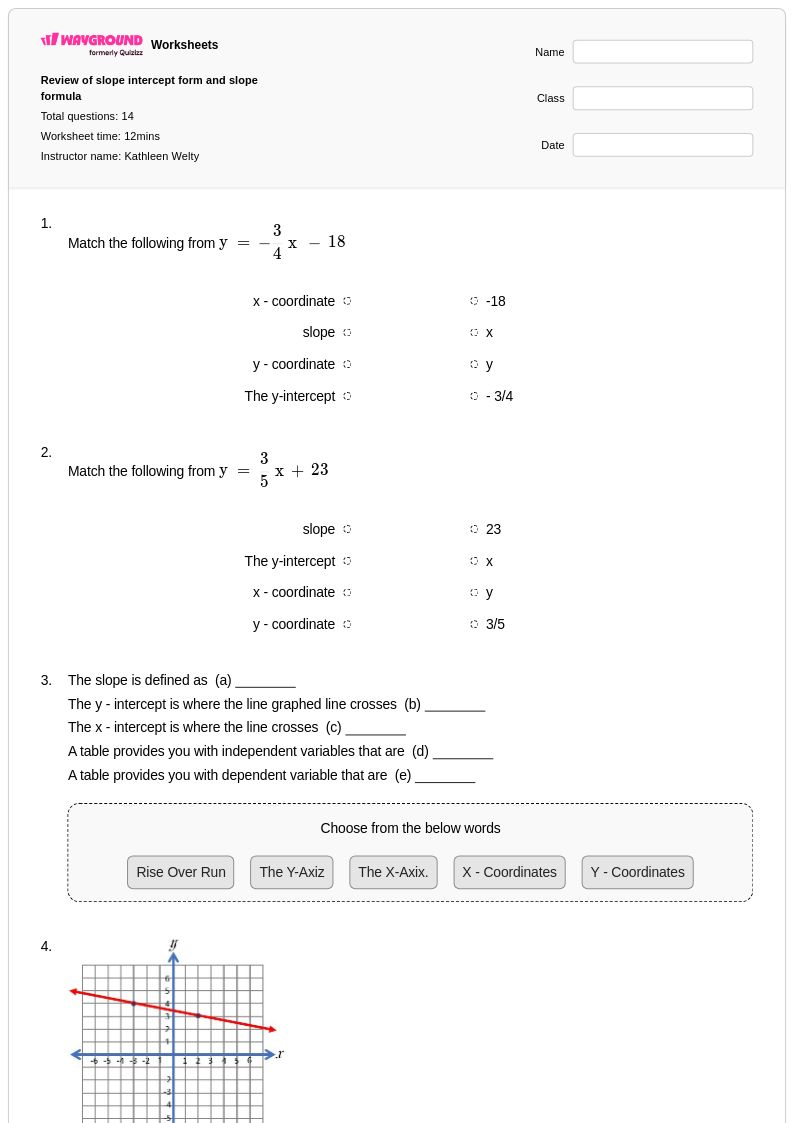
14 Q
6th - 12th
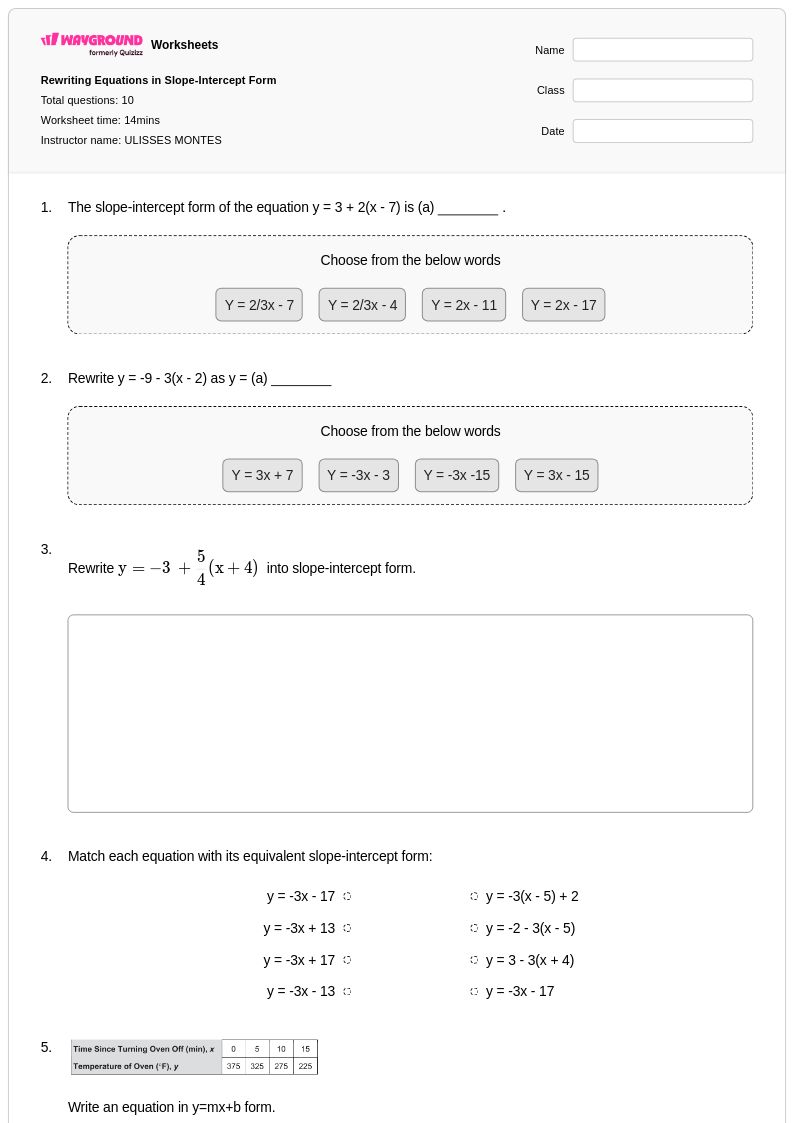
10 Q
9th
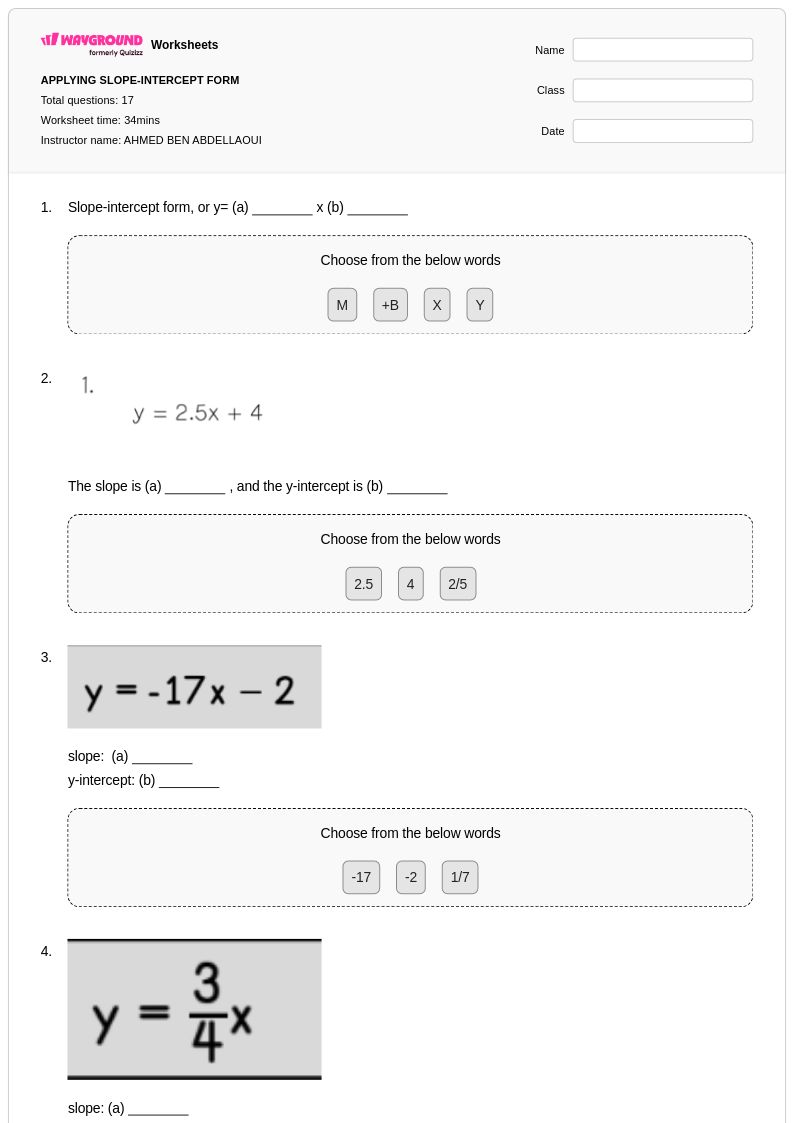
17 Q
9th - Uni
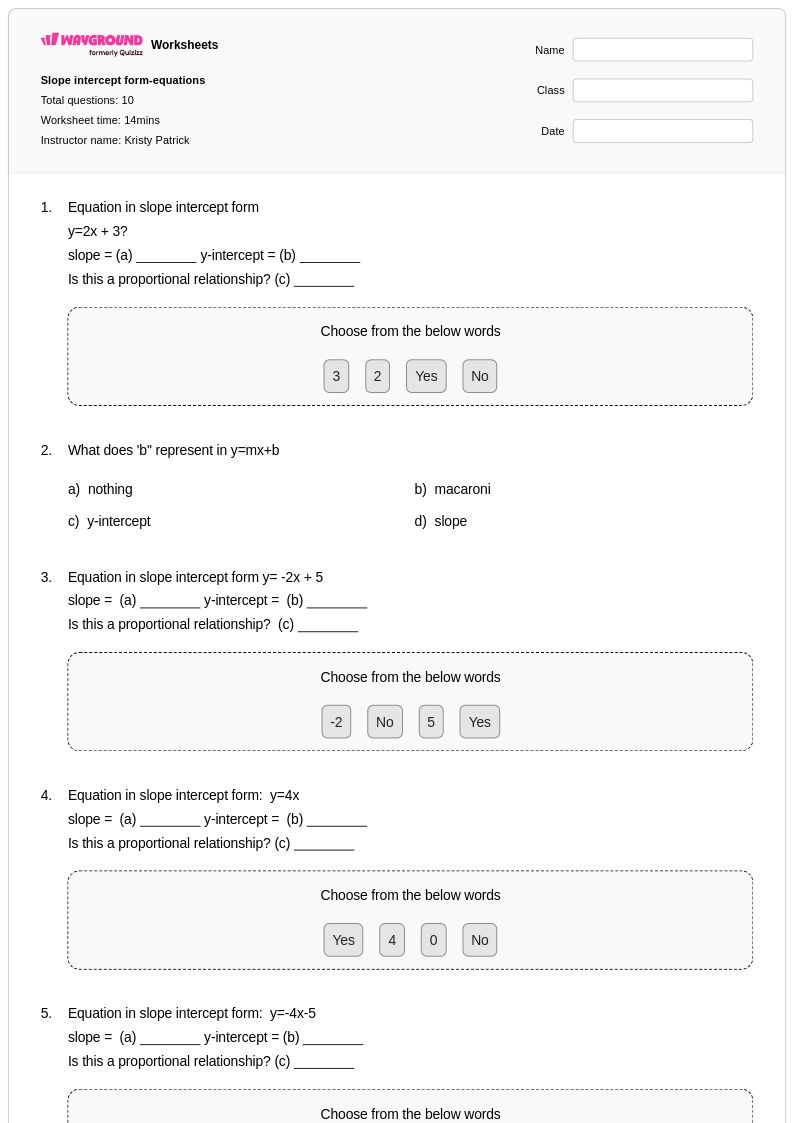
10 Q
8th
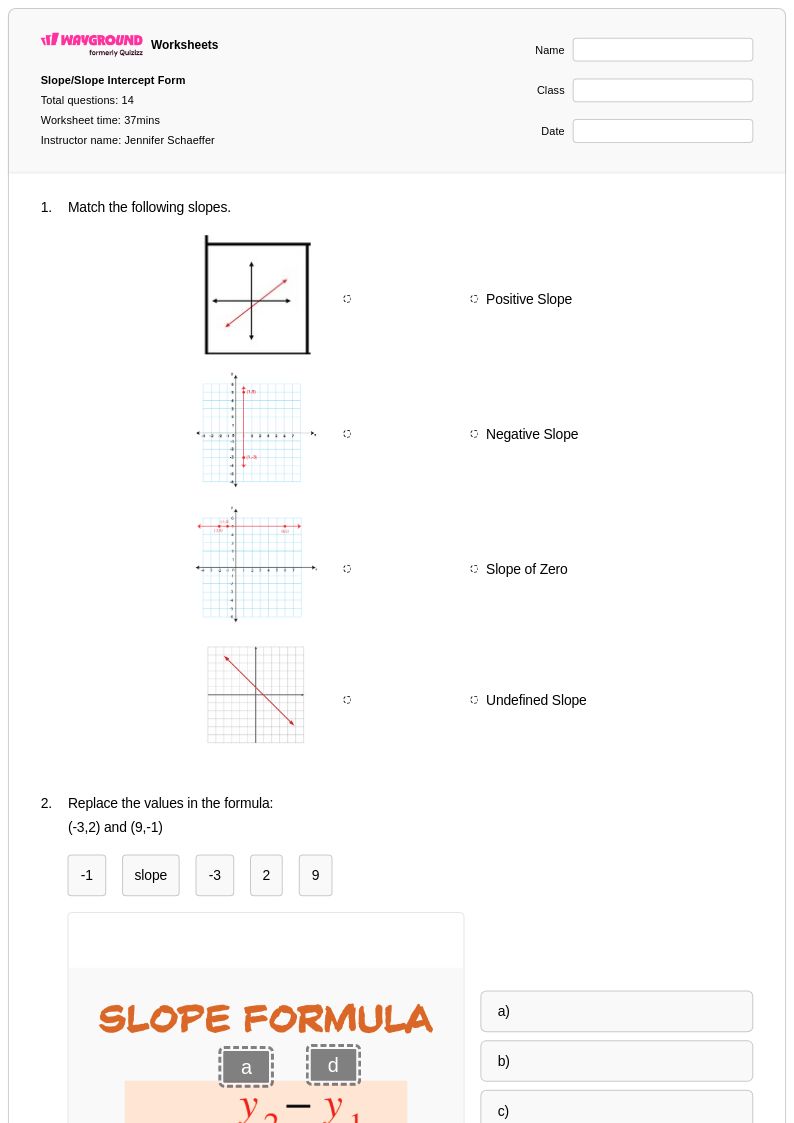
14 Q
9th - 12th
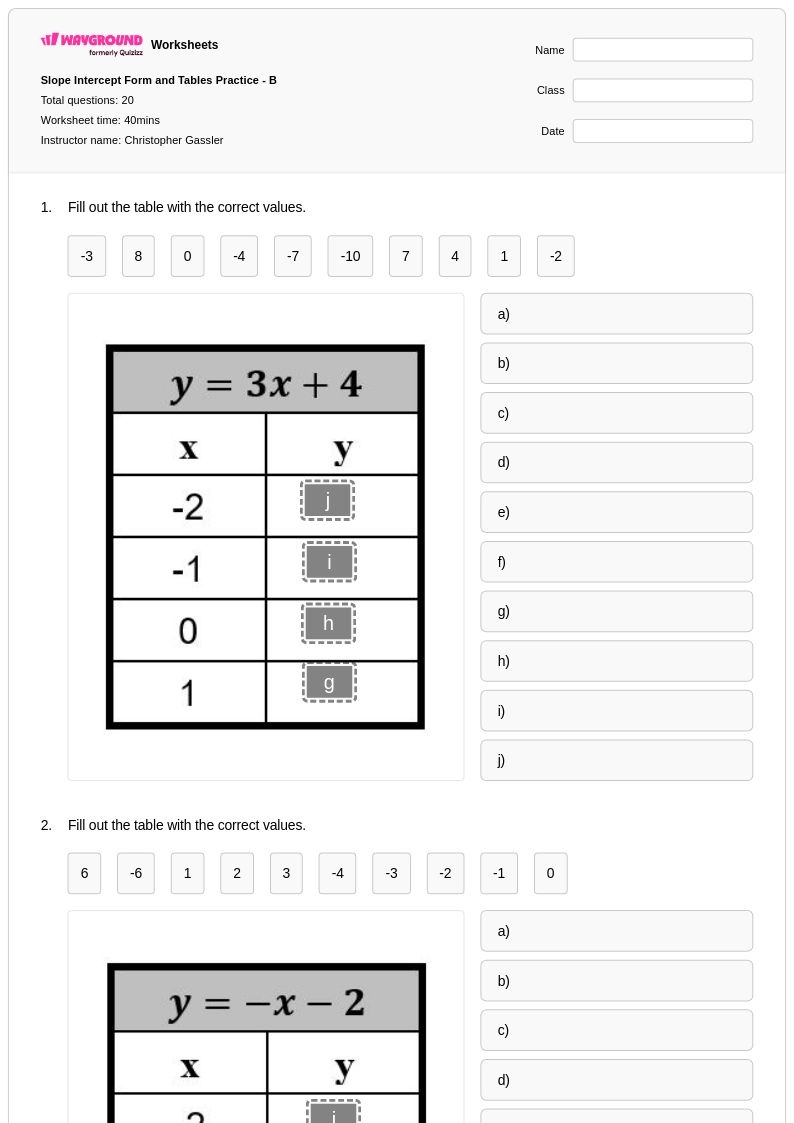
20 Q
9th
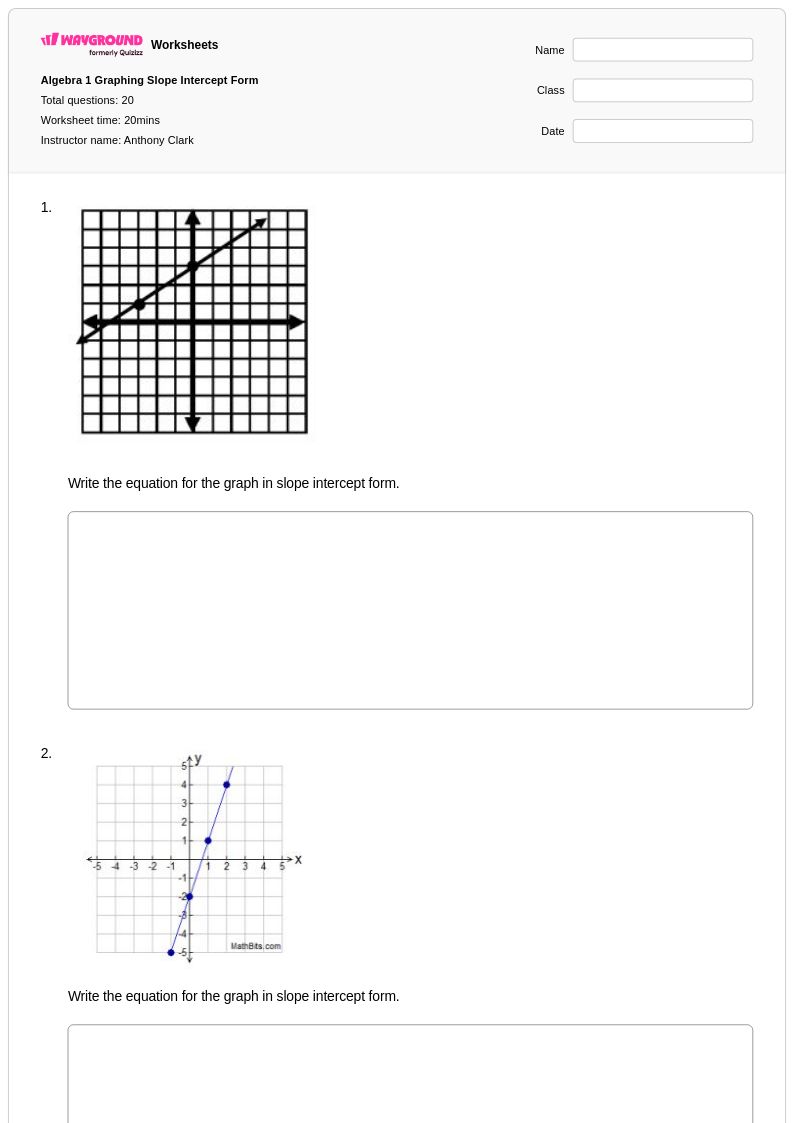
20 Q
9th - Uni
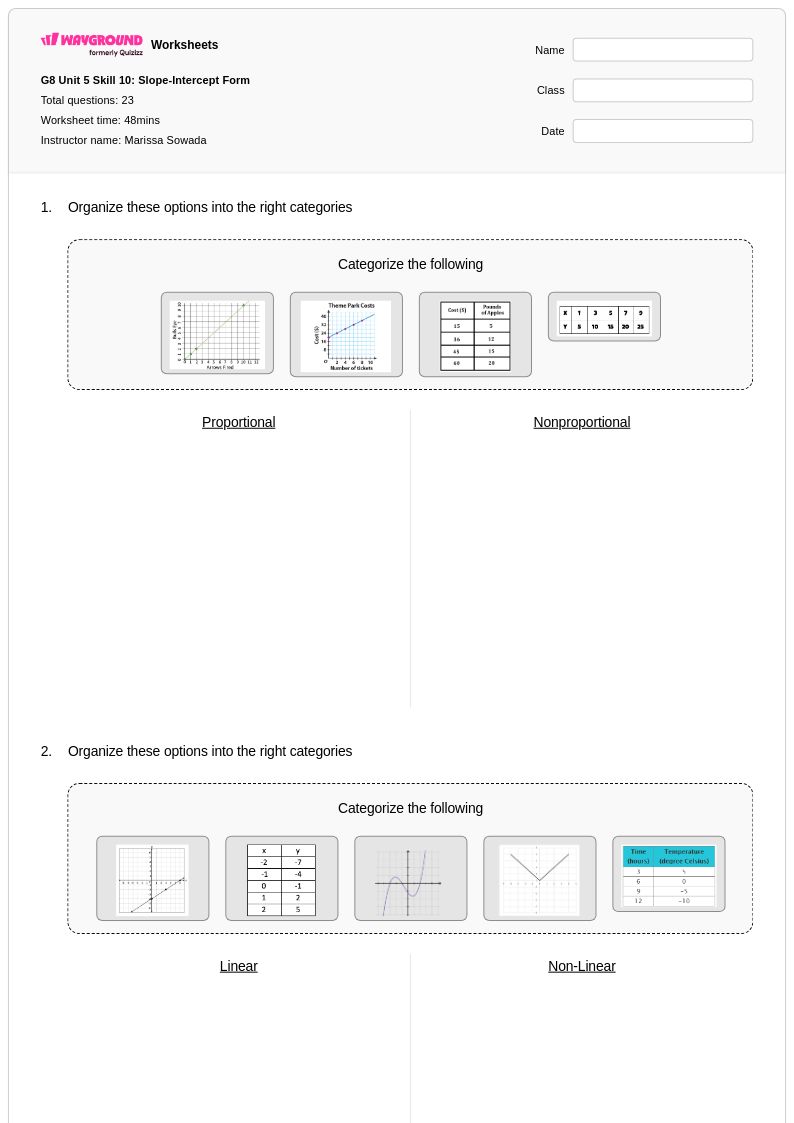
23 Q
8th
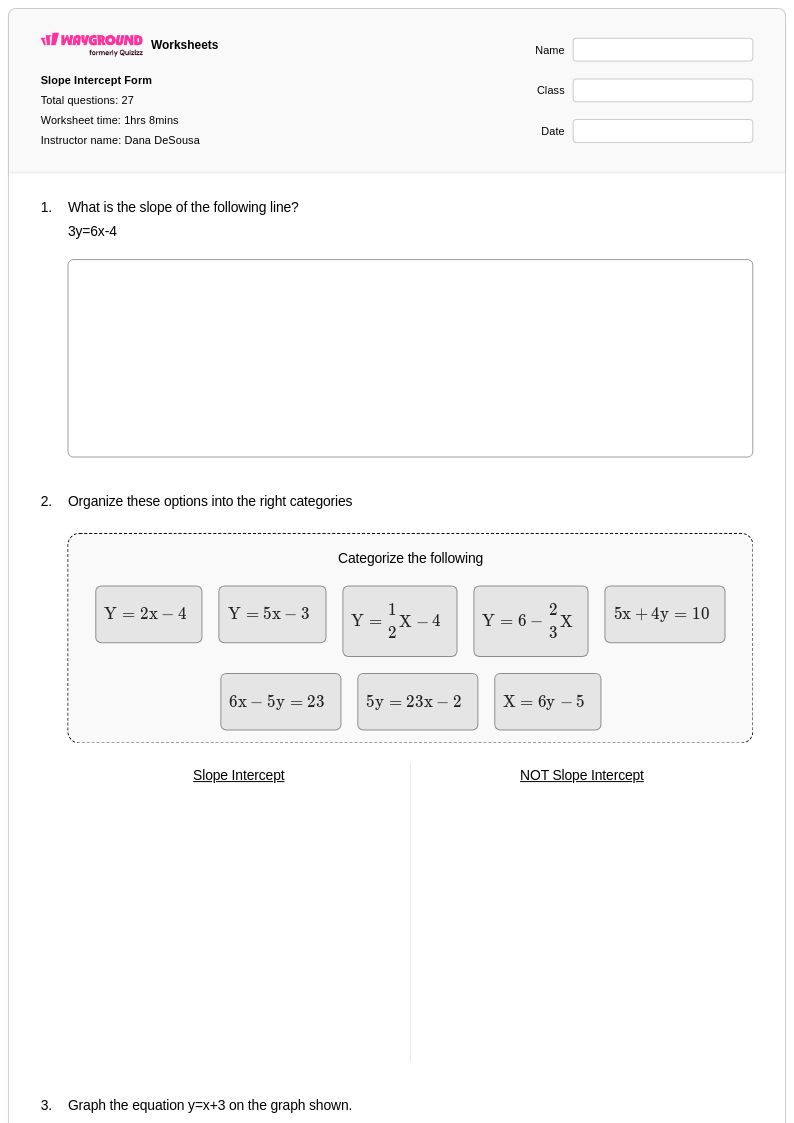
27 Q
10th
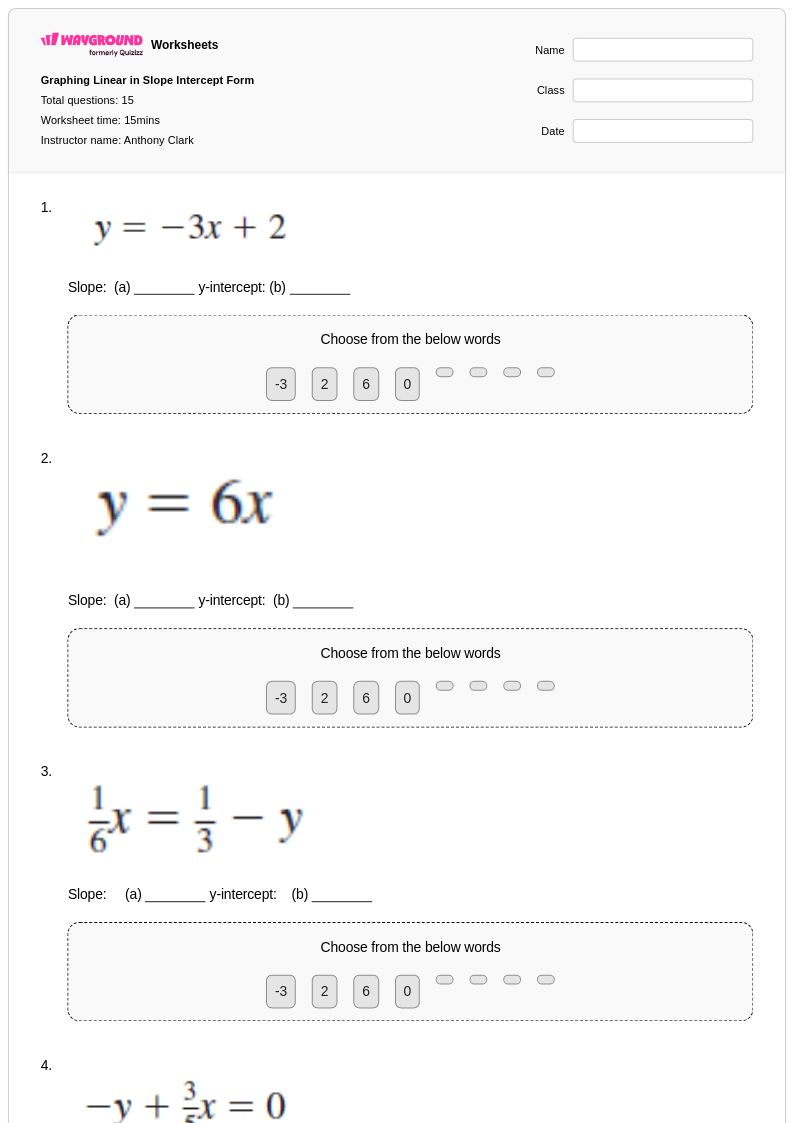
15 Q
9th - Uni
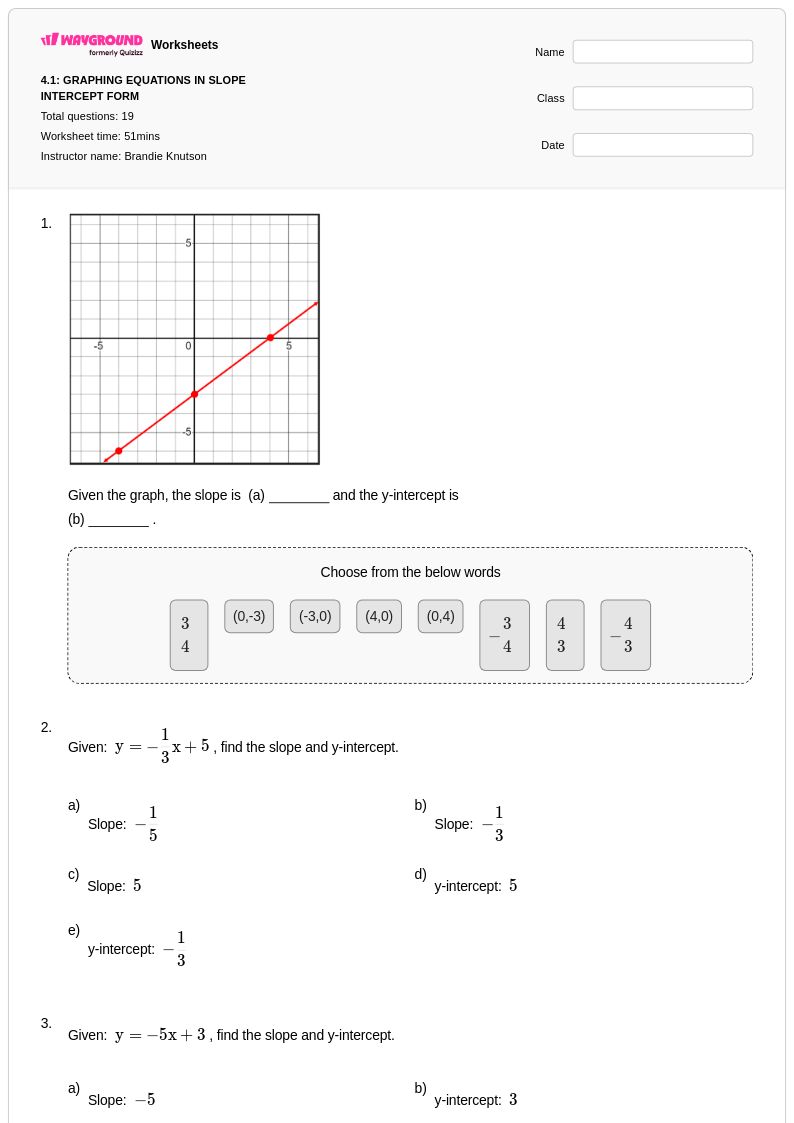
19 Q
9th
Explore Worksheets by Subjects
Explore printable Slope-intercept Form worksheets
Slope-intercept form worksheets available through Wayground (formerly Quizizz) provide comprehensive practice for students learning to work with linear equations in the format y = mx + b. These expertly designed resources strengthen essential algebraic skills including identifying slope and y-intercept values from equations, graphing linear functions using slope-intercept form, and converting between different representations of linear relationships. Students develop fluency in recognizing how the slope coefficient affects the steepness and direction of a line, while understanding how the y-intercept determines where the line crosses the vertical axis. Each worksheet collection includes detailed answer keys and is available as free printable PDFs, making it simple for educators to assign targeted practice problems that reinforce these foundational concepts in linear algebra.
Wayground (formerly Quizizz) supports mathematics teachers with millions of teacher-created slope-intercept form worksheet resources that feature robust search and filtering capabilities aligned to curriculum standards. The platform's differentiation tools allow educators to customize worksheets based on student ability levels, while flexible formatting options provide both printable and digital versions including downloadable PDFs for seamless classroom integration. These comprehensive collections enable teachers to efficiently plan instruction sequences that build conceptual understanding, provide targeted remediation for students struggling with linear equation concepts, and offer enrichment opportunities for advanced learners ready to explore more complex applications. The extensive variety of practice materials ensures that educators can consistently deliver engaging skill practice that meets diverse learning needs while maintaining alignment with mathematical standards and learning objectives.