Free Printable Solubility Rules Worksheets for Class 9
Master Class 9 solubility rules with Wayground's comprehensive collection of free chemistry worksheets, featuring printable PDFs, practice problems, and complete answer keys to strengthen students' understanding of compound dissolution patterns.
Explore printable Solubility Rules worksheets for Class 9
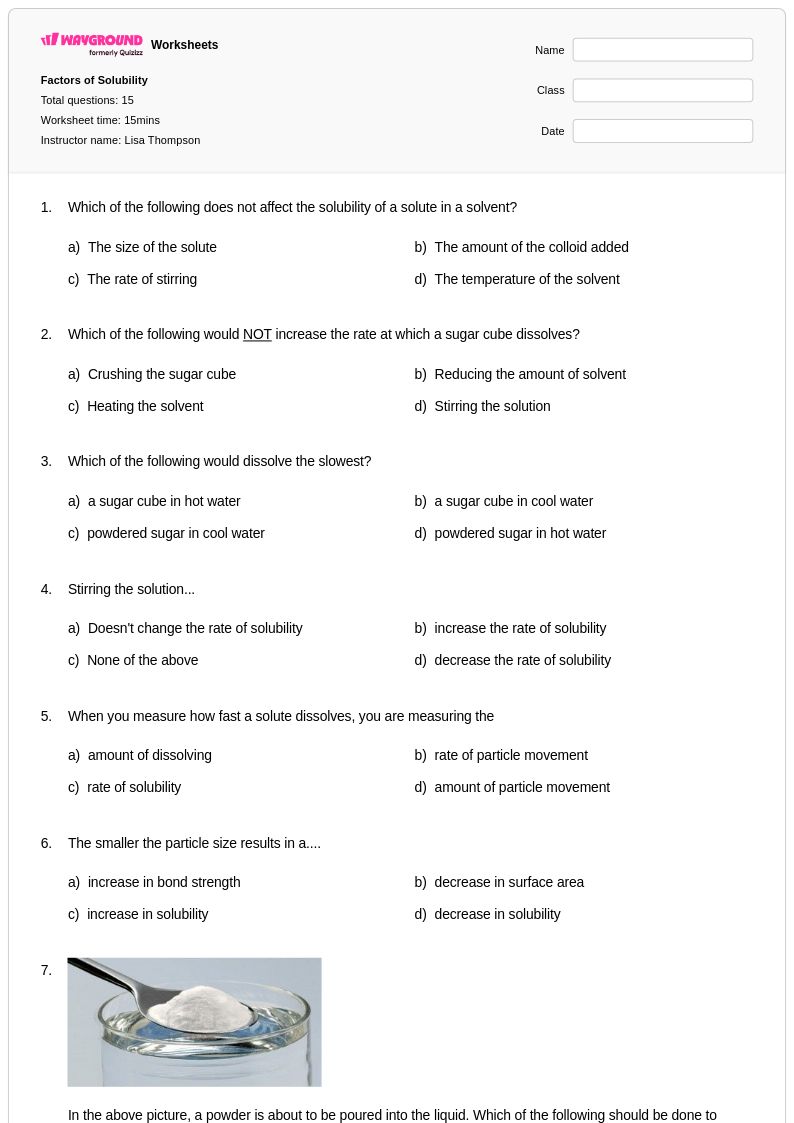
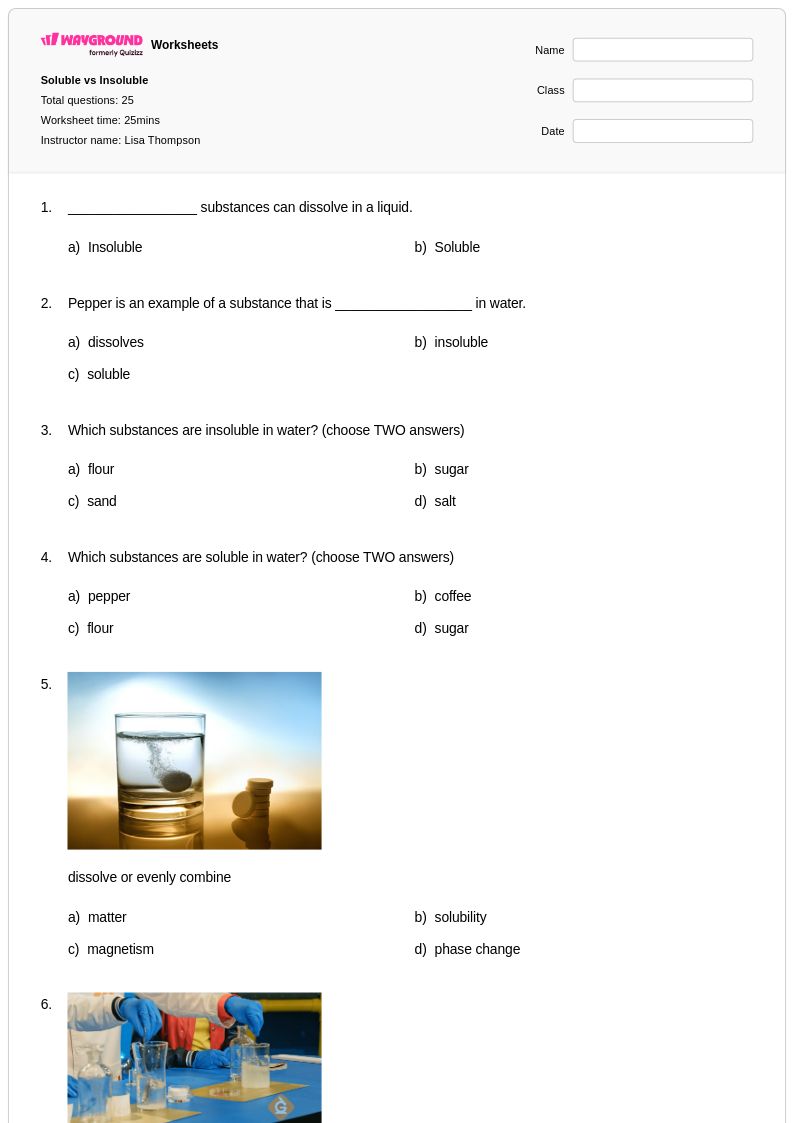
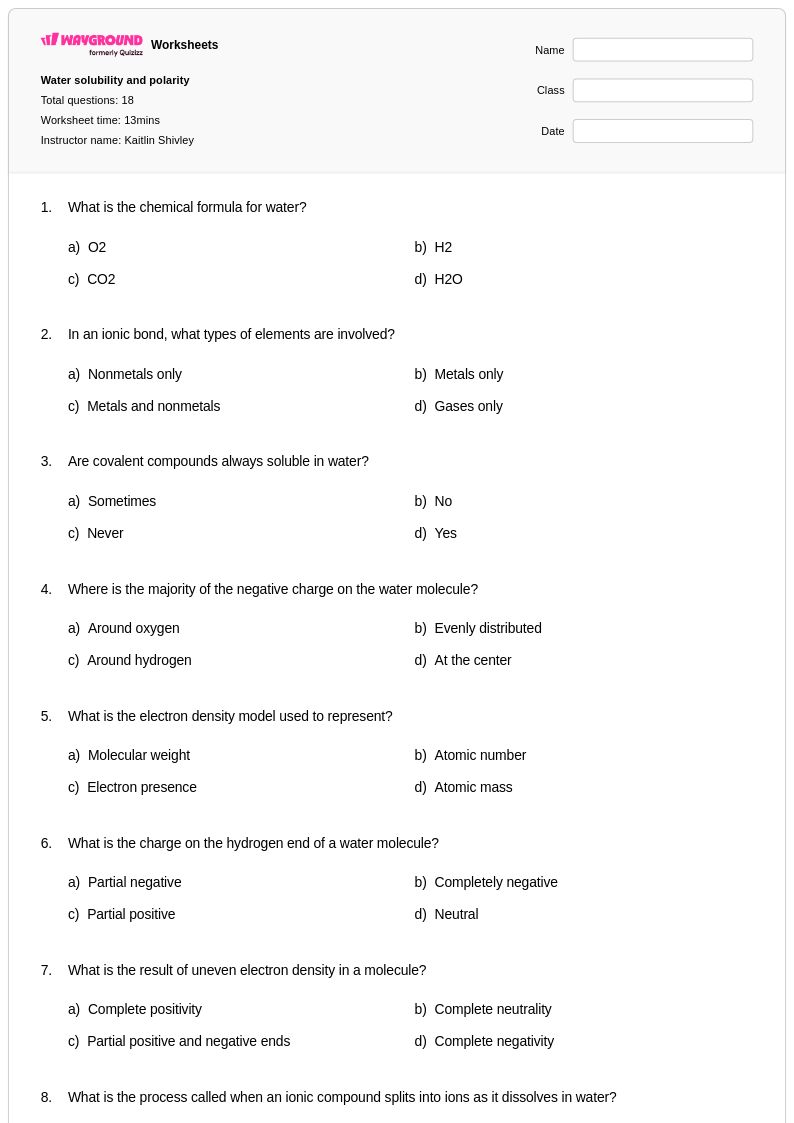
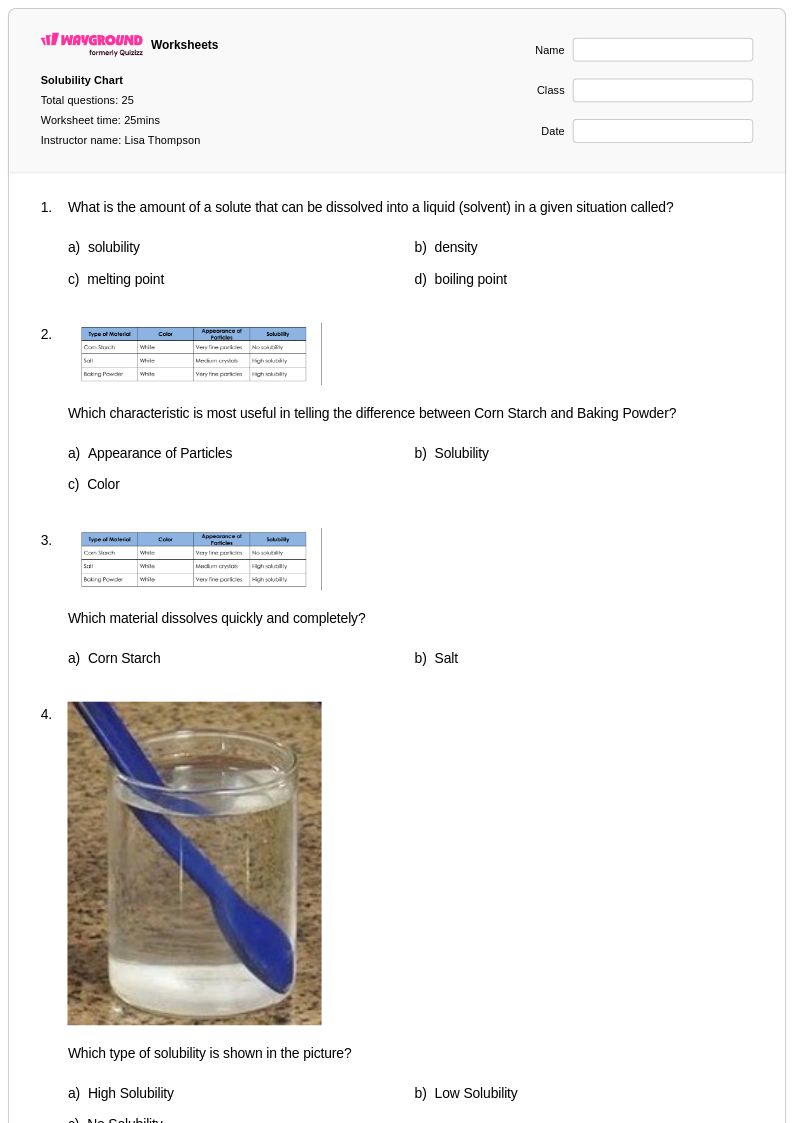
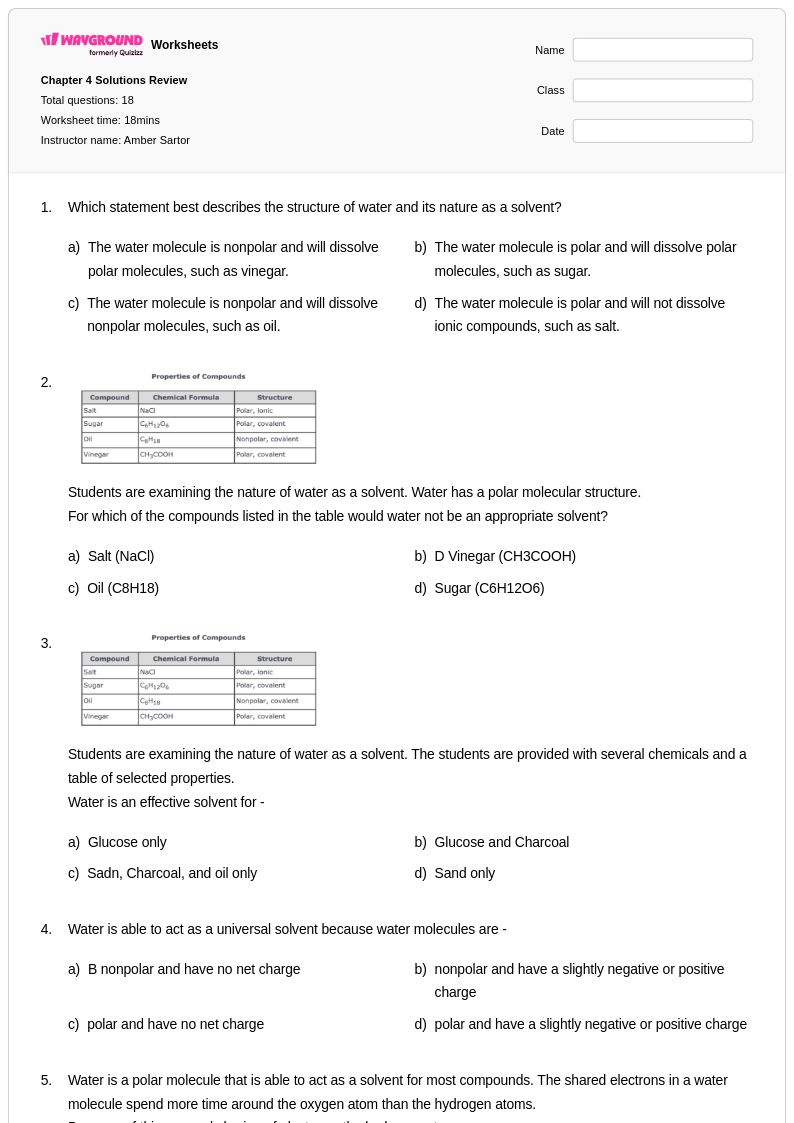
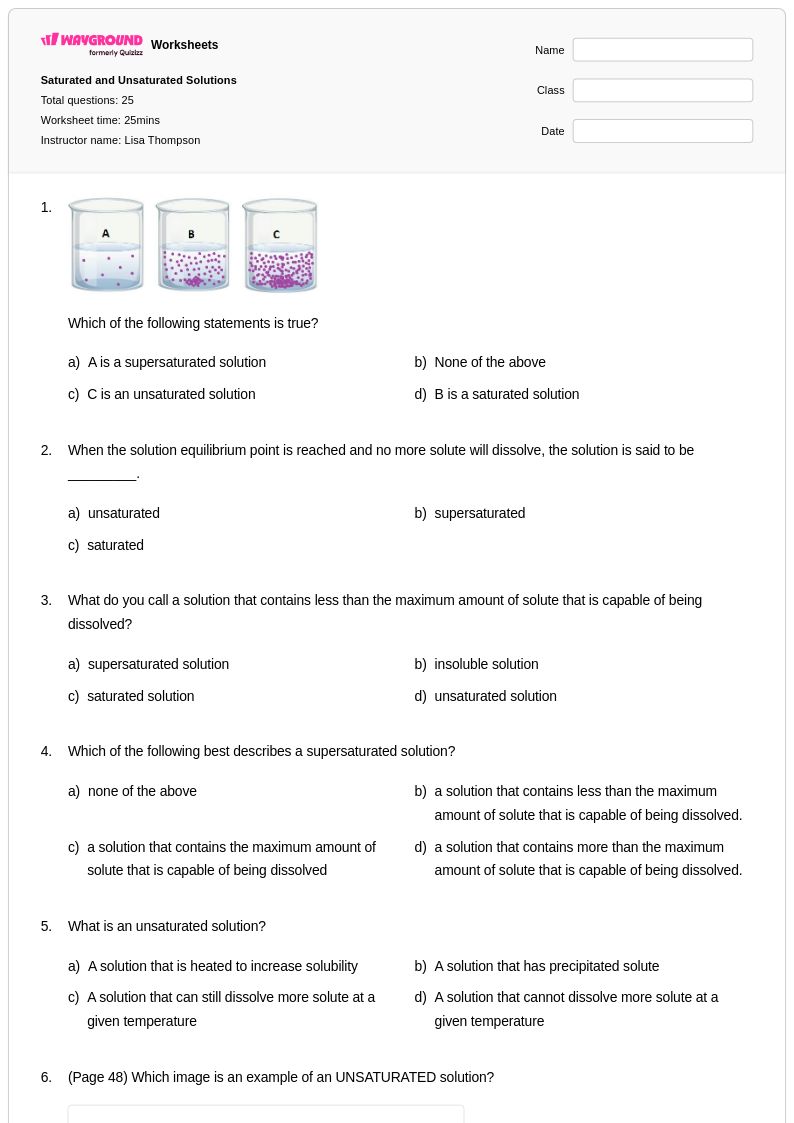
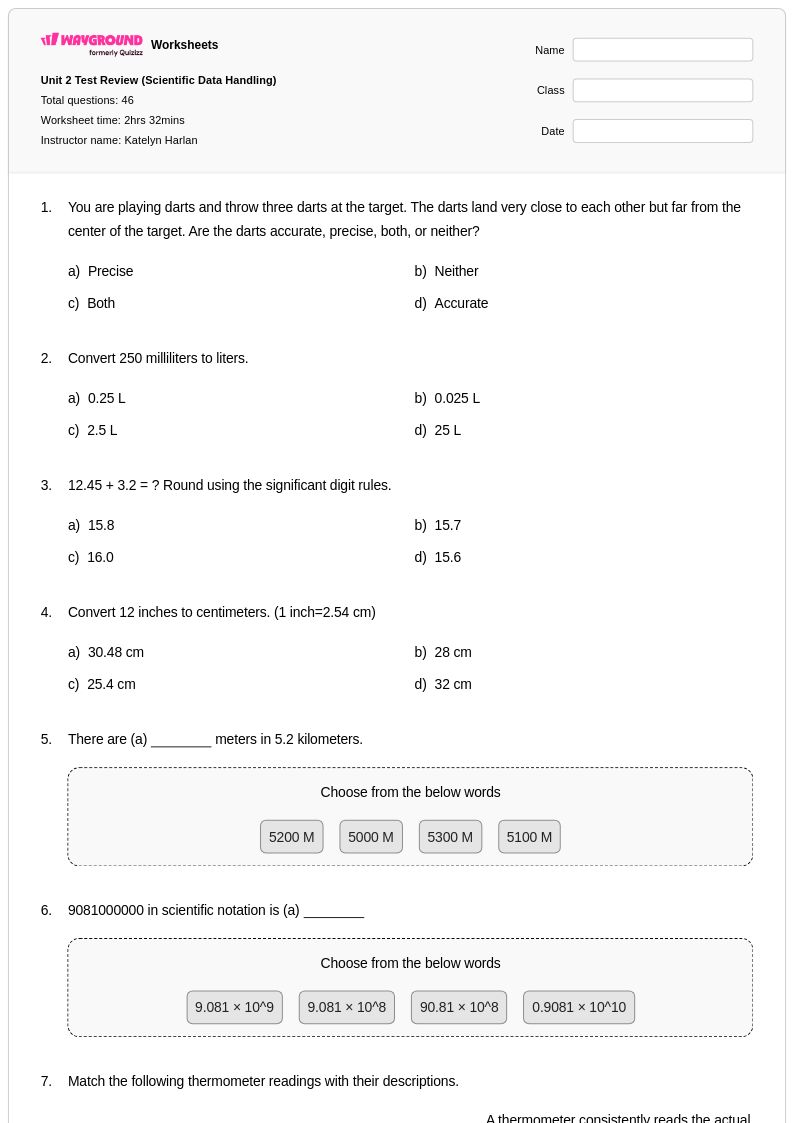
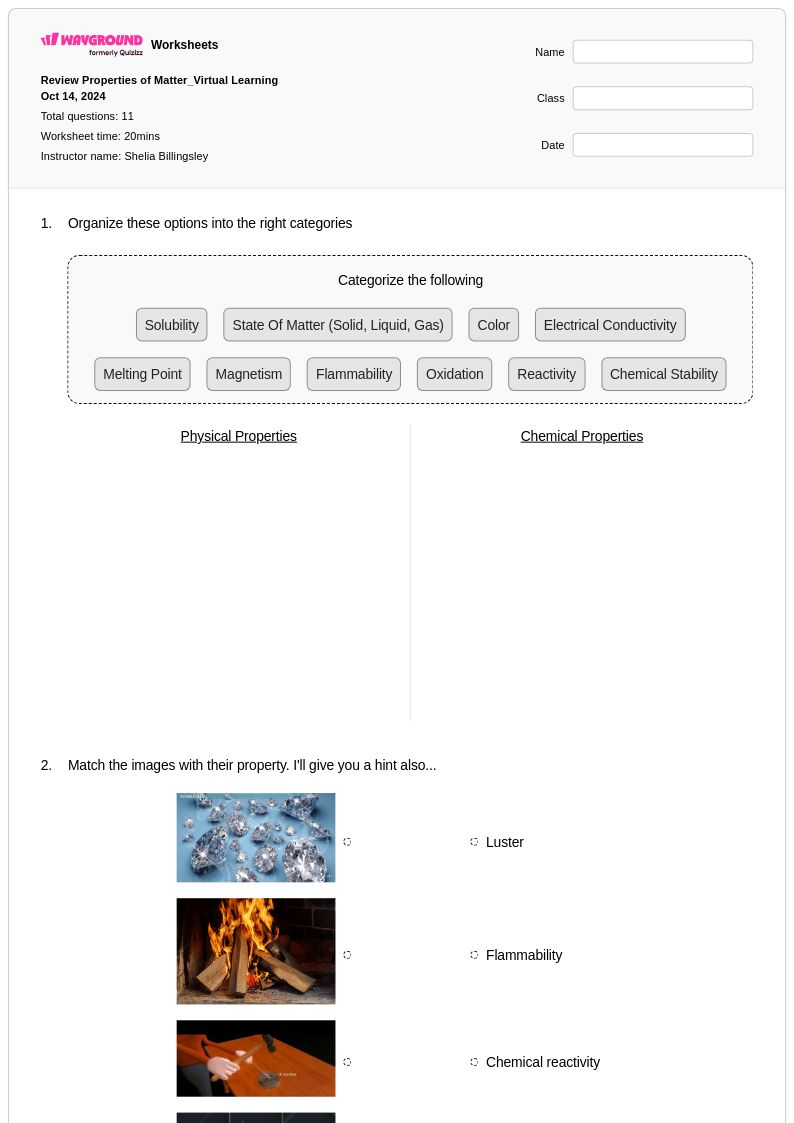
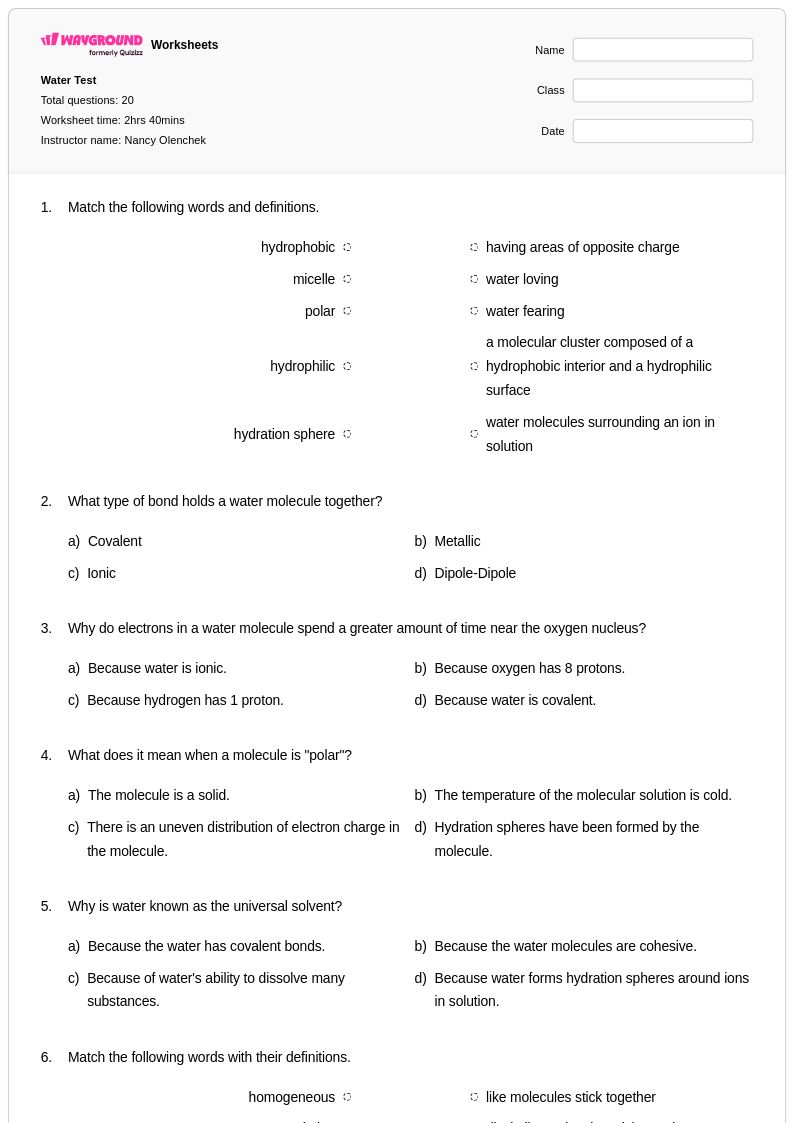
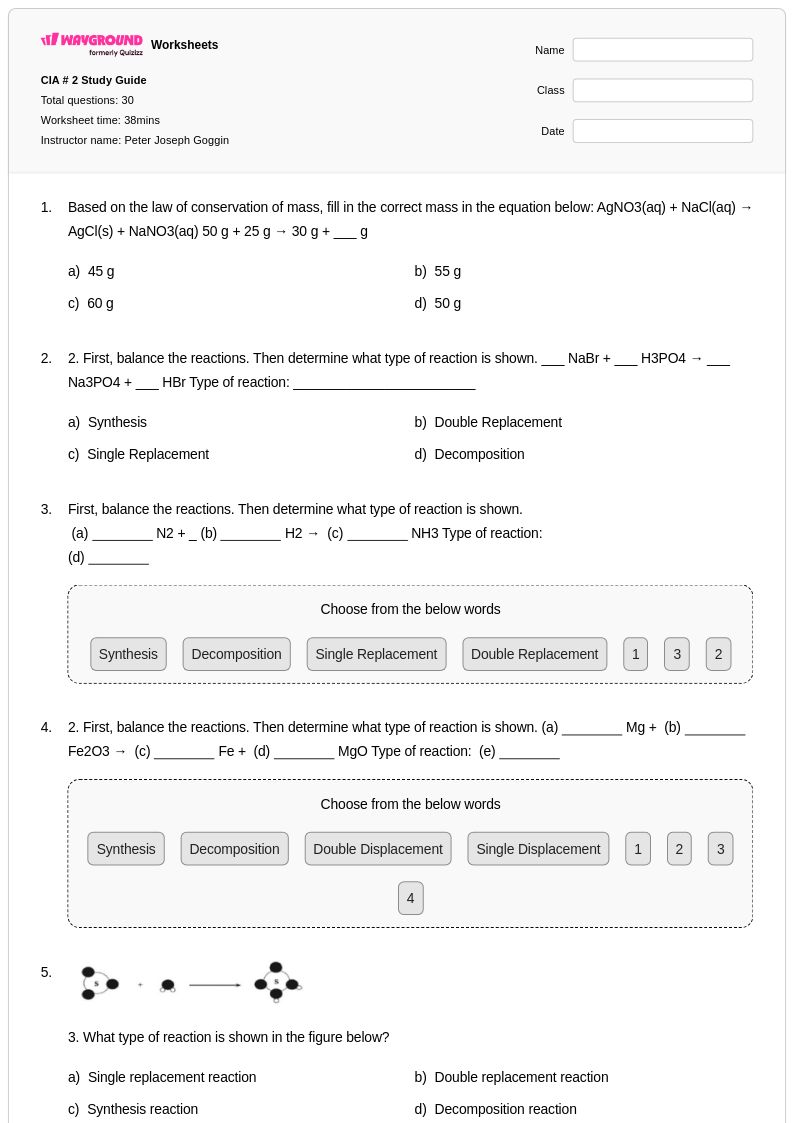
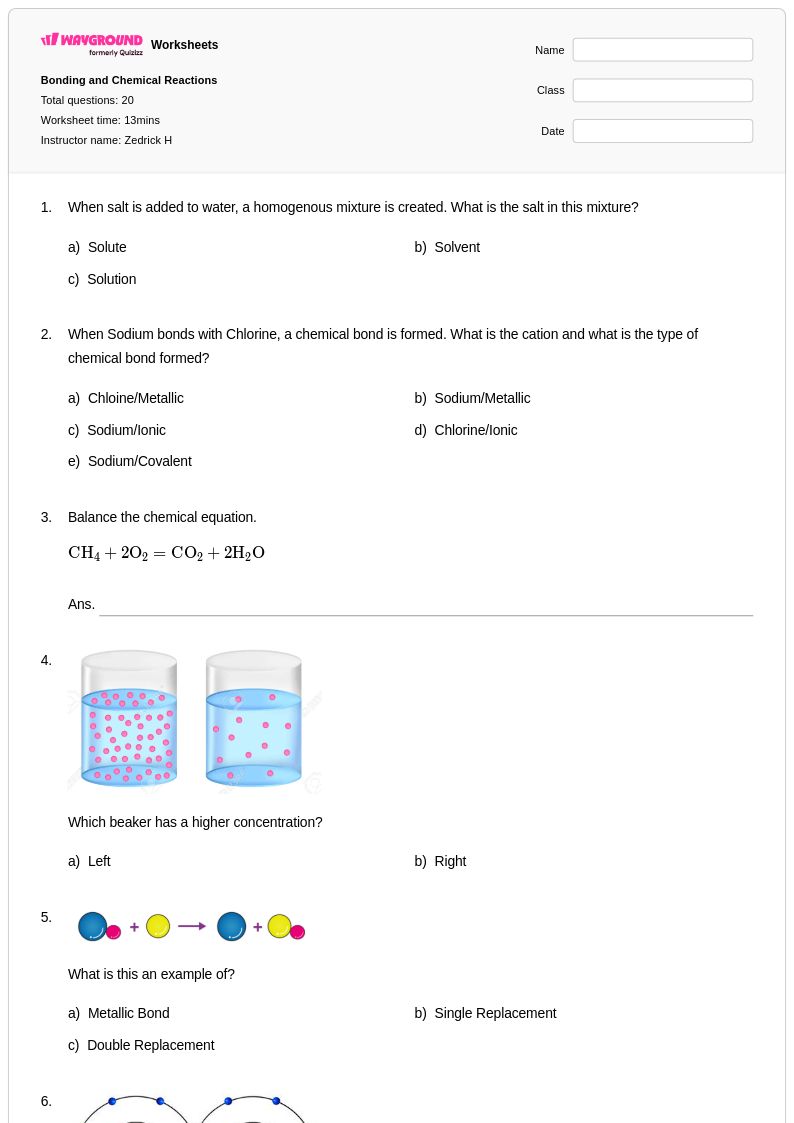
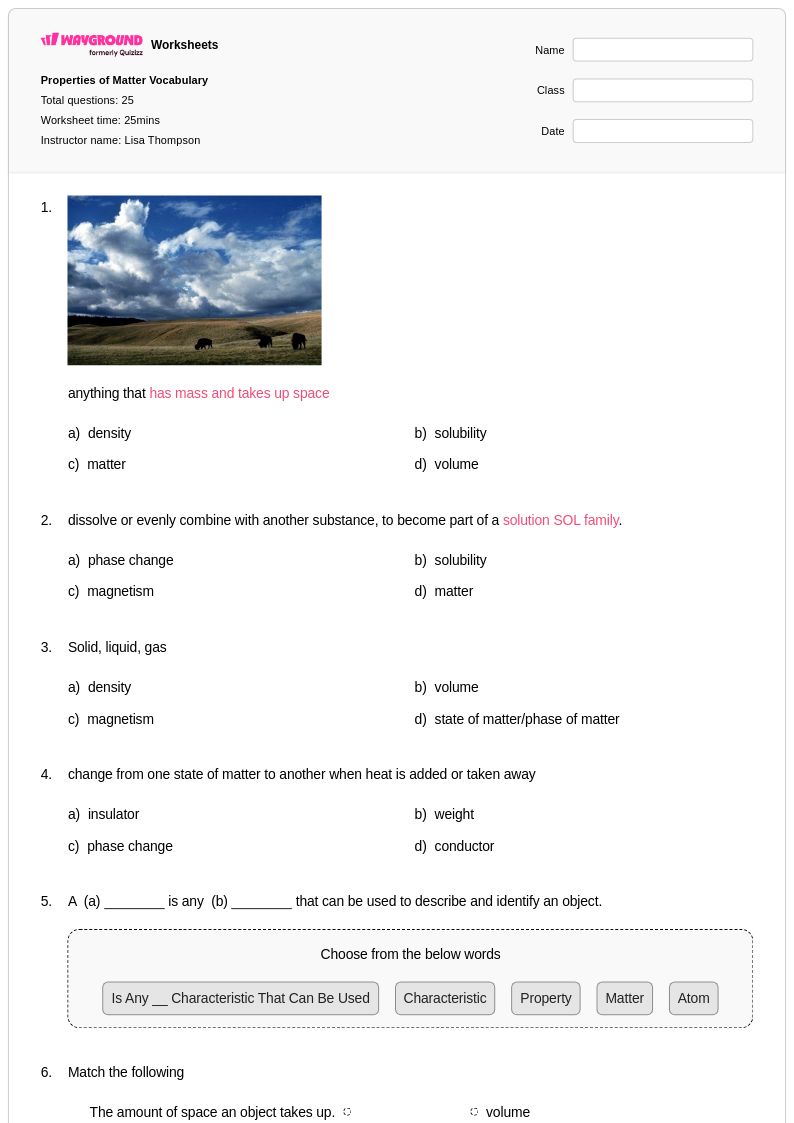
Solubility rules for Class 9 chemistry represent a fundamental concept that helps students predict whether ionic compounds will dissolve in water, forming the foundation for understanding precipitation reactions and solution chemistry. Wayground's comprehensive collection of solubility rules worksheets provides students with structured practice problems that reinforce memorization of key rules while developing analytical skills needed to apply these principles in various chemical scenarios. These free printable resources include detailed answer keys that allow students to check their understanding of which compounds are soluble, insoluble, or have exceptions to general patterns. The pdf worksheets progress from basic identification exercises to more complex problems involving net ionic equations and predicting the outcomes of double displacement reactions, ensuring students build confidence through systematic practice.
Wayground's extensive library of millions of teacher-created resources makes it effortless for educators to locate high-quality solubility rules materials that align with Class 9 chemistry standards and curriculum requirements. The platform's robust search and filtering capabilities enable teachers to quickly identify worksheets that match their specific instructional needs, whether for initial concept introduction, skill reinforcement, or assessment preparation. These versatile materials are available in both printable and digital formats, supporting flexible classroom implementation and accommodating diverse learning preferences. Teachers can easily customize existing worksheets or combine multiple resources to create differentiated assignments that provide appropriate challenge levels for struggling learners who need additional practice with basic solubility patterns, as well as advanced students ready for complex multi-step precipitation problems and real-world applications.
FAQs
How do I teach solubility rules to chemistry students?
Effective solubility rules instruction begins with teaching the broad, high-probability rules first — such as all nitrates and alkali metal compounds are soluble — before introducing exceptions like silver chloride and lead iodide. Once students have a working framework, structured practice with compound formulas helps them apply multiple rules in sequence rather than guessing. Moving from memorization exercises to precipitation reaction predictions reinforces the rules in an applied context, which deepens retention.
What exercises help students practice solubility rules?
The most effective practice exercises for solubility rules require students to analyze ionic compound formulas and determine solubility by systematically applying rules in order of priority. Precipitation reaction prediction problems are especially useful because they demand that students apply two solubility determinations simultaneously — one for each potential product. Multi-step problems involving net ionic equations extend this further and prepare students for more advanced aqueous chemistry.
What mistakes do students commonly make when applying solubility rules?
The most common error is treating exceptions as general rules — for example, assuming all chlorides are insoluble after learning that silver chloride is. Students also frequently apply rules out of priority order, which leads to incorrect predictions when a compound falls under more than one category. A third persistent mistake is misidentifying the ions in a formula, which undermines every subsequent step of the solubility determination.
How can I differentiate solubility rules instruction for students at different levels?
For students who are still building fluency, start with worksheets focused on memorizing core rules using straightforward, single-category compounds before introducing exceptions or multi-rule scenarios. More advanced students benefit from problems that require predicting precipitation reactions and writing net ionic equations, which demand higher-order application of the same rules. On Wayground, teachers can also apply accommodations such as read aloud support or reduced answer choices for individual students who need additional scaffolding, without affecting the experience of the rest of the class.
How do I use Wayground's solubility rules worksheets in my classroom?
Wayground's solubility rules worksheets are available as free printable PDFs for traditional classroom use and in digital formats for technology-integrated environments, giving teachers flexibility in how they deploy them. Teachers can also host worksheets as a quiz directly on Wayground, making it easy to assign practice digitally and track student responses. Each worksheet includes a complete answer key, which supports both teacher-led instruction and independent student practice.
How do solubility rules connect to precipitation reactions?
Predicting precipitation reactions is a direct application of solubility rules: when two aqueous ionic solutions are mixed, a precipitate forms only if one of the potential ionic products is insoluble according to the solubility rules. Students must determine the solubility of each possible product compound, which requires applying multiple rules in sequence. This connection makes solubility rules practice foundational for understanding net ionic equations and broader aqueous reaction chemistry.