Free Printable Activity Series Worksheets for Grade 11
Enhance your Grade 11 chemistry understanding with Wayground's comprehensive activity series worksheets, featuring free printables, practice problems, and answer keys to master metal reactivity patterns and electrochemical concepts.
Explore printable Activity Series worksheets for Grade 11
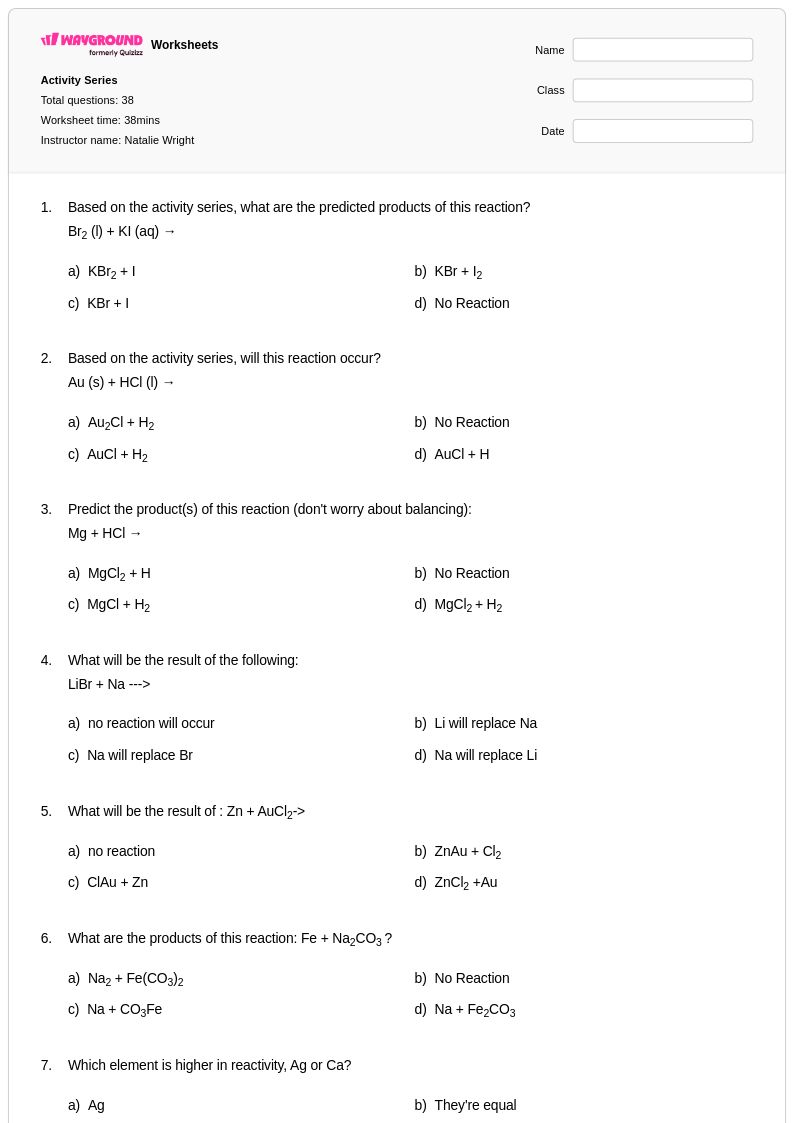
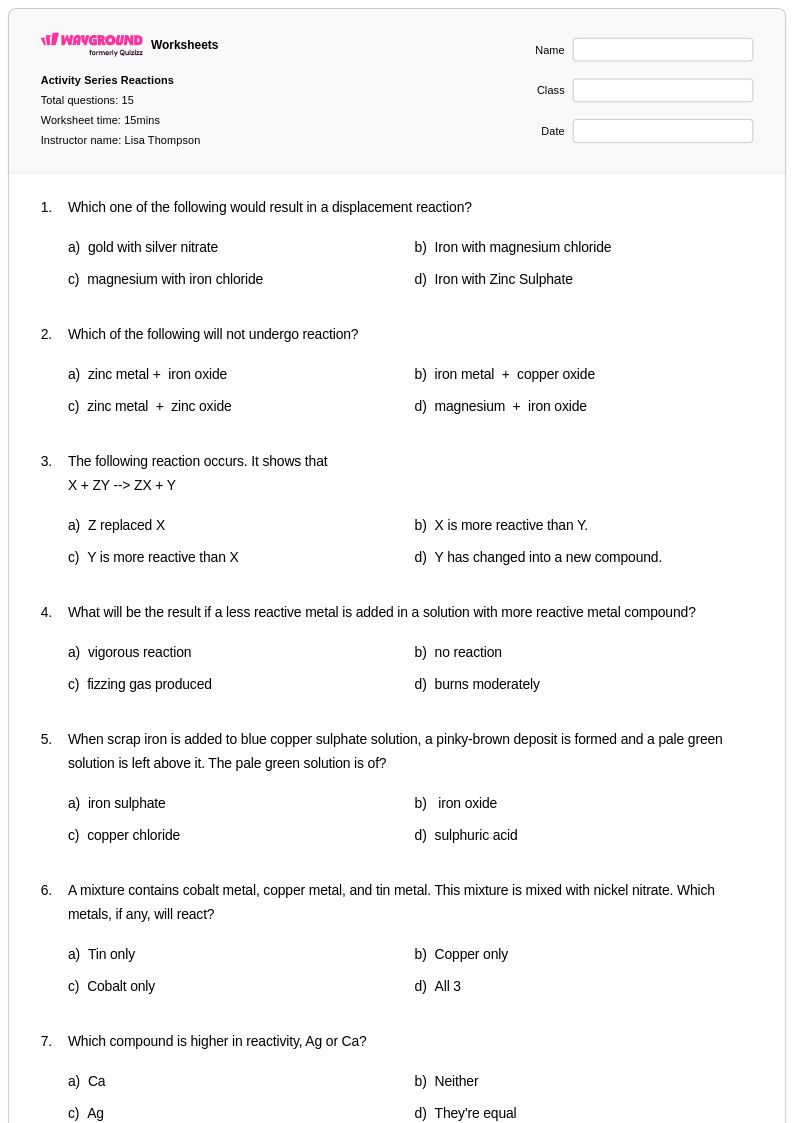
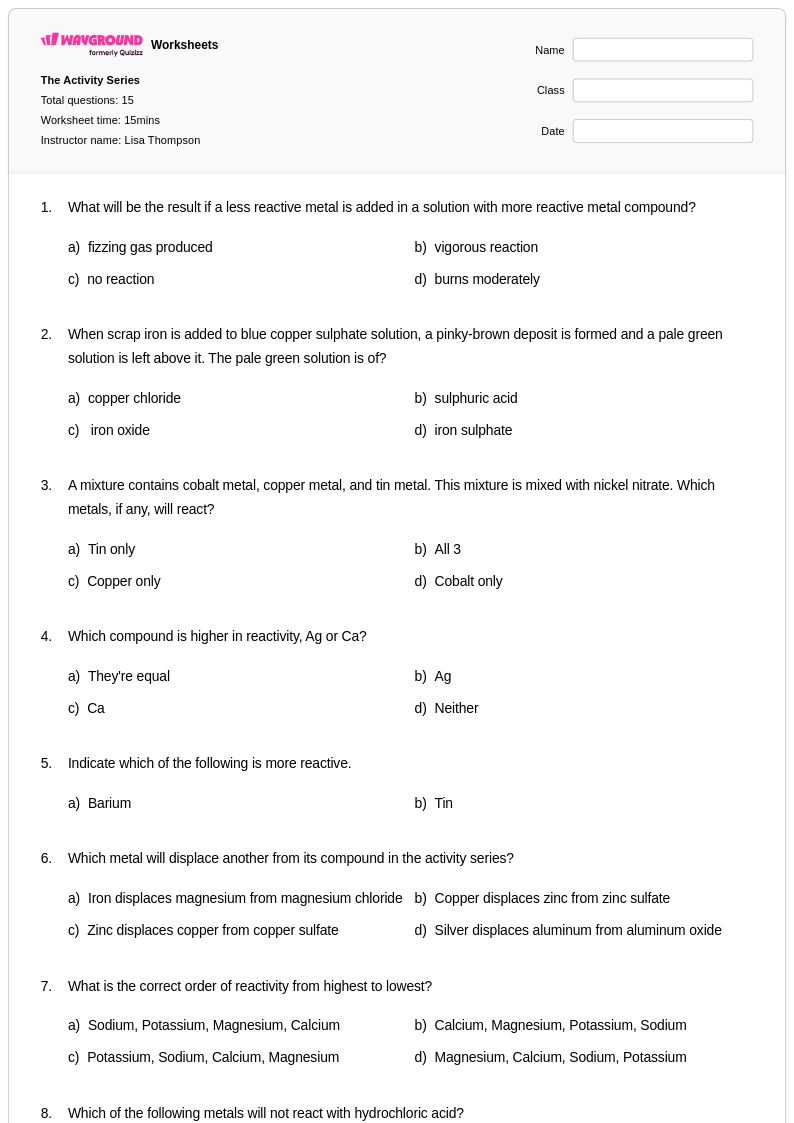
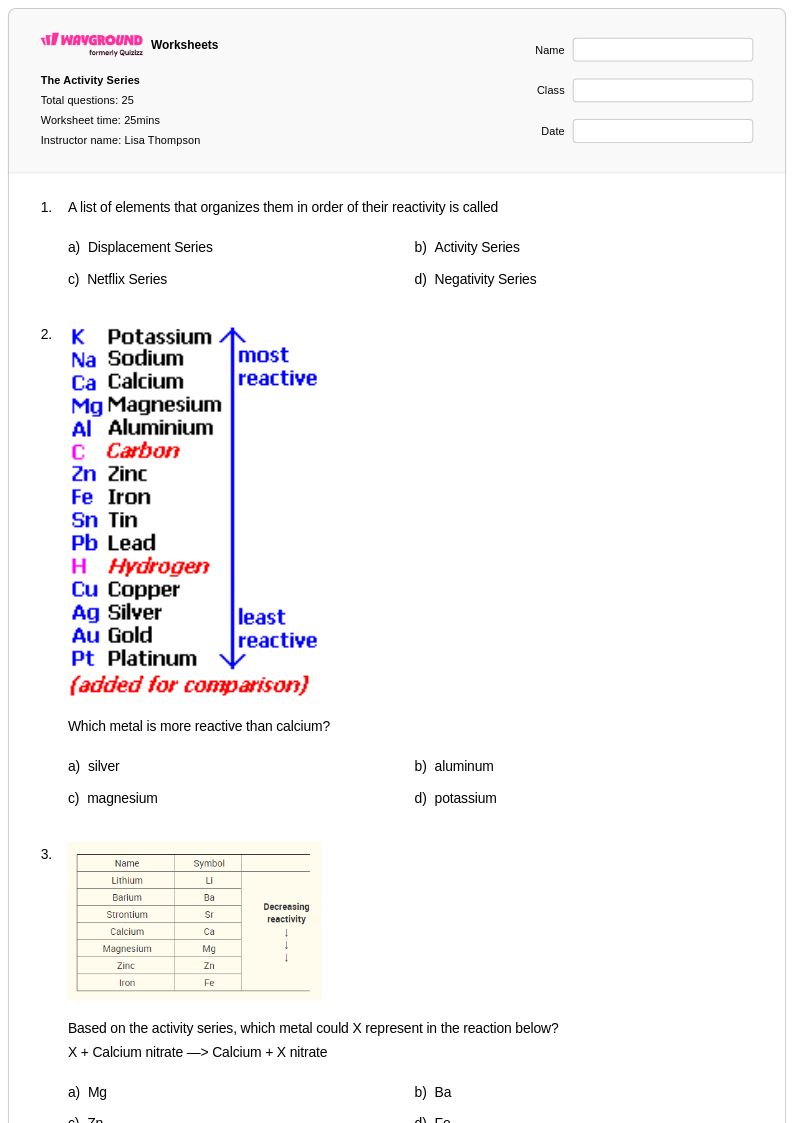
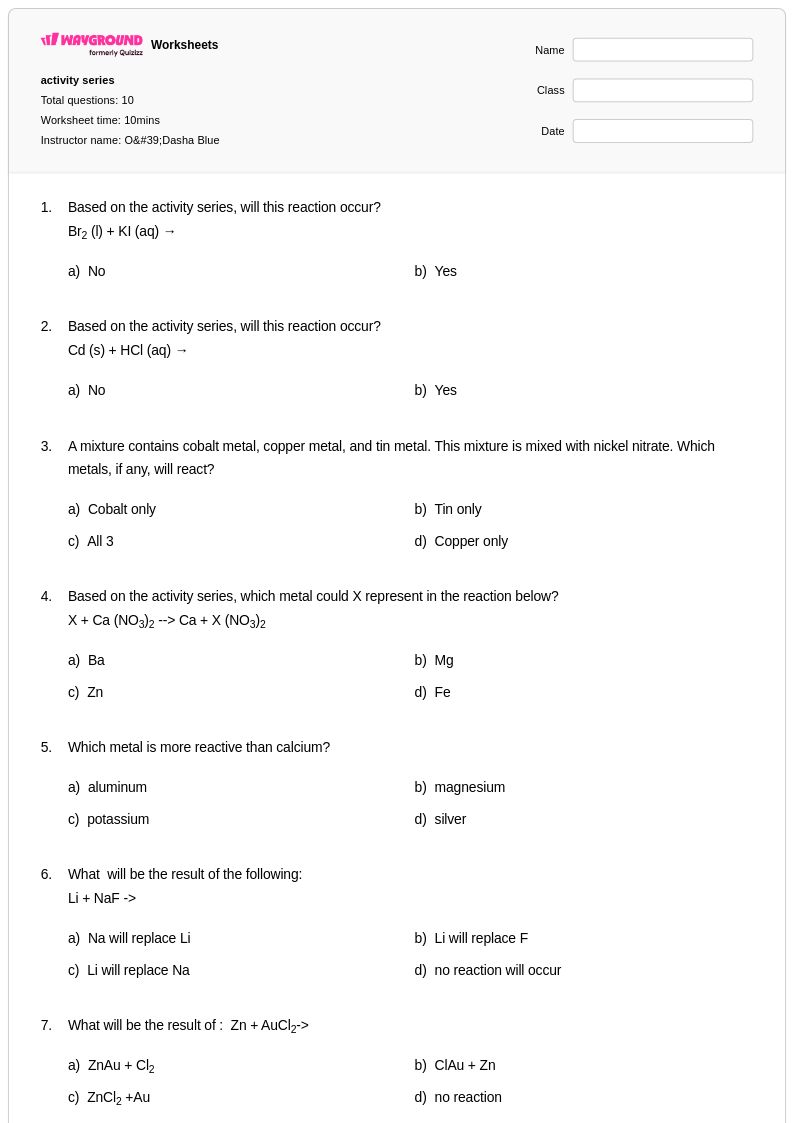
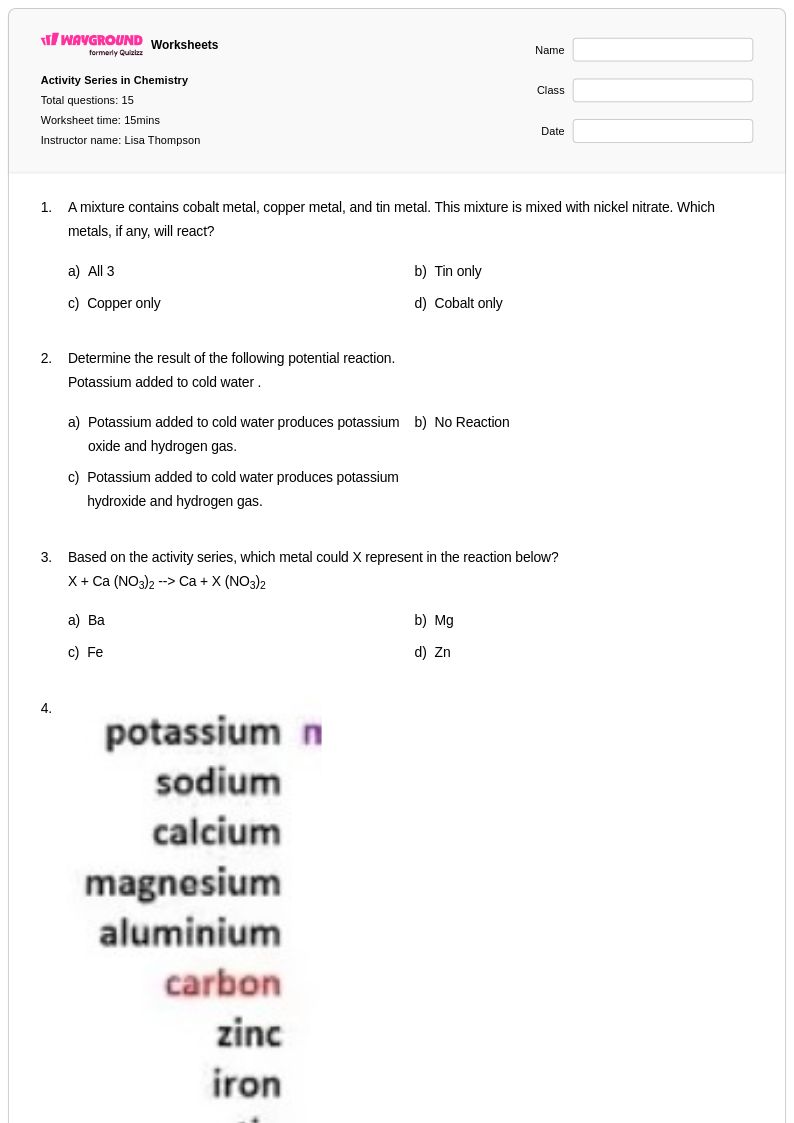
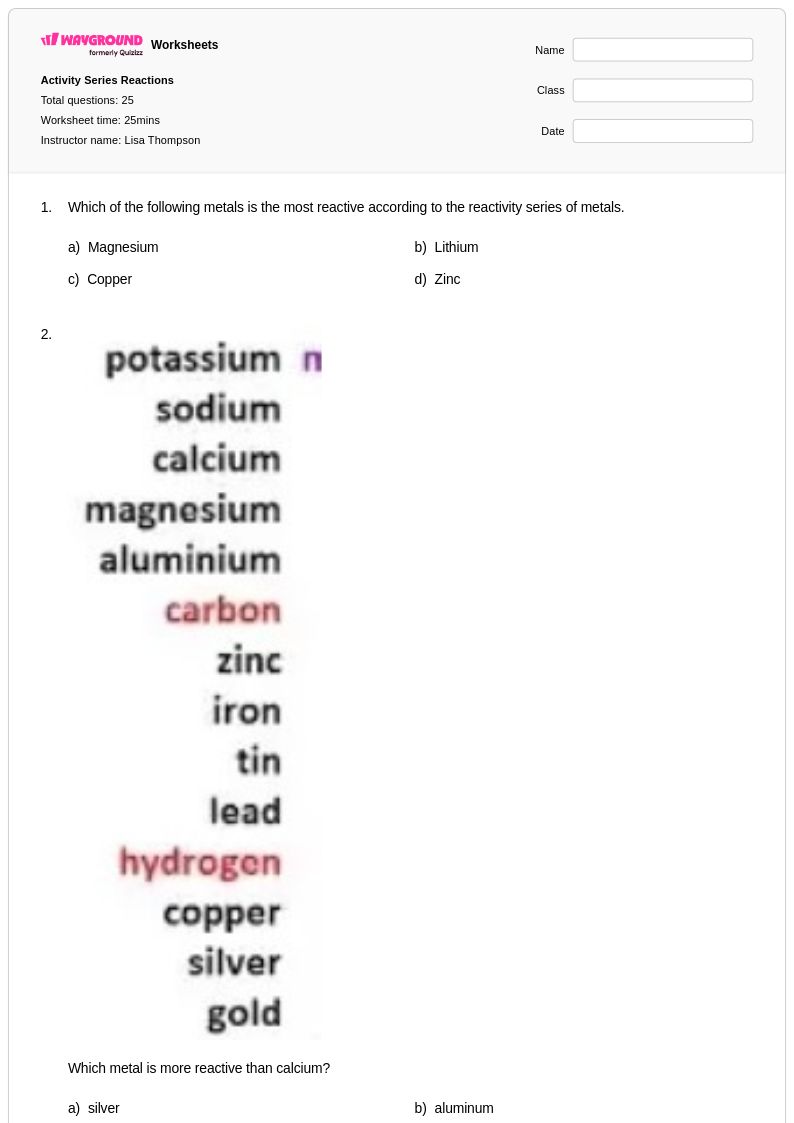
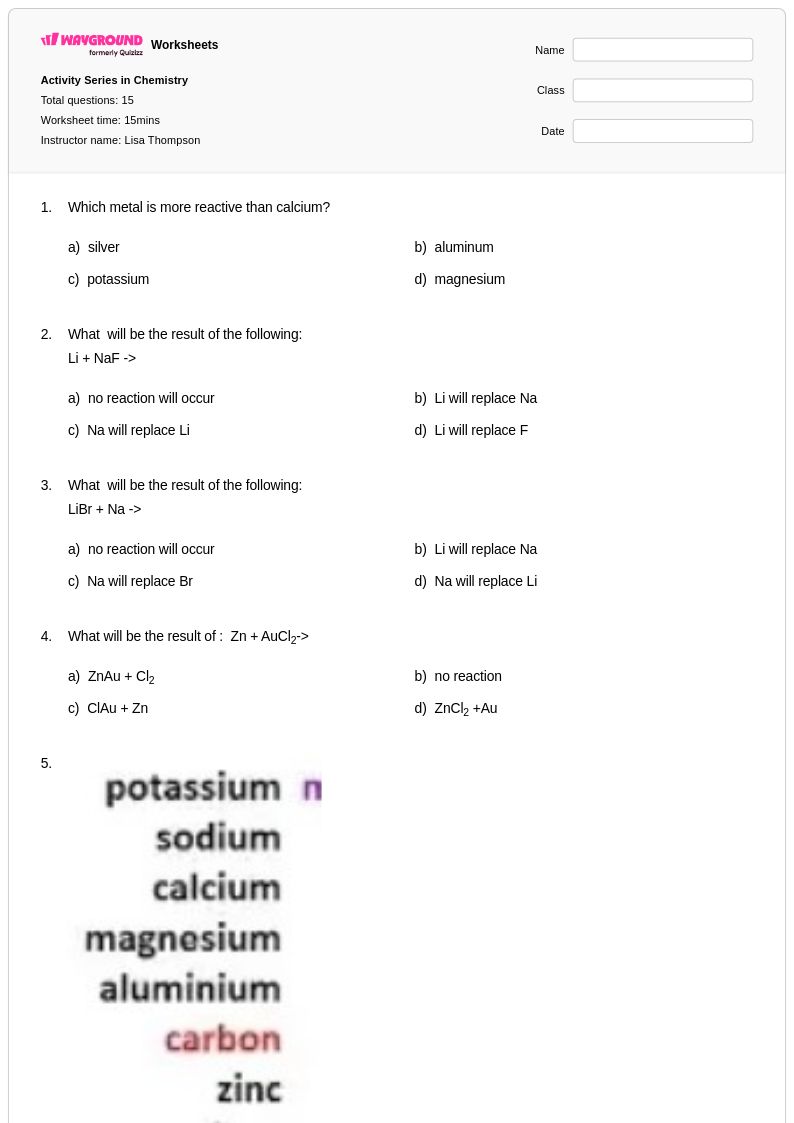
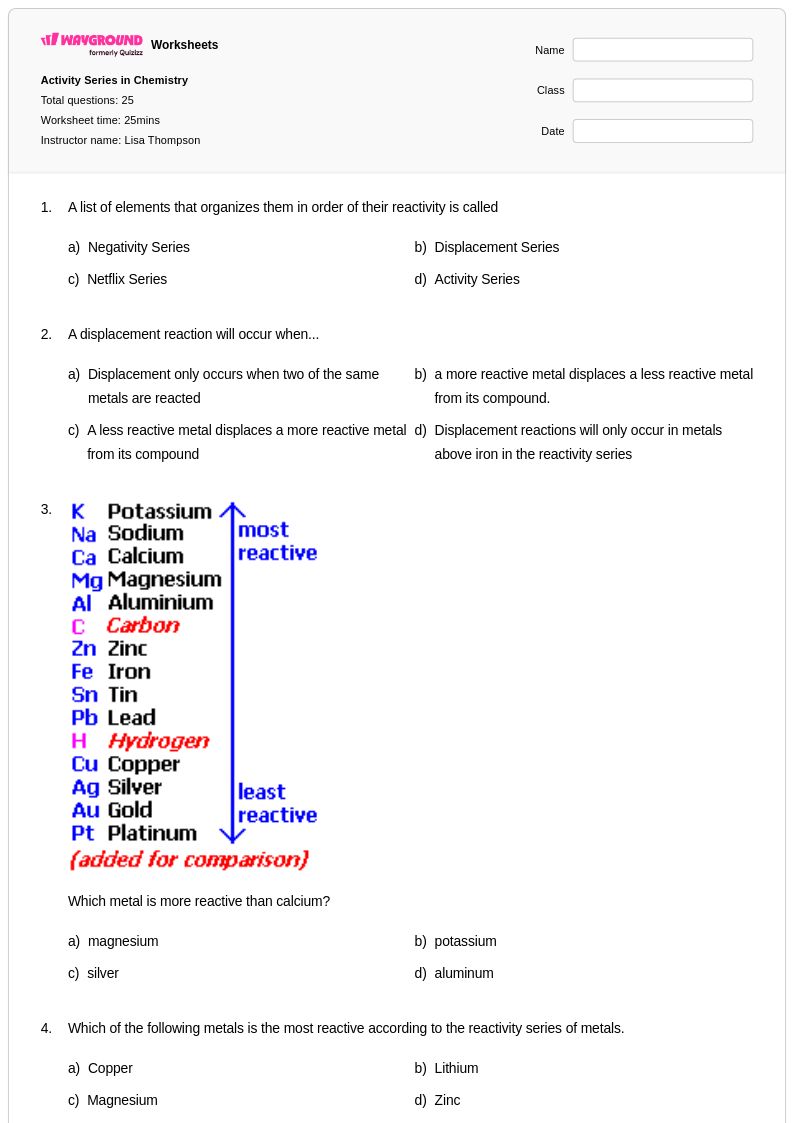
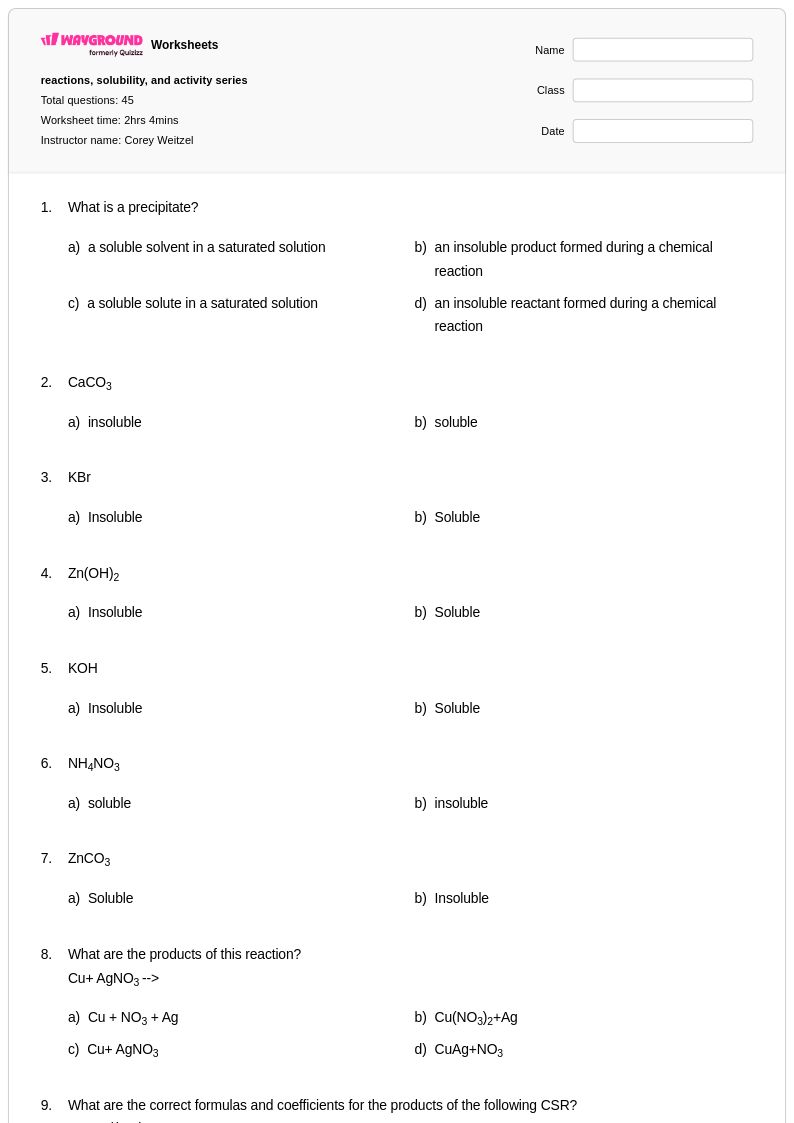
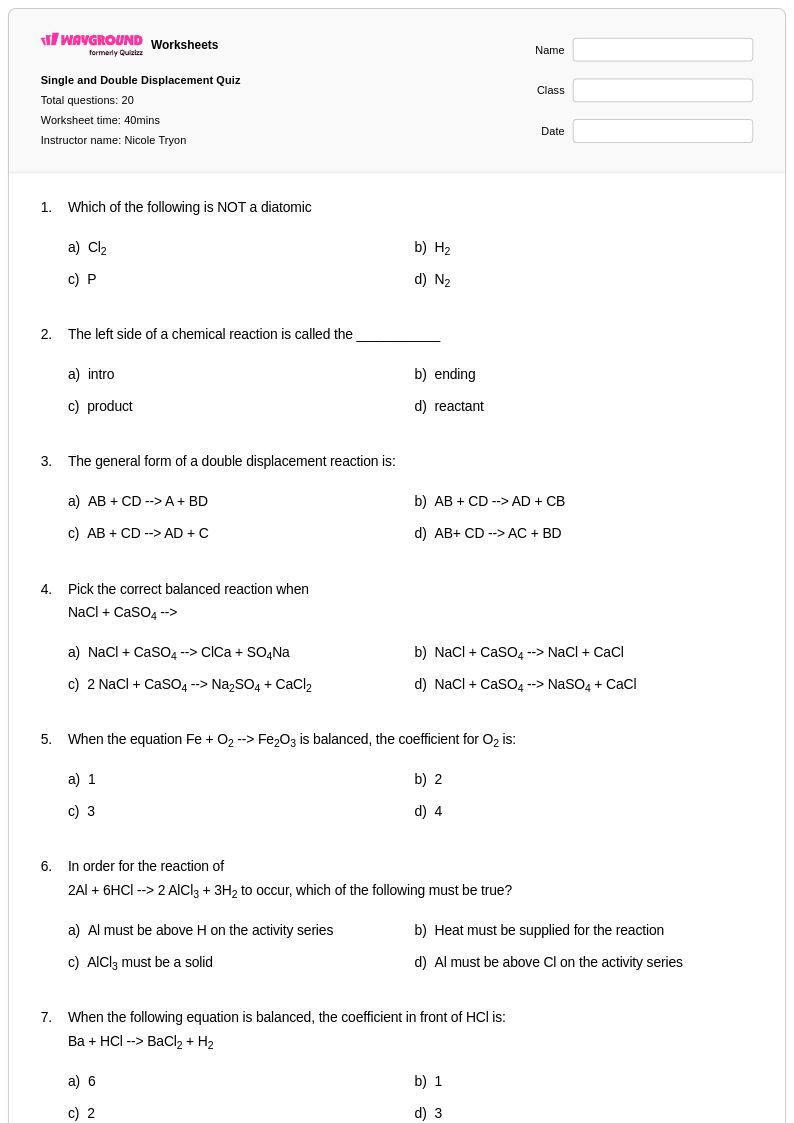
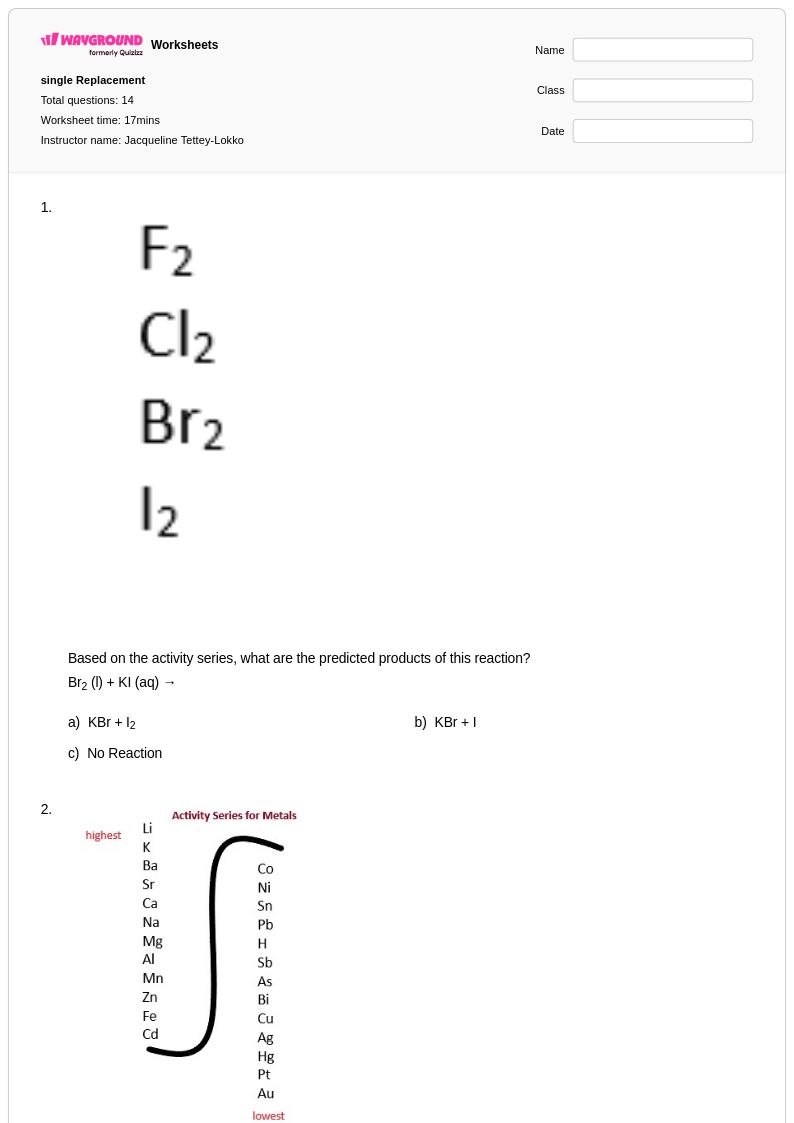
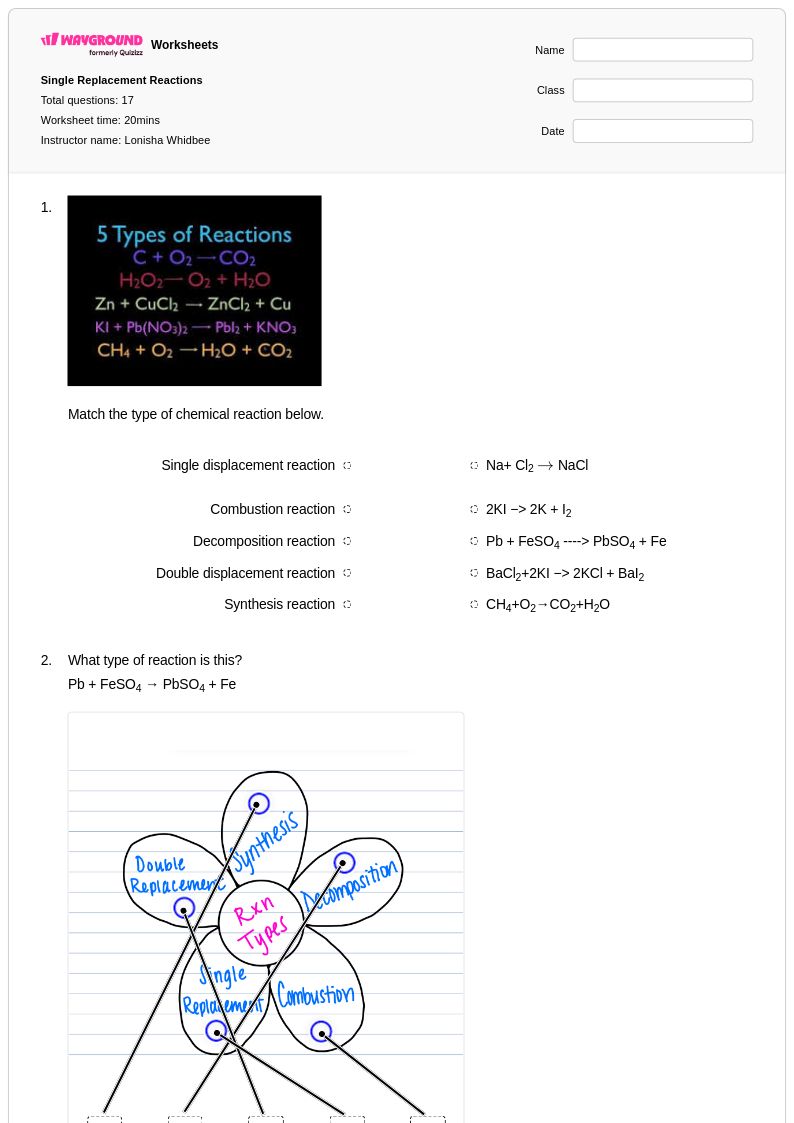
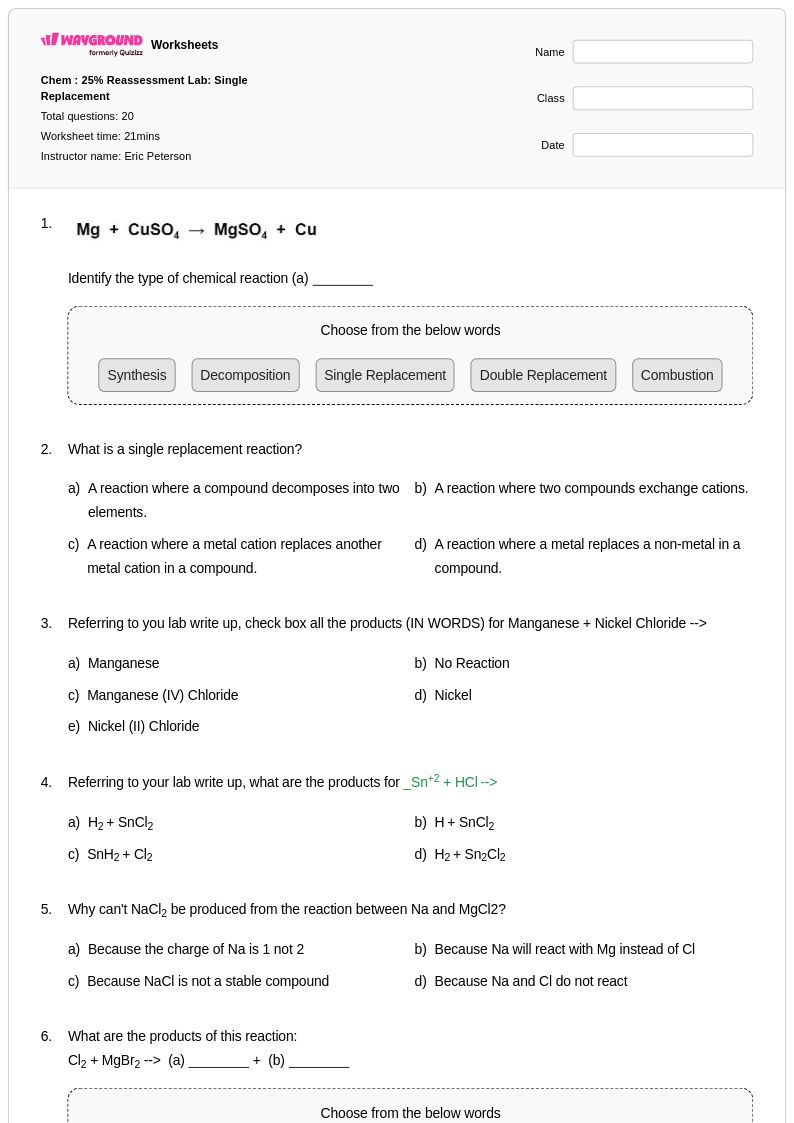
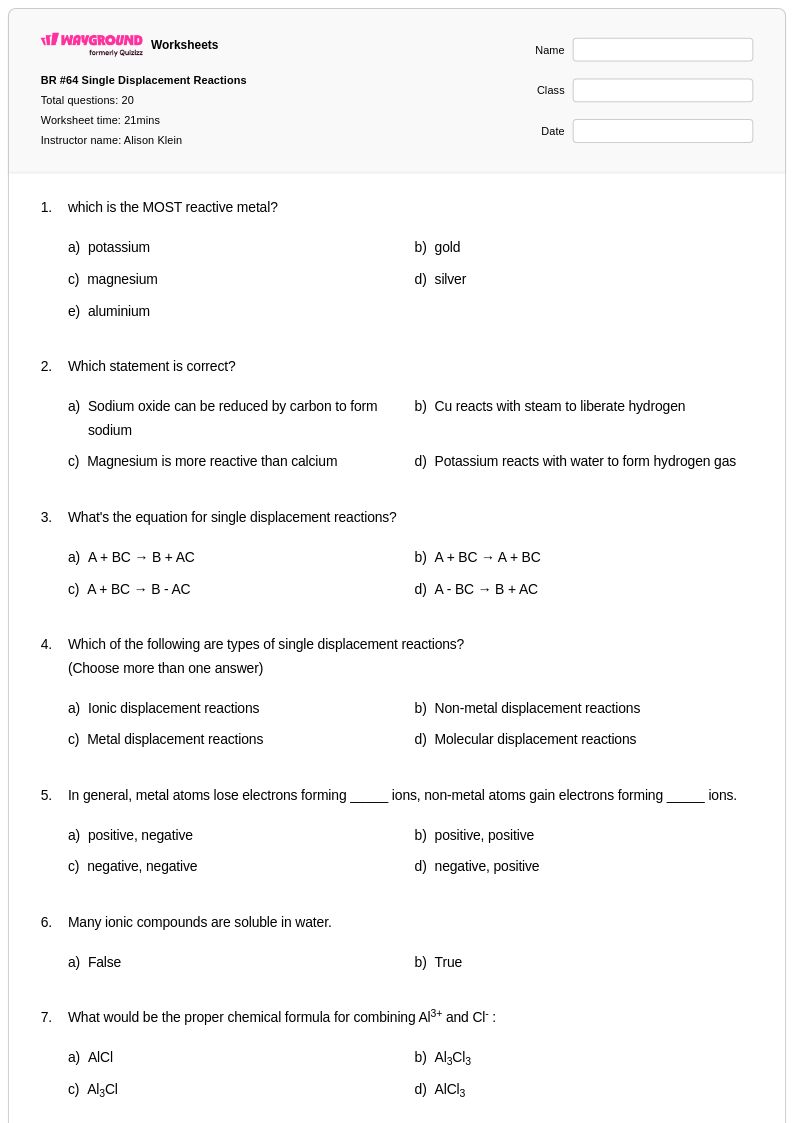
Activity series worksheets for Grade 11 chemistry students available through Wayground (formerly Quizizz) provide comprehensive practice with the reactivity hierarchy of metals and their displacement reactions. These educational resources strengthen students' ability to predict chemical reactions, understand redox processes, and apply electrochemical principles through structured practice problems that range from basic metal reactivity comparisons to complex multi-step displacement scenarios. The collection includes detailed answer keys that guide students through proper reasoning processes, free printable materials that support classroom instruction, and pdf formats that ensure consistent formatting across different devices and printing systems.
Wayground (formerly Quizizz) empowers chemistry educators with millions of teacher-created activity series resources that feature robust search and filtering capabilities, enabling quick location of materials aligned with specific curriculum standards and learning objectives. The platform's differentiation tools allow teachers to customize worksheet difficulty levels and problem types to accommodate diverse learning needs, while the dual availability of printable and digital formats, including downloadable pdfs, provides maximum flexibility for both in-person and remote instruction. These comprehensive worksheet collections support effective lesson planning by offering ready-to-use materials for initial concept introduction, targeted remediation for struggling students, enrichment opportunities for advanced learners, and ongoing skill practice that reinforces mastery of electrochemical series concepts and their real-world applications.
FAQs
How do I teach the activity series to chemistry students?
Start by introducing the concept of relative reactivity — the idea that some metals lose electrons more readily than others and can therefore displace less reactive metals from ionic compounds. Use the activity series as a ranked reference tool, then walk students through worked examples of single displacement reactions before asking them to predict outcomes independently. Connecting the series to real-world applications like galvanization and corrosion resistance helps students see why the ranking matters beyond the classroom.
What exercises help students practice using the activity series?
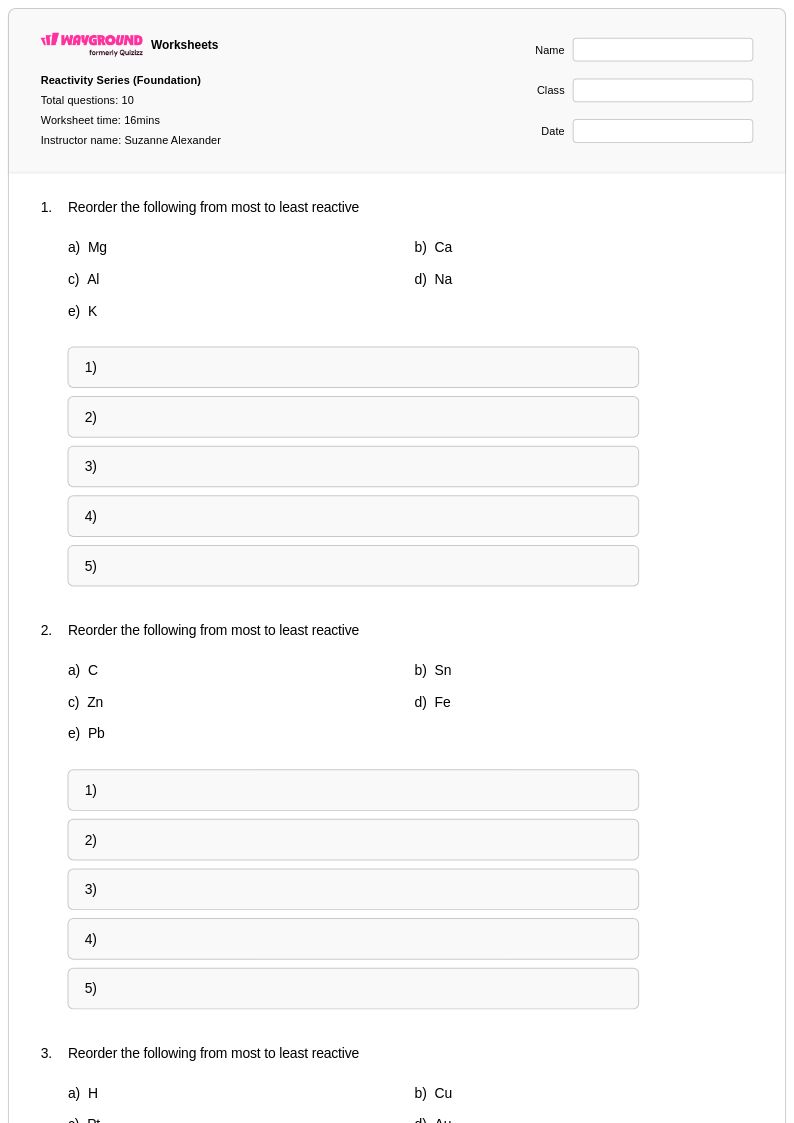
Effective practice exercises include ranking metals by reactivity from a scrambled list, predicting whether a given single displacement reaction will occur, and writing balanced equations for reactions where a more active metal replaces a less active one. Problems that require students to explain their reasoning — not just circle yes or no — build the deeper analytical skills needed for understanding oxidation-reduction reactions. Worksheets that progress from basic metal rankings to complex scenarios involving real-world contexts like metal extraction are especially useful for scaffolding mastery.
What mistakes do students commonly make when working with the activity series?
A frequent error is treating the activity series as a memorization task rather than a reasoning tool, which causes students to struggle when questions present unfamiliar metals or novel reaction setups. Students also commonly confuse the direction of displacement — assuming any two metals will react rather than checking which metal is higher on the series. Another misconception is conflating physical properties like hardness or luster with chemical reactivity, which has no bearing on where a metal falls in the series.
How can I use activity series worksheets to assess student understanding?
Activity series worksheets are well-suited for formative assessment because they reveal whether students understand the underlying logic of reactivity or are simply pattern-matching. Look for errors in reaction prediction tasks — if students consistently get the direction of displacement wrong, that signals a gap in their understanding of oxidation and electron transfer rather than a memorization issue. Using worksheets with explanation prompts, where students justify their predictions, gives you richer diagnostic data than multiple-choice alone.
How do I use Wayground's activity series worksheets in my classroom?
Wayground's activity series worksheets are available as printable PDFs for traditional classroom use and in digital formats for technology-integrated or remote learning environments. Teachers can also host worksheets as a quiz directly on Wayground, which allows for real-time student responses and automatic grading. Each worksheet includes a detailed answer key explaining the reasoning behind correct responses, making them useful for both in-class instruction and independent student review.
How do I differentiate activity series instruction for students who are struggling?
For students who struggle with the volume of information in a typical activity series problem, reducing the number of answer choices or providing a partially completed reactivity chart can lower cognitive load without removing the core challenge. On Wayground, teachers can apply accommodations such as reduced answer choices and read-aloud support to individual students, so struggling learners get targeted support while the rest of the class works through standard problem sets. Pairing these accommodations with scaffolded worksheet sequences — starting with basic ranking before moving to reaction prediction — helps build confidence alongside understanding.