Free Printable Thermochemistry Worksheets for Grade 11
Enhance Grade 11 thermochemistry mastery with Wayground's comprehensive collection of free worksheets, printable PDFs, and practice problems covering enthalpy, heat transfer, and calorimetry concepts with detailed answer keys.
Explore printable Thermochemistry worksheets for Grade 11
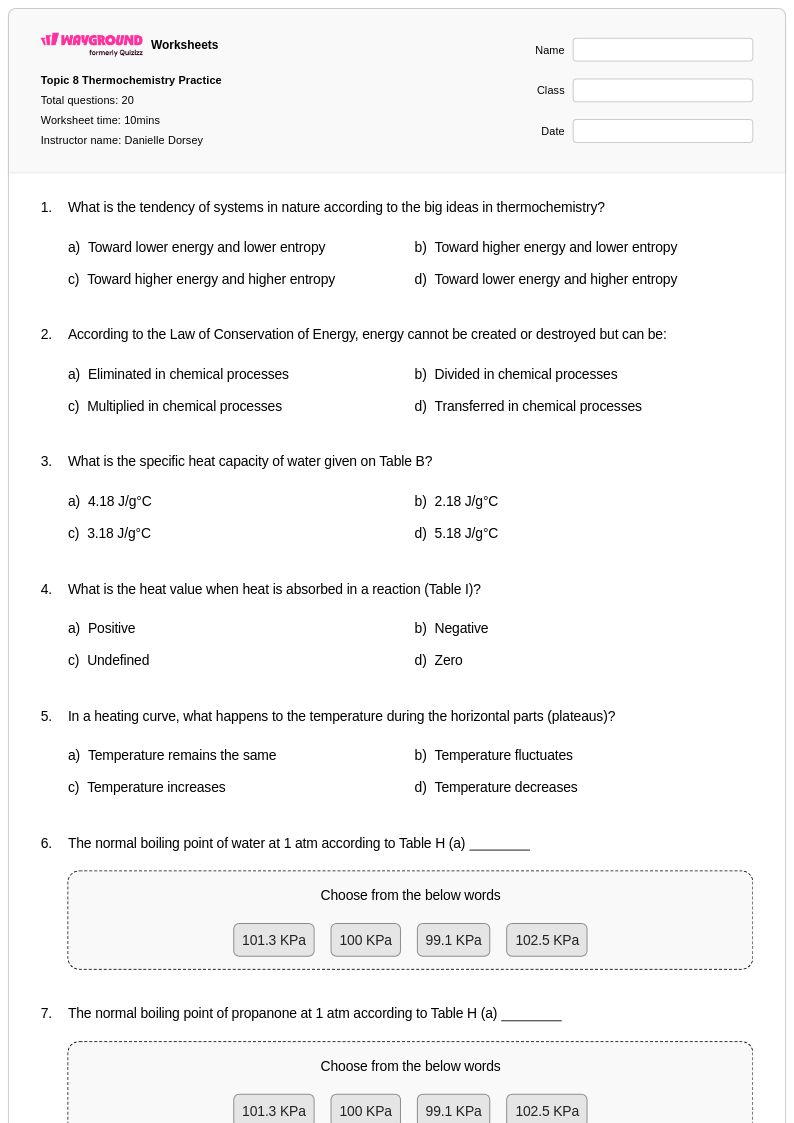
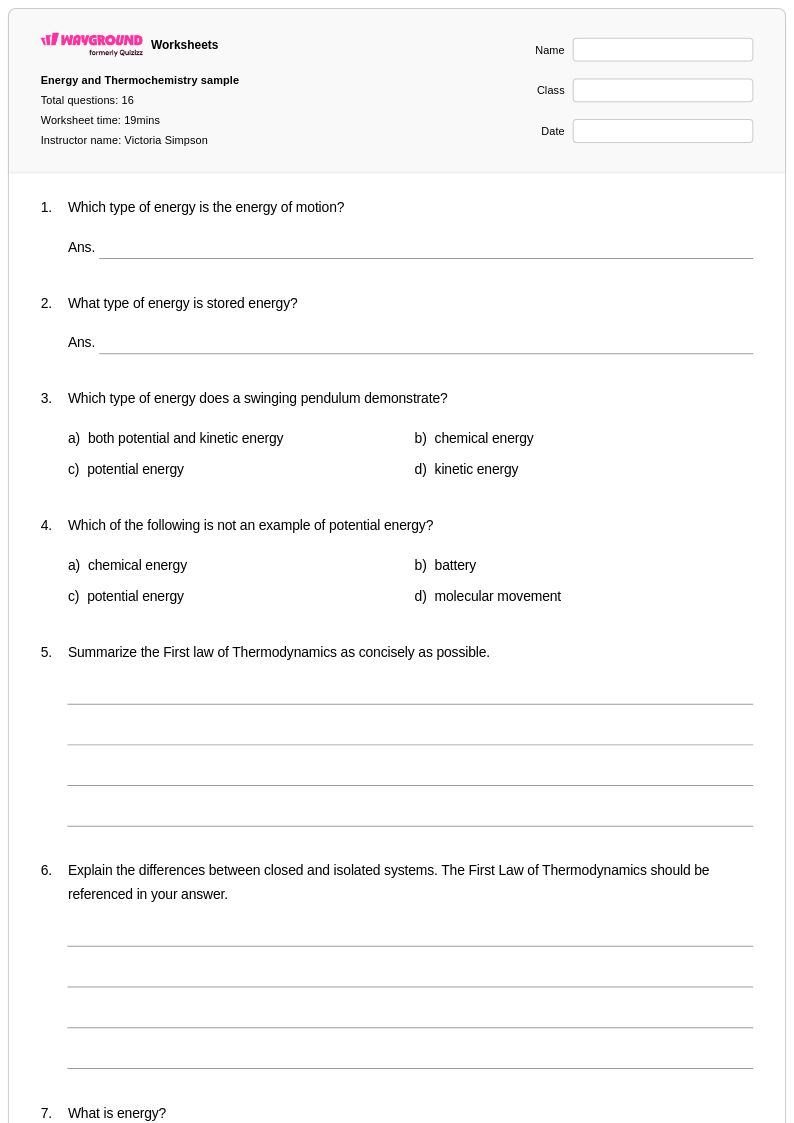
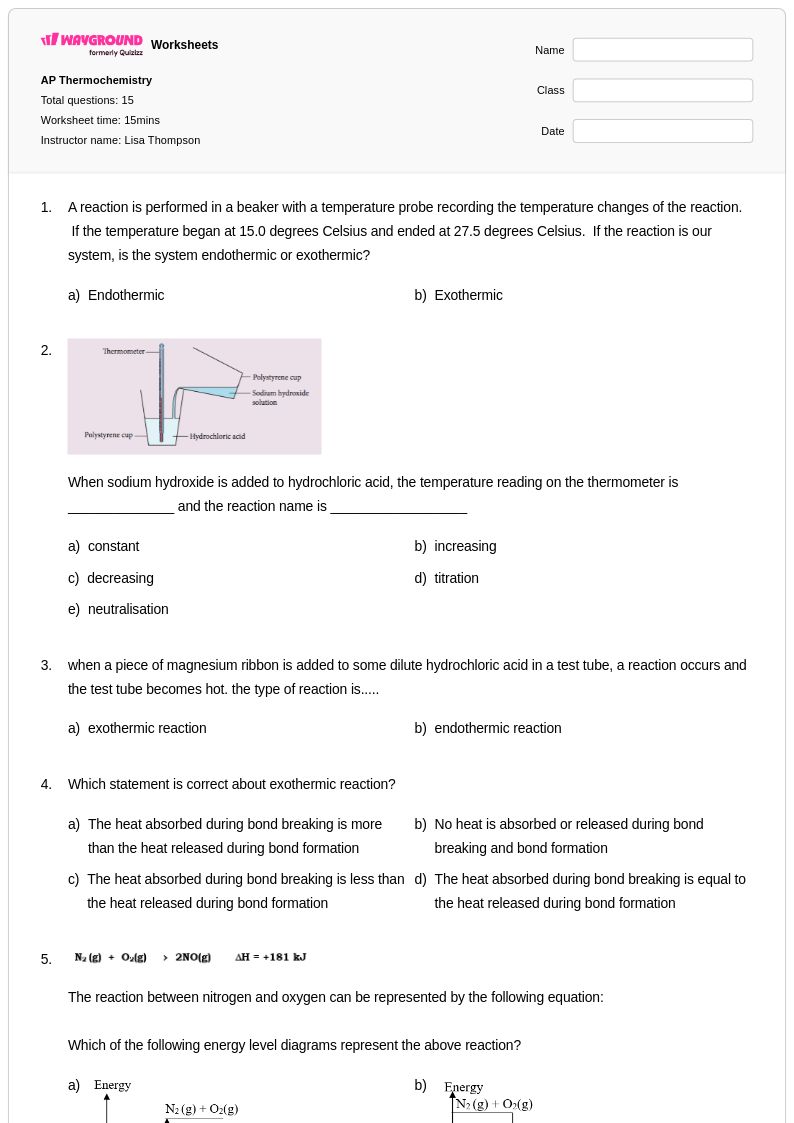
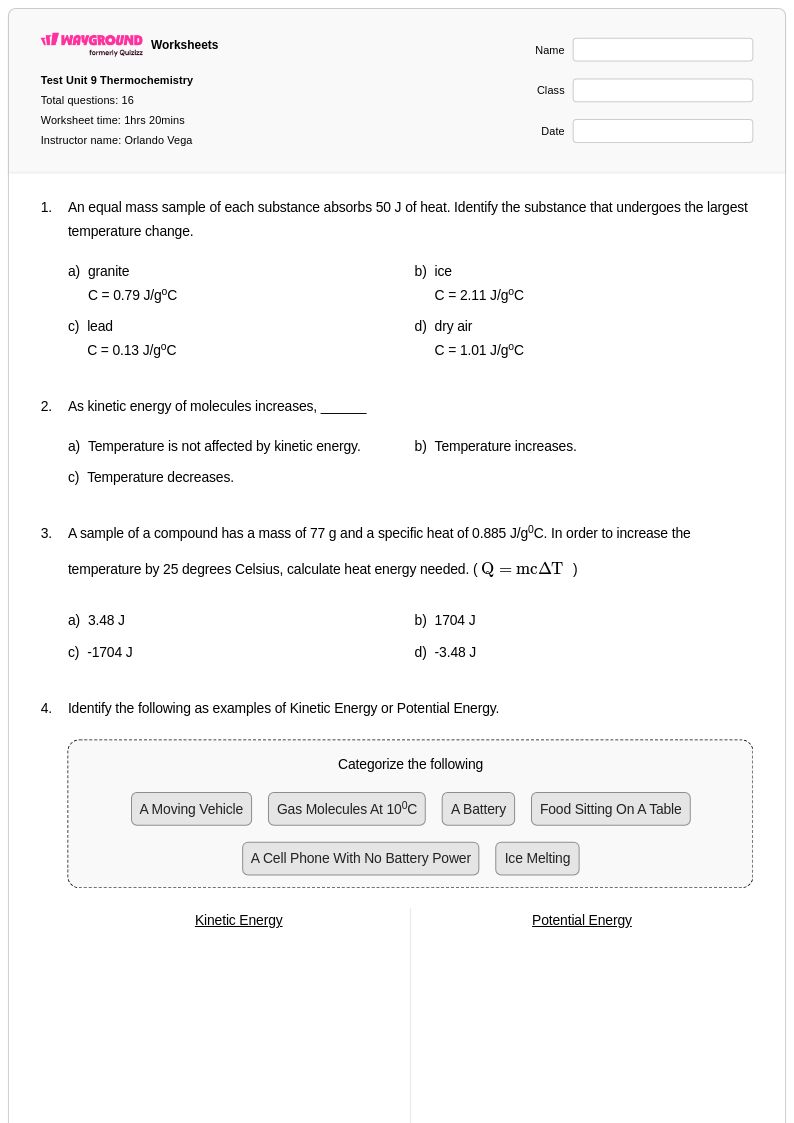
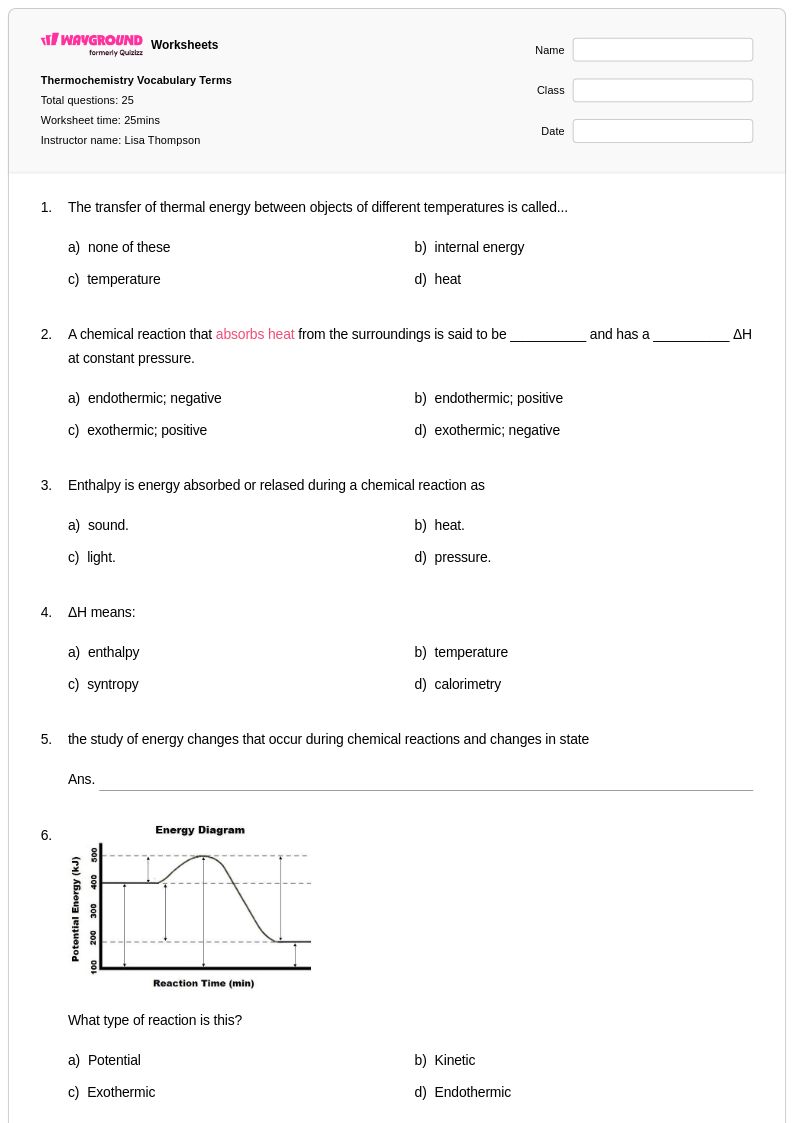
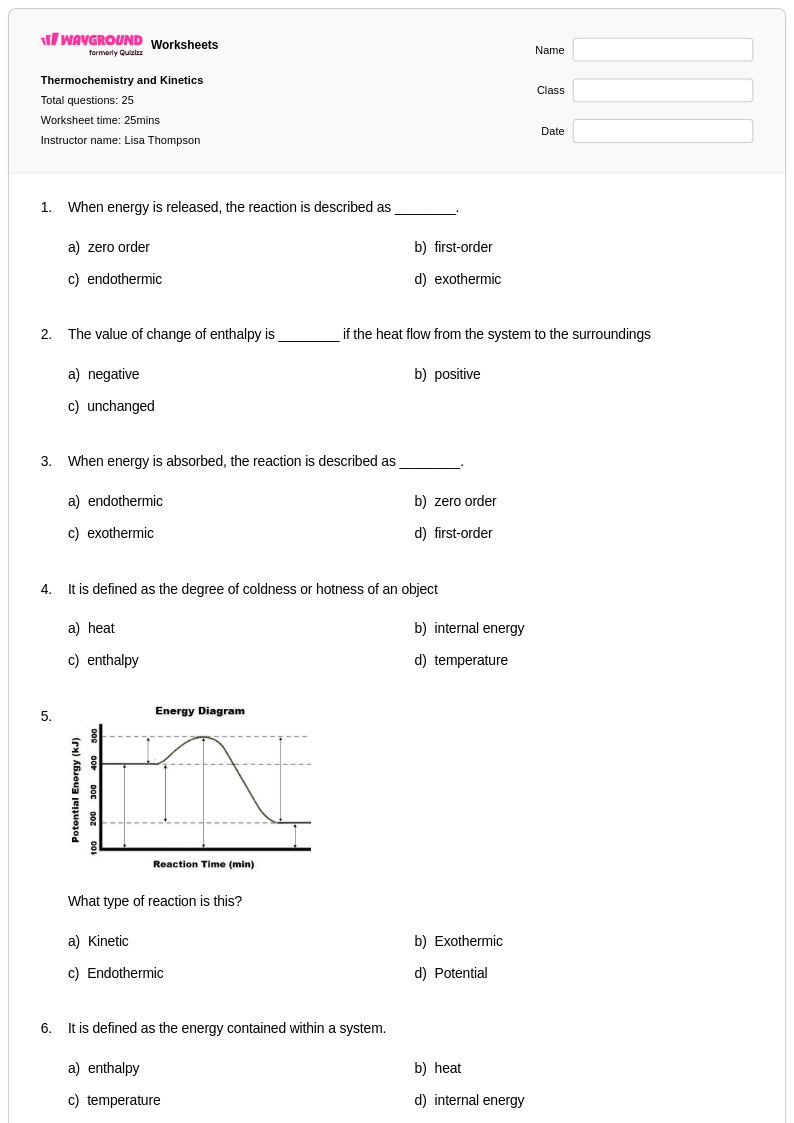
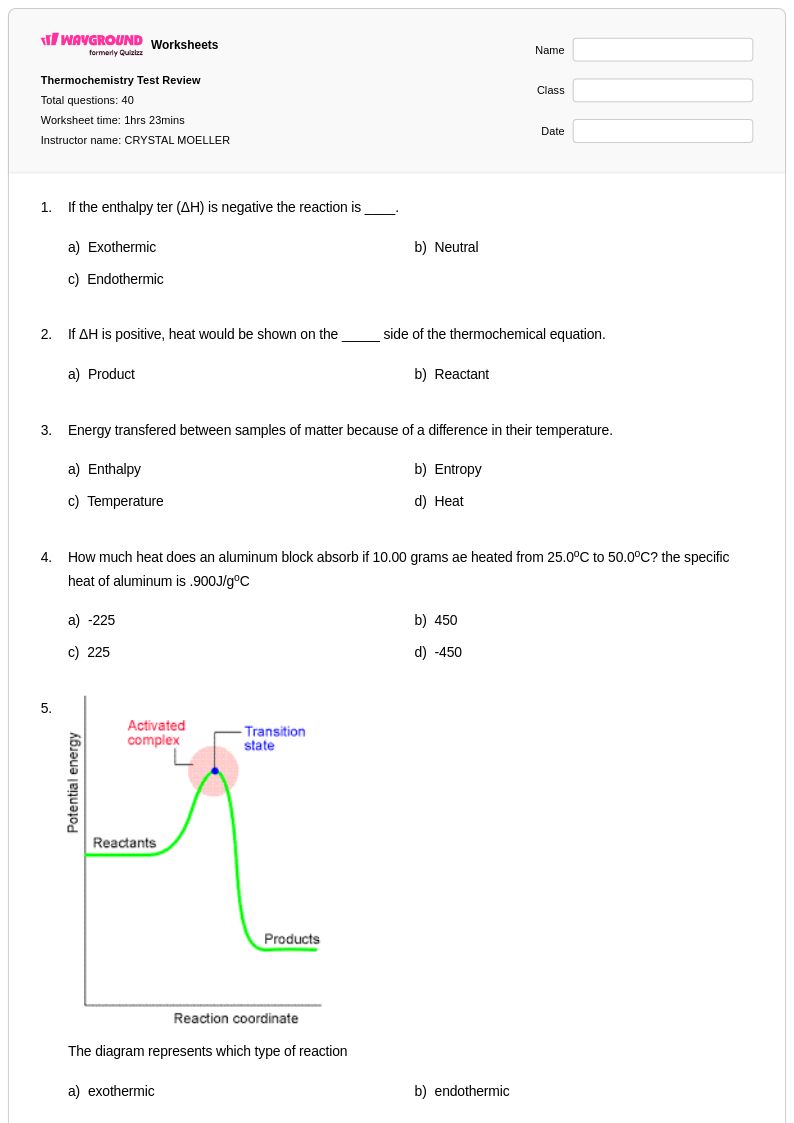
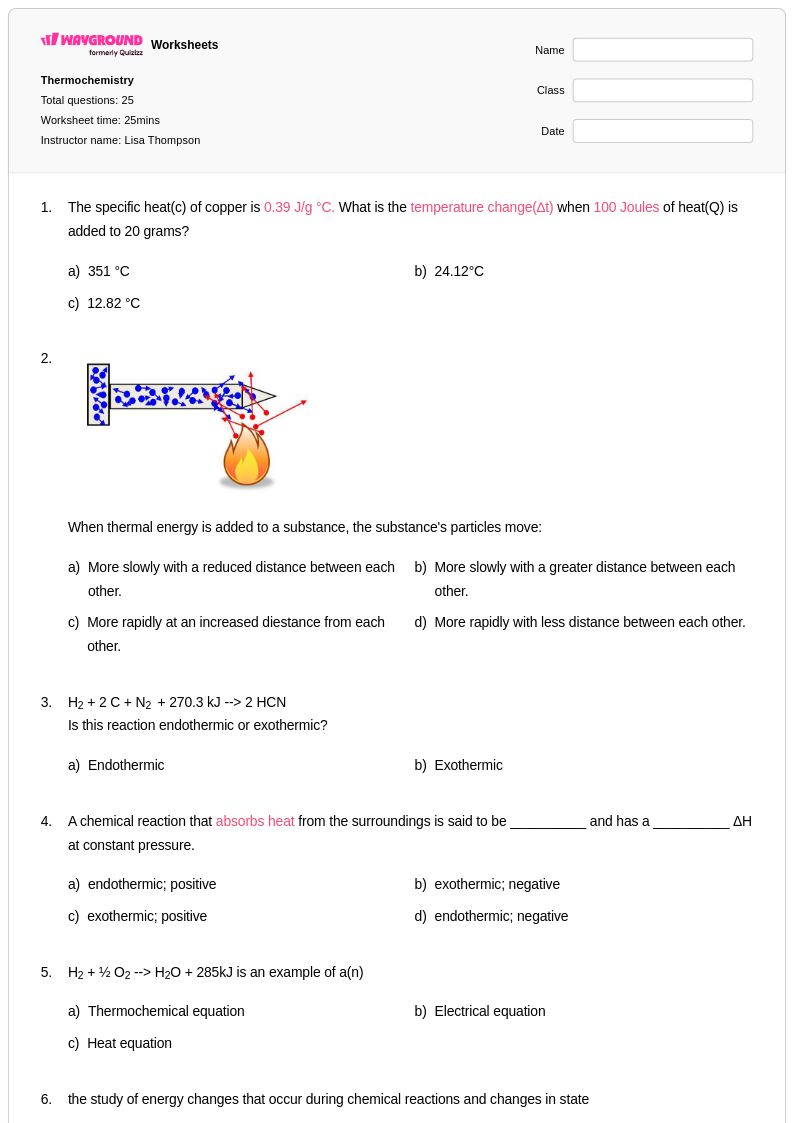
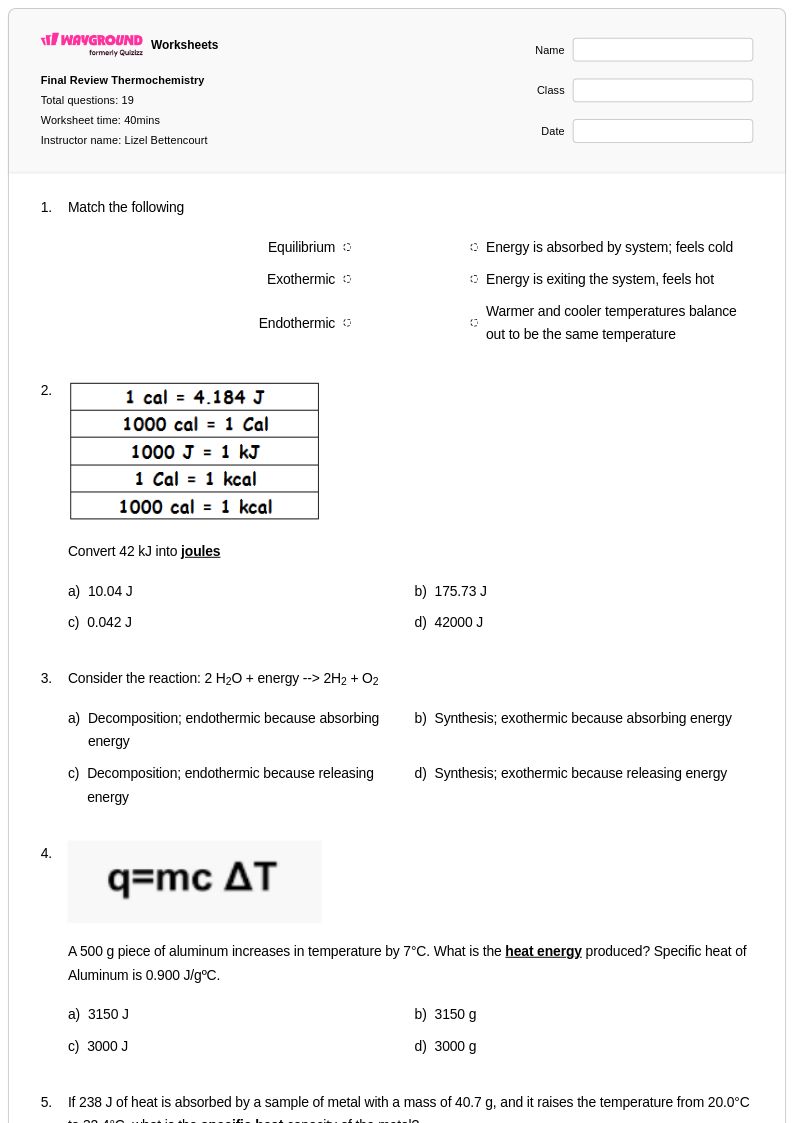
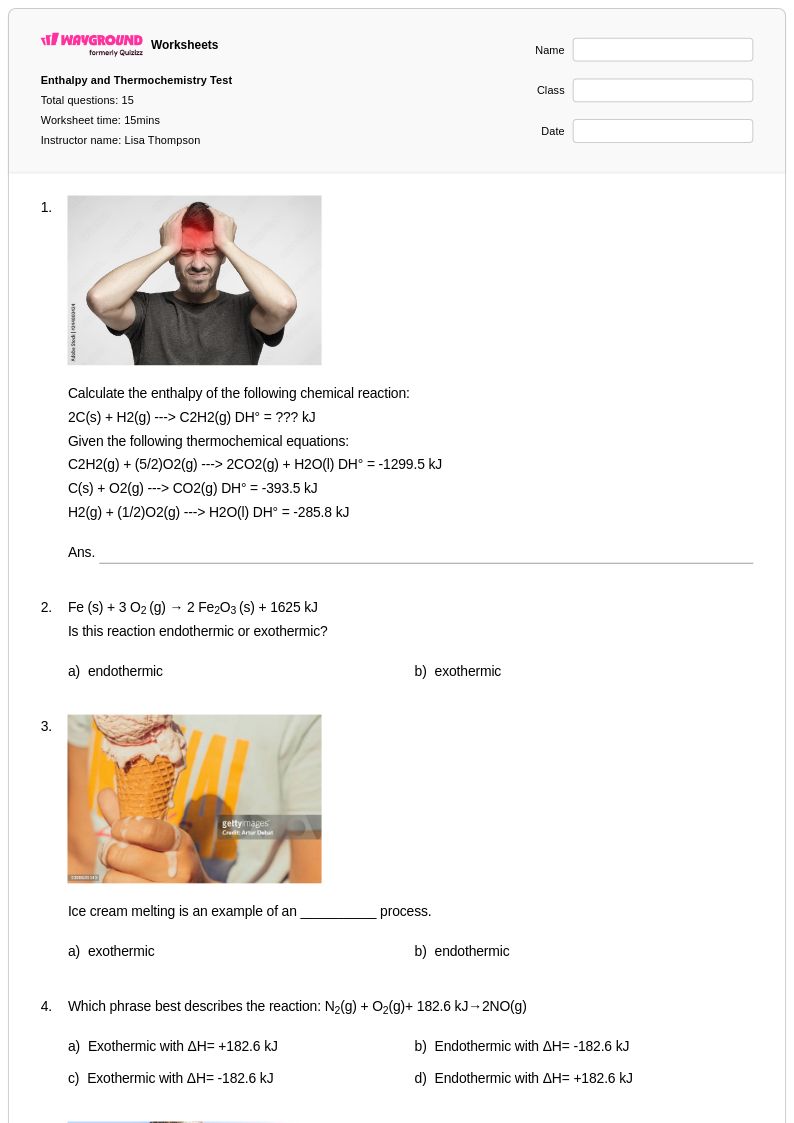
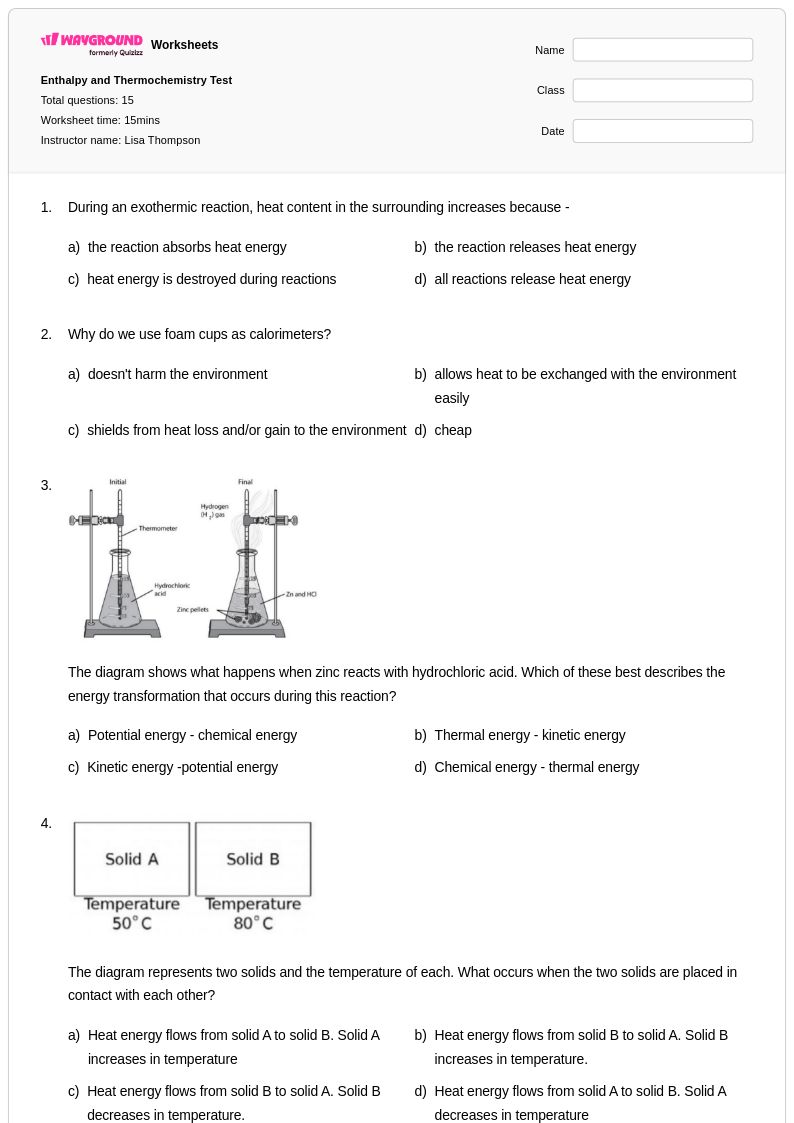
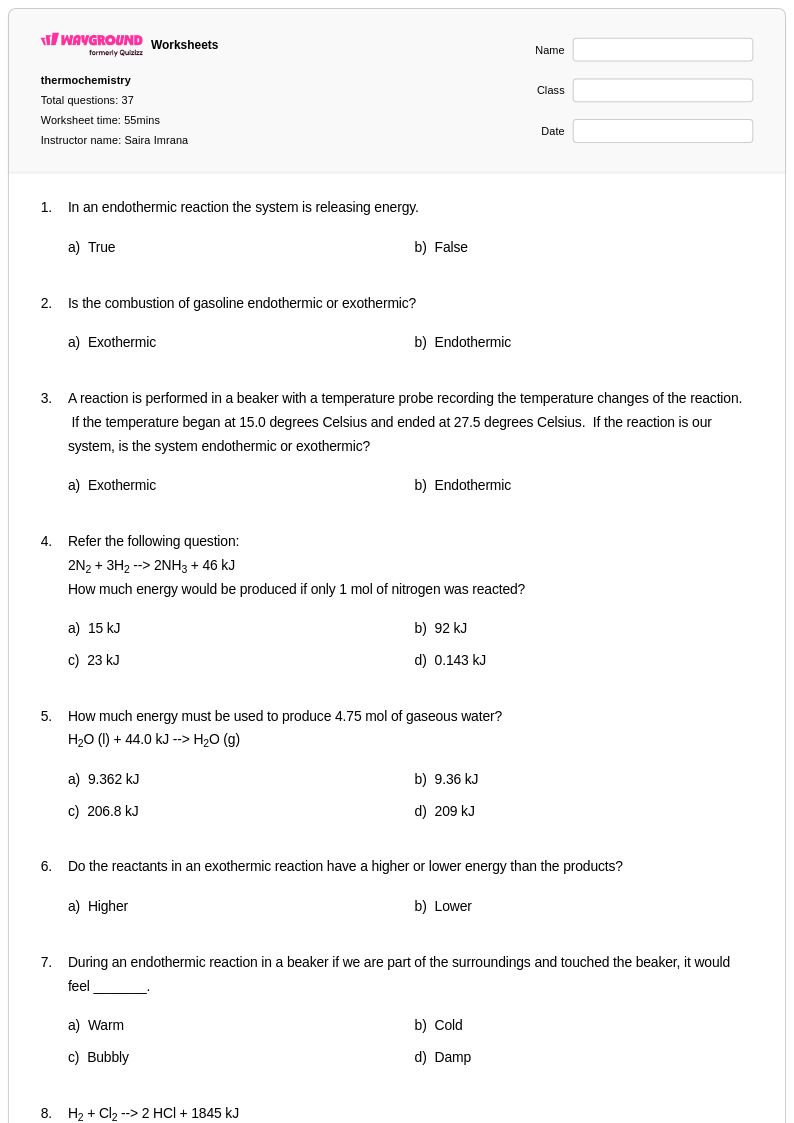
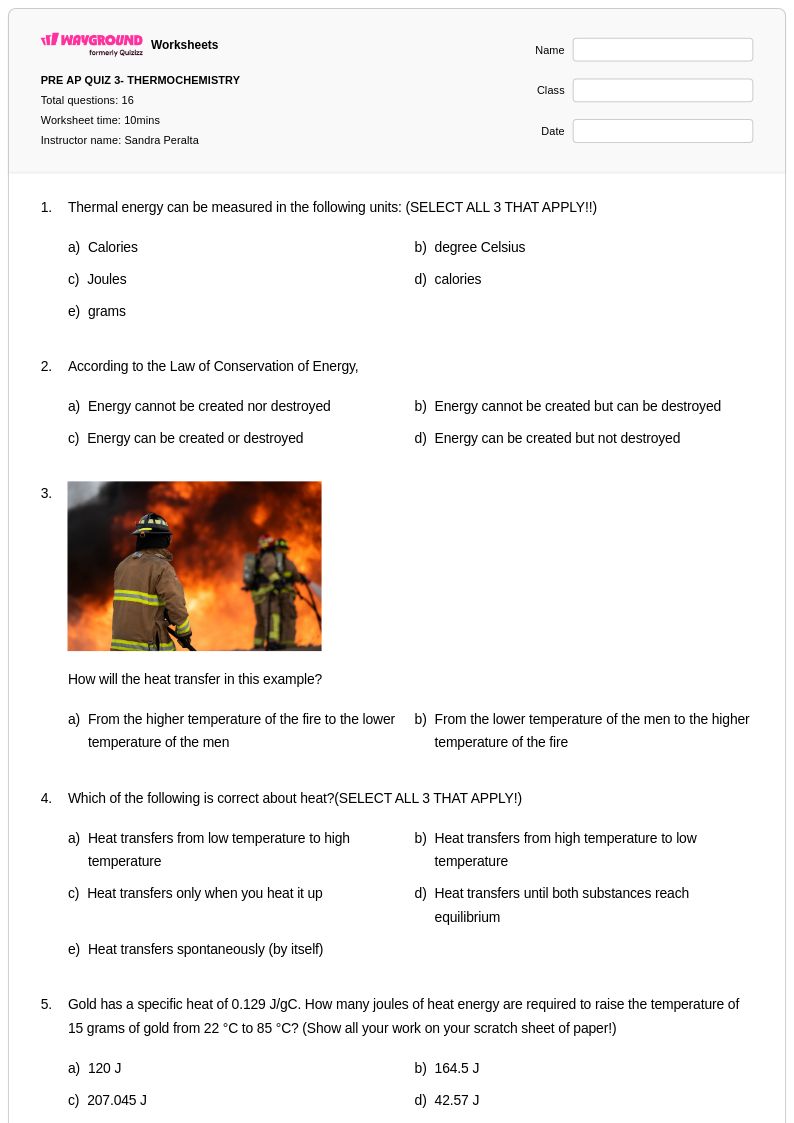
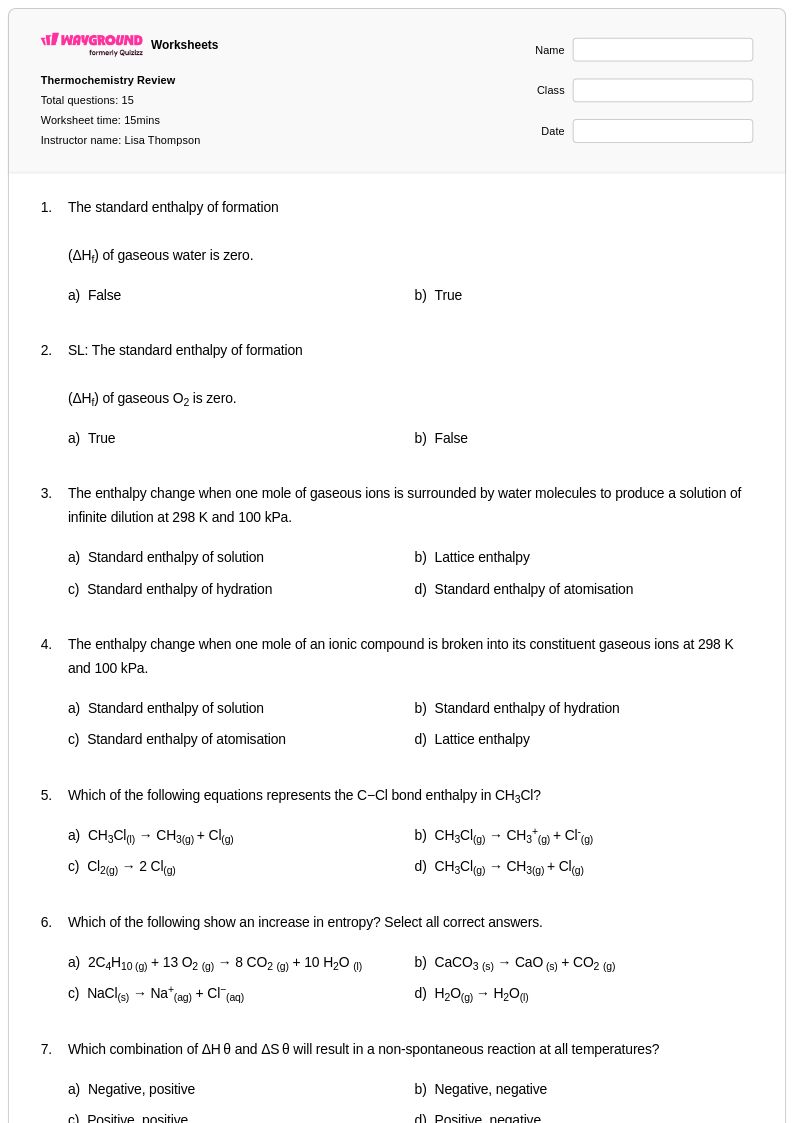
Thermochemistry worksheets for Grade 11 students available through Wayground (formerly Quizizz) provide comprehensive coverage of energy changes in chemical reactions and the quantitative relationships between heat and chemical processes. These expertly designed resources strengthen critical skills including calculating enthalpy changes, applying Hess's law, interpreting calorimetry data, and understanding the relationship between bond energies and reaction thermodynamics. Students develop proficiency in solving complex practice problems involving heat of formation, heat of combustion, and spontaneity predictions using thermodynamic principles. Each worksheet collection includes detailed answer keys and is available as free printable pdf resources, enabling students to master the mathematical and conceptual foundations essential for advanced chemistry coursework.
Wayground (formerly Quizizz) supports chemistry educators with millions of teacher-created thermochemistry resources that streamline lesson planning and enhance student learning outcomes. The platform's robust search and filtering capabilities allow teachers to quickly locate worksheets aligned with specific curriculum standards and learning objectives, while differentiation tools enable customization for varying student ability levels within Grade 11 classrooms. These thermochemistry materials are available in both printable and digital formats, including downloadable pdf versions, providing maximum flexibility for classroom instruction, homework assignments, and laboratory supplement activities. Teachers can efficiently implement these resources for targeted skill practice, remediation of challenging concepts like entropy and Gibbs free energy, and enrichment opportunities that prepare students for advanced placement chemistry and post-secondary science programs.
FAQs
How do I teach thermochemistry to high school chemistry students?
Start by grounding students in the first law of thermodynamics and the concept of a system versus surroundings before introducing enthalpy, calorimetry, and Hess's law as connected ideas rather than isolated topics. Use energy diagrams early so students can visualize exothermic and endothermic reactions before moving into numerical calculations. Scaffolding problem sets from specific heat capacity calculations toward multi-step Hess's law problems helps students build confidence systematically. Connecting thermochemical concepts to real-world contexts, such as hand warmers or combustion reactions, improves retention and engagement.
What practice problems help students get better at thermochemistry calculations?
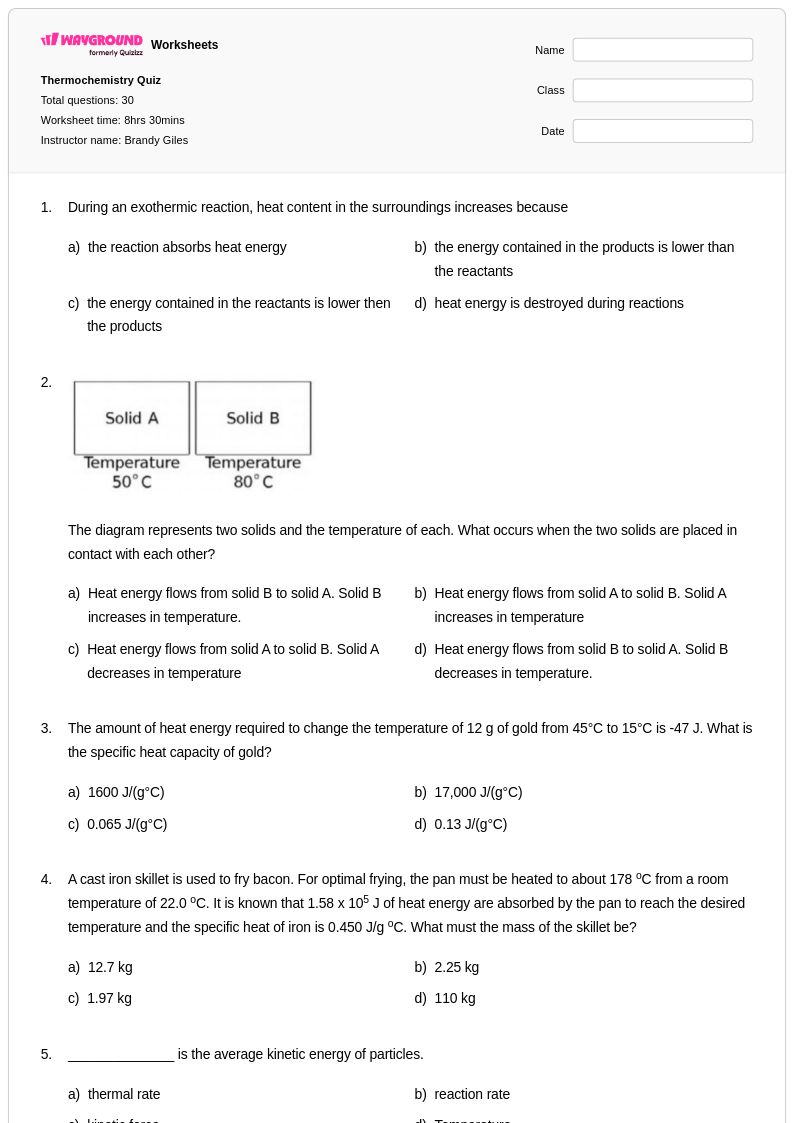
Students benefit most from repeated practice with specific heat capacity problems (q = mcΔT), calorimetry calculations using constant-pressure and constant-volume setups, and multi-step Hess's law problems that require manipulating and combining thermochemical equations. Enthalpy of formation problems and bond energy calculations also reinforce the relationship between molecular structure and energy changes. Progressing from single-step to multi-step problems within each concept type is the most effective sequencing strategy. Answer keys are essential so students can verify their work and self-correct before misconceptions become entrenched.
What mistakes do students commonly make in thermochemistry?
One of the most frequent errors is sign convention confusion: students regularly mix up which system absorbs or releases heat and incorrectly assign positive or negative values to q or ΔH. In Hess's law problems, students often forget to reverse the sign of ΔH when flipping a reaction or fail to multiply ΔH by the correct stoichiometric coefficient. Another common mistake is conflating heat (q) with temperature change (ΔT), treating them as interchangeable rather than understanding that heat depends on mass and specific heat capacity. Targeted practice problems that isolate each error pattern are the most effective remediation strategy.
How do I differentiate thermochemistry instruction for students at different skill levels?
For struggling learners, begin with conceptual problems that ask students to classify reactions as endothermic or exothermic before introducing any calculations, and provide partially worked examples for calorimetry and Hess's law problems. Advanced students benefit from multi-step synthesis problems that combine calorimetry data, bond energies, and Hess's law in a single problem set. On Wayground, teachers can apply accommodations such as reduced answer choices to lower cognitive load for specific students, while other students receive standard problem sets, and extended time settings can be assigned individually without disrupting the rest of the class.
How can I use Wayground's thermochemistry worksheets in my classroom?
Wayground's thermochemistry worksheets are available as printable PDFs for traditional classroom use and in digital formats for technology-integrated environments, making them adaptable for in-person, hybrid, or remote instruction. Teachers can also host worksheets directly as a quiz on Wayground, enabling real-time tracking of student responses. The worksheets include complete answer keys, supporting both teacher-led correction and independent student self-assessment. Digital versions allow individual student accommodations, such as read-aloud support or extended time, to be applied without affecting the rest of the class.
What thermochemistry topics should I cover in a high school chemistry unit?
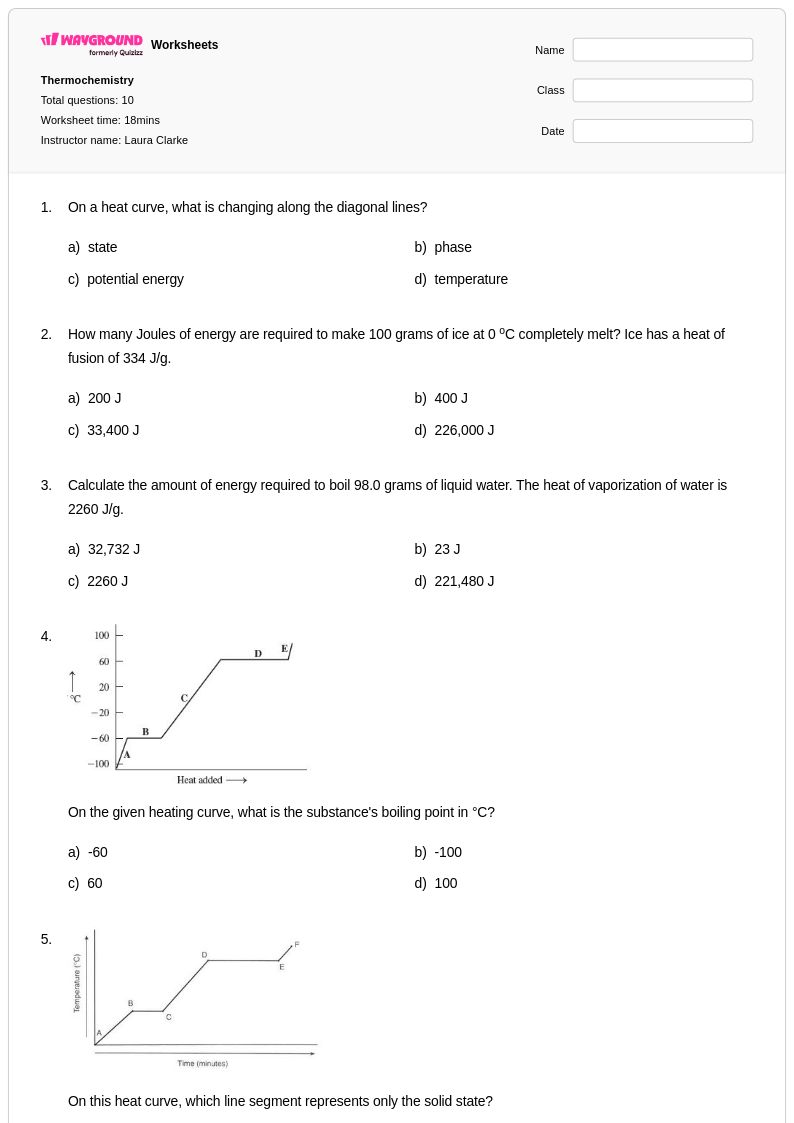
A comprehensive high school thermochemistry unit should cover heat transfer and specific heat capacity, endothermic versus exothermic reactions, calorimetry (both coffee-cup and bomb calorimeter setups), enthalpy of reaction, Hess's law, standard enthalpies of formation, and bond energies. Phase changes and heating/cooling curves are typically included as applied extensions of heat transfer concepts. Thermodynamic data interpretation, including reading and constructing enthalpy diagrams, rounds out the unit and prepares students for AP Chemistry or introductory college-level coursework.