Free Printable Ionization Energy Worksheets for Grade 11
Explore Grade 11 ionization energy worksheets and printables that help students master electron removal concepts through comprehensive practice problems, free PDF resources, and detailed answer keys.
Explore printable Ionization Energy worksheets for Grade 11
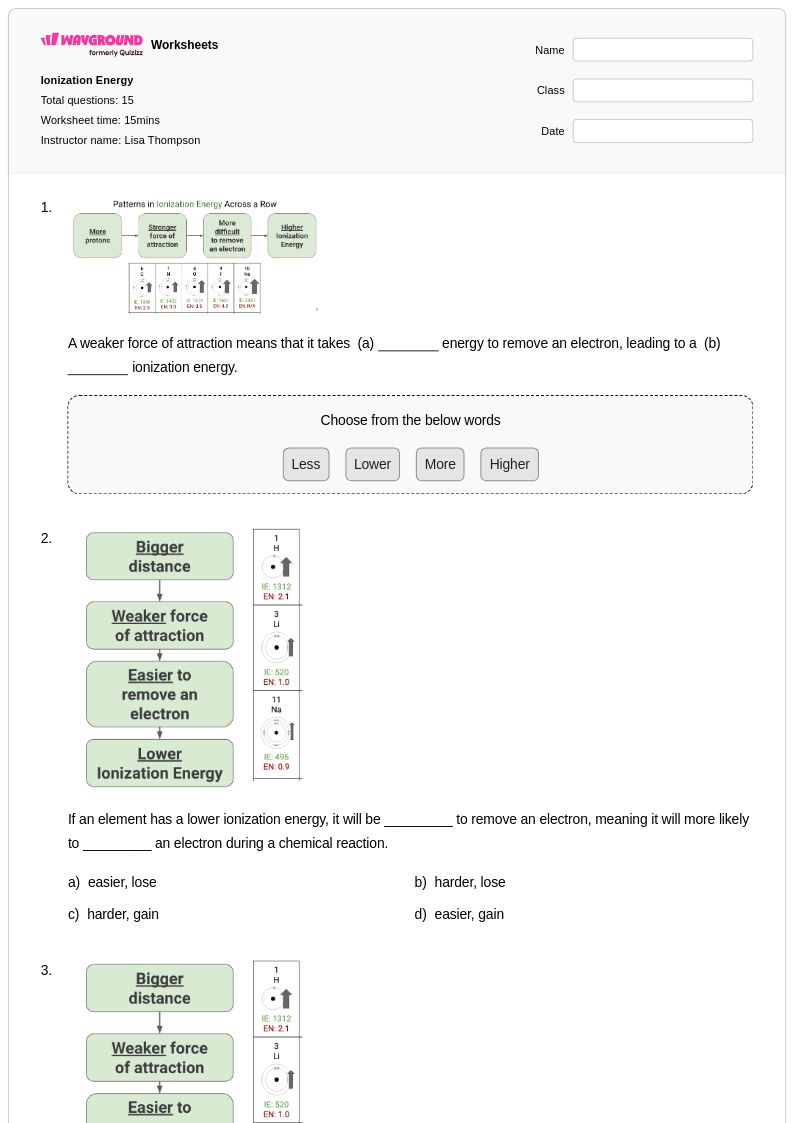
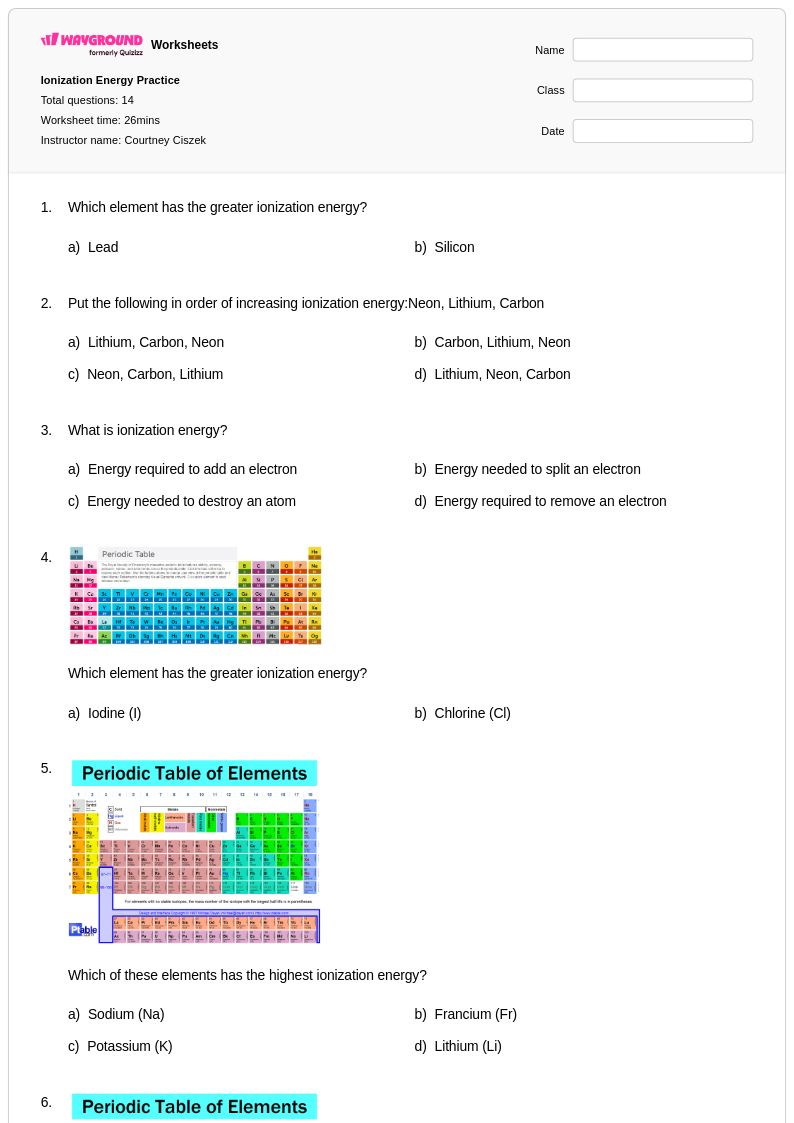
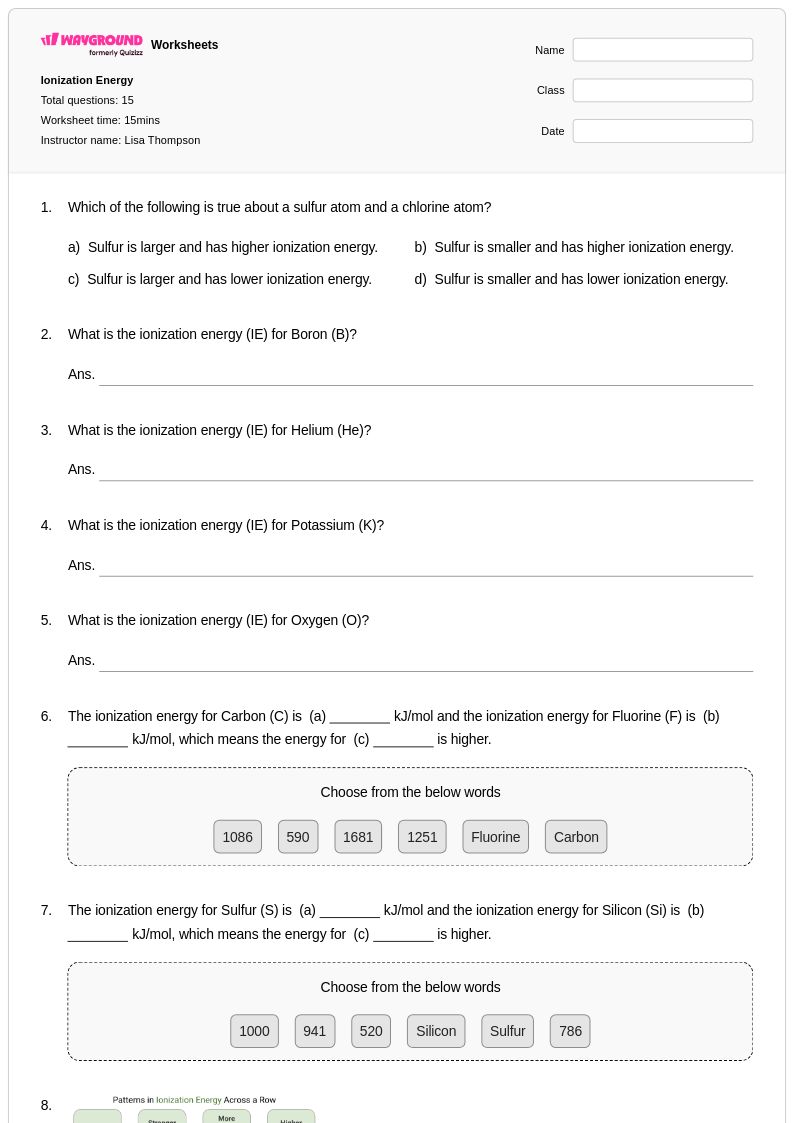
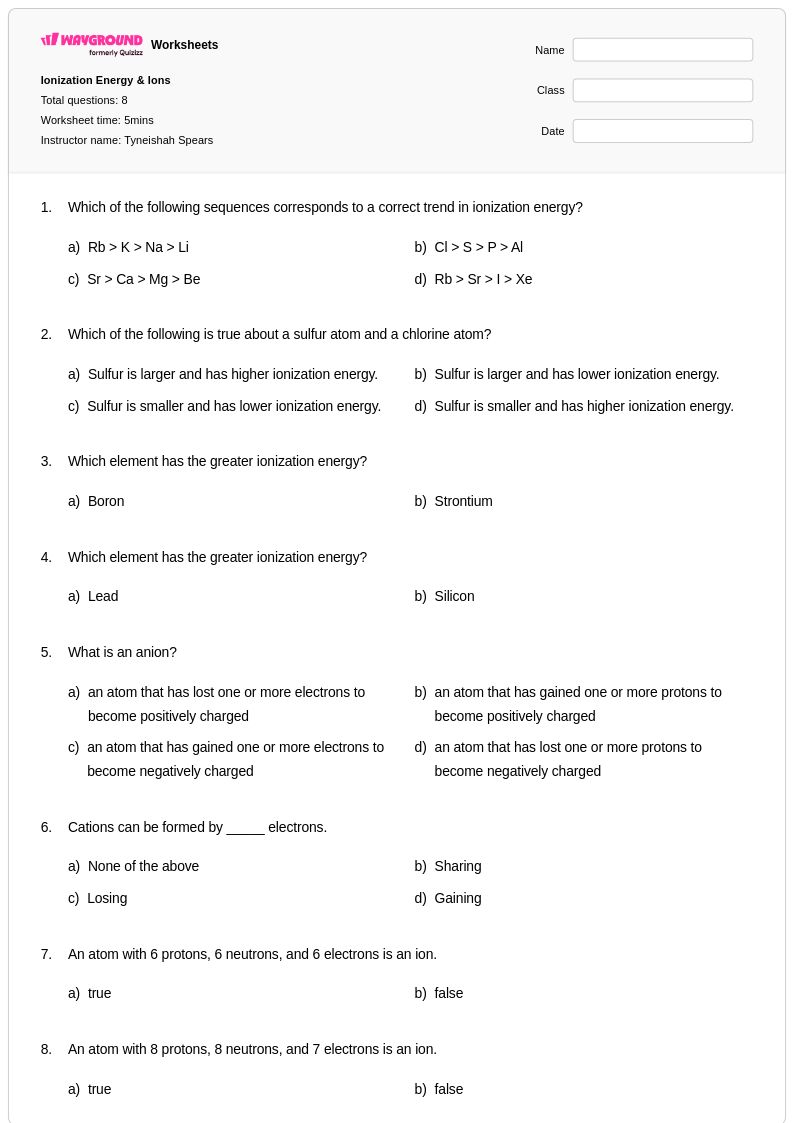
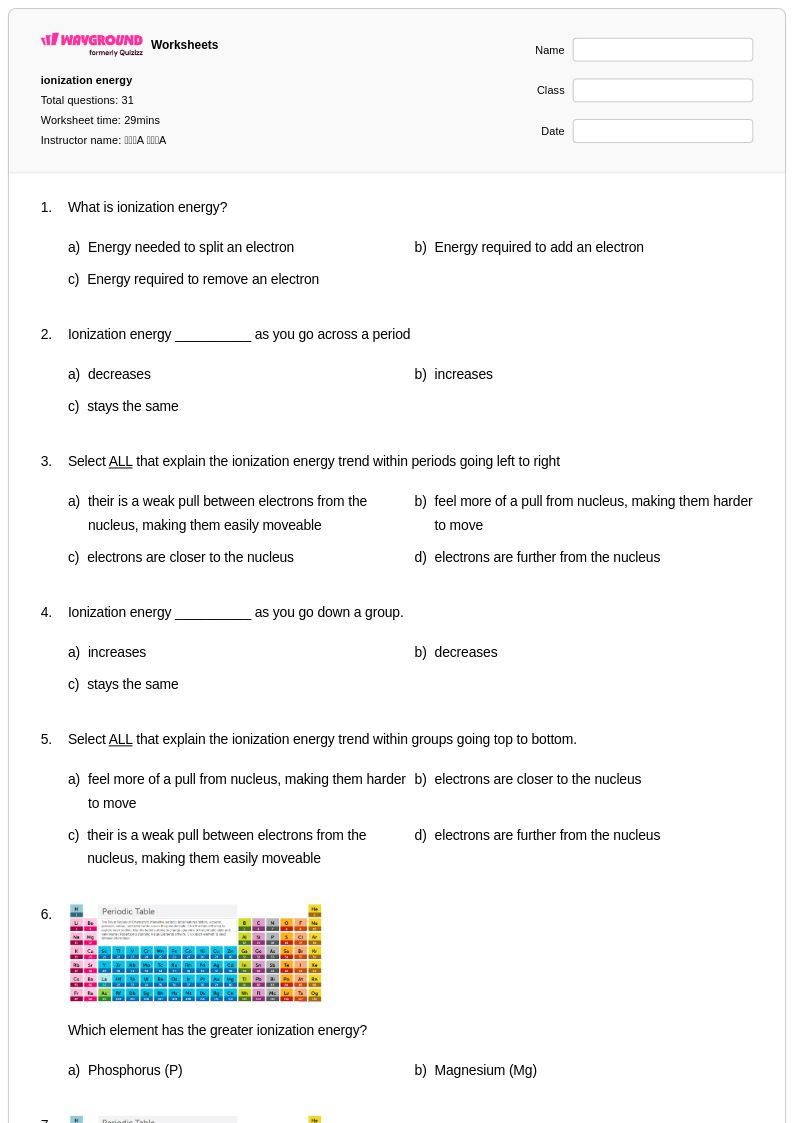
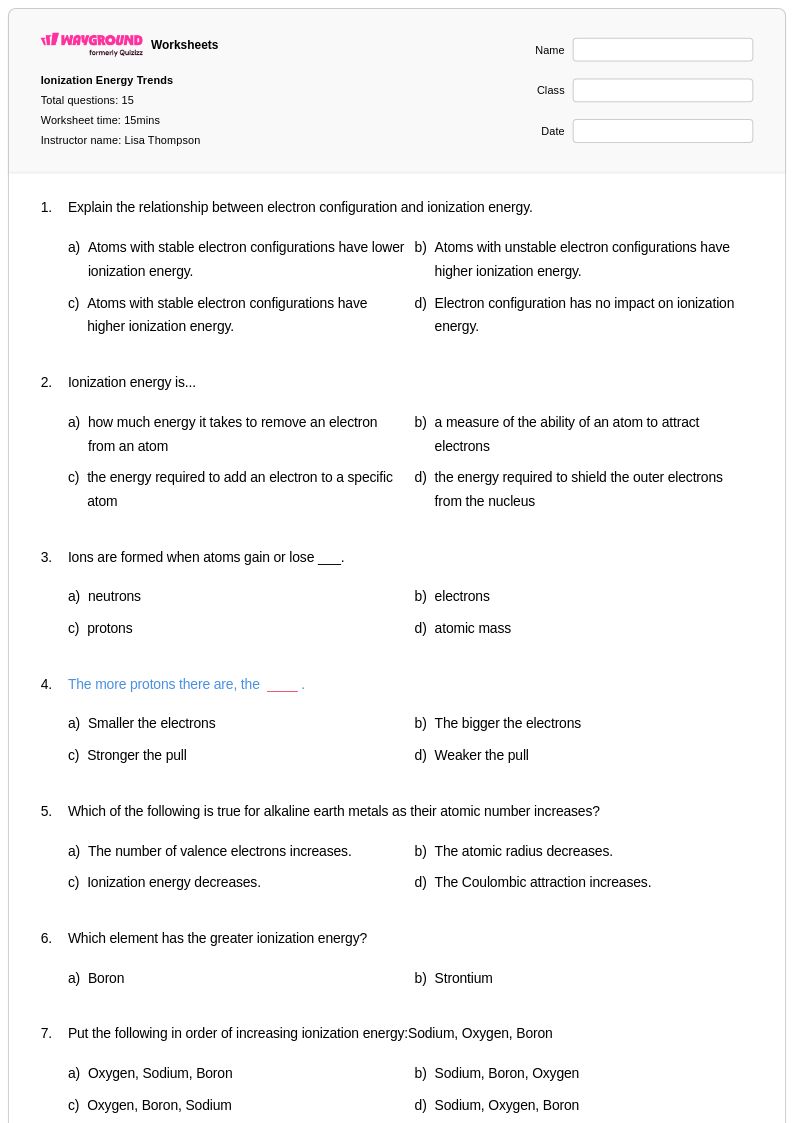
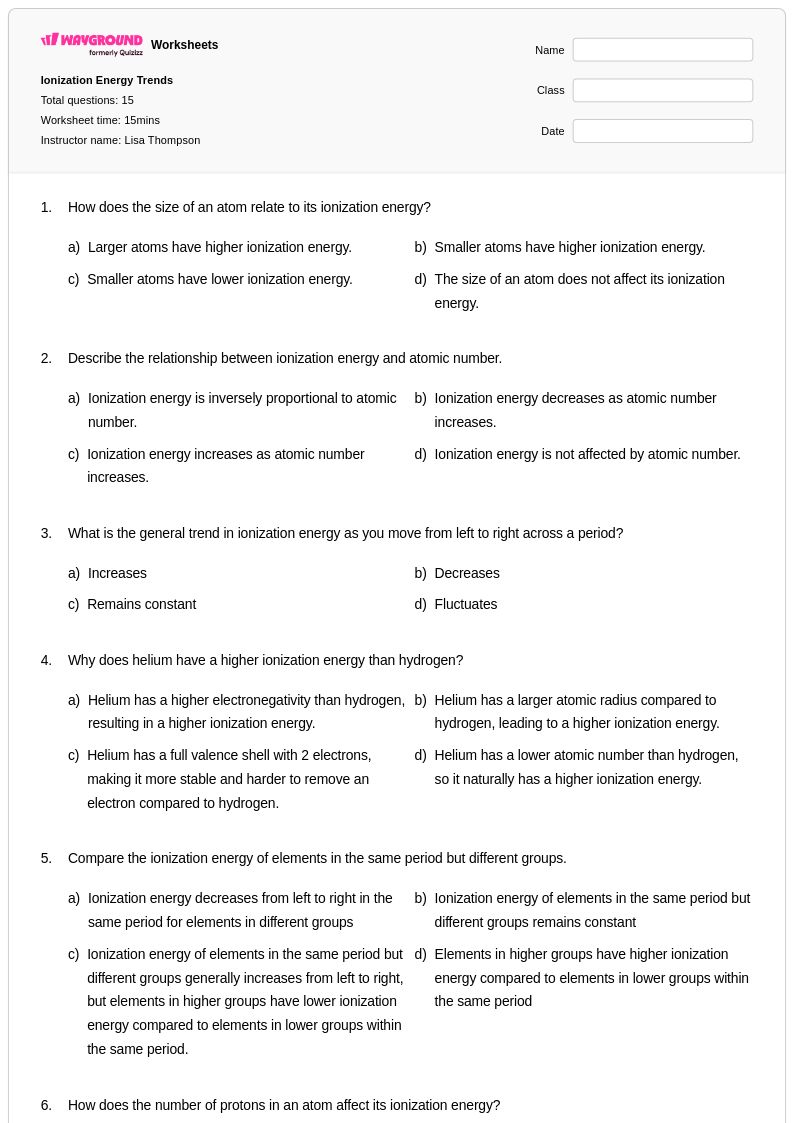
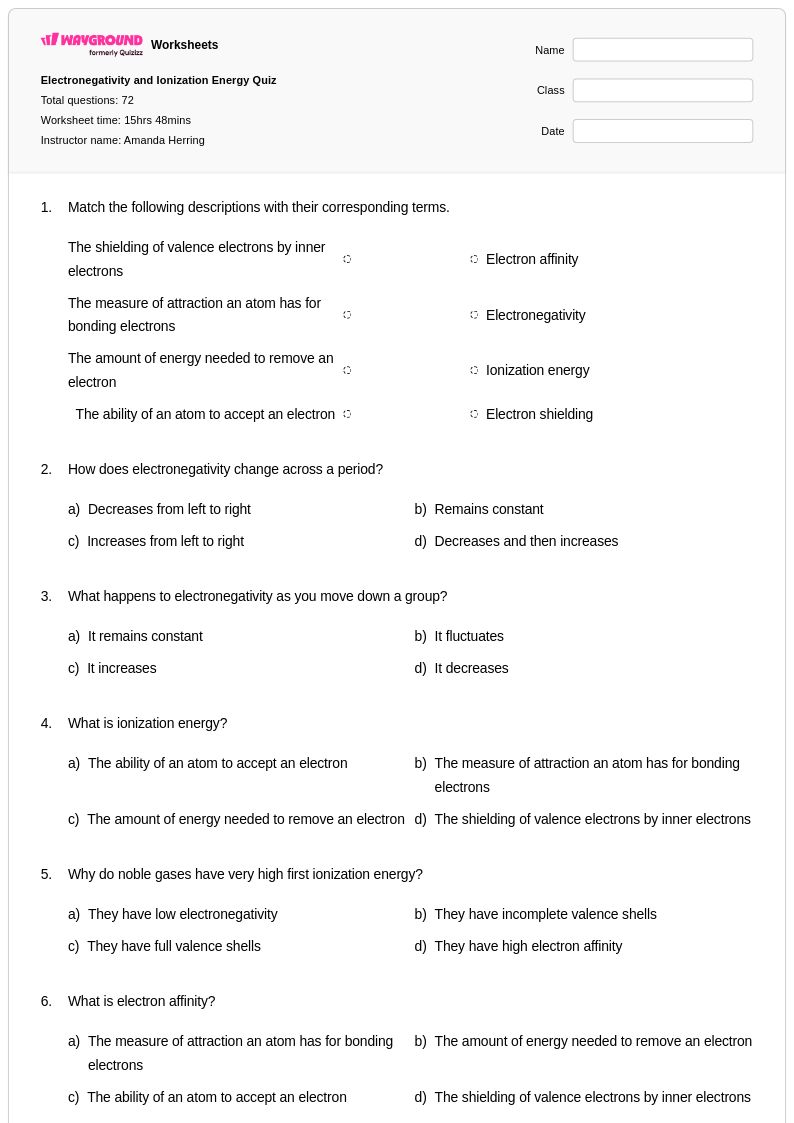
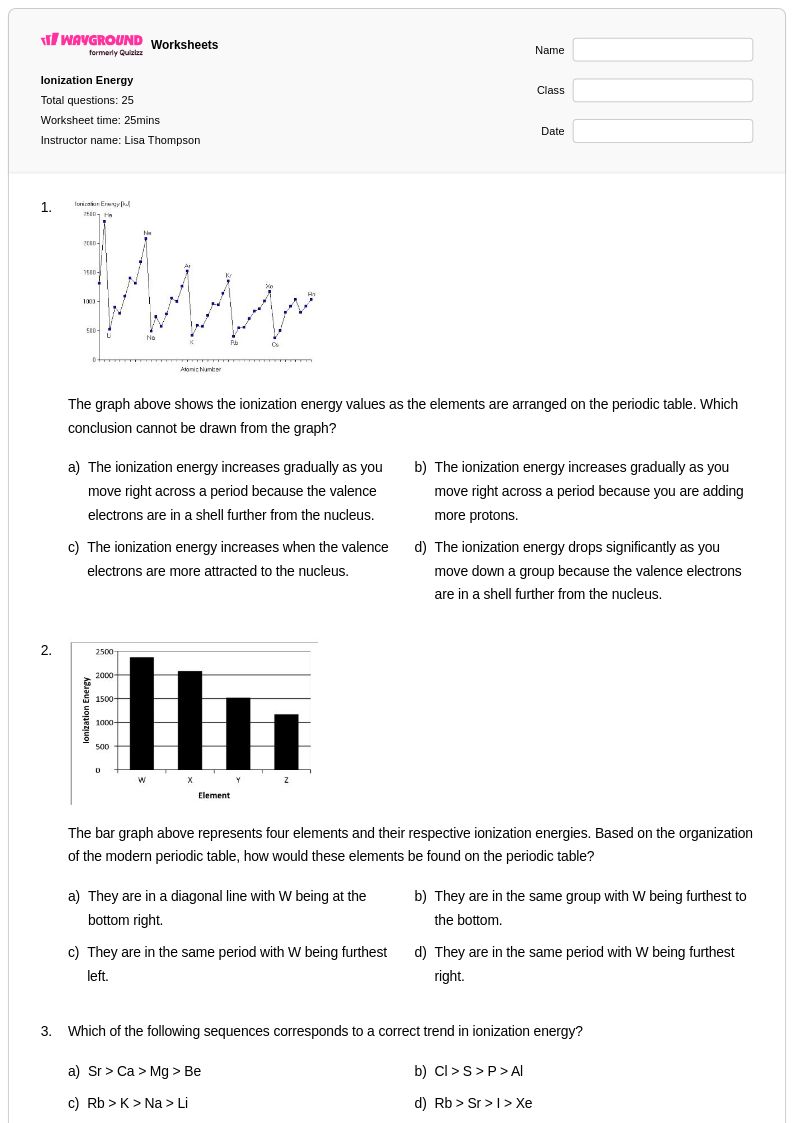
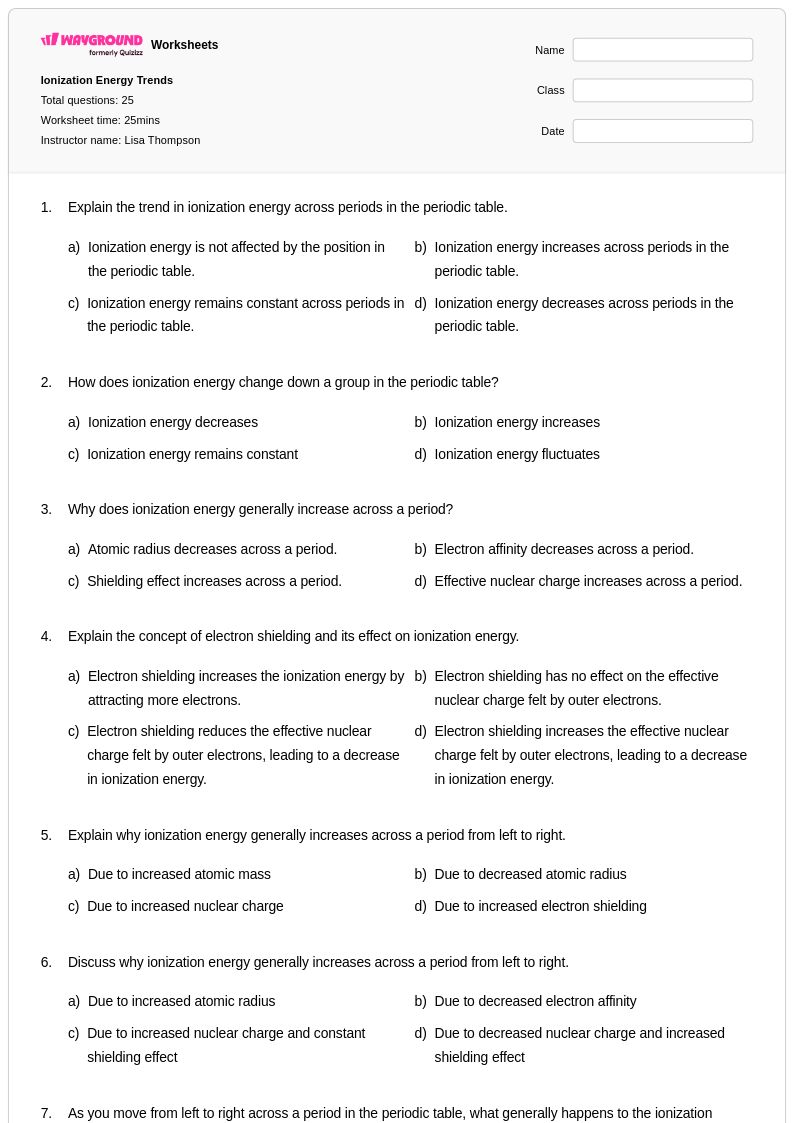
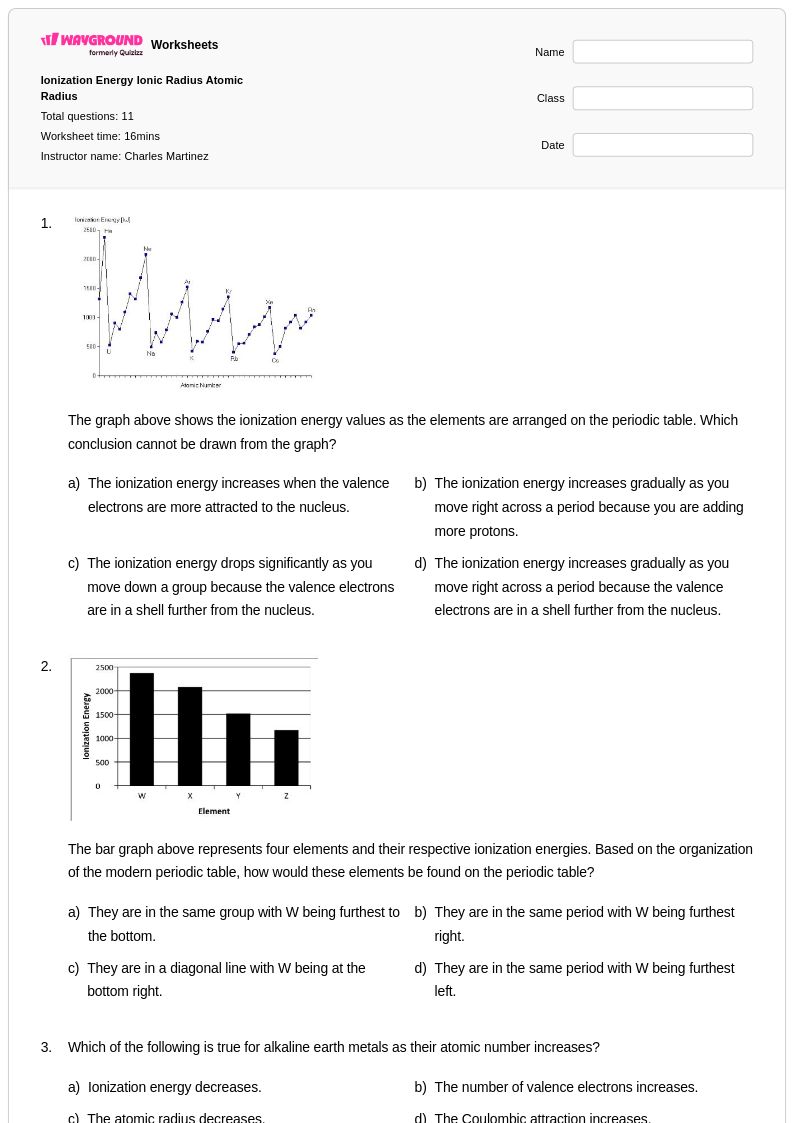
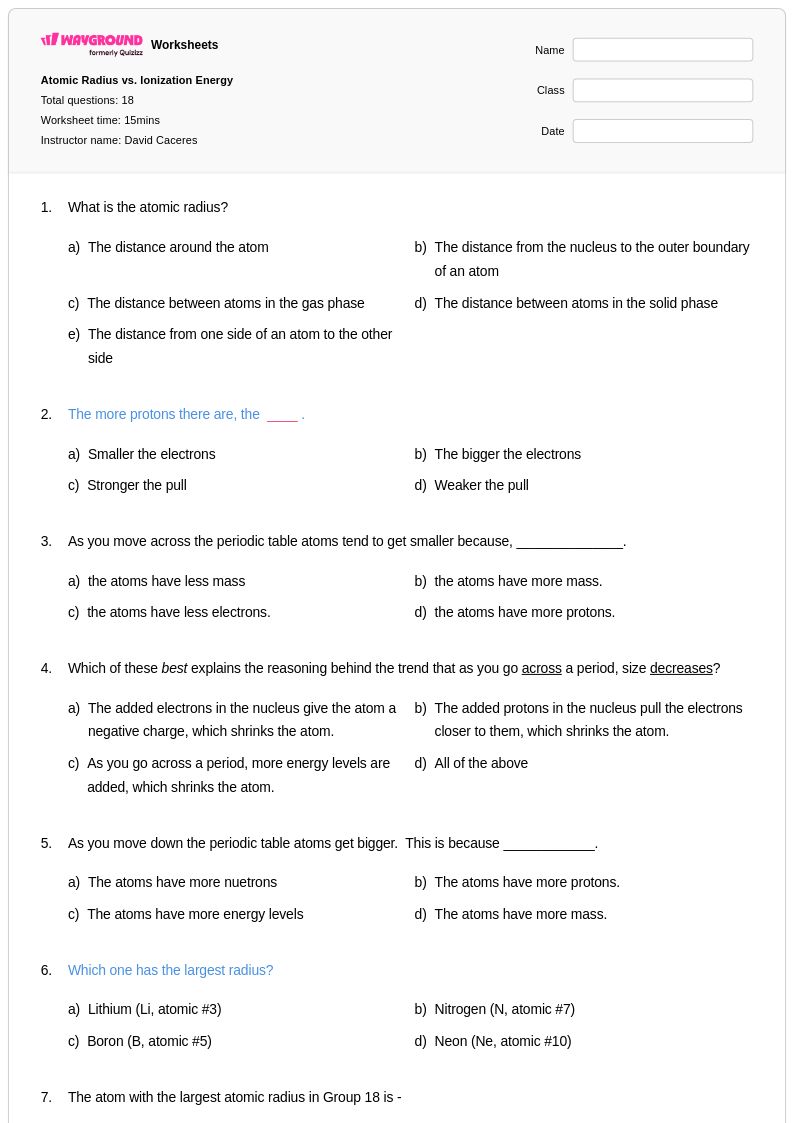
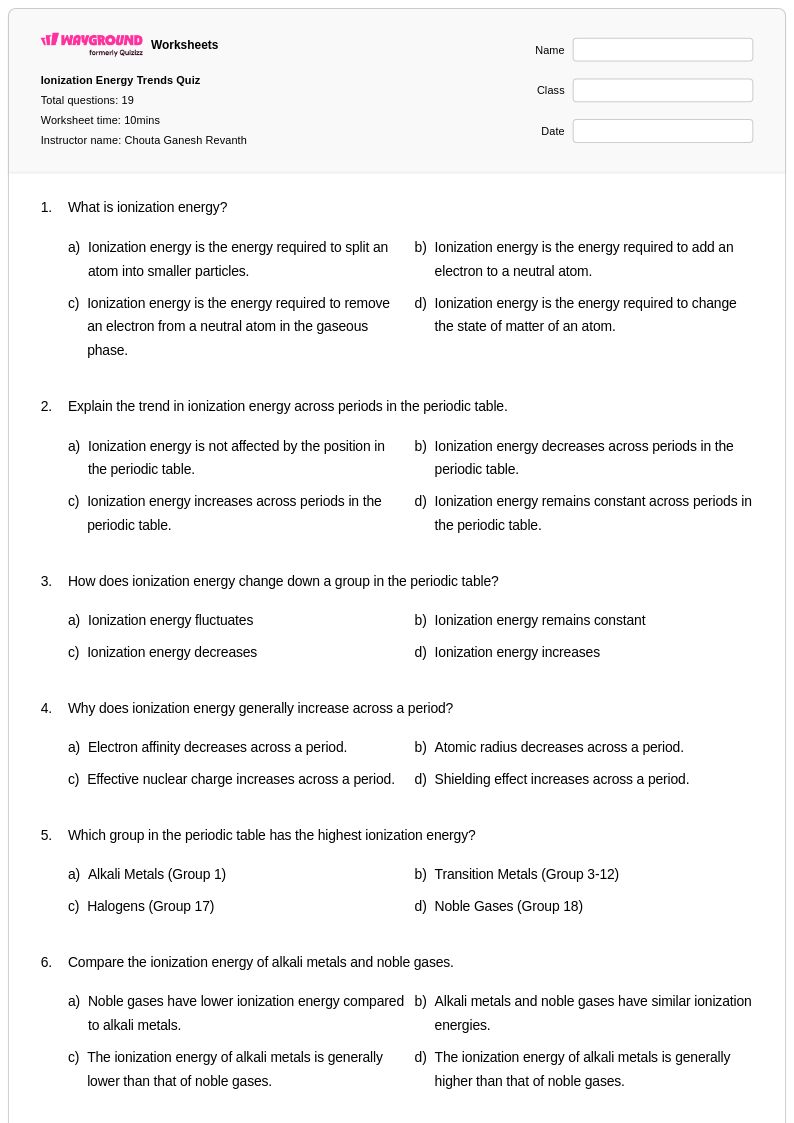
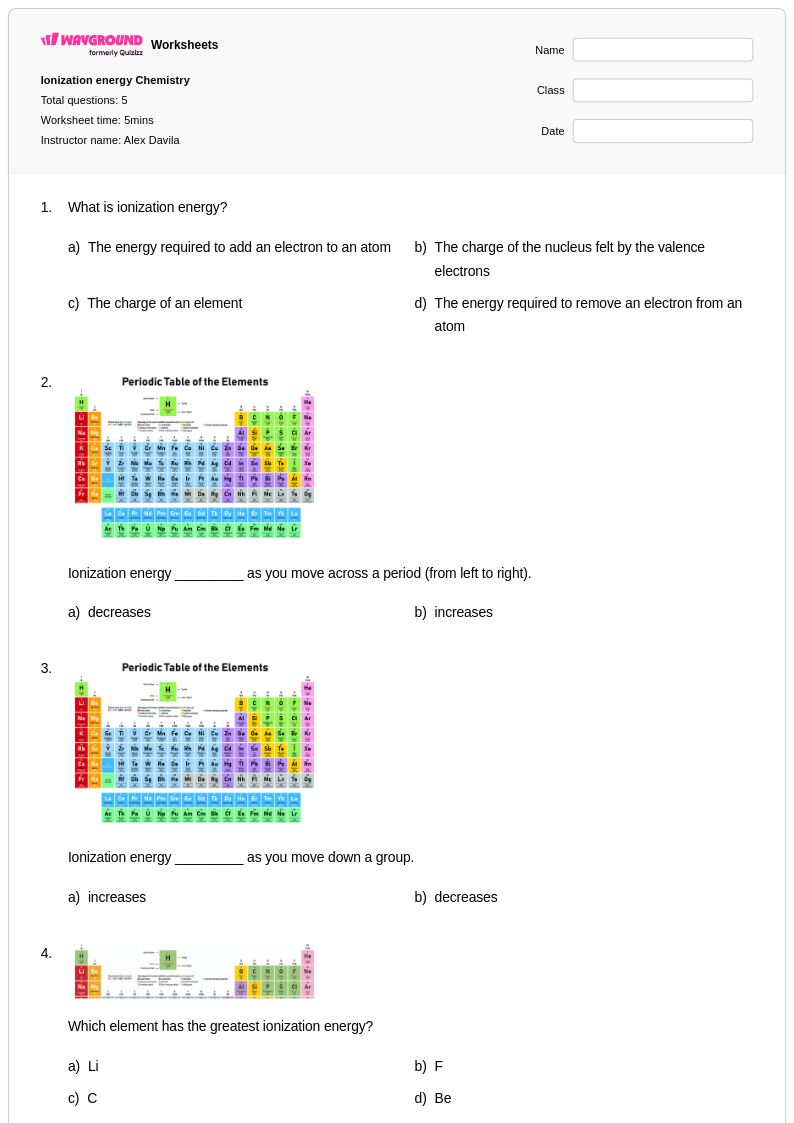
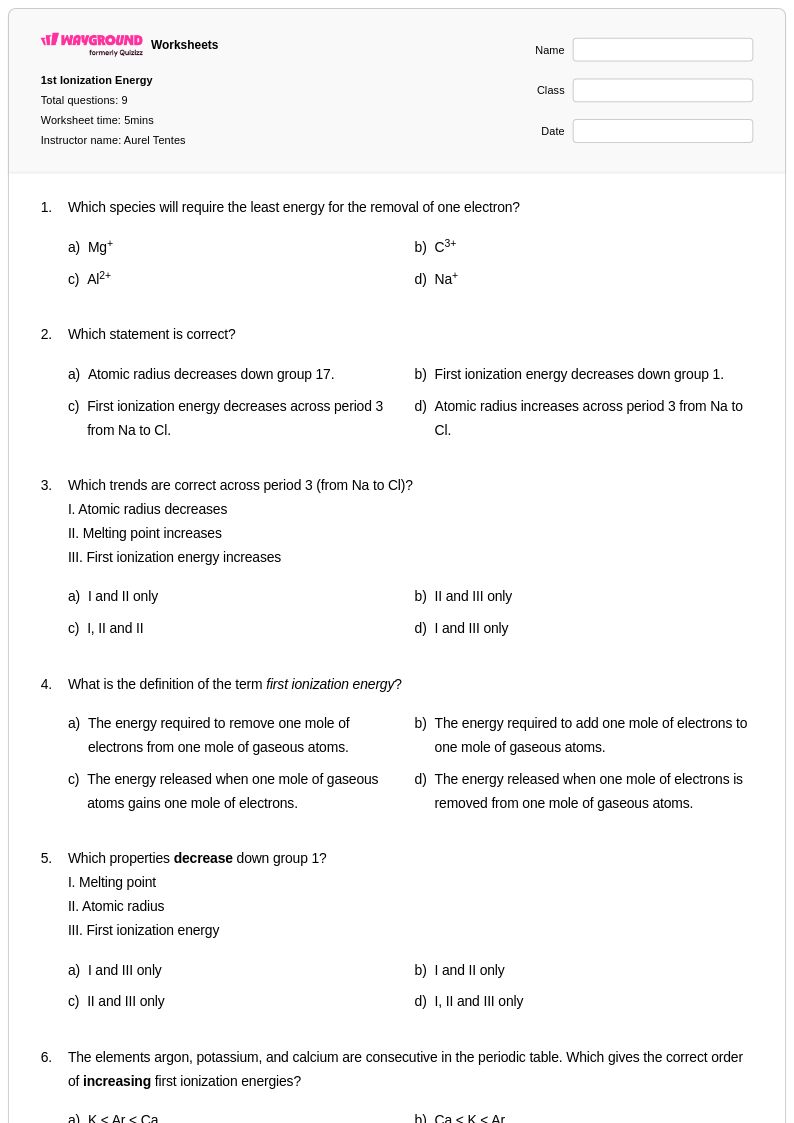
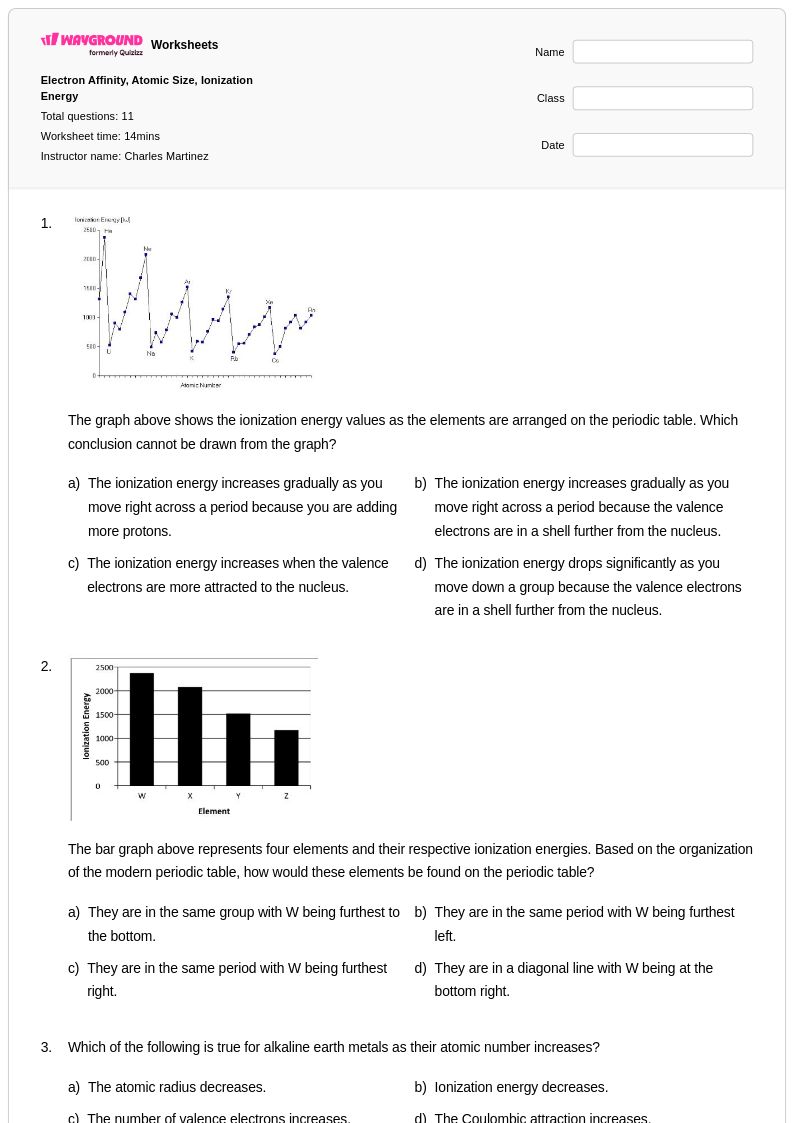
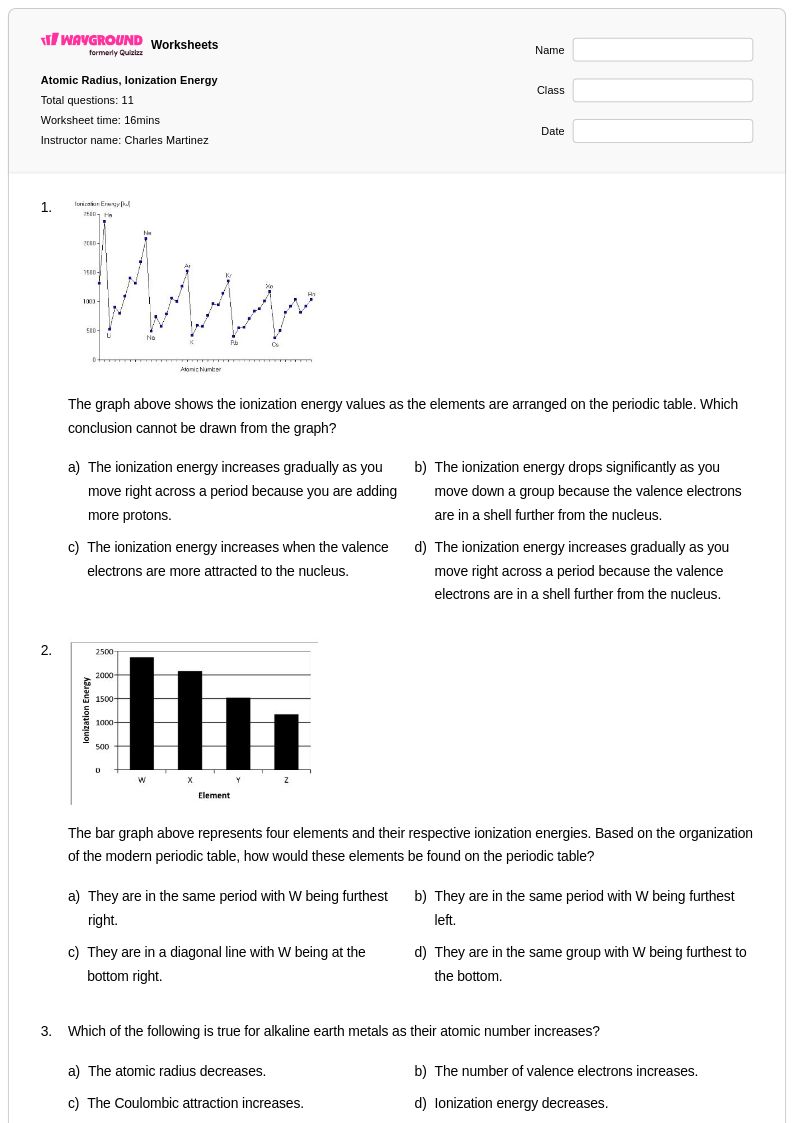
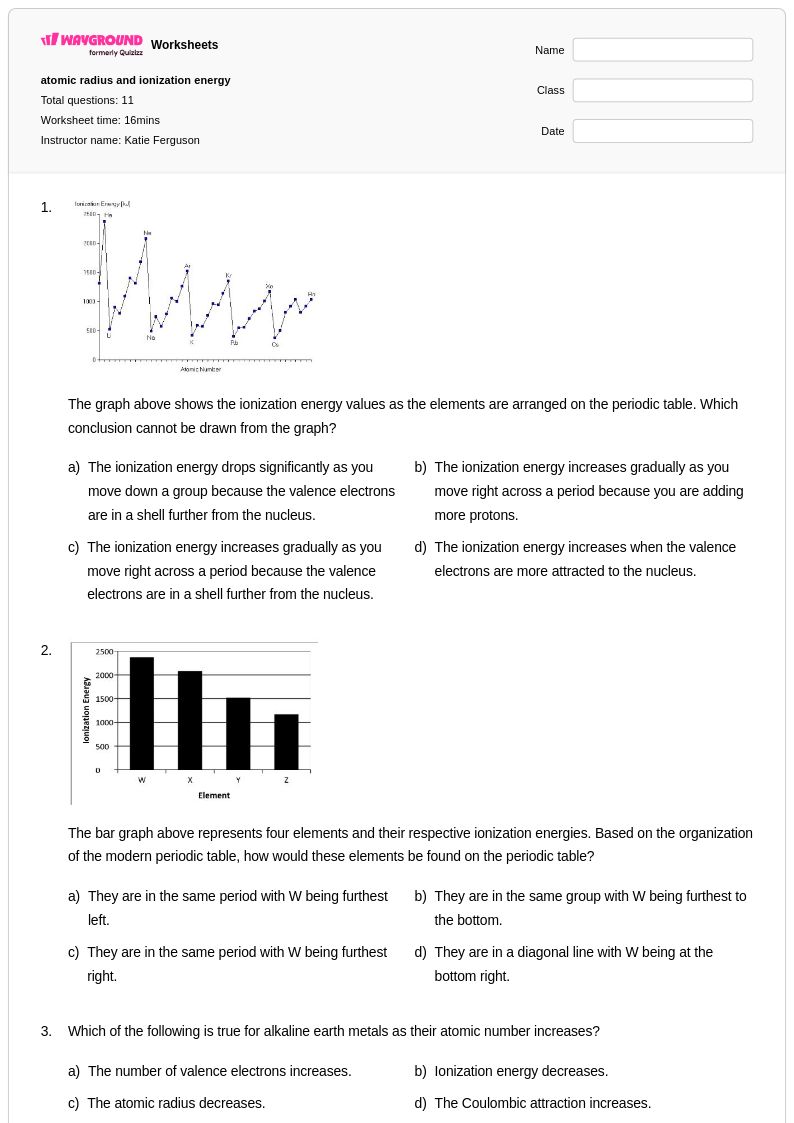
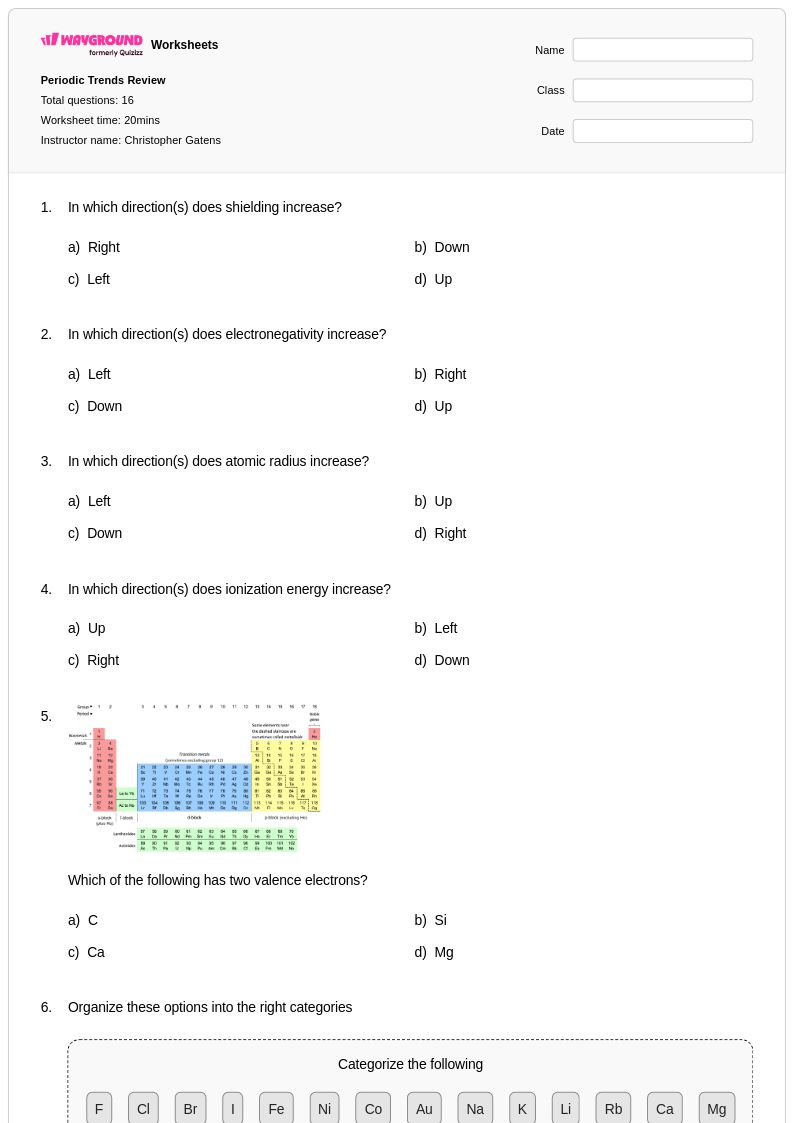
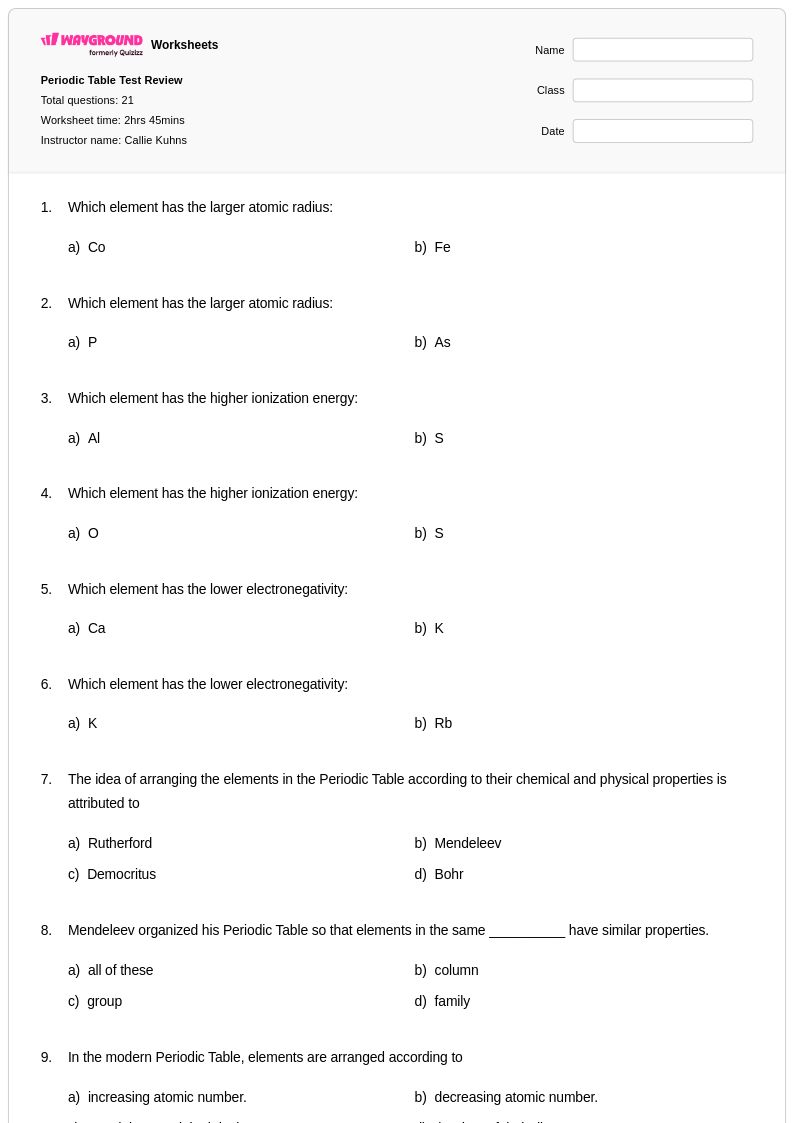
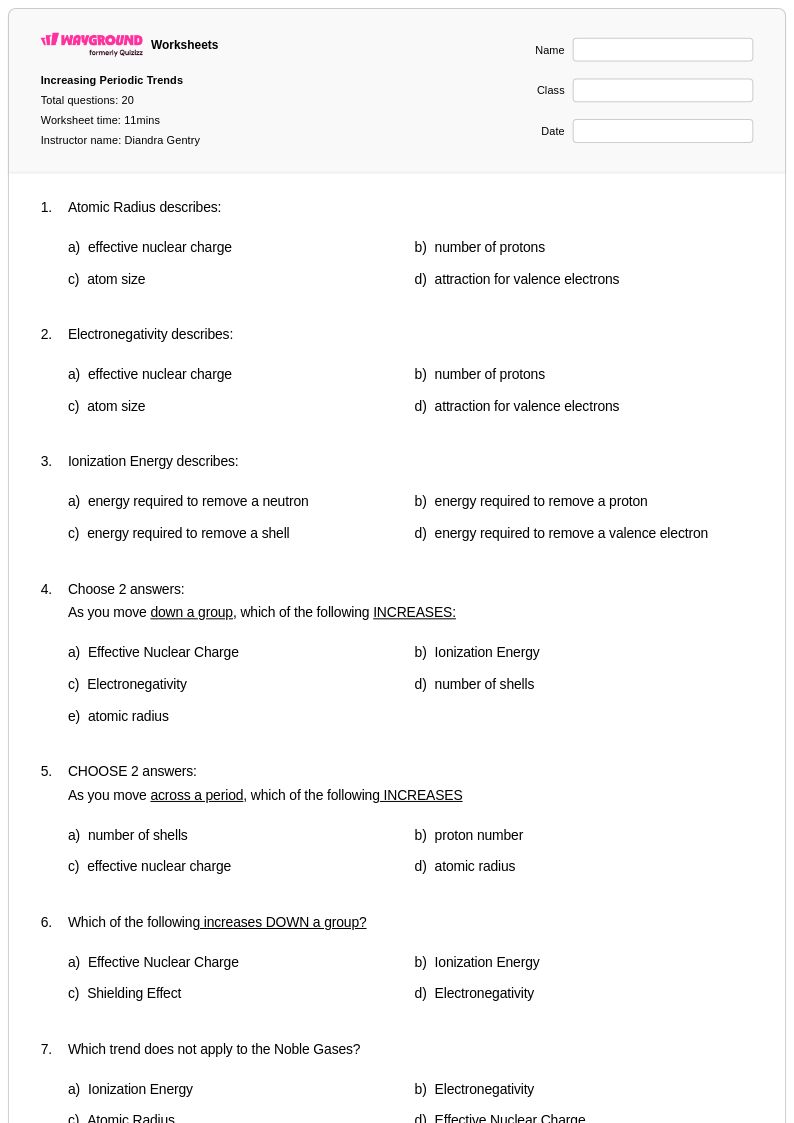
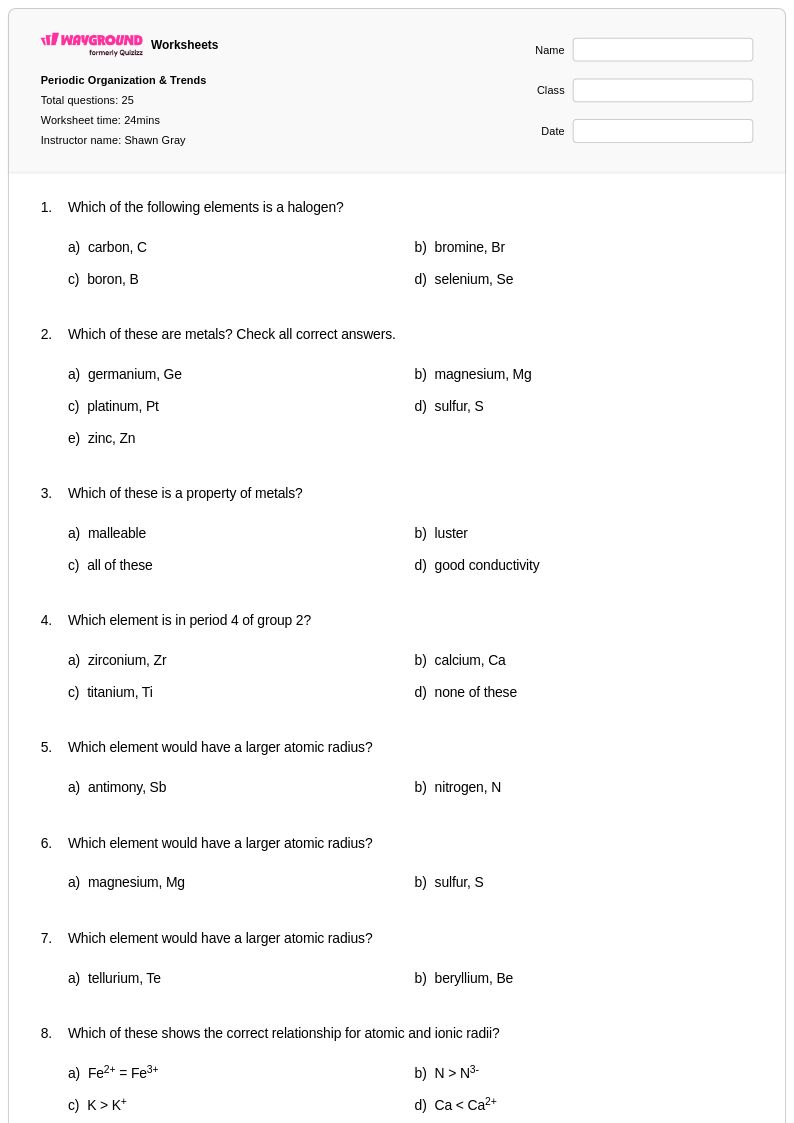
Grade 11 ionization energy worksheets available through Wayground (formerly Quizizz) provide comprehensive practice materials that help students master this fundamental concept in atomic theory. These expertly designed worksheets focus on developing critical skills including calculating first and successive ionization energies, analyzing periodic trends in ionization energy across periods and groups, and understanding the relationship between electron configuration and energy requirements for electron removal. Students work through practice problems that challenge them to interpret ionization energy data, predict values based on atomic structure, and explain anomalies in periodic trends using principles of electron shielding and nuclear charge. Each worksheet collection includes detailed answer keys and is available as free printables in convenient pdf format, allowing students to work systematically through problems ranging from basic definitions to complex multi-step calculations involving successive ionization energies.
Wayground (formerly Quizizz) empowers teachers with access to millions of teacher-created ionization energy resources specifically curated for Grade 11 chemistry instruction. The platform's robust search and filtering capabilities enable educators to quickly locate worksheets aligned with specific curriculum standards, whether focusing on periodic trends, electron configuration relationships, or quantitative problem-solving applications. Teachers can differentiate instruction by selecting from various difficulty levels and question types, then customize worksheets to match their students' specific learning needs and pacing requirements. These versatile resources are available in both printable pdf format for traditional classroom use and digital formats for online learning environments, making them invaluable tools for lesson planning, targeted remediation of challenging concepts, enrichment activities for advanced learners, and focused skill practice sessions that reinforce understanding of ionization energy principles and calculations.
FAQs
How do I teach ionization energy trends to high school chemistry students?
Start by grounding students in the three factors that govern ionization energy: nuclear charge, atomic radius, and electron shielding. Teach the periodic trends explicitly — ionization energy generally increases across a period as nuclear charge rises and atomic radius decreases, and decreases down a group as shielding and atomic radius increase. Using visual periodic table trend maps alongside worked examples helps students connect the underlying atomic theory to the observed pattern before applying it to prediction problems.
What exercises help students practice predicting ionization energy trends?
Effective practice involves comparing ionization energy values between pairs of elements and requiring students to explain the difference using nuclear charge, atomic radius, or shielding — not just state the trend. Ranking exercises, where students order a set of elements by predicted ionization energy and justify their reasoning, are particularly useful. Problems that include anomalies, such as the dip between Group 2 and Group 13, push students beyond rote memorization and build genuine conceptual understanding.
What mistakes do students commonly make when learning ionization energy?
The most frequent error is confusing ionization energy with electronegativity or electron affinity — students conflate concepts that involve electron behavior but operate on different principles. Many students also apply the general periodic trend without accounting for exceptions, such as the lower first ionization energy of oxygen compared to nitrogen due to electron pairing in the 2p subshell. A third common misconception is assuming that higher ionization energy always means a more reactive element, which breaks down when comparing metals and nonmetals.
How do I use ionization energy worksheets effectively in my chemistry classroom?
Ionization energy worksheets work well as structured practice after initial instruction on periodic trends, giving students the repetition needed to internalize the reasoning behind each comparison. On Wayground, these worksheets are available as printable PDFs for traditional classroom use and in digital formats for technology-integrated environments, including the option to host them as a quiz directly on the platform. Answer keys are included with each worksheet, allowing students to self-check and teachers to focus feedback on persistent misconceptions rather than routine grading.
How do I support students who struggle with ionization energy while keeping advanced students challenged?
For struggling students, focus remediation on foundational atomic theory — if students do not understand electron configuration or periodic table organization, ionization energy trends will not stick. Advanced students benefit from successive ionization energy problems, where the dramatic jump in energy values when a core electron is removed reveals which group an unknown element belongs to. Wayground's differentiation tools let teachers customize worksheet assignments based on individual student needs, supporting both remediation and enrichment within the same lesson.
What is ionization energy and why is it important in chemistry?
Ionization energy is the minimum energy required to remove an electron from a gaseous atom in its ground state, and it is a foundational concept for understanding chemical reactivity, bonding, and periodic trends. Elements with low ionization energies tend to form positive ions readily and behave as metals, while elements with high ionization energies resist electron loss and typically act as nonmetals. Understanding ionization energy gives students a mechanistic framework for predicting how and why elements react the way they do.