Free Printable Enthalpy Stoichiometry Worksheets for Grade 11
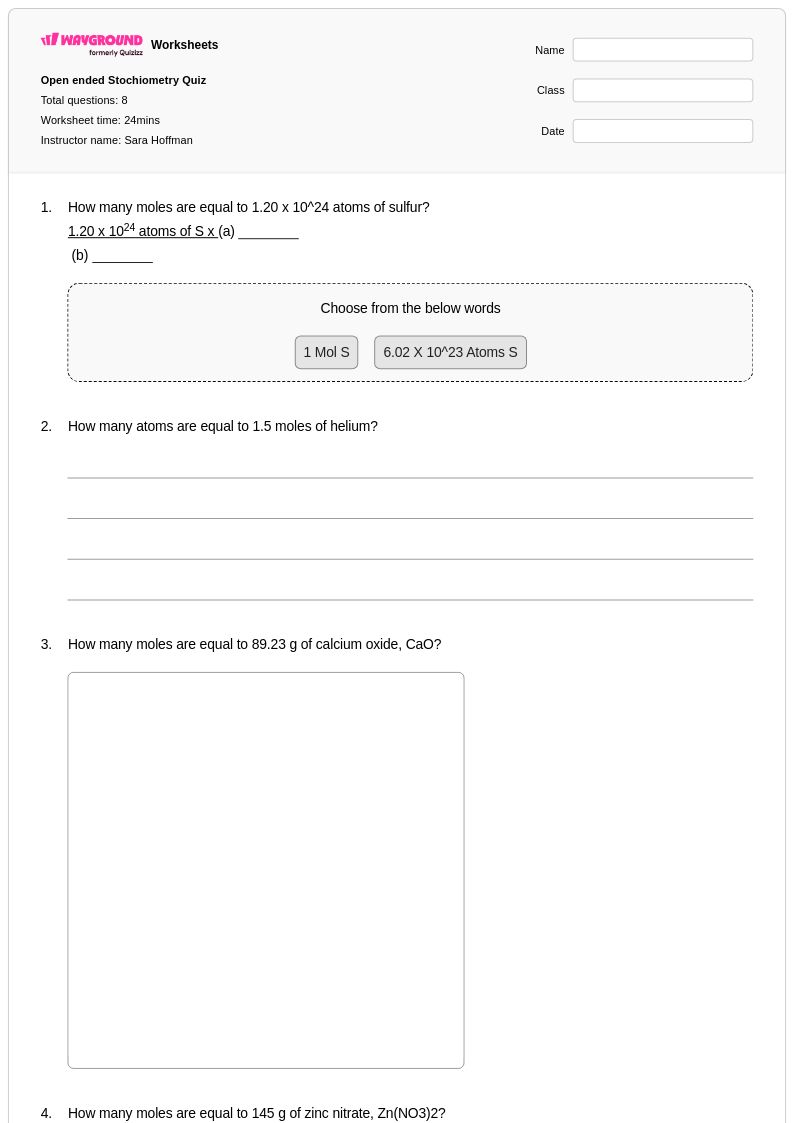
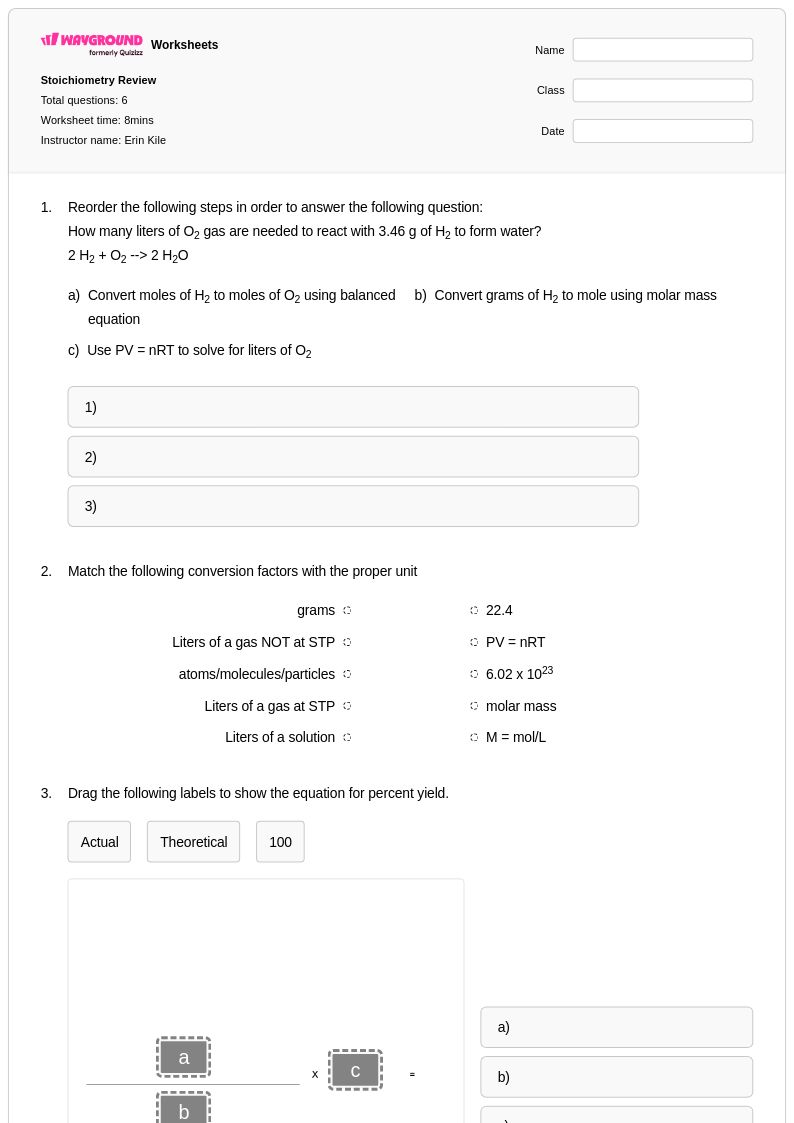
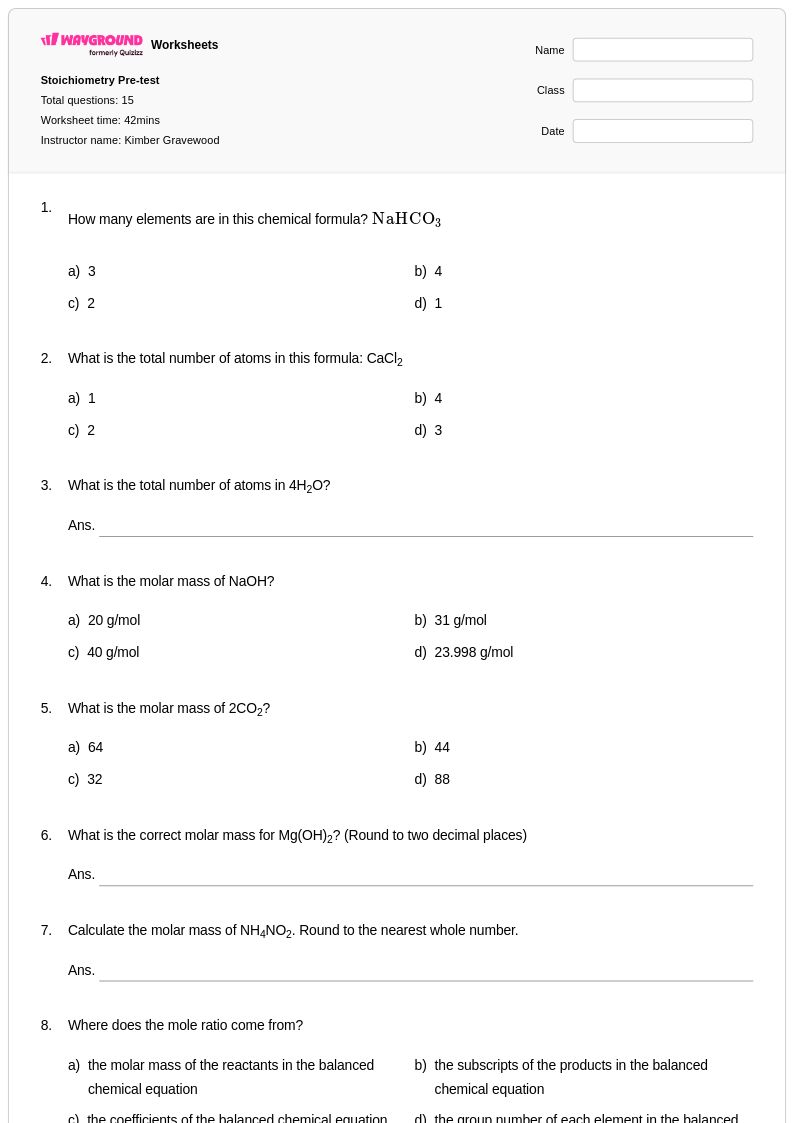
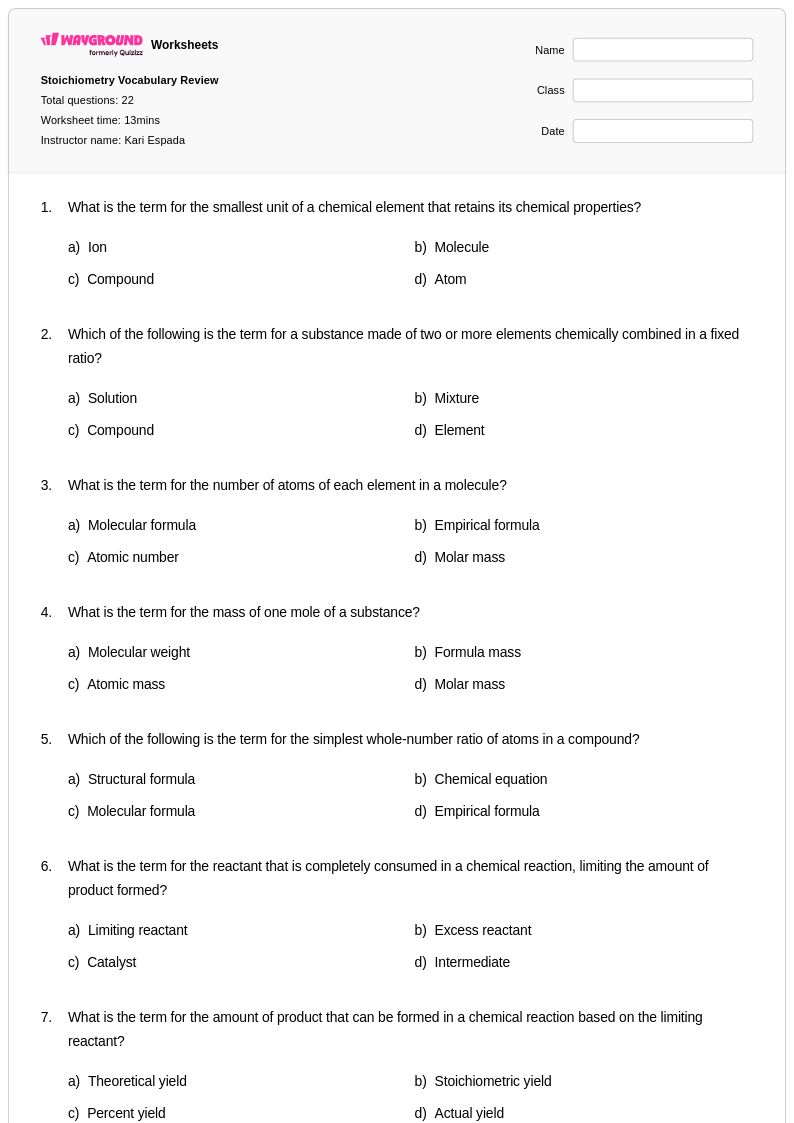
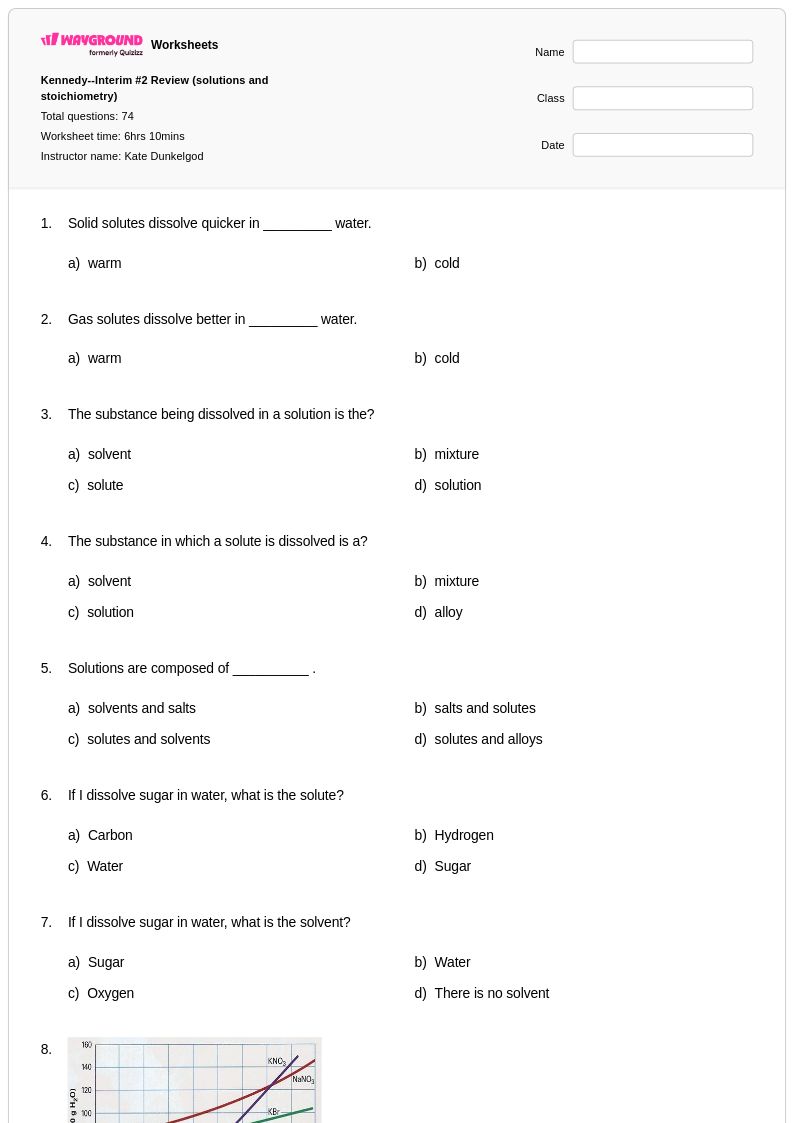
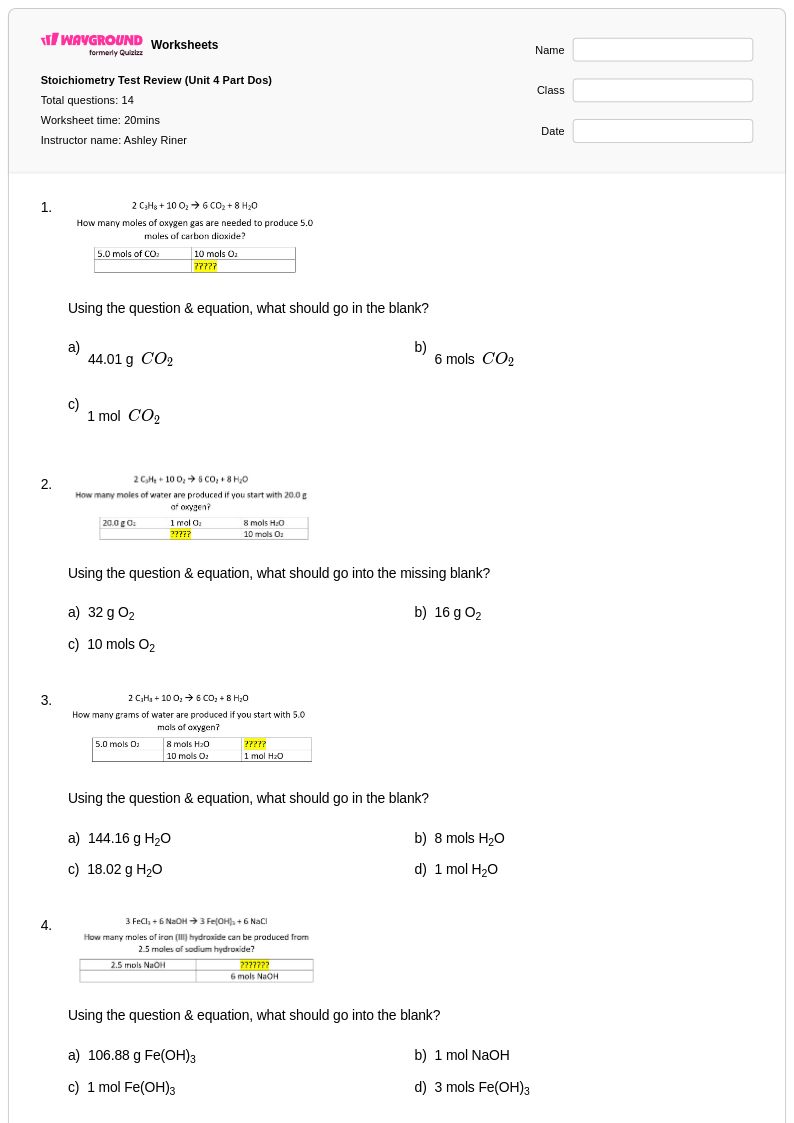
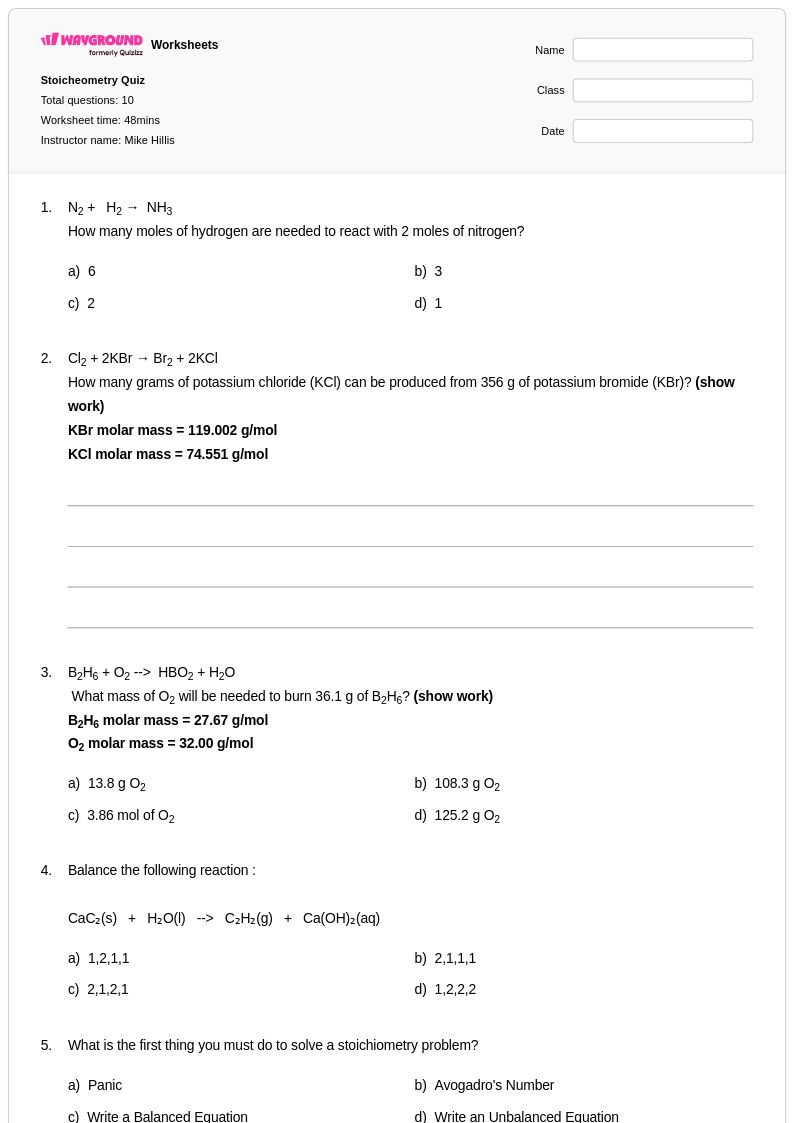
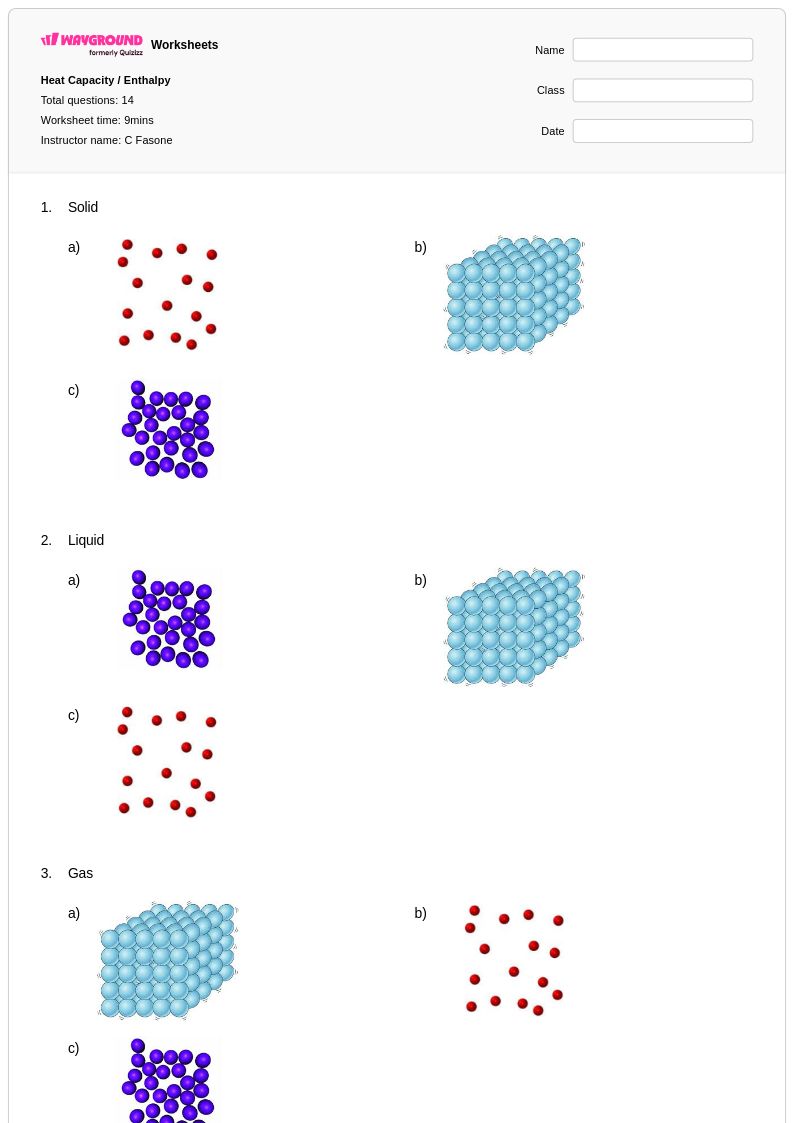
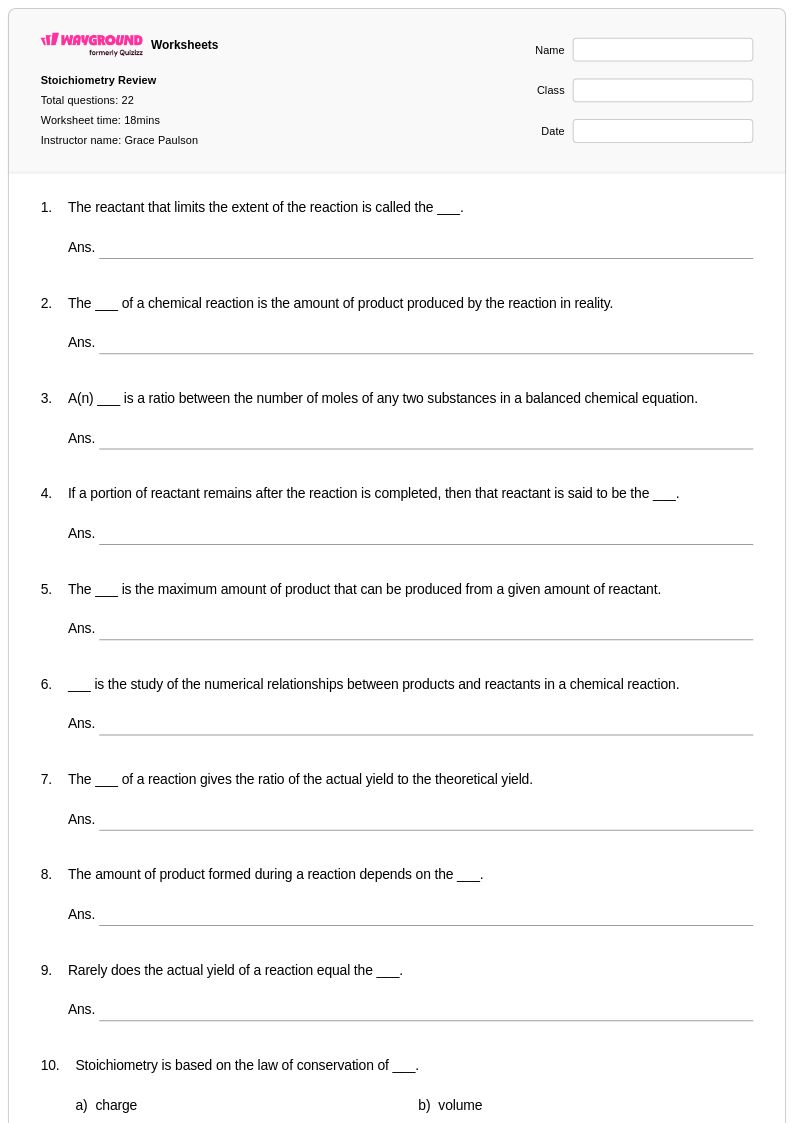
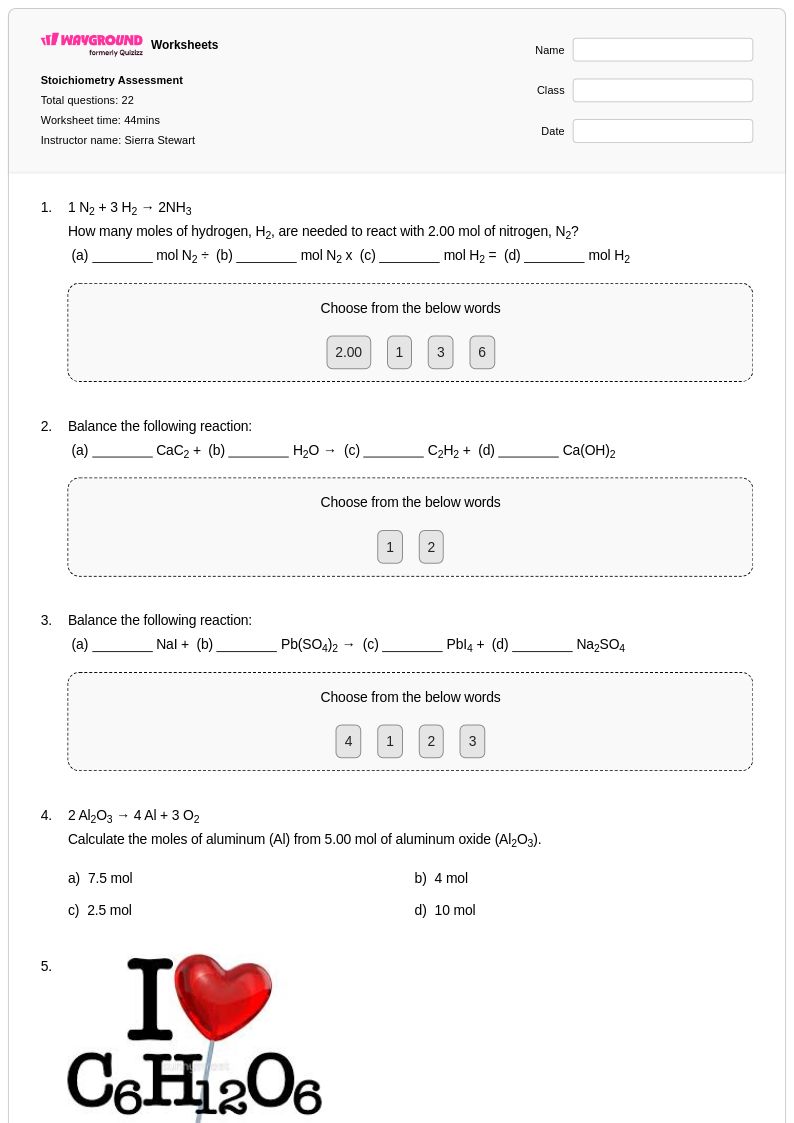
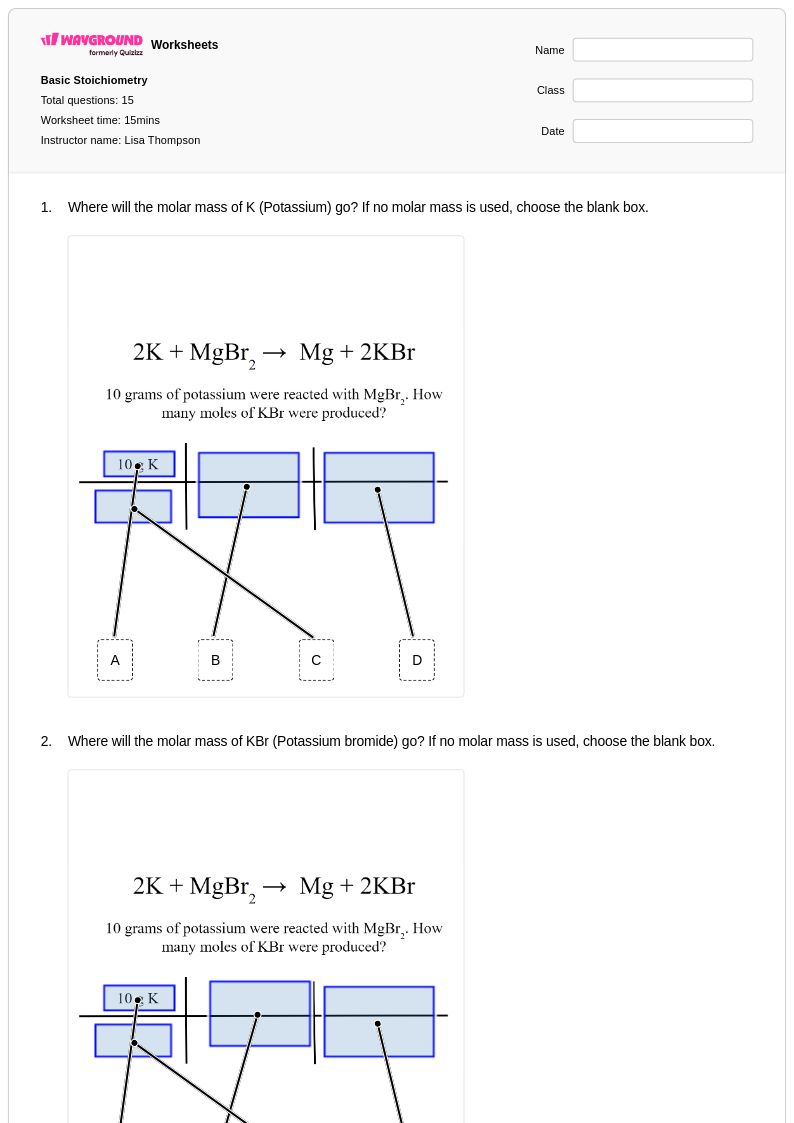
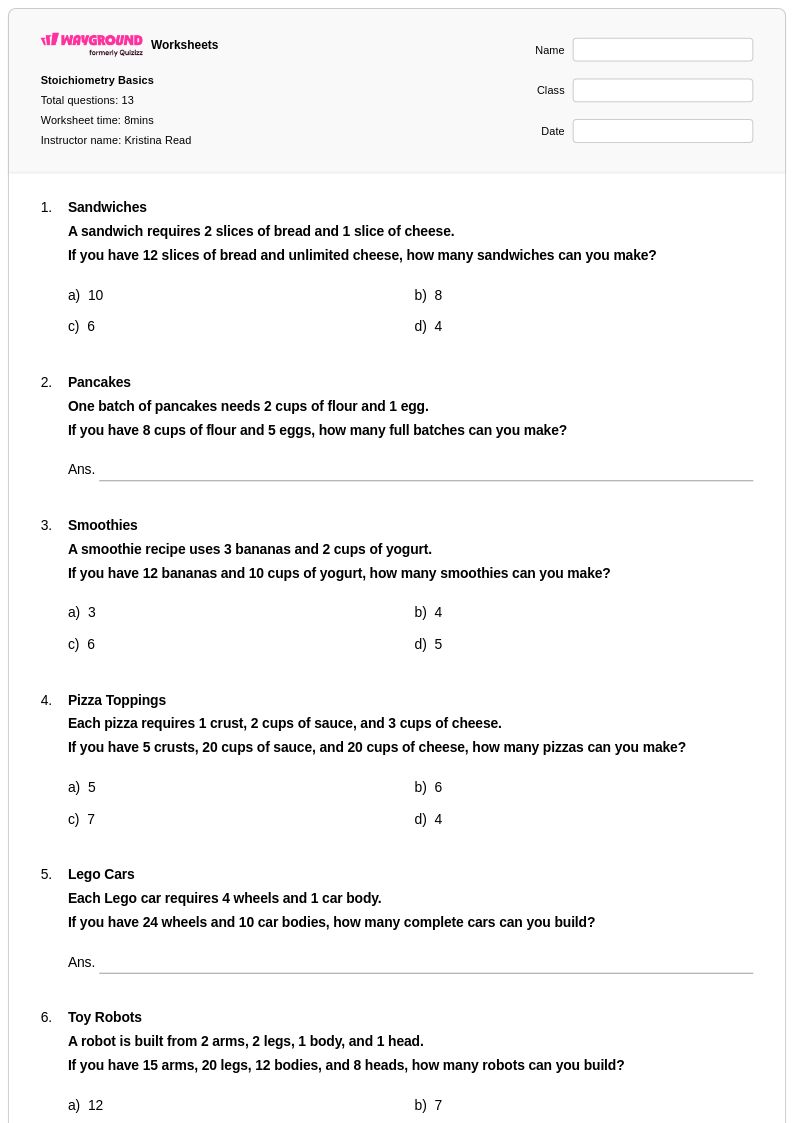
Grade 11 enthalpy stoichiometry worksheets from Wayground provide free printables and practice problems with answer keys to help students master energy calculations in chemical reactions.
Explore printable Enthalpy Stoichiometry worksheets for Grade 11
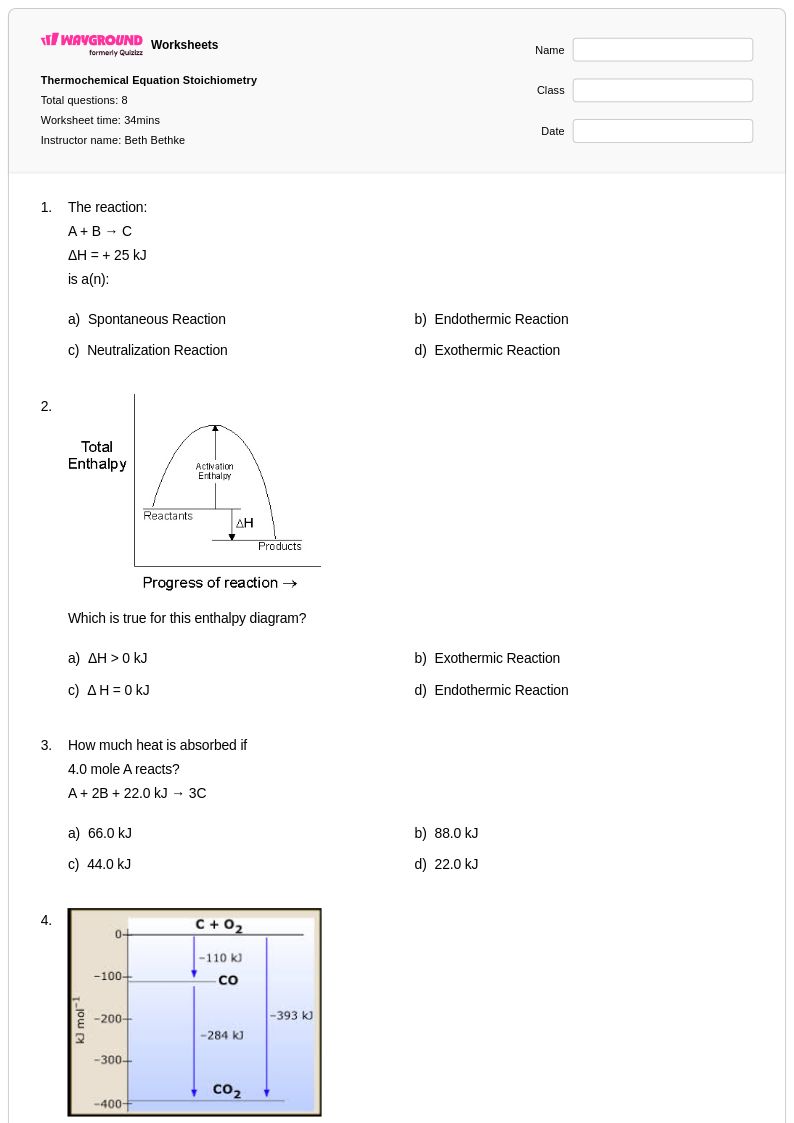
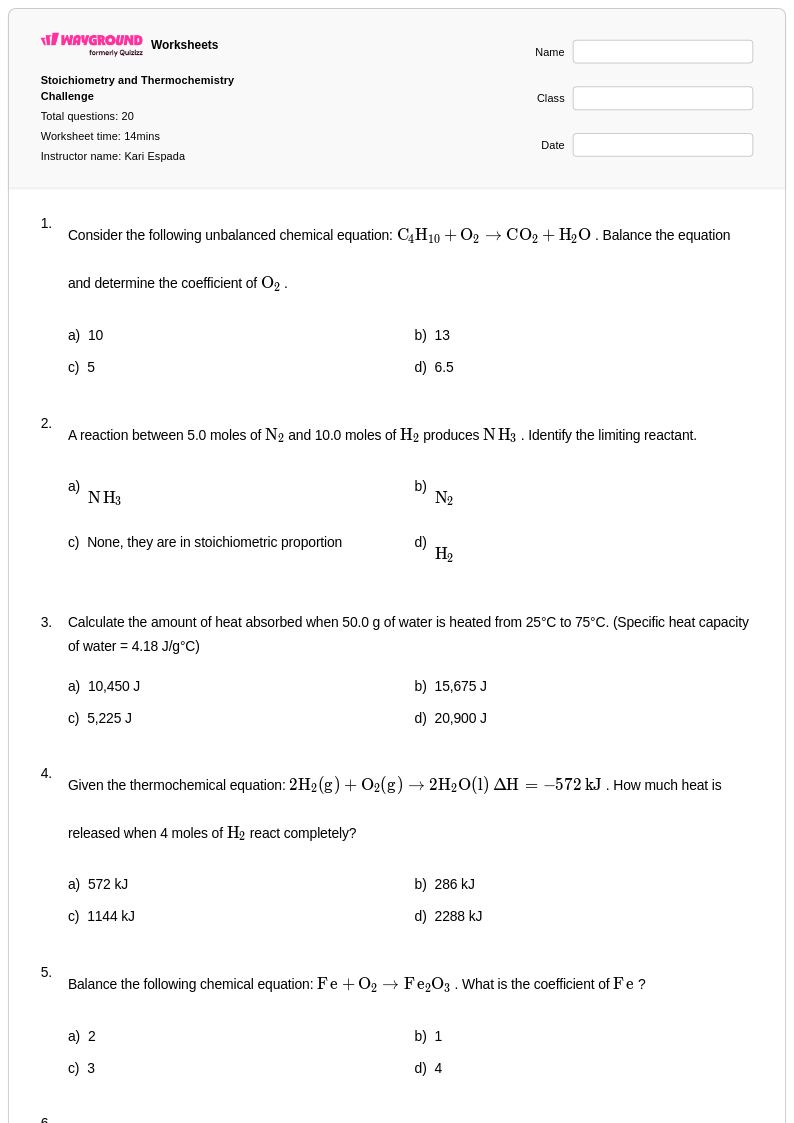
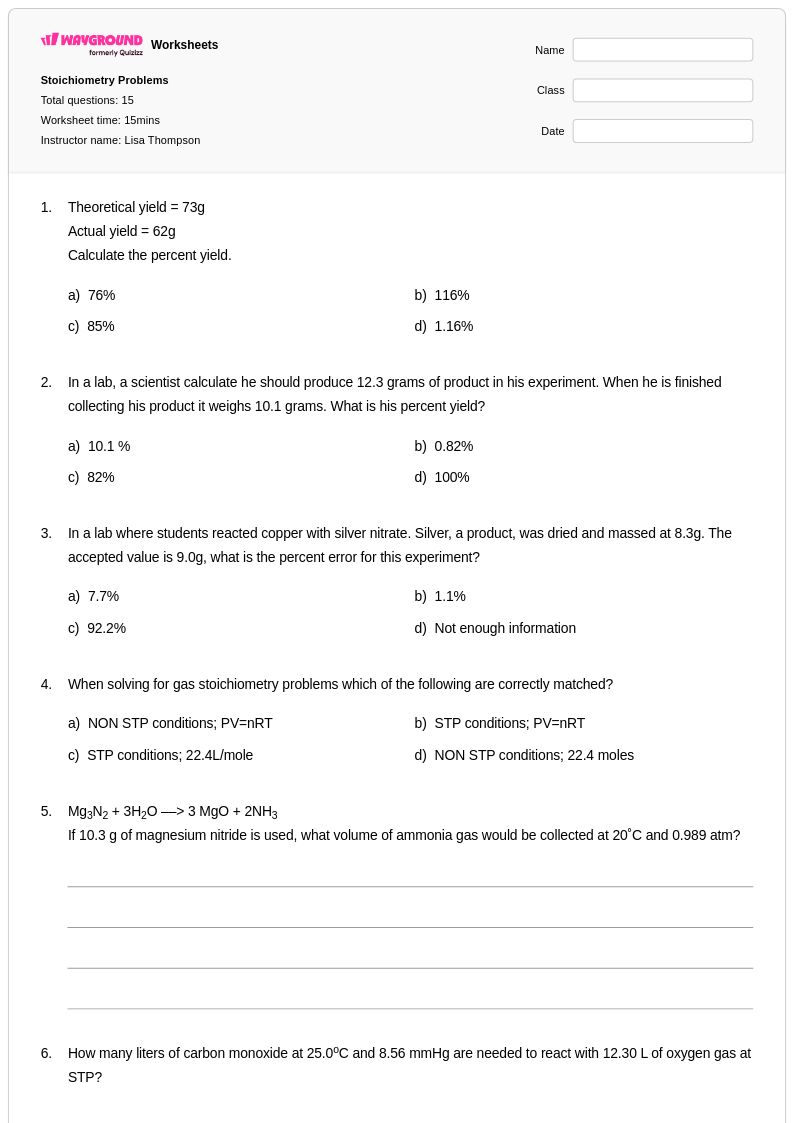
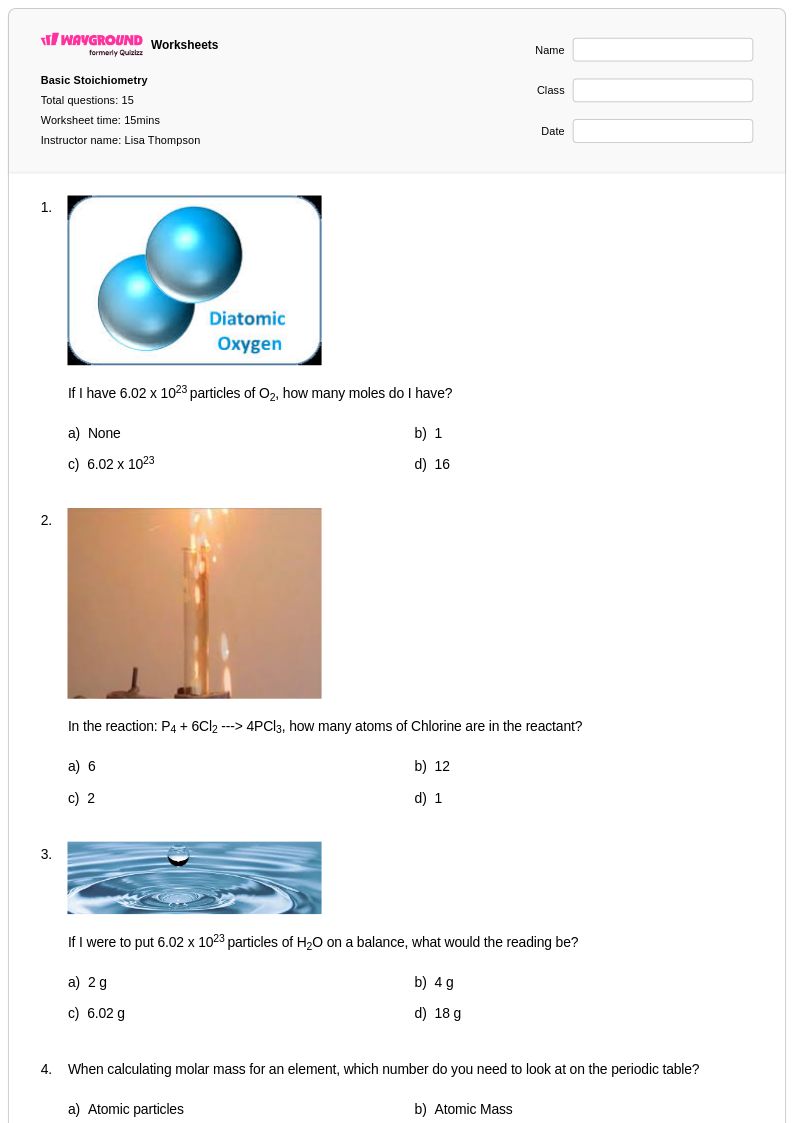
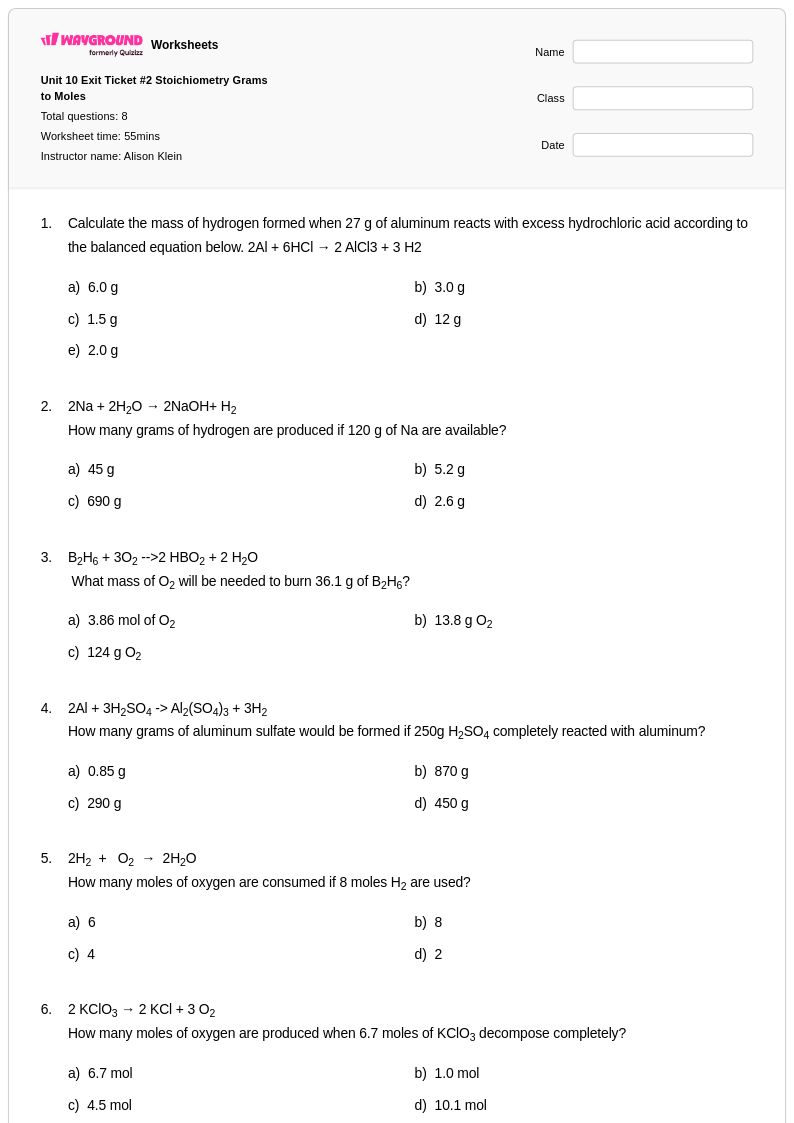
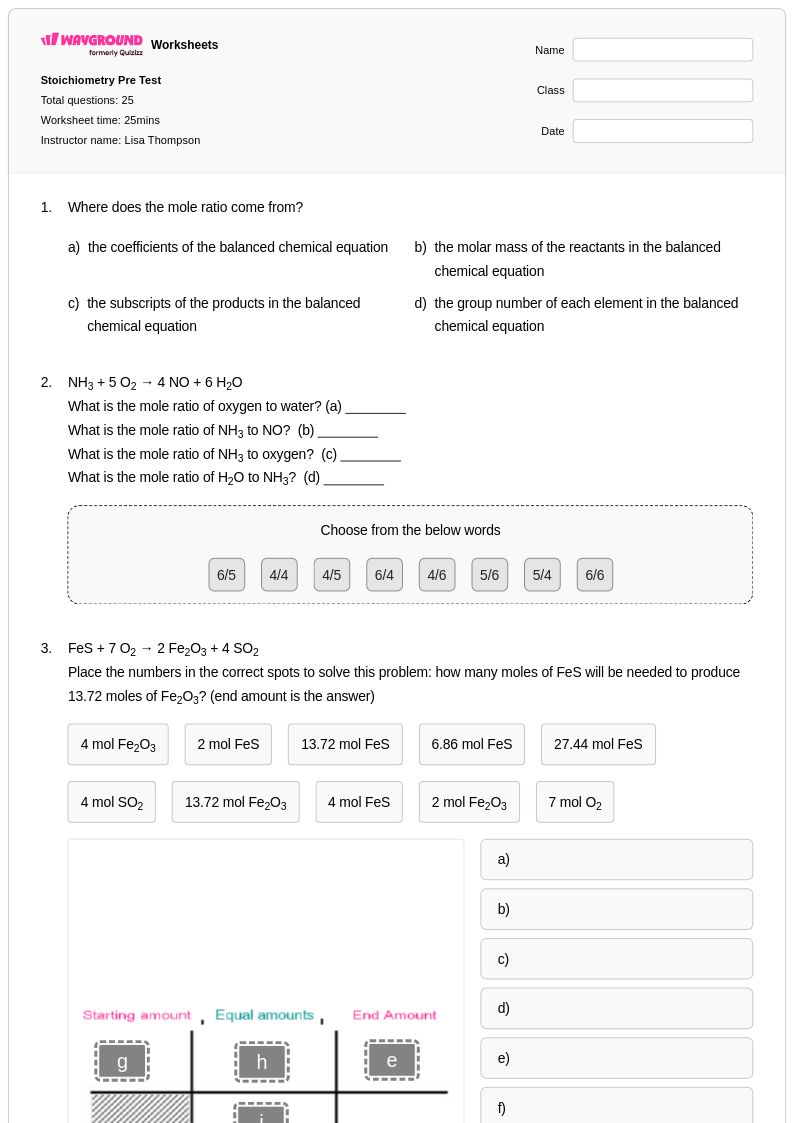
Enthalpy stoichiometry worksheets for Grade 11 students available through Wayground (formerly Quizizz) provide comprehensive practice with the quantitative relationships between chemical reactions and energy changes. These educational resources strengthen students' ability to calculate enthalpy changes using balanced chemical equations, apply Hess's law to multi-step reactions, and determine the energy requirements for various chemical processes. The worksheets feature systematic practice problems that guide students through complex calculations involving standard enthalpies of formation, combustion reactions, and calorimetry data. Each printable resource includes detailed answer keys that help students verify their work and understand common problem-solving approaches, while the free pdf format ensures easy classroom distribution and home study access.
Wayground (formerly Quizizz) supports chemistry educators with millions of teacher-created enthalpy stoichiometry resources that streamline lesson planning and student assessment. The platform's robust search and filtering capabilities allow teachers to quickly locate worksheets aligned with specific curriculum standards and learning objectives, while built-in differentiation tools enable customization for varying skill levels within Grade 11 classrooms. Teachers can access these materials in both printable and digital formats, including downloadable pdf versions that facilitate hybrid learning environments. These extensive worksheet collections prove invaluable for targeted remediation of struggling students, enrichment activities for advanced learners, and systematic skill practice that reinforces the connection between thermochemistry concepts and stoichiometric calculations throughout the academic year.
FAQs
How do I teach enthalpy stoichiometry to chemistry students?
Start by ensuring students are fluent with basic stoichiometry and mole conversions before introducing energy as a reactant or product in thermochemical equations. Introduce the concept of enthalpy change (ΔH) using combustion reactions students are already familiar with, then build toward multi-step problems using Hess's law. Connecting standard enthalpies of formation to real chemical processes, such as fuel combustion or phase changes, helps students see why these calculations matter beyond the textbook.
What are the most effective practice problems for enthalpy stoichiometry?
The most effective practice problems for enthalpy stoichiometry move students through a progression: single-step thermochemical equation calculations, Hess's law multi-step problems, and then standard enthalpy of formation problems requiring students to combine multiple values. Including combustion reaction calculations and phase change energy problems ensures students encounter the full range of contexts where enthalpy stoichiometry applies. Structured practice with detailed answer keys allows students to self-correct and identify exactly where their calculation process breaks down.
What mistakes do students commonly make in enthalpy stoichiometry?
The most frequent error is failing to account for stoichiometric coefficients when scaling enthalpy values — students often treat ΔH as a fixed property of a reaction rather than a quantity that scales with moles. A second common mistake is incorrectly applying sign conventions, particularly when reversing a reaction in a Hess's law problem. Students also frequently confuse standard enthalpy of formation values for elements in their standard states, which should always be zero, with values for compounds.
How do I apply Hess's law in stoichiometry problems?
Hess's law states that the total enthalpy change of a reaction is the sum of enthalpy changes for any set of steps that connect the same reactants to the same products, regardless of pathway. In practice, teachers should have students identify the target reaction first, then manipulate given equations by reversing them or multiplying by coefficients to make them combine correctly, remembering to apply the same operations to each ΔH value. Practicing with two-step and then three-step problems builds the pattern recognition students need to handle more complex thermochemical calculations.
How can I use Wayground's enthalpy stoichiometry worksheets in my classroom?
Wayground's enthalpy stoichiometry worksheets are available as printable PDFs for traditional classroom use and in digital formats for technology-integrated environments, including the option to host them as a quiz directly on Wayground. This flexibility makes them suitable for in-class problem sets, homework assignments, or structured review sessions. Each worksheet includes a complete answer key, supporting both teacher-led correction and independent student self-assessment.
How do I differentiate enthalpy stoichiometry instruction for students at different skill levels?
For struggling students, begin with single-step thermochemical equation problems and provide a reference sheet of standard enthalpy of formation values before requiring memorization. Advanced students can be challenged with multi-step Hess's law problems that require reversing and scaling multiple equations simultaneously. On Wayground, teachers can apply accommodations such as reduced answer choices or read aloud settings to individual students, allowing the rest of the class to work under default conditions without disruption.