Free Printable Atomic Mass Number Worksheets for Grade 11
Grade 11 atomic mass number worksheets from Wayground provide comprehensive printables and practice problems with answer keys to help students master calculating atomic mass, isotopes, and nuclear composition through engaging free PDF exercises.
Explore printable Atomic Mass Number worksheets for Grade 11
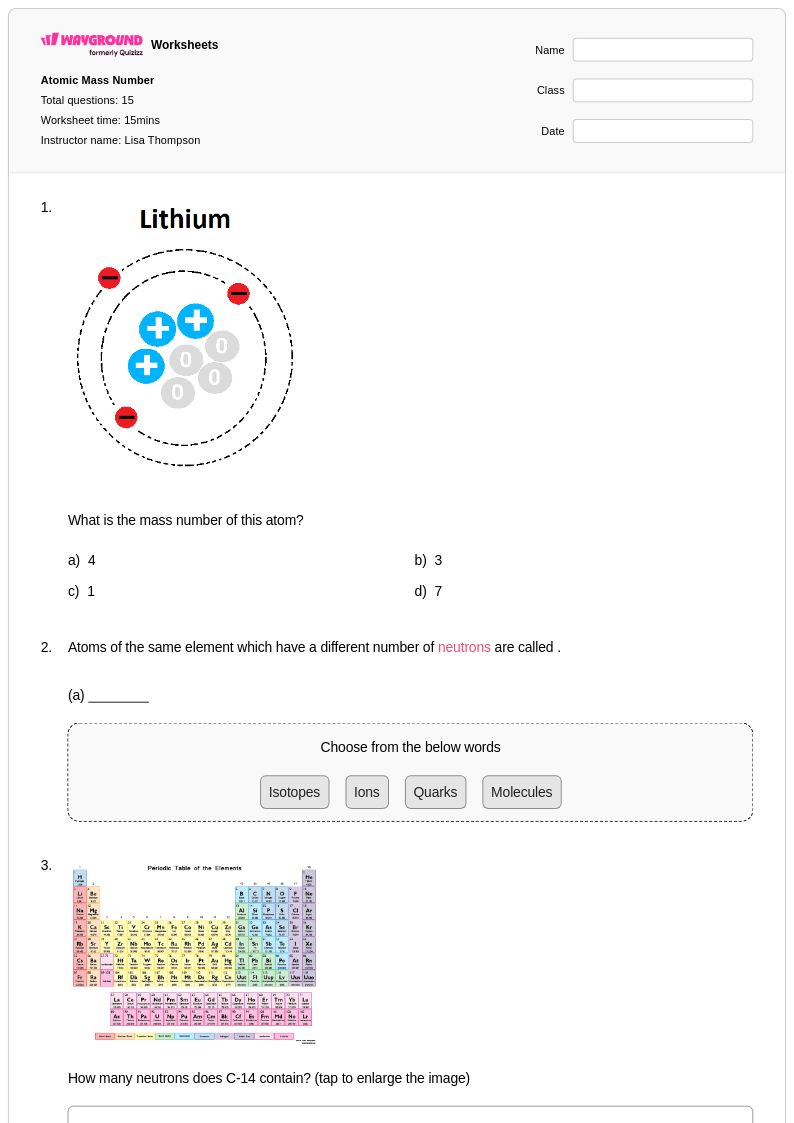
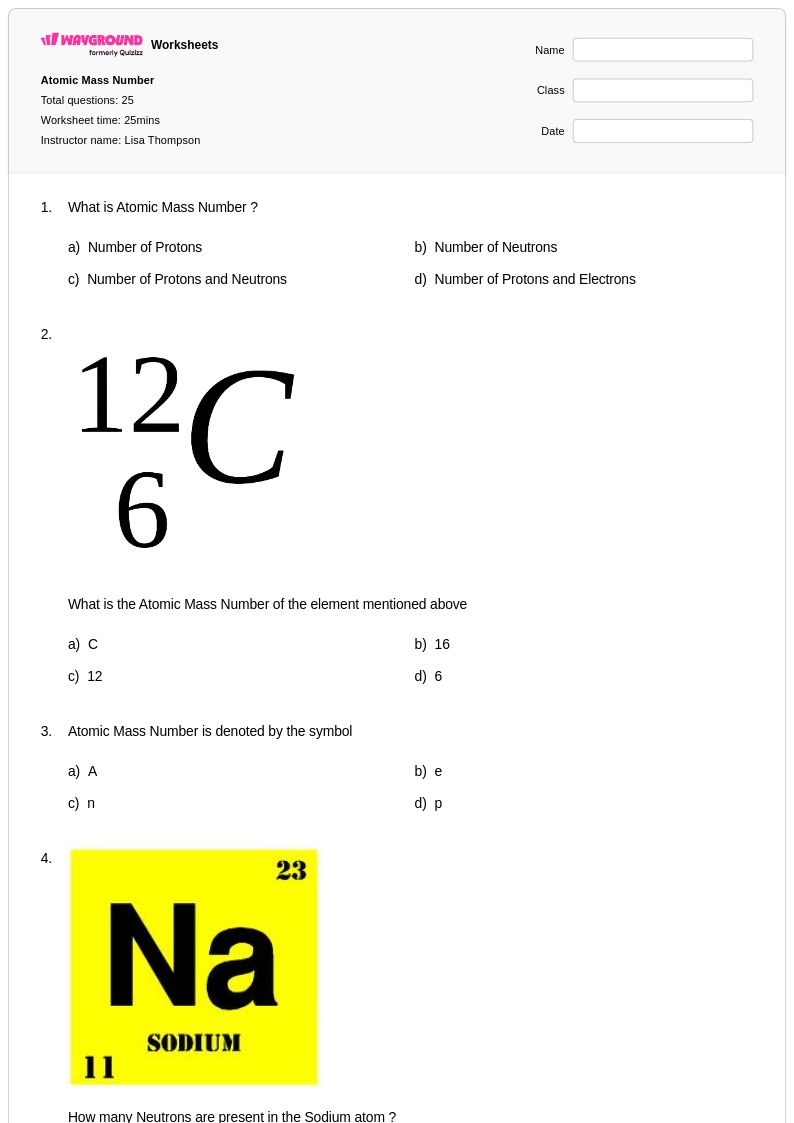
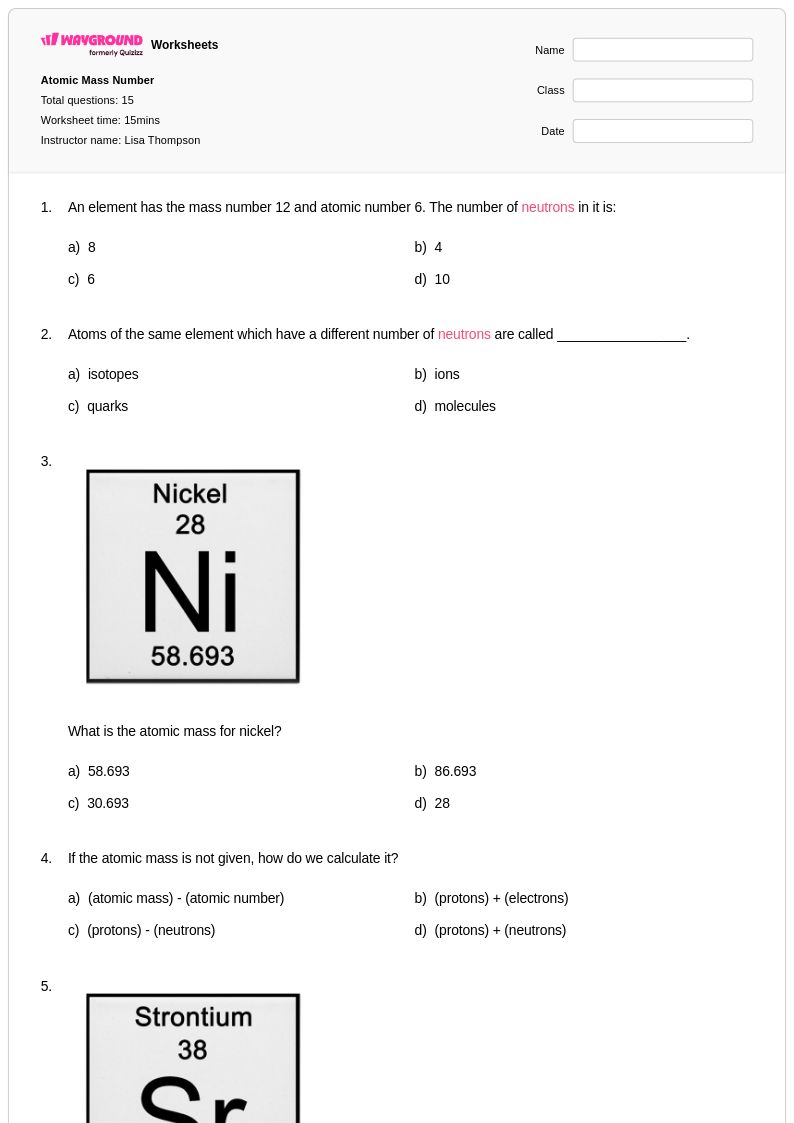
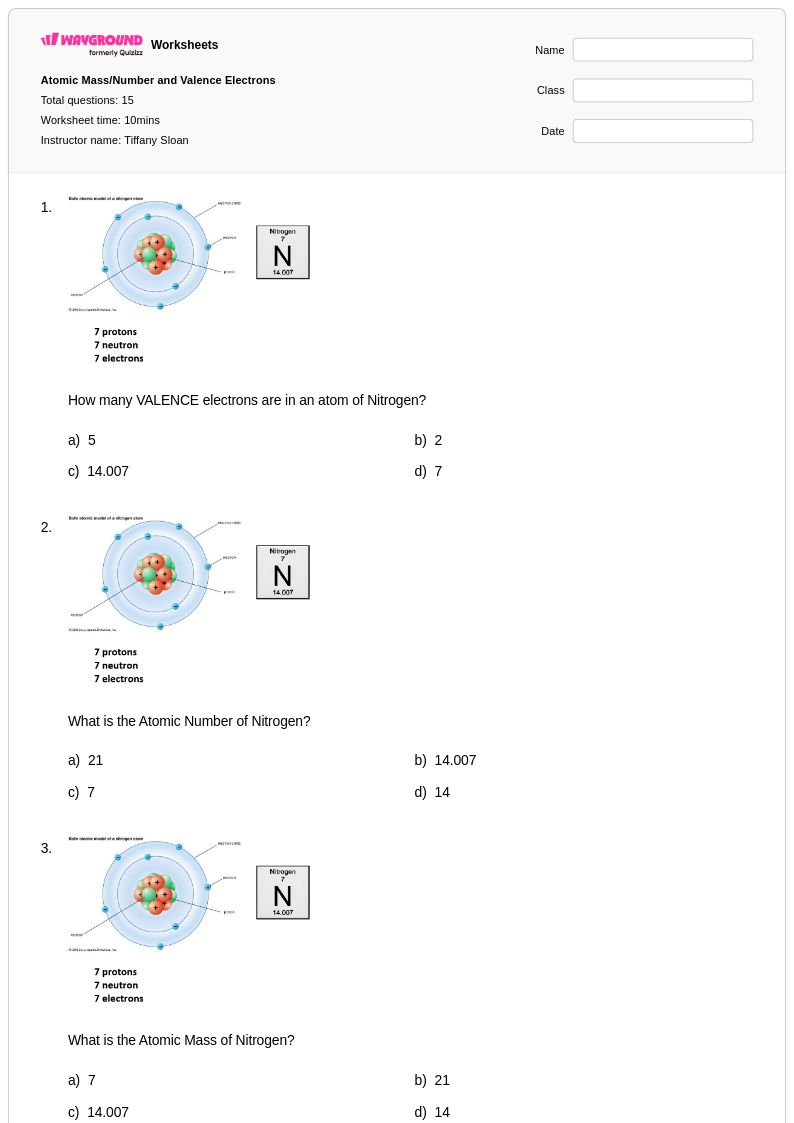
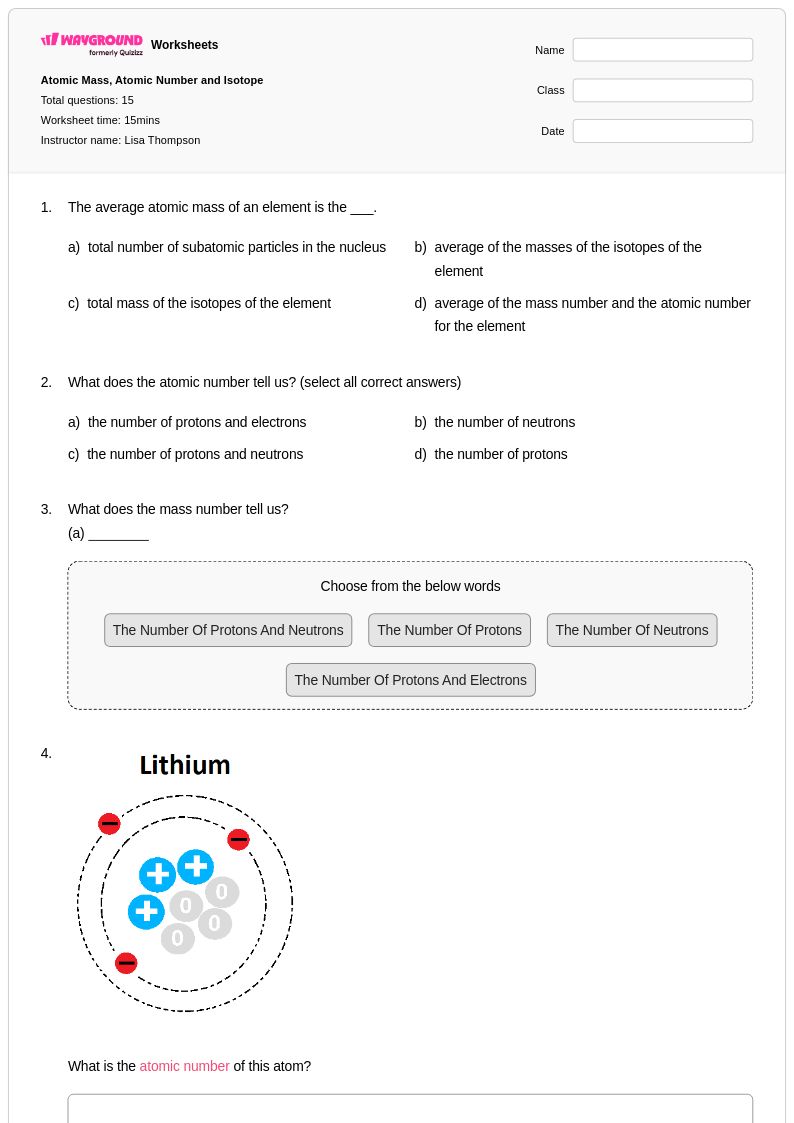
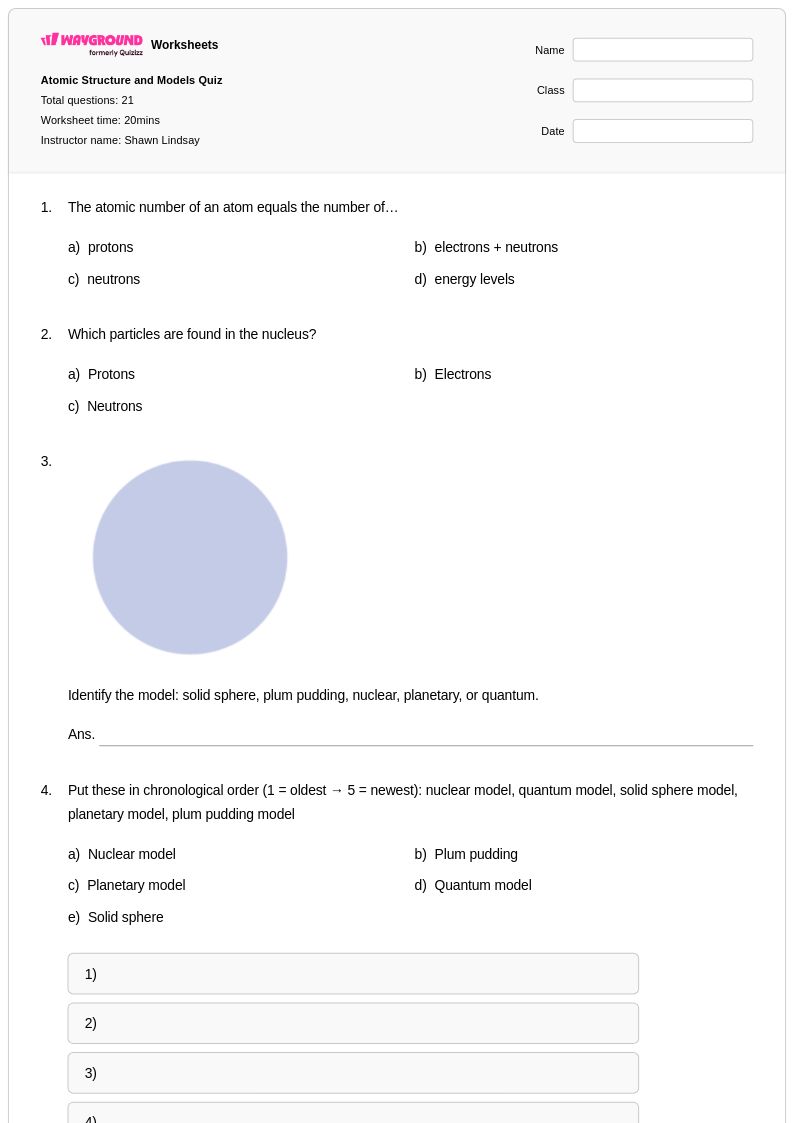
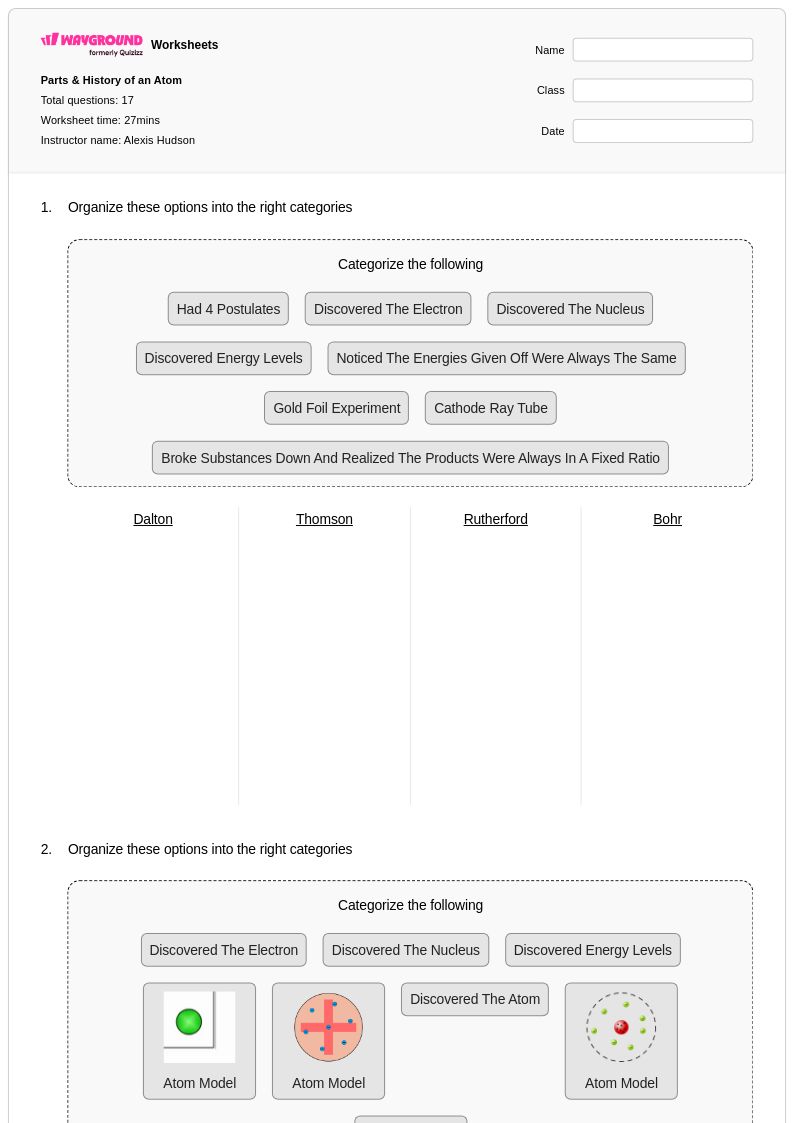
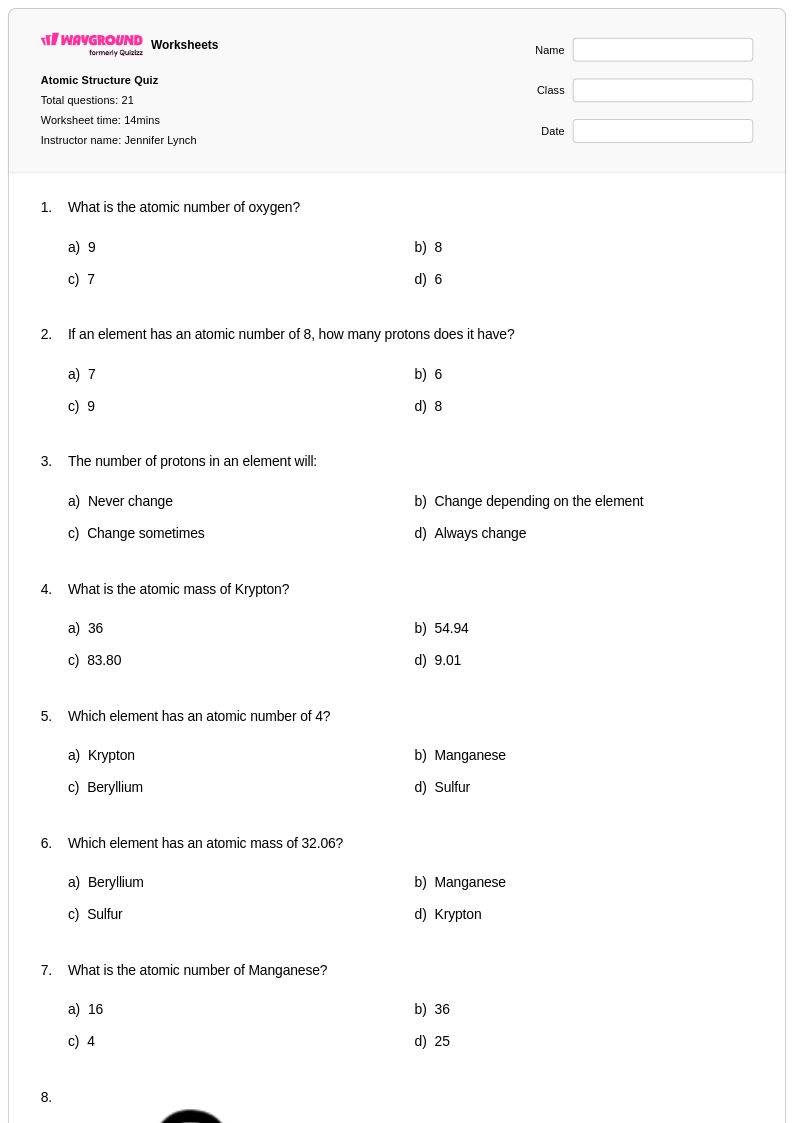
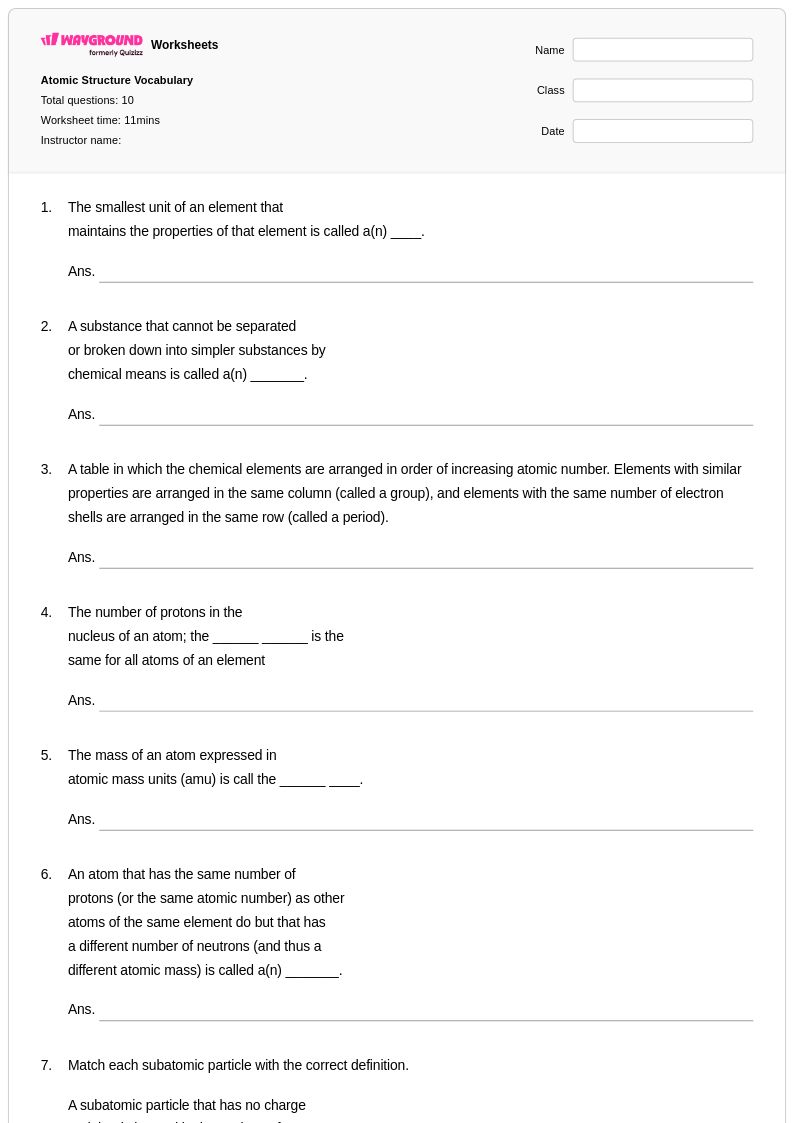
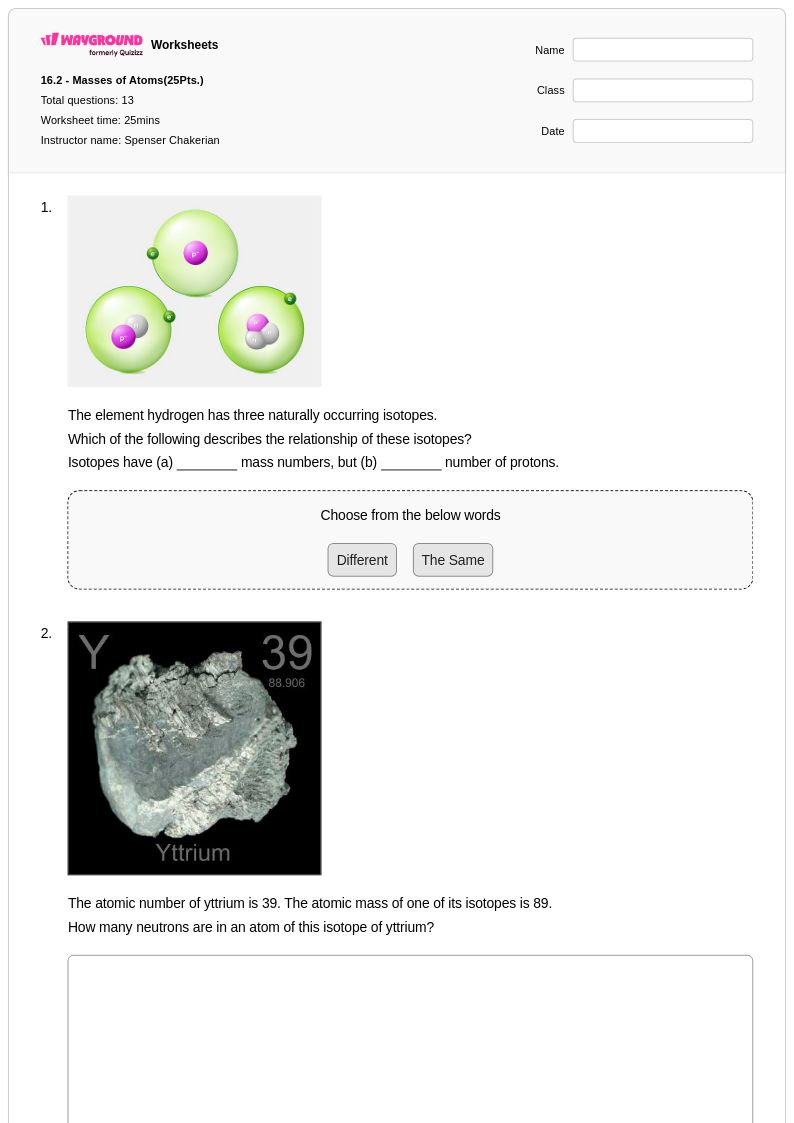
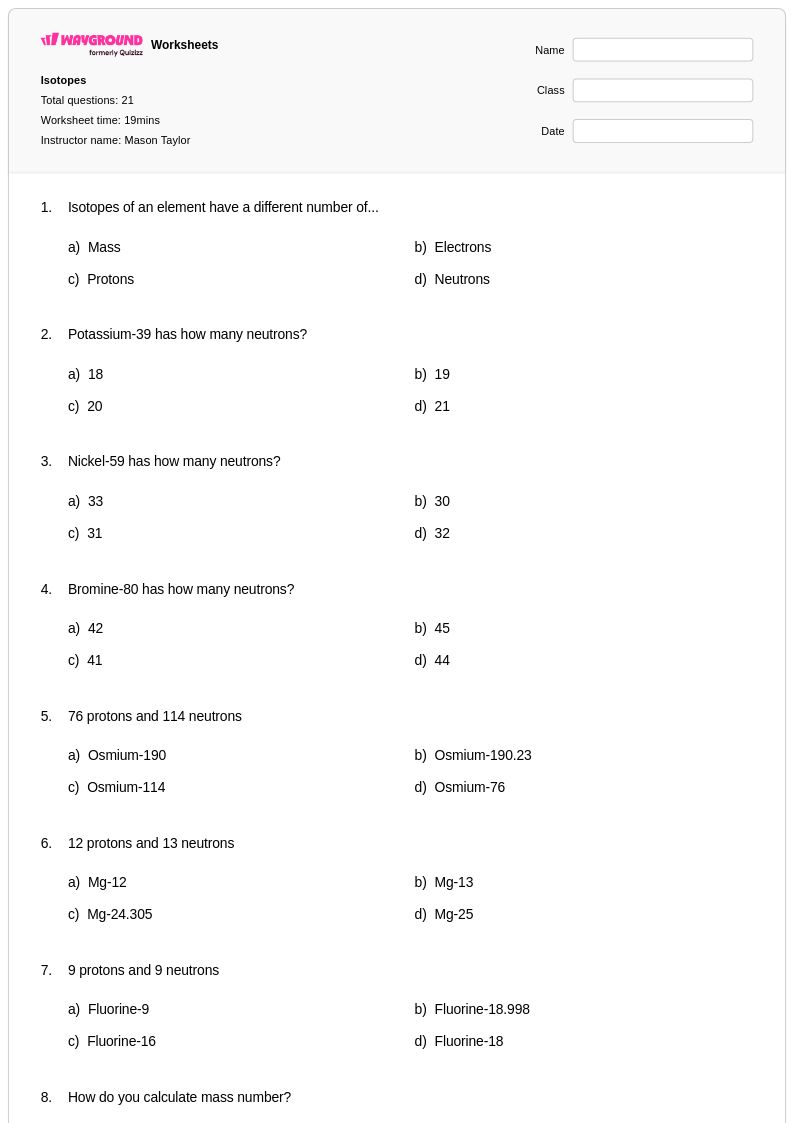
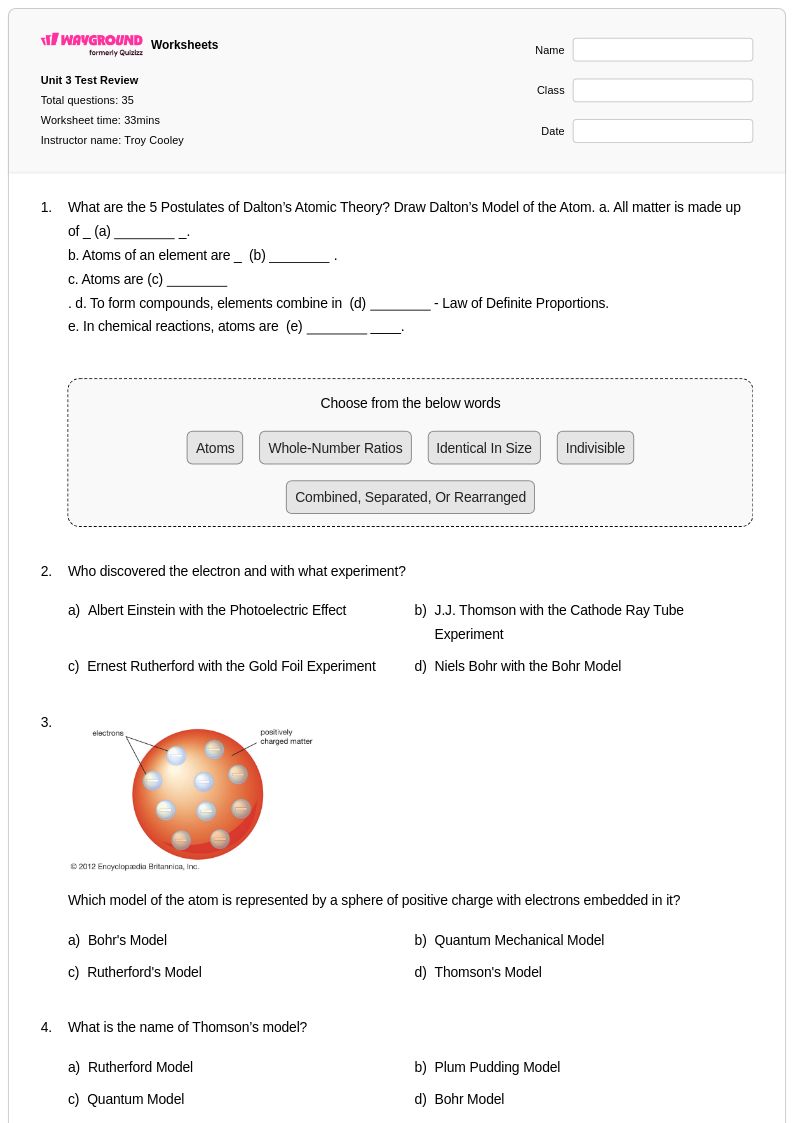
Atomic mass number worksheets for Grade 11 chemistry students available through Wayground provide comprehensive practice with one of the fundamental concepts in nuclear chemistry and atomic structure. These expertly designed worksheets help students master the calculation and interpretation of atomic mass numbers, reinforcing their understanding of how protons and neutrons combine to determine an atom's mass characteristics. Students develop critical analytical skills as they work through practice problems involving isotopes, mass defects, and atomic mass unit calculations, while building proficiency in distinguishing between atomic number, mass number, and atomic mass. Each worksheet collection includes detailed answer keys and step-by-step solutions, with free printable pdf formats that make it easy for students to practice these essential chemistry concepts both in classroom settings and during independent study sessions.
Wayground's extensive library supports chemistry educators with millions of teacher-created atomic mass number worksheets that can be easily located through powerful search and filtering tools designed specifically for Grade 11 chemistry instruction. Teachers benefit from standards-aligned content that addresses key learning objectives while offering robust differentiation options to meet diverse student needs, from remediation support for struggling learners to enrichment activities for advanced students. The platform's flexible customization features allow educators to modify existing worksheets or create targeted practice sessions focused on specific aspects of atomic mass calculations, isotope identification, or mass spectrometry interpretation. Available in both digital and printable pdf formats, these comprehensive worksheet collections streamline lesson planning while providing teachers with reliable resources for skill practice, formative assessment, and reinforcement of complex atomic structure concepts that form the foundation for advanced chemistry studies.
FAQs
How do I teach atomic mass number to chemistry students?
Start by distinguishing between atomic number (protons only) and mass number (protons plus neutrons), as students frequently confuse the two. Use the periodic table as a reference tool so students can identify atomic number and then calculate the number of neutrons by subtracting. Once students are comfortable with whole-number mass values, introduce isotopes and explain why atomic mass on the periodic table is a weighted average rather than a whole number. Building from concrete, single-element examples before moving to isotopic abundance calculations helps students develop a solid conceptual foundation.
What exercises help students practice calculating atomic mass number?
Effective practice exercises include filling in atomic structure tables where students are given the element symbol and must identify proton count, neutron count, and mass number. Isotope notation problems, where students interpret or write nuclear symbols in the form mass-number/atomic-number + element symbol, are also highly useful. Progressively more complex problems, such as calculating weighted average atomic mass using isotopic abundance data, help students extend from basic identification to applied calculation skills.
What mistakes do students commonly make when calculating atomic mass number?
The most common error is confusing atomic number with mass number, leading students to treat the number of protons as the mass number rather than adding neutrons. Students also frequently forget that the mass number must always be a whole number representing a specific isotope, while the atomic mass listed on the periodic table is a decimal representing a weighted average. Another persistent mistake is using the decimal atomic mass from the periodic table directly in mass number calculations instead of rounding to the nearest whole number for a given isotope.
How do isotopes relate to atomic mass number, and how do I explain this to students?
Isotopes are atoms of the same element that have the same number of protons but different numbers of neutrons, which means they share an atomic number but have different mass numbers. A useful classroom approach is to compare common isotopes of hydrogen (protium, deuterium, tritium) since they have simple, distinct mass numbers that make the concept concrete. Emphasizing that chemical behavior is determined by proton count, not neutron count, helps students understand why isotopes of the same element behave identically in chemical reactions despite differing in mass.
How can I use atomic mass number worksheets in my classroom?
Atomic mass number worksheets on Wayground are available as printable PDFs for traditional classroom use and in digital formats for technology-integrated or hybrid learning environments, and teachers can also host them as a quiz directly on Wayground. Printable versions work well for guided notes, homework, or in-class practice, while digital formats allow for self-paced review and immediate feedback. The included answer keys support independent learning, making these worksheets effective for both initial instruction and remediation.
How do I differentiate atomic mass number instruction for students at different levels?
For struggling learners, focus first on the basic formula (mass number = protons + neutrons) using visual atomic diagrams before introducing isotope notation. Advanced students can be extended into weighted average atomic mass calculations using real isotopic abundance data from published sources. On Wayground, teachers can apply individual accommodations such as reduced answer choices or read-aloud support for students who need additional scaffolding, while the rest of the class receives standard settings without disruption.