Free Printable Conjugate Acid Base Worksheets for Grade 11
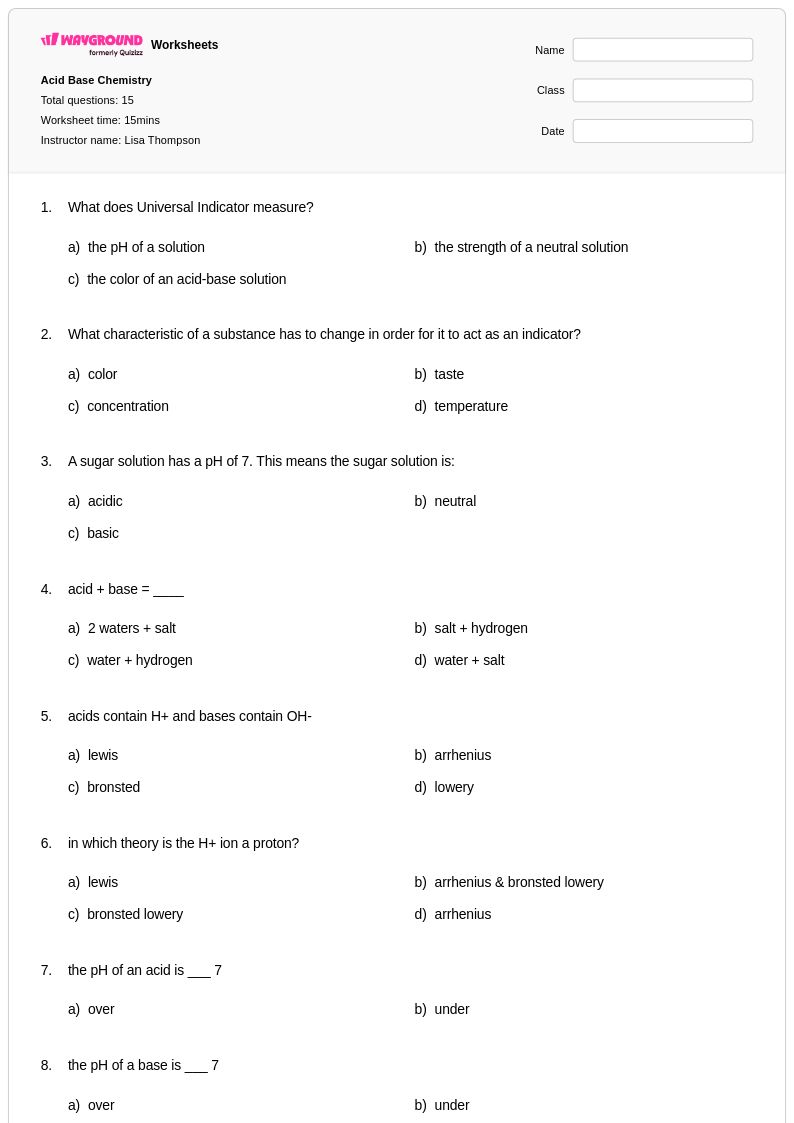
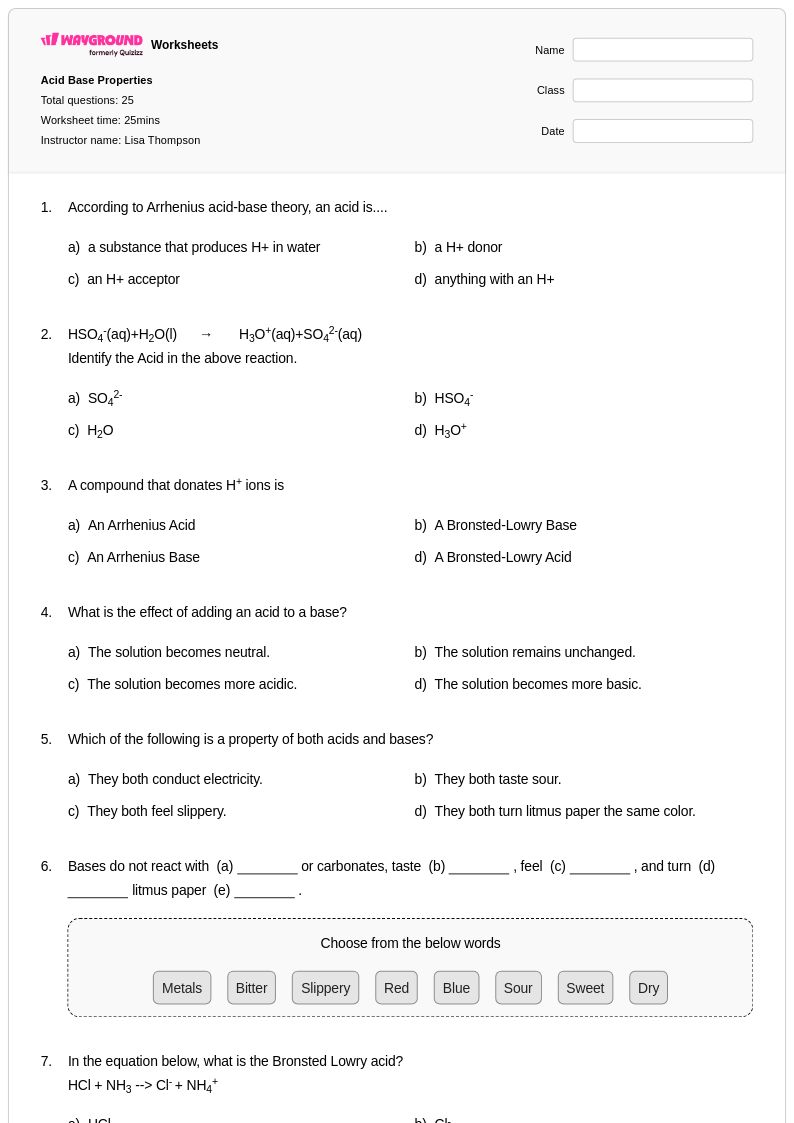
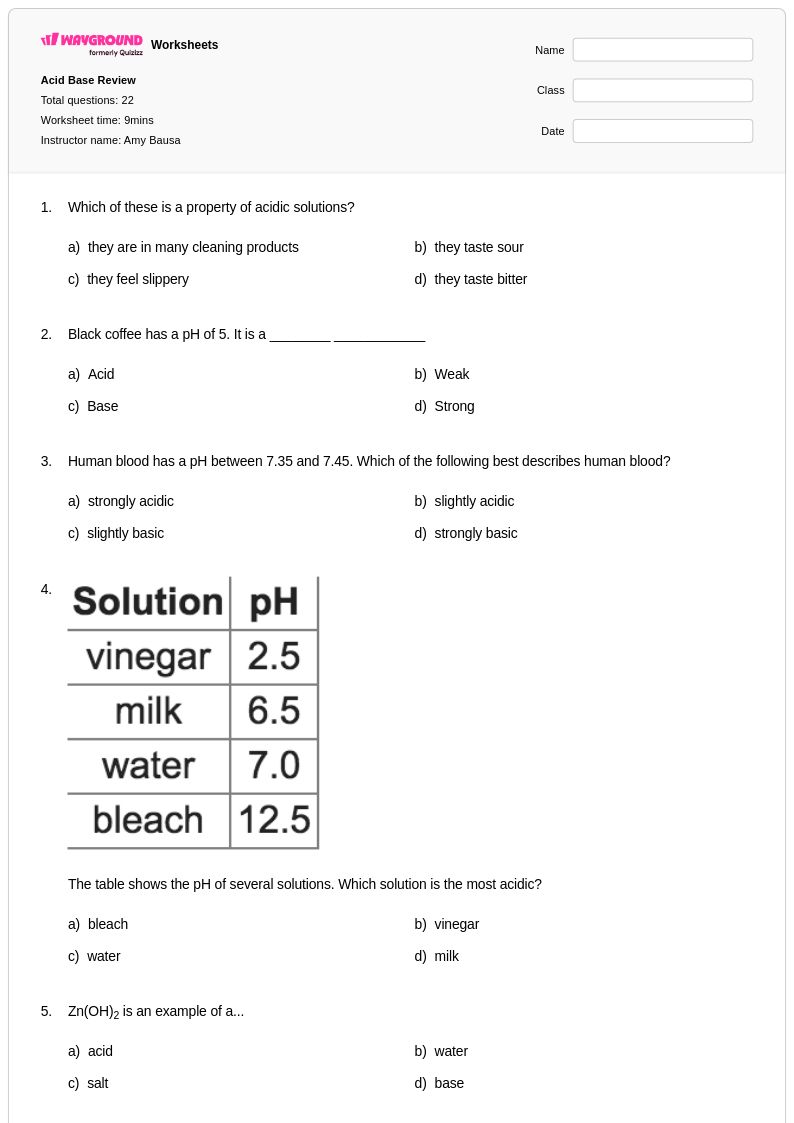
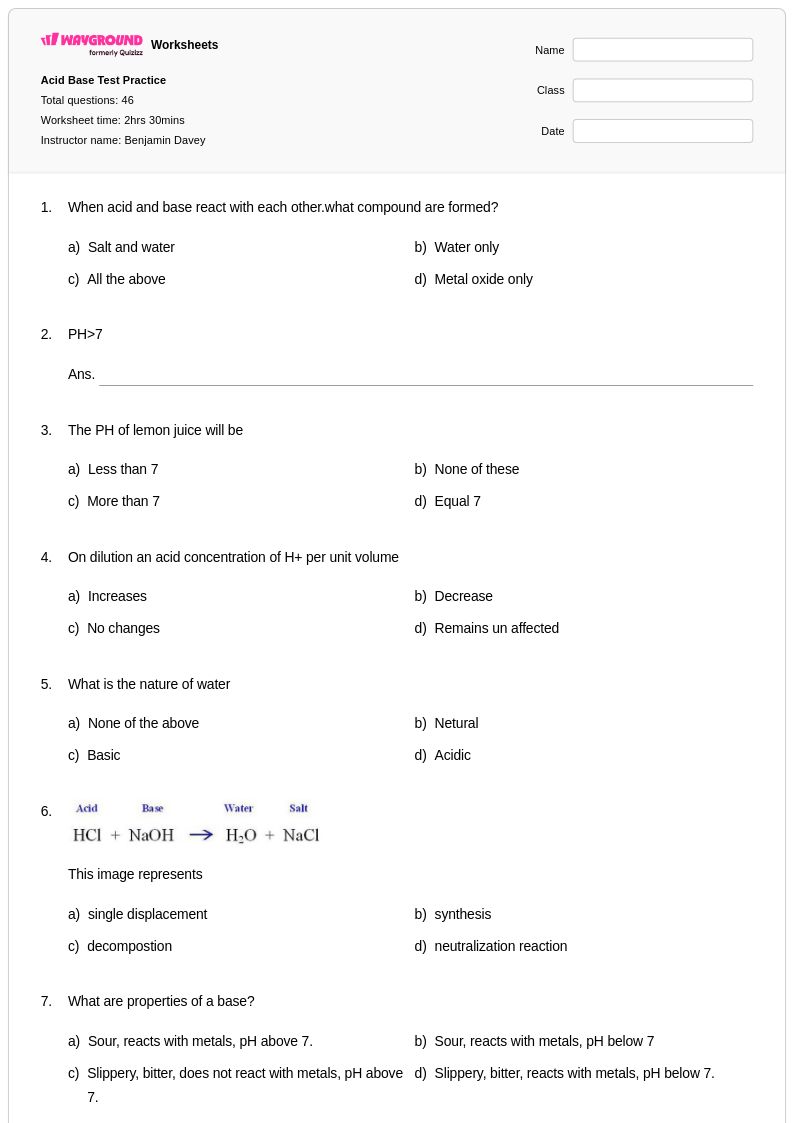
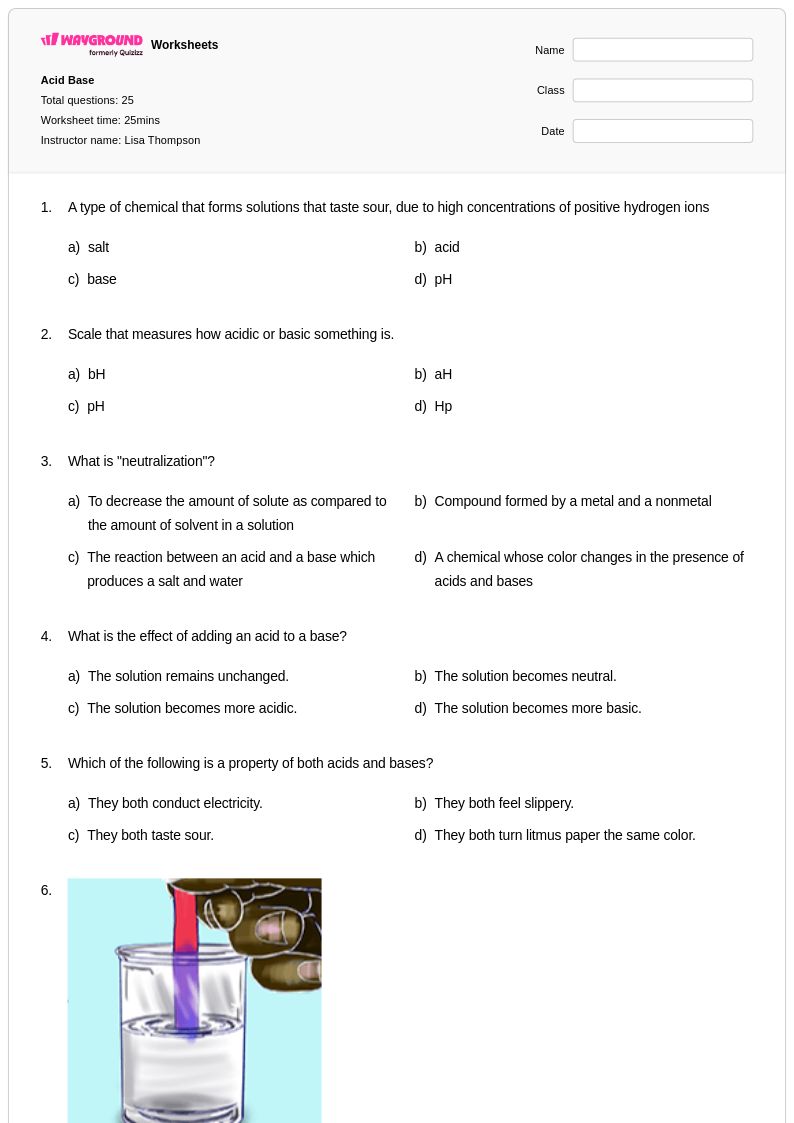
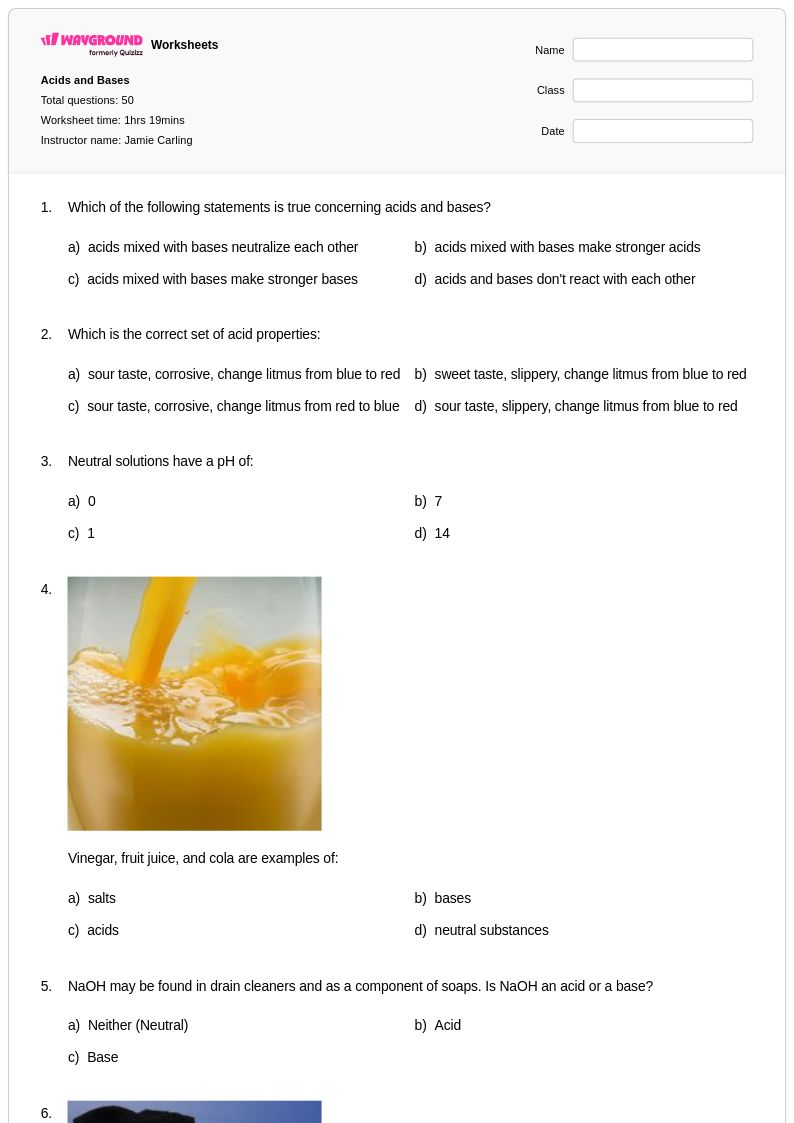
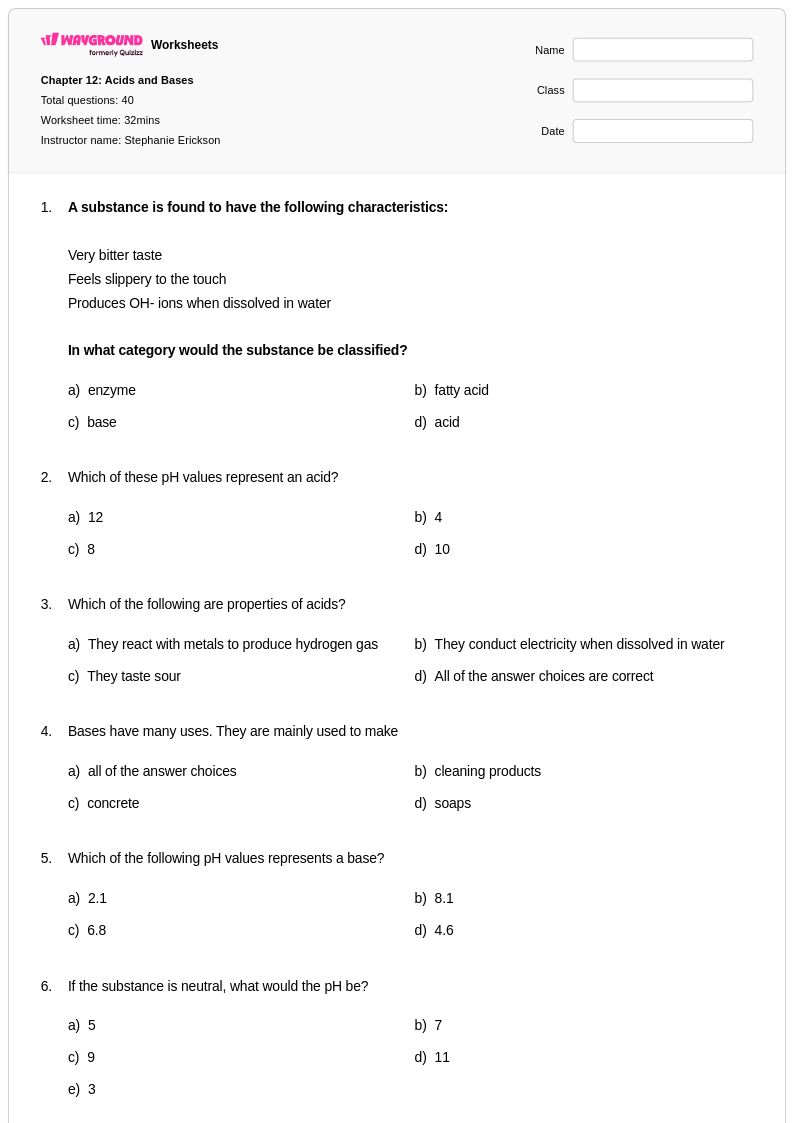
Explore Grade 11 conjugate acid base worksheets and printables from Wayground that help students master acid-base pair identification through comprehensive practice problems with detailed answer keys.
Explore printable Conjugate Acid Base worksheets for Grade 11
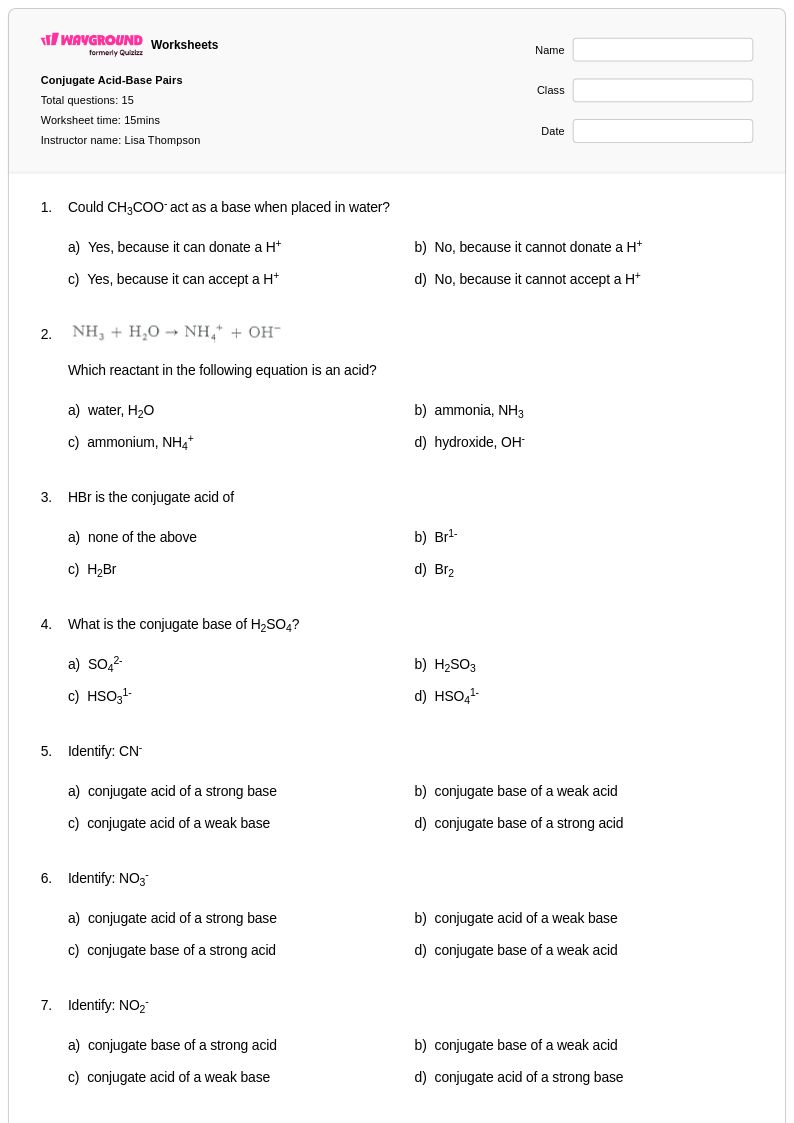
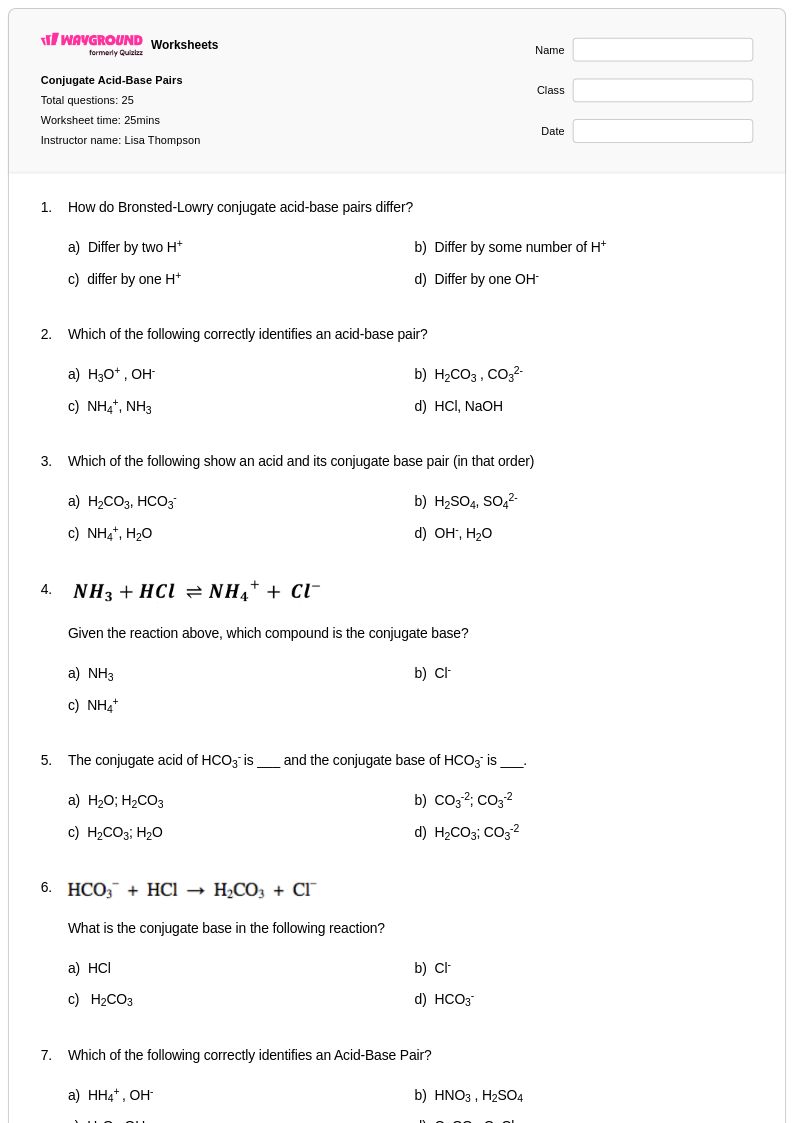
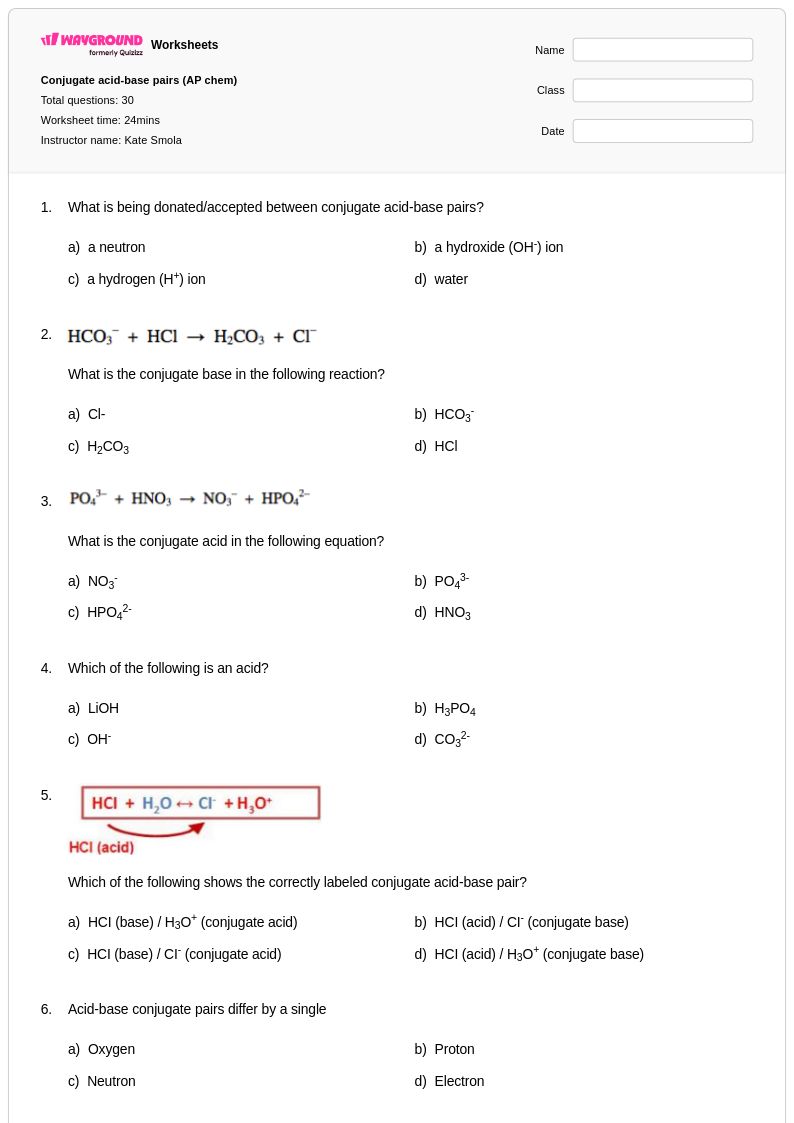
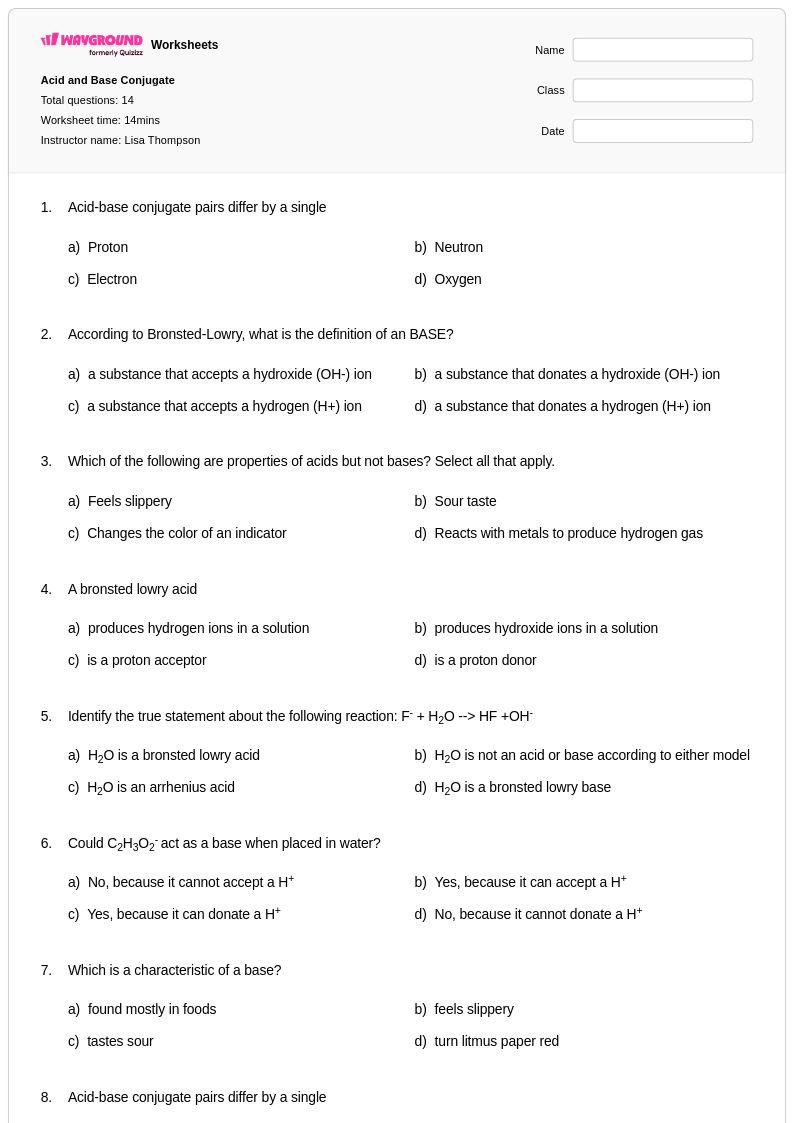
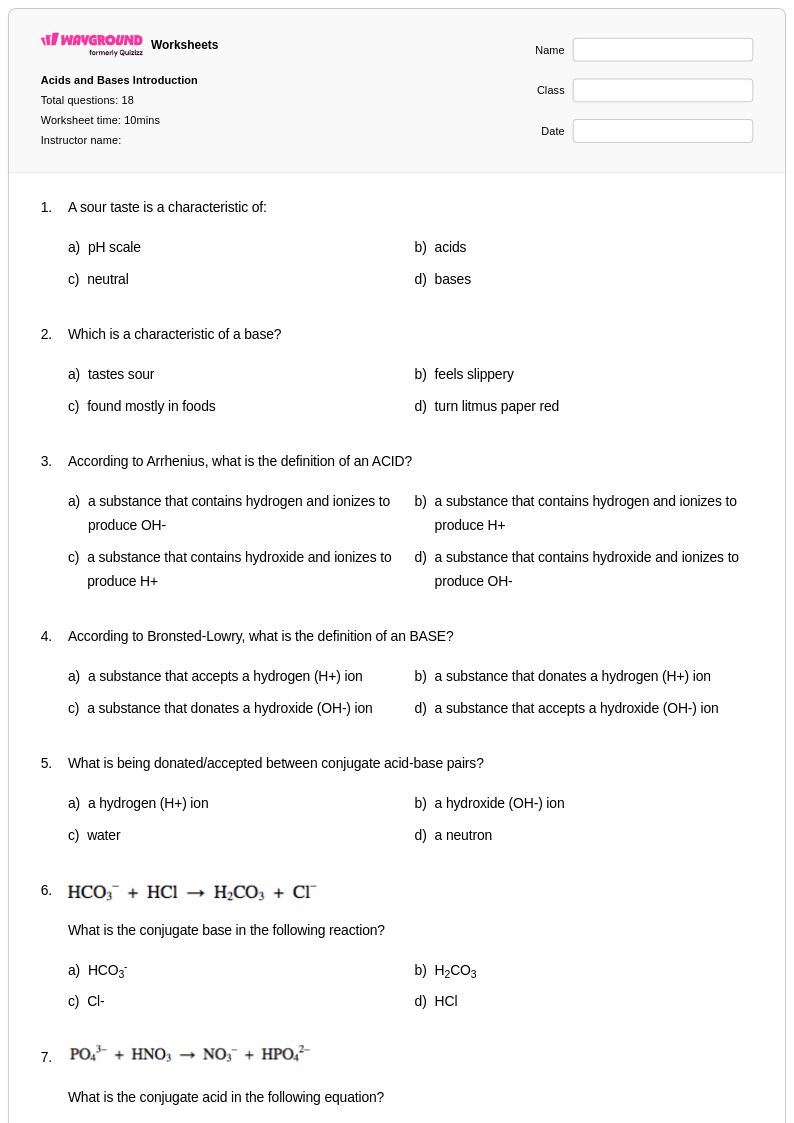
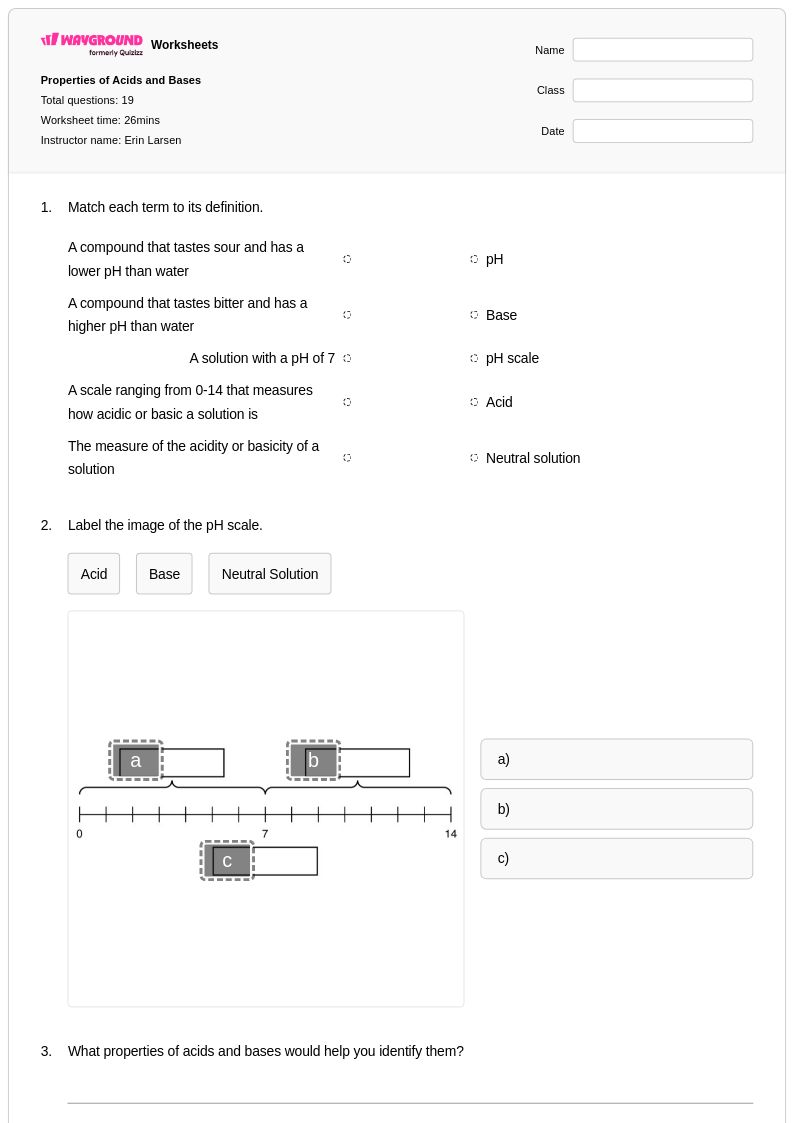
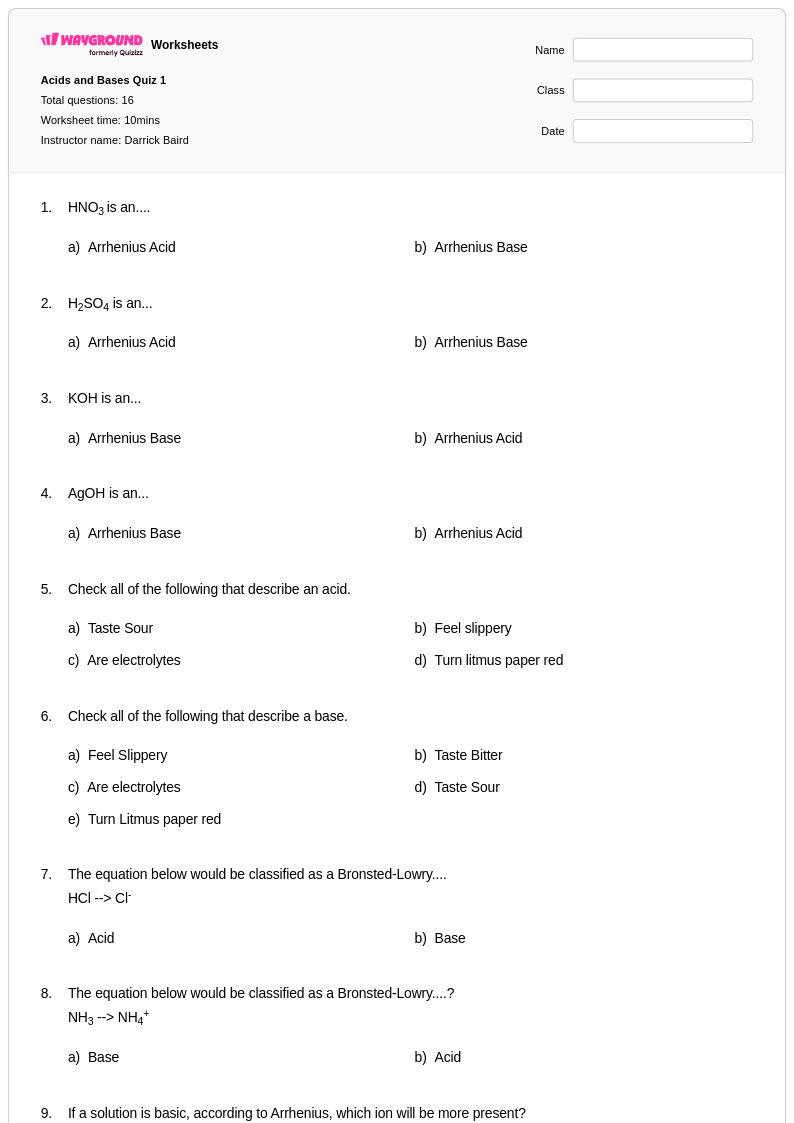
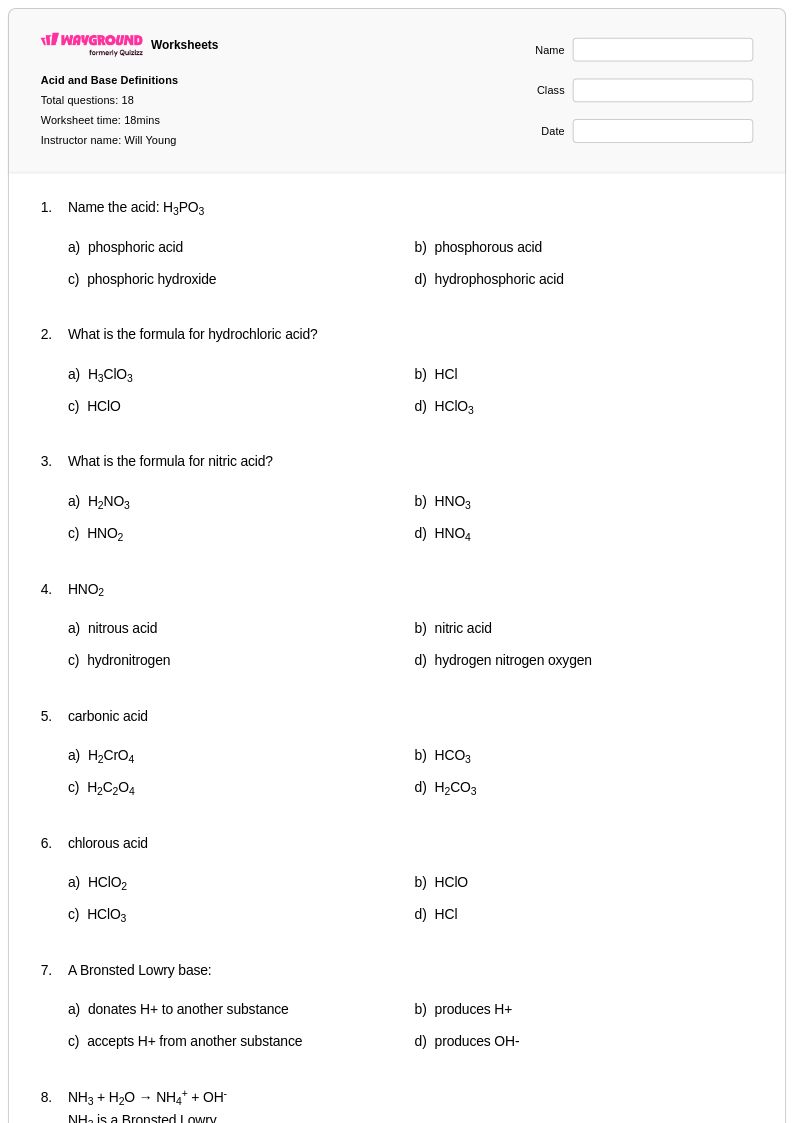
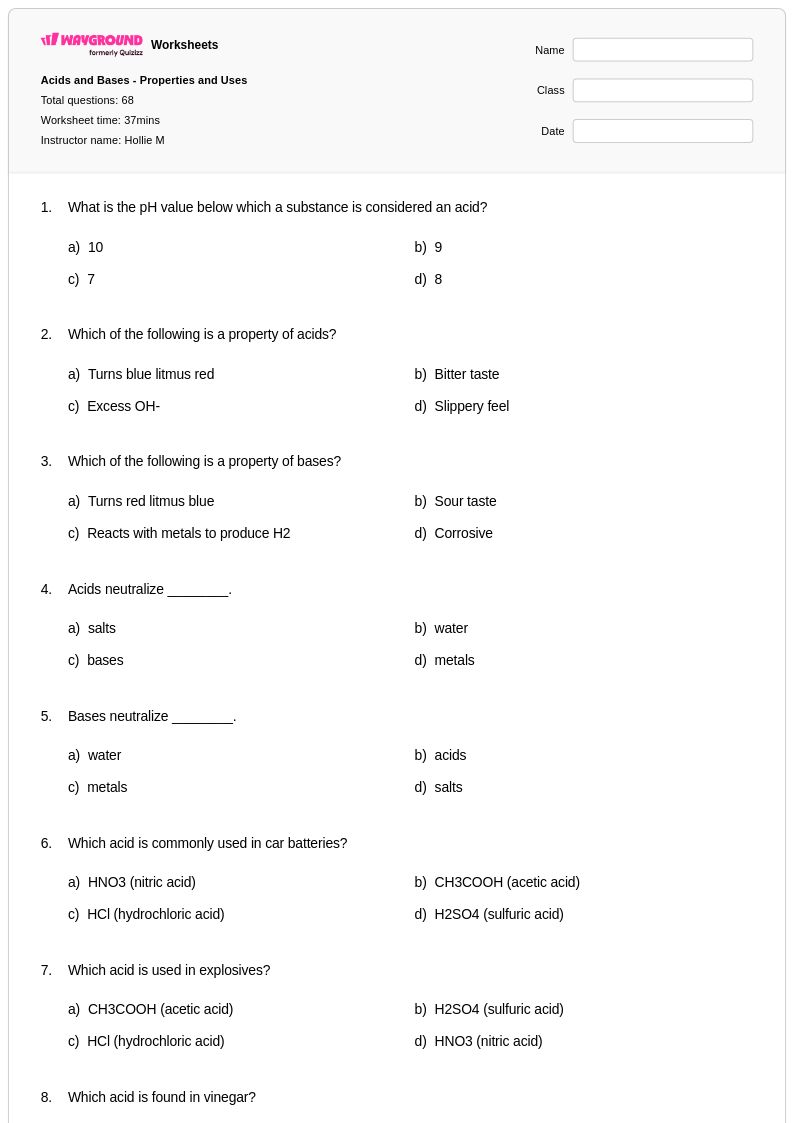
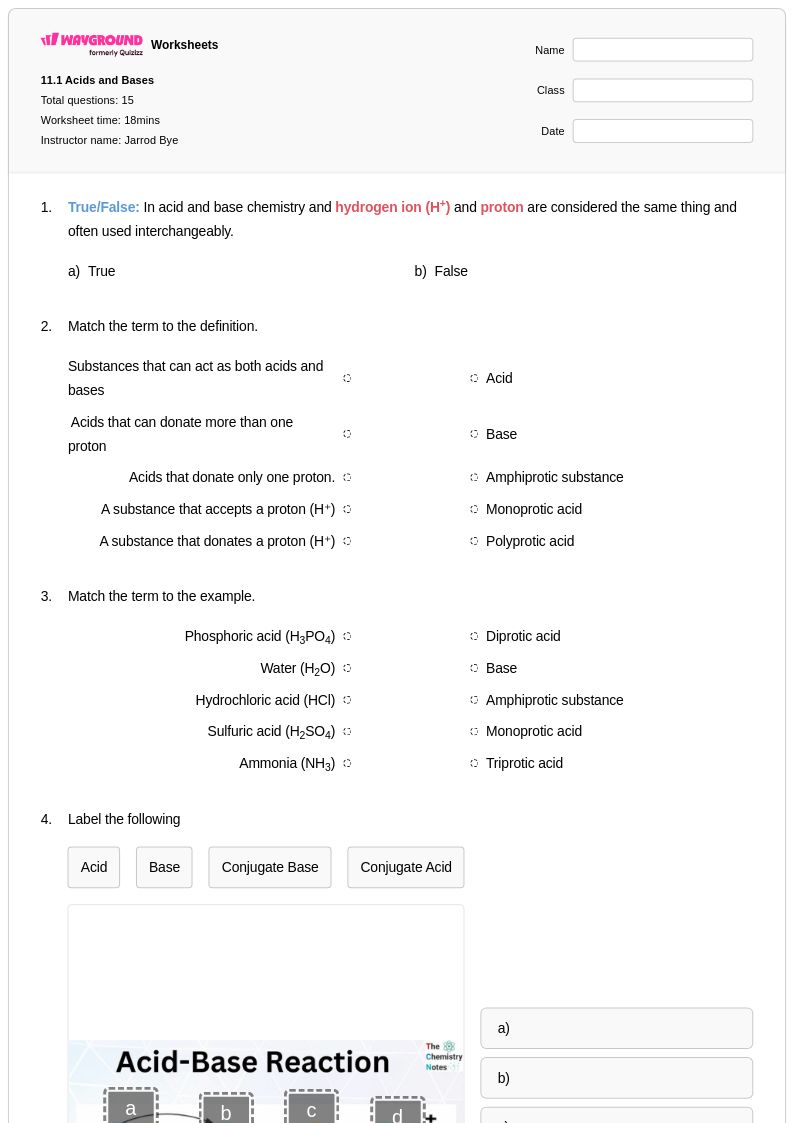
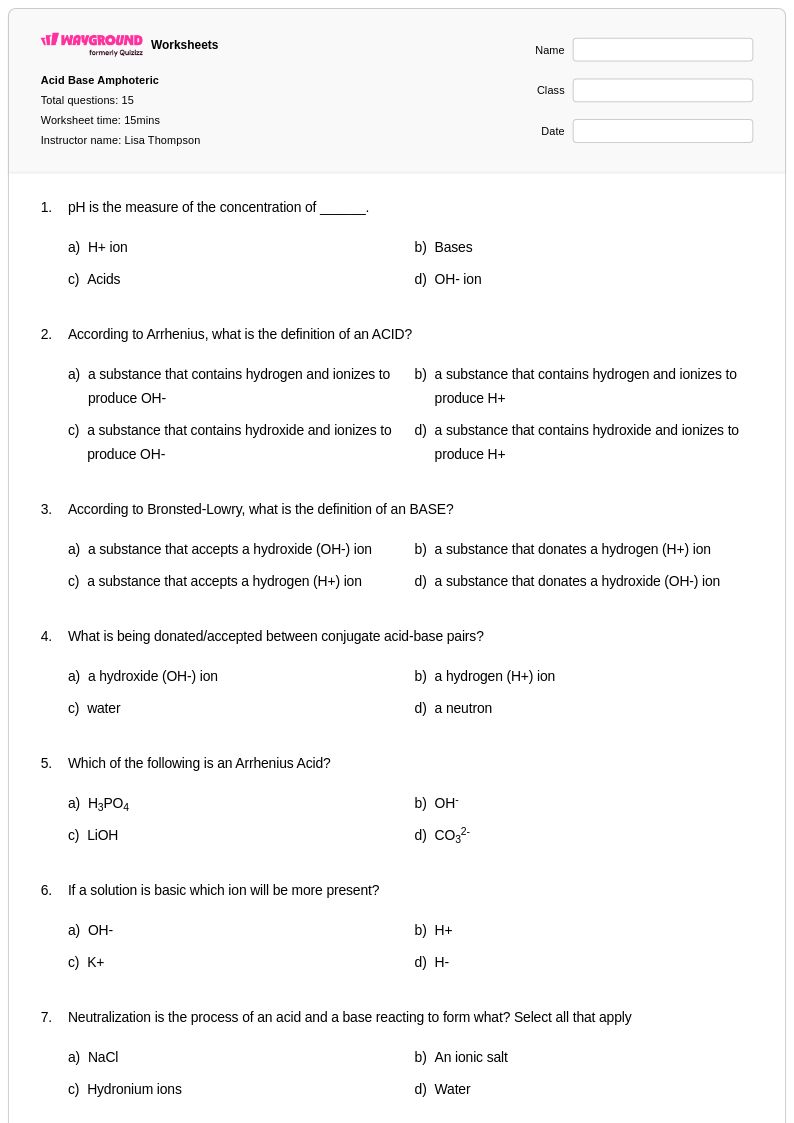
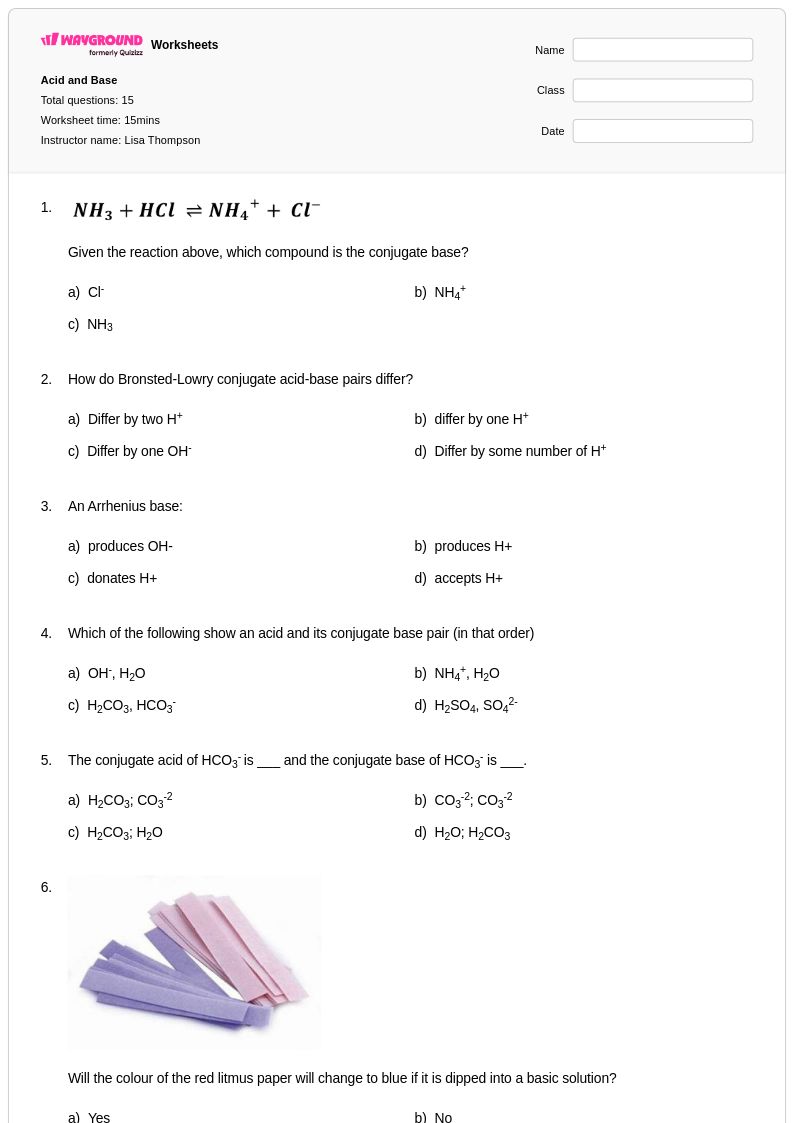
Conjugate acid-base pairs represent a fundamental concept in Grade 11 chemistry that students must master to understand acid-base equilibrium and chemical reactions. Wayground's comprehensive collection of conjugate acid-base worksheets provides targeted practice problems that help students identify conjugate pairs, predict acid-base behavior, and calculate pH values in buffer systems. These carefully crafted worksheets strengthen critical thinking skills by challenging students to analyze molecular structures, determine proton transfer mechanisms, and apply Brønsted-Lowry theory to real-world chemical scenarios. Each worksheet includes detailed answer keys that guide students through complex problem-solving processes, while the free printable format ensures accessibility for both classroom instruction and independent study sessions.
Wayground's extensive library of teacher-created resources includes millions of conjugate acid-base worksheets designed by chemistry educators who understand the specific challenges Grade 11 students face when learning this complex topic. The platform's advanced search and filtering capabilities allow teachers to quickly locate materials that align with state standards and match their students' proficiency levels, while built-in differentiation tools enable customization for remediation or enrichment purposes. These worksheets are available in both digital and printable pdf formats, providing flexibility for diverse learning environments and making lesson planning more efficient. Teachers can seamlessly integrate these resources into their curriculum to provide targeted skill practice, assess student understanding of acid-base equilibrium concepts, and ensure comprehensive coverage of conjugate pair relationships throughout their chemistry units.
FAQs
How do I teach conjugate acid-base pairs in chemistry class?
Start by grounding students in the Brønsted-Lowry definition of acids and bases, emphasizing that a conjugate pair differs by exactly one proton. Use concrete molecular examples like HCl/Cl⁻ and NH₃/NH₄⁺ to show the proton transfer relationship visually before asking students to identify pairs independently. From there, extend the concept to predicting relative strengths, reinforcing that a strong acid always produces a weak conjugate base and vice versa.
What practice problems help students get better at identifying conjugate acid-base pairs?
Effective practice problems ask students to identify the conjugate base or acid from a given species, write balanced equations for proton transfer reactions, and predict which direction an acid-base equilibrium favors based on relative strengths. Problems that require students to work through polyprotic acids or buffer systems push beyond surface-level identification and build deeper conceptual understanding of conjugate relationships.
What mistakes do students commonly make when working with conjugate acid-base pairs?
The most frequent error is confusing conjugate pairs with simply labeling the acid and base on each side of a reaction rather than tracking the proton transfer precisely. Students also frequently assume that a weak acid must have a strong conjugate base without understanding the inverse relationship quantitatively. Another common misconception is applying Arrhenius acid-base definitions when the question requires Brønsted-Lowry reasoning, which leads to incorrect pair identification in non-aqueous or amphoteric systems.
How do I use conjugate acid-base worksheets to assess student understanding?
Conjugate acid-base worksheets work well as formative assessments when structured to move from identification tasks to prediction and equation-writing, since each layer reveals a different level of conceptual mastery. Reviewing student errors on conjugate strength predictions is particularly diagnostic because it reveals whether students have internalized the inverse strength relationship or are pattern-matching without understanding. Using worksheets after initial instruction and again after targeted remediation allows teachers to track conceptual growth over time.
How do I use Wayground's conjugate acid-base worksheets in my classroom?
Wayground's conjugate acid-base worksheets are available as free printable PDFs for traditional classroom use and in digital formats for technology-integrated learning environments, giving teachers flexibility in how they deliver practice. Teachers can also host worksheets as a live quiz on Wayground, making it easy to gather real-time data on student performance. Each worksheet includes a complete answer key, so grading and follow-up discussion can happen efficiently without additional preparation.
How do I support struggling students when teaching conjugate acid-base theory?
Struggling students often benefit from scaffolded practice that isolates one skill at a time, such as identifying conjugate pairs before layering in strength predictions or equilibrium analysis. On Wayground, teachers can apply individual accommodations including read-aloud support for question text and reduced answer choices, which lowers cognitive load for students still building foundational chemistry vocabulary. These settings can be applied to specific students while the rest of the class works with standard settings, keeping differentiation seamless.