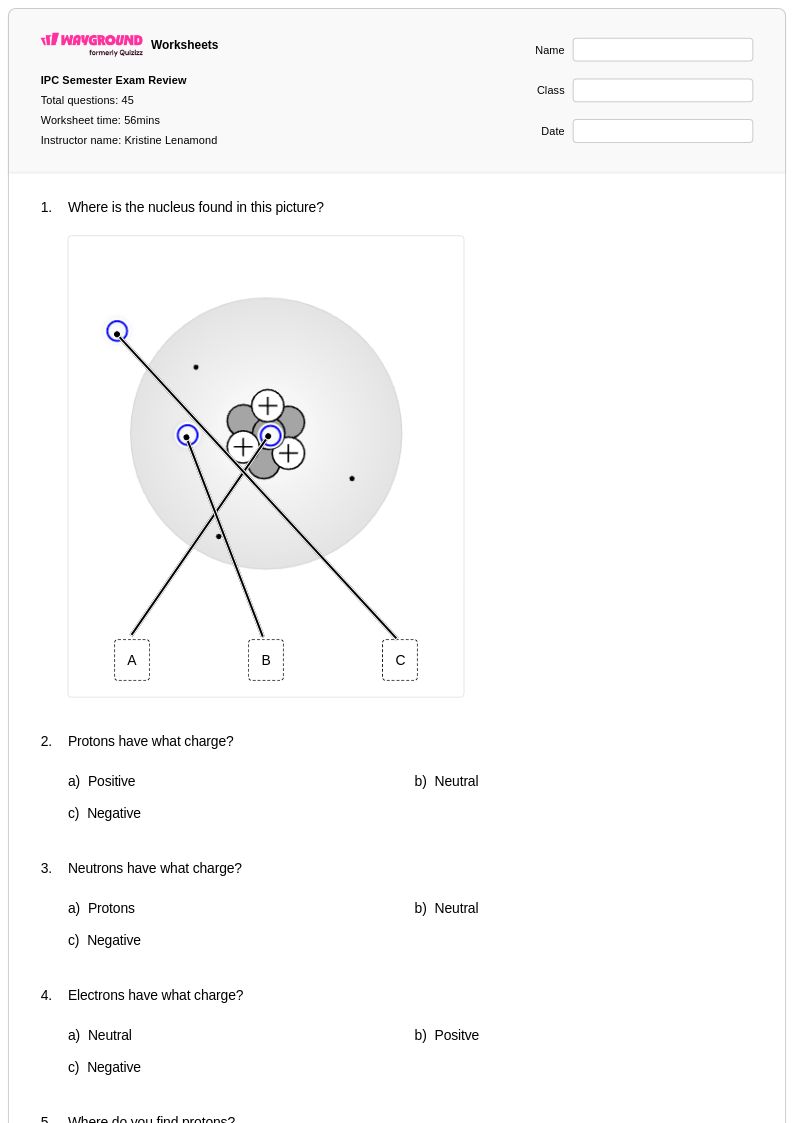
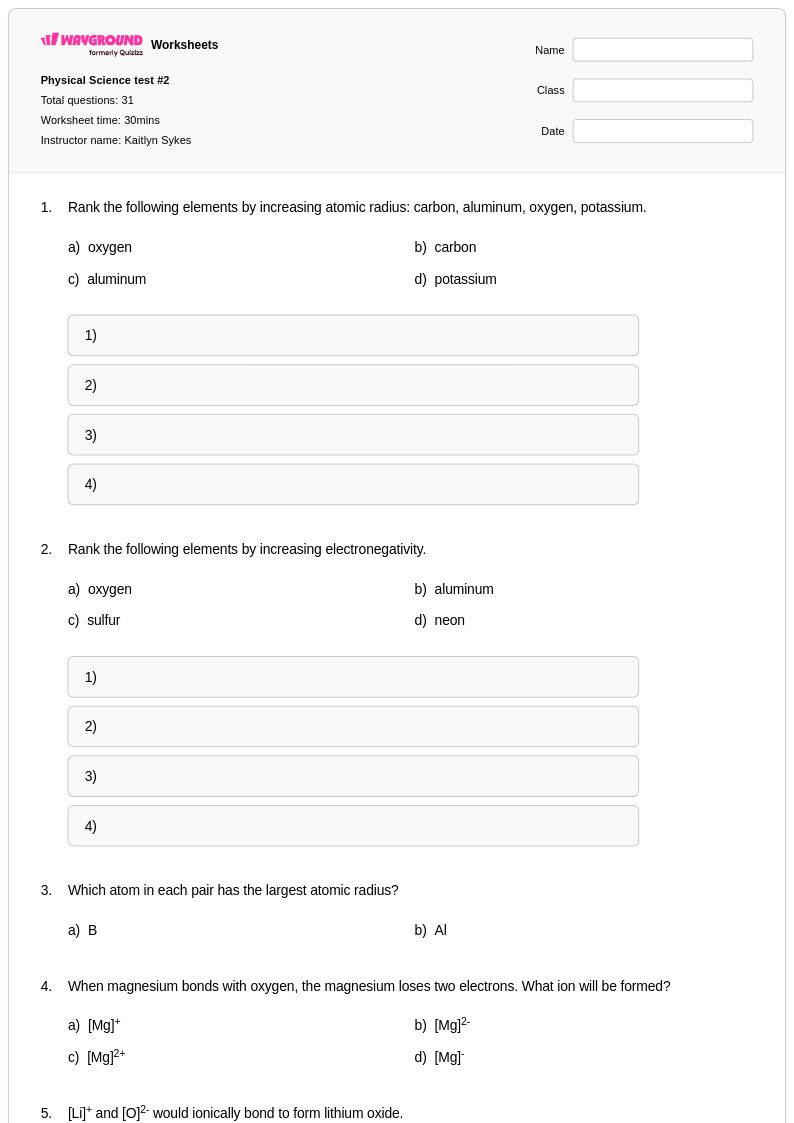
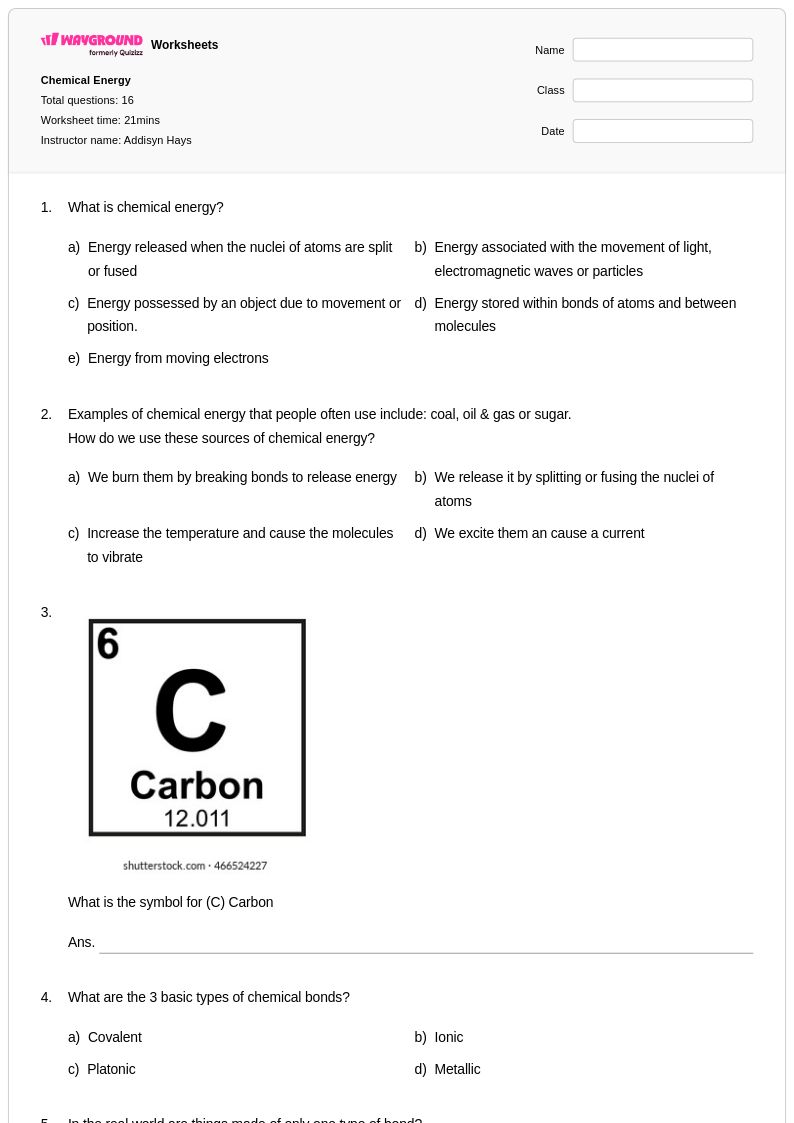
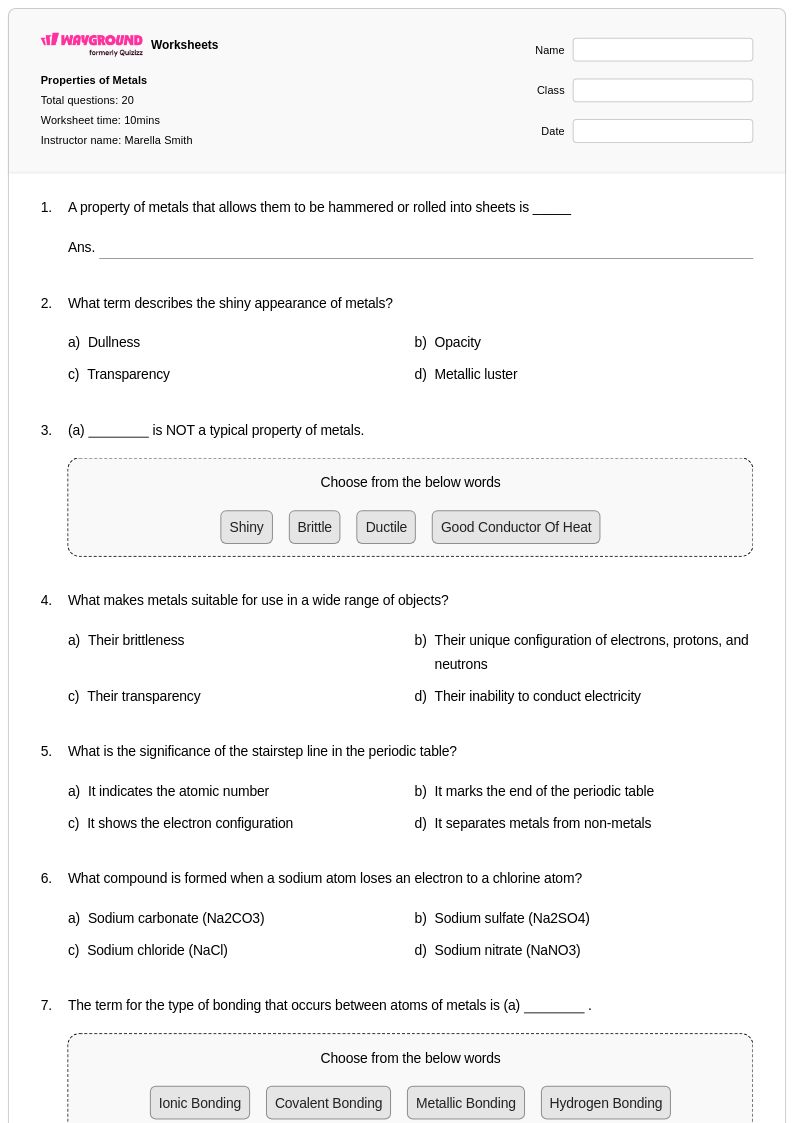
Free Printable Atomic Bonding Worksheets for Grade 10
Grade 10 atomic bonding worksheets and printables help students master chemical bonds through engaging practice problems, with free PDF downloads and complete answer keys available on Wayground.
Explore printable Atomic Bonding worksheets for Grade 10
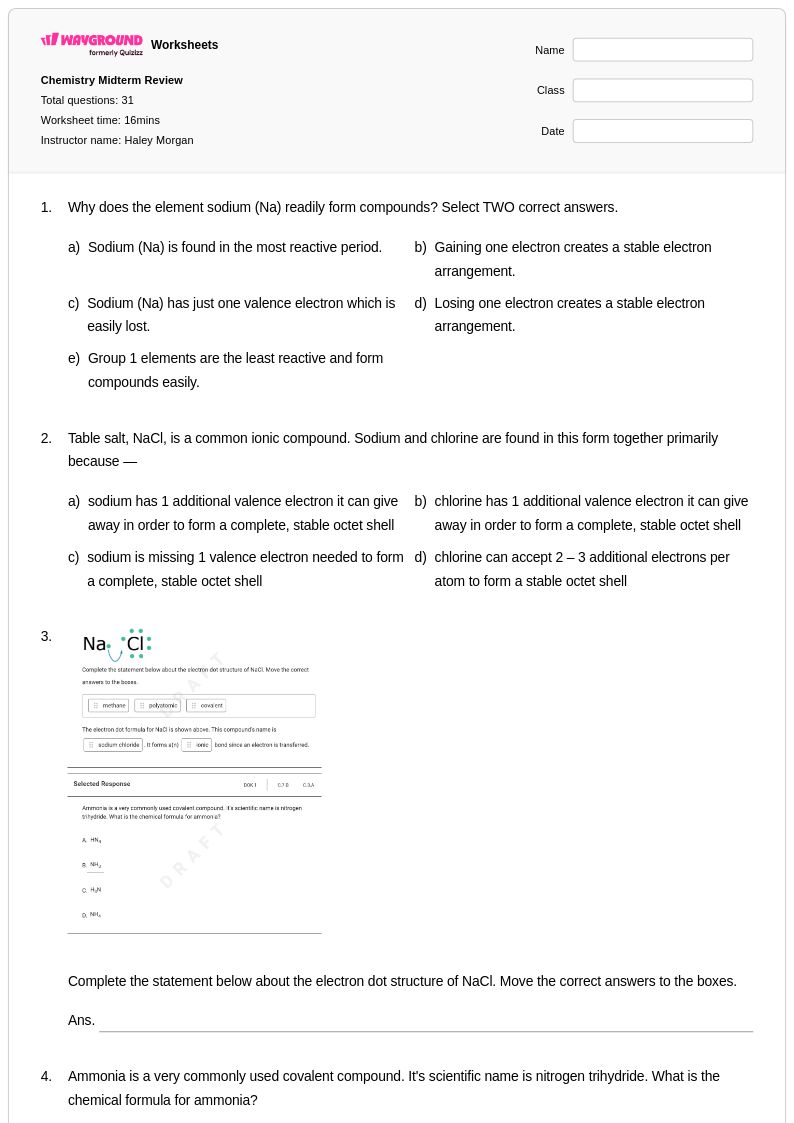
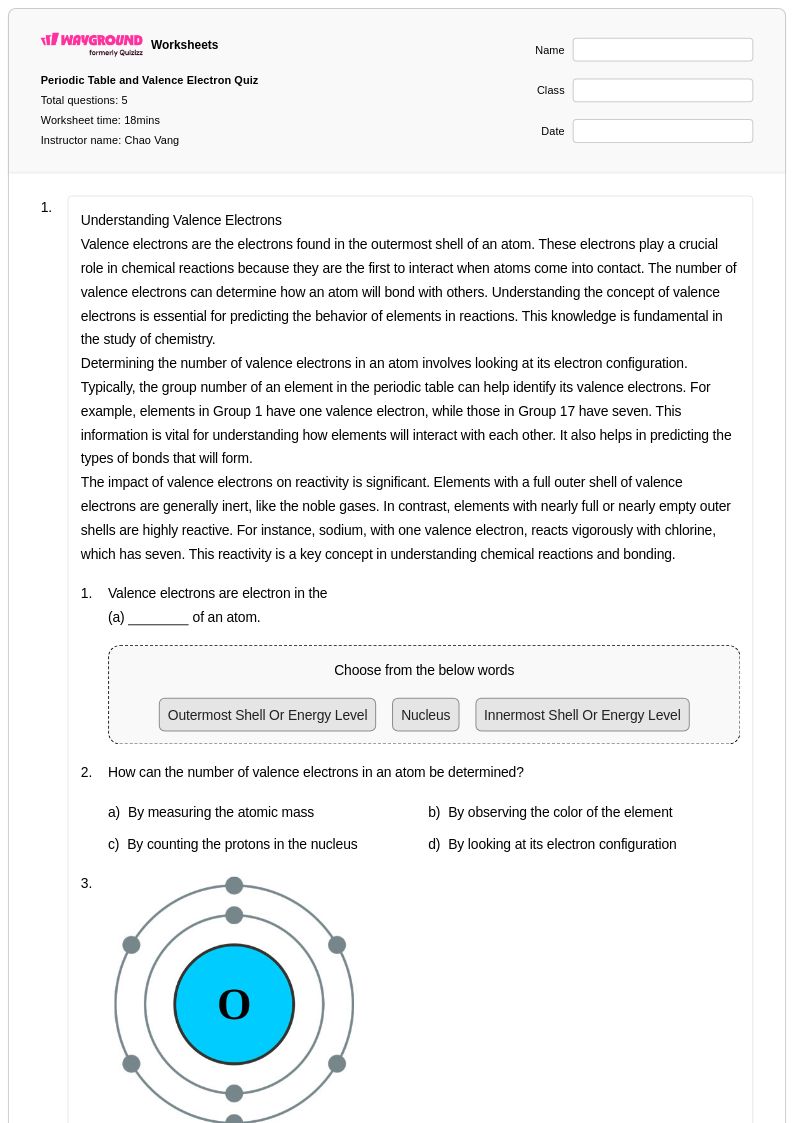
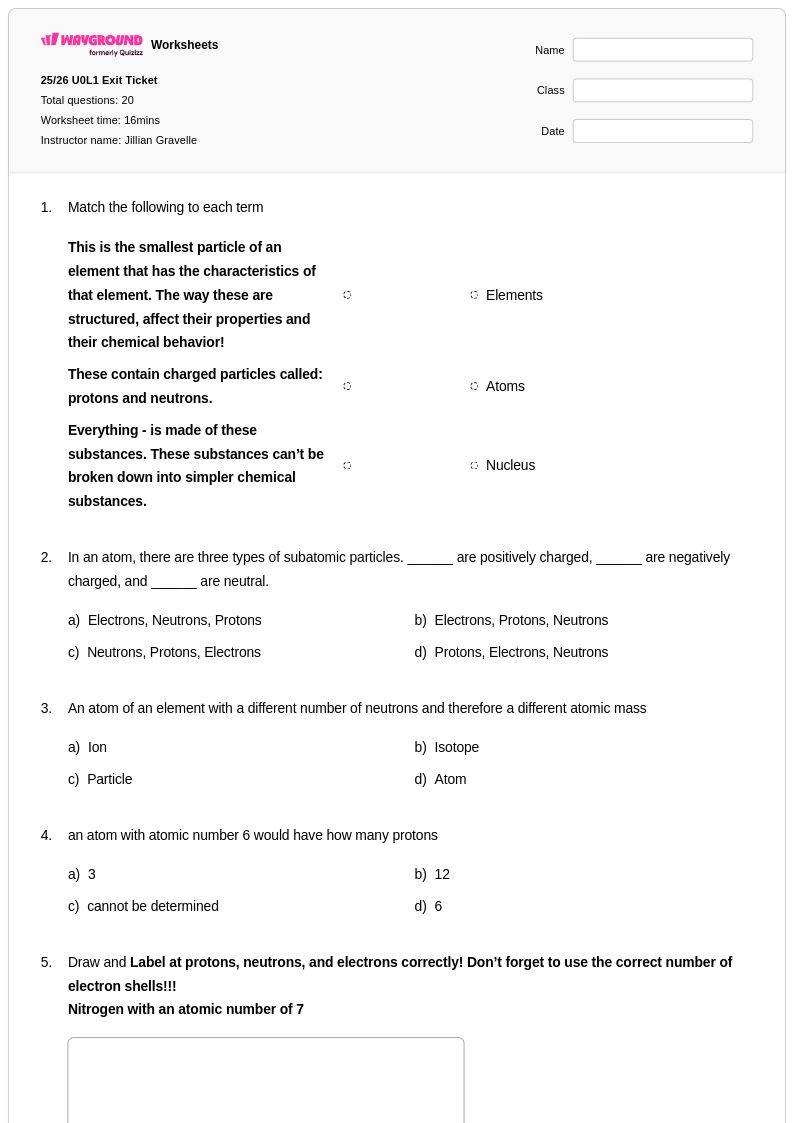
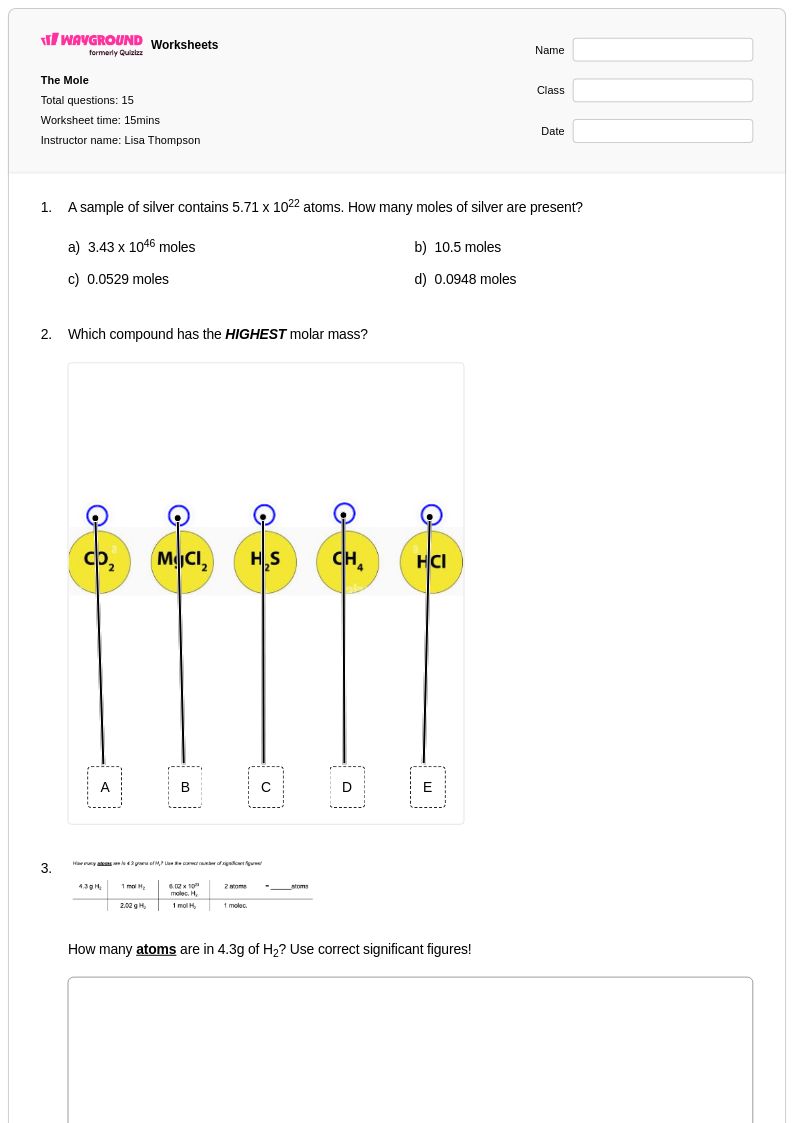
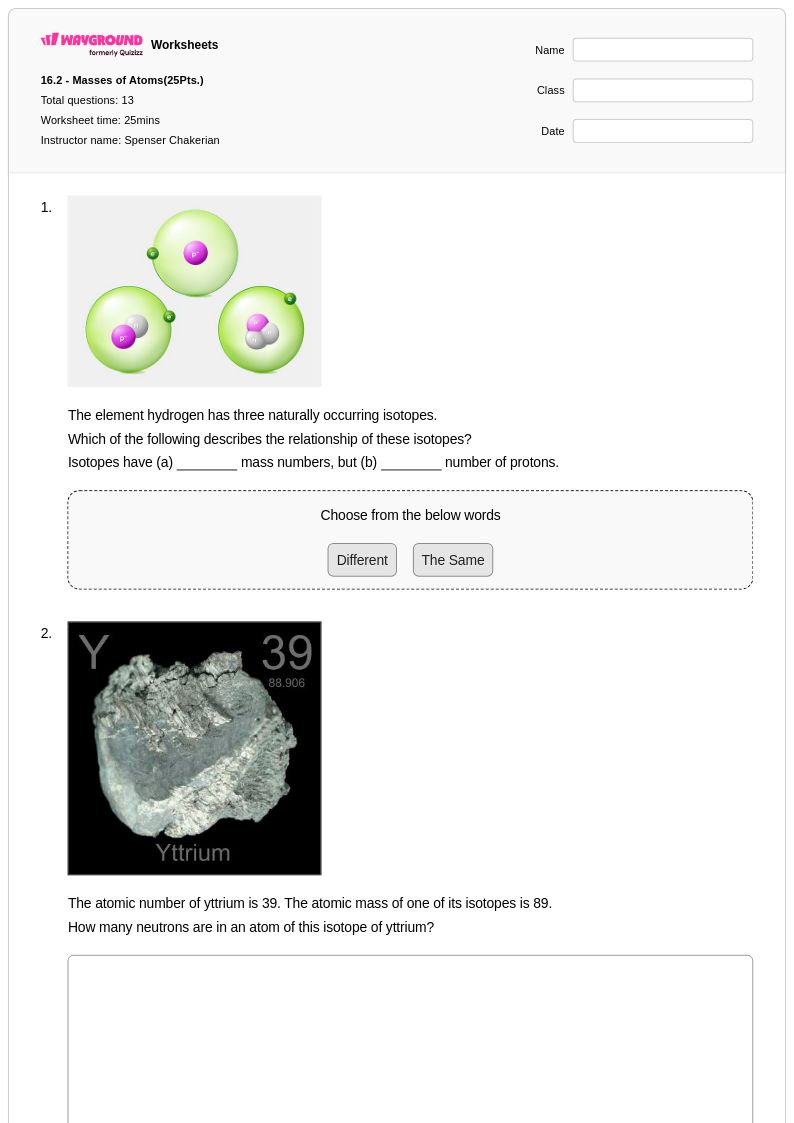
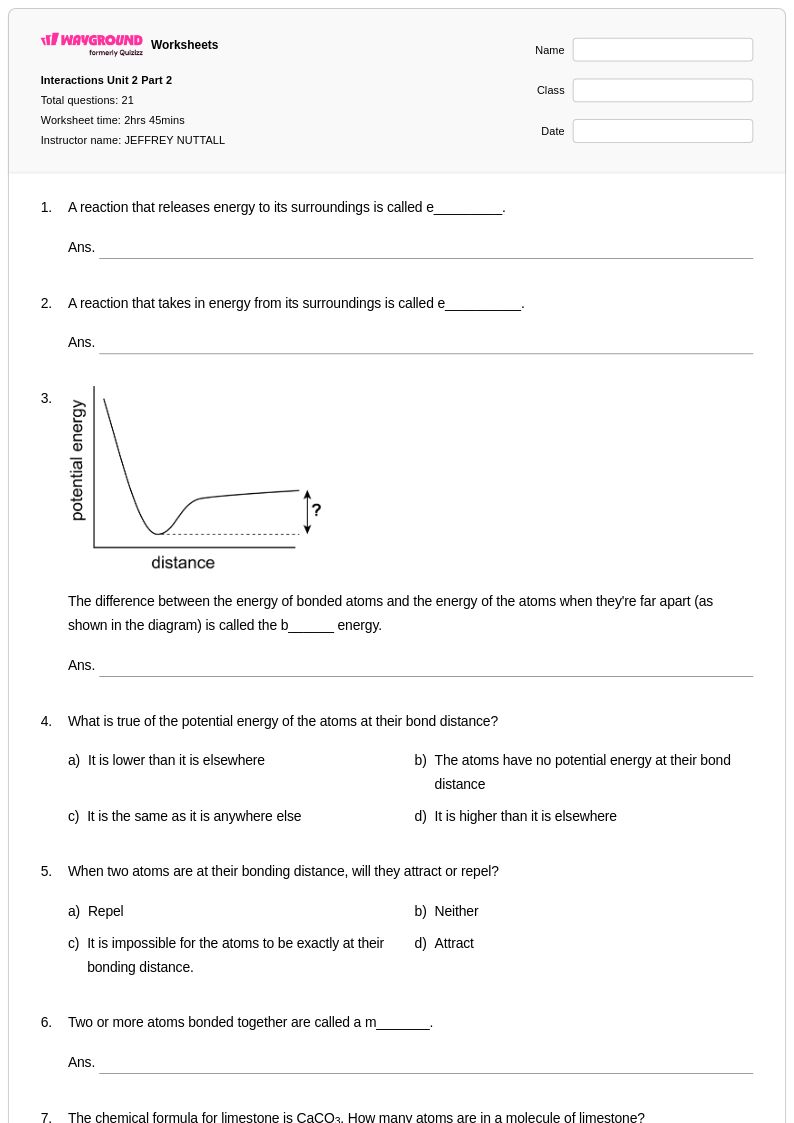
Atomic bonding worksheets for Grade 10 students available through Wayground (formerly Quizizz) provide comprehensive practice in understanding how atoms combine to form compounds through ionic, covalent, and metallic bonds. These expertly crafted worksheets strengthen fundamental chemistry skills by guiding students through electron transfer mechanisms, Lewis dot structures, electronegativity differences, and bond polarity concepts. Students develop mastery of predicting molecular geometry, understanding lattice structures, and explaining the relationship between bonding types and material properties. Each worksheet collection includes detailed answer keys and is available as free printables in convenient pdf format, allowing students to work through practice problems systematically while reinforcing their understanding of how atomic structure determines bonding behavior.
Wayground (formerly Quizizz) supports chemistry educators with millions of teacher-created atomic bonding resources that feature robust search and filtering capabilities aligned to state and national science standards. Teachers can easily differentiate instruction by accessing worksheets that range from basic ionic compound formation to advanced molecular orbital theory, with flexible customization options that allow adaptation for varying student needs. These comprehensive collections are available in both printable pdf formats and interactive digital versions, enabling seamless integration into lesson planning for initial instruction, targeted remediation, and enrichment activities. The platform's extensive library helps educators efficiently locate age-appropriate materials that support skill practice in electron configuration analysis, bond energy calculations, and predicting chemical behavior based on atomic bonding principles.
FAQs
How do I teach atomic bonding to chemistry students?
Start by grounding students in electron configuration and valence electrons before introducing bond types, since students cannot meaningfully distinguish ionic from covalent bonding without understanding why atoms seek stability. Use Lewis dot diagrams as a visual scaffold early in instruction, then progress to molecular geometry and intermolecular forces. Connecting bond type to observable properties — like conductivity in ionic compounds versus molecular ones — helps students move beyond memorization toward conceptual understanding.
What exercises help students practice ionic and covalent bonding?
Effective practice exercises include drawing Lewis structures for a range of molecules, classifying compounds as ionic or covalent based on electronegativity differences, and predicting molecular geometry using VSEPR theory. Electron dot diagram problems that progress from simple diatomic molecules to polyatomic ions build procedural fluency before tackling complex structures. Practice problems that require students to explain why a bond forms — not just identify it — push toward deeper understanding of electron behavior and bond formation mechanisms.
What mistakes do students commonly make when learning about chemical bonding?
One of the most persistent misconceptions is that ionic bonds always involve a complete transfer of electrons and covalent bonds always involve equal sharing — students often miss the spectrum created by electronegativity differences, including polar covalent bonds. Students also frequently confuse intermolecular forces with intramolecular bonds, leading to errors in predicting physical properties like boiling point. Another common error is incorrectly drawing Lewis structures by violating the octet rule without recognizing the exceptions that apply to certain elements like phosphorus, sulfur, or boron.
How can I use atomic bonding worksheets in my chemistry class?
Atomic bonding worksheets on Wayground are available as printable PDFs for traditional classroom use and in digital formats for technology-integrated environments, making them adaptable for in-class practice, homework, or lab preparation. Teachers can also host these worksheets as a quiz directly on Wayground, enabling real-time student response tracking. Each worksheet includes a complete answer key, which supports independent student review and reduces grading time for instructors.
How do I differentiate atomic bonding instruction for students at different skill levels?
For students who are still building foundational skills, reduce complexity by focusing first on binary ionic compounds before introducing polyatomic ions or molecular geometry. For advanced learners, extend practice into resonance structures, formal charge calculations, and the relationship between bond order and bond length. Wayground's platform supports differentiation through tools like reduced answer choices for students who need less cognitive load, and read-aloud functionality for students who benefit from auditory support during digital practice.
How do I help students understand the difference between metallic bonding and other bond types?
Metallic bonding is best understood in contrast to ionic and covalent bonding by emphasizing the 'sea of electrons' model, where valence electrons are delocalized across a lattice of metal cations rather than transferred or shared between specific atoms. Connecting this structure to observable metallic properties — electrical conductivity, malleability, and luster — gives students concrete anchors for an otherwise abstract concept. Practice problems that ask students to predict properties based on bond type reinforce why metallic bonding produces a distinct set of physical characteristics.