
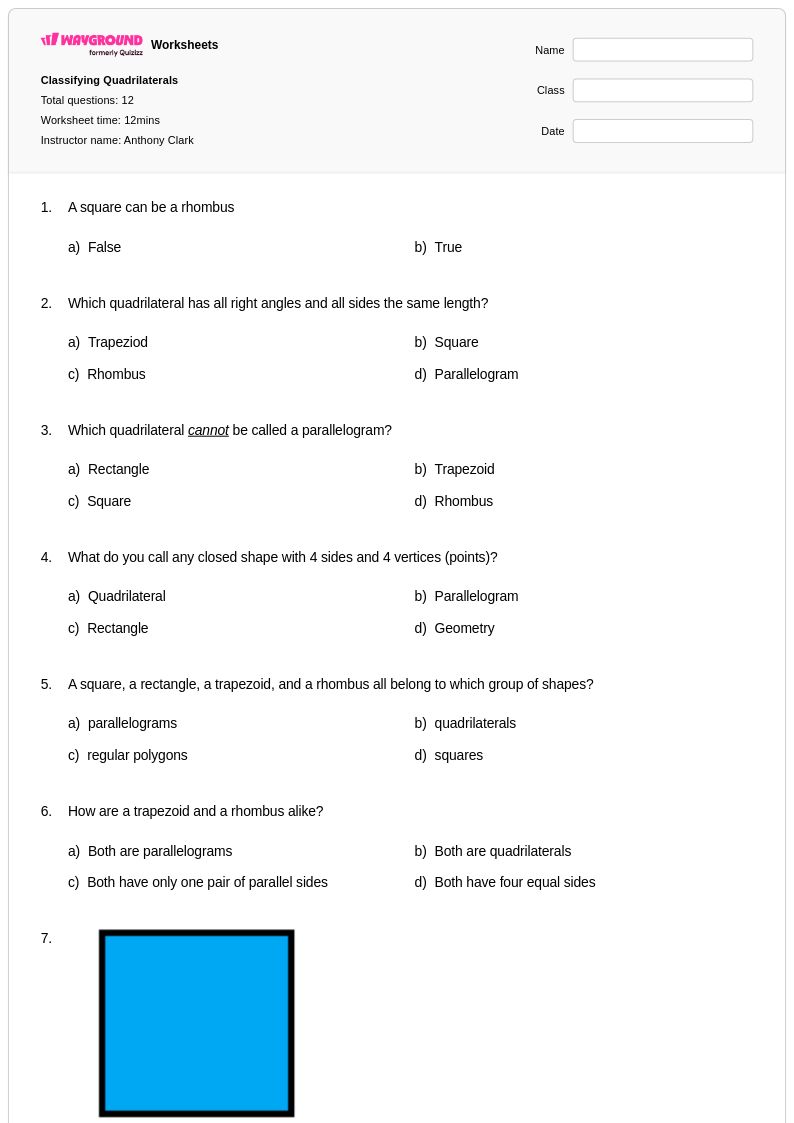
12 Q
1st - Uni
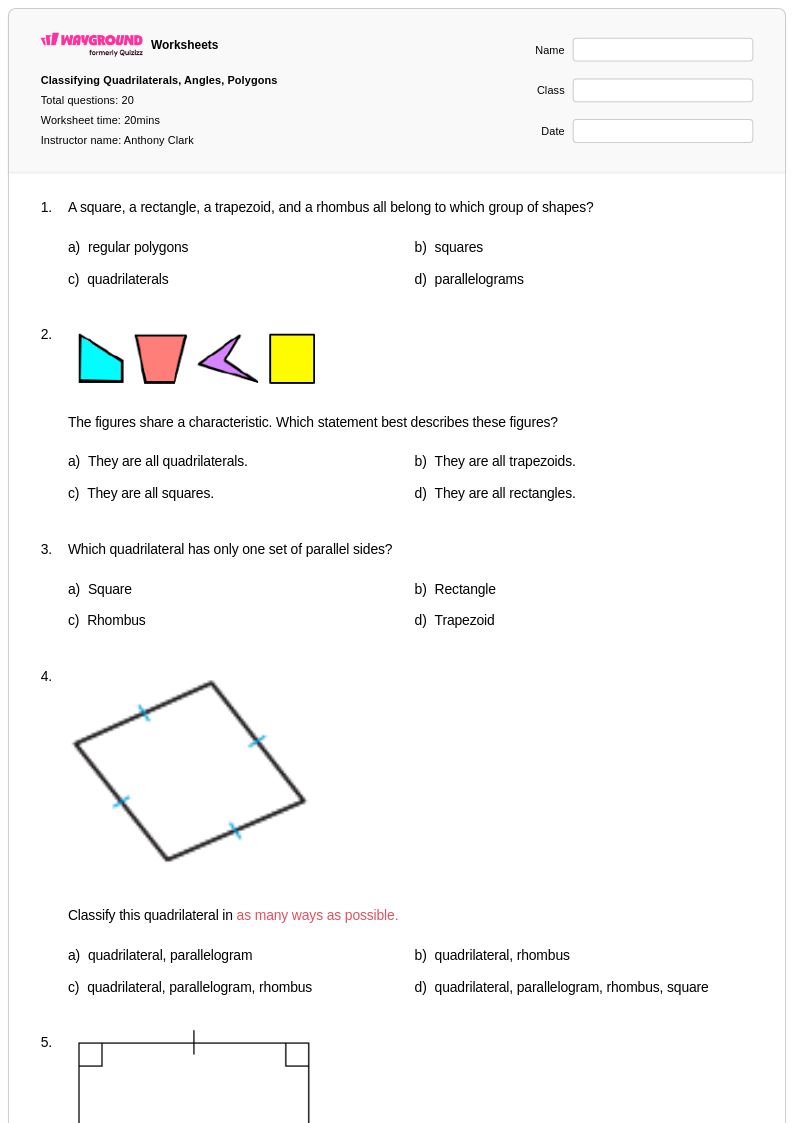
20 Q
5th - Uni
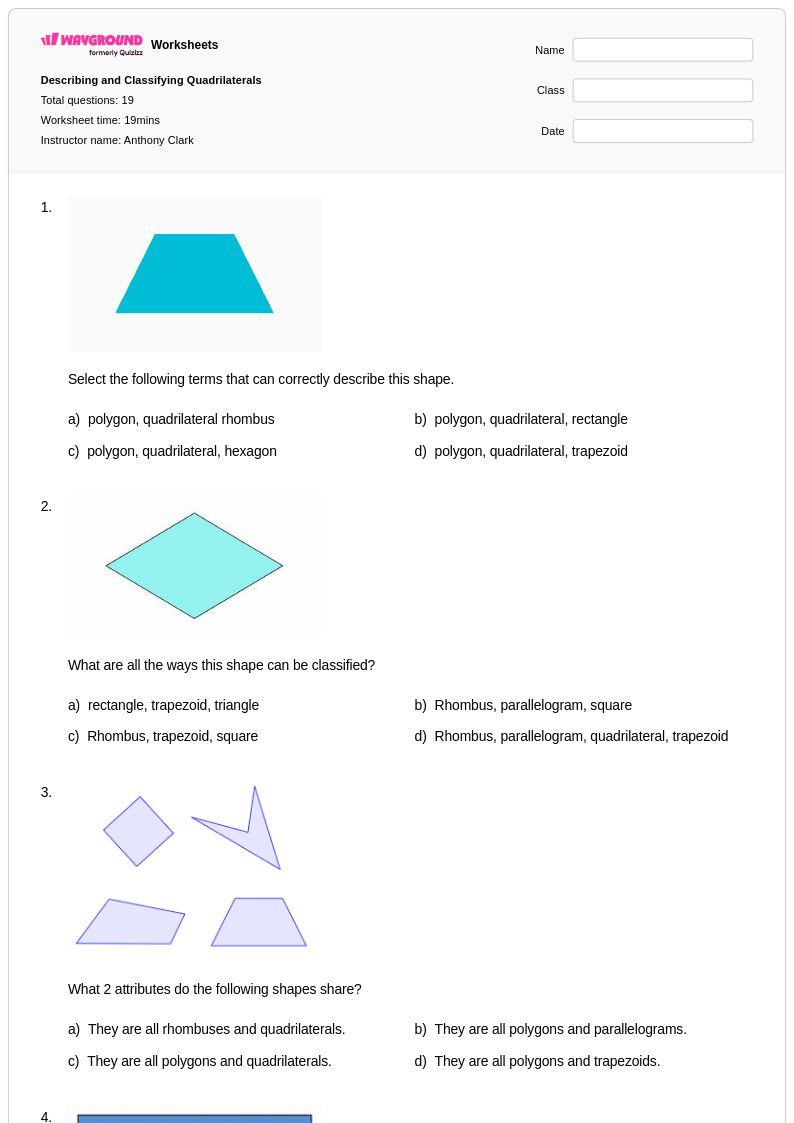
19 Q
5th - Uni
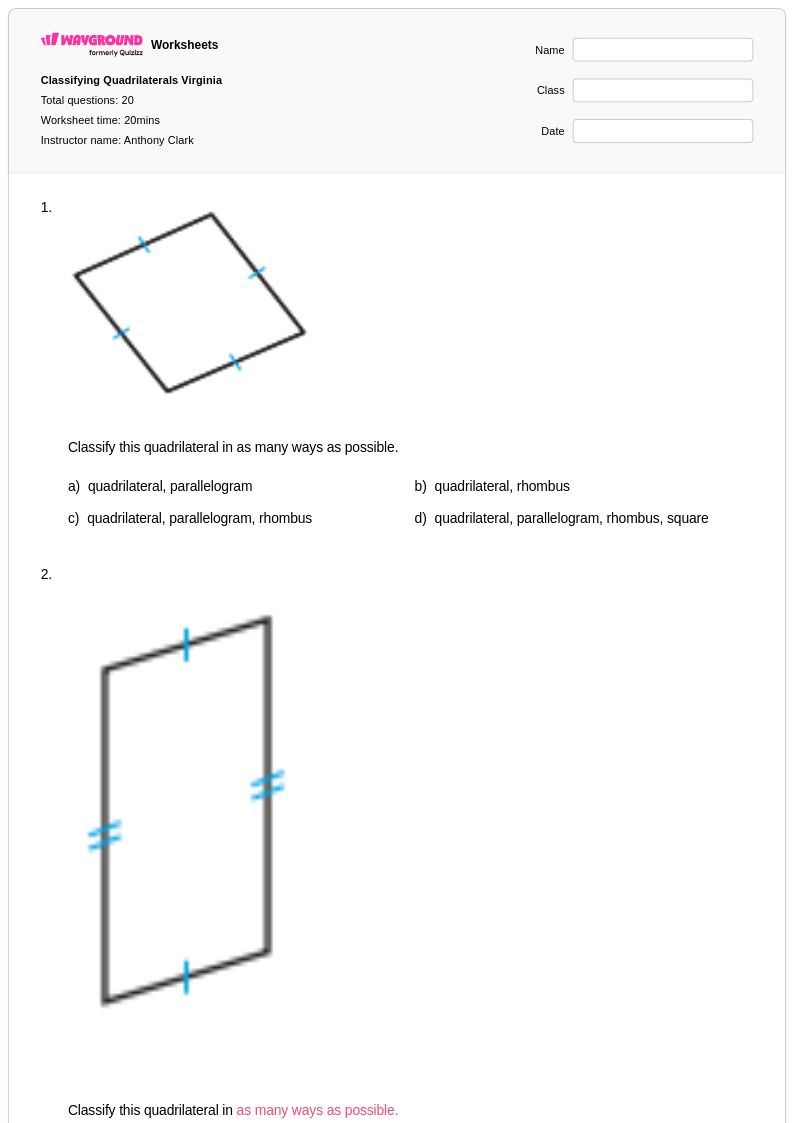
20 Q
5th - Uni
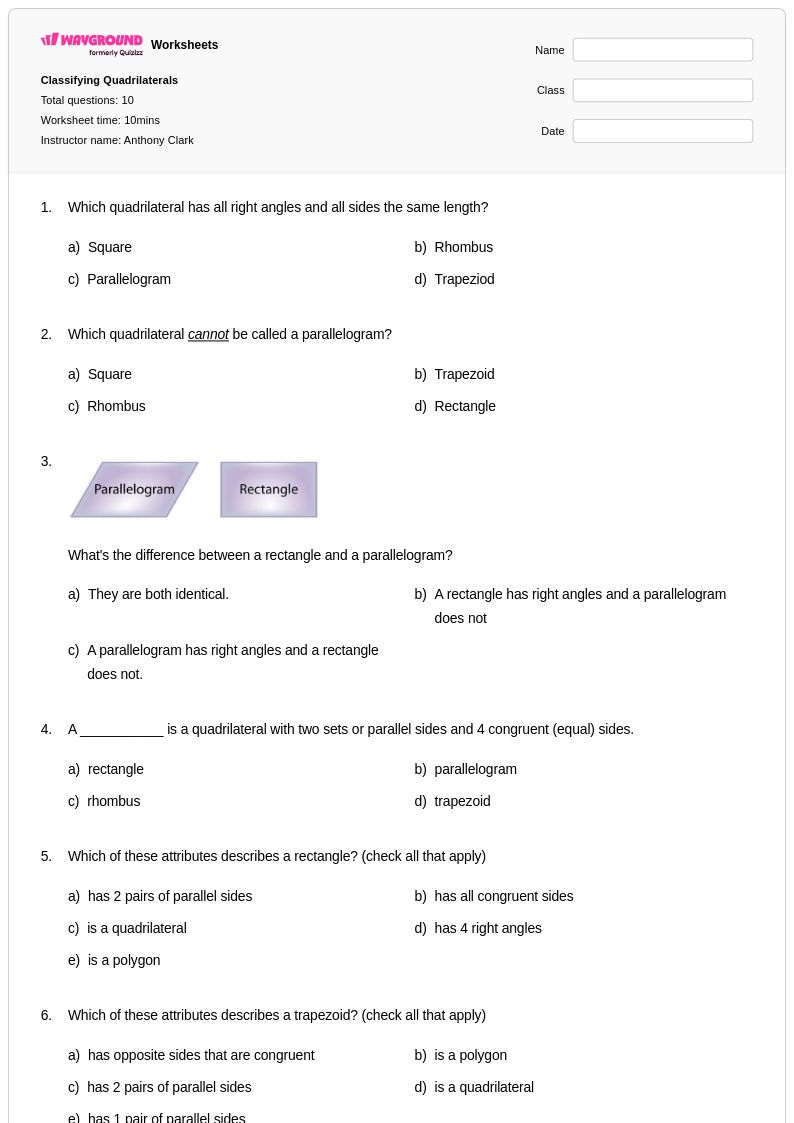
10 Q
5th - Uni
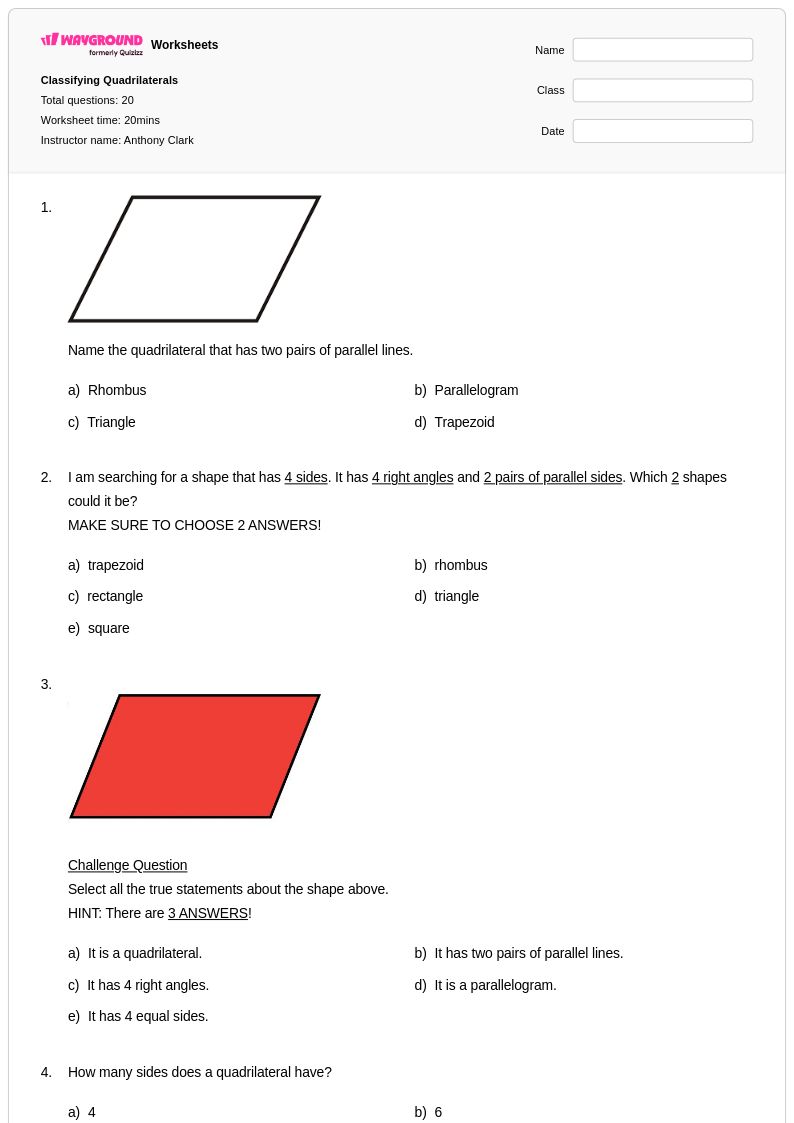
20 Q
5th - Uni
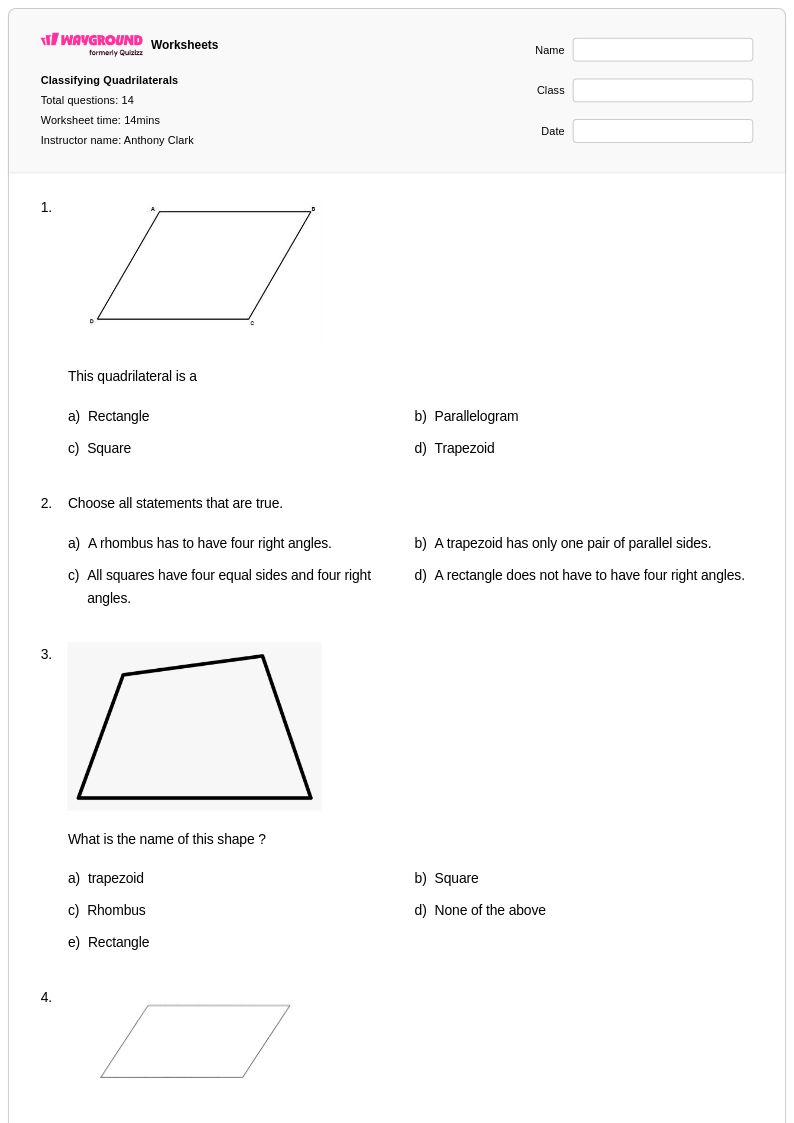
14 Q
5th - Uni
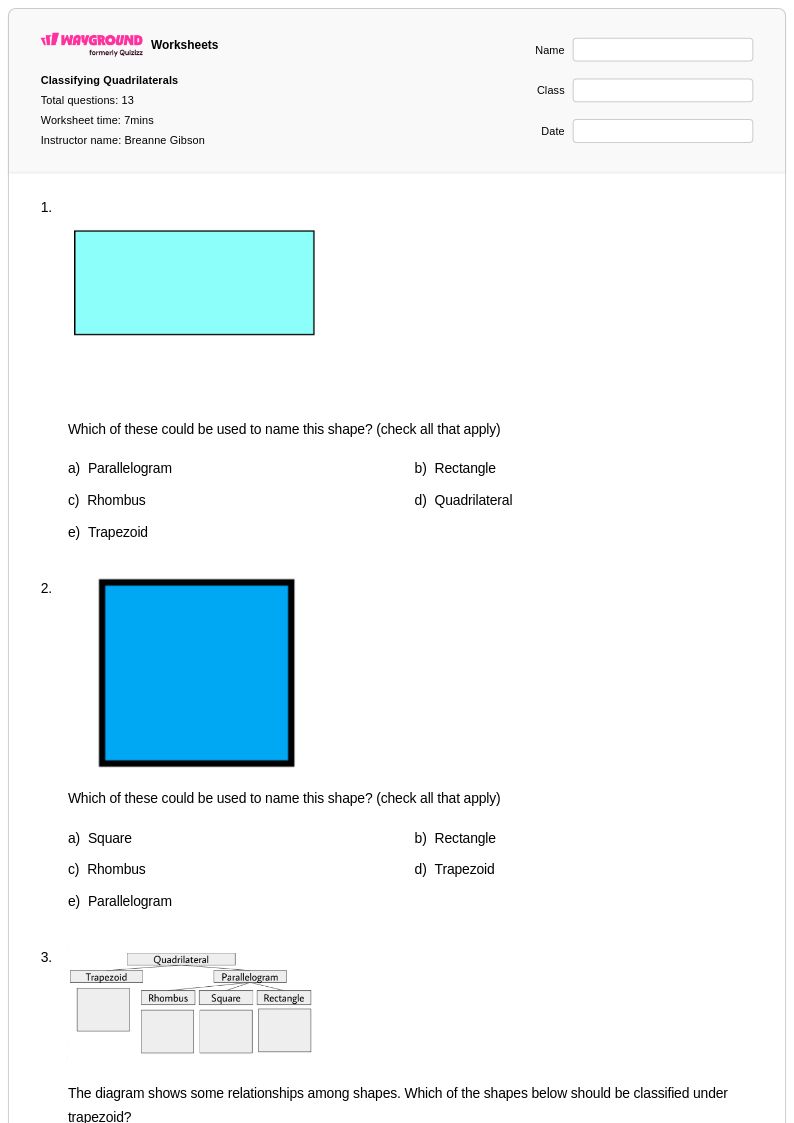
13 Q
4th - 7th
10 Q
5th
20 Q
5th
19 Q
5th - Uni
20 Q
5th - Uni
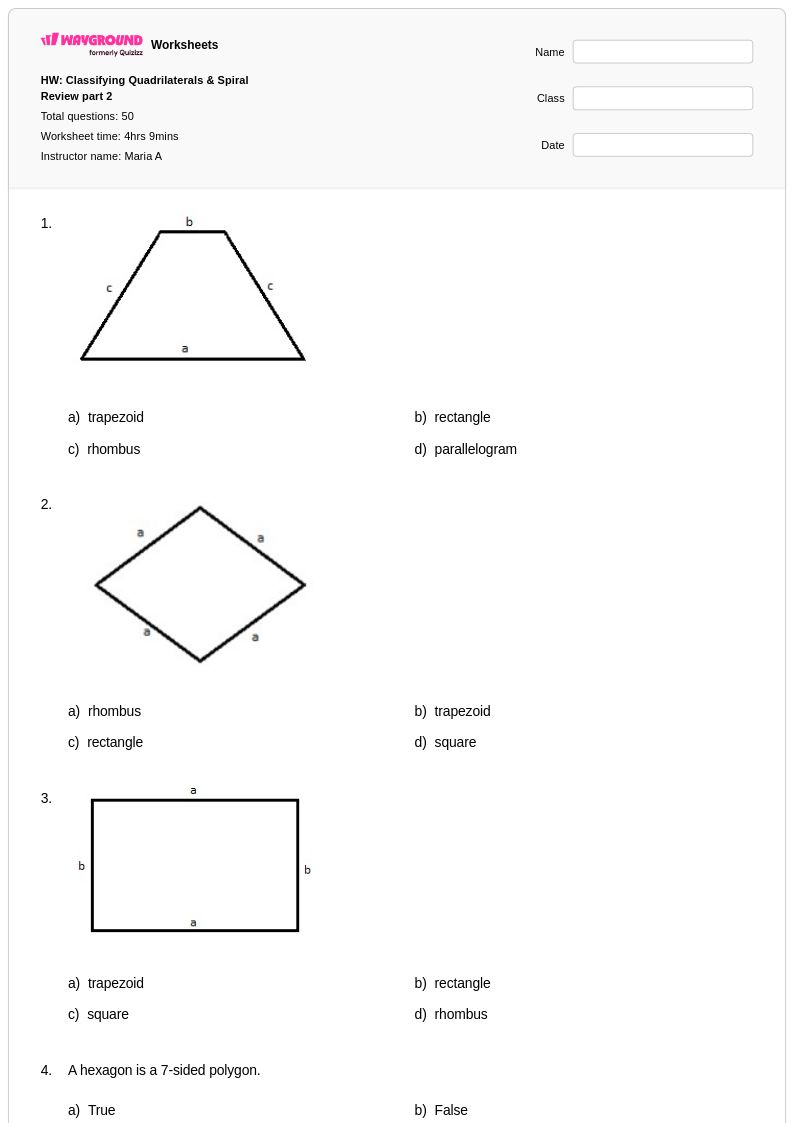
50 Q
5th
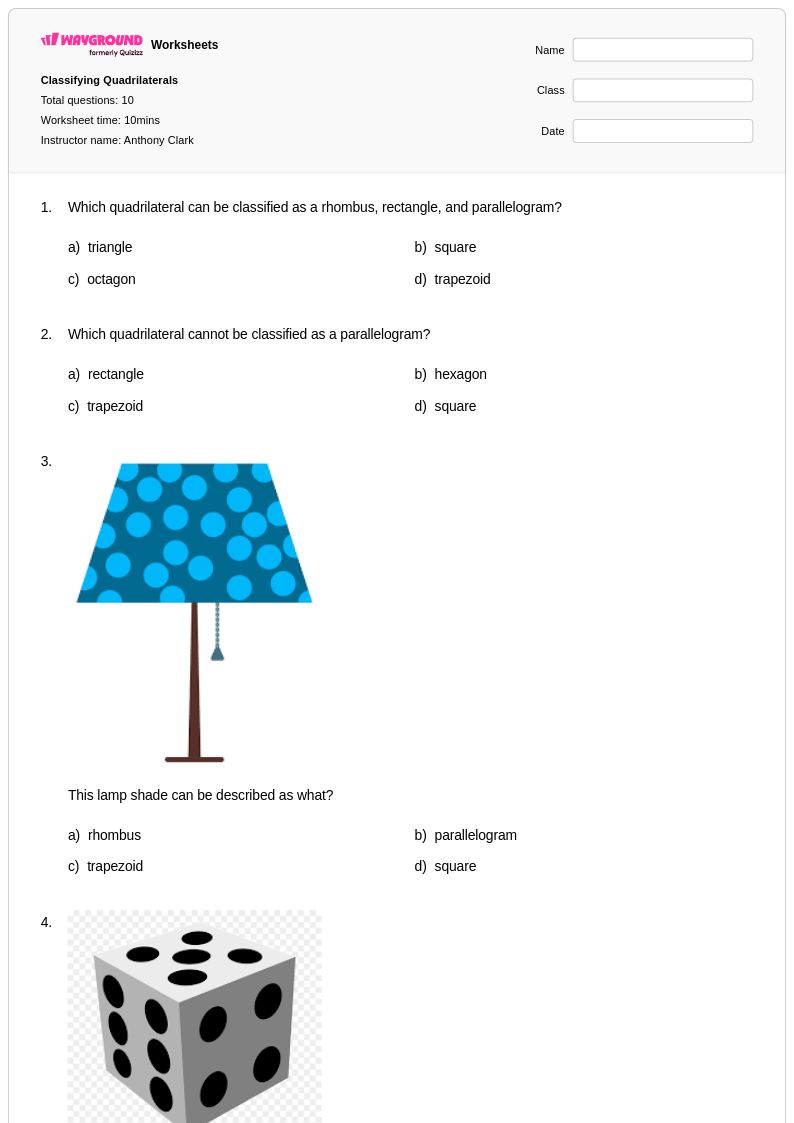
10 Q
5th - Uni
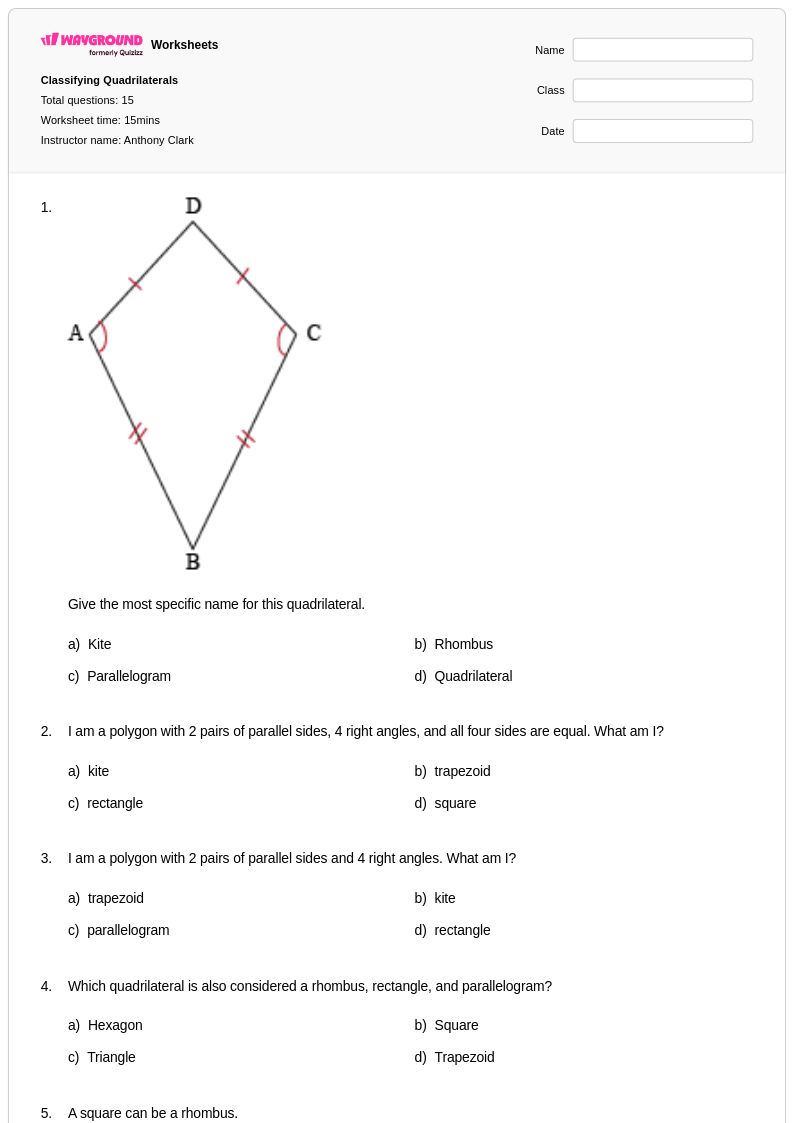
15 Q
5th - Uni
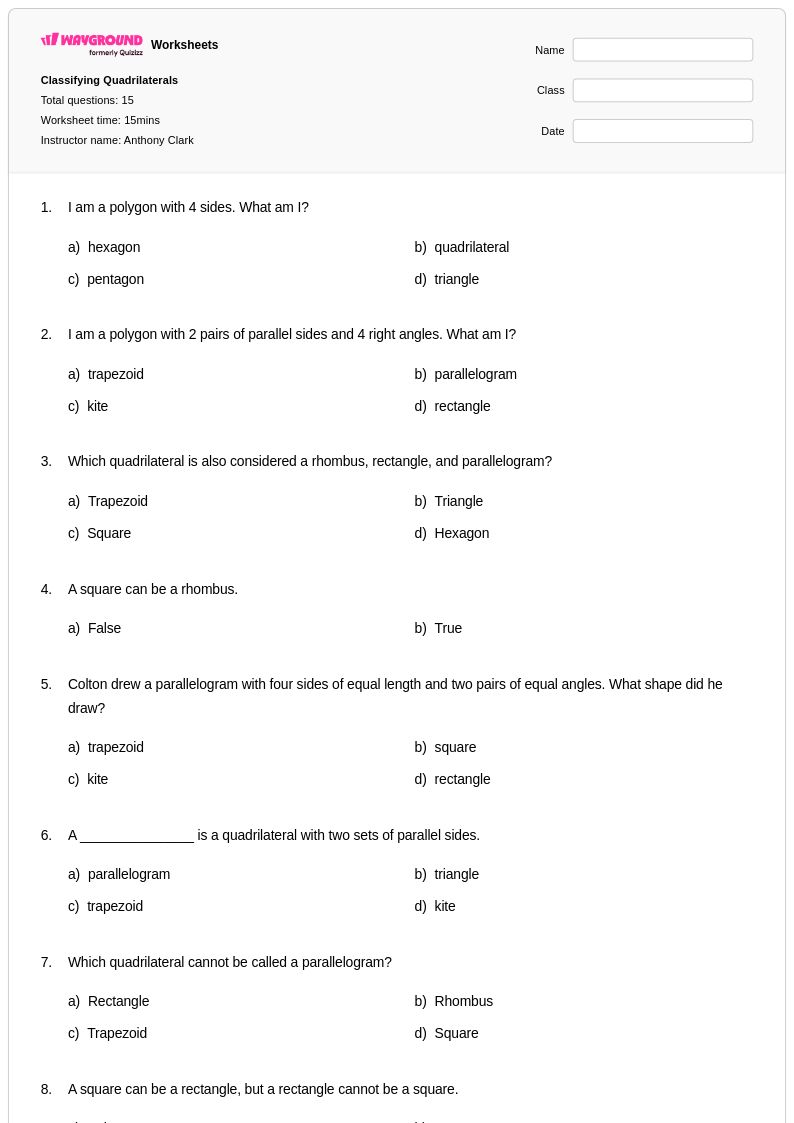
15 Q
5th - Uni
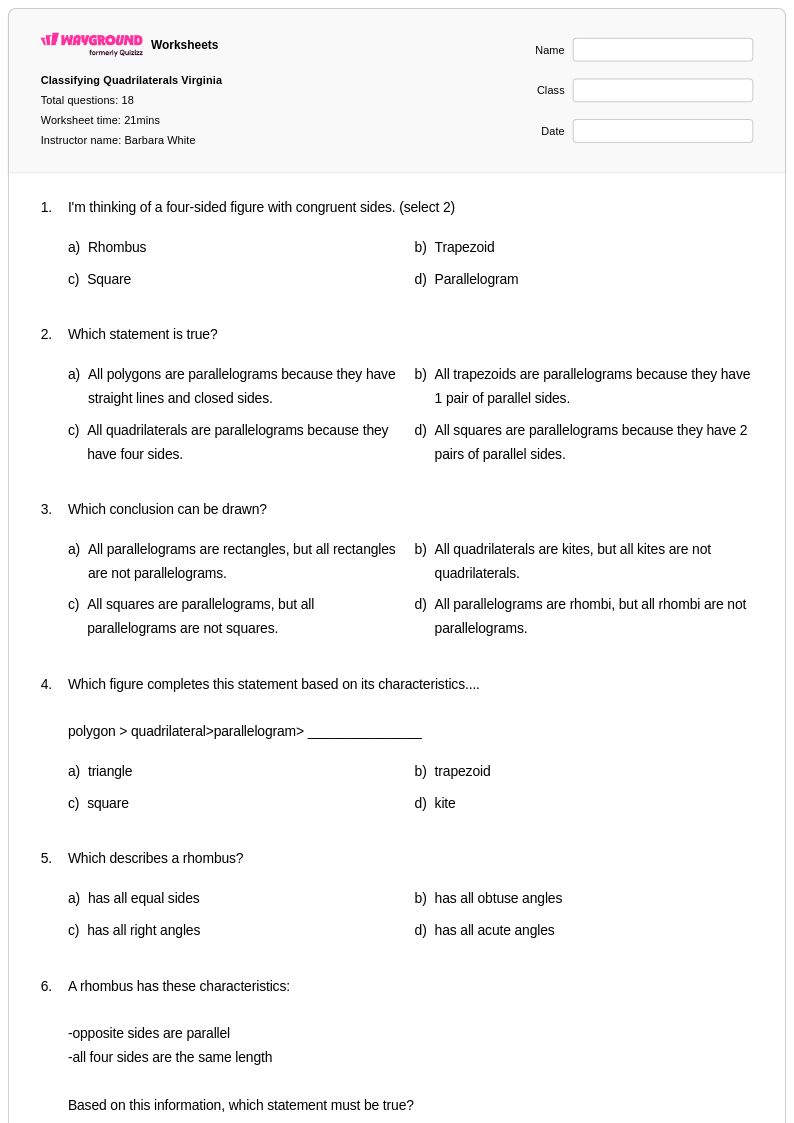
18 Q
5th
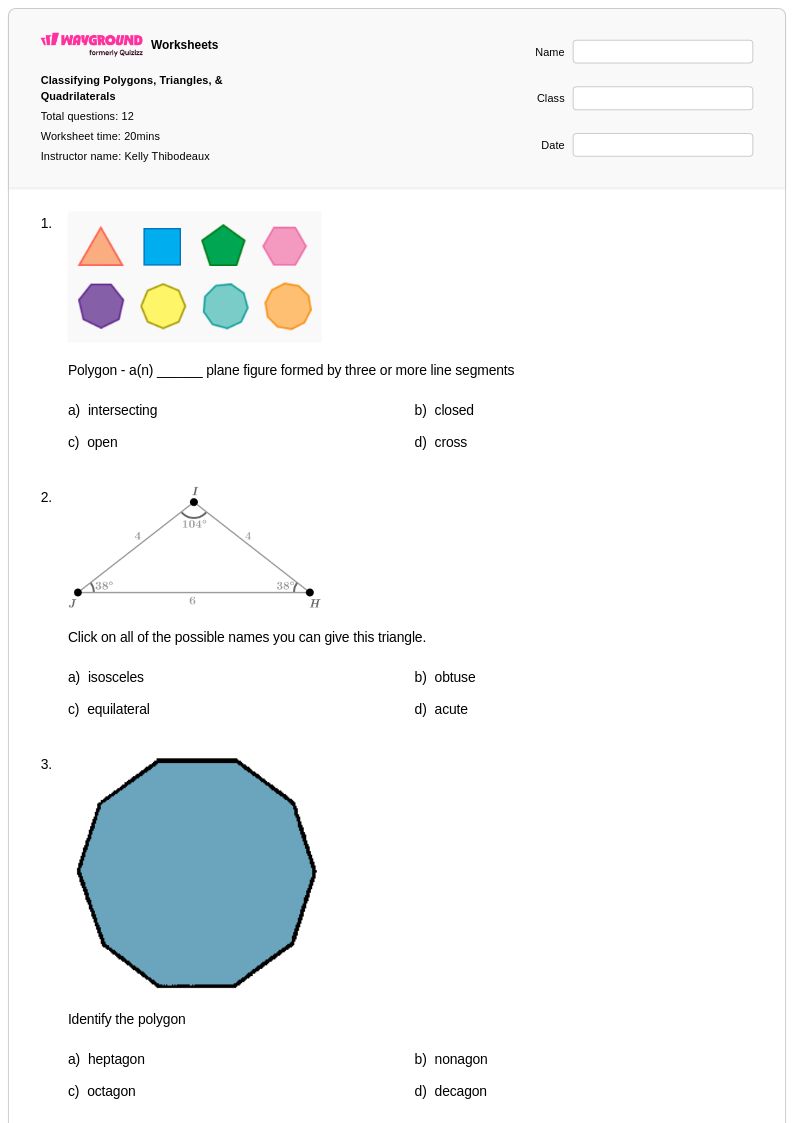
12 Q
5th
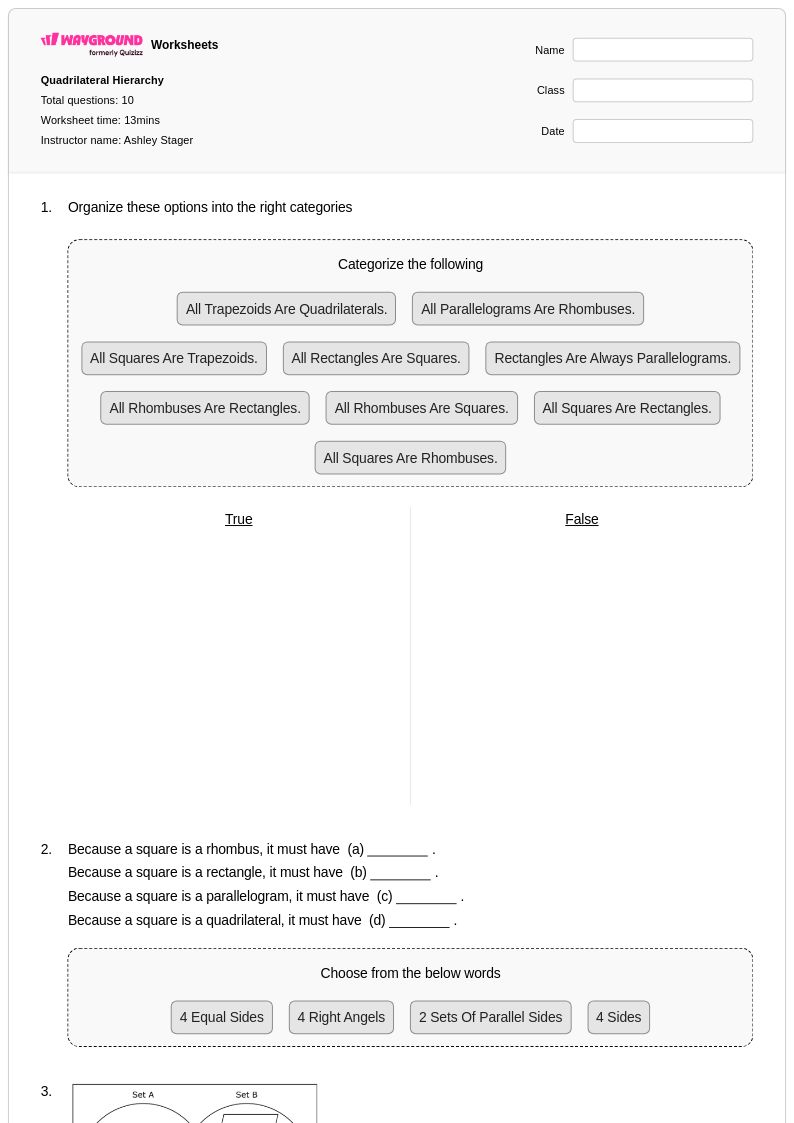
10 Q
5th
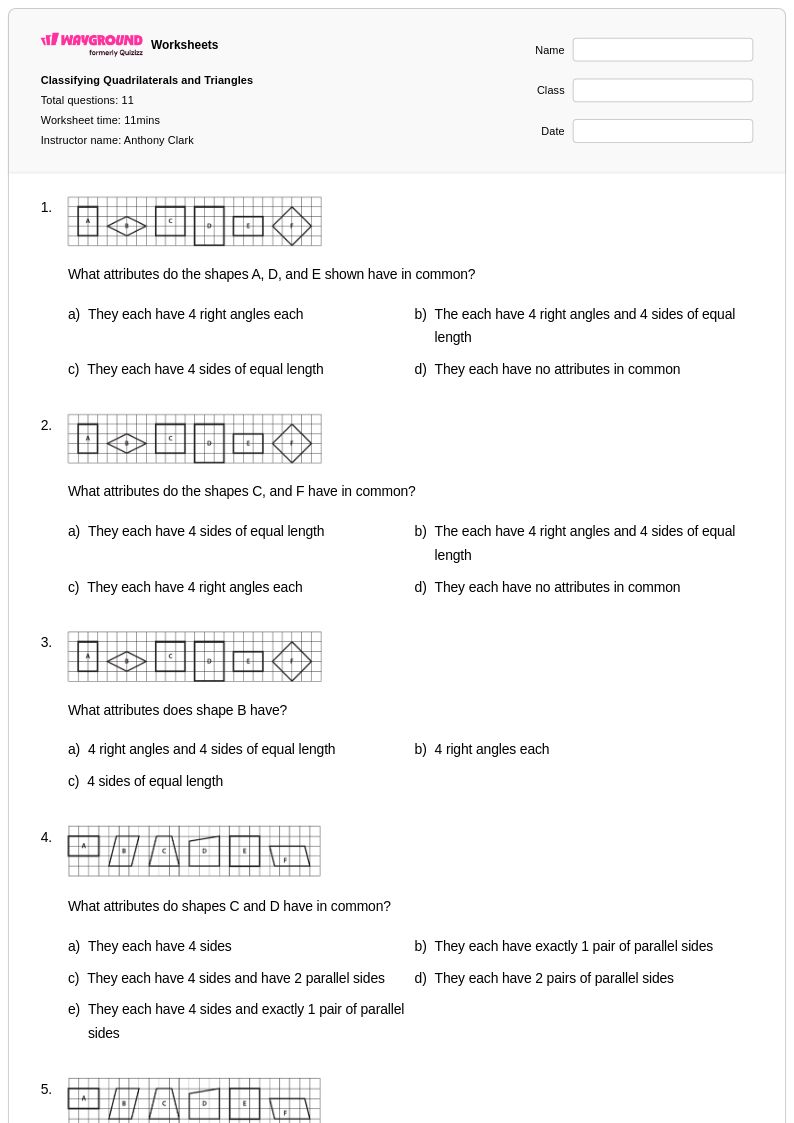
11 Q
5th - Uni
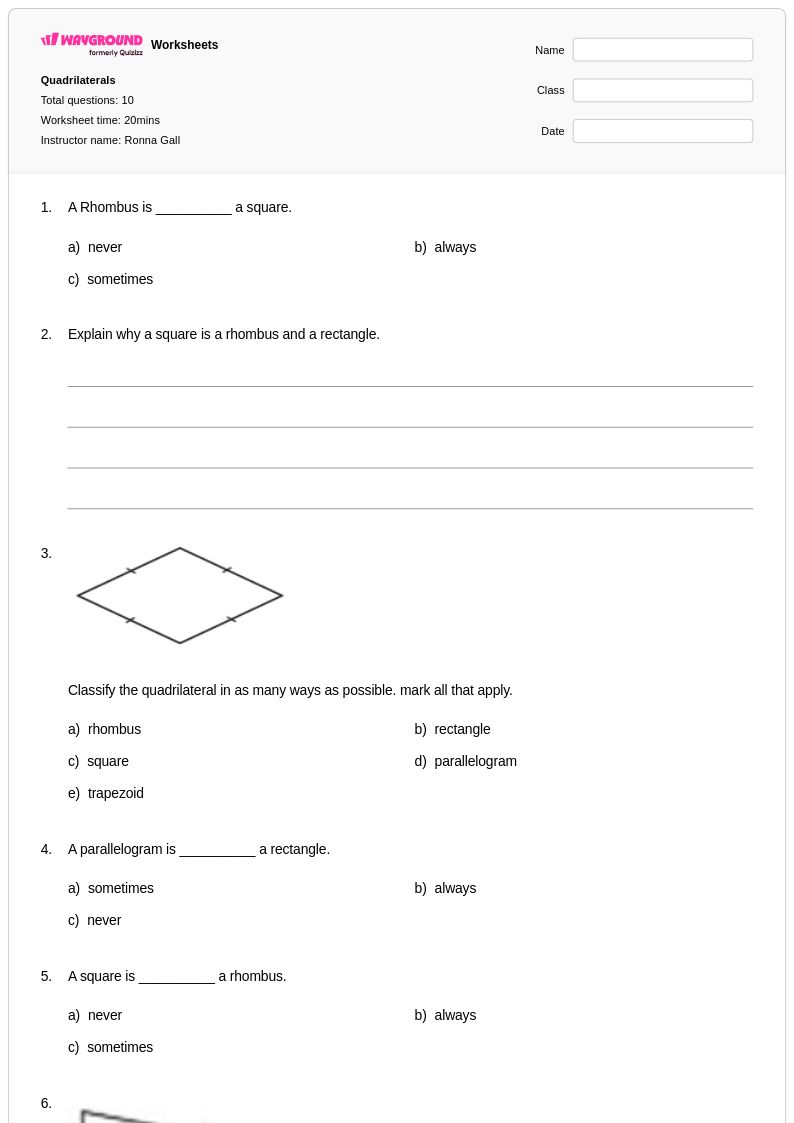
10 Q
5th
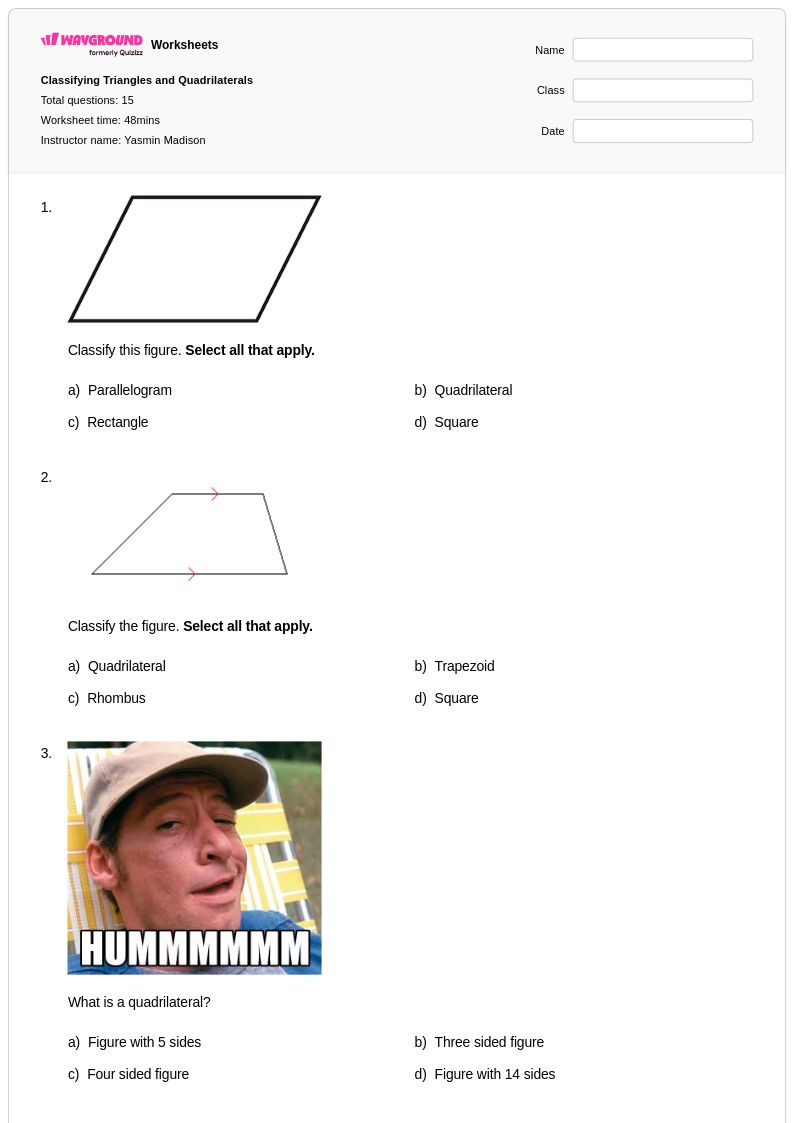
15 Q
5th
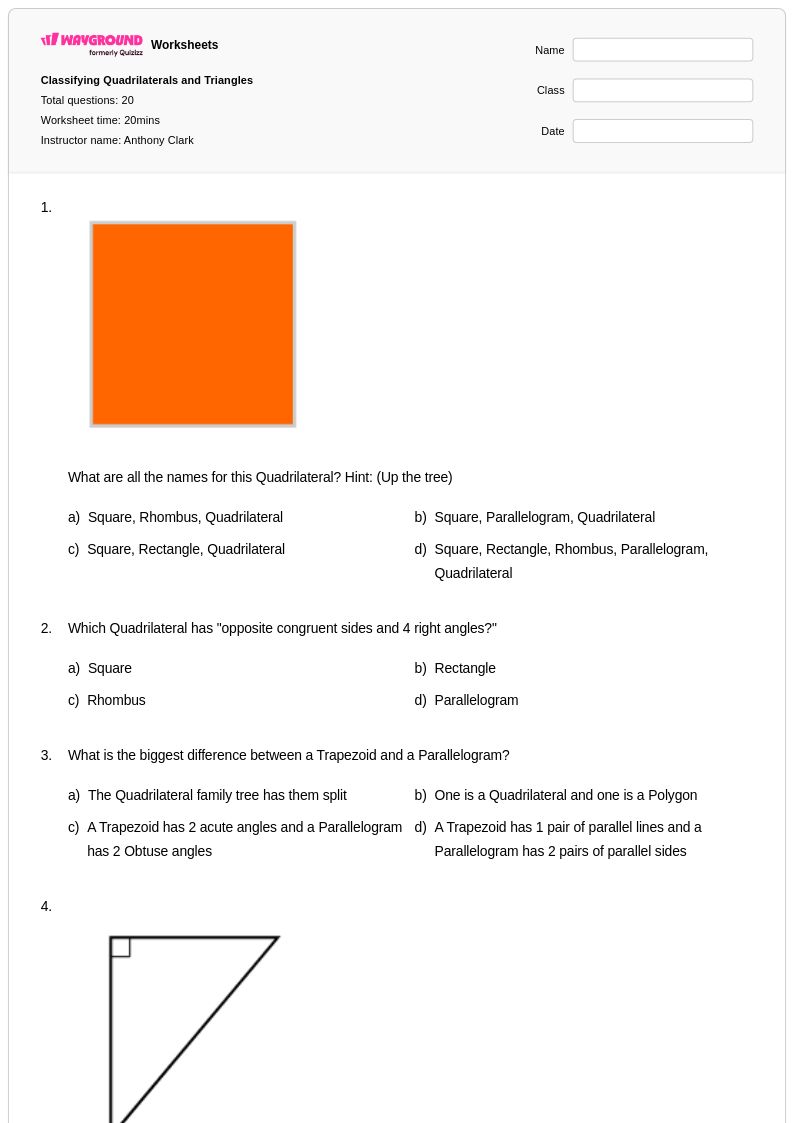
20 Q
5th - Uni
Explore Classifying Quadrilaterals Worksheets by Grades
Explore Other Subject Worksheets for grade 5
Explore printable Classifying Quadrilaterals worksheets for Grade 5
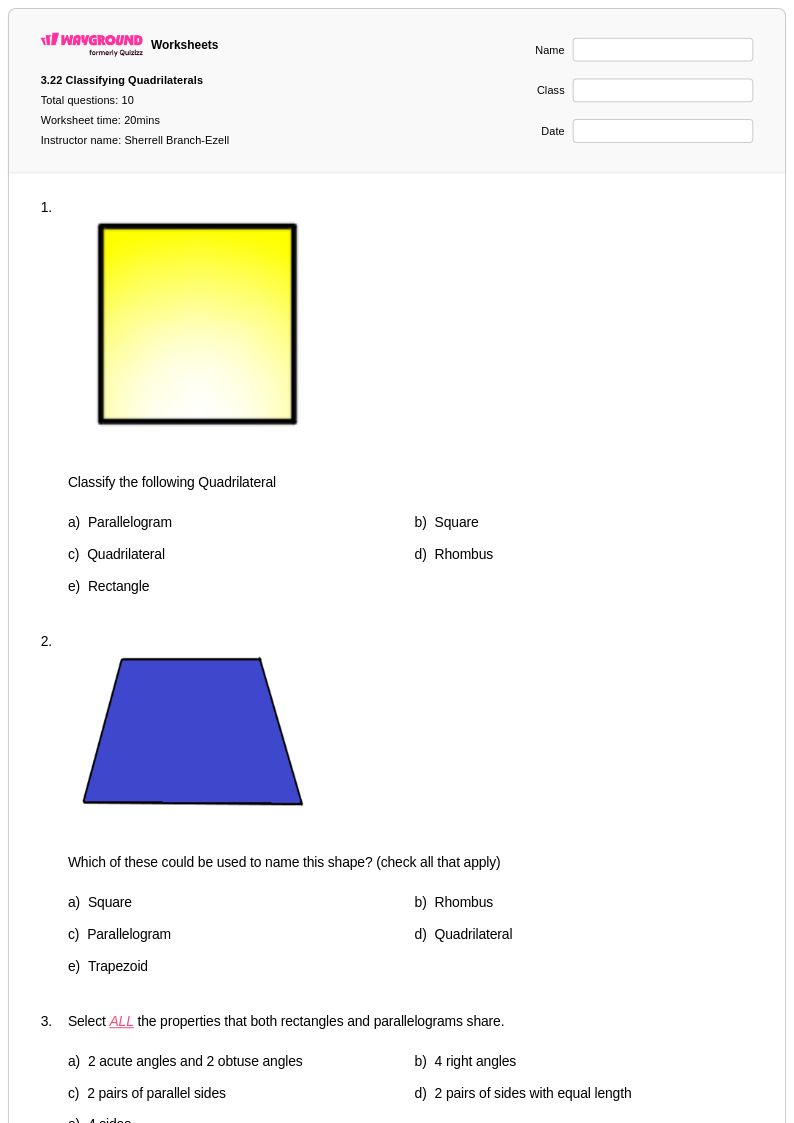
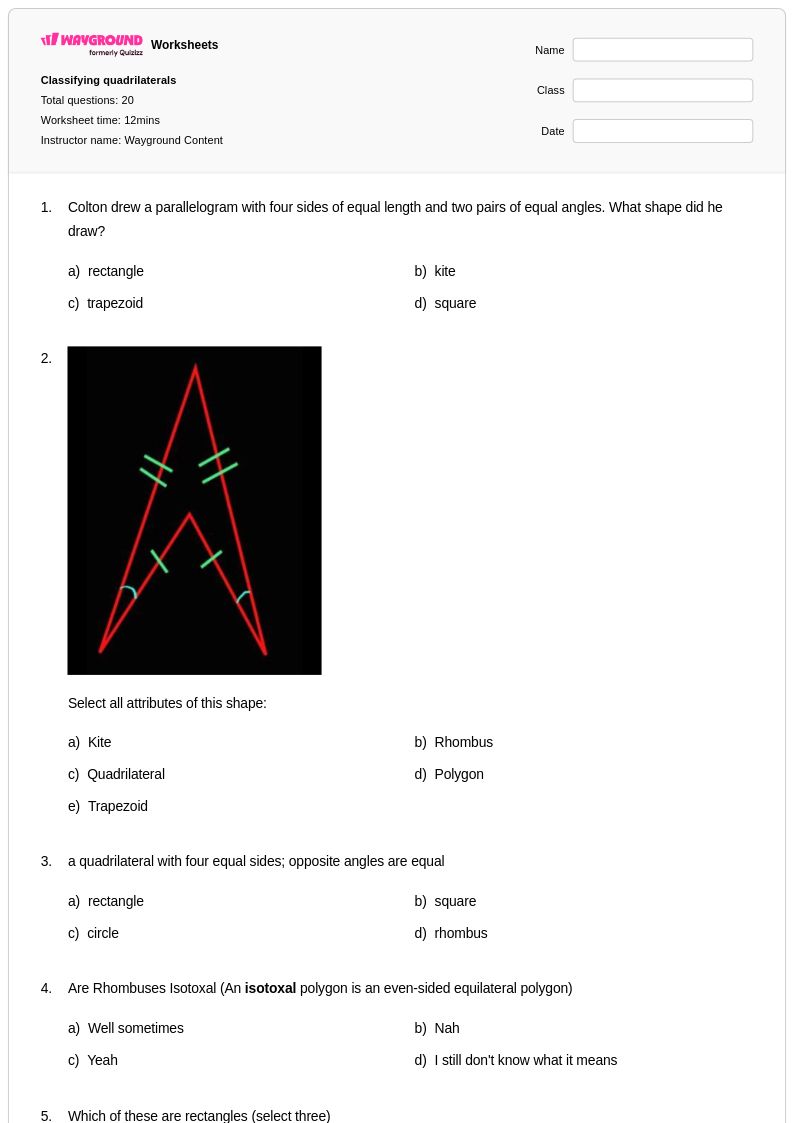
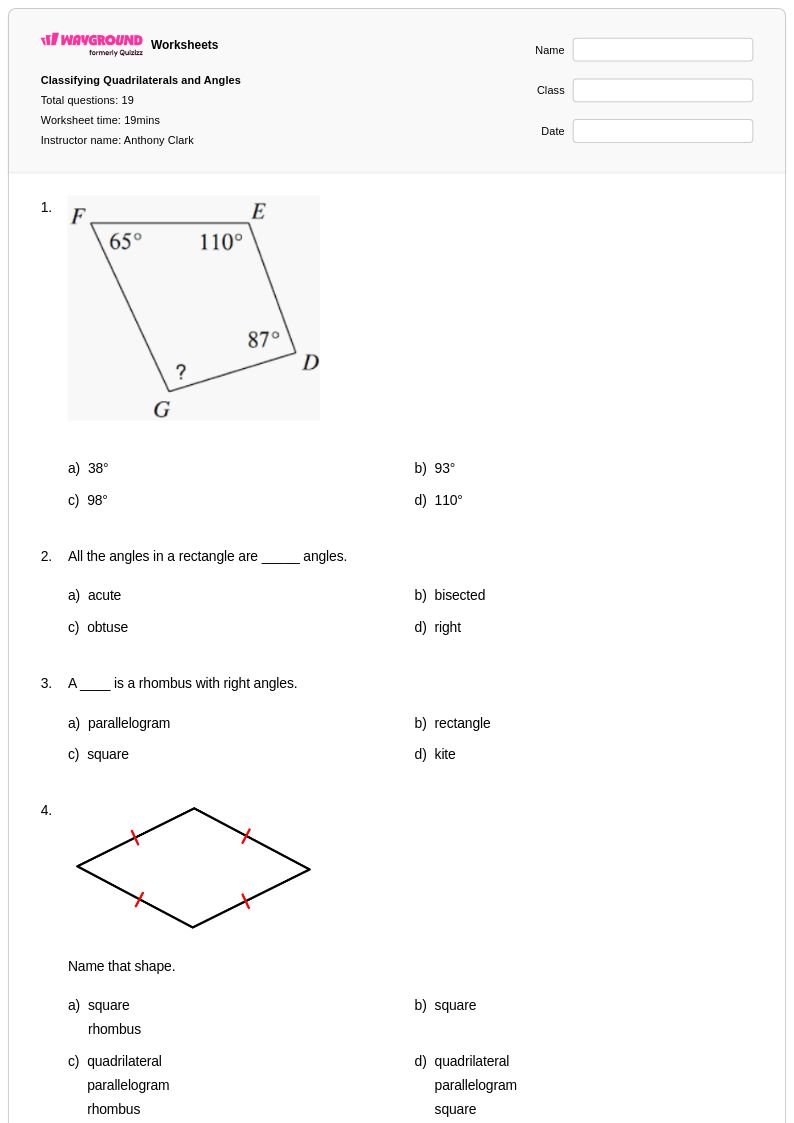
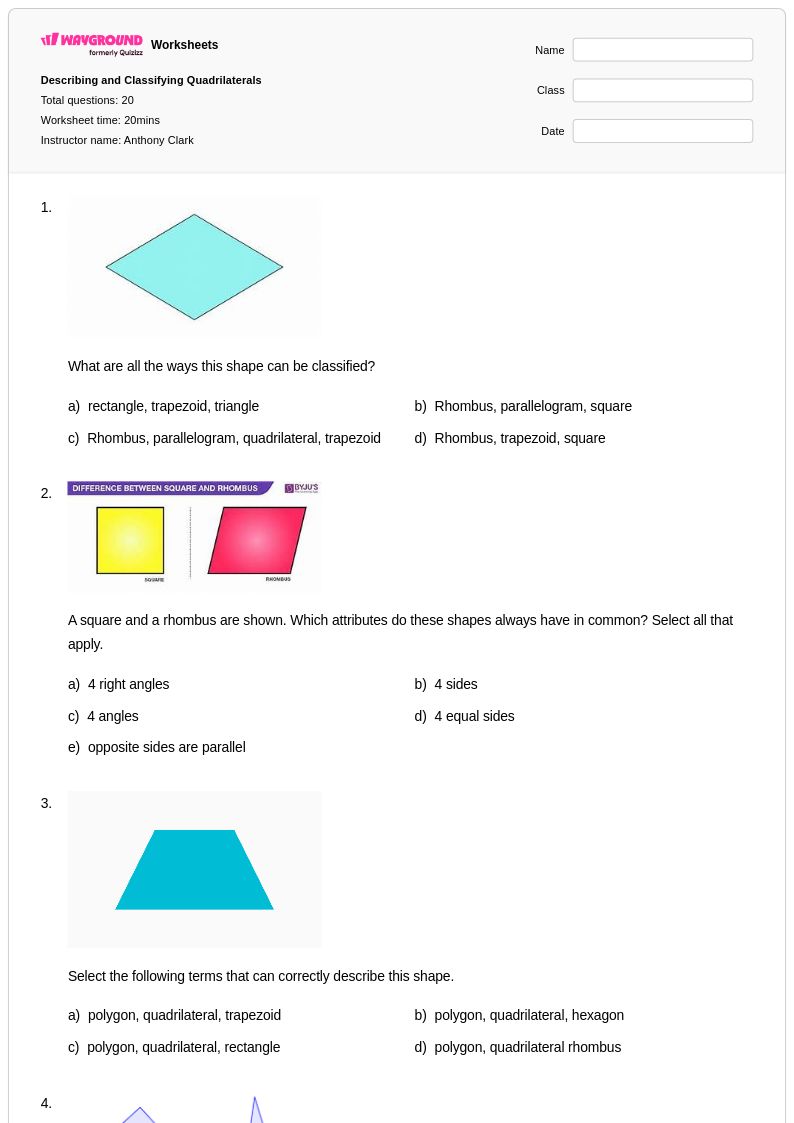
Classifying quadrilaterals worksheets for Grade 5 students through Wayground (formerly Quizizz) provide comprehensive practice with identifying and categorizing four-sided polygons based on their unique properties. These educational resources strengthen students' geometric reasoning skills by helping them distinguish between squares, rectangles, rhombuses, parallelograms, trapezoids, and other quadrilaterals through systematic analysis of side lengths, angle measures, and parallel relationships. The collection includes free printables with detailed answer keys that guide students through practice problems requiring them to examine visual representations and written descriptions of quadrilaterals. These PDF worksheets develop critical thinking abilities as students learn to recognize that some quadrilaterals can belong to multiple categories based on their characteristics, such as how squares are also rectangles, rhombuses, and parallelograms.
Wayground (formerly Quizizz) empowers teachers with millions of educator-created worksheet resources specifically designed for classifying quadrilaterals instruction, featuring robust search and filtering capabilities that align with mathematics standards and grade-level expectations. The platform's differentiation tools allow teachers to customize worksheets based on individual student needs, whether for remediation of foundational concepts or enrichment activities that challenge advanced learners. These resources are available in both printable PDF format and digital versions, providing flexibility for classroom instruction, homework assignments, or independent practice sessions. Teachers can efficiently plan lessons, assess student understanding, and provide targeted skill practice through carefully curated collections that progress from basic quadrilateral identification to more complex classification tasks involving multiple attributes and hierarchical relationships between different types of four-sided figures.
FAQs
How do I teach fifth graders to classify quadrilaterals?
What exercises help Grade 5 students practice classifying quadrilaterals?
What misconceptions do fifth graders have about quadrilateral categories?
How can I assign these Grade 5 quadrilateral worksheets?
How does quadrilateral classification fit into the Grade 5 math curriculum?
How can I differentiate Grade 5 quadrilateral worksheets?
What grade level is quadrilateral hierarchy usually taught?