
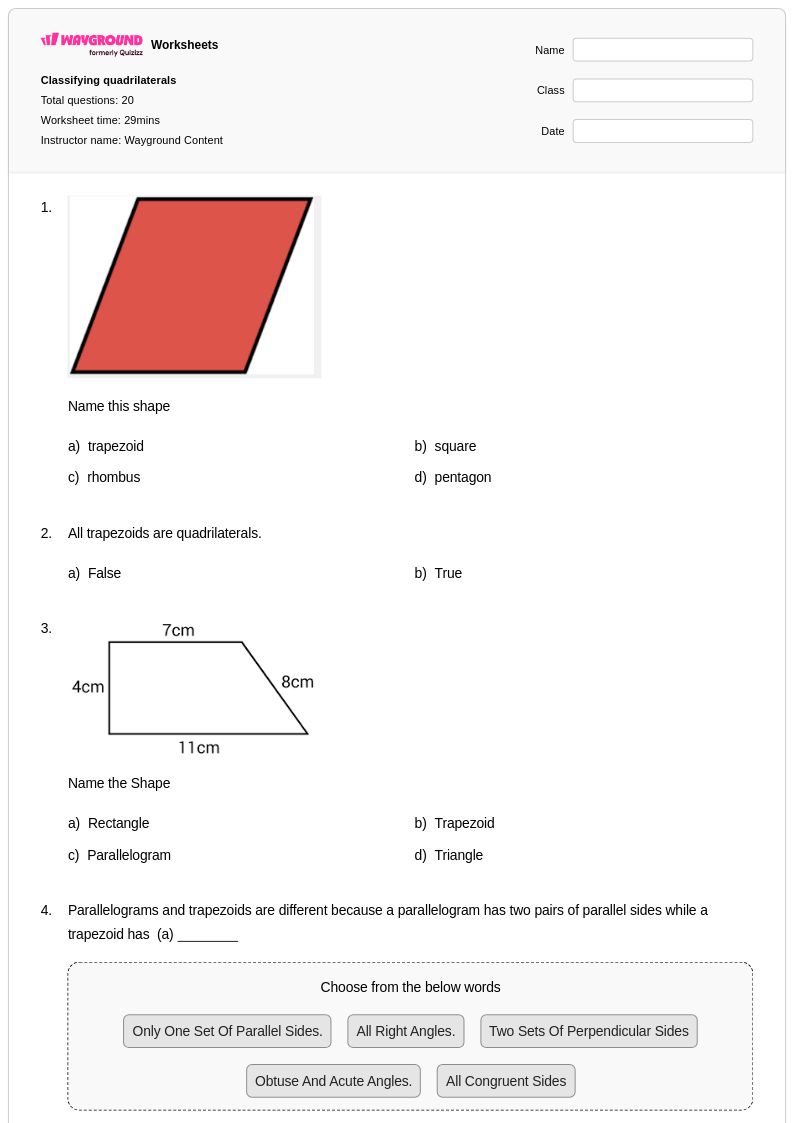
20 Q
4th
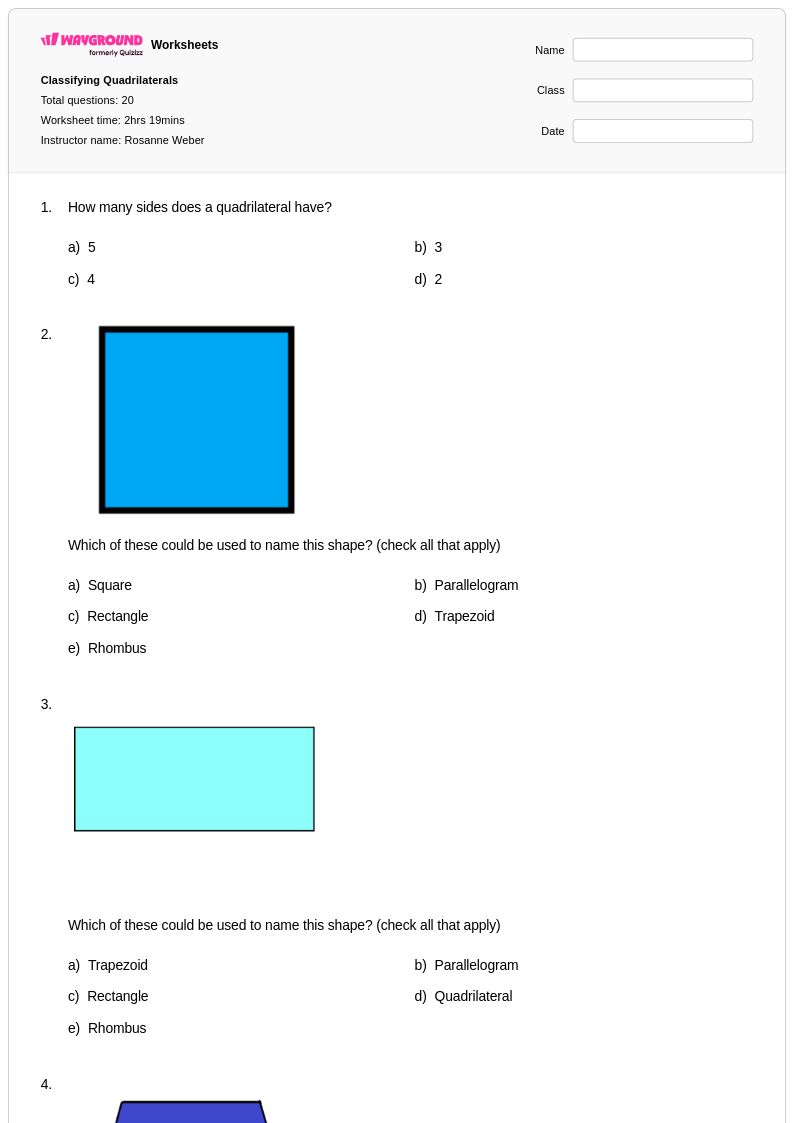
20 Q
3rd - 4th
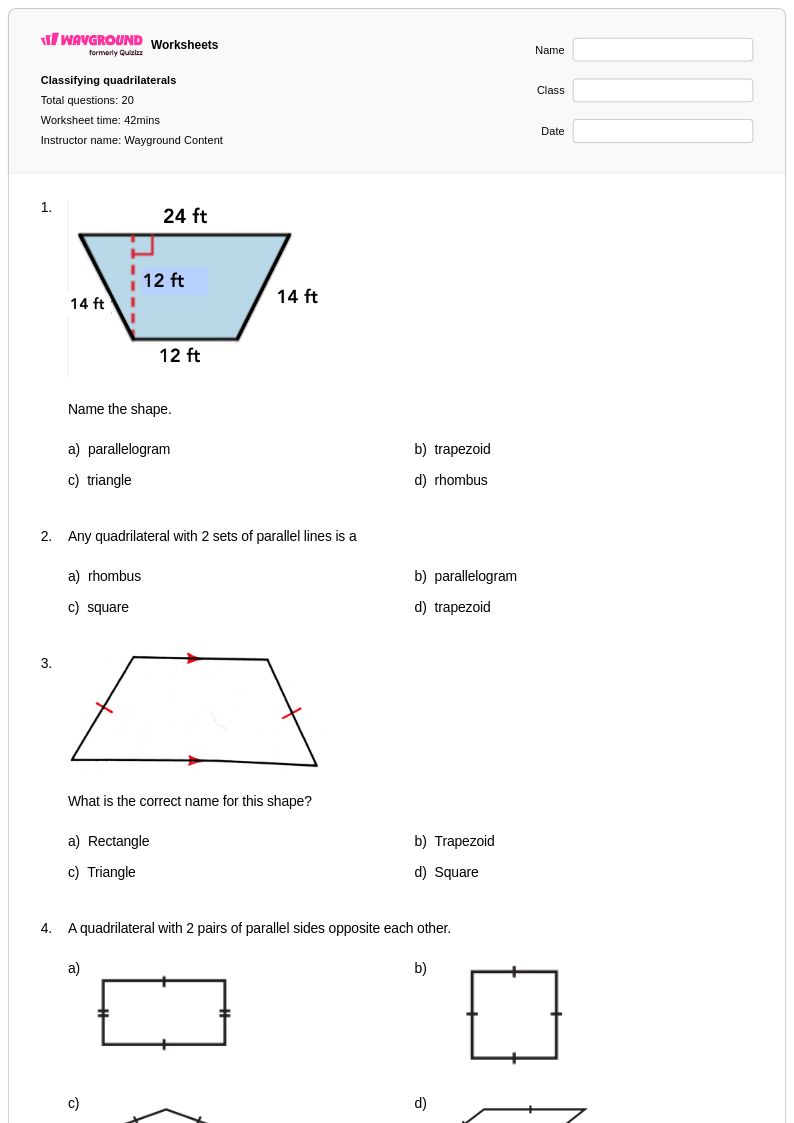
20 Q
4th
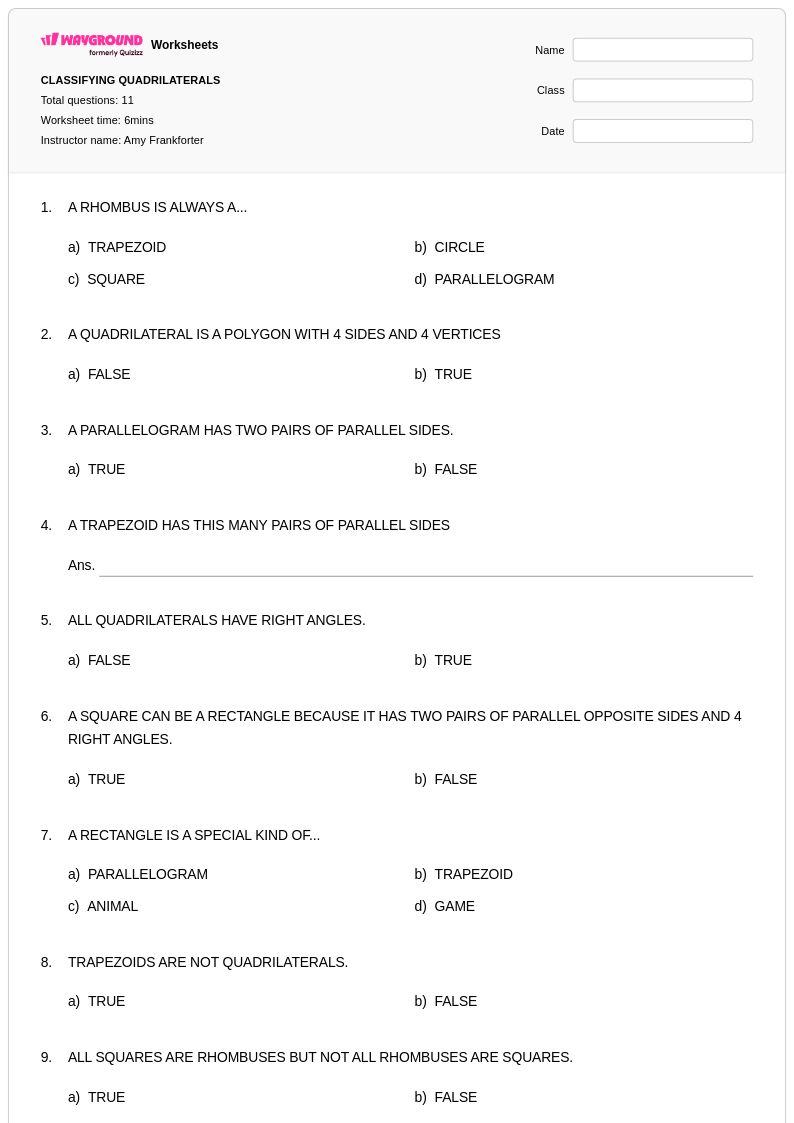
11 Q
3rd - 4th
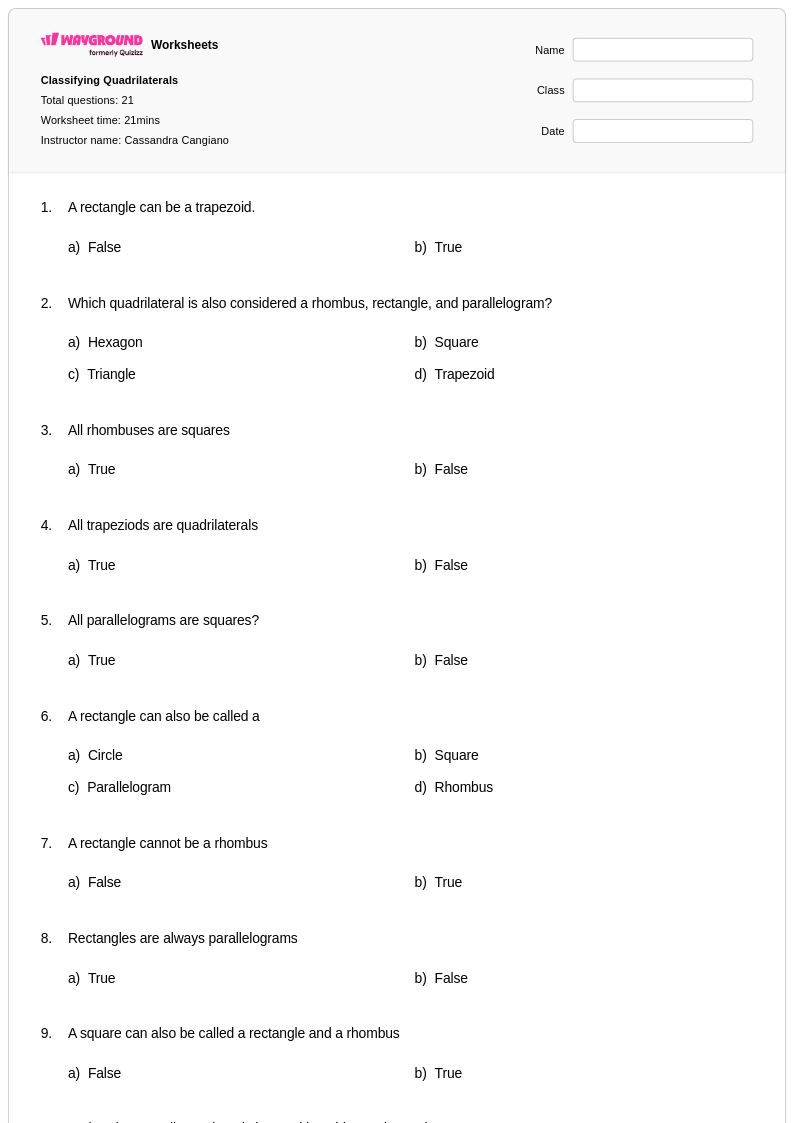
21 Q
4th - 6th
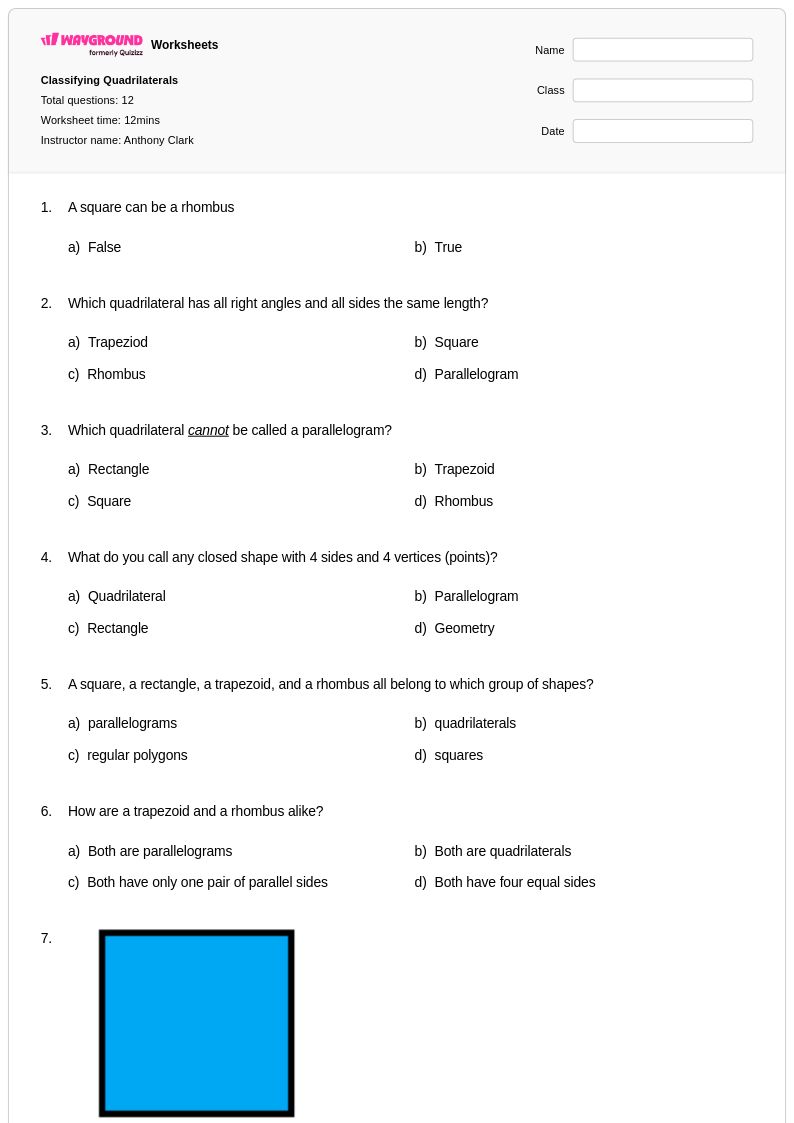
12 Q
1st - Uni
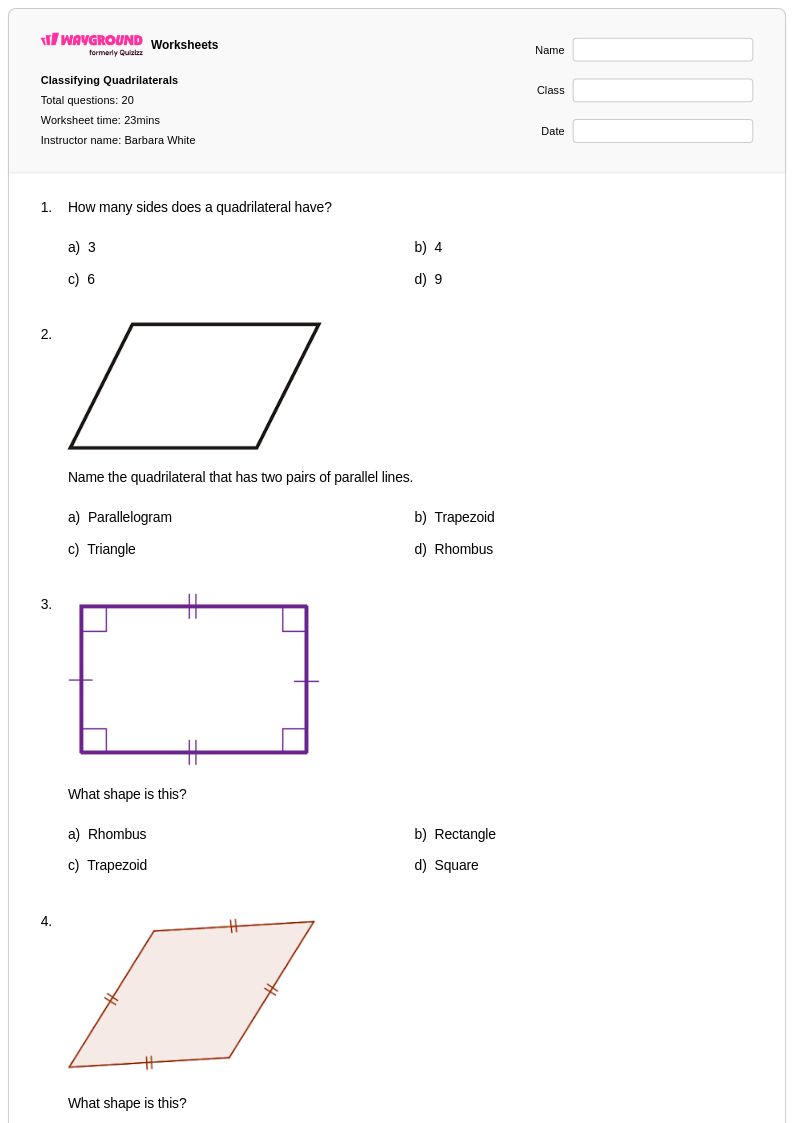
20 Q
4th
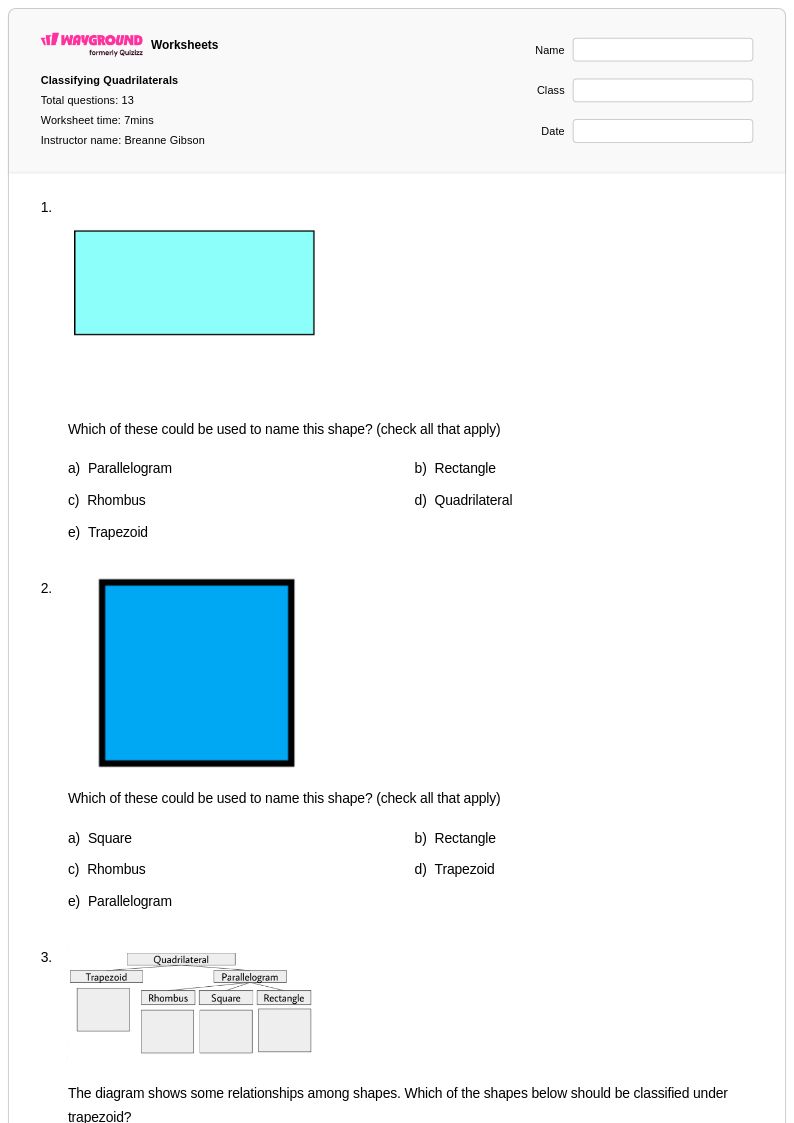
13 Q
4th - 7th
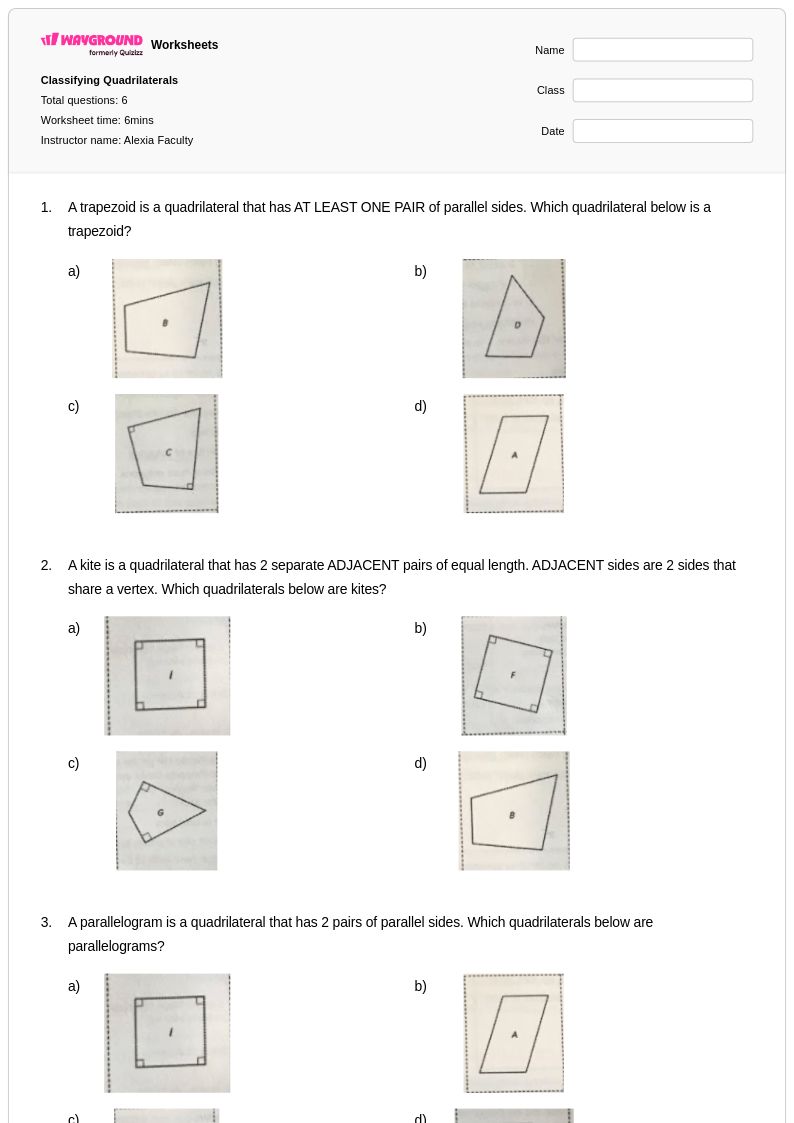
6 Q
4th
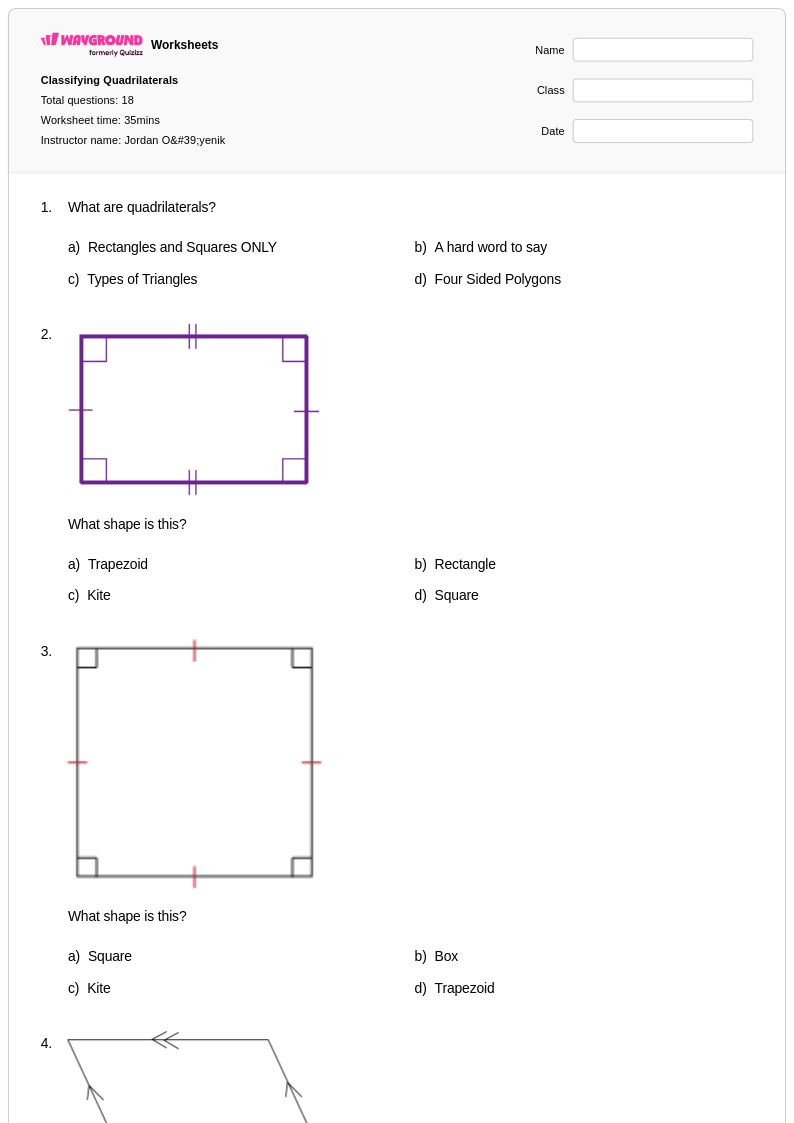
18 Q
4th
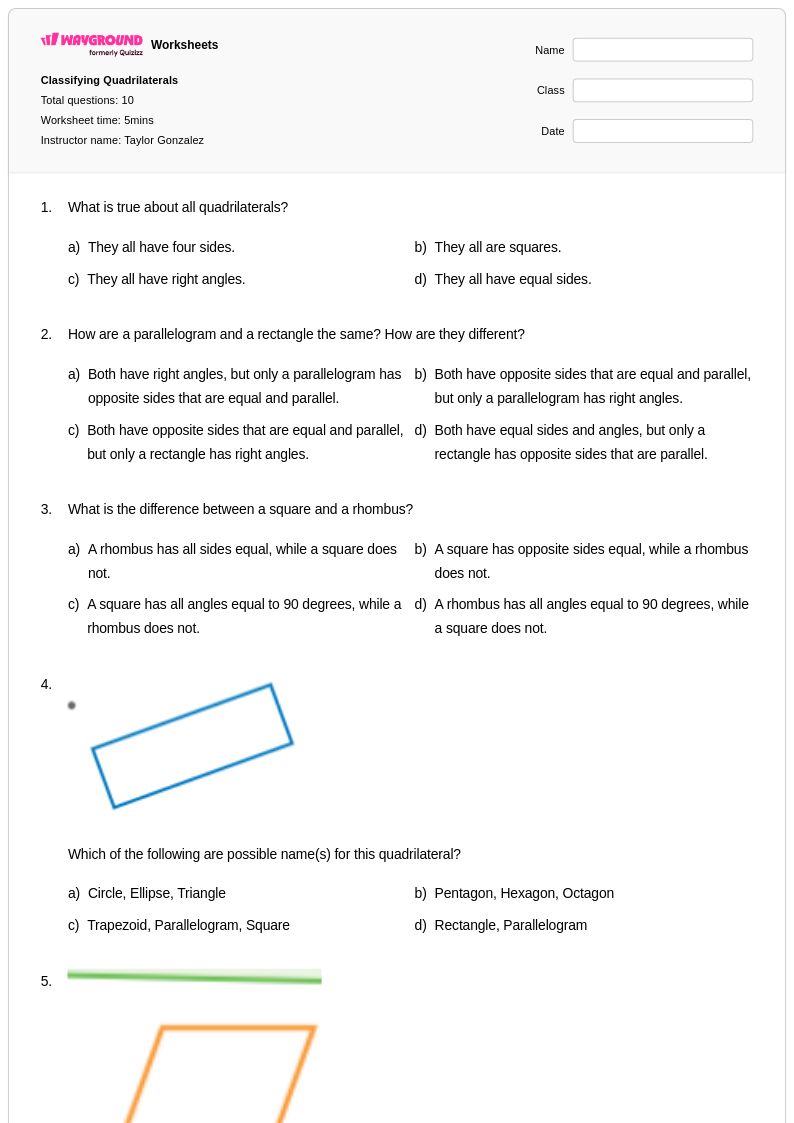
10 Q
4th
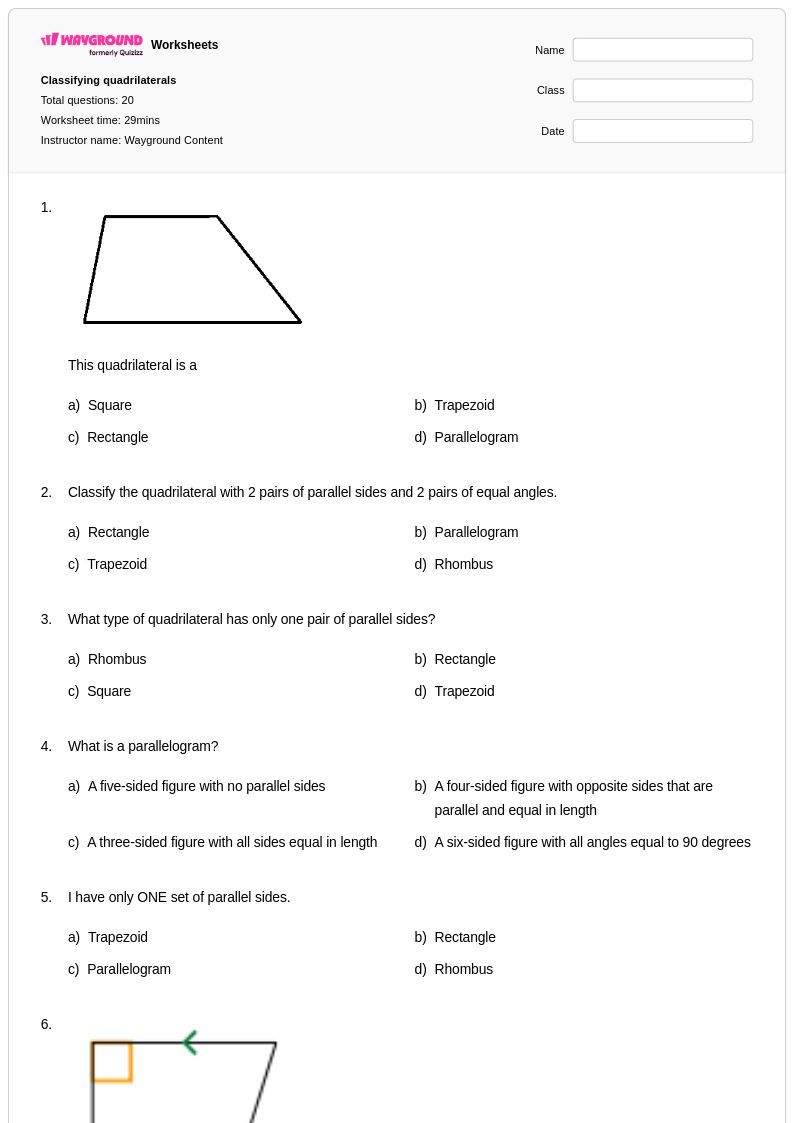
20 Q
4th
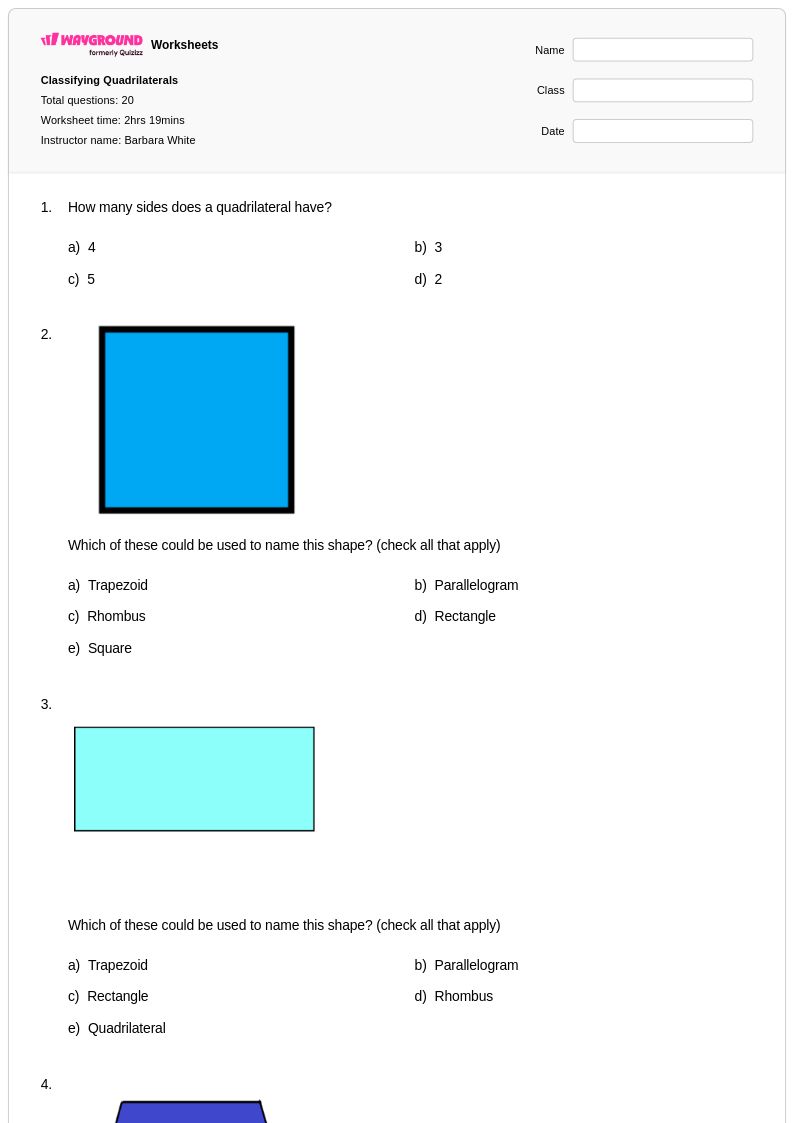
20 Q
3rd - 4th
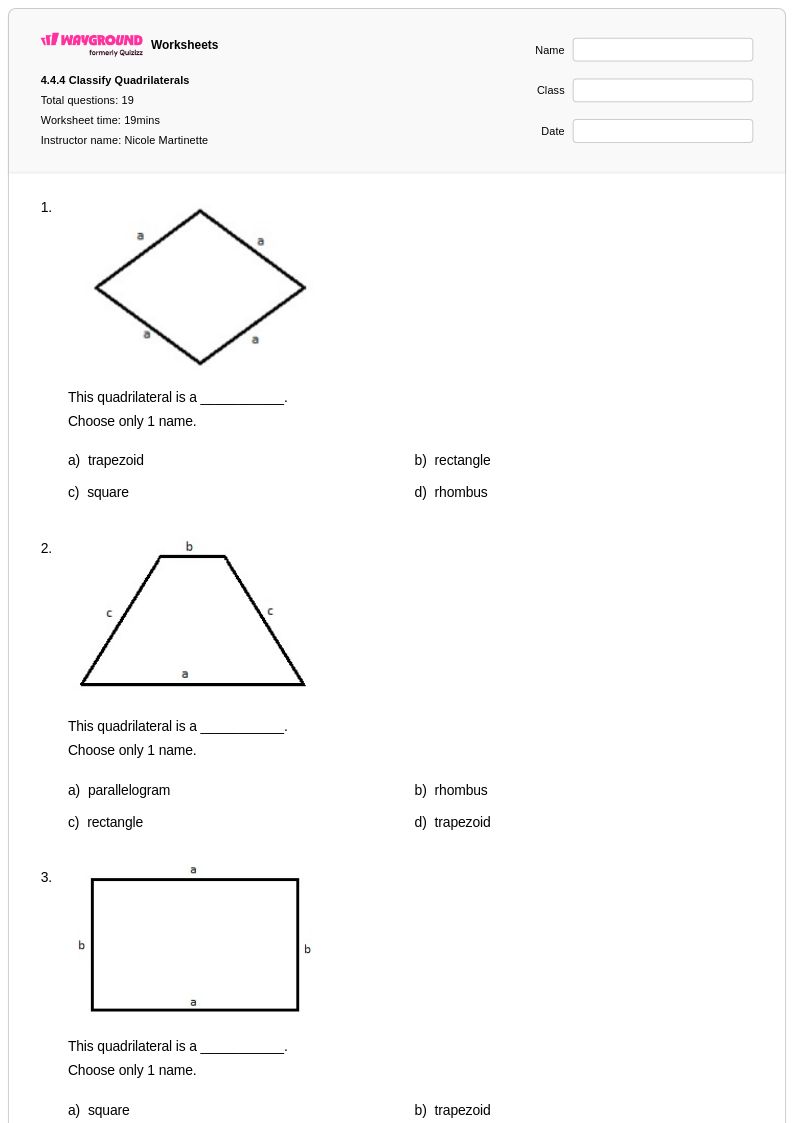
19 Q
4th
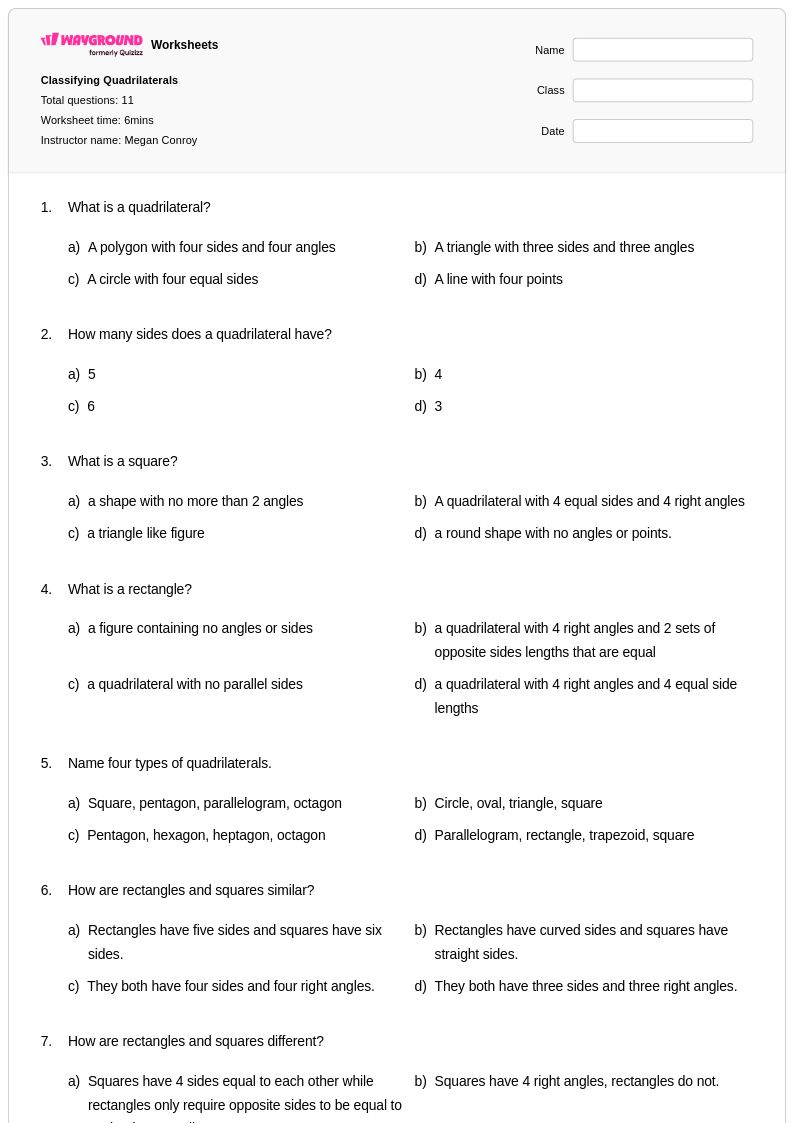
11 Q
4th
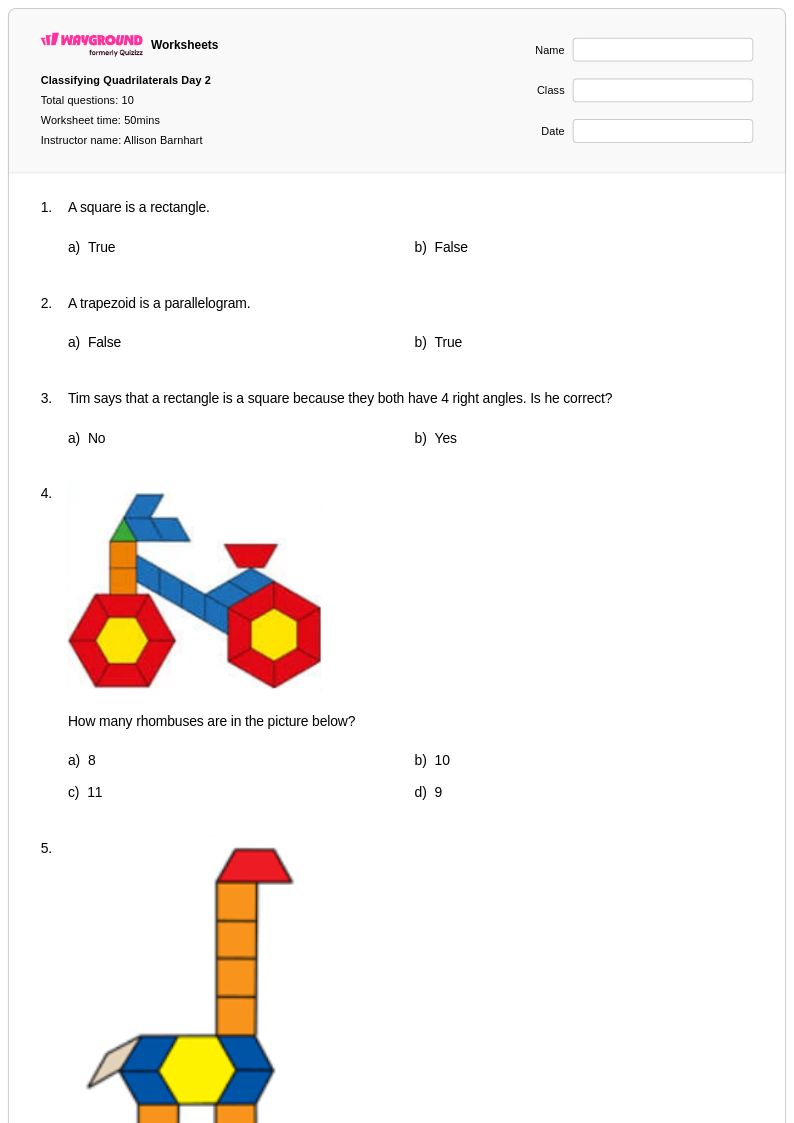
10 Q
3rd - 5th
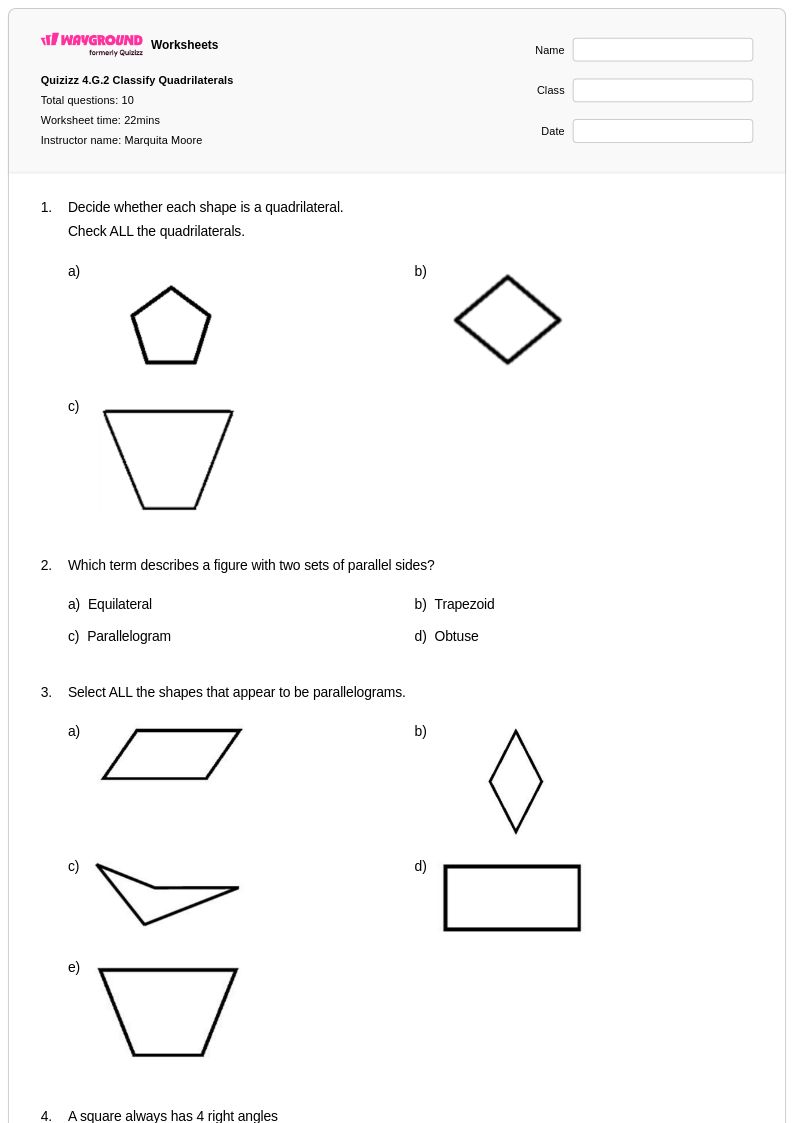
10 Q
4th
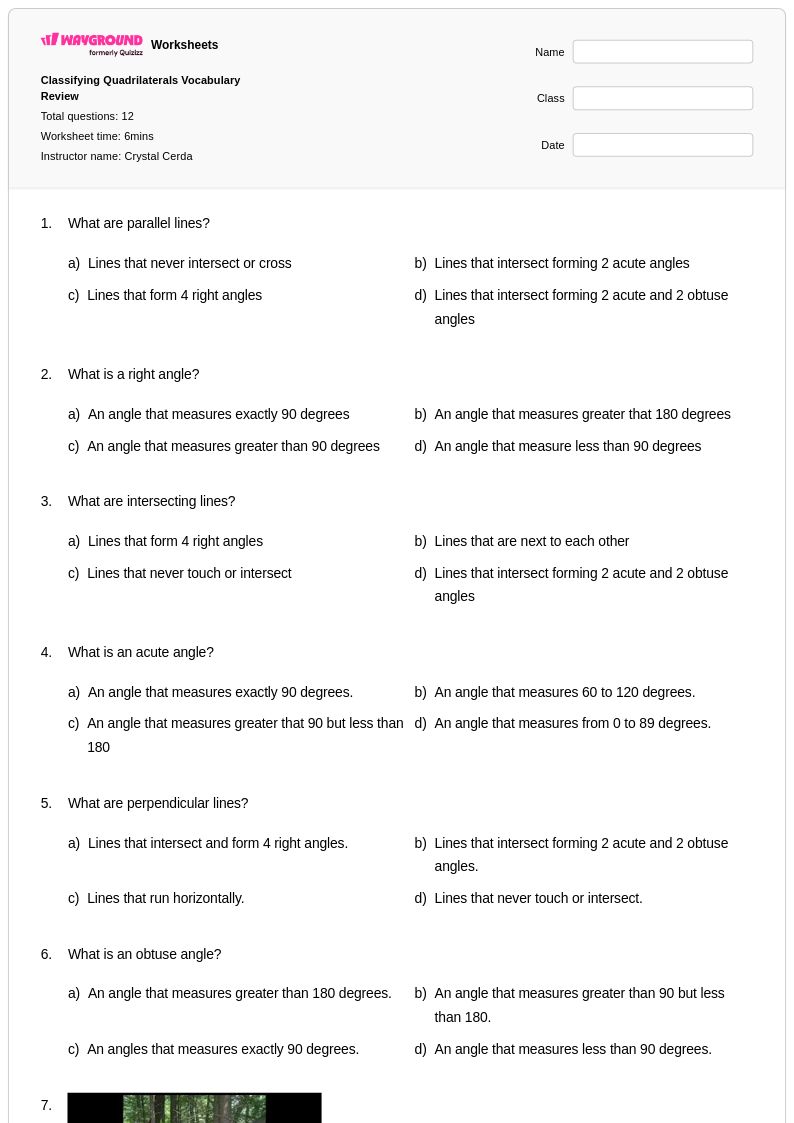
12 Q
4th
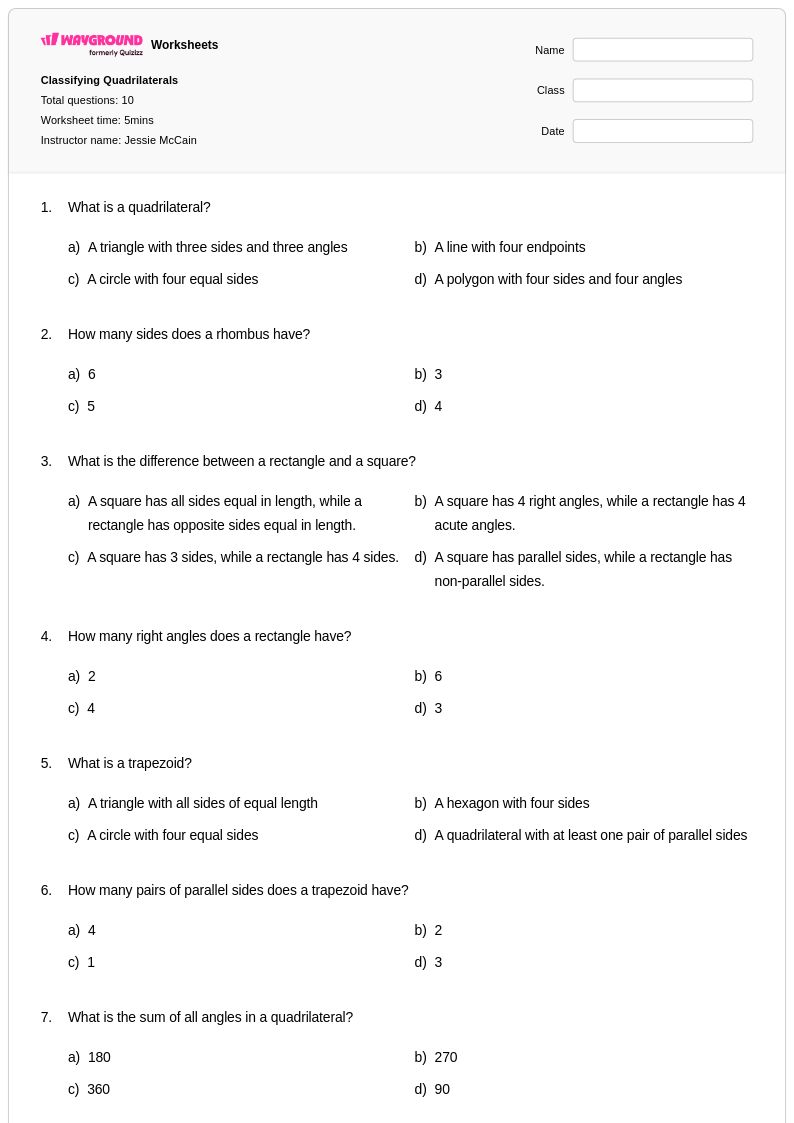
10 Q
4th
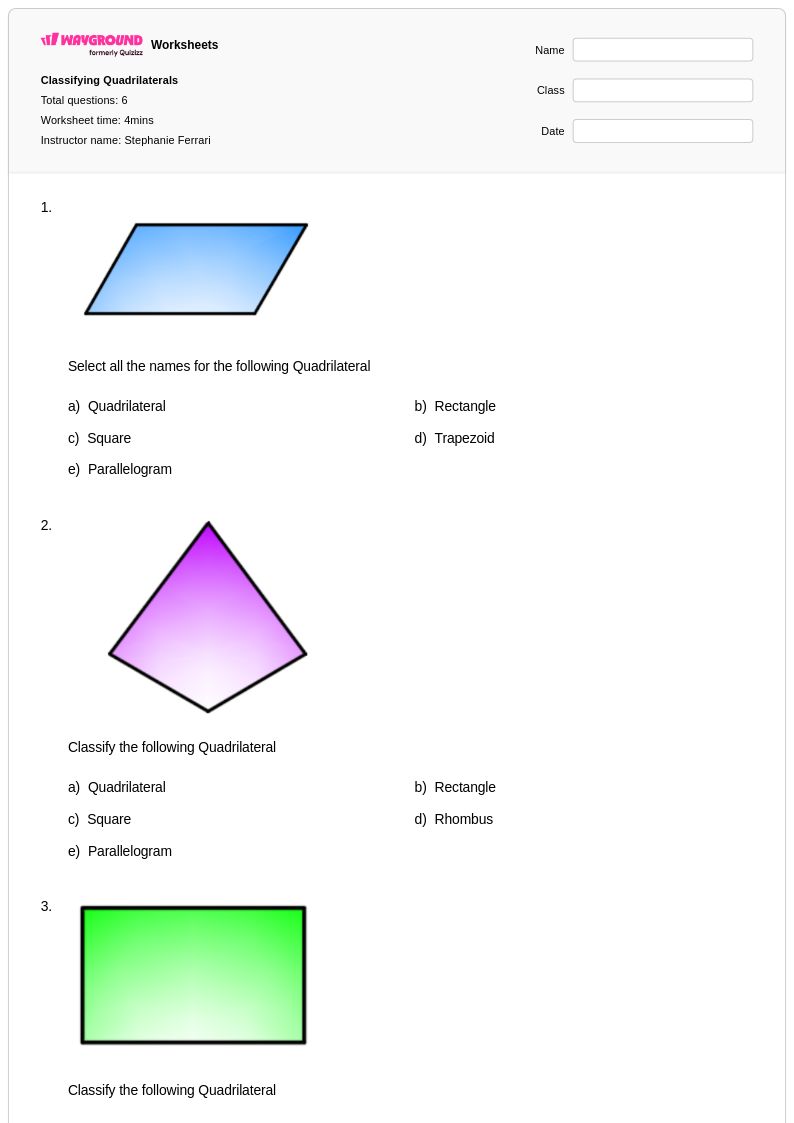
6 Q
3rd - 5th
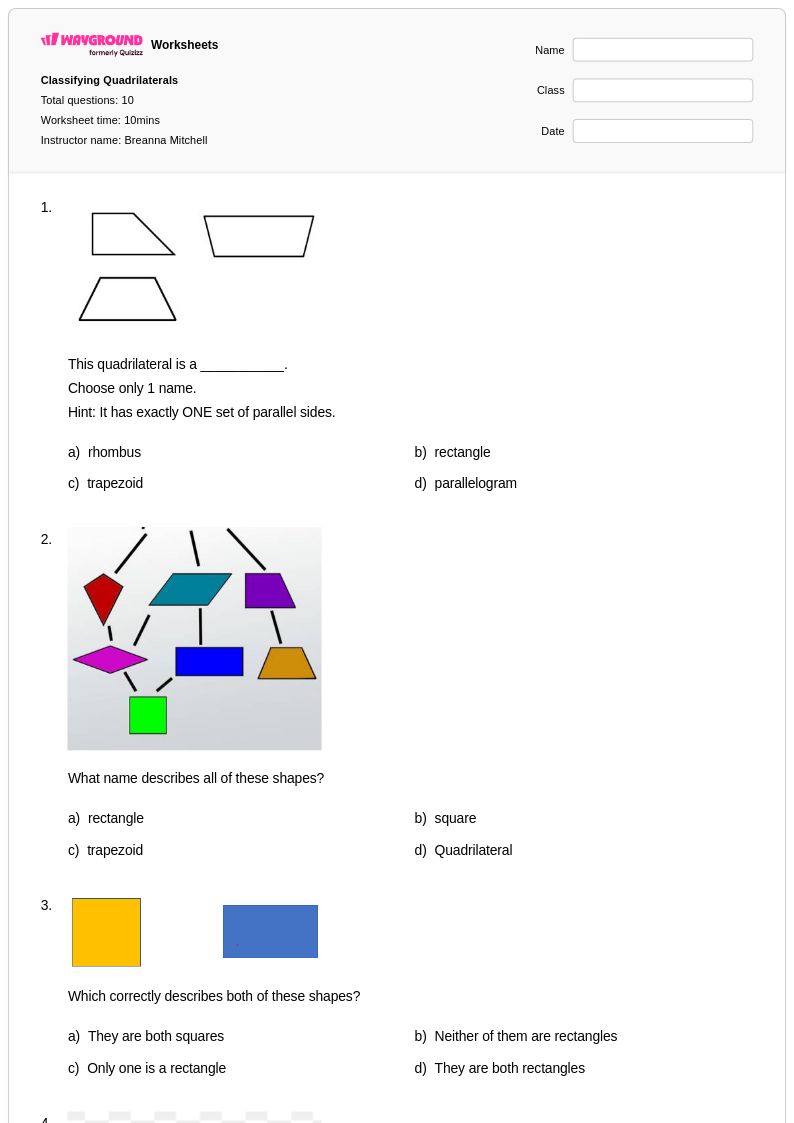
10 Q
4th
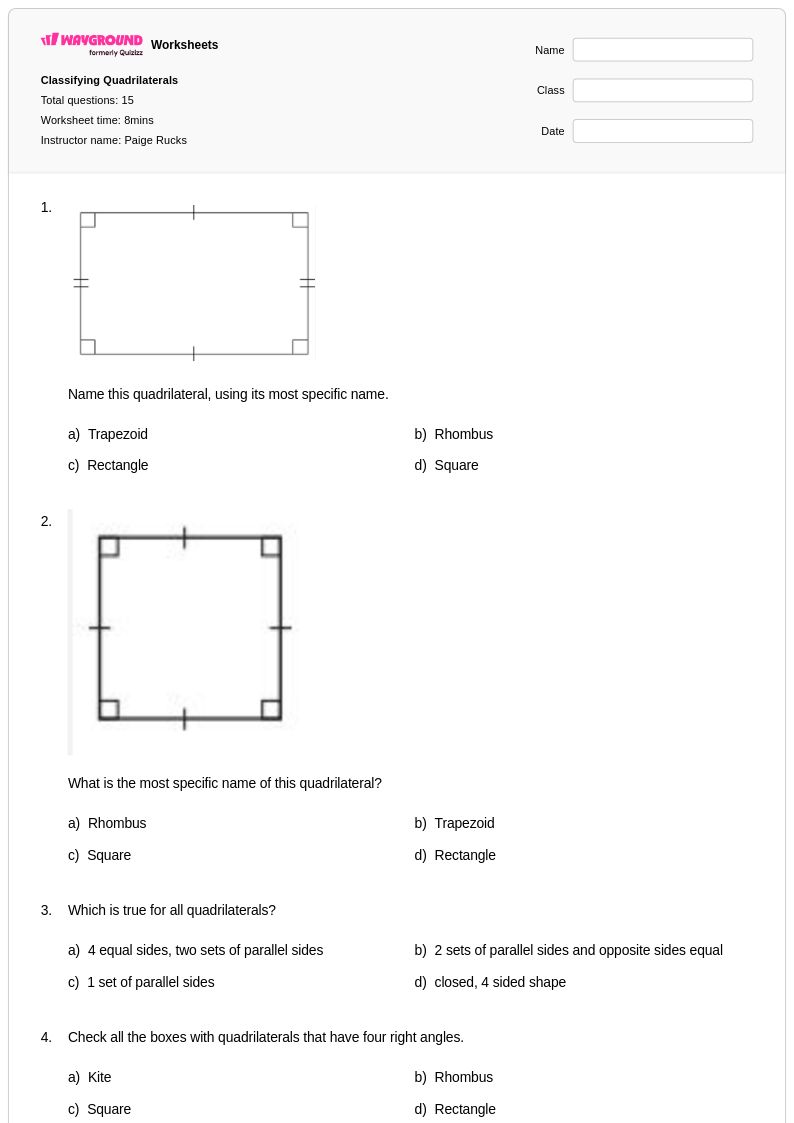
15 Q
4th
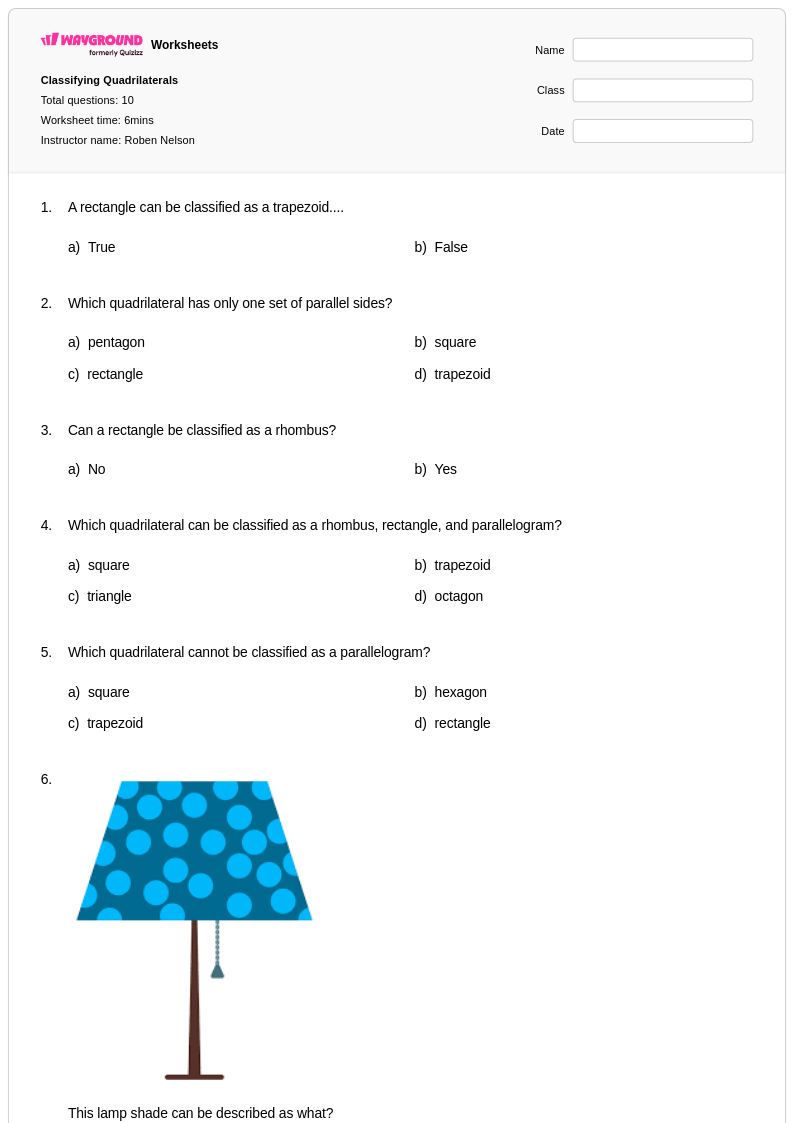
10 Q
3rd - 5th
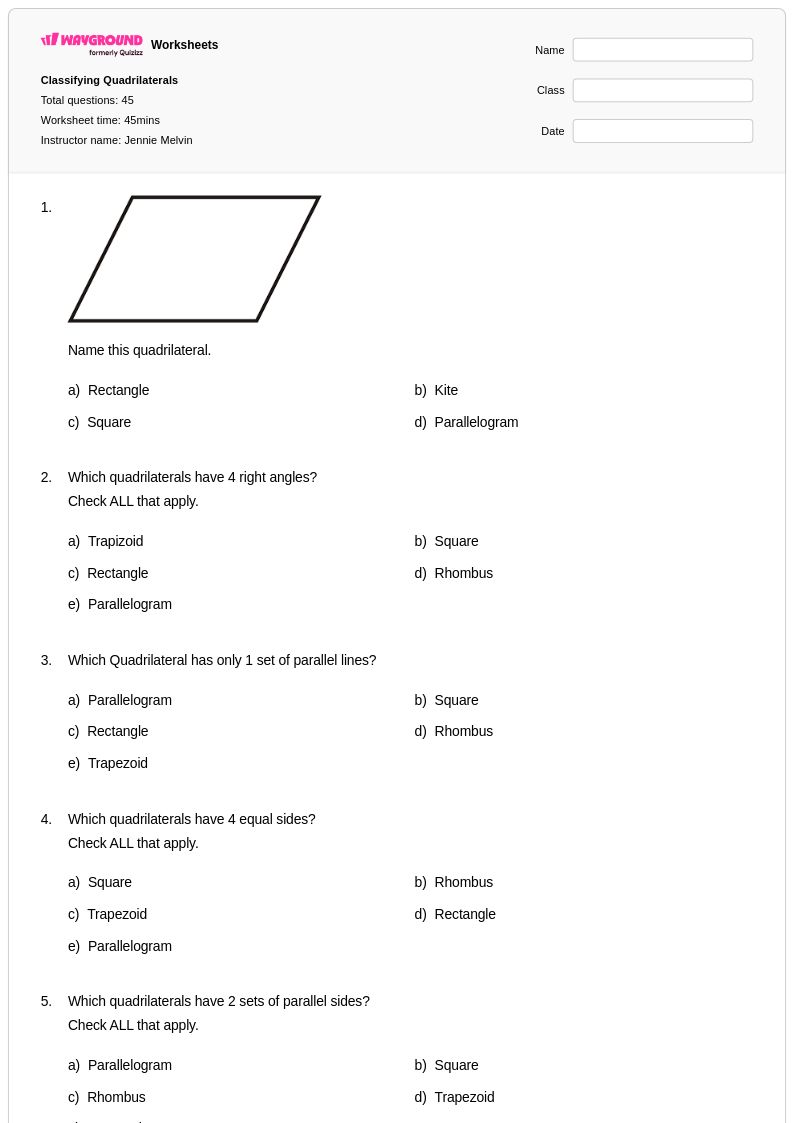
45 Q
4th
Explore Classifying Quadrilaterals Worksheets by Grades
Explore Other Subject Worksheets for grade 4
Explore printable Classifying Quadrilaterals worksheets for Grade 4
Classifying quadrilaterals worksheets for Grade 4 students available through Wayground (formerly Quizizz) provide comprehensive practice in identifying and categorizing four-sided polygons based on their geometric properties. These educational resources strengthen students' ability to distinguish between squares, rectangles, rhombuses, parallelograms, and trapezoids by examining characteristics such as parallel sides, equal angles, and congruent side lengths. The worksheets feature carefully designed practice problems that guide fourth graders through systematic classification processes, helping them develop critical geometric reasoning skills. Each printable resource includes detailed answer keys that support both independent learning and teacher-guided instruction, while the free pdf format ensures easy access for classroom use and home practice.
Wayground (formerly Quizizz) empowers educators with millions of teacher-created worksheet collections specifically designed for quadrilateral classification instruction at the Grade 4 level. The platform's robust search and filtering capabilities enable teachers to quickly locate resources that align with state mathematics standards and match their students' specific learning needs. These digital and printable materials support effective differentiation through customizable difficulty levels and varied problem formats, allowing educators to provide targeted remediation for struggling learners while offering enrichment opportunities for advanced students. The flexible pdf format facilitates seamless integration into lesson plans, homework assignments, and assessment preparation, ensuring that teachers have reliable tools for developing students' geometric classification skills across multiple learning environments.
FAQs
How do I teach fourth graders to classify quadrilaterals?
What exercises help Grade 4 students practice classifying quadrilaterals?
What mistakes do students make when classifying quadrilaterals?
How can I use these Grade 4 quadrilateral worksheets in class?
How does classifying quadrilaterals fit into the Grade 4 math curriculum?
How can I differentiate quadrilateral classification practice?
What grade do students learn to classify quadrilaterals?