
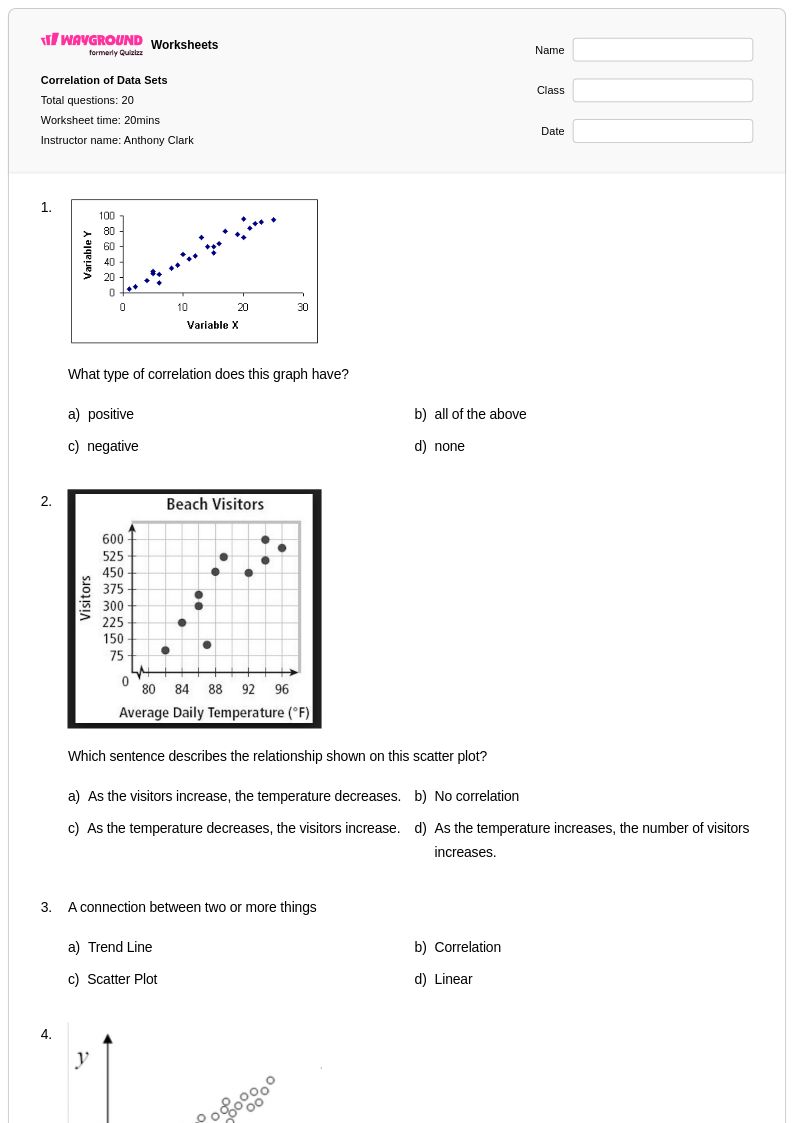
20 Q
8th - Uni
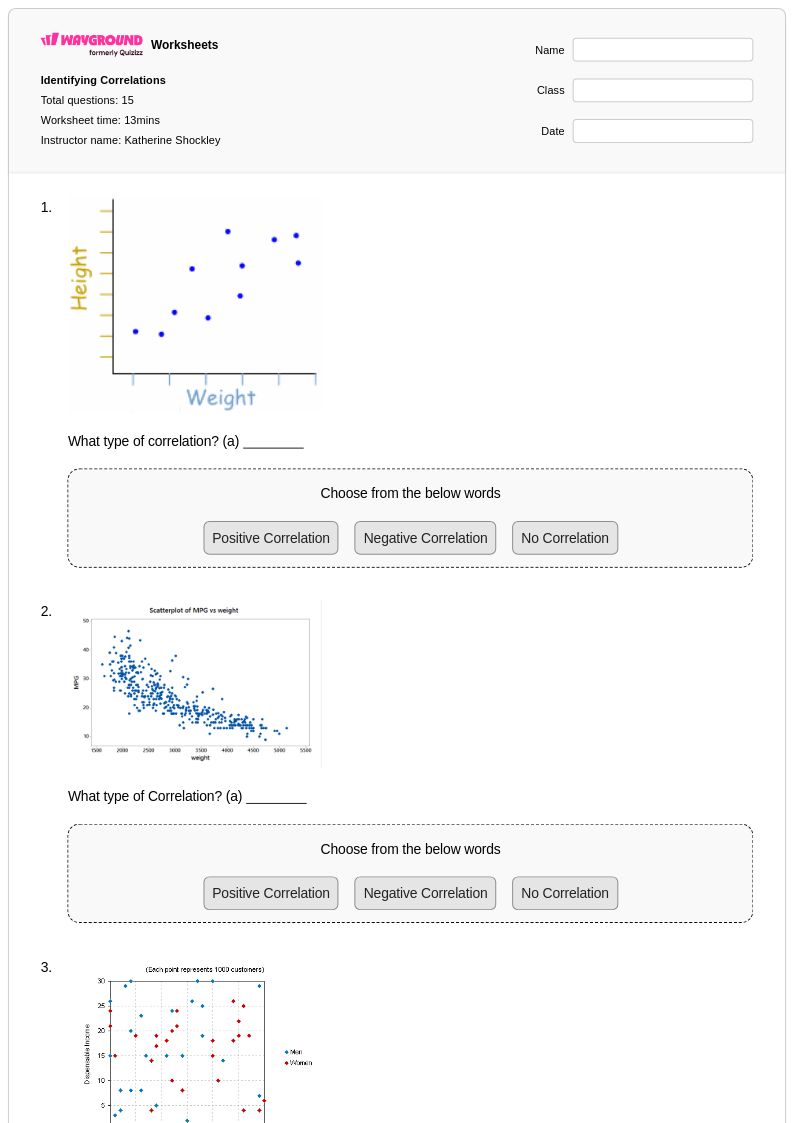
15 Q
7th - Uni
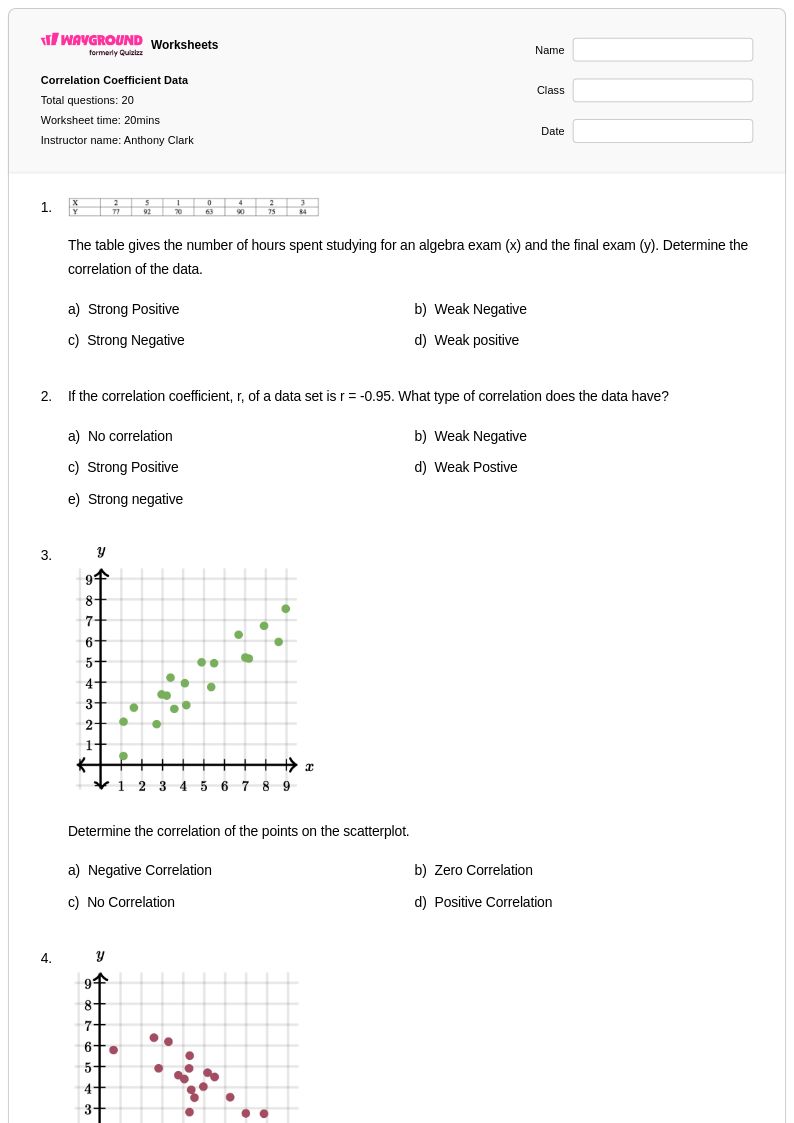
20 Q
9th - Uni
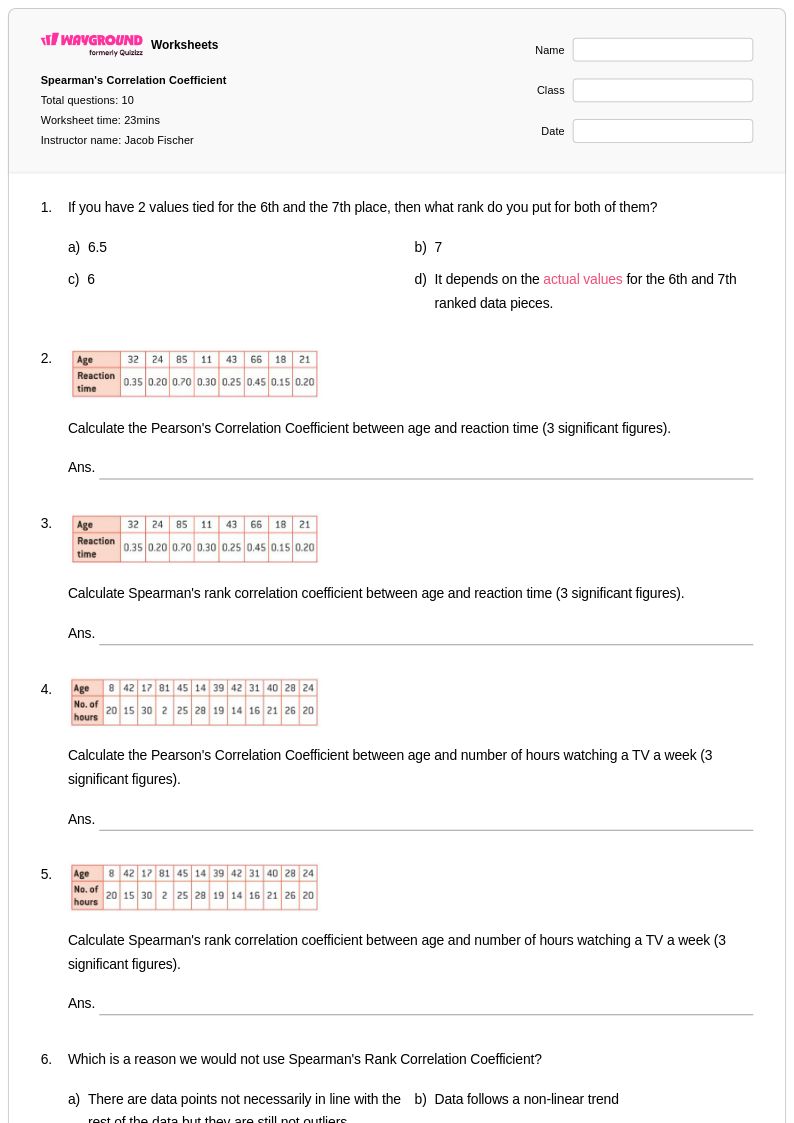
10 Q
9th - 12th
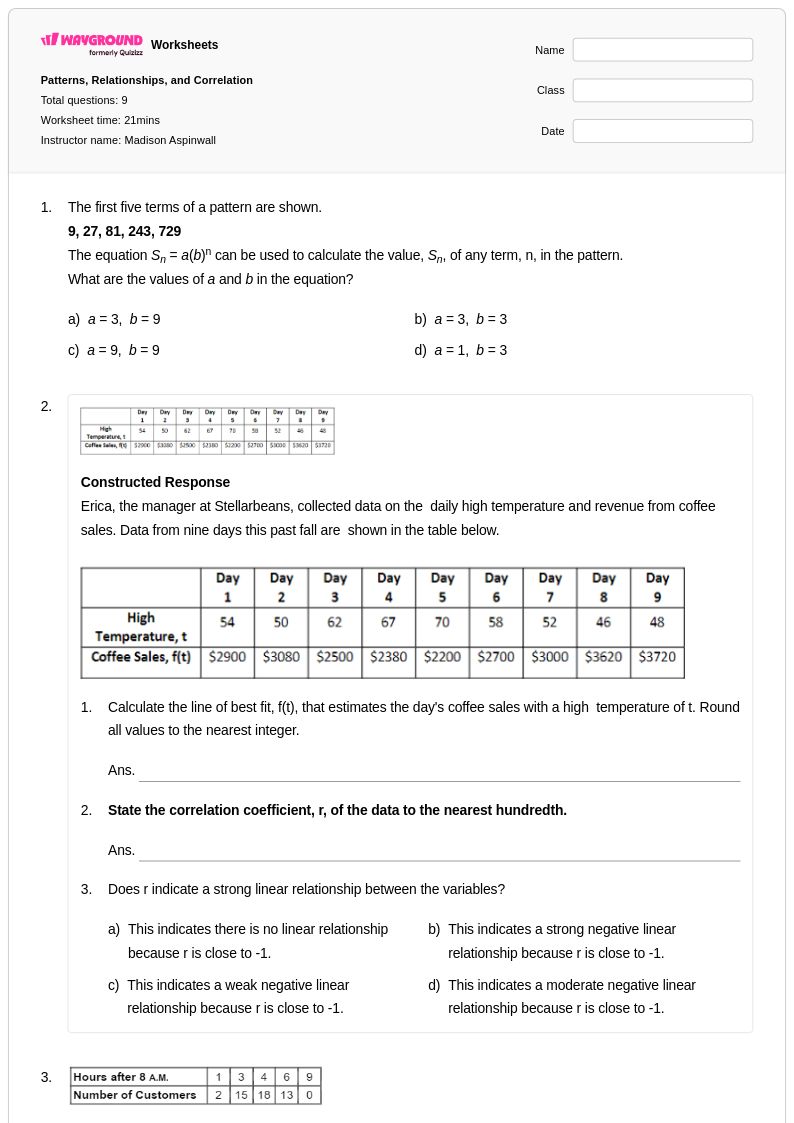
12 Q
9th - 12th
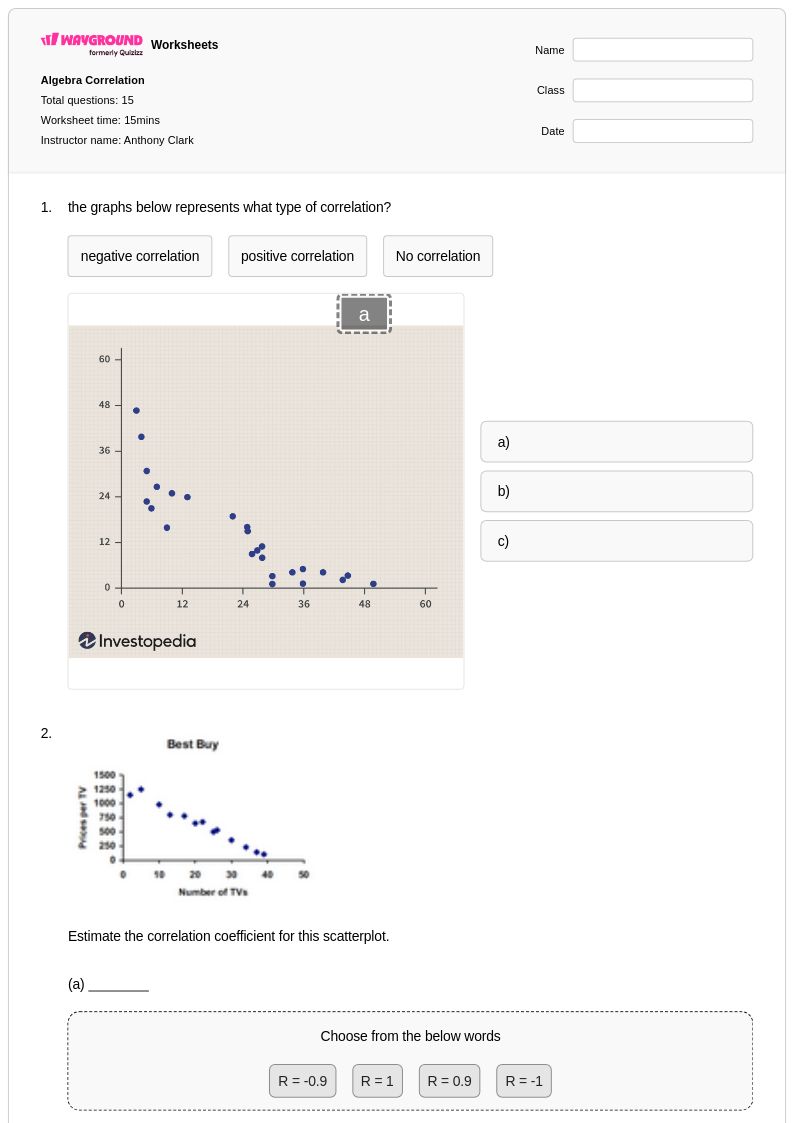
15 Q
9th - Uni
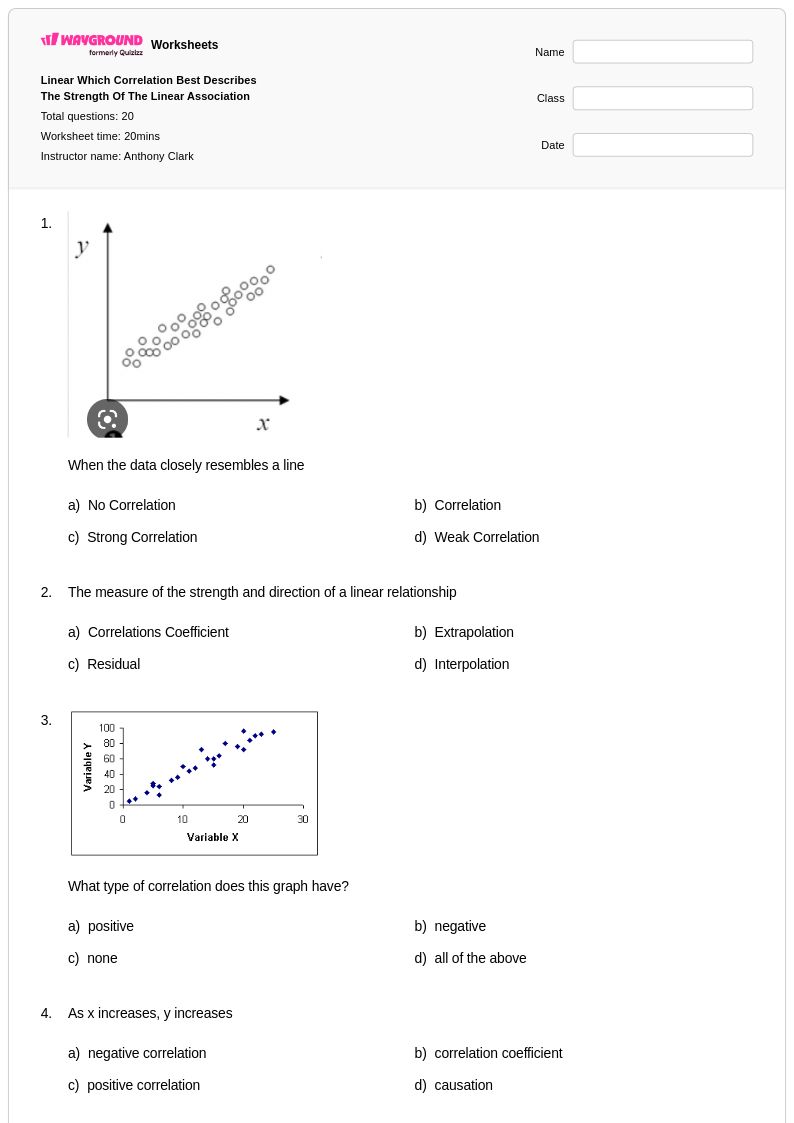
20 Q
9th - Uni
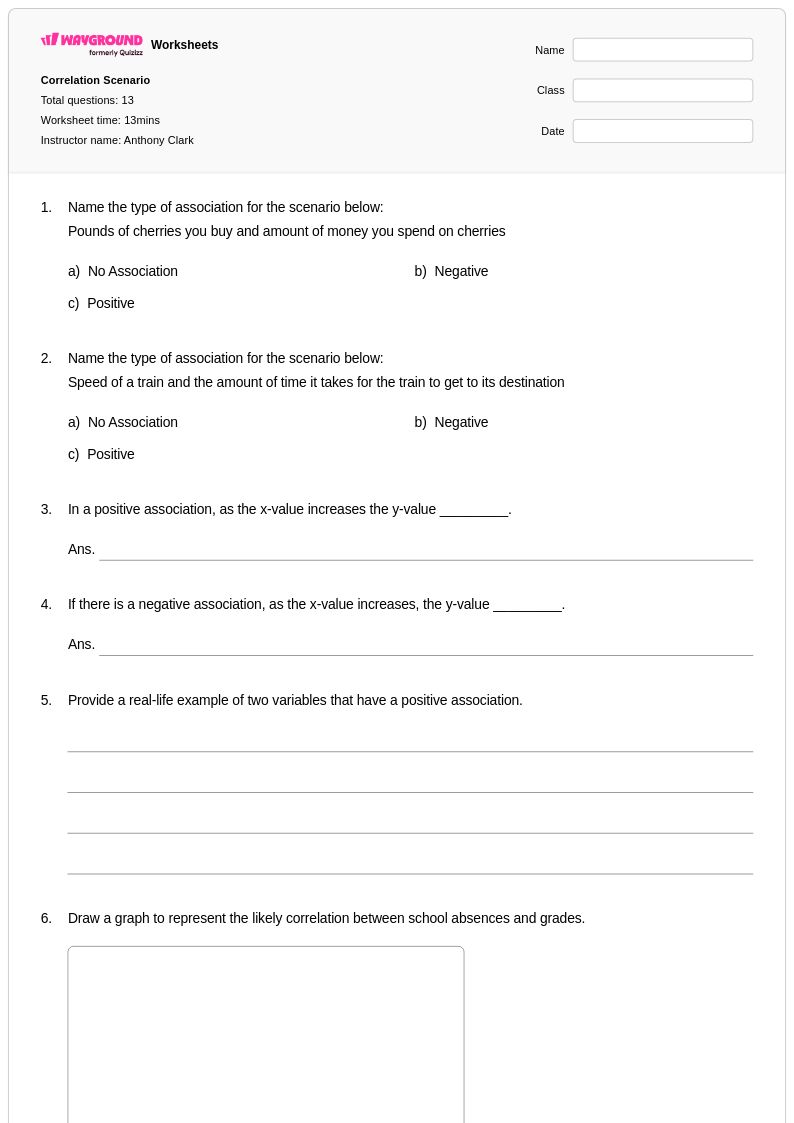
13 Q
9th - Uni
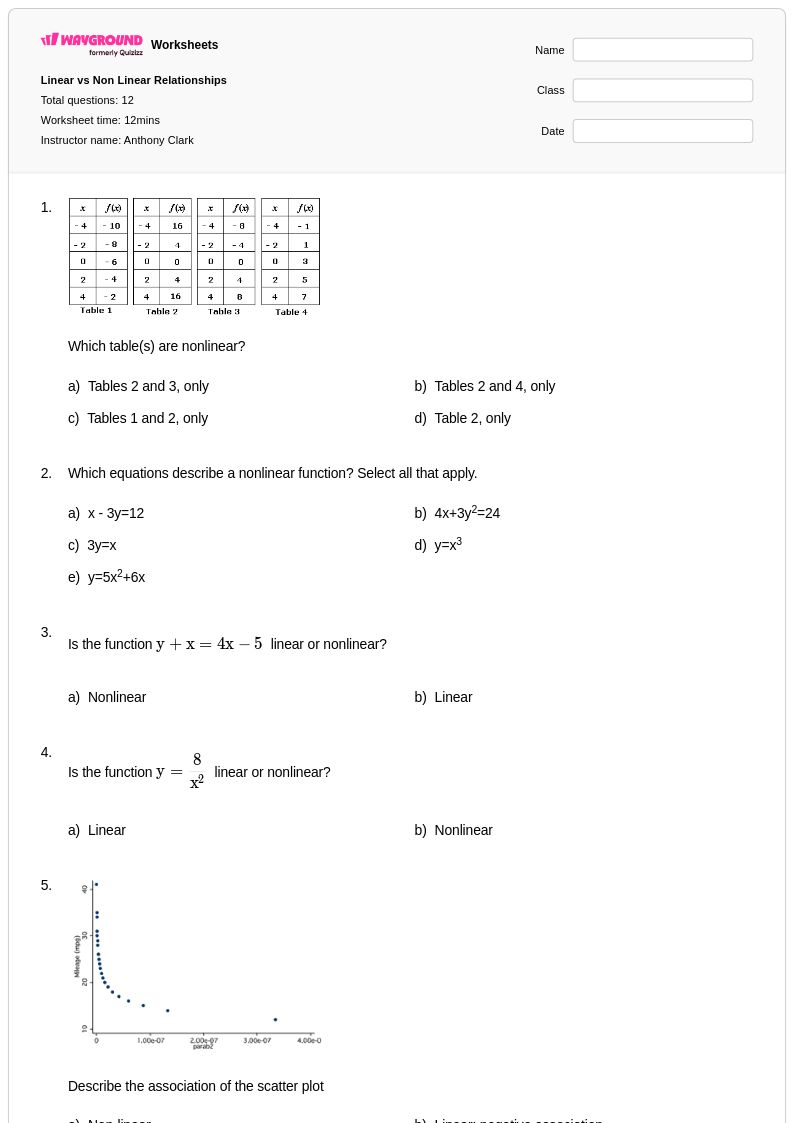
12 Q
8th - Uni
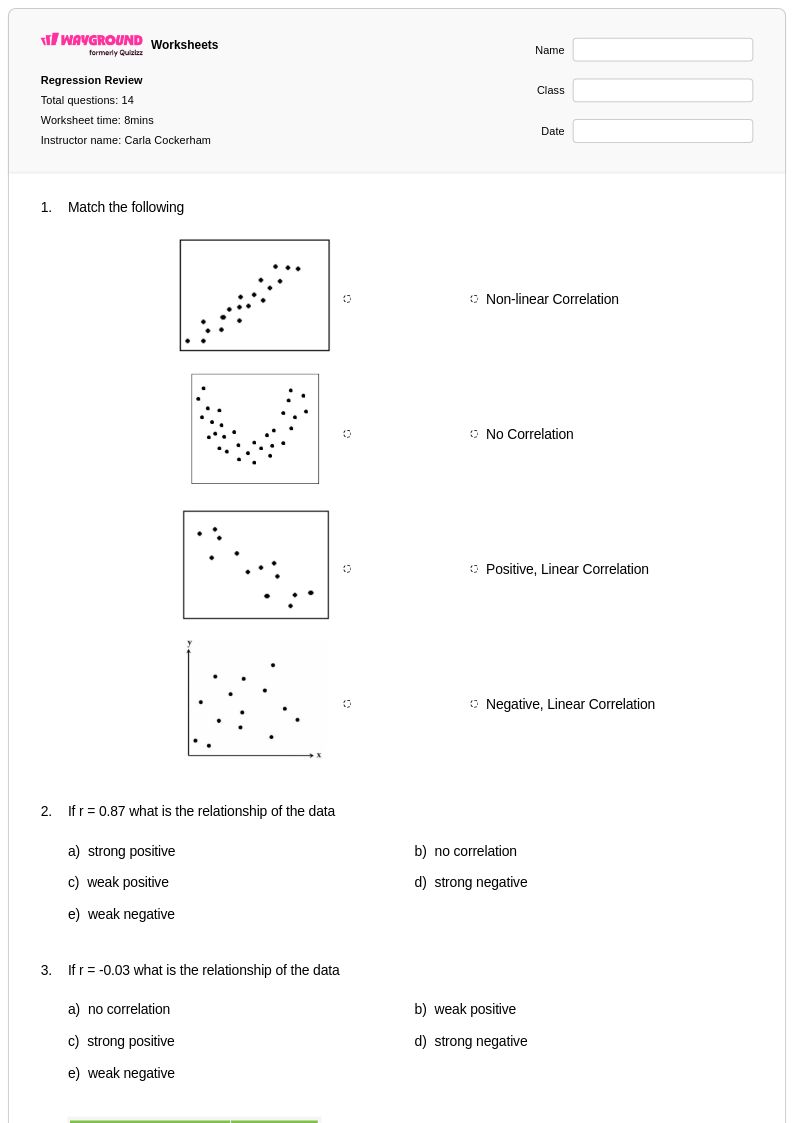
14 Q
9th - 12th
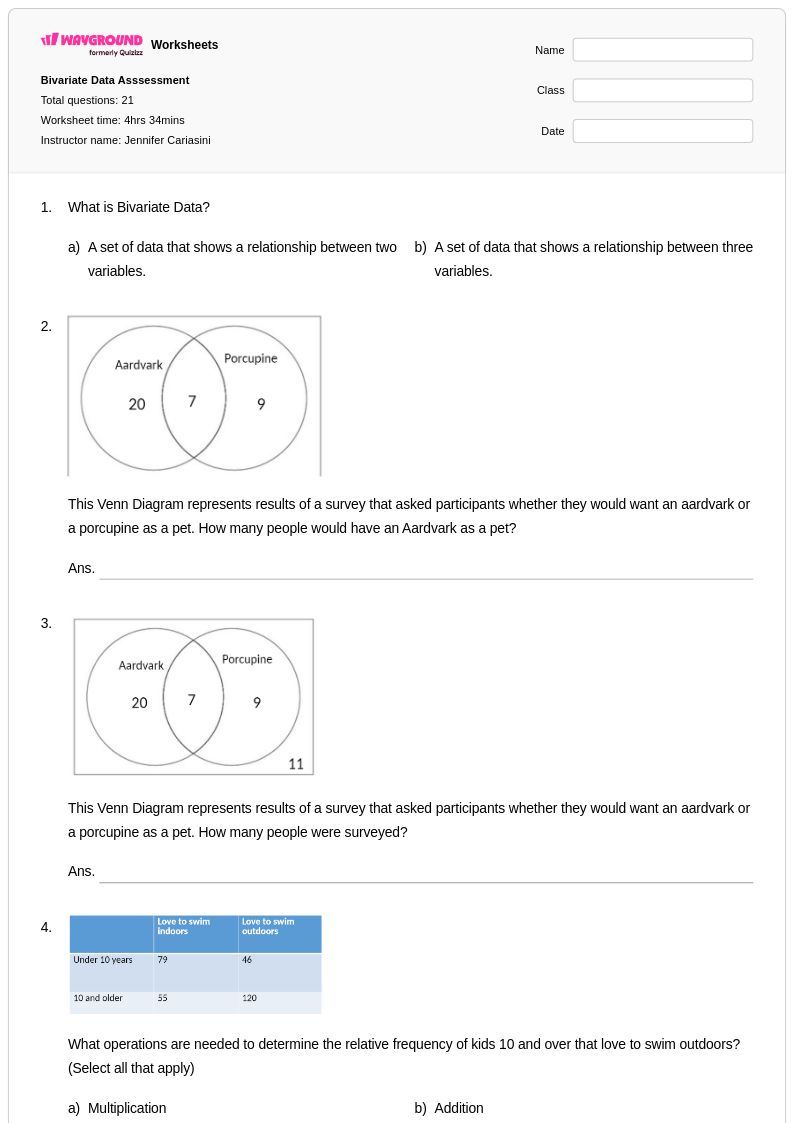
21 Q
9th - 12th
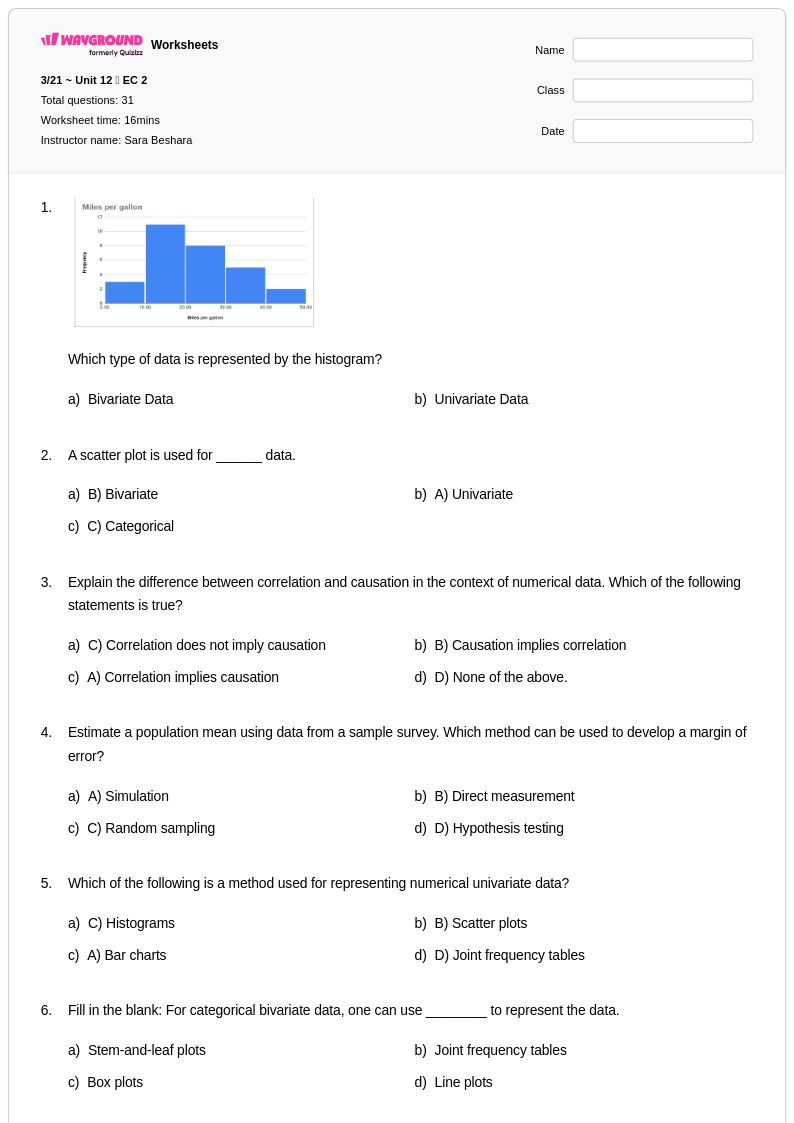
31 Q
9th - Uni
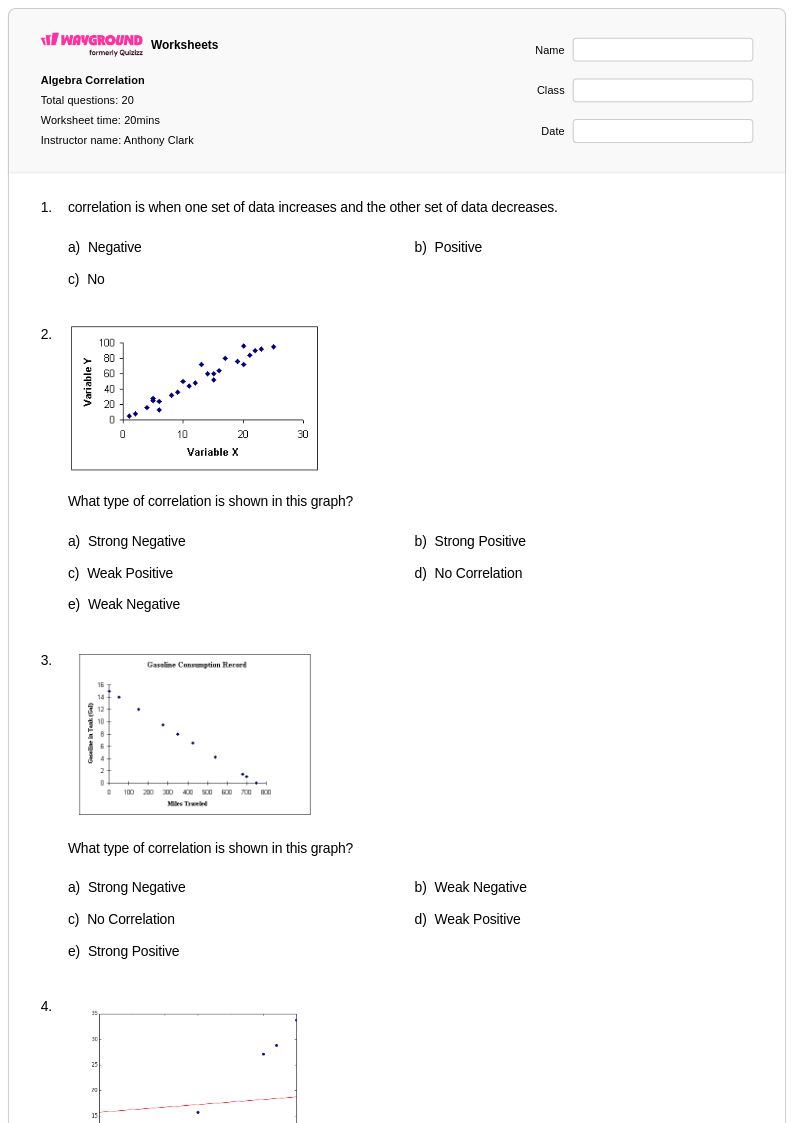
20 Q
9th - Uni
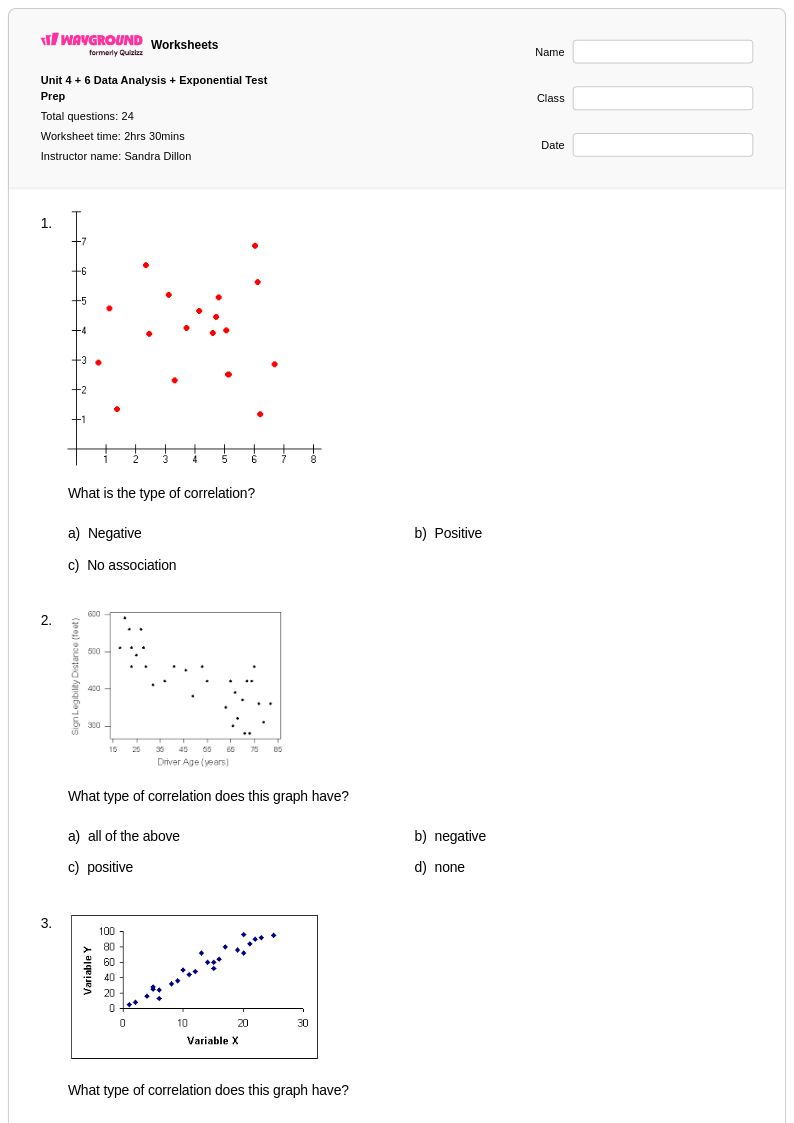
24 Q
9th - 12th
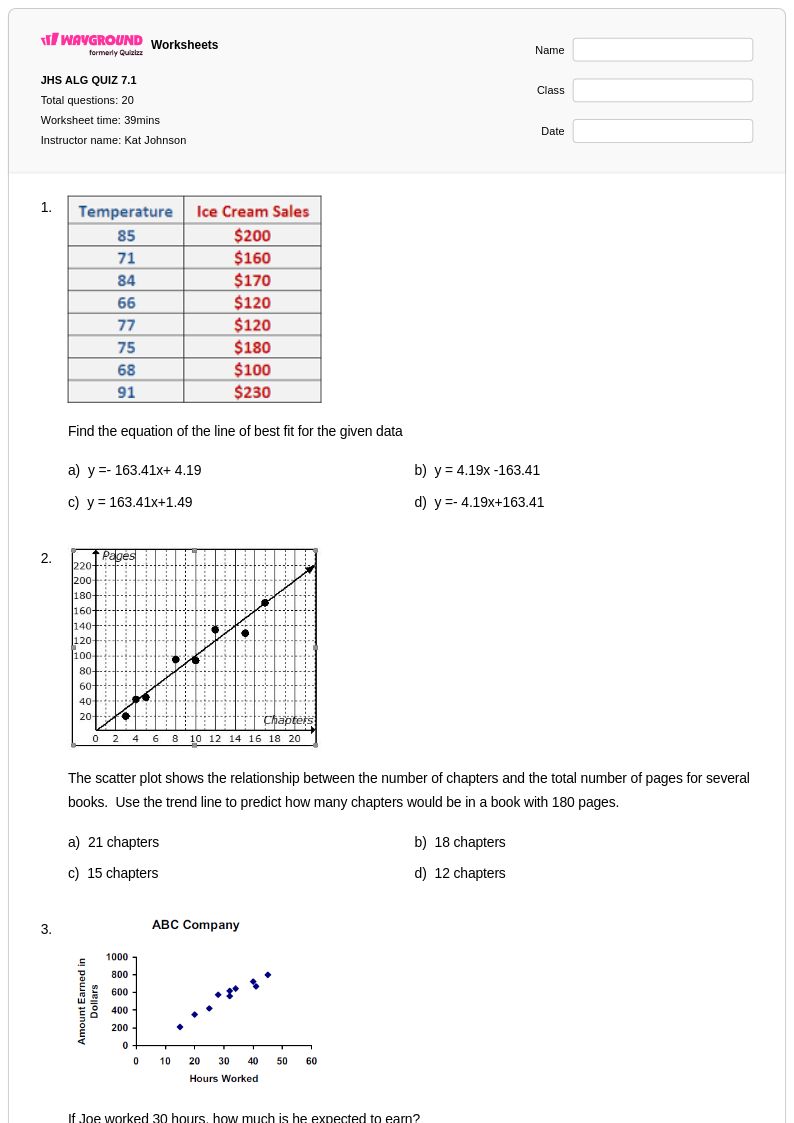
20 Q
9th - 12th
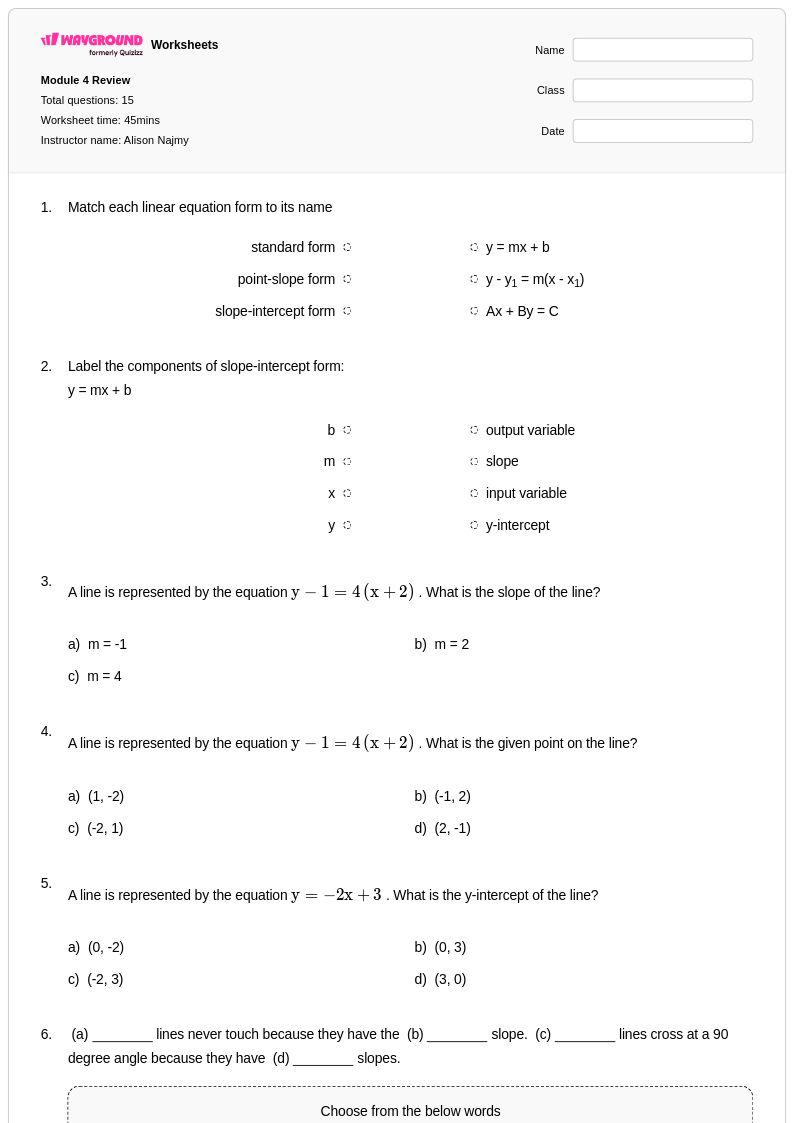
15 Q
9th - 12th
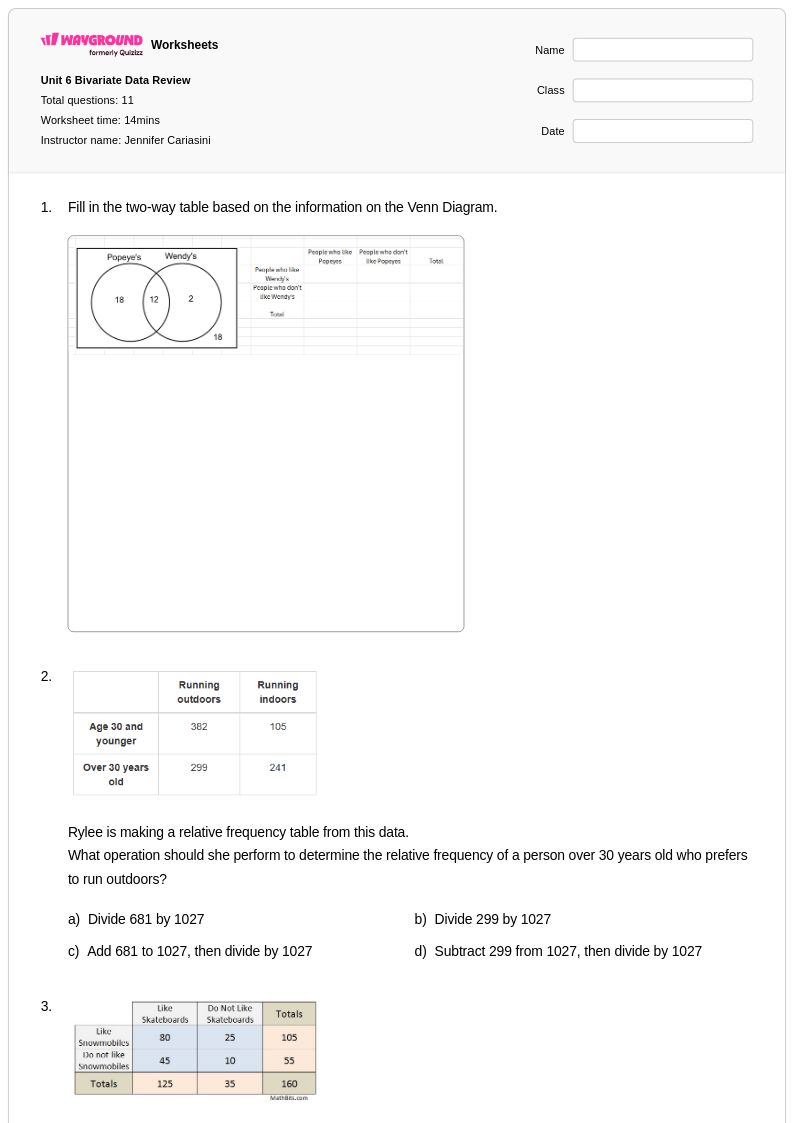
11 Q
9th - 12th
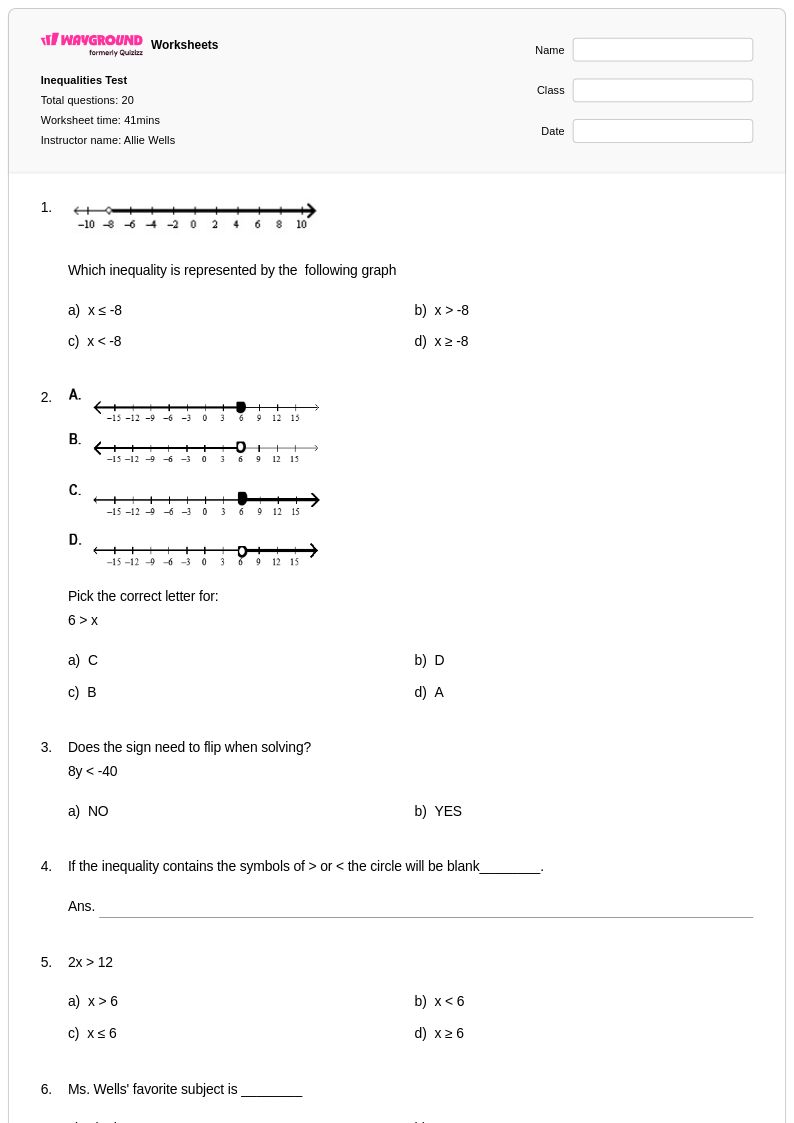
20 Q
9th - 12th
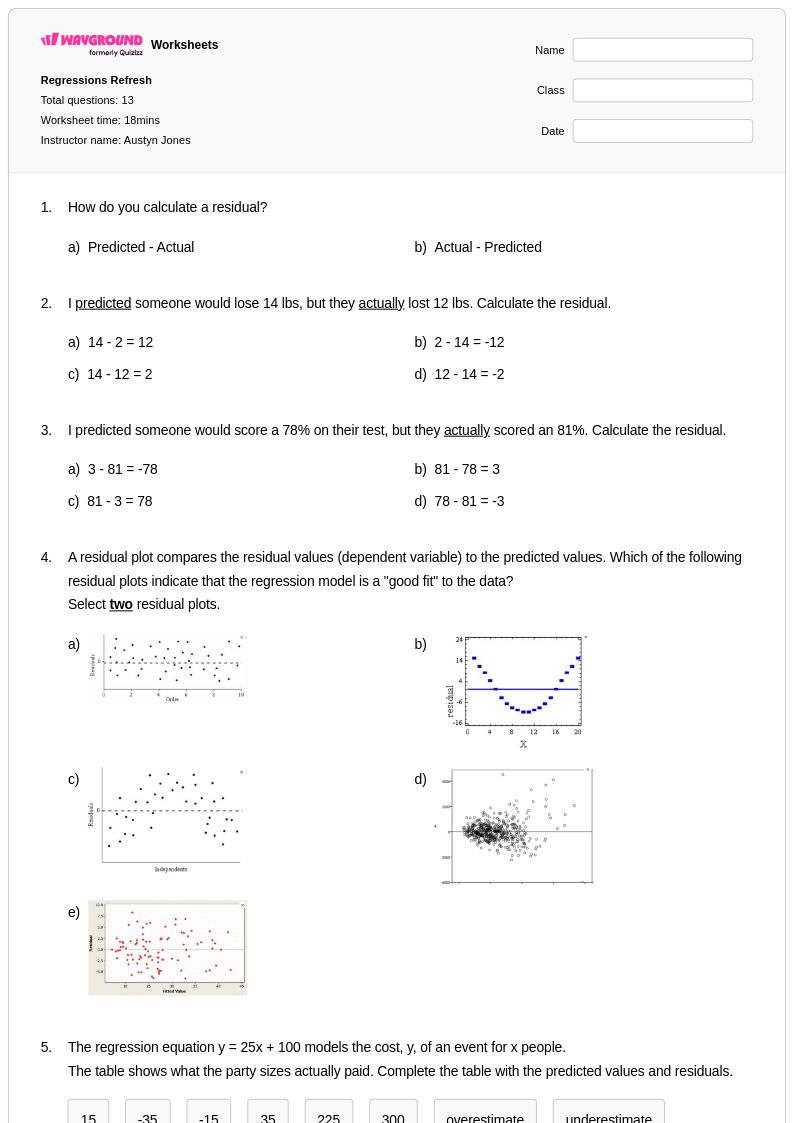
13 Q
9th - 12th
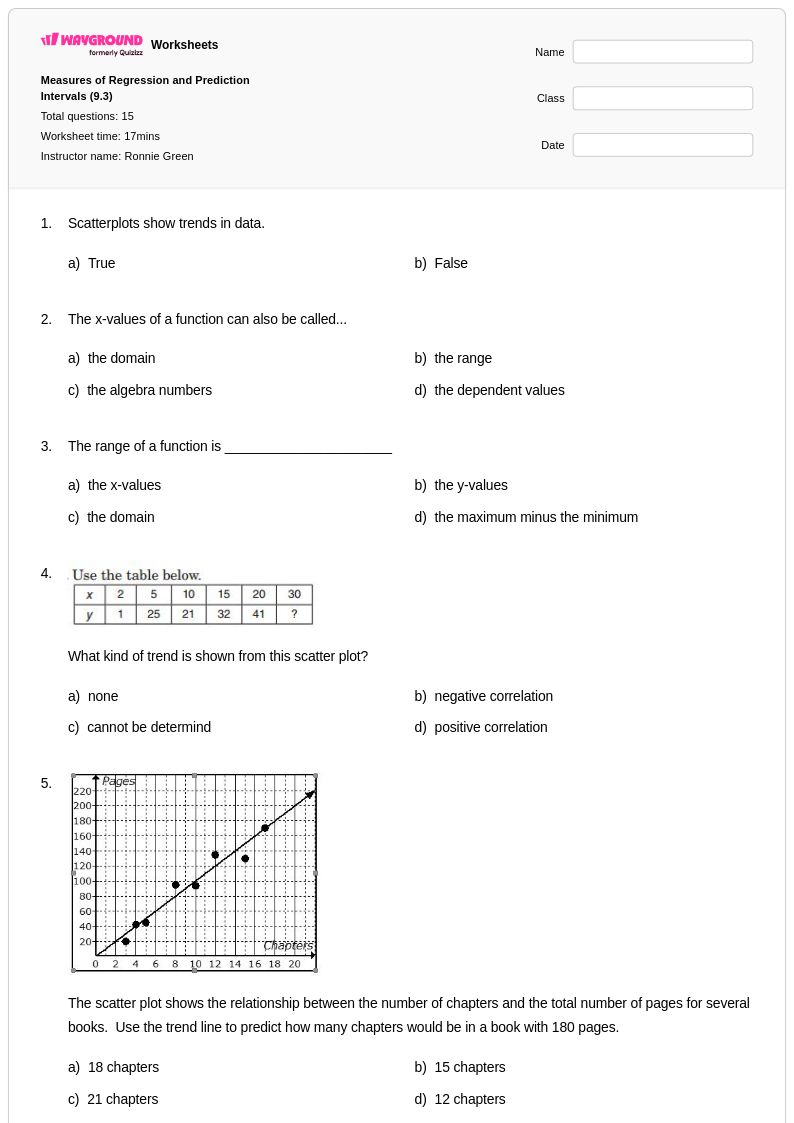
15 Q
9th - 12th
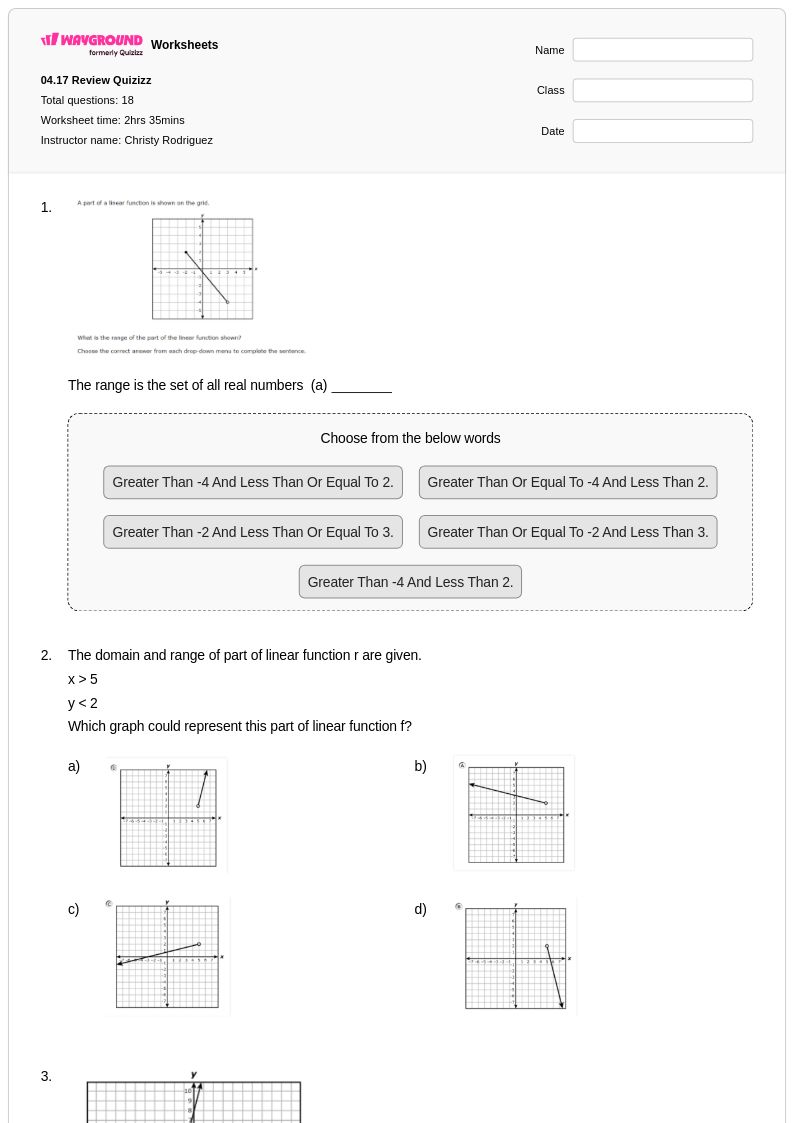
18 Q
9th - 12th
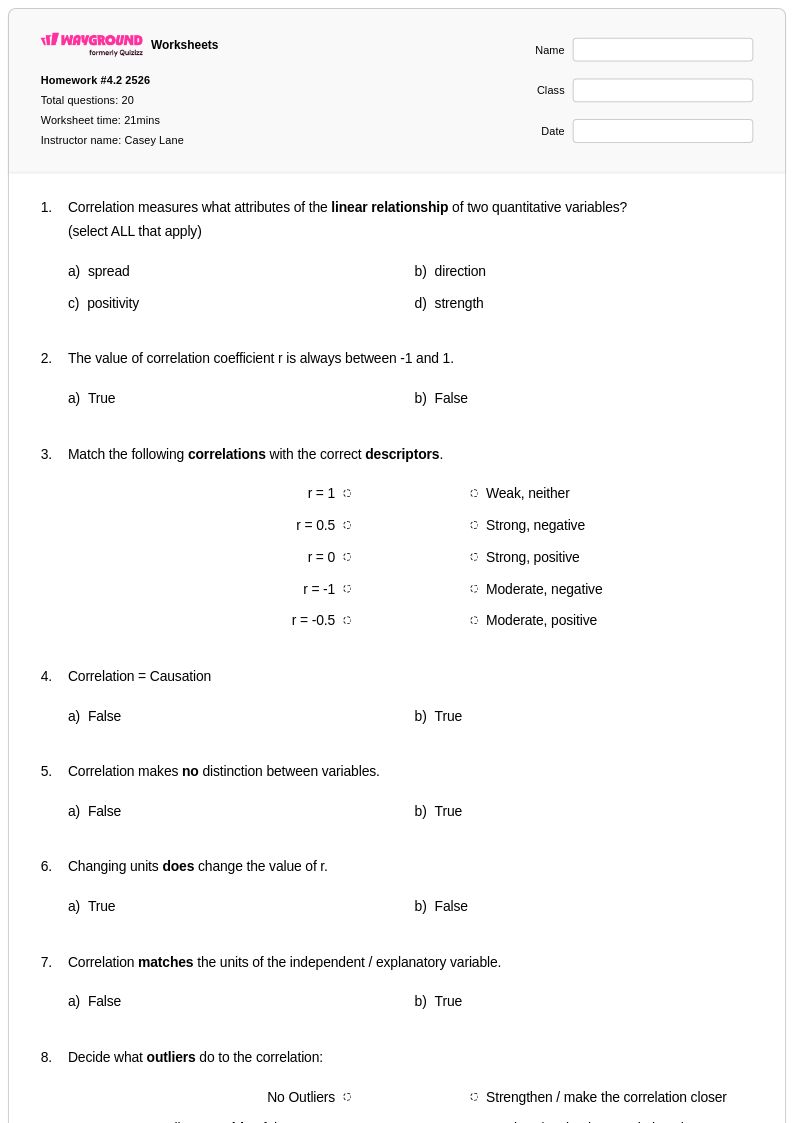
20 Q
9th - 12th
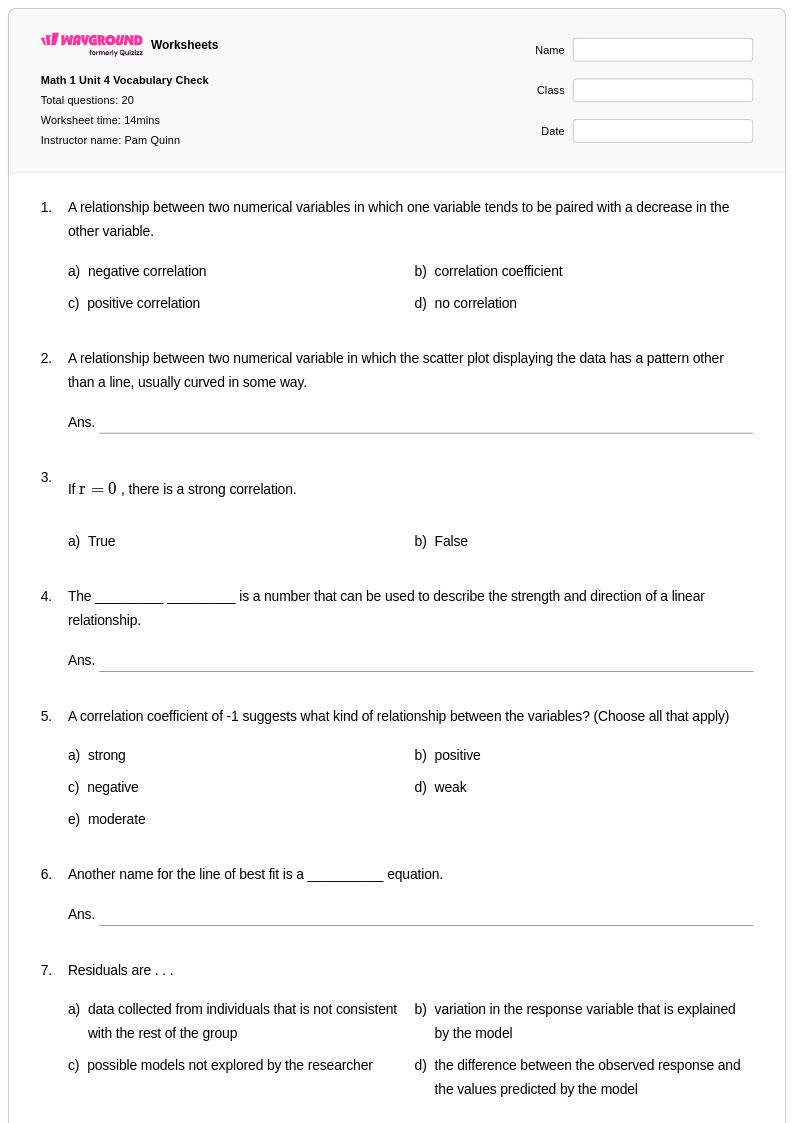
20 Q
9th - 12th
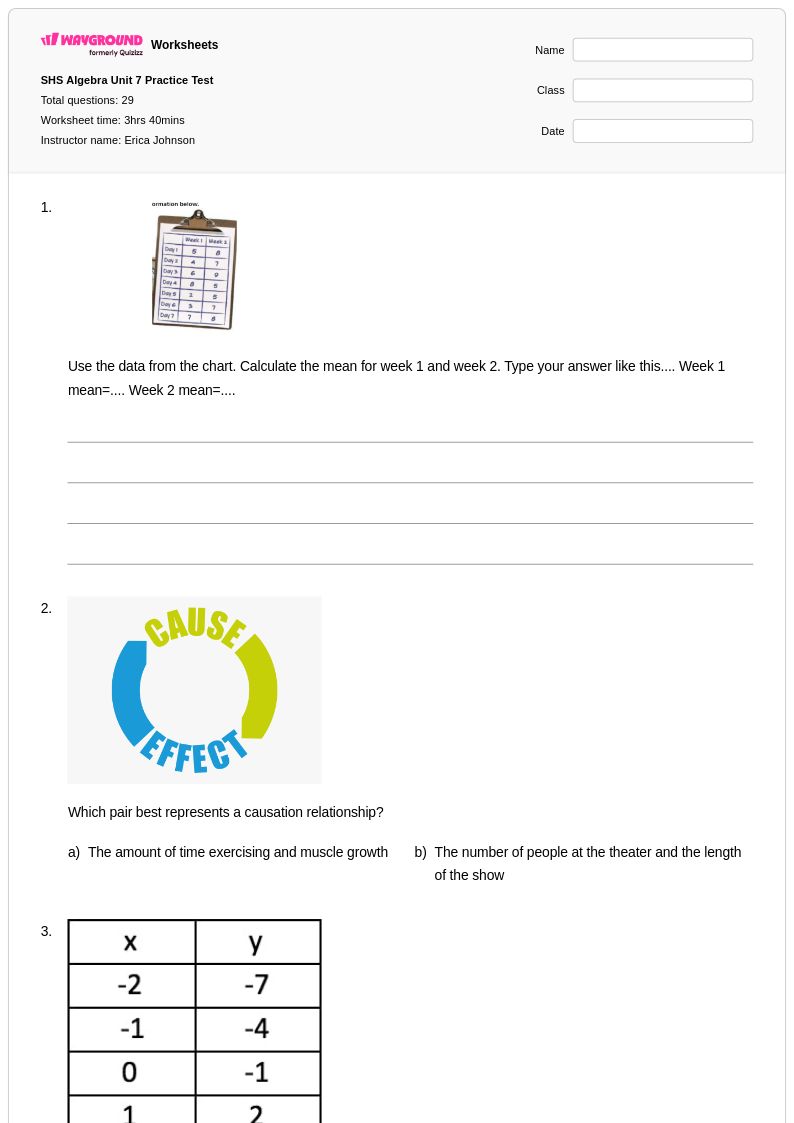
29 Q
9th - 12th
Explore Other Subject Worksheets for grade 11
Explore printable Correlation vs Causation worksheets for Grade 11
Correlation vs causation worksheets for Grade 11 students through Wayground (formerly Quizizz) provide essential practice in distinguishing between statistical relationships and true cause-and-effect connections. These comprehensive worksheets strengthen critical thinking skills by presenting real-world scenarios where students must analyze data patterns, identify correlational relationships, and determine whether genuine causation exists. The practice problems guide students through common statistical fallacies, helping them understand that correlation does not imply causation while building proficiency in evaluating evidence and drawing valid conclusions. Each worksheet includes detailed answer keys that explain the reasoning behind correct responses, and the free printable pdf format ensures accessibility for both classroom instruction and independent study.
Wayground (formerly Quizizz) supports mathematics educators with millions of teacher-created resources specifically designed for Grade 11 probability and statistics instruction. The platform's advanced search and filtering capabilities allow teachers to quickly locate correlation vs causation worksheets that align with curriculum standards and match their students' specific learning needs. Differentiation tools enable educators to customize worksheet difficulty levels and problem types, ensuring appropriate challenge levels for diverse learners during skill practice sessions. The flexible format options, including both printable and digital pdf versions, facilitate seamless integration into lesson planning while supporting targeted remediation for students struggling with statistical reasoning concepts and enrichment opportunities for advanced learners ready to explore more complex analytical scenarios.
FAQs
How should I teach correlation vs causation to Grade 11 students?
What activities help Grade 11 students practice correlation vs causation?
What errors should I look for when assessing correlation vs causation?
How can I use a Grade 11 correlation vs causation worksheet for instruction or assessment?
Is correlation vs causation part of the Common Core high school statistics progression?
How can I differentiate Grade 11 correlation vs causation practice?