Free Printable Electric Circuits Worksheets for Grade 10
Master Grade 10 electric circuits with Wayground's comprehensive collection of free worksheets, printables, and practice problems covering series, parallel, and combination circuits with detailed answer keys.
Explore printable Electric Circuits worksheets for Grade 10
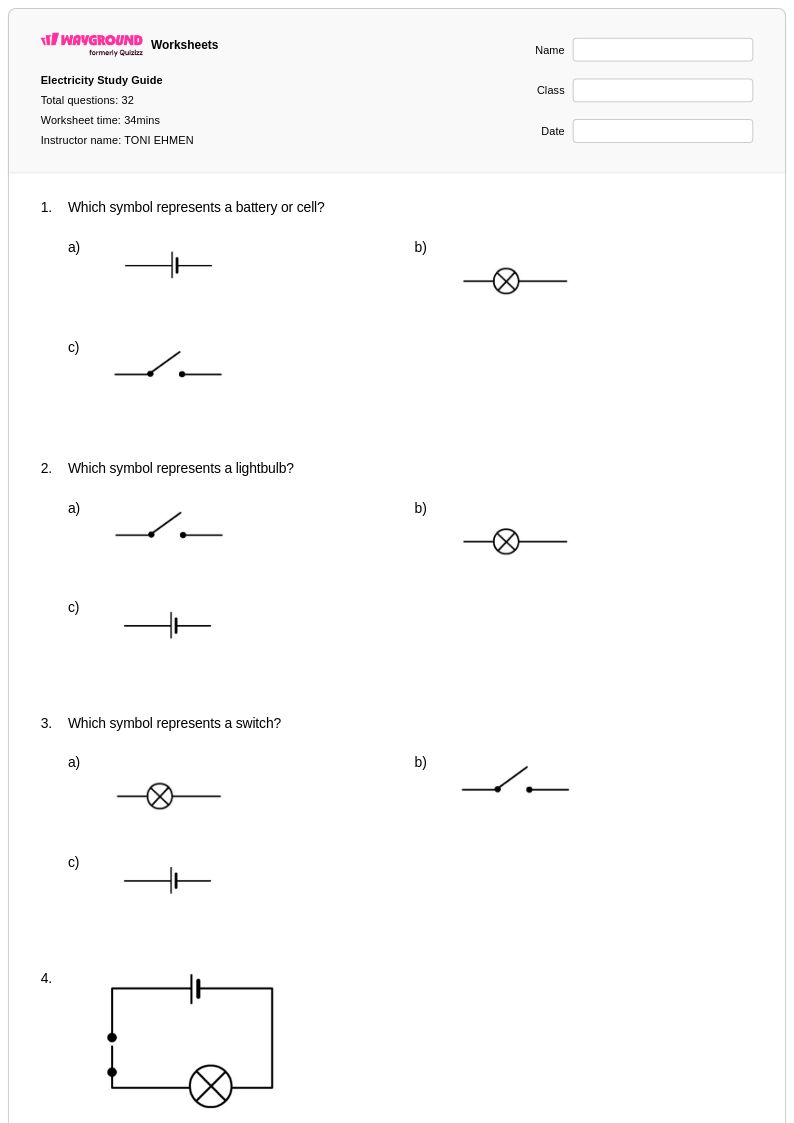
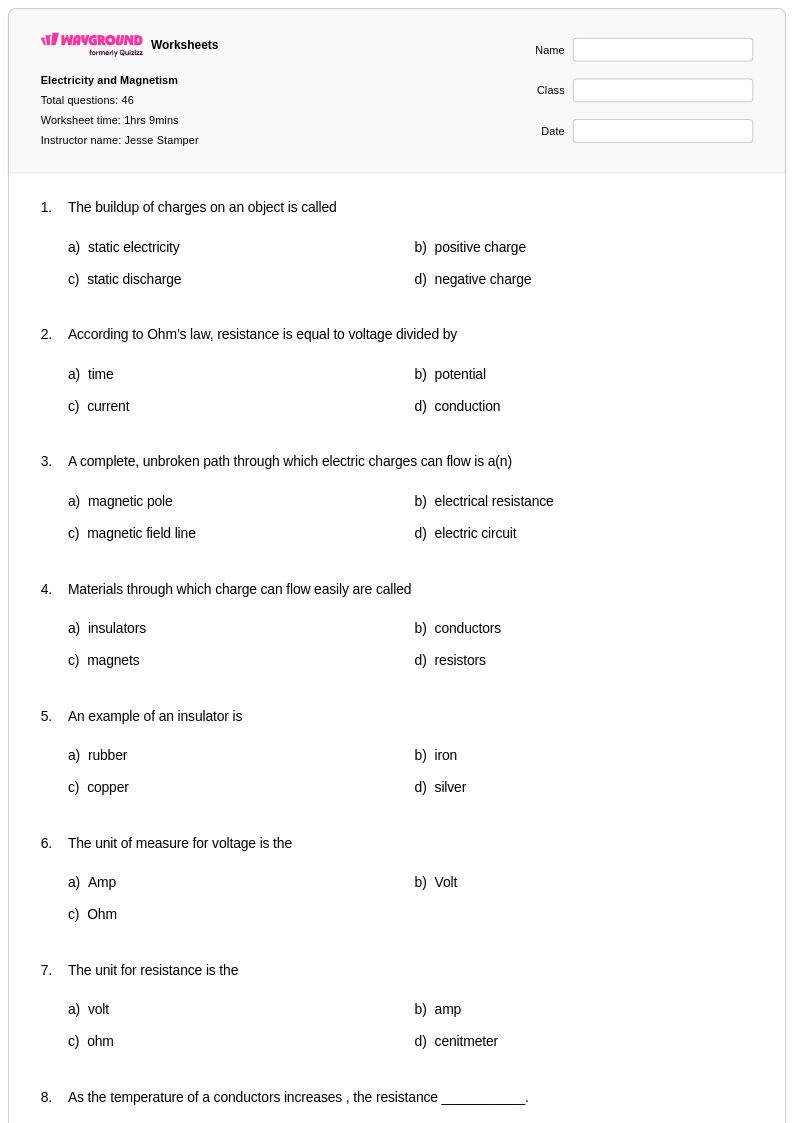
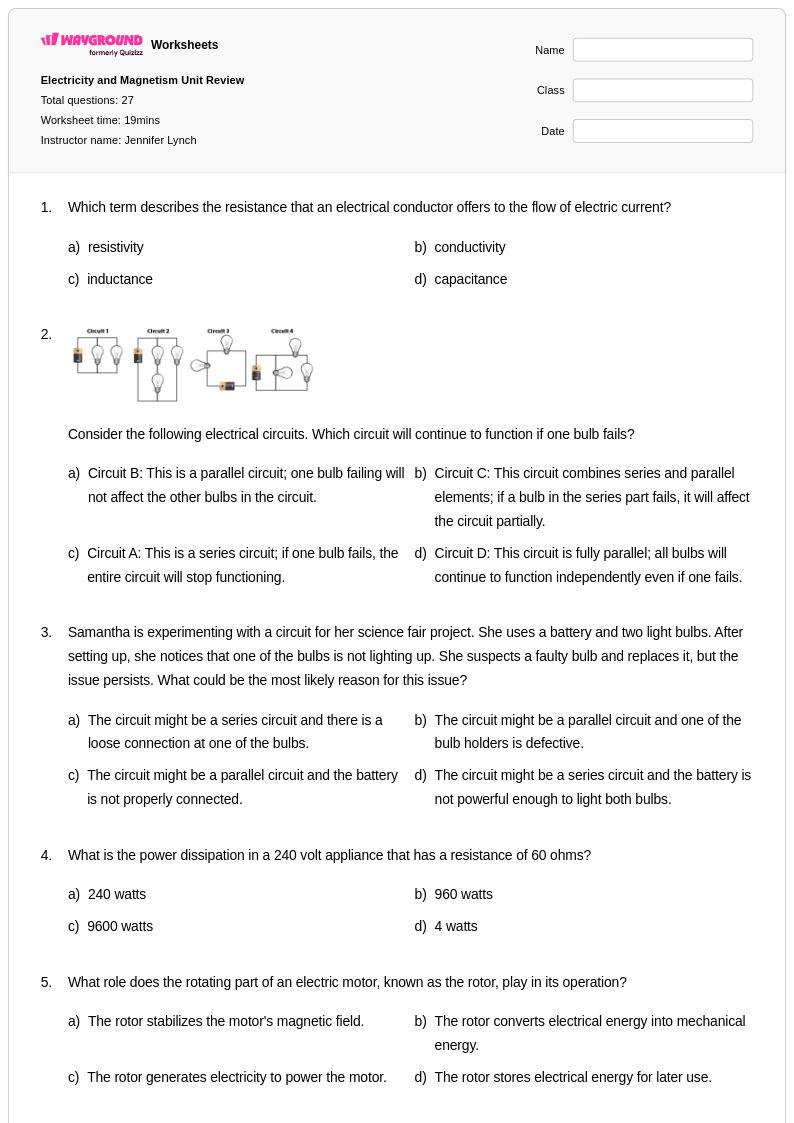
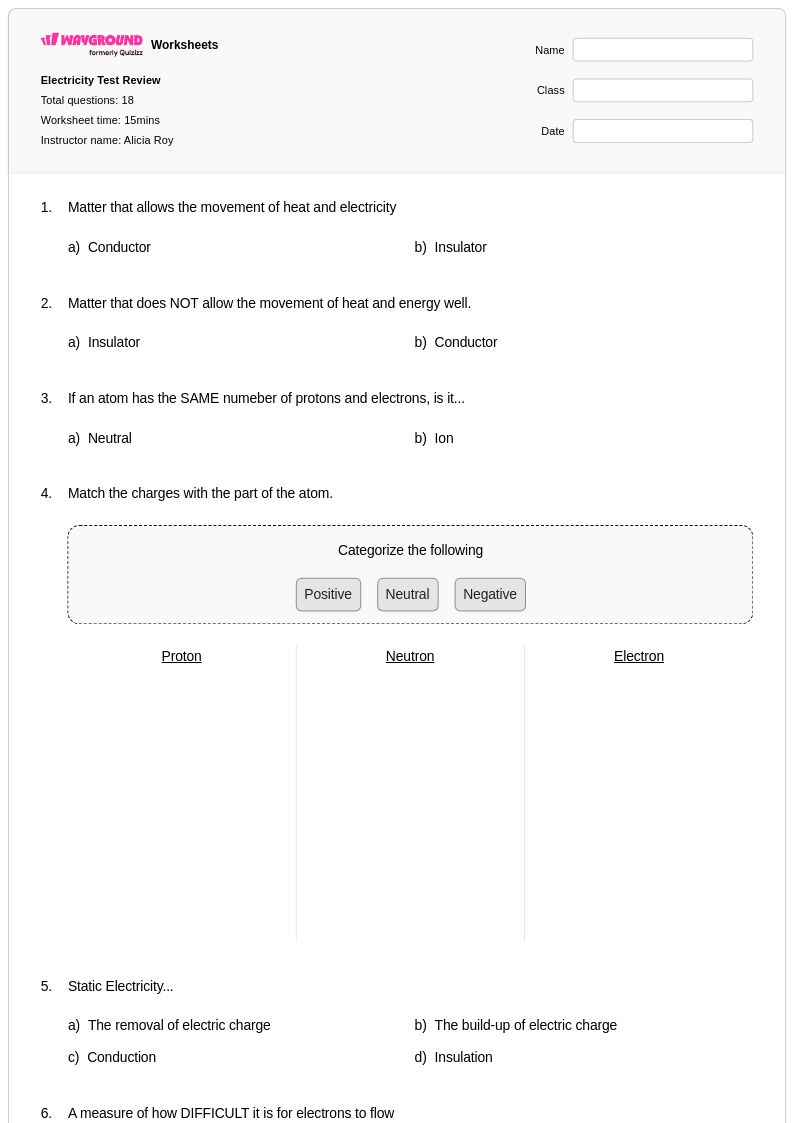
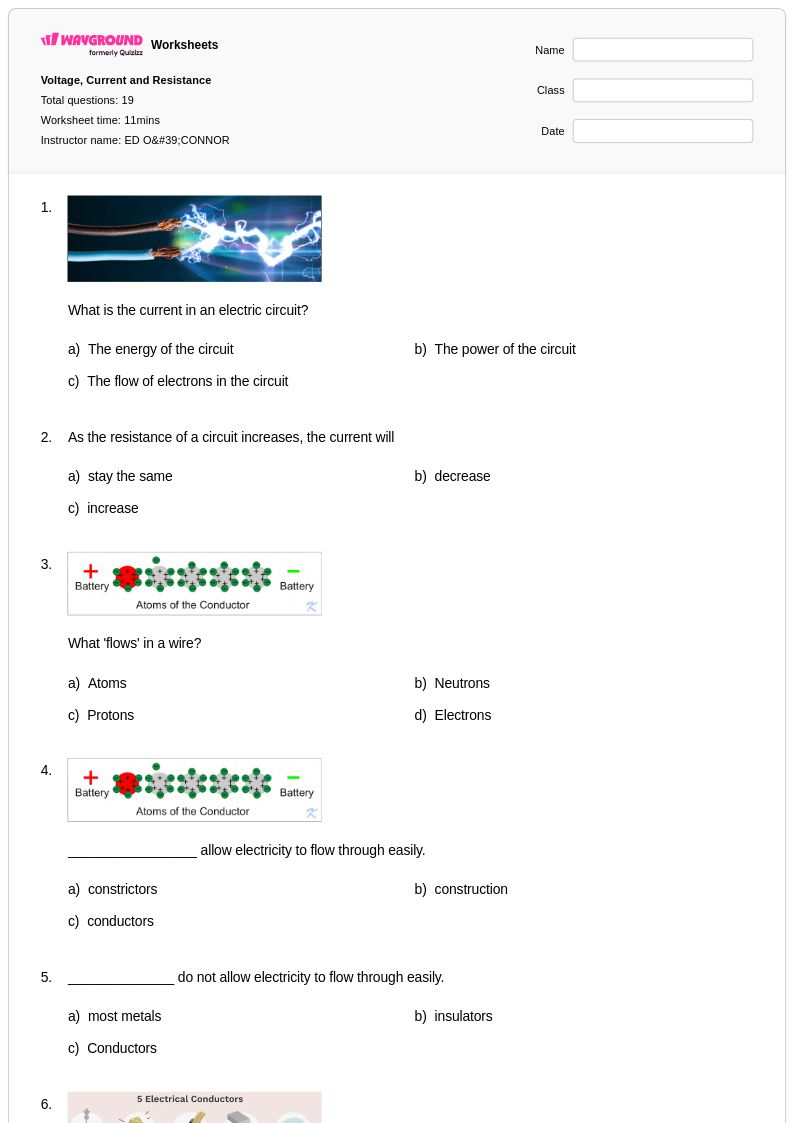
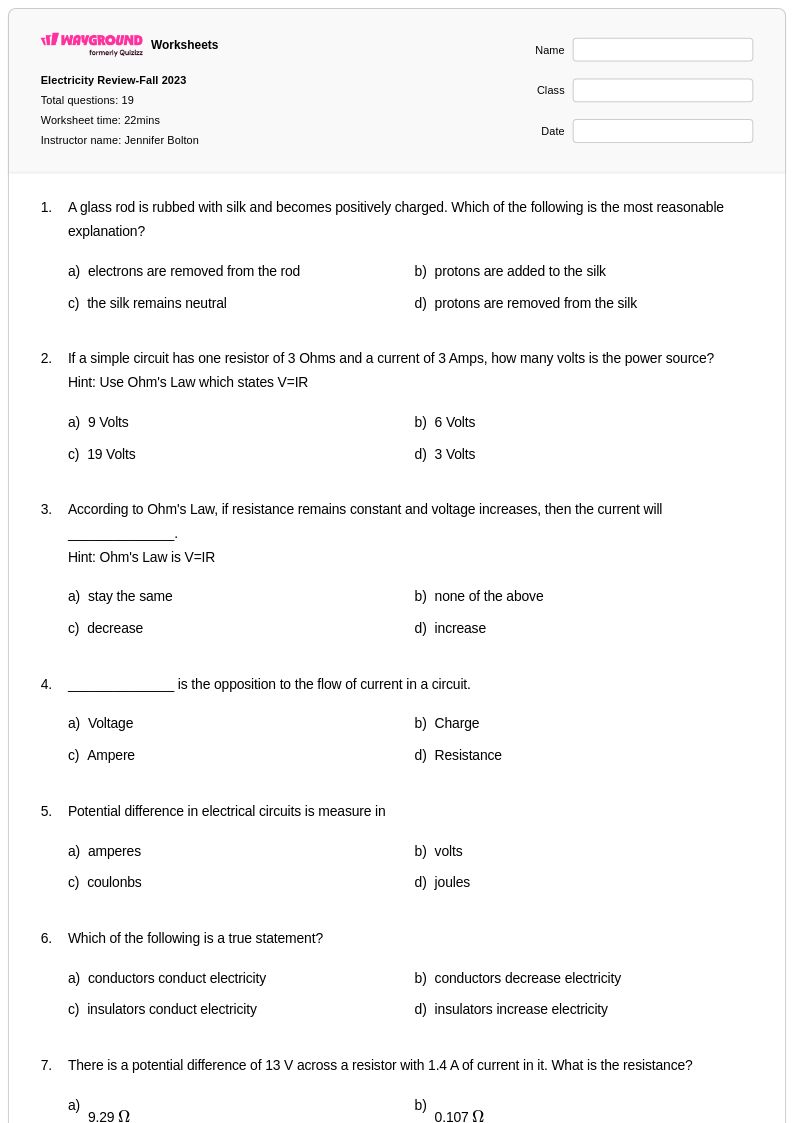
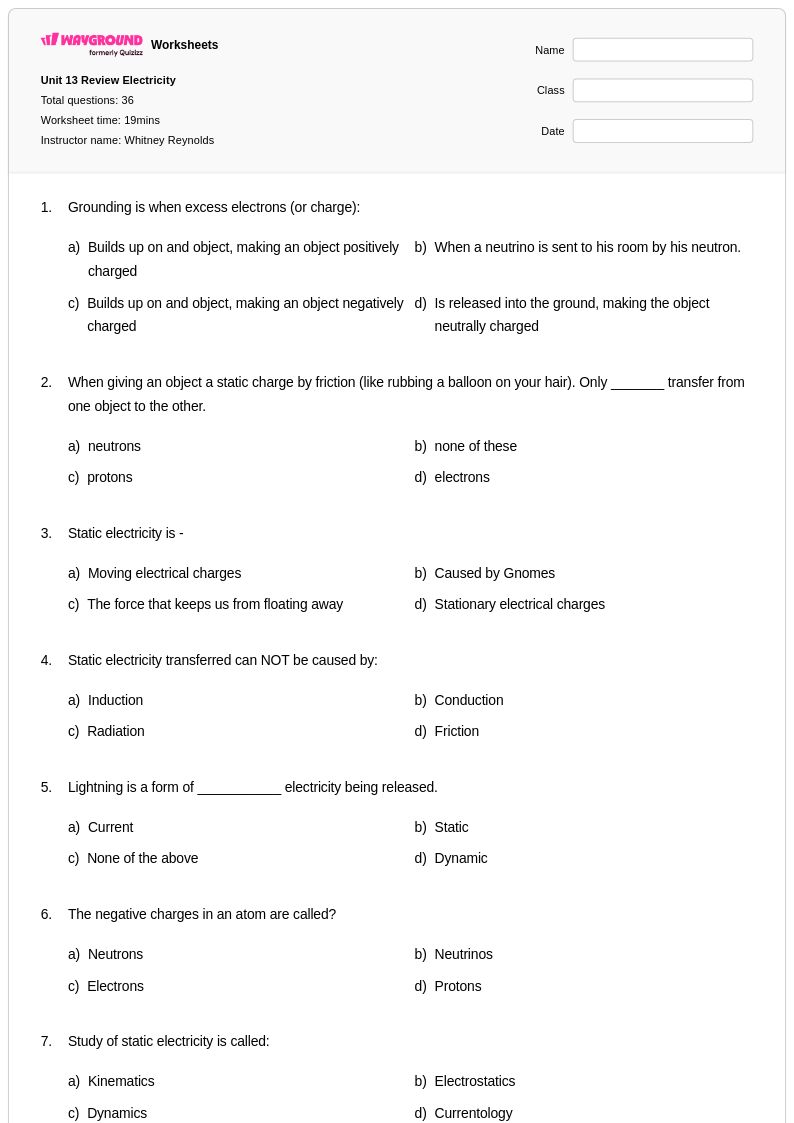
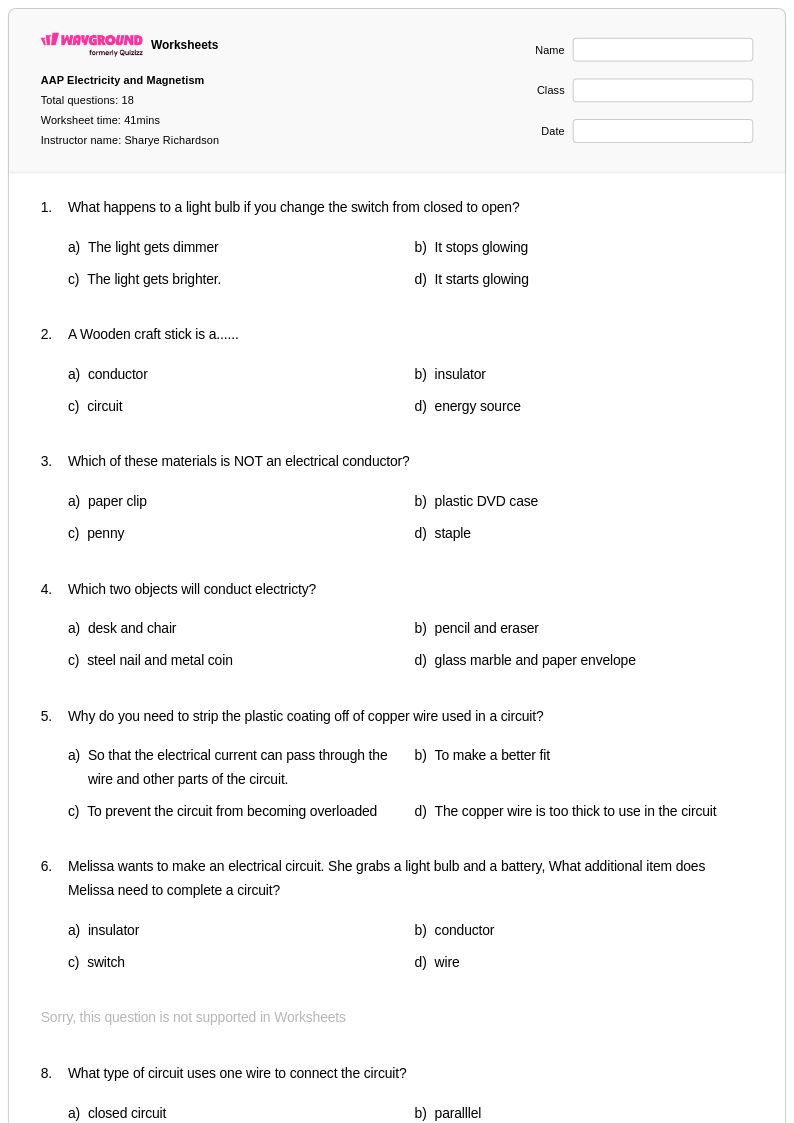
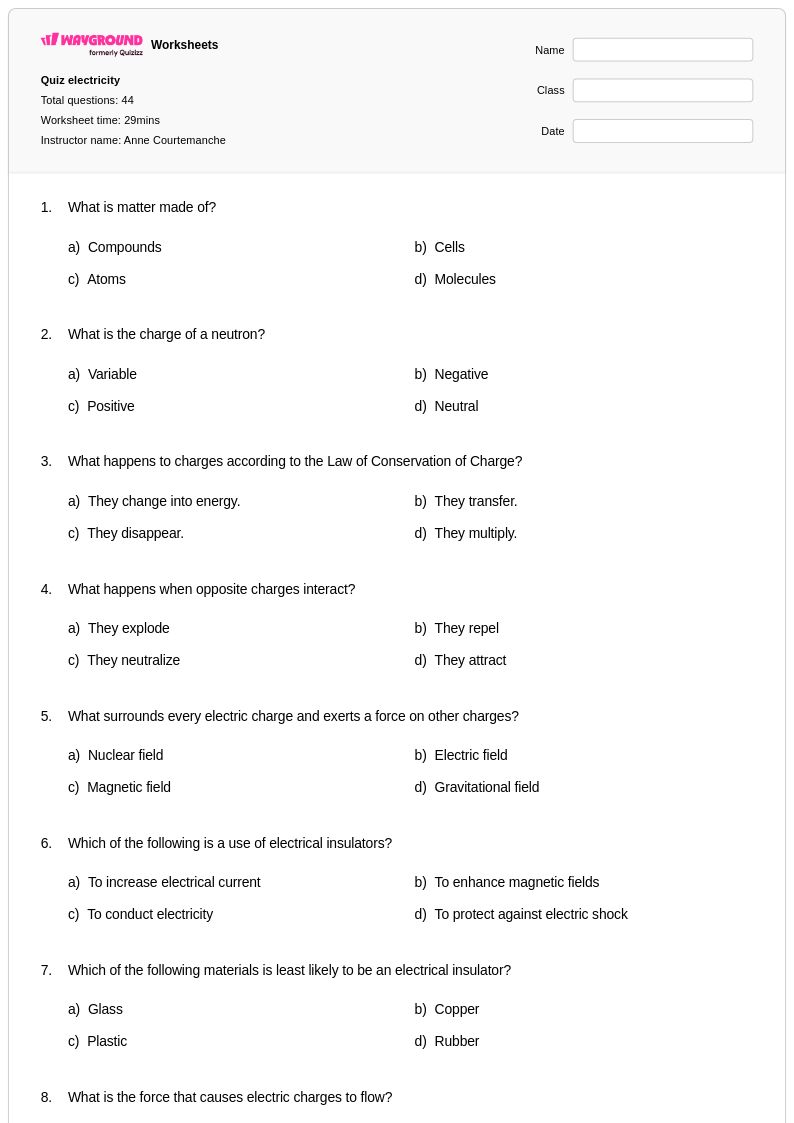
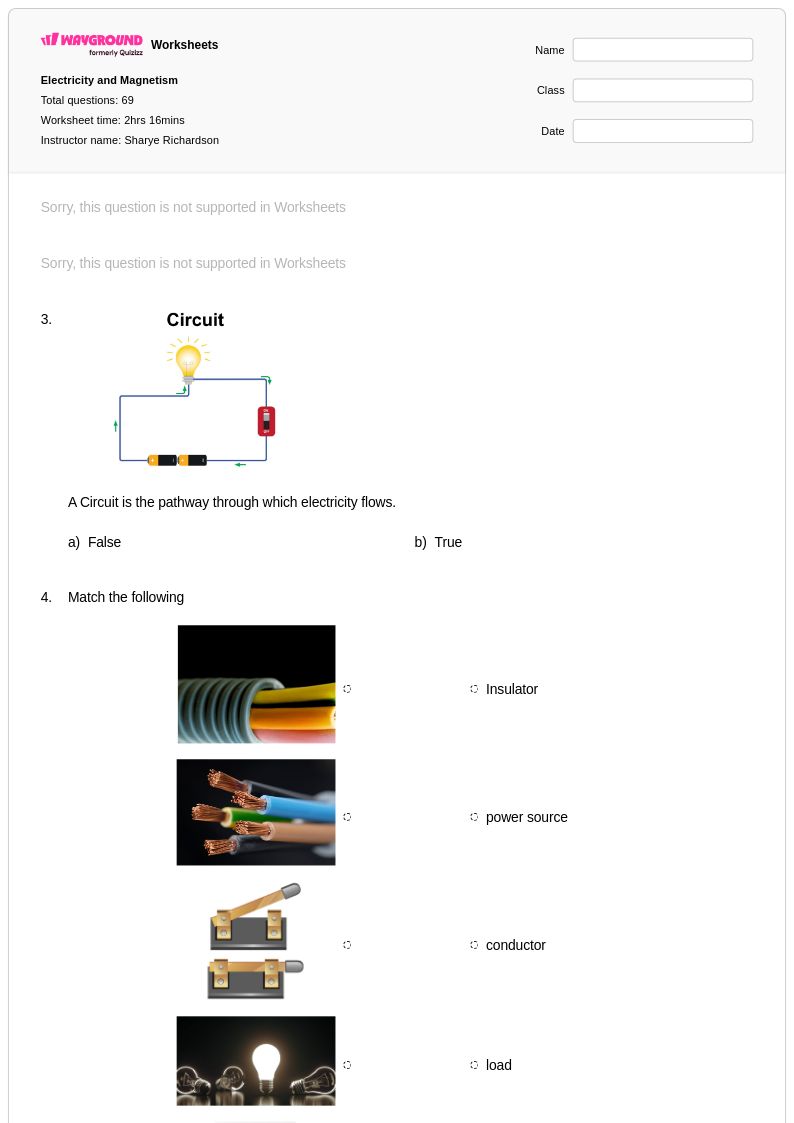
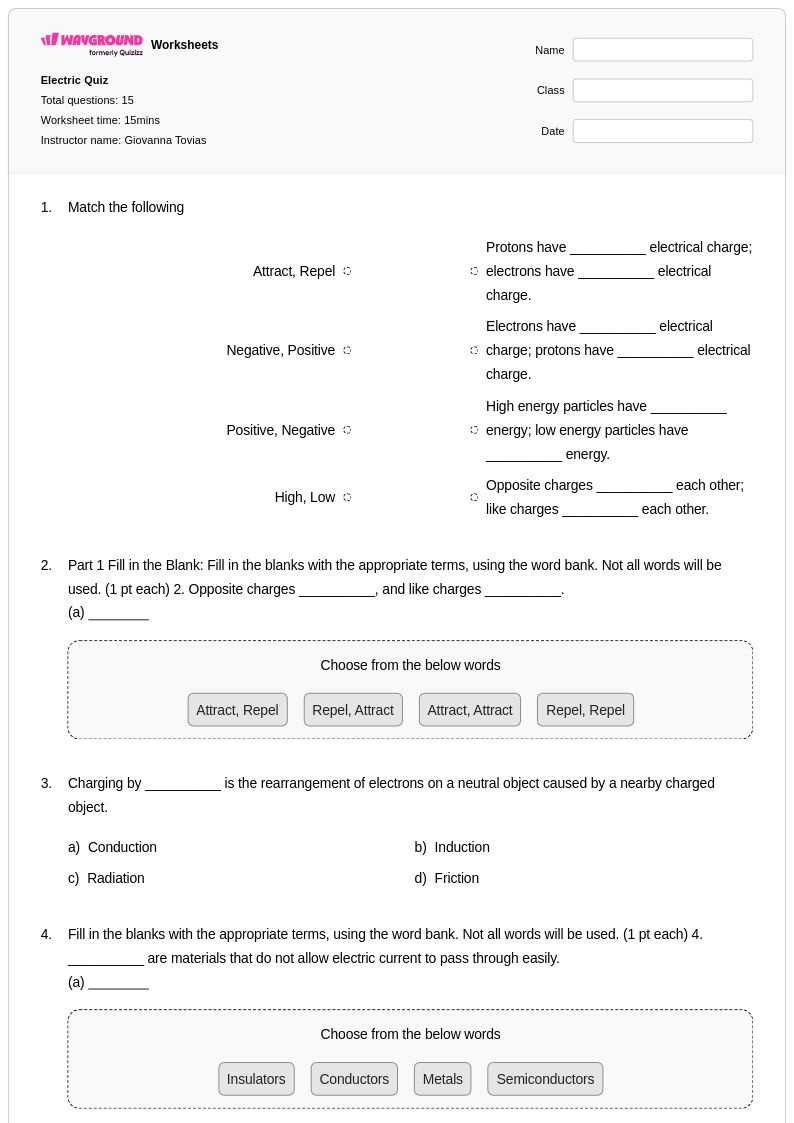
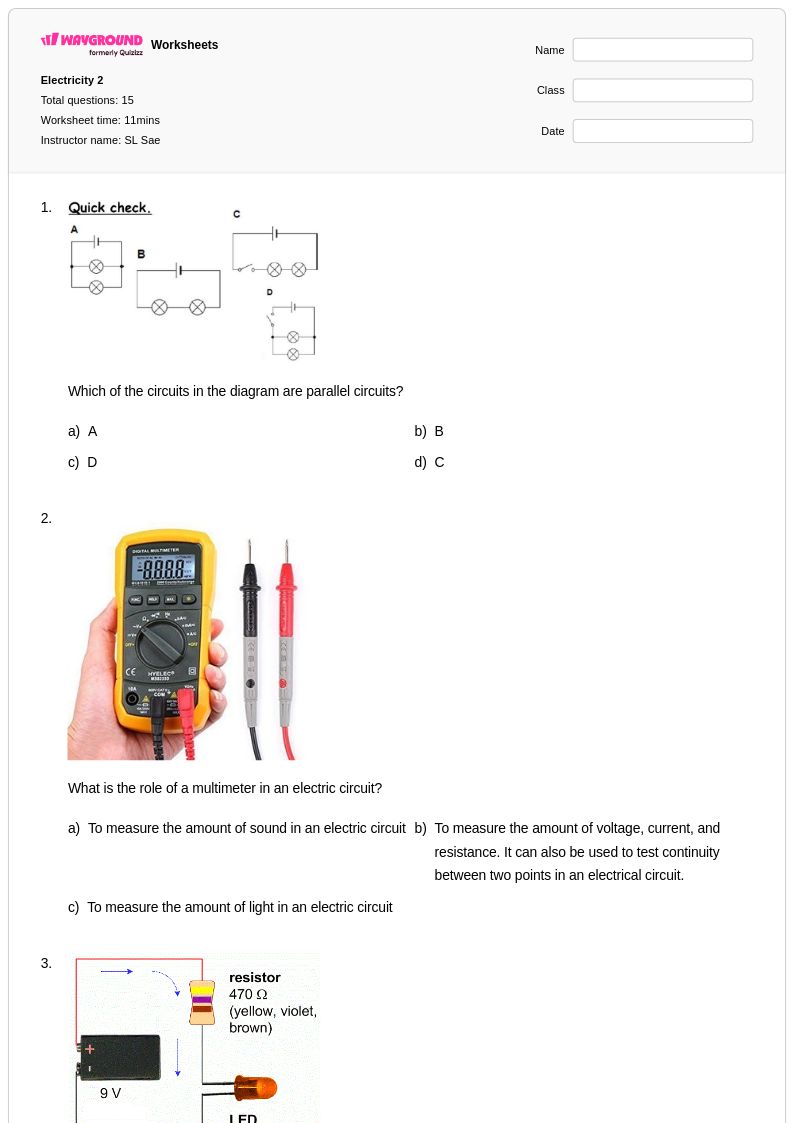
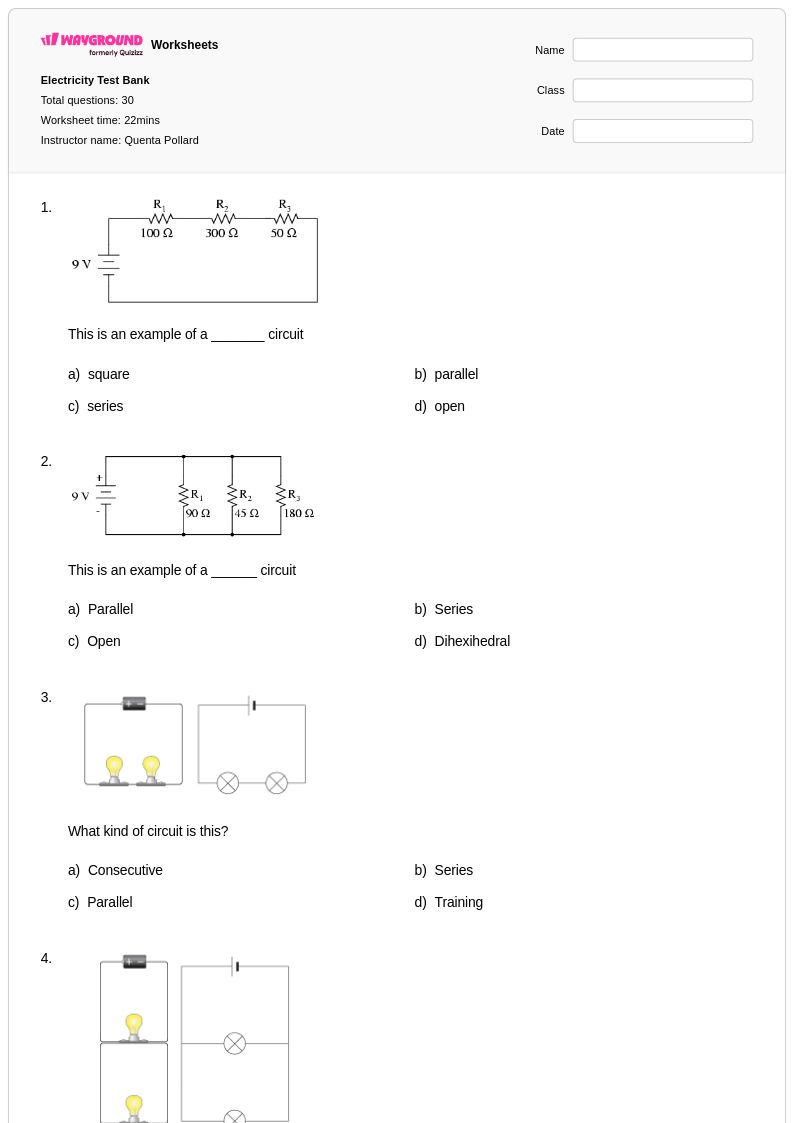
Electric circuits worksheets for Grade 10 students available through Wayground (formerly Quizizz) provide comprehensive practice with the fundamental principles of electrical systems that form the foundation of modern physics education. These carefully crafted resources strengthen students' understanding of Ohm's law, series and parallel circuit configurations, voltage and current relationships, and power calculations through systematic problem-solving exercises. Each worksheet collection includes detailed answer keys that guide students through complex circuit analysis, while the free printable format ensures accessibility for both classroom instruction and independent study. The practice problems progress from basic circuit identification to advanced calculations involving resistance combinations, making these materials invaluable for building the analytical skills essential for success in advanced physics coursework.
Wayground (formerly Quizizz) empowers educators with millions of teacher-created electric circuits resources that streamline lesson planning and provide targeted support for diverse learning needs. The platform's robust search and filtering capabilities allow teachers to quickly locate worksheets aligned with specific physics standards, while built-in differentiation tools enable customization for students requiring remediation or enrichment activities. These comprehensive collections are available in both printable pdf format and interactive digital versions, giving instructors the flexibility to adapt materials for traditional classroom settings or technology-enhanced learning environments. The extensive variety of circuit analysis exercises, from simple battery-bulb configurations to complex multi-branch networks, ensures teachers can provide appropriate skill practice at every level of student readiness while maintaining rigorous academic standards throughout their Grade 10 physics curriculum.
FAQs
How do I teach electric circuits to middle or high school students?
Start by building conceptual understanding of current, voltage, and resistance before introducing circuit diagrams and component symbols. Use simple series circuits first so students can trace a single path of current flow, then progress to parallel circuits where students must calculate equivalent resistance and branch currents. Connecting abstract formulas like Ohm's law to physical demonstrations, such as measuring bulb brightness as resistance changes, helps students anchor mathematical relationships to observable outcomes.
What kinds of practice problems help students get better at circuit analysis?
Effective circuit analysis practice should move from identification tasks, such as labeling components and classifying circuit types, to calculation problems involving Ohm's law, voltage drops, and current distribution. Students benefit most from problems that require them to apply multiple steps in sequence, for example solving for total resistance before calculating branch current in a parallel circuit. Including both circuit diagram interpretation and numerical problem-solving ensures students develop both conceptual and computational fluency.
What mistakes do students commonly make when solving electric circuit problems?
One of the most common errors is confusing how voltage and current behave differently in series versus parallel circuits. In series circuits, students often assume current varies across components, when in fact voltage is what divides. In parallel circuits, students frequently miscalculate equivalent resistance by adding values directly rather than using the reciprocal formula. Students also tend to misapply Ohm's law by substituting total circuit values into branch calculations, which produces incorrect results in multi-branch problems.
How do I differentiate electric circuits instruction for students at different skill levels?
For students who are still building foundational understanding, focus on single-loop series circuits with guided problem structures before introducing parallel configurations. Advanced students can be challenged with multi-loop circuits, power dissipation problems, and circuit optimization tasks. On Wayground, teachers can apply accommodations such as reduced answer choices to lower cognitive load for struggling students, extended time for those who need it, and read-aloud support for students with reading barriers, all without notifying the rest of the class.
How can I use Wayground's electric circuits worksheets in my classroom?
Wayground's electric circuits worksheets are available as printable PDFs for traditional classroom use and in digital formats for technology-integrated instruction, making them flexible for in-class practice, homework, or assessment prep. Teachers can also host worksheets directly as a quiz on Wayground, enabling real-time student responses and automated grading. Each worksheet includes a complete answer key, so they work equally well for teacher-led instruction, independent student practice, or self-paced review.
How do I help students understand the difference between series and parallel circuits?
The clearest approach is to contrast the two circuit types using both diagrams and physical analogies before asking students to calculate anything. In a series circuit, current has only one path, so all components share the same current but divide the voltage. In a parallel circuit, voltage is equal across all branches, but current divides based on each branch's resistance. Having students predict what happens when one component is removed from each circuit type reinforces the structural difference and prevents persistent misconceptions about how each circuit functions.